
| Feature | Collagen Mask | Hydrogel Mask | Fabric Sheet Mask |
| Core Definition | Mask featuring collagen or collagen-derived ingredients | Mask made from a flexible, water-rich gel | Mask made from woven or nonwoven fibers |
| Material Structure | Hydrogel, fabric, or bio-cellulose | Hydrated polymer gel network | Cotton, viscose, nonwoven fibers, or bio-cellulose |
| Tear Resistance | Depends on the chosen carrier | Often more delicate when stretched | Generally more resistant to handling tears |
| Skin Experience | Moisturizing and skin-conditioning | Cooling, close-fitting, and moisture-retaining | Lightweight, flexible, and essence-soaked |
| Typical Application | Hydration and skin-plumping skincare | Premium and selected extended-wear treatments | Daily hydration and professional facial treatments |
| Main Quality Factors | Carrier material and formulation | Gel toughness, thickness, and moisture balance | Fiber structure, wet strength, and material quality |
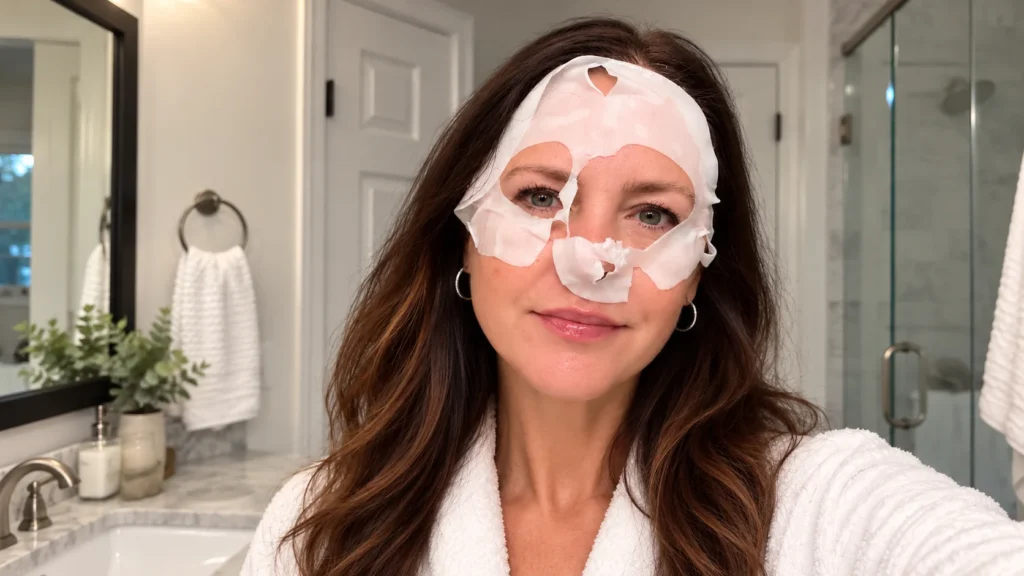
A collagen mask can look perfectly smooth inside its packaging, yet tear the moment you remove the protective film or adjust it around your face. This is particularly common with soft collagen hydrogel masks, but the problem isn’t necessarily caused by collagen itself. The real difference often comes down to the mask’s physical structure, gel formulation, thickness, and how it is manufactured. Unlike traditional fabric sheet masks, which rely on interconnected fibers for support, some hydrogel masks have a delicate gel network that can break under concentrated tension. Through facial mask development projects, I’ve learned that achieving a premium texture and comfortable fit doesn’t always mean a material will perform reliably during actual use. Even small details, such as facial cutout designs or protective liners, can make a noticeable difference. In this article, I’ll explain why collagen masks tear, how collagen, hydrogel, and fabric masks differ, and what manufacturers can do to balance durability, comfort, and product quality.
Collagen masks are defined by their featured skincare ingredients, while hydrogel and fabric sheet masks are classified by their physical materials. A collagen mask can use either hydrogel or fabric as its carrier. Hydrogel masks rely on a water-rich gel network that may tear under tension, while fabric masks use interconnected fibers that generally provide better handling durability.
Why Do Collagen Masks Tear So Easily?
Collagen masks often tear easily because their physical strength depends on the material used to form the mask rather than the collagen ingredient itself. Many popular Korean collagen masks, including products similar to Biodance, use a soft, water-rich hydrogel structure that provides close skin contact but can be vulnerable to stretching, pulling, or repeated adjustment. Traditional fabric sheet masks, on the other hand, contain interconnected fibers that provide additional structural support and generally make them more resistant to tearing during application. In skincare manufacturing, this distinction matters because collagen masks are not a single material category. A collagen-infused fabric mask and a collagen hydrogel mask may share similar skincare ingredients, yet behave very differently when removed from their packaging, unfolded, or positioned on the face. Understanding these differences helps explain why some collagen masks remain intact throughout application while others can tear with relatively little force.
Why the Mask Material Matters More Than Collagen Content
One of the most common misunderstandings about collagen masks is the assumption that collagen determines how strong or fragile the mask will be. In reality, collagen is often included for its skin-conditioning, moisturizing, and film-forming properties, while the physical structure of the mask plays a much larger role in determining its durability. Collagen masks can be manufactured using hydrogel, nonwoven fabric, silk-based materials, or bio-cellulose, each with its own mechanical characteristics. Hydrogel masks rely on a hydrated polymer network that creates their distinctive soft, jelly-like texture and allows them to conform closely to facial contours. However, unlike fabric masks, which use interconnected fibers to distribute pulling forces, unsupported hydrogel structures may have limited resistance to tearing when tension is concentrated in one area. From a product development perspective, I consider this one of the most important differences between these materials. A fabric mask may feel thinner and lighter while remaining relatively easy to handle, whereas a thicker hydrogel mask can still tear if its gel network lacks sufficient toughness. This is why evaluating a mask based on its collagen content, thickness, or appearance alone rarely provides an accurate picture of its actual durability.
How Gel Composition, Thickness, and Moisture Affect Durability
The strength of a collagen hydrogel mask is influenced by several interconnected factors, particularly its gel-forming system, sheet thickness, moisture balance, and manufacturing consistency. Gel formulations typically use combinations of hydrophilic polymers and other structuring ingredients to create a flexible network capable of holding water while maintaining the mask’s shape. The balance between these ingredients affects how the material responds to stretching, bending, and handling. A formulation designed to feel exceptionally soft and comfortable may become more vulnerable to tearing if its resistance to crack propagation is insufficient, while increasing firmness without considering flexibility can make the mask less comfortable or more brittle. Thickness introduces another practical challenge, especially around facial openings where the material is naturally narrower and experiences greater tension. The areas surrounding the eyes, nose, and mouth are particularly sensitive to pulling forces, and small imperfections along the cutting edges can make tears more likely to develop. Moisture also influences mechanical behavior because changes in the gel’s water content during storage or extended wear can affect its flexibility and integrity. In actual manufacturing, these factors cannot be considered separately. A well-developed collagen hydrogel mask must balance softness, structural strength, thickness consistency, and moisture stability so that it remains comfortable on the skin while being durable enough for normal application.
Does Higher Collagen Content Make a Mask Stronger?
A higher collagen concentration does not necessarily make a collagen mask stronger, and this is an important distinction when comparing products or developing a new formulation. In many commercial collagen hydrogel masks, collagen is included primarily as a featured skincare ingredient, while the gel-forming system provides much of the structural support needed to maintain the sheet’s shape. Simply increasing collagen content does not guarantee better tensile strength, flexibility, or tear resistance, because the outcome depends on how the ingredient interacts with the overall formulation and whether it contributes meaningfully to the gel network. Two collagen hydrogel masks may contain similar concentrations of collagen and appear almost identical, yet respond very differently when lifted from their protective films or adjusted around the face. One may remain flexible and intact, while another begins to tear at the edges because of differences in polymer composition, gel thickness, processing conditions, or cutting quality. Having worked with different facial mask materials and product development requirements, I believe the more meaningful question for skincare brands is not how much collagen a mask contains, but whether the complete formulation and material structure can deliver the intended texture, skin contact, and durability. A successful collagen mask needs to do more than look appealing or feature a recognizable ingredient. It must also remain practical to handle, comfortable to wear, and consistent enough to meet consumer expectations across production batches.
What Is the Difference Between Collagen Masks, Hydrogel Masks, and Fabric Sheet Masks?
Collagen masks, hydrogel masks, and fabric sheet masks are often discussed as three different skincare products, but they are not classified in the same way. Collagen masks are primarily defined by their featured skincare ingredients, while hydrogel and fabric sheet masks are distinguished by the materials used to form the mask. This means a collagen mask can also be a hydrogel mask or a traditional fabric sheet mask, depending on how it is manufactured. The distinction matters because the mask’s ingredients influence its skincare positioning, while its physical structure largely determines how it feels, fits, retains moisture, and withstands handling. In product development, I find that understanding these differences early makes it much easier to evaluate samples and avoid choosing a material based only on appearance or marketing claims.
Collagen Masks
Collagen masks are facial treatments that feature collagen or collagen-derived ingredients, such as Hydrolyzed Collagen, soluble collagen, or atelocollagen, as part of their moisturizing, skin-conditioning, and anti-aging positioning. These ingredients are commonly marketed for their ability to improve the appearance of hydration, plumpness, and skin smoothness, although their actual performance depends on the formulation and supporting ingredients. One important point is that applying collagen to the skin does not automatically rebuild the skin’s natural collagen. Larger collagen molecules generally remain near the skin’s surface, where they can contribute to moisture retention and film formation, while smaller collagen fragments may behave differently depending on their molecular characteristics and delivery system. From a manufacturing perspective, collagen does not dictate which mask material must be used. A collagen mask can be produced as a soft hydrogel sheet, a conventional nonwoven mask soaked in collagen-containing essence, or a bio-cellulose mask designed for close facial contact. This flexibility allows brands to develop very different product experiences around the same featured ingredient. For example, a collagen hydrogel mask may emphasize a premium, cooling, extended-wear experience, while a collagen-infused fabric mask may be positioned as a convenient daily moisturizing treatment. The difference is not necessarily the collagen itself, but how the chosen carrier supports the product’s intended use, sensory experience, and retail positioning.
Hydrogel Masks
Hydrogel masks are defined by their soft, water-rich gel structure, typically formed using hydrophilic polymers and other gel-forming ingredients that create a flexible network capable of retaining moisture. Unlike conventional fabric masks, which absorb a separate liquid essence, many hydrogel masks incorporate water and skincare ingredients directly into the gel matrix, giving them a distinctive jelly-like texture and a cooling sensation during application. Their flexibility allows them to conform closely to facial contours, which is why many products are designed as separate upper- and lower-face pieces to improve positioning and reduce excessive stretching. Certain hydrogel formulations also provide a relatively occlusive environment that helps limit moisture evaporation from the skin, making them suitable for longer application periods when supported by the product’s formulation and usage instructions. Popular Korean collagen hydrogel masks have helped establish this format as a premium skincare experience, particularly products designed to become progressively thinner or more transparent during wear. However, I think it is important to distinguish this visual transformation from actual ingredient absorption. Changes in transparency can result from moisture redistribution, water loss, changes in gel structure, and differences in how the material interacts optically with the skin. They do not demonstrate that every active ingredient has been completely absorbed. Hydrogel masks also require careful attention to mechanical strength because a soft gel network may be more vulnerable to tearing than fiber-supported materials, particularly around facial openings or when the protective film is removed. Their quality therefore depends on balancing flexibility, moisture retention, thickness, and structural integrity rather than simply creating the softest possible gel.
Fabric Sheet Masks
Fabric sheet masks use a physical sheet material to carry a skincare essence, with common options including nonwoven cotton, viscose, cellulose-based fibers, silk-based fabrics, and bio-cellulose. Although these materials differ in texture, thickness, absorbency, and manufacturing methods, they generally rely on interconnected fibers to maintain their shape and provide mechanical support during application. Conventional nonwoven masks are widely used because they can offer a practical balance of flexibility, strength, liquid absorption, and production cost, while finer or silk-feel materials are often selected when a lighter, softer facial contact is desired. Bio-cellulose deserves particular attention because it is produced from a fine cellulose fiber network and can provide close skin contact, good wet-state integrity, and a distinctive premium feel. Unlike an unsupported hydrogel sheet, a fiber-based carrier can distribute pulling forces through its structure, which often makes it easier to unfold, reposition, and remove without tearing. However, the actual strength still depends on fiber composition, sheet weight, processing, and wet-state performance. Fabric masks can also be infused with collagen-containing essences, meaning they can deliver a collagen-focused product concept without relying on a fragile gel structure. When comparing materials for skincare brands, I look beyond whether a mask feels luxurious during the first application. The more useful considerations are how consistently it retains its shape, how comfortably it fits different facial contours, how effectively it holds the intended essence, and whether its material properties match the expected retail price and customer experience. A well-developed fabric collagen mask may be more practical for frequent use, while a hydrogel collagen mask may offer a more distinctive sensory experience. Neither format is inherently superior; the right choice depends on what the finished product is expected to deliver.

A Real 0-to-1 Client Project: Choosing Between Collagen, Hydrogel, and Fabric Masks
One of the most interesting facial mask development projects I’ve worked on involved a UK professional skincare client exploring different materials and designs for a premium facial treatment range. The project included collagen gel masks, bio-cellulose sheet masks, and a hydrogel-based lower-face lifting design, with options ranging from conventional full-face masks to separate upper- and lower-face sections. At first, the main priorities were straightforward: comfortable skin contact, a professional appearance, and a distinctive application experience. However, as we moved into sample evaluation, material selection became a much more important discussion. We found that a mask could look attractive and feel comfortable on the skin while still raising practical questions about flexibility, structural strength, and handling. This project reinforced something I often consider during product development: choosing a facial mask material is not simply about which option feels more premium, but whether its physical properties can support the intended design and everyday use.
The Original Product Concept and Development Requirements
The client’s initial goal was to develop a professional facial mask range that combined effective skin contact, comfortable wear, and a premium treatment experience. Rather than relying on a conventional single-piece sheet mask, we explored different structural designs, including a divided facial mask and a lower-face lifting component intended to follow the jawline. Each concept introduced different material requirements. A collagen gel mask offered the soft, cooling texture associated with popular Korean skincare products, while bio-cellulose provided a flexible, fiber-supported alternative that could hold a liquid essence and conform closely to the skin. The lifting-style hydrogel design introduced another consideration because the material needed to accommodate the shape and movement of the lower face. During our discussions, I realized that the original question of which material looked or felt better was no longer sufficient. We also needed to consider how easily each mask could be unfolded, whether it would maintain its shape during positioning, and how the design might behave when tension was applied. These details are easy to overlook during the early concept stage, but they become increasingly important when a product moves toward sampling and eventual commercial production.
What We Learned from Comparing Different Mask Materials
As the client evaluated different samples and wearing experiences, the differences between gel-based and fabric-supported materials became more apparent. One useful observation was that separating the upper and lower facial sections could improve how the mask followed facial contours compared with a conventional single-piece design. However, improving the fit did not automatically solve every practical issue. Collagen gel masks offered a distinctive soft texture and close contact with the skin, but their delicate structure required careful handling, particularly when removing protective films or adjusting narrow sections. Hydrogel lifting designs provided a different cooling and wearing experience, while bio-cellulose masks used a fine fiber network to maintain their physical structure while carrying skincare essence. In this project, we also considered a 40g bio-cellulose material as an alternative for the facial mask design. What became clear was that these materials could not simply be exchanged without considering how the finished product was supposed to function. A material suitable for a flat facial area might behave differently when stretched around the jawline or used in a lifting-style shape. From a manufacturing perspective, I believe this is where sample evaluation becomes particularly valuable. It allows brands to move beyond comparing ingredients and appearance and start understanding how material selection affects fit, handling, comfort, and the consistency of the final product.
Why Mask Structure Became More Important Than Appearance
The most technically interesting part of this project involved the lower-face lifting design, particularly the openings intended to fit around the ears. Unlike a conventional facial mask that rests against the skin, a lifting-style component may experience concentrated tension as it is positioned around the jawline and secured near the ears. These narrow sections and cutout edges can become potential tearing points, even when the surrounding material appears flexible and strong. This raised an important question about whether the bio-cellulose material could maintain sufficient integrity in that particular shape. Although its fiber network offered a different structural advantage from unsupported hydrogel, we still needed to consider the material’s wet strength, cutting pattern, and behavior under tension before treating it as a suitable lifting solution. Another consideration was the possibility of combining different materials for the upper and lower facial sections within a single sachet. Because gel-based and fabric-supported masks can have different moisture requirements and formulation systems, combining them requires careful evaluation of liquid compatibility, material integrity, preservation, and storage stability. I would not consider these questions resolved simply because two materials perform well when tested separately. The broader lesson from this project is that an attractive sample does not automatically represent a production-ready design. A successful facial mask needs to retain its intended shape, withstand reasonable handling, and deliver a consistent experience throughout its shelf life. For skincare brands developing their first custom mask or upgrading an existing product, these are the practical details that can make the difference between a promising concept and a reliable commercial product.
Why Do Hydrogel Masks Often Tear More Easily Than Fabric Sheet Masks?
Hydrogel masks often tear more easily than traditional fabric sheet masks because they rely on different structures to withstand pulling and stretching. A hydrogel mask holds its shape through a water-rich polymer network, while a fabric sheet mask uses interconnected fibers that provide physical reinforcement. When a small cut or weak point develops in certain hydrogel formulations, the damage can spread through the gel as tension increases. Fabric-based masks, including nonwoven and bio-cellulose materials, can distribute some of that force through their fiber networks, making many of them more resistant to damage during unfolding, application, and removal. However, I wouldn’t consider this evidence that fabric masks are automatically better. Hydrogel masks offer a distinctive softness, cooling sensation, and close facial contact that many consumers prefer. The important difference is how each material balances flexibility, structural strength, and the experience of wearing the mask.
How Gel Networks and Fabric Fibers Respond to Stretching
The easiest way to understand the difference is to look at what holds each mask together. Hydrogel masks are formed from hydrophilic polymers and other gel-forming ingredients that create a three-dimensional network capable of retaining substantial amounts of water. This structure gives the material its flexible, jelly-like appearance, but its resistance to damage depends on how effectively the polymer network absorbs and distributes mechanical stress. In some formulations, a small tear near the edge can become a larger crack when the mask is pulled, particularly if the gel has limited fracture toughness. Fabric sheet masks behave differently because their woven or nonwoven fiber networks provide structural support even after the sheet has absorbed skincare essence. When tension is applied, interconnected fibers can share the load and help limit the spread of damage. Bio-cellulose works through a similar principle of fiber-based reinforcement, although its extremely fine cellulose network creates a different texture and skin-contact experience from conventional nonwoven fabrics. From a product development perspective, this explains why a thin fabric mask may remain intact when stretched gently, while a thicker collagen hydrogel mask can still tear around the eyes or mouth. Thickness contributes to strength, but the underlying material structure is equally important.
Why Elasticity and Tear Resistance Are Not the Same
One detail I consider especially important when comparing mask samples is that flexibility, elasticity, tensile strength, and tear resistance describe different material properties. Tensile strength refers to how much pulling stress a material can withstand before failure, while elasticity describes its ability to deform and recover its shape. Tear resistance is different because it measures how effectively the material resists the growth of an existing cut or crack. A hydrogel mask may stretch comfortably across the cheeks and adhere closely to facial contours, yet still tear when someone pulls on a narrow section near the nose or eye opening. This happens because the force becomes concentrated around a relatively small area rather than being distributed evenly across the sheet. In practical use, handling durability brings these properties together. Consumers need to remove the protective liner, unfold the mask, position it correctly, and sometimes adjust it without causing damage. A material that performs well during gentle stretching may not necessarily survive repeated handling or a poorly designed cutout. For this reason, I believe evaluating mask strength should involve more than simply pulling a sample between two fingers. The material needs to be assessed under conditions that reflect how the finished product will actually be used.
Why Stronger Fabric Does Not Always Mean Better Skincare Performance
Although fabric sheet masks often have an advantage in handling durability, mechanical strength is only one part of the overall product experience. Hydrogel masks are valued for their soft texture, cooling sensation, and ability to maintain close contact with the skin. Some formulations are also designed for extended wear, allowing the gel to retain moisture and provide a different sensory experience from a conventional essence-soaked sheet. Fabric masks, meanwhile, can offer excellent flexibility, reliable handling, and a wide range of material options, but their performance still depends on fiber composition, thickness, absorbency, and the accompanying skincare formula. Bio-cellulose is particularly interesting because its fine fiber network can combine close facial conformity with good wet-state integrity, although this does not mean every bio-cellulose mask is stronger than every hydrogel formulation. I find that the most common mistake in comparing these materials is treating durability as a direct measure of skincare effectiveness. A mask that resists tearing is not necessarily better at delivering moisturizing ingredients, just as a softer or more adhesive mask is not automatically more effective. The quality of the finished product depends on how successfully its material properties support the intended formulation, application time, comfort, and consumer expectations.
What These Differences Mean When Evaluating Facial Mask Samples
For skincare brands developing collagen, hydrogel, or fabric sheet masks, understanding material strength becomes particularly useful during sample evaluation. A mask may look smooth and attractive inside its packaging, but its actual durability becomes apparent when the protective film is removed, the material is unfolded, or the sheet is repositioned around the face. I pay particular attention to whether the material maintains its integrity around narrow facial openings, whether the sheet stretches unevenly, and whether small tears develop under normal handling. These observations can reveal practical differences that are not obvious from ingredient lists or product photographs. At the same time, it would be misleading to establish a universal strength ranking without testing comparable samples under consistent conditions. A well-engineered hydrogel can achieve substantial toughness, while a poorly constructed fabric sheet may tear or lose its shape when wet. The more useful approach is to compare actual material performance alongside comfort, fit, and formulation requirements. Ultimately, the goal is not to manufacture the strongest possible mask, but to develop one that delivers the intended skincare experience without becoming unnecessarily difficult or frustrating to use.
What Causes Collagen and Hydrogel Masks to Break During Use?
Collagen and hydrogel masks can break during use for several reasons, including insufficient gel strength, uneven sheet thickness, excessive stretching, poorly designed facial openings, and difficulties removing protective films. Although many collagen hydrogel masks are naturally more delicate than fiber-supported sheet masks, not every tear should be considered a normal material limitation. Some problems originate in the formulation or manufacturing process, while others occur when the mask is unfolded, repositioned, or pulled beyond its mechanical limits. From a manufacturing perspective, I find that understanding where and when a mask tears is often more useful than simply describing the material as fragile. A mask that consistently breaks around the eye openings may have a different problem from one that tears while the protective film is being removed. Similarly, a product that arrives damaged inside its sealed sachet raises different concerns from one that breaks after excessive stretching during application. Identifying these differences helps explain whether the problem requires a formulation adjustment, a structural design improvement, better packaging, or clearer application instructions.
Gel Composition and Moisture Balance
The composition of the gel is one of the most important factors affecting how easily a collagen hydrogel mask tears. Unlike traditional fabric masks, which rely on interconnected fibers for physical support, hydrogel masks depend on a three-dimensional network formed by water-binding polymers and other gel-forming ingredients. Materials such as carrageenan, agar, alginates, and selected gums may contribute to the structure of cosmetic hydrogel systems, but their mechanical performance depends on the complete formulation, ingredient ratios, and processing conditions. A gel that is too soft may stretch unevenly or tear under relatively little tension, while a structure that becomes excessively rigid may lose flexibility and become more susceptible to cracking. Moisture balance is equally important because water influences how the polymer network moves and responds to stress. However, I would not assume that a mask with higher water content is automatically weaker. A properly designed hydrogel can retain substantial moisture while maintaining useful flexibility and toughness. Problems may arise when the gel network cannot maintain a suitable balance between hydration and structural integrity, particularly if moisture migrates, evaporates, or separates from the gel during storage. This can change the way the sheet feels and behaves when handled. Some collagen hydrogel masks are also designed to become thinner or more transparent during extended wear, but this transformation should not be confused with proof that the mask has lost all its strength or that its skincare ingredients have been completely absorbed. For product development, the important question is whether the gel maintains sufficient integrity throughout its intended application period and shelf life, rather than how soft or moisture-rich it feels when first removed from the packaging.
Mask Thickness and Facial Cutout Design
Mask thickness and facial cutout design can significantly influence where tearing begins, particularly in collagen hydrogel masks with complex shapes. A thicker gel sheet may provide more material to resist pulling forces, but thickness alone cannot guarantee durability if the underlying gel formulation lacks sufficient toughness. What matters just as much is whether the thickness remains consistent across the entire mask. Uneven gel distribution during forming or setting can leave certain areas thinner than others, creating weak points that may not be immediately visible. Facial openings introduce another challenge because the narrow sections around the eyes, nose, and mouth experience concentrated stress when the mask is unfolded or adjusted. For example, the material connecting the eye opening to the outer edge may be relatively narrow, meaning even a small pull can place considerable tension on that section. Poorly finished cutting edges, sharp internal corners, or small notches can make the problem worse by providing a starting point for a tear to spread. In custom facial mask development, I consider these details particularly important when evaluating divided-face masks, lower-face lifting designs, and other shapes that differ from conventional full-face sheets. A design that looks attractive in a product rendering may require changes to its cutout dimensions, corner shapes, or material thickness before it becomes practical to manufacture consistently. Cutting and converting operations can also introduce damage before packaging, especially if the tooling or handling process places unnecessary pressure on delicate gel sections. This is why a mask’s durability needs to be evaluated as part of its overall structural design, not simply as a property of the gel formula.
Protective Film Removal and Handling
Protective film removal is another common reason collagen hydrogel masks tear before they even reach the skin. Many hydrogel masks are supplied between protective liners that help maintain their shape during production, packaging, and transportation. These liners are necessary because soft gel sheets can be difficult to handle independently, but they also introduce a practical challenge: the protective film must separate from the gel without applying excessive pulling force. If the liner adheres too strongly, a consumer may unintentionally stretch the gel while trying to peel it away, particularly around thin edges or facial openings. The angle and speed of removal can also influence how tension is distributed across the material. I consider this an important part of product evaluation because a mask may have acceptable strength during ordinary stretching but still tear during liner removal if the packaging design is unsuitable. Problems can also begin earlier in production. Inappropriate folding, compression during packing, damage from cutting or stacking, or contact with poorly positioned packaging components may weaken the gel before the consumer opens the sachet. Once opened, repeated repositioning, pulling the mask outward to fit the face, or handling it with excessive force can create additional stress. The distinction between normal handling damage and manufacturing defects is especially important for skincare brands. An isolated tear caused by aggressive stretching does not necessarily indicate a defective product, but repeated tearing during ordinary liner removal or consistent damage in the same location deserves further investigation. A well-developed collagen hydrogel mask should not only deliver the intended softness and close facial contact but also remain practical for consumers to remove, unfold, apply, and wear without unnecessary difficulty.
Does a Collagen Mask That Tears Easily Mean It Is Poor Quality?
A collagen mask that tears easily is not necessarily a poor-quality product, especially when it uses a soft hydrogel structure rather than a fiber-supported fabric. Many collagen hydrogel masks are designed to provide close skin contact, flexibility, and a comfortable gel-like texture, which can make them more delicate during handling. However, there is an important difference between a mask that tears after excessive stretching and one that repeatedly breaks during normal application. From a manufacturing perspective, I believe quality should be judged by how reliably a product performs under its intended conditions of use, not simply by whether the material is naturally soft or fragile. A well-developed collagen mask should maintain sufficient structural integrity during packaging removal, unfolding, positioning, and its recommended wearing period. If customers regularly struggle to apply the mask without damaging it, that becomes a product quality concern worth investigating, even if the formula delivers an excellent skincare experience.
When Tearing Is a Normal Material Limitation
Some degree of fragility is expected with certain collagen hydrogel masks because their water-rich gel networks behave differently from traditional nonwoven or bio-cellulose materials. A thin hydrogel sheet may tear when pulled sharply around the eye openings, stretched beyond its intended dimensions, or repeatedly removed and repositioned. These situations do not automatically indicate defective manufacturing, particularly when the mask remains intact during normal use and the damage results from excessive mechanical force. However, I would be cautious about using material characteristics as a general explanation for every customer complaint. A premium hydrogel mask may require gentler handling than a conventional fabric sheet mask, but consumers should still be able to remove its protective liner and apply it according to the instructions without encountering repeated breakage. The intended application method also matters. A collagen mask designed for extended wear needs to maintain adequate integrity throughout its recommended wearing period, even if its appearance, moisture content, or transparency changes during use. Ultimately, the reasonable expectation is not that every hydrogel mask should be as strong as fabric, but that its durability should be appropriate for the experience the product promises.
Warning Signs of a Manufacturing Quality Problem
Repeated tearing under ordinary handling conditions can indicate issues that extend beyond the natural limitations of hydrogel materials. For example, masks arriving with visible tears inside unopened sachets may have been damaged during cutting, liner placement, folding, packaging, or transportation. Uneven sheet thickness can also create weak areas that break more easily than the surrounding material, while incomplete die-cutting may cause consumers to pull against sections that were never properly separated. I pay particular attention to whether damage repeatedly occurs in the same location, because consistent tearing around an eye opening, mouth opening, or outer edge may suggest a structural design or processing issue rather than accidental misuse. Another important warning sign is inconsistent performance between production batches. If one batch can be unfolded and applied comfortably while another batch of the same product tears under similar conditions, it becomes necessary to examine formulation consistency, processing parameters, sheet thickness, packaging materials, and storage conditions. These observations do not establish the cause by themselves, but they provide useful evidence for identifying where further quality checks are needed. For skincare brands, understanding these patterns is especially important because repeated defects can lead to customer complaints, negative reviews, replacement costs, and reduced confidence in the product.
Why Reliable Application Matters More Than Appearance Alone
One lesson I have learned from facial mask development is that an attractive sample does not always reveal how well the finished product will perform in everyday use. A collagen hydrogel mask may look smooth, transparent, and premium when displayed inside its packaging, yet still present difficulties when customers try to remove the protective film or position it around their faces. This is why I consider practical application performance just as important as appearance, ingredient positioning, and initial skin feel. During sample evaluation, it is useful to observe whether the mask can be removed from its liner without excessive force, whether its edges remain intact during unfolding, and whether the material maintains its shape when adjusted around different facial contours. Comparing samples across production trials and checking their condition after appropriate storage evaluations can also help identify weaknesses that may not be visible immediately after manufacturing. For an established skincare brand, these details have direct commercial consequences. Consumers rarely distinguish between a gel formulation issue, a cutting defect, or unsuitable packaging when a mask tears in their hands; they simply associate the experience with the brand’s quality. A successful collagen mask therefore needs more than an appealing formula or luxurious appearance. It should deliver a consistent, practical application experience that customers can trust, which is why material durability and manufacturing consistency deserve attention before a product moves into commercial production.
How Can Manufacturers Improve Collagen Mask Strength Without Sacrificing Comfort?
Manufacturers can improve collagen mask strength by optimizing the gel formulation, controlling sheet thickness, refining facial cutout designs, and selecting protective liners that reduce damage during application. However, making a hydrogel mask stronger is not as simple as increasing its thickness or adding more gel-forming ingredients. A collagen hydrogel mask needs to remain soft, flexible, and comfortable while being strong enough to withstand normal handling. Increasing firmness may help prevent certain types of damage, but it can also make the mask feel heavier, less conformable, or even more brittle if the formulation is not properly balanced. From a product development perspective, I believe the real challenge is finding the right balance between mechanical durability and the sensory characteristics that make hydrogel masks appealing. This becomes particularly important for premium collagen masks designed to fit closely against the skin or gradually become more transparent during extended wear, as changes intended to improve strength may also affect the product’s defining texture and behavior.
Improving Gel Formulation and Flexibility
The first area I would examine when improving a collagen hydrogel mask is the gel-forming system, because its structure largely determines how the mask responds to stretching, bending, and pulling. Cosmetic hydrogels may use combinations of ingredients such as carrageenan, agar, alginates, and other hydrophilic polymers to create a water-rich network that holds the sheet together. Each ingredient contributes differently to gel formation, flexibility, moisture retention, and mechanical behavior, so adjusting one component can influence several properties at the same time. For example, increasing the proportion of certain structuring ingredients may produce a firmer mask that maintains its shape more effectively, but excessive rigidity can also make the gel less comfortable or more susceptible to cracking under localized stress. A softer formulation may follow facial contours more naturally, yet struggle to resist tearing when consumers remove the protective liner or adjust the mask around their eyes. This is why I would focus on improving the overall toughness of the gel rather than simply making it harder. The formulation also needs to maintain a suitable moisture balance, since water influences polymer mobility, flexibility, and the way the material behaves throughout storage and application. For collagen masks specifically, it is important to distinguish the collagen ingredient from the structural gel system. Adding more collagen does not automatically produce a stronger mask, particularly when collagen is included mainly for its skincare positioning. A meaningful formulation adjustment should improve handling durability without unnecessarily changing the mask’s cooling sensation, close skin contact, or intended transformation during wear. Any significant changes also need to be evaluated for stability, preservation, and compatibility with the other ingredients rather than judged by mechanical strength alone.
Balancing Sheet Thickness, Forming Consistency, and Facial Cutout Design
Sheet thickness is another important factor, but I have found that consistent thickness and thoughtful structural design can be just as valuable as making a mask thicker. A very thin collagen hydrogel sheet may feel lightweight and follow facial contours closely, yet it can be vulnerable to tearing around narrow sections. Increasing thickness may improve resistance to certain handling stresses, but it also increases material consumption and can affect the finished mask’s weight, flexibility, and comfort. For products intended to remain on the face for several hours, these differences can become particularly noticeable. Manufacturing consistency is equally important because uneven gel distribution during forming, coating, or setting may produce sections with different mechanical properties. A mask that appears uniform at first glance can still contain thinner areas that are more likely to break when tension is applied. Facial cutout design adds another layer of complexity. Narrow connections around the eye openings, sharp internal corners, and irregular cutting edges can concentrate stress and encourage a small tear to spread. When evaluating custom facial mask designs, I consider whether the shape allows consumers to unfold and position the product without placing unnecessary tension on these vulnerable areas. This is particularly relevant for divided-face masks and lower-face lifting designs, where the material may need to accommodate additional movement or tension around the jawline. Improving the cutting pattern, maintaining consistent gel thickness, and controlling the forming process can help reduce avoidable weak points without automatically increasing the thickness of the entire mask. However, these improvements still need to be evaluated against the intended appearance and wearing experience, especially when a brand wants an exceptionally thin or lightweight gel sheet.
Improving Protective Liners and Packaging Design
A collagen hydrogel mask can have a well-developed formulation and still tear before application if its protective liner or packaging is difficult to handle. This is why I consider packaging design part of product performance rather than simply a presentation detail. Many hydrogel masks require protective films to support the delicate sheet during manufacturing, storage, and transportation. These films should keep the mask properly positioned while allowing consumers to remove them without excessive force. If the gel adheres too strongly to the liner, peeling can stretch the sheet unevenly and place additional stress on narrow areas around the eyes, nose, or outer edges. The liner’s surface properties, flexibility, thickness, and peeling behavior can all influence this experience. A suitable liner should release consistently without damaging the gel, while still providing enough support to prevent folding or distortion during handling. The arrangement of the mask inside the sachet also matters because unnecessary folding, compression, or poorly controlled placement can introduce damage before the product reaches the consumer. For softer hydrogel formulations, changes in storage temperature or moisture distribution may further influence how the sheet interacts with its protective materials. From a manufacturing perspective, I would evaluate the complete process of opening the sachet, removing the liner, unfolding the mask, and positioning it on the face rather than examining the gel sheet in isolation. A small improvement in liner removal or packaging layout may solve a recurring application problem without requiring a major reformulation. For skincare brands, this is commercially important because consumers do not separate formulation quality from packaging usability. If a premium collagen mask repeatedly tears during the first few seconds of application, the overall product experience suffers regardless of how attractive the formula or packaging may be.
Testing Mask Strength Under Real Application and Storage Conditions
Improving collagen mask durability also requires practical testing because a mask that looks excellent immediately after production may behave differently after packaging, transportation, or extended storage. I believe the most meaningful evaluation combines observations of actual consumer handling with appropriate material and stability assessments. Liner-peeling trials can help determine whether the protective film releases smoothly without stretching or damaging the gel, while repeated unfolding and application trials can reveal weaknesses around facial openings or narrow sections. Where suitable test methods and equipment are available, tensile or tear-resistance measurements can provide additional information about the mechanical differences between formulations, although these results need to be interpreted alongside the material’s thickness, moisture condition, and testing procedure. It is also important to examine whether mask strength remains consistent after storage under relevant temperature and humidity conditions, particularly when the product is designed for international distribution. A hydrogel formulation may initially appear flexible and stable but gradually change in texture or mechanical behavior if moisture migrates, gel structure changes, or packaging does not adequately protect the product. For transforming collagen hydrogel masks, testing should also consider the intended wearing period because a product designed to become thinner or more transparent may behave differently after prolonged contact with the skin. I would not treat improved performance in one simple stretching test as sufficient proof that a mask is ready for commercial production. The more useful question is whether consumers can consistently remove, apply, wear, and take off the product as intended, including after appropriate storage. Manufacturers also need to recognize that some soft, transforming hydrogel formats have inherent structural limitations. It may be possible to improve their resistance to tearing, but making them substantially stronger could require changes that affect their transparency, softness, adhesion, or transformation characteristics. In those situations, selecting a different hydrogel system or even a fiber-supported mask may be more realistic than trying to force one material to deliver every possible advantage. Ultimately, successful development is about achieving a reliable balance between mask strength, application comfort, visual appeal, and manufacturing consistency rather than maximizing a single technical property.
Which Mask Material Is Better for Your Skincare Brand?
Choosing the right facial mask material depends on the product experience, target market, retail positioning, and manufacturing requirements rather than simply selecting the most popular skincare trend. Collagen can be incorporated into hydrogel, traditional fabric, or bio-cellulose masks, but each carrier delivers a different balance of comfort, moisture retention, durability, and production cost. Hydrogel masks are often associated with premium Korean skincare concepts and extended-wear treatments, while conventional fabric masks offer convenient application, flexible formulation options, and generally more economical production. Bio-cellulose provides another alternative for brands seeking close facial contact and a refined professional skincare experience. From a product development perspective, I believe the most important decision is not which material looks more innovative, but which one can consistently deliver the intended consumer experience at a commercially realistic price.
Collagen Hydrogel Masks for Premium and Extended-Wear Skincare
Collagen hydrogel masks are particularly suitable for brands developing premium skincare products that emphasize a cooling sensation, close facial contact, and a distinctive application experience. Popular Korean skincare products have helped establish consumer interest in soft, jelly-like masks that gradually become thinner or more transparent during extended wear. This transformation can create an appealing product experience, especially for brands positioning their masks around intensive hydration, skin plumping, or overnight-style skincare routines. However, I would not recommend choosing hydrogel simply because the format is trending. The formulation must be suitable for the intended application duration, and the mask needs sufficient flexibility and structural integrity to remain comfortable throughout wear. Premium hydrogel masks also require greater attention to protective liners, sheet thickness, facial cutout design, and packaging because their delicate structure can make them more difficult to handle than conventional fabric masks. Manufacturing costs may be higher depending on the gel-forming system, material consumption, processing requirements, and packaging configuration. For brands selling through Shopify, Amazon, or premium beauty retail channels, the higher perceived value may support a stronger retail price, but only when the actual product experience justifies that positioning. A mask that looks luxurious in promotional photographs but regularly tears during application can quickly undermine consumer confidence. I would therefore prioritize a balanced gel formulation and reliable handling performance before focusing on visual transformation or marketing claims. Extended-wear or overnight use should also be supported by appropriate product-specific safety, stability, and use-condition evaluations rather than assumed to be suitable for every hydrogel formula.
Collagen Fabric Sheet Masks for Convenient Daily Skincare
Traditional fabric sheet masks are often a practical choice for brands that prioritize easy application, consistent quality, and accessible retail pricing. These masks typically use nonwoven cotton, viscose, or other cellulose-based materials to hold a liquid essence containing collagen, hydrolyzed collagen, peptides, or complementary moisturizing ingredients. Unlike hydrogel masks, where the gel itself forms the sheet structure, fabric masks rely on interconnected fibers for support, making many of them easier to unfold, reposition, and remove without accidental tearing. This handling advantage can be particularly valuable for everyday skincare products, multi-piece mask boxes, subscription programs, and retail ranges designed around frequent use. From a manufacturing perspective, fabric masks also provide considerable flexibility in essence development because the liquid formula and sheet material can be evaluated and adjusted as separate components, although their compatibility still matters. Brands can focus on different skincare concepts, such as hydration, barrier support, brightening, or anti-aging, without necessarily changing the underlying mask structure. Conventional nonwoven materials are generally more economical than specialized hydrogel or bio-cellulose formats, which can help businesses maintain competitive retail prices or develop multi-SKU collections. However, lower material cost should not be confused with lower quality, and fabric selection still affects softness, essence retention, facial fit, and overall user satisfaction. I would pay particular attention to whether the sheet feels comfortable against the skin, retains an appropriate amount of essence, and maintains its shape throughout application. A well-developed collagen fabric mask can provide a reliable and commercially attractive product experience without relying on a premium gel structure.
Bio-Cellulose Masks for Professional and Premium Skincare Ranges
Bio-cellulose masks offer an interesting alternative for brands seeking a premium facial treatment experience without relying entirely on an unsupported hydrogel structure. Unlike conventional nonwoven sheets, bio-cellulose is formed from a fine network of cellulose fibers, typically produced through microbial fermentation. This structure allows the material to conform closely to facial contours while maintaining useful wet-state integrity, although its actual tear resistance depends on the material grade, thickness, processing conditions, and finished mask design. In professional skincare development, I find bio-cellulose particularly worth evaluating when a brand wants a soft, close-fitting mask that can carry a moisturizing or skin-conditioning essence without the same handling characteristics as a delicate gel sheet. It can be suitable for premium hydration, sensitive-skin-oriented cosmetic ranges, and professional facial treatment concepts where comfort and consistent application are important. However, bio-cellulose should not automatically be considered stronger or better than hydrogel simply because it contains fibers. Certain thin or complex bio-cellulose designs may still be vulnerable to tearing, particularly around narrow facial openings or lifting-style structures subjected to tension. Production cost is another important consideration because bio-cellulose materials can be more expensive than standard nonwoven sheets, and their liquid content, packaging requirements, and handling during production can influence the finished unit price. For brands developing professional skincare lines, I would compare bio-cellulose against both hydrogel and conventional fabric samples rather than assume its premium appearance guarantees superior performance. Its commercial value comes from the overall combination of material quality, skin contact, comfort, and suitability for the intended formulation.
How Packaging, Manufacturing Cost, and Quality Consistency Affect Material Selection
Material selection becomes a more complicated commercial decision once packaging, manufacturing efficiency, and product consistency are included in the discussion. A conventional collagen fabric mask may require relatively straightforward sheet cutting, essence filling, folding, and sachet sealing, while a collagen hydrogel mask may involve additional considerations related to gel forming, setting, protective films, and careful handling during packaging. These differences can affect production speed, material utilization, defect rates, and the final cost per unit. Hydrogel products may also require packaging configurations that adequately protect their moisture balance and prevent damage to delicate sheets during transportation. Bio-cellulose masks introduce their own considerations, including material sourcing, liquid compatibility, handling requirements, and storage stability. For established e-commerce brands, these details matter because product damage, inconsistent batches, and unsuitable packaging can lead to negative reviews, replacement costs, and disrupted replenishment plans. For distributors and retail buyers, consistent quality and predictable landed costs may be more valuable than introducing a visually impressive format that is difficult to manufacture or transport reliably. I always consider the intended retail price alongside the actual manufacturing structure because a premium material is only commercially useful when the expected selling price can support its production, packaging, logistics, and distribution costs. The decision should also account for minimum order quantities, packaging customization, and future replenishment requirements. A brand planning to launch several collagen mask variants may find that using a common fabric carrier with different essence formulations simplifies its product range, while another brand may prefer to invest in one distinctive hydrogel SKU to establish a stronger premium identity. Neither strategy is automatically better; the appropriate choice depends on how the product fits into the brand’s existing sales channels and long-term development plans.
Why Physical Sample Testing Should Come Before the Final Material Decision
One of the most useful steps in facial mask development is comparing actual samples rather than selecting a material based entirely on ingredient descriptions, supplier photographs, or competitor products. A hydrogel mask may appear thicker and more luxurious inside its packaging, but that does not necessarily mean it will feel more comfortable or perform more reliably during application. Similarly, a fabric sheet mask may seem less distinctive visually while providing a better balance of fit, durability, and everyday convenience. When evaluating samples, I prefer to consider the entire consumer experience, beginning with opening the sachet and removing the protective film, followed by unfolding, positioning, wearing, and removing the mask. The material should remain intact under reasonable handling conditions, fit the intended facial areas, and deliver the texture and comfort expected from its product positioning. For collagen hydrogel masks, particular attention should be given to gel flexibility, vulnerable cutout areas, liner removal, and changes during the recommended wearing period. For fabric and bio-cellulose masks, useful considerations include wet-state strength, essence distribution, facial conformity, and whether the material retains its intended structure throughout application. Initial samples should also be distinguished from production-ready products, since final decisions require appropriate formulation compatibility, stability, packaging, and manufacturing consistency assessments. Having worked through facial mask material discussions during custom product development, I believe this is where brands can avoid many unnecessary complications. The best material is not necessarily the one with the highest collagen concentration, the greatest thickness, or the most premium appearance. It is the one that delivers a comfortable, reliable, and recognizable product experience while remaining practical to manufacture at the quality standard and price point the brand intends to maintain.
Collagen Mask Durability and Material Selection
Collagen masks do not tear easily simply because they contain collagen. Their physical strength depends primarily on the supporting material, gel formulation, sheet thickness, manufacturing process, and overall product design. Collagen hydrogel masks offer a distinctive soft texture, cooling sensation, and close facial fit, but certain gel structures can be more vulnerable to stretching and tearing than fiber-supported materials. Traditional nonwoven and bio-cellulose masks often provide better handling durability because their interconnected fibers help distribute tension during application. However, I would not consider one material universally better than another. A stronger mask does not automatically deliver better skincare results, just as a softer hydrogel mask does not necessarily indicate poor quality. What matters is whether the material delivers the intended experience while remaining practical and reliable for everyday use.
One important lesson from our UK facial mask development project was that material selection becomes more complicated when an initial product concept moves into actual sample evaluation. A mask may look attractive, feel comfortable, and fit the brand’s premium positioning, yet still raise practical questions about handling strength, facial cutout design, or compatibility with different materials. This was particularly relevant when comparing collagen gel masks, bio-cellulose sheets, and lower-face lifting designs, where the material needed to accommodate different facial contours and application requirements. From my perspective, successful product development means recognizing these challenges before committing to mass production rather than assuming that an appealing sample is automatically ready for commercial use. The right balance between appearance, comfort, durability, and manufacturing consistency is what ultimately determines whether a mask can deliver a reliable consumer experience.
At Metro Private Label, we approach custom facial mask development by considering both the skincare formulation and the physical characteristics of the chosen material. Whether a brand is exploring a premium collagen hydrogel mask, a conventional collagen-infused fabric mask, or a bio-cellulose treatment mask, we believe material selection should be guided by the intended application experience, product positioning, packaging requirements, and practical manufacturing considerations. Through formulation development, material comparisons, and sample evaluation, we help brands understand the advantages and limitations of different options before making production decisions. Ultimately, the goal is not simply to create a collagen mask that looks impressive or follows the latest skincare trend, but to develop a product that consumers can apply comfortably, use reliably, and confidently purchase again.