Your Trusted Retinal Skincare Manufacturer

We help you launch faster with low MOQs, market-ready kits, and high-performance formulas—designed to look premium, feel safe, and scale smoothly as your brand grows.

Private Label Retinal Skincare

At Metro Private Label, we know that retinal skincare isn’t just another anti-aging trend. Brands choose retinal because it delivers visible results faster than retinol—while still staying within cosmetic regulations. That also means higher expectations, higher risk, and much less room for mistakes. This is why we build our private label retinal skincare around stability, tolerance, and real market demand, not experimental formulas that look good only on paper.
 
Our retinal range focuses on the four product types that actually sell in today’s market: high-performance retinal serums, barrier-support night creams, lightweight retinal emulsions for sensitive or acne-prone skin, and low-irritation retinal eye creams. These are the formats shoppers already recognize on Amazon, dermatology-inspired brands, and premium DTC stores. We study top-ranking retinal products, customer reviews, and ingredient positioning so the formulas we manufacture for you align with what buyers are actively searching for—and willing to repurchase.
 
As your manufacturing partner, we don’t just supply a formula—we help you launch a commercially viable retinal SKU. Whether you’re developing a beginner-friendly retinal emulsion, a mid-strength serum for experienced users, or a ceramide-rich night cream designed to reduce irritation complaints, we guide you through dosage strategy, texture design, compliance documentation, and packaging choices. The goal is simple: a retinal product that performs well, stays compliant in EU/UK/US markets, and fits seamlessly into your existing brand lineup.

Retinal Serum

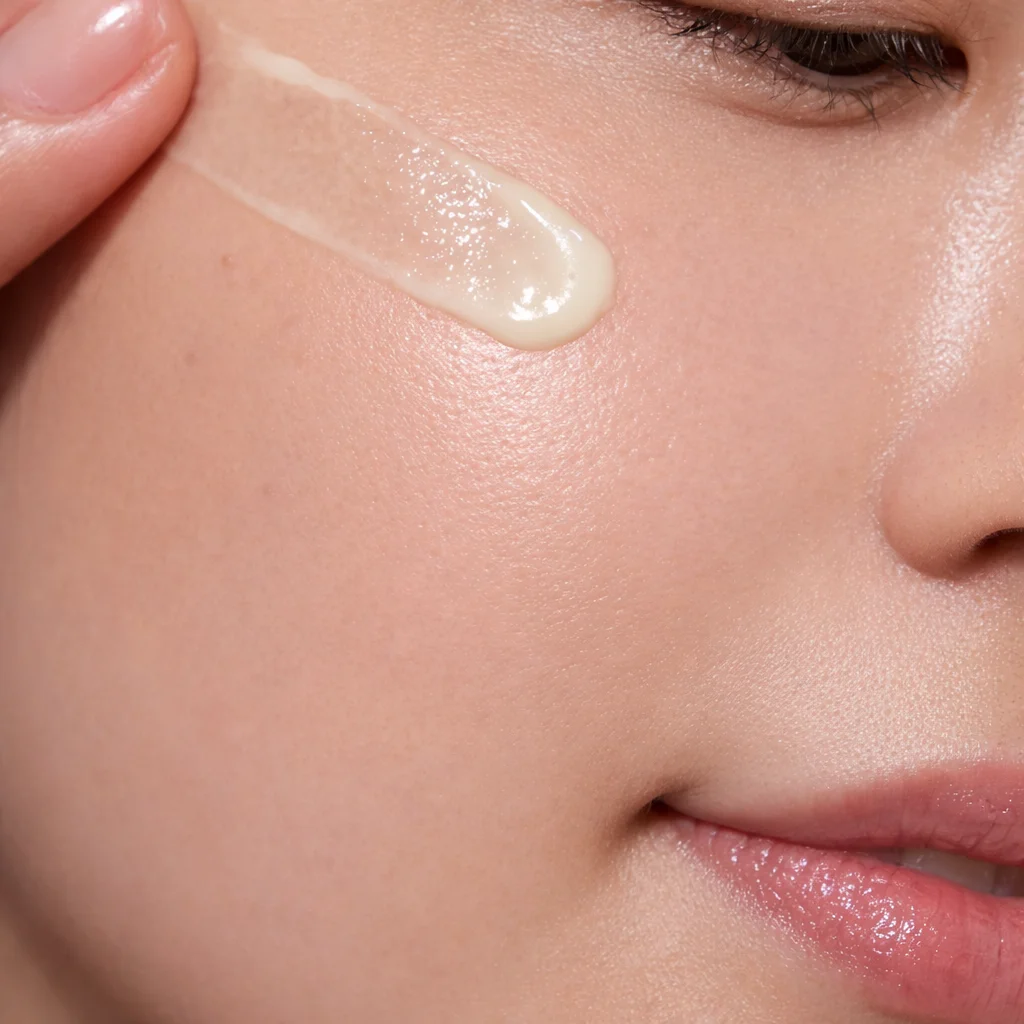
Retinal Cream / Night Cream

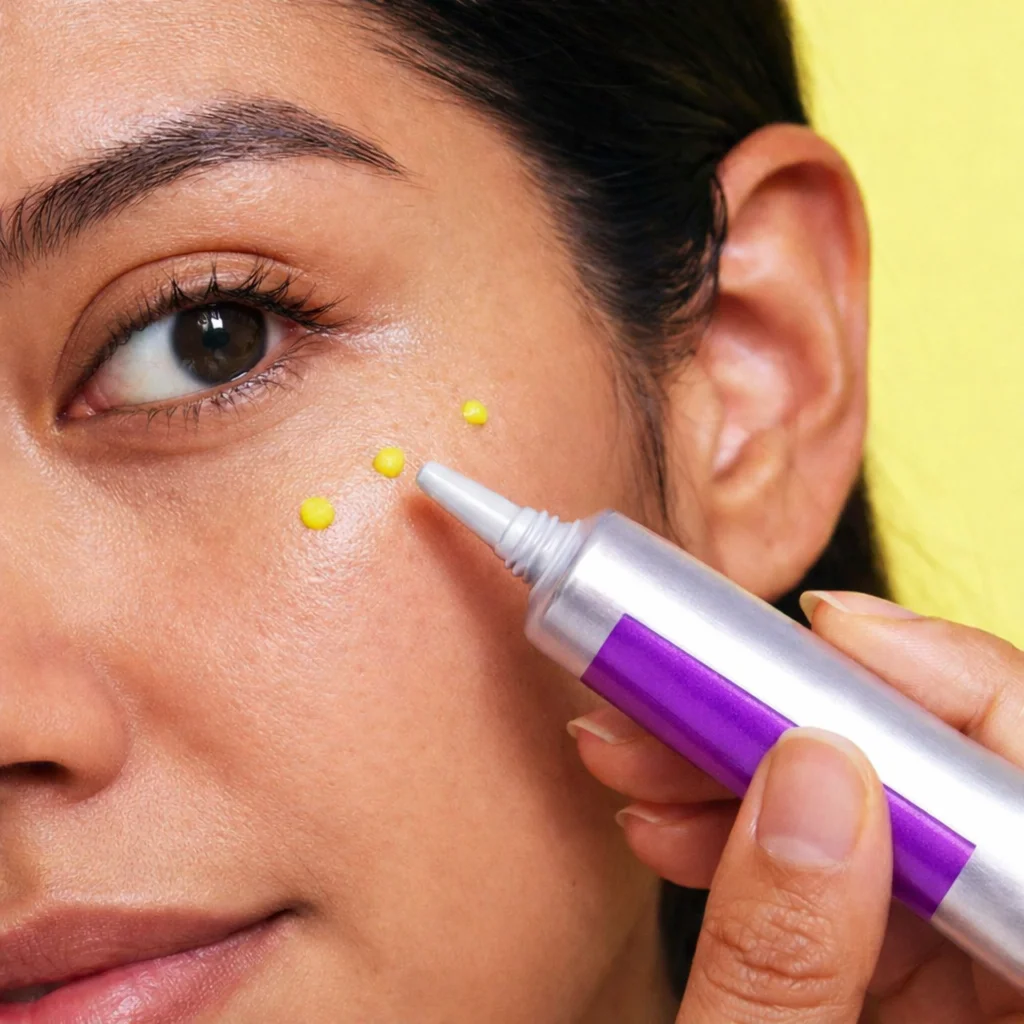
Retinal Eye Cream

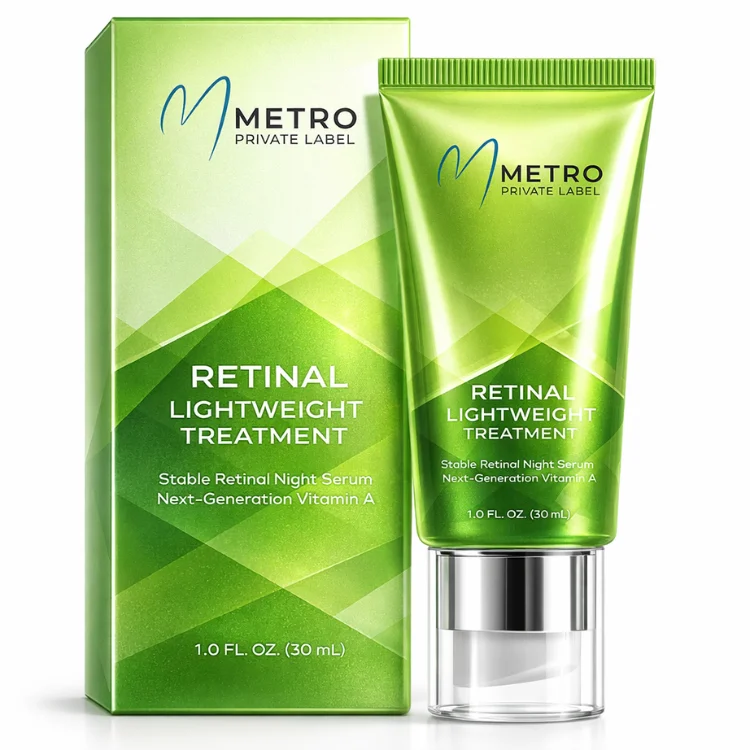
Retinal Emulsion / Lightweight Treatment

Build a Retinal Skincare Line That Actually Sells

At Metro Private Label, we know retinal skincare isn’t chosen lightly. Brands don’t use retinal to follow trends—they use it to deliver faster visible results, stronger positioning, and higher customer expectations. For consumers, it’s about how their skin looks and feels after weeks of use. For brands, it’s about conversion, reviews, and whether the product earns repeat orders without irritation complaints. That’s why we approach private label retinal skincare from a sales-first, risk-controlled perspective, not just a formulation concept.
 
When we develop retinal products, we start with what already works in real markets. We study top-selling Amazon retinal serums, dermatologist-inspired EU brands, and fast-moving DTC launches to understand what customers actually respond to—texture, tolerance, strength levels, and long-term usability. Retinal products fail when they feel too harsh, unstable, or confusing to use. Our job is to help you avoid those problems before launch, not troubleshoot them after negative reviews appear.
s your manufacturing partner, we focus on making your retinal skincare commercially usable from day one. That means guiding retinal dosage strategy, choosing the right delivery system, controlling irritation risk, and ensuring stability through shipping and storage. We also support the execution details that matter to real brands: compliant INCI lists, documentation support for EU/UK/US markets, and packaging options that work for e-commerce, clinics, or retail shelves. Our goal is simple—help you launch a retinal SKU that fits your channel, your price point, and your long-term growth plan.
 
💡 Our 4 Core Private Label Retinal Skincare Types
1️⃣ Retinal Serum The hero SKU for most brands. Designed for visible anti-aging results, strong positioning, and repeat use—available in beginner to advanced strength concepts.
2️⃣ Retinal Night Cream Barrier-support, recovery-focused formulas combining retinal with ceramides, peptides, or soothing agents to reduce irritation and improve tolerance.
3️⃣ Retinal Emulsion / Lightweight Treatment Fast-absorbing formats for oily, acne-prone, or sensitive skin, ideal for brands targeting first-time retinal users or daily use routines.
4️⃣ Retinal Eye Cream Low-irritation, high-value SKUs built for the delicate eye area, often used as premium line extensions with strong margin potential.
 
🎯 MOQ & Packaging Options (Built for Real Launches)
We keep retinal projects practical and scalable. Most private label retinal programs start around 1,000 units per SKU, depending on formula structure, packaging, and customization level. Packaging options include bottles, airless pumps, tubes, and retail-ready cartons, with support covering formula feasibility, ingredient compatibility, stability planning, and production coordination—so your retinal skincare performs consistently from sampling to repeat production.
If you already have a sales channel and a clear product direction, we’re ready to help you move fast, control risk, and build retinal skincare SKUs that actually convert—not just look good on paper.

More Than Just a Retinal Skincare Manufacturer

At Metro Private Label, we don’t see retinal skincare as a buzz ingredient or a short-term upgrade from retinol. We treat it as a commercial decision. Retinal products carry higher expectations—from performance and tolerance to compliance and customer trust. A successful retinal SKU isn’t about being the strongest on paper. It’s about how evenly it applies, how the skin feels over weeks of use, and whether customers feel confident continuing—and recommending—it. That’s what drives repeat purchases and long-term brand value.

✅ Launch What the Market Already Wants

We don’t guess what might sell. We follow what already works. By tracking Amazon bestsellers, dermatologist-led brands, and real customer feedback, we focus on retinal formats consumers immediately recognize: advanced retinal serums for visible results, barrier-support night creams for recovery, lightweight emulsions for sensitive or acne-prone skin, and low-irritation eye creams for targeted anti-aging. These are products customers already know how to use and trust—making your launch clearer, your messaging easier, and your risk lower from day one.

✅ Small MOQ That Reduces Your Risk

We design our private label retinal programs to be realistic, not restrictive. Most brands start with manageable order quantities to test pricing, tolerance, and market response before scaling. Once your product proves itself, we support expansion—whether that means refining texture, adjusting strength levels, upgrading packaging, or extending the line—without forcing you to change manufacturers or rebuild the formula from scratch.

✅ Visible Results That Win Customer Trust

Retinal skincare doesn’t succeed on first impressions alone. Customers stay when results are visible and the product feels comfortable enough to use consistently. We focus on controlled retinal delivery, irritation management, texture balance, and formula stability—so your product performs reliably through shipping, storage, and daily use. The goal isn’t just strong claims. It’s long-term trust.

✅ Compliance That Makes Export Easy

We prepare retinal skincare for real sales channels, not just samples. From compliant INCI lists and ingredient documentation to label review support and packaging coordination, we help reduce delays and prevent last-minute compliance issues. Whether you sell through e-commerce, distributors, or professional channels, we keep development aligned with practical market requirements—so your launch stays on schedule and your supply chain stays stable.
  • METRO
  • Typical OEM factory
METROTypical OEM factory
$
/year
/year
Minimum order quantity✅ 500 units for startup brands — low-risk entry for first-time founders.❌ 3,000 units minimum, limiting flexibility.
Packaging recommendations✅ Compatibility + visual templates to ensure perfect fit and premium look.❌ Not provided.
Launch support✅ Label compliance & claim copywriting included for export markets.❌ Not available.
Sample delivery time✅ 7–14 days with labeled packaging.❌ Usually 30+ days.
Compliance & Documentation✅ INCI, COA, SDS, GMP-ready — export with confidence.❌ Basic INCI only.
Buy Now

✨ Build a Retinal Skincare Line That Performs Beyond Expectations

When you work with Metro Private Label, you’re not just choosing a retinal skincare factory — you’re working with a team that understands how retinal products are actually used, evaluated, and repurchased. A successful retinal SKU isn’t about pushing the highest percentage or making exaggerated claims. It’s about how smoothly it applies, how skin feels after weeks of use, and whether customers feel confident enough to keep using it — and recommend it. That’s what builds trust, and that’s what turns a first order into long-term sales.
 
Whether you’re developing a beginner-friendly retinal emulsion, a high-performance retinal serum, a barrier-repair night cream, or a low-irritation eye product, we design every project around real customer behavior. Our goal isn’t just to help you launch a retinal product — it’s to help you create one customers immediately understand, feel comfortable using, and come back to buy again.
🧪 Formulation Built for Real-World Retinal Performance
We don’t rely on copy-paste formulas or trend-only concepts. Every retinal product we develop is built around practical performance logic — controlled retinal delivery, irritation management, texture balance, and long-term stability. If there’s a trade-off between faster visible results and skin tolerance, we explain it clearly and help you choose what truly fits your target customer, price point, and sales channel — not just what looks impressive on a spec sheet.
 
📦 Packaging & MOQ Designed for Real Launch Scenarios
Retinal skincare scales smoothly only when formula behavior, packaging choice, and production planning work together. That’s how we approach every project. Most launches begin with practical MOQs, allowing brands to test market response, pricing, and tolerance before scaling. Packaging options include bottles, airless pumps, tubes, and retail-ready cartons — selected to protect formula stability, improve user experience, and support both e-commerce and retail distribution.
 
⚙️ A Clear and Reliable Production Process
We keep development and production structured, transparent, and realistic — from sampling and texture refinement to bulk production, quality control, packaging coordination, and export preparation. We communicate timelines clearly, flag risks early, and align production with real launch schedules instead of overpromising. Think of us as an extension of your operations team, focused on getting your retinal skincare to market smoothly and consistently.
 
🌿 Built for Brands That Plan to Grow
We measure success by how well your retinal skincare performs after launch — not just how fast the first order ships. That’s why we focus on production-stable formulas, scalable packaging options, and documentation ready for online sales, professional channels, and retail distribution. With us, your retinal skincare line is built to launch with confidence, earn repeat purchases, and grow alongside your brand — often further than you originally expected.

第三部份

Who We Work With

We work best with skincare buyers who already have a real plan—either a sales channel, an industry background, or a proven service model. Our job is to make manufacturing feel simple, scalable, and predictable: we listen first, translate your goals into a clear product plan, and deliver something you can confidently sell, reorder, and grow into a real product line.

Clinic Owners

You care about: safety, professional credibility, and products that support client retention.

We work with clinics and professional skincare businesses that need products clients can trust and comfortably use long-term. We focus on practical, low-risk formula direction, professional packaging presentation, and compliance-ready labeling so your products fit naturally into retail shelves, aftercare routines, and repeat-purchase behavior.
Immediate outcome: a clinic-ready product plan, stable production strategy, and a scalable setup for ongoing reorders and line extensions.

Beauty Industry Founders

You care about: ingredient logic, brand differentiation, and long-term scalability.

We support founders who want more than a generic private label product. We help you build skincare with a strong “reason to exist”—from formula direction and skin feel to packaging structure and claims alignment—so your first hero SKU can actually carry the brand. Instead of over-complicating development, we focus on making the product modern, believable, and scalable for future line expansion.
Immediate outcome: a clear concept direction, a workable development roadmap, and a product system that can grow into multiple SKUs.

E-commerce Brand Operators

You care about: speed, consistency, and products that convert without creating review risk.

We help you launch skincare SKUs that are built for real e-commerce performance—fast-moving formats, stable textures, and clear positioning that customers understand in seconds. We also guide you on the details that protect ratings and reduce refunds, like packaging practicality, ingredient communication, and production consistency across batches.
Immediate outcome: a launch-ready product plan, clear MOQ and timeline, and a production setup designed for repeat ordering.

Why this works:
We’re not here to “just produce skincare.” We’re here to help you build products that feel credible, perform consistently, launch smoothly, and scale without supply-chain headaches—so you can focus on sales, brand growth, and customer retention.

FAQs Retinal Skincare

For your convenience, we’ve gathered the most commonly asked questions about our Retinal Skincare . However, should you have any further queries, please don’t hesitate to reach out to us.
1. What types of retinal skincare products can you manufacture?
We focus on the retinal formats the market already understands and buys. This includes retinal serums, retinal night creams, lightweight retinal emulsions, and retinal eye creams. These four categories cover the majority of real demand across Amazon, DTC brands, clinics, and retail channels, and they’re where retinal performs best long term.
Yes—and this is one of the most important parts of retinal development. We help you choose appropriate retinal strength, delivery systems, and supporting ingredients based on your target user, market, and positioning. If there’s a trade-off between faster results and irritation risk, we explain it clearly so you can make an informed decision.
Our standard starting MOQ is around 1,000 units per SKU, depending on formula structure and packaging. We keep entry points realistic so brands can test performance, pricing, and customer response before scaling. Once your product proves itself, scaling is straightforward.
Sampling typically takes 2–4 weeks, depending on how much customization is needed. Bulk production usually follows within 4–6 weeks after sample approval. We always confirm timelines early and flag any risks upfront, especially for retinal stability or packaging compatibility.
Yes. We prepare retinal skincare for real sales channels. This includes compliant INCI lists, ingredient documentation, and support for EU, UK, and US cosmetic requirements. We don’t treat compliance as an afterthought—it’s built into the development process from the start.
Absolutely. Retinal formulas require packaging that protects stability and usability. We support packaging options such as airless pumps, bottles, tubes, and retail-ready cartons, and we check formula–packaging compatibility to reduce leakage, oxidation, or performance issues during shipping and storage.
Both. You can start with proven base formulas for faster launch and lower development cost, or work with us to customize texture, supporting actives, and positioning. We’ll recommend the best route based on your timeline, budget, and channel—not push you into unnecessary customization.
Every retinal product goes through structured checks, including stability planning, ingredient compatibility review, and production quality control. Retinal is a sensitive active, so we pay close attention to formulation balance, storage conditions, and long-term consistency—not just initial performance.
That’s a core part of our approach. We focus on tolerance, texture, and real-world usability—not just lab specs. By controlling delivery, supporting the formula with barrier-friendly ingredients, and matching strength to the right user profile, we help reduce misuse and customer dissatisfaction after launch.
Yes. We work with brands across the EU, UK, US, Middle East, and Asia. We support export documentation, compliance alignment, and shipping coordination so your retinal skincare arrives ready for sale—not stuck due to avoidable issues.

Metro Private Label in Numbers

Happy Clients
0 +
Million-dollar Buyers
0 +
Formulation
0 +
Professional Staffs
0 +

Your Ultimate Guide to Retinal Skincare

If you’re planning to launch retinal skincare—whether as your first active-focused SKU or as an upgrade from retinol—you’re not just choosing a “stronger ingredient.” You’re stepping into one of the most technically sensitive yet commercially powerful categories in modern skincare. Retinal sits at a unique intersection: it delivers visible results faster than retinol, but only succeeds when tolerance, usage logic, and execution are handled correctly. For brands, this means retinal products can either become long-term bestsellers—or high-risk SKUs that struggle with complaints, returns, and unstable reviews.
 
Over the past few years, we’ve seen retinal skincare move from niche, expert-only positioning into mainstream demand across Amazon, DTC brands, and professional clinic environments. At Metro Private Label, we’ve worked with brands that succeeded by treating retinal as a system, not just an active—planning formulation balance, packaging protection, usage guidance, compliance, and launch strategy together from the start. We’ve also seen projects stall when these decisions were delayed or handled in isolation. With retinal, the difference between scaling and struggling usually happens long before production begins.
 
This guide is built from what we’ve learned developing private label retinal skincare across real sales channels and real market constraints. Rather than focusing only on ingredient theory, we share how retinal products actually behave in commercial use—how strength choices affect reviews, how packaging impacts stability, how positioning changes by channel, and how preparation determines whether a launch moves smoothly or gets stuck. Our goal is simple: to help you approach retinal skincare with clarity, confidence, and a strategy that supports long-term sales instead of short-term experimentation.

Table of Contents

Retinal vs Retinol: Which One Makes Commercial Sense for Your Brand?

Before deciding whether retinal or retinol belongs in a product line, I always step back from ingredient hype and look at commercial reality. Both ingredients work, both are proven, and both can fail badly when used in the wrong brand context. The real decision is not about which one is stronger, but which one aligns with your customer’s expectations, your channel strategy, and your tolerance for risk. In my experience working with brands at different stages, choosing the wrong retinoid rarely shows up in the lab—it shows up later in reviews, returns, and stalled reorders.
 
Why Retinol Still Makes Sense for Many Brands
Retinol continues to perform commercially because it fits naturally into how most consumers already think about skincare. When I look at successful retinol launches, what stands out is not dramatic transformation but predictability. Customers understand retinol, they expect gradual results, and they are more forgiving during the adjustment phase. This familiarity reduces education cost, misuse, and customer anxiety, all of which directly affect conversion rates and review quality. For brands targeting first-time active users or broad e-commerce audiences, retinol often delivers smoother launches and more stable repeat purchasing.
 
What Changes When a Brand Moves from Retinol to Retinal
Retinal changes the conversation from accessibility to performance credibility. I see brands choose retinal when they want to signal advancement, seriousness, or clinical thinking. Because retinal converts more efficiently into retinoic acid, customers often notice results faster, but that same speed increases sensitivity risk and raises expectations. From a business perspective, retinal demands more discipline. The formula, packaging, and usage guidance must work together, otherwise the brand absorbs the cost of confusion and irritation complaints instead of enjoying the benefits of differentiation.
 
Performance Alone Does Not Guarantee Commercial Success
One of the most common assumptions I challenge is the idea that faster visible results automatically lead to better sales. In reality, skincare products succeed when customers feel safe using them repeatedly. Retinal can outperform retinol on paper, but if customers experience discomfort early, they lose trust before benefits appear. I’ve seen brands with excellent retinal formulas struggle simply because tolerance was underestimated. Consistency beats intensity in commercial skincare, and that principle matters even more with stronger actives.
 
How Positioning Determines Whether Retinal Works or Backfires
Retinal performs best when the brand narrative supports it. I see strong results when brands already educate their customers, use precise language, and avoid exaggerated promises. In these cases, retinal feels like a logical upgrade rather than a risky leap. When brands rely on impulse buying or overly simplified messaging, retinal often creates friction. Customers feel unsure how to use it, how often to apply it, or whether discomfort is normal. Ingredient strength only becomes an advantage when positioning removes uncertainty instead of amplifying it.
 
The Role of Price Tolerance in Retinal Decisions
Price and retinal are closely linked. Customers are generally willing to pay more for retinal, but higher prices increase scrutiny. When I evaluate whether retinal makes sense for a brand, I always ask whether the customer is ready to judge texture, packaging, and results more critically. Premium positioning magnifies both praise and dissatisfaction. If the brand experience does not fully support the price, retinal turns from a selling point into a pressure point that weakens long-term loyalty.
 
When Retinal Is a Strategic Upgrade Rather Than a Risk
Retinal works best as an intentional step forward, not as a shortcut to sounding advanced. In my experience, brands succeed with retinal when they already understand their audience, have stable distribution, and plan for long-term usage rather than one-time excitement. Retinal thrives in systems where education, tolerance, and consistency are built into the product story. It becomes especially effective when launched as a second or third SKU rather than the very first active product a brand offers.
 
Why Retinol Is Sometimes the More Disciplined Choice
Choosing retinol is not a sign of being behind the market. In many cases, it is the more controlled and commercially responsible decision. Retinol allows brands to test messaging, pricing, and user behavior with less downside risk. I often recommend retinol to brands still refining their audience or expanding into new channels, because it offers flexibility and stability while still delivering credible results. Growth built on reliability tends to last longer than growth built on intensity.
 
Making the Decision Without Chasing Ingredient Trends
When brands ask me which ingredient they should choose, I encourage them to stop comparing actives and start evaluating readiness. Retinal and retinol both have a place, but only when they match the brand’s maturity, customer knowledge, and operational discipline. The strongest brands I work with are not chasing the most powerful ingredient—they are choosing the ingredient their customers will trust, finish, and repurchase. That decision, more than any chemical advantage, is what ultimately determines commercial success.

How to Choose the Right Retinal Strength Without Increasing Complaint Risk

Whenever retinal strength comes up in a project discussion, I can almost predict where things might go wrong. Brands naturally want visible results, and retinal has earned its reputation for working faster than retinol. But in real-world launches, the brands that suffer the most complaints are rarely the ones with weak formulas. They are usually the ones that treated strength as a marketing advantage instead of a usage decision. In my experience, retinal success depends far more on how users experience the product over time than on how powerful it looks on a label.
 
Why Retinal Percentage Is the Least Reliable Decision Metric
I’ve learned to be cautious whenever a conversation starts and ends with percentages. Retinal percentage feels like a clear benchmark, but in practice it’s a poor predictor of customer satisfaction. Two products with the same retinal level can behave completely differently on skin. Customers never experience percentages; they experience sensations. When brands choose strength based on numbers alone, they often discover too late that the formula feels harsher than expected, even though the percentage looks conservative on paper.
 
How Skin Perceives Retinal in Daily Use
What customers describe as irritation is rarely a chemical issue alone. It’s a perception issue shaped by how quickly retinal becomes active on the skin. I pay close attention to this because early sensations determine whether users trust the product. If redness or discomfort appears before customers feel benefits, confidence drops immediately. Once that trust is broken, no amount of education can fully recover the experience. This is why the early weeks of use matter far more than theoretical long-term performance.
 
Delivery Speed Matters More Than Absolute Strength
One detail many brands underestimate is how delivery speed shapes tolerance. Retinal that reaches the skin too aggressively can overwhelm even experienced users. I’ve seen formulas with moderate strength fail simply because the delivery system released retinal too quickly. On the other hand, well-controlled delivery can make a stronger retinal feel gentler and more predictable. This is why I never discuss strength without discussing how the ingredient is carried, dispersed, and released across the skin surface.
 
Supporting Ingredients Define Whether Retinal Feels Harsh or Refined
Retinal rarely fails alone. It fails when it’s isolated. In every successful retinal formula I’ve worked on, the supporting ingredients do more than decorate the INCI list. They actively shape tolerance by reinforcing the skin barrier, managing moisture loss, and smoothing the transition phase. When brands cut corners here, irritation complaints spike, even at lower retinal strengths. The irony is that adding proper support often allows retinal to work better long term, not weaker.
 
Beginner Users Judge Retinal by Comfort, Not Claims
For first-time retinal users, comfort determines everything. I’ve watched beginner-focused products collapse because brands assumed education alone could overcome discomfort. Most users don’t want to “push through” irritation. They want reassurance. When I design retinal strength for beginners, I focus on making the product feel safe enough to use consistently. Consistency is what builds visible change and positive reviews. If beginners stop using the product after two weeks, even the best formula becomes commercially irrelevant.
 
Experienced Users Still Have Limits, Even If They Know Retinal
There’s a misconception that experienced users can tolerate anything. In reality, experienced users are often more critical. They know what good retinal feels like, and they notice immediately when something feels unbalanced. I’ve seen advanced products receive harsher feedback than beginner ones because expectations were higher. For this audience, retinal strength must feel intentional and controlled, not aggressive for the sake of sounding advanced. Precision matters more than intensity.
 
Why Clinics Must Treat Retinal Strength as a Trust Issue
When retinal is used in a clinical or aesthetic context, the stakes change completely. A single negative reaction affects not just the product, but the professional’s credibility. In clinic projects, I always approach strength conservatively, even when the audience is experienced. Clinics benefit from reliability and repeat usage far more than rapid transformation. A retinal product that patients trust between treatments builds long-term loyalty and protects the clinic’s reputation, which is far more valuable than short-term impact.
 
Complaint Risk Is Built Into the Formula Long Before Launch
Brands often try to manage complaints through customer service scripts or usage instructions after launch. By that point, the damage is already done. In my experience, complaint risk is determined much earlier, during formulation decisions. Strength choice, delivery behavior, and support ingredients shape how the product behaves in real hands, not just in controlled testing. When these elements are aligned, complaint rates naturally stay low without constant intervention.
 
Designing Retinal Strength for Long-Term Reviews, Not First Impressions
The most important question I ask brands is not how strong they want the product to be, but how they want customers to feel after three months of use. Retinal products that survive in the market are the ones customers trust enough to finish, repurchase, and recommend. I’ve learned that strength chosen with restraint almost always outperforms strength chosen for impact. In the end, the right retinal strength is the one that disappears into a customer’s routine rather than dominating it.

The Four Retinal Product Types the Market Actually Buys

Whenever I review retinal projects that failed to scale, the problem is rarely the formula itself. Most of the time, the issue is that the brand chose a format the market didn’t ask for. Retinal is already a high-cognition ingredient, which means customers approach it with caution. When brands add unnecessary complexity on top of that, friction increases. Over time, I’ve learned that the retinal products that sell consistently fall into just four formats, not because the industry lacks creativity, but because these formats align with how people actually use retinal in real life.
 
Why Retinal Serums Become the First Commercial Anchor
Retinal serums dominate the market because they match customer expectations almost perfectly. When users buy a retinal product, they expect visible performance, and serums are culturally associated with potency and results. From my perspective, serums also give brands the clearest storytelling advantage. It’s easier to explain strength levels, usage frequency, and progression in a serum format than in any other. Operationally, serums allow controlled dosing and predictable skin contact, which helps reduce misuse. This combination of expectation, education, and control is why serums almost always become the first SKU that gains traction.
 
How Serums Support Long-Term Line Expansion
Beyond initial sales, serums play a strategic role in brand growth. I often see brands use a retinal serum as a reference point for everything that follows. Once customers trust the serum, they are far more open to trying related products from the same line. This trust lowers acquisition costs and increases cross-selling potential. From a manufacturing standpoint, serums also provide data quickly. Feedback on tolerance, performance, and usage habits becomes clear early, giving brands a stable foundation for future expansion decisions.
 
Why Night Creams Reframe Retinal as Recovery Rather Than Aggression
Night creams succeed because they change the emotional perception of retinal. Many customers associate strong actives with discomfort, but a cream format signals nourishment and repair. I’ve seen night creams perform particularly well with customers who previously struggled with serums but still want results. The texture itself encourages proper usage, usually once per night, which reduces over-application. This natural behavior control lowers complaint rates and improves satisfaction. From a commercial view, night creams often attract a more patient, loyal customer who values comfort as much as outcome.
 
Night Creams as a Bridge Between Performance and Tolerance
What makes night creams powerful is their ability to bridge two conflicting needs: results and reassurance. I’ve worked on projects where a retinal cream outsold a serum simply because customers felt more confident applying it regularly. This format also allows brands to emphasize barrier support without diluting the active’s credibility. In many cases, the cream becomes the product customers stick with the longest, which directly affects lifetime value and repeat purchase metrics.
 
Why Retinal Emulsions Quietly Win in Sensitive and Acne-Prone Segments
Retinal emulsions don’t always get attention during product planning, but they often outperform expectations after launch. Their strength lies in reducing psychological resistance. Lightweight textures feel less threatening, especially to users worried about breakouts or irritation. I’ve seen emulsions succeed where serums failed, not because they were weaker, but because users applied them more consistently. Emulsions also integrate easily into daily routines, which increases adherence and long-term effectiveness. For brands expanding beyond core users, this format often becomes the safest entry point.
 
Emulsions as a Risk-Control Tool for Brands
From a risk management perspective, emulsions offer brands a margin of safety. They allow retinal to be introduced gradually without sacrificing credibility. This matters for platforms like Amazon, where misuse leads to immediate negative feedback. I often recommend emulsions to brands prioritizing review stability over dramatic claims. In the long run, products that feel easy to live with generate more sustainable growth than those that demand adjustment and patience from every user.
 
Why Retinal Eye Creams Carry Outsized Strategic Value
Retinal eye creams rarely launch first, but they play an outsized role once a brand gains traction. Eye-area products require precision, and customers know this. When a brand successfully introduces retinal into an eye cream, it signals technical competence and trustworthiness. I’ve noticed that eye creams often convert hesitant customers who were unsure about using retinal on the face. Once trust is established in this delicate area, confidence in the brand increases across the entire range.
 
Eye Creams as Margin and Trust Builders
From a business perspective, retinal eye creams often deliver strong margins with lower volume. They also act as a credibility amplifier. Customers who finish and repurchase an eye product are more likely to remain loyal long term. I’ve seen brands use eye creams not as volume drivers, but as relationship builders, strengthening brand perception and justifying premium positioning across the lineup.
 
Why These Four Formats Dominate Across All Channels
The reason these four product types dominate is not coincidence. Each format corresponds to a specific usage mindset. Serums deliver results, night creams reassure, emulsions ease entry, and eye creams signal precision. Together, they cover nearly every legitimate use case without forcing customers to rethink their routine. Whenever brands try to step outside these boundaries too early, confusion increases and sales slow. Familiarity, especially with a powerful ingredient like retinal, is a commercial advantage.
 
Choosing the Right Hero SKU Is a Question of Audience Maturity
When I help brands choose their first retinal SKU, I don’t ask what they want to make. I ask who they are selling to today. Brands with educated audiences often succeed with serums. Clinics and conservative markets gravitate toward creams and emulsions. Experienced beauty founders may start with a serum but plan an eye cream early. The right hero SKU is the one that fits existing trust levels, not future aspirations.
 
Why Simplicity Outperforms Ambition in Retinal Launches
Retinal products demand respect from both brands and users. I’ve learned that restraint is often the smartest strategy. Launching one clear, well-positioned product creates stronger feedback loops and fewer operational issues. Once that product earns trust, expansion becomes natural. Complexity can come later. The brands that win with retinal are not the ones doing the most, but the ones doing the right thing at the right time.
 
Focusing on What Customers Finish, Not What Looks Impressive
In the end, I judge retinal success by one metric: whether customers finish the product and buy it again. These four formats dominate because they fit seamlessly into real routines. They don’t ask users to relearn skincare. They simply upgrade it. When brands align with this behavior instead of fighting it, retinal becomes a growth engine rather than a risk.
 

How Retinal Products Fit Into EU, UK, and US Cosmetic Compliance

Every time a brand mentions compliance anxiety around retinal, I know the fear usually comes from uncertainty rather than actual regulation. Retinal has developed a reputation for sitting “on the edge” between cosmetic and pharmaceutical, but that reputation is mostly the result of poor communication and rushed launches. In real projects, retinal does not become a regulatory problem because of what it is. It becomes a problem because brands don’t fully understand how regulators evaluate cosmetics in different markets.
 
Why Retinal Is Often Misunderstood as a Regulatory Risk
One of the first clarifications I make is that retinal is not regulated based on how effective it feels. Regulators don’t measure tingling, peeling, or speed of results. They measure ingredient identity, exposure level, and intended use. Retinal sits one step away from retinoic acid, which is where many brands mentally panic, but that proximity does not automatically change its category. When retinal is formulated within cosmetic norms and positioned responsibly, regulators treat it as a cosmetic ingredient, not a medical one.
 
The Role of INCI Lists in Keeping Retinal Clearly Cosmetic
INCI lists are where many compliance issues quietly begin. I’ve seen brands treat the INCI list as an afterthought, only to discover later that inconsistencies triggered questions from distributors or platforms. The purpose of an INCI list is simple: it must accurately reflect what is in the formula and nothing more. Retinal needs to be listed correctly, in the proper order, and consistently across packaging, safety files, and online listings. When those elements align, compliance conversations become routine rather than stressful.
 
Why EU and UK Compliance Feels Strict but Is Actually Predictable
The EU and UK systems often intimidate founders because they appear complex, but in practice they are structured and predictable. The cosmetic safety assessment evaluates retinal not as a headline ingredient, but as part of overall exposure. Concentration, application area, frequency of use, and target user all matter more than the ingredient name itself. I’ve seen retinal products pass EU and UK assessments smoothly when brands prepared the documentation properly and struggled only when they tried to shortcut the process or reuse incomplete files.
 
How Safety Assessments Protect Brands More Than Regulators
What many founders don’t realize is that safety assessments exist as much to protect the brand as the consumer. When a retinal formula is evaluated holistically, it forces clarity around how the product should be used and who it is for. I’ve watched brands avoid future liability simply because the assessment process made them refine usage instructions and strength levels early. In that sense, compliance work often improves the product itself rather than slowing it down.
 
Why Claims Are the Real Compliance Trigger in Europe
In European markets, claims matter more than most brands expect. I’ve seen compliant retinal formulas questioned not because of formulation, but because of language that implied structural skin change or medical outcomes. Retinal does not require pharmaceutical claims to sell well. In fact, brands that focus on appearance-based results tend to perform better long term. When claims stay within cosmetic language, regulators generally remain aligned with the brand’s intent.
 
How the US Cosmetic Framework Shifts the Risk Elsewhere
The US feels easier at first because there is no pre-market approval, but that freedom creates a different kind of risk. Without mandatory pre-checks, brands sometimes push claims too far without realizing it. In my experience, retinal products in the US rarely face issues because of formulation. They face issues because of wording that implies treatment, repair of damage, or alteration of skin function. Staying cosmetic in the US is less about paperwork and more about discipline in communication.
 
Why Amazon Changes the Compliance Conversation Entirely
Selling retinal products on Amazon introduces a layer of scrutiny that many brands underestimate. Amazon is not enforcing cosmetic law directly, but its automated systems flag anything that looks ambiguous. I’ve seen compliant products removed temporarily because ingredient descriptions, claims, or usage instructions didn’t align cleanly. Retinal tends to attract extra attention simply because algorithms associate vitamin A derivatives with regulation. Consistency becomes critical here. When listings, labels, and documentation tell the same story, problems are far less likely.
 
Documentation as a Tool for Speed and Stability
Many founders see documentation as a burden, but I’ve learned that strong documentation accelerates everything. When safety files, INCI lists, and ingredient statements are prepared properly, distributor onboarding becomes faster, platform reviews go smoother, and reorders face fewer interruptions. Retinal products benefit disproportionately from this preparation because questions tend to arise later if information is incomplete. Clear documentation prevents those delays before they happen.
 
Why Clinics Must Approach Retinal Compliance More Conservatively
Clinic and aesthetic brands operate in a trust-based environment. Even when regulations allow flexibility, clinics cannot afford ambiguity. I always advise clinic brands to choose clarity over maximum strength or aggressive positioning. Patients may not understand regulatory nuance, but they understand discomfort and doubt. Conservative compliance protects not just the product, but the professional credibility of the practitioner using it.
 
Keeping Retinal Cosmetic Across Multiple Markets
One of the most reassuring lessons I share with brands is that retinal can remain cosmetic across the EU, UK, and US simultaneously. The key is alignment. When formulation, labeling, claims, and documentation all point in the same direction, regulators and platforms generally agree with the brand’s intent. Problems arise when brands try to sound clinical without accepting the responsibility that comes with it.
 
Why Compliance Is a Competitive Advantage in Retinal Skincare
Over time, I’ve come to see compliance not as a constraint, but as leverage. Brands that understand how retinal fits into cosmetic frameworks launch with fewer surprises and less friction. They spend less time reacting to issues and more time building trust with customers and partners. In a category where many competitors are uncertain or inconsistent, clarity becomes a differentiator. Retinal does not become risky because of regulation. It becomes risky when brands ignore how regulation actually works.

Packaging Choices That Actually Protect Retinal Stability

Whenever a retinal product loses effectiveness after launch, the issue almost never announces itself clearly. Customers don’t say “the retinal degraded.” They say the product feels weaker, harsher, or inconsistent. From my experience, these are packaging failures disguised as formulation problems. Retinal is inherently sensitive, and once a product leaves controlled manufacturing conditions, packaging becomes the only barrier between stability and silent degradation. This is why I treat packaging as part of the active system itself, not as an outer shell.
 
Why Retinal Degrades Quietly Instead of Failing All at Once
One of the most dangerous aspects of retinal instability is that it doesn’t usually fail dramatically. Retinal degrades gradually, and that gradual loss changes user experience before it becomes obvious. I’ve seen products that passed all initial testing perform well for the first few weeks, only to feel increasingly inconsistent halfway through use. Customers interpret this as irritation, loss of efficacy, or poor formulation quality. In reality, the formula didn’t change. The environment around it did, and packaging failed to control that environment.
 
Oxygen Exposure Is the Most Underestimated Threat
Among all external factors, oxygen is the one I worry about most. Retinal reacts readily with oxygen, and even small, repeated exposure accumulates over time. What many brands miss is that oxygen exposure doesn’t come from a single opening. It comes from daily dispensing habits. Every pump, squeeze, or dropper cycle introduces air. Over weeks, that exposure compounds. Packaging that fails to limit oxygen exchange doesn’t just shorten shelf life; it reshapes how the product behaves during normal use.
 
Why Airless Systems Offer Predictability, Not Just Protection
I often recommend airless pumps not because they are premium, but because they are predictable. Predictability is the most valuable trait in retinal skincare. When a product dispenses the same way every time and limits oxygen contact consistently, retinal performance stays stable from the first application to the last. I’ve seen brands recover review scores simply by switching to airless systems, without touching the formula. That’s how powerful controlled exposure can be.
 
The Hidden Cost of Choosing Bottles for Aesthetic Reasons
Bottles are often chosen because they photograph well and feel familiar, but familiarity doesn’t equal suitability. In real usage, bottles introduce repeated oxygen exchange and variable dosing. I’ve seen brands underestimate how long customers keep bottles open during application. Those extra seconds matter. Over time, this leads to uneven potency and a higher chance of irritation complaints. Bottles can work for fast-moving products, but they demand realistic assumptions about usage speed and storage behavior.
 
Why Dropper Bottles Create the Illusion of Precision
Droppers feel precise, but in practice they are one of the least controlled packaging options for retinal. Every time a dropper is squeezed and released, air is pulled into the formula. Users also tend to overexpose droppers to light and air while applying the product. I’ve seen retinal formulas lose consistency halfway through their lifecycle when used in droppers, even though early feedback was positive. This creates a dangerous pattern where early reviews look strong and later reviews turn negative, confusing brands during performance analysis.
 
Tubes as a Functional Compromise When Designed Correctly
Tubes can be effective for retinal products, especially creams and emulsions, but only when material and closure design are taken seriously. I’ve encountered tubes that allowed air backflow with every squeeze, quietly accelerating degradation. Well-designed tubes, on the other hand, limit exposure and protect against light while offering convenience. Tubes succeed when brands treat them as engineered systems, not cost-saving defaults.
 
How Packaging Influences User Behavior and Tolerance
Packaging shapes how users behave more than brands expect. Dispensing size affects how much product is applied. Ease of control influences frequency of use. I’ve seen irritation complaints drop simply because packaging limited over-application. When packaging supports appropriate usage, tolerance improves naturally. This is especially important for retinal, where misuse can turn a well-formulated product into a negative experience.
 
Why E-Commerce Amplifies Packaging Weaknesses Immediately
E-commerce is unforgiving to poor packaging choices. Products travel through heat, vibration, and pressure long before reaching the customer. I’ve seen retinal products arrive already compromised because packaging wasn’t designed for shipping realities. Leakage, oxidation, and temperature sensitivity show up as negative reviews, even though customers never see the logistics chain. For e-commerce brands, packaging stability directly affects review stability.
 
Clinic Use Introduces a Different Stability Challenge
Clinic environments create longer usage cycles and higher trust expectations. Products may be opened repeatedly by professionals and stored for extended periods. In this context, packaging must protect retinal over time, not just during shipping. I prioritize packaging that supports hygiene, consistency, and confidence. Clinics don’t tolerate variability. A retinal product that behaves differently week to week undermines professional credibility.
 
Shelf Life Is a Promise to the Customer, Not a Number on Paper
Shelf life often looks like a regulatory detail, but I treat it as a behavioral commitment. If packaging cannot support real-world usage for the stated duration, the product is overpromising. Retinal degradation doesn’t just reduce efficacy; it changes skin response. I’ve seen brands lose loyal customers simply because products felt different near the end of the bottle. Packaging decisions must match realistic usage timelines, not ideal conditions.
 
Why Packaging Decisions Should Start at the Concept Stage
One of the most common structural mistakes I see is treating packaging as a post-formulation decision. By the time the formula is finalized, packaging options are already constrained. I prefer to evaluate packaging alongside formulation from the start. This allows stability testing to reflect real-world conditions and reduces surprises after launch. Retinal products benefit more than most actives from this integrated planning.
 
Packaging as a Marker of Operational Maturity
Over time, I’ve noticed a clear pattern. Brands that invest thought into retinal packaging experience fewer post-launch corrections and smoother scaling. Customers may not articulate why a product feels reliable, but they feel it. That feeling comes from consistency, and consistency comes from packaging that protects the formula invisibly.
 
Protecting Retinal Means Protecting Long-Term Growth
In the end, packaging protects more than retinal. It protects trust. Retinal rewards discipline and punishes shortcuts. I’ve learned that brands who treat packaging as part of performance, not presentation, build products that survive beyond the first production run. When packaging and formulation work together, retinal becomes a strength rather than a liability, and growth becomes repeatable instead of fragile.
 

How to Position Retinal Products for Different Channels

One of the biggest mistakes I see brands make with retinal is assuming the product speaks for itself. Retinal doesn’t. Retinal amplifies whatever positioning mistakes already exist. The same formula can feel exciting, intimidating, or even risky depending entirely on where and how it is sold. Over time, I’ve learned that retinal is not just an ingredient that changes skin behavior. It changes customer behavior. That’s why positioning retinal correctly by channel is not optional. It’s the difference between controlled growth and constant damage control.
 
Why Amazon Is a High-Speed Judgment Environment for Retinal
Amazon buyers make decisions quickly and emotionally. They rarely read deeply, and they don’t arrive looking for education. In my experience, Amazon customers approach retinal with curiosity mixed with anxiety. They want results, but they fear irritation. This tension shapes everything. If a listing feels too aggressive, they hesitate. If discomfort appears early, they complain publicly. On Amazon, retinal positioning must lower psychological risk immediately, because customers don’t give products time to earn trust privately.
 
How Amazon Customers Interpret Discomfort as Product Failure
What makes Amazon especially dangerous for retinal is how discomfort is interpreted. Adjustment reactions that might be acceptable elsewhere are often framed as defects in reviews. I’ve watched products with perfectly reasonable retinal strength get buried under negative feedback simply because customers weren’t prepared for what they felt. This is why I always soften retinal language on Amazon. I focus on comfort, gradual improvement, and predictability. Amazon rewards products that feel safe to try, not products that sound impressive.
 
Why Texture Expectations Matter More Than Strength on Amazon
Texture can quietly make or break a retinal product on Amazon. Customers expect a certain feel based on reviews and images, and when reality doesn’t match expectation, dissatisfaction escalates quickly. I’ve seen lighter, more forgiving textures outperform stronger formulas simply because they integrate better into daily routines. On Amazon, retinal products succeed when they disappear into a routine instead of dominating it. Comfort becomes the strongest conversion tool.
 
Why DTC Websites Allow Retinal to Be Explained, Not Defended
Direct-to-consumer websites change the power dynamic completely. Customers who land on a brand’s own site are willing to listen. They want to understand what they’re buying and why it fits their skin. I use this opportunity to slow the retinal conversation down. Instead of avoiding complexity, I explain progression, frequency, and tolerance honestly. On DTC, retinal doesn’t need to hide. It needs to be framed as intentional.
 
How Retinal Becomes a Brand Credibility Signal on DTC
On a DTC site, retinal is rarely just a product. It’s a statement. Customers interpret retinal as a signal that the brand understands advanced skincare. This makes positioning delicate. I’ve seen brands lose trust by overselling retinal benefits without explaining boundaries. The brands that succeed use retinal to demonstrate discipline, not bravado. They show restraint, explain who the product is for, and clarify who should wait. This honesty strengthens brand equity instead of weakening it.
 
Why DTC Customers Accept Progression When It’s Explained Properly
Unlike Amazon shoppers, DTC customers tolerate nuance. They understand that retinal requires adjustment. They are more willing to follow instructions and wait for results. I’ve seen higher-strength retinal products succeed on DTC simply because customers were prepared for the experience. The key is tone. When guidance feels supportive rather than defensive, customers engage instead of complain.
 
Why Clinics Treat Retinal as Part of Professional Trust
In clinics, retinal is not a sales tool. It’s a trust tool. Patients assume that anything recommended by a practitioner has already been filtered for safety and suitability. This changes everything. I always position retinal in clinics as a maintenance and support product rather than a transformational one. The goal is not excitement. The goal is confidence. Clinics succeed with retinal when it reinforces professional authority, not when it competes with treatments.
 
How Clinics View Irritation as a Reputation Risk, Not a Trade-Off
What many e-commerce brands underestimate is how intolerant clinics are of variability. Even mild irritation can undermine patient confidence. I’ve seen clinics abandon retinal products entirely after isolated complaints, regardless of overall performance. This is why clinic positioning emphasizes stability, routine use, and skin comfort. Retinal must feel like a controlled extension of care, not an experiment.
 
Why Strength Is Almost Irrelevant in Clinic Positioning
In professional settings, strength is rarely discussed openly. Patients trust the practitioner to decide what is appropriate. I’ve learned that the moment a product emphasizes strength too loudly, it creates doubt. Clinics prefer retinal products that sound measured and intentional. The focus shifts to long-term skin management rather than rapid change. This positioning protects both the patient and the clinic’s credibility.
 
How Usage Instructions Must Adapt to Channel Behavior
Usage guidance is one of the most underestimated variables in retinal success. On Amazon, instructions must be simple and conservative, because customers skim. On DTC sites, they can be educational and layered, because customers read. In clinics, instructions should feel authoritative and reassuring, because patients follow guidance differently. I’ve seen the same product generate wildly different outcomes simply because usage instructions were adapted correctly to the channel.
 
Why Copying One Channel’s Messaging Into Another Backfires
One of the most common scaling mistakes I see is brands copying Amazon messaging into DTC or clinic environments, or vice versa. Retinal punishes this shortcut. Each channel carries its own expectations, risks, and tolerance thresholds. When messaging doesn’t match context, confusion increases and trust erodes. Retinal doesn’t forgive misplaced tone.
 
Channel-Specific Positioning as a Form of Risk Management
Over time, I’ve stopped thinking of channel positioning as marketing. I think of it as risk management. Retinal products carry inherent sensitivity, both chemically and emotionally. Aligning claims, texture expectations, and usage guidance with the channel reduces misuse, complaints, and returns. Brands that respect this usually scale with fewer interruptions.
 
Why Long-Term Retinal Success Depends on Context Awareness
The brands that succeed with retinal don’t ask whether the product is good. They ask whether the product makes sense where it’s being sold. Amazon rewards predictability, DTC rewards transparency, and clinics reward consistency. When positioning reflects those realities, retinal becomes an asset instead of a liability. I’ve learned that retinal doesn’t fail because it’s difficult. It fails because brands forget that context is part of the formula.

Retinal for Clinics: Performance Without Overstimulation

When clinics ask me about retinal, the conversation rarely starts with excitement. It usually starts with caution. Clinics already understand retinal’s power, but power is not what keeps a clinic running smoothly. Control does. In a professional environment, retinal must deliver visible improvement without destabilizing the skin, the treatment schedule, or patient trust. I’ve learned that retinal success in clinics is not about pushing limits. It’s about designing stability into every layer of the experience.
 
Why Clinics Must Redefine What “Good Results” Actually Mean
In retail, results are often framed as speed or intensity. In clinics, results are measured differently. A good result is skin that improves steadily without setbacks. I always remind clinic partners that patients don’t evaluate retinal by how strong it feels. They evaluate it by whether it disrupts their progress. Redness, flaking, or sensitivity may be acceptable to some consumers, but in clinics, those reactions feel like failure. Retinal must improve skin while preserving continuity of care.
 
How Clinical Skin Differs From Home-Care Skin
Clinical skin is not neutral skin. It is often post-treatment, sensitized, or in recovery. This changes how retinal behaves. I’ve seen the same retinal formula feel gentle in a home-care context and problematic after procedures. Clinics must assume a narrower margin for error. Retinal should be introduced as skin stability returns, not while the barrier is compromised. This sequencing is critical, and ignoring it is one of the fastest ways to trigger complaints.
 
Why Overstimulation Undermines Professional Authority
Overstimulation does more than irritate skin. It creates doubt. Patients trust clinics because they expect precision and judgment. When a product causes unexpected reactions, that trust erodes quickly. I’ve seen clinics lose confidence in entire retail programs because one retinal product felt unpredictable. Retinal must behave in a way that reinforces the practitioner’s authority, not challenge it. Quiet performance protects credibility far better than dramatic effects.
 
Retinal as a Tool for Long-Term Skin Conditioning
In clinics, retinal works best when framed as a conditioning tool rather than a corrective intervention. I position retinal as something that trains the skin over time, improving resilience and texture gradually. This framing aligns with how clinics think about skin health. Patients are more compliant when they understand retinal as part of ongoing care rather than a temporary fix. Compliance is what ultimately drives results and repeat revenue.
 
How Texture Influences Patient Compliance
Texture plays a larger role in clinics than many brands expect. Patients associate certain textures with safety and professionalism. I’ve seen calming, supportive textures improve compliance even when the retinal strength was modest. When a product feels reassuring on application, patients are less likely to skip usage or self-modify instructions. This consistency reduces adverse reactions and improves outcomes without needing higher strength.
 
Why Clinics Should Avoid Positioning Retinal as a Hero Product
Hero products work in e-commerce. In clinics, they create imbalance. Retinal should never overshadow treatments or practitioners. I always integrate retinal into a system that includes cleansing, barrier support, and recovery. When retinal feels like one part of a broader plan, patients respect its role and limitations. This system-based positioning prevents overuse and reinforces professional guidance.
 
How Retinal Supports Treatment Longevity Between Visits
One of the most valuable roles retinal plays in clinics is maintaining results between appointments. I position retinal as a bridge that extends the benefits of in-clinic treatments rather than replacing them. Patients who use retinal consistently often return with skin that responds better to future procedures. This creates a positive feedback loop that strengthens both treatment outcomes and patient loyalty.
 
Why Conservative Language Builds Stronger Patient Trust
In clinical environments, language matters as much as formulation. Patients trust practitioners who sound measured and confident. I avoid exaggerated claims and focus on visible improvement, comfort, and long-term skin quality. When expectations are set conservatively, outcomes feel successful rather than disappointing. Retinal does not need dramatic promises to perform well in clinics. It needs credibility.
 
Managing Patient Expectations Without Creating Anxiety
Expectation management is one of the most delicate parts of clinical retinal use. I never frame retinal as dangerous or aggressive, but I also don’t oversimplify it. Patients respond best when retinal is explained as gradual and controllable. This balanced explanation reduces fear while preventing unrealistic expectations. When patients know what to expect, they are less likely to misinterpret normal sensations as problems.
 
Why Clear Instructions Protect the Clinic More Than the Patient
Instructions in clinics are not just educational. They are protective. I’ve seen minor confusion around frequency or timing lead to unnecessary irritation. In professional settings, instructions must be simple, authoritative, and consistent. When guidance is clear, patients follow it. When patients follow it, outcomes stabilize. Stable outcomes protect the clinic’s reputation.
 
How Retinal Becomes a Reliable Source of Repeat Revenue
Repeat revenue in clinics comes from trust, not novelty. Retinal products that patients finish without hesitation become automatic reorders. I’ve seen clinics achieve stronger retail performance with moderate retinal formulas simply because patients felt safe using them long term. This safety drives consistency, and consistency drives revenue.
 
Why Clinics Must Value Stability Over Innovation
Innovation has its place, but clinics prioritize reliability. I’ve watched clinics reject innovative retinal concepts simply because they felt unpredictable. Stability allows clinics to standardize protocols and train staff confidently. Retinal products that behave consistently over time become part of the clinic’s operational backbone rather than a recurring risk.
 
Retinal as a Support System, Not a Standalone Solution
Retinal should never be positioned as a replacement for professional care. It should support it. I always frame retinal as something that prepares, maintains, and enhances treatment outcomes. This positioning aligns retinal with the clinic’s core value proposition instead of competing with it. When retinal strengthens the treatment ecosystem, it strengthens patient loyalty.
 
Why Clinical Retinal Success Is Built on Trust, Not Intensity
After years of working with clinics, I’ve learned that intensity impresses briefly, but trust sustains growth. Clinics succeed with retinal when patients feel confident enough to use it continuously. That confidence comes from thoughtful formulation, restrained positioning, and clear integration into professional care plans. Retinal doesn’t need to announce its power in clinics. It needs to prove it quietly over time.
 
Building a Retinal Program Clinics Can Stand Behind
At the end of the day, clinics don’t just sell skincare. They sell assurance. Retinal products that deliver performance without overstimulation protect that assurance. When retinal is used as a long-term management tool rather than a short-term intervention, it strengthens outcomes, supports repeat revenue, and reinforces professional credibility. That balance is not optional in clinics. It is the foundation of sustainable success.

From First SKU to Full Line: Scaling a Retinal Skincare Range

Launching the first retinal product is usually the easy part. Scaling it into a coherent range is where brands either mature or unravel. I’ve watched many brands celebrate their first successful SKU, only to lose momentum when expansion created confusion instead of clarity. Retinal is unforgiving in this phase. It exposes whether a brand understands its own product logic or is simply reacting to short-term success.
 
Why the First Retinal SKU Becomes a Psychological Anchor
The first retinal product doesn’t just set technical expectations. It sets emotional ones. Customers subconsciously use it as a benchmark for safety, performance, and brand judgment. I’ve learned that once customers trust that first experience, they project that trust forward. If expansion contradicts that initial feeling, doubt appears quickly. Scaling retinal is less about adding variety and more about protecting that original sense of reassurance.
 
Separating Sales Success From Strategic Success
One of the most dangerous moments in scaling is mistaking sales velocity for readiness to expand. I always pause brands here. Strong sales don’t automatically explain why customers stayed, repurchased, or recommended the product. Before adding another SKU, I study complaint patterns, usage behavior, and repeat purchase timing. Scaling should amplify proven behavior, not chase momentum blindly. Retinal punishes brands that skip this reflection stage.
 
Why Serum Dominates as the First Foundation Product
Retinal serums succeed as first SKUs because they align with how customers think about actives. Serums feel purposeful, controlled, and familiar. From a strategic standpoint, serums also give brands the cleanest learning signal. Customers clearly express tolerance, irritation, and perceived results. This data becomes the blueprint for every product that follows. When the serum is misunderstood or poorly positioned, every future SKU inherits that weakness.
 
How to Read the Serum’s Performance Beyond Reviews
Reviews alone never tell the full story. I look at how long customers use the serum, how often they repurchase, and what questions customer service receives. These signals reveal whether customers trust the product or merely tolerate it. A serum that sells well but generates constant “how should I use this” questions is not ready to scale. Clarity must precede expansion.
 
Introducing a Retinal Cream Without Undermining the Serum
The transition from serum to cream is one of the most delicate steps in scaling. I’ve seen brands accidentally weaken their authority by positioning the cream as gentler without explaining why that matters. The cream should not feel like a compromise. It should feel like a choice. I frame creams as support-oriented, comfort-driven, and routine-stabilizing. When customers understand that the cream offers a different experience rather than lower effectiveness, trust remains intact.
 
Texture Continuity as the Silent Connector Between SKUs
Customers notice texture changes immediately, even if they can’t describe them. I’ve learned that drastic texture shifts create subconscious friction. Successful retinal lines maintain a sensory thread across products. The serum, cream, and eye product should feel related, even if their textures differ. This continuity tells the customer that the brand is deliberate rather than experimental.
 
When to Introduce a Retinal Eye Product Without Raising Anxiety
Eye products amplify scrutiny. Customers are cautious around the eye area, and retinal increases that sensitivity. I never recommend launching an eye product until the face products have earned trust. When the timing is right, the eye product becomes a confidence signal. It tells customers the brand understands control. Introduced too early, it creates fear. Introduced at the right moment, it strengthens the entire range.
 
Why Eye Products Are More About Trust Than Volume
Retinal eye products rarely become volume drivers immediately. Their value lies elsewhere. They raise perceived expertise and justify premium positioning. I’ve seen brands gain credibility across their entire line simply because the eye product performed safely. The eye product doesn’t need to outsell the serum. It needs to reassure the customer that the brand knows what it’s doing.
 
Managing Strength Progression Without Creating Obsolescence
As lines expand, brands feel pressure to introduce stronger options. This is where many mistakes happen. Customers should never feel that their original product has become outdated. I design strength progression as parallel paths, not linear upgrades. The original SKU remains valid, while stronger options exist for specific users. This preserves loyalty and prevents fear-driven switching.
 
Why Packaging Evolution Must Be Subtle and Familiar
Packaging changes carry emotional weight. When packaging shifts too abruptly, customers assume the formula has changed, even if it hasn’t. I prefer packaging evolution that feels like refinement rather than reinvention. Retinal products benefit from visual stability because it reinforces the idea of consistency. Familiarity builds confidence, and confidence drives repeat purchases.
 
The Cost of Changing Manufacturers Mid-Expansion
Switching manufacturers during expansion is one of the most expensive mistakes brands make, even when the formula appears identical. Small differences in raw material sourcing, processing, or texture behavior become obvious when products are used together. I’ve seen brands lose their sensory continuity overnight because of a factory change. Staying with one manufacturer preserves institutional memory and protects the logic of the line.
 
Using Customer Feedback as a Gate, Not a Steering Wheel
Feedback is valuable, but it must be filtered. I don’t expand because a few customers ask for something. I expand when patterns repeat consistently across time and channels. Scaling retinal should respond to stable demand, not noise. This discipline prevents bloated product lines and operational strain.
 
Why Fewer SKUs Often Create Stronger Revenue
More products do not automatically mean more growth. I’ve seen focused retinal lines outperform broader ones because customers understood them better. Each SKU had a clear role, and staff could explain the line confidently. Retinal rewards brands that respect cognitive simplicity.
 
Building a Retinal Line That Grows With the Customer’s Confidence
The most successful retinal lines mirror the customer’s learning curve. Customers start cautiously, gain confidence, and then explore further. I design expansion to support that journey. When customers feel guided rather than pushed, loyalty deepens naturally.
 
Scaling Retinal as a Measure of Brand Discipline
Scaling retinal exposes whether a brand is reactive or intentional. Retinal doesn’t tolerate chaos well. It demands clarity, patience, and respect for customer psychology. Brands that scale slowly but coherently often outperform those that expand aggressively but inconsistently.
 
Turning One Product Into a System Customers Trust
At its best, a retinal line feels like a system, not a collection. Customers know where they start, where they can go next, and when they should stop. That clarity creates confidence. I’ve watched brands turn a single well-managed SKU into a long-term growth engine simply by protecting logic at every expansion step.
 
Why Sustainable Retinal Growth Is Built on Restraint
Restraint is often misunderstood as hesitation. In reality, it’s a form of confidence. Brands that scale retinal carefully send a signal that they value consistency over noise. Retinal rewards that mindset. When expansion feels measured and intentional, growth becomes stable, predictable, and defensible.
 

Common Mistakes Brands Make When Launching Retinal Skincare

Whenever a brand tells me their retinal launch “didn’t go as planned,” I already know the formula is probably not the real issue. Retinal failures rarely come from incompetence. They come from optimism. Brands assume that because retinal is scientifically validated, commercial success will follow automatically. In reality, retinal exposes every weak link in product strategy, execution, and communication. What makes it dangerous is not that it fails loudly, but that it fails gradually while damaging trust.
 
Treating Retinal Strength as a Marketing Asset Instead of a User Variable
One of the most frequent mistakes I encounter is the belief that higher retinal strength equals stronger positioning. On paper, stronger looks better. In real use, stronger narrows the margin for error dramatically. Retinal already works fast. When brands push strength without fully understanding their customer’s tolerance, discomfort shows up before benefits do. Customers don’t reward bravery. They reward products that feel manageable. I’ve seen brands lose months of progress simply because they framed strength as a selling point rather than a responsibility.
 
Overestimating the Customer’s Ability to Self-Regulate Use
Many brands assume their audience knows how to use retinal correctly. This assumption is almost always wrong. Even experienced skincare users misjudge frequency, layering, or amount when guidance is unclear. Retinal amplifies misuse faster than most actives. I’ve seen perfectly balanced formulas generate complaints simply because customers applied them too often in the first week. When brands rely on customer intuition instead of clear direction, they hand control to chance.
 
Writing Usage Instructions That Sound Safe but Mean Nothing
Another subtle but damaging mistake is vague instruction language. Phrases like “use as tolerated” or “apply nightly if comfortable” sound cautious but provide no real guidance. Customers interpret these phrases differently, and retinal punishes inconsistency. I’ve learned that effective instructions must reduce interpretation, not invite it. When instructions fail to anchor behavior, irritation becomes inevitable, and the brand absorbs the blame.
 
Designing the Formula for Testing Conditions, Not Real Life
Laboratory testing creates a false sense of security when brands don’t account for real-world behavior. Retinal products are used in bathrooms, under varied lighting, heat, and storage habits. I’ve seen brands trust stability data without considering how packaging and user habits alter exposure. The formula didn’t change, but the environment did. Retinal reacts to those changes quietly, and customers feel the difference long before brands notice a pattern.
 
Choosing Packaging That Flatters the Brand but Betrays the Formula
Packaging is one of the most underestimated risk factors in retinal launches. I’ve watched brands choose droppers, clear bottles, or decorative jars because they looked premium. Weeks later, customers complained about inconsistency, irritation, or loss of effect. Retinal doesn’t care about aesthetics. It cares about exposure to air and light. When packaging fails, customers don’t blame the container. They blame the product and, by extension, the brand.
 
Finalizing Packaging After the Formula Is “Done”
Another recurring mistake is treating packaging as a final cosmetic decision rather than a functional one. By the time the formula is approved, packaging choices are already constrained. I’ve seen brands forced into compromises because timelines were tight and packaging compatibility wasn’t tested early enough. Retinal products punish late decisions. When packaging and formulation aren’t developed together, instability shows up after launch, when fixes are most expensive.
 
Letting Marketing Timelines Override Technical Reality
Launch pressure is one of the most dangerous forces in retinal development. I’ve seen brands compress sampling cycles, skip extended observation, or accept “good enough” compatibility checks to meet a campaign date. Retinal doesn’t tolerate shortcuts. Problems that would have surfaced quietly during a longer development phase instead surface publicly through reviews. Speed feels like progress until it creates friction that slows everything later.
 
Misreading Early Sales as Validation
Strong early sales often create false confidence. Early adopters are typically more tolerant, more motivated, and more forgiving. I’ve seen retinal products perform well initially and then decline as they reached a broader audience. When irritation complaints appear weeks later, brands are often confused. Retinal doesn’t fail immediately when something is wrong. It waits until scale exposes the weakness.
 
Reusing One Positioning Across All Channels
Another common mistake is assuming one message works everywhere. Retinal behaves differently on Amazon, DTC sites, and in clinics because customers behave differently. I’ve seen brands copy detailed DTC education into Amazon listings and confuse shoppers, or use aggressive e-commerce language in clinics and lose professional trust. Retinal demands context. When positioning ignores channel behavior, friction multiplies.
 
Treating Compliance as a Paper Exercise Instead of a Design Constraint
Compliance issues rarely come from retinal itself. They come from inconsistency. I’ve seen brands face disruptions because claims, labels, and listings didn’t tell the same story. Retinal attracts scrutiny, and ambiguity invites problems. When compliance is treated as something to “handle later,” it eventually interrupts growth at the worst possible time.
 
Failing to See How Small Errors Compound
What makes retinal launches especially fragile is how mistakes stack. A slightly over-strong formula combined with vague instructions and oxygen-sensitive packaging creates a chain reaction. Each issue amplifies the others. I’ve seen brands fix one problem while ignoring the system, only to watch complaints continue. Retinal doesn’t respond well to isolated fixes. It demands alignment.
 
Assuming Retinal Failure Is Rare or Unlucky
Many founders treat failure as bad luck rather than pattern. In reality, retinal failures follow predictable paths. I’ve seen the same mistakes repeated across brands, markets, and price tiers. Retinal doesn’t fail randomly. It fails when optimism replaces discipline. Once brands recognize these patterns, prevention becomes straightforward.
 
Why Most Retinal Problems Are Preventable Before Launch
The frustrating truth is that most retinal failures could have been avoided quietly during development. Slower timelines, clearer instructions, functional packaging, and conservative positioning solve the majority of issues before customers ever see the product. Retinal becomes difficult only when brands treat it casually.
 
Why Risk Awareness Matters More Than Innovation With Retinal
Innovation excites brands, but retinal rewards judgment more than creativity. I’ve seen conservative launches outperform ambitious ones simply because they respected the ingredient’s limits. Retinal doesn’t need boldness to succeed. It needs awareness.
 
How a Risk-Aware Manufacturing Partner Changes Outcomes
Launching retinal successfully is not about finding someone who can make it. It’s about working with a partner who understands where projects usually break. I’ve seen the difference between suppliers who execute blindly and partners who question assumptions early. Risk-aware manufacturing doesn’t slow brands down. It prevents expensive resets later.
 
Learning From Other Brands’ Mistakes Before Making Your Own
The strongest brands I’ve worked with don’t avoid mistakes by being perfect. They avoid them by learning early. Retinal gives very little room for trial and error once products are in market. I always encourage brands to study failure patterns before repeating them. In retinal skincare, foresight is the most undervalued asset.
 
Building Retinal Products That Survive Beyond the First Launch Cycle
At its core, retinal success is about durability. Products that survive scrutiny, scale, and repeat usage become long-term assets. Those that rely on excitement fade quickly. I’ve watched brands turn retinal into a growth engine simply by respecting the ingredient and designing around real behavior. Retinal doesn’t reward shortcuts. It rewards care.

What to Prepare Before Contacting a Retinal Skincare Manufacturer

After years of working on retinal projects, I’ve learned something very consistent: the outcome of a retinal launch is usually decided before the first sample is ever made. By the time a brand contacts a manufacturer, most of the risk is already locked in—not by formulation, but by clarity. Retinal is not an ingredient that tolerates improvisation well. Brands that arrive prepared move faster, spend less, and launch with fewer surprises. Brands that don’t often mistake friction for bad luck, when it’s really a lack of internal alignment.
 
Why Retinal Demands More Preparation Than Other Actives
Retinal compresses cause and effect. When something is unclear, the consequences show up quickly, often in the form of irritation complaints, review volatility, or inconsistent performance. With gentler actives, brands can afford to learn as they go. With retinal, learning late is expensive. I’ve seen projects that could have taken three months turn into nine simply because key decisions were postponed. Preparation doesn’t make retinal rigid. It makes it controllable.
 
Being Clear About the End User Is Not Optional
The first thing I always look for is whether the brand knows who will actually use the product. Not who they hope will use it, but who realistically will. A retinal product for a first-time Amazon buyer behaves very differently from one designed for a clinic patient or an experienced skincare enthusiast. If the brand hasn’t decided this internally, every discussion becomes theoretical. Strength, texture, delivery system, and usage logic all depend on this decision. Without it, development becomes guesswork.
 
Defining the Role of This SKU Inside the Brand
Before contacting a manufacturer, I expect brands to know what role this retinal product plays in their lineup. Is it meant to be the first hero SKU that defines the brand, or is it a supporting product added to an existing routine? This distinction matters more than most founders realize. A hero retinal product must balance performance with broad tolerance. A secondary product can afford to be more specific. When brands haven’t decided this, they often overbuild the formula and underdeliver commercially.
 
Understanding What You Are Actually Trying to Optimize
Retinal forces trade-offs. You cannot maximize strength, comfort, speed of results, and universality at the same time. Brands that arrive prepared know which variables matter most to them. Some prioritize tolerance and repeat usage. Others prioritize visible change within a short window. Sampling only works when the brand knows what success looks like. Without that definition, samples are rejected emotionally rather than strategically, and progress stalls.
 
Why Usage Logic Must Be Thought Through in Advance
One of the most common sources of wasted sampling cycles is unclear usage logic. Retinal behaves very differently depending on frequency, amount, and routine placement. If a brand hasn’t decided whether the product is meant for nightly use, alternate nights, or phased introduction, feedback becomes inconsistent. I’ve seen brands reject stable formulas simply because testers used them incorrectly. Usage logic is not a marketing afterthought. It’s part of product design.
 
Accepting That Packaging Is a Technical Decision, Not a Styling One
Many brands contact manufacturers thinking packaging can be finalized later. With retinal, this mindset creates risk. Packaging affects oxidation, dosing accuracy, and user behavior. A formula that performs beautifully in one container may degrade or irritate in another. Prepared brands don’t need to know every detail, but they come with a clear direction. They understand that packaging and formula must be developed together, not sequentially.
 
Why Internal Alignment Saves More Time Than Any Cost Negotiation
I can usually tell when a brand hasn’t aligned internally before reaching out. Feedback comes in fragments. Opinions shift between calls. Decisions are revisited repeatedly. Retinal projects don’t tolerate this kind of indecision well. Brands that move efficiently have already debated priorities, risk tolerance, and positioning internally. When they speak to a manufacturer, they do so with a single, consistent voice. That alignment is one of the strongest predictors of success I’ve seen.
 
The Importance of Having a Realistic Budget Framework
Prepared brands don’t need to disclose exact budgets, but they understand their limits. Retinal development involves choices that affect cost, from delivery systems to packaging to testing depth. Without a realistic framework, brands explore options they were never prepared to execute. I’ve watched projects stall because the brand fell in love with a solution that didn’t fit their economics. Clarity upfront prevents disappointment later.
 
Setting Timelines That Reflect Reality, Not Marketing Pressure
Another critical preparation step is timeline honesty. Retinal products should not be rushed to meet arbitrary campaign dates. Brands that arrive with a realistic launch window make better decisions throughout development. They resist shortcuts that create post-launch problems. I’ve learned that flexibility early often prevents emergencies later. Retinal punishes compressed timelines far more than it rewards speed.
 
Understanding That Sampling Is Confirmation, Not Exploration
Sampling is one of the most misunderstood stages in retinal development. Brands that treat it as open-ended discovery burn time quickly. Every sample should exist to answer a specific question. When brands request samples without defined evaluation criteria, rejection becomes subjective. Prepared brands know what they are testing and why. That discipline shortens development dramatically and keeps momentum intact.
 
Asking Questions That Signal Long-Term Thinking
The quality of a retinal project is often reflected in the questions brands ask. Prepared brands ask about stability behavior over time, tolerance management, and how products perform once scaled. Low-intent inquiries focus narrowly on price and speed. Retinal exposes this difference quickly. When brands engage thoughtfully, manufacturers can respond with depth instead of surface-level execution.
 
How Preparation Naturally Filters the Right Partners
Preparation is not just about impressing a manufacturer. It protects the brand as well. When brands arrive prepared, they can immediately tell whether a manufacturer understands retinal beyond basic production. I’ve seen brands avoid costly partnerships simply because they recognized early that the supplier wasn’t asking the right questions. Preparation sharpens judgment on both sides.
 
Why Serious Preparation Attracts Better Support
Manufacturers prioritize projects that show commitment and clarity. Brands that arrive prepared receive better guidance, more proactive risk management, and smoother execution. This isn’t favoritism. It’s practicality. Retinal projects require attention, and attention follows seriousness. Preparation is how brands demonstrate they are worth investing in.
 
Turning the First Conversation Into a Real Starting Point
When a brand prepares properly, the first conversation feels different. It’s focused, productive, and directional. Instead of circling possibilities, the discussion moves toward decisions. Sampling becomes efficient. Timelines become credible. Retinal development stops feeling fragile and starts feeling structured.
 
Why Readiness Is the Strongest Signal of Retinal Success
After watching hundreds of retinal launches, I’ve come to trust readiness more than experience or budget. Brands that prepare think in systems. They respect trade-offs. They anticipate risk. Those brands tend to launch products that survive scrutiny, scale, and repeat usage. Retinal doesn’t reward improvisation. It rewards intention.
 
Preparation Is Not About Having All the Answers
I don’t expect brands to arrive with everything solved. I expect them to arrive with direction. The goal of preparation is not perfection. It’s momentum without chaos. Brands that do this turn manufacturers into partners instead of vendors. That shift changes everything.
 
Where Strong Retinal Projects Really Begin
Retinal success doesn’t begin in the lab. It begins in the questions brands ask themselves before reaching out. When those questions are answered honestly, development becomes smoother, faster, and far less risky. Preparation is not a barrier to entry. It’s the foundation of everything that follows.
 

Why Partner with Metro Private Label for Your Retinal Skincare Line?

If you’re planning to launch a retinal skincare line in 2026 or beyond, you’re entering a category with real growth potential—but also very real execution risk. Retinal sits in a unique position between performance and tolerance. When it’s done right, it becomes one of the strongest long-term actives a brand can build around. When it’s rushed or poorly planned, it quickly leads to irritation complaints, unstable reviews, and stalled growth. We approach retinal skincare as a commercial product system, not just a stronger version of retinol.
 
Built on Real Market Experience Across Sales Channels
Over the years, we’ve worked with retinal skincare projects across Amazon, DTC brands, professional clinics, and international distribution. What we see consistently is this: retinal products don’t fail because they lack efficacy, they fail because strength, usage logic, packaging, and positioning weren’t aligned from the beginning. Our cross-channel experience allows us to spot those risks early and help brands avoid problems that usually appear only after launch.
 
Developed With Post-Launch Reality in Mind
Our development process doesn’t stop at what looks good on paper. We pay close attention to what happens after products reach customers—how skin responds over weeks of use, how packaging performs during shipping, and how instructions are actually followed. In retinal skincare, small details like dosage control, oxidation protection, and comfort during adaptation matter more than aggressive claims. We use real post-launch feedback to guide decisions before problems appear, not after.
 
Retinal Products Designed Around Real Usage Behavior
We don’t design retinal skincare in isolation. Every project starts with how customers discover, compare, and use these products in real life. Online shoppers need clarity and confidence. Clinic clients need safety and consistency. Retinal products that perform well are the ones that fit naturally into routines users can maintain. Our role is to help brands build products that feel intuitive, not intimidating, so repeat use becomes the norm rather than the exception.
 
Formula Direction That Matches Brand Strategy
There is no single “best” retinal formula. Some brands succeed with gentle daily emulsions, others with concentrated night serums or supportive retinal creams. We align retinal strength, delivery systems, and supporting ingredients with your brand’s positioning and target customer. Instead of chasing extremes, we focus on balance—so performance, tolerance, and stability work together as one system.
 
Compliance and Documentation Planned From the Start
Retinal skincare requires careful handling to remain clearly within cosmetic frameworks in the EU, UK, and US. We help brands plan INCI structure, ingredient usage, and documentation early, so compliance doesn’t become a last-minute obstacle. Addressing these elements upfront protects your launch timeline and reduces the risk of relabeling or reformulation after marketing is already in motion.
 
Packaging That Protects Stability and User Experience
With retinal, packaging is not just about aesthetics. It directly affects oxidation, shelf life, dosing accuracy, and customer experience. We help coordinate packaging that protects the formula while remaining practical for e-commerce, clinics, and retail environments. When packaging works correctly, customers trust the product more—and that trust shows up in reviews and repeat orders.
 
Practical MOQs for Launching and Scaling
Most successful retinal lines don’t launch with multiple SKUs. Brands usually start with one core product, validate performance and demand, then expand. We support this approach with realistic MOQs that allow testing without overcommitting inventory. As your brand grows, production remains consistent, making it easier to scale without rebuilding the supply chain.
 
A Long-Term Retinal Skincare Manufacturing Partner
Partnering with Metro Private Label means working with a team that understands how retinal products succeed over time, not just at launch. From formulation balance and packaging reliability to production stability and cost control, we focus on the details that keep products selling month after month. Many of our clients begin with one retinal SKU and later build full lines around it because retinal rewards brands that plan for longevity. We don’t just manufacture retinal skincare—we help you build products that launch smoothly, perform consistently, scale confidently, and earn lasting customer trust.

Ready to Launch Your Skincare Line?

*Metro Private Label takes your privacy very seriously. All information is only used for technical and commercial communication and will not be disclosed to third parties.
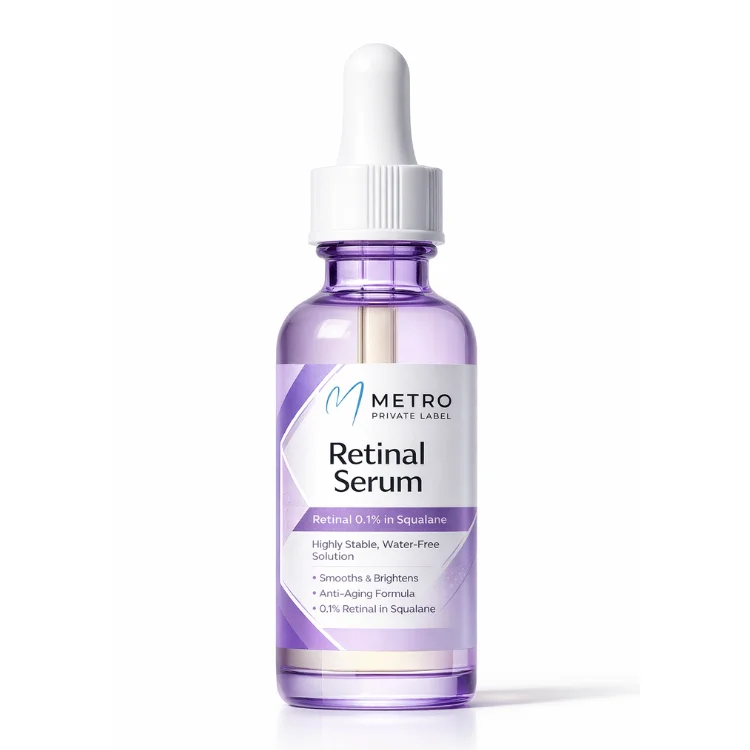
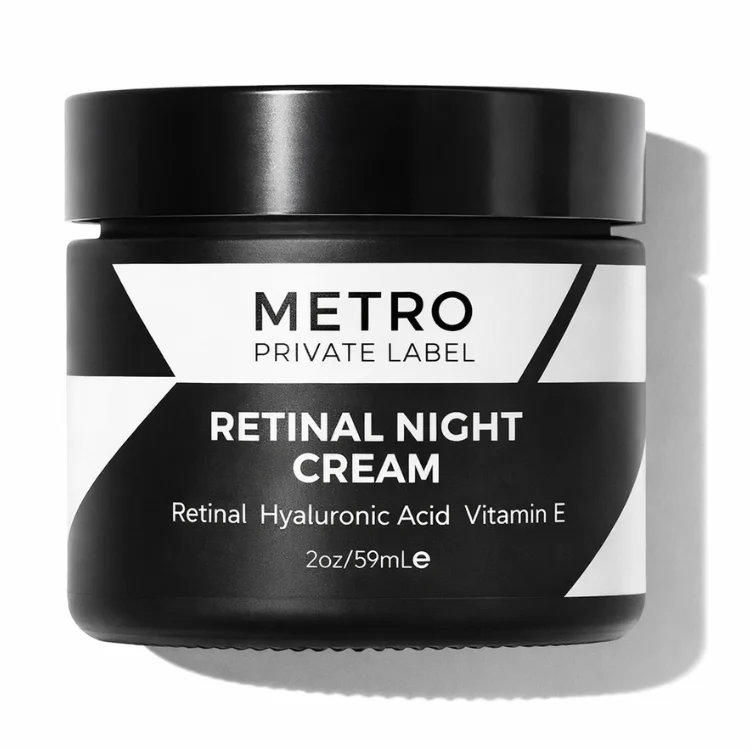
Get Your Custom Skincare Solution Today!

Don’t wait—fill out the form and let our team create the perfect skincare solution for your brand. Expect a personalized quote within 24 hours and start building your brand’s success now!

Submit Your
Private Label Skin Care Request

Fill out this form with your detailed needs and our customer support team will contact you shortly. We will assign a professional agent to follow up on your project and provide personalized assistance.

To get the fastest response, submit your inquiries using the form. If you encounter any issues with submission, you can also email us directly at info@metroprivatelabel.com .

*Metro Private Label takes your privacy very seriously. All information is only used for technical and commercial communication and will not be disclosed to third parties.
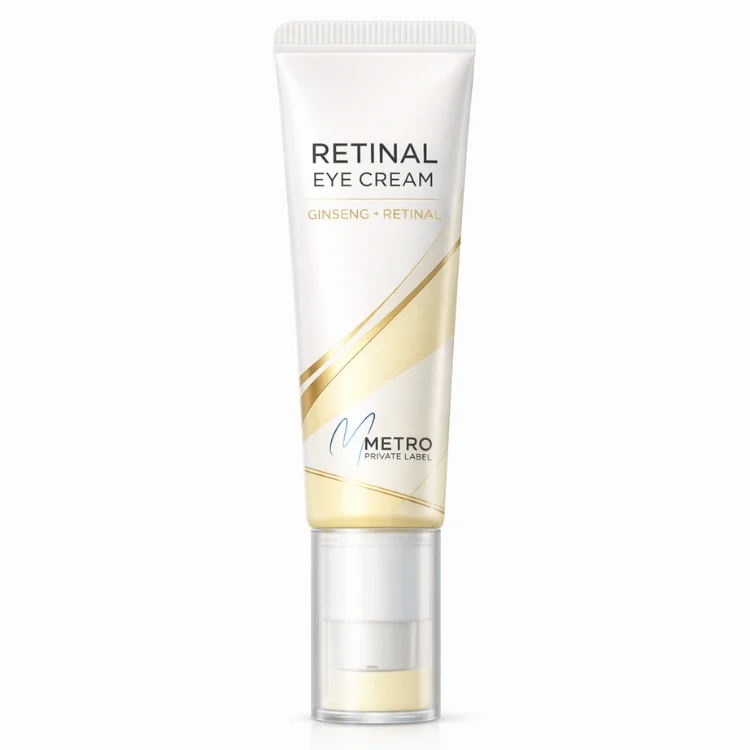
Submit Your
Private Label Skin Care Request

Fill out this form with your detailed needs and our customer support team will contact you shortly. We will assign a professional agent to follow up on your project and provide personalized assistance.

To get the fastest response, submit your inquiries using the form. If you encounter any issues with submission, you can also email us directly at info@metroprivatelabel.com .

*Metro Private Label takes your privacy very seriously. All information is only used for technical and commercial communication and will not be disclosed to third parties.