Your Trusted Silk Peptide Ampoule Manufacturer
We help skincare brands develop market-ready products with reliable formulations, professional packaging, and scalable manufacturing support—so you can launch confidently and grow your product line with a stable supply chain.

Private Label Silk Peptide Ampoule
At Metro Private Label, we know that developing a private label Silk Peptide Ampoule is not simply about adding silk peptides to a serum base and choosing an attractive bottle. The more important question is what role the product will play in your range and why customers should choose it over the many peptide and anti-aging serums already on the market. An established Amazon or Shopify brand may want a stronger hero-ingredient story built around Deep Collagen, GHK-Cu, PDRN, or NAD+, while an experienced beauty founder may care more about texture, ingredient logic, positioning, and how the ampoule fits into a longer-term product line. A distributor may prefer a mature formula that can be private labeled and launched quickly, while a clinic may be looking for a professional-looking product that fits naturally into an anti-aging or skin-repair homecare routine. We therefore start with your sales channel, target customer, price level, existing SKUs, and launch plan before deciding what kind of Silk Peptide Ampoule makes commercial sense.
Once the direction is clear, we move into the details that determine whether the finished product actually feels like a premium ampoule. Silk Peptide formulas are often built around more than one hero ingredient, so we need to consider how ingredients such as hydrolyzed silk, collagen, multi-peptides, Copper Tripeptide-1, PDRN, hyaluronic acid, niacinamide, panthenol, or other supporting actives work together rather than simply adding more ingredients to make the label look impressive. Texture is equally important. Some brands want a lightweight, fast-absorbing Korean-style ampoule, while others prefer a richer, slightly viscous serum that gives a more intensive treatment feel. During sampling, we look at clarity, viscosity, skin feel, ingredient compatibility, pH, stability, color changes, packaging compatibility, dispensing performance, and the overall sensory experience. This helps us identify problems before mass production instead of discovering them after the formula, bottle, and artwork have already been finalized.
For us, the goal is not just to manufacture another peptide serum. We want to help you build a Silk Peptide Ampoule that fits the way your business actually sells skincare. That may mean helping an e-commerce operator develop a differentiated PDRN or GHK-Cu concept for a new launch, helping an industry-experienced founder create a more premium Deep Collagen Silk Peptide Ampoule, helping a distributor select a faster-to-market formula, or helping a clinic develop an ampoule that can support repeat retail sales alongside its existing treatments. We can support the project from formula selection and sample evaluation through packaging coordination, production planning, and technical documentation such as INCI lists, COA, SDS, and product specifications. By working through the commercial and technical decisions early, we help reduce unnecessary redevelopment and give you a product that is easier to launch, reorder, scale, and expand into a broader peptide skincare range.

Deep Collagen Silk Peptide Ampoule
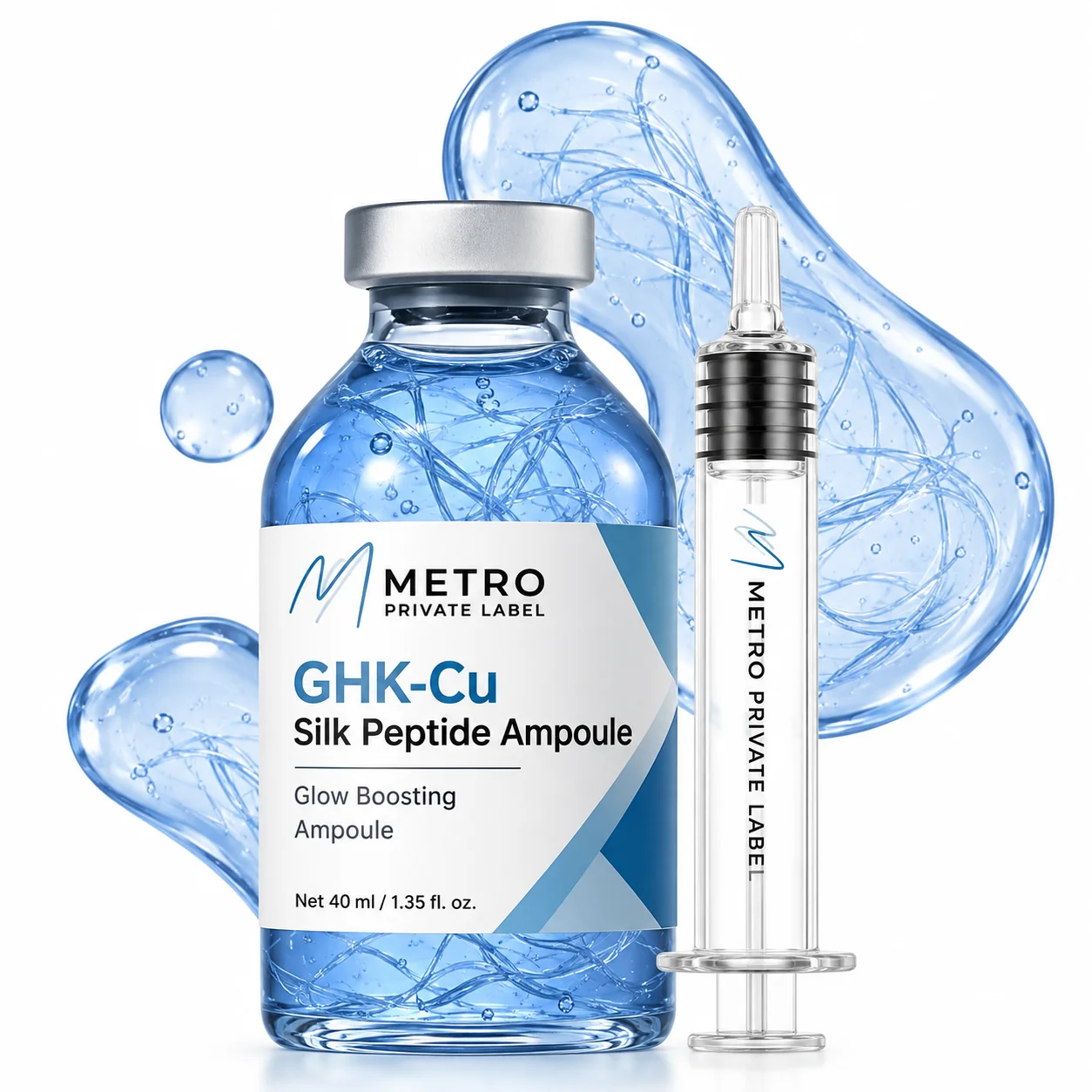
GHK-Cu Silk Peptide Ampoule
PDRN Silk Peptide Ampoule
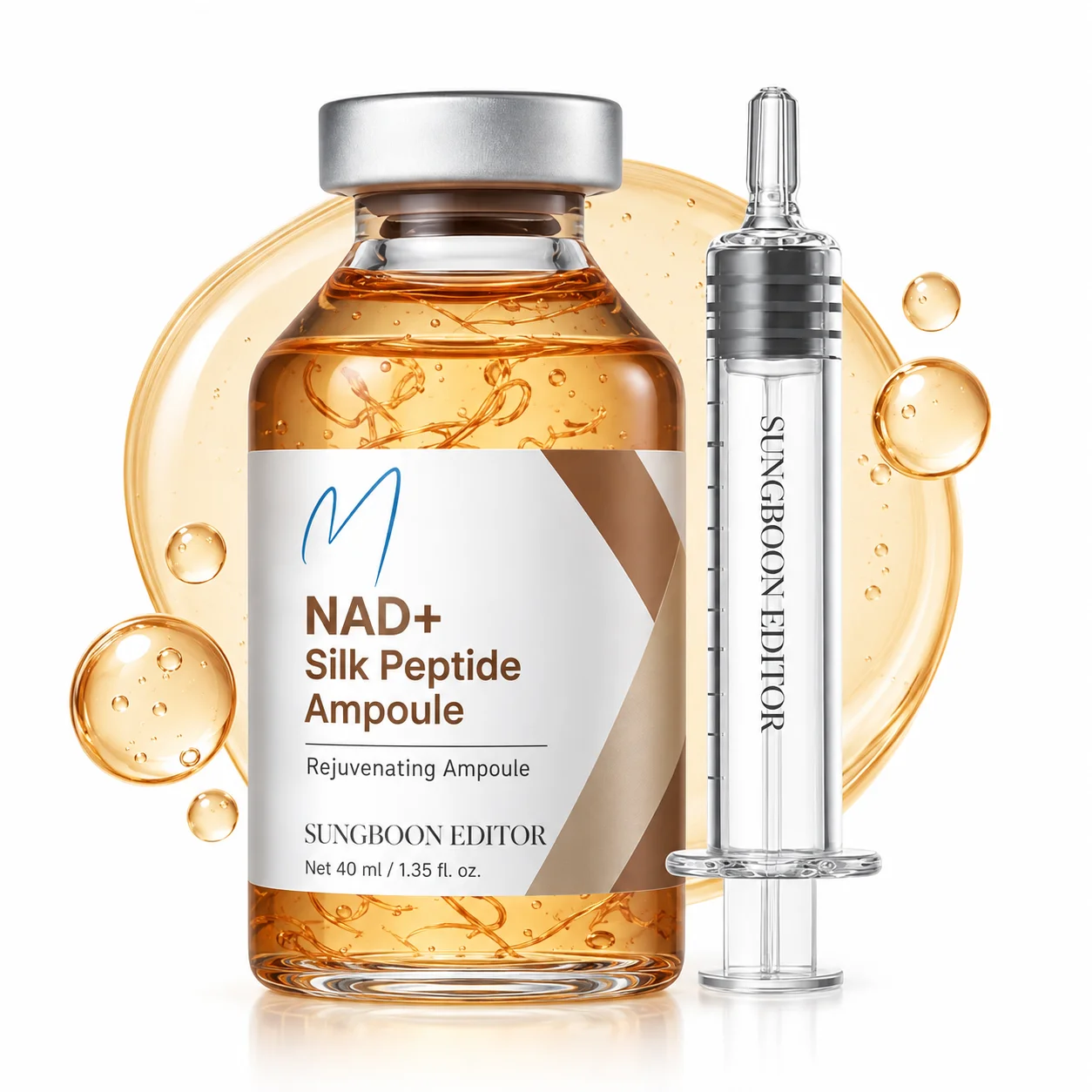
NAD+ Silk Peptide Ampoule
Build a Private Label Silk Peptide Ampoule Line That Fits Your Market
If you are looking for a private label Silk Peptide Ampoule manufacturer, you probably need more than a factory that can make another generic peptide serum. You may already operate an Amazon or Shopify brand, work in the beauty industry, sell through a distribution network, or run a clinic. What matters is whether the product fits your customers, price point, sales channel, and existing skincare range.
At Metro Private Label, we usually build Silk Peptide Ampoules around a stronger hero concept such as Deep Collagen, GHK-Cu, PDRN, or NAD+. Each direction supports a different market position, price level, packaging style, and customer story. Before recommending a formula, we look at your target customer, existing SKUs, target retail price, sales channel, packaging direction, and whether the product will be a hero SKU or part of a wider peptide line.
We also look beyond the ingredient list. Texture, viscosity, absorption, pH, active compatibility, preservation, stability, packaging performance, and documentation all affect whether the finished product can be produced consistently and reordered without unnecessary redevelopment.
Our Core Private Label Silk Peptide Ampoule Products
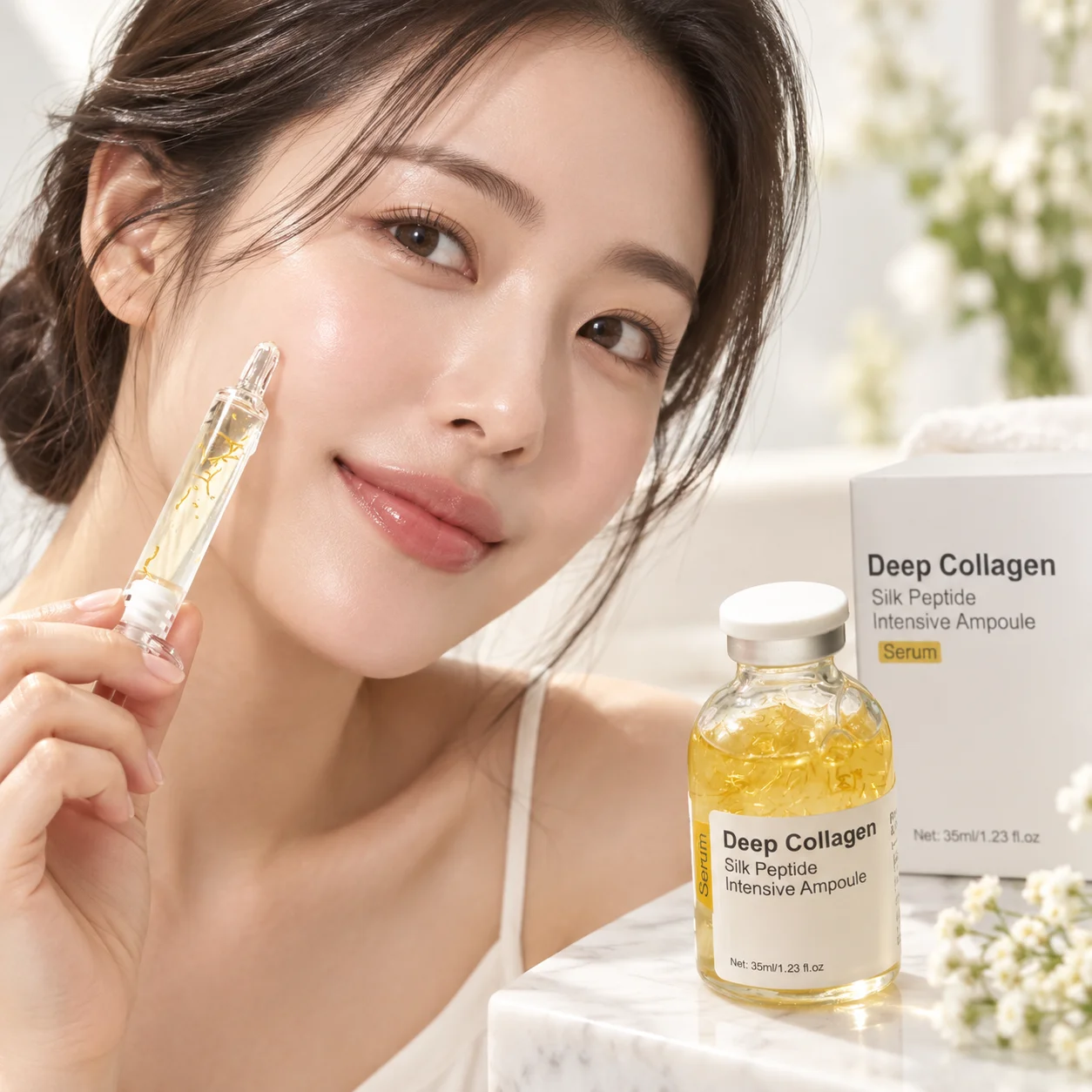
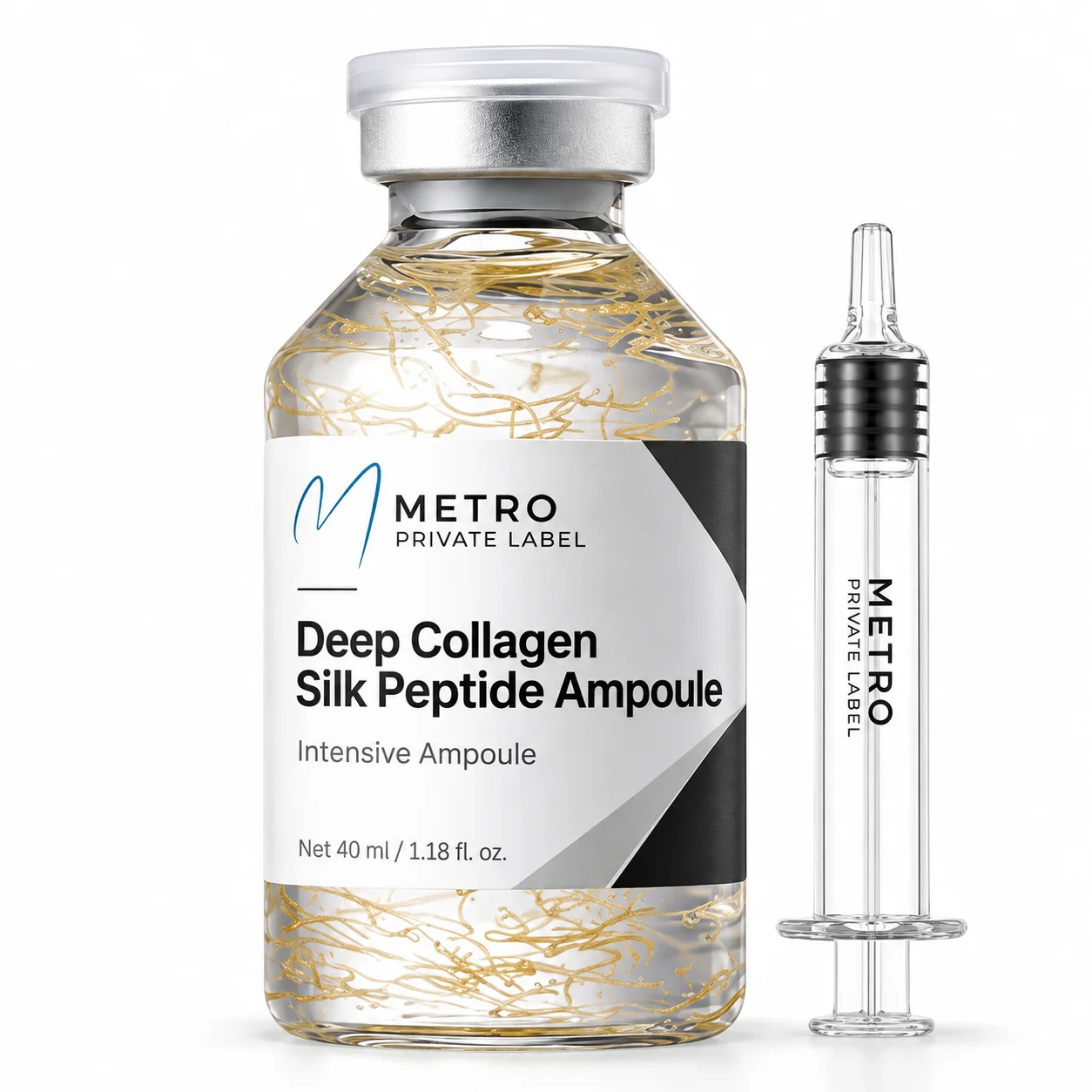
Deep Collagen Silk Peptide Ampoule: A strong option for firming, plumping, and anti-aging positioning. Formulas can combine silk peptides with collagen, multi-peptides, hyaluronic acid, and supporting moisturizers to create a smooth, premium ampoule texture.
GHK-Cu Silk Peptide Ampoule: Suitable for brands looking for a more technical peptide concept. We can develop formulas around Copper Tripeptide-1 and silk peptides while considering pH, stability, formula color, compatibility, and packaging presentation.
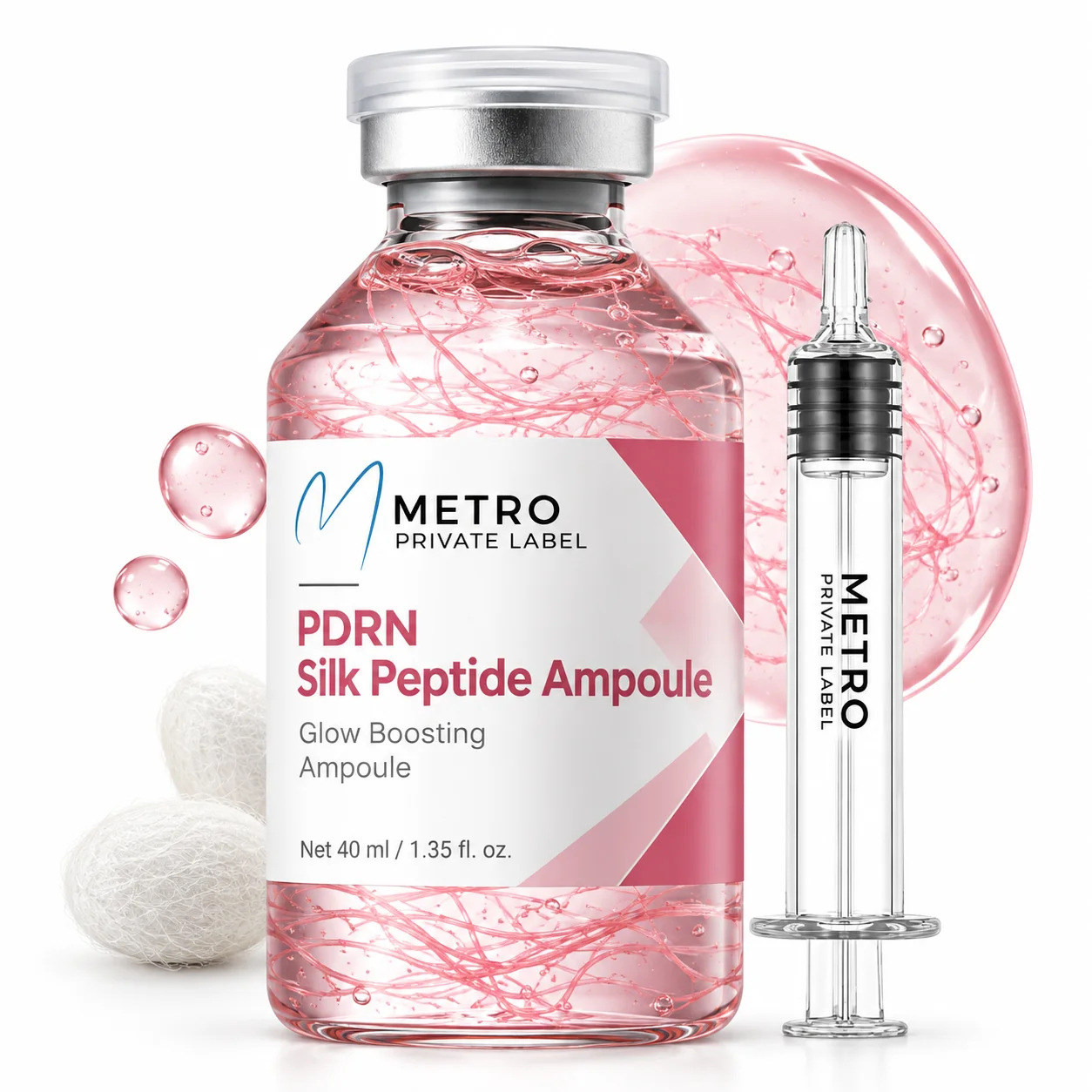
PDRN Silk Peptide Ampoule: Designed for brands targeting current interest in PDRN and Korean-inspired skincare. We first confirm the PDRN source, specification, INCI, documentation, and target market before building the formula around compatible supporting ingredients.
NAD+ Silk Peptide Ampoule: A more forward-looking option for brands seeking a biotechnology-inspired anti-aging concept. We evaluate the exact raw-material form, supplier documents, stability requirements, formulation compatibility, and realistic cosmetic positioning before development.
Manufacturing Support for Silk Peptide Ampoule Brands
We know serious buyers are not only comparing formulas. They are also comparing how efficiently a supplier can move from concept to sample, packaging, production, and repeat orders.An e-commerce brand may care most about launch speed and differentiation. A beauty founder may focus on formulation logic and long-term SKU development. A distributor may prioritize mature formulas, pricing, lead time, and stable supply. A clinic may care more about skin feel, professional positioning, consistency, and repeat retail potential.That is why we help you decide which hero concept fits your market, what texture and supporting ingredients make sense, what technical documents are needed, and which packaging format works best with the final formula.
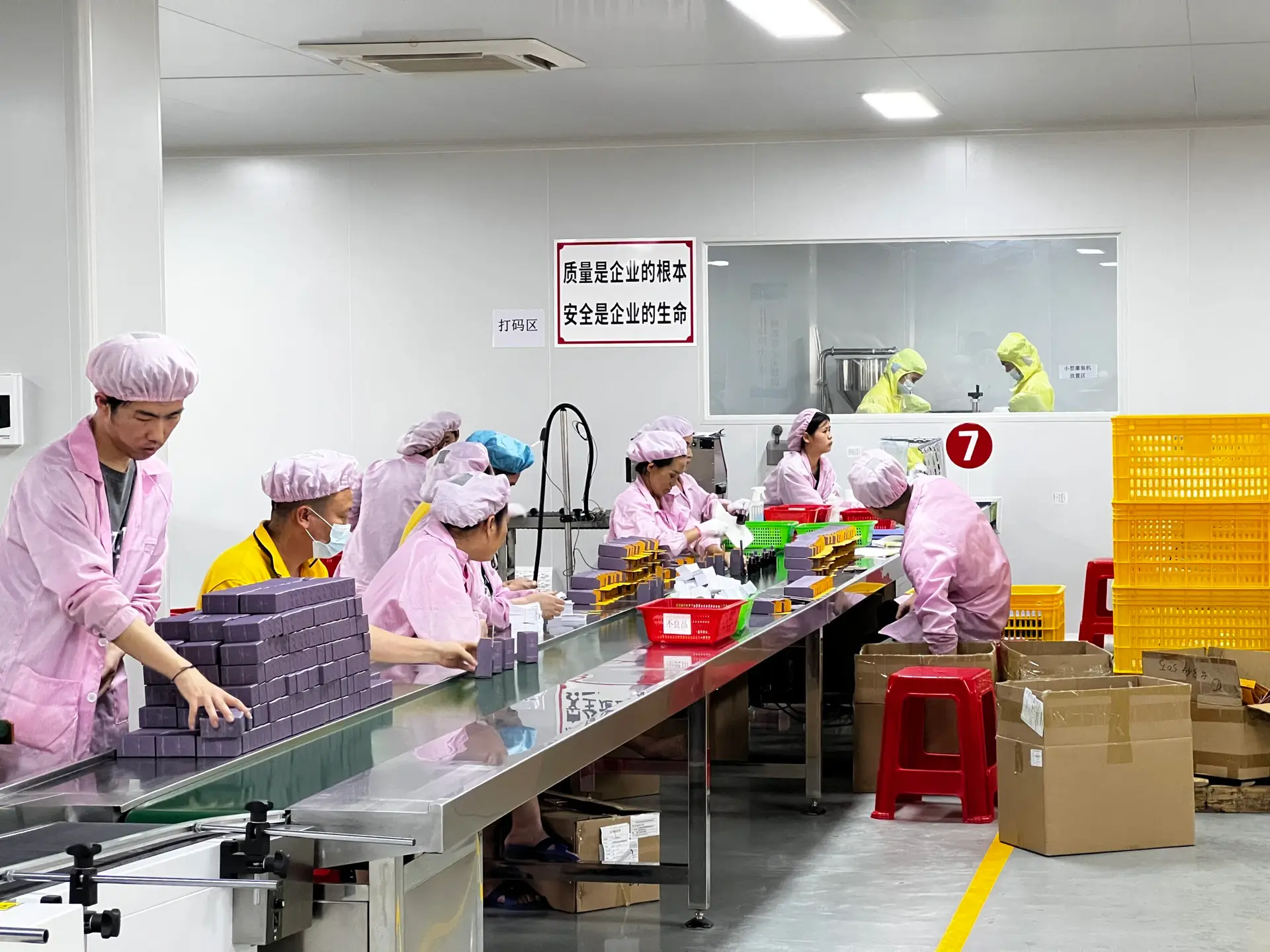
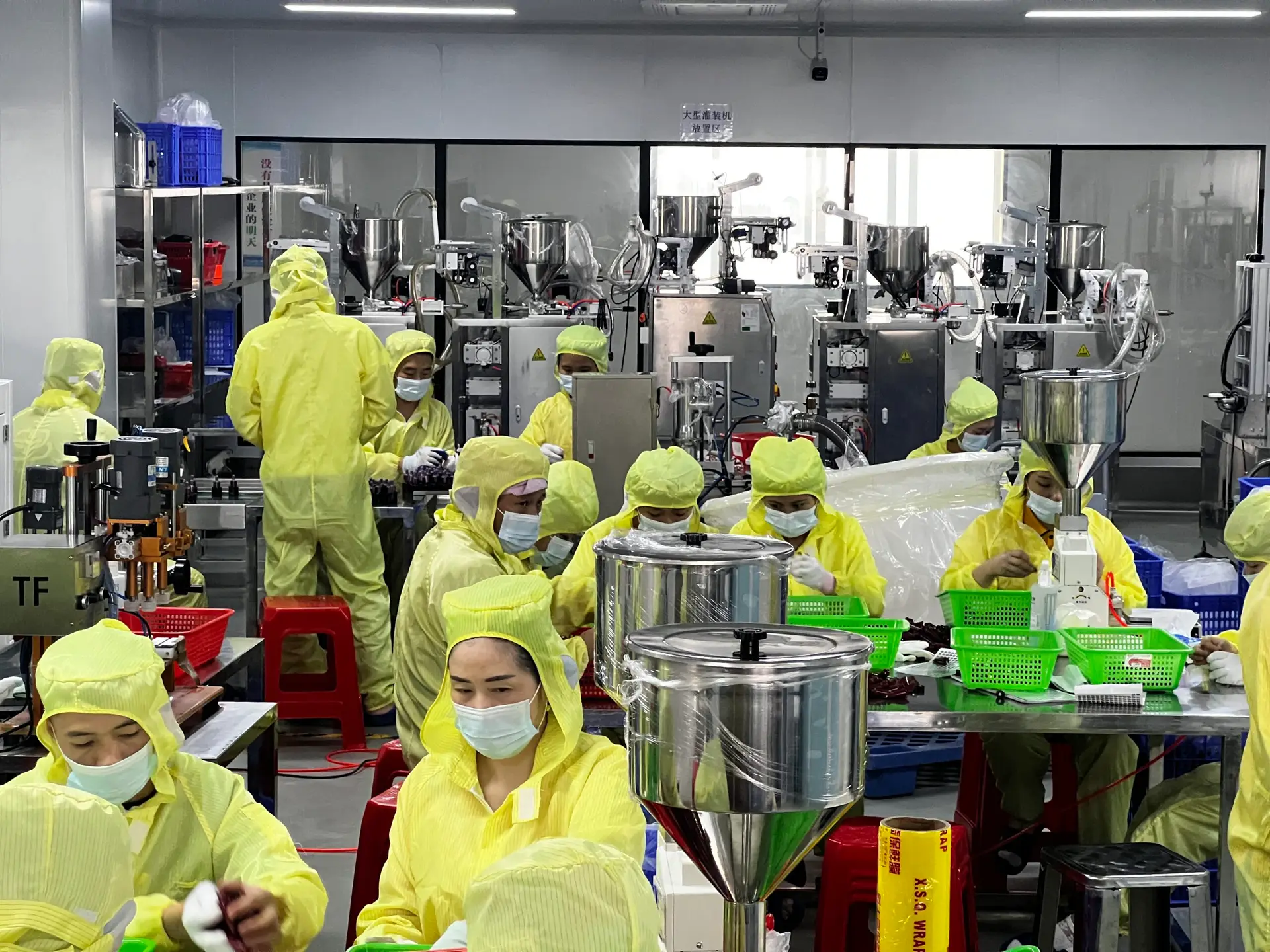
At Metro Private Label, we support the project from formulation and sampling through packaging coordination, production planning, quality control, and technical documentation such as INCI lists, COA, SDS, and product specifications.Our goal is to help you create a Silk Peptide Ampoule with a clear market position, a formula customers can understand and enjoy using, and a manufacturing setup that is easier to launch, reorder, and scale.

More Than Just a Private Label Silk Peptide Ampoule Manufacturer
At Metro Private Label, we know your goal is not simply to put another peptide ampoule on the market. You need a product with a clear positioning, the right texture and ingredient story, a realistic cost structure, and enough differentiation to support repeat sales through your existing channel.

Develop Silk Peptide Ampoules Around Real Market Demand
We start with your customer, sales channel, target retail price, and existing product range. A Deep Collagen Silk Peptide Ampoule, GHK-Cu concept, PDRN formula, or NAD+ direction may all fit different audiences and price levels. We help you choose the concept that makes commercial sense instead of simply following the latest ingredient trend.
Reduce Development Risks Before Mass Production
Peptide ampoules require more than choosing attractive active ingredients. We look at pH, ingredient compatibility, viscosity, skin feel, preservation, stability, formula color, packaging performance, and raw-material documentation early in development. This helps reduce repeated sampling, formula changes, packaging problems, unexpected costs, and production delays.
Create Products Customers Can Understand and Repurchase
A strong ingredient list only works when customers understand why the product belongs in their routine. We help build each ampoule around a clear hero concept and supporting ingredient system, whether the focus is firming, plumping, advanced peptide care, PDRN-inspired skincare, or a more premium biotechnology positioning. The goal is to make the product easy to explain, easy to market, and enjoyable enough to keep using.
Build a Manufacturing Partnership That Supports Growth
We support the project from formulation and sampling through packaging coordination, technical documentation, production, quality control, and repeat orders. If one Silk Peptide Ampoule performs well, we can also help extend the concept into serums, creams, eye care, masks, or a broader peptide skincare line built around the same customer need and market positioning.
Build a Private Label Silk Peptide Ampoule Line Around Your Business Goals
At Metro Private Label, we know that developing a Silk Peptide Ampoule is not simply about adding a peptide ingredient to a serum base and choosing a premium bottle. If you already sell through Amazon, Shopify, TikTok, retail channels, distribution networks, or clinics, you need a product that fits your customers, target retail price, existing range, and launch strategy.
Many buyers come to us with a clear concept such as Deep Collagen, GHK-Cu, PDRN, or NAD+. But the real work begins after the hero ingredient is chosen. We still need to consider texture, active compatibility, stability, packaging, target cost, documentation, and how easily customers can understand the product. Our role is not only to manufacture what is written in the first brief. We help you make better decisions before those decisions become expensive to change.
Develop Silk Peptide Ampoules Around Your Business Strategy
We first look at who you are selling to, where the product will be sold, your target retail price, and what role the ampoule should play in your range.An Amazon or Shopify brand may need a strong hero concept that customers understand within seconds. A beauty founder may care more about ingredient logic, texture, premium positioning, and how the product can later expand into a wider line. A distributor may prefer a mature formula that can move quickly into private labeling, while a clinic may need a professional-looking ampoule with a comfortable skin feel and clear positioning.This is why we do not treat Deep Collagen, GHK-Cu, PDRN, and NAD+ as interchangeable trends. Each concept has a different customer story, formulation requirement, price level, and development difficulty. We help connect that commercial direction with a formula that is realistic to manufacture and easier to sell.
Make Better Product Decisions Before Mass Production
Silk Peptide Ampoules often combine several active ingredients, and more ingredients do not automatically create a better product.We pay attention to pH, peptide compatibility, viscosity, absorption, preservation, formula color, temperature stability, raw-material specifications, and packaging performance. A GHK-Cu formula may require different compatibility and color considerations from a PDRN concept, while a newer NAD+ direction needs careful review of the exact raw material, supplier documentation, and formulation requirements before development begins.Packaging also matters. A formula can perform well during sampling but still create problems if the pump does not dispense consistently, the dropper does not suit the viscosity, or the packaging does not protect the product properly during storage and shipping.By checking these issues earlier, we can reduce repeated sampling, unnecessary reformulation, packaging changes, production delays, and unexpected cost increases.
Create Silk Peptide Ampoules Customers Want to Use Again
A customer may first notice an ampoule because of “Deep Collagen,” “GHK-Cu,” “PDRN,” or “NAD+,” but repeat purchase depends on the complete product experience.The formula needs to spread easily, absorb comfortably, layer well with other skincare, and feel appropriate for the positioning. A Deep Collagen Silk Peptide Ampoule may need a smoother, more cushiony texture, while a GHK-Cu or PDRN concept may benefit from a lighter, more treatment-focused feel.We therefore look at the hero ingredient, supporting actives, texture, viscosity, finish, packaging, and product story together. We are not trying to create the longest ingredient list. We want the finished product to feel coherent and give customers a clear reason to keep using it.
Build a Product Foundation for Future Growth
We also think beyond the first order.A successful Deep Collagen Silk Peptide Ampoule can later support a firming cream or eye product. A GHK-Cu concept can expand into a broader peptide line. A PDRN ampoule can become the hero SKU of a renewal-focused range, while an NAD+ concept may support a more premium biotechnology-inspired collection.Planning this early helps keep the ingredient story, packaging style, target price, and customer experience consistent as the range grows.From formula selection and sample development to packaging coordination, technical documentation, production, repeat orders, and future SKU expansion, we support the full process.
Our goal is simple: to help you create a Silk Peptide Ampoule that is not only possible to manufacture, but also easier to position, easier to sell, more reliable to reproduce, and ready to support the next stage of your brand growth.
FAQs Silk Peptide Ampoule
For your convenience, we’ve gathered the most commonly asked questions about our Silk Peptide Ampoule. However, should you have any further queries, please don’t hesitate to reach out to us.
1. What types of Silk Peptide Ampoule can you manufacture?
We can develop several commercial directions, including Deep Collagen Silk Peptide Ampoule, GHK-Cu Silk Peptide Ampoule, PDRN Silk Peptide Ampoule, NAD+ Silk Peptide Ampoule, and other multi-peptide concepts. We can also adjust the texture, supporting actives, and positioning based on your target customer and price level.
2. Can you customize the formula for our brand?
Yes. We can adjust the peptide system, hero ingredients, viscosity, skin feel, fragrance level, color, and supporting ingredients to fit your positioning. We usually start with your target customer, sales channel, retail price, and product concept before recommending the formula direction.
3. What is your MOQ for Private Label Silk Peptide Ampoule?
Our standard MOQ is usually 1,000 units per SKU. In some cases, lower quantities may be possible when using existing formulas and available packaging. Custom bottles, special printing, or more complex formulas may require a higher MOQ.
4. How long does sampling and production usually take?
For most projects, sample development normally takes around 7–14 days, depending on the formula complexity and revision requirements. After the formula and packaging are confirmed, bulk production usually takes around 20–25 days. Custom packaging may add additional lead time.
5. Can Silk Peptide Ampoule be vegan?
This depends on the raw material. Traditional silk-derived ingredients are generally animal-derived, so we would not automatically describe a Silk Peptide Ampoule as vegan. If vegan positioning is important to your brand, tell us early and we can discuss alternative peptide systems and ingredient directions that better fit that requirement.
6. Can you help us choose packaging for the ampoule?
Yes. We can help source and coordinate glass bottles, droppers, pumps, airless bottles, labels, cartons, and printing. We also look at viscosity, dispensing performance, leakage risk, light sensitivity, and the overall price positioning so the packaging works with the formula rather than being selected separately.
7. Do you offer both ready formulas and custom development?
Yes. If speed and cost control are the priority, we can start with an existing mature formula and adjust selected ingredients, texture, or packaging. If you need stronger differentiation, we can also develop a more customized formula around concepts such as Deep Collagen, GHK-Cu, PDRN, or NAD+.
8. What testing and quality control do you provide?
We review formula appearance, pH, viscosity, stability, packaging compatibility, and production consistency based on the project requirements. For more demanding projects, additional testing such as microbial, challenge, or third-party testing can also be arranged. We confirm the testing plan before production so you know what is included and what requires separate testing.
9. What technical documents can you provide for our market?
We can support documents such as the INCI list, COA, SDS, product specification, and manufacturing-related information. The exact documentation depends on the product and target market. If you are selling in the UK, EU, U.S., or another regulated market, we recommend confirming your compliance requirements early so the formula, packaging, and label can be prepared accordingly.
10. Can you help with international shipping and repeat orders?
Yes. We work with international private label projects and can coordinate export packing and shipping with your nominated forwarder or available logistics partners. We also keep the confirmed formula and production specifications on file, which makes repeat orders easier and helps maintain consistency as your sales volume grows.
What we appreciated most was that Metro Private Label did not treat our Silk Peptide Ampoule as just another peptide serum. They helped us compare the Deep Collagen and GHK-Cu directions based on our target customer, retail price, texture expectations, and packaging. The sampling process was much more focused because we understood the trade-offs before making decisions.
Marcus Ellison, Senior Product Managerfrom United States
We came to Metro Private Label with a strong product concept but needed practical guidance on how to turn it into a stable, premium-feeling ampoule. Their team helped us refine the supporting ingredients, viscosity, packaging, and overall product positioning. We especially valued that they explained what was realistic instead of simply adding every ingredient we requested.
Sophie Van Dijk, Beauty Brand Founderfrom Netherlands
Our main priority was a product that could move into our existing channel without an unnecessarily long development process. Metro Private Label helped us review formula options, packaging, pricing, documentation, and production timing together. Their communication was clear, and the project felt structured from sampling through to production planning.
Matteo Rinaldi, Skincare Distribution Managerfrom Italy
We wanted a Silk Peptide Ampoule that felt professional enough for our clinic but was still comfortable for clients to use at home every day. Metro Private Label understood that texture, presentation, and repeat-use experience were just as important as the hero ingredients. The final direction felt much more aligned with our treatment and retail model.
Amelia Brooks, Aesthetic Clinic Ownerfrom United Kingdom
Our project involved a more advanced peptide concept, so we were concerned about compatibility, formula stability, and whether the packaging would suit the finished texture. Metro Private Label raised these points early and helped us work through them before production. That practical approach reduced unnecessary changes and gave us more confidence in the final product.
Camille Lefèvre, Product Development Specialistfrom France





Metro Private Label in Numbers
Happy Clients
0 +
Million-dollar Buyers
0 +
Formulation
0 +
Professional Staffs
0 +
Your Ultimate Guide to Silk Peptide Ampoule
If you’re planning to add a Silk Peptide Ampoule to your skincare line, the real decision is not simply whether silk peptides are trending. You need to decide which concept your customers can understand, what price your channel can support, and how the product should fit into your existing range. A Deep Collagen concept may work well for a broad anti-aging audience, while GHK-Cu, PDRN, or NAD+ can create stronger differentiation for brands targeting more ingredient-aware customers. When the concept, texture, price, and positioning are aligned from the beginning, a Silk Peptide Ampoule can become more than a trend-led launch—it can become a repeat-purchase hero SKU.
From the projects we work on at Metro Private Label, we’ve learned that the biggest problems rarely come from the words “Silk Peptide” themselves. They usually appear later through formula complexity, active compatibility, preservative choices, packaging performance, documentation, testing, or a cost structure that no longer fits the intended retail price. A formula can look impressive on paper but still become difficult to scale if it feels too sticky, changes during storage, does not work with the chosen pump, requires expensive packaging, or needs additional compliance work after the artwork has already been finalized.
This guide is built around the practical questions we see during real private label development. We cover how to choose between Deep Collagen, GHK-Cu, PDRN, and NAD+ concepts, when a ready formula makes more sense than custom development, how packaging and testing affect the timeline and budget, what documents different markets may require, and what actually happens from the first brief to repeat production. Our goal is to help you understand the commercial and technical decisions behind the product before they become expensive problems later.
Table of Contents
How to Choose the Right Silk Peptide Ampoule Concept for Your Market
When evaluating a Silk Peptide Ampoule project, the first question should not be which ingredient is currently the most popular. The more important question is which product concept actually fits the sales channel, target customer, retail price, existing skincare range, and level of differentiation the business needs. In practice, this decision often has a greater impact on whether the product can sell than the percentage of Silk Peptide or the number of trending actives added to the formula.
A Silk Peptide Ampoule can be developed in several very different commercial directions. Deep Collagen offers a familiar firming and plumping story, GHK-Cu creates a more technical peptide identity, PDRN connects naturally with current Korean-inspired skincare demand, and NAD+ supports a newer biotechnology-focused positioning. All four can look attractive during product planning, but they do not carry the same development cost, customer awareness, formulation complexity, documentation requirements, or marketing burden. One of the most common problems I see is that brands choose a fashionable ingredient first and only later begin asking how the product should be positioned. By that stage, the formula, packaging, retail price, and customer expectations may already be pulling in different directions.
Start With the Sales Channel Before Choosing the Hero Ingredient
The sales channel usually tells me more about the right product direction than the ingredient trend itself. A Silk Peptide Ampoule developed for Amazon, TikTok Shop, Shopify, a distributor, or an aesthetic clinic may all belong to the same general product category, but they often need completely different commercial logic. The formula, product name, packaging style, price structure, and level of customer education should reflect how the product will actually be sold rather than being decided independently.
For Amazon, TikTok Shop, or other fast-moving e-commerce channels, the product normally needs a concept that customers can understand within a few seconds. Buyers are often comparing several serums at the same time, so phrases such as Deep Collagen, PDRN, or Copper Peptide provide an immediate ingredient story that can work across product titles, thumbnails, short videos, advertising, and comparison pages. A Shopify or premium DTC brand has more room to explain why Silk Peptide is combined with GHK-Cu, how the texture was designed, why particular supporting ingredients were selected, and where the ampoule fits within a broader skincare philosophy. In that environment, a more technical formula can support a higher retail price because the brand has more control over customer education.
Distributors usually look at the project from another angle. A buyer may prefer a concept that retailers and sales teams can explain without extensive training, which is why a Deep Collagen Silk Peptide Ampoule can sometimes be easier to introduce than an NAD+ formula that requires a more detailed education story. Clinics often care even less about whether an ingredient is viral. Their focus is usually whether the ampoule fits naturally into treatment programs, home-care recommendations, repeat retail sales, and a professional skincare image. This is why I rarely believe there is one “best” Silk Peptide Ampoule. The right direction depends first on where the product will compete.
Let the Target Retail Price Shape the Formula Direction
Retail price should not be treated as something to decide after the formula is finished. It is one of the earliest product-development decisions because the intended selling price determines how much formulation complexity, packaging quality, active-ingredient cost, testing, and customer education the business can realistically support. A product that looks impressive in development can still become commercially difficult if the cost structure leaves too little room for advertising, distributor margins, marketplace fees, discounts, shipping, and profit.
When the target retail price is relatively accessible, a clear and familiar ingredient story is usually more practical. Deep Collagen works well because consumers already connect collagen and peptides with plumping, firmness, hydration, elasticity, and anti-aging. The brand does not need to spend as much time teaching customers why the concept matters. A higher retail price creates more room for differentiated systems such as GHK-Cu or PDRN, where the ingredient story can support stronger premium positioning, more sophisticated packaging, and a more treatment-oriented presentation. Even then, the product still needs to justify the higher price through the complete experience rather than relying on one fashionable ingredient printed on the front panel.
NAD+ requires more careful judgment. It can support a biotechnology-inspired or longevity-focused skincare concept, but compared with collagen or PDRN, it usually requires more explanation. If the target customer is already interested in advanced skincare, science-led beauty, or premium anti-aging, that education burden may be worthwhile. If the product is competing mainly through marketplace search traffic or aggressive pricing, the same complexity may not create enough commercial return. This is why retail price is not simply a financial question. It helps define how ambitious the formula and product story can realistically become.
Choose a Concept Your Customer Already Has a Reason to Understand
An ingredient can be scientifically interesting and still be commercially difficult. Customers do not evaluate skincare ingredients in the same way a product developer or formulator does, so it is important to understand how much awareness already exists before making one active ingredient the center of the product story. The strongest concept is often not the most advanced ingredient, but the one that creates the shortest distance between what the brand wants to communicate and what the customer already understands or wants to learn about.
Deep Collagen has a clear advantage because most skincare customers already understand the language surrounding collagen, peptides, hydration, elasticity, plumping, and firmness. GHK-Cu appeals to a narrower but often more ingredient-literate audience. Customers researching Copper Tripeptide-1 are usually already interested in advanced peptide skincare, which makes the concept particularly suitable for brands capable of supporting a more technical education story. PDRN currently sits between these two positions. It still feels more advanced than collagen, but growing interest in Korean skincare has made the ingredient increasingly recognizable, which reduces the amount of explanation required compared with a few years ago.
NAD+ remains more education-heavy. It may appeal strongly to consumers interested in longevity, biotechnology, cellular-energy narratives, or next-generation anti-aging skincare, but that does not automatically make it suitable for every brand. If the target customer does not understand why the ingredient matters, the product can become difficult to communicate even if the formulation itself is technically interesting. This is why I prefer to evaluate customer awareness before deciding whether innovation is actually commercially useful.
Look at the Existing Product Range Before Adding Another Ampoule
A new Silk Peptide Ampoule should not be evaluated as an isolated SKU. The more important question is what role the product will play inside the existing range. A new ampoule should strengthen the portfolio, create a new customer need, or complete a skincare routine rather than simply duplicate an existing serum under a different ingredient name.
If a brand already sells a basic Hyaluronic Acid serum, adding another lightweight hydrating ampoule may create very little new value. A Deep Collagen Silk Peptide Ampoule may make more sense if the goal is to move into firming or mature-skin positioning and create a more complete anti-aging routine. If the range already contains a Copper Peptide serum, a GHK-Cu Silk Peptide Ampoule needs a genuinely different role through texture, concentration strategy, packaging, target customer, or price position. Simply changing the product name does not create meaningful differentiation.
PDRN often fits well into ranges already built around repair, hydration, barrier support, Korean-inspired skincare, or premium treatment products. NAD+ can work more naturally when the broader brand already communicates science, innovation, longevity, or biotechnology rather than when it appears as one futuristic SKU inside an otherwise very basic product line. This is one of the clearest differences I see between experienced operators and first-time founders. Experienced teams usually ask what the product contributes to the overall range, while less experienced projects tend to focus mainly on whether the ingredient itself is popular.
Deep Collagen Is Usually the Most Accessible Commercial Starting Point
If the goal is to develop a Silk Peptide Ampoule that is relatively easy to position and explain, Deep Collagen is often the first direction worth considering. Its advantage is not that it is automatically the most sophisticated formula, but that the commercial language is already familiar. Customers understand firming, elasticity, plumping, moisture, fine-line care, and mature-skin positioning without needing a long explanation before they understand what type of product they are looking at.
This makes Deep Collagen especially practical for e-commerce operators, distributors, and brands targeting a broad anti-aging audience. The same concept can also support different price levels depending on the supporting peptide system, texture, packaging, and sensory experience. A lower-priced product may focus on a straightforward collagen-peptide story, while a premium version can use a more sophisticated texture, stronger supporting actives, upgraded packaging, and a more refined overall presentation.
The main challenge is competition. Because the concept is easy to understand, it is also easy for competitors to use similar language. For that reason, differentiation needs to come from more than the words “Deep Collagen.” Texture, supporting peptide systems, packaging, application experience, target skin concern, and the way the product fits into a complete routine all become important. A mainstream concept can still feel distinctive when the execution is coherent.
GHK-Cu Works Best When the Brand Can Support a More Technical Story
GHK-Cu creates a very different product identity. It appeals more naturally to customers who already understand peptide skincare and are interested in something beyond a standard collagen serum. Once Copper Tripeptide-1 becomes the central concept, the formulation and marketing need to feel more disciplined because the customer often expects a more technical and premium product experience.
From a development perspective, I pay closer attention to ingredient compatibility, pH, formula color, stability, supporting peptides, and whether the rest of the ingredient system reinforces the central idea. Adding many unrelated trending actives can weaken rather than strengthen the product because the final formula starts to look like a collection of fashionable ingredients instead of a coherent GHK-Cu concept.
Commercially, GHK-Cu works best when the brand has enough product knowledge or content capability to explain why the ingredient matters. A premium DTC brand, experienced beauty founder, or clinic-oriented range may therefore have more opportunity to communicate the technical value of the formula. If the business depends mainly on deep discounts, short marketplace titles, or generic product imagery, that additional complexity can be harder to turn into a meaningful commercial advantage.
PDRN Works Best When the Trend Supports a Real Product Strategy
PDRN is one of the more commercially interesting directions because it combines ingredient curiosity with the broader momentum of Korean-inspired skincare. That makes it attractive, but it also creates a common development risk: brands may choose PDRN because the term is trending without deciding what the finished product should actually become once the initial attention around the ingredient begins to normalize.
When evaluating a PDRN Silk Peptide Ampoule, I look beyond the ingredient name. Raw-material source, specification, INCI declaration, supplier documentation, target concentration, target market, formulation compatibility, price level, and intended claims all need to fit together. The product also needs a supporting system that makes sense. Silk Peptide, PDRN, humectants, soothing ingredients, peptides, texture, and packaging should reinforce the same overall product direction rather than competing for attention.
The strongest PDRN projects usually use the trend as an entry point rather than the entire reason for the product to exist. The ingredient may attract the first click, but repeat purchase still depends on texture, usability, packaging, supporting ingredients, and whether the ampoule feels valuable after the novelty of the hero ingredient fades. This is why I prefer to develop PDRN as a complete product system rather than simply placing the term on the front label.
NAD+ Offers Differentiation but Requires More Market Education
NAD+ is the concept I approach with the most caution because it clearly offers differentiation, but customer understanding is still less mature than with collagen, peptides, or PDRN. That does not make it a poor direction. It simply means the commercial conditions need to support a product that requires more explanation before the value becomes obvious.
The strongest opportunity usually appears when the brand already speaks to customers interested in longevity, science-led beauty, premium anti-aging, biotechnology, or emerging skincare innovation. In that environment, the relative unfamiliarity of NAD+ can actually become part of the product appeal. The customer may be actively looking for something new, and the brand may already have the credibility and content channels needed to explain the concept properly.
The risk comes from confusing novelty with demand. A product can be highly differentiated and still sell slowly if customers do not understand why they need it or why they should pay more for it. This is where the brand’s content capability, price level, customer profile, and existing authority matter. If the product can be supported through detailed product pages, social content, email education, clinic consultation, or founder-led storytelling, NAD+ can become a meaningful premium concept. If it needs to explain itself entirely through one marketplace image and a short title, the education burden becomes much higher.
Decide How Much Differentiation the Business Actually Needs
Not every Silk Peptide Ampoule needs to reinvent the category. The right level of differentiation depends on the business model, competitive environment, customer acquisition strategy, and level of commercial risk the company is willing to accept. In some cases, a familiar product concept executed well is more valuable than a technically novel formula that requires heavy customer education.
A distributor may gain more value from a recognizable Deep Collagen formula with competitive pricing, reliable packaging, and stable repeat production than from introducing an unfamiliar biotechnology concept. An established Shopify brand may face the opposite problem. If its customers already have many peptide products to choose from, a generic collagen story may not provide enough reason to launch another SKU, making GHK-Cu, PDRN, or even NAD+ more relevant.
Clinics often sit somewhere in the middle. They may not need the most innovative product in the category, but they do need a professional-looking formula with a comfortable texture, clear positioning, consistent quality, and an obvious place inside a home-care routine. I also remind buyers that differentiation does not always have to come from another active ingredient. Texture, packaging, target skin concern, fragrance-free positioning, professional use, concentration strategy, product format, and the way the ampoule fits into a complete skincare system can all create meaningful differentiation.
The Final Decision Should Be Commercial Before It Becomes Technical
When comparing Deep Collagen, GHK-Cu, PDRN, and NAD+, the goal is not to identify which concept sounds the most innovative. The real goal is to find the strongest match between the customer, sales channel, target retail price, existing product portfolio, marketing capability, and realistic formulation requirements. Once that commercial direction is clear, the technical development becomes much easier because every formulation decision has a clear reason behind it.
Deep Collagen usually offers the easiest path to broad consumer understanding. GHK-Cu gives the product a stronger technical peptide identity and can support more premium differentiation. PDRN combines current market interest with a strong Korean-inspired skincare story, while NAD+ offers an emerging biotechnology angle but usually requires more customer education and more careful positioning. None of these concepts is automatically superior.
The most common mistake is choosing the ingredient because it is trending and then trying to build the business logic around it afterward. In real private-label development, the stronger approach is usually the opposite. Define the commercial problem first, decide what role the product needs to play, understand what the customer already values, and then choose the ingredient system that supports that strategy.
The principle I keep coming back to is simple: the best Silk Peptide Ampoule is not the one that sounds the most impressive. It is the one the target customer can understand, the sales channel can support, the retail price can justify, and the existing skincare range genuinely needs.
Deep Collagen vs GHK-Cu vs PDRN vs NAD+: Which Silk Peptide Ampoule Makes Commercial Sense?
When I compare Deep Collagen, GHK-Cu, PDRN, and NAD+ for a Silk Peptide Ampoule project, I do not try to decide which ingredient is scientifically “best.” That question is usually too simple for a real private label project. A commercially successful formula has to work across several dimensions at the same time: customers need to understand the concept, the selling price needs to support the formulation cost, the sales channel needs to communicate the ingredient effectively, the raw materials need to be practical to formulate and document, and the product still has to remain stable enough to manufacture repeatedly.
This distinction matters because these four concepts sit at very different stages of market maturity. Deep Collagen is already familiar to consumers and appears repeatedly in current Silk Peptide Ampoule sourcing and retail products. GHK-Cu creates a more technical peptide story and appeals to a customer who already understands active-led skincare. PDRN has developed strong momentum through Korean skincare and is now appearing extensively in private label serum and ampoule development. NAD+ offers a newer biotechnology-inspired story, but it still requires more education and greater care around the exact raw material and positioning. Current sourcing results already show manufacturers combining Silk Peptide concepts with collagen, multi-peptides, Copper Tripeptide and PDRN, so these are no longer theoretical combinations discussed only in formulation meetings.
The commercial question, therefore, is not “Which one has the most impressive ingredient name?” It is “Which concept creates the best balance between recognition, differentiation, cost, formulation practicality, documentation, and the way the product will actually be sold?”
Deep Collagen: The Most Established and Immediately Understandable Direction
Deep Collagen is usually the easiest of the four concepts to commercialize because the customer education barrier is relatively low. Consumers already understand the language surrounding collagen, peptides, plumping, elasticity, hydration, firmness, and visible signs of aging. When those ideas are combined with Silk Peptide in an ampoule format, the product can communicate its purpose without requiring the brand to teach customers an entirely new skincare vocabulary.
The current market reflects this maturity. Deep Collagen Silk Peptide Ampoules are already visible across consumer products, wholesale channels, OEM listings, and private label manufacturing pages. Some current sourcing offers specifically combine hydrolyzed collagen, multi-peptides, hyaluronic acid, and Silk Peptide positioning, while wholesale listings describe the format as an established anti-aging or lifting ampoule. This matters commercially because an ingredient concept that already exists in the customer’s mental vocabulary usually takes less advertising effort to explain.
From a development perspective, Deep Collagen also gives brands considerable flexibility. The formula can be relatively straightforward and accessible, or it can be made more premium through a more sophisticated multi-peptide system, higher-end sensory design, richer packaging, or additional supporting actives. For an Amazon or TikTok seller, that makes it easier to create a product title and visual story around “collagen + peptide + firming.” For a distributor, it creates a product that retail staff can understand quickly. For a beauty founder, it provides a familiar foundation that can later extend into an eye cream, moisturizer, mask, or broader firming range.
The weakness is equally important: familiarity means competition. Deep Collagen is easy to understand, but it is also easy for competing brands to imitate at the marketing level. If I were developing this concept, I would therefore pay close attention to what makes the finished product feel different. The answer may come from a lightweight Korean-style texture, a cushiony gel-serum feel, a specific supporting peptide system, premium packaging, or a clearer target customer rather than simply adding more ingredients to the label.
Commercially, I see Deep Collagen as the lowest-risk starting point of these four concepts. It is not necessarily the most innovative option, but it usually offers the shortest path between product idea and customer understanding.
GHK-Cu: A More Technical Peptide Concept With Higher Expectations
GHK-Cu moves the product into a more ingredient-driven category. In cosmetic formulations, the hero ingredient is generally represented through Copper Tripeptide-1, and customers searching for copper peptide products are often more familiar with active skincare than the average collagen-serum buyer. That changes both the opportunity and the expectations around the product.
From a branding perspective, GHK-Cu gives a Silk Peptide Ampoule a stronger technical identity. “Deep Collagen” communicates a familiar beauty benefit, while “GHK-Cu” feels more specialized and formulation-led. This can be valuable for premium DTC brands, experienced beauty founders, clinic-oriented skincare ranges, and e-commerce operators targeting ingredient-conscious customers. Current Silk Peptide sourcing pages already include Copper Tripeptide within multi-peptide systems, showing that the relationship between Silk Peptide and copper peptides has already entered commercial formulation rather than remaining purely conceptual.
However, a more technical ingredient story also places more pressure on the rest of the formula. I would not treat GHK-Cu as something to add simply because copper peptides are receiving attention. Formula color, pH, compatibility with the wider active system, stability, packaging presentation, and the overall ingredient architecture all become more relevant. A product marketed around a sophisticated peptide should also feel coherent when the customer reads the rest of the INCI list.
There is also a marketing consideration. A customer who recognizes “GHK-Cu” may expect more information than someone buying a general collagen serum. That means the brand needs enough space and credibility to explain the concept properly. A Shopify brand with long-form product pages, educational content, email marketing, and founder-led communication may extract more commercial value from GHK-Cu than a low-cost marketplace seller relying mainly on one thumbnail and a discount.
This is why I usually see GHK-Cu as a step upward in differentiation, but not automatically a step upward in sales potential. It becomes valuable when the target audience appreciates the additional technical story and the brand can actually communicate it.
PDRN: Strong Trend Momentum With More Sourcing and Documentation Questions
PDRN has become one of the most commercially active directions in skincare development because it sits at the intersection of Korean beauty trends, ingredient curiosity, and premium anti-aging positioning. Private label manufacturers are now offering PDRN across serums, ampoules, creams, masks, and other formats, and current OEM pages frequently combine PDRN with collagen, peptides, hyaluronic acid, niacinamide, or barrier-support ingredients.
From a commercial point of view, that gives PDRN a useful position between Deep Collagen and NAD+. It feels newer and more differentiated than collagen, but it already has substantially more consumer and supplier awareness than many emerging biotechnology ingredients. Brands can therefore benefit from current interest without having to introduce the concept entirely from zero.
The complication is that “PDRN” on a marketing brief is not enough information for development. When I review this type of project, I want to know what the raw material actually is, its source, supplier specification, INCI declaration, intended concentration, documentation, and target market. Current manufacturers themselves distinguish between salmon-derived and other PDRN sources, and some identify Sodium DNA or Hydrolyzed DNA as relevant INCI terminology depending on the material. That makes raw-material verification more important than simply agreeing that the product will contain PDRN.
This also affects marketing. Some brands are tempted to borrow language from medical or injectable PDRN applications and transfer it directly to a cosmetic ampoule. That is a risky way to build a skincare concept. A topical cosmetic needs cosmetic-appropriate positioning, claims, documentation, and evidence. The fact that an ingredient has a clinical or aesthetic-medicine association does not mean the finished cosmetic can use the same claims.
For a Silk Peptide Ampoule, PDRN makes the most sense when the two ingredient stories reinforce each other and the supporting formulation remains understandable. A formula that combines Silk Peptide, PDRN, humectants, selected peptides, and soothing or barrier-support ingredients can create a coherent premium skincare direction. A formula that simply adds PDRN to twenty unrelated trending ingredients may actually become harder to explain.
Commercially, PDRN currently offers one of the strongest opportunities for brands that want a recognizable trend with enough remaining novelty to support differentiation. The challenge is making sure the raw material, documentation, claims, and formula are as serious as the marketing story.
NAD+: The Most Emerging and Education-Heavy Positioning
NAD+ sits in a different commercial stage. The broader skincare market is beginning to use NAD+-related positioning in serums and premium anti-aging products, but the specific category of “NAD+ Silk Peptide Ampoule” is far less established than Deep Collagen or PDRN. Current market examples show NAD+-positioned skincare and Silk Peptide Ampoules existing within the same advanced Korean-inspired product landscape, but they are not yet appearing as one standardized product category in the way Deep Collagen Silk Peptide Ampoules do.
That distinction is important. A newer concept can give a brand stronger differentiation, but it also shifts more responsibility onto the brand to create demand. When customers already understand collagen, a product title can carry much of the communication. When customers do not yet understand NAD+ skincare, the brand may need product-page education, ingredient explanations, social content, founder communication, or professional consultation before the value becomes clear.
I would also spend more time confirming the exact raw material before developing the commercial story. “NAD+” can become a marketing shorthand, but formulation development has to work from the actual material supplied, its composition, specification, recommended use conditions, stability information, INCI declaration, and supplier documentation. The marketing team may see one hero ingredient; the formulator sees a specific raw material that has to survive inside a real cosmetic system.
For premium DTC brands or beauty founders with an audience already interested in longevity, biotechnology, science-led skincare, or emerging anti-aging concepts, this additional complexity can be worthwhile. NAD+ can make the product feel earlier and more distinctive than another collagen ampoule. For a distributor seeking a low-education product to move quickly through multiple retail channels, the same novelty may become a disadvantage.
I therefore see NAD+ as the highest-education, highest-uncertainty concept among these four. That does not mean it should be avoided. It means I would choose it because the business has a reason to be early, not simply because “NAD+” sounds more advanced.
Ingredient Popularity Does Not Equal Formulation Difficulty
One of the biggest misconceptions in private label development is that four ingredients appearing equally prominently in marketing can be treated as four equally simple formulation choices. In practice, the difficulty of developing each product may be very different.
Deep Collagen has a relatively mature supply chain and a large number of existing serum and ampoule references. That makes it easier to benchmark textures, packaging, price positioning, and supporting ingredients. GHK-Cu requires more attention to the broader peptide system, compatibility, pH, visual appearance, and how the technical ingredient story is maintained throughout the formula. PDRN requires greater scrutiny of source, specification, documentation, claims, and sometimes target-market expectations. NAD+ requires even more care around the exact raw material and what can realistically be supported through formulation and marketing.
The important point is that a fashionable name on the front label does not tell me how easy the product will be to manufacture. The real development work happens behind the label: raw-material specifications, solubility, pH range, preservative system, compatibility, temperature stability, viscosity, packaging interaction, microbial control, and production repeatability.
This is why I prefer to evaluate ingredient trends only after the technical team has confirmed what material will actually enter the formula. Marketing can select the direction, but manufacturing has to turn that direction into a stable physical product.
The Cost Difference Is Often Larger Than the Ingredient Price Alone Suggests
When brands compare these concepts, they sometimes focus only on the cost per kilogram of the hero ingredient. That gives an incomplete picture of the commercial difference between them.
The final unit cost can also change because of the target concentration, supporting ingredients, raw-material MOQ, supplier availability, testing requirements, number of sample revisions, packaging choice, production quantity, and the complexity of maintaining the desired texture and stability. Current private label PDRN manufacturers, for example, often distinguish between existing formulas and fully customized projects, with customized development requiring higher MOQs or longer timelines. That pattern is common across advanced active-led skincare.
A Deep Collagen product can often be developed around an established formulation architecture and familiar packaging. A GHK-Cu formula may justify additional development work because the color and technical positioning are part of the customer experience. PDRN may increase the importance of raw-material sourcing and documentation. NAD+ may involve a less standardized sourcing environment and more development uncertainty.
I therefore look at total project economics rather than asking which active is cheapest. A formula that costs slightly more but is easy to explain, stable to manufacture, and able to support a stronger retail price can make more commercial sense than a cheaper formula that requires heavy customer education.
Documentation Becomes More Important as the Ingredient Story Becomes More Advanced
The more technical the hero ingredient becomes, the more seriously I treat documentation before the artwork is finalized. This is especially important for brands selling into regulated markets or through platforms that may request product information later.
With Deep Collagen, the documentation process is usually relatively familiar because hydrolyzed collagen, peptides, humectants, and standard serum ingredients are widely used. GHK-Cu requires confidence that the ingredient represented in the marketing corresponds properly with the formula and supplier information. PDRN makes raw-material source, INCI declaration, specification, and supporting supplier documents particularly important. NAD+ requires equally careful confirmation because a fashionable front-label term cannot replace an accurate raw-material identity.
This may sound like a regulatory detail, but it is also a commercial issue. If an ingredient name changes after artwork approval, the carton may need revision. If the target market requires additional safety or compliance work, launch timing may change. If a supplier cannot provide adequate documentation, the formula may need to be adjusted after sampling has already begun.
Experienced product teams often ask these questions early because they understand that documentation is part of product development, not paperwork added after manufacturing is complete.
Market Maturity Changes How Much Risk the Brand Is Taking
I find it useful to think of these four concepts as sitting at different points on a maturity curve rather than competing directly against each other.
Deep Collagen is the most established. That usually means lower customer-education risk but higher competition. GHK-Cu is more specialized, creating greater differentiation but requiring a more ingredient-aware target customer. PDRN currently combines relatively strong market momentum with meaningful differentiation, which is why it attracts so much current private label activity. The number of manufacturers now building PDRN serum and ampoule programs illustrates how quickly the category has developed. NAD+ sits further toward the emerging end, where the differentiation opportunity may be higher but customer awareness and standardized sourcing expectations are lower.
There is no universally correct position on this curve. A distributor usually benefits from reducing uncertainty. An established DTC brand may deliberately accept more uncertainty because differentiation is valuable. An Amazon operator may choose a concept with high search recognition because customer acquisition depends on existing demand. A beauty founder with a strong science-led brand may deliberately select a newer ingredient because being early is part of the brand identity.
The mistake is assuming that newer automatically means better. Market maturity determines not only competition but also how much education, formulation development, documentation work, and commercial risk the business must absorb.
Which Concept Makes the Most Sense for Different Business Models?
If I were developing for a broad e-commerce audience and wanted the most immediately understandable product, I would normally begin with Deep Collagen. It offers a recognizable anti-aging story, works well visually, and does not require extensive ingredient education. The challenge would be finding enough sensory, packaging, or formula differentiation to prevent the SKU from looking generic.
If I were developing for an ingredient-aware premium brand or clinic-oriented range, GHK-Cu would become more attractive. The technical peptide identity gives the product more depth, provided the formulation and marketing are sophisticated enough to support the promise.
If I wanted to capture strong current interest in Korean-inspired skincare while still creating a differentiated hero product, PDRN would be particularly compelling. The ingredient already has meaningful market awareness, but there is still enough novelty for brands to build distinctive product stories around source, texture, supporting actives, and positioning.
If I were working with a science-led premium brand that deliberately wants to be ahead of mainstream ingredient adoption, NAD+ could be worth exploring. I would simply enter the project knowing that more education, supplier verification, formulation work, and positioning discipline may be required.
The choice therefore depends less on which ingredient has the strongest headline and more on what kind of commercial risk the business is equipped to manage.
The Best Silk Peptide Ampoule Concept Is the One Your Business Can Support
After comparing these four directions, I would not rank them from best to worst. They solve different commercial problems.
Deep Collagen reduces customer education and provides a proven product language, but competition is high. GHK-Cu increases technical differentiation, but both the formula and the marketing need to justify that sophistication. PDRN currently provides a strong balance between market momentum and differentiation, but raw-material source, documentation, claims, and formulation decisions need closer attention. NAD+ offers the greatest sense of novelty among the four, but that novelty comes with a higher education burden and a less mature category structure.
In real private label development, this is the part I think buyers should understand before asking for quotations. Ingredient popularity does not translate directly into the same MOQ, development time, formula cost, packaging requirement, documentation burden, or probability of commercial success.
The strongest project is rarely the one that combines the largest number of trending ingredients. It is the one where the hero concept fits the customer, the retail price supports the formula, the sales channel can communicate the story, the technical team can reproduce the product consistently, and the brand has a reason to keep the SKU in its range after the initial trend has passed.
That is why, when I compare Deep Collagen, GHK-Cu, PDRN, and NAD+, I ultimately treat the decision as a business-model question rather than an ingredient contest. The formula should support the commercial strategy, not force the commercial strategy to adapt around a fashionable raw material.
From Idea to Production: A Real 0-to-1 Silk Peptide Ampoule Development Case
When people see a finished Silk Peptide Ampoule on a product page, the development process can look surprisingly simple. There is a bottle, a formula, an ingredient story, a carton, and several familiar claims around peptides, collagen, PDRN, firming, or repair. What customers do not see is how many commercial and technical decisions were made before that product became ready for production. The following case is based on a real advanced peptide skincare project I worked on with a Canadian DTC team. I have anonymized the client and generalized parts of the product concept to protect confidentiality, but the development path, formulation decisions, packaging issues, testing discussions, documentation work, and revisions reflect what actually happened. I use this case because it shows why a 0-to-1 Silk Peptide Ampoule project is rarely a straight line from idea to production. The customer already understood skincare and did not come to us simply asking for “a peptide serum.” They had a clear biotechnology-inspired positioning, a defined DTC sales model, a premium target customer, and strong opinions about raw materials, preservative systems, packaging, and product safety. That made communication more efficient, but it also meant every technical choice had to withstand more scrutiny.
The Initial Brief Was Clear, but It Was Not Yet a Manufacturable Product
The project began with a strong hero-ingredient idea and a relatively clear brand direction. The customer wanted an advanced peptide-style ampoule positioned as premium, fragrance-free, suitable for sensitive skin, and sophisticated enough to support a higher DTC retail price. The formula needed to feel different from a basic hydrating serum, but it could not become overly sticky, fragranced, or overloaded with ingredients that made the concept difficult to explain. The exact target retail price is confidential, but the product was clearly intended for a mid-to-premium DTC position rather than the low-cost marketplace segment, which meant the final manufacturing cost still had to leave enough room for advertising, fulfillment, packaging, payment fees, and future distributor margins. This is something I see often in private label development: the customer may arrive with a strong ingredient story, but a good commercial brief still has to be translated into a manufacturing structure. We needed to confirm which ingredient would be the true hero, which ingredients were only supporting the concept, how much formulation complexity the target price could support, what texture the customer expected, and what documentation would eventually be required for the target market. The original idea was commercially interesting, but it was still only an idea. The real work started when we began converting that idea into a formula that could actually be sampled, tested, packaged, documented, and reproduced.
The First Formula Decision Was About Positioning, Not Maximum Ingredient Count
The customer initially wanted a very active-heavy formula, which is common in premium skincare projects because there is always a temptation to make the INCI list look more impressive. From a marketing perspective, adding more recognizable actives can make the product appear more valuable, but from a formulation perspective, every extra ingredient can affect pH, viscosity, preservation, color, stability, compatibility, and cost. Instead of adding everything at once, we reduced the concept into a clearer structure built around one strong hero direction, a supporting peptide system, hydration support, soothing ingredients, and a preservative system capable of protecting the product through its intended shelf life. The customer also wanted fragrance-free positioning and asked us to remove ingredients that might complicate sensitive-skin communication. During development, two active-level directions were discussed rather than forcing one concentration immediately, because this allowed us to compare not only cost but also texture, stability, documentation, and whether the higher active level would create enough additional commercial value to justify itself. This is where I think experienced product development differs from ingredient collecting. I do not ask only whether an ingredient can be added; I ask whether adding it makes the finished SKU easier to position, easier to justify at retail, and still practical to manufacture repeatedly.
Sampling Revealed Questions That Were Not Visible in the Original Brief
The first samples changed the conversation because once the customer could physically evaluate the product, discussions became much more specific. Texture, absorption, tackiness, finish, color, and the overall premium feel were easier to judge than they had been in the original ingredient brief. The customer wanted a refined ampoule rather than a thick conventional serum, so viscosity could not simply be increased to make the formula feel more expensive. A product can look luxurious in a bottle but become unpleasant if it leaves too much residue or layers badly under moisturizer and sunscreen, so we had to evaluate the balance between body, slip, absorption, and after-feel. The sample stage also forced us to look more carefully at ingredient compatibility. With advanced peptide or nucleotide-style formulas, the raw-material specification matters because two ingredients with similar marketing names may behave very differently depending on supplier, carrier system, purity, molecular characteristics, and recommended pH range. This is one reason I do not like finalizing front-label claims before the exact raw material has been confirmed. By the end of the sampling stage, the customer preferred a cleaner and more controlled formula direction over simply maximizing the number of actives, which made the product easier to explain and reduced unnecessary formulation risk.
The Preservative System Became One of the Most Important Technical Discussions
One of the most important development decisions had very little to do with the hero ingredient and everything to do with preservation. The customer strongly preferred a “clean” preservative direction and did not want Phenoxyethanol. From a branding perspective, I understood the request because many premium DTC brands want a modern, sensitive-skin-oriented ingredient philosophy, but from a manufacturing perspective, removing a familiar preservative system means the alternative still has to protect a water-based formula reliably. We discussed naturally positioned preservation options as well as a more modern multifunctional system built around ingredients such as 1,2-Hexanediol, Caprylyl Glycol, Ethylhexylglycerin, and Hydroxyacetophenone. The important question was not which preservative sounded cleaner on a product page, but which system could support the intended shelf life, formula pH, packaging format, and microbiological requirements. The customer eventually understood that “clean” and “safe” should not be treated as competing ideas because a preservative system has to work inside the actual formula, not only inside the marketing story. That discussion led us toward additional challenge testing rather than relying only on theoretical compatibility. The third-party ISO 11930 challenge test became an extra project cost and required additional samples. This was not part of the simplest version of the original brief, but it became commercially reasonable because the customer wanted greater confidence before scaling production. It is a good example of how project costs change: the formula itself may not suddenly become much more expensive, but the quality and risk-control requirements around the formula can materially change the total development cost.
Packaging Looked Simple Until the Formula and Brand Positioning Had to Work Together
The customer evaluated several 30 mL packaging options and eventually preferred an airless-style format. The decision was not based only on appearance. The bottle needed to suit the viscosity, deliver a controlled dose, support a premium biotechnology image, and remain practical for filling and repeat production. Packaging selection is where many projects begin to slow down because a bottle can look excellent in a supplier catalogue but create problems once we start considering decoration, minimum order quantities, color matching, pump performance, label area, carton dimensions, transport protection, and final unit cost. In this project, we first used temporary minimal labels for sample evaluation because it made little sense to commit to expensive decoration before the formula and packaging were locked. Once the customer moved closer to approval, the question changed from “Which bottle looks best?” to “How will this bottle actually be branded at production scale?” Screen printing became one of the preferred options, which created another sampling step because printing needs to be checked physically. Digital artwork can look perfect on a computer while the real print behaves differently on curved packaging, so line thickness, color density, registration, printable area, and the relationship between bottle color and ink all needed to be seen on the actual component. The supplier therefore produced a one-color screen-printing sample before mass production. That added time, but it was still much cheaper than discovering after hundreds of finished units that the logo placement or print appearance was wrong.
The Carton Changed From a Simple Box Into Part of the Product Positioning
The secondary packaging also evolved during development. The customer did not want a generic white folding carton because the product needed to support a more premium positioning, so the final direction moved toward a heavier silver paperboard with a more complex finishing process. This changed both cost and production complexity. A basic printed carton is relatively straightforward, but once metallic material, reverse UV finishing, foil effects, or more sophisticated surface treatments are introduced, the artwork, proofing, color expectation, and supplier communication all become more demanding. The carton specification eventually had to be written clearly enough that there was no ambiguity between the artwork, quotation, and production standard. Details such as paperboard weight and finishing method became part of the approved packaging specification rather than being treated as decoration notes. This may sound like a small operational detail, but it has direct commercial consequences because packaging is one of the easiest places for a premium skincare project to exceed its original cost target. A customer may approve a more expensive finish because it improves brand presentation, but that decision needs to be conscious. Otherwise, the final landed cost can gradually move away from the original retail-margin model without anyone clearly identifying where the increase came from.
Documentation Became More Complicated Than Simply Sending an INCI List
Another major part of the project involved technical documentation. At the beginning, the customer mainly asked for the normal files such as INCI, COA, SDS, specifications, manufacturing certificates, and formula-related information, but as the project progressed, the documentation requirements became much more specific. The customer wanted stronger confirmation around fragrance-free positioning and potential fragrance allergens that might be naturally present in botanical or other raw materials. This is an important distinction because saying that no fragrance has been intentionally added does not automatically prove that every raw material is free from naturally occurring fragrance allergens above a relevant threshold. We therefore had to go back through the raw-material chain and determine what could realistically be supported by supplier declarations. In some cases, the formulator has complete composition information from the raw-material supplier, but the underlying supplier documents may contain confidential information, creating a practical tension between customer transparency and supplier confidentiality. The solution was not simply to send every original supplier document. We had to determine what could be confirmed through signed declarations, formula assessments, INCI information, and supporting statements while still protecting commercially sensitive supplier information. For me, this was one of the most valuable parts of the project because it shows why compliance work should begin before artwork is finalized. If an allergen statement, INCI name, warning, or ingredient declaration changes after printing plates are made, the cost of correction becomes much higher.
The Project Cost Changed Because the Scope Became More Precise
The customer originally expected the project cost to be driven mainly by formula and packaging, but several additional costs appeared as the requirements became clearer. The first sample shipment covered formula development and packaging evaluation, later packaging samples were required, third-party challenge testing became necessary because of the preservative direction, screen-printing samples added another development expense, and the premium carton finish increased the packaging quotation. Extra technical documentation and supplier confirmation did not always appear as separate line items, but they still added time and coordination to the project. This is why I am cautious when someone asks for a final unit price before the development route has been defined. A simple ready-formula product using stock packaging can be quoted relatively quickly, but a premium active-led product with custom preservation, specialized testing, decorated packaging, premium cartons, and market-specific documentation cannot be evaluated accurately from the ingredient name alone. The cost did not increase because someone suddenly decided to make the project expensive. It increased because the customer gradually defined a more controlled, premium, and lower-risk finished product. In this case, that trade-off was rational because the customer preferred paying more during development rather than saving several hundred dollars early and carrying more uncertainty into a larger production order.
What We Had to Lock Before Mass Production
By the time the project approached production, the conversation looked very different from the original inquiry. We were no longer discussing a general “advanced peptide ampoule.” The project had become a defined manufacturing specification. The formula direction and active level had been selected, the fragrance-free requirement and preservative philosophy had been clarified, the bottle format had been approved, the printing method had moved from concept into physical proofing, the carton material and finishing process had been specified, the testing requirements had been identified, and the main technical documents had been reviewed, including the areas that still required supplier confirmation. Only after these pieces began to fit together did it make sense to prepare the production quotation around the final configuration. This is something I wish more first-time product developers understood: formula approval is not the same as product approval. A private label ampoule is only truly ready for production when the formula, packaging, artwork, documentation, testing plan, quality expectations, and commercial cost all describe the same finished product.
The Most Important Changes Were Not the Ones the Customer Expected at the Beginning
Looking back at the project, the hero ingredient was actually one of the easier parts to discuss. The difficult decisions came from areas that often receive less attention in the first inquiry, including preservation, raw-material documentation, packaging decoration, compatibility, artwork timing, third-party testing, and the relationship between premium packaging and final product cost. The customer also changed the way they evaluated the project over time. At the beginning, there was a stronger focus on ingredient purity and marketing language, but as development progressed, the questions became much more operational: could the preservative system support the intended shelf life, could the pump dispense the formula consistently, could the ingredient documentation support the carton copy, could the print quality be approved remotely, and could the same formula remain consistent when the order was repeated? I consider that shift a positive sign because it usually means the project has moved from product imagination into real commercialization. A serious brand eventually stops asking only, “What can we put in the formula?” and starts asking, “Can this entire product system be produced consistently and defended commercially?”
What This Case Teaches About Silk Peptide Ampoule Development
The biggest lesson from this 0-to-1 project is that a Silk Peptide Ampoule should not be developed as a formula first and a business product second. The strongest projects develop both at the same time. The initial ingredient concept needs to fit the target customer and sales channel, the intended retail price needs to leave room for the actual manufacturing and marketing structure, the texture needs to support repeat use rather than simply look impressive during sampling, the preservative system needs to protect the formula rather than only satisfy a trend, the packaging needs to work physically as well as visually, the documentation needs to support the intended market before expensive artwork is locked, and the testing plan needs to match the real risks of the formula. I also learned again that the most valuable manufacturer feedback is not always the answer the customer expected to hear. Sometimes the correct recommendation is to remove an ingredient, use a more reliable preservation system, delay artwork, change packaging, add a test, or spend slightly more during development before committing to production. Those decisions can make the early stage feel slower, but they often make commercial launch and repeat production much easier later.
A Real 0-to-1 Project Is a Series of Trade-Offs, Not a Perfect Straight Line
If I presented this project only as a success story, most of the useful information would disappear. The real value came from the changes between the first brief and the production-ready specification. The customer did not receive exactly the product described in the first email; they received a more realistic version of the idea after formulation, packaging, compliance, cost, testing, and production constraints were considered together. That is what I normally expect from serious private label development. A good 0-to-1 Silk Peptide Ampoule project is not one where nothing changes, but one where the right things change early enough that they do not become expensive problems later. By the time mass production begins, the final product should no longer be based on assumptions. The brand should understand what the formula is, why the ingredients are there, how the product will be packaged, what has been tested, what documents are available, what the finished cost structure looks like, and how the same product can be reproduced when the first order sells through. For me, that is the real difference between making a sample and building a product that is ready to become part of a business.
What Actually Makes a Silk Peptide Ampoule Formula Commercially Viable?
When brands ask me what the “best” Silk Peptide Ampoule formula should look like, I usually think the question needs to be reframed before we talk about ingredients. In real product development, the best formula is not the one with the longest INCI list, the highest number of trending actives, or the most expensive raw materials. A commercially viable formula has to do several things at the same time: it needs to remain physically and microbiologically stable, feel good enough that customers want to keep using it, fit the target retail price, support a clear product story, work with the selected packaging, and remain practical to reproduce when the first order becomes a repeat order. This is where many private label projects become more complicated than they initially appear. A formula may look excellent on paper but become too sticky, too expensive, difficult to preserve, sensitive to pH, unstable under temperature changes, or dependent on ingredients that are difficult to source consistently. I therefore look at commercial viability as a balance between formulation performance, customer experience, manufacturing repeatability, and business economics rather than a competition to see how many fashionable ingredients can fit into one ampoule.
Silk Peptide Needs a Clear Role Inside the Formula
Silk Peptide should not be added simply because the product name contains the words “Silk Peptide Ampoule.” Before development begins, I want to understand what role the ingredient is expected to play in the product story and how strongly that story needs to be communicated. Depending on the raw material, the formulation may use hydrolyzed silk, silk amino acids, or another silk-derived ingredient system, and each option may come with different supplier specifications, recommended use levels, solubility characteristics, and documentation. The important point is that Silk Peptide needs to work as part of a coherent formulation rather than becoming one more decorative ingredient on the label. If the product is positioned around Deep Collagen, the Silk Peptide can support a broader firming and conditioning story. If the hero concept is GHK-Cu, PDRN, or NAD+, the Silk Peptide may play a supporting role while the more recognizable active becomes the main commercial message. This distinction matters because the formula should not try to make every ingredient equally important. When too many ingredients compete for attention, the product becomes more difficult to explain and often more difficult to formulate. I prefer to define one central concept first, then use Silk Peptide and the supporting system to reinforce that concept rather than allowing the ingredient list to become the positioning strategy.
The Hero Ingredient Should Drive the Product Story, Not Overload the Formula
One of the most common OEM problems I see is a customer asking for several hero ingredients at the same time because each one is currently popular. A brief may start with Silk Peptide and then add Deep Collagen, GHK-Cu, PDRN, NAD+, multiple peptides, Niacinamide, Hyaluronic Acid, Panthenol, Ceramides, Ectoin, Vitamin C, and several botanical extracts before anyone has decided what the product is actually supposed to be. From a marketing perspective, this can look impressive because the label becomes full of recognizable names. From a formulation perspective, however, every additional ingredient introduces another variable involving pH, solubility, electrolyte load, viscosity, preservation, color, odor, interaction, stability, cost, or supplier consistency. The commercial question I ask is whether the next ingredient creates a clearer reason to buy or simply makes the formula more expensive. A Deep Collagen Silk Peptide Ampoule may need collagen, a carefully selected peptide system, and hydration support, but it does not automatically become better because ten more actives are added. A GHK-Cu formula should keep Copper Tripeptide-1 central enough that the customer can understand the product. A PDRN formula should not become so crowded that the PDRN story disappears inside the ingredient list. The strongest formulas I see are usually not simple because the manufacturer lacks capability; they are deliberately focused because every ingredient has a job.
Supporting Actives Should Strengthen the Hero Concept
Supporting ingredients are where a formula often becomes either coherent or confusing. Once the hero concept is clear, I look at which supporting actives make the final product easier to understand and more pleasant to use. In a Deep Collagen Silk Peptide Ampoule, Hyaluronic Acid, selected peptides, Panthenol, Betaine, or other moisturizing ingredients may help support the plumping and conditioning direction. In a GHK-Cu concept, I would be more selective because the formula already has a strong technical identity, so the supporting system should reinforce peptide care rather than distract from it. In a PDRN Silk Peptide Ampoule, humectants, soothing ingredients, and carefully selected peptides can support a premium renewal-style positioning without forcing the formula into an unnecessarily complicated active cocktail. NAD+ requires even more discipline because the ingredient story already needs education, and adding too many competing actives can make the product harder to explain. I generally prefer ingredients that improve either the consumer experience, the formulation stability, or the commercial story. If an ingredient does none of those things clearly, it is worth asking why it is being included. That question often saves cost and reduces development risk without making the product feel less premium.
Humectants and the Water Phase Determine More of the Skin Feel Than Buyers Expect
When customers think about a peptide ampoule, they often focus almost entirely on the hero actives, but the base system has a major influence on whether the product actually feels premium. Humectants such as Glycerin, Propanediol, Butylene Glycol, Betaine, Hyaluronic Acid, and related moisturizing ingredients can affect slip, tackiness, drying time, viscosity, and how the formula layers with the rest of a skincare routine. A formula with excellent actives can still perform poorly commercially if it leaves a sticky film that customers dislike or pills under sunscreen and makeup. This is especially important for e-commerce brands because customers often judge the formula within the first few applications, and sensory dissatisfaction can quickly become a negative review even when the ingredient story is strong. I therefore look at the humectant system as part of the commercial design rather than just a technical base. A lightweight Korean-style ampoule may need a different balance from a richer treatment serum intended for clinic retail. The formula should feel consistent with the promise on the packaging. If the product is described as lightweight and fast absorbing, the base system needs to deliver that experience. If it is positioned as intensive and cushiony, a slightly richer feel may be appropriate. The ingredient story gets the customer interested, but the base system often determines whether they finish the bottle.
Viscosity Is a Commercial Decision, Not Just a Laboratory Number
Viscosity is one of the details that looks technical but has a direct effect on customer perception and packaging performance. During sampling, buyers sometimes ask for a thicker formula because they associate thickness with higher concentration or premium quality, but that assumption can create problems. A very thick ampoule may feel heavy, take too long to absorb, become sticky when layered, or fail to dispense properly through the selected pump or dropper. A very thin formula may feel elegant and fast absorbing but can make the product appear less substantial or create dispensing problems if the packaging was designed for a higher viscosity. I therefore do not chase a specific viscosity number without understanding how the product will be used and packaged. The correct viscosity is the one that supports the sensory positioning, allows the packaging to work consistently, and can be reproduced from batch to batch without excessive sensitivity to raw-material variation. This becomes especially important during scale-up because a texture that looks perfect in a small laboratory batch may behave differently in a larger production vessel. Commercial viability requires the formulation process to remain controllable, not just the sample to feel impressive once.
pH Can Quietly Determine Whether the Active System Works
pH is another area where a commercially attractive ingredient list can become technically difficult. Peptides, preservatives, thickeners, botanical extracts, nucleotide-related materials, and other active systems may each have their own preferred operating range, and the final formula has to find a workable window where the major components remain stable and the preservative system performs correctly. This is especially relevant when brands want to combine several advanced ingredients because two actives can each work well individually but create difficulties when they are placed into the same system. I pay close attention to pH during development because it affects more than stability. It can influence viscosity, color, preservative performance, skin compatibility, and sometimes the appearance of the formula over time. A product can look normal immediately after production and still develop problems later if the active system is operating too close to its stability limit. This is why I prefer to confirm the real raw-material specifications before finalizing marketing language. The product name may say “GHK-Cu,” “PDRN,” or “NAD+,” but the actual formula has to work with the specific material supplied, not with the general ingredient concept used in advertising.
Preservation Should Be Designed Around the Real Formula
Preservation is often discussed too late in private label development because it is not as attractive to talk about as the hero ingredients, yet it can become one of the most important parts of the project. A Silk Peptide Ampoule is usually a water-based product containing nutrients, humectants, and active ingredients, which means the preservation system needs to be appropriate for the actual formula, packaging, pH, manufacturing process, and intended shelf life. Some brands arrive with a strong preference for Phenoxyethanol-free or “clean” preservation, and that can be developed, but the replacement system still needs to provide reliable microbiological protection. I do not think it is useful to choose preservation solely from a front-label marketing perspective. A preservative system that looks more attractive to consumers but does not provide enough protection creates far greater commercial risk than the marketing benefit it was intended to provide. The correct approach is to decide what ingredient restrictions genuinely matter to the brand, develop a preservative system that fits those restrictions, and then confirm performance through appropriate testing when required. This is also where challenge testing can become commercially important. It adds development cost, but for a premium water-based formula with a customized preservative strategy, the additional confidence can be far more valuable than saving a few hundred dollars before the first production run.
Ingredient Compatibility Is Where Trend-Heavy Formulas Often Fail
The more fashionable ingredients a brand wants to combine, the more attention I give to compatibility. Compatibility does not only mean whether two ingredients can physically exist in the same bottle on the day the sample is produced. I want to know whether the formula can remain visually acceptable, stable, properly preserved, and consistent after exposure to heat, cold, storage time, transport conditions, and batch variation. Peptides may interact with certain raw-material environments, botanical extracts can bring color or odor variation, electrolytes can affect thickening systems, high levels of humectants can change tackiness, and some actives can influence pH or formula clarity. A formula can also become commercially difficult when one critical ingredient has a long lead time, inconsistent documentation, or limited supplier availability. This is why I treat ingredient compatibility as both a technical and supply-chain question. If the product can only be produced when one difficult raw material is available from one supplier, the formula may become fragile from a repeat-order perspective even if the laboratory sample is excellent. Commercial viability means the formula needs to survive both the chemistry and the realities of manufacturing.
Skin Feel Is What Turns the Ingredient Story Into Repeat Purchase
A brand may acquire the first customer because of PDRN, GHK-Cu, Deep Collagen, NAD+, or Silk Peptide, but the formula usually earns the repeat order through skin feel. This is something I consider especially important because ingredient-led skincare marketing can sometimes create unrealistic expectations about what drives customer loyalty. Consumers may not be able to describe viscosity, slip, spreadability, tack, absorption, or after-feel in technical language, but they feel all of those things immediately. If the ampoule is too sticky, pills under other products, leaves an uncomfortable film, takes too long to absorb, or feels inconsistent with the premium price, the customer can lose interest regardless of how strong the ingredient list looks. I therefore treat sensory design as part of the commercial formula rather than a secondary cosmetic adjustment. A Deep Collagen formula may benefit from a smooth, cushiony texture that supports its plumping positioning. A GHK-Cu or PDRN formula may work better with a cleaner, lighter treatment-style feel. A clinic-oriented ampoule may need to layer comfortably under moisturizer and sunscreen. The right skin feel depends on the positioning, but in every case it should reinforce the product story rather than contradict it.
Formula Cost Has to Make Sense Inside the Retail Price
A formula becomes commercially weak when the cost structure is disconnected from the selling model. One of the easiest ways to increase cost is to keep adding premium active ingredients without deciding which ones actually influence the customer’s willingness to pay. The cost of the formula is not only the price of Silk Peptide or the hero active. It also includes supporting ingredients, preservative systems, thickeners, specialty raw materials, MOQ requirements, sourcing difficulty, testing, batch losses, packaging compatibility, and sometimes longer production or quality-control processes. A formula that costs slightly more may make excellent commercial sense if the product can support a higher retail price and stronger differentiation. A highly complex formula can also make poor commercial sense if the target customer sees no difference between it and a simpler product. This is why I often work backward from the target retail price rather than forward from the ingredient wish list. Once the business knows the realistic selling price, sales channel, margin structure, and desired brand position, it becomes much easier to decide where formula cost should be concentrated. The aim is not to make the cheapest formula. It is to spend money where the customer can actually perceive or understand the value.
Scale-Up Matters More Than a Perfect Laboratory Sample
A sample is only the beginning of commercial development. I have seen formulas that perform beautifully in small laboratory quantities but become more difficult when produced at scale because mixing order, temperature, shear, hydration time, raw-material dispersion, or batch size affects the final texture and appearance. This is why I do not consider a Silk Peptide Ampoule commercially viable simply because the customer approves the first sample. The formula also needs to be reproducible under real production conditions. The manufacturing process should be clear enough that different batches can remain within an acceptable range for pH, viscosity, color, odor, appearance, and fill performance. Raw materials also need to be sourced consistently enough that repeat orders do not become a new development project every time. For brands building an Amazon ranking, distributor network, clinic program, or DTC subscription business, repeatability can be more commercially important than adding one more premium active. A successful first launch is valuable, but a formula that cannot be reproduced reliably creates a much larger business problem later.
Packaging Compatibility Is Part of the Formula Decision
I never consider the formulation finished without thinking about the packaging. The ampoule may be technically stable in a laboratory container but still create problems in the bottle selected for production. Viscosity affects pump and dropper performance, certain formulas may benefit from reduced exposure to air or light, bottle color can change how the product appears to the customer, and packaging materials need to remain compatible with the formula during storage. For e-commerce brands, leakage and dispensing problems also have direct commercial consequences because a defective pump or poorly sealed bottle quickly becomes a refund, complaint, or negative review. This is why the final packaging should be tested with the actual formula rather than selected purely from a catalogue image. A premium bottle that does not dispense the formula consistently is not premium packaging. The formula and package need to behave as one finished product, because that is how the customer experiences them.
A Commercially Viable Formula Is Usually More Focused Than It First Appears
After working through many private label projects, I have become increasingly skeptical of formulas that try to prove their value by listing every current skincare trend in one product. Silk Peptide, Deep Collagen, GHK-Cu, PDRN, NAD+, Ceramides, Ectoin, Niacinamide, multiple forms of Hyaluronic Acid, Vitamin C, Retinol alternatives, botanical extracts, and dozens of peptides may all be interesting individually, but combining them does not automatically create a stronger SKU. More often, it increases formulation complexity, cost, documentation work, sourcing risk, and the difficulty of explaining what the product is actually meant to do.
The formulas I consider commercially strongest usually have a much clearer hierarchy. There is one main product concept, a small number of ingredients that support that concept, a base system designed around the desired skin feel, a preservation strategy appropriate for the formula, packaging that works with the finished texture, and a cost structure that fits the selling price. Everything has a reason to be there.
For me, that is what makes a Silk Peptide Ampoule commercially viable. It is not the formula that looks most impressive in a development brief. It is the formula that can remain stable, feel good, communicate a clear reason to buy, fit the intended margin, pass through manufacturing consistently, and still be reproduced when the customer comes back for the second, third, and tenth production order.
How Much Does It Really Cost to Private Label a Silk Peptide Ampoule?
When buyers ask me how much it costs to private label a Silk Peptide Ampoule, I rarely give a single unit price before understanding the project. The reason is simple: two products that both appear to be “30 ml Silk Peptide Ampoules” can have completely different cost structures. One may use an existing formula, a stock glass bottle, a standard dropper, a printed label, and a simple folding carton. Another may use PDRN, GHK-Cu, a more expensive peptide system, an airless bottle, silk-screen printing, metallic cartons, additional stability testing, and market-specific documentation. If both quotations are compared only by the final unit price, the comparison is almost meaningless. What matters is understanding what is actually included in that number and which parts of the product are responsible for the cost.
The Formula Cost Is Only the First Layer
The formula itself is usually the first cost buyers think about, but it is only one part of the finished product. A basic Silk Peptide Ampoule built around a mature serum base, humectants, standard peptides, and conventional supporting ingredients can be relatively predictable to cost. Once the concept moves toward Deep Collagen, GHK-Cu, PDRN, NAD+, multi-peptide complexes, specialty soothing ingredients, or premium biotechnology-inspired raw materials, the formula cost can change quickly. The actual difference depends not only on the price per kilogram of the hero ingredient, but also on the recommended use level, supplier MOQ, carrier system, supporting ingredients, preservation requirements, and whether the formula needs additional work to remain stable. I therefore look at formula cost in the context of the whole product rather than treating one expensive active as the only reason for a higher quotation.
Active Ingredient Level Can Change the Economics More Than Buyers Expect
The concentration of the hero ingredient can have a significant effect on cost, especially when the raw material itself is expensive or sourced in relatively small volumes. Buyers sometimes assume that moving from 0.5% to 1% simply means doubling the cost of one ingredient, but the commercial effect may be broader. The higher level may change texture, pH, color, preservation, stability, or the amount of supporting ingredients required. It may also require more expensive testing or tighter raw-material sourcing. At the same time, a higher percentage only makes commercial sense if the brand can explain and monetize the difference. If the retail customer cannot perceive a meaningful reason to pay more, the additional formulation cost may reduce margin without creating enough market value. This is why I prefer to discuss active level together with target retail price and positioning rather than treating concentration as an isolated technical decision.
Packaging Can Cost as Much as the Formula—or More
Packaging is one of the biggest reasons two apparently similar quotations can look very different. A stock 30 ml glass bottle with a standard dropper usually has a very different cost structure from a customized airless bottle, thick-wall glass component, special-color pump, or custom-molded package. The packaging decision also affects decoration. A simple pressure-sensitive label is usually more economical than silk-screen printing, hot stamping, gradient spraying, electroplating, or multi-color decoration. The same is true for the carton. A basic printed folding box and a 350 gsm silver paperboard carton with reverse UV finishing are not comparable simply because both are “boxes.” When I review a quotation, I always separate the formula, primary packaging, decoration, and secondary packaging mentally, because that immediately shows whether the higher cost comes from the skincare itself or from the presentation around it.
The Pump or Dropper Is Not a Minor Detail
The closure and dispensing system are often underestimated because buyers tend to focus on bottle appearance first. In practice, a good pump, airless system, or dropper can materially affect both cost and customer experience. A low-cost pump that does not match the viscosity may dispense inconsistently, leak during transportation, or create complaints after launch. A glass dropper may look premium but may not be ideal for every formula, especially if the viscosity is too high or if repeated exposure to air is a concern. Airless packaging can provide a more controlled dispensing experience, but it normally costs more and may come with higher minimum order requirements. I therefore do not evaluate the pump or dropper as a decorative accessory; I treat it as part of the product system because a cheaper closure can become very expensive if it causes leakage, returns, or packaging changes after production begins.
Decoration and Carton Finishing Are Where Premium Projects Often Exceed Budget
Once a brand begins discussing silk-screen printing, metallic inks, foil stamping, reverse UV, soft-touch finishes, custom colors, or specialty cartons, the packaging budget can increase faster than expected. The increase is not always caused by the unit price alone. More complex decoration may also require plate fees, setup fees, sampling, color approvals, minimum order quantities, or additional production time. I often see premium brands approve packaging choices one by one without recalculating the complete finished-product cost, and by the end of development the packaging is carrying far more cost than originally planned. There is nothing wrong with spending more on presentation if the target retail price can support it, but the decision should be deliberate. A premium carton can strengthen a $40 or $60 product, while the same carton may make little sense if the product must retail at $18 and still leave room for advertising and distributor margin.
Sample Development Is Part of the Real Startup Budget
Buyers often focus so heavily on the mass-production unit price that they underestimate the development budget before production begins. A new Silk Peptide Ampoule project may require one or several formula samples, packaging samples, empty component samples, printing proofs, revised artwork, international courier charges, and sometimes additional formula adjustments after the first round of feedback. A ready formula using stock packaging can keep this stage relatively simple. A customized GHK-Cu, PDRN, or NAD+ project may require more sampling because the customer is evaluating not only texture and skin feel, but also ingredient compatibility, packaging interaction, and documentation. These costs are usually small compared with the total production order, but they are real, and they should be included when a founder or e-commerce operator calculates the amount of cash needed to take the product from idea to launch.
Testing Can Be Optional in One Project and Necessary in Another
Testing is another reason why a simple price comparison can be misleading. An existing mature formula may already have substantial internal stability data, while a newly customized formula may require additional stability work, packaging compatibility checks, microbiological testing, challenge testing, or third-party verification depending on the project and target market. If the brand asks for a non-standard preservative system, a sensitive-skin positioning, or a more complex active combination, the testing plan may become more important. These tests add development cost, but I do not view them simply as expenses. They are part of risk control. Paying several hundred dollars to identify a preservation or compatibility issue before mass production can be much cheaper than reformulating after hundreds or thousands of finished units have already been produced.
Documentation and Compliance Can Affect Cost Even When They Are Not a Visible Line Item
Technical documentation does not always appear as a separate charge on a quotation, but it can still affect the total project cost and development time. INCI lists, COA, SDS, product specifications, raw-material declarations, fragrance-allergen assessments, formula disclosures, and market-specific compliance work all require coordination. If the product is intended for the EU or UK, the brand may also need to budget separately for safety assessment and the wider compliance process. If the product is intended for the U.S. or another market, different regulatory and label requirements may apply. A formula that uses well-documented, commonly used raw materials is generally easier to support than one built around new or unusual actives with limited supplier documentation. This is another reason why two formulas with the same headline ingredient can have different real project costs.
Freight Should Never Be Added as an Afterthought
Freight can materially affect landed cost, especially for glass packaging, heavy cartons, small production runs, and air shipment. A quotation that looks attractive at EXW level can become much less competitive once export cartons, freight, customs, import fees, and local delivery are added. The effect is especially noticeable at lower quantities because logistics costs are spread across fewer units. A 1,000-unit order shipped by air may have a significantly higher freight cost per unit than a larger order using a more economical shipping method. I therefore prefer to think in terms of landed economics rather than factory price alone. The product does not generate revenue when it leaves the factory; it generates revenue when it reaches the customer’s warehouse and can actually be sold.
Why 1,000 Units Usually Cost More Per Unit
At around 1,000 units, the buyer is typically paying the highest unit cost because many fixed expenses are being spread across a relatively small quantity. Formula batching still requires setup and cleaning, packaging suppliers may charge higher prices for small runs, printing setup fees are spread across fewer units, cartons may not reach their best production tier, and freight has less volume efficiency. At the same time, 1,000 units can still make excellent commercial sense for a first launch because it limits inventory exposure and allows the brand to validate demand before committing more capital. I often see experienced e-commerce operators accept a higher first-order unit cost because protecting cash flow and testing the market is more important than reaching the theoretical lowest factory price on the first production run.
Why 3,000 Units Often Become a Better Commercial Balance
Around 3,000 units, the economics often become more attractive because both manufacturing and packaging suppliers can begin offering better price tiers. Bottle decoration becomes more efficient, carton pricing usually improves, formula batching becomes more economical, and fixed development or setup costs are spread across three times as many units. This quantity can also unlock packaging options that are difficult to justify at 1,000 units. However, I do not automatically recommend 3,000 units simply because the unit price is lower. The brand still needs enough sales velocity to move the inventory within a reasonable period. For an existing Amazon seller, Shopify operator, clinic chain, or distributor with proven demand, 3,000 units can provide a strong balance between unit cost and inventory risk. For a founder without an established channel, the lower unit cost can be misleading if most of the inventory remains unsold.
Why 5,000 Units Can Change Both Formula and Packaging Strategy
At around 5,000 units, the product economics can change more significantly because the buyer has more leverage across formula production, bottles, decoration, cartons, and freight. Some packaging suppliers offer substantially better pricing at this level, and more customized decoration becomes commercially realistic because setup costs are spread across a larger order. The formula cost per unit may also decline because raw materials can be purchased and batched more efficiently. Freight can become more economical when larger shipments justify sea freight or better logistics arrangements. The trade-off is working capital. A lower unit cost does not mean a lower total cash requirement. The buyer is committing more money upfront and carrying more inventory risk, so 5,000 units makes the most sense when sales volume is already proven, the product is being replenished, or the distributor has confirmed demand rather than when the product is still only an idea.
A Lower Unit Price Does Not Always Mean a Better Deal
This is the part of quotation comparison that I think buyers often underestimate. Supplier A may quote a Silk Peptide Ampoule at a lower price because the formula is already developed, the bottle is stock packaging, the decoration is a simple label, the carton is basic, and no additional testing is included. Supplier B may quote a higher price because the formula uses more expensive actives, the bottle is airless, the logo is silk-screen printed, the carton uses specialty finishing, and additional testing is included. If the buyer compares only $2.50 against $3.20, the lower quotation appears better. If the actual specifications are compared, they may be completely different products. I always recommend comparing quotations line by line conceptually: formula level, packaging material, decoration method, carton specification, testing, documentation, production quantity, and shipping terms. Only then does the unit price become meaningful.
The Cheapest Formula Can Become Expensive After Launch
A low manufacturing price can create hidden costs if the product does not perform well commercially. A cheaper bottle that leaks may create refunds. A weak pump can generate negative reviews. A formula that feels too sticky may reduce repurchase. Poor stability can force reformulation. Incomplete documentation can delay compliance. A low-cost carton may weaken the presentation of a premium product and make the intended retail price harder to justify. This is why I do not evaluate cost only in terms of what the factory charges. I also think about the cost of complaints, redevelopment, delays, returns, unsold inventory, and missed launch windows. The goal is not to make the product as expensive as possible, but to avoid saving money in areas where the saving creates a larger commercial problem later.
Startup Budget Should Include More Than the First Production Invoice
For a first-time project, I recommend thinking about the startup budget as the total cash needed to move from concept to a sellable product rather than only the amount shown on the mass-production PI. Sampling, packaging proofs, testing, design, compliance work, bulk production, freight, import costs, photography, marketplace preparation, advertising, and initial inventory all compete for the same cash. If too much of the budget is spent on an overcomplicated formula or unnecessarily expensive packaging, the brand may reach launch with too little money left for marketing. I have seen projects where the product itself was very good, but the founder had consumed so much of the budget during product development that there was almost nothing left to generate demand. A commercially sensible Silk Peptide Ampoule should therefore be designed around the complete launch budget, not around the ambition to create the most expensive possible formula.
The Right Production Quantity Depends on Sales Certainty, Not Only Unit Cost
When comparing 1,000, 3,000, and 5,000 units, I do not think the decision should be based only on which quotation has the lowest unit price. The real question is how certain the buyer is that those units can be sold. A new founder testing the category may be better off paying more per unit for 1,000 pieces and learning from real customers. An established e-commerce operator with reliable monthly sales may be able to justify 3,000 units because the inventory will move quickly enough to capture the cost saving. A distributor with confirmed retail demand may find 5,000 units more rational because the stronger packaging and freight economics directly improve margin. Inventory that sells is an asset; inventory that sits in a warehouse is locked cash. That distinction is far more important than saving a few cents on the factory price.
The Real Cost Is the Cost of Building the Product You Can Actually Sell
When I am asked for the real cost of private labeling a Silk Peptide Ampoule, my answer is ultimately that the cost depends on what kind of business product is being built. A mature formula in stock packaging can keep both development time and startup budget relatively controlled. A premium GHK-Cu, PDRN, or NAD+ concept with customized active levels, airless packaging, screen printing, specialty cartons, and additional testing will naturally require more investment. Neither approach is automatically better.
The commercially sensible option is the one where the formula, packaging, production volume, documentation, testing, freight, retail price, and expected sales volume all make sense together. I would rather see a brand launch 1,000 well-positioned units with enough cash left to market them than produce 5,000 units simply because the factory price looked cheaper. Once the product has proven demand, increasing volume becomes one of the easiest ways to improve unit economics.
That is why I do not think the most useful question is, “What is the cheapest price for a Silk Peptide Ampoule?” The more useful question is, “What product specification and production quantity give this business the best chance of launching successfully, protecting cash flow, and reordering at a stronger cost once demand is proven?” That is the point where private label pricing becomes a commercial decision rather than just a manufacturing quotation.
Ready Formula or Custom Formula: Which Development Route Should You Choose?
When buyers compare ready formulas with custom development, I often notice that “custom” is automatically treated as the more professional or more premium choice. In reality, that is not always true. The right development route depends on what the business is trying to achieve, how quickly the product needs to launch, how much differentiation the market actually requires, how much budget is available for sampling and testing, and whether the brand already has enough product knowledge to define what should be customized. A mature formula can be the smarter commercial decision for a distributor testing a new category or an e-commerce operator trying to hit a launch window, while custom development makes more sense when the brand has a clear positioning, a defined ingredient strategy, and a longer-term plan for the product line. I therefore do not treat ready formula and custom formula as “basic versus premium.” I treat them as two different development tools, each useful under different commercial conditions.
A Ready Formula Is Not the Same as a Generic Product
One of the biggest misunderstandings I see is the assumption that choosing an existing formula means accepting a low-value or undifferentiated product. A mature formula is simply one that has already gone through development, adjustment, and often repeated production experience. That usually means the manufacturer understands its texture, pH, preservation system, filling behavior, packaging compatibility, and general stability much better than a formula being created from zero. For a Silk Peptide Ampoule, that can be extremely valuable because the buyer is not paying to rediscover problems that have already been solved. The product can still be customized through packaging, decoration, fragrance-free positioning, texture adjustments, selected supporting ingredients, or hero-ingredient emphasis, but the development starts from a more predictable technical base.
I often recommend this route when the buyer’s main objective is speed, controlled cost, or market validation rather than maximum formulation uniqueness. A distributor introducing Silk Peptide Ampoules into an existing retail channel may care far more about stable quality, attractive packaging, clear pricing, and repeat supply than about owning a completely new formula. An Amazon or Shopify operator working against a seasonal launch window may also gain more value from reaching the market two months earlier than from spending that time developing a formula customers may not perceive as meaningfully different. In those cases, the maturity of the formula becomes a commercial advantage rather than a compromise.
Ready Formula Development Works Best When Speed Is Part of the Business Model
Launch timing is one of the strongest reasons to choose an existing formula. In e-commerce, beauty retail, and distribution, being late can sometimes cost more than paying a slightly higher unit price or accepting less formulation customization. A seller may be preparing for Q4, a distributor may have a buyer meeting already scheduled, or an e-commerce operator may have identified a fast-moving ingredient trend and wants to enter the category before competition intensifies. If the formula already exists and performs reliably, the project can move more quickly toward sample approval, packaging, artwork, and production instead of spending several rounds deciding basic formulation architecture.
This does not mean the process becomes completely automatic. The formula still needs to be evaluated against the intended market, packaging, customer expectation, and positioning. A mature Silk Peptide Ampoule originally developed as a lightweight peptide serum may still require adjustment if the new brand wants a richer Deep Collagen story or a more premium sensory profile. The difference is that the project starts with something technically proven rather than an empty formula brief. From my perspective, that is often the most efficient route when the commercial opportunity is time-sensitive and the product does not need radical technical differentiation.
Distributors Often Benefit More From Proven Formulas Than From Custom Development
For distributors and retail buyers, the commercial priorities are often very different from those of a founder building a hero product from scratch. A distributor usually already has access to customers and wants to know whether the SKU can sell at the right margin, whether it can be supplied reliably, and whether the product can be reordered without repeated development work. The formula itself needs to be good, but it does not always need to be unique enough to justify months of custom R&D.
In these projects, I usually see more value in a mature formula paired with clear positioning, appropriate packaging, sensible pricing, and stable supply. A Deep Collagen Silk Peptide Ampoule, for example, may already have enough market recognition to work without creating an entirely new active system. The distributor can then focus on branding, local compliance, channel pricing, and sell-through rather than paying for formulation complexity that does not materially improve the purchasing decision. This is especially important when the buyer wants to test several SKUs at once, because custom development across an entire range can quickly increase sampling time, documentation work, and working capital.
E-commerce Operators Should Ask Whether Customization Will Actually Improve Conversion
E-commerce operators are often attracted to custom formulas because differentiation sounds essential in crowded categories, but I think the better question is whether the customer can actually see, understand, and value the difference. If the custom work creates a stronger hero concept, better texture, clearer ingredient positioning, or a product feature that can be communicated in advertising and product pages, it may justify the additional development cost. If the custom formula only changes several background ingredients that the end customer will never notice, the commercial return may be very limited.
For an Amazon seller, a product may convert because the hero ingredient is recognizable, the packaging is strong, the reviews are good, the price is competitive, and the product performs consistently. In that situation, a mature formula customized around the most visible commercial elements may be more effective than building something entirely from zero. For a Shopify DTC brand with a strong content strategy and loyal customer base, more meaningful custom development may make sense because the brand has space to explain why the formula is different. I therefore look at customization through the lens of conversion, not simply through the lens of product-development ambition.
Custom Development Makes Sense When the Brand Already Knows What It Wants to Build
A truly custom formula becomes more valuable when the brand has a clear product strategy before development begins. This usually means the buyer can explain the target customer, desired skin feel, hero ingredient, supporting actives, retail price, competitive set, product role, and long-term portfolio direction. When those elements are defined, customization can create a product that genuinely supports the brand rather than becoming an expensive exploration process.
For example, a beauty founder with industry experience may know that the goal is not simply “a peptide ampoule,” but a GHK-Cu Silk Peptide Ampoule with a lightweight treatment texture, fragrance-free positioning, a specific price point, and a future plan to extend the same peptide story into an eye serum and moisturizer. In that case, custom development has a clear purpose. The formula needs to become part of a larger product system, and the additional work around active compatibility, sensory design, preservative strategy, packaging, and testing can create long-term value across multiple SKUs.
The key difference is that customization is being used to execute a strategy that already exists. When a buyer has no clear positioning and simply asks the manufacturer to “make something unique,” custom development can become slow and inefficient because every sample creates new questions rather than narrowing the decision.
Custom Formula Does Not Mean Unlimited Ingredients
One of the most common problems I see in custom projects is the assumption that paying for custom development means adding as many premium ingredients as possible. In practice, the strongest custom formulas are often more focused than ready formulas because the brand has a clearer reason for every ingredient. The goal should be to design an ingredient system that supports the desired positioning, skin feel, claims, cost structure, and manufacturing stability rather than using the custom process to create the longest possible INCI list.
A Silk Peptide Ampoule built around PDRN, for example, may only need a carefully selected peptide system, hydration support, soothing ingredients, and a suitable preservation system to create a coherent product. Adding GHK-Cu, NAD+, multiple botanical extracts, several forms of Hyaluronic Acid, Niacinamide, Ceramides, and Vitamin C on top may look impressive in a development brief, but it can also make the formula more expensive, more difficult to stabilize, harder to preserve, and more confusing to position. Custom development should create clarity, not complexity for its own sake.
Sampling Is Where Custom Development Starts to Consume Time
The biggest practical difference between ready and custom formulas often becomes visible during sampling. With a mature formula, the first sample is usually a confirmation step. The buyer evaluates whether the texture, skin feel, color, scent, and positioning are suitable and may request minor adjustments. With custom development, the first sample is often only the beginning of the decision process.
A new formula may need several rounds to balance viscosity, absorption, tackiness, color, active compatibility, preservative performance, and packaging behavior. The buyer may also change the brief after physically evaluating the first version. This is completely normal, but it means the project timeline needs to reflect real development rather than assuming that one sample round will immediately become the final production formula. Every revision also creates additional coordination between the formulator, packaging team, documentation team, and customer, especially when the change affects the ingredient list or product claims.
I therefore encourage buyers to treat sample development as part of the commercial timeline rather than as a small technical step. If a launch date is fixed and cannot move, a custom formula may create more schedule risk than the business is prepared to accept.
Validation and Compatibility Work Increase as the Formula Becomes More Customized
Custom development creates more questions that need to be answered before mass production. A formula using an existing mature system may already have known stability behavior and known compatibility with certain packaging formats. Once the active system, preservative strategy, viscosity, or packaging changes substantially, those assumptions may no longer apply.
This is where compatibility work becomes important. The finished formula needs to remain stable in the selected bottle, dispense correctly through the pump or dropper, maintain its intended viscosity, and tolerate the expected storage and transport conditions. A new active may change color over time, a different preservative system may require challenge testing, or a more viscous formula may no longer work well with the originally selected airless pump. None of these problems means custom development is a poor choice, but they do explain why it takes more time and can carry higher development cost.
In my experience, this is the part many buyers underestimate when they say they want a fully custom formula. They are thinking about ingredient uniqueness, while the manufacturer also has to think about whether the entire product system can actually be reproduced reliably.
Testing Costs Should Be Considered Before Choosing the Custom Route
The more a formula moves away from a mature existing system, the more likely additional testing becomes commercially appropriate. Stability testing, packaging compatibility, microbiological testing, preservative challenge testing, and other validation work may be necessary depending on the formula, target market, and project requirements. These tests add time and cost, but they also reduce uncertainty before a much larger amount of money is committed to bulk production.
A buyer choosing a custom preservative system, for example, may decide that third-party challenge testing is worth the additional expense. A complex active-led formula may require more careful stability observation than a mature stock formula. A new packaging format may need compatibility checks before the buyer commits to thousands of bottles. These costs should be discussed at the beginning rather than appearing as surprises later.
This is one reason ready formulas can be financially attractive for smaller launches. Some of the development risk has already been absorbed by previous work. Custom development transfers more of that risk and validation cost into the current project, which is reasonable only if the resulting differentiation creates enough commercial value.
Documentation Can Also Become More Complex With Custom Development
Formula customization does not stop at the laboratory. Every meaningful change can affect INCI information, product specifications, allergen declarations, raw-material documentation, label content, and market-specific compliance work. A mature formula generally has a more established documentation package because the ingredient system is already known. A fully customized formula may require new or updated documents after the final version is approved.
This becomes especially important when the concept uses newer or more technical hero ingredients such as PDRN, GHK-Cu, or NAD+. The exact raw material needs to be confirmed, the supplier documentation needs to match the formula, and the marketing language needs to remain consistent with what can actually be supported. If the customer changes the hero ingredient or concentration late in development, the formula may not be the only thing that changes. Artwork, technical documents, compliance review, and testing may also need to be revisited.
I therefore see documentation as part of custom product development rather than an administrative task that begins after the formula is complete.
Custom Development Has More Value When the Product Will Become a Long-Term Platform
The strongest reason to invest in custom development is often not the first SKU itself, but what that formula can become over time. If the brand is building a recognizable peptide platform, a custom Silk Peptide Ampoule can establish the ingredient philosophy, texture direction, price level, packaging language, and product story that later extends into a cream, eye serum, mask, or other treatment products.
This is where the additional development work can create compounding value. The brand is not paying only to differentiate one 30 ml bottle. It is creating a technical and commercial foundation that can support multiple future launches. A beauty founder with a clear three-year portfolio plan may therefore justify custom development far more easily than a reseller testing whether Silk Peptide Ampoules will sell at all.
For me, this is one of the clearest dividing lines between the two routes. Ready formulas are excellent for testing demand, entering a category quickly, and reducing development risk. Custom formulas become more valuable when the product is intended to become part of a long-term brand architecture.
A Custom Formula Is Not Automatically More Difficult to Sell
It is also important to separate technical differentiation from commercial differentiation. A formula can be highly customized and still be difficult for the customer to understand. If the product needs several paragraphs to explain why it is different, the brand may struggle to communicate that value through Amazon, retail shelves, or short-form advertising.
The best custom development usually creates a clear story rather than a complicated one. A focused GHK-Cu Silk Peptide Ampoule with a strong technical identity may be easier to market than a formula containing fifteen premium actives with no obvious hierarchy. A custom PDRN product can be commercially strong if the ingredient, texture, supporting system, packaging, and price all reinforce one understandable concept.
I therefore do not measure customization by how many things were changed. I measure it by whether the finished product has a clearer reason to exist.
Ready Formula Can Be the Smarter First Step Before Custom Development
In many projects, I do not think the buyer needs to choose one route forever. A brand can start with an existing mature formula, validate the category, collect real customer feedback, and then move toward a more customized second generation once sales data justifies the investment.
This can be a particularly effective strategy for e-commerce operators and distributors. The first production run answers questions that no laboratory sample can fully answer: whether customers understand the positioning, whether the price converts, whether the texture receives positive reviews, whether the packaging survives shipping, and whether the SKU generates enough repeat sales to justify further development. Once those answers exist, the next custom formula can be based on real market information rather than assumptions.
I often consider this approach more commercially disciplined than developing an expensive proprietary formula before the business has proven that customers want the category.
The Right Choice Depends on What Risk You Are Trying to Reduce
Ready formula and custom formula reduce different types of risk. A mature formula reduces technical uncertainty, development time, testing burden, and usually startup cost. A custom formula can reduce strategic risk by giving the brand stronger differentiation, better portfolio fit, and greater control over the product experience. Neither route eliminates risk completely.
For a distributor testing a new category, the biggest risk may be unsold inventory, so a proven formula and faster launch can be the smarter decision. For an Amazon operator trying to catch a trend, the biggest risk may be missing the launch window. For an established beauty brand, the bigger risk may be introducing a generic product that adds nothing new to the portfolio. For a clinic with loyal customers, the goal may be a formula tailored specifically to the way the product will be used alongside professional treatments.
This is why I prefer to identify the business risk first and then choose the development route.
The Best Development Route Is the One the Business Can Justify
When I decide between a ready formula and custom development, I do not treat one as the cheaper option and the other as the better option. I look at the sales channel, target retail price, launch deadline, expected volume, customer awareness, differentiation requirement, development budget, compliance needs, and future product plan. A ready formula may be the more professional decision if the business needs speed, predictability, and market validation. A custom formula may be the stronger decision if the brand has a clear concept, enough time and budget to validate it properly, and a long-term reason for the differentiation.
The mistake is assuming that custom development automatically creates more value. Customization only creates value when customers can understand the difference, the brand can charge enough to support the additional cost, and the formula contributes to a wider business strategy.
For me, the most useful question is not “Should I choose ready formula or custom formula?” It is “What am I trying to prove with this product?” If the goal is to prove that the category can sell, a mature formula may be enough. If the goal is to build a distinctive product platform that will define the next several SKUs, custom development becomes much easier to justify. Once that commercial objective is clear, the development route usually becomes clear as well.
How to Choose Packaging for a Silk Peptide Ampoule Without Creating Problems Later
When buyers ask me what packaging is best for a Silk Peptide Ampoule, the conversation usually starts with appearance. They may already have a reference image in mind: a heavy glass bottle, a glass dropper, a metallic pump, or a premium airless container that looks appropriate for a peptide, PDRN, GHK-Cu, or NAD+ concept. I understand why packaging is approached this way because the bottle has a direct influence on perceived value, especially for products sold through Amazon, Shopify, TikTok, clinics, or premium retail channels. However, I rarely make a final recommendation based on appearance alone. The real packaging question is whether the formula, viscosity, dispensing system, packaging material, decoration method, transport environment, retail price, and order quantity can work together without creating problems later. A beautiful bottle can still become a poor commercial decision if the pump cannot dispense the formula consistently, the dropper leaks during shipping, the packaging does not provide enough protection for a sensitive formula, or the MOQ forces the brand to purchase far more components than it can realistically use.
I Start With the Formula Before I Start With the Bottle
The safest way to choose packaging is to begin with the physical characteristics of the finished formula rather than selecting a bottle first and forcing the formulation to fit it later. A Silk Peptide Ampoule can range from a very light, water-like essence to a more viscous gel-serum, and that difference changes how the product behaves inside a dropper, pump, or airless system. The formula may also contain Deep Collagen, Copper Tripeptide-1, PDRN, NAD+-related raw materials, Hyaluronic Acid, humectants, thickeners, botanical extracts, or other supporting ingredients that affect viscosity, color, sensitivity, and long-term stability. When I evaluate packaging, I want to understand whether the formula flows easily, whether it traps air, whether the viscosity may change during storage, and whether the active system has any special protection requirements. If packaging is selected too early, the development team may later discover that the preferred pump does not deliver enough product, the dropper cannot draw the formula properly, or the formula needs more protection from air or light than the original bottle provides. Starting with the formula avoids a surprisingly large number of packaging compromises later.
Viscosity Determines Whether a Dropper or Pump Will Actually Work
Viscosity is one of the first technical factors I look at because a dispensing system that works perfectly with one serum may perform poorly with another. A lightweight Silk Peptide Ampoule can usually move through many droppers and pumps without difficulty, but a richer formula containing higher levels of polymeric thickeners, Hyaluronic Acid systems, or gel-building ingredients may not flow through the same component consistently. A dropper can look elegant, but if the formula is too thick, the pipette may draw only a small amount or create an inconsistent user experience. A pump can solve some of these issues, but the pump itself has a specific output, spring structure, orifice size, and suction capability that must suit the product. I have seen buyers focus on whether the pump looks luxurious without asking whether it can reliably deliver the actual formula. This is why I prefer to test the final viscosity with the real packaging component rather than relying only on supplier descriptions. Packaging suppliers can tell us what type of serum a component is designed for, but the only meaningful confirmation comes when the actual formula is filled, stored, dispensed repeatedly, and observed under real-use conditions.
Glass Droppers Look Premium, but They Are Not Automatically the Best Choice
Glass dropper bottles remain popular because customers associate them with concentrated serums, premium skincare, and treatment products. For some Silk Peptide Ampoules, they can work very well, especially when the viscosity is low enough to draw easily and the brand wants a recognizable serum format. However, I do not treat glass droppers as the default premium solution. Every time the customer opens the bottle, the product is exposed to the surrounding environment, and the user experience depends heavily on the quality of the bulb, pipette, neck finish, and wiper. A poorly matched wiper can leave too much product on the pipette or cause dripping around the bottle neck, while a weak bulb may not draw enough formula. Glass also adds weight, which affects freight cost and breakage risk. For an Amazon or DTC brand, those issues matter because a product that looks luxurious in studio photography may still create leakage, broken bottles, damaged cartons, or customer complaints after being shipped through fulfillment networks. A glass dropper is therefore a good choice only when the formula, channel, price point, shipping conditions, and packaging quality all support it.
Pumps Often Give Better Control for Daily-Use Ampoules
For many private label ampoule projects, I find that a pump can provide a more consistent user experience than a dropper because the customer receives a more predictable amount of product with each application. This can be particularly useful when the Silk Peptide Ampoule is positioned as a daily treatment rather than an occasional concentrate. A pump can also reduce the mess associated with opening and closing a dropper bottle, which matters for customers who use the product quickly in the morning or layer several skincare steps. However, pumps introduce their own technical questions. The formula has to move through the pump without clogging, the actuator has to return properly, the output per stroke needs to be suitable for the recommended application, and the bottle geometry has to allow the product to be used efficiently. Some pumps leave a relatively high amount of residual product at the end of the bottle, while others may lose performance if the formula is too viscous or if air enters the system. I therefore treat pump selection as a compatibility decision, not as a simple packaging upgrade.
Airless Packaging Can Be Valuable, but It Should Have a Clear Reason
Airless bottles are often selected for peptide, PDRN, NAD+, or other advanced skincare concepts because they communicate a more technical and premium image while reducing repeated exposure of the bulk formula to the outside environment during use. For the right product, this can be a strong packaging direction. An airless system can also provide controlled dispensing and help the customer use a larger proportion of the product compared with some conventional pump systems. However, airless packaging usually costs more, the MOQ can be higher, and the component structure is more complex. The formula also still needs to be compatible with the pump mechanism and internal material. I do not recommend airless packaging simply because the hero ingredient sounds advanced. If the formula is stable in a conventional pump, the target retail price is relatively accessible, and the customer’s business model is extremely price-sensitive, the additional packaging cost may not create enough value. On the other hand, if the formula contains ingredients that benefit from reduced exposure, the product is positioned at a premium level, and the brand can communicate the packaging benefit, the extra cost may be commercially justified. Airless should therefore be chosen because it solves a product problem or strengthens a clear positioning strategy, not because it is automatically considered superior.
Light Protection Should Be Considered Before Choosing Clear Packaging
Clear glass and transparent plastic can make a serum look attractive because customers can see the formula color and remaining fill level, but transparency is not always the best choice. Some active ingredients, botanical components, dyes, or sensitive systems can change when exposed to light over time, and even when the formula remains technically acceptable, visible color changes can create a negative customer perception. If a Silk Peptide Ampoule contains a light-sensitive active system or develops a distinctive natural color, I consider whether amber glass, opaque packaging, coated bottles, secondary cartons, or another protective approach would be more appropriate. The decision should be based on the real formula rather than assumptions about the ingredient name. Not every peptide formula requires opaque packaging, and I do not believe in adding unnecessary cost just to create the impression of technical sophistication. At the same time, choosing a completely transparent bottle before understanding light stability can create an avoidable problem later. This is another reason I prefer to keep artwork and final packaging decoration flexible until the formulation and stability direction are understood.
Packaging Material Compatibility Matters Even When the Bottle Looks Perfect
The visible appearance of the packaging is only one part of the decision. I also pay attention to the materials that actually contact the formula. Glass is generally perceived as chemically inert, but the closure, gasket, pump components, dip tube, wiper, and other contact parts may still use plastics or elastomers. Plastic packaging can be completely appropriate for many ampoules, but different materials have different mechanical and chemical properties. A formula may affect certain components over long storage periods, while some packaging materials can become stressed, discolored, softened, or otherwise unsuitable depending on the system. The risk becomes more relevant when formulas contain unusual solvents, higher levels of certain actives, essential oils, or other components that place more stress on packaging. With typical water-based peptide ampoules, the risk may be lower, but I still prefer to confirm compatibility using the actual formula and packaging combination. The goal is not to make the packaging selection sound more complicated than it needs to be; it is to recognize that a bottle and formula become one finished product after filling, so they need to be tested as one system.
Leakage Is a Commercial Problem, Not Just a Packaging Defect
For e-commerce brands, leakage is one of the packaging problems I take most seriously because a small technical weakness can quickly become a customer-service and reputation problem. A bottle that performs perfectly when standing upright in the factory may behave differently after being placed sideways, shaken repeatedly, exposed to temperature changes, or transported through air freight and fulfillment networks. Product can migrate around the neck, the closure can loosen, the pump can discharge under pressure, or the carton can become stained even when the total amount leaked is small. For an Amazon seller, this can lead to returns, negative reviews, damaged inventory, or warehouse complaints. For a Shopify brand, the cost includes not only the replacement product but also reshipping, customer support, and loss of trust. This is why I look at closure fit, torque, sealing structure, pump lock design, inner plugs where relevant, shrink protection, carton fit, and export packing rather than assuming the primary bottle alone will solve the problem. A slightly more expensive packaging system can be cheaper in the long run if it significantly reduces leakage risk.
Shipping Environment Should Influence Packaging Decisions
Skincare packaging is often chosen in an air-conditioned office, but the product may spend days or weeks moving through warehouses, trucks, aircraft, shipping containers, and last-mile delivery networks. Temperature, vibration, stacking pressure, and repeated handling all affect how the finished product arrives. This is particularly important for glass bottles, heavy decorative caps, pump systems, and cartons with large empty spaces. A premium bottle that is too heavy for the carton structure can damage the box during transit, while a loosely fitted insert can allow the bottle to move repeatedly until the surface decoration becomes scratched. High temperatures can also change formula viscosity temporarily, which may increase leakage risk in a closure system that was only evaluated at room temperature. When I work on an e-commerce or export project, I therefore think about the complete pack-out, including bottle, closure, carton, insert if needed, master carton, and the orientation of the product during transport. The customer does not receive a bottle sitting perfectly on a display table; they receive the result of the entire logistics journey.
Decoration Can Change the Cost More Than the Bottle Itself
A stock bottle may initially appear inexpensive, but decoration can quickly change the final packaging cost. A simple pressure-sensitive label is usually the most flexible route for smaller production quantities because artwork can be changed relatively easily and the setup cost is controlled. Silk-screen printing provides a cleaner, more integrated appearance but requires more careful artwork preparation, print testing, and usually additional setup fees. Hot stamping, metallic decoration, spraying, gradient coatings, electroplating, and other finishes can move the product further into premium positioning, but each process introduces additional cost, MOQ, lead time, and quality-control considerations. I often see buyers become attached to a visual reference before asking how many units the packaging supplier requires or how expensive the decoration becomes at 1,000 pieces. The result can be a package that looks perfect but destroys the intended margin. The right decoration method needs to fit the production quantity and retail price as well as the brand aesthetic.
Packaging MOQ Can Quietly Control the Entire Project
One of the most important manufacturer-side realities is that the MOQ of the skincare formula and the MOQ of the packaging do not always match. A factory may be able to produce 1,000 units of a Silk Peptide Ampoule, but the bottle supplier may require 3,000 units for a custom color, 5,000 units for a specific decoration, or a much larger quantity for a completely new mold. This creates a commercial decision that is easy to miss during early product planning. The buyer may either purchase extra empty packaging for future repeat orders, choose a more standard component, increase the finished-goods order quantity, or pay a higher small-run cost if the supplier allows it. None of these choices is automatically wrong, but the decision should be made before the project is too far advanced. I have seen packaging concepts approved visually and then abandoned because the MOQ made no sense for the first production run. For a founder launching 1,000 units, an elegant stock bottle with good decoration can often be a more intelligent choice than a fully customized package that requires five times the inventory.
A Beautiful Bottle Can Be Wrong for the Target Retail Price
Packaging has to support the retail price rather than consume it. If the Silk Peptide Ampoule is expected to retail at a premium level, a heavier bottle, better pump, premium decoration, and more sophisticated carton may help customers understand the price before they even use the formula. If the product needs to compete in a more accessible marketplace segment, spending too much on the bottle can reduce the budget available for formula quality, testing, freight, advertising, or channel margins. I therefore like to work backward from the expected retail price and sales model. An Amazon product may need durable, photogenic packaging with controlled shipping weight. A premium Shopify brand may be able to justify a more distinctive component because packaging contributes strongly to unboxing and brand identity. A distributor may prioritize cost, efficient carton dimensions, and supply continuity. A clinic may prefer a clean professional package that feels credible without requiring excessive decorative complexity. The “best-looking” package is not universal because the economics behind each channel are different.
Stock Packaging Is Often More Commercially Useful Than Full Custom Packaging
There is sometimes a perception that a serious skincare brand must create a custom bottle from the beginning, but I do not agree. For many first production runs, a well-selected stock bottle with custom decoration provides a better balance of differentiation, cost, MOQ, and lead time. The advantage is not only lower initial investment. Stock components are also easier to replace, reorder, and scale because the supply chain already exists. Custom molding can make sense when the brand has proven volume, strong cash flow, and a clear reason for the package shape to become part of the brand identity, but it introduces mold cost, longer development time, higher MOQ, and greater dependency on one packaging supplier. For a new Silk Peptide Ampoule, I usually care more about whether the component protects and dispenses the product properly than whether the bottle shape has never existed before. Commercial differentiation can often be created through color, printing, carton design, texture, and overall brand presentation without taking on the risk of a fully custom mold.
The Carton Should Be Designed Around the Bottle, Not Separately
Secondary packaging is sometimes treated as a graphic-design exercise, but the structural relationship between the bottle and carton is equally important. If the box is too large, the product can move during shipping and create abrasion or damage. If the fit is too tight, the bottle may become difficult to insert during packing or the carton can deform. A heavy glass bottle may need stronger paperboard, while a premium metallic finish may require more careful handling to avoid scratches. Inserts can improve protection and presentation, but they add material, assembly time, and cost. For e-commerce products, I also consider whether the carton is robust enough to survive fulfillment without relying on excessive protective packing. A Silk Peptide Ampoule sold through clinics may prioritize shelf presentation, while an Amazon product may need the carton to perform more like a transport component. Good packaging design connects structural protection and visual presentation instead of treating them as separate decisions.
Packaging Should Be Tested With the Real Formula Before Mass Production
One of the most practical lessons I can share is that an empty packaging sample can only tell us so much. It can confirm appearance, dimensions, print area, and general quality, but it cannot fully confirm how the package will behave with the actual Silk Peptide Ampoule formula. I prefer to fill the selected packaging during the sample or pilot stage and observe dispensing, leakage, formula appearance, closure performance, and customer handling. If the formula is still changing significantly, I avoid finalizing expensive printing too early because viscosity or active changes can affect the packaging decision. This sequence may feel slower than choosing the bottle, printing it immediately, and then finishing the formula, but it reduces the risk of having thousands of decorated components that no longer suit the final product. Packaging compatibility is much cheaper to correct before mass production than after the components have been printed and delivered.
Remote Approval Needs More Care Than Looking at Supplier Photos
International private label projects often require packaging decisions to be made remotely, and I have learned not to rely entirely on supplier photographs or digital renderings. A color on a screen may not match the physical bottle, metallic effects can photograph differently under different lighting, and silk-screen printing can look much sharper in artwork than it does on a curved surface. When the decoration is important to the final positioning, I prefer a physical decorated sample or at least a production-representative proof before bulk printing. The same applies to pump quality and closure feel. A video can show whether a pump works, but the customer may still want to feel the resistance, output, weight, and finish before approving a premium package. Remote approval can work very well, but it needs a more controlled process because correcting a misunderstanding after mass production is far more expensive than spending a little more time on the sample stage.
Packaging Continuity Matters When the Product Starts Selling
The first production run receives most of the attention, but I also think about whether the same packaging can be sourced reliably six or twelve months later. An unusual bottle from a small supplier may be attractive for the first launch, but if that supplier changes the mold, discontinues the color, increases the MOQ, or runs out of stock, the brand may have to redesign the product before the next order. For e-commerce operators and distributors, packaging continuity can be especially important because customers expect the same visual product and marketplaces may already contain photography, reviews, and listing content based on the existing package. I therefore prefer packaging that has a realistic supply chain behind it. A small saving or unique shape is not always worthwhile if it makes repeat orders fragile. Once a product begins selling, reliability becomes part of the brand experience.
I Treat Packaging as Part of the Product, Not the Final Decoration Step
The most common packaging mistakes I see happen when the bottle is selected too early for aesthetic reasons or too late as an afterthought. In reality, packaging sits directly between formulation, production, logistics, marketing, and customer experience. The Silk Peptide Ampoule has to flow through the dispensing system, remain stable inside the component, survive shipping, arrive without leakage, communicate the intended retail position, fit the project MOQ, and still leave enough margin for the business to make sense. That is a much broader requirement than simply choosing between glass, dropper, pump, or airless.
For me, the right packaging is not necessarily the most expensive, the heaviest, or the most visually unusual. It is the packaging that works with the formula, supports the selling price, survives the sales channel, can be sourced consistently, and gives the customer a reliable experience every time they use the product. A beautiful bottle can help sell the first unit, but compatibility, dispensing, protection, and reliability are what prevent that beautiful bottle from becoming a commercial problem later.
What Stability, Compatibility, and Quality Testing Does a Silk Peptide Ampoule Need?
When buyers first evaluate a Silk Peptide Ampoule sample, the product may look completely acceptable after only a few days. The color is right, the texture feels smooth, the bottle dispenses properly, and there may be no visible signs of instability. The problem is that a short sample evaluation only shows how the formula behaves at that moment. It does not tell us how the product will perform after months of storage, temperature changes, international shipping, repeated opening, packaging contact, or scale-up into a larger production batch. This is why I treat testing as part of product development rather than as paperwork added after the formula has already been approved. A commercially ready Silk Peptide Ampoule needs to maintain its appearance, odor, color, pH, viscosity, microbiological quality, packaging performance, and batch-to-batch consistency for the period the brand expects to sell it. The purpose of testing is not to make the development process look more technical; it is to identify problems while they are still relatively inexpensive to correct.
Appearance Is the First Stability Signal Customers Will Notice
Appearance is one of the simplest checks, but it can reveal a surprising number of formulation problems. During development, I look at whether the Silk Peptide Ampoule remains clear or uniformly translucent as intended, whether sediment appears, whether suspended materials settle, whether the formula separates into layers, and whether bubbles or particles become more visible after storage. A formula containing peptides, PDRN, collagen, botanical extracts, polymers, or other specialty ingredients may appear perfectly uniform immediately after production but gradually develop haze or precipitation if the ingredients are not fully compatible. Even when these changes do not immediately create a safety issue, they can make the product look defective to the customer. This becomes especially important in clear glass packaging, where every visual change is visible. Appearance testing therefore helps us detect early signs of incompatibility before the product reaches mass production.
Odor Changes Can Reveal Oxidation, Raw-Material Variation, or Microbiological Problems
Fragrance-free does not mean odor-free, and I think this is important for buyers to understand. Silk Peptide Ampoules may contain raw materials with their own mild natural odor, and the overall smell can change slightly depending on the ingredient system. What concerns me is not whether the product has absolutely no odor, but whether the odor remains stable over time. A new sour, rancid, metallic, medicinal, or fermented smell can indicate oxidation, raw-material degradation, packaging interaction, or microbiological activity. Botanical extracts and certain active ingredients can also contribute to gradual odor changes when exposed to heat or oxygen. This is why I evaluate odor together with other stability observations rather than treating it as a purely sensory preference. If the formula smells acceptable at room temperature but develops an unpleasant note after accelerated storage, that is information I want before thousands of units are filled and shipped.
Color Stability Matters More for Advanced Active-Led Formulas
Color is often one of the first areas where advanced formulations show change. A GHK-Cu Silk Peptide Ampoule may naturally have a different color profile from a Deep Collagen or PDRN formula, and botanical ingredients or certain active systems can also influence the starting shade. What matters is whether the color remains within an acceptable range during storage. Yellowing, darkening, fading, or unexpected shifts can indicate oxidation, light sensitivity, pH drift, raw-material interaction, or degradation. The problem becomes more visible when the brand uses transparent packaging because customers may compare the current product with previous bottles or online product photography. I therefore prefer to understand whether a color is an intentional characteristic of the formula or a sign of instability before final packaging is selected. If the formula is naturally color-sensitive, packaging protection and customer expectations should be considered early rather than after complaints appear.
pH Is One of the Most Important Internal Controls
pH is a basic measurement, but it influences far more than customer comfort. It can affect peptide stability, preservative performance, viscosity, color, solubility, and the behavior of other active ingredients in the system. A formula may initially be adjusted into the desired pH range and then slowly drift during storage if ingredients continue interacting over time. I therefore look at pH both at the beginning and during stability observation. A small controlled change may be acceptable depending on the formula, but a significant shift can signal that the system is not as stable as it appeared in the first sample. This becomes especially relevant in Silk Peptide Ampoules containing GHK-Cu, PDRN, NAD+-related materials, botanical extracts, multi-peptide systems, or non-standard preservative approaches, because the formula needs to maintain a range that supports all of these components together. The correct pH is not simply a number selected for the label; it is part of the internal balance that keeps the product functioning.
Viscosity Should Remain Consistent Through Storage and Scale-Up
Viscosity directly affects how the product feels, dispenses, and appears, so it needs to remain reasonably consistent. A formula may become thinner under heat, thicker after prolonged storage, or change because polymers, electrolytes, humectants, and active ingredients continue interacting. These changes matter commercially because the same product should not feel lightweight in one batch and noticeably heavier in the next. Viscosity also affects the packaging system. If the ampoule thickens over time, a pump that worked perfectly during the first sample may begin dispensing slowly or inconsistently. If the formula becomes too thin, a dropper may release too much product or leakage risk may increase. I therefore evaluate viscosity as both a formulation parameter and a customer-experience parameter. The goal is not to force the formula to remain at one exact laboratory number under every condition, but to make sure any variation remains controlled enough that the product still behaves as intended.
Temperature Stability Helps Predict What Happens Outside the Laboratory
Most skincare products do not spend their entire life in a controlled room. They may pass through hot warehouses, cold freight conditions, delivery trucks, aircraft, containers, or customers’ bathrooms, so I want to know how the formula responds to different temperature environments. Stability programs commonly use controlled temperature conditions to observe whether heat or cold accelerates changes in color, odor, viscosity, separation, precipitation, pH, or packaging performance. The exact test conditions and duration depend on the formula and project requirements, so I do not believe in applying one generic temperature schedule to every product. The important point is that temperature stress can reveal weaknesses much earlier than normal room-temperature observation. A Silk Peptide Ampoule may appear stable for several weeks at ambient temperature but show clear viscosity loss, discoloration, precipitation, or packaging leakage when exposed to elevated temperatures. Finding that during development gives the formulation team time to correct the system before production.
Freeze-Thaw or Temperature Cycling Can Expose Hidden Weaknesses
For some formulas and shipping environments, repeated temperature change is more informative than holding the product at one constant temperature. A Silk Peptide Ampoule that moves between colder and warmer conditions may experience repeated expansion, contraction, viscosity changes, and ingredient stress. This can reveal separation, precipitation, or packaging issues that may not appear during static storage. I consider this particularly relevant when products will be shipped internationally or stored in regions with large seasonal temperature differences. Not every project requires the same freeze-thaw program, but when temperature cycling is relevant, it can provide useful information about whether the formula returns to its original state after stress. A product that becomes cloudy or separated and does not recover after returning to room temperature deserves investigation before it is approved for commercial production.
Packaging Compatibility Needs to Be Tested With the Actual Formula
Packaging compatibility cannot be confirmed by looking at an empty bottle. The actual formula needs to spend time inside the intended bottle, dropper, pump, airless system, gasket, wiper, and other contact components because the packaging and product become one system after filling. I look for leakage, discoloration, swelling, cracking, softening, pump failure, changes in dispensing, formula residue around the closure, and any visible interaction between the product and packaging materials. The formula may also change because of light exposure or air exchange depending on the component design. This is particularly important for premium Silk Peptide Ampoules because brands often select complex decorative packaging before the compatibility work is complete. A beautiful bottle that causes leakage, inconsistent pumping, or visible formula changes is not commercially suitable. I prefer to find those issues during development rather than after thousands of decorated units have already been purchased.
Microbiological Quality Is Essential for Water-Based Ampoules
A water-based Silk Peptide Ampoule creates an environment where microbiological control must be taken seriously. The exact risk depends on water activity, preservative system, raw materials, pH, manufacturing conditions, packaging, and intended use, but the product needs to remain within appropriate microbiological limits throughout production and storage. Routine microbiological testing helps confirm that the finished product does not show unacceptable microbial contamination at the time of testing. I also pay attention to the manufacturing process because a well-designed preservative system cannot compensate for poor hygiene, contaminated raw materials, or weak production control. This is why microbiological quality is not only a formulation question. It connects raw-material control, equipment cleaning, manufacturing environment, filling, packaging, and storage. For premium active-led products, buyers sometimes spend most of their attention on the hero ingredient and forget that microbiological quality is one of the foundations of whether the product is suitable for sale at all.
Challenge Testing Is About Whether the Preservative System Can Defend the Formula
Challenge testing becomes especially important when the formula uses a customized preservative system, avoids certain conventional preservatives, contains more microbiologically challenging ingredients, or is being developed for a market or brand program where additional validation is required. The purpose is different from a routine microbiological test. Instead of only asking whether the finished sample is currently clean, a preservative efficacy or challenge test evaluates how effectively the formula can control deliberately introduced microorganisms under defined conditions. I consider this a much more meaningful assessment of preservation performance. A sample can pass an ordinary microbial count today and still have a weak preservative system that does not adequately protect the product during repeated consumer use. This is why I do not automatically describe a formula as well preserved simply because the initial microbiological result looks good. If the preservation strategy is more complex or unconventional, challenge testing can provide valuable evidence before the first commercial order.
Raw-Material Changes Can Affect Stability Even When the INCI Stays the Same
One issue buyers rarely see is that two raw materials with the same or similar INCI names can still behave differently depending on supplier, concentration, carrier system, molecular characteristics, impurities, or production process. This becomes particularly relevant with peptides, PDRN-related materials, collagen derivatives, Hyaluronic Acid systems, botanical extracts, and multifunctional preservative ingredients. If a critical raw material supplier changes, the finished formula may not behave exactly the same even though the label does not change. I therefore consider supplier consistency part of quality control. Once a formula is validated, substitutions should be reviewed carefully rather than assumed to be equivalent. This is especially important for repeat production, because a formula that was stable in the first batch should not become a new R&D project every time one raw material is unavailable.
Batch Consistency Becomes More Important After the First Successful Production
A successful sample does not prove that the formula can be reproduced consistently at commercial scale. Once production moves from a small laboratory batch into larger equipment, mixing speed, addition sequence, hydration time, temperature control, raw-material dispersion, and batch size can influence the result. This is why I look at batch consistency in terms of appearance, odor, color, pH, viscosity, fill weight or volume, and overall sensory performance. The goal is not to make every batch mathematically identical, because raw materials and production conditions naturally have acceptable tolerances, but the variation needs to remain controlled enough that customers receive the same product experience each time they reorder. For e-commerce brands and distributors, this consistency matters because repeat customers will notice if the second bottle feels substantially different from the first.
Scale-Up Can Reveal Problems That Never Appeared in the Sample Batch
One of the most important lessons in private label manufacturing is that scale changes the process. A 500 g laboratory sample and a 100 kg production batch do not behave in exactly the same way. Heating and cooling rates change, mixing energy is distributed differently, powders or polymers may hydrate more slowly, and the order of addition becomes more important. A formula that looks perfect in the laboratory can become thinner, more aerated, slightly different in color, or harder to fill when produced at scale. This does not mean the formula is bad; it means the process itself needs to be controlled and sometimes adjusted. I therefore see pilot or production-scale observation as part of quality validation rather than assuming that sample approval guarantees perfect scale-up. The manufacturing instructions should become specific enough that later repeat batches can follow the same process and produce a consistent result.
Fill Performance Is Part of Quality Testing Too
A formula can be stable in a beaker and still create production problems during filling. Very thin formulas may drip, foam, or require different filling settings, while highly viscous ampoules may fill more slowly or trap air. Some active systems can produce bubbles after mixing that need enough settling time before filling begins. The bottle opening, pump structure, and target fill volume also influence the process. I pay attention to whether the actual filled product has a clean appearance, correct volume or weight, consistent headspace, and reliable closure performance. These details may sound operational rather than scientific, but they directly affect customer perception and production efficiency. A formula that requires excessive manual correction during filling may be technically possible to make but commercially inefficient to scale.
Short-Term Sample Approval Should Never Be Confused With Shelf-Life Confidence
This is probably the most important point for buyers to understand. Approving a sample after using it for three or seven days tells us whether the customer likes the formula. It does not prove long-term stability. The product may still change in appearance, viscosity, pH, odor, preservation performance, or packaging interaction after several months. This is why I separate sensory approval from stability confidence. The first answers, “Do we like this product?” The second asks, “Can this product remain acceptable through manufacturing, storage, transport, and intended shelf life?” Both questions need to be answered before a serious commercial launch, but they are not answered by the same process.
Different Formula Concepts Carry Different Testing Risks
Not every Silk Peptide Ampoule requires the same level of development work because formulation complexity changes the type of risk being managed. A mature Deep Collagen formula built on an established base may have relatively predictable behavior, especially if similar versions have already been produced repeatedly. A GHK-Cu formula may require more attention to pH, color, and active compatibility. A PDRN formula may involve additional scrutiny around raw-material specification, preservation, and documentation. An NAD+-inspired formula may require even more careful review of the exact raw material and how it behaves within the finished system. This does not mean one concept is inherently unsafe or unstable. It means more novel or heavily customized formulations often carry fewer historical references, so the validation plan may need to be more deliberate.
Testing Should Be Defined Before the Launch Schedule Is Locked
One of the most common commercial mistakes is creating a launch calendar first and then asking how long testing will take. Stability and compatibility work should be considered before production timing is promised to retailers, influencers, marketplace teams, or distributors. If a brand requires additional challenge testing, specialized stability observation, or new packaging compatibility work, those steps can affect the launch date. I prefer to discuss the required validation early because it gives the buyer a more realistic project timeline and reduces pressure to skip important checks later. The product-development schedule should reflect the level of customization and risk rather than assuming every Silk Peptide Ampoule can move from sample to production on the same timeline.
Testing Is Also a Commercial Risk-Control Decision
It is easy to look at testing only as a technical cost, especially for smaller brands trying to control their startup budget. I look at it differently. The cost of detecting a viscosity problem during stability observation is small compared with reformulating after thousands of units have been produced. Finding a leaking pump during compatibility testing is cheaper than dealing with Amazon returns. Identifying a weak preservative system before launch is far better than facing a microbiological complaint later. The correct level of testing depends on the product, market, claims, formula, and business model, but the principle remains the same: development testing transfers risk from the commercial stage back into the development stage, where corrections are easier and less expensive.
A Good Quality Plan Connects Formula, Packaging, Process, and Repeat Production
When I think about quality for a Silk Peptide Ampoule, I do not treat stability testing, packaging compatibility, microbiological testing, and production QC as separate boxes to tick. They are connected. The formula needs to remain stable, the preservative system needs to protect it, the packaging needs to contain and dispense it correctly, the manufacturing process needs to reproduce it, and the finished product needs to remain consistent from one order to the next. If one part fails, the customer experiences the entire product as a failure regardless of how good the hero ingredient is.
For me, the real purpose of testing is to answer a practical commercial question: can this Silk Peptide Ampoule remain acceptable from the day it is manufactured until the customer finishes using it, and can the same product be reproduced again when the brand comes back for the next order? That is the difference between a formula that looks good during sampling and a product that is genuinely ready to become part of a business.
What Documents and Compliance Work Are Needed Before Selling a Silk Peptide Ampoule in the EU, UK, or US?
When buyers first ask what documents they need for a Silk Peptide Ampoule, they often expect a simple checklist: INCI, COA, SDS, GMP certificate, and perhaps one “compliance certificate.” In real projects, that way of thinking causes problems because no single factory document makes a cosmetic automatically legal for sale in the EU, Great Britain, or the United States. The manufacturer provides the technical information needed to support the product, but the brand owner, importer, Responsible Person, or other legally responsible entity still has market-specific obligations before the product can be placed on sale. The distinction matters because an INCI list is not a safety assessment, a COA is not a market authorization, an SDS is not a Product Information File, and an FDA facility registration number is not an FDA approval certificate. In my experience, the easiest way to manage compliance is to treat formula development, safety assessment, claims, packaging copy, testing, notification, and documentation as one connected workflow rather than as separate jobs completed at the end.
The First Step Is Separating Manufacturer Documents From Market Responsibilities
The manufacturer and the brand do not have the same legal role, and I think this is the most important distinction for a first-time buyer to understand. A manufacturer can usually provide the product formula information, INCI list, raw-material details, batch COA, SDS where appropriate, product specification, manufacturing information, GMP-related documentation, stability or microbiological data, and other technical files needed for assessment. Those documents form the technical foundation of the product, but they do not replace the obligations of the entity legally placing the product on a market. In the EU, a cosmetic must have an EU-established Responsible Person who ensures that requirements such as safety assessment, PIF maintenance, notification, labeling, claims support, and regulatory compliance are met. In Great Britain, the product needs a GB Responsible Person and must follow the GB notification and safety framework. In the United States, MoCRA places specific responsibilities on manufacturers, facilities, and the “responsible person” whose name appears on the product label. The practical lesson I give buyers is that the factory supplies much of the evidence, but the legal compliance structure belongs to the market-facing business as well.
The INCI List Is the Foundation, but It Is Not the Finished Compliance File
The INCI list is usually the first technical document requested because it connects formulation, labeling, safety assessment, notification, and claims review. For a Silk Peptide Ampoule, the list needs to reflect the actual cosmetic ingredients used in the finished formula rather than marketing shorthand such as “Silk Peptide Complex,” “PDRN Technology,” or “NAD+ Booster” unless those terms correspond correctly to the underlying ingredient nomenclature. This becomes especially important with advanced concepts such as hydrolyzed silk, Copper Tripeptide-1, PDRN-related materials, collagen derivatives, botanical extracts, or multi-component raw materials because one commercial raw material may contain several ingredients that all need to be declared correctly. I always prefer to lock the actual supplier material and full composition before final artwork is prepared, because changing a raw material later can affect the ingredient list, allergen review, safety assessment, notification, claims language, and packaging copy. The INCI list is therefore the starting point for compliance, not the final proof that the product is ready to sell.
A COA Confirms a Batch, Not the Legal Status of the Cosmetic
A Certificate of Analysis is useful because it shows whether a batch meets the manufacturer’s defined quality specifications, but buyers sometimes expect the COA to prove much more than it actually does. Depending on the product, the COA may include appearance, odor, pH, viscosity, microbiological results, or other release parameters, and it helps demonstrate that the manufactured batch is consistent with the approved specification. What it does not do is replace a safety assessment, prove that marketing claims are compliant, create an EU or UK notification, or show that a U.S. cosmetic has been “approved.” I see the COA as a batch-quality document that becomes part of a larger technical and quality record. It is especially useful for distributors, clinics, and brand owners who want traceability between the formula they approved and the batch they receive, but its role should not be confused with regulatory authorization.
An SDS Is Useful Technical Information, but It Is Not a Cosmetic Safety Report
The SDS is another document that is frequently misunderstood. A Safety Data Sheet is primarily designed to communicate hazard and handling information for substances or mixtures within occupational and supply-chain contexts. Manufacturers often provide an SDS for a finished cosmetic or relevant raw materials because customers, freight forwarders, warehouses, or regulatory consultants may request it, but an SDS does not replace the formal cosmetic safety assessment required in the EU or Great Britain. A CPSR examines the finished cosmetic within its intended consumer use and considers the formulation, exposure, toxicological information, product characteristics, microbiological quality, impurities, packaging, and other safety information. For that reason, I never tell a buyer that having an SDS means the product is “EU compliant.” It is one useful technical file among several, but it serves a different purpose from the safety assessment and PIF.
Product Specifications Create the Reference Point for Repeat Production
A product specification is less visible to consumers than a carton or label, but from a manufacturer’s perspective it is one of the most important documents for long-term product control. It should define the characteristics that matter for the finished Silk Peptide Ampoule, such as appearance, color, odor, pH, viscosity range, filling quantity, microbiological limits, packaging configuration, and other relevant acceptance criteria. The value becomes obvious after the first order. If the brand returns six months later for a repeat batch, the production team needs more than a sample bottle and an old quotation; it needs a controlled specification against which the new batch can be evaluated. This also helps when the brand changes packaging suppliers, introduces a second production quantity, or needs to investigate a complaint. I see the specification as the bridge between the approved development sample and repeatable commercial manufacturing.
Formula Information Needs to Be Detailed Enough for Safety Assessment
A safety assessor cannot work from a front-label ingredient story alone. For EU and GB compliance, the safety assessment requires detailed information about the finished formulation and its components, including ingredient identities, concentrations, physical and chemical properties, toxicological information, impurities, exposure, microbiological quality, packaging, and other relevant safety data. The EU Cosmetic Products Regulation requires a safety assessment and Cosmetic Product Safety Report before the product is placed on the market, and the PIF must include the CPSR as well as manufacturing and claim-support information. Great Britain follows a closely related structure and likewise requires a qualified safety assessor and CPSR as part of the PIF.
This is where confidentiality becomes a practical issue in private label projects. The brand may need enough formula information for regulatory assessment, while the manufacturer may not want to disclose commercially sensitive raw-material supplier information more broadly than necessary. In practice, this is normally handled through controlled disclosure to the safety assessor, Responsible Person, or regulatory consultant rather than treating the full formula as ordinary marketing material. What matters is that the legally responsible parties have enough verified information to complete the safety work properly.
EU Compliance Starts With a Responsible Person, Not With the Factory Certificate
For a Chinese-manufactured Silk Peptide Ampoule entering the EU, the product cannot simply rely on the overseas factory’s GMP certificate and documentation. EU law requires a Responsible Person established in the EU for the product, and that Responsible Person is responsible for ensuring compliance with the relevant provisions of Regulation (EC) No 1223/2009. For imported products, the importer normally becomes the Responsible Person unless another EU-established person is formally designated by written mandate. The Responsible Person must ensure that the safety assessment is completed, the PIF is maintained, the product is notified, labeling is compliant, claims are supported, restricted ingredients are controlled, and corrective action can be taken if problems arise.
This distinction is commercially important for private label brands because a factory can provide a large portion of the technical documentation without legally replacing the EU Responsible Person. When buyers ask me whether the manufacturer can “provide EU certification,” I normally explain that EU cosmetics compliance is not based on receiving one certificate from the factory. It is a system of product safety assessment, documented evidence, Responsible Person oversight, labeling, notification, manufacturing controls, and post-market responsibility.
The CPSR Is the Core Safety Assessment for EU Cosmetics
Before a Silk Peptide Ampoule is placed on the EU market, the Responsible Person must ensure that it has undergone a safety assessment and that a Cosmetic Product Safety Report has been prepared. The assessment must be carried out by a suitably qualified person in fields such as pharmacy, toxicology, medicine, or a recognized equivalent discipline. The assessment considers intended use and exposure and must be kept current when relevant new information becomes available.
For advanced Silk Peptide Ampoules, this is why the exact composition matters so much. If a PDRN raw material changes supplier, a peptide complex changes concentration, a preservative is replaced, or a botanical extract changes composition, the existing assessment may need to be reviewed. I therefore prefer to complete meaningful formula revisions before the CPSR and final artwork are locked. A brand that constantly changes hero ingredients after safety work has started can create repeated regulatory cost and delay even when the product concept itself seems unchanged.
The EU PIF Is a Living Product File, Not a Folder of Certificates
The Product Information File is the central compliance record that supports the product after launch. Under EU rules, it must contain a description of the cosmetic product, the CPSR, manufacturing method and GMP statement, evidence supporting claimed effects where appropriate, and information concerning animal testing, and it must be kept for ten years after the last batch is placed on the market. The Responsible Person must make it readily accessible to competent authorities.
I think the phrase “living document” is useful even though brands sometimes treat the PIF like a one-time certification package. If new stability data appears, claims change, packaging changes materially, a raw material is replaced, or the product is reformulated, the PIF and CPSR may need updating. This is one reason the first production specification should be controlled carefully. If the factory makes an unrecorded formula substitution later, the problem is not only production consistency; the compliance file may no longer describe the product actually being sold.
CPNP Notification Comes After the Product Is Properly Defined
EU cosmetic products must be notified electronically through the Cosmetic Product Notification Portal before being placed on the market. The CPNP is a notification system rather than an approval scheme, and once the required product information has been submitted through it, additional national notification is generally not required within the EU. The notification includes information such as the product category and name, Responsible Person details, country of origin for imported products, certain ingredient-related information, and the original label and packaging image when the product is placed on the market.
From a project-management perspective, this is why notification should come after the formula, product name, Responsible Person structure, and artwork are sufficiently stable. If a brand notifies too early and then changes the product substantially, additional updates may be necessary. I prefer to treat CPNP as the final regulatory step in a development chain rather than as something that can compensate for unfinished formula or label work.
EU Label Review Is Connected to the Formula and the Claims
EU labeling requirements cover items such as the Responsible Person’s name and address, nominal content, durability information where applicable, precautions, batch identification, product function when not obvious, ingredient list, and country of origin for imported cosmetics. The EU regulation also requires the information to be visible, legible, and indelible.
What creates problems in real projects is that the label is often designed before the technical file has been completed. A designer may add claims such as “stimulates collagen,” “regenerates skin,” “repairs DNA,” or “cell renewal” because they sound attractive for PDRN, GHK-Cu, or NAD+ positioning, but those claims may create a regulatory problem or require stronger evidence than the brand has available. I therefore see artwork review as part of compliance rather than purely a branding exercise. The packaging copy needs to describe the same product that the formula, safety assessment, and supporting evidence describe.
Great Britain Uses a Similar Safety Structure but a Different Notification System
For England, Scotland, and Wales, the product must have a Responsible Person established in the UK, and that Responsible Person is responsible for ensuring that the cosmetic meets the GB legal requirements. The Responsible Person must maintain an up-to-date PIF, ensure a safety assessment and CPSR are in place, manage compliant labeling and claims, and notify the product to the Office for Product Safety and Standards before it is made available to consumers.
The structure feels familiar to EU cosmetic compliance, but the market process is now separate. For a brand selling the same Silk Peptide Ampoule in both the EU and Great Britain, it is therefore important not to assume that one EU Responsible Person and one CPNP notification automatically cover both markets. The formula may be the same, but the legal entities, notification systems, and market records must be organized correctly for each territory.
The UK PIF and CPSR Should Be Treated as Active Compliance Records
Great Britain requires a PIF and a CPSR carried out by a suitably qualified safety assessor. The GB guidance explains that the PIF should include the product description, CPSR, information on GMP, evidence supporting the product’s effects, and relevant information on animal testing, and the file must be retained for ten years after the last batch is made available. The guidance also emphasizes that the PIF should be updated as necessary when new information becomes available.
This becomes relevant when a Silk Peptide Ampoule changes after launch. If the brand replaces its Copper Tripeptide-1 supplier, changes the preservative system, changes PDRN raw material, or introduces a materially different formula while keeping the same product name, the safety and PIF impact needs to be considered rather than simply updating the purchase order at the factory. A regulatory file only remains useful when it continues to match the product actually being manufactured.
Great Britain Requires SCPN Notification Before the Product Is Sold
Cosmetic products made available to consumers in Great Britain must be notified to OPSS through the Submit Cosmetic Product Notification service. The submission includes details about what is in the cosmetic, the Responsible Person, and other required product information.
For a private label project, this means that the brand should identify its GB Responsible Person early enough that notification does not become the final obstacle after stock is already produced. I have seen projects where production was treated as the main deadline and regulatory notification was left until the goods were ready to ship. A better sequence is to make sure the legal entity, formula information, label, safety file, and notification plan are being prepared alongside manufacturing.
Northern Ireland Should Not Be Treated Exactly the Same as Great Britain
When buyers say “UK compliance,” I usually clarify whether they mean Great Britain or Northern Ireland because the regulatory route is not identical. Under the Windsor Framework, Northern Ireland continues to align with relevant EU cosmetics rules, including Regulation (EC) No 1223/2009. Products placed on the Northern Ireland market generally require a Responsible Person established in Northern Ireland or the EEA and use the EU CPNP route, while Great Britain follows the separate GB framework and SCPN system.
For a small brand, this may sound like a technical distinction, but it matters when choosing a Responsible Person, designing the label, and planning notification. If the same product is intended for EU, GB, and NI distribution, I would rather map the regulatory structure before printing cartons than discover after production that one address or notification route does not fit the intended sales territories.
The United States Does Not Use the EU CPSR and PIF Model
The U.S. system is different, and I think this is where European brands often make incorrect assumptions. U.S. cosmetics are generally not pre-approved by FDA before sale, with certain exceptions such as some color additives, but companies remain responsible for marketing products that are safe and properly labeled. MoCRA significantly expanded U.S. cosmetic requirements by introducing or strengthening obligations around facility registration, product listing, safety substantiation, adverse event reporting, and other areas.
This means a Chinese factory cannot simply tell a U.S. buyer that the product is “FDA approved.” FDA explicitly states that facility registration and cosmetic product listing are not product approval programs and that the agency does not issue certificates verifying such compliance. As of September 2026, FDA has specifically reminded industry that it does not provide certificates confirming cosmetic facility registration or cosmetic product listing.
U.S. Facility Registration and Product Listing Are Separate Responsibilities
Under MoCRA, cosmetic manufacturers and processors that are subject to the requirements generally must register their facilities with FDA and renew that registration every two years. The responsible person for each marketed cosmetic product generally must submit the cosmetic product listing, including ingredient information, and provide updates annually. FDA defines the responsible person as the manufacturer, packer, or distributor whose name appears on the product label.
For a private label Silk Peptide Ampoule manufactured in China and sold by a U.S. brand, this creates two distinct pieces of work. The manufacturing facility handles the registration requirements that apply to it, while the brand-side responsible person needs the information required for product listing and its broader legal responsibilities. The brand should therefore confirm early that the manufacturer has the necessary facility information and that the formula and ingredient data are organized well enough to support the product listing.
Safety Substantiation Is Now a Core U.S. Brand Responsibility
MoCRA requires the responsible person to ensure and maintain records supporting adequate substantiation of the safety of the cosmetic product. FDA does not prescribe one universal test package for every cosmetic, and scientifically robust existing information can be used, but the responsible person needs to be able to support that the product is safe.
For a Silk Peptide Ampoule, this is why stability data, microbiological controls, ingredient safety information, formula composition, supplier documents, packaging compatibility, and any relevant testing can become commercially important even when U.S. law does not require an EU-style CPSR. I would not approach U.S. safety substantiation as “we do not need a CPSR, so no safety file is necessary.” The framework is different, but the brand still needs reasonable evidence behind the safety of the marketed product.
U.S. Labeling Needs to Be Reviewed Independently From EU or UK Artwork
U.S. cosmetic labeling is governed under the FD&C Act and Fair Packaging and Labeling Act requirements, and the product must be labeled appropriately rather than assuming that EU artwork can simply be reused. The label generally needs to identify the product, declare net contents, provide the ingredient declaration where required, and identify the name and place of business of the manufacturer, packer, or distributor. Imported products must also meet country-of-origin requirements.
This is why I prefer a market-specific artwork review even when the design language remains identical. A brand may want one global carton, but the regulatory statements, responsible business information, language requirements, units, warnings, and other mandatory details may differ between markets. The cost of creating an alternate artwork version before printing is usually far lower than applying corrective labels after thousands of cartons have been produced.
Claims Are One of the Highest-Risk Areas for Advanced Ampoules in the U.S.
For Silk Peptide, GHK-Cu, PDRN, and NAD+ products, marketing language deserves particular attention because the ingredient stories naturally invite strong claims. In the U.S., a product marketed to treat or prevent disease or to affect the structure or function of the body can be regulated as a drug rather than only as a cosmetic. FDA specifically warns that cosmetic claims must be truthful and non-misleading and that claims such as treating disease or affecting skin structure or function can change the regulatory status of the product.
This is why phrases such as “regenerates cells,” “repairs DNA,” “increases collagen production,” “heals damaged skin,” or “treats inflammation” deserve much more scrutiny than softer cosmetic language around appearance, hydration, smoothness, firmness, radiance, or the visible look of fine lines. A brand can have a technically sophisticated formula and still create compliance problems through the marketing copy alone. I therefore consider claims review as important as ingredient review for advanced ampoules.
U.S. Post-Market Responsibilities Continue After Launch
MoCRA also places responsibilities on the responsible person after the product is on the market. Serious adverse events associated with cosmetic products must be reported to FDA within 15 business days, and additional relevant information received within one year must also be submitted within the required timeframe.
For a brand, this means customer-service records, complaint handling, batch traceability, and manufacturer cooperation are part of compliance, not simply operational administration. If a Silk Peptide Ampoule generates a serious reaction report, the brand needs to know which batch was involved, what formula was used, what quality records exist, and how quickly the factory can provide technical support. The value of organized manufacturing documentation becomes much clearer after launch than it appears during initial sourcing.
Claims Evidence Should Be Planned Before Marketing Copy Is Written
In the EU and Great Britain, the PIF must include evidence supporting claimed effects where justified, and the Responsible Person must be able to substantiate the product’s claims. In the United States, claims must be truthful and non-misleading, while claims that cross into drug territory can change the legal classification of the product.
The practical mistake I see is that brands often write the strongest possible product page first and ask for supporting documents afterward. A better approach is to decide during development what the formula can reasonably support, what testing or literature is available, and which claims remain cosmetic in the target market. This is particularly important for trendy actives because the marketing language surrounding them online is often far more aggressive than what a conservative regulatory review would accept.
One Late Formula Change Can Trigger Multiple Compliance Changes
This is the real industry issue behind much of the regulatory work. A late ingredient change rarely affects only the formula. Replacing one raw material may change the INCI list, supplier documents, allergen profile, toxicological information, stability expectations, CPSR, PIF, product specification, CPNP or SCPN information, U.S. product listing data, and the artwork. If the hero ingredient changes, the marketing claims and product name may also need to be reviewed. What looks like a simple laboratory revision can therefore create a chain of work across manufacturing, regulatory, artwork, testing, and launch planning.
For that reason, I prefer to lock the major formulation decisions before expensive carton printing and formal market notification. Minor adjustments are always possible, but the closer the project gets to production, the more expensive and time-consuming each change becomes. Good compliance planning is therefore partly about reducing unnecessary revisions, not simply collecting documents.
Packaging Copy Should Not Be Finalized Before the Technical File Is Stable
I often see brands rush artwork because packaging lead time feels like the biggest bottleneck. The risk is that the carton becomes “final” while the formula, claims, allergen review, or Responsible Person information is still changing. If the final INCI differs from the printed ingredient list, the packaging is immediately outdated. If the Responsible Person address changes, the regulatory information may no longer be correct. If a safety assessor rejects a claim, the front panel may need redesigning.
This is why I prefer a staged artwork process. The brand can develop the visual design early, but the regulatory text should remain provisional until the formula, market route, safety work, and claims review are sufficiently mature. The most expensive printing mistake is usually not a design mistake; it is printing technically incorrect information too early.
GMP Documentation Supports Compliance but Does Not Replace Product-Specific Work
Manufacturing under cosmetic GMP is important because both EU and GB frameworks require cosmetic manufacturing to comply with good manufacturing practice, and ISO 22716 is widely used as the recognized cosmetic GMP standard. A factory’s ISO 22716 or GMPC documentation can therefore be an important part of supplier qualification and the PIF manufacturing section.
However, GMP certification does not mean every product leaving the factory is automatically compliant in every country. GMP tells the buyer something about how the product is manufactured and controlled; it does not create the CPSR, Responsible Person, notification, claims evidence, correct market label, or U.S. product listing. I see GMP as one layer of the compliance system rather than a replacement for product-specific regulatory work.
The Manufacturer Should Provide Enough Information for the Brand to Complete Its Own Obligations
For a serious private label project, I expect the manufacturer to support the brand with accurate formula information, INCI, batch COA, relevant SDS, product specification, GMP information, available stability and microbiological data, packaging information, and raw-material documentation where needed and commercially possible. For advanced active-led products, additional supplier declarations may be needed for allergens, ingredient source, composition, or other regulatory concerns.
At the same time, I think the buyer should understand where the factory’s responsibility stops. The manufacturer should not casually promise “full EU certification” or “FDA approval” when the legal process requires actions by the Responsible Person, importer, safety assessor, brand owner, or other market-side entity. Clear role definition at the beginning is far more useful than discovering near launch that everyone assumed someone else was completing the notification.
Compliance Should Be Built Into the Product Timeline From the Beginning
A realistic Silk Peptide Ampoule development schedule should include formulation, sample approval, testing, packaging compatibility, technical documentation, safety assessment where required, claims review, artwork approval, notification or listing, production, and post-market readiness. When these tasks are planned together, compliance rarely feels like a separate obstacle. When they are left until the product is already manufactured, even a small documentation issue can delay launch.
This is particularly important for e-commerce brands because marketing teams may already have advertising campaigns, influencer schedules, Amazon listings, or retail launch dates waiting for stock. A three-week regulatory correction at that stage is much more painful than spending several extra days reviewing formula and artwork before printing.
The Real Goal Is Not to Collect Documents but to Keep One Consistent Product Story
When I review compliance for a Silk Peptide Ampoule, I ultimately want every part of the project to describe the same product. The formula should match the INCI. The INCI should match the safety assessment. The packaging copy should match the formula and claims evidence. The PIF or safety substantiation records should match the product actually being manufactured. The notification or listing should match the commercial product. The batch COA and specification should match what the customer receives.
That consistency is more important than the number of certificates stored in a folder. A brand can have ten documents and still be exposed if those documents describe different versions of the product. Conversely, a well-controlled project with clear roles, accurate technical information, appropriate safety work, correct labeling, and the right market submissions is much easier to defend and maintain.
For me, this is the most useful way to understand cosmetic compliance. It is not a final checklist that begins after the Silk Peptide Ampoule has been developed. It is the process of making sure the formula, claims, packaging, safety evidence, manufacturing records, legal responsibilities, and market information remain aligned from the first sample through every repeat order.
How Long Does a Silk Peptide Ampoule Project Really Take From Brief to Repeat Order?
When buyers ask me how long a Silk Peptide Ampoule project takes, they usually expect a simple answer such as four weeks, six weeks, or eight weeks. In reality, the timeline depends much more on how clearly the project is defined and how many decisions still need to be made before production. A mature formula using stock packaging can move relatively quickly, while a customized GHK-Cu, PDRN, NAD+, or Deep Collagen concept with new packaging, special decoration, additional testing, and market-specific compliance work can take considerably longer. The biggest misunderstanding I see is treating production lead time as the total project lead time. Manufacturing may only require a few weeks once everything is approved, but getting from an initial product idea to a production-ready specification is where most of the real work happens. I therefore look at the timeline as a sequence of commercial and technical decisions rather than a countdown that begins when the customer sends the first inquiry.
The Timeline Starts With the Product Brief, Not With Sampling
A strong project usually starts with a clear brief covering the target customer, sales channel, price level, hero concept, texture preference, packaging direction, launch timing, and target market. When this information is already defined, I can move much faster because the formulation team is solving a specific commercial problem rather than trying to guess what the brand wants. A buyer who says, “I need a premium fragrance-free GHK-Cu Silk Peptide Ampoule for Shopify, with a lightweight texture, 30 ml airless packaging, and a mid-premium retail price,” is giving us a much more actionable starting point than someone asking only for “the best anti-aging peptide serum.” The second project usually requires more discussion before sampling can even begin. This is why the first few days of a project can save or waste several weeks later. A clear brief reduces unnecessary formula directions, prevents packaging that does not match the price point, and gives the team a better chance of making the first sample commercially relevant.
Formula Selection Can Take One Day or Several Weeks
The next stage is deciding whether the project should start from a mature existing formula or move into more customized development. If the buyer is comfortable with a proven base and only needs limited adjustments, the formula direction can sometimes be confirmed very quickly. If the product is built around a more specific concept such as PDRN, GHK-Cu, NAD+, or a customized preservative system, the development team may need to confirm raw-material availability, recommended use levels, compatibility, pH requirements, supplier documents, and whether the hero ingredient actually fits the desired price. This is one of the first places where projects begin to diverge in timing. A distributor using an existing Deep Collagen Silk Peptide Ampoule may be able to move directly into sampling, while a founder asking for a more technical formula may spend additional time comparing ingredient systems before the laboratory makes the first batch. I do not see that extra time as a delay when it prevents a technically weak or commercially confused formula from being sampled in the first place.
Sampling Is Usually Faster Than Sample Approval
For many Silk Peptide Ampoule projects, producing an initial laboratory sample is relatively straightforward once the formula direction is clear. What often takes longer is everything that happens after the sample arrives. The buyer needs to evaluate texture, absorption, tackiness, color, odor, layering, packaging feel, and whether the formula matches the intended market positioning. A serious evaluation may also involve several people within the customer’s team rather than one decision maker. If feedback is specific, the next revision can move quickly. If the feedback is only “make it more premium” or “make it stronger,” the development team has to interpret what that actually means. I have found that sampling itself is rarely the largest source of delay; unclear or slow feedback is much more common. A sample that sits with the customer for two weeks before anyone comments has already added two weeks to the project, even though nothing is happening technically during that period.
Revisions Are Normal, but Endless Revisions Usually Mean the Brief Was Not Clear Enough
One or two sample adjustments are normal in private label development, especially when the buyer is trying to fine-tune texture, active level, fragrance-free positioning, or sensory feel. Problems begin when every sample introduces a new product concept. A Deep Collagen formula becomes PDRN, then GHK-Cu is added, then the customer changes from a lightweight ampoule to a thick treatment serum, and finally a new preservative restriction appears. At that point, the project is no longer refining one product; it is repeatedly restarting the brief. I try to separate reasonable formulation refinement from strategic changes because the second category has a much greater impact on timing. Every major ingredient change can affect pH, stability, packaging compatibility, documentation, testing, and cost. The fastest projects are not necessarily the ones with no revisions. They are the ones where each revision moves the product closer to a clearly defined final target.
Packaging Sourcing Often Becomes the Real Critical Path
Packaging is one of the most common reasons a project that looked simple begins to slow down. Stock bottles may be available immediately, but custom colors, special pumps, airless systems, metallic components, silk-screen printing, hot stamping, or custom cartons can introduce additional supplier lead times. A buyer may approve a beautiful 30 ml bottle only to discover that the supplier requires 3,000 or 5,000 pieces when the skincare order is only 1,000 units. Another bottle may be available in stock but not in the preferred color. A pump may look suitable but need testing with the final viscosity. These are not unusual problems; they are part of packaging development. I therefore prefer to start packaging discussions early enough that the component supply chain develops in parallel with the formula rather than waiting until formula approval is complete. The project does not need to commit to final decoration immediately, but the general bottle type, pump or dropper direction, MOQ, and availability should be understood before the formula is locked.
Artwork Should Start Early but Finish Late
Artwork creates another timing challenge because the design team wants to begin as early as possible, while the regulatory and technical information may not yet be final. I usually think the best approach is to separate visual development from final technical text. The brand can work on color, layout, typography, logo placement, and overall visual direction while the formula is still being finalized, but the ingredient list, warnings, Responsible Person information, net contents, product claims, and other regulated text should not be treated as final until the technical file is stable enough to support them. I have seen projects lose several weeks because cartons were designed around an early INCI list and then had to be revised after the formula changed. Even more time can be lost if printing begins before compliance review is complete. Artwork should therefore move in parallel with development, but the final approval should come only after the product specification and regulatory direction are sufficiently controlled.
Testing Can Be the Longest Step if It Is Considered Too Late
Testing is one of the easiest parts of the schedule to underestimate because buyers often ask about it only after the formula already feels finished. Depending on the project, stability observation, packaging compatibility, microbiological testing, or preservative challenge testing may be appropriate. Some of these steps can run in parallel with packaging and artwork work, while others may need meaningful observation time before a final production decision is made. A mature formula with an established history may require less new validation than a fully customized formula with a new preservative system or unusual active combination. The main problem is not that testing takes time; it is that the project may have promised a launch date before anyone decided what testing was required. I prefer to discuss the validation plan early so the customer knows whether the project is moving directly toward production or whether additional technical confidence needs to be built first.
Compliance Decisions Can Delay a Finished Product More Than the Formula
A Silk Peptide Ampoule can be technically ready and still not be ready for sale. This becomes especially relevant for EU, UK, and U.S. projects where formula information, label copy, safety documentation, Responsible Person arrangements, product notification or listing, and claims all need to align. If compliance work begins only after packaging is printed, even a small issue can become expensive and time-consuming. A late INCI change may force artwork revision. A claim may need to be removed. A raw-material supplier may need to provide additional documentation. A Responsible Person may request more stability or safety information. I therefore treat compliance as part of the product timeline rather than a final administrative task. The projects that move most smoothly are the ones where the technical, packaging, and regulatory teams are working from the same version of the product before mass production begins.
Bulk Production Is Often the Most Predictable Part of the Project
Once the formula, packaging, artwork, documentation, and order details are fully approved, bulk production is usually much more predictable than the development stage. The manufacturing team can schedule raw-material preparation, batching, filling, packaging, and quality control according to a defined specification. The exact lead time depends on order size, raw-material availability, packaging arrival, and factory schedule, but this stage is rarely where the biggest uncertainty begins. In many projects, buyers focus heavily on whether production takes twenty or thirty days while ignoring the fact that two months were lost earlier because the bottle was changed three times or the formula brief kept evolving. I therefore distinguish clearly between development lead time and production lead time. Once the product is truly production-ready, the factory has far fewer unanswered questions.
Filling and Packing Can Still Reveal Practical Problems
Even after bulk manufacturing begins, the project is not completely free from risk. The actual filling process can reveal issues that were difficult to see in small laboratory samples. A thicker formula may fill more slowly than expected, bubbles may need additional settling time, a pump may require adjustment, or the carton fit may be tighter than the packaging samples suggested. This is why production-scale observation matters. I want the filled product to look clean, the fill amount to remain consistent, the closure to perform properly, and the finished unit to match the approved standard. These are usually manageable issues, but they become much easier to solve when the formula and packaging have already been tested together before production. Trying to solve basic compatibility problems for the first time on the filling line is one of the fastest ways to create unnecessary production delays.
Quality Control Is What Turns Production Into a Deliverable Order
Production is not finished simply because the bottles have been filled. Finished goods still need to be checked against the approved product and packaging specifications. Depending on the project, I look at appearance, odor, color, pH, viscosity, fill consistency, printing, carton condition, leakage, packaging function, batch coding, and other agreed quality criteria. For larger or more structured projects, the buyer may also define an AQL inspection approach for packaging and finished-product defects. This stage matters because the customer is not buying bulk serum; they are buying a finished retail product. The formula can be excellent while poor printing or damaged cartons still make the order unacceptable. A well-defined quality standard before production usually makes final inspection much faster because everyone already knows what counts as acceptable, major, minor, or critical.
Shipping Time Depends on the Business Model, Not Only the Distance
Shipping is often treated as a fixed number, but the commercial decision behind the shipping method matters just as much as geography. Air freight can shorten the launch schedule but increase landed cost significantly, especially for glass bottles or heavier premium packaging. Sea freight lowers transportation cost but requires more planning and inventory discipline. Some buyers choose air freight for the first production run because they want to enter the market quickly, then move repeat orders to sea once sales become predictable. Others use a combination, shipping a smaller quantity by air and the balance by sea. I usually think this is a business decision rather than a logistics question. The correct shipping method depends on launch timing, product margin, inventory urgency, and whether the cost of arriving late is greater than the cost of faster freight.
The Biggest Delays Usually Come From Decisions, Not Manufacturing
When I look back at delayed skincare projects, the factory is often not the main source of lost time. Slow customer feedback, repeated formula changes, unavailable packaging, changing artwork, late regulatory questions, long-lead raw materials, incompatible pumps, or unclear internal decision-making are much more common. A customer may spend three weeks deciding between two bottle colors and then ask whether production can still finish on the original date. Another may approve a formula and then introduce a new banned-ingredient list after artwork is complete. These are normal business situations, but they need to be recognized honestly because every late decision affects the downstream schedule. The best way to protect the timeline is not to rush every step. It is to make the important decisions in the correct order and avoid reopening decisions that were already supposed to be final.
Raw-Material Lead Times Matter More for Advanced Hero Ingredients
A conventional serum base usually relies on raw materials that are easier to source, while a Silk Peptide Ampoule built around PDRN, GHK-Cu, NAD+-related materials, specialty peptide complexes, or imported actives may depend on suppliers with longer lead times or larger MOQs. If the customer approves the formula but the hero active is not immediately available, production cannot begin simply because the packaging is ready. I therefore like to confirm critical raw-material availability before the purchase order becomes urgent. This becomes even more important for repeat orders. A successful first launch can create a problem if the brand suddenly needs replenishment but the key ingredient requires several weeks to arrive. Advanced formulas need a more deliberate supply plan because the hero ingredient is not always something the factory can replace casually without affecting documentation, stability, or product claims.
Repeat Orders Should Be Planned Before the First Order Sells Out
The first order is usually focused on launching the product, but the second order is where supply-chain discipline becomes more important. Once sales begin, I want to know how quickly the inventory is moving, how long production and shipping take, whether the packaging supplier can repeat the same component, and whether critical raw materials need to be reserved in advance. A brand that waits until only two weeks of stock remain before placing a repeat order may already be too late if production and freight together require several weeks. This is especially dangerous for Amazon operators because a stock-out can damage ranking, advertising performance, and customer momentum. I therefore think repeat-order planning should begin as soon as the first sales data becomes meaningful rather than when the warehouse is almost empty.
Forecasting Becomes More Important Than Unit Price After the Product Proves Demand
Once a Silk Peptide Ampoule is selling consistently, the conversation starts to change from “What is the MOQ?” to “How much should we produce next time?” At that point, I look at monthly sell-through, seasonal variation, marketing campaigns, retailer orders, production lead time, freight method, and desired safety stock. The goal is to avoid both stock-outs and excessive inventory. A brand selling 500 units per month should not automatically order another 5,000 simply because the unit cost is attractive if demand is uncertain, but it should also not keep ordering 1,000 units if every replenishment requires urgent air freight. Forecasting creates the opportunity to move from reactive purchasing into planned production, which usually improves both cost and supply stability.
Raw-Material Continuity Becomes Part of Brand Consistency
Repeat production also exposes whether the formula supply chain is robust enough to support growth. If a peptide complex, PDRN material, preservative, or botanical extract is unavailable, the easiest manufacturing solution might appear to be replacing it with something similar. From a brand and compliance perspective, that may not be acceptable. A supplier change can affect color, texture, stability, documentation, INCI details, claims, or safety assessment. I therefore prefer critical raw materials to have continuity plans rather than being substituted casually. The first production run proves that the formula can be made once. Repeat production proves whether the same product can be made consistently over time.
Batch Consistency Matters More Once Customers Begin Reordering
The second production batch is where customers will begin comparing the new bottle with the one they previously used. Small natural variations may be acceptable, but noticeable changes in viscosity, color, odor, absorption, or packaging experience can undermine trust. That is why the approved specification, batch records, raw-material controls, and production process become increasingly important after launch. A growing brand cannot treat every repeat order as a new sample-development project. The formula should have enough process control that the customer receives a recognizable and consistent product from batch to batch. This consistency is especially important for clinics, distributors, and subscription-based DTC brands where repeat purchase is part of the business model.
Safety Stock Becomes Rational Once Sales Are Predictable
During the first production run, I often understand why a brand wants to keep inventory as lean as possible. Cash is limited, demand is not fully proven, and the priority is reducing risk. Once the product demonstrates consistent sales, however, operating with zero safety stock can become a different kind of risk. Raw-material delays, packaging shortages, factory schedules, holidays, customs, or freight disruptions can all extend the replenishment timeline. A reasonable safety-stock level gives the business time to absorb these disruptions without immediately running out of product. The correct amount depends on sales speed and supply lead time, but the broader principle is that inventory strategy should evolve as the product moves from test launch to established SKU.
SKU Expansion Makes Sense Only After the Hero Product Proves Its Role
A successful Silk Peptide Ampoule naturally creates interest in expanding the concept into a cream, eye serum, mask, cleanser, or another treatment product, but I do not think expansion should happen automatically after the first production run. I prefer to see evidence that the hero product has a clear customer, stable repeat demand, workable margin, and strong positioning before using the same concept to build a wider line. If a Deep Collagen Silk Peptide Ampoule is already generating repeat sales, extending the firming story into an eye product or moisturizer can make commercial sense because the new SKU builds on an existing customer need. A GHK-Cu or PDRN ampoule may support a broader peptide or renewal range in the same way. Expansion becomes much stronger when it follows proven customer behavior rather than simply trying to make the website look like a complete skincare brand.
A Realistic Project Timeline Is Built Around Decision Quality
When buyers ask how long a Silk Peptide Ampoule project really takes, I do not think the most useful answer is one fixed number of weeks. A ready formula, stock bottle, simple decoration, and clear market requirements can move relatively quickly. A custom formula, multiple sample revisions, specialized testing, custom packaging, premium decoration, and complex regulatory work will naturally require more time. The difference is not necessarily inefficiency. It reflects the number of decisions and validations required to turn the idea into a reproducible commercial product.
The most successful projects I see are not always the fastest. They are the ones where each stage creates enough certainty for the next stage to begin without repeatedly going backward. The brief defines the commercial direction, sampling confirms the formula, packaging supports the texture and positioning, testing reduces technical risk, artwork matches the final product, compliance work supports the target market, production follows a controlled specification, QC protects the finished order, and repeat planning begins before inventory becomes urgent.
For me, that is the real meaning of project lead time. It is not simply the number of days between placing a purchase order and shipping the goods. It is the time required to turn a product idea into something that can be launched, reordered, reproduced consistently, and eventually expanded without rebuilding the entire supply chain from the beginning.
Ready to Launch Your Skincare Line?
*Metro Private Label takes your privacy very seriously. All information is only used for technical and commercial communication and will not be disclosed to third parties.