Your Trusted Shampoo Manufacturer
We help skincare brands develop market-ready products with reliable formulations, professional packaging, and scalable manufacturing support—so you can launch confidently and grow your product line with a stable supply chain.


Private Label Shampoo
At Metro Private Label, we understand that a successful shampoo is never just about cleansing hair. For the brands we work with, it is about solving a clear hair or scalp concern, creating a formula that customers can feel working from the first wash, and building a product that has real repeat-purchase potential. That is why we develop our private label shampoo solutions around the types consumers are already actively buying, from anti-dandruff and scalp care to hydrating, repair, volumizing, sulfate-free, and hair growth-focused formulas.
We pay close attention to what is happening in the real market. We study top-selling shampoo directions on Amazon, Google Shopping, salon retail, and premium beauty channels to understand what customers are actually responding to. That helps us create shampoo concepts that are not only trend-aware, but commercially practical for brands that want to launch with more confidence. Whether your target customer is looking for moisture, scalp balance, bond repair, color protection, or a gentler sulfate-free washing experience, we help you shape the formula direction in a way that fits both your positioning and your sales channel.
As your manufacturing partner, we do more than produce shampoo in a bottle. We help you build a product that feels market-ready from the start. From formula texture, fragrance direction, and active ingredient positioning to bottle selection, label layout, carton matching, and compliance document support, we help bring the full product together in a way that is easier for your brand to launch, present, and scale. Whether you are building a hero shampoo SKU for Amazon, a clinic-oriented scalp care line, or a salon-style repair product with a more premium look, we work with you to turn that idea into a shampoo that is easier to sell and easier to grow.

Hydrating Shampoo
Repair / Bond Repair Shampoo
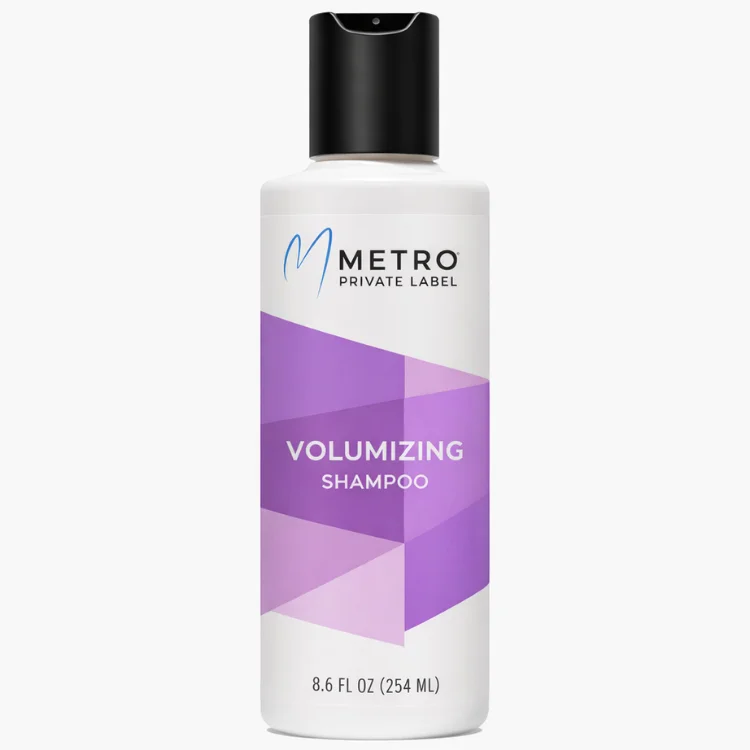
Volumizing Shampoo
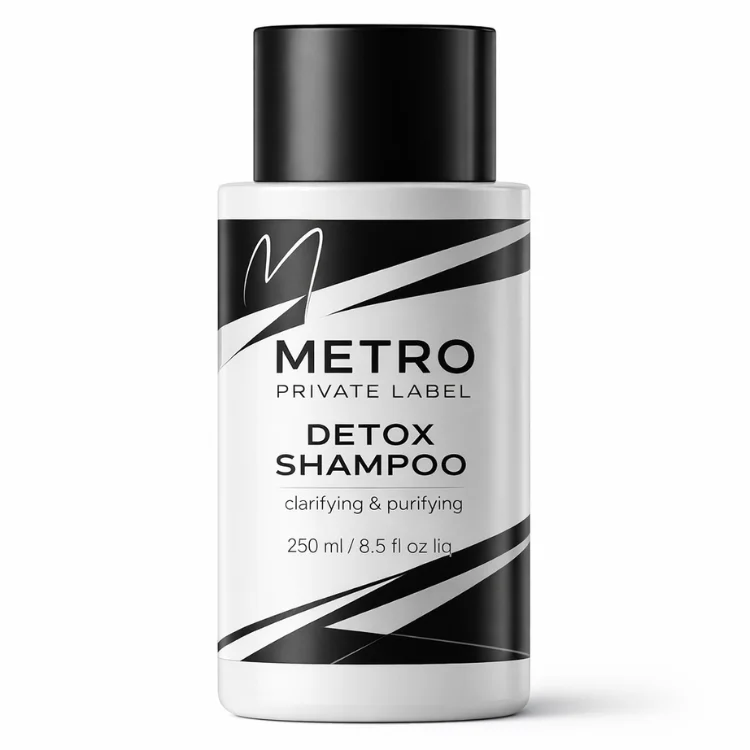
Clarifying / Detox Shampoo
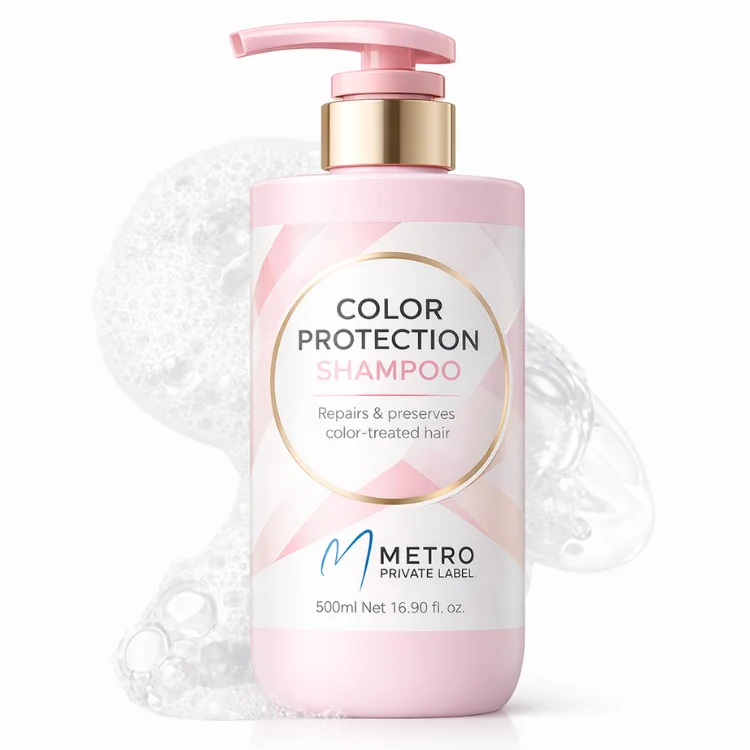
Color Protection Shampoo
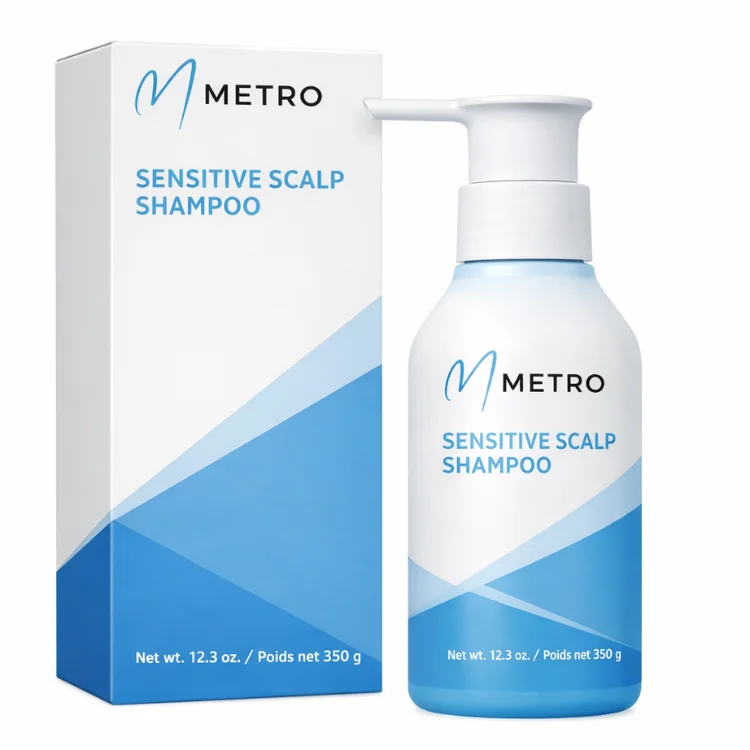
Sulfate-Free / Sensitive Scalp Shampoo
Build a Private Label Shampoo Line That Actually Sells
At Metro Private Label, we understand that launching a shampoo product is not just about cleaning hair—it is about creating something your customers will actually stick with. A shampoo that feels right, solves a clear problem, and fits into a daily routine is what drives repeat purchase. And without repeat purchase, even a good-looking product won’t scale. That’s why we don’t approach shampoo as a generic category. We help you define a clear product direction based on real user needs—whether that is dandruff control, scalp balance, hydration, repair, or hair thinning support.
We’ve seen many shampoo products fail not because the formula didn’t work, but because the positioning was unclear, the texture didn’t match the target audience, or the packaging wasn’t built for the actual sales channel. A volumizing shampoo that feels heavy, a repair shampoo that leaves residue, or a “gentle” shampoo that still irritates the scalp will quickly lose customer trust. That’s why we guide you early on—helping you align formula performance, user experience, and packaging so the product you launch is not only functional, but also commercially viable.
As your manufacturing partner, we focus on helping you build shampoos that fit real selling environments. Whether you are launching a fast-moving SKU for Amazon, building a differentiated DTC brand, or creating a salon or clinic-oriented scalp care line, we help you structure the right product from the beginning. From formula direction and sampling to packaging coordination and compliance support, we help you move faster, reduce trial-and-error, and launch with more confidence.
💡 Our 8 Core Private Label Shampoo Product Types
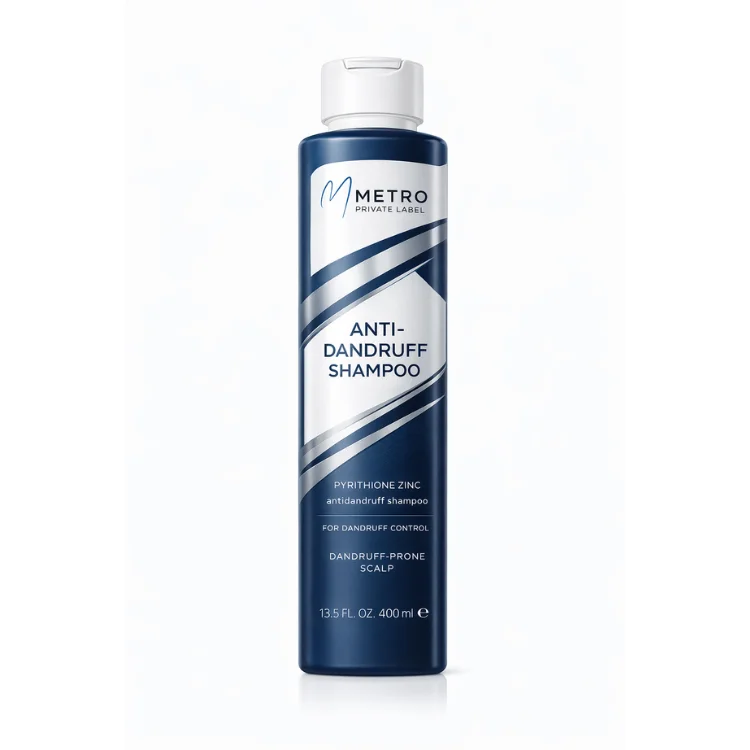
1️⃣ Anti-Dandruff Shampoo
This is one of the most stable and repeat-purchase-driven categories. Designed to target flakes, itchiness, and scalp imbalance, it is highly suitable for both e-commerce brands and clinic-style positioning. When formulated correctly, it builds strong customer retention because users rely on it long term.
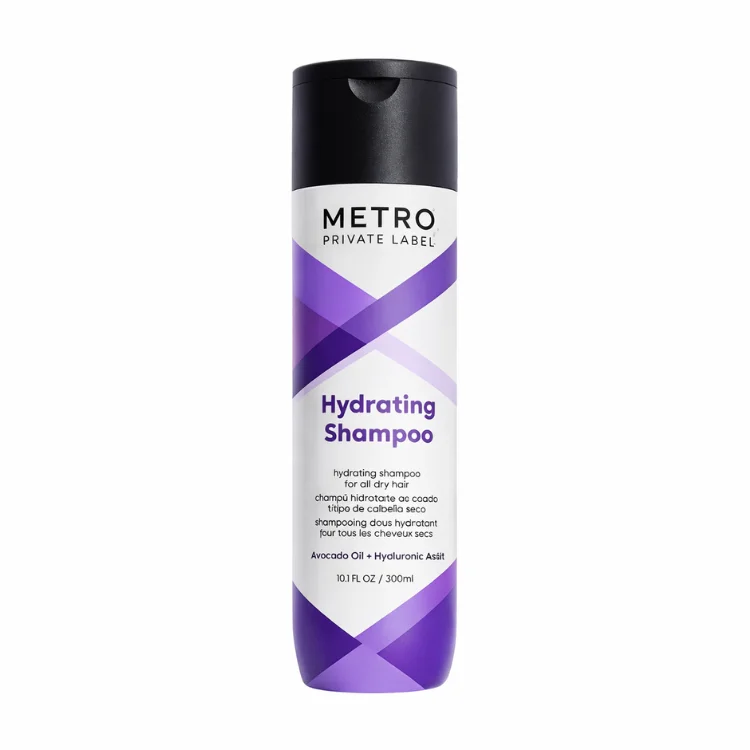
2️⃣ Hydrating Shampoo
Focused on dryness, frizz, and daily hair comfort, hydrating shampoos are widely accepted across mass and premium markets. This type works especially well for brands targeting everyday users who want softness, smoothness, and a non-stripping cleansing experience.
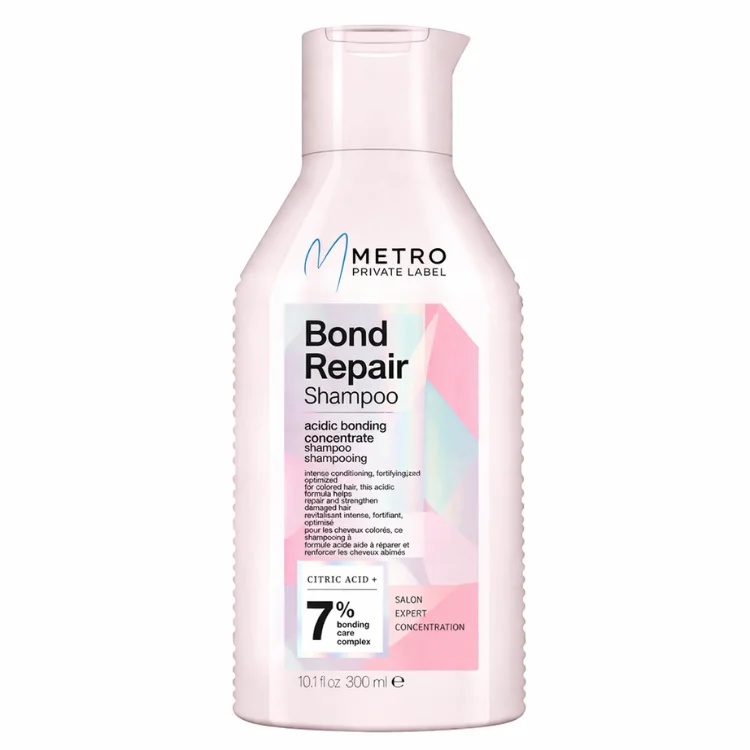
3️⃣ Repair / Bond Repair Shampoo
Positioned for damaged, bleached, or chemically treated hair, this category allows brands to communicate stronger value. By combining repair-focused ingredients with a balanced cleansing system, it becomes a key SKU for premium positioning and higher price points.
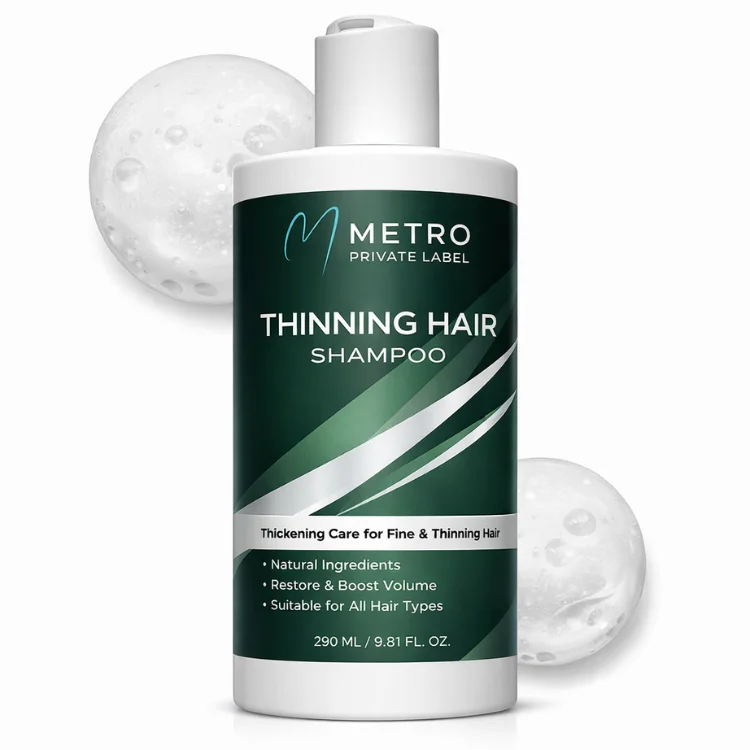
4️⃣ Hair Growth / Thinning Hair Shampoo
This is a highly emotional and high-conversion category. Customers are actively searching for solutions to thinning hair and hair loss, making it ideal for Amazon and DTC brands. When paired with the right ingredient story and claims direction, it can easily become a hero product.
5️⃣ Volumizing Shampoo
Designed for fine or flat hair, volumizing shampoos target lift, lightness, and fullness. This category is very clear in its benefit and easy for customers to understand, making it a strong addition to brands targeting daily styling needs.
6️⃣ Clarifying / Detox Shampoo
A deep-cleansing solution aimed at removing buildup, excess oil, and residue. This type is often positioned as a “reset” product and works well as a complementary SKU in a broader hair care line, especially for users dealing with oily scalp conditions.
7️⃣ Color Protection Shampoo
Created for dyed or treated hair, this category focuses on maintaining color vibrancy while minimizing fading. It is especially relevant for salon-aligned brands and customers who already invest in hair treatments and want to protect that investment.
8️⃣ Sulfate-Free / Sensitive Scalp Shampoo
Targeting users with sensitive scalp or preference for gentler formulations, this type emphasizes mild cleansing and reduced irritation. It is widely used in clean beauty positioning and works well across both premium and everyday product lines.
🎯 MOQ & Production Strategy (Built for Real Market Testing)
We understand that launching a shampoo line always comes with one key question—how to test the market without overcommitting too early. That’s why our standard MOQ for shampoo starts from 1,000 units per SKU, allowing us to maintain stable production, consistent filling, and reliable packaging quality, especially for brands selling through Amazon, Shopify, or retail channels.
If you are in an earlier stage or want to validate a new product direction, we also support lower MOQ options using in-stock packaging. In these cases, quantities can be adjusted to around 500–800 units, which is ideal for testing new ideas, entering the market quickly, or reducing upfront investment risk.
Our goal is not just to meet a minimum order requirement. We focus on helping you launch with the right product strategy, the right production setup, and a clear path to scale—so your shampoo line is built for real sales, not just for production.

More Than Just a Private Label Shampoo Manufacturer
At Metro Private Label, we don’t treat shampoo as just another SKU you add to your catalog. For most of the brands we work with, shampoo quickly becomes one of the most important drivers of repeat purchase. It’s a daily-use product, which means customers will immediately notice if something feels off—whether it’s too drying, too heavy, or simply doesn’t deliver visible results. And once trust is broken, they don’t come back. That’s why we focus on helping you build a shampoo that customers are comfortable using long term, not just something that looks good on the label.
A successful shampoo isn’t about making big claims or adding trending ingredients without structure. It’s about creating a formula that feels right from the first wash, performs consistently over time, and fits naturally into your customer’s routine. That’s what drives reviews, builds brand trust, and turns a simple shampoo into a stable, scalable product for your business.

✅ Formats That Already Work in the Market
We don’t build shampoo products based on assumptions. We focus on what is already proven to sell. By analyzing high-performing SKUs across Amazon, DTC brands, salon channels, and scalp-care trends, we concentrate on product types that customers already understand and actively search for.
These typically include anti-dandruff shampoos, hydrating daily shampoos, repair-focused formulas, volumizing options, and gentle sulfate-free solutions for sensitive scalp users. When the format is familiar, it becomes easier for customers to trust, easier for your brand to position, and much faster to scale.
Our role is to help you start from that proven foundation, so you’re not guessing what might work, but building a shampoo line that already aligns with real market demand.

✅ Production Models That Match How Brands Actually Launch
We understand that not every brand starts with large volumes, especially when testing a new shampoo direction or entering a new category.
For most shampoo products, production typically starts from 1,000 units per SKU. This allows us to maintain stable filling quality, consistent viscosity control, and reliable packaging compatibility—especially important for e-commerce brands where leakage, breakage, or inconsistency can directly lead to negative reviews.
If you are testing a new idea or want to move faster, we also offer in-stock packaging options, where MOQ can be adjusted to around 500–800 units. This helps you enter the market with lower risk while still keeping your product at a professional, sellable level.
As your sales grow, we help you scale production without needing to change your formula or restart development, so your product remains consistent as your volume increases.
✅ Formulation Consistency That Supports Repeat Purchase
Shampoo is one of the most sensitive categories when it comes to user experience. If it cleans too aggressively, customers feel dryness and stop using it. If it’s too mild, they don’t feel results. Getting that balance right is what determines whether your product becomes a one-time purchase or a long-term staple.
We focus on balancing cleansing performance with scalp comfort, optimizing foam feel, rinseability, and after-wash texture, and ensuring that every batch delivers the same experience. This includes stability testing, viscosity control, and compatibility between the formula and packaging.
That level of consistency is what leads to better reviews, stronger customer retention, and more predictable repeat sales.
✅ Execution & Compliance Support That Keeps You Moving
We don’t just develop and manufacture your shampoo—we help you bring it to market with fewer delays and fewer unknowns.
From INCI documentation and ingredient data to label guidance and packaging coordination, we simplify the process so you can focus on launching and selling. For brands targeting EU, UK, and international markets, we help structure your product to align with compliance requirements while still maintaining strong commercial positioning.
Our goal is simple. We help you build a shampoo line that is not only effective and ready for the market, but also easy to produce, compliant to sell, and designed to scale with your business.
✨ Build a Private Label Shampoo Line That Performs Beyond Expectations
When you work with Metro Private Label, you’re not just choosing a shampoo manufacturer—you’re working with a team that understands how shampoo actually performs in the real market. In this category, success is not defined by how strong the formula sounds on paper, but by how it feels during use, how consistent it is from batch to batch, and whether customers are willing to keep using it week after week.
Shampoo is a daily-use product, which means customers immediately notice everything—from foam texture and fragrance to how their scalp feels after rinsing. If it’s too harsh, they stop using it. If it feels ineffective, they don’t see value. What really drives repeat purchase is a shampoo that delivers visible improvement while still feeling comfortable for everyday use. That’s exactly where we focus—helping you create products that customers trust, enjoy using, and come back to buy again.
Whether you’re launching a dandruff-control shampoo, a hydrating daily formula, a repair-focused product, or building a complete hair care line, we structure each project around how your customers will actually use the product. Details like foam quality, rinseability, scalp comfort, and packaging experience all directly impact how your shampoo performs in the market. We help you get these right from the beginning—so your product is not just ready to launch, but ready to compete.
🧪 Formulation Built for Real Results
We don’t rely on generic shampoo bases or “one-formula-fits-all” approaches. Every shampoo we develop is built around balancing cleansing performance with scalp comfort and long-term usability.
From surfactant system selection and conditioning balance to ingredient combinations like moisturizing agents, soothing extracts, or scalp-care actives, we help you create formulas that feel right during use and deliver consistent results over time. The goal is simple—we build shampoos that don’t just sound good in marketing, but actually perform in real-world conditions.
📦 Packaging & MOQ That Fit Real Launch Conditions
We understand that launching a new shampoo SKU always comes with risk, especially when you’re testing a new market or product direction.
For most shampoo products, production typically starts from 1,000 units per SKU to ensure stable filling, proper viscosity control, and packaging compatibility. If you are in an earlier stage or want to test faster, we also support in-stock packaging options that allow smaller runs around 500–800 units.
From flip-top bottles and pumps to label application and outer cartons, we help align your packaging with your actual sales channel—whether you’re selling on Amazon, Shopify, or through retail—so your product not only looks right, but also ships safely and performs consistently.
⚙️ A Clear and Efficient Production Process
We keep the entire process simple, structured, and easy to follow. From initial concept and formula sampling to packaging confirmation and production scheduling, every step is clearly defined so you always know what comes next.
This is especially important for e-commerce brands and fast-moving teams that need to manage timelines carefully. Whether you’re preparing for a new launch, restocking a best-selling SKU, or expanding your product line, we help you move forward without unnecessary delays or confusion.
🌿 Built for Brands Ready to Launch and Scale
We don’t measure success by production alone—we measure it by how your shampoo performs after it reaches the market.
That’s why we focus on building formulas that are stable, scalable, and aligned with real customer expectations. From the first sample to full production, everything is designed to support repeat purchase, positive reviews, and long-term growth.
With Metro Private Label, your shampoo line is not just manufactured—it’s built to launch smoothly, perform consistently, and grow with your brand beyond the first order.

FAQs Shampoo
For your convenience, we’ve gathered the most commonly asked questions about our S、Shampoo . However, should you have any further queries, please don’t hesitate to reach out to us.
1. What types of private label shampoo can you manufacture?
We cover all the main shampoo categories that are already proven to sell in the market. This includes anti-dandruff, hydrating, repair, volumizing, hair growth, clarifying, color protection, and sulfate-free formulas. You can start with a direction that matches your target customer, and we’ll help you refine it into a product that fits your positioning and sales channel.
2. Can you customize the shampoo formula based on our brand concept?
Yes, and this is where we add the most value. We don’t just adjust ingredients—we help you align the formula with your target audience. Whether you want a lightweight daily shampoo, a richer repair formula, or a scalp-focused product, we’ll guide you on texture, ingredient combinations, and performance so it fits how your customers actually use it.
3. What’s your MOQ for private label shampoo?
Our standard MOQ starts from 1,000 units per SKU, which allows us to maintain stable quality and consistent production. If you’re testing a new product or launching your first SKU, we can also support lower quantities around 500–800 units using in-stock packaging options. This helps you reduce risk while still launching professionally.
4. How long does it take to go from sampling to production?
Typically, sampling takes around 7–14 working days depending on the formula complexity, followed by a short observation period for stability. Once everything is confirmed, production usually takes around 3–5 weeks. If you have a specific launch timeline, we can help you plan the process more efficiently.
5. Can you help with packaging and labeling?
Yes, we support the full packaging process. This includes bottle selection, pump or cap matching, label layout, carton design, and outer box planning. We also consider your sales channel—whether it’s Amazon, Shopify, or retail—so your packaging is not only visually aligned, but also practical for shipping and storage.
6. Do you offer both white label and custom formula options?
We offer both. If you want to move quickly, you can start with our ready-to-use formulas and adjust branding and packaging. If you’re building a more differentiated product, we can develop a custom formula with you. We’ll guide you on which approach makes more sense based on your timeline, budget, and goals.
7. What compliance documents can you provide?
We can support you with key documentation such as INCI lists, MSDS, COA, and basic labeling guidance. For EU and UK markets, we also help you prepare for compliance requirements like CPSR and ingredient review. Our goal is to make sure your product is structured correctly from the beginning to avoid delays later.
8. How do you ensure product quality and consistency?
We focus heavily on consistency because shampoo is a repeat-use product. Each formula goes through stability testing, compatibility checks with packaging, and controlled production processes. We also monitor factors like viscosity, fragrance stability, and performance to make sure every batch delivers the same user experience.
9. Can you help us build a full shampoo product line instead of just one SKU?
Yes, and this is something we strongly recommend. Many successful brands don’t rely on a single product—they build a simple system, such as a daily shampoo, a repair version, and a scalp-focused option. We help you plan this structure so your products work together and support long-term growth.
10. Do you work with international clients and handle shipping?
Yes, we work with brands globally, especially in the US, UK, EU, and other international markets. We can assist with documentation and coordinate shipping based on your needs. Whether you prefer air freight for speed or sea freight for cost efficiency, we help you choose a solution that fits your business stage.
Working with Metro Private Label made our product launch much more structured than we expected. They didn’t just give us a formula—they helped us define the right shampoo type, packaging direction, and compliance setup for Amazon. The process was clear, fast, and easy to follow, which allowed us to launch on time and avoid unnecessary trial and error.
James Walker, E-commerce Brand Ownerfrom United Kingdom
What stood out to me was how well they understood brand positioning. I came in with a general idea, but they helped me refine the formula texture, ingredient story, and packaging so everything felt aligned. The final product looked and felt like something ready for retail, not just a basic private label item.
Emily Carter, Founderfrom Australia
We needed a reliable supplier who could deliver consistent quality, and Metro Private Label met that expectation. Their communication was clear, lead times were stable, and the product performance remained consistent across batches. This gave us confidence to scale our orders without worrying about supply issues.
Luca Bianchi, Purchasing Managerfrom Italy
I appreciated how they explained the reasoning behind every decision—from formulation to pricing. It made the entire process much easier to understand, especially when balancing performance and cost. They felt less like a factory and more like a partner who actually supports long-term product development.
Sophie Laurent, Beauty Brand Founderfrom France
We were looking to create a professional shampoo line that fits our treatment services, and Metro Private Label helped us build exactly that. They guided us on product structure, mildness, and positioning for sensitive scalp users. The result is a product our clients trust and continue to repurchase.
Michael Anderson, Clinic Ownerfrom United States






Metro Private Label in Numbers
Happy Clients
0 +
Million-dollar Buyers
0 +
Formulation
0 +
Professional Staffs
0 +
Your Ultimate Guide to Shampoo
If you’re planning to build a shampoo line—whether it’s your first entry into hair care or an extension of your existing brand—you’re not just adding another product category. You’re stepping into one of the most competitive yet most reliable repeat-purchase markets in personal care. Shampoo is not a one-time purchase product. It’s part of a daily or weekly routine, which means customers quickly form habits around what they like and trust. When the product feels right, they stay. When it doesn’t, they switch immediately. That’s why this category is less about short-term trends and more about long-term performance, consistency, and user experience. A well-developed shampoo doesn’t just generate sales—it builds retention, strengthens brand loyalty, and creates a foundation for scalable growth.
Over the years, we’ve seen shampoo evolve from simple cleansing products into highly segmented solutions across e-commerce, salon, and clinical channels. Customers are no longer just looking for “clean hair.” They are looking for targeted solutions like scalp balance, repair, hydration, or anti-dandruff—combined with a pleasant daily experience. At the same time, platforms like Amazon and TikTok have made customer feedback more immediate and transparent, which means product performance is constantly being validated in public. At Metro Private Label, we’ve worked with brands across different markets and channels, and one thing has become very clear to us. The products that succeed are not necessarily the most complex—they are the ones where formulation, packaging, positioning, and pricing are aligned from the beginning. Shampoo may look simple, but the difference between a product that scales and one that stalls often comes down to these structural decisions behind the scenes.
This guide is built from what we’ve learned developing shampoo products across different brand stages, sales channels, and market conditions. We’re not here to explain shampoo from a purely technical perspective—we’re here to show how it actually performs in real business environments. From choosing product types that customers already understand and actively search for, to balancing cleansing strength with scalp comfort, to selecting packaging that survives e-commerce logistics while still matching your brand positioning, every decision plays a role. We also focus on practical considerations like setting the right MOQ to manage risk, structuring your product line for upsell and retention, and preparing compliance documentation early so your launch is not delayed. Because in the end, a successful shampoo product is not just about what’s inside the bottle—it’s about how everything around it works together to support long-term growth.
Table of Contents
How to Choose the Right Shampoo Type for Your Target Market
Choosing the right shampoo type is not just the first step in product development—it is the decision that shapes everything that follows, from formulation and packaging to pricing, positioning, and ultimately whether your product will sell or not. Over the years, I’ve seen brands succeed or fail based on how clearly they define this step. The brands that move faster, launch smoother, and scale more predictably are always the ones that start with a clear understanding of who they are serving and why their product deserves to exist in the market. This is not about creating the most complex formula, but about making the right strategic choice at the beginning.
Start With Your Customer, Not the Formula
I always tell brands to slow down at the very beginning and shift their focus away from ingredients and toward the actual person who will use the product. It’s easy to get drawn into trending actives or competitor formulas, but those don’t define success—the user does. I ask questions that go deeper than surface-level demographics. I want to understand what problem the customer is actively trying to solve, how urgent that problem feels, and what kind of experience they expect when they use the shampoo. Someone dealing with dandruff is not just looking for cleansing—they are looking for relief, comfort, and visible improvement. Someone with dry, damaged hair is looking for softness, manageability, and a sense of repair after each wash. These expectations are emotional as much as they are functional. When I help brands define this clearly, it becomes much easier to choose a shampoo type that feels natural and relevant rather than forced or generic.
Your Shampoo Type Defines Your Entire Product Strategy
Once the customer is clear, I see the shampoo type as the backbone of the entire product strategy. It is not just a category label—it determines how the product should perform, how it should feel, and how it should be communicated. For example, a hydrating shampoo cannot feel overly cleansing or squeaky, because that contradicts the promise of moisture and comfort. A repair shampoo must leave a noticeable difference in hair texture, otherwise customers will question its value. A dandruff shampoo must walk a very fine line between effectiveness and gentleness, because users will quickly abandon anything that feels too harsh. I often explain to clients that this is where many products fail—not because the formula is technically incorrect, but because the sensory experience and performance do not match the expectation created by the product type. When I align these elements from the beginning, the product becomes much easier to trust and much easier to sell.
E-commerce vs Salon Channels Require Different Product Logic
Another layer I always bring into the discussion is the sales channel, because the same shampoo can perform very differently depending on where it is sold. In e-commerce environments like Amazon or TikTok, customers are usually searching with a clear problem in mind, and they make decisions quickly. This is why straightforward, problem-solution categories such as anti-dandruff, hair growth, or oil-control shampoos tend to perform better. The clarity of the benefit reduces hesitation and increases conversion. In contrast, salon and clinic environments operate on trust, experience, and professional recommendation. Customers in these settings are less focused on immediate problem-solving and more focused on long-term hair health and safety. This is where repair shampoos, sensitive scalp formulas, and gentle sulfate-free products tend to resonate more. I’ve worked with brands that had strong products but struggled simply because they didn’t match their product type to their sales channel. When I guide this alignment properly, it creates a much smoother path from product development to actual sales performance.
Clarity Early On Saves You Months of Rework
One of the biggest advantages of making the right decision early is the amount of time, cost, and frustration it prevents later. I’ve seen projects where brands had to go back and change their entire direction after sampling, simply because they didn’t define their target user or shampoo type clearly enough. This usually leads to repeated adjustments in formulation, packaging redesigns, and inconsistent messaging. Each change adds time and uncertainty, and more importantly, it delays the moment when the product can actually start generating revenue. When I work with brands that take the time to get this step right, the entire process becomes more efficient. Sampling becomes more focused, decisions are made faster, and the path to production is much clearer. In my experience, this clarity is one of the most underestimated advantages in product development.
Build Around Real Demand, Not Assumptions
At the end of the process, I always bring the conversation back to the market, because no matter how well a product is designed, it still needs to align with what customers are already looking for. I encourage brands to study real buying behavior, not just trends or personal preferences. What are people searching for repeatedly? What types of shampoos are consistently ranking, reviewed, and repurchased? These signals tell you where the demand already exists. I’m not suggesting copying what’s already in the market, but rather understanding the logic behind it. When a product type is already familiar to customers, it becomes easier to position, easier to explain, and easier to sell. When brands try to introduce something that is too abstract or unclear, they often face resistance, no matter how good the product is. From my perspective, the goal is to build on proven demand while creating enough differentiation to stand out, and that balance is what leads to a successful launch.
Speed to Market vs Custom Development: What Should You Prioritize?
When I discuss product development strategy with brands, this is almost always one of the most critical turning points in the conversation. It is not simply a technical choice between two development paths, but a business decision that directly impacts your timeline, cash flow, risk exposure, and long-term positioning. I’ve worked with brands at very different stages—from first-time founders to experienced e-commerce operators—and what I’ve learned is that the right answer is never universal. It depends entirely on where you are in your business, how urgent your opportunity is, and how clearly you understand your target market. What I try to do is help brands see this decision not as a trade-off, but as a structured strategy that evolves over time.
Why Speed to Market Often Creates Early Momentum
When I work with brands that already have traffic, sales channels, or a clear product gap to fill, I almost always recommend prioritizing speed. In real market conditions, timing is often more valuable than perfection. If you already know what your customer is looking for and you delay your launch for months trying to refine every detail, you risk losing that window of opportunity. I’ve seen brands miss entire seasonal trends or product cycles simply because they were over-optimizing too early. In contrast, brands that launch faster are able to start generating revenue, collecting reviews, and building momentum while competitors are still in development. From my perspective, the market rewards execution speed, especially in categories like shampoo where user expectations are already well established and customers are not necessarily looking for something radically new.
How I Use Proven Formulas to Accelerate Launch Without Sacrificing Quality
One of the biggest concerns brands have when choosing speed is the fear of compromising on quality or differentiation. This is where I introduce the concept of starting from a proven formulation base. Instead of building everything from scratch, I guide brands to use a formula structure that has already been validated in terms of stability, performance, and compatibility with packaging. This allows us to skip many of the early-stage uncertainties and focus directly on the elements that matter most to the customer experience. From there, we refine details such as fragrance direction, foam profile, texture, and positioning so the product still feels aligned with the brand. In my experience, this approach significantly shortens development time while maintaining a professional standard, and it allows brands to enter the market with confidence rather than hesitation.
Why Custom Development Builds Long-Term Competitive Advantage
At the same time, I am very clear with brands that speed alone is not enough if the goal is long-term growth. If you are building a brand that aims to stand out, command higher pricing, or create a strong identity in a competitive space, custom development becomes an essential investment. This is where we move beyond functional performance and start shaping a product that feels unique in the market. I work closely with brands at this stage to refine not only the ingredient system, but also the sensory experience, the story behind the formulation, and how the product fits into a broader product line. Custom development allows you to create something that competitors cannot easily replicate, which becomes increasingly important as your brand grows and faces more direct competition. It requires more time and a more collaborative process, but it lays the foundation for a stronger and more defensible business.
The Hidden Cost of Choosing the Wrong Strategy
One thing I often point out is that choosing the wrong approach for your stage can be more costly than the development itself. If you invest heavily in custom formulation before validating your market, you may end up with a product that is technically strong but commercially misaligned. On the other hand, if you rely only on speed and never invest in differentiation, your brand may struggle to move beyond price competition. I’ve seen both scenarios play out, and in both cases, the issue was not the product itself, but the mismatch between strategy and business stage. What I try to do is help brands avoid these pitfalls by aligning their development approach with their immediate goals and their long-term vision at the same time.
How I Help Brands Balance Speed and Customization in Practice
In most real projects, I don’t treat speed and customization as separate paths, but as phases within the same strategy. I often guide brands to launch with a well-structured, market-ready product first, using a proven formula that allows them to enter the market quickly. This initial launch serves as a validation step, where we can observe real customer behavior, gather feedback, and understand what aspects of the product resonate most. Once that foundation is established, we move into a second phase where we refine and differentiate. This could involve enhancing the formula, expanding into additional SKUs, or introducing more unique features that strengthen the brand’s identity. This staged approach allows brands to move forward with confidence, because each step is informed by real data rather than assumptions.
Choosing Based on Where You Are, Not Where You Want to Be
At the end of the day, the most important thing I tell brands is to be honest about their current stage. It is natural to want to build something perfect from the beginning, but in reality, most successful brands evolve over time rather than starting fully optimized. If you are at the stage where speed can help you capture demand and generate early traction, then that should be your priority. If you already have a stable foundation and are looking to strengthen your positioning, then it makes sense to invest more in customization. These are not conflicting choices, but tools that should be used at the right moment. When I help brands make this decision clearly, the entire development process becomes more focused, more efficient, and much more aligned with real business outcomes.
What Makes a Shampoo “Sellable,” Not Just Functional
When I evaluate a shampoo from a business perspective, I don’t ask whether it works—I ask whether people will want to keep using it. That difference is what separates a functional product from a sellable one. In this category, success is not built on technical performance alone, but on how naturally the product fits into a customer’s routine and how it makes them feel every time they use it. I’ve seen many shampoos that are technically “correct” fail in the market, and almost every time, the reason comes back to user experience. A product that feels slightly off, even in subtle ways, will struggle to generate repeat purchase, and without repeat purchase, there is no real business behind it.
Why Functionality Is Only the Entry Point, Not the Advantage
I always explain to brands that cleansing hair is the minimum requirement, not the competitive edge. Every shampoo on the market is expected to clean, so that alone does not create differentiation. What actually influences buying behavior is whether the product delivers a complete and satisfying experience. If the shampoo removes oil but leaves the hair tangled, if it cleans deeply but causes dryness over time, or if it performs inconsistently from one wash to another, customers will not see it as a reliable choice. From my perspective, functionality gets you into the market, but experience is what keeps you there. The brands that succeed are the ones that go beyond basic performance and focus on how the product feels in real, repeated use.
How Texture and Flow Influence Perceived Quality
One detail I always pay close attention to is how the shampoo behaves the moment it leaves the bottle. This may seem minor, but it has a direct impact on how customers perceive quality. If the texture is too thin, it can feel diluted or low-cost, even if the formula is well designed. If it is too thick or heavy, it can feel difficult to control and less pleasant to spread across the hair. What I aim for is a texture that feels balanced, smooth, and easy to distribute, creating a sense of control and comfort during application. These small tactile details shape the user’s first impression, and in many cases, that first impression influences how they judge the entire product.
Foam Experience as a Psychological Signal of Effectiveness
Foam is not just a technical result of surfactants—it is a psychological signal. When I develop shampoo formulas, I think about foam not only in terms of quantity, but also in terms of quality. A dense, creamy, and stable foam gives the user a sense of effectiveness and care, even before the cleansing process is complete. It creates a moment of reassurance that the product is doing its job. On the other hand, a weak or uneven foam can create doubt, even if the cleansing performance is technically sufficient. I’ve seen customers lose confidence in a product simply because it didn’t foam the way they expected. This is why I treat foam as part of the overall experience design, not just a byproduct of formulation.
Fragrance as an Emotional Anchor for the Product
Fragrance is one of the most underestimated elements in shampoo development, yet it is often the most memorable. I always approach fragrance as more than just a scent—it is the emotional identity of the product. When a customer uses a shampoo, the scent is what stays with them during and after the experience. It can make the product feel refreshing, calming, luxurious, or energizing. If the fragrance is too strong, too artificial, or simply mismatched with the product’s positioning, it can create immediate rejection. I guide brands to think carefully about how fragrance supports their overall story. A clean, subtle scent works well for sensitive or daily-use shampoos, while a more distinctive fragrance can reinforce a premium or salon-style positioning. When done correctly, fragrance becomes one of the key reasons customers remember and return to a product.
The Critical Role of After-Wash Feel in Customer Retention
In my experience, the most important moment in the entire shampoo experience happens after the product is rinsed off. This is when the customer evaluates whether the product delivered what it promised. I focus heavily on how the hair feels at this stage—whether it is smooth, manageable, and soft, or whether it feels dry, heavy, or difficult to handle. At the same time, I consider scalp comfort, because any sense of irritation, tightness, or imbalance will quickly reduce trust. Customers may not analyze these sensations in technical terms, but they respond to them instinctively. If the after-wash feel is positive, the product becomes part of their routine. If it is not, they move on to something else. This is why I see after-wash performance as the true driver of repeat purchase.
Why Customers Respond to Experience More Than Ingredients
I often remind brands that while ingredient stories are important for marketing, they are not what ultimately determines whether a product succeeds. Most customers do not read ingredient lists in detail or understand formulation complexity. What they do understand is how the product feels, how consistent it is, and whether it delivers a reliable experience every time they use it. A strong ingredient story can attract attention and generate initial interest, but it cannot compensate for a poor user experience. I always aim to align these two aspects, making sure that the product not only has a compelling narrative but also delivers on that promise in a way that customers can immediately feel.
Building a Shampoo That Naturally Drives Repeat Purchase
When I bring all of these elements together, my goal is to create a shampoo that feels effortless to use and easy to trust. A product that does not require the customer to adjust their routine or tolerate discomfort, but instead fits naturally into their daily life. This is what drives repeat purchase, and repeat purchase is what turns a product into a long-term revenue driver. From my perspective, a sellable shampoo is not defined by how innovative it sounds, but by how consistently it delivers a positive experience. When the texture, foam, fragrance, and after-wash feel all work together, the product becomes something customers rely on, rather than something they simply try once.
The Role of Repeat Purchase in Shampoo Business Models
When I analyze a shampoo product from a business perspective, I don’t look at how well it sells in the first month—I look at whether it can still sell six months later without relying entirely on paid traffic. Shampoo is fundamentally different from many other beauty categories because it is deeply embedded in routine. That routine creates a natural opportunity for repeat purchase, but only if the product earns its place there. In my experience, the brands that truly scale in this category are not the ones with the most aggressive marketing, but the ones that manage to turn their shampoo into a habit. That shift—from a one-time purchase to a repeated behavior—is where real business value is created.
Why Shampoo Naturally Builds Habit-Based Consumption
I always explain to brands that shampoo is not just a product, it is a behavior. People don’t use it occasionally—they use it consistently, often multiple times a week, sometimes even daily depending on lifestyle and hair type. This frequency creates a built-in replenishment cycle that most categories simply don’t have. However, what I find interesting is that this cycle is not guaranteed. Just because a product is used frequently does not mean it will be repurchased. Customers are constantly evaluating their experience, even if they are not consciously aware of it. If the shampoo integrates smoothly into their routine and delivers a predictable result, it becomes part of their habit. If it creates friction, even in small ways, it gets replaced. From my perspective, the goal is not just to enter the routine, but to stay there without resistance.
Why the First Purchase Is Only a Validation, Not Success
One of the most common misconceptions I see is brands celebrating strong initial sales as proof of success. While a good launch is important, I see it more as validation than achievement. The first purchase tells you that your positioning, packaging, and marketing are working well enough to attract attention. It does not tell you whether your product is good enough to keep customers. I’ve worked with brands that had impressive launch numbers but struggled with retention because the product experience did not meet expectations. At the same time, I’ve seen more modest launches turn into strong long-term performers because the product quietly built loyalty. When I evaluate a shampoo, I always ask how it will perform on the third, fourth, or fifth use, because that is when the customer decides whether to stay or leave.
How Product Experience Shapes Long-Term Retention
In shampoo, retention is not driven by claims—it is driven by consistency of experience over time. I focus heavily on how the product behaves not just during the first wash, but after repeated use. Does it maintain the same level of comfort on the scalp, or does it start to feel drying? Does the hair continue to feel manageable and clean, or does buildup begin to occur? These subtle changes over time are what influence customer decisions. A product that feels slightly uncomfortable after multiple uses will eventually be replaced, even if the initial experience was positive. This is why I emphasize building formulas that are not only effective, but also stable and balanced enough for long-term use. The goal is to create a product that feels reliable every time, not just impressive at the beginning.
The Connection Between Consistency and Trust
Trust is something I think about constantly when working on repeat-purchase products. In the context of shampoo, trust is built through consistency. Customers expect the same texture, the same foam, the same fragrance, and the same after-wash feel every time they use the product. Any variation, even a small one, can create doubt. I’ve seen situations where slight inconsistencies in viscosity or scent were enough to make customers question whether the product had changed. Once that doubt is introduced, it becomes much harder to maintain loyalty. This is why I pay close attention to production control, stability, and packaging compatibility. Consistency is not something that customers explicitly ask for, but it is something they immediately notice when it is missing.
Why Repeat Purchase Reduces Business Risk
From a business standpoint, repeat purchase is what creates stability. If your shampoo relies entirely on acquiring new customers, your growth becomes dependent on marketing spend, which can fluctuate and become increasingly expensive. When a product generates consistent repeat orders, it reduces that dependency and creates a more predictable revenue stream. I often explain to brands that a strong repeat-purchase product acts as a foundation for everything else. It allows you to invest in new product development, expand your line, and test new ideas without putting your entire business at risk. In this sense, repeat purchase is not just a metric—it is a form of protection.
Building a Shampoo That Customers Choose to Stay With
At the end of the day, what I aim to help brands create is not just a shampoo that works, but a shampoo that customers choose not to replace. That decision is influenced by many factors working together, including formula balance, user comfort, sensory experience, and reliability over time. When all of these elements are aligned, the product becomes part of the customer’s routine in a way that feels natural and effortless. In my experience, this is what defines a truly successful shampoo product. It is not the one that creates the most excitement at launch, but the one that quietly becomes indispensable to the user.
Understanding MOQ Strategy for Different Business Stages
When I discuss MOQ with brands, I always try to shift the conversation away from seeing it as a restriction and toward understanding it as a strategic tool. MOQ is not just a number defined by the factory—it is a decision that directly impacts your cash flow, inventory pressure, speed to market, and even your ability to adjust your product direction. What I’ve learned from working with different types of clients is that MOQ only becomes useful when it reflects how your business actually operates. If it is disconnected from your sales model, it creates friction. If it is aligned properly, it becomes one of the most effective ways to control risk and support growth.
Why MOQ Is a Core Part of Risk Management for E-commerce Brands
When I work with e-commerce brands, especially those selling through Amazon, Shopify, or TikTok, I always frame MOQ as part of their risk management system rather than a production requirement. At this stage, the biggest uncertainty is not whether you can produce the product, but whether the market will respond to it the way you expect. This is why I usually recommend starting within a range of 500 to 1,000 units. This quantity allows you to enter the market with enough stock to test performance, run ads, gather reviews, and validate your positioning, without putting excessive pressure on your cash flow. From my perspective, this is about creating flexibility. You are giving yourself room to learn, adjust, and optimize, instead of locking yourself into a large inventory before you have real data.
How Inventory Pressure Affects Decision-Making and Growth
One of the patterns I’ve noticed is that inventory pressure often leads to poor decision-making. When a brand commits to a large MOQ too early, it creates a psychological and financial burden. Instead of focusing on improving the product or refining the marketing strategy, the priority becomes clearing stock as quickly as possible. This often results in aggressive discounting, rushed campaigns, or compromises in brand positioning. I’ve seen brands that had strong potential weaken their own positioning simply because they needed to move inventory. That’s why I always encourage brands to think about MOQ in terms of control. A manageable quantity keeps your decision-making flexible and allows you to focus on building a stronger product-market fit rather than reacting to inventory pressure.
Why Lower MOQ Enables Faster Learning Cycles
From my experience, one of the most valuable advantages of starting with a lower MOQ is the ability to learn quickly. Every batch you produce is not just inventory—it is feedback. You learn how customers respond to your product, how your packaging performs during shipping, how your pricing strategy holds up, and what kind of reviews you receive. When your initial quantity is smaller, you can move through these learning cycles faster. If adjustments are needed, you can implement them in the next production run without significant loss. This iterative process is what allows brands to improve efficiently. I often tell clients that the goal of the first production is not to be perfect, but to be informative.
How MOQ Strategy Changes for Distributors and Wholesale Buyers
When I work with distributors or retail buyers, the conversation shifts from flexibility to efficiency. These clients usually already have established sales channels and a clearer understanding of demand, so their priorities are different. Instead of focusing on testing, they are focused on maintaining supply consistency and optimizing cost structure. In these cases, larger order quantities make more sense because they reduce unit cost and support stable distribution across multiple locations. However, even here, I guide clients to think carefully about SKU selection and turnover rates. A balanced order across several products often performs better than concentrating too heavily on one item without considering how quickly it will move through the channel.
Aligning MOQ With Cash Flow and Business Reality
One of the most important things I emphasize is that MOQ must always be aligned with your financial reality. It is not just about how many units you can produce, but how those units interact with your cash flow. Every unit you produce represents capital that is temporarily locked into inventory. If that inventory moves quickly, it generates return and supports growth. If it moves slowly, it limits your ability to invest in other areas such as marketing, product development, or expansion. I always encourage brands to think about MOQ in relation to how quickly they expect to sell through their stock and how that aligns with their financial planning. This perspective helps avoid situations where production decisions create unnecessary financial strain.
Using MOQ as a Scaling Mechanism Rather Than a Fixed Constraint
What I’ve found is that the most successful brands treat MOQ as something that evolves with their business rather than a fixed starting point. In the early stage, lower quantities provide flexibility and reduce risk. As the product gains traction and demand becomes more predictable, increasing the order size becomes a natural step that improves cost efficiency and supports scaling. This progression should feel controlled and intentional. I often work with brands to map out this transition, helping them understand when it makes sense to increase volume and how to do it without disrupting their operations. When MOQ is used this way, it becomes a mechanism for growth rather than a limitation.
Building a Production Strategy That Supports Long-Term Growth
At the end of the day, I see MOQ as part of a larger production strategy that should support your long-term goals. It is not just about the first order, but about how your production decisions will evolve as your business grows. When MOQ is aligned with your stage, your sales model, and your financial structure, it allows you to move forward with more confidence. You are not reacting to constraints—you are making deliberate choices that support your growth. In my experience, this is one of the key differences between brands that struggle with production and those that use it as a competitive advantage.
Packaging Decisions That Impact Reviews and Returns
When I guide brands through shampoo development, I often find that packaging is one of the most underestimated yet most critical factors in determining whether a product succeeds or struggles in the market. Many founders initially focus on formula, ingredients, and claims, assuming packaging is simply a visual layer added at the end. But from my experience, packaging is not just how the product looks—it is how the product behaves in real-world conditions. It affects shipping durability, user convenience, perceived quality, and ultimately customer satisfaction. I’ve seen excellent formulas fail because of poor packaging choices, and average formulas perform well simply because the packaging experience felt reliable and premium. This is why I always treat packaging decisions as a core part of product strategy, not a secondary step.
Why Customers Judge the Entire Product Through Packaging Experience
One of the most important realities I’ve learned is that customers do not separate packaging from the product itself. If something goes wrong with the bottle, they don’t analyze whether it’s a packaging issue or a formula issue—they simply conclude that the product is bad. I’ve seen cases where leakage during delivery led to immediate one-star reviews, even though the shampoo formula itself performed well. I’ve also seen complaints about pumps that stop working halfway through use or caps that crack after a few days, which creates frustration that overrides any positive experience with the formula. From the customer’s perspective, the packaging is the product. That means every detail, from how smoothly the pump dispenses to how securely the cap closes, directly influences reviews, ratings, and repurchase decisions.
How E-commerce Logistics Expose Weak Packaging Instantly
When I work with e-commerce brands, especially those selling on Amazon or direct-to-consumer platforms, I always emphasize that packaging must be built for logistics first, not just aesthetics. Unlike retail environments where products are handled carefully and displayed on shelves, e-commerce products go through multiple stages of transportation, stacking, compression, and temperature variation. I’ve seen bottles deform under pressure, caps loosen during transit, and formulas leak because sealing was not tight enough. These are not rare incidents—they are predictable outcomes when packaging is not designed for shipping conditions. That’s why I always advise brands to think about packaging as a protective system. The closure, the bottle thickness, the sealing mechanism, and even the compatibility between the formula and the packaging material must all work together to ensure the product arrives in perfect condition. If this step is overlooked, returns and complaints become unavoidable.
Why Small Packaging Details Create Big Differences in User Experience
What many brands don’t realize is that customers interact with shampoo packaging repeatedly, often multiple times a week. This means small design decisions can have a significant cumulative impact on user experience. I always pay close attention to how easy it is to open and close the bottle, how controlled the dispensing is, and whether the product can be used comfortably in a wet environment like a shower. If the bottle is too rigid, it becomes difficult to squeeze. If the pump dispenses too much product, it creates waste. If water easily enters the packaging, it can affect product quality over time. These details may seem minor during development, but they become highly noticeable during daily use. From my perspective, a well-designed package should feel intuitive, effortless, and consistent every time the customer uses it.
The Relationship Between Packaging Quality and Brand Perception
Packaging does more than protect the product—it communicates your brand positioning instantly. When a customer receives your shampoo, the first impression is formed before they even use it. I’ve seen how the weight of the bottle, the finish of the material, and the precision of the printing all contribute to perceived value. A lightweight or poorly finished bottle can make the product feel cheap, even if the formula is premium. On the other hand, a well-constructed and visually consistent package can elevate the entire product experience. I always encourage brands to think about packaging as part of their storytelling. It should align with the target audience, whether that means a clean and minimal design for a clinical brand or a more expressive and colorful approach for a lifestyle-driven product. When packaging and brand positioning are aligned, it strengthens customer trust and increases perceived value.
Why Retail and E-commerce Require Completely Different Packaging Strategies
One mistake I frequently see is brands using the same packaging approach across all channels without considering how customer behavior differs. In retail or salon environments, customers can physically touch and evaluate the product before purchasing, so visual appeal and tactile quality play a stronger role. In e-commerce, however, the decision is made online, and the first physical interaction happens after purchase. This shifts the priority toward durability, reliability, and consistency upon arrival. I always help brands understand that these two channels require different packaging strategies. A visually striking bottle that performs well in retail may fail in e-commerce if it cannot withstand shipping. Likewise, a highly durable but visually plain package may not stand out in a retail environment. Aligning packaging with the primary sales channel is essential for maximizing performance.
The Hidden Financial Impact of Packaging Failures
From a business perspective, packaging mistakes are not just operational issues—they are financial risks. When packaging fails, the cost is not limited to replacing a few damaged units. It includes return logistics, customer service handling, potential refunds, and the long-term impact of negative reviews on sales performance. I’ve worked with brands that underestimated this and ended up losing far more in post-sale costs than they saved during production. What makes this even more challenging is that negative reviews are public and persistent, meaning they continue to affect conversion rates long after the initial issue is resolved. This is why I always position packaging as an investment rather than a cost. Spending slightly more upfront to ensure reliability can protect your margins and brand reputation in the long run.
How I Approach Packaging Testing Before Production
To minimize risks, I always recommend validating packaging decisions before moving into full-scale production. This involves more than just visual approval. I look at how the packaging performs under simulated shipping conditions, how it interacts with the formula over time, and whether the closure system maintains integrity after repeated use. I also consider how the packaging behaves under temperature changes, as this can affect both material stability and sealing performance. These steps may seem time-consuming, but they prevent much larger problems later. In my experience, the brands that invest time in testing early are the ones that launch with fewer issues and achieve more consistent customer satisfaction.
Building Packaging That Supports Long-Term Product Success
Ultimately, I see packaging as a critical component of long-term product performance. It is not just about getting through the first production run—it is about creating a system that can support repeat orders, consistent quality, and scalable growth. When packaging is reliable, customers have a smooth experience, reviews remain positive, and the product becomes easier to scale. When it is not, every stage of the business becomes more difficult. That’s why I always guide brands to approach packaging decisions with the same level of attention as formulation. When both are aligned and executed properly, the result is a product that not only launches successfully but continues to perform in the market over time.
Compliance Basics for Selling Shampoo in the US & EU
When I work with brands preparing to launch shampoo products in international markets, I always emphasize that compliance is not something you “add on” at the end—it is something you design into your product from the very beginning. In reality, compliance shapes your formula, your packaging, your labeling, and even your marketing claims. I’ve seen many brands delay their launches not because their products were not ready, but because their documentation, ingredient structure, or labeling did not meet regulatory expectations. What I’ve learned over time is that compliance is not just about avoiding problems—it is about building a product that can move smoothly across markets without friction. When you approach it correctly, it becomes a competitive advantage rather than a barrier.
Why I Always Start With Regulatory Positioning Before Formula Development
Before I even look at ingredients or textures, I always ask one key question: where is this product going to be sold? The reason is simple—different markets have different regulatory frameworks, and those frameworks directly affect what you can and cannot include in your formula. In the US, cosmetic regulations are relatively flexible, but they still require safety and proper labeling. In the EU, the structure is much stricter, with clearly defined ingredient restrictions, documentation requirements, and safety assessments. I’ve seen brands develop a formula first and then realize later that certain ingredients or concentrations are not acceptable in their target market, which forces them to reformulate and lose time. That’s why I always align the regulatory strategy with the formula from the start. It ensures that everything we build is already positioned for the intended market.
How INCI Accuracy and Ingredient Transparency Prevent Future Problems
One of the most overlooked yet critical aspects of compliance is the accuracy of the INCI list. I always treat the INCI list as the technical backbone of the product. Every ingredient must be correctly named, properly ordered, and fully traceable. This is not just for regulatory authorities—it also affects how your product is perceived by distributors, retailers, and even informed consumers. I’ve worked on projects where minor inconsistencies in ingredient naming created confusion during documentation review, leading to delays that could have been avoided. From my perspective, a clean and accurate INCI list is a sign of a well-structured product. It makes everything else—from safety assessments to labeling—much more efficient and reliable.
Why Labeling Is Both a Legal Requirement and a Brand Signal
Labeling is often seen as a design task, but I always approach it as a combination of legal compliance and brand communication. Every element on the label has a purpose, whether it is the ingredient list, usage instructions, net content, or company information. In the US, labeling focuses on ensuring that consumers are not misled and that all essential information is clearly presented. In the EU, labeling requirements are more standardized and must follow specific formats, including language requirements depending on the country. I’ve seen brands underestimate how strict these requirements can be, resulting in relabeling or delayed shipments. At the same time, labeling is also one of the first touchpoints with the customer. A well-structured, compliant label communicates professionalism and builds trust, while a poorly executed one creates doubt—even before the product is used.
How Documentation Supports Both Compliance and Business Credibility
When I talk about compliance, I always go beyond just the product itself and focus on the documentation system behind it. Documents like MSDS and COA are essential not only for regulatory purposes but also for building trust with partners. The MSDS provides detailed safety information, while the COA confirms the quality and consistency of each production batch. I’ve noticed that brands who maintain organized and accessible documentation are much more efficient when working with distributors, entering new markets, or responding to regulatory inquiries. These documents act as proof that your product is controlled, tested, and reliable. In my experience, strong documentation is one of the key factors that separates professional brands from those that struggle to scale.
What I Pay Attention to When Preparing for EU Compliance
The EU market requires a more structured and proactive approach, and this is where I spend a significant amount of time guiding brands. The Cosmetic Product Safety Report, or CPSR, is a central requirement, and it involves a detailed safety evaluation conducted by a qualified assessor. This process looks at the full composition of the product, exposure levels, and potential risks. In addition, the concept of a Responsible Person is something I always explain clearly to clients. This is not just a formality—it is a legal role that ensures accountability for the product within the EU. I’ve seen brands underestimate the importance of these requirements and face delays when trying to enter the market. When these elements are prepared early, however, the process becomes much smoother and more predictable.
Why Compliance Directly Affects Your Speed to Market
One of the most interesting things I’ve observed is that compliance, when handled correctly, actually accelerates your launch rather than slowing it down. When your formula, labeling, and documentation are already aligned with regulatory expectations, you avoid last-minute corrections that can disrupt production timelines. I’ve worked with brands that had to pause shipments or reprint packaging because compliance was addressed too late. On the other hand, brands that integrate compliance into their development process move forward with much greater efficiency. From my perspective, compliance is not about adding extra steps—it is about removing uncertainty and ensuring that every step of the process flows smoothly.
The Hidden Risks of Ignoring Compliance in Early Stages
Ignoring compliance early on often creates problems that are not immediately visible but become significant later. I’ve seen products that were ready for launch but could not be shipped because documentation was incomplete. I’ve seen brands invest heavily in marketing, only to face delays due to labeling issues. These situations are not just inconvenient—they are costly. They affect timelines, budgets, and sometimes even brand reputation. What makes this particularly challenging is that these issues often appear at the final stage, when changes are more difficult and expensive to implement. That’s why I always stress the importance of addressing compliance from the beginning, when adjustments are easier and less disruptive.
How I Build a Compliance Strategy That Supports Long-Term Expansion
When I think about compliance, I don’t just think about launching one product in one market. I think about how that product can expand into multiple markets over time. This means building a compliance framework that is flexible and scalable. I guide brands to structure their formulas, documentation, and labeling in a way that can be adapted to different regions without starting from scratch. This approach not only saves time in the future but also makes it easier to respond to new opportunities. In my experience, brands that take this long-term view are able to grow more efficiently because they are not constantly rebuilding their compliance structure.
Why Compliance Is Ultimately About Control and Confidence
At the end of the day, I see compliance as a system that gives you control over your product and confidence in your operations. When everything is properly documented, aligned, and verified, you know that your product is ready to enter the market without unexpected issues. This confidence allows you to focus on what really drives growth—branding, marketing, and sales—rather than dealing with regulatory problems. From my experience, the brands that succeed in international markets are not just the ones with good products, but the ones that have built a solid compliance foundation behind them.
How to Build a Shampoo Line Instead of Just One SKU
When I speak with brands about entering the shampoo category, I almost always start by reframing their thinking. Most founders come in asking how to launch a single product, but what I really encourage them to consider is how to build a structure that can support growth over time. A single SKU can generate initial traction, but it rarely creates a scalable business on its own. In my experience, the brands that grow sustainably are the ones that think in terms of systems rather than isolated products. A shampoo line, even a simple one, allows you to guide customers through different needs, increase their lifetime value, and reduce your dependence on constantly finding new customers. That shift—from product to system—is where real brand building begins.
Why I See a Single SKU as a Limitation, Not a Strategy
When a brand relies on just one shampoo product, it places all of its expectations on a single point of performance. I’ve seen this create pressure not only on marketing but also on product positioning. The brand has to try to appeal to too many customer types at once, which often leads to vague messaging and weaker differentiation. From my perspective, this is where growth starts to slow down. Even if the product performs well initially, there is no clear path for expansion without redefining the brand or starting new development cycles from scratch. I always explain that a single SKU is not a scalable strategy—it is simply a starting point. Without a broader structure, it becomes difficult to build depth, retain customers, or create meaningful product relationships.
How I Define a “Product Structure” That Actually Works
When I talk about building a shampoo line, I am not referring to launching a large number of products at once. What I focus on instead is creating a logical and functional structure that reflects how customers actually use hair care products in real life. In most cases, I guide brands to start with three core directions: a daily-use shampoo that serves as the foundation, a repair-focused option that addresses damage and dryness, and a scalp-focused product that targets concerns like dandruff, sensitivity, or imbalance. This structure is simple, but it is powerful because it aligns with real user behavior. Customers don’t just have one need—they have changing conditions depending on their hair type, environment, and routine. A structured line allows you to meet those needs without overcomplicating your offering.
Why the Core Shampoo Defines the Success of the Entire Line
In every shampoo line I help build, the core product plays a critical role. This is the product that most customers will encounter first, and it often determines whether they trust your brand enough to explore further. I always approach this product with a focus on balance. It needs to perform consistently, feel comfortable during use, and fit easily into a daily routine. If it is too aggressive, customers will reduce usage. If it is too mild, they may not see results. What I aim for is a formula that delivers a reliable baseline experience—something that customers can depend on. In my experience, when the core product is well-executed, it becomes the anchor that supports the entire line and drives repeat purchase.
How I Expand Into Repair and Scalp-Focused Variants Without Losing Clarity
Once the foundation is in place, I look at how to expand the line in a way that feels natural rather than forced. The repair-focused shampoo typically addresses customers dealing with dryness, heat damage, or chemical treatments. Here, I pay close attention to how the product feels after washing—softness, smoothness, and manageability become key indicators of success. On the other hand, scalp-focused products require a different approach. These are often positioned around issues like dandruff, oil imbalance, or sensitivity, and the formulation needs to balance effectiveness with comfort to ensure continued use. What I’ve found is that when these two extensions are clearly defined and positioned, they create a sense of completeness in the product line. Customers can easily understand the difference between each product and choose what fits their needs.
Why Product Lines Naturally Increase Customer Lifetime Value
One of the most important reasons I encourage brands to build a line is the impact it has on customer lifetime value. When you offer only one product, your relationship with the customer is limited to that single interaction. But when you provide multiple options within a structured line, you create opportunities for customers to engage with your brand in different ways. I’ve seen how a customer who starts with a daily shampoo may later purchase a repair product during seasonal changes or a scalp-focused option when facing specific concerns. This progression happens naturally when the product line is designed correctly. From my perspective, this is one of the most efficient ways to grow revenue without relying entirely on acquiring new customers.
How a Structured Line Simplifies Marketing and Positioning
Another advantage I’ve observed is how much easier marketing becomes when there is a clear product structure. Instead of trying to communicate multiple benefits within a single product, each SKU can focus on a specific message. This clarity makes it easier to create content, run targeted campaigns, and communicate value to the customer. I’ve worked with brands that struggled to explain their product because it tried to do everything at once. Once we restructured their line into clear categories, their messaging became more focused and their conversion rates improved. In my experience, clarity is one of the most underrated drivers of sales, and a well-organized product line naturally creates that clarity.
Why Starting Small but Structured Is More Effective Than Expanding Too Fast
While I strongly believe in building a line, I also emphasize the importance of starting with a manageable scope. Launching too many products at once can create operational complexity and dilute your focus. What I usually recommend is starting with a small but well-defined structure, then expanding based on real market feedback. This approach allows you to maintain control over quality, inventory, and branding while still building a scalable system. I’ve seen brands that launched too many SKUs too quickly struggle with inventory management and inconsistent messaging. In contrast, brands that start with a focused structure tend to grow more steadily and sustainably.
How I Align Product Line Development With Production and Supply Chain
From a manufacturing perspective, building a product line also allows for more efficient use of resources. When products are developed within a structured framework, there are opportunities to share certain formulation bases, packaging components, or production processes. This creates consistency and reduces complexity as the brand scales. I always consider how each product fits into the broader system, not just from a marketing standpoint but also from a production and supply chain perspective. This alignment ensures that growth does not create unnecessary operational challenges.
Building a Shampoo Line as a Long-Term Growth Strategy
Ultimately, the way I see it, building a shampoo line is about thinking beyond the initial launch and creating a foundation for long-term growth. A single product might generate short-term results, but it does not provide a pathway for expansion. A structured line, even a simple one, gives your brand direction, flexibility, and scalability. It allows you to respond to customer needs, introduce new products more efficiently, and build stronger relationships with your audience. In my experience, this is what separates brands that remain small from those that grow into established players in the market.
Pricing Strategy: Balancing Cost, Positioning, and Margin
When I guide brands through shampoo development, pricing is one of the areas where I see the biggest gap between expectation and reality. Many founders come in thinking pricing is a simple calculation—cost plus margin—but what I’ve learned from working across different markets and channels is that pricing is actually a strategic decision that defines how your product lives in the market. It influences how customers perceive your brand, how your product competes, how your margins behave over time, and even how scalable your business becomes. I always approach pricing as a balance between three forces: cost structure, brand positioning, and operational margin. If any one of these is misaligned, the entire system becomes unstable.
Why I Always Anchor Pricing in Market Context Before Cost
The first thing I do when discussing pricing is step away from the factory cost and look outward at the market. I want to understand where the product is going to sit, who it is competing with, and what customers are already willing to pay for similar solutions. From my experience, pricing in isolation leads to weak positioning. If you price too low compared to your target competitors, customers may question the quality before they even try the product. If you price too high without matching the expected experience, the product struggles to convert. This is why I always anchor pricing in market context first. Once I understand the price range that makes sense for the category and target audience, I then work backward to ensure the cost structure can support that position.
How Pricing Becomes a Signal of Brand Identity
One of the most important insights I’ve gained is that price communicates faster than any marketing message. Before a customer reads your ingredient list or understands your formulation, they see your price and immediately form an expectation. A lower price often signals accessibility and functionality, while a higher price suggests performance, refinement, and a more curated experience. I always tell brands that pricing is one of the clearest expressions of their identity. If your price and your product experience are not aligned, customers will feel that inconsistency. From my perspective, a well-positioned price makes your product easier to understand, while a mismatched price creates friction and confusion.
Why Cost Structure Must Be Designed to Support Your Positioning
After defining where the product should sit in the market, I then look at the cost structure with a different mindset. Instead of asking how to minimize cost, I ask how to build a cost structure that supports the intended positioning. For example, if the brand is aiming for a premium segment, the formulation, packaging, and finishing details need to reflect that level. This may involve higher-quality raw materials, more refined textures, or better packaging components. I’ve seen brands try to achieve premium pricing while maintaining a low-cost structure, and it almost always leads to a disconnect in user experience. From my experience, cost should be optimized, but not at the expense of undermining the product’s positioning.
How I Break Down Margin Beyond Just Production Profit
When I calculate margins with brands, I go far beyond the factory price. I look at the entire journey of the product, from production to the final sale. This includes shipping costs, customs duties, platform fees, advertising spend, warehousing, and even the potential cost of returns or damaged goods. What I’ve found is that many brands underestimate these factors and end up with margins that are too tight to sustain growth. I always encourage brands to think of margin as a buffer that protects the business, not just a measure of profit. A healthy margin allows you to invest in marketing, absorb unexpected costs, and maintain flexibility in your operations. Without that buffer, even a well-selling product can struggle to scale.
Why Different Channels Require Different Pricing Logic
Another factor I always consider is the sales channel, because pricing does not operate the same way across all environments. In e-commerce, pricing must account for platform dynamics, advertising competition, and customer comparison behavior. Customers can easily compare multiple products within seconds, which means your price needs to be competitive while still supporting your margin. In retail or distribution channels, pricing needs to accommodate additional layers such as distributor margins and retail markups. I’ve seen brands apply a single pricing model across all channels and run into issues because it did not reflect the realities of each environment. From my perspective, pricing must be flexible enough to adapt to where the product is being sold.
The Long-Term Consequences of Underpricing
One of the most common mistakes I see, especially among new brands, is underpricing in an attempt to gain traction quickly. While this can generate short-term sales, it often creates long-term limitations. Once customers associate your brand with a lower price point, it becomes difficult to reposition without resistance. I’ve worked with brands that wanted to move into a more premium space but found themselves constrained by their initial pricing decisions. Underpricing also reduces your ability to invest in marketing and product improvement, which are essential for growth. From my perspective, pricing too low is not a safe strategy—it is a decision that can limit your future flexibility.
Why Overpricing Without Support Leads to Weak Conversion
At the same time, I’ve also seen brands attempt to position themselves as premium without building the necessary foundation. They set a higher price, but the product experience does not justify it. This creates a different kind of problem—low conversion rates and customer hesitation. When customers feel that the value does not match the price, they either choose alternatives or leave negative feedback. I always emphasize that premium pricing is not just about setting a higher number. It requires consistency across formulation, packaging, branding, and user experience. Without that alignment, the pricing strategy becomes difficult to sustain.
How I Align Pricing With Customer Expectations and Behavior
What I focus on most when structuring pricing is how customers actually behave. Customers do not evaluate products purely based on logic—they respond to perceived value, emotional cues, and familiarity with the category. I study how similar products are priced, how they are positioned, and what customers expect at each price level. Then I align the pricing strategy with those expectations while still maintaining a clear point of differentiation. From my experience, when pricing feels “right” to the customer, it reduces friction in the buying decision and improves overall conversion.
Building a Pricing Strategy That Evolves With Your Brand
Finally, I always remind brands that pricing is not a fixed decision. It should evolve as the brand grows, the product line expands, and the market response becomes clearer. In the early stages, pricing may need to balance competitiveness with testing flexibility. As the brand establishes itself, there may be opportunities to adjust pricing based on stronger positioning or improved product experience. I work with brands to think about pricing as a dynamic system rather than a one-time choice. This allows them to adapt without disrupting their overall strategy.
Why Pricing Is Ultimately About Control and Sustainability
At the end of the day, I see pricing as a tool for maintaining control over your business. When cost, positioning, and margin are aligned, everything else becomes more manageable. You have the flexibility to invest, the confidence to scale, and the stability to handle challenges. When they are not aligned, even strong products can struggle. From my experience, the brands that succeed long-term are not the ones with the lowest price or the highest price, but the ones with the most balanced and intentional pricing strategy.
How to Choose the Right Manufacturer for Long-Term Growth
When I guide brands through the process of selecting a shampoo manufacturer, I always emphasize that this decision is far more strategic than most people initially realize. It is not just about finding someone who can produce your formula—it is about choosing a partner who will directly influence how your business operates, scales, and survives challenges. I’ve seen brands make quick decisions based on pricing or convenience, only to face operational issues months later when orders increase, timelines tighten, or product adjustments become necessary. From my perspective, your manufacturer is not a background supplier—they are part of your growth engine. The right choice creates momentum, while the wrong one creates friction at every stage.
Why I See Price as Only One Piece of a Much Larger Equation
One of the first things I always challenge is the tendency to focus heavily on price during supplier selection. While cost is obviously important, I’ve learned that it rarely tells the full story. A lower quote might look attractive at the beginning, but it often comes with trade-offs that only appear later. These can include inconsistent production quality, slower response times, lack of flexibility, or limited support when problems arise. I’ve worked with brands that initially chose the cheapest option and later had to switch manufacturers after facing delays or quality issues, which ended up costing them far more in time, money, and lost market opportunities. From my experience, price should be evaluated in the context of total value, not just initial cost. A reliable partner who helps you avoid mistakes and move faster is often the more economical choice in the long run.
How I Assess a Manufacturer’s Real Operational Capability
When I evaluate a manufacturer, I go beyond surface-level information and look at how they actually operate on a day-to-day basis. I pay attention to how structured their processes are, how clearly they communicate timelines, and how consistently they deliver on commitments. In shampoo production, consistency is critical. Customers expect the same texture, scent, and performance every time they reorder, and any variation can lead to dissatisfaction. I’ve seen how manufacturers with weak process control struggle to maintain this consistency, especially as order volumes increase. From my perspective, a strong operational foundation is what allows a manufacturer to support your brand reliably as it grows.
Why Communication Defines the Efficiency of the Entire Project
Communication is one of the most underestimated factors, but in my experience, it has one of the biggest impacts on project success. I always pay attention to how quickly and clearly a manufacturer responds during the early stages, because this usually reflects how they will behave throughout the partnership. Poor communication leads to misunderstandings, delays, and unnecessary revisions, all of which slow down your progress. I’ve worked with teams where even small clarifications took days, and that inefficiency compounded over time. On the other hand, when communication is clear and responsive, decisions happen faster, problems are resolved earlier, and the entire process becomes more predictable. For me, strong communication is not just a convenience—it is a core part of operational performance.
The Importance of Lead Time Stability and Production Reliability
Another factor I always analyze carefully is lead time stability. In the shampoo business, timing is closely tied to sales performance, especially for e-commerce brands where stock availability directly affects ranking and revenue. I’ve seen brands lose momentum simply because they could not restock fast enough or because production timelines were inconsistent. A reliable manufacturer should not only provide estimated timelines but also maintain them with a high level of consistency. From my experience, predictable lead times allow you to plan inventory, marketing campaigns, and product launches with confidence. Without that stability, even a strong product can struggle to maintain growth.
Why Compliance Support Is a Critical Advantage for Global Brands
For brands targeting international markets, compliance becomes a major part of the equation. I always look for manufacturers who can actively support this aspect rather than leaving it entirely to the client. This includes providing accurate INCI lists, documentation such as MSDS and COA, and guidance on labeling requirements for different regions. In markets like the EU, where regulations are more structured, this support becomes even more important. I’ve seen brands face delays or additional costs because their manufacturer could not provide the necessary compliance support. From my perspective, a manufacturer who understands regulatory requirements helps you move faster and reduces the risk of unexpected issues during expansion.
How Technical Expertise Reduces Risk Before and After Launch
Technical capability is another area where I place significant importance. A strong manufacturer should not only be able to follow a formula but also understand how to optimize it for stability, performance, and compatibility with packaging. I’ve seen how small formulation issues, such as instability under temperature changes or incompatibility with certain packaging materials, can create problems after the product reaches the market. These are issues that are much easier to prevent than to fix. From my experience, manufacturers with strong technical teams can identify potential risks early and adjust accordingly, which significantly reduces the likelihood of post-launch problems.
Why Flexibility Becomes More Important as You Scale
As a brand grows, its needs evolve. You may want to adjust formulations based on customer feedback, introduce new packaging designs, or expand your product line. I always consider how flexible a manufacturer is in handling these changes. Some manufacturers operate with rigid systems that make adjustments slow and difficult, which can limit your ability to respond to the market. Others are more adaptable and can support iterative development. In my experience, flexibility is one of the key traits that allows a brand to stay competitive. It enables you to refine your products, test new ideas, and adapt to changing trends without unnecessary delays.
How I Evaluate Long-Term Scalability Instead of Short-Term Fit
One of the most important questions I ask is not whether a manufacturer can meet your current needs, but whether they can support your future growth. In the early stages, your orders may be small and manageable, but as your product gains traction, your requirements will increase. This includes higher volumes, tighter timelines, and more complex coordination. I’ve seen brands outgrow their manufacturers and face the difficult process of transitioning to a new supplier, which often involves reformulation, revalidation, and operational disruption. From my perspective, choosing a manufacturer with scalable capacity from the beginning helps avoid these challenges and creates a smoother growth path.
Why the Best Manufacturer Relationships Feel Like Partnerships
Over time, I’ve come to see the best manufacturer relationships as true partnerships rather than transactional arrangements. In these cases, the manufacturer is not just executing instructions—they are actively contributing to the success of the product. They provide suggestions, anticipate challenges, and work collaboratively to improve outcomes. I’ve experienced how this kind of relationship creates a much more efficient and productive workflow. Problems are solved faster, opportunities are identified earlier, and both sides are aligned toward the same goal. From my experience, this level of collaboration is one of the strongest indicators of a valuable long-term partner.
Choosing a Manufacturer as a Strategic Decision for Growth
At the end of the day, I always remind brands that choosing a manufacturer is not just a sourcing decision—it is a strategic decision that affects every aspect of your business. The right manufacturer helps you move faster, reduces your operational risks, supports your compliance needs, and scales with you as your business grows. The wrong one creates delays, inconsistencies, and limitations that are difficult to overcome. From my perspective, taking the time to evaluate this decision carefully is one of the most valuable investments you can make in your brand’s future.
Why Partner with Metro Private Label for Your Shampoo Line?
When I work with brands building a shampoo line, I always start by clarifying one thing—we are not here just to manufacture your product, we are here to shape how your product performs in the real market. Shampoo is not an easy category. It is highly competitive, highly sensitive to user experience, and extremely visible in terms of customer feedback. If the texture feels off, if the cleansing is too harsh or too weak, or if the experience does not match the price point, customers notice immediately and respond quickly through reviews and repurchase behavior. That is why I never approach a project as a single formula or a single SKU. I approach it as a system where formulation, packaging, compliance, and positioning are all connected. When these elements are aligned from the beginning, the product does not just launch—it performs, scales, and sustains growth.
Why I Always Start From the Market, Not Just the Formula
One of the biggest differences in how I approach product development is that I do not start with ingredients—I start with the market. Over the years, I’ve seen many technically strong formulas fail simply because they did not match how customers actually shop, understand, or use the product. When I work with you, I take time to understand your target channel, whether it is Amazon, TikTok, direct-to-consumer, or professional distribution. Each channel has its own logic, its own expectations, and its own way of communicating value. I look at how your product will be positioned, what problem it is solving, and how it fits into the customer’s routine. This allows me to guide the development toward something that is not only functional, but also easy to sell, easy to explain, and much easier to scale once it gains traction.
How I Translate Your Brand Vision Into a Real, Performable Product
Many brands come to me with a clear vision, but turning that vision into a product that works both technically and commercially is where complexity begins. I see my role as bridging that gap. I do not just execute instructions—I refine them. If your goal is to create a lightweight daily shampoo that feels clean but not stripping, or a scalp-focused product that delivers results without irritation, I work through the formulation details to make that experience real. In shampoo development, balance is everything. Performance and comfort must coexist, and that balance is what determines whether a product is used once or becomes part of a routine. I focus heavily on how the product feels during use and after use, because that is what ultimately drives customer satisfaction and repeat purchase.
Why I Structure Every Project for Clarity and Scalability
One of the things I’ve learned is that confusion is one of the biggest risks in product development. When too many elements are moving without structure, delays and mistakes become almost inevitable. That is why I always build a clear and step-by-step process for every project. From initial sampling and formula confirmation to packaging selection and production planning, I make sure each stage is defined and aligned. At the same time, I never think only about the first order. I structure the project in a way that allows for smooth reordering, consistent quality, and easy scaling. This means you are not just launching a product—you are building a system that can grow without needing to be rebuilt.
How I Align Formula, Packaging, and Positioning Into One Cohesive System
One of the most common reasons I see products fail is misalignment. A formula might perform well, but the packaging does not reflect its positioning. Or the packaging looks premium, but the product experience does not justify the price. I always make sure these elements are connected from the beginning. I look at how the packaging supports the pricing strategy, how the formula interacts with the packaging system, and how the overall experience feels to the customer. This alignment is not just about aesthetics—it is about trust. When everything feels consistent, customers are more confident in the product, and that confidence translates into better reviews and stronger repeat purchase.
Why I Integrate Compliance Into Every Stage of Development
Compliance is something I never treat as a final step. From my experience, handling it too late creates unnecessary delays and risks. Instead, I integrate compliance considerations from the very beginning. This includes ingredient selection, documentation structure, and labeling requirements based on your target market, whether it is the US, EU, or other regions. By building compliance into the process, I ensure that your product is not only ready to produce, but also ready to sell. This approach reduces friction during launch and gives you confidence that your product can move into the market without unexpected obstacles.
How I Help You Start Lean Without Limiting Your Future Growth
I understand that many brands want to test the market before committing to large volumes, and I always support that approach. Starting lean is not about limiting your potential—it is about controlling risk while maintaining flexibility. I help you structure your MOQ, choose appropriate packaging options, and plan your first production run in a way that allows you to validate your product without overextending your resources. At the same time, I make sure that the decisions made at this stage will not restrict your ability to scale later. This balance between flexibility and foresight is what allows brands to grow without unnecessary resets.
Why I Focus on Long-Term Collaboration Rather Than One-Time Production
For me, a successful project is not defined by a single order—it is defined by how the brand evolves over time. I see every collaboration as a long-term partnership where we continuously refine, expand, and improve the product line. As your business grows, your needs will change, and I stay involved in that process. Whether it is developing new SKUs, adjusting formulations based on feedback, or exploring new market opportunities, I work alongside you to ensure that each step builds on the previous one. This continuity is what allows brands to grow more efficiently and with greater confidence.
How I Help You Build a System, Not Just a Product
At the end of the day, what I am really helping you build is not just a shampoo product, but a complete brand system. Every decision—from formulation and packaging to compliance and production—is made with your long-term growth in mind. I’ve seen how a well-structured approach can turn a single SKU into a cohesive product line that customers recognize and trust. When everything is connected, your brand becomes easier to scale, easier to manage, and more resilient in a competitive market. That is why when you partner with Metro Private Label, you are not just creating a product—you are building a foundation designed to perform, grow, and succeed in real-world conditions.
Ready to Launch Your Skincare Line?
*Metro Private Label takes your privacy very seriously. All information is only used for technical and commercial communication and will not be disclosed to third parties.