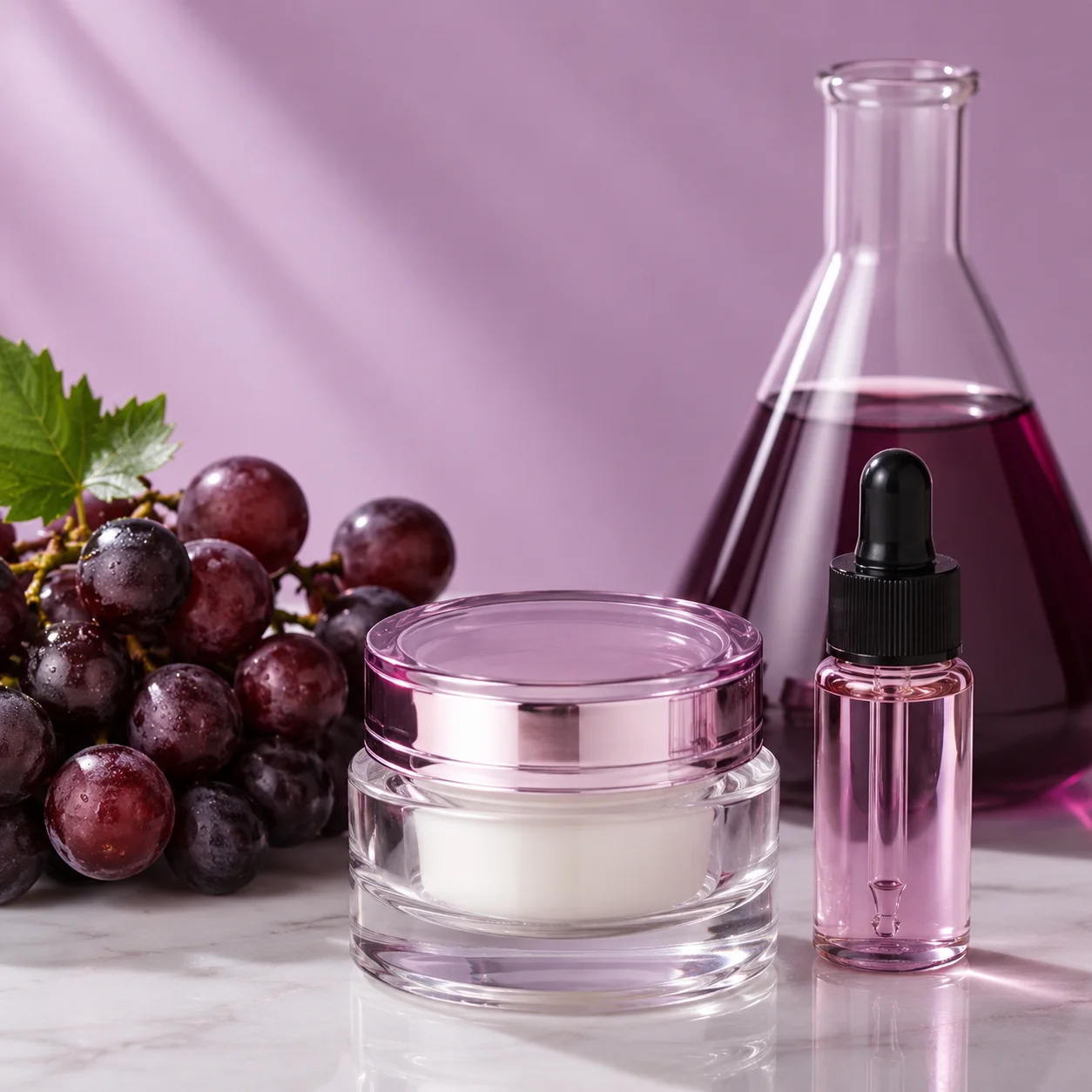
Your Trusted Resveratrol Skincare Manufacturer
We help skincare brands develop market-ready products with reliable formulations, professional packaging, and scalable manufacturing support—so you can launch confidently and grow your product line with a stable supply chain.

Private Label Resveratrol Skincare
At Metro Private Label, we believe private label Centella skincare is not simply about adding Cica extract to a standard formula. Centella is already widely recognized for soothing, hydration, and barrier-support positioning, so brands need a clearer reason for customers to choose their product. Before discussing ingredient percentages, we first consider the target consumer, product format, texture, sales channel, and price range. A Centella ampoule may work as an e-commerce hero product, while a barrier cream, calming toner pad, or gentle cleanser may be more suitable for a complete sensitive-skin range.
From our experience, successful Centella products are usually built around a specific skincare need rather than the ingredient name alone. Centella can be combined with Panthenol and Ceramides for barrier support, Hyaluronic Acid and Ectoin for hydration, or Niacinamide and Azelaic Acid for blemish-prone and uneven-looking skin. However, more active ingredients do not automatically create a better formula. The ingredient combination, concentration, texture, stability, claims, packaging, and target retail price must all work together.
At Metro Private Label, we help brands turn Centella skincare ideas into market-ready products. You can start with one of our mature formulas for a faster launch or adjust the formula, texture, and packaging around your target market. We support formula selection, sample development, packaging coordination, stability evaluation, bulk production, and available technical documents such as INCI lists, COA, SDS, and product specifications. Our goal is to help you create Centella skincare that customers can understand, brands can market clearly, and businesses can reorder with confidence.

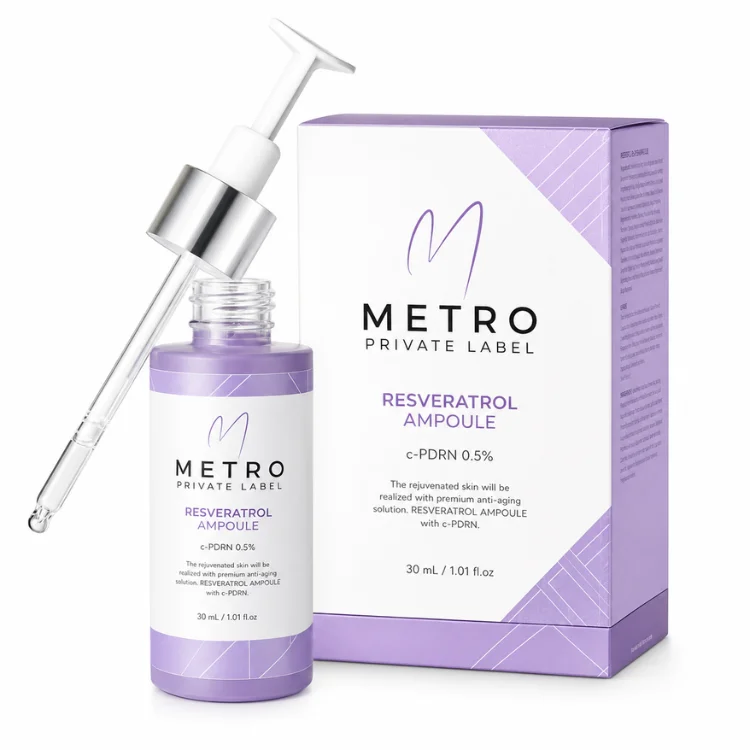
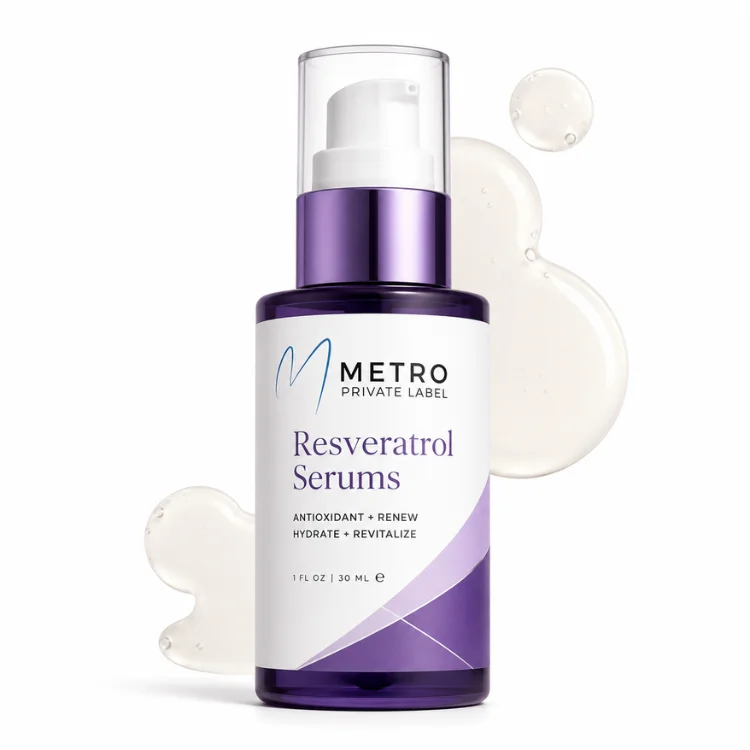
Resveratrol Serums
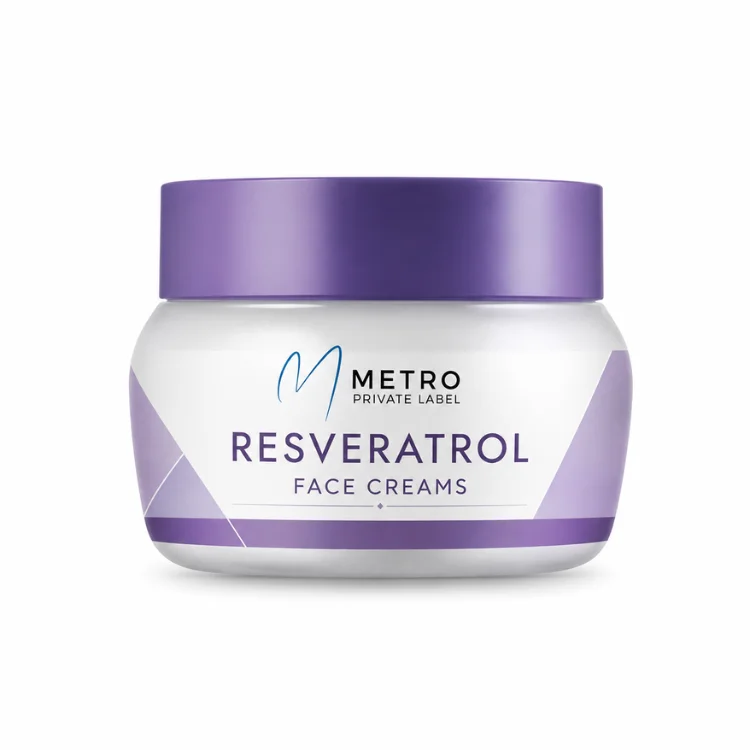
Resveratrol Face Creams
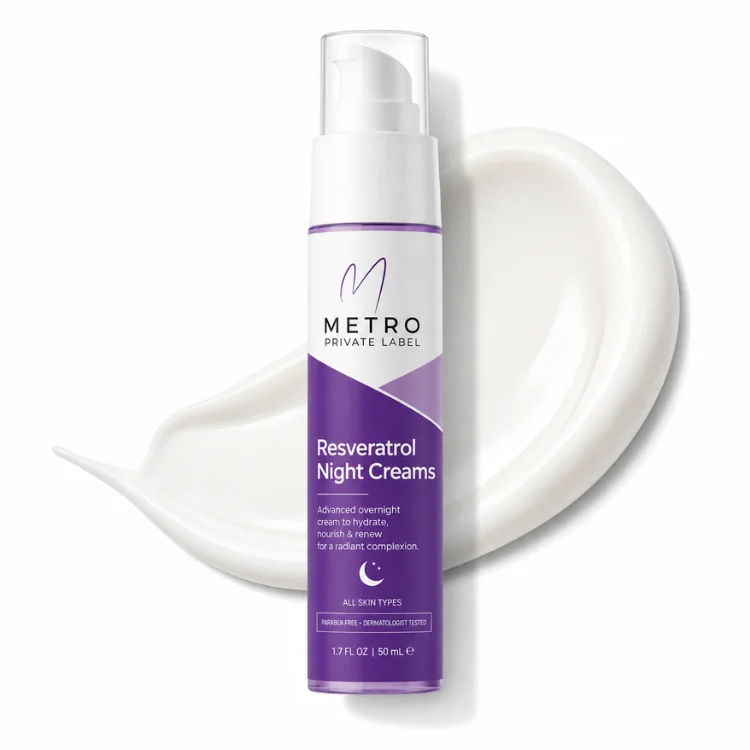
Resveratrol Night Creams
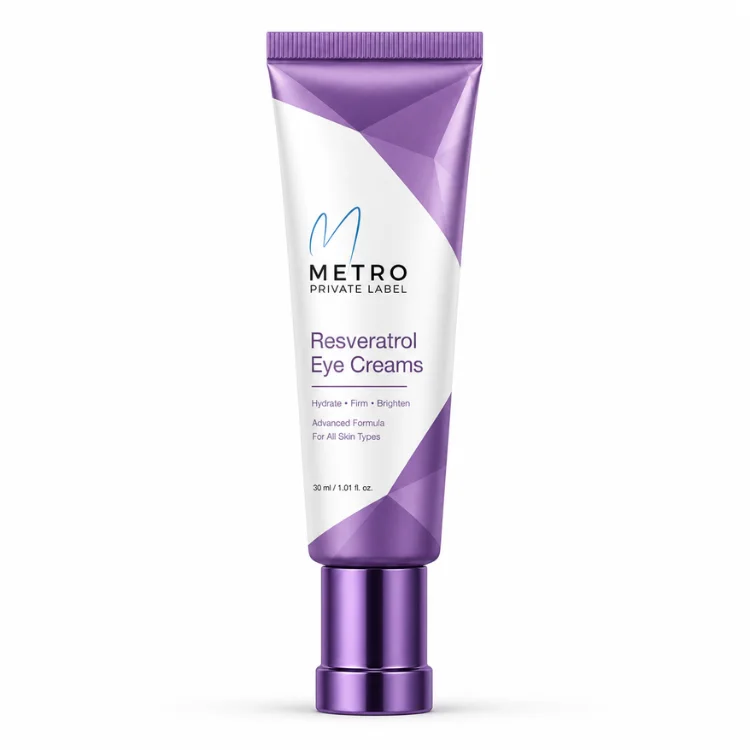
Resveratrol Eye Creams
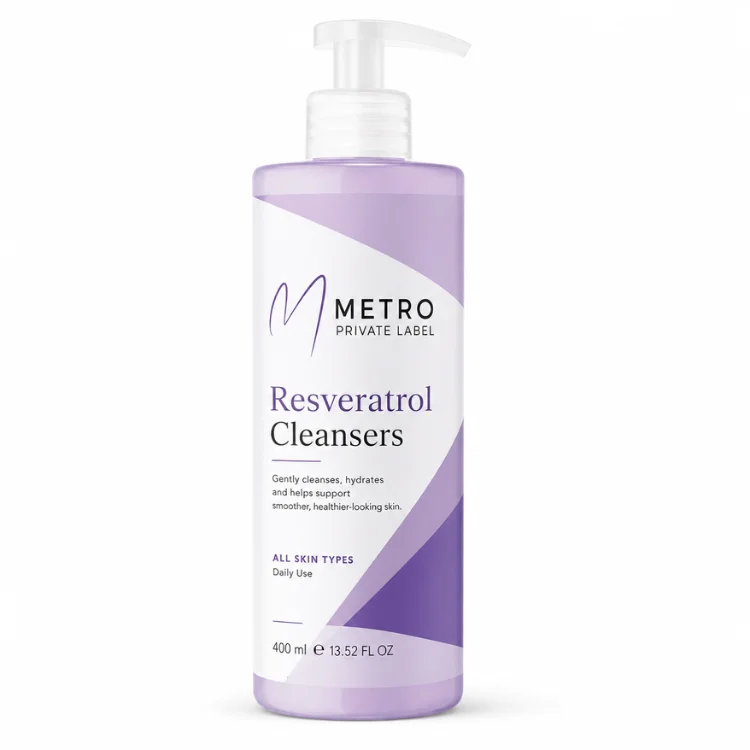
Resveratrol Cleansers
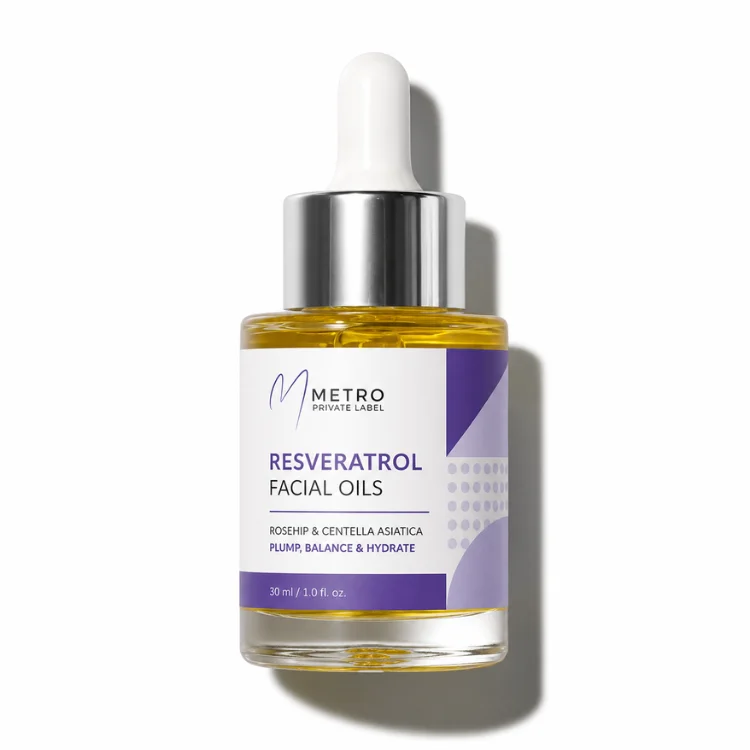
Resveratrol Facial Oils
Resveratrol Concentrates & Treatments
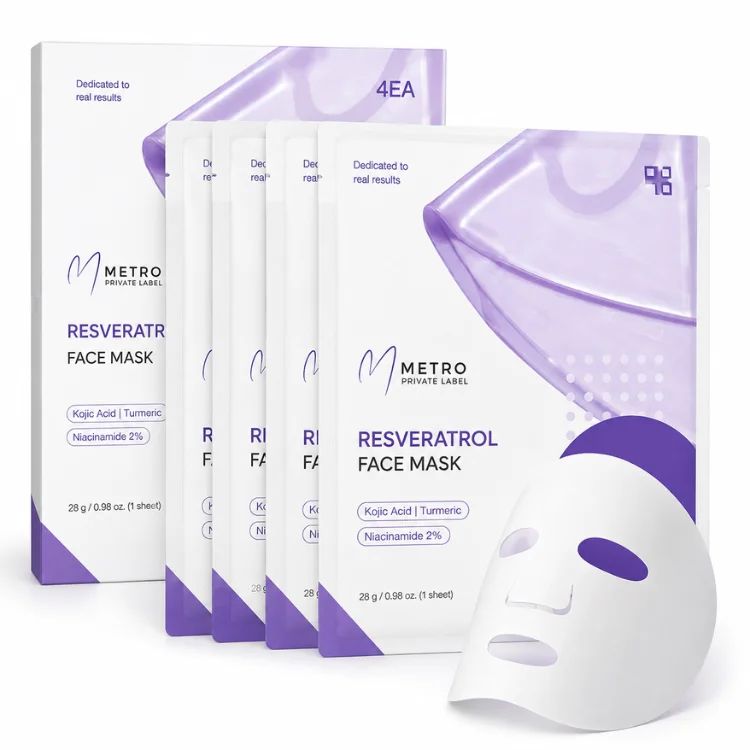
Resveratrol Face Masks
Build a Private Label Resveratrol Skincare Line That Fits Your Market
If you are looking for a private label Resveratrol Skincare manufacturer, you probably need more than a factory that can simply add resveratrol to a standard formula. You may already operate an e-commerce brand, skincare business, clinic or distribution channel and need products that fit your customers, target retail price and anti-aging positioning.
You have come to the right place. At Metro Private Label, we understand that a successful Resveratrol product needs a clear commercial purpose. A concentrated antioxidant serum for Amazon, a premium firming cream for a DTC brand and a professional eye cream for a clinic require different textures, ingredient systems, packaging and price structures. We look at these factors before recommending the formula.
From what we see in the market, the strongest Resveratrol products are usually positioned around antioxidant care, firming, visible signs of aging, skin recovery and healthy-aging routines. Resveratrol can also be combined with Ferulic Acid, Vitamin E, Peptides, Niacinamide, Hyaluronic Acid or Ceramides depending on the product concept. We help you choose the product format and formulation direction that makes the most sense for your customers instead of simply adding more active ingredients.
Our Core Private Label Resveratrol Skincare Products
Resveratrol Serums: One of the strongest hero-product formats for Amazon, Shopify and established beauty brands, suitable for antioxidant, firming, radiance and healthy-aging concepts.
Resveratrol Face Creams: Lightweight moisturizers, richer anti-aging creams and barrier-support formulas developed for different skin types, climates and retail positioning.
Resveratrol Night Creams: Overnight formulas designed around recovery, nourishment, antioxidant care and visible signs of aging, especially suitable for premium skincare ranges.
Resveratrol Eye Creams: Cream and gel-cream formats developed for fine-line, firmness, hydration and premium eye-care positioning.
Resveratrol Cleansers: Gel, foam and cream cleansers that allow brands to extend Resveratrol positioning into a complete daily skincare routine.
Resveratrol Concentrates & Treatments: Higher-positioning treatment products designed for brands that want a more intensive antioxidant or healthy-aging concept beyond a conventional serum.
Resveratrol Facial Oils: Water-free and oil-based formulas that can combine Resveratrol with complementary antioxidant and nourishing ingredients for premium facial-care positioning.
Resveratrol Face Masks: Sheet masks, cream masks and treatment masks suitable for antioxidant, hydration, firming and intensive-care concepts.
Manufacturing Support for Resveratrol Skincare Brands
We know that choosing a manufacturer is not only about finding a formula. Resveratrol also requires attention to ingredient compatibility, solubility, oxidation, light exposure, packaging and stability, while the finished product still needs to fit your target cost and sales channel.
At Metro Private Label, we support formula selection, customization, sample development, packaging coordination, stability evaluation and bulk production. We can also provide available technical documents such as INCI lists, COA, SDS and product specifications.
Our goal is simple: to help you turn a Resveratrol Skincare concept into a product that is practical to manufacture, easy for customers to understand and reliable enough to support repeat orders and long-term product expansion.

More Than Just a Private Label Resveratrol Skincare Manufacturer
At Metro Private Label, we understand that your goal is not simply to put Resveratrol on a label and launch another anti-aging product. You need a product that fits your market, supports the right retail price, gives customers a clear reason to buy, and can grow into repeat orders. That is why we look at the commercial side of the product before committing time and budget to production.

Develop Products Around Real Market Demand
We first look at who will buy the product, where it will be sold, and what role it should play in your range. A Resveratrol antioxidant serum for Amazon, a premium night cream for a DTC brand, and an eye cream for a clinic require different textures, active combinations, packaging and price structures. We use this context to recommend a formulation direction that fits your actual sales channel.
Reduce Product Development Risks Early
Resveratrol has strong antioxidant and healthy-aging positioning, but the ingredient alone does not guarantee a successful product. Solubility, oxidation, ingredient compatibility, skin feel, packaging protection, stability and target cost all need to work together. We review these factors during development to reduce formula changes, packaging problems, unexpected costs and delays before mass production.
Create Products Customers Want to Repurchase
Customers may first notice a product because of Resveratrol, but they repurchase because the formula performs well in daily use. Texture, absorption, comfort, packaging experience and the overall product concept all influence repeat purchases. We therefore help you balance active ingredients such as Ferulic Acid, Vitamin E, Peptides, Niacinamide or Hyaluronic Acid with the sensory experience and positioning your customers expect.
Grow With One Manufacturing Partner
From formula selection and sample development to packaging coordination, technical documentation, bulk production and repeat orders, we support the complete private label process. As your sales grow, we can also help you expand from one Resveratrol hero product into a broader anti-aging or antioxidant skincare range. This allows you to focus more on marketing, customer acquisition and channel growth while we manage the manufacturing details behind the products.
Build a Private Label Resveratrol Skincare Line Around Your Business Goals
At Metro Private Label, we understand that developing a Resveratrol Skincare product is not simply about choosing a formula, selecting a bottle, and adding your logo. If you already sell through Amazon, Shopify, retail stores, distribution networks, clinics, or professional beauty channels, your real goal is to create a product that fits your customers, supports your target selling price, works within your sales model, and has the potential to generate repeat orders.
Many clients first come to us with a general idea, such as an antioxidant serum, a firming face cream, a night treatment, or a complete healthy-aging range. However, turning that idea into a commercially practical product requires several important decisions before production begins. Will the formula match your customers’ expectations? Does the texture support your intended positioning? Is the packaging suitable for protecting the formula and handling e-commerce shipping? Can the cost structure support your required margin? This is where we believe a manufacturing partner should provide more value than simply producing what is requested.
Develop Products Based on Your Market, Not Only the Ingredient
When we work on a Resveratrol Skincare project, we do not begin by adding as many anti-aging ingredients as possible. We first consider who will buy the product, where it will be sold, what role it should play in the skincare routine, and how much the customer is expected to pay. An Amazon hero serum may need a simple antioxidant story, recognizable supporting actives, competitive pricing, and strong product presentation. A premium DTC brand may focus more on texture, ingredient combinations, packaging and healthy-aging positioning. A distributor may prefer mature formulas, coordinated SKUs, and a faster route to market. We connect these commercial needs with realistic formulation and manufacturing options before recommending the final direction.
Make Smarter Decisions Before Production
Resveratrol can be a valuable hero ingredient, but it also requires more formulation attention than its marketing story may suggest. Solubility, oxidation, light exposure, ingredient compatibility, packaging protection, stability, skin feel, production cost and target concentration can all influence the finished product. We evaluate these factors during development rather than waiting until mass production to discover problems. This can reduce repeated sampling, unstable concepts, unsuitable packaging, unexpected cost increases and unnecessary delays. We will also tell you when a formulation idea needs to be simplified or adjusted, because agreeing with every request is not always the best way to protect your product or your budget.
Build Products Customers Will Continue Using
Consumers may first notice a product because of Resveratrol, but they do not repurchase simply because the ingredient appears on the front label. They repurchase because the product feels good, fits naturally into their routine, and gives them a clear reason to continue using it. That is why we pay attention to texture, absorption, spreadability, ingredient combinations, fragrance level, packaging experience and ease of use. Whether you are developing a lightweight antioxidant serum, a richer night cream, an eye treatment or a facial oil, the product still has to make sense in everyday use—not only sound impressive in a marketing presentation.
Plan Beyond Your First Resveratrol Product
Your first product may only be a Resveratrol serum or face cream, but it can later become the foundation of a wider antioxidant or healthy-aging range. A successful hero serum may expand into eye creams, night creams, cleansers, treatment concentrates, facial oils or masks. We therefore look beyond the first purchase order and consider how the formulation direction, packaging style, price positioning and product story can support future SKUs.
From formula selection and sample evaluation to packaging coordination, technical documentation, bulk production and repeat-order planning, we work to support the complete development process. Our goal is to provide more value than you may expect from a private label factory and help you create Resveratrol Skincare products that are practical to manufacture, clear to market, enjoyable to use and strong enough to support long-term business growth.
FAQs Resveratrol Skincare
For your convenience, we’ve gathered the most commonly asked questions about our Resveratrol Skincare . However, should you have any further queries, please don’t hesitate to reach out to us.
1. What types of Resveratrol Skincare products can you manufacture?
We can develop a range of Resveratrol Skincare products, including serums, face creams, night creams, eye creams, cleansers, concentrates and treatments, facial oils, and face masks. Depending on your sales channel and launch plan, you can start with one hero product or build a coordinated antioxidant and healthy-aging range around Resveratrol.
2. Can you customize a Resveratrol formula for our brand?
Yes. We can adjust the texture, supporting ingredients, skin feel, fragrance level, positioning, and packaging around your target customer and price range. For example, Resveratrol can be combined with ingredients such as Ferulic Acid, Vitamin E, Niacinamide, Hyaluronic Acid, Peptides, or Ceramides, but we will also evaluate compatibility and stability rather than simply adding every requested active into one formula.
3. What is your MOQ for private label Resveratrol Skincare?
Our typical private label MOQ starts from around 1,000 units per SKU, although the final MOQ can depend on the formula, packaging, printing process, and level of customization. If you are testing a new product concept, we can help you choose a more practical packaging and formulation route before you commit to a larger order.
4. How long does Resveratrol Skincare sampling and production take?
For an existing or lightly customized formula, samples can normally be prepared in around 7–10 days. After the formula, packaging, and artwork are approved, bulk production generally takes around 25–35 days, although customized packaging, additional testing, or more complex formulations may extend the timeline. We prefer to confirm the actual schedule around your project rather than promise an unrealistic launch date.
5. Is Resveratrol difficult to formulate compared with common skincare ingredients?
It can require more attention. Resveratrol has formulation considerations involving solubility, oxidation, light exposure, ingredient compatibility, and packaging protection, so concentration alone should not be the first decision. We normally look at the complete formula system and intended packaging to make sure the product is practical to manufacture and stable enough for commercial use.
6. Do you offer both ready-made formulas and fully customized Resveratrol formulas?
Yes. If speed and lower development risk are your priorities, you can start from one of our mature formulas and customize the texture, supporting ingredients, fragrance, or packaging. If you already have a clear product concept or need stronger differentiation, we can also work with you on a more customized formulation. We will usually recommend the route that makes the most sense for your budget, launch timeline, and sales model.
7. Can you help us choose packaging for Resveratrol products?
Yes. Packaging is especially important for formulas containing oxidation- or light-sensitive ingredients. We can help coordinate bottles, jars, pumps, droppers, labels, cartons, and other packaging components while considering product compatibility, brand positioning, e-commerce transportation, and target cost. For Resveratrol products, we also pay attention to whether the packaging provides appropriate protection for the final formula.
8. What technical documents can you provide for our Resveratrol Skincare products?
Depending on the product and project, we can provide available documents such as the INCI ingredient list, COA, SDS, product specifications, and other manufacturing or quality-related information. If you are selling in a specific market such as the U.S., UK, or EU, tell us early in the project so we can identify which product information and documentation may need to be prepared for your regulatory process.
9. Can you help us develop product claims and positioning for a Resveratrol range?
Yes, especially at the product-development stage. We can help you organize the formula around commercially understandable concepts such as antioxidant care, healthy aging, firming, hydration, barrier support, or overnight recovery. We will also tell you when a proposed claim does not match the formula or would require additional supporting evidence, because strong marketing should still be based on what the finished product can reasonably support.
10. Can you support our brand after the first Resveratrol product launches?
Yes. We prefer to think beyond the first purchase order. If your initial Resveratrol serum or cream performs well, we can help you expand into eye care, night treatments, cleansers, facial oils, masks, or a broader antioxidant and anti-aging range. We can also support repeat production, packaging updates, formula adjustments, and future SKU development so you do not need to rebuild the manufacturing process every time your brand grows.
What we appreciated most was that Metro Private Label did not treat our Resveratrol serum as a standard private label project. Their team reviewed the formula direction, packaging, target retail price, and launch timing together. They also pointed out where we could simplify the concept without losing the premium positioning, which helped us control both development time and cost.
Lauren Beckett, E-commerce Operations Managerfrom United States
Metro Private Label gave us very practical feedback throughout the development process. We originally wanted to include too many active ingredients in one Resveratrol formula, but their team explained the stability and positioning concerns clearly and helped us build a more focused product. The final direction felt much more suitable for the brand we wanted to create.
Oliver Grant, Skincare Brand Founderfrom United Kingdom
We were looking for a supplier that could give us mature Resveratrol product options without making the sourcing process complicated. Metro Private Label provided clear choices for serums, creams, eye care, and night products, together with realistic MOQ, packaging, and production information. That made it much easier for us to compare SKUs and plan a commercial launch.
Sanne de Vries, Beauty Distribution Managerfrom Netherlands
Our priority was to create a professional anti-aging range that our clients could continue using at home after treatments. Metro Private Label helped us think about the products as a complete routine rather than individual formulas. Their guidance on texture, packaging, and product positioning made the range feel more consistent and much easier for our team to explain to clients.
Lucía Navarro, Aesthetic Clinic Ownerfrom Spain
The communication was one of the strongest parts of working with Metro Private Label. We received clear explanations about formula customization, packaging choices, technical documents, and production timing, and we were told early when certain ideas would create unnecessary cost or formulation risk. That level of transparency gave us more confidence when moving from samples into production.
Ethan McAllister, Product Sourcing Directorfrom Canada


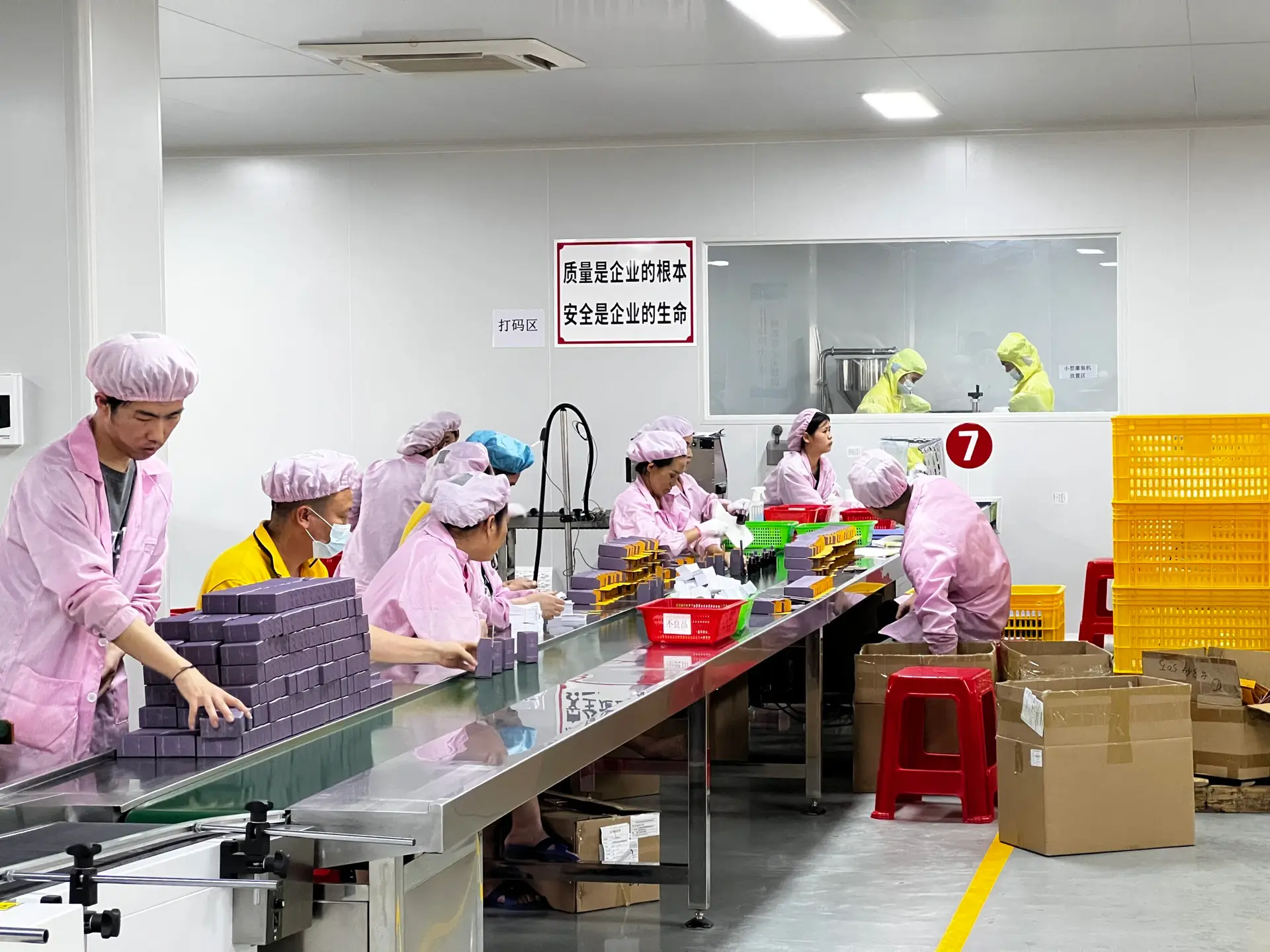




Metro Private Label in Numbers
Happy Clients
0 +
Million-dollar Buyers
0 +
Formulation
0 +
Professional Staffs
0 +
Your Ultimate Guide to Resveratrol Skincare
If you’re planning to add Resveratrol skincare to your product range—whether as a new antioxidant serum, a premium night treatment, or an extension of an existing anti-aging line—you’re making more than an ingredient choice. Resveratrol can support antioxidant, healthy-aging, firming, and environmental-stress positioning, but its commercial value depends on how clearly the product fits your customers and sales channel. A strong Resveratrol concept needs the right format, supporting ingredients, sensory profile, packaging, and price structure working together. When these decisions are made well, the product becomes easier to explain, easier to sell, and much easier to expand into a wider skincare range.
At Metro Private Label, we’ve seen that Resveratrol projects often become more complicated once they move from the marketing brief into actual formulation development. Buyers may initially focus on concentration or combining several trending actives, but issues such as solubility, oxidation, color change, ingredient compatibility, packaging protection, and stability quickly become just as important. An attractive ingredient list does not automatically create a commercially strong product. The products that are more practical to scale are usually those where formulation performance, customer experience, packaging, target cost, and channel requirements have been considered from the beginning rather than corrected after sampling.
This guide is designed around the questions that serious skincare buyers actually face when developing Resveratrol products. We look at how to choose between serum, cream, eye cream, and night cream formats, how Resveratrol concentration affects formulation, which ingredient combinations require more attention, why some formulas discolor or precipitate, how packaging influences stability, when ready-made or custom development makes more commercial sense, and what buyers should evaluate before approving samples or requesting quotations. Rather than focusing only on ingredient benefits, our goal is to explain what really happens between a Resveratrol product idea and a formula that is stable, manufacturable, commercially realistic, and ready to enter the market.
Table of Contents
Why Are Skincare Brands Choosing Resveratrol for New Product Development?
When buyers search for Resveratrol skincare manufacturing, they are usually no longer asking only what Resveratrol does for the skin. The real decision is whether it can support a commercially viable product that fits their customers, sales channel, retail price, and existing product range. Resveratrol competes for the same development budget as Vitamin C, Retinal, Peptides, CoQ10, Ferulic Acid, and other established anti-aging ingredients, so ingredient recognition alone is not enough. From what I see in product development, the brands that use Resveratrol most effectively are those that first define the role of the product—such as an antioxidant hero serum, premium night treatment, firming eye cream, or broader healthy-aging range—and then build the formula, packaging, price structure, and claims around that commercial purpose.
Resveratrol Offers a Different Antioxidant and Healthy-Aging Story
Resveratrol gives brands an alternative way to enter the antioxidant and healthy-aging market without developing another conventional Vitamin C or Retinoid product. Vitamin C already occupies a highly competitive brightening and antioxidant category, while Retinol and Retinal bring strong anti-aging recognition but also require brands to manage consumer expectations around tolerance and usage. Peptides have become increasingly common in premium skincare as well. Resveratrol can sit differently within this landscape, supporting concepts around antioxidant protection, firmness, environmental stress, and long-term healthy aging. This does not automatically make it more commercially attractive than those ingredients, but it can give an existing skincare brand a clearer point of differentiation when its current range already contains more familiar actives.
Resveratrol Can Support More Than One Commercial Product Format
One reason Resveratrol can be useful in product planning is that the ingredient is not limited to a single hero format. Serums remain one of the clearest commercial applications because consumers already associate concentrated serums with active skincare, but Resveratrol can also be developed into face creams, night creams, eye treatments, facial oils, and concentrated treatments. The most suitable format depends on how the product will actually be sold. An Amazon or Shopify brand may benefit from one easily understood hero serum, a clinic may prefer a serum-and-cream routine that can be recommended alongside professional treatments, while a distributor may see more value in several coordinated SKUs that can be sold as a complete range. For this reason, product format should be decided according to the sales model rather than simply choosing every format that can technically contain Resveratrol.
Supporting Ingredients Determine How Consumers Understand the Product
Resveratrol rarely needs to carry the entire commercial story alone. Ferulic Acid and Vitamin E can reinforce antioxidant positioning, Hyaluronic Acid can make hydration more visible to the consumer, Niacinamide can broaden the concept toward skin conditioning and tone, while Peptides and Ceramides can move the product toward more comprehensive healthy-aging or barrier-support positioning. However, this is also where many product briefs become unnecessarily complicated. Combining several recognizable actives may look attractive in marketing, but each addition can affect pH, solubility, viscosity, color, odor, preservation, texture, stability, and raw-material cost. In practical formulation work, the stronger product is often not the one with the longest active list but the one where every supporting ingredient contributes to a clear consumer need and works reliably within the same formulation system.
Higher Resveratrol Concentration Does Not Automatically Mean a Better Product
A common development mistake is to treat Resveratrol percentage as the main measure of product quality. Resveratrol has limited water solubility and requires attention to oxidation, light exposure, solvent systems, ingredient compatibility, and long-term stability, so increasing the concentration can influence much more than the marketing claim. A formula may require changes to its solvent system, texture, color, packaging, or supporting ingredients simply to accommodate a higher level, and these changes can eventually affect sensory quality and manufacturing cost. The more useful B2B question is therefore not “How high can the Resveratrol percentage be?” but “What concentration can remain stable, manufacturable, pleasant to use, and commercially realistic within this specific formula?” In many projects, a technically balanced concentration creates more value than a higher number that introduces unnecessary formulation risk.
Packaging Becomes Part of the Resveratrol Formulation Strategy
Packaging for Resveratrol skincare should be considered during product development rather than after the formula has already been approved. Because oxidation and light exposure can influence sensitive antioxidant systems, the choice between transparent packaging, opaque bottles, droppers, pumps, and airless systems can affect how well the finished product is protected during storage and repeated consumer use. Commercial requirements add another layer to the decision. An e-commerce product needs packaging that can tolerate fulfilment and transportation without leakage, a premium DTC brand may place greater emphasis on appearance and dispensing experience, and a retail product may require cartons, barcodes, tamper-evident details, and shelf-ready presentation. The most suitable package is therefore not simply the most premium-looking option; it needs to protect the formula, fit the sales channel, and remain compatible with the target cost structure.
Resveratrol Can Support Premium Pricing, but the Margin Still Has to Work
Resveratrol is often associated with premium antioxidant and anti-aging products, but ingredient positioning alone does not guarantee that consumers will accept a higher retail price. The actual manufacturing cost includes the hero active, supporting ingredients, formulation complexity, packaging, decoration, cartons, testing requirements, production quantity, and degree of customization. These costs can increase quickly when a brand combines a complex formula with premium packaging and a relatively small first production run. This is why the product should be evaluated backward from its intended retail price and channel economics. A Shopify brand paying for customer acquisition, an Amazon seller managing marketplace fees, a distributor requiring wholesale margin, and a clinic selling directly to existing clients all have different acceptable cost structures. A commercially strong Resveratrol product therefore needs enough margin not only to be manufactured, but also to be marketed, distributed, promoted, and reordered profitably.
Existing Customers Should Influence Whether Resveratrol Is the Right Ingredient
Resveratrol tends to make more commercial sense when it connects naturally with what a brand’s customers already understand and purchase. An established anti-aging brand selling Retinal, Peptide, or barrier-support products may be able to introduce Resveratrol as the next step in an existing healthy-aging story without educating customers from zero. An Amazon seller, by contrast, may need a simpler antioxidant or firming proposition that can be understood immediately from the listing. Clinics may care more about how the product fits into an ongoing home-care routine, while distributors may evaluate whether the ingredient can support several sellable products across different price points. The same Resveratrol formula can therefore have very different commercial value depending on who is buying it and where it will ultimately be sold.
The Strongest Resveratrol Products Begin With a Clear Commercial Role
The most important decision is ultimately not whether Resveratrol is a good skincare ingredient, but what the finished product is expected to achieve commercially. A Resveratrol serum may serve as a hero SKU designed to attract new customers, a night cream may extend an existing anti-aging range, an eye treatment may increase basket value, and a coordinated Resveratrol collection may give a distributor or established brand a clearer range architecture. Once that commercial role is defined, decisions around concentration, supporting ingredients, texture, packaging, claims, and target cost become much easier to evaluate. In my experience, this is the point where Resveratrol stops being simply an attractive ingredient name and starts becoming a realistic product-development opportunity.
From Brief to Stable Formula: A Resveratrol Serum Project From 0 to 1
A Resveratrol serum project often looks simple at the beginning. The brief may call for a premium antioxidant serum with a relatively high Resveratrol level, several recognizable anti-aging ingredients, a lightweight transparent texture, and an elegant dropper bottle. On paper, that sounds commercially attractive because every element supports a strong premium story. In practice, however, this type of project quickly shows why skincare development cannot be treated as a process of adding popular ingredients into one base formula. Once laboratory work begins, Resveratrol concentration, solubility, supporting actives, texture, color, packaging, stability, and target cost all begin to affect one another. From what I see in formulation projects, the real development work starts when the original marketing brief is translated into a system that can remain stable, feel good on the skin, survive scale-up, and still make commercial sense.
The Original Brief Looked Strong From a Marketing Perspective
The starting concept in a representative Resveratrol serum project is usually ambitious for understandable reasons. The brand wants Resveratrol to act as the hero antioxidant, but it may also request Ferulic Acid for a stronger antioxidant story, Niacinamide for broader skin-conditioning benefits, Peptides for healthy-aging positioning, Hyaluronic Acid for hydration, and one or two botanical extracts to make the ingredient list look more distinctive. At the same time, the target texture may be described as clear, watery, fast-absorbing, non-sticky, and suitable for a premium 30 ml dropper bottle. I understand why buyers ask for this combination because it looks convincing in a product presentation and gives the marketing team several benefits to communicate. The difficulty is that every additional requirement narrows the technical space available to the formulator, and a concept that appears simple commercially may already contain several competing formulation demands.
Resveratrol Solubility Became the First Technical Constraint
The first issue that usually changes the project direction is Resveratrol’s limited water solubility. A buyer may initially focus on achieving a higher percentage because the number appears stronger for marketing, but the formulation still needs a suitable environment to keep that amount incorporated throughout the product’s life. Increasing the active level can require changes to the solvent or solubilization system, and those changes may influence transparency, viscosity, skin feel, odor, and cost. A laboratory sample can also appear clear immediately after production while gradually developing crystals or sediment during storage if the system is operating too close to its solubility limit. This is why I do not treat the requested percentage as a fixed target until the complete formula has been evaluated. The useful question is not simply whether a certain percentage can be mixed into the batch on day one, but whether it can remain acceptably incorporated after temperature changes, transportation, storage, and repeated consumer use.
Adding More Actives Changed the Entire Formulation System
Once supporting ingredients are added, the project becomes more complex because the formula is no longer just “Resveratrol in a serum base.” Ferulic Acid can introduce its own solubility and pH considerations, Niacinamide may influence the desired pH range and overall sensory profile, Peptides can bring compatibility requirements, and botanical extracts can introduce natural color, odor, polyphenols, trace minerals, or other components that affect appearance and long-term stability. Hyaluronic Acid may improve hydration positioning but can also change viscosity and tack depending on its grade and level. In projects like this, I often find that the original ingredient list needs to be reorganized according to function rather than marketing popularity. Some ingredients genuinely strengthen the formula concept, while others make the system harder to stabilize without giving the consumer a meaningful additional reason to buy.
The Transparent Serum Target Had to Be Reconsidered
Transparency is another requirement that can appear purely aesthetic but become technically significant. Many brands associate a crystal-clear serum with cleanliness, sophistication, and premium quality, so the initial brief may insist on maintaining a completely transparent appearance. The problem is that a higher Resveratrol level, certain solubilizers, botanical extracts, and supporting antioxidants can naturally push the formula toward a slight tint, haze, or different visual character. Trying to force complete transparency may require a more aggressive solvent system or unnecessary formulation compromises that negatively affect skin feel or stability. In a realistic development process, I would rather reconsider whether absolute transparency is commercially necessary than sacrifice formula performance simply to preserve an early visual idea. A slightly tinted but stable and elegant serum can be a better product than a perfectly clear formula that becomes unstable after several weeks.
The Formula Had to Be Simplified Before It Became Stronger
This is often the point where the project moves from ingredient accumulation to actual product development. Instead of asking how many hero ingredients can remain in the formula, the development team begins asking which ingredients are essential to the positioning and which ones can be removed without weakening the product story. A simplified direction might keep Resveratrol as the central antioxidant, retain one complementary antioxidant such as Ferulic Acid, add a hydration system for better daily usability, and remove redundant botanical extracts or overlapping actives. I have seen many projects improve at this stage because simplifying the formula can make it easier to control pH, viscosity, color, odor, skin feel, stability, and raw-material cost at the same time. The ingredient list may become shorter, but the finished product becomes more coherent and easier to manufacture consistently.
Packaging Became Part of the Stability Discussion
The original request for an attractive transparent dropper bottle also needs to be reviewed once the formula’s sensitivity is better understood. Resveratrol and other antioxidant systems can be affected by light and oxygen exposure, so packaging should not be treated only as a design choice. A clear glass dropper may look premium in product photography, but the formula is repeatedly exposed to air each time the bottle is opened, while transparent packaging provides less protection from light. Depending on the final system, an amber or opaque bottle, controlled-dispensing pump, or airless format may offer a better balance between product protection and brand presentation. I normally consider packaging compatibility at the same time as formula stability because there is little value in developing a technically sound serum and then placing it into a package that introduces unnecessary exposure during storage or everyday use.
Sample Evaluation Went Beyond Whether the Serum Felt Good
Once the revised formula reached sampling, evaluation needed to cover more than the immediate sensory impression. Appearance, color, odor, viscosity, spreadability, absorption, tackiness, residue, dispensing behavior, and compatibility with the selected package all matter because the product must work as a complete consumer experience. The serum also needs to be observed over time rather than approved simply because the first sample looks attractive. A formula that becomes darker, develops sediment, changes odor, loses viscosity, or interacts with the pump or dropper can create much larger problems after mass production. From a B2B perspective, this is why sample approval should be treated as both a commercial and technical decision. The product needs to feel appropriate for its intended retail position, but it also needs enough evidence of stability and manufacturing practicality before the project moves forward.
Scale-Up Introduced a Different Set of Questions
A laboratory formula is not automatically ready for bulk production simply because a small sample is stable. Once the batch size increases, mixing efficiency, order of addition, temperature control, dissolution time, shear, holding time, and transfer conditions can all affect the finished product. A component that dissolves easily in a small beaker may require a more carefully controlled process at production scale, while a texture that looks ideal in a laboratory sample may behave differently after larger-scale mixing and filling. This is why I see scale-up as a separate development stage rather than a simple multiplication of the laboratory formula. The objective is to confirm that the formula can be reproduced consistently under real manufacturing conditions without creating unnecessary process risk or batch-to-batch variation.
The Final Formula Was Defined by Better Trade-Offs, Not More Ingredients
The most important lesson from a Resveratrol serum project like this is that good custom formulation is usually built through trade-offs. The final product may use a more realistic Resveratrol level than the original brief, a simpler supporting-ingredient system, a slightly different visual appearance, and packaging that offers better protection than the first design concept. None of these changes necessarily weaken the product. In many cases, they make it stronger because the formula becomes more stable, more comfortable to use, easier to manufacture, and more commercially predictable. What looks most impressive in a concept document is not always what performs best in the finished product, and experienced product development is largely about knowing which ideas should be protected and which ones should be adjusted before they create problems at scale.
What This Project Reveals About Resveratrol Product Development
For me, the real value of a 0-to-1 Resveratrol project is that it shows how closely formulation science and commercial decision-making are connected. The buyer may begin with a percentage, ingredient list, texture, and bottle, but those four choices cannot be finalized independently. Solubility affects texture, supporting actives affect stability, stability affects packaging, packaging affects cost, and cost eventually affects retail positioning and margin. A successful serum therefore emerges when these variables are balanced as one system. That is why the strongest Resveratrol products are rarely the ones with the longest ingredient list or the highest advertised percentage. They are the products where the formula, packaging, sensory experience, manufacturing process, and commercial positioning all support the same goal.
Resveratrol Serum, Cream, Eye Cream or Night Cream: Which Format Makes the Most Commercial Sense?
When a brand decides to develop Resveratrol skincare, one of the first commercial decisions should be the product format rather than the Resveratrol percentage. Serum, face cream, eye cream, and night cream can all carry a Resveratrol story, but they serve different roles in a product range and create different expectations around texture, benefits, packaging, retail price, and repeat purchase. From what I see in product development, the strongest format is usually the one that fits the buyer’s existing sales channel and customer behavior. An e-commerce brand may need one highly recognizable hero product, a clinic may prefer a simple home-care system, and a distributor may need several coordinated SKUs that can be sold together. This is why I evaluate Resveratrol product format through three factors first: the channel where it will be sold, the customer who will use it, and the price position the product needs to support.
Resveratrol Serum Works Best When the Ingredient Needs to Be the Hero
A Resveratrol serum usually makes the most commercial sense when the brand wants the ingredient itself to drive the product story. Consumers already understand serums as concentrated treatment products, so positioning around antioxidant care, firmness, environmental stress, or healthy aging is relatively easy to communicate in an Amazon listing, Shopify product page, social-media advertisement, or retail presentation. This makes serum particularly attractive for e-commerce brands and existing skincare companies that need one clear hero SKU rather than a large collection. The main challenge is that serum buyers often expect a lightweight texture, elegant absorption, and visible ingredient differentiation at the same time, which can make formulation more demanding when higher Resveratrol levels or additional actives are requested. Commercially, however, serum remains the easiest format for making Resveratrol the central reason to buy rather than one supporting ingredient among many.
Resveratrol Face Cream Makes More Sense for Broader Healthy-Aging Positioning
A Resveratrol face cream usually works better when the product needs to offer more than an antioxidant story. Cream formats naturally allow brands to combine Resveratrol with moisturization, barrier support, nourishment, and daily healthy-aging care, which can make the product easier to integrate into a complete skincare routine. In practice, this format gives more flexibility around supporting ingredients such as Ceramides, Peptides, Hyaluronic Acid, Squalane, or Niacinamide because the customer already expects a moisturizer to deliver several benefits at once. I often see face creams make more sense for brands with an existing serum category because the cream can extend the anti-aging story without directly competing with the hero serum. It can also support a slightly higher perceived value when the texture, packaging, and sensory experience feel premium enough to justify the retail price.
Resveratrol Eye Cream Can Create a Higher-Value Specialized SKU
Eye cream becomes commercially interesting when a brand wants to move Resveratrol into a more specialized anti-aging category. The eye area already carries strong consumer expectations around fine lines, firmness, dryness, and visible signs of aging, so Resveratrol can fit naturally into a premium treatment story without needing to explain the ingredient from the beginning. This format is especially useful for established skincare brands, clinics, and premium DTC businesses that already have a serum or moisturizer and want a smaller, higher-value SKU to increase basket size or build a more complete routine. At the same time, an eye cream should not simply be a face cream in a smaller package. Texture, absorption, richness, packaging, and supporting ingredients all need to match the usage area and price positioning. From a commercial perspective, eye cream works best as a range-extension product rather than the first Resveratrol SKU for most brands.
Resveratrol Night Cream Fits Premium Recovery and Anti-Aging Concepts
A Resveratrol night cream makes the most sense when the brand wants to connect the ingredient with overnight recovery, nourishment, and long-term healthy-aging care. Night products give more room for richer textures and more intensive positioning than a standard daytime moisturizer, which can help differentiate Resveratrol from more common antioxidant serums. I often see this format work well when combined with Peptides, Ceramides, emollients, or other ingredients that support comfort and barrier care, because the product can be presented as part of an evening routine rather than a general moisturizer. For premium brands, night cream also provides a natural opportunity to increase perceived value through richer texture and more substantial packaging. However, it generally works best when the brand already has some consumer trust or an existing anti-aging audience, because customers are more likely to purchase a specialized night product once they already understand the brand’s broader skincare proposition.
E-Commerce Brands Usually Benefit From One Clear Hero Format
For Amazon, Shopify, TikTok Shop, and other performance-driven channels, I usually prefer a format that can be understood quickly. A Resveratrol serum often has the advantage because the product benefit, ingredient story, texture, and usage can all be communicated in a simple product listing. E-commerce brands also rely heavily on advertising creatives, reviews, before-and-after expectations, and short attention spans, so a complicated multi-product concept can make customer acquisition more difficult. A well-positioned serum can act as the entry product, while face creams, eye creams, or night treatments can be introduced later once the brand has proven demand. The commercial logic is to make the first SKU easy to explain, easy to compare, and easy to repurchase before expanding the range.
Clinics Often Need a Routine Rather Than a Single Hero Product
A clinic or aesthetic business tends to evaluate Resveratrol differently because the product is often sold through consultation, treatment programs, or existing client relationships rather than through cold online traffic. In this setting, a serum-and-cream combination can make more commercial sense than a standalone hero product because the practitioner can explain how each product fits into the customer’s home-care routine. A serum can carry the active antioxidant story, while a cream or night product supports comfort, hydration, and continued use between treatments. I find that clinics usually benefit from fewer, more clearly defined products rather than a large range of overlapping SKUs, because staff need to understand and confidently recommend each one. The right format therefore depends on how the product supports the service model, not only on which Resveratrol format is most popular online.
Distributors and Retail Buyers Often Need a Range That Is Easy to Merchandise
Distributors and retail buyers tend to think in terms of assortment, shelf space, price architecture, and repeat purchasing rather than one hero product. A single Resveratrol serum may be attractive, but a coordinated range containing a serum, face cream, eye cream, and night cream can create more opportunities for bundle sales, retailer presentations, and different price points. The challenge is avoiding unnecessary SKU duplication. If the serum, day cream, and night cream all communicate exactly the same benefit without clear differences in texture or use, the range becomes harder to sell. In my experience, the best distributor-focused collections give each product a clear role while maintaining one consistent Resveratrol story across the range. This makes the line easier for retailers to understand and easier for consumers to navigate.
Price Positioning Should Influence the Format From the Beginning
The same Resveratrol ingredient can support very different retail prices depending on the format. A 30 ml serum or 15 ml eye cream can often support a higher price per milliliter because consumers expect treatment products to be more concentrated and specialized, while a 50 ml face cream may need to balance premium positioning with a larger fill volume and more substantial packaging. Night creams can also support higher-value positioning if the formula and sensory experience feel sufficiently differentiated from a basic moisturizer. This is why I prefer to discuss target retail price early in development. The format affects packaging cost, fill weight, formula complexity, perceived value, and channel margin, so choosing the product first and trying to force the economics to work later can create unnecessary compromises.
The Best Format Comes From Channel, Customer, and Commercial Role
There is no single Resveratrol format that is automatically better for every brand. A serum is usually the strongest choice when Resveratrol needs to act as a hero ingredient and drive customer acquisition. A face cream makes more sense when the brand wants broader moisturization and healthy-aging positioning. Eye cream works well as a premium range extension, while night cream can strengthen an overnight recovery or anti-aging concept. The most practical decision comes from understanding where the product will be sold, who is expected to buy it, what price they are willing to accept, and what role the SKU should play in the overall range. In my experience, once those factors are clear, the question of serum versus cream versus eye cream versus night cream becomes much easier to answer—and the final product is far more likely to make commercial sense.
How Much Resveratrol Should a Skincare Formula Contain?
When buyers begin developing a Resveratrol serum or cream, one of the first questions is usually about percentage. It is understandable because ingredient concentration looks easy to compare and can become an attractive number for marketing. In practice, however, I do not see Resveratrol concentration as an isolated specification. The same percentage can behave very differently depending on the raw material grade, purity, delivery system, product format, solvent system, supporting ingredients, pH, packaging, and manufacturing process. A higher number may create a stronger front-label story, but it can also increase formulation difficulty, change the appearance and skin feel, raise raw-material and processing costs, and create additional stability risk. For commercial product development, the more useful objective is to identify a level that supports the intended positioning while remaining stable, reproducible, pleasant to use, and realistic for the target retail price.
There Is No Universal “Best” Resveratrol Percentage
I would be cautious whenever a product brief begins with the assumption that there is one ideal Resveratrol percentage for every serum, cream, or eye product. The appropriate level depends on what the finished product is supposed to achieve and how the Resveratrol is being introduced into the formula. A lightweight facial serum with a very fluid texture has different technical limitations from an emulsion cream, facial oil, or richer night treatment. Even two serums with the same stated Resveratrol percentage may use different raw-material forms, solvent systems, supporting ingredients, and manufacturing methods, which means the percentage printed on a specification sheet does not tell the whole formulation story. In my experience, concentration should therefore be treated as one design variable inside the complete formulation rather than as a standalone measure of product quality.
The Resveratrol Raw Material Matters as Much as the Number
Another detail that is often missed during supplier comparison is that “Resveratrol” does not automatically mean the same raw-material system in every quotation. The material can differ in purity, carrier system, dispersibility, physical form, and supplier specifications, while some commercial ingredients may be supplied through delivery systems designed to make incorporation easier. These differences can influence how much actual Resveratrol enters the finished formula and how easily it can be processed. This is why I would not compare two manufacturers purely by asking which one offers the higher percentage. A technically useful comparison should also consider what Resveratrol material is being used, how the declared level is calculated, how it is incorporated, and whether the final formula has been developed around the characteristics of that specific raw material.
Higher Concentrations Create More Solubility Pressure
Solubility is usually one of the first practical limits that appears when the requested Resveratrol level increases. Resveratrol does not behave like a highly water-soluble humectant that can simply be added to a conventional water-based serum at progressively higher levels. As concentration rises, the formulation may require a more carefully designed solvent, solubilization, dispersion, or delivery system to keep the ingredient appropriately incorporated. This can influence formula clarity, color, viscosity, and sensory properties. A serum that appears clear immediately after production may not necessarily remain that way during storage if the system is operating close to its practical solubility limit. Crystallization, sediment, haze, or other visible changes can appear later, which is why I consider long-term behavior more important than whether a high percentage can technically be mixed into the first laboratory sample.
Concentration Can Change Texture and Consumer Experience
Buyers often focus on the active percentage without realizing how much the supporting formulation may have to change to accommodate it. Increasing Resveratrol can require adjustments to solvents, solubilizers, emollients, or other components, and those changes may alter the way the finished product feels on the skin. A serum intended to be lightweight, fast-absorbing, and non-sticky can gradually become heavier or less elegant if the formulation system has to work too hard to support the requested active level. This matters commercially because consumers do not repurchase a skincare product based only on the ingredient percentage. They also judge spreadability, absorption, residue, layering with other skincare, and the overall sensory experience. From a product-development perspective, a slightly lower but elegant and stable formula can therefore be much stronger than a higher-percentage formula that compromises daily usability.
Product Format Changes What Is Practical
The appropriate Resveratrol level also depends on whether the product is being developed as a serum, cream, night treatment, eye cream, facial oil, or another format. Water-rich systems create different formulation challenges from emulsions or anhydrous products, while creams provide a broader formulation structure that can sometimes accommodate ingredients differently from a highly transparent serum. The consumer expectation also changes with format. In a serum, Resveratrol may need to function as the clear hero ingredient, while in a face cream it can work as part of a broader antioxidant, moisturization, barrier-support, or healthy-aging system. I therefore prefer to decide the commercial role of the product first and then determine what Resveratrol level is appropriate for that particular format rather than using one concentration target across an entire range.
Supporting Actives Can Reduce the Need to Chase the Highest Percentage
A Resveratrol product does not necessarily need to compete on concentration alone. In many commercially stronger formulas, Resveratrol sits within a supporting antioxidant or healthy-aging system. Ferulic Acid, Vitamin E, Niacinamide, Peptides, Hyaluronic Acid, Ceramides, or other carefully selected ingredients can help define the final product story, depending on the target consumer and positioning. This can make the product easier to understand without forcing the Resveratrol level upward simply to create differentiation. At the same time, every supporting active adds another technical variable, so the objective should not be to build the longest ingredient list possible. I generally see better results when the formula has one clear hero story and a small number of supporting ingredients that strengthen that story without creating unnecessary stability, sensory, or cost problems.
Stability Should Set the Upper Practical Limit
For commercial production, I consider stability one of the most important factors in deciding whether a requested concentration is realistic. Resveratrol can be affected by factors such as light exposure, oxidation, temperature, formulation environment, and interactions with other ingredients, so the concentration needs to be evaluated over time rather than only immediately after manufacturing. A formula may look acceptable during the first sampling round and later develop changes in color, clarity, odor, viscosity, or visible sediment. This is why the practical upper level is not simply the highest amount that can be incorporated into a laboratory batch. It is the highest level that remains acceptable within the intended formulation, packaging, manufacturing process, and storage conditions while meeting the product’s quality specifications.
Packaging Can Influence the Concentration Decision
Packaging may also influence how aggressively a Resveratrol formula should be designed. If the product relies on an antioxidant system that needs stronger protection from light or repeated air exposure, the packaging may need to shift toward a more protective bottle, pump, or airless format. That change can increase packaging cost and may also affect the original brand concept. I often see buyers initially request both a high Resveratrol level and a highly transparent premium dropper bottle, only to discover that the best formulation and packaging solution may require a different compromise. This does not mean that one packaging format is always correct, but it shows why concentration, stability, and packaging should be evaluated together rather than treated as separate purchasing decisions.
A Higher Percentage Can Change the Cost Structure Faster Than Expected
The economic impact of concentration goes beyond the price of the Resveratrol raw material itself. A more demanding active level may require additional formulation work, different supporting ingredients, more protective packaging, longer stability evaluation, or a more complex manufacturing process. These changes can affect the total product cost even when the difference in active percentage appears small on paper. This becomes particularly important for Amazon sellers, DTC brands, distributors, and clinics because each channel has its own margin requirements. If increasing the Resveratrol concentration raises the production cost without creating enough additional retail value, the brand may end up with a technically more expensive product but a commercially weaker business model.
Claims Should Not Be Built Around Percentage Alone
I also think brands should separate ingredient percentage from the strength of the overall marketing claim. A larger number can look impressive on packaging, but consumers ultimately buy the promised product benefit rather than the percentage itself. If the product is positioned around antioxidant care, firmness, healthy aging, hydration, or environmental-stress support, the formulation, supporting ingredients, testing strategy, and communication should all reinforce that concept. Percentage can be one part of the product story, but it should not become the entire story unless there is a clear technical and commercial reason for doing so. In practice, the strongest claims often come from a coherent formulation concept rather than a competition to display the highest active level.
Buyers Should Compare Complete Specifications, Not Just Resveratrol Percentage
This becomes particularly important when comparing quotations from different manufacturers. One supplier may quote a higher Resveratrol level at a lower price, while another may recommend a more moderate level with different raw materials, packaging, supporting ingredients, and testing requirements. Those two quotations are not directly comparable simply because they both describe a “30 ml Resveratrol serum.” I would look at the actual Resveratrol raw material, formula base, supporting actives, texture, packaging, testing scope, expected stability, technical documents, MOQ, and production assumptions before deciding which proposal represents better value. Otherwise, buyers can easily compare percentages while overlooking the parts of the specification that ultimately determine whether the product performs reliably in the market.
The Better Question Is What Concentration Works for the Entire Product
When developing Resveratrol skincare, I would therefore avoid starting with the question, “What is the maximum percentage we can use?” A more commercially useful question is, “What concentration can this specific formula support while maintaining stability, sensory quality, manufacturability, packaging compatibility, and a realistic cost structure?” That change in perspective usually leads to better development decisions because the percentage becomes part of a complete product system rather than a marketing target that every other component has to accommodate. In my experience, a successful Resveratrol product is not defined by having the highest number on the label. It is defined by whether the chosen concentration works reliably with the formula, feels appropriate for the customer, supports the intended positioning, and can be produced consistently when the brand moves from samples to repeat commercial orders.
What Ingredients Work Well With Resveratrol—and Which Combinations Need More Formulation Attention?
When I evaluate a Resveratrol skincare formula, I rarely look at the ingredient in isolation. In commercial product development, brands usually want Resveratrol to sit inside a broader story involving antioxidant care, hydration, firmness, barrier support, brightening, or healthy aging. That is why ingredients such as Ferulic Acid, Vitamin E, Hyaluronic Acid, Niacinamide, Peptides, Ceramides, and botanical extracts are often considered in the same brief. The challenge is that a combination that looks attractive on a marketing page may not behave as neatly inside the actual formula. Every additional active can change pH, solubility, viscosity, color, odor, oxidation behavior, preservation requirements, sensory feel, and long-term stability. For me, the important question is not simply whether two ingredients can appear together on an INCI list, but whether they can work together inside a stable, manufacturable, and commercially coherent formulation.
Resveratrol and Ferulic Acid Can Build a Strong Antioxidant Concept
Resveratrol and Ferulic Acid make sense together from a positioning perspective because both are strongly associated with antioxidant skincare, and the combination gives brands a more focused story than using Resveratrol alone. I often see this direction considered for serums, night treatments, and premium healthy-aging products because it is easy for consumers to understand and can differentiate the product from a basic hydration formula. The technical side requires more attention, however, because both ingredients have their own solubility and formulation requirements. Their combined level can influence the solvent system, pH, transparency, color, and skin feel, especially in lightweight water-based serums. A commercially successful Resveratrol and Ferulic Acid product therefore needs to be designed as one antioxidant system rather than treating both actives as independent additions.
Vitamin E Can Strengthen an Antioxidant and Premium Skincare Story
Vitamin E is another logical partner for Resveratrol, particularly when the product is positioned around antioxidant support, nourishment, or healthy aging. From a formulation perspective, Vitamin E is oil-soluble, so it naturally fits more easily into emulsions, facial oils, richer serums, and cream-based systems than into very simple water-based formulas. This can be useful because it allows a brand to build a broader antioxidant story without relying on an excessively high Resveratrol percentage. At the same time, the oil phase, emulsifier system, texture, and overall sensory profile need to be considered carefully. A formula designed to feel extremely lightweight may become richer or more occlusive as additional oil-soluble antioxidants are introduced, so the final combination still needs to match what the target customer expects from the product format.
Hyaluronic Acid Works Well When Hydration Needs to Support the Hero Ingredient
Hyaluronic Acid is one of the more practical supporting ingredients for Resveratrol because it gives the consumer an immediately understandable hydration benefit while allowing Resveratrol to remain the hero antioxidant. I often see this combination work particularly well in serums because the product can be positioned around antioxidant care and hydration without making the concept too complicated. The formulation details still matter, especially the molecular weight, grade, and use level of the Hyaluronic Acid system, because these choices influence viscosity, tackiness, absorption, and layering performance. A serum with too much polymeric material can feel sticky or form residue even when the active story looks excellent on paper. The goal is therefore to use hydration to improve daily usability rather than allowing it to compromise the elegant sensory profile expected from a premium serum.
Niacinamide Can Broaden the Product Toward Tone and Barrier Care
Niacinamide is commercially attractive because consumers already associate it with multiple skincare benefits, including barrier support, uneven-looking tone, and general skin conditioning. Combining it with Resveratrol can therefore move the product beyond a narrow antioxidant message and make the formula relevant to a wider audience. From my perspective, this combination can work well when the brand wants one multifunctional serum or cream rather than several highly specialized SKUs. The formulation still needs to be designed around a compatible pH range, suitable solvent system, overall active load, and acceptable sensory feel. The problem is not usually that the two ingredients are automatically incompatible, but that brands may continue adding more actives once Niacinamide is included, eventually creating a formula that becomes harder to stabilize, more expensive, and less clear in its positioning.
Peptides Can Support a More Complete Healthy-Aging Formula
Peptides are often considered when a brand wants to move Resveratrol from a general antioxidant concept into a more premium healthy-aging or firming product. This can be commercially effective because Resveratrol and Peptides contribute different parts of the product story, allowing the formula to communicate antioxidant support alongside skin-conditioning or firmness-focused positioning. I would still avoid treating “Peptides” as one uniform ingredient category, because different peptide raw materials can have different recommended pH ranges, carriers, processing conditions, and stability requirements. Some may be more sensitive to heat or specific formulation environments than others. This means the actual peptide system needs to be reviewed individually rather than assuming that every peptide can simply be added to an existing Resveratrol base without affecting the manufacturing process.
Ceramides Work Best When the Product Needs Stronger Barrier-Care Positioning
Ceramides can make sense in Resveratrol creams, night creams, and richer treatment products where the commercial goal extends beyond antioxidant care into barrier support and long-term skin comfort. I find this combination particularly useful for brands targeting mature, dry, or environmentally stressed skin because it allows Resveratrol to sit inside a more complete daily-care story rather than functioning as a standalone active. The challenge is that Ceramide raw materials are often supplied through structured lipid systems or pre-dispersed complexes, and these can affect the emulsion architecture, viscosity, cost, and manufacturing process. This is why Ceramides are generally more naturally integrated into creams and emulsions than into very simple transparent serums. The product format should support the ingredient system instead of forcing every desirable active into the same texture.
Botanical Extracts Need More Attention Than Their Marketing Image Suggests
Botanical extracts are one of the areas where I see the largest gap between marketing expectations and formulation reality. A brief may request Green Tea, Grape, Pomegranate, Licorice, Centella, or several other plant extracts because each one adds another recognizable story to the product. Individually, each raw material may appear completely acceptable, but once several extracts are combined with Resveratrol, the formula can become much more difficult to control. Plant extracts may naturally contain pigments, polyphenols, sugars, organic acids, salts, trace minerals, and other compounds that vary by extraction method and supplier. Over time, these components can contribute to color shifts, haze, odor changes, precipitation, or oxidation, especially in a formula that already contains a sensitive antioxidant system.
Color Change Does Not Always Mean One Ingredient Has “Failed”
When a Resveratrol formula gradually becomes darker or develops a yellow, brown, or reddish tone, it is tempting to blame one ingredient immediately. In reality, color change can come from the interaction of several components rather than a single raw material failing on its own. Resveratrol itself, supporting antioxidants, botanical polyphenols, trace metals, oxygen exposure, pH, temperature, and packaging can all contribute to the final visual change. This is why I prefer to investigate the entire formula system when discoloration appears instead of removing one ingredient at random. A formula can remain technically functional while changing visually, but if the appearance no longer meets the brand’s specification or consumer expectation, it still becomes a commercial stability problem that needs to be addressed.
More Actives Can Increase Preservation and Stability Complexity
Every additional active also changes the environment in which the preservative system and base formula need to operate. Botanical extracts can add nutrients that make microbial control more demanding, polymers can alter water availability and viscosity, and changes in pH or solvent composition can influence preservative performance. At the same time, higher total active loads may create more opportunities for oxidation, precipitation, odor change, or interactions with packaging. This is one reason I do not see a longer INCI list as automatically more sophisticated. The more complicated the formula becomes, the stronger the technical justification needs to be for each ingredient because every addition increases the number of variables that must remain under control throughout production and shelf life.
The Best Ingredient Combination Starts With One Clear Product Story
For commercial development, I prefer to begin with one primary positioning direction and then select supporting ingredients that reinforce it. A Resveratrol and Ferulic Acid serum can focus clearly on antioxidant care, while Resveratrol with Hyaluronic Acid can create a simpler antioxidant-and-hydration concept. A cream combining Resveratrol, Peptides, and Ceramides can support a more complete healthy-aging and barrier-care story. These combinations are usually easier to formulate, explain, and market than a product containing ten hero ingredients with no clear hierarchy. The objective is not to make the ingredient list look as powerful as possible, but to make the finished product understandable, stable, pleasant to use, and consistent with its intended retail position.
A Coherent Formulation System Is More Valuable Than a Trend-Driven Ingredient List
The most important lesson is that ingredient compatibility should be evaluated from technical, sensory, and commercial perspectives at the same time. Ferulic Acid, Vitamin E, Hyaluronic Acid, Niacinamide, Peptides, Ceramides, and botanical extracts can all have a place in Resveratrol skincare, but their value depends on whether they improve the product rather than simply decorate the marketing story. In my experience, the strongest formulas are not the ones that contain the highest number of trending actives. They are the ones where the Resveratrol level, supporting ingredients, pH, solvent system, texture, packaging, stability, cost, and claims all work together as one coherent system. That is what turns an attractive ingredient concept into a product that can actually survive manufacturing, storage, consumer use, and repeat commercial production.
Why Do Some Resveratrol Formulas Change Color, Precipitate or Lose Stability?
When a Resveratrol formula changes color, develops sediment, becomes cloudy, or starts to separate, the problem is rarely caused by one factor alone. In practice, these changes can come from the interaction between Resveratrol concentration, solvent system, pH, oxygen exposure, light, temperature, supporting ingredients, packaging, and manufacturing conditions. What makes the issue more difficult is that instability may not appear during the first sample evaluation. A freshly prepared serum can look clear and uniform, then begin showing color drift, crystals, odor changes, or visible sediment after several weeks of storage. From a product-development perspective, this is why I never treat a good-looking day-one sample as proof that a formula is ready for commercial production. The more important question is whether the product can remain within acceptable specifications throughout manufacturing, filling, transportation, storage, consumer use, and its intended shelf life.
Poor Solubilization Can Lead to Crystals or Sediment
Resveratrol has limited water solubility, which means a formula can become unstable when the active level exceeds what the solvent system can reliably maintain. A serum may initially appear clear because the ingredient is temporarily dissolved during processing, especially when heat or strong mixing is used, but the situation can change as the formula cools or experiences different storage temperatures. Over time, Resveratrol may begin to recrystallize, producing fine particles, haze, or visible sediment at the bottom of the container. This is particularly important in transparent serums because even minor precipitation becomes immediately visible to the consumer. In my experience, the correct approach is not simply to increase solubilizer until the formula looks clear, because the solvent system also affects skin feel, viscosity, irritation potential, and cost. The formula needs enough solubilization capacity to remain stable under realistic storage conditions without compromising the overall product experience.
Oxidation Is a Common Cause of Color and Odor Changes
Oxidation is another major reason Resveratrol formulas may change appearance over time. Antioxidant ingredients are not immune to oxidation themselves, and exposure to oxygen can gradually alter both the hero ingredient and other components in the formula. This can lead to yellowing, browning, changes in odor, or a general loss of visual freshness. The rate of oxidation can be influenced by the amount of air trapped during manufacturing, the headspace inside the finished package, repeated opening during consumer use, the presence of other oxidation-sensitive ingredients, and even trace levels of metal ions. For B2B buyers, a color change is not merely a cosmetic problem. If a premium antioxidant serum begins turning noticeably darker before the expected end of its shelf life, consumers may interpret the change as product deterioration even if the formula remains technically usable.
Light Exposure Can Accelerate Formula Deterioration
Light exposure can further accelerate instability, especially when the formula is stored in clear packaging. A transparent dropper bottle may look premium and photograph well for e-commerce, but it can provide less protection for light-sensitive ingredients than an opaque, amber, or otherwise protective package. This does not mean that every Resveratrol product must use dark packaging, but it does mean that packaging design should be evaluated alongside the actual stability profile of the formula. I often see packaging decisions made too late in the process, after the formula has already been approved, when in reality the container can influence how the product behaves throughout storage and use. If a formula shows significantly faster discoloration under light exposure, the packaging may need to change even if the original bottle was visually more attractive.
Temperature Changes Can Reveal Problems That Are Invisible at Room Temperature
Temperature is another reason a formula that looks stable in the laboratory can later develop problems. During real distribution, skincare products may experience high warehouse temperatures, cold transportation conditions, or repeated temperature cycles that differ significantly from a controlled laboratory environment. These changes can affect solubility, viscosity, emulsion structure, and the interaction between different ingredients. A Resveratrol serum that remains perfectly clear at one temperature may develop crystals after cooling, while an emulsion containing Resveratrol may begin to thin, thicken, or separate under prolonged heat. This is why accelerated and temperature-based stability evaluation is important during development. The goal is not to prove that a formula can survive every extreme condition indefinitely, but to understand whether normal manufacturing, shipping, and storage variation is likely to push the product outside its acceptable specification.
pH Can Affect More Than Ingredient Compatibility
pH is often discussed only in relation to skin tolerance, but in a Resveratrol formula it can also influence solubility, ingredient stability, preservative performance, color, and the behavior of supporting actives. When Ferulic Acid, Niacinamide, Peptides, botanical extracts, or other functional ingredients are added, each may introduce its own preferred formulation range. A product brief that looks simple from a marketing perspective can therefore create technical tension if too many ingredients require different conditions. In these situations, I prefer to define a pH range that supports the complete formulation system rather than trying to optimize every ingredient independently. A formula can contain an impressive list of actives, but if maintaining that combination requires an unstable pH compromise, the final product is not commercially stronger.
Botanical Extracts Can Make Color Stability More Difficult to Predict
Botanical extracts deserve special attention because they often introduce natural variation into antioxidant formulas. Grape, Green Tea, Pomegranate, Licorice, Centella, and other plant extracts may contain polyphenols, pigments, organic acids, salts, sugars, and trace minerals depending on the extraction method and supplier. Individually, each raw material may meet its specification, but when several are combined with Resveratrol, the overall system may gradually develop a deeper yellow, brown, or reddish tone. In my experience, this is one of the reasons buyers are sometimes surprised by color changes during stability testing. The formula may not be “contaminated” or incorrectly manufactured; the visual shift can result from natural chemical interactions and oxidation within a complex botanical system. This is why excessive plant-extract loading should be evaluated carefully when the brand also expects a perfectly clear or colorless finished product.
Ingredient Interactions Can Create Instability Even When Every Raw Material Is Acceptable
A formula can also become unstable even when every individual raw material passes incoming quality control. This happens because formulation stability depends on how ingredients behave together, not simply whether each one is acceptable alone. Electrolytes can influence polymer viscosity, oils can affect emulsion structure, acids can shift pH, botanical extracts can introduce color and trace minerals, and antioxidant systems can change oxidation behavior. The more complex the ingredient list becomes, the more possible interactions need to be considered. This is why I see formulation compatibility testing as one of the most important stages in custom skincare development. A technically acceptable raw material does not automatically guarantee a stable finished formula once it enters a system containing twenty or thirty other components.
Packaging Compatibility Can Create Problems After the Formula Appears Stable
Sometimes the formula itself performs well in bulk but begins showing problems only after it is filled into the selected package. The product may interact with a pump, dropper bulb, gasket, coating, liner, or other packaging component, or it may receive more oxygen and light exposure than expected during normal use. The package can also affect evaporation, leakage, dispensing consistency, and headspace conditions. This is why I do not consider packaging compatibility separate from formula stability. A Resveratrol product should be evaluated in the actual or representative final container, not only in laboratory glassware. A stable bulk formula paired with unsuitable packaging can still create complaints, visible deterioration, or dispensing failures after launch.
Day-One Appearance Is Not Enough to Approve a Commercial Formula
One of the biggest mistakes in private label development is approving a sample mainly because the color, texture, and skin feel are attractive when it first arrives. Those qualities are important, but they only describe the product at one point in time. Commercial production requires confidence that the formula can maintain acceptable appearance, odor, viscosity, pH, homogeneity, dispensing behavior, and packaging compatibility over a much longer period. I therefore see stability evaluation as a way to answer a business question, not just a laboratory question. If a product looks premium today but develops sediment after two months, the brand is still exposed to returns, complaints, damaged reviews, and inventory loss.
Stability Should Be Defined by Specifications, Not by Perfection
It is also important to understand that “stable” does not always mean absolutely unchanged. Some formulas can show small, predictable shifts in color, viscosity, or odor over time while still remaining within an acceptable product specification. The key is to determine whether those changes are controlled, reproducible, and acceptable for the intended market. For a transparent premium serum, even a small amount of visible sediment may be unacceptable, while a naturally tinted botanical cream may tolerate modest color variation without affecting consumer perception. From my perspective, stability specifications should therefore reflect both technical quality and commercial expectations. The product needs to remain within a range that protects safety, functionality, appearance, and brand credibility.
The Real Question Is Whether the Product Can Remain Commercially Reliable
For B2B buyers, the most useful question is not “Does the Resveratrol sample look good today?” but “Will this formula remain commercially reliable through production, shipping, storage, and consumer use?” Answering that question requires looking at solubility, oxidation, light, temperature, pH, ingredient interactions, packaging compatibility, and long-term stability as one connected system. In my experience, this is what separates a laboratory sample from a market-ready product. A formula is not truly successful because it looks perfect on the day it is made; it is successful when its appearance, texture, performance, packaging, and quality remain predictable enough for the brand to sell, reorder, and scale with confidence.
What Packaging Is Best for Resveratrol Skincare?
When I evaluate packaging for a Resveratrol skincare product, I do not treat the bottle or jar as a separate design decision made after the formula is finished. Packaging can influence how much light, oxygen, contamination, evaporation, and repeated exposure the formula experiences throughout its shelf life, which means the container becomes part of the product-protection system. A transparent dropper bottle may look premium in product photography, while an opaque airless pump may provide better protection for a more sensitive antioxidant formula. The right choice therefore depends on the actual formulation, the expected consumer use pattern, the sales channel, the target retail price, and the amount of protection the product needs. From a commercial perspective, the best package is rarely the most expensive one; it is the one that protects the formula while still supporting a good user experience and a workable cost structure.
Light Protection Should Be Considered Early
Resveratrol and other antioxidant ingredients can be affected by light exposure, so I usually consider light protection during the packaging-development stage rather than after the artwork has already been finalized. Highly transparent glass or plastic can make the product look clean and premium, but it also allows more light to reach the formula during warehouse storage, retail display, transportation, and normal consumer use. Depending on the stability profile, amber bottles, opaque containers, coated packaging, or secondary cartons may provide a better balance between visual presentation and formula protection. The important point is not that every Resveratrol product must use dark packaging, but that the level of protection should be based on stability results rather than aesthetic preference alone.
Airless Pumps Can Offer Better Control for Sensitive Formulas
Airless packaging can be particularly useful when the formula benefits from reduced repeated exposure to air during use. Unlike a conventional jar or dropper bottle, an airless system can dispense product while limiting the amount of air that enters the container each time the consumer uses it. This can support both formula protection and hygiene, especially for antioxidant serums, creams, and treatment products. I also find airless packaging commercially attractive for premium skincare because the dispensing experience feels controlled and professional. The trade-off is usually higher packaging cost, more complicated component sourcing, and the need to confirm that the viscosity and filling process are compatible with the selected pump system.
Dropper Bottles Are Popular, but They Should Not Be Chosen Automatically
Dropper bottles remain one of the most common packaging formats for active serums because consumers already associate them with concentrated skincare. They photograph well, communicate a treatment-oriented image, and allow the user to control the amount dispensed. However, the bottle is opened repeatedly, and each use can introduce fresh air into the headspace. This does not automatically make droppers unsuitable for Resveratrol, but it does mean that the decision should be based on the formula’s stability rather than on market convention. If a brand wants a dropper because it fits the visual identity, I would still look at bottle color, closure quality, headspace, compatibility with the formula, and how the product behaves after repeated opening.
Opaque Bottles and Tubes Can Be More Practical Than They Look
Opaque packaging is sometimes dismissed because brands assume it appears less premium than clear glass, but I think this depends heavily on design execution. An opaque bottle, laminate tube, or coated container can offer better protection from light while still supporting a high-end appearance through shape, surface finish, printing, and decoration. For creams and eye products, tubes and pump bottles can also reduce direct product contact compared with open jars. In many cases, a well-designed opaque package can provide stronger formula protection, lower breakage risk, and better e-commerce performance than a heavy glass container, which makes it commercially practical as well as technically useful.
Jars Can Work for Creams, but Repeated Exposure Needs to Be Considered
Face creams and night creams are often packaged in jars because the format supports a rich, premium sensory experience and allows the consumer to see and scoop the texture. The limitation is that jars expose a larger surface area of the product to air every time they are opened, and consumers may also introduce contamination through repeated finger contact. For a stable emulsion, this may still be completely manageable, but I would not assume that a jar is automatically suitable simply because the product is a cream. If the formula contains several oxidation-sensitive ingredients or requires stronger protection, a pump jar or airless cream package may make more sense.
Packaging Compatibility Is as Important as Packaging Appearance
A package can look perfect and still fail if the formula interacts with the container, pump, liner, gasket, dropper bulb, or coating. I have seen situations where a formula remained stable in laboratory glassware but developed dispensing problems, leakage, odor changes, or visible interaction after being filled into the intended commercial package. This is why packaging compatibility should be evaluated with the actual or representative container before mass production. The objective is to confirm that the formula can be filled, stored, dispensed, and transported without creating problems that would only become visible after the finished goods are already in market.
E-Commerce Packaging Needs to Survive Fulfilment and Transportation
For Amazon, Shopify, and other e-commerce brands, packaging must do more than look attractive on a product page. It has to survive warehouse handling, parcel sorting, vibration, pressure changes, drops, and temperature variation without leaking or breaking. Heavy glass packaging can support premium positioning, but it also increases shipping weight and breakage risk. Pumps and droppers need secure closures, and cartons may need enough structural strength to prevent crushing during fulfilment. In this channel, I usually see transport reliability as part of the product experience because one leaking bottle can lead directly to refunds, poor reviews, and higher fulfilment costs.
Retail Packaging Has Different Commercial Requirements
Retail products often need secondary packaging that communicates clearly on shelf and supports operational requirements such as barcodes, batch information, ingredient lists, directions, warnings, tamper-evident features, and local-language labeling. Shelf presence also matters because the product has to compete visually beside established brands without relying on an online product description to explain the concept. A Resveratrol serum sold through a retailer may therefore use a bottle-and-carton system even when the same formula sold through DTC might use simpler packaging. From my perspective, this is why packaging should always be chosen with the final sales channel in mind rather than applying one standard format across every market.
Premium DTC Packaging Must Balance Experience and Margin
Direct-to-consumer brands often place more emphasis on unboxing, tactile quality, bottle weight, decoration, and visual differentiation because packaging is part of the brand experience. That can justify frosted glass, custom colors, metallic components, special printing, or more elaborate cartons, but every upgrade affects the unit cost. I think the key is to distinguish between packaging features that genuinely improve perceived value and those that simply increase cost without improving the customer’s experience. A premium package should reinforce the formula positioning and retail price, not consume so much margin that the brand has less budget available for customer acquisition, fulfilment, or future reorders.
The Best Package Balances Protection, Experience, Channel, and Cost
When choosing packaging for Resveratrol skincare, I would not start with the question, “Which bottle looks the most premium?” I would ask whether the package protects the formula appropriately, feels convenient and credible to the customer, meets the practical needs of the sales channel, and fits the unit economics of the product. An airless pump may be the right choice for one antioxidant serum, while an amber dropper bottle may work for another. A rich night cream may suit a premium jar, while an e-commerce moisturizer may perform better in a lighter pump package. In my experience, packaging decisions are strongest when formulation stability, consumer experience, logistics, branding, and cost are evaluated together rather than in isolation.
Ready-Made Formula vs Custom Resveratrol Formula: Which Development Route Is Better?
When buyers begin a Resveratrol skincare project, one of the first development decisions is whether to start from a mature existing formula or invest in a custom formulation. Both routes can lead to a commercially successful product, but they solve different business problems. A ready-made formula can shorten the path to market, reduce technical uncertainty, and make the initial cost easier to control, while custom development gives a brand more freedom to define the active system, texture, sensory profile, packaging fit, and product positioning. From what I see in real product development, the better route is not the one that sounds more premium. It is the one that creates enough commercial value to justify the additional time, cost, and complexity.
Ready-Made Formulas Work Best When Speed and Predictability Matter
A mature existing formula can be the most practical route when the main objective is to launch quickly and reduce development risk. This is especially relevant for distributors, retailers, first-time founders, or e-commerce sellers testing whether a Resveratrol concept can gain traction in their market. Because the base formula has already been developed, the buyer can focus more on product positioning, packaging, artwork, pricing, and launch planning rather than spending several rounds redefining the formulation system. In many cases, this also makes quotations more predictable because the ingredient structure, manufacturing process, and basic production requirements are already known. A ready-made formula does not necessarily mean the finished product has to look generic; packaging, fragrance, texture adjustments, supporting ingredients, and visual identity can still create meaningful differentiation without rebuilding the formula from zero.
Custom Formulation Makes More Sense When the Brand Already Knows What It Needs
Custom development becomes more valuable when the buyer can clearly explain what existing products fail to deliver. An established skincare brand may already know that it wants a specific Resveratrol concentration, a certain antioxidant combination, a lighter texture for a humid market, a richer night treatment for mature skin, fragrance-free positioning, or a sensory profile inspired by a benchmark product. In these situations, the customization is solving a real commercial gap rather than being added simply to make the product feel more exclusive. I generally see the strongest custom projects begin with a very specific problem, such as improving absorption, reducing tackiness, changing the ingredient architecture, reaching a target price point, or creating a formulation that fits an existing brand range more naturally.
Custom Does Not Automatically Mean Better
One of the most common assumptions in private label skincare is that custom formulation is always the more premium or professional choice. In practice, custom development also creates more variables. Every change to the Resveratrol level, solvent system, supporting actives, texture, fragrance, preservative system, pH, or packaging can introduce another technical decision that needs to be evaluated. This usually means more sampling rounds, more formulation adjustments, more compatibility work, and potentially more stability testing before the product is ready for production. If those changes do not create a benefit that customers can feel, understand, or value, the brand may simply be paying more for complexity. The most commercially efficient product is often the one that customizes only the elements that genuinely affect market positioning.
Semi-Custom Development Is Often the Most Practical Middle Ground
Between a completely ready-made formula and a fully custom formula, there is a very useful middle route that many buyers overlook. A mature Resveratrol base can be adjusted through changes in texture, fragrance, supporting ingredients, active positioning, or packaging without rebuilding the entire formulation system. I often see this semi-custom approach work particularly well for e-commerce operators and growing beauty brands because it creates enough differentiation to support a unique product story while preserving much of the stability and production predictability of an existing formula. A brand may, for example, keep the core Resveratrol system but adjust the hydration profile, add a selected supporting active, reduce fragrance, or change the finish from richer to lighter. This can create a much better balance between speed, cost, and differentiation.
The Target Customer Should Decide How Much Customization Is Worth Paying For
Customization only creates value when the final customer is likely to notice or care about the difference. If a distributor is sourcing a competitively priced Resveratrol serum for a broad retail market, a completely new formula may not improve sell-through enough to justify the development cost. A premium DTC brand with an existing customer base may have a stronger reason to customize texture, ingredient combinations, and sensory details because those differences contribute directly to brand identity and repeat purchase. A clinic may prioritize fragrance-free positioning, skin comfort, and compatibility with an existing home-care routine, while an Amazon seller may care more about a clear ingredient story and competitive product economics. I therefore see customization as a commercial investment rather than a technical upgrade that every project automatically needs.
Benchmark Products Can Make Custom Development More Efficient
When a buyer chooses the custom route, benchmark products can make the development process much more focused. A reference serum or cream helps clarify texture, absorption speed, viscosity, after-feel, color, fragrance, and overall sensory expectation in a way that written descriptions often cannot. However, I do not treat a benchmark as a request to copy another product exactly. The value of benchmarking is to understand what the brand likes and dislikes about an existing market reference, then translate those preferences into a formula that fits the intended Resveratrol system, packaging, target cost, and brand positioning. This approach reduces vague feedback such as “make it more premium” or “make it lighter” and helps the formulation team make more precise adjustments.
Customization Can Change More Than the Formula Cost
The financial impact of custom development is not limited to the cost of additional active ingredients. A customized formula may require more laboratory work, additional sampling, specialized raw materials, different packaging, longer stability evaluation, or a more complex production process. These changes can also affect MOQ and lead time. A buyer who focuses only on the difference in unit formula cost may therefore underestimate the total project impact. From a B2B perspective, I prefer to evaluate customization against the complete business case: how much extra development time is required, how much the finished product cost changes, whether the retail price can absorb the difference, and whether the resulting product is meaningfully easier to sell or retain customers with.
Ready-Made Formulas Can Be Stronger for Market Testing
For a new concept, especially one where the brand has not yet proven demand for Resveratrol, a mature formula can be a strategically safer first step. It allows the business to test customer response, advertising performance, retail acceptance, and repeat purchase before investing heavily in a more complex formulation. If the first version performs well, the brand can later use customer feedback to create a more differentiated second-generation product. In my experience, this staged approach often produces better custom briefs because the buyer is no longer guessing what the market wants. Real sales data, reviews, complaints, and repurchase behavior provide much more useful direction for formulation improvement than assumptions made before launch.
Custom Formulation Becomes More Valuable as the Brand Matures
As a brand grows, its product-development needs usually become more specific. An established brand may need to differentiate from competitors, improve margins, replace an underperforming formula, meet new market requirements, or build a more coherent ingredient platform across several SKUs. At this stage, custom formulation can create more strategic value because the brand already has customer data and a clearer understanding of what should change. A Resveratrol serum may need to feel lighter than the current version, an eye cream may need a more elegant finish, or a night treatment may need to integrate more naturally with the rest of the anti-aging range. Customization is much easier to justify when it is solving a proven commercial need rather than trying to predict one.
The Best Development Route Depends on What Actually Needs to Be Different
The most useful B2B question is not “Should I choose ready-made or custom?” but “Which parts of this product actually need to be different for customers to choose and repurchase it?” If the competitive advantage comes mainly from packaging, branding, price, and distribution, a mature formula may already provide enough value. If the advantage depends on a specific Resveratrol system, distinctive texture, ingredient architecture, fragrance restriction, or sensory benchmark, then custom development may be worth the additional investment. In my experience, the strongest projects are the ones that customize with purpose. They do not change every part of the product simply because customization is available; they focus time and budget on the elements that create real commercial differentiation.
What Should Buyers Check During Resveratrol Sample Evaluation and Stability Testing?
Sample approval is one of the most important stages in a Resveratrol skincare project because this is where a product moves from concept into something that can be evaluated as both a formula and a commercial SKU. I would never judge a sample only by whether it feels pleasant during the first application. A buyer should look at appearance, color, odor, viscosity, spreadability, absorption, after-feel, pilling, fragrance, dispensing behavior, and how well the sample matches the intended positioning. For a Resveratrol product, this is especially important because issues such as oxidation, precipitation, color change, and packaging interaction may not appear immediately. The goal of sampling is therefore not simply to decide whether the formula is “nice.” It is to determine whether the product is technically reliable, commercially appropriate, and consistent enough to justify moving toward production.
The First Evaluation Should Focus on the Complete Product Experience
When I evaluate a skincare sample, I look at the product as a consumer would experience it from the moment the package is opened. The serum or cream should have an appearance that fits the brand story, a texture that matches the intended positioning, and a dispensing system that feels natural to use. A premium Resveratrol serum, for example, may need to spread easily, absorb without excessive tackiness, layer well with moisturizer or sunscreen, and leave a finish that feels appropriate for the retail price. A technically stable formula can still be commercially weak if it feels too sticky, pills under other products, smells unexpectedly strong, or looks noticeably different from what the brand’s customers expect. This is why sensory evaluation should be treated as part of product strategy rather than as a subjective final check.
Appearance and Color Need to Be Monitored Over Time
Resveratrol formulas deserve particular attention to visual stability because antioxidant systems can gradually change appearance during storage. A freshly produced sample may look clear, pale, and uniform, but over time it can develop yellowing, browning, haze, sediment, or other visible changes depending on the formulation system. I would therefore record the original appearance carefully and compare it during later evaluation rather than relying on memory. Small color changes do not automatically mean that a product has failed, but the acceptable range should be defined according to the product’s positioning. A transparent premium serum has much less tolerance for visible sediment or strong discoloration than a naturally tinted botanical cream, so visual specifications need to make sense commercially as well as technically.
Texture and Viscosity Should Match the Intended Positioning
Viscosity is not simply a laboratory number because it directly affects how the customer perceives the product. A Resveratrol serum positioned as lightweight should not gradually become noticeably thicker, stringy, or difficult to spread, while a premium cream should not thin out to the point where it feels inconsistent with its original concept. Temperature, polymer systems, electrolytes, active ingredients, and packaging can all influence viscosity over time. During sampling, I would compare the product not only with the initial brief but also with how it behaves after storage under different conditions. A formula that feels elegant on day one but changes significantly after several weeks may create inconsistency between batches or between products stored in different climates.
Absorption, After-Feel, and Pilling Matter More Than Many Buyers Expect
One of the most common mistakes during sample approval is testing a serum only on the back of the hand and deciding that it “feels good.” Facial use is more complex because the product may be layered with toner, moisturizer, sunscreen, makeup, or other active products. I would pay close attention to absorption speed, tackiness, residue, film formation, and pilling behavior because these factors strongly influence whether consumers enjoy using the product every day. A high-active Resveratrol serum can look impressive on paper but become commercially difficult if the solvent system or supporting polymers create an unpleasant after-feel. For repeat purchase, sensory performance is often just as important as the ingredient story.
Stability Testing Should Look Beyond Room-Temperature Storage
A product that remains acceptable on a desk at room temperature has not necessarily demonstrated enough stability for commercial distribution. Depending on the project, stability evaluation may include different temperature conditions, accelerated storage, temperature cycling, and observation over a defined period. The objective is to understand whether the formula maintains acceptable color, odor, viscosity, pH, homogeneity, and overall appearance when exposed to conditions that may occur during manufacturing, transportation, warehousing, and normal storage. I see this stage as particularly important for Resveratrol because solubility and oxidation-related issues can become more visible under thermal stress. A formula that appears stable under one condition may begin to precipitate, discolor, or separate under another.
Precipitation and Separation Should Be Treated as Early Warning Signs
Visible particles, crystals, sediment, or phase separation should always be investigated rather than dismissed as cosmetic imperfections. In a Resveratrol serum, precipitation can indicate that the solvent system is no longer maintaining the active or another component adequately, while separation in an emulsion may point to broader structural instability. These problems may develop slowly, which is why a sample that looks acceptable during the first week cannot be assumed to remain stable indefinitely. I would also compare whether the issue appears only under certain temperatures or in certain packaging because that information can help identify whether the problem comes from solubility, formulation structure, processing, or container interaction. The earlier this is identified, the easier it is to adjust the formula before commercial quantities are produced.
Packaging Compatibility Should Be Evaluated With the Actual Formula
The formula and the package should be tested together because a product that remains stable in laboratory glassware can behave differently after being filled into the final container. Pumps, droppers, gaskets, liners, coatings, and plastic components may interact with the bulk product, and the package can influence oxygen exposure, evaporation, leakage, and dispensing consistency. I would pay attention to whether the pump continues to work smoothly, whether the dropper bulb changes appearance or odor, whether the formula dries around the closure, and whether any leakage or deformation develops over time. For e-commerce products, packaging performance is especially important because the product must survive transportation and fulfilment, not just sit upright on a shelf.
Fragrance and Odor Changes Can Reveal Formula Instability
Odor is sometimes overlooked during stability evaluation, but it can reveal changes that are not yet obvious visually. Resveratrol formulas containing antioxidants, botanical extracts, oils, or fragrance systems may develop different odor characteristics as they age or oxidize. I would compare the sample against the original reference at each evaluation point because gradual changes are easy to miss when the same sample is smelled repeatedly over time. A product can remain visually acceptable and still develop an odor that consumers interpret as rancid, metallic, sour, or simply “old.” For premium skincare, this can be enough to damage perceived quality even if the product technically remains within other specifications.
Existing Brands Should Compare the Sample With Their Current Range
For an established skincare brand, sample approval should also include a range-consistency check. A new Resveratrol serum may be technically stable and commercially attractive on its own, but if it feels noticeably cheaper, stickier, heavier, or more fragranced than the brand’s existing products, it can weaken the overall customer experience. I would compare texture, finish, packaging quality, fragrance level, and perceived value against the rest of the range rather than evaluating the new SKU in isolation. This is particularly important when the product is intended to sit beside premium Peptide, Retinal, or barrier-care products because customers will naturally compare the new launch with what they already know from the brand.
Commercial Evaluation and Technical Validation Are Different Decisions
I see sampling as two parallel evaluations. Technical validation asks whether the product can remain stable, be manufactured consistently, work with the selected packaging, and stay within acceptable specifications. Commercial evaluation asks whether the customer is likely to enjoy the texture, understand the positioning, accept the packaging, and consider the product worth the intended retail price. A formula can pass one and fail the other. A technically excellent serum may feel too basic for a premium brand, while a beautiful sensory formula may still show instability after several weeks. Both questions need to be answered before the product is approved for mass production.
A Sample Is Ready Only When It Makes Sense Technically and Commercially
The strongest sample approval decisions are based on more than first impressions. I would look at how the Resveratrol product performs immediately, how it changes over time, how it interacts with the final package, and whether the complete experience fits the intended customer and price positioning. Appearance, color, odor, viscosity, spreadability, absorption, pilling, dispensing, packaging compatibility, and stability should all be considered together. The objective is not to create a sample that looks impressive for one week; it is to develop a product that can move from laboratory batch to commercial production without creating avoidable quality, return, or brand-consistency problems.
What Should a Buyer Prepare Before Requesting a Resveratrol Skincare Manufacturing Quote?
One reason Resveratrol skincare quotations can vary so widely is that buyers often ask for pricing before the product specification has been defined. A request such as “30 ml Resveratrol serum” may sound clear, but it still leaves many commercial and technical questions unanswered. The final price can change significantly depending on the Resveratrol raw material, active level, supporting ingredients, texture, packaging, decoration, testing requirements, documentation, order quantity, and production route. From what I see in sourcing projects, the most useful quotations come from briefs that give the manufacturer enough information to quote the same product the buyer actually intends to sell, rather than a generic version that later changes during sampling.
Define the Target Market Before Asking for a Price
The first thing I would clarify is where the finished product will be sold, because the destination market can influence formulation choices, labeling requirements, documentation, testing, and packaging. A Resveratrol serum intended for the United States may be developed under a different commercial and regulatory context from one intended for the EU, UK, Middle East, or Southeast Asia. The target market also influences consumer expectations around texture, fragrance, packaging style, and retail price. If the manufacturer only knows that the buyer wants a Resveratrol serum but does not know where it will be sold, the quotation may exclude requirements that become important later and increase the total project cost.
Specify the Product Format and Commercial Role
A buyer should also explain whether the product is intended to be a serum, face cream, night cream, eye treatment, facial oil, or another format, and what role it should play in the range. A hero antioxidant serum for Amazon is a very different project from a premium night cream for an established anti-aging brand. Product format affects the base formula, fill weight, packaging, sensory expectations, production process, and retail positioning. I find it especially helpful when buyers explain whether the SKU is meant to attract new customers, extend an existing product line, support a clinic routine, or become part of a multi-product range, because this context makes the quotation much more commercially relevant.
Give a Realistic Estimated Order Quantity
Estimated order quantity is one of the most important factors in private label pricing because raw materials, packaging, printing, filling, and production efficiency all change with volume. A 1,000-unit first order cannot always use the same packaging or decoration options as a 10,000-unit project, and the unit price will usually reflect that difference. I would therefore provide both the expected first-order quantity and, if possible, the likely reorder volume. This allows manufacturers to quote more realistic options and helps buyers understand whether a lower-cost packaging route is more suitable for market testing or whether it makes sense to invest in a more customized solution from the beginning.
Clarify the Resveratrol Positioning or Concentration Expectation
If the brand already has a specific Resveratrol concentration in mind, that information should be included in the brief, but I would also explain whether the percentage is a technical requirement or mainly part of the marketing concept. The difference matters because a higher Resveratrol level can influence solubility, solvent requirements, color, skin feel, packaging, stability, and raw-material cost. If the buyer does not have a fixed target, it is often more useful to describe the desired positioning, such as premium antioxidant, healthy aging, firming, or night recovery, and allow the formulation team to recommend a practical level. This usually creates a more realistic quotation than asking several suppliers to quote the highest percentage they can offer.
Identify the Supporting Ingredients That Actually Matter
Supporting actives should also be defined as clearly as possible. A buyer may want Ferulic Acid, Vitamin E, Hyaluronic Acid, Niacinamide, Peptides, Ceramides, or botanical extracts in the same Resveratrol formula, but every additional ingredient can affect formulation complexity and cost. I would separate essential ingredients from optional ones in the development brief, even if that distinction is not written formally. If Ferulic Acid is central to the antioxidant story, it should be treated differently from a botanical extract that would be nice to include but is not critical to the product positioning. This helps prevent quotations from becoming unnecessarily expensive or technically complicated simply because every ingredient idea was treated as mandatory.
Provide Benchmark Products When Sensory Expectations Matter
Benchmark products can make a quotation and development brief much more precise, especially when the buyer cares about texture, absorption, viscosity, finish, fragrance, or overall premium feel. Descriptions such as “lightweight,” “luxurious,” or “fast-absorbing” can mean very different things to different people, while a reference product gives the formulation team a clearer sensory target. I would use a benchmark to communicate what the brand likes about the texture, finish, or user experience rather than asking for an exact copy. For an established skincare brand, this can also help ensure that the new Resveratrol product feels consistent with the existing range rather than looking technically correct but commercially disconnected.
Define Texture and Fragrance Expectations Early
Texture and fragrance can change the formulation direction more than buyers sometimes expect. A transparent watery serum, milky serum, gel serum, rich cream, and lightweight lotion all require different formulation structures, even when they use the same hero ingredient. Fragrance-free positioning may also influence raw-material selection and the way natural odors from antioxidants or botanical extracts are managed. I find that defining these preferences early reduces repeated sampling because the manufacturer can work toward the intended sensory profile from the first development round rather than discovering later that the brand expected a very different experience.
Explain the Packaging Expectations Before the Formula Is Finalized
Packaging is another major source of quotation differences. A standard stock bottle with a pressure-sensitive label, a custom-colored airless pump, a glass dropper with screen printing, and a premium bottle-and-carton system can create very different unit costs even if the bulk formula is identical. For Resveratrol products, packaging can also influence formula protection because light exposure, oxygen exposure, dispensing method, and material compatibility may matter depending on the formulation. I would therefore provide the preferred bottle type, fill size, material, decoration level, carton requirements, and whether a stock or custom package is acceptable. Without this information, a low quotation may simply reflect a much simpler package than the buyer actually intends to use.
Share the Target Retail Price or Target Unit Cost
A target retail price or target landed cost can make the development process much more efficient because it helps determine how much complexity the product can realistically support. A Resveratrol serum intended to retail at $25 cannot necessarily carry the same raw-material system, packaging, decoration, and testing scope as one positioned at $90. I prefer to work backward from the commercial model rather than develop an expensive formula first and discover later that the margin no longer works. The target does not need to be exact, but even a realistic range gives the manufacturer a much better understanding of whether the priority should be cost efficiency, premium sensory performance, ingredient differentiation, or packaging value.
Identify the Required Documents and Testing Scope
Buyers should also explain what documents or testing they expect from the project, especially if they already understand the requirements of their market or sales channel. Depending on the product and destination, this may involve INCI information, COA, SDS, product specifications, stability data, microbiological testing, packaging compatibility evaluation, safety documentation, or other regulatory support. These requirements can affect both development time and cost, so they should not be treated as an afterthought. In my experience, one quotation may appear more expensive simply because it includes testing or documentation that another supplier has excluded, which makes direct price comparison misleading unless the scope is clearly defined.
Different Sales Channels Need Different Briefing Details
The sourcing brief should also reflect how the product will be sold. An Amazon brand may need stronger attention to leakage prevention, outer cartons, fulfilment handling, barcodes, and shipping durability. A clinic may care more about fragrance level, professional positioning, skin comfort, and how the product fits into a treatment-related home-care routine. A distributor may need several coordinated SKUs, tiered volume pricing, mixed-product planning, and retail-ready packaging. An established skincare brand may already have detailed sensory specifications, benchmark products, packaging standards, and regulatory requirements. I find that the more clearly the buyer explains the commercial context, the easier it becomes for manufacturers to propose options that are actually comparable.
Include the Expected Launch Schedule
Timing should be part of the brief from the beginning because a Resveratrol project using a mature formula and stock packaging follows a very different timeline from one requiring custom formulation, repeated sampling, stability evaluation, custom-colored bottles, and complex printing. If the launch is tied to a retail season, Amazon inventory window, trade show, clinic opening, or marketing campaign, that deadline should be shared early. A realistic schedule allows the project team to decide which elements can be customized and which should use existing solutions. I would rather simplify one packaging detail at the beginning than discover later that a custom component has pushed the launch beyond the commercial window.
Complete Specifications Make Manufacturer Quotations Easier to Compare
The main value of a detailed sourcing brief is that it allows buyers to compare manufacturers on the same basis. Two suppliers may both quote a “30 ml Resveratrol serum,” but one price may include a mature stock formula, basic bottle, simple label, and limited testing, while another includes a customized antioxidant system, premium airless packaging, printed carton, stability work, and a broader documentation package. The prices may look far apart even though the two suppliers are not actually quoting the same product. In my experience, the best procurement decisions come from comparing complete specifications rather than headline unit prices. The clearer the brief is before quotation, the easier it becomes to understand where the cost comes from, which elements create real value, and which supplier proposal fits the brand’s commercial goals most accurately.
Ready to Launch Your Skincare Line?
*Metro Private Label takes your privacy very seriously. All information is only used for technical and commercial communication and will not be disclosed to third parties.