Your Trusted Redensyl for Hair Loss Manufacturer

We help you launch faster with low MOQs, market-ready kits, and high-performance formulas—designed to look premium, feel safe, and scale smoothly as your brand grows.

Private Label Redensyl for Hair Loss

At Metro Private Label, we understand that launching a Redensyl hair loss product isn’t just about adding a trending ingredient to a label. It’s about helping your brand enter the hair growth category in a way that’s commercially smart, cosmetically compliant, and built for repeat sales. That’s why we design our private label Redensyl solutions around real scalp concerns, realistic cosmetic claims, and what today’s haircare buyers are actively searching for.
 
From high-concentration Redensyl leave-on serums to lightweight daily scalp tonics, strengthening anti-hair loss shampoos, and system-based shampoo + serum combinations, our product structures reflect how successful e-commerce brands and clinics actually build their hair growth lines. We pay attention to what’s ranking on Amazon, what’s trending on TikTok, and how brands position “non-drug” alternatives to Minoxidil—so the formulas we develop for you align with demand, not just theory.
 
As your manufacturing partner, we don’t just produce a formula—we help you build a scalable haircare system. Whether you want a hero 5% Redensyl scalp serum in a precision dropper bottle, a fast-absorbing spray for oily scalp users, or a clinic-style repair system that supports long-term scalp health, we customize the texture, active concentration, packaging structure, and compliance documentation to match your market strategy. Our goal is simple: help you launch faster, stay compliant, and build a repeatable supply chain that supports real revenue growth—not just a single SKU.

Redensyl Hair Growth Serum (Leave-On Scalp Serum)

Redensyl Scalp Tonic / Hair Growth Spray

Redensyl Anti-Hair Loss Shampoo

Redensyl Hair Growth Conditioner / Scalp Mask

Build a Private Label Redensyl Hair Loss Line That Actually Converts

At Metro Private Label, we know Redensyl hair loss products aren’t launched just to “add another SKU.” When a customer buys a hair growth serum or scalp tonic, they’re buying hope, consistency, and visible improvement. If the texture feels greasy, the scalp gets irritated, or results feel inconsistent, your reviews suffer—and so does your brand credibility. From your side as a brand owner, the real challenge isn’t finding a factory that can mix Redensyl into a formula. It’s building a product that performs reliably, stays compliant as a cosmetic, and earns repeat purchases in competitive markets like Amazon, Shopify, clinics, or distributor channels. That’s why we approach private label Redensyl development from a performance-first, commercially practical perspective—not just as a basic OEM job.
 
When we develop Redensyl hair loss products, we start by studying what’s actually working in real markets. We analyze top-performing scalp serums on Amazon, fast-scaling DTC brands, and clinic-retail hair systems to understand what customers expect—lightweight leave-on serums that don’t weigh hair down, alcohol-free scalp tonics for daily use, anti-hair loss shampoos that support scalp balance, and bundled systems that increase average order value. Hair growth products fail when they feel sticky, cause buildup, overpromise results, or don’t align with cosmetic claim boundaries. Our role is to help you avoid those risks early by guiding Redensyl concentration, formula structure, texture design, and packaging compatibility, so the product you launch is stable, scalable, and built for real-world performance.
As your manufacturing partner, we focus on helping you build Redensyl SKUs that fit real sales environments. Whether you’re selling through Amazon FBA, Shopify DTC, clinic retail, or distribution networks, we help define the right product type, optimize leave-on stability, and coordinate documentation, labeling, and packaging so you can move efficiently from sampling to production. Just as importantly, we make sure the final product—from absorption speed and scalp feel to bottle type and carton presentation—matches your pricing strategy and brand positioning. Our goal is simple: help you launch Redensyl hair loss products that are compliant, repeatable, and capable of supporting long-term growth—not just short-term hype.
 
💡 Our 4 Core Private Label Redensyl Hair Loss Product Types
1️⃣ Redensyl Leave-On Scalp Serum
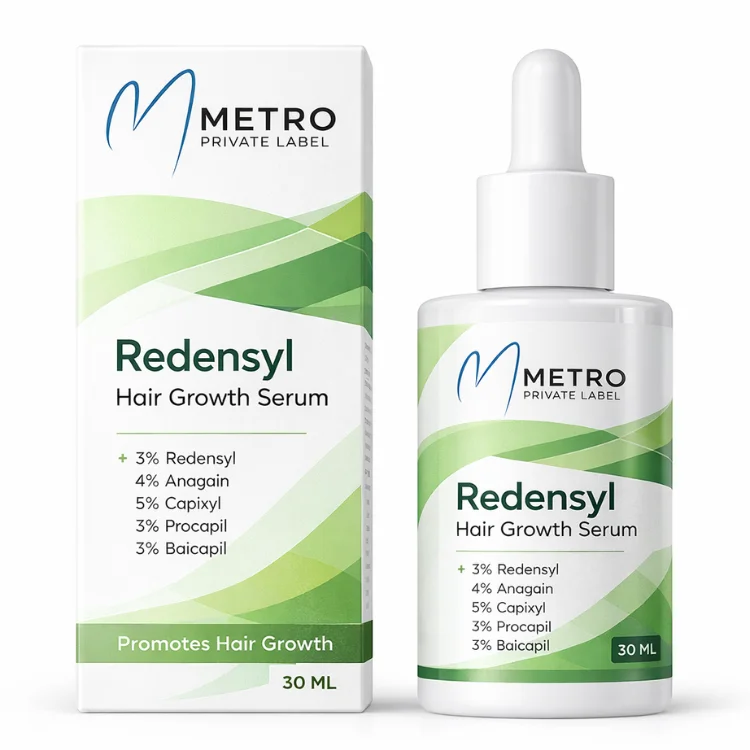
The hero SKU for most hair growth brands. Designed for direct scalp application with higher contact time, this format is ideal for 2–5% Redensyl systems. Popular for Amazon and DTC brands seeking a high-margin, high-repeat product with precision dropper or pump packaging.
2️⃣ Redensyl Daily Scalp Tonic / Spray
A lightweight, fast-absorbing format built for everyday use. Especially attractive for oily scalp users or younger audiences who prefer non-greasy textures. Strong choice for TikTok-driven brands and distributor markets needing easy application.
3️⃣ Redensyl Anti-Hair Loss Shampoo
A supportive system SKU that strengthens positioning and increases bundle value. While wash-off, it reinforces scalp balance and hair strength claims. Ideal for brands building a shampoo + serum pairing strategy.
4️⃣ Redensyl Strengthening Conditioner / Scalp Mask
Designed to support hair fiber resilience and reduce breakage. Perfect for brands expanding into full haircare systems or clinics offering post-treatment scalp support programs.
 
🎯 MOQ & Packaging Options (Built for Scalable Launches)
Most private label Redensyl projects begin at around 1,000 units per SKU, depending on formula selection and packaging customization. We support dropper bottles, scalp applicator pumps, fine-mist sprays, squeeze tubes, and retail-ready cartons. Our team coordinates formula stability, packaging compatibility, and production scheduling so your product performs consistently from pilot batch to full production.
If you already have a defined sales channel, audience, or product positioning, we’re ready to help you move quickly and efficiently. We focus on building Redensyl hair loss products that meet cosmetic compliance standards, fit your commercial model, and support repeat orders—products that don’t just expand your lineup, but strengthen your brand’s authority in the hair growth category.

More Than Just a Private Label Redensyl Hair Loss Manufacturer

At Metro Private Label, we don’t see Redensyl hair loss products as just another trendy ingredient launch. We treat them as high-responsibility SKUs that directly impact how your brand is judged, how confident customers feel using your product, and whether they reorder. In the hair growth category, consistency matters. If the serum feels too oily, the tonic irritates the scalp, or results don’t match expectations, customer trust drops fast. A successful Redensyl product isn’t just about adding 2–5% of an active—it’s about building a formula that feels comfortable, performs consistently, and supports cosmetic-compliant claims. That’s how a single launch becomes a repeatable revenue stream.

✅ Launch What the Market Already Wants

We don’t develop Redensyl products based on theory—we focus on formats customers are already searching for. By studying Amazon bestsellers, fast-scaling DTC haircare brands, and clinic-retail systems, we concentrate on product types that perform in real sales environments: leave-on scalp serums with precision droppers, lightweight daily tonics that don’t weigh hair down, anti-hair loss shampoos that support scalp balance, and system-based bundles that increase average order value. These are proven structures customers recognize, which makes your product easier to position, easier to explain, and easier to scale.

✅ Small MOQ That Reduces Your Risk

We structure our private label Redensyl programs around realistic production planning—not inflated minimums that slow you down. Most brands begin with manageable quantities to validate demand, test packaging performance, and confirm customer response. As your sales grow, we help you scale efficiently—whether that means refining Redensyl concentration, adjusting texture, upgrading packaging, or expanding into a shampoo + serum system—without forcing you to change suppliers or restart development.

✅ Visible Results That Win Customer Trust

Hair growth products live or die by long-term performance. Customers don’t just buy once—they monitor how their scalp feels after weeks of use. We focus on stability, scalp comfort, absorption speed, and packaging compatibility so every batch performs consistently. That reduces complaints, improves reviews, and strengthens your brand credibility in a category where trust is everything.

✅ Compliance That Makes Export Easy

We prepare your Redensyl products for real-world markets—not just internal testing. From INCI lists and COA/MSDS documentation to packaging coordination and production scheduling, we support the details that keep ecommerce, clinic, and distributor launches running smoothly. Our role is to help you move from idea to production with clarity and confidence—so your Redensyl hair loss line is compliant, scalable, and built for long-term growth, not short-term hype.
  • METRO
  • Typical OEM factory
METROTypical OEM factory
$
/year
/year
Minimum order quantity✅ 500 units for startup brands — low-risk entry for first-time founders.❌ 3,000 units minimum, limiting flexibility.
Packaging recommendations✅ Compatibility + visual templates to ensure perfect fit and premium look.❌ Not provided.
Launch support✅ Label compliance & claim copywriting included for export markets.❌ Not available.
Sample delivery time✅ 7–14 days with labeled packaging.❌ Usually 30+ days.
Compliance & Documentation✅ INCI, COA, SDS, GMP-ready — export with confidence.❌ Basic INCI only.
Buy Now

✨ Build a Private Label Redensyl Hair Loss Line That Performs Beyond Expectations

When you work with Metro Private Label, you’re not just choosing a Redensyl manufacturer—you’re partnering with a team that understands how hair growth products perform in real sales environments. A successful Redensyl hair loss product isn’t defined by the ingredient name alone. It’s about how comfortable it feels on the scalp, how consistently it performs over time, and whether customers trust it enough to keep using—and repurchasing—it. That’s what builds long-term brand value. Our role is to help you launch Redensyl products that don’t just look good in packaging, but deliver reliable, repeatable performance your customers can depend on.
 
Whether you’re developing a high-strength leave-on scalp serum as your hero SKU, a lightweight daily tonic for oil-prone users, a supportive anti-hair loss shampoo, or a bundled shampoo + serum system, we build every project around real customer expectations. We understand that in the hair loss category, texture, absorption speed, scalp comfort, and cosmetic-compliant positioning all matter. Our focus isn’t just helping you release a product—it’s helping you create one that customers understand immediately, enjoy using daily, and continue buying as part of their routine.
🧪 Formulation Built for Real-World Scalp Performance
We don’t rely on generic, one-size-fits-all formulas. Every Redensyl product we develop is structured for proper concentration balance, stable delivery systems, and scalp-friendly texture. When there are different formulation approaches—such as higher active positioning, alcohol-free tonics, hydration-focused systems, or bundle-oriented strategies—we explain those options clearly so you can align your product with your brand positioning, customer profile, and pricing model. Our goal is to make sure your Redensyl product performs consistently—not just in testing, but in everyday customer use over weeks and months.
 
📦 Packaging & MOQ Designed for Real Brand Launch Conditions
Hair growth products require both formula stability and packaging precision. Most projects begin with practical MOQs that allow you to validate demand, test market response, and optimize positioning before scaling. We support a range of packaging formats, including dropper bottles, scalp applicator pumps, fine-mist sprays, and retail-ready cartons—selected to enhance usability, protect stability, and support ecommerce fulfillment or clinic retail environments. Our team ensures your packaging and formula work together reliably from production through final delivery.
 
⚙️ A Clear and Structured Production Process
We keep development transparent and organized—from initial sampling and active concentration confirmation to packaging coordination and mass production. Timelines are clearly communicated so you can align manufacturing with your launch calendar. Whether you’re preparing for Amazon restock cycles, DTC product drops, or clinic system rollout, we help you move efficiently from concept to finished goods without unnecessary delays or uncertainty.
 
🌿 Built for Brands Ready to Launch and Scale
We measure success by how your product performs after it reaches the market—not just how quickly it’s produced. That’s why we focus on scalable formulas, repeatable production systems, and compliance-ready documentation that supports long-term growth. With Metro Private Label, your Redensyl hair loss line is built to launch confidently, maintain cosmetic compliance, earn customer trust, and scale smoothly as your brand expands.

Who We Work With

We work best with skincare buyers who already have a real plan—either a sales channel, an industry background, or a proven service model. Our job is to make manufacturing feel simple, scalable, and predictable: we listen first, translate your goals into a clear product plan, and deliver something you can confidently sell, reorder, and grow into a real product line.

Clinic Owners

You care about: safety, professional credibility, and products that support client retention.

We work with clinics and professional skincare businesses that need products clients can trust and comfortably use long-term. We focus on practical, low-risk formula direction, professional packaging presentation, and compliance-ready labeling so your products fit naturally into retail shelves, aftercare routines, and repeat-purchase behavior.
Immediate outcome: a clinic-ready product plan, stable production strategy, and a scalable setup for ongoing reorders and line extensions.

Beauty Industry Founders

You care about: ingredient logic, brand differentiation, and long-term scalability.

We support founders who want more than a generic private label product. We help you build skincare with a strong “reason to exist”—from formula direction and skin feel to packaging structure and claims alignment—so your first hero SKU can actually carry the brand. Instead of over-complicating development, we focus on making the product modern, believable, and scalable for future line expansion.
Immediate outcome: a clear concept direction, a workable development roadmap, and a product system that can grow into multiple SKUs.

E-commerce Brand Operators

You care about: speed, consistency, and products that convert without creating review risk.

We help you launch skincare SKUs that are built for real e-commerce performance—fast-moving formats, stable textures, and clear positioning that customers understand in seconds. We also guide you on the details that protect ratings and reduce refunds, like packaging practicality, ingredient communication, and production consistency across batches.
Immediate outcome: a launch-ready product plan, clear MOQ and timeline, and a production setup designed for repeat ordering.

Why this works:
We’re not here to “just produce skincare.” We’re here to help you build products that feel credible, perform consistently, launch smoothly, and scale without supply-chain headaches—so you can focus on sales, brand growth, and customer retention.

FAQs Redensyl for Hair Loss

For your convenience, we’ve gathered the most commonly asked questions about our Redensyl for Hair Loss. However, should you have any further queries, please don’t hesitate to reach out to us.
1. What types of Redensyl hair loss products can you manufacture?
We focus on the formats that actually perform in real markets. That includes leave-on scalp serums, lightweight daily tonics or sprays, anti-hair loss shampoos, strengthening conditioners, and full haircare systems (shampoo + serum combinations).
If you’re building a hero SKU, we’ll usually recommend starting with a leave-on serum for maximum scalp contact time and stronger commercial positioning.
Yes. We typically work within the 2%–5% Redensyl complex range, depending on your positioning and pricing strategy.
We also customize texture (lightweight vs richer), absorption speed, alcohol-free systems, added scalp-support ingredients like peptides, caffeine, niacinamide, or botanical extracts.
Tell us your target audience and price tier—we’ll help structure the formula accordingly.
Most Redensyl projects start at around 1,000 units per SKU, depending on packaging type and customization level.
We structure MOQs to support serious launches—not hobby experiments, but not unrealistic bulk commitments either. Our goal is to help you test smart and scale efficiently.
Redensyl is positioned as a cosmetic active, not a pharmaceutical ingredient like Minoxidil.
That means your product can follow cosmetic regulatory pathways in most markets, as long as claims stay within cosmetic boundaries (for example: “reduce hair fall” or “support scalp health” rather than medical treatment claims).
We help you structure positioning responsibly.
Yes.
We provide documentation such as INCI lists, COA, MSDS, and ingredient breakdowns to support cosmetic classification.
We also guide you on claim boundaries so you avoid language that could trigger drug-level regulatory scrutiny, especially on Amazon or EU platforms.
Sampling usually takes around 3–4 weeks, depending on customization complexity.
Mass production typically takes 4–6 weeks after final confirmation and packaging approval.
If you’re working against a launch deadline, let us know early—we structure production planning around serious timelines.
Absolutely.
Many successful brands don’t rely on a single serum. They build systems:
  • Scalp shampoo
  • Leave-on serum
  • Support conditioner
  • Optional tonic spray
We help you structure that roadmap so your brand expands logically instead of randomly adding products.
Both.
If speed is your priority, we can adapt one of our structured base systems.
If differentiation is your priority, we co-develop a formula from scratch based on your positioning, audience, and target retail price.
We’ll recommend the smarter path after understanding your goals.
We conduct standard stability testing, compatibility testing with packaging, and production batch validation.
Because hair growth products are long-term use SKUs, we focus heavily on texture consistency, active stability, and scalp comfort over time—not just short-term lab results.
Yes.
We support brands across the US, UK, EU, Middle East, and Southeast Asia.
We assist with documentation, export coordination, and production scheduling to align with ecommerce restocks, clinic rollouts, or distributor launches.
If you already have a defined sales channel, we can move efficiently.

Metro Private Label in Numbers

Happy Clients
0 +
Million-dollar Buyers
0 +
Formulation
0 +
Professional Staffs
0 +

Your Ultimate Guide to Redensyl for Hair Loss

If you’re planning to add a Redensyl hair loss product to your lineup—whether it’s your first scalp-focused SKU or an expansion from general haircare into treatment-driven positioning—you’re not just selecting another trending ingredient. You’re stepping into one of the most commercially sensitive and high-retention categories in beauty. Hair growth is not impulse-driven like styling products. It’s routine-driven. Customers commit emotionally and financially, and that means your formula, positioning, and compliance strategy must be aligned from day one.
 
Redensyl has gained strong market traction because it allows brands to enter the “hair growth” conversation while staying within cosmetic classification. That flexibility matters. It enables faster market entry compared to drug pathways, reduces regulatory barriers, and supports ingredient-led marketing without triggering pharmaceutical-level compliance. For e-commerce brands, clinics, and distributors, that balance between performance positioning and regulatory practicality is commercially powerful. When structured correctly, a Redensyl product doesn’t just generate first-time purchases—it becomes part of a long-term routine that drives repeat sales and subscription behavior.
 
Over the past few years, we’ve watched how hair growth brands succeed or stall depending on decisions made behind the scenes. From Amazon FBA operators to clinic-based scalp treatment centers, the brands that scale are the ones that treat Redensyl as a system opportunity rather than a single serum launch. Formula texture, absorption speed, packaging compatibility, claim discipline, and production scalability all determine whether a product earns five-star reviews or quiet returns. On the surface, a scalp serum may look simple. In reality, performance balance, comfort tolerance, and channel-specific packaging design decide its commercial lifespan.
 
This guide is built from what we’ve learned developing Redensyl-based products across multiple sales channels and international markets. Instead of focusing only on ingredient theory, we want to share how these products behave in real commercial environments. Choosing formats that convert on Amazon, structuring treatment-support systems for clinics, designing cost-efficient packaging for distributors, aligning concentration with retail price logic, and preparing documentation early for compliance stability—all of these decisions influence whether your product becomes a scalable brand asset or just another short-term launch. Our goal is to help you approach Redensyl strategically, so your product doesn’t just enter the market—it earns its place and grows with it.

Table of Contents

What Redensyl Actually Is — And Why It Matters Commercially

Before I help any brand launch a Redensyl hair loss product, I always make sure we align on one thing: we are not just selecting an ingredient, we are choosing a positioning strategy. In the hair growth category, misunderstanding this difference can cost months of delay, unnecessary regulatory risk, and even long-term brand limitations. Redensyl is often marketed online as if it were a miracle standalone compound, but in reality, it is a structured cosmetic complex designed to operate within defined biological and regulatory boundaries. Understanding that structure is what allows me to guide brands toward smarter commercial decisions.
 
Redensyl Is a Trademarked Cosmetic Complex With Strategic Architecture
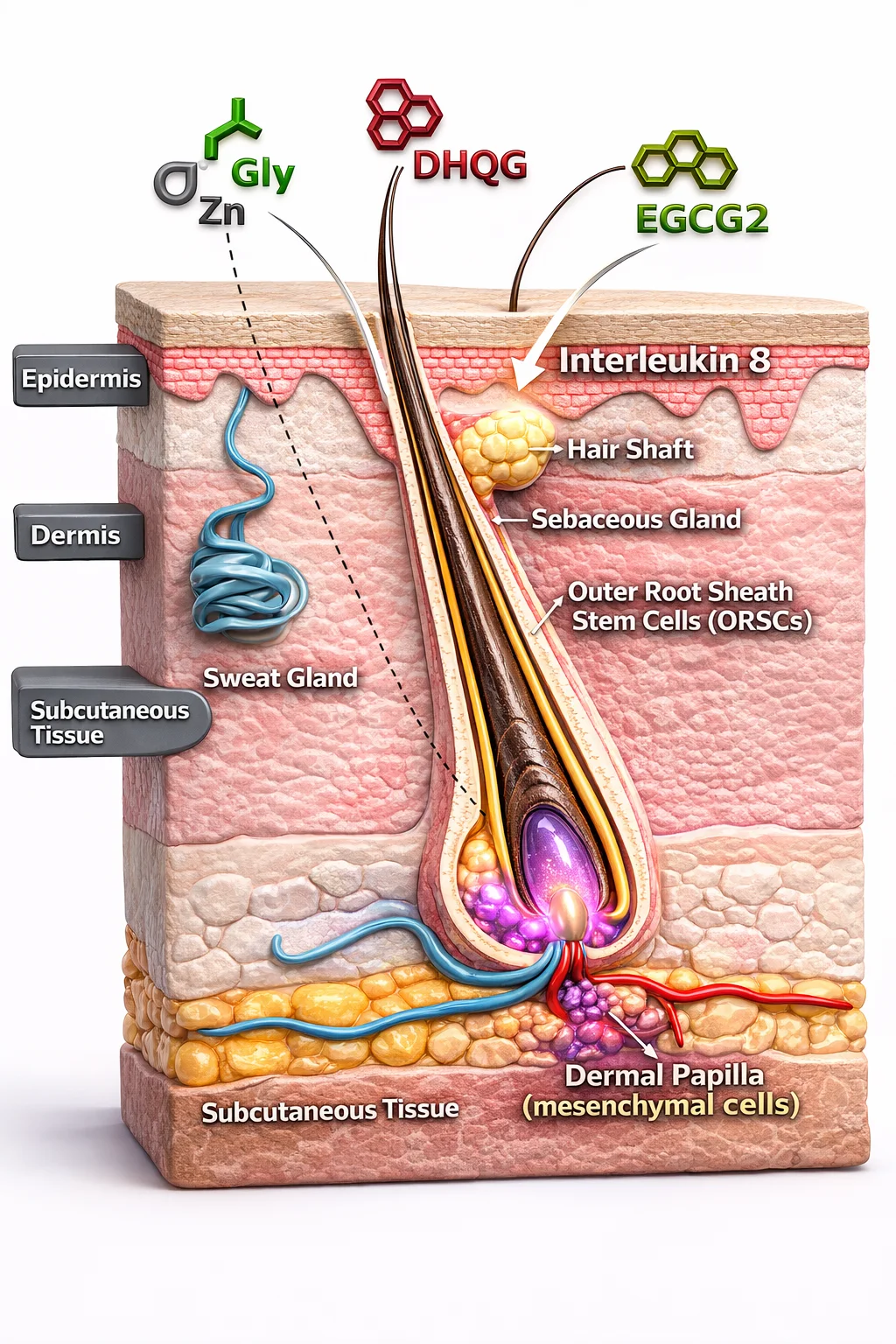
When I analyze Redensyl from a formulation standpoint, I do not treat it like a generic botanical extract. It is a trademarked cosmetic complex developed around specific botanical-derived actives that target follicle-related pathways. That architecture matters because it means the ingredient already carries a defined commercial identity. It is not just “green tea extract” or “plant polyphenols” placed into a serum. It is a branded active system designed for cosmetic application.
From a technical perspective, this affects how I integrate it into a scalp serum or tonic. I need to evaluate solvent compatibility, pH stability, interaction with penetration enhancers, and long-term oxidation behavior. If the delivery system is too heavy, the scalp may feel greasy and reduce user compliance. If the formula is too light, the consumer may perceive it as ineffective. The formulation decisions around Redensyl are not cosmetic decoration; they directly influence repeat purchase behavior. That is why I approach it as a system integration process rather than a simple percentage adjustment.
 
The Regulatory Positioning Is Where the Real Commercial Value Lies
In my experience working with e-commerce operators and clinic founders, the biggest mistake brands make is focusing only on biological mechanism and ignoring regulatory classification. The reason Redensyl is strategically valuable is not just its follicle-targeting narrative. It is the fact that it operates within cosmetic classification rather than pharmaceutical regulation.
That difference changes your entire business model. When a product falls under cosmetic regulation, the pathway to market is clearer and more predictable. Documentation requirements are manageable within cosmetic frameworks. You avoid entering pharmaceutical-grade production systems, which require far stricter quality audits and regulatory submissions. I have seen brands attempt to enter the hair growth market through drug-positioned ingredients and underestimate how complex that decision becomes. Redensyl keeps the project within the cosmetic lane, which for most growing brands is the commercially intelligent path.
 
Speed to Market Is a Competitive Weapon in Hair Growth
I always remind clients that in the hair growth category, timing determines positioning. Trends move quickly, especially on Amazon and DTC platforms. Because Redensyl remains within cosmetic boundaries, I can structure development timelines more efficiently. Sampling cycles are faster. Compliance reviews are more straightforward. International expansion remains feasible without restructuring the entire regulatory framework.
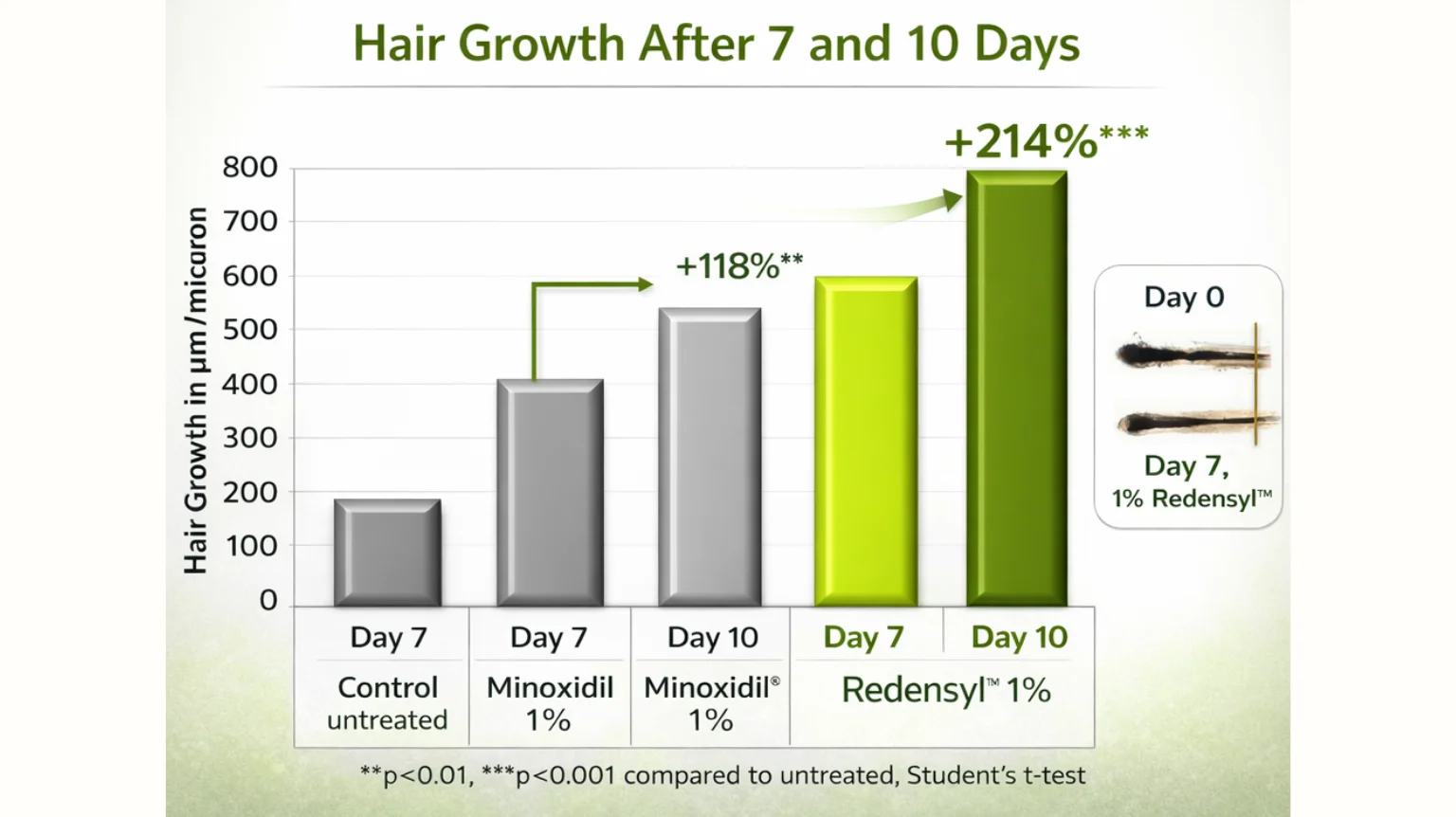
When I compare it to drug-classified ingredients such as Minoxidil, the contrast becomes clear. Minoxidil may have stronger clinical backing, but it pushes brands into pharmaceutical territory in many regions. That decision carries higher compliance complexity, stricter labeling limitations, and increased operational risk. For most e-commerce brands and clinics, the ability to move faster and scale internationally outweighs the pursuit of drug-level claims. Redensyl provides that flexibility while still offering a compelling ingredient story.
 
Ingredient Storytelling Drives Perceived Value and Pricing Power
Modern consumers are ingredient-aware. They do not just buy a “hair serum”; they look for actives they recognize and understand. From my perspective, Redensyl offers brands a structured narrative around follicle support and scalp environment improvement without forcing them into aggressive medical claims.
When I help a brand position a Redensyl product, I think carefully about how the ingredient appears in their marketing ecosystem. How will it be explained on an Amazon listing? How does it differentiate the product from generic caffeine-based serums? How does it justify premium pricing? Ingredient storytelling directly impacts conversion rates and perceived value. A well-positioned cosmetic active with a defined identity gives a brand authority. That authority allows stronger margins and more sustainable scaling.
 
Commercial Flexibility Creates Long-Term Strategic Advantage
Ultimately, I evaluate Redensyl not as a trend but as a strategic entry point. It allows brands to enter the hair growth category under cosmetic compliance, move faster than pharmaceutical competitors, and maintain operational flexibility across markets. For clinics, it provides a professional retail option without drug-level liability. For beauty founders, it supports ingredient-led brand building. For distributors, it offers a compliant and scalable product line that can travel internationally.
When I look at the broader commercial landscape, I see Redensyl as a bridge between innovation and practicality. It combines marketing clarity, manageable compliance, and scalable formulation design. That combination is what makes it commercially meaningful. It gives brands the opportunity to build authority in the hair growth space without locking themselves into regulatory pathways that restrict agility. In a category defined by emotion, expectation, and long-term use, that balance between compliance safety and market positioning is what truly matters.

Redensyl vs Minoxidil: Strategic Business Decision, Not Just Efficacy

Whenever a brand approaches me about launching a hair growth product, the comparison between Redensyl and Minoxidil almost always surfaces early in the discussion. At first glance, it appears to be a purely scientific debate about which ingredient produces stronger regrowth results. But from my experience advising e-commerce operators, beauty founders, and clinic owners, I’ve learned that this comparison is far more strategic than technical. The decision you make here will shape your regulatory obligations, your marketing language, your manufacturing structure, and even your long-term expansion capabilities. It is not simply about biological potency. It is about choosing a business model.
 
Understanding the Clinical Reality Without Ignoring Commercial Consequences
I believe in giving my clients a grounded and honest perspective. If the singular goal is maximum clinical-level regrowth supported by decades of medical literature, Minoxidil holds a stronger evidence base. It has been widely studied in androgenetic alopecia, and its mechanism as a vasodilator influencing the hair growth cycle is well documented in pharmaceutical research.
However, I always remind brands that clinical strength does not exist in isolation. The moment Minoxidil enters your formula, you are stepping into the pharmaceutical arena in many markets. That shift transforms your product from a cosmetic solution into a regulated drug product. The compliance expectations change. The production standards rise. The documentation becomes more complex. In practical terms, that means additional regulatory exposure, potential limitations in cross-border sales, and a much heavier operational structure. I have seen brands underestimate this transition and later realize that what seemed like a powerful ingredient decision was actually a complete restructuring of their business model.
 
The Regulatory Pathway Defines Your Operational Freedom
When I guide clients through this decision, I rarely start by asking which ingredient appears stronger in isolation. I ask which regulatory pathway aligns with their operational capacity and long-term strategy. Minoxidil typically places a brand within a drug pathway. Redensyl remains within cosmetic classification when claims are managed correctly. That distinction is fundamental.
A drug pathway introduces pharmaceutical-grade quality control requirements, additional audits, and in some cases formal registrations or approvals beyond cosmetic frameworks. Advertising language becomes more restricted. Online marketplaces may apply stricter listing policies. International distribution can require separate regulatory strategies for each market.
By contrast, when I build a Redensyl-based product, I am operating within cosmetic regulatory structures. That means clearer compliance boundaries, more predictable documentation processes, and greater flexibility for international expansion. For most emerging and mid-scale brands, this operational freedom becomes more valuable than pursuing drug-level claims.
 
Why Cosmetic Brands Often Choose Redensyl
In the majority of cosmetic OEM projects I manage, the final decision leans toward Redensyl not because it promises to outperform Minoxidil in clinical trials, but because it aligns with commercial agility. Redensyl allows brands to avoid OTC drug registration in markets where that would otherwise be mandatory. It reduces the regulatory barriers that can slow down launch timelines. It supports safer positioning on platforms like Amazon when marketing language remains within cosmetic boundaries.
Another dimension I emphasize is long-term consumer perception. Products positioned as cosmetic scalp care solutions often integrate more naturally into daily routines. Consumers may be more willing to use them consistently because they are not framed as pharmaceutical interventions. This daily-use narrative strengthens retention and repeat purchase potential, which in my view is a critical metric for e-commerce and clinic-based models. A product that customers feel comfortable using continuously often generates more sustainable revenue than one positioned as a short-term medical treatment.
 
The Question Is Not Which Works Better, But Which Strategy Fits
Over the years, I have learned that the wrong question leads to the wrong outcome. Asking which ingredient works better in isolation oversimplifies the decision. The more important question is which model fits your brand strategy and compliance tolerance.
If your brand vision is rooted in pharmaceutical credibility and you are prepared for the regulatory commitments that accompany that positioning, Minoxidil may align with your trajectory. But if your goal is to move efficiently, maintain international flexibility, operate within cosmetic compliance systems, and build an ingredient-driven narrative without entering drug territory, Redensyl often represents the more commercially intelligent route.
When I evaluate projects, I do not isolate formulation science from business architecture. I assess sales channels, regulatory comfort levels, target markets, and long-term scalability. In the hair growth category, success is rarely determined by efficacy alone. It is determined by how well your regulatory pathway, operational structure, and marketing positioning align with your growth ambitions. Choosing between Redensyl and Minoxidil is not simply a formulation choice. It is a strategic declaration about how you intend to build and scale your brand.

Ideal Product Formats for Different Sales Channels

One of the biggest mistakes I see in the hair growth category is assuming that one product format fits every sales model. It doesn’t. The structure you choose determines how your product is perceived, how it is priced, how often it is repurchased, and how easily you can scale. When I design a Redensyl project with a client, I never start by asking which texture they prefer. I start by asking where they sell, how their customers buy, and what kind of business model they are building. In my experience, format strategy is not a technical detail. It is a financial decision that shapes margin, repeat rate, and long-term growth potential.
 
E-commerce Brands Require a Clear Hero Serum
When I work with Amazon operators or Shopify DTC founders, I almost always guide them toward launching a leave-on scalp serum as their hero SKU. Online platforms reward clarity and authority. Customers scrolling through listings want a focused solution that signals potency and seriousness. A leave-on serum communicates intensity and purpose. It stays on the scalp longer, which strengthens perceived efficacy, and it positions the product as a treatment rather than a supportive cosmetic.
From a margin perspective, serums offer flexibility. Because they are framed as concentrated solutions, they can command higher retail prices compared to shampoos or conditioners. I have seen brands attempt to launch with a shampoo first and struggle to differentiate themselves in crowded marketplaces. A well-positioned Redensyl serum, however, becomes a statement product. It creates a strong anchor for brand identity and provides the foundation for expansion. Once that hero SKU establishes credibility and review momentum, additional formats can follow naturally.
 
Clinics Operate on System Logic, Not Single Products
When I consult with clinic owners or trichology centers, the dynamic changes completely. Clinics do not rely on impulse purchases. Their business is built on professional trust and structured treatment plans. In this environment, launching only one Redensyl serum rarely maximizes opportunity. Instead, I recommend building a treatment-support serum paired with a retail shampoo that patients can use at home.
The serum integrates directly into post-treatment routines, reinforcing the clinic’s professional expertise. The shampoo extends that expertise into daily maintenance. Together, they create a cohesive system rather than a standalone product. I have observed that clinic clients value stability and safety over aggressive marketing angles. They want formulations that feel comfortable, reduce the risk of irritation, and align with long-term scalp management strategies. By structuring the line as a system from the beginning, clinics create repeat purchase cycles and strengthen patient loyalty without overcomplicating their retail offering.
 
Distributors Prioritize Reliability and Scalability
Distributors approach product development with a different mindset. Their focus is not brand storytelling in its early stages, but operational efficiency and turnover. When I design Redensyl formats for distributors, I consider how the product will perform across multiple retail environments and varying customer demographics. In many cases, a ready-to-label tonic combined with a shampoo system becomes the most practical solution.
Toners and lightweight scalp sprays appeal to a wide audience because they integrate easily into daily routines and feel less heavy than concentrated serums. Pairing that with a shampoo provides a complete, scalable set without excessive development complexity. From my experience, distributors are highly sensitive to supply consistency. They need products that can be reordered reliably, scaled without reformulation, and adapted to different packaging tiers depending on market demand. Choosing formats that balance accessibility and performance helps them maintain operational stability while expanding their network.
 
Beauty Founders Need a Strategic Product Roadmap
When I collaborate with beauty founders who already understand the industry, our conversation tends to revolve around brand architecture. These clients think beyond a single SKU. They consider how their hair growth line will evolve over time. For them, I usually recommend a phased roadmap that begins with a serum, expands into shampoo, and eventually adds conditioner or supportive treatments.
The reason is simple. The serum establishes authority and drives perceived effectiveness. The shampoo increases frequency of use and boosts basket size. The conditioner enhances system completeness and supports fiber strength, which complements the scalp-focused message. I have found that launching everything at once often dilutes impact and strains operational resources. A structured expansion plan allows each product to reinforce the previous one, building brand equity gradually but steadily.
 
Format Strategy Shapes Financial Outcomes
What I have learned through years of OEM collaboration is that product format is directly linked to financial structure. A hero serum can drive higher per-unit margins. A shampoo can drive repeat frequency. A bundled system can elevate lifetime customer value. When I design a Redensyl program, I analyze not only formulation science but also how each format influences profitability and scalability.
In the hair growth market, success rarely belongs to brands that launch the most SKUs. It belongs to those that align format with channel strategy and build deliberately. Choosing the right structure for your sales environment ensures that your product feels intuitive to customers, profitable to you, and scalable for the future. That alignment is what transforms a Redensyl launch from a simple formulation project into a sustainable business model.

Recommended Redensyl Usage Levels for Market Positioning

Whenever a client asks me, “What percentage of Redensyl should we use?” I know the real question behind it is not technical. It is strategic. The concentration you choose will influence your product’s pricing power, margin structure, marketing angle, and even how customers psychologically perceive its strength. In the hair growth category, percentage is not just a formulation parameter. It is a positioning signal. I never treat it as a trend decision. I treat it as a business architecture decision.
 
Understanding the Commercially Accepted Cosmetic Range
In most cosmetic applications, Redensyl is used within a 2% to 5% range of the trademarked complex. This range has become commercially standardized because it balances marketing strength, formulation stability, and cost feasibility. When I formulate within this spectrum, I consider how the concentration interacts with other scalp-support ingredients, the viscosity of the system, and the absorption profile.
A higher percentage does not automatically mean a better product. It may strengthen the marketing narrative, but it also increases raw material cost and influences how the formula behaves over time. Stability, oxidation control, and compatibility with packaging systems must all be evaluated carefully. I approach this range as a controlled zone where I can adjust commercial intensity without compromising structural integrity.
 
Lower Usage Levels and Competitive Entry Positioning
When I am working with an e-commerce brand targeting competitive marketplaces, I often recommend positioning closer to the lower end of the range. This does not mean sacrificing credibility. It means designing a product that aligns with volume-based strategies and accessible price tiers.
At this level, I guide brands to focus messaging around scalp support, strengthening appearance, and daily maintenance rather than aggressive transformation claims. Lower concentration reduces cost of goods, which preserves advertising flexibility and protects margins during scaling. For many growing brands, especially those investing heavily in paid traffic, maintaining healthy margin space is more valuable than chasing headline percentages. A well-positioned mid-range formula often performs better in real market conditions than an over-concentrated product that erodes profitability.
 
Higher Usage Levels and Premium Brand Architecture
When I collaborate with brands targeting a premium segment, the conversation changes. Higher concentrations within the accepted cosmetic range allow for stronger differentiation. They support elevated packaging design, higher retail pricing, and a more concentrated treatment narrative.
However, I always emphasize that increasing percentage increases cost not only at the ingredient level but across the entire supply chain. It affects formulation fine-tuning, stability testing, and sometimes packaging compatibility. Premium positioning only works if the consumer psychology and retail strategy support the elevated price. If a brand chooses a higher concentration without adjusting its pricing architecture, margins tighten and long-term scalability becomes fragile. In my experience, successful premium brands integrate higher percentage levels into a broader brand story rather than using them as a standalone selling point.
 
Concentration Must Align With Retail Price Logic
One of the most common errors I see is brands imitating competitors’ percentages without evaluating their own retail model. I do not select concentration based on what another listing claims. I analyze your intended retail price, your target demographic, your distribution channel, and your advertising structure.
If your strategy depends on aggressive Amazon scaling, cost efficiency may outweigh concentration intensity. If your brand is boutique, clinic-aligned, or positioned as advanced scalp science, a higher usage level may reinforce authority. The percentage must fit the price logic. Otherwise, you create tension between perceived value and financial reality. My role is to ensure formulation decisions reinforce commercial sustainability rather than contradict it.
 
Why Maximum Percentage Is Not Always Maximum Success
Over the years, I have seen moderate concentration products outperform higher-percentage competitors simply because their pricing, texture, packaging, and messaging were cohesive. In the hair growth market, consumer trust builds through consistent experience, not numerical claims alone.
When I design a Redensyl-based product, I focus on strategic balance. I weigh efficacy perception, cost of goods, compliance boundaries, and long-term scalability. The goal is not to maximize percentage for marketing impact. The goal is to optimize positioning so that your product launches confidently, maintains margin integrity, and scales without structural stress. In my view, sustainable growth is built on alignment, not exaggeration.

Claim Strategy: What You Can Say (And What You Should Avoid)

If there is one area where I see even experienced brands make costly mistakes in the hair growth category, it is claim strategy. In my view, wording is not a marketing afterthought. It is a regulatory trigger. The difference between a compliant cosmetic product and a product that suddenly falls into drug territory often comes down to a few words on packaging or an Amazon listing. When I work with clients on Redensyl projects, I treat claim structure with the same seriousness as formulation design, because once language crosses a boundary, no level of formulation quality can undo the regulatory consequences.
 
Understanding What Falls Within Safe Cosmetic Territory
When I build a Redensyl-based product under cosmetic classification, I anchor all positioning within appearance-focused and support-oriented language. In practical terms, I guide brands toward phrasing such as reducing the appearance of hair fall, supporting scalp health, strengthening the look of hair roots, or improving the appearance of hair density.
These statements are not weak. They are strategically precise. Cosmetic regulations in most major markets allow products to enhance appearance, maintain healthy-looking skin or hair, and improve cosmetic condition. What they do not allow is the treatment of disease or alteration of physiological functions beyond cosmetic intent. When I write claims around Redensyl formulations, I make sure the language reflects improvement in visible or experiential outcomes rather than medical intervention. This allows the product to stay clearly within cosmetic territory while still communicating meaningful value to customers.
 
Why Certain Claims Immediately Trigger Risk
There are phrases that I categorically avoid in cosmetic Redensyl projects. Claims such as treating hair loss, regrowing bald patches, curing alopecia, or promising clinically proven regrowth without robust, defensible evidence move a product toward drug classification. Even if the formula itself remains cosmetic, the regulatory interpretation may shift based on how the product is presented.
I have seen brands lose marketplace listings or face compliance inquiries because of language that implied therapeutic intent. In highly regulated environments like the European Union, cosmetic law is explicit about medicinal claims. Once a product claims to treat a medical condition, authorities may consider it a medicinal product rather than a cosmetic. That shift is not a minor administrative adjustment. It transforms the entire compliance pathway.
For Amazon sellers, the risk is often algorithmic rather than manual. Certain keywords trigger automated suppression systems. Even well-intentioned language that references hair loss treatment can result in listing removal or warning notifications. From my perspective, disciplined language protects operational continuity.
 
The Subtle Difference Between Confidence and Overstatement
One of the most delicate balances I manage with clients is the line between strong marketing and exaggerated claims. The hair growth market is emotionally charged. Consumers are searching for hope and improvement. It is tempting to use aggressive language to capture attention. However, I have learned that overstatement may generate short-term clicks but creates long-term vulnerability.
Instead of promising regrowth, I focus on framing outcomes around visible improvement and support. For example, improving the appearance of fuller-looking hair or reinforcing the scalp environment communicates benefit without crossing into treatment territory. This approach builds credibility because it aligns expectations with what a cosmetic product can realistically deliver. Brands that maintain this discipline tend to experience fewer customer disputes and stronger review stability over time.
 
Why Amazon and EU Markets Demand Special Attention
In my experience, Amazon and EU markets require particularly careful claim calibration. Amazon’s enforcement mechanisms are increasingly automated, scanning product descriptions for sensitive terminology. Words such as cure, regrow, or treat can lead to suppressed listings even if the intent was purely cosmetic. Once a listing is flagged, restoring it can involve time-consuming documentation and appeals.
In the EU, regulatory authorities take a structured approach to claim substantiation. Cosmetic products must avoid implying that they modify physiological functions in a medicinal sense. I ensure that all Redensyl-based projects align with cosmetic definitions by focusing on appearance-based benefits. This protects brands from unexpected classification shifts that could disrupt distribution or require reformulation.
 
Responsible Language as a Long-Term Brand Asset
I view claim discipline not as restriction, but as strategic foresight. Brands that respect cosmetic boundaries build long-term stability. A Redensyl product positioned with realistic, support-oriented language can scale across international markets without constant regulatory reinterpretation. It can expand into additional SKUs without revisiting foundational classification decisions.
In the hair growth category, trust is currency. Customers are skeptical of exaggerated promises. When a brand communicates benefits clearly and responsibly, it strengthens its authority. I have found that disciplined claim strategy supports smoother marketplace approvals, fewer compliance interruptions, and stronger long-term customer confidence. In the end, the most sustainable growth comes not from the boldest wording, but from language that aligns with regulation, reality, and brand integrity.

Building a Hair Growth System Instead of a Single SKU

When I evaluate a Redensyl project with a brand, I rarely think in terms of one product. I think in terms of architecture. In the hair growth category, the brands that last are not the ones that launch a trending serum and hope it takes off. They are the ones that build structured systems that guide customer behavior, reinforce daily habits, and create logical expansion paths. A single SKU can generate attention. A system generates stability, repeat purchases, and defensible market positioning.
 
Why Strong Brands Think in Systems, Not Isolated Products
Over the years, I have observed that relying on one product places a brand in a fragile position. A hero serum may drive traffic, but if the brand does not control the surrounding routine, competitors can easily insert themselves into the customer’s regimen. When that happens, brand loyalty weakens and price comparison becomes easier.
When I design a hair growth line, I ask myself how each product fits into the customer’s daily rhythm. Hair care is not an occasional purchase. It is habitual. If I can help a brand own multiple touchpoints in that routine, the brand becomes embedded in the customer’s lifestyle rather than existing as a one-time experiment.
 
Establishing the Foundation With an Anti-Hair Loss Shampoo
I often begin system planning with an anti-hair loss shampoo because it represents the first daily contact point. Even though it is a wash-off product, its psychological impact is powerful. It signals that the brand understands scalp health at the cleansing stage, not only at the treatment stage.
From a commercial perspective, shampoos drive frequency. Customers use them several times per week, which accelerates repeat purchase cycles. This frequency increases average order value over time and stabilizes revenue flow. When paired correctly with a Redensyl serum, the shampoo reinforces the treatment message while maintaining daily engagement.
 
Positioning the Leave-On Redensyl Serum as the Core Engine
The leave-on Redensyl serum typically becomes the central engine of the system. It carries the strongest narrative and the highest perceived efficacy. I position it as the concentrated treatment step that works in synergy with the cleansing foundation.
By framing the serum as part of a structured sequence rather than a standalone miracle product, I help brands elevate credibility. Customers are more likely to trust a brand that offers a complete plan rather than a single promise. From a financial standpoint, the serum often carries stronger margins, supporting advertising investment and scaling efforts.
 
Completing the Structure With a Strengthening Conditioner
A strengthening conditioner may appear secondary, but in system design, it plays an essential role. Hair growth conversations often focus on follicles, yet consumers judge results visually through hair appearance. A conditioner supports fiber resilience, reduces breakage, and improves overall texture.
When I integrate a conditioner into the system, I am thinking about completeness. A brand offering shampoo, serum, and conditioner feels deliberate and professional. This structure increases basket size and reduces the likelihood that customers will mix products from competing brands. The more cohesive the system, the stronger the brand’s defensive positioning becomes.
 
Expanding Strategically With an Optional Scalp Tonic Spray
For brands ready to extend further, I sometimes recommend adding a scalp tonic spray as an optional layer. This format appeals to customers seeking convenience, lighter textures, or mid-day application flexibility. It also allows brands to address different scalp types without reformulating the core serum.
From a strategic perspective, this expansion signals innovation and segmentation capability. It provides additional entry points into the brand ecosystem without overwhelming the customer with complexity.
 
How Systems Increase Value and Create Competitive Barriers
When I analyze financial performance, systems consistently outperform isolated SKUs. Multiple products within one routine increase average order value naturally. They extend customer lifetime value because repurchases occur across several categories rather than a single bottle.
Beyond revenue metrics, systems elevate brand authority. A structured lineup communicates expertise and long-term commitment. It positions the brand as a specialist rather than a trend follower. Competitors may replicate a serum formula, but replicating an integrated routine with cohesive messaging and synchronized development requires significantly more effort.
In my experience, the decision to build a system rather than a single SKU is what separates short-lived launches from sustainable brands. When each product reinforces the others, the brand becomes embedded in daily habits. That embedded presence creates resilience, profitability, and a meaningful barrier to competition in the highly competitive hair growth market.

Texture & Scalp Experience: Why It Impacts Reviews

In the hair growth category, I have learned something that many new brands underestimate: customers forgive slow results, but they do not forgive daily discomfort. When someone applies a Redensyl serum, they are not just testing a formula. They are deciding whether this product can become part of their everyday life. If the sensory experience creates friction, even subtle friction, the product rarely survives long enough to prove its value. That is why, when I develop scalp treatments, I prioritize texture and experience with the same seriousness as active ingredient selection. In this category, comfort is not cosmetic. It is commercial.
 
Why Hair Growth Products Quietly Fail After Launch
I spend a lot of time reading real user reviews across Amazon and clinic retail feedback. The complaints are rarely about ingredient names. They are about feel. A product that is too greasy immediately conflicts with modern styling habits. Customers do not want their roots looking oily or flat after application. If the formula leaves visible residue, users worry about buildup or clogged follicles, even if the formulation is technically safe.
When hair feels weighed down, especially for fine or thinning hair types, the psychological impact is immediate. Thinning hair customers are extremely sensitive to volume loss. If a product reduces lift at the roots, it undermines confidence. Even mild itching can become a deal-breaker. In long-term use categories, minor irritation compounds emotionally. What might feel tolerable on day one often becomes unacceptable by week three. I have seen products with strong active percentages fail simply because the sensory profile did not respect daily comfort.
 
Absorption Speed as a Trust Signal
When I design a Redensyl serum, I think carefully about absorption behavior. Customers associate fast absorption with sophistication and quality. If a serum lingers visibly on the scalp, leaves shine, or creates stickiness, users interpret it as heavy or poorly formulated.
I adjust solvent balance and viscosity so the product spreads evenly and settles quickly without leaving a wet film. The goal is to allow application before work, before styling, or before bed without disrupting routine. In e-commerce markets especially, where customers compare dozens of similar products, sensory difference becomes the deciding factor. A clean, lightweight finish builds subconscious trust. A sticky finish builds hesitation.
 
Scalp Comfort Over Weeks, Not Minutes
In my experience, short-term sensation can be misleading. Some brands believe that tingling equals effectiveness. I strongly disagree. Hair growth products are used daily, often for months. The scalp is a sensitive environment with varying oil levels, microflora balance, and barrier strength. A formula that feels stimulating for the first few uses may gradually compromise comfort.
When I structure a formulation, I evaluate long-term tolerance. I consider alcohol levels, humectant balance, preservative systems, and how actives interact with the scalp’s natural ecosystem. I aim for neutrality and balance rather than intensity. A product that feels calm and stable encourages consistent use. Consistency, in turn, increases the likelihood that customers will perceive improvement over time. Comfort sustains commitment.
 
Texture Must Align With Hair Type Reality
Another detail I pay close attention to is how texture interacts with different hair types. Fine hair, oily scalp, curly hair, and chemically treated hair all respond differently to product weight. A serum that works beautifully for thicker hair may feel overwhelming on fine strands.
When I design Redensyl formats, I often create lightweight fluid systems rather than dense oils. I want the product to feel present but not intrusive. Customers should feel that they applied something beneficial without feeling that they compromised their hairstyle. In this category, the ideal experience is almost invisible. If the product integrates seamlessly into daily grooming, repurchase becomes natural.
 
Packaging Compatibility Shapes Perceived Texture
Texture is not only about formula. It is also about delivery. I have seen excellent serums lose customer satisfaction because the packaging dispensed too much product at once. Overapplication leads to greasiness, which then gets blamed on formulation.
I carefully align viscosity with dispensing systems. A precision dropper allows controlled placement along the scalp. A fine mist spray distributes evenly without pooling. An airless pump protects stability while regulating dose. When packaging and texture work together, application feels intentional and professional. That feeling significantly influences reviews because customers evaluate the entire experience, not just the ingredient list.
 
Why Comfort Drives Reviews and Repurchase
In the hair growth market, results are gradual. Customers often judge success based on how manageable the routine feels. If a product fits seamlessly into their lifestyle, they continue using it. Continued use leads to visible changes, which then translate into positive reviews.
If the experience feels heavy, itchy, sticky, or disruptive, customers stop before they see any improvement. The product may have scientific merit, but the market never gives it a chance. That is why I approach texture development as a strategic lever. Comfort drives consistency. Consistency drives perceived results. Perceived results drive reviews and repurchase.
For me, designing a Redensyl product is not about maximizing sensation. It is about minimizing friction. When the scalp feels comfortable and the hair remains natural in movement and volume, the product becomes part of daily life. And in this category, becoming part of daily life is the ultimate competitive advantage.

Packaging Strategy for E-commerce vs Clinic vs Distribution

When I develop a Redensyl hair growth product, I treat packaging as a strategic decision, not a decorative one. In the hair growth category, packaging directly influences perceived efficacy, pricing tolerance, trust level, and even review outcomes. I have seen the exact same formula perform very differently simply because the packaging did not match the expectations of the sales channel. Over time, I’ve learned that packaging must align with how customers in that specific environment think, purchase, and evaluate risk.
 
E-commerce Packaging Must Win the Click Before It Wins the Customer
When I work with Amazon or DTC brands, I always remind them that the first interaction happens through a screen. Customers cannot touch the bottle, feel the texture, or smell the formula. Their judgment is visual and instantaneous. That is why dropper bottles are so common in the hair growth category. A dropper communicates precision, treatment focus, and active concentration. It subconsciously signals that the product is potent and targeted.
Pump precision applicators are another format I frequently recommend because they reduce user error and improve dosing consistency. When customers feel in control of how much product they apply, they are less likely to overuse it and complain about greasiness. That directly impacts reviews.
Leak-resistant design is something I never compromise on for e-commerce projects. Online fulfillment centers expose products to vibration, stacking pressure, and temperature fluctuations. If a bottle leaks even slightly, the damage to customer trust is immediate. I design packaging systems that withstand shipping stress, not just laboratory testing.
Shelf-differentiated aesthetics also play a critical role. On Amazon especially, visual sameness kills conversion rates. Frosted glass, matte finishes, subtle metallic accents, or minimalist typography can elevate perceived value instantly. I always analyze competitor listings before finalizing packaging because standing out visually is part of performance strategy.
 
Clinic Packaging Must Reinforce Professional Authority
When I collaborate with clinic owners or trichology centers, the visual language must shift completely. Clinics operate within a professional environment where patients expect medical-level seriousness. Overly decorative or trend-driven packaging undermines that trust. In these cases, I guide clients toward clean, structured, medical-style presentation.
Airless systems are particularly valuable in clinic settings. They reduce oxidation, protect active stability, and communicate hygiene. Patients often associate airless pumps with pharmaceutical-grade care, even if the product remains within cosmetic classification. That perception strengthens credibility.
Clean labeling is equally important. Clinics prefer clarity over marketing hype. I focus on simple typography, clear ingredient listing, and restrained color palettes. In this channel, packaging should feel like an extension of the treatment room rather than a lifestyle accessory. The objective is authority and reassurance, not excitement.
 
Distributor Packaging Must Balance Cost and Scalability
When I work with distributors, the conversation centers on economics and logistics. Distributors think in terms of volume planning, shipping efficiency, and margin predictability. Packaging must be cost-efficient while maintaining professional appearance.
I often recommend standardized bottle formats that allow scalable procurement. This ensures that increasing order quantities does not require redesigning components. Clear volume pricing tiers are essential because distributors plan inventory cycles months in advance. Packaging that is easy to source and consistent across batches reduces operational friction.
Durability also becomes critical. Distributor products often travel through multiple warehouses and retail locations. Packaging must resist damage and maintain presentation quality across handling stages. For this channel, reliability outweighs design experimentation.
 
Why Packaging Must Match Channel Psychology
The deeper insight I have gained over the years is that packaging must align with channel psychology. E-commerce buyers prioritize visual differentiation and convenience. Clinic patients prioritize authority and safety. Distributors prioritize scalability and predictability.
If packaging does not align with these expectations, the product feels mispositioned. A clinical airless bottle may appear sterile and unexciting in an online marketplace where visual differentiation drives clicks. Conversely, a trendy frosted dropper bottle may look unprofessional on a clinic shelf.
When I design packaging for a Redensyl product, I evaluate how it will be perceived within its sales environment. Packaging is a silent communicator of brand intent. It signals seriousness, accessibility, premium positioning, or mass-market orientation before a single word is read.
 
Packaging as a Strategic Growth Lever
I view packaging not just as containment but as a growth lever. It influences perceived value, which influences price elasticity. It affects user experience, which influences reviews. It determines durability, which influences return rates.
In the hair growth category, where trust and long-term use are essential, packaging must support consistency and credibility. A well-aligned packaging strategy strengthens brand identity and protects margin structure. When packaging aligns with channel psychology, the product feels natural in its environment. That natural fit accelerates trust, supports repeat purchase behavior, and strengthens long-term scalability.

Scaling Strategy: From 1 SKU to 5 SKUs

When I sit down with a brand that wants to launch a Redensyl hair growth product, I rarely focus on the first order alone. I focus on what the brand should look like eighteen months later. In my experience, the most successful hair growth brands do not scale randomly. They scale in layers. Each new SKU is added for a strategic reason: to increase average order value, to stabilize cash flow, to deepen authority, or to segment the audience. Scaling is not about adding complexity. It is about building structure.
 
Phase 1: Establishing Authority With a Hero Serum
I always begin with a clear anchor product. In the hair growth category, that anchor is almost always a leave-on serum. The serum carries the strongest efficacy narrative and the highest perceived value. It is the product customers associate with “results.”
At this stage, my goal is focus, not expansion. I work with the brand to refine texture, concentration, packaging, and positioning until the product is commercially coherent. We validate pricing tolerance. We study review feedback. We analyze reorder timing. I consider this phase a proof-of-market stage. If the serum cannot stand on its own, scaling too early only multiplies weaknesses. When the serum performs, it creates credibility and cash flow that make future expansion rational rather than speculative.
 
Phase 2: Strengthening Frequency With Shampoo
Once the serum establishes traction, I guide brands toward adding an anti-hair loss shampoo. This is not simply about adding another product. It is about increasing touchpoints in the customer’s routine. Shampoo is used multiple times per week, sometimes daily. That frequency shortens repurchase cycles and increases recurring revenue stability.
From a strategic standpoint, the shampoo reinforces the treatment narrative. Instead of the serum fighting alone, the brand now controls both cleansing and treatment stages. Customers perceive a more complete solution. The brand begins shifting from “a product I try” to “a routine I follow.” That psychological shift is powerful because routines build loyalty.
 
Phase 3: Formalizing the System and Increasing Basket Size
When both serum and shampoo are stable, I often recommend structuring them as an official system. This might include curated bundles, educational messaging around sequential use, or subscription programs. At this point, I am not simply selling more units. I am designing behavior.
Bundling increases average order value naturally. It also improves perceived efficacy because customers follow a consistent routine rather than mixing unrelated products. In many cases, I see review quality improve when brands formalize a system because users experience fewer inconsistencies. The brand’s authority strengthens, and competitors find it harder to insert themselves into the customer’s regimen.
 
Phase 4: Introducing a Premium or Higher-Strength Variant
After the system stabilizes, the next logical step is vertical expansion. I often suggest introducing a premium or higher-strength version of the hero serum. This is not about aggressive claims. It is about offering an upgrade path.
A premium SKU allows brands to capture customers who want a stronger or more advanced formulation. It increases margin without diluting identity. Importantly, this step also signals maturity. When a brand evolves from one core product to a base version and an advanced version, it communicates ongoing innovation. Customers begin to see the brand as a specialist rather than a single-product experiment.
 
Phase 5: Segmenting by Gender or Target Group
The final stage I usually discuss is segmentation. Once a brand has data on its audience, it can create tailored lines for men and women or address specific scalp concerns. Segmentation is not just aesthetic. It allows messaging precision and targeted marketing campaigns.
For example, male-focused positioning may emphasize density and confidence, while female-focused positioning may highlight volume retention and scalp balance. The formulation base may remain similar, but the brand narrative becomes more specific. This specificity strengthens emotional connection and expands total addressable market size.
 
Designing Development to Support Long-Term Scalability
One of the mistakes I see frequently is brands launching a serum without thinking about compatibility with future SKUs. Packaging systems, supply chain planning, and ingredient sourcing should be structured from the beginning to support expansion.
When I design a Redensyl line, I think ahead. I ensure packaging formats can evolve without requiring complete redesign. I align raw material sourcing to support both base and premium variants. I plan documentation and compliance structures that accommodate new SKUs without starting from zero. This approach allows brands to scale without switching manufacturers or disrupting operational continuity.
 
Scaling as Structured Evolution, Not Rapid Multiplication
In the hair growth space, impulsive expansion often leads to inventory strain, inconsistent branding, and diluted focus. Structured scaling, however, compounds strength. Each phase builds upon the previous one. Revenue stabilizes before complexity increases. Authority deepens before segmentation expands.
I see scaling not as growth for its own sake, but as disciplined evolution. A brand that moves thoughtfully from one hero serum to a complete five-SKU ecosystem builds resilience. It increases lifetime value, strengthens competitive barriers, and positions itself as a category authority rather than a temporary trend participant.
For me, the true measure of success is not how many SKUs launch in year one. It is how coherently those SKUs integrate over time. When scaling is structured, the transition from one product to five feels natural. The brand does not chase growth. It earns it.

Is Redensyl the Right Direction for Your Brand?

Whenever a brand approaches me about developing a Redensyl hair growth product, I do not start by discussing percentages or packaging. I start by asking what kind of business they are actually trying to build. In my experience, the decision to use Redensyl is not just a formulation decision. It is a regulatory decision, a marketing decision, and a scaling decision. It shapes how your product will be classified, how you will communicate benefits, how quickly you can enter new markets, and how much compliance risk you are willing to tolerate. If that strategic foundation is unclear, development becomes reactive rather than intentional.
 
When Redensyl Aligns With a Cosmetic-Driven Growth Model
I find that Redensyl is particularly well suited for brands that want to stay firmly within cosmetic classification. Remaining in the cosmetic pathway dramatically reduces regulatory complexity compared to drug registration. That reduction in complexity translates into faster time to market, fewer compliance bottlenecks, and lower upfront legal exposure.
For e-commerce operators, especially those selling on Amazon or through direct-to-consumer platforms, this matters enormously. Online marketplaces are highly sensitive to regulatory triggers. Certain medical or drug-level claims can result in listing suspensions or compliance reviews. By positioning a product within cosmetic territory, I help brands create a stable foundation that supports long-term marketplace presence rather than short-lived visibility.
Redensyl also supports ingredient-led storytelling without crossing into pharmaceutical language. Modern consumers are increasingly educated about actives. They respond to complex narratives involving botanical extracts, follicle support, and scalp environment optimization. Redensyl allows brands to communicate innovation and science while staying within safer regulatory boundaries. For companies planning international expansion across the US, EU, UK, or Asia, this flexibility becomes strategically valuable.
 
Why Scalable International Sales Favor Cosmetic Positioning
When I analyze cross-border expansion, I often see regulatory fragmentation create delays for brands pursuing drug-level pathways. Pharmaceutical positioning introduces more rigorous documentation requirements, additional approvals, and greater scrutiny in advertising language.
Cosmetic classification simplifies distribution in many markets. While documentation is still required, the threshold is generally more manageable than drug registration. This allows brands to allocate more resources toward marketing, inventory management, and customer acquisition rather than compliance infrastructure. In fast-moving e-commerce environments, speed and operational flexibility can be more commercially impactful than marginal differences in efficacy perception.
 
When Redensyl May Not Fit Your Strategic Intent
There are situations where I advise caution. If a brand’s ambition is to position itself squarely in pharmaceutical territory, with aggressive medical claims and explicit treatment promises, Redensyl may not align with that objective. Claims such as regrowing bald patches, treating alopecia, or delivering clinically proven regrowth require a regulatory framework beyond cosmetic boundaries.
Entering that territory involves significant investment in regulatory submissions, stability documentation, manufacturing controls, and ongoing compliance oversight. It also increases risk exposure. If that is your intended identity, it is better to pursue that pathway deliberately rather than trying to stretch cosmetic positioning beyond its limits.
I have seen founders attracted to bold medical language without fully calculating the regulatory consequences. When claims exceed classification boundaries, listings can be challenged, marketing materials can be restricted, and long-term scalability becomes uncertain. I prefer clarity at the beginning rather than crisis management later.
 
The Real Question Is Strategic Fit, Not Ingredient Superiority
Many discussions revolve around which ingredient is stronger or more clinically validated. I believe that question is incomplete. The more important question is which pathway aligns with your business model and compliance tolerance.
If your brand prioritizes rapid iteration, international scalability, ingredient storytelling, and marketplace stability, Redensyl often fits well. If your brand identity depends on medical authority and formal drug recognition, then cosmetic positioning may feel insufficient.
In other words, the decision is not about absolute performance. It is about coherence between your ingredient choice and your long-term business architecture. Misalignment between these two elements creates friction that slows growth.
 
Why I Encourage Strategic Evaluation Before Development
Before development begins, I encourage founders to clarify their regulatory appetite, target markets, and long-term positioning. Once formulation, packaging, and marketing narratives are established, pivoting becomes expensive and disruptive.
I see my role not simply as a manufacturer, but as a strategic partner who evaluates the full picture. By analyzing your sales channels, claim ambitions, and expansion goals before we produce a single batch, I help prevent structural misalignment.
Redensyl can be an excellent foundation for a modern cosmetic hair growth brand. It offers flexibility, storytelling power, and regulatory manageability. But it is not universally ideal. The brands that succeed are the ones that choose it consciously, understanding both its strengths and its boundaries. When ingredient choice aligns with brand strategy from the beginning, scaling becomes smoother, compliance becomes manageable, and long-term growth becomes sustainable rather than reactive.

Why Partner with Metro Private Label for Your Redensyl Hair Growth Line?

If you’re planning to launch a private label Redensyl hair growth line in 2026 or beyond, you’re entering one of the most retention-driven categories in personal care—but only if it’s structured correctly. Hair growth is not a novelty purchase. It’s a long-term commitment category. Customers apply the product daily, evaluate it weekly, and judge it monthly. That means small execution mistakes—texture, packaging, claim positioning, supply gaps—quickly become negative reviews.
We approach Redensyl not as a trend ingredient, but as a commercial system. Our goal isn’t just to manufacture a serum. It’s to help you launch a scalable, compliant, repeat-purchase-driven SKU that performs reliably in real-world usage, shipping environments, and multi-batch production cycles.
 
Built on Real Experience Across Amazon, DTC, Clinics, and Distribution
Over the years, we’ve supported Redensyl-based projects for Amazon FBA operators, Shopify DTC brands, trichology clinics, and international distributors. What we’ve consistently observed is that these products rarely fail because of lack of demand. They fail because execution doesn’t align with how customers actually use hair growth products.
Hair growth customers expect lightweight absorption, no greasy roots, no itching, no residue, and visible comfort in daily use. If the formula feels heavy or inconsistent, trust drops quickly. Because we’ve worked across multiple sales channels, we understand how positioning must shift depending on whether you’re selling through Amazon, clinic retail, or bulk distribution. We guide you not only on formulation, but on packaging compatibility, compliance boundaries, and production planning so your Redensyl line aligns with real customer behavior from the beginning.
 
Developed Around Daily Use and Repeat Purchase Logic
Hair growth is a habit category. That means performance isn’t judged on the first application—it’s judged over weeks. When we develop a Redensyl product, we focus on what happens after the product leaves the warehouse. How does it feel after 10 days of continuous use? Does it interfere with styling? Does it cause scalp dryness over time?
Because comfort drives consistency, and consistency drives perceived results, we design formulations that support long-term tolerance. When the product integrates seamlessly into a daily routine, customers continue purchasing. That repeat behavior becomes the real commercial engine of your brand.
 
Product Direction That Aligns With Your Business Model
Not every brand needs the same Redensyl structure. An Amazon seller may require a hero leave-on serum with strong ingredient storytelling and competitive price logic. A clinic may need a treatment-support serum paired with a retail shampoo. A distributor may prefer a ready-to-label tonic system with cost-optimized packaging.
We help you align formulation strength, texture profile, and packaging presentation with your sales channel, price positioning, and customer expectations. This prevents the common mistake of launching a product that looks good in theory but feels misaligned in your target market.
 
Packaging Designed for Channel Psychology and Shipping Reality
Packaging for hair growth products must perform in two dimensions: perception and protection. On Amazon, the product must stand out visually while surviving fulfillment center handling. In clinics, packaging must communicate professional credibility. For distributors, it must balance cost efficiency with durability.
We coordinate dropper systems, precision pumps, airless packaging, and leak-resistant structures based on your channel strategy. Proper packaging selection protects not only the formula but your brand reputation, especially in e-commerce where leakage or dosing inconsistency can immediately affect ratings.
 
Production Stability That Supports Scaling
Launching is only phase one. The real challenge is maintaining supply and consistency as demand grows. We structure our Redensyl projects with scalable raw material sourcing, repeatable batch control, and stable packaging systems so you don’t need to switch manufacturers as you expand.
When your product gains traction, you should be focusing on marketing and inventory planning—not reformulating or troubleshooting supply disruptions. We design our production process to support reorders smoothly and predictably.
 
Practical MOQs That Support Real Market Validation
We understand that most brands want to validate demand before committing to large production volumes. Our Redensyl programs are structured with practical minimum order quantities that allow you to test your market while managing inventory risk.
Once your product proves itself, scaling becomes seamless. Because we structure formulation and packaging compatibility from the start, expansion does not require restarting development.
 
Compliance Preparation for Global Sales Channels
Redensyl hair growth products sold on Amazon, DTC platforms, or through distributors must operate within cosmetic claim boundaries. We help prepare ingredient documentation, INCI lists, and technical files aligned with international cosmetic standards.
Clear claim discipline is essential, especially in EU and Amazon environments. We guide you on what you can say safely and what to avoid so your listing remains stable and compliant while still communicating strong value.
 
A Long-Term Partner, Not Just a Manufacturer
When you partner with Metro Private Label, you’re not just outsourcing production. You’re working with a team that understands how hair growth brands scale—from one serum to a structured multi-SKU system.
Many brands begin with a single Redensyl product and later expand into shampoos, conditioners, premium versions, and segmented lines. Our focus is to help you build that roadmap intentionally. We design your first SKU in a way that supports your fifth.
Our goal is simple: help you launch a Redensyl hair growth line that performs consistently, remains compliant, scales predictably, and strengthens your brand over time—not just at launch, but throughout its lifecycle.

Ready to Launch Your Skincare Line?

*Metro Private Label takes your privacy very seriously. All information is only used for technical and commercial communication and will not be disclosed to third parties.
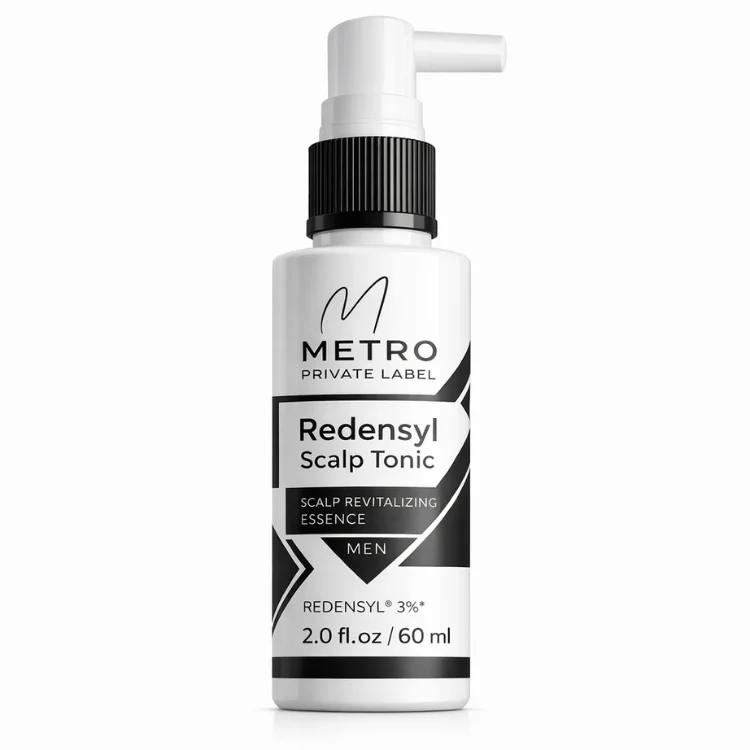
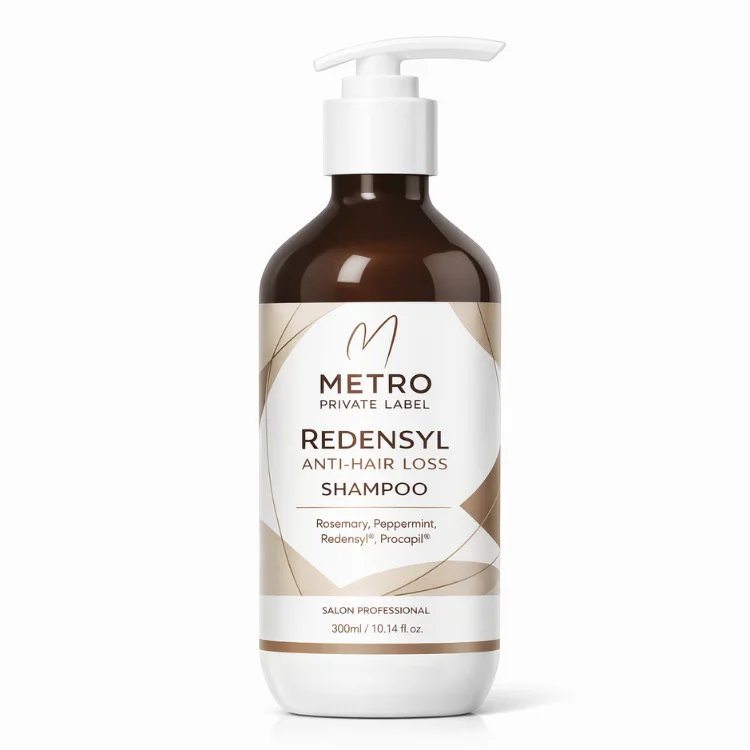
Get Your Custom Skincare Solution Today!

Don’t wait—fill out the form and let our team create the perfect skincare solution for your brand. Expect a personalized quote within 24 hours and start building your brand’s success now!

Submit Your
Private Label Skin Care Request

Fill out this form with your detailed needs and our customer support team will contact you shortly. We will assign a professional agent to follow up on your project and provide personalized assistance.

To get the fastest response, submit your inquiries using the form. If you encounter any issues with submission, you can also email us directly at info@metroprivatelabel.com .

*Metro Private Label takes your privacy very seriously. All information is only used for technical and commercial communication and will not be disclosed to third parties.
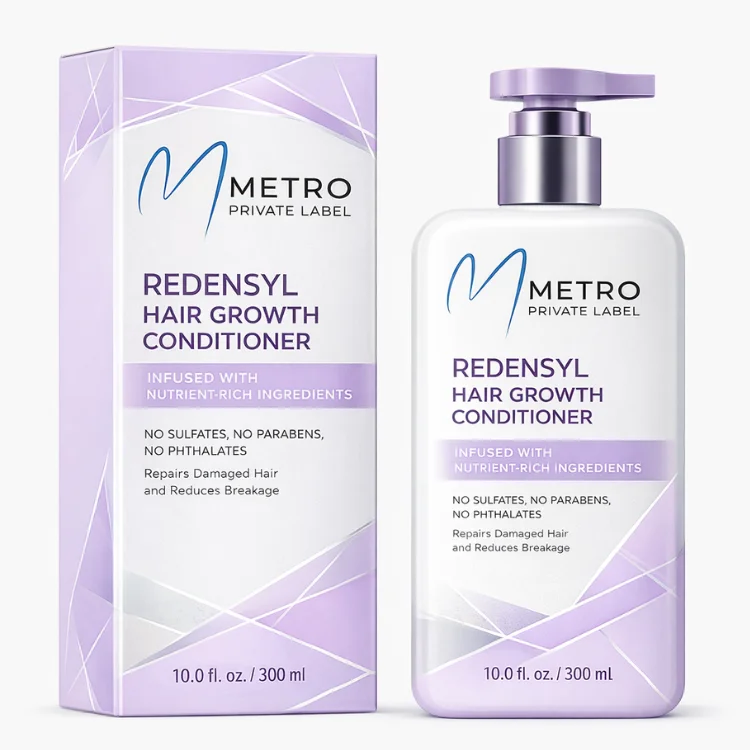
Submit Your
Private Label Skin Care Request

Fill out this form with your detailed needs and our customer support team will contact you shortly. We will assign a professional agent to follow up on your project and provide personalized assistance.

To get the fastest response, submit your inquiries using the form. If you encounter any issues with submission, you can also email us directly at info@metroprivatelabel.com .

*Metro Private Label takes your privacy very seriously. All information is only used for technical and commercial communication and will not be disclosed to third parties.