Your Trusted Peptides Skincare Manufacturer

We help you launch faster with low MOQs, market-ready kits, and high-performance formulas—designed to look premium, feel safe, and scale smoothly as your brand grows.

Private Label Peptides Skincare

At Metro Private Label, we believe successful peptide skincare isn’t just about adding popular ingredients—it’s about creating products that deliver visible results and help your brand build long-term customer trust. That’s why our private label peptide skincare solutions are developed around real skin concerns, proven peptide technologies, and product formats that consistently perform in today’s beauty market.
 
From multi-peptide firming serums and barrier-repair creams to eye treatments, recovery masks, and overnight repair formulas, our development approach follows current consumer demand and ingredient trends. We continuously monitor top-selling products and evolving skincare preferences so the peptide formulas we create remain relevant, competitive, and commercially strong.
 
As your manufacturing partner, we go beyond simply producing products—we help you shape hero SKUs that fit your brand positioning. Whether you’re looking for a lightweight daily peptide serum, a richer repair cream, or a premium anti-aging range with upgraded packaging, we tailor texture, active systems, claims direction, and packaging options to help your products stand out and reach the market faster.

Peptide Serum (Hero Product Category)

Peptide Face Cream / Moisturizer

Peptide Eye Cream / Eye Serum

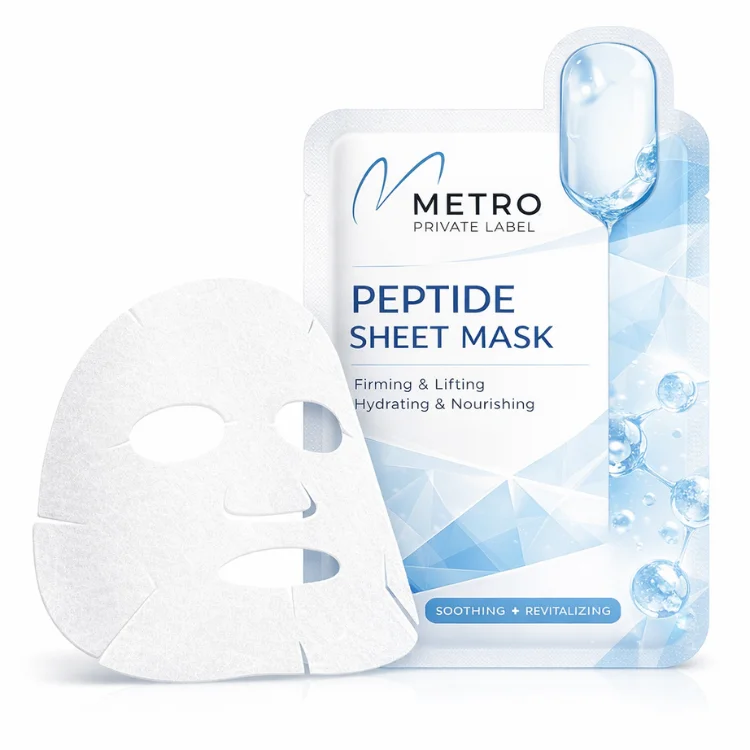
Peptide Sheet Mask

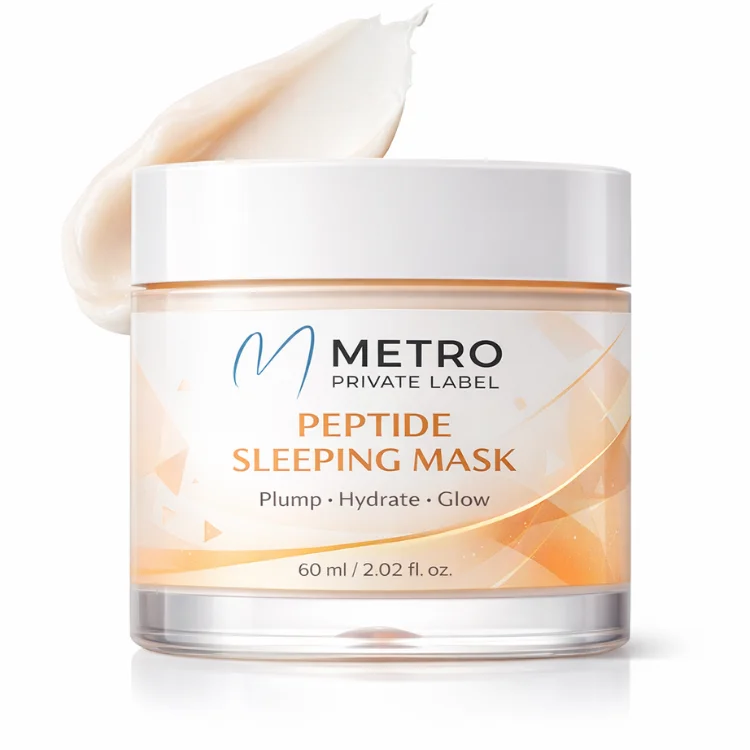
Peptide Sleeping Mask / Overnight Mask

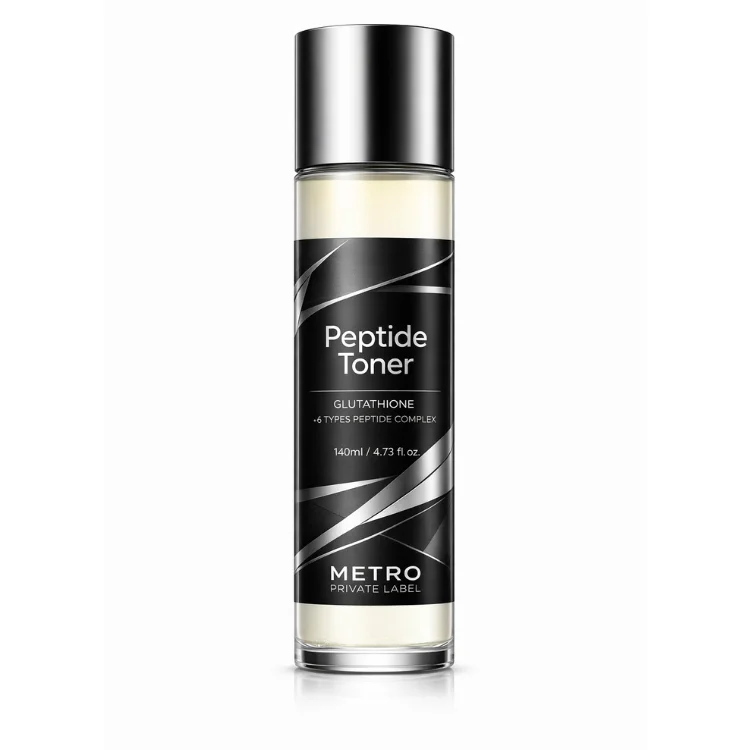
Peptide Essence / Toner

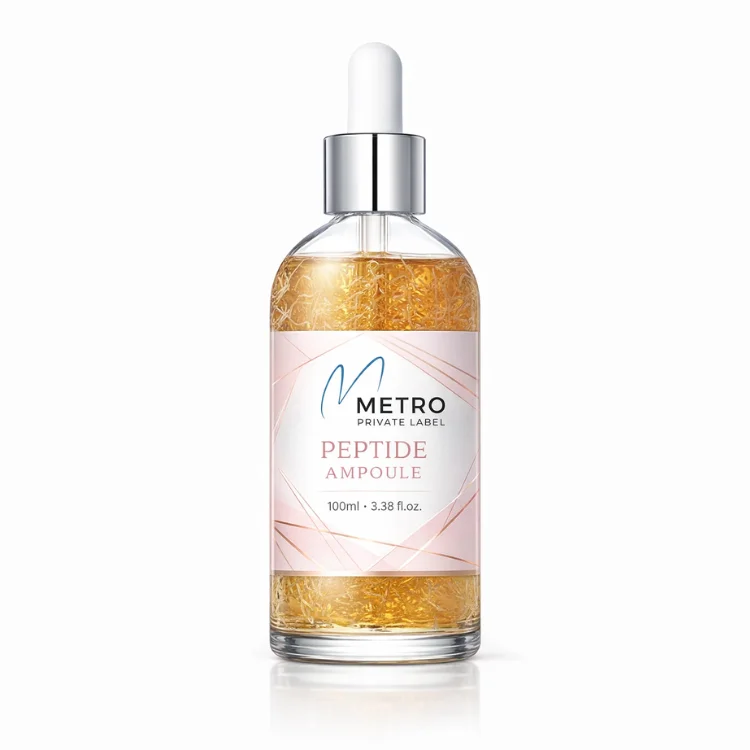
Peptide Ampoule / Booster

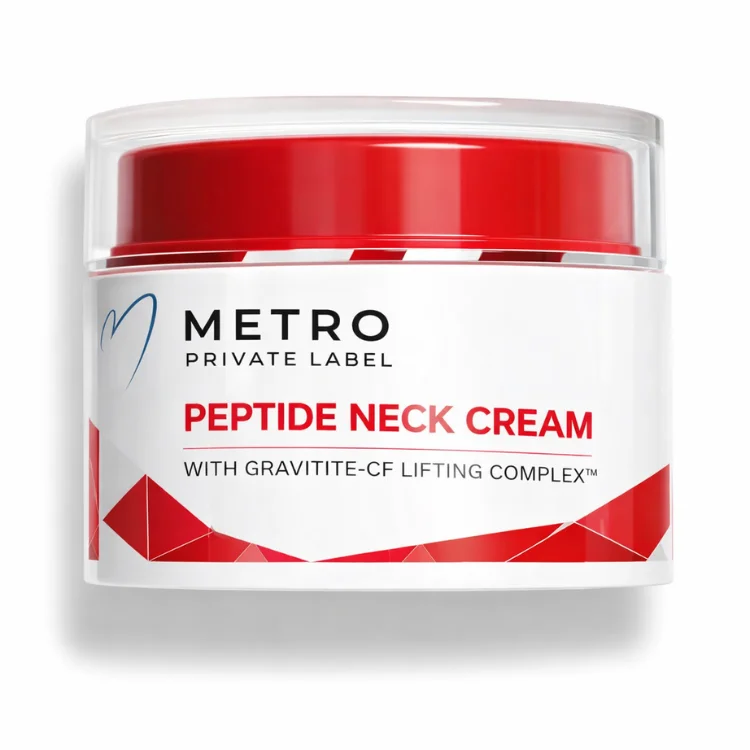
Peptide Neck & Décolleté Cream

Build a Peptides Skincare Line That Actually Sells

We know peptide skincare isn’t just another ingredient trend — it’s one of today’s most trusted anti-aging and skin-repair solutions, and customers expect to see real results. Products need to feel gentle, absorb well, and deliver visible improvements people can confidently keep using. That’s why we develop every private label peptide skincare project around real market demand, proven ingredient systems, and product formats that make sense for daily routines — not just marketing claims.
 
Whether you’re developing a firming peptide serum, a barrier-repair moisturizer, a recovery mask, or a complete anti-aging routine, we approach every project with commercial performance in mind. We pay close attention to what consistently performs in the market, what products gain repeat purchases, and what customer feedback reveals about texture, comfort, and visible results. This way, your product doesn’t just look attractive online — it performs in real use and builds long-term customer loyalty.
As your manufacturing partner, we also make sure your peptide skincare products are stable, scalable, and ready for real production and channel expansion. From texture customization and peptide compatibility to packaging structure and MOQ planning, we help you launch efficiently, test products faster, and expand your product line with confidence — without overcomplicating development or taking unnecessary risks.
 
💡 Our 4 Most In-Demand Private Label Peptide Skincare Types
1️⃣ Multi-Peptide Firming Serums The most popular hero SKU format — lightweight, easy to market, and ideal for daily anti-aging routines.
2️⃣ Peptide Repair Creams & Moisturizers Perfect for barrier support and skin recovery, offering higher perceived value and strong repeat purchase potential.
3️⃣ Peptide Eye Treatments Targeted formulas designed for fine lines, puffiness, and tired-looking eyes, ideal for premium anti-aging positioning.
4️⃣ Peptide Recovery Masks & Overnight Treatments Products focused on intensive repair and hydration, great as complementary SKUs or treatment boosters.
 
🎯 MOQ & Packaging Options (Built for Real Brand Launches)
We keep peptide skincare projects practical, launch-friendly, and scalable. Most entry-level programs begin around 1,000 units per SKU, depending on formula complexity, packaging selection, and customization level. Packaging options include dropper bottles, airless pumps, cream jars, tubes, and retail-ready cartons, with support covering formula feasibility, ingredient compatibility, stability planning, and production coordination — so your product remains consistent from first launch to repeat orders.

More Than Just a Peptides Skincare Manufacturer

At Metro Private Label, we don’t just produce peptide skincare — we help you build products customers understand, trust, and continue to purchase. A strong peptide product isn’t about hype or complicated ingredient lists. It’s about how comfortable it feels on skin, how easy it is to include in daily routines, and whether users actually see results they want to keep coming back for. That’s what builds long-term brand credibility — and what helps your product line grow beyond a short-lived trend.

✅ Launch What the Market Already Wants

We don’t guess what might work — we follow real market demand. By studying products that consistently perform and analyzing customer feedback, we focus on peptide concepts consumers already recognize: firming and anti-aging routines, barrier repair and calming products, hydration-focused recovery solutions, and easy daily skincare formats people can quickly understand. This gives your launch clearer positioning, stronger messaging, and lower market risk.

✅ Small MOQ That Reduces Your Risk

We keep production realistic so you can enter the market without unnecessary pressure. Start with practical order quantities to test pricing, feedback, and sales performance, then scale production once the product proves itself. As your brand grows, we can support formula upgrades, packaging improvements, or product line expansion — without forcing you to change suppliers or restart development from the beginning

✅ Visible Results That Win Customer Trust

Customers don’t repurchase peptide skincare because of packaging alone — they come back when products feel good and deliver visible improvements. Our focus is on comfortable textures, reliable performance, and formulas designed for long-term daily use. Whether your goal is smoother-looking skin, improved firmness, better hydration, or barrier support, we build products meant to perform consistently and encourage repeat buying.

✅ Compliance That Makes Export Easy

We prepare your peptide skincare products for real-world markets, not just lab samples. From ingredient documentation and INCI lists to labeling guidance and export preparation, we help reduce launch delays and compliance surprises. Whether products are sold online, through professional channels, or in retail distribution, we help keep your project aligned with practical market requirements so you can move to market with confidence.
  • METRO
  • Typical OEM factory
METROTypical OEM factory
$
/year
/year
Minimum order quantity✅ 500 units for startup brands — low-risk entry for first-time founders.❌ 3,000 units minimum, limiting flexibility.
Packaging recommendations✅ Compatibility + visual templates to ensure perfect fit and premium look.❌ Not provided.
Launch support✅ Label compliance & claim copywriting included for export markets.❌ Not available.
Sample delivery time✅ 7–14 days with labeled packaging.❌ Usually 30+ days.
Compliance & Documentation✅ INCI, COA, SDS, GMP-ready — export with confidence.❌ Basic INCI only.
Buy Now

✨ Build a Peptide Skincare Line That Truly Sells

When you work with us, you’re not just choosing a factory — you’re working with a team that understands how peptide skincare is actually used in real life. A great peptide product isn’t about exaggerated claims or trendy ingredients on paper. It’s about how comfortable it feels on skin, how easily it fits into daily routines, how consistent the results are, and whether customers feel confident enough to keep using it and recommend it. That’s what builds trust — and that’s what drives repeat purchases.
 
Whether you’re developing a firming peptide serum, a barrier-repair moisturizer, a glow-focused routine for online sales, or a professional repair solution, we design every product around real customer habits. Our goal isn’t just to help you launch one SKU — it’s to help you create peptide skincare products that customers quickly understand, enjoy using, and come back to buy again.
🧪 Formulation Built for Real-World Performance We don’t rely on copy-paste formulas or trend-only concepts. Every peptide skincare formula we develop is built around practical logic — ingredient compatibility, skin comfort, texture stability, and daily usability. If there’s a trade-off between stronger performance and irritation risk, we explain it clearly and help you choose what actually fits your market, price point, and sales channel — not just what looks impressive on paper.
 
📦 Packaging & MOQ Designed for Real Launch Scenarios Peptide skincare products scale smoothly only when formula, packaging, and production planning work together. That’s how we approach every project. Most launches begin with practical MOQs so brands can test the market first and expand production once demand is proven. Common packaging options include dropper bottles, airless pumps, cream jars, tubes, and retail-ready cartons — all coordinated to create a consistent, retail-ready product line.
 
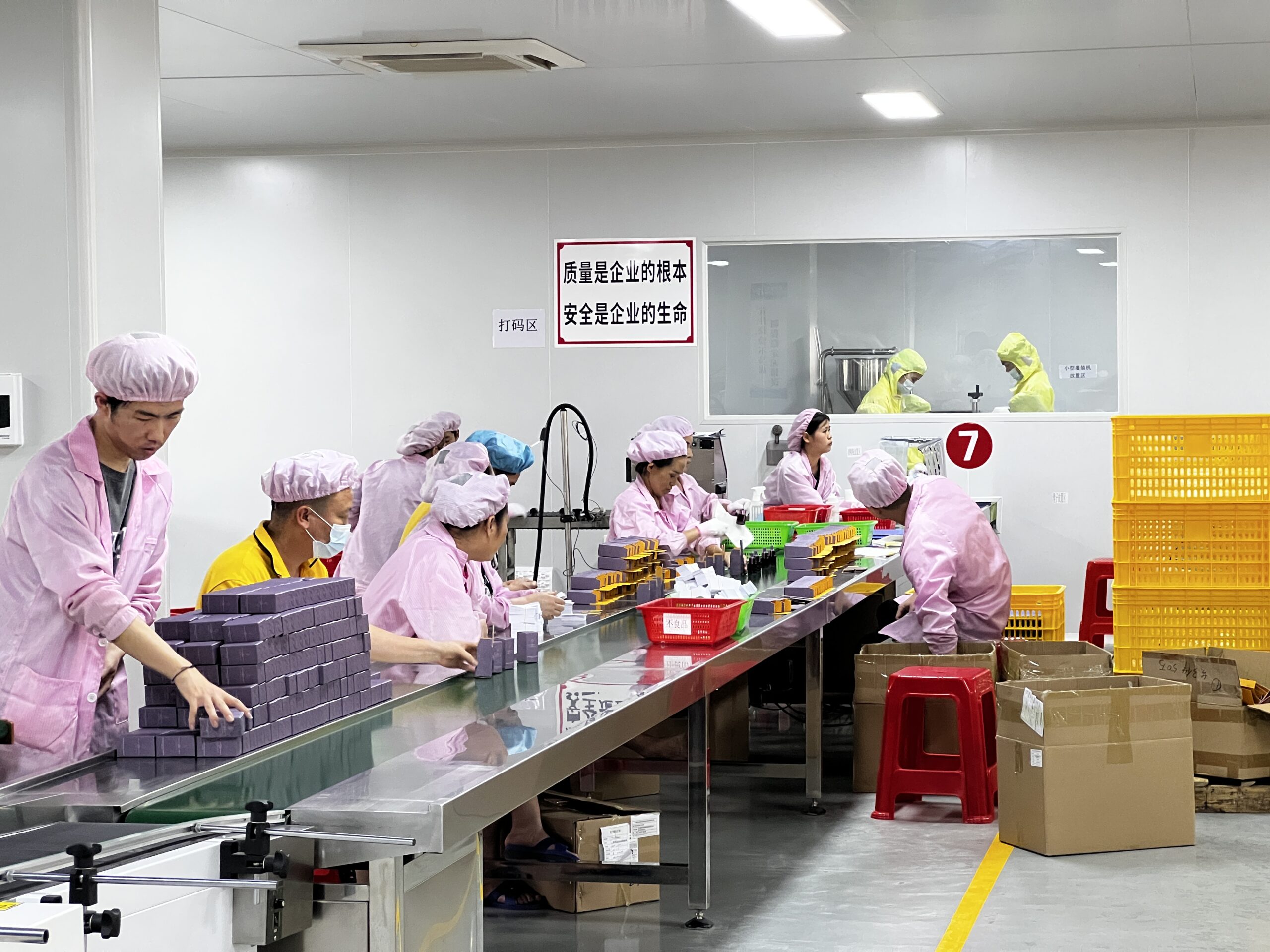
⚙️ A Clear and Reliable Production Process We keep development and production structured and realistic — from sampling and formula adjustment to mass production, quality control, packaging, and export preparation. We communicate timelines clearly, flag risks early, and align production with real business launch plans instead of overpromising. Think of us as an extension of your operations team, focused on helping your product reach the market smoothly without unnecessary surprises.
 
🌿 Built for Brands That Want to Grow We measure success by how well your peptide skincare line performs after launch — not just how quickly the first order ships. That’s why we focus on production-stable formulas, scalable packaging options, and export-ready documentation suited for online sales, professional channels, and retail distribution. With us, your peptide skincare products are built to launch confidently, earn repeat purchases, and grow with your brand over time.

Who We Work With

We work best with skincare buyers who already have a real plan—either a sales channel, an industry background, or a proven service model. Our job is to make manufacturing feel simple, scalable, and predictable: we listen first, translate your goals into a clear product plan, and deliver something you can confidently sell, reorder, and grow into a real product line.

Clinic Owners

You care about: safety, professional credibility, and products that support client retention.

We work with clinics and professional skincare businesses that need products clients can trust and comfortably use long-term. We focus on practical, low-risk formula direction, professional packaging presentation, and compliance-ready labeling so your products fit naturally into retail shelves, aftercare routines, and repeat-purchase behavior.
Immediate outcome: a clinic-ready product plan, stable production strategy, and a scalable setup for ongoing reorders and line extensions.

Beauty Industry Founders

You care about: ingredient logic, brand differentiation, and long-term scalability.

We support founders who want more than a generic private label product. We help you build skincare with a strong “reason to exist”—from formula direction and skin feel to packaging structure and claims alignment—so your first hero SKU can actually carry the brand. Instead of over-complicating development, we focus on making the product modern, believable, and scalable for future line expansion.
Immediate outcome: a clear concept direction, a workable development roadmap, and a product system that can grow into multiple SKUs.

E-commerce Brand Operators

You care about: speed, consistency, and products that convert without creating review risk.

We help you launch skincare SKUs that are built for real e-commerce performance—fast-moving formats, stable textures, and clear positioning that customers understand in seconds. We also guide you on the details that protect ratings and reduce refunds, like packaging practicality, ingredient communication, and production consistency across batches.
Immediate outcome: a launch-ready product plan, clear MOQ and timeline, and a production setup designed for repeat ordering.

Why this works:
We’re not here to “just produce skincare.” We’re here to help you build products that feel credible, perform consistently, launch smoothly, and scale without supply-chain headaches—so you can focus on sales, brand growth, and customer retention.

FAQs Peptides Skincare

For your convenience, we’ve gathered the most commonly asked questions about our Peptides Skincare . However, should you have any further queries, please don’t hesitate to reach out to us.
1. What types of peptide skincare products can you manufacture?
We support most mainstream peptide skincare formats, including serums, creams, eye treatments, masks, ampoules, essences, and overnight repair products. You can start from our proven base formulas or develop something customized to match your brand’s positioning.
Yes. We adjust peptide blends, texture, absorption feel, hydration level, and supporting ingredients based on your target market and price point. Whether you want a lightweight daily serum or a richer anti-aging cream, we help tailor the formula to suit your brand vision.
Our typical starting MOQ is around 1,000 units per SKU, depending on packaging type and customization level. We try to keep entry quantities practical so you can test the market first and scale once sales are validated.
Sampling usually takes around 3–4 weeks depending on formula adjustments, and bulk production typically requires another 4–6 weeks after confirmation. If you have a target launch timeline, we can help plan the schedule realistically from the start.
Most peptide products are developed with skin comfort and daily use in mind, and we can further adjust formulas for markets that require gentler positioning. Ingredient selection can be tailored based on irritation concerns or clean beauty preferences.
Yes, we support bottle and jar sourcing, pumps, droppers, airless packaging, labeling, and retail box coordination. If you already have packaging ideas, we help evaluate feasibility; if not, we can recommend practical options based on your product and budget.
We offer both approaches. Brands looking for faster launches often start from ready formulas, while brands wanting stronger differentiation can co-develop custom formulas. We help you choose the most practical route based on launch goals and budget.
All formulas go through stability evaluation, compatibility testing, and quality checks before production. Manufacturing follows international cosmetic production standards to ensure consistency between batches.
Yes. We often help brands clarify ingredient highlights and product logic so marketing messages match formula performance. While final marketing decisions remain yours, we can share practical suggestions based on market experience.
Yes, we regularly ship products to global markets and support export documentation, packing coordination, and shipping arrangements. We help ensure products leave the factory properly prepared for international delivery.

Metro Private Label in Numbers

Happy Clients
0 +
Million-dollar Buyers
0 +
Formulation
0 +
Professional Staffs
0 +

Your Ultimate Guide to Peptides Skincare

If you’re planning to add peptide skincare products to your lineup—whether it’s your first anti-aging SKU or an upgrade to an existing range—you’re not simply choosing another ingredient trend. You’re stepping into one of today’s most commercially stable and scalable skincare categories. Peptides have gained strong market acceptance because they allow brands to position products around visible skin improvement while still maintaining comfort and everyday usability. Customers increasingly look for products they can use long term without irritation, and peptide skincare naturally fits this expectation. When developed correctly, these products become routine essentials rather than one-time purchases, helping brands build steady repeat sales instead of chasing short-term trends.
 
Over the past few years, we’ve seen peptide skincare evolve from niche anti-aging positioning into a mainstream product direction across online retail, professional skincare environments, and global distribution markets. At Metro Private Label, we’ve watched how brands succeed when formula logic, packaging usability, pricing structure, and compliance preparation are planned from the beginning rather than added later. Peptide products may look simple from the outside, but the difference between products that scale and those that stall usually comes down to behind-the-scenes decisions around performance balance, packaging durability, production strategy, and launch planning.
 
This guide is built from what we’ve learned developing peptide skincare products across multiple product formats and market scenarios. Instead of focusing only on ingredient theory, we want to share how peptide products actually perform in real commercial environments. Factors such as choosing formats that convert well, balancing visible performance with skin comfort, selecting packaging suitable for both e-commerce and retail, planning production quantities to reduce inventory risk, and preparing compliance documentation early all influence whether a product becomes a long-term seller or simply another short-lived launch.

Table of Contents

Why Peptide Skincare Is One of Today’s Most Scalable Anti-Aging Categories

Peptide skincare has quickly moved from being a niche ingredient story to becoming one of the most commercially stable anti-aging directions in the global beauty market. From my perspective working closely with product development and brand launches, I see peptides succeed not because they promise dramatic overnight transformation, but because they fit naturally into modern skincare expectations. Customers want results they can maintain comfortably over time, and brands need product categories that can scale across markets without constant repositioning. Peptides offer exactly that balance, making them one of the safest and most flexible foundations for building long-term anti-aging product lines.
 
The Shift Toward Safer, Long-Term Anti-Aging Solutions
When I analyze current consumer behavior, I see a strong shift away from aggressive treatments that deliver quick but uncomfortable results. Many customers today prioritize skin stability, comfort, and long-term maintenance over short-term dramatic changes. Peptides fit this mindset perfectly because they support the skin’s natural repair and firmness processes without commonly causing redness, dryness, or irritation. In practical terms, this means customers are more willing to use peptide products daily, and daily usage leads to repeat purchases. From a business standpoint, products that customers can safely use every day naturally create stronger long-term revenue potential than products people use only occasionally due to discomfort.
 
Why Peptides Work Across Both Premium and Mass Markets
Another reason I consider peptides highly scalable is their flexibility across price segments. In premium skincare, peptides are often positioned as advanced anti-aging technology backed by scientific research, allowing brands to build high-value product stories. At the same time, peptides also work well in accessible skincare lines because they can be presented simply as firming or skin-support ingredients without intimidating customers. This flexibility allows brands to launch products at different price points while keeping a consistent ingredient story. I often see brands start with an accessible peptide serum and later expand into higher-end collections, using upgraded packaging or ingredient combinations without changing the overall positioning.
 
Easier Global Expansion Compared to Aggressive Actives
One challenge brands often face when expanding internationally is ingredient perception. Some active ingredients carry reputations for irritation or require careful consumer education, making marketing more complicated in certain regions. Peptides, however, are generally associated with skin repair and support rather than aggressive treatment. Because of this, peptide-based products are easier to introduce into markets where customers prefer gentle, routine-focused skincare. From my experience, brands using peptide-focused lines often encounter fewer resistance points when entering new regions, which makes global scaling smoother compared to products built around more controversial or sensitizing actives.
 
Strong Positioning Without High Risk
I have seen many brands struggle when they rely heavily on dramatic marketing promises that formulas cannot consistently support. Customers today are well-informed and quickly lose trust when products overpromise and underdeliver. Peptide skincare allows brands to position products confidently around firming, repair, and skin support without taking unnecessary marketing risks. The results peptides provide tend to be gradual and realistic, which matches customer expectations better. This realistic positioning builds credibility over time, helping brands maintain stable growth instead of relying on short-lived hype cycles that often lead to customer disappointment.
 
Why Peptides Help Brands Build Long-Term Product Lines
From a product planning perspective, peptides are especially useful because they allow brands to expand their product lines naturally. A brand might begin with a peptide serum as its hero product, then gradually add creams, eye treatments, masks, or overnight repair products that all connect to the same ingredient story. This creates a cohesive product family that customers easily understand. Instead of chasing new ingredient trends every season, brands can build a stable peptide platform and continue expanding while maintaining consistent messaging. In my experience, this kind of structured product development makes long-term brand building much more sustainable.
 
The Commercial Reality Behind Peptide Growth
At the end of the day, ingredient trends come and go, but scalable categories succeed because they make commercial sense. Peptide skincare continues to grow because customers understand the benefits, feel comfortable using the products regularly, and see improvements they trust. That combination encourages repeat purchasing, which is what ultimately drives successful skincare brands. From what I have observed across many product launches and market developments, peptides are no longer just an ingredient trend; they are becoming a dependable foundation for modern anti-aging skincare strategies that brands can confidently build upon for years to come.

Which Peptide Product Types Actually Sell Best?

When brands begin planning a peptide skincare line, I often notice the same early assumption: that launching more products will automatically create stronger market impact. In reality, what I’ve consistently seen across multiple markets is that success depends far more on choosing the right formats than on launching a wide catalog. Not every product type converts equally, and understanding which formats naturally gain traction allows brands to launch with focus, manage investment risks better, and build product momentum step by step. Peptide skincare works best when brands start with formats customers already trust and regularly purchase, then expand logically once demand is proven rather than trying to build a complete line from day one.
 
Why Peptide Serums Usually Become the Hero Product
From my experience observing successful launches, peptide serums almost always become the hero SKU in anti-aging product lines. Customers have been trained over years of skincare education to see serums as the step where “real treatment happens.” When consumers search for anti-aging solutions, they often look specifically for serums because they associate the format with higher performance and faster visible improvements. The lightweight texture also fits easily into both simple and complex skincare routines, making adoption easier across different customer types.
Another important factor I’ve seen repeatedly is how well serums perform in digital sales environments. Online shoppers respond strongly to ingredient-focused storytelling, and peptide serums allow brands to communicate benefits clearly through marketing content and product pages. Customers feel comfortable investing in a serum because it appears more targeted and purposeful than a general moisturizer. For brands launching online, especially through marketplaces or direct-to-consumer channels, serums offer strong conversion potential because customers already understand how and when to use them. This familiarity reduces purchase hesitation and helps new brands gain initial traction faster.
 
Why Peptide Creams Drive Stable Repeat Purchases
While serums often capture attention first, I’ve noticed that creams are usually what sustain long-term revenue. Moisturizers are part of almost every skincare routine, meaning they are used daily and replaced frequently. When peptides are integrated into creams, customers can receive anti-aging benefits while also addressing hydration and barrier support, which broadens product appeal beyond just wrinkle concerns.
From a commercial perspective, creams create stronger repeat purchase cycles because customers consume them more quickly than treatment serums. I often see brands that launch peptide creams after establishing their serum find that creams gradually become the volume drivers in their portfolio. Customers who may feel uncertain about more technical treatment steps often feel comfortable starting with a cream, making it an excellent entry product for broader audiences. Creams also adapt easily across different climate conditions and skin types, which makes them suitable for global distribution strategies where routines vary by region.
 
Why Eye Treatments Work Best as Expansion Products
In many successful product lines I’ve studied, peptide eye treatments become important expansion products rather than initial launch items. Eye concerns are universal, and customers are highly aware of fine lines, puffiness, and fatigue around the eye area. However, customers often prefer to try a brand’s main products first before committing to more targeted solutions.
What I find interesting is that eye products often perform best when customers already trust the brand’s main anti-aging products. Once users are satisfied with results from serums or creams, they are more willing to add specialized products to their routines. From a business standpoint, eye products increase average order value and create stronger product ecosystems, encouraging customers to stay within the same brand for multiple skincare steps. When launched too early without brand credibility, however, eye treatments can struggle to gain attention, which is why sequencing product launches matters so much.
 
Why Recovery Masks and Overnight Treatments Strengthen Product Lines
Peptide recovery masks and overnight treatments typically function as supporting products rather than primary sales drivers, but I’ve seen them play an important role in strengthening product lines. Customers often view these products as treatment boosters used weekly or during periods when skin feels stressed or tired. While they may not generate the highest sales volume, they add depth and flexibility to product ranges, making brands appear more complete and professional.
These products also work well in promotional campaigns or bundle offers, helping brands create sets that encourage cross-selling. I’ve seen brands successfully introduce recovery masks after their main products gain popularity, allowing them to expand without dramatically increasing operational complexity. Masks and overnight treatments help brands communicate skin repair and comfort benefits, reinforcing the idea of long-term skin support rather than quick cosmetic fixes.
 
Why Smart Brands Launch Focused and Expand Strategically
The biggest lesson I’ve learned from watching successful brands grow is that the most effective launches are focused rather than ambitious. Brands that start with one or two high-conversion formats tend to gain clearer market feedback and manage production planning more efficiently. Once customers respond positively, expanding into additional formats becomes much less risky because brand trust already exists.
I often advise partners that launching smarter rather than launching bigger gives them flexibility to refine formulas, packaging, and pricing based on real market reactions. Peptide skincare lines grow best when each new product builds naturally on previous success instead of overwhelming customers with too many choices. Understanding which formats convert most effectively allows brands to invest resources where they matter most and develop product ecosystems that scale sustainably over time rather than relying on short-term experimentation.

How to Build a Peptide Product Line Step by Step

When brands first approach me about launching a peptide skincare line, one of the most common ideas I hear is the desire to enter the market with a complete range immediately. On the surface, this seems logical because a full catalog looks impressive and gives the impression of an established brand. However, what I’ve repeatedly observed in real product launches is that launching too many SKUs at once often creates operational stress, ties up capital in slow-moving inventory, and makes marketing messages unclear. The brands that scale successfully usually move in stages. They launch one product, validate demand, learn from customer feedback, and then expand naturally. This phased approach not only protects cash flow but also helps brands build stronger product stories and customer trust over time.
 
Starting With a Hero Peptide Serum That Defines the Brand
In nearly every successful peptide skincare launch I’ve been involved with, the journey starts with a hero serum. There is a practical reason behind this pattern. Consumers already associate serums with treatment performance, and anti-aging communication works particularly well in this format. When customers search for solutions related to firmness, fine lines, or skin repair, they often look specifically for serums because they expect higher active ingredient performance in this step of their routine.
From a launch perspective, focusing on one hero serum allows brands to concentrate their marketing, packaging decisions, and operational resources into making one product successful rather than spreading attention across multiple SKUs. I often advise partners to treat the hero serum as the product that defines the brand’s identity in the market. Once customers recognize and trust this product, it becomes much easier to introduce additional items later. In many cases, positive reviews and repeat purchases of a serum create momentum that naturally pulls customers toward other products when they become available.
 
Expanding With a Supporting Peptide Cream for Daily Consumption
After a serum begins to generate consistent traction, the next logical move I often recommend is introducing a peptide cream. While serums often attract customers seeking visible improvements, creams tend to become everyday essentials that drive repeat consumption. Most consumers use moisturizers twice daily, meaning they repurchase them regularly, which creates a more predictable sales cycle.
From a commercial standpoint, creams help stabilize brand revenue because they appeal to both treatment-focused customers and those simply looking for comfortable daily hydration with anti-aging benefits. I’ve seen brands significantly increase their customer lifetime value once they offer a complementary cream that fits naturally with their serum. Customers prefer buying routine products from brands they already trust instead of experimenting with new suppliers for each step. Introducing a cream also allows brands to refine packaging, texture, and positioning based on lessons learned during the serum launch, improving operational efficiency in future expansions.
 
Adding an Eye Treatment Once Customer Confidence Is Established
Eye products usually perform best once customers already have confidence in the brand’s core products. Many consumers are cautious when purchasing eye treatments because the eye area is sensitive, and expectations for visible improvement are high. That’s why I typically suggest launching eye products only after the brand has proven its credibility through successful serum or cream sales.
When introduced at the right time, peptide eye treatments help brands deepen their anti-aging positioning and increase average order value. Customers who experience improvements in skin texture or hydration through primary products often want targeted solutions for concerns such as fine lines or tired-looking eyes. I’ve seen brands successfully use eye products as a bridge between basic routines and more advanced product ecosystems. However, launching them too early without established trust can lead to slower adoption and unnecessary inventory pressure.
 
Completing the Line With Masks and Treatment Boosters
Once core daily-use products are validated in the market, brands often expand into peptide masks or treatment boosters. These products usually function as enhancement steps rather than routine essentials, but they play an important role in strengthening the brand’s overall offering. Customers view recovery masks or overnight treatments as solutions for stressed or tired skin, making them attractive additions for occasional use.
From a commercial perspective, these products are particularly useful in bundle promotions, seasonal campaigns, or gift sets, helping brands increase order value without significantly increasing marketing complexity. I’ve seen many brands introduce masks or boosters after their core line gains popularity, allowing them to expand product offerings with relatively low production risk. Because these products are not consumed daily, brands can produce them in smaller quantities while still benefiting from portfolio expansion.
 
Why Step-by-Step Expansion Protects Cash Flow and Reduces Launch Risk
One of the biggest advantages of launching products in stages is better financial control. Producing multiple SKUs at once requires heavy upfront investment in packaging, raw materials, production runs, and marketing efforts. If some products do not perform as expected, capital becomes locked in inventory that moves slowly. I’ve seen brands struggle operationally when their early expansion happens faster than market demand.
By contrast, brands that expand gradually gain valuable real-world data after each launch. They can adjust pricing strategies, packaging choices, or formula directions based on actual customer behavior. Each successful SKU contributes revenue that supports the development of the next one. This approach creates healthier financial cycles and reduces the pressure to push products into the market prematurely.
 
Building a Product Ecosystem That Grows Naturally Over Time
When I look at brands that achieve sustainable growth, their product lines usually evolve in a way that feels logical to customers. Instead of overwhelming buyers with too many options at once, they guide customers step by step into more complete routines. Each new product serves a clear purpose and connects naturally to previous launches.
Launching a peptide skincare line gradually allows brands to build their ecosystem based on real sales feedback rather than assumptions. Customers understand how products fit together, and routines become easier to adopt. Over time, this creates stronger loyalty and repeat purchasing behavior. From everything I’ve observed in skincare product development, brands that grow patiently with a clear expansion path ultimately build stronger market positions than those trying to do everything at once.

Choosing the Right Peptide Technology for Your Market Position

When brands begin developing peptide skincare products, one of the most common misunderstandings I encounter is the belief that all peptides work in the same way. In reality, peptide technology includes different categories designed for different purposes, and choosing the wrong type can lead to mismatched expectations between product claims and real performance. Over the years, I’ve seen brands succeed or struggle depending on how well they align ingredient technology with customer expectations and price positioning. The real challenge is not simply choosing peptides, but selecting the right peptide system that balances performance, formulation stability, production cost, and the commercial story the product needs to tell in the market.
 
Understanding How Signal Peptides Support Commercial Anti-Aging Products
Signal peptides are often the first category product developers encounter when entering peptide skincare, and in my experience they are also the most commercially versatile. These peptides work by encouraging skin to support its own renewal processes, making them suitable for products positioned around firmness improvement, wrinkle care, and skin resilience. What makes signal peptides particularly useful from a business standpoint is how naturally they fit into consumer expectations for anti-aging products.
I’ve noticed that customers respond well to ingredient stories that sound supportive rather than aggressive. Instead of promising drastic change, signal peptide products communicate gradual improvement and skin strengthening, which aligns better with how customers experience skincare in daily routines. Brands benefit because formulas remain comfortable enough for regular use, leading to repeat purchases rather than one-time trial usage. In many successful launches I’ve observed, signal peptides allow brands to position products confidently across both mid-range and premium segments without requiring overly complicated consumer education.
Another advantage I often discuss with partners is formulation flexibility. Signal peptides typically integrate well into both lightweight serums and richer creams, allowing brands to maintain ingredient consistency while expanding product lines. This helps create cohesive anti-aging collections that customers easily understand and trust.
 
Why Carrier Peptides Fit Advanced or Premium Positioning Strategies
Carrier peptides usually enter product discussions when brands aim to position products as technologically advanced or clinically inspired. These peptides are commonly associated with delivering elements that support skin condition, making them attractive for brands seeking higher-end positioning. However, I’ve learned that premium ingredient stories must be supported by equally premium user experience, or customers quickly become disappointed.
One challenge I frequently see is brands focusing heavily on ingredient cost and technical appeal without considering how customers will actually experience the product. Carrier peptides tend to increase formula cost, and if pricing moves too far beyond consumer expectations, the product becomes difficult to scale. I often advise brands to carefully evaluate whether their target customers truly seek advanced ingredient complexity or simply want products that feel effective and comfortable.
From a development perspective, carrier peptides also require careful compatibility testing to maintain formula stability and pleasant texture. When handled correctly, they can help brands build stronger premium narratives. But without careful balancing between cost, performance, and user experience, even technically impressive formulas may struggle commercially.
 
How Multi-Peptide Blends Help Brands Deliver Comprehensive Solutions
In recent years, I’ve noticed a growing preference for multi-peptide blends, particularly among brands selling through digital channels where customers compare ingredient lists carefully. Multi-peptide systems combine different peptide functions into one formula, allowing brands to communicate broader anti-aging benefits rather than focusing on a single mechanism.
From my perspective, multi-peptide blends work well because they match how customers think about skincare. Consumers rarely want products that address only one concern; they look for overall improvement in texture, firmness, and hydration. When formulas combine complementary peptides, brands can present products as more complete solutions while maintaining daily usability.
Commercially, multi-peptide formulas also allow brands to create stronger product differentiation without dramatically increasing irritation risk. I’ve seen many successful launches where brands leverage multi-peptide blends to position products as technologically advanced while keeping formulas gentle enough for everyday routines. This balance helps brands appeal to both performance-focused and comfort-focused consumers simultaneously.
 
Balancing Ingredient Performance With Real Market Pricing
One reality I constantly emphasize during product planning discussions is that ingredient selection must align with commercial realities. It is entirely possible to create technically outstanding formulas, but if ingredient costs force retail prices beyond what target customers are willing to pay, even well-designed products will struggle to gain traction.
I’ve worked with brands that initially aimed for maximum ingredient performance only to realize later that their pricing became uncompetitive. Successful product strategies usually involve choosing peptide technologies that deliver noticeable benefits while still allowing brands to maintain attractive price points. Entry-level anti-aging products often rely on optimized peptide systems that keep costs manageable, while premium lines may incorporate more complex blends supported by upgraded packaging and storytelling.
Balancing performance and affordability ensures products remain attractive to customers while still generating healthy margins for brands and distributors.
 
Matching Peptide Technology With Real Consumer Expectations
In the end, the most important factor I’ve learned is that ingredient technology must align with how consumers actually use skincare products. Different markets prioritize different benefits, and customer expectations vary widely depending on climate, cultural skincare habits, and purchasing power. Brands that blindly follow ingredient trends without considering these realities often struggle to gain stable sales.
When peptide technology selection aligns naturally with brand positioning, pricing structure, and consumer expectations, products feel coherent and trustworthy. Customers understand what the product promises and experience results that match those expectations. This consistency builds loyalty and encourages repeat purchasing behavior.
From everything I’ve observed in skincare development, peptide technology is not simply a formulation decision but a strategic commercial choice. Brands that choose technologies aligned with their long-term growth plans find it much easier to expand product lines and maintain customer trust, turning peptide skincare from a trend into a stable foundation for future product innovation.

Balancing Performance, Skin Comfort, and Market Claims

When brands approach me to develop peptide skincare products, the conversation often begins with performance expectations. Everyone wants formulas that work, and understandably so, because anti-aging categories are highly competitive. However, what years of product launches and market observations have taught me is that performance alone does not guarantee success. A technically strong formula that customers hesitate to use regularly will never achieve long-term commercial success. In reality, skincare products must deliver visible benefits while remaining comfortable enough for daily routines. When formulas become too aggressive, too heavy, or unpredictable on sensitive skin, customers simply stop using them, and without continued use, repeat purchasing disappears. That is why balancing performance, skin comfort, and realistic claims is not just a formulation concern but a commercial necessity.
 
Why Stronger Formulas Often Create Unexpected Commercial Risks
I often see brands become excited about maximizing ingredient concentrations because it feels like the safest way to compete in crowded anti-aging markets. The logic seems simple: stronger ingredients should deliver faster results, and faster results should lead to stronger sales. But what I’ve repeatedly observed is that higher intensity formulas frequently create unexpected side effects that slow down commercial growth instead of accelerating it.
In practice, many customers are not professional skincare enthusiasts; they simply want products that make their skin look and feel better without discomfort. When products cause irritation, dryness, or sensitivity—even temporarily—customers quickly lose confidence. Online reviews today travel fast, and even small percentages of negative experiences can heavily influence purchasing decisions. I’ve seen brands invest heavily in launches only to struggle because formulas were too aggressive for everyday use.
Customers also tend to remember negative experiences more than positive ones. A product that delivers moderate but comfortable improvement often receives better long-term feedback than one that promises dramatic results but feels harsh. From a commercial perspective, comfort reduces complaint rates, minimizes product returns, and helps brands build consistent customer satisfaction.
 
Why Visible Results Must Work Together With Everyday Comfort
Over time, I’ve realized that successful skincare products sit in a middle ground between performance and usability. Customers want to see improvements, but they also want formulas that absorb smoothly, layer well with other products, and feel pleasant throughout the day or night.
Texture plays a surprisingly powerful role in this balance. I’ve seen technically excellent formulas fail because they felt sticky, greasy, or heavy under makeup. Even when results are visible, customers avoid products that interfere with daily routines. Skincare is not just about treatment; it is also about experience. If customers dislike how a product feels, they rarely finish it, and unfinished products never lead to repeat sales.
In many successful launches I’ve followed, small adjustments in texture and absorption made dramatic differences in customer acceptance. When formulas feel light, comfortable, and easy to integrate into routines, customers use them consistently. Consistent use allows ingredients like peptides to demonstrate benefits over time, which strengthens trust and encourages repurchase behavior.
 
Why Market Claims Must Align With Real Consumer Experience
Another area where brands often struggle is aligning marketing claims with actual product performance. In competitive markets, the temptation to use bold messaging is strong. However, customers today are well-informed and quick to question exaggerated promises. When expectations are not met, disappointment spreads quickly, especially in digital marketplaces where customer feedback is public.
I’ve seen brands overpromise dramatic wrinkle removal or instant transformation, only to face backlash when customers realize results are more gradual. In contrast, brands that communicate benefits realistically often build stronger long-term trust. Customers appreciate products that deliver steady improvement rather than unrealistic miracles.
Clear and honest messaging also protects brands from regulatory complications and customer complaints. Claims that match real product behavior make marketing easier because customer testimonials and reviews reinforce brand messaging naturally. When users feel results align with what they were told to expect, they become long-term advocates instead of one-time buyers.
 
How Skin Comfort Drives Long-Term Repurchase Behavior
If there is one pattern I consistently observe across successful skincare brands, it is the importance of comfort in driving repurchase decisions. Customers rarely repurchase products because they sound impressive; they repurchase because the product feels good and becomes part of their routine.
I have worked with brands that improved reorder rates simply by making minor adjustments to reduce heaviness or improve absorption speed. Those changes did not alter ingredient performance significantly, but they improved user experience enough to encourage continued use. Customers who enjoy applying products daily are far more likely to remain loyal to a brand instead of experimenting with competitors.
From a business standpoint, repeat customers create far stronger revenue stability than constant acquisition of new buyers. Comfortable formulas encourage loyalty, reduce negative feedback, and build consistent brand perception over time.
 
Building Products That Succeed Beyond First Impressions
One of the most important lessons I’ve learned in product development is that first impressions alone do not build successful skincare brands. Products must perform reliably not just during initial trials but over months of use. Customers want formulas they can rely on without worrying about irritation or unpredictable reactions.
When brands balance ingredient strength with skin comfort and realistic claims, they create products customers trust. Trust leads to loyalty, and loyalty leads to sustainable growth. In competitive anti-aging markets, products that deliver consistent, comfortable results naturally outperform those that rely solely on strong technical positioning.
From everything I’ve observed across product launches and market expansions, brands that prioritize real user experience alongside performance are the ones that build long-term success. Peptide skincare lines that respect this balance do not just sell well at launch—they continue selling as customers return again and again, turning individual products into reliable revenue drivers rather than short-lived trends.

Packaging Choices That Support E-commerce and Retail Sales

When brands work with me to develop peptide skincare products, packaging decisions often begin with aesthetics, but I’ve learned through years of observing product launches that packaging success is determined far more by performance than appearance. A package must protect the formula, survive transportation, feel comfortable in daily use, and match brand positioning at the same time. Especially in modern skincare markets where many brands launch online first, packaging is not just a container but part of the product experience itself. When packaging fails, even excellent formulas struggle because customers associate product quality with how safely and conveniently it arrives and performs in real life.
In e-commerce environments, packaging faces challenges that do not exist in traditional retail. Products travel long distances, pass through multiple warehouses, and experience temperature changes and physical impact before reaching customers. I’ve seen brands receive strong initial interest only to encounter negative reviews because pumps leaked, droppers loosened, or jars cracked during shipping. These operational issues rarely appear during product development but quickly become major commercial problems once products reach customers. That is why packaging must be evaluated not only for visual appeal but also for durability, usability, and consistency across logistics and daily consumer routines.
 
How Airless Pumps Balance Formula Protection and E-commerce Reliability
Among all packaging solutions, airless pump systems are often the most practical choice when brands prioritize both formula stability and shipping reliability. From my perspective, airless packaging performs well because it protects sensitive formulas from continuous exposure to air and contamination. Peptide products, especially those positioned for anti-aging or repair, benefit from packaging that preserves ingredient integrity throughout the product’s lifecycle.
Customers also appreciate how airless pumps make product usage cleaner and more controlled. I’ve seen many users prefer pumps because they avoid direct contact with the formula, reducing concerns about hygiene while providing consistent dosage each time. In daily routines, this convenience plays an important role in product satisfaction. When customers feel packaging is easy to use, they are more likely to finish products and repurchase them.
From a logistics standpoint, airless pumps typically withstand transportation stress better than many alternatives. Leakage risk is lower, and internal product protection is stronger. Several brands I’ve worked with reduced refund rates after switching from droppers or open containers to airless packaging. While initial packaging costs may be slightly higher, the reduction in returns, complaints, and damaged goods often justifies the investment. In e-commerce-driven launches, reliability often matters more than minor cost savings.
 
Why Dropper Bottles Continue to Perform in Treatment-Oriented Products
Despite challenges in shipping durability, dropper bottles remain highly popular in treatment-focused skincare, especially serums. From my experience, customers strongly associate droppers with potency and precision. Users feel they can control application better, which aligns well with anti-aging messaging that emphasizes ingredient effectiveness.
However, I’ve also seen how dropper packaging can create logistical risks when not properly engineered. Leakage during shipping is one of the most frequent complaints in online skincare sales. In some cases, brands mistakenly attribute customer dissatisfaction to formula performance when the real issue lies in packaging failures. Ensuring proper sealing, dropper quality, and shipping tests are critical before committing to large production volumes.
When properly designed, droppers still provide strong marketing and experiential value. In digital advertising and product photography, droppers visually reinforce treatment positioning. Customers perceive these products as professional or clinical solutions rather than everyday moisturizers. For brands focused on ingredient storytelling, droppers often remain an effective choice as long as packaging durability is not overlooked.
 
Why Cream Jars Remain Strong in Retail and Premium Product Positioning
Cream jars continue to hold strong appeal, especially in physical retail settings and premium skincare segments. Customers often associate jars with luxurious creams and richer textures. The act of opening a jar and seeing the product inside contributes to perceived indulgence, making the experience feel more personal and tactile compared to pump packaging.
In retail stores, jars also allow customers to evaluate product texture directly through testers, which often influences purchasing decisions. However, jars also introduce challenges in online sales. They tend to be heavier and more fragile, increasing shipping costs and breakage risks. Additionally, repeated finger contact raises hygiene concerns for some users, particularly in markets where consumers prefer cleaner application methods.
Brands that successfully use jar packaging in e-commerce usually combine it with protective inner seals and strong outer packaging to prevent leakage and damage. In my experience, jars work best when brands clearly position products as premium or indulgent treatments rather than everyday convenience items. Aligning packaging choice with brand storytelling ensures customers understand the intended product experience.
 
How Packaging Shapes Brand Identity and Consumer Trust
Beyond practical considerations, packaging strongly influences how customers perceive brand credibility. The moment customers receive an order is often their first physical interaction with a brand. If packaging feels fragile or poorly finished, customers may question formula quality before even trying the product.
I often explain that packaging sends subtle but powerful messages. Minimalist packaging may communicate clinical or science-driven positioning, while heavy glass containers suggest luxury. Airless pumps convey modern efficiency, while droppers emphasize ingredient concentration and treatment focus. When packaging design aligns with brand messaging, customer experience becomes cohesive from advertising to product usage.
I’ve seen brands improve customer satisfaction significantly simply by upgrading packaging quality. Even without changing formulas, improvements in usability and durability often lead to better reviews and stronger brand trust. Packaging is therefore not only functional but also psychological, shaping how customers feel about product value.
 
Why Packaging Decisions Matter Even More in Online-First Sales Models
Online-first brands face packaging challenges that traditional retail brands rarely encounter. Customers cannot physically inspect products before purchase, so expectations are based entirely on product images and descriptions. When products arrive damaged or leaking, disappointment feels stronger because expectations were created digitally.
I’ve seen brands invest heavily in advertising campaigns only to face setbacks because packaging failed during delivery. Negative reviews focusing on leakage or breakage can slow sales dramatically even when formulas perform well. Brands that invest early in shipping durability testing often avoid these pitfalls and build stronger long-term reputations.
From my experience observing multiple skincare launches, successful peptide skincare brands view packaging as part of product strategy rather than an afterthought. When packaging protects the formula, enhances user experience, and supports brand positioning, customers feel confident about their purchases. That confidence translates into repeat buying behavior, stronger reviews, and sustainable brand growth over time.

MOQ Planning: Launch Lean, Then Scale

When I discuss launch planning with brands preparing to enter the peptide skincare market, the conversation often quickly turns to production quantity. Many teams instinctively want to produce as much as possible in the first run because they believe larger quantities will lower costs and accelerate growth. However, what I have repeatedly observed across successful and unsuccessful launches is that volume alone does not create success. Demand must be proven before production scales. Smart brands treat their first production run as a market validation step rather than a final commitment. By starting lean, brands gain flexibility, protect capital, and learn from real customer behavior before committing to large inventory investments that may not move as expected.
 
Why First Production Runs Often Reveal Unexpected Market Reality
In early launch planning, forecasts are usually optimistic. Teams analyze market trends, competitor performance, and potential demand, and projections often look promising on spreadsheets. But once products reach real customers, behavior frequently differs from expectations. I have seen brands confident in strong initial sales suddenly face slower movement because customers reacted differently to pricing, packaging, or marketing messages than predicted.
Sometimes feedback focuses on details no one anticipated. Customers may request different textures, more convenient packaging, or clearer usage instructions. In some cases, sales perform well in one channel but underperform in another. When brands produce too much too early, they become locked into decisions that are difficult to adjust. Excess inventory forces companies to discount products or push aggressive promotions, which can damage brand positioning and profitability.
Launching with practical production quantities allows brands to observe how products perform in the real world. Instead of guessing what customers want, brands gather evidence directly from sales behavior, reviews, and reorder patterns. This information becomes far more valuable than any initial forecast.
 
How Starting Lean Creates Space to Learn and Improve
When brands begin with manageable MOQs, they create room for learning rather than pressure to immediately achieve perfection. First production batches often reveal practical improvements that only become visible after products enter real customer routines. I have seen brands adjust packaging based on shipping feedback, improve pump durability, or refine textures after customers shared usage experiences.
In many launches I’ve observed, small adjustments made after early customer feedback significantly improved product performance and satisfaction. These improvements are much easier to implement when initial production quantities remain manageable. Brands can refine products, messaging, or logistics strategies before scaling, making future production runs stronger and more efficient.
This learning phase also helps brands better understand which sales channels perform best. Some products succeed faster in online marketplaces, while others gain traction in clinics or specialty retail. Lean launches allow brands to observe these patterns and allocate marketing budgets more intelligently in later stages.
 
Why Lean Production Protects Cash Flow and Supports Business Stability
One of the most overlooked aspects of launch planning is how production decisions affect cash flow. Manufacturing, packaging, compliance documentation, shipping, and marketing investments accumulate quickly. When too much capital becomes tied to unsold inventory, brands often find themselves unable to invest in marketing or product improvements needed to drive growth.
I have worked with brands that delayed launching additional SKUs simply because funds were locked into slow-moving first batches. In contrast, brands that launch lean often generate early sales revenue that helps finance future production runs. This creates healthier financial cycles where growth supports itself rather than relying entirely on upfront investment.
Cash flow flexibility also provides room for strategic decisions. Brands can invest in better packaging, stronger marketing campaigns, or improved formulas once early sales demonstrate potential. Instead of rushing to recover initial investments, brands move forward confidently with validated products.
 
How Gradual Scaling Improves Operational Control and Supply Chain Stability
Another benefit I frequently see when brands scale gradually is improved operational control. Early production runs often expose small logistical or coordination issues that are difficult to predict in advance. Label placement, packaging assembly, filling speed, shipping preparation, and warehouse handling all become clearer once real orders begin moving.
When production volumes are smaller, adjustments can be made quickly. Teams learn how long processes truly take and where efficiency improvements are possible. I have seen brands significantly streamline packaging assembly or shipping coordination after early batches revealed bottlenecks. These improvements become critical when volumes increase later.
Gradual scaling also strengthens relationships with suppliers and manufacturing partners. As production increases step by step, communication improves and expectations become clearer, reducing future mistakes. Scaling becomes smoother because systems and teams are already aligned.
 
Why Scaling Should Follow Demand, Not Expectations
One lesson I consistently share with brands is that production expansion should follow proven demand rather than expectations. Many companies attempt to grow quickly by producing large quantities, assuming that availability alone guarantees sales. However, products only move when customers genuinely want them.
Brands that validate demand through smaller production runs gain confidence before scaling. When repeat orders begin arriving and customer feedback confirms product acceptance, increasing production becomes a logical next step rather than a risky gamble. I have seen brands scale successfully because they waited for clear signals instead of rushing expansion.
Scaling based on demand also improves negotiation power with suppliers and logistics partners. Once volumes increase organically, brands can optimize costs and operations without sacrificing flexibility or financial stability.
 
Building Long-Term Growth Through Smart Launch Planning
From everything I have observed across numerous skincare product launches, the brands that achieve sustainable success rarely rush into large-scale production. Instead, they build momentum gradually, learning from each production cycle and improving operations step by step. Products evolve based on real customer feedback rather than assumptions made during early planning stages.
Launching lean allows brands to remain flexible, refine strategies, and adapt products according to real market behavior. Over time, this disciplined approach creates stronger customer trust and healthier financial structures. Products become better aligned with customer expectations, and production expansion happens naturally as demand grows.
In my experience, successful peptide skincare brands do not scale because they produce more at the beginning. They scale because they understand their customers, refine their products carefully, and expand production only when the market proves ready. This balance between caution and ambition often determines whether a brand experiences sustainable growth or struggles under the weight of premature expansion.

Compliance Preparation Before Market Launch

When I speak with brands preparing to launch peptide skincare products, compliance is often the topic that receives the least attention at the beginning, yet it frequently becomes the biggest obstacle later. Teams naturally prioritize formula development, packaging design, and marketing because those elements feel closer to sales results. However, what years of observing product launches have taught me is that compliance preparation often determines whether a product reaches the market smoothly or gets stuck in unexpected delays. Ingredient documentation, labeling structure, and export readiness are not final administrative steps; they are foundations that should be planned alongside product development. When brands prepare compliance early, launches stay on schedule. When they delay it, market entry often becomes slow and frustrating.
 
Why Ingredient Documentation Must Be Built Into Development From Day One
One mistake I frequently see is brands finalizing formulas before confirming whether every ingredient fits regulatory expectations in their target markets. At first, ingredient selection usually focuses on performance and marketing appeal. But every ingredient also needs proper documentation, safety evaluation, and clear identification to meet cosmetic regulations in different countries.
I have seen brands complete sampling successfully only to discover later that certain ingredients required additional documentation or were restricted in specific markets. At that point, teams are forced to either reformulate or delay launch timelines, both of which cost money and momentum. These situations are avoidable when ingredient compliance checks are integrated early.
Proper ingredient documentation includes accurate INCI naming, safety data, supplier traceability, and formulation records that demonstrate regulatory compliance. When this documentation is organized early, brands gain flexibility because they can adjust formulas before production instead of correcting issues after packaging is printed. Retail partners, distributors, and online platforms increasingly expect transparency, and brands with organized documentation gain smoother onboarding processes. In my experience, preparation here saves far more time than most teams expect.
 
How Labeling Logic Quietly Determines Whether Products Can Enter the Market
Labeling is another area where brands sometimes underestimate complexity. Packaging design discussions often focus on visual identity, but labels must also satisfy regulatory requirements that vary by region. Ingredient listings, usage instructions, warnings, manufacturing information, and batch traceability markings must all be correctly structured.
I have worked with brands whose production was completed but whose products could not legally enter certain markets because labeling information was incomplete or incorrectly formatted. Correcting labeling after production requires relabeling or repackaging, which increases costs and delays shipments. In online sales, incorrect labeling can also cause marketplace listing removals or consumer complaints, creating additional operational challenges.
When labeling logic is planned early, packaging layouts can accommodate all required information from the beginning. Language planning is also important, especially for brands selling across multiple regions. By designing labels with regulatory compliance in mind, brands avoid costly redesigns and keep production schedules intact. I often remind partners that compliance-friendly packaging design protects both timeline and reputation.
 
Why Export Readiness Should Be Considered Before Production Begins
Export preparation is another factor that brands often overlook during early planning stages. Shipping cosmetic products internationally requires accurate product classification, documentation alignment, and compliance with customs regulations in destination countries. When export preparation is delayed, shipments can become stuck at borders, creating stock shortages and customer dissatisfaction.
I have seen launches slowed because export paperwork did not match product details, forcing additional inspections or document corrections. When export readiness is integrated into production planning, logistics partners can coordinate shipping smoothly, and products move through customs without unnecessary delays.
For brands relying on online marketplaces or distributors in multiple regions, smooth export logistics directly influence sales performance. Inventory interruptions can cause marketplace rankings to drop or delay retail restocking. Early preparation ensures product flow remains consistent, supporting brand growth rather than creating supply gaps that harm customer trust.
 
How Compliance Preparation Reduces Risks on Online Marketplaces
Online marketplaces have become essential growth channels for many skincare brands, yet these platforms increasingly enforce strict compliance standards. I have seen brands invest heavily in advertising campaigns only to experience listing suspensions because documentation or labeling failed platform reviews.
When ingredient documentation and labeling structures are prepared in advance, brands can respond quickly to marketplace compliance requests. This readiness prevents unnecessary sales interruptions and maintains brand credibility. Compliance preparation is not only about meeting regulations but also about protecting sales continuity in competitive environments.
Customers today also pay closer attention to ingredient transparency and product safety. Brands that provide clear, compliant information build stronger consumer confidence. Compliance preparation therefore supports both operational stability and brand trust, which ultimately contributes to long-term growth.
 
Why Early Compliance Planning Protects Launch Momentum and Brand Reputation
One pattern I have observed repeatedly is how compliance issues tend to appear at the worst possible moment, usually when marketing campaigns are already scheduled and inventory is ready to ship. When documentation or labeling problems surface at that stage, brands must delay shipments, correct packaging, or revise paperwork under pressure. These delays frustrate distributors and weaken launch momentum.
By integrating compliance preparation into development timelines, brands avoid last-minute surprises. Teams can identify regulatory concerns early, adjust packaging layouts smoothly, and coordinate export preparation without disrupting production. Launch schedules remain realistic, and distribution partners receive products on time.
From everything I have witnessed across skincare product launches, compliance preparation should never be treated as an administrative afterthought. Brands that integrate documentation, labeling planning, and export readiness early move into markets faster and with fewer operational disruptions. In competitive skincare environments, maintaining launch momentum often determines whether a product becomes successful or disappears quietly. Treating compliance as part of product strategy rather than a final checklist item allows brands to build stable foundations for long-term market expansion.

How Clinics and Professional Channels Use Peptide Products

When I speak with brands that want to enter clinic and professional skincare channels, I often notice that many of them initially approach the market using standard retail thinking. They assume products succeed mainly through branding or promotional campaigns. However, professional channels operate differently. In clinics and aesthetic centers, skincare products are integrated into treatment journeys rather than sold as standalone items. From what I’ve observed across many launches, peptide products succeed in professional environments because they support skin recovery, long-term maintenance, and customer comfort after procedures. Understanding how clinics actually use peptide products allows brands to design product systems that encourage continuous usage and repeat purchasing rather than one-time retail transactions.
 
Why Peptide Products Fit Naturally Into Post-Treatment Skin Management
In professional skincare environments, treatments such as facials, microneedling, laser sessions, or chemical exfoliation are designed to improve skin condition, but the success of these procedures depends heavily on how customers care for their skin afterward. I have repeatedly seen clinics emphasize post-treatment maintenance because improper aftercare can reduce or reverse treatment benefits.
Peptide products fit particularly well in this phase because they are generally associated with supporting skin repair and strengthening overall skin condition rather than causing additional irritation. Clinics tend to avoid aggressive ingredients immediately after treatments, so products recommended for home use need to feel gentle while still delivering visible improvements over time.
When clients receive peptide serums or creams as part of post-treatment care, they begin associating those products with their treatment results. This connection is powerful. Customers who feel their skin improves after professional sessions often continue purchasing recommended products to maintain those results. From a commercial perspective, this creates natural repeat purchasing cycles, which makes peptide products highly valuable in professional environments.
 
How Clinics Combine Serums and Repair Creams Into Practical Treatment Systems
One pattern I consistently observe in successful clinic retail programs is that professionals rarely recommend single products. Instead, they guide clients toward routines designed to support treatment outcomes step by step. Peptide serums are often introduced as treatment-focused products, while repair creams or barrier-support moisturizers complete the routine.
In practice, customers are instructed to apply serum first to deliver targeted skin benefits, followed by creams that help lock in moisture and support skin comfort. This layered routine feels logical and manageable for clients, which increases compliance. Clients who see positive results from routines are more likely to continue purchasing both products rather than replacing them with alternatives.
For brands, designing peptide products that layer well together is essential. I have seen clinics hesitate to recommend products when textures clash or absorption feels uncomfortable. When products work seamlessly together, clinics feel more confident offering full routines, increasing both customer satisfaction and retail sales per client.
 
Why Professional Recommendation Changes Customer Purchasing Behavior
One aspect of clinic channels that I find particularly powerful is the trust relationship between professionals and clients. Customers visiting clinics often seek expert guidance rather than experimenting with products independently. When professionals recommend peptide products as part of treatment maintenance, clients perceive those products as medically informed rather than purely cosmetic choices.
This professional endorsement changes purchasing behavior significantly. Clients who trust clinic advice tend to follow routines more consistently and repurchase recommended products rather than switching brands frequently. I have seen clinics maintain steady retail revenue because clients return regularly for treatments and replenish skincare products at the same time.
From a brand perspective, products that become part of professional recommendations gain credibility that advertising alone cannot easily achieve. Trust transferred from professionals to products often results in stronger long-term loyalty and more predictable sales patterns.
 
Designing Products That Support Continuous Routine Usage
Another observation I frequently share with brands is that clinic customers usually think in terms of long-term skin improvement rather than quick cosmetic fixes. Products recommended by professionals must therefore remain comfortable for continuous use without causing sensitivity or fatigue.
Peptide products align naturally with this expectation because they tend to focus on gradual improvement and skin support. When formulas feel comfortable and easy to integrate into daily routines, clients are more likely to continue using them between clinic visits. Continuous usage reinforces both treatment outcomes and product loyalty.
Brands that design products specifically for routine usage often see stronger adoption in professional channels. Once clients trust serum and cream combinations, clinics can later introduce additional products such as recovery masks or boosters without overwhelming customers. Gradual expansion keeps routines manageable while increasing product ecosystem value.
 
How Clinic Usage Creates Stronger Repeat Purchasing Cycles
One commercial advantage of clinic channels that I often emphasize is how naturally they generate repeat purchasing cycles. Clients return periodically for treatments, and during those visits they often replenish recommended skincare products. Unlike impulse retail purchases, clinic retail sales are connected to ongoing service relationships.
I have seen clinics successfully maintain retail sales even during slower consumer spending periods because treatment clients remain committed to maintenance routines. When peptide products become part of that cycle, brands benefit from consistent demand without relying entirely on aggressive advertising campaigns.
Understanding these purchasing cycles allows brands to plan production and inventory more accurately. Products positioned for clinic channels often achieve longer-term stability compared to products relying only on trend-driven online demand.
 
Why Understanding Professional Usage Leads to More Sustainable Brand Growth
From everything I’ve observed, brands that understand professional channel behavior develop stronger long-term strategies. Instead of focusing only on attracting new customers, they create product ecosystems that encourage continuous usage and loyalty. Clinics naturally support this model because their business depends on maintaining client relationships over time.
When peptide products become part of treatment routines, customers view them as essential maintenance tools rather than optional cosmetic purchases. This perspective drives repeat purchasing and strengthens brand credibility. Brands that align product development with clinic usage patterns often achieve more predictable growth compared to brands relying solely on short-term retail trends.
In my experience, peptide skincare products succeed in professional channels because they support long-term skin health, fit naturally into treatment journeys, and encourage consistent customer routines. Brands that understand and design around these usage patterns position themselves not just for product launches but for sustainable market expansion over time.

How to Choose a Manufacturer That Supports Long-Term Growth

When brands begin searching for a peptide skincare manufacturer, the conversation often revolves around price, MOQ, and production speed. I completely understand why those factors feel urgent at the beginning because launching a product already requires significant investment and uncertainty. However, after watching many brands grow over the years, I have come to realize that the manufacturer a brand chooses during its first launch quietly shapes its long-term development path. A factory is not only responsible for filling bottles and shipping orders. The right manufacturer becomes part of a brand’s evolution, helping adjust formulas, improve packaging, and expand product lines as demand grows. Choosing poorly may not hurt in the first order, but it often becomes painfully clear once the brand needs to move faster or scale larger.
In reality, the first production run is only the starting point. Once products hit the market, brands start learning what customers actually want, what needs improvement, and which products deserve expansion. At that stage, having a manufacturer who understands long-term cooperation rather than short-term transactions becomes a major advantage. The difference between a supplier and a development partner becomes obvious when brands begin adapting products based on real customer feedback.
 
Why Manufacturing Flexibility Determines How Fast Brands Can Evolve
One lesson I frequently share with brands is that no first formula is perfect. Once products enter real markets, customer feedback often reveals opportunities to improve texture, absorption, fragrance intensity, or packaging usability. I have seen brands receive great early responses but still need small adjustments to improve user experience and strengthen repeat purchasing.
When manufacturers lack flexibility, even minor improvements become slow and expensive. Brands may need to restart development processes or even search for new suppliers, which creates delays and disrupts supply continuity. In fast-moving skincare markets, losing several months due to supplier limitations can mean missing entire sales seasons or promotional opportunities.
Manufacturers who support ongoing development help brands adjust products smoothly without restarting from zero. When teams already understand formulas and production processes, modifications become much faster and safer. Flexibility allows brands to evolve products naturally instead of being locked into early decisions that may no longer match market expectations.
 
Why Development Support Matters More After Launch Than Before
At the beginning of cooperation, brands often focus on sampling and first production success. But in my experience, real development work starts after products reach customers. That is when brands begin to see how products perform in different climates, shipping environments, and customer routines.
I have worked with brands whose successful products later required improvements to remain competitive. Sometimes textures needed adjustment for humid climates, or packaging had to be strengthened for longer shipping routes. Manufacturers who actively support development help brands refine products without disrupting supply.
Development support also becomes critical when brands expand into new product categories. A brand that launches a peptide serum often later adds creams, masks, or boosters. When manufacturers already understand ingredient logic and brand positioning, expanding product portfolios becomes far easier. Instead of starting fresh with each SKU, brands build product families that feel cohesive and professionally designed.
 
Why Packaging Coordination Becomes Critical as Brands Scale
Another challenge that often emerges during growth is packaging coordination. In early stages, brands may choose simple packaging solutions to control costs. However, as sales grow and brands enter retail or professional channels, packaging expectations rise. Upgrading packaging without disrupting supply chains becomes essential.
I have seen brands struggle when packaging components suddenly became unavailable or suppliers changed specifications. Without strong coordination between manufacturing and packaging sourcing, brands face delays or inconsistent product appearance across batches. These disruptions confuse customers and weaken brand credibility.
Manufacturers who assist in packaging planning help brands transition smoothly from entry-level packaging to more premium solutions as sales grow. Packaging upgrades become part of growth strategy rather than emergency fixes. Brands maintain consistency while improving presentation and user experience.
 
Why Communication Quality Becomes More Important as Orders Grow
In early production stages, communication challenges may seem manageable because volumes are small and timelines flexible. But once brands begin placing larger orders or preparing for seasonal launches, slow responses or unclear coordination quickly create operational stress. I have seen brands miss promotional windows simply because suppliers could not respond fast enough during urgent adjustments.
Manufacturers who maintain transparent communication and realistic timelines become increasingly valuable as brands grow. When unexpected production challenges appear, responsive partners help solve problems before they escalate. Growth requires speed and coordination, and manufacturers play a central role in maintaining both.
Trust also develops through communication. Brands feel confident planning expansions when they know manufacturing partners will support them rather than create uncertainty. Reliable cooperation allows brands to focus on market growth instead of constantly managing supply concerns.
 
How Strong Manufacturing Partners Support SKU Expansion
Most successful skincare brands do not rely on one product alone. Once a hero product gains traction, brands naturally expand into complementary SKUs to increase customer lifetime value. I often see brands begin with peptide serums and later introduce creams, eye products, or recovery masks.
Manufacturers capable of supporting SKU expansion help ensure ingredient compatibility and consistent quality across product lines. I have seen brands struggle when new SKUs required switching suppliers, resulting in inconsistent textures or packaging standards. Cohesive development is far easier when the same manufacturing partner supports expansion.
Manufacturers who stay informed about ingredient and packaging trends can also suggest improvements that keep brands competitive. Instead of reacting to market changes, brands with proactive manufacturing partners often stay ahead of trends.
 
Why Long-Term Partnerships Create Operational Stability
From everything I have observed, brands that treat manufacturing as long-term partnership rather than transactional purchasing build stronger operational foundations. Product quality consistency, supply chain reliability, and development efficiency all improve when cooperation grows over time.
When manufacturers support formula upgrades, packaging improvements, and SKU expansion, brands gain freedom to focus on marketing and customer experience. Operational challenges decrease, and growth becomes smoother. Instead of solving supply problems, teams concentrate on brand building.
In competitive skincare markets, long-term success rarely comes from a single product launch. It comes from the ability to continuously adapt, expand, and improve. Choosing a manufacturing partner capable of supporting that journey allows brands to grow confidently rather than constantly overcoming preventable production obstacles.

Why Partner with Metro Private Label for Your Peptide Skincare Line?

If you’re planning to launch a peptide skincare line in 2026 or 2027, you’re entering one of the most stable and scalable categories in modern skincare. Peptide products are no longer viewed as niche anti-aging options. Customers now expect products that improve skin texture, support firmness, and fit comfortably into long-term routines without causing irritation. When people invest in peptide skincare, they’re not just buying ingredients — they’re buying confidence that the product will deliver results while remaining gentle enough for everyday use. Brands that position peptide products correctly often discover these SKUs become routine essentials rather than seasonal trends.
 
Built on Experience Across Markets and Sales Channels
Over the years, we’ve supported peptide skincare projects that span online retail, professional environments, and international distribution markets. Across these different launch paths, one thing stays consistent. Peptide products may seem straightforward, but building formulas that perform consistently across different skin types, climates, and daily routines requires far more planning than most people expect. Success depends on formula balance, packaging usability, production stability, and the ability to adapt products as customer feedback arrives.
 
Developed Around Real Production Experience and Customer Feedback
Our approach is shaped by what we observe during real production runs and from feedback customers share after products reach the market. We pay attention to the small details that quietly determine whether a product scales or struggles. Things like whether textures absorb comfortably, whether packaging protects formulas during shipping, or whether product routines feel simple enough to repeat daily often influence reviews more than technical ingredient lists. Our role is to help brands avoid costly trial-and-error cycles and move forward with clarity based on practical experience rather than assumptions.
 
Peptide Skincare Designed Around Real Customer Usage
We never develop peptide skincare products in isolation. Everything we build is guided by how customers actually discover, compare, and use these products in real life. Customers make decisions quickly, so product benefits must be easy to understand, easy to demonstrate visually, and easy to integrate into routines. We prioritize product directions that translate naturally across online and retail environments, instead of concepts that sound impressive in presentations but confuse customers or lead to inconsistent usage.
 
Formula Direction Aligned With Market Positioning
There is no single formula that fits every brand because every product line targets different expectations. Some markets prefer gentle, barrier-supporting products for long-term daily care, while others respond better to visible anti-aging positioning or glow-enhancing concepts. We align formula structure with intended positioning so performance, comfort, and stability work together as a system. Products must succeed in real routines, not just look impressive in development briefs.
 
Compliance and Stability That Protect Your Launch Timeline
Peptide products, especially anti-aging treatments, often receive closer scrutiny in many markets. We help keep projects aligned with documentation and labeling requirements so products remain ready for real-world distribution. Planning compliance and stability early helps avoid delays, relabeling costs, or reformulation problems later. Protecting launch timelines and budgets becomes especially important once marketing and distribution plans are already in motion.
 
Packaging That Builds First-Impression Confidence
In peptide skincare, packaging plays a much larger role than decoration alone. Packaging shapes how customers perceive product quality before they even try the formula. We help coordinate packaging structures that look premium, function smoothly, and withstand real-world shipping and handling. Whether products are sold online or in physical retail environments, packaging must help customers understand routines easily and feel confident about product quality from the first use. Strong packaging decisions help reduce leakage issues, confusion, and negative reviews that can slow growth.
 
MOQs Designed for Real Launch and Scaling Scenarios
Most successful product lines don’t begin with wide SKU ranges. Brands typically start with one strong hero peptide product, observe demand, collect feedback, and then expand carefully. We support this reality with practical MOQ planning so brands can launch lean without building unnecessary inventory. As demand grows, production structures remain consistent, allowing expansion to feel like a natural upgrade instead of a restart.
 
A Long-Term Peptide Skincare Manufacturing Partner
Partnering with us means working with a team that understands how peptide skincare products succeed over time. Formula feel, packaging usability, production consistency, and cost structures all influence whether products generate strong reviews and repeat purchases. Many brands begin with a single peptide hero product and gradually expand into full product lines because this category rewards structured growth. We don’t simply manufacture peptide skincare products — we help develop products that perform in real routines, launch smoothly, scale confidently, and earn long-term customer trust.

Ready to Launch Your Skincare Line?

*Metro Private Label takes your privacy very seriously. All information is only used for technical and commercial communication and will not be disclosed to third parties.
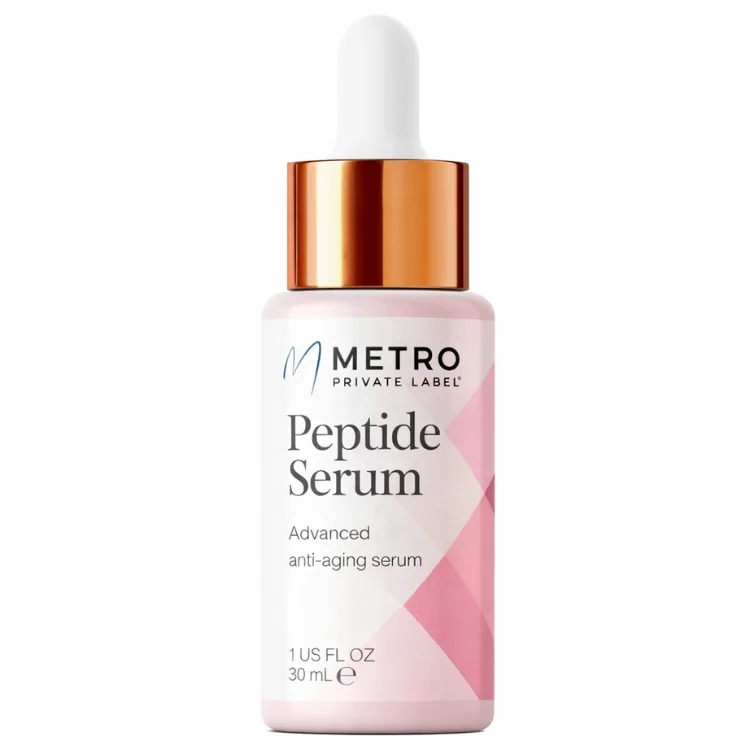
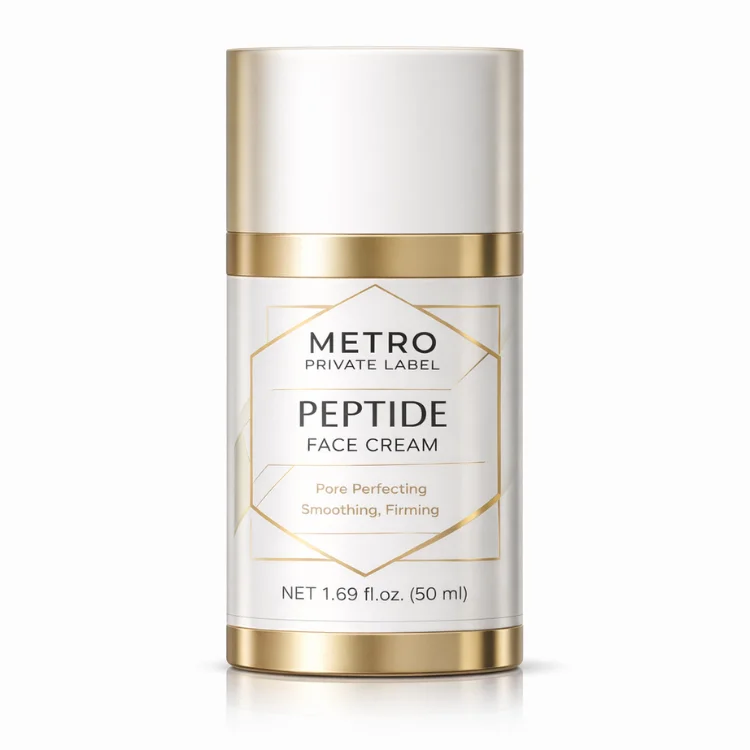
Get Your Custom Skincare Solution Today!

Don’t wait—fill out the form and let our team create the perfect skincare solution for your brand. Expect a personalized quote within 24 hours and start building your brand’s success now!

Submit Your
Private Label Skin Care Request

Fill out this form with your detailed needs and our customer support team will contact you shortly. We will assign a professional agent to follow up on your project and provide personalized assistance.

To get the fastest response, submit your inquiries using the form. If you encounter any issues with submission, you can also email us directly at info@metroprivatelabel.com .

*Metro Private Label takes your privacy very seriously. All information is only used for technical and commercial communication and will not be disclosed to third parties.
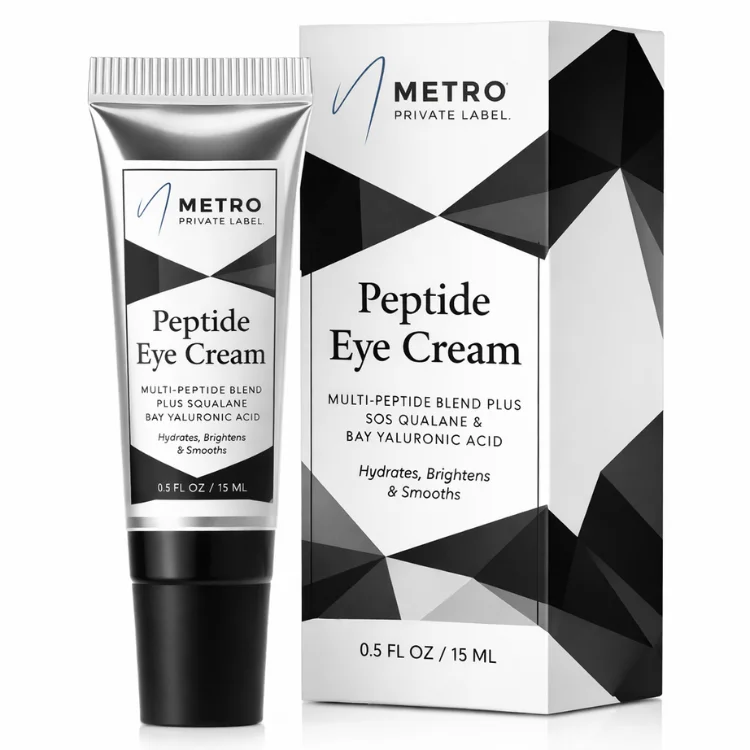
Submit Your
Private Label Skin Care Request

Fill out this form with your detailed needs and our customer support team will contact you shortly. We will assign a professional agent to follow up on your project and provide personalized assistance.

To get the fastest response, submit your inquiries using the form. If you encounter any issues with submission, you can also email us directly at info@metroprivatelabel.com .

*Metro Private Label takes your privacy very seriously. All information is only used for technical and commercial communication and will not be disclosed to third parties.