Your Trusted Peel-Off Mask Manufacturer

We help you launch faster with low MOQs, market-ready kits, and high-performance formulas—designed to look premium, feel safe, and scale smoothly as your brand grows.

Private Label Peel-Off Mask

At Metro Private Label, we believe successful peptide skincare isn’t just about adding popular ingredients—it’s about creating products that deliver visible results and help your brand build long-term customer trust. That’s why our private label peptide skincare solutions are developed around real skin concerns, proven peptide technologies, and product formats that consistently perform in today’s beauty market.
 
From multi-peptide firming serums and barrier-repair creams to eye treatments, recovery masks, and overnight repair formulas, our development approach follows current consumer demand and ingredient trends. We continuously monitor top-selling products and evolving skincare preferences so the peptide formulas we create remain relevant, competitive, and commercially strong.
 
As your manufacturing partner, we go beyond simply producing products—we help you shape hero SKUs that fit your brand positioning. Whether you’re looking for a lightweight daily peptide serum, a richer repair cream, or a premium anti-aging range with upgraded packaging, we tailor texture, active systems, claims direction, and packaging options to help your products stand out and reach the market faster.

Overnight Wrapping Peel-Off Mask

Brightening Dark-Spot Wrapping Peel-Off Mask

PDRN / Salmon DNA Wrapping Peel-Off Mask

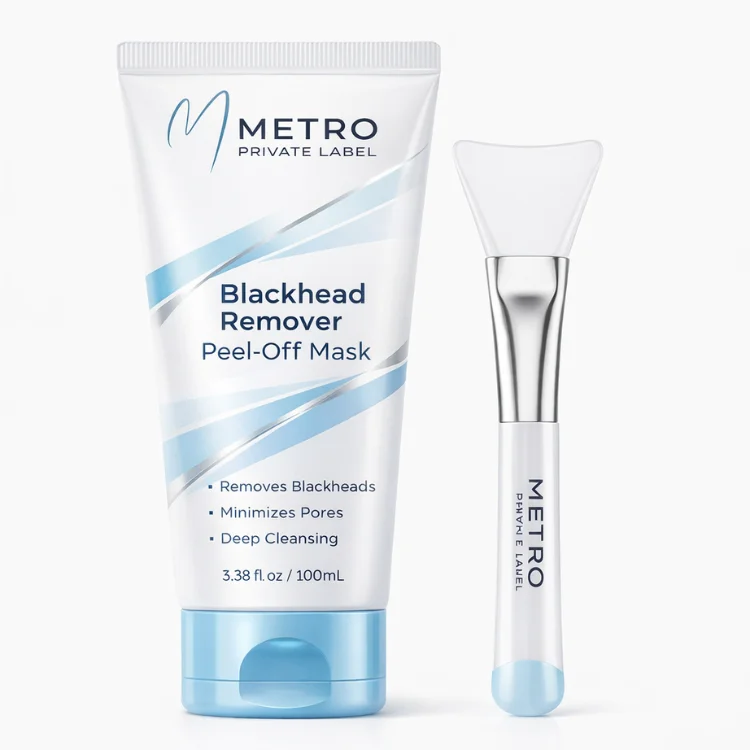
Blackhead Remover Peel-Off Mask

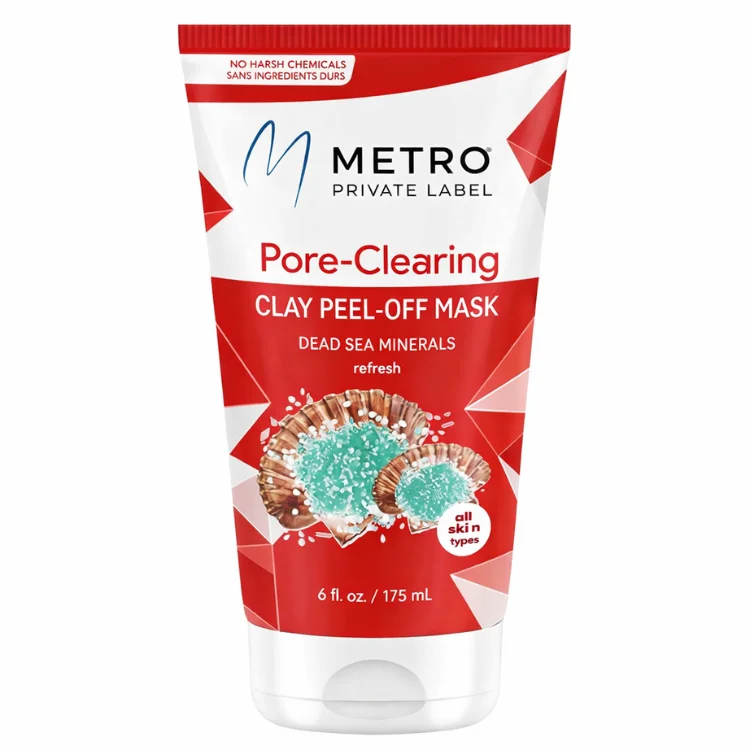
Pore-Clearing Clay Peel-Off Mask

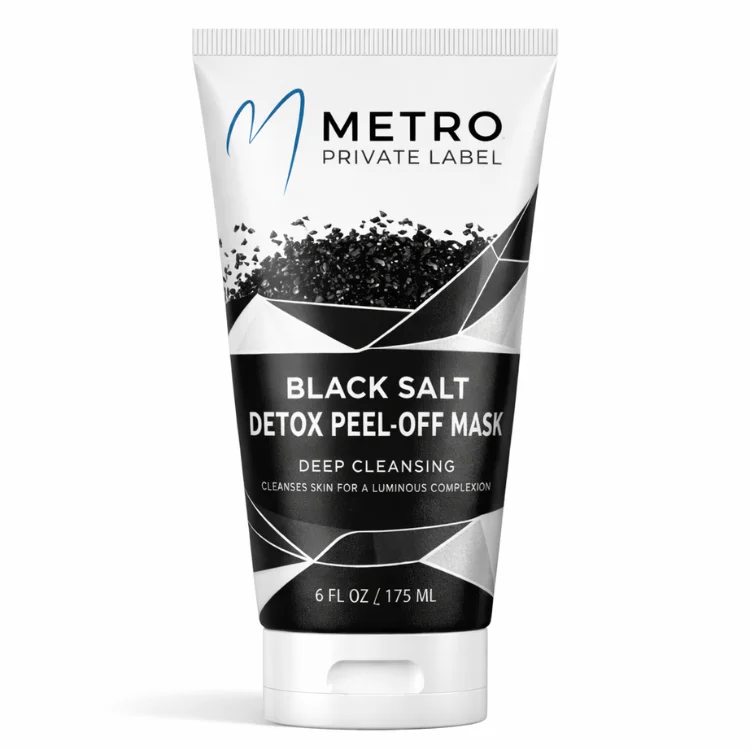
Volcanic Ash / Black Salt Detox Peel-Off Mask

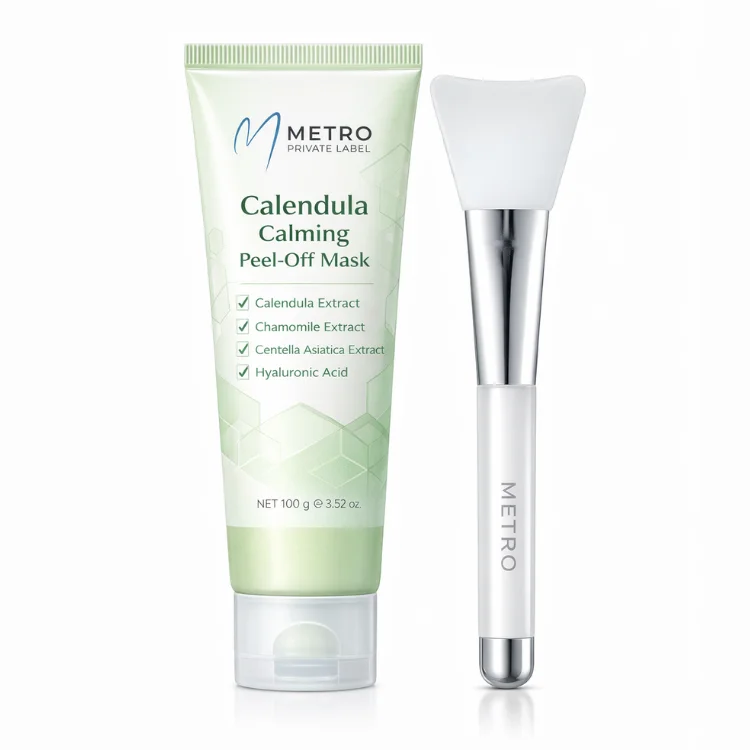
Calendula Calming Peel-Off Mask

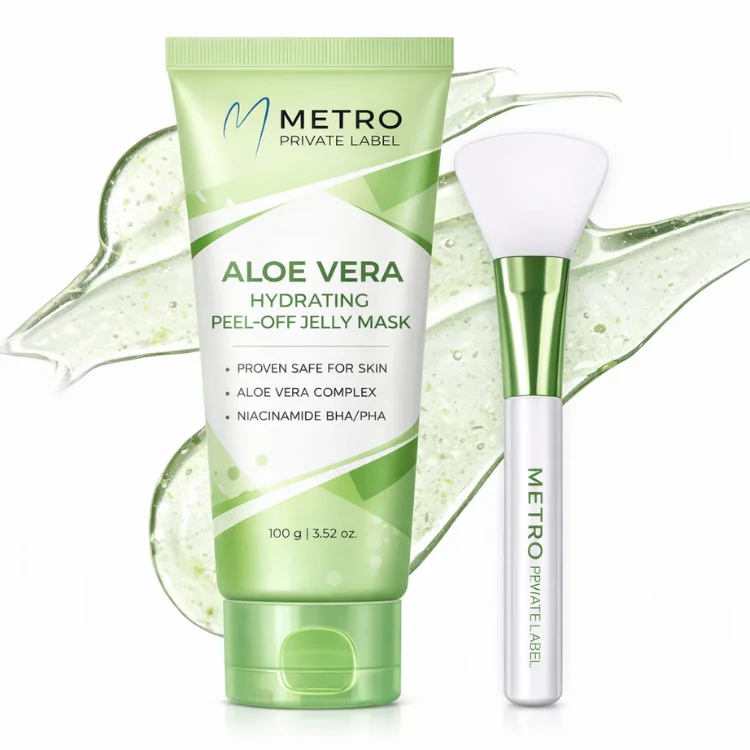
Aloe Vera Hydrating Peel-Off Jelly Mask

Build a Peel-Off Mask Line That Actually Sells

We know peel-off masks aren’t just about the “peel.” For customers, they’re about visible payoff—how cleanly the mask lifts, how the skin looks afterward, and whether the product feels satisfying enough to use again and recommend. For brands, they’re about something even more practical: conversion, reviews, and repeat orders. That’s why we approach private label peel-off mask manufacturing from a sales-first perspective, not a concept-only one.
 
When we develop peel-off masks, we start with what already works in real markets. We study top-selling Amazon listings, fast-moving Korean skincare formats, and customer feedback around texture, irritation, residue, and ease of removal. This helps us design peel-off masks that don’t just look good in photos or videos, but perform reliably in everyday use—reducing complaints and improving long-term brand trust.
As your manufacturing partner, we focus on making your peel-off mask commercially usable from day one. That means controlling peel strength, film flexibility, spreadability, and stability during shipping, while also supporting the execution details brands care about: compliant INCI lists, documentation support, and packaging that works for e-commerce and retail. Our goal is simple—help you launch a peel-off mask SKU that fits your channel, your price point, and your growth plan.
 
💡 Our 8 Most In-Demand Private Label Peel-Off Mask Types
1️⃣ Overnight Collagen Wrapping Peel-Off Masks A fast-growing format inspired by Korean “wrapping mask” trends, ideal for elasticity, hydration, and glass-skin positioning.
2️⃣ Brightening Dark-Spot Wrapping Peel-Off Masks Formulas built around Kojic Acid, Turmeric, Vitamin C, or Glutathione concepts—strong demand for tone-evening and glow.
3️⃣ PDRN / Salmon DNA Peel-Off Masks Premium positioning for firming, repair, and advanced skincare lines looking to differentiate beyond basic actives.
4️⃣ Charcoal Blackhead Peel-Off Masks A classic bestseller for pore care and oil control, requiring careful formulation to avoid pain, residue, and negative reviews.
5️⃣ Pink Clay / Kaolin Pore-Clearing Peel-Off Masks Combines cleansing benefits with a gentler, more skin-friendly image suitable for wider consumer groups.
6️⃣ Volcanic Ash / Black Salt Detox Peel-Off Masks Deep-cleansing concepts with strong storytelling appeal, popular in both mass and mid-range markets.
7️⃣ Calendula Calming Peel-Off Masks Designed for soothing, sensitive-skin positioning, often paired with mild exfoliation or barrier-support concepts.
8️⃣ Aloe Vera Hydrating Peel-Off Jelly Masks Jelly-type peel-off masks focused on hydration and comfort, ideal for daily use and lower irritation risk.
 
🎯 MOQ & Packaging Options (Designed for Real Launches)
We keep peel-off mask projects practical and scalable. Most private label programs start around 1,000 units per SKU, depending on formula structure, packaging choice, and customization level. Packaging options include tubes, jars, bottles, brushes, and retail-ready cartons, with support covering formula feasibility, ingredient compatibility, stability planning, and production coordination—so your peel-off mask performs consistently from sampling to repeat production.
If you already have a sales channel and a clear product direction, we’re ready to help you move fast, test smart, and build peel-off mask SKUs that actually convert.

More Than Just a Peel-Off Mask Manufacturer

At Metro Private Label, we don’t see peel-off masks as novelty products or short-term trends. We treat them as commercial SKUs—products that need to make sense to customers, perform consistently, and fit naturally into real skincare routines. A successful peel-off mask isn’t about extreme peel strength or flashy claims. It’s about how evenly it applies, how cleanly it lifts, how skin feels afterward, and whether users feel confident using it again. That’s what builds trust, repeat purchases, and long-term brand value.

✅ Launch What the Market Already Wants

We don’t guess what might sell—we follow what already works. By tracking Amazon bestsellers, fast-moving Korean formats, and real customer reviews, we focus on peel-off mask concepts consumers instantly recognize: overnight wrapping masks for elasticity and glow, brightening masks for uneven tone, charcoal and clay masks for pore care, calming botanical masks for sensitive skin, and hydration-focused jelly peel-off masks for daily use. This gives your product a clear position from day one, makes marketing easier, and reduces the risk of launching something customers don’t understand.

✅ Small MOQ That Reduces Your Risk

We design our private label peel-off mask programs to be realistic, not restrictive. You can start with manageable order quantities to test pricing, performance, and customer feedback before committing to larger volumes. Once your product proves itself, we support scaling—whether that means improving packaging, adjusting textures, or expanding into additional peel-off variants—without forcing you to change manufacturers or rebuild the product from scratch.

✅ Visible Results That Win Customer Trust

Peel-off masks don’t succeed on first impressions alone. Customers come back when the product feels comfortable, peels cleanly, and delivers visible benefits without irritation or residue. We focus on controlled peel strength, flexible film formation, smooth application, and stable formulas that hold up during shipping and storage. The goal isn’t just a satisfying peel—it’s a product customers trust enough to repurchase and recommend.

✅ Compliance That Makes Export Easy

We prepare peel-off masks for real sales channels, not just samples. From INCI lists and ingredient documentation to label review support and packaging coordination, we help reduce delays and avoid last-minute compliance issues. Whether your products are sold online, through distributors, or in professional settings, we keep development aligned with practical market requirements—so your launch stays on schedule and your supply chain stays stable.
  • METRO
  • Typical OEM factory
METROTypical OEM factory
$
/year
/year
Minimum order quantity✅ 500 units for startup brands — low-risk entry for first-time founders.❌ 3,000 units minimum, limiting flexibility.
Packaging recommendations✅ Compatibility + visual templates to ensure perfect fit and premium look.❌ Not provided.
Launch support✅ Label compliance & claim copywriting included for export markets.❌ Not available.
Sample delivery time✅ 7–14 days with labeled packaging.❌ Usually 30+ days.
Compliance & Documentation✅ INCI, COA, SDS, GMP-ready — export with confidence.❌ Basic INCI only.
Buy Now

✨ Build a Peel-Off Mask Line That Performs Beyond Expectations

When you work with us, you’re not just choosing a peel-off mask factory — you’re working with a team that understands how peel-off masks are actually used and actually sold. A successful peel-off mask isn’t about extreme peeling strength or flashy claims. It’s about how smoothly it applies, how cleanly it lifts, how skin feels afterward, and whether customers enjoy the experience enough to use it again and recommend it. That’s what builds trust — and that’s what turns a single purchase into repeat sales.
 
Whether you’re developing an overnight wrapping peel-off mask, a brightening dark-spot formula, a charcoal pore-clearing mask, or a calming jelly peel-off for sensitive skin, we design every project around real customer behavior. Our goal isn’t just to help you launch a peel-off mask — it’s to help you create a product customers immediately understand, feel comfortable using, and come back to buy again.
🧪 Formulation Built for Real-World Peel-Off Performance
We don’t rely on copy-paste formulas or trend-only concepts. Every peel-off mask we develop is built around practical performance logic — film flexibility, peel integrity, skin comfort, residue control, and stability during storage and shipping. If there’s a trade-off between stronger peel effect and irritation risk, we explain it clearly and help you choose what truly fits your target market, price point, and sales channel — not just what looks impressive on paper.
 
📦 Packaging & MOQ Designed for Real Launch Scenarios
Peel-off masks scale smoothly only when formula behavior, packaging choice, and production planning work together. That’s how we approach every project. Most launches begin with practical MOQs so brands can test the market, gather feedback, and validate pricing before scaling. Packaging options include jars, tubes, applicator brushes, inner seals, and retail-ready cartons — all coordinated to reduce leakage risk, improve user experience, and support e-commerce and retail distribution.
 
⚙️ A Clear and Reliable Production Process
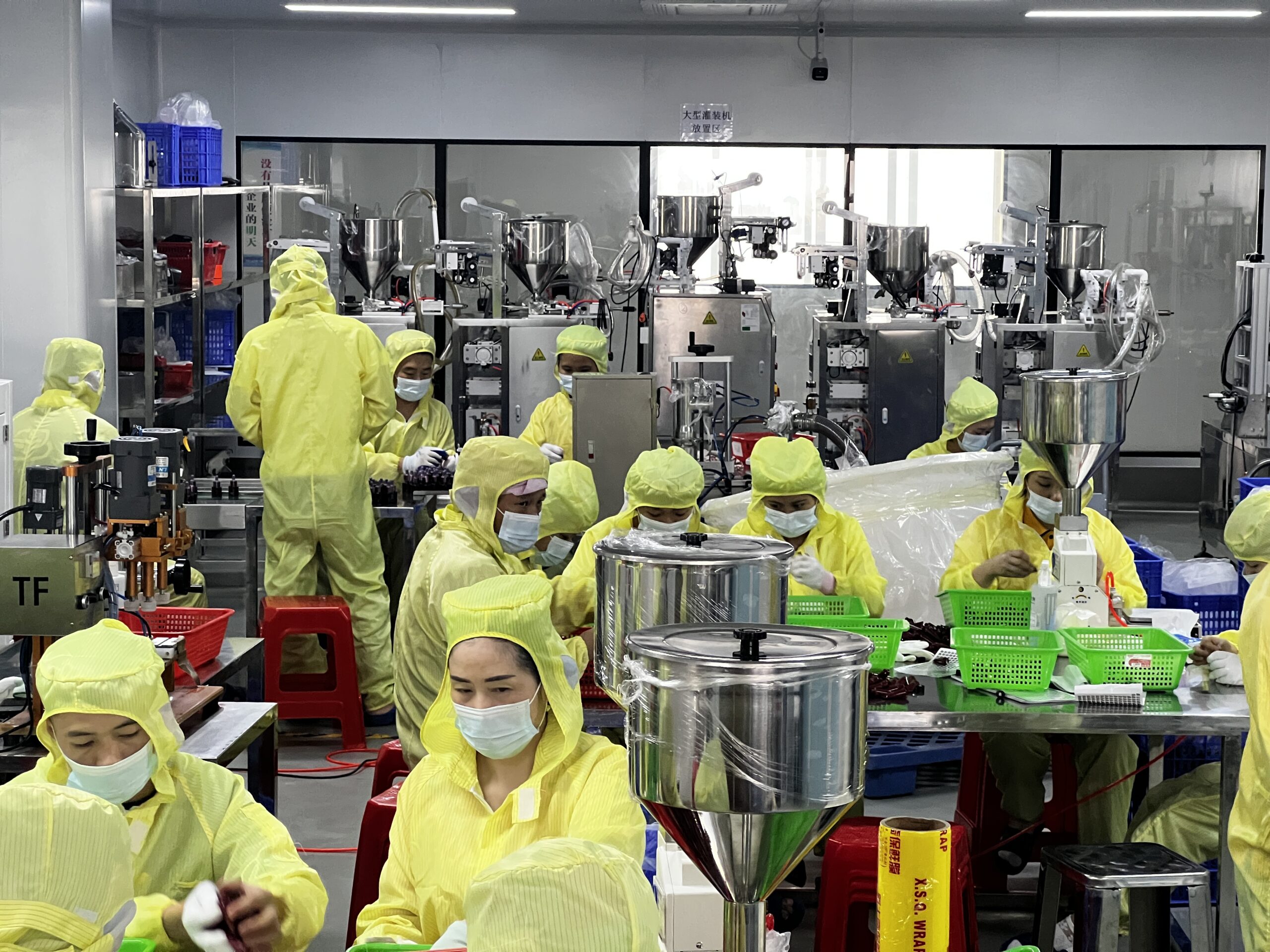
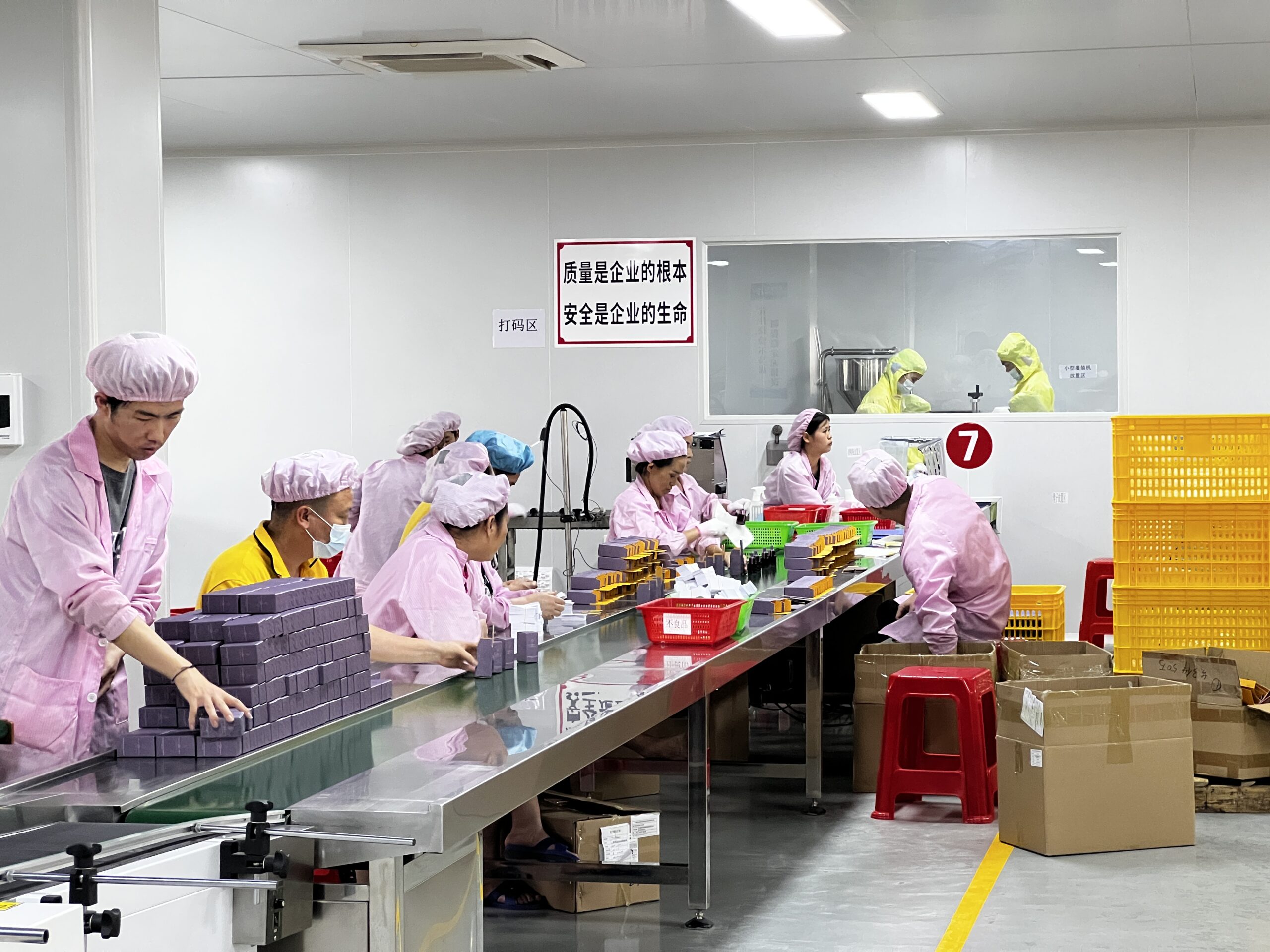
We keep development and production structured, transparent, and realistic — from sampling and texture adjustment to mass production, quality control, packaging coordination, and export preparation. We communicate timelines clearly, flag risks early, and align production with real launch schedules instead of overpromising. Think of us as an extension of your operations team, focused on helping your peel-off mask reach the market smoothly and consistently.
 
🌿 Built for Brands That Plan to Grow
We measure success by how well your peel-off mask performs after launch — not just how fast the first order ships. That’s why we focus on production-stable formulas, scalable packaging options, and documentation ready for online sales, professional channels, and retail distribution. With us, your peel-off mask line is built to launch with confidence, earn repeat purchases, and grow alongside your brand — often further than you originally expected.

Who We Work With

We work best with skincare buyers who already have a real plan—either a sales channel, an industry background, or a proven service model. Our job is to make manufacturing feel simple, scalable, and predictable: we listen first, translate your goals into a clear product plan, and deliver something you can confidently sell, reorder, and grow into a real product line.

Clinic Owners

You care about: safety, professional credibility, and products that support client retention.

We work with clinics and professional skincare businesses that need products clients can trust and comfortably use long-term. We focus on practical, low-risk formula direction, professional packaging presentation, and compliance-ready labeling so your products fit naturally into retail shelves, aftercare routines, and repeat-purchase behavior.
Immediate outcome: a clinic-ready product plan, stable production strategy, and a scalable setup for ongoing reorders and line extensions.

Beauty Industry Founders

You care about: ingredient logic, brand differentiation, and long-term scalability.

We support founders who want more than a generic private label product. We help you build skincare with a strong “reason to exist”—from formula direction and skin feel to packaging structure and claims alignment—so your first hero SKU can actually carry the brand. Instead of over-complicating development, we focus on making the product modern, believable, and scalable for future line expansion.
Immediate outcome: a clear concept direction, a workable development roadmap, and a product system that can grow into multiple SKUs.

E-commerce Brand Operators

You care about: speed, consistency, and products that convert without creating review risk.

We help you launch skincare SKUs that are built for real e-commerce performance—fast-moving formats, stable textures, and clear positioning that customers understand in seconds. We also guide you on the details that protect ratings and reduce refunds, like packaging practicality, ingredient communication, and production consistency across batches.
Immediate outcome: a launch-ready product plan, clear MOQ and timeline, and a production setup designed for repeat ordering.

Why this works:
We’re not here to “just produce skincare.” We’re here to help you build products that feel credible, perform consistently, launch smoothly, and scale without supply-chain headaches—so you can focus on sales, brand growth, and customer retention.

FAQs Peel-Off Mask

For your convenience, we’ve gathered the most commonly asked questions about our Peel-Off Mask. However, should you have any further queries, please don’t hesitate to reach out to us.
1. What types of peel-off masks can you manufacture?
We manufacture a full range of peel-off mask formats that are proven in real markets. This includes overnight wrapping peel-off masks, charcoal and clay peel-off masks for pore care, brightening peel-off masks, calming botanical peel-off masks, jelly-type peel-off masks, and premium wrapping masks using ingredients like collagen or PDRN. You can choose from market-ready base formulas or develop a customized version based on your brand positioning.
Yes. We customize peel strength, film flexibility, texture, drying time, skin feel, and ingredient systems to match your target audience. If your brand needs a gentler peel for sensitive skin, a stronger lifting effect for pore care, or a premium “wrapping” feel for overnight use, we’ll adjust the formula accordingly and explain the trade-offs clearly before you decide.
Our standard starting MOQ is around 1,000 units per SKU, depending on the formula structure and packaging choice. We keep MOQs practical so brands can test the market first, gather feedback, and scale once demand is proven—without unnecessary upfront pressure.
Sampling typically takes 3–5 weeks, depending on how many adjustments are needed. Bulk production usually takes another 4–6 weeks after final approval. If you’re working toward a specific launch window or restock deadline, let us know early—we’ll plan timelines realistically and flag any risks upfront.
Yes. Comfort and repeat usability are a core focus for us. We design peel-off masks to apply evenly, peel cleanly, and feel comfortable on skin without excessive pulling, residue, or irritation. For sensitive-skin or professional-use projects, we prioritize milder systems and clearly explain any limitations or precautions.
Absolutely. We support packaging sourcing and coordination, including jars, tubes, applicator brushes, inner seals, and retail-ready cartons. We also help brands choose packaging that reduces leakage risk, ships well for e-commerce, and feels appropriate for their price point and sales channel.
Yes. You can start with our ready-to-launch peel-off mask formulas for faster turnaround and lower development cost, or work with us to co-develop a custom formula from scratch. We’ll recommend the best path based on your timeline, budget, and how differentiated you want the product to be.
Every peel-off mask goes through stability testing, compatibility checks, and performance evaluation to ensure consistent peeling behavior, texture stability, and shelf life. Our production follows established cosmetic manufacturing standards, and we focus on reducing issues that commonly lead to customer complaints or returns.
Yes. While we don’t create exaggerated marketing claims, we help brands shape clear, compliant, and realistic positioning—such as peel performance, skin feel, hydration support, calming benefits, or glow effects. We also provide ingredient highlights and technical explanations to support your launch messaging.
Yes. We work with brands selling in the U.S., EU, UK, Middle East, and Asia. We support export documentation, ingredient lists, and packaging coordination so international projects move smoothly. Whether you’re selling online, through distributors, or in professional channels, we’re familiar with the practical requirements involved.

Metro Private Label in Numbers

Happy Clients
0 +
Million-dollar Buyers
0 +
Formulation
0 +
Professional Staffs
0 +

Your Ultimate Guide to Peel-Off Mask

If you’re considering adding peel-off masks to your product lineup—whether as your first hero SKU or as an expansion to an existing range—you’re not just choosing another facial mask format. You’re stepping into one of the few categories where visual impact, functional performance, and repeat-purchase potential can align when the product is developed correctly. Peel-off masks attract attention easily, but only the right concepts, textures, and formulations turn that attention into long-term sales. When designed with real usage in mind, they become routine products customers return to, not one-time experiments.
 
Over the past few years, we’ve seen peel-off masks evolve far beyond simple pore-cleansing or novelty products. Today, they appear across e-commerce bestsellers, clinic treatment menus, and professional retail shelves—ranging from charcoal cleansing masks to calming, hydrating, and overnight wrapping formats. At Metro Private Label, we’ve worked closely with brands that succeed by planning peel-off mask projects holistically, not just around ingredients. The brands that scale are the ones that consider peel behavior, skin comfort, packaging durability, pricing logic, and compliance requirements from the very beginning.
 
This guide is built on what we’ve learned developing private label peel-off masks for different sales channels and brand stages. Rather than focusing only on ingredient trends, we want to share how peel-off masks actually perform in real commercial environments. From choosing formats that convert online, to balancing peel strength with comfort, to selecting packaging that survives shipping, to planning MOQs and documentation early, each decision plays a role in whether a peel-off mask becomes a reliable seller or stalls after launch. Our goal is to help you make those decisions with clarity—before costly mistakes happen.

Table of Contents

Peel-Off Mask Formats That Actually Sell in E-commerce

Choosing the right peel-off mask format is one of the most underestimated decisions in e-commerce skincare. I’ve seen well-funded launches fail simply because the product format didn’t match how people shop, watch, and decide online. Peel-off masks magnify this problem because customers can’t touch or feel them before buying. What they respond to instead is clarity, visual logic, and a sense that the product will behave exactly as expected when it arrives. In e-commerce, formats that communicate performance instantly and reduce uncertainty are the ones that convert.
 
Why Overnight Wrapping Peel-Off Masks Align With Online Buying Behavior
Overnight wrapping peel-off masks work so well online because they fit neatly into habits customers already understand. When I evaluate why this format converts, it usually comes down to familiarity and purpose. Customers already have nighttime routines, and a mask designed to be applied before sleep and removed in the morning doesn’t require education or persuasion. The peeling action becomes a visual confirmation of overnight care rather than a novelty step, which makes the product feel intentional and trustworthy. This format also allows brands to promise visible but realistic results, something e-commerce shoppers are far more receptive to than exaggerated claims.
 
How Visual Payoff Drives Conversion for Jelly Peel-Off Masks
Jelly peel-off masks succeed in e-commerce because texture does the selling long before ingredients are read. I’ve watched countless purchasing decisions happen on video alone, where viewers respond to how smoothly a mask spreads, how evenly it sets, and how cleanly it lifts. Jelly textures slow everything down visually, which makes content more watchable and more repeatable, especially on short-form platforms. That visual calm creates confidence. From a performance standpoint, jelly peel-off masks also tend to feel gentler when formulated correctly, which reduces complaint-driven reviews and helps listings stay healthy over time.
 
Why Charcoal Peel-Off Masks Still Perform in Mature Online Markets
Charcoal peel-off masks continue to sell because they address a problem customers already recognize. When I look at long-running e-commerce listings, the common factor isn’t innovation, but clarity. Pores, oil, and blackheads are visual concerns, and charcoal gives shoppers an immediate mental picture of what the product is supposed to do. Where many brands go wrong is pushing peel strength as the main feature. In online sales, discomfort translates directly into negative reviews. The charcoal masks that last are the ones formulated for controlled peeling, even application, and a comfortable finish that leaves skin looking cleaner without feeling punished.
 
Why Texture Consistency Matters More Than Claims in Online Reviews
In e-commerce, claims may attract the first sale, but texture determines whether the second one ever happens. I’ve seen products with impressive ingredient lists struggle simply because the mask dried unevenly or peeled inconsistently. Customers don’t describe these problems in technical terms; they describe frustration. When reviews start mentioning cracking, residue, or uneven peeling, conversion drops regardless of how well the product is marketed. Formats that allow tighter control over film formation and peel behavior consistently outperform those that rely on dramatic effects at the expense of usability.
 
How Different Platforms Reward Different Peel-Off Mask Formats
Each e-commerce platform subtly favors certain peel-off mask behaviors. On Amazon, customers want immediate clarity and low risk, which is why formats with predictable use patterns and clear outcomes perform better. On Shopify, storytelling and routine integration matter more, making formats that feel intentional and comfortable easier to position as long-term products. On TikTok, visual satisfaction dominates, and peel-off masks that look smooth, clean, and satisfying on camera naturally gain traction. When I assess format suitability, I always start by asking where the product will be sold, not what sounds exciting in development.
 
Choosing Peel-Off Mask Formats That Scale Beyond the First Launch
Launching a peel-off mask is relatively easy compared to scaling one. I always encourage brands to think about what happens after the first production run. Formats that create complaints, high return rates, or inconsistent feedback are hard to defend at scale. Overnight wrapping masks often become anchor SKUs because they’re easy to understand and expand. Jelly peel-off masks adapt well to different benefit stories without changing the user experience. Charcoal masks, when handled carefully, remain dependable volume drivers. Formats that balance clarity, comfort, and consistency don’t just sell once; they support growth.
 
Why Format Choice Is a Strategic Decision, Not a Creative One
Peel-off mask formats aren’t just creative decisions; they’re strategic ones that affect conversion, reviews, and reorder potential. When I look at e-commerce brands that build sustainable skincare lines, they almost always choose formats that make sense on screen, feel predictable in use, and leave little room for disappointment. In e-commerce, the best peel-off mask isn’t the most dramatic one. It’s the one that behaves exactly the way customers expect, every single time.

How to Choose the Right Peel-Off Mask Concept for Your Sales Channel

Choosing a peel-off mask concept is never just a creative exercise. In my experience, it is one of the most strategic decisions a brand makes, because it determines not only how the product is perceived, but also how easily it converts, how many complaints it generates, and whether it can scale beyond the first production run. I’ve seen technically solid peel-off masks fail simply because the concept was designed in isolation, without considering where and how the product would actually be sold.
 
Why Amazon Rewards Predictability More Than Innovation
When I design peel-off mask concepts for Amazon-focused brands, I always start from one uncomfortable truth: Amazon customers are not patient, and they are not forgiving. They don’t want to be surprised, and they don’t want to interpret what a product is supposed to do. A concept that requires explanation is already at a disadvantage. This is why peel-off masks that succeed on Amazon tend to have very clear use logic, predictable timing, and familiar benefit language. Overnight wrapping masks work well here because customers instantly understand when to use them and what to expect the next morning. Controlled charcoal or pore-clearing masks also perform because the problem they solve is obvious and visual. What fails on Amazon is ambiguity. If customers don’t know how strong the peel will be, how long it takes to dry, or whether it will hurt, they hesitate—and hesitation kills conversion.
 
How Review Psychology Shapes Amazon Peel-Off Mask Concepts
One detail many brands underestimate is how review behavior feeds back into concept selection. On Amazon, negative reviews rarely complain about ingredients in technical terms. They complain about experience. I’ve read thousands of reviews where the core issue wasn’t efficacy, but discomfort, uneven peeling, residue, or unrealistic expectations. That’s why I always advise Amazon brands to choose peel-off mask concepts that reduce experiential risk. Concepts that emphasize comfort, controlled peeling, and consistency tend to generate fewer emotional reviews. In this channel, the safest concept is often the most profitable one long-term, even if it looks less exciting during development.
 
Why DTC Websites Allow More Concept Depth and Nuance
DTC websites change the rules completely. When customers land on a brand’s own site, they are usually more curious, more invested, and more willing to read. This allows peel-off mask concepts to carry more nuance. I often see jelly peel-off masks or glow-focused wrapping masks perform better on DTC because the brand can explain texture, ritual, and usage context in detail. On a DTC site, a peel-off mask doesn’t have to justify itself in three seconds. It can be positioned as part of a routine, a moment of self-care, or a brand philosophy. This extra space allows concepts that would struggle on Amazon to thrive, as long as the storytelling is coherent and the experience delivers on the promise.
 
How Concept and Brand Voice Must Align in DTC Channels
Another reason DTC channels allow deeper concepts is brand voice control. I’ve worked with brands where the peel-off mask itself was not revolutionary, but the way it was framed made it compelling. A jelly peel-off mask described purely as “hydrating” feels generic. The same product framed as a calming, slow-setting mask designed to reset the skin at night suddenly feels intentional. In DTC, concept success depends less on raw novelty and more on how naturally the product fits into the brand’s language and identity. When the concept and voice are aligned, customers forgive minor imperfections because they feel understood.
 
Why Clinics Require Peel-Off Mask Concepts Built on Restraint
Clinic and aesthetic channels demand a very different mindset. When I think about peel-off masks for clinics, I think about risk before I think about appeal. Clinics operate on trust, and that trust is fragile. A peel-off mask that looks dramatic but causes discomfort can damage a clinic’s reputation far beyond the value of the product itself. This is why clinic-friendly peel-off mask concepts tend to focus on calming, barrier support, and controlled performance. The peel should feel deliberate, not aggressive. The concept should communicate safety and professionalism, not spectacle. In this channel, less excitement often leads to more repeat use.
 
How Professional Explanation Changes Concept Requirements in Clinics
One interesting difference with clinics is that products are rarely self-explanatory. A professional often explains the product before or during use. This means the concept does not need to be immediately legible to a consumer scanning a shelf. Instead, it needs to make sense when explained verbally. I’ve seen clinic peel-off masks succeed even with relatively subtle benefits because the practitioner framed them as part of a treatment plan. This shifts the concept away from instant gratification and toward long-term skin management, which is why clinic peel-off masks often look more conservative but perform consistently over time.
 
Why Retail Distribution Prioritizes Familiar Signals Over Storytelling
Retail shelves introduce another set of constraints. When I help brands design peel-off mask concepts for retail, I focus on recognition rather than persuasion. Shoppers in retail environments make decisions quickly and often without assistance. Concepts that rely on new terminology or complex explanations struggle to gain traction. This is why familiar cues like charcoal, clay, aloe, or collagen continue to dominate retail peel-off mask sales. These concepts don’t need to be taught. Customers already know what they are supposed to do. Retail buyers also prefer concepts that are stable and repeatable, because supply interruptions or formulation changes create logistical headaches.
 
How Shelf Behavior Limits Over-Complex Peel-Off Mask Concepts
Retail also limits how much variation a concept can support. I’ve seen brands attempt to introduce highly differentiated peel-off masks into retail only to struggle with communication. If the concept requires reading the back of the box to understand, it’s already at risk. In retail, the concept must be readable from a distance and understandable in seconds. This pushes brands toward simpler benefit structures and more conservative positioning, even if the underlying formula is sophisticated.
 
Why a Universal Peel-Off Mask Concept Usually Underperforms
The idea of designing one peel-off mask that works equally well across Amazon, DTC, clinics, and retail is appealing, but I’ve rarely seen it succeed. Each channel emphasizes a different part of the customer’s decision-making process. Amazon prioritizes certainty, DTC prioritizes meaning, clinics prioritize safety, and retail prioritizes familiarity. A concept optimized for one of these almost always compromises another. When brands force a single product into every channel, they often end up with diluted positioning and inconsistent performance.
 
How Channel-First Thinking Leads to Stronger Product Lines
The most successful brands I’ve worked with choose a channel first, then design the peel-off mask concept to fit that environment. Once the product proves itself, they adapt the format or positioning for other channels rather than copying it directly. This approach allows the core formulation logic to remain stable while the concept evolves. Channel-first thinking doesn’t slow growth. It prevents expensive mistakes and makes scaling far more predictable.
 
Concept Selection Is a Strategic Filter, Not a Creative Shortcut
At the end of the day, choosing the right peel-off mask concept is about alignment. I always ask where the product will be discovered, what the customer is afraid of when buying, and what would cause regret after use. When the concept answers those questions clearly, everything else becomes easier. In peel-off masks especially, the best concept is not the one that looks the most exciting in development meetings, but the one that feels inevitable once it reaches the customer.

Peel Strength, Film Formation & Skin Comfort: What Really Matters

When founders come to me frustrated with a peel-off mask that “should have worked,” the problem is almost never the headline ingredients. In most failed projects I’ve reviewed, the formula looked fine on paper, tested well on a single arm patch, and even photographed nicely. The failure happened later, when real users applied it on a full face, waited longer than instructed, or peeled it off under less-than-ideal conditions. Peel-off masks live or die by physical behavior, not theoretical performance, and that’s where most development conversations are still too shallow.
 
Why Peel Strength Is About Controlled Release, Not Adhesion Power
Peel strength is often treated as a linear scale, as if stronger adhesion automatically equals better performance. In reality, peel strength is about how the film releases energy during removal. When I assess peel strength, I’m not asking how hard the film sticks, but how evenly tension is distributed as the mask lifts. Excessively strong adhesion concentrates stress at edges, pores, and hair follicles, which creates sharp discomfort even if the average force feels acceptable. Too weak adhesion leads to tearing, which increases frustration and lengthens removal time. The optimal peel strength sits in a narrow window where the film detaches progressively, not abruptly, and that window is defined by polymer interaction and drying kinetics rather than marketing intent.
 
How Film Formation Starts the Moment the Mask Touches Skin
Film formation doesn’t begin when the mask dries; it begins the moment the product is applied. I pay close attention to how the formula flows during spreading, because that initial distribution determines film thickness across the face. Areas with thinner layers dry faster and become brittle first, while thicker areas remain elastic longer. This imbalance is one of the main causes of uneven peeling. Founders often assume drying time alone controls film quality, but the reality is that rheology, surface tension, and evaporation rate all shape the final film. If the film does not form uniformly, no amount of ingredient optimization later will fix the user experience.
 
Why Facial Topography Breaks Poorly Designed Films
The face is an uneven, moving surface, and many peel-off masks are still formulated as if skin were flat. I’ve seen films that behave well on cheeks but crack immediately around the nose or mouth. These failures are structural, not accidental. Areas with frequent movement and higher curvature demand higher film elasticity. When film flexibility is insufficient, micro-fractures form during drying, and those fractures propagate during peeling. The result is flaking, tearing, or sharp pulling sensations that users describe as “painful” even when no irritation is present. Good film design anticipates facial movement instead of reacting to it.
 
Why Faster Drying Often Creates Worse User Experience
Fast-drying peel-off masks are appealing during development because they look efficient and dramatic. In practice, I’ve found that accelerated drying almost always compromises film flexibility. Rapid water loss causes polymer chains to lock into rigid configurations before they can reorganize into elastic networks. The resulting film may peel in one piece during a demo, but it becomes unforgiving during real use. Slight variations in application thickness or ambient humidity suddenly matter a lot. A slightly slower drying profile gives the film time to equalize stress across the surface, which leads to smoother peeling and far fewer complaints.
 
Residue Is a Structural Failure, Not a Cleaning Problem
Residue is one of the clearest signs of poor film cohesion. When founders describe residue as “leftover product,” they usually assume it’s a cleansing issue. In reality, residue appears when parts of the film never fully integrated into the main polymer network. These fragments detach separately or remain bonded to the skin surface. I’ve fixed residue problems by adjusting film continuity and plasticization, not by changing cleansing agents or adding exfoliants. If a peel-off mask leaves residue, it tells me the film never truly became one unified structure during drying.
 
How Skin Comfort Depends on Stress Distribution, Not Ingredient Mildness
Skin comfort is often misunderstood as chemical gentleness, but in peel-off masks, mechanical stress is just as important. I’ve tested formulas with extremely mild ingredient profiles that still felt aggressive because the film released tension unevenly. Conversely, I’ve seen formulas with more active systems feel surprisingly gentle because the film lifted smoothly and predictably. Comfort comes from how force is spread across the skin during removal. When stress is distributed evenly, the experience feels controlled. When stress spikes in localized areas, discomfort follows, regardless of how “soothing” the formula looks on paper.
 
Why Sensitivity Complaints Often Appear Days Later
One subtle but important pattern I’ve observed is delayed sensitivity feedback. Users sometimes report redness or tenderness hours or days after using a peel-off mask. Founders often blame delayed chemical irritation, but in many cases the cause is micro-trauma from mechanical stress. Repeated uneven peeling can disrupt the skin barrier without obvious immediate symptoms. This is why peel-off masks designed for repeat use must prioritize mechanical gentleness even more than one-time treatments. Structural stress accumulates, and the skin remembers it.
 
The Questions Founders Should Ask but Rarely Do
When I sit in formulation discussions, I can often predict the final product quality by the questions being asked. When the conversation focuses exclusively on actives, claims, or percentages, structural issues usually appear later. The better conversations ask how the film behaves at different thicknesses, how humidity affects drying, how forgiving the peel is when users apply unevenly, and what happens if the mask is left on longer than recommended. These questions reveal whether the formula is robust or fragile. Robust formulas survive real-world misuse. Fragile ones fail silently until reviews accumulate.
 
Why Peel-Off Masks Must Be Designed for Imperfect Use
Real users do not apply products the way labs do. They apply uneven layers, wait longer than instructed, peel at awkward angles, and use the product in unpredictable environments. I design peel-off masks with that reality in mind. A good peel-off mask should tolerate imperfect application without punishing the user. When a formula only performs well under ideal conditions, it may look impressive during development but becomes a liability in the market. Structural tolerance is one of the most overlooked competitive advantages in this category.
 
Balancing Performance Without Overcorrecting
One common mistake I see is overcorrecting after initial feedback. If users complain about pulling, some teams immediately weaken adhesion, which then creates tearing. If users complain about tearing, adhesion is increased, which creates discomfort. The solution is rarely at the extremes. It usually lies in redistributing flexibility within the film rather than shifting overall strength. This kind of adjustment requires understanding the system as a whole, not reacting to single symptoms. Peel-off masks are systems, not features stacked together.
 
Why Structure Is the Hidden Signature of Quality
In the long run, customers may not remember which ingredients were listed on the box, but they remember how a product felt. In peel-off masks, that memory is physical. When the experience feels controlled, comfortable, and predictable, customers associate that sensation with brand quality. When it feels chaotic or painful, trust erodes quickly. I believe the real competitive edge in peel-off masks is structural mastery. Brands that understand peel strength, film formation, and comfort at this level stop chasing fixes and start building reliable products.
 
Engineering Peel-Off Masks for Trust, Not Drama
Peel-off masks naturally attract attention because the action is visible, but attention alone doesn’t build brands. I always remind founders that drama fades quickly, while trust compounds. A peel-off mask that behaves consistently across users, environments, and repeat use creates confidence. That confidence is what allows a product to scale, survive scrutiny, and remain on shelves longer than the trend cycle. Structure is not the most exciting part of development, but it is the part that decides whether a peel-off mask becomes a hero SKU or a cautionary tale.

From Trend to Shelf: Evaluating Peel-Off Mask Ingredients Beyond Hype

Almost every peel-off mask project I’ve been involved in starts with the same pressure: a trending ingredient that everyone feels they must include. Sometimes it comes from Amazon bestsellers, sometimes from TikTok, sometimes directly from clinics asking for “the ingredient clients keep mentioning.” The mistake happens when that ingredient becomes the starting point instead of a variable to be tested. Peel-off masks are structurally demanding products. They don’t forgive ingredient decisions made purely for narrative reasons. If an ingredient cannot coexist with film formation, drying behavior, and peel mechanics, it doesn’t matter how attractive it looks on the front label.
 
Why Collagen Sells the Idea of Results, Not the Results Themselves
Collagen is one of the most requested ingredients in peel-off masks, especially for founders targeting firmness, glow, or anti-aging positioning. From a formulation standpoint, I treat collagen as a perception amplifier rather than a functional driver. In a peel-off mask, collagen does not improve lifting, tightening, or peel quality in any mechanical sense. Its real role is in post-peel skin feel and in reinforcing consumer expectations. The problem appears when founders expect collagen to contribute structurally. When added without compensating the polymer system, collagen can interfere with film cohesion by increasing water retention in ways that weaken the final peel. The best collagen peel-off masks are the ones where collagen supports sensorial outcome and messaging, while the film system does all the real work invisibly.
 
How Molecular Size Limits What Collagen Can Actually Do
One detail that rarely gets discussed is molecular size. Most collagen used in cosmetic formulations is hydrolyzed, meaning it is broken down to improve solubility. Even then, its interaction with the skin is superficial. In peel-off masks, where contact time is limited and the product is removed entirely, collagen does not “treat” the skin in the way consumers often imagine. I’ve found that when brands overpromise collagen-driven results in peel-off formats, disappointment follows quickly. That disappointment doesn’t come from irritation, but from unmet expectations. This is why I always push founders to position collagen as part of the experience, not the mechanism.
 
PDRN as a Positioning Upgrade That Demands System-Level Control
PDRN changes the nature of a peel-off mask project the moment it is introduced. I don’t consider PDRN a casual add-on. It elevates the positioning, but it also raises the bar for formulation discipline, documentation, and long-term consistency. PDRN is sensitive to processing conditions and interacts poorly with unstable systems. In peel-off masks, where drying stress and polymer tension are already high, PDRN must be protected from degradation. That usually means tighter control over heat exposure, mixing order, and storage conditions. From a compliance perspective, PDRN also requires far more careful claim management, especially when clinics are involved. Used correctly, it strengthens credibility. Used carelessly, it becomes a liability that limits scalability.
 
Why PDRN Is Better Suited to Controlled Peel-Off Experiences
In my experience, PDRN performs best in peel-off masks that prioritize controlled, gentle peeling rather than aggressive removal. The reason is not chemical irritation, but mechanical stress. Peel-off masks already challenge the skin barrier physically. When PDRN is layered into a system that pulls unevenly or peels harshly, the contradiction becomes obvious to the user. Clinics, in particular, notice this quickly. This is why I advise brands to treat PDRN peel-off masks as precision products rather than mass-market experiments.
 
Kojic Acid and the Hidden Conflict Between Brightening and Peeling
Kojic Acid is appealing because it speaks directly to visible tone improvement, but peel-off masks introduce a conflict that many founders overlook. Brightening ingredients increase sensitivity to stress, and peel-off masks apply stress mechanically. When those two forces are combined without restraint, discomfort becomes likely. I approach Kojic Acid in peel-off masks as a balancing act. The formula must support even film formation and gentle release, or the brightening story collapses under user discomfort. From a stability standpoint, Kojic Acid’s sensitivity to pH and oxidation further complicates matters. A peel-off mask that looks stable at launch can drift over time if the system is not tightly controlled.
 
Why Conservative Kojic Positioning Protects Long-Term Performance
The brands that succeed with Kojic Acid in peel-off formats rarely push it aggressively. Instead, they frame it as part of a tone-support routine rather than a fast corrective treatment. This aligns better with the peel-off experience and reduces complaint risk. When founders chase dramatic claims, they often sacrifice comfort, which leads to negative feedback that no ingredient can fix afterward. Kojic Acid works best when the peel-off mask feels calm, predictable, and repeatable.
 
Charcoal as a Visual Language, Not a Technical Solution
Charcoal remains popular because it communicates “deep cleansing” instantly. From a formulation perspective, charcoal contributes almost nothing to peel mechanics. I treat charcoal as a visual language element rather than a functional one. Its particulate nature can disrupt film continuity if dispersion is poor, creating weak points in the film that tear during peeling. I’ve seen many charcoal peel-off masks fail not because charcoal was irritating, but because it compromised structural uniformity. The most reliable charcoal masks are the ones where charcoal is visually present but structurally irrelevant.
 
Why Too Much Charcoal Creates Inconsistent User Experience
Another issue with charcoal is batch variability. Particle size distribution and dispersion quality matter more than founders expect. When charcoal loading increases, the risk of uneven drying and patchy peeling increases as well. Customers don’t describe this technically; they say the mask “didn’t peel right.” That feedback is deadly in e-commerce. This is why I always cap charcoal usage well below what marketing teams initially request and let the film system carry the performance.
 
Botanicals and the False Sense of Safety
Botanicals are often added to peel-off masks to soften the product image or appeal to “clean” positioning. The assumption is that botanicals equal gentleness. In reality, botanicals introduce variability. Different extracts behave differently under drying stress, and many interact unpredictably with film-forming polymers. I’ve reviewed formulas where multiple botanical extracts were added with good intentions, only to discover that they destabilized film formation over time. From a compliance standpoint, botanicals also increase documentation complexity, especially for clinics operating across borders. In peel-off masks, fewer botanicals used intentionally outperform many botanicals used indiscriminately.
 
Why Ingredients Rarely Fix Structural Problems
One of the hardest conversations I have with founders is explaining that ingredients cannot fix structural flaws. When a peel-off mask peels unevenly, pulls painfully, or leaves residue, adding soothing or trendy ingredients does not solve the problem. The issue lies in polymer balance, drying behavior, and film elasticity. Ingredients can enhance an already stable system, but they cannot rescue a broken one. Once founders accept this, development becomes far more efficient and far less frustrating.
 
Stability as the Real Test of Ingredient Decisions
Stability testing is where ingredient hype is either validated or exposed. I’ve seen peel-off masks that performed beautifully in early samples slowly change behavior over months. Drying time shifts, peel strength increases or decreases, residue appears where it didn’t before. These changes often trace back to ingredient interactions that were ignored early on. Trending ingredients that bind water differently or interfere with evaporation can alter the film over time. If a formula does not behave consistently across storage conditions, it cannot support repeat purchasing.
 
Compliance Is an Ingredient Filter, Not a Final Checkbox
For founders and clinics, compliance should shape ingredient selection from the beginning. Ingredients like PDRN and Kojic Acid carry different regulatory interpretations depending on market and claims. Changing an ingredient late in development often forces a full reformulation because the film system was built around that component. I evaluate compliance early not to slow projects down, but to prevent painful backtracking. In peel-off masks, late-stage ingredient changes are expensive and risky.
 
Why Clinics Must Be More Conservative Than Online Brands
Clinics operate under a different trust contract with clients. An ingredient that creates curiosity online may create hesitation in a professional setting. I advise clinics to prioritize ingredients that support barrier stability and recovery over those that promise dramatic change. In this context, reliability beats novelty. A peel-off mask that clients tolerate well over repeated treatments builds far more value than one that impresses once but raises concerns later.
 
Turning Trends Into Shelf-Stable Decisions
The difference between a trend-driven concept and a shelf-ready product is discipline. I evaluate every ingredient by asking whether it strengthens the system or merely decorates it. Ingredients that survive formulation stress, stability testing, compliance review, and real-world misuse earn their place. The rest should be left out, no matter how attractive they look in marketing decks. This is how peel-off masks move from idea to dependable SKU.
 
Why Ingredient Discipline Builds Long-Term Brand Equity
The brands that last in peel-off masks are not the ones that chase every trend. They are the ones that understand structure first and story second. When ingredient decisions are grounded in formulation logic, stability awareness, and regulatory foresight, products stop feeling risky. Customers sense that reliability immediately. That trust is what turns peel-off masks from impulse purchases into repeat buys—and from short-term launches into sustainable product lines.


White Label vs Custom Peel-Off Masks: Which Makes Sense for Your Stage?

Almost every distributor or early-stage brand I meet eventually asks the same question, usually earlier than they should. Should we start with white label, or should we go fully custom from day one? The reason this question causes so much anxiety is that it feels tied to brand seriousness and long-term ambition. In practice, it has far more to do with timing, cash discipline, and how much uncertainty the business can survive at its current stage. Peel-off masks amplify mistakes quickly, so choosing the wrong path early doesn’t just slow you down—it often forces expensive resets.
 
Why White Label Is a Risk-Management Tool, Not a Compromise
I’ve seen many teams treat white label as a temporary or inferior option, but that mindset usually comes from misunderstanding its role. White label peel-off masks are not about avoiding effort. They are about controlling variables. When you work with a ready-to-label formula, you already know how the film forms, how it peels, how users react, and where the common complaints appear. That predictability is not boring—it’s valuable. For distributors especially, predictability protects relationships with buyers and retailers. A peel-off mask that behaves consistently is far more valuable than one that is theoretically unique but operationally fragile.
 
How Early Cash Flow Changes the Math Completely
In early-stage businesses, time and cash are inseparable. Custom development stretches both. I’ve watched brands spend months refining a custom peel-off mask while missing seasonal buying windows or losing momentum with potential partners. White label shortens the distance between idea and revenue. That speed is not just about launching fast; it’s about validating demand before resources are locked in. When cash flow is still fragile, reducing development time often matters more than achieving perfect differentiation.
 
Why Custom Development Feels Empowering but Often Backfires Early
Custom development gives founders a sense of control, which is emotionally satisfying. You choose the ingredients, the texture, the claims, and the story. What often gets overlooked is that every custom decision introduces new unknowns. Peel-off masks are mechanically sensitive products. A formula that behaves perfectly at sample scale may change once it is produced, filled, shipped, and stored. Early-stage brands rarely have enough historical data to predict those shifts accurately. When something goes wrong, timelines stretch, costs rise, and confidence erodes—both internally and with partners.
 
The Illusion of Differentiation Through Formulation Alone
One of the biggest misconceptions I encounter is the belief that customers can immediately perceive formulation-level differences. In peel-off masks, most customers cannot articulate why one formula feels better than another. What they notice is whether it peels cleanly, whether it hurts, whether it leaves residue, and whether the experience matches expectations. I’ve seen white label peel-off masks outperform custom ones simply because the instructions were clearer, the packaging communicated usage better, and the experience felt safe and predictable. At early stages, differentiation usually comes from clarity and consistency, not molecular uniqueness.
 
Why White Label Accelerates Learning, Not Laziness
White label peel-off masks allow brands and distributors to learn faster. You learn which textures your customers tolerate, which claims resonate, which price points convert, and which channels respond best. That learning is far more valuable than early customization because it informs future decisions. I often see teams rush into custom development without knowing what they are optimizing for. White label gives you a baseline. Without a baseline, customization becomes guesswork disguised as strategy.
 
The Real Cost Structure of Custom Peel-Off Masks
Custom development costs are rarely transparent at the beginning. Beyond formulation fees, there are costs tied to extended sampling, repeated stability testing, documentation updates, packaging coordination, and delayed production slots. Each change cascades. A small formula tweak may require new compatibility tests with packaging. A packaging change may require revalidation of fill behavior. Early-stage brands often underestimate how these layers compound. Distributors feel this pressure even more acutely because missed timelines can mean lost shelf space or canceled orders.
 
When Custom Development Starts to Earn Its Complexity
Custom peel-off masks make sense when the business has clear evidence of demand and clear feedback on what needs improvement. If customers consistently ask for a gentler peel, a specific texture, or a different usage profile, custom development becomes a targeted solution rather than an experiment. At this stage, customization is not about standing out; it is about removing friction. Brands that reach this point benefit from custom formulas because they are solving known problems, not inventing hypothetical ones.
 
Why Overbuilding Locks You Into the Wrong Decisions
Overbuilding happens when teams commit to custom development before understanding their market. Once resources are invested, flexibility disappears. Changing direction becomes expensive and emotionally difficult. I’ve seen brands hold onto underperforming custom peel-off masks simply because they invested so much in development. White label preserves optionality. It allows you to pivot, test, and adjust without rewriting your entire product roadmap. In early stages, optionality is a strategic asset.
 
How Distributors Should Evaluate White Label vs Custom Differently
Distributors operate under different incentives than brand owners. Your success depends on reliability, repeatability, and low friction. Retail buyers do not reward experimentation; they reward consistency. For many distributors, white label peel-off masks remain the right choice even as volume grows. Custom development only becomes attractive when it secures exclusivity or materially improves margins in a proven channel. Until then, reliability is the strongest form of differentiation you can offer.
 
Why Ego Is the Most Expensive Variable in Product Decisions
The most damaging factor in choosing between white label and custom is ego. I’ve watched teams choose custom development to signal seriousness, only to struggle with execution and lose momentum. The most disciplined operators choose based on readiness, not aspiration. White label is not a step backward; it is a staging ground. Custom is not a reward; it is a responsibility. When those roles are understood, product decisions become calmer, faster, and more profitable.
 
Choosing the Path That Matches Your Current Reality
The brands and distributors that succeed in peel-off masks are not the ones that choose the most complex option first. They are the ones that match product strategy to their actual stage. White label supports speed, learning, and cash stability. Custom supports refinement, defensibility, and long-term brand equity. Choosing the right path at the right time keeps growth compounding instead of resetting. In peel-off masks especially, patience is not passive—it is strategic.

MOQ, Cost Structure & Pricing Logic for Peel-Off Mask Projects

Whenever an e-commerce operator or distributor tells me their peel-off mask is selling but the numbers still feel tight, I already know where the problem started. Peel-off masks are deceptive. On the surface, they look like simple, high-margin cosmetic products. In reality, they are one of the easiest formats to misprice and one of the hardest to scale cleanly. MOQ, cost structure, and pricing logic are not separate decisions. They lock together early, and once they do, reversing them becomes slow, expensive, and emotionally painful.
 
Why MOQ Is a Business Boundary, Not a Production Detail
MOQ is often discussed as a factory limitation, but I treat it as a business boundary. It defines how much uncertainty you are willing to hold at one time. With peel-off masks, MOQs exist because film-forming systems demand batch consistency, packaging coordination, and controlled filling conditions. When brands push MOQs too low, they usually pay for it in higher unit costs, reduced consistency, or compromised quality control. When brands jump into high MOQs too early, they freeze cash and lose flexibility. The correct MOQ is not the smallest possible number; it is the smallest number that still protects consistency, cost stability, and cash flow.
 
How First-Order MOQ Determines Your Entire Cost Trajectory
What many operators underestimate is that the first MOQ decision sets the tone for every future order. If your first batch is too small, your per-unit cost baseline becomes artificially high, and it becomes psychologically difficult to raise prices later. If your first batch is too large, you are forced to discount or push volume prematurely. I’ve seen brands trapped by early MOQ decisions that looked “safe” but quietly destroyed margin expectations. The first MOQ is not just about testing the market; it defines your pricing ceiling and your discount tolerance.
 
Why Peel-Off Mask Formula Complexity Raises Your True Cost Faster Than Expected
Formula complexity affects cost in non-obvious ways. Peel-off masks with simple, stable film systems are forgiving. They tolerate minor variations and scale cleanly. As soon as you introduce complex actives, sensitive ingredients, or multi-phase dispersion requirements, your effective cost rises even if the quoted unit price looks similar. More complexity means tighter process control, more sampling rounds, higher rejection risk, and more time spent troubleshooting. I always warn brands that complexity compounds cost invisibly. What looks like a small formula upgrade can quietly raise your true per-unit cost long before you see it on an invoice.
 
Why Packaging Is the Silent Margin Killer in Peel-Off Masks
Packaging decisions often matter more than formula decisions in peel-off mask projects. I’ve worked on multiple projects where the formula cost was reasonable, but the packaging destroyed profitability. Custom tubes, jars with seals, applicator brushes, or premium cartons introduce fixed costs that do not scale smoothly. Tooling, print minimums, and assembly steps all add friction. Worse, packaging errors cause leaks, damage, and returns. In e-commerce, one poorly chosen packaging component can erase weeks of profit through refunds and negative reviews. Packaging should be chosen as a margin-protection tool, not just a branding asset.
 
How Packaging Choices Affect Freight, Damage, and Refund Rates
Packaging affects far more than unit cost. Heavier containers increase freight costs. Bulky designs reduce carton efficiency. Fragile components increase damage rates. I’ve seen peel-off mask projects lose margin not because of manufacturing cost, but because logistics quietly bled profit month after month. For e-commerce operators, damage and leakage translate directly into refunds. For distributors, they translate into buyer complaints and lost shelf space. Slightly higher packaging costs upfront often reduce total cost dramatically over time.
 
Understanding Real Cost Means Including What You Don’t Want to Count
When I calculate real cost per unit, I never stop at the factory quote. I include sampling iterations, stability testing time, compliance documentation, packaging coordination, freight volatility, and the inevitable inefficiencies that appear once orders repeat. Peel-off masks are mechanically sensitive, which means they often require more adjustments than simpler skincare formats. If pricing is built on optimistic early quotes, margin erosion is guaranteed. Conservative cost assumptions are not pessimistic; they are protective.
 
Why Peel-Off Masks Require More Margin Than Founders Expect
Peel-off masks create strong reactions. When users love them, they repurchase. When something goes wrong, complaints escalate quickly. That volatility demands margin buffer. I’ve seen brands price peel-off masks aggressively to win market share, only to discover that refunds, customer service costs, and replacement shipments consumed their profit. Thin margins in this category leave no room for correction. Healthy pricing is not greed; it is insurance against the realities of scale.
 
Pricing for E-Commerce Is About Confidence, Not Just Competition
In e-commerce, peel-off mask pricing communicates confidence as much as value. Price too low and customers assume the product is harsh, gimmicky, or low quality. Price too high without a clear reason and conversion collapses. I’ve found that successful peel-off mask pricing sits where customers feel safe trying the product and comfortable reordering it. That balance only works if the underlying cost structure allows margin to survive promotions, ads, and occasional refunds.
 
Distributor Pricing Requires Margin Layers to Breathe
Distributors face an even stricter pricing equation. Your cost must leave room for your margin, retailer margin, promotions, and logistics. I’ve seen distributor projects fail because the brand priced for direct-to-consumer logic while selling through wholesale channels. Peel-off masks that work for distributors usually favor simpler formulas, standardized packaging, and higher MOQs that reduce unit cost. Without enough margin layers, volume becomes a liability instead of an advantage.
 
Why Scale Does Not Fix a Broken Pricing Model
Many operators assume scale will solve early pricing mistakes. In peel-off masks, scale often exposes them faster. While some costs decrease with volume, others remain fixed or even increase due to stricter quality control and higher expectations. If your pricing model is broken at 1,000 units, it will be catastrophic at 50,000 units. I always advise fixing pricing logic early, even if it feels conservative, because scaling amplifies structure, not intentions.
 
Designing the Project Backwards From Margin Reality
The most resilient peel-off mask projects I’ve worked on were designed backwards. Instead of asking how cheaply the product could be made, the teams asked what margin was required to survive advertising costs, returns, promotions, and growth. From there, they aligned formula scope, packaging complexity, and MOQ to support that margin. This approach feels restrictive during ideation, but it prevents painful redesigns later when the product is already in the market.
 
Why Early Financial Discipline Accelerates Growth Later
Financial discipline at the beginning of a peel-off mask project does not slow growth; it enables it. When MOQ, cost structure, and pricing logic are aligned, operators can reorder confidently, invest in marketing without fear, and scale without panic. Inventory decisions become strategic instead of reactive. In my experience, the brands that last are not the ones that launched fastest, but the ones that understood their numbers deeply enough to grow without self-inflicted damage.
 
Thinking Like an Operator, Not a Product Creator
The final shift I encourage is moving from creator thinking to operator thinking. Creator thinking focuses on the product itself. Operator thinking focuses on how the product behaves over time, across channels, and under pressure. MOQ, cost, and pricing decisions determine whether a peel-off mask becomes a one-off launch or a long-term revenue engine. When those decisions are grounded in reality, peel-off masks stop being stressful and start becoming predictable.

Packaging That Works: Preventing Leakage, Damage & Returns

In peel-off mask projects, packaging is where optimism meets reality. I’ve seen brands spend months perfecting formulas, only to lose customer trust in a single week because of leaking jars, crushed cartons, or messy unboxing experiences. Customers don’t separate formula from packaging in their minds. If the product arrives compromised, the entire brand feels unreliable. In shipping-heavy channels, packaging is not a cosmetic decision. It is a system designed to survive abuse, misunderstanding, and worst-case logistics scenarios.
 
Why Peel-Off Masks Behave Differently During Shipping
Peel-off masks behave very differently from creams or serums once they enter the logistics chain. Their viscosity changes under temperature fluctuation, and their film-forming nature means they continue to “settle” inside the container over time. I’ve observed peel-off masks slowly migrating toward closures during long-distance shipping, especially when cartons are stacked under pressure. Even small gaps that seem irrelevant during lab testing become leakage paths after weeks of vibration and compression. Packaging that works for static shelf display often fails once movement is introduced.
 
How Temperature Swings Quietly Trigger Leakage
One of the least understood causes of leakage is temperature cycling. During international shipping and last-mile delivery, peel-off masks may experience heat during daytime storage and cooling overnight. This expansion and contraction increases internal pressure repeatedly. I’ve reviewed cases where packaging passed drop tests but still leaked because seals were not designed for repeated thermal stress. Packaging systems that rely on friction alone tend to fail here. True leakage prevention requires closures and seals that maintain integrity under pressure fluctuation, not just static conditions.
 
Why Jars Fail More Often Than Brands Expect
Jars create an illusion of security because they feel solid and premium. In reality, they introduce multiple failure points. The wide opening increases surface area exposed to pressure, and even a slight misalignment in the inner seal allows product to spread into the lid. I’ve seen jars arrive with no visible external leakage but obvious internal smearing. Customers interpret this as contamination, not shipping damage. Once that perception forms, refunds are almost guaranteed. Jars require extremely disciplined sealing, torque control, and carton support to function reliably in e-commerce.
 
The Hidden Risk of Inconsistent Inner Seal Application
Inner seals are often discussed as a yes-or-no decision, but consistency matters just as much as presence. I’ve audited batches where some jars had perfectly applied seals while others were slightly skewed. Those small variations led to unpredictable leakage patterns. Customers don’t care that only part of the batch failed. They experience it as a brand-level issue. Inner seal application must be treated as a critical control point, not a secondary step. In peel-off masks, partial protection is functionally the same as no protection.
 
Tubes Reduce Risk but Do Not Eliminate It
Tubes are generally safer for shipping, which is why I often recommend them for e-commerce-focused peel-off masks. That said, tubes introduce their own failure modes. Under sustained pressure, product is forced toward the cap. If the nozzle seal or cap threading is imperfect, slow leakage occurs that may not be visible until the product reaches the customer. Thin-walled tubes deform more easily, increasing this risk. I’ve seen brands assume tubes are “safe by default,” only to face widespread leakage after scaling volume.
 
Why Cap Design Matters More Than Tube Material
Many packaging discussions focus on tube material thickness, but cap design often matters more. Caps that rely on shallow threading or lack compression gaskets fail under pressure cycling. I’ve reviewed leakage cases where upgrading the cap solved the problem without changing the tube itself. In peel-off masks, caps must withstand both internal pressure and external squeezing by customers. A weak cap design turns user behavior into a leakage trigger.
 
Brushes Improve Experience but Complicate Logistics
Applicator brushes are popular because they make peel-off masks feel cleaner and more professional. From a logistics perspective, they add complexity at every step. Brushes introduce additional components that must be secured, protected from moisture, and prevented from shifting during transit. I’ve seen brushes crack jar lids, puncture inner seals, or arrive loose inside cartons. When brushes are included, packaging must be designed to immobilize them completely. Otherwise, a feature meant to improve experience becomes a liability.
 
Why Moisture Control Around Applicators Is Critical
Another overlooked issue with brushes is moisture retention. If brushes are stored in enclosed spaces without adequate ventilation or separation, condensation can form during temperature changes. This raises hygiene concerns the moment a customer opens the package. Even if the product itself is fine, the perception of moisture where it shouldn’t be is damaging. I always advise treating applicators as independent components with their own protection logic, not as accessories to be casually added.
 
Cartons Are Load-Bearing Structures, Not Branding Surfaces
Cartons are often treated as aesthetic elements, but in peel-off mask logistics they act as load-bearing structures. A well-designed carton limits internal movement, distributes external pressure, and shields closures from direct impact. I’ve compared identical peel-off masks shipped with different carton designs, and the difference in damage rates was dramatic. Cartons that are too soft collapse under stacking pressure, transferring force directly to the container. Cartons that are too loose allow movement that stresses seals. The right carton balances rigidity and fit.
 
How Carton Fit Influences Damage Rates More Than Padding
Padding is often used as a fix for poor carton fit, but it rarely solves the underlying problem. Excess padding allows movement, which increases momentum during drops. A snug, well-fitted carton reduces the need for padding altogether. I’ve seen brands eliminate most padding simply by redesigning carton dimensions. This not only reduced damage rates but also improved packing efficiency and reduced shipping costs.
 
Leakage Complaints Trigger Stronger Emotional Reactions Than Breakage
One pattern I’ve observed consistently is that leakage complaints provoke stronger emotional responses than broken products. When a jar breaks, customers attribute it to shipping. When a product leaks, they attribute it to poor quality or hygiene. This distinction matters. Leakage complaints often include words like “messy,” “gross,” or “unsafe,” which are far more damaging to brand perception than “broken.” Preventing leakage is therefore not just about reducing refunds; it’s about protecting emotional trust.
 
Retail Buyers Read Packaging as a Signal of Operational Control
Retail buyers evaluate packaging differently from consumers. They see packaging as a signal of how well a brand manages operations. Inconsistent sealing, damaged cartons, or variation between units suggest future supply problems. I’ve seen retail buyers walk away from peel-off mask projects not because the product was weak, but because packaging inconsistencies suggested the brand wasn’t ready for scale. For retail channels, packaging reliability is a prerequisite, not a differentiator.
 
Why Return Data Should Drive Packaging Decisions
The most effective packaging improvements I’ve seen came from analyzing return data honestly. When returns cluster around leakage, mess, or damaged appearance, the solution is rarely more tape or more padding. It usually requires structural changes to containers, seals, or cartons. Brands that treat returns as noise miss the opportunity to fix root causes. Packaging should evolve based on failure patterns, not initial assumptions.
 
How Cost-Cutting Creates Fragile Packaging Systems
Aggressive cost-cutting in packaging almost always creates fragility. Saving a few cents per unit disappears instantly when return rates rise. I’ve reviewed projects where packaging savings of less than five percent resulted in double-digit increases in refunds. Packaging decisions must be evaluated at the system level, including returns, replacements, customer service costs, and review impact. The cheapest packaging option is rarely the most profitable one.
 
Designing Packaging That Forgives Real-World Abuse
The best peel-off mask packaging I’ve seen is forgiving. It tolerates rough handling, stacking pressure, temperature swings, and imperfect user behavior. Customers squeeze tubes too hard, open jars carelessly, and store products in bathrooms with fluctuating humidity. Packaging that survives these realities allows brands to scale without constant firefighting. Packaging that only works under ideal conditions becomes a bottleneck the moment volume increases.
 
Packaging as a Long-Term Profit Protection Strategy
At scale, packaging becomes one of the most powerful profit protection tools a brand has. Every prevented return, every intact delivery, and every positive unboxing experience compounds over time. I encourage brands to think of packaging investment the same way they think about advertising spend. Both protect revenue. One attracts customers; the other keeps them.
 
Why Customers Judge Brands Before Using the Product
Customers form opinions the moment they open the box. If the packaging feels secure, clean, and intentional, they trust the product before applying it. In peel-off masks, where the experience is already tactile and personal, that first impression matters enormously. Packaging that works quietly builds confidence. Packaging that fails loudly destroys it.
 
Treating Packaging as Part of the Product, Not an Add-On
The final mindset shift I encourage is treating packaging as part of the product itself. In peel-off masks, the product experience starts with delivery, not application. When packaging is designed as an integrated system rather than an afterthought, leakage drops, returns decline, and brands gain the freedom to scale. This is not glamorous work, but it is the work that separates brands that survive growth from brands that collapse under it.

Peel-Off Masks for Clinics: Safety, Repeat Use & Professional Positioning

When I design peel-off masks specifically for clinics and aesthetic brands, I approach the project very differently than I would for e-commerce or mass retail. In a professional setting, a peel-off mask is not a novelty item or a visual gimmick. It becomes part of a treatment workflow, a trust signal between practitioner and client, and often a product that gets used repeatedly on compromised or sensitized skin. That context changes every decision, from formulation logic to peel behavior, packaging, and how the product is positioned in the clinic’s ecosystem.
 
Why Clinics Judge Products by Risk, Not Excitement
Clinics operate under a fundamentally different risk model. When I speak with clinic owners or aesthetic practitioners, their first concern is rarely how “impressive” a product feels. Instead, they worry about what could go wrong. A peel-off mask that feels dramatic but causes discomfort, redness, or unpredictable reactions creates liability and anxiety. In clinics, even a small percentage of negative outcomes is unacceptable. That’s why I always prioritize control, predictability, and tolerance over intensity when developing peel-off masks for professional use.
 
Designing Peel-Off Masks for Compromised Skin Conditions
Many clinic applications involve skin that is already stressed. Post-laser, post-chemical peel, post-microneedling, or post-extraction skin behaves very differently from normal, healthy skin. I never assume that a peel-off mask suitable for healthy skin will automatically work in these conditions. For clinic use, I focus on formulations that maintain hydration during film formation, avoid excessive transepidermal water loss, and reduce friction during removal. The goal is not to “tighten” the skin, but to protect it while still delivering a visible, reassuring result.
 
Peel Strength as a Safety Parameter, Not a Feature
In consumer markets, peel strength is often marketed as a benefit. In clinics, I treat peel strength as a safety parameter that must stay within a narrow, controlled range. Too weak, and the mask breaks or leaves residue. Too strong, and removal becomes uncomfortable or risky on sensitive skin. Clinics expect the same experience every time, regardless of who applies the product or the condition of the client’s skin. That consistency is what allows practitioners to trust the product without second-guessing each application.
 
Film Flexibility and Facial Movement Tolerance
One detail that clinics notice immediately is how the film behaves during facial movement. Clients talk, blink, and adjust during treatments. A rigid or brittle film can crack, lift prematurely, or pull unevenly on the skin. I design clinic-focused peel-off masks with high film flexibility so they move with the face instead of fighting it. This reduces stress on delicate areas and improves the overall treatment experience, even if the client is not completely still.
 
Residue-Free Removal as a Professional Standard
Residue is one of the fastest ways to lose a clinic’s confidence. In a treatment room, time is money, and therapists cannot spend extra minutes picking fragments out of eyebrows or hairlines. I treat clean removal as a baseline requirement, not an added bonus. That means controlling polymer balance, drying time, and application thickness so the mask peels away in a single, predictable layer. Clinics interpret residue as a formulation failure, regardless of how premium the ingredient list may look.
 
Repeat Use Changes Everything in Formulation Design
Clinic products are rarely one-off experiences. Clients return weekly, biweekly, or monthly, and products are used repeatedly on the same skin. I always evaluate peel-off masks from a cumulative exposure perspective. Ingredients that feel acceptable once may cause irritation over time. For clinics, long-term tolerance matters more than immediate impact. I design formulations that remain comfortable across repeated use cycles, allowing clinics to incorporate the mask into ongoing treatment plans without concern.
 
Ingredient Selection Through a Clinical Lens
In clinic projects, I look beyond ingredient popularity and focus on behavior within the system. A trending ingredient may sound impressive, but if it destabilizes the film, increases irritation risk, or complicates compliance, it becomes a liability. Clinics value ingredients that support barrier function, calm inflammation, and integrate smoothly with other treatments. The ingredient story must support the practitioner’s logic, not contradict it.
 
How Clinics Interpret “Safety” in Practice
Safety in clinics is not defined by claims or certifications alone. Practitioners evaluate safety based on outcomes they observe across multiple clients. Delayed redness, uneven reactions, or unpredictable sensations quickly erode trust. That’s why I focus heavily on pH balance, irritation mitigation, and consistent sensory behavior. A peel-off mask that feels boring but never causes issues will outperform a more exciting product in a clinical environment every time.
 
Supporting Treatment Protocols Instead of Competing With Them
Clinic peel-off masks should support existing treatment protocols, not compete with them. I avoid positioning these products as standalone miracle solutions. Instead, I design them to complement procedures, enhance recovery, or prepare the skin for subsequent steps. When a product aligns with how practitioners already think about treatments, adoption becomes natural rather than forced.
 
Aligning In-Treatment and Retail Experiences
One mistake I often see is a mismatch between in-clinic use and retail take-home versions. Clients notice differences immediately. If the retail peel-off mask behaves differently, peels more aggressively, or feels less comfortable, it undermines trust. I aim to keep the experience as consistent as possible, adjusting only what is necessary for packaging size or at-home convenience. Consistency reinforces credibility and drives retail repurchase.
 
Packaging as a Reflection of Clinical Discipline
In clinics, packaging is interpreted as a signal of professionalism. I favor clean, controlled designs with hygienic dispensing and minimal distractions. Packaging must work smoothly during treatments and look appropriate in professional environments. Overly playful or influencer-style packaging can create resistance, even if the formula itself is solid. Clinics want products that visually align with medical or professional standards.
 
Avoiding Over-Branding in Professional Settings
Clinics are cautious about products that feel overly branded or sales-driven. Practitioners want to recommend products that reflect their expertise, not someone else’s marketing agenda. I design peel-off mask branding to feel supportive rather than dominant, allowing clinics to integrate the product into their own identity. Subtle branding often builds more trust than aggressive messaging.
 
Clear Usage Logic Reduces Operational Risk
Professional environments demand clarity. I always ensure clinic peel-off masks come with precise usage logic, including application thickness, timing, and removal cues. Ambiguity leads to inconsistent results, which clinics dislike. When therapists understand exactly how a product behaves, they can deliver predictable experiences, strengthening both client satisfaction and practitioner confidence.
 
Clinics Prefer Stability Over Constant Innovation
Unlike fast-moving consumer brands, clinics value stability. I’ve seen clinics use the same peel-off mask for years if it performs reliably. Frequent reformulation or trend-driven changes create hesitation and retraining costs. For clinic-focused brands, I recommend slower, more deliberate innovation cycles that prioritize long-term reliability over short-term novelty.
 
Measuring Success by Longevity, Not Launch Speed
In clinics, success is not measured by how quickly a product launches, but by how long it stays in use. A peel-off mask that remains part of treatment protocols month after month generates more value than a flashy launch that fades quickly. I design clinic products with longevity in mind, knowing that trust compounds over time.
 
Building Peel-Off Masks Clinics Can Confidently Stand Behind
At the end of every clinic-focused project, I ask one simple question: would a practitioner feel comfortable using this product repeatedly on their most sensitive clients? If the answer is yes, the product is ready. When peel-off masks are designed with safety, repeat use, and professional logic at the core, they become tools clinics rely on rather than experiments they tolerate. That is the difference between a consumer peel-off mask and a truly professional one.

Compliance, Labeling & Documentation for Global Peel-Off Mask Sales

When I work on peel-off mask projects that are meant to sell beyond a single country, I always slow the conversation down around compliance. Not because it’s complicated for the sake of being complicated, but because it quietly determines whether a product can actually be sold, scaled, and sustained. I’ve seen excellent formulas get stuck for months, sometimes permanently, simply because compliance and documentation were treated as something to “fix later.” In global markets, later is usually too late.
 
Why Global Compliance Starts at the Formula Stage
One of the biggest misunderstandings I encounter is the idea that compliance starts with labels. In reality, it starts much earlier, at the formulation stage. Once a peel-off mask formula is finalized, many compliance paths are already locked in. Certain film formers, preservatives, colorants, or active ingredients may already limit which markets the product can enter. That’s why I always evaluate global compliance potential while the formula is still flexible. This approach prevents painful reformulations after packaging and branding decisions have already been made.
 
INCI Lists as a Technical Document, Not a Marketing Tool
I treat the INCI list as a technical declaration, not a branding asset. In many projects, I see brands trying to optimize their INCI list for storytelling rather than accuracy. That creates risk. For peel-off masks, where polymers, solvents, and functional additives play a major role, the INCI list must precisely reflect what is actually in the formula. Ingredient names must follow international INCI conventions, appear in the correct order, and remain consistent across all documents. Even small discrepancies can trigger platform reviews or distributor questions.
 
Why Peel-Off Masks Get Extra Attention During Reviews
Peel-off masks often attract closer scrutiny than creams or serums, and I’ve learned to expect that. The reason is simple: they create a physical film on the skin and involve mechanical removal. Regulators, platforms, and professional buyers are more sensitive to irritation risk, residue behavior, and user safety. I always prepare documentation with this in mind, anticipating questions about peel strength, skin comfort, and intended usage. When these answers are ready upfront, reviews tend to move much more smoothly.
 
Ingredient Restrictions Are Market-Specific, Not Universal
Another area where brands get caught off guard is ingredient restrictions. I never assume that approval in one market equals approval everywhere else. The EU, UK, and US each have their own regulatory logic, even if they overlap in many areas. Some ingredients may be allowed only at certain concentrations, some may be restricted in leave-on formats, and others may trigger labeling or warning requirements. Peel-off masks often sit in a grey area because they are technically leave-on but removed after drying, which makes careful interpretation even more important.
 
Claims Are Often the Hidden Compliance Risk
In my experience, claims cause more compliance issues than ingredients. It’s easy to overlook how powerful words can be from a regulatory perspective. Claims around lifting, tightening, detoxifying, repairing, or soothing must be framed carefully to stay within cosmetic boundaries. I always advise separating marketing language from compliant labeling language. What works in advertising does not always belong on packaging or official product pages. Keeping claims realistic and clearly cosmetic protects brands from takedowns and disputes.
 
Labeling as a Communication System
I don’t see labeling as a box-ticking exercise. I see it as a communication system between the brand, the regulator, the platform, and the end user. For peel-off masks, labels must clearly explain how the product is used, how long it should remain on the skin, and what users should expect during removal. Ambiguity invites questions, and questions slow down approvals. Clear, calm, and practical labeling builds confidence across every checkpoint in the sales chain.
 
Documentation Is What Buyers Trust Before Products
When dealing with distributors, clinics, or retail buyers, documentation often matters more than samples at the early stage. I’ve worked with buyers who never open a sample until they feel comfortable with the paperwork. That’s why I focus on building a documentation set that feels organized, coherent, and professional. This typically includes accurate INCI lists, basic safety information, formulation summaries, and manufacturing details. When documents are clear, buyers move faster and ask fewer follow-up questions.
 
US Market Compliance and Platform Reality
In the US, compliance is often driven less by regulators and more by platforms. Amazon, Shopify partners, and payment processors can all request documentation to verify product legitimacy. I’ve seen listings suspended not because a product was unsafe, but because documents were incomplete or inconsistent. For US-focused peel-off masks, I prioritize clarity, conservative claims, and clean labeling. This reduces friction during platform reviews and helps brands maintain uninterrupted sales.
 
EU and UK Markets Value Structure and Consistency
EU and UK buyers tend to value structure more than speed. They want to see that compliance has been thought through logically. Even when full regulatory files are not requested immediately, inconsistencies raise red flags. I make sure that labels, INCI lists, product descriptions, and documentation all tell the same story. For peel-off masks, consistency around usage, benefits, and safety positioning is especially important because of the product’s physical interaction with skin.
 
Clinics Expect a Higher Level of Transparency
Clinics and aesthetic professionals approach compliance differently from mass retailers. They want to understand not only what is allowed, but why a product behaves the way it does. I often find myself explaining formulation logic, peel behavior, and tolerance considerations in plain language. This transparency builds trust and reassures practitioners that the product is suitable for repeated use and sensitive skin contexts.
 
Preparing Documentation for Multi-Market Expansion
One of the most effective strategies I use is designing documentation with future expansion in mind. Even if a brand starts in one market, I help structure labels and documents so they can be adapted easily. This may involve neutral claim language, flexible packaging layouts, or conservative ingredient choices. Doing this early saves time, money, and frustration when expansion opportunities arise.
 
Label Layout and Practical Usability
Compliance is not just about content, but also presentation. I pay close attention to label layout, font size, and readability. Overcrowded labels increase the risk of errors and misinterpretation. For peel-off masks, where instructions matter, clarity directly affects both safety perception and customer experience. A clean, readable label signals professionalism and preparedness.
 
Consistency Across All Sales Channels
One issue I see repeatedly is inconsistency between labels, websites, and marketing materials. A claim that appears only on a product page but not on the label can still trigger compliance issues. I always work to align every touchpoint so they reinforce each other. Consistency is one of the simplest ways to reduce risk and increase trust across platforms and markets.
 
Compliance as a Strategic Advantage
When compliance is handled properly, it stops feeling like a constraint and starts acting as a strategic advantage. Brands with clean documentation, accurate labeling, and compliant claims move faster through approvals, attract stronger partners, and scale with fewer interruptions. I’ve watched brands enter new markets confidently simply because their compliance foundation was already solid.
 
Building Confidence Through Preparation
At the end of every global peel-off mask project, I aim for one outcome: confidence. Confidence for platforms, confidence for buyers, and confidence for the brand itself. When compliance, labeling, and documentation are handled thoughtfully from the start, growth becomes a strategic decision rather than a regulatory gamble. That preparation is what turns a peel-off mask from a local product into a global one.

How to Build a Scalable Peel-Off Mask Line (Not Just One SKU)

When I work with serious brand builders, I always try to shift the conversation away from launching “a product” and toward building a system. A single peel-off mask can sell, but a well-designed peel-off mask line can sustain a brand for years. Scalability is not something you add after the first SKU succeeds. It is something you design into the project from the very first formulation discussion, long before packaging or marketing enters the picture.
 
Why Scalability Is a Design Decision, Not a Sales Outcome
Many brands assume scalability is a reward for success. In reality, it is a structural choice. I have seen brands sell well initially and still struggle because their first peel-off mask was built too narrowly, too expensively, or too rigidly. When the first SKU cannot be extended without major reformulation, new tooling, or supplier changes, growth becomes painful instead of natural. I approach scalability as a design constraint from day one, not a future upgrade.
 
Thinking in Product Families Instead of Isolated SKUs
I never design peel-off masks as isolated products. Even when a client says they only want one SKU, I think in terms of a family. That means asking how this product could evolve into variations that feel related rather than random. A scalable peel-off mask line shares a recognizable logic, whether that logic is functional, experiential, or routine-based. Customers should feel that each new product belongs to the same world, not that it was added opportunistically.
 
Choosing a First SKU That Can Carry the Line Forward
The first peel-off mask matters more than most brands realize. I often recommend starting with a concept that is broadly understood and operationally forgiving. Charcoal and pore-focused peel-off masks are common starting points because they establish a clear performance expectation while allowing flexibility later. This type of product defines the core peel behavior, film thickness, drying time, and application method in a way that can be adjusted without starting from scratch. The first SKU becomes the technical reference point for everything that follows.
 
Designing a Core Film System That Can Be Adapted
At the heart of scalability is the film system. I build scalable peel-off mask lines around a shared film-forming backbone rather than entirely separate formulas. This backbone defines how the mask spreads, dries, peels, and feels on skin. Once that system is stable, I can tune flexibility, adhesion, moisture retention, and removal behavior to create different experiences. This approach allows brands to expand from clarifying to calming or overnight masks without destabilizing production or quality control.
 
Expanding From Performance-Driven to Comfort-Driven Products
After the first functional peel-off mask proves itself, the next logical step is often comfort-driven expansion. This is where calming or soothing peel-off masks enter the line. I do not treat these as entirely new products. Instead, I soften peel strength, increase hydration tolerance, and adjust the sensory profile while maintaining the same application logic. This allows brands to reach sensitive-skin users or post-treatment routines without confusing existing customers or overcomplicating operations.
 
Adding Overnight Wrapping Masks Without Rebuilding Everything
Overnight wrapping peel-off masks often feel like a leap, but they don’t have to be. When scalability is planned properly, overnight versions are a controlled extension of the same system. I slow the drying curve, increase film elasticity, and adjust moisture balance so the mask can remain comfortable for longer wear. Importantly, I keep the core behavior familiar so customers understand that this is still part of the same product family, just adapted for a different use moment.
 
Maintaining a Clear Narrative as the Line Grows
A scalable line is not just technically connected, it is narratively connected. I always ensure that each new peel-off mask has a clear role within the line. The progression should feel logical to the customer. For example, a line might move from deep cleansing to calming support and then to overnight recovery. When products follow a story, customers naturally understand why multiple SKUs exist and how they fit into a routine.
 
Avoiding Formula Fragmentation Across SKUs
One of the biggest mistakes I see is formula fragmentation. Brands chase trends and end up with peel-off masks that share no common structure. This increases complexity, raises costs, and introduces quality risk. I intentionally limit how far formulas drift from the core system. This discipline allows brands to manage multiple SKUs without multiplying operational headaches.
 
Supplier Continuity as a Scaling Strategy
Scalability is impossible without supplier continuity. I design peel-off mask lines so they can grow within the same manufacturing relationship. This means thinking ahead about raw material sourcing, production capacity, and packaging compatibility. When brands can expand without changing factories or retraining teams, growth becomes faster and more predictable. Supplier continuity is not just convenient, it is strategic.
 
Packaging as a Modular System
Packaging choices often determine whether scaling feels smooth or chaotic. I treat packaging as a modular system rather than a one-time decision. Jars, tubes, applicators, and cartons should be selected with future SKUs in mind. When packaging dimensions, closures, and materials are standardized intelligently, brands can add new products without reinventing their supply chain or inflating costs.
 
Cost Structure Benefits of a Scalable Line
A well-designed line creates cost advantages over time. When multiple peel-off masks share components, production processes, and packaging formats, brands gain economies of scale. I structure expansions so new SKUs benefit from existing procurement and manufacturing efficiencies. This protects margins and allows brands to test new variants without taking disproportionate financial risk.
 
Managing MOQs as the Line Expands
MOQ management becomes easier when products are connected. I help brands plan expansions that leverage combined production runs or shared materials. This approach reduces the pressure of launching each SKU at full scale immediately. Instead, brands can grow the line gradually while keeping inventory and cash flow under control.
 
Preventing SKU Bloat Through Strategic Discipline
Scalability does not mean adding everything the market suggests. I help brands resist SKU bloat by evaluating whether each new peel-off mask genuinely adds value. Every SKU should serve a distinct purpose without cannibalizing existing products. A focused line performs better than an overcrowded one, both operationally and commercially.
 
Channel-Specific Roles Within the Same Line
Different peel-off masks often shine in different sales channels. I design scalable lines so SKUs can be emphasized strategically. A charcoal peel-off mask may anchor online marketplaces, while a calming or overnight version may perform better in clinics or DTC bundles. When products are designed as a cohesive family, channel allocation becomes flexible rather than limiting.
 
Educating Customers as the Line Evolves
As a peel-off mask line grows, education becomes part of scalability. I always think about how customers will understand the relationship between products. When education is clear, customers are more likely to buy multiple SKUs over time. A scalable line encourages progression rather than one-time purchases.
 
Slowing Down Expansion to Protect Quality
I often advise brands to slow down expansion, even when demand is strong. Scalability is about sustainability, not speed. Each new peel-off mask should be fully integrated into production, quality control, and supply planning before the next one is introduced. This protects consistency and prevents operational strain.
 
Measuring Success by Stability and Longevity
For scalable lines, I look beyond launch spikes. I measure success by steady performance across multiple SKUs over time. A line that sells consistently and supports repeat purchases is far more valuable than a single breakout product with no follow-up. Stability is the true indicator of scalability.
 
Building Peel-Off Mask Lines That Grow With the Brand
At the end of the process, scalability comes down to alignment. When formulation systems, packaging choices, supplier relationships, and brand positioning all move in the same direction, growth feels natural. My goal is always to help brands build peel-off mask lines that can evolve without disruption, expand without confusion, and scale without sacrificing control. That is how one peel-off mask becomes a long-term brand asset instead of a short-lived experiment.

Why Partner with Metro Private Label for Your Peel-Off Mask Line?

If you’re planning to launch a peel-off mask line in 2026 or beyond, you’re entering a category that combines strong visual appeal with real commercial potential—but only when it’s done right. Peel-off masks attract attention easily, yet very few turn into long-term sellers. Customers today expect more than a dramatic peel. They want products that feel comfortable on skin, perform consistently, and fit naturally into routines they can repeat. When peel-off masks are developed with real usage in mind, they stop being novelty items and start becoming reliable SKUs that generate steady sales.
 
Built on Real Market Experience Across Channels
Over the years, we’ve supported peel-off mask projects for e-commerce brands, clinics, distributors, and international buyers. Across these different channels, one pattern is clear. Peel-off masks may look simple, but success depends on how well peel strength, film behavior, packaging, and usage logic are aligned. Products that ignore these details often struggle with complaints, returns, or inconsistent reviews. Our experience across markets helps brands avoid those pitfalls early.
 
Developed From Real Production and Post-Launch Feedback
Our approach is shaped by what actually happens after products leave the factory. We pay close attention to customer feedback, repeat orders, and issues that arise during real shipping and usage. Small details—like whether the mask peels cleanly, whether residue appears around edges, or whether packaging survives transit—often matter more to customers than complex ingredient stories. We use these insights to help brands move forward with clarity instead of costly trial and error.
 
Peel-Off Masks Designed Around How Customers Really Use Them
We don’t develop peel-off masks in isolation. Every project starts by understanding how customers discover, compare, and use these products in real life. Online shoppers make decisions quickly, so benefits must be easy to understand and easy to demonstrate visually. At the same time, the experience must feel comfortable enough to encourage repeat use. We focus on product directions that translate clearly across Amazon, DTC websites, clinics, and retail shelves—rather than concepts that sound impressive but confuse users.
 
Formula Direction That Matches Your Brand Positioning
There is no one-size-fits-all peel-off mask formula. Some brands need strong cleansing or pore-focused positioning, while others succeed with calming, hydrating, or overnight wrapping concepts. We align formula structure with your target market so peel strength, drying time, comfort, and stability work together as a system. The goal is not just to launch, but to ensure the product performs well within the routines your customers actually follow.
 
Compliance and Stability That Keep Launches on Track
Peel-off masks often receive extra scrutiny due to their film-forming nature and removal process. We help brands plan documentation, labeling, and stability requirements early so projects stay aligned with real-world distribution needs. Addressing these factors upfront reduces the risk of delays, relabeling, or reformulation after marketing plans are already in motion. Protecting your launch timeline and budget is part of how we support long-term success.
 
Packaging That Builds Confidence From the First Use
In peel-off masks, packaging plays a critical role beyond appearance. It affects how the product is dispensed, how cleanly it’s applied, and how well it survives shipping. We help coordinate packaging that feels intuitive, protects the formula, and supports a smooth user experience. Whether products are sold online or in physical environments, packaging should reinforce quality and reduce issues like leakage, mess, or confusion—factors that directly impact reviews and repeat purchases.
 
MOQs Built for Real Launch and Scaling Scenarios
Most successful peel-off mask lines don’t start with multiple SKUs. Brands usually begin with one strong hero product, test market response, and expand gradually. We support this reality with practical MOQ planning so brands can launch lean without overcommitting inventory. As demand grows, production structures stay consistent, allowing expansion to feel like a natural progression rather than a restart.
 
A Long-Term Peel-Off Mask Manufacturing Partner
Partnering with us means working with a team that understands how peel-off masks succeed over time. Peel behavior, skin comfort, packaging reliability, production consistency, and cost structure all influence whether products earn strong reviews and repeat orders. Many brands begin with a single peel-off mask and later expand into calming, hydrating, or overnight formats because this category rewards structured growth. We don’t just manufacture peel-off masks—we help build products that launch smoothly, perform in real routines, scale confidently, and earn lasting customer trust.

Ready to Launch Your Skincare Line?

*Metro Private Label takes your privacy very seriously. All information is only used for technical and commercial communication and will not be disclosed to third parties.
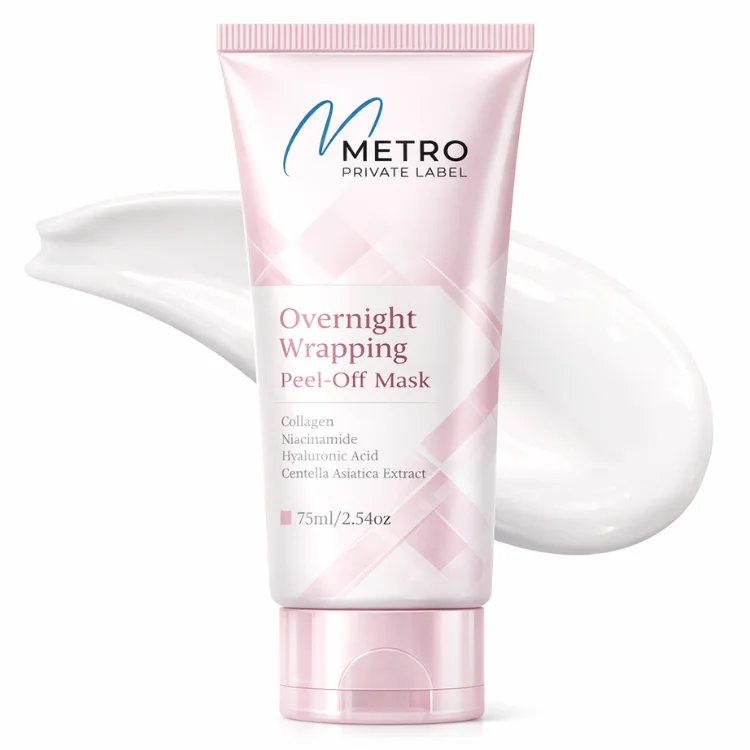
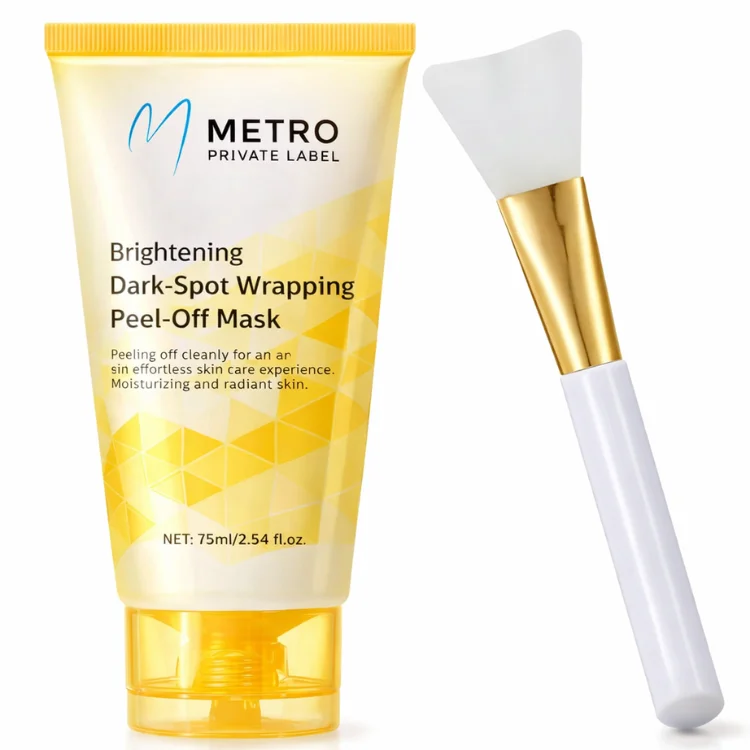
Get Your Custom Skincare Solution Today!

Don’t wait—fill out the form and let our team create the perfect skincare solution for your brand. Expect a personalized quote within 24 hours and start building your brand’s success now!

Submit Your
Private Label Skin Care Request

Fill out this form with your detailed needs and our customer support team will contact you shortly. We will assign a professional agent to follow up on your project and provide personalized assistance.

To get the fastest response, submit your inquiries using the form. If you encounter any issues with submission, you can also email us directly at info@metroprivatelabel.com .

*Metro Private Label takes your privacy very seriously. All information is only used for technical and commercial communication and will not be disclosed to third parties.
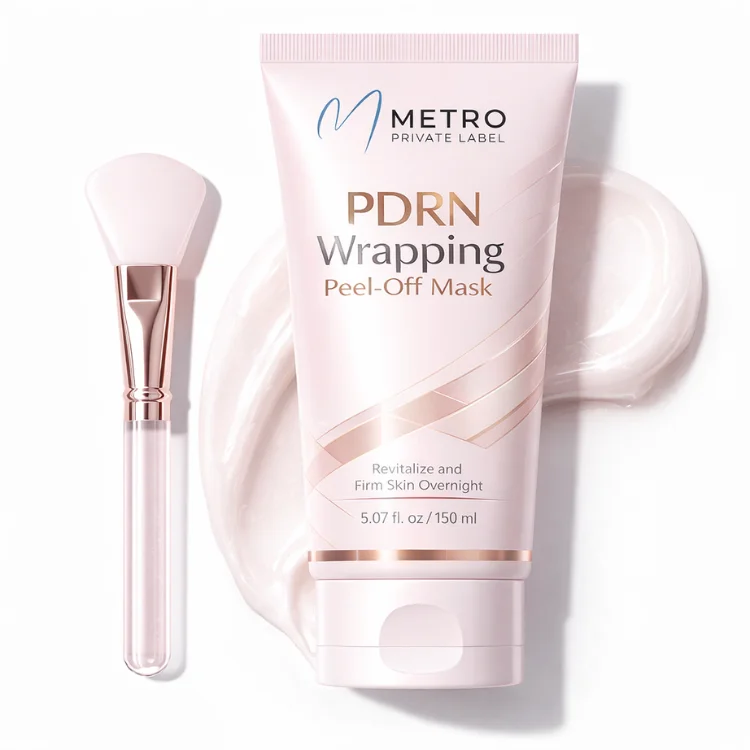
Submit Your
Private Label Skin Care Request

Fill out this form with your detailed needs and our customer support team will contact you shortly. We will assign a professional agent to follow up on your project and provide personalized assistance.

To get the fastest response, submit your inquiries using the form. If you encounter any issues with submission, you can also email us directly at info@metroprivatelabel.com .

*Metro Private Label takes your privacy very seriously. All information is only used for technical and commercial communication and will not be disclosed to third parties.