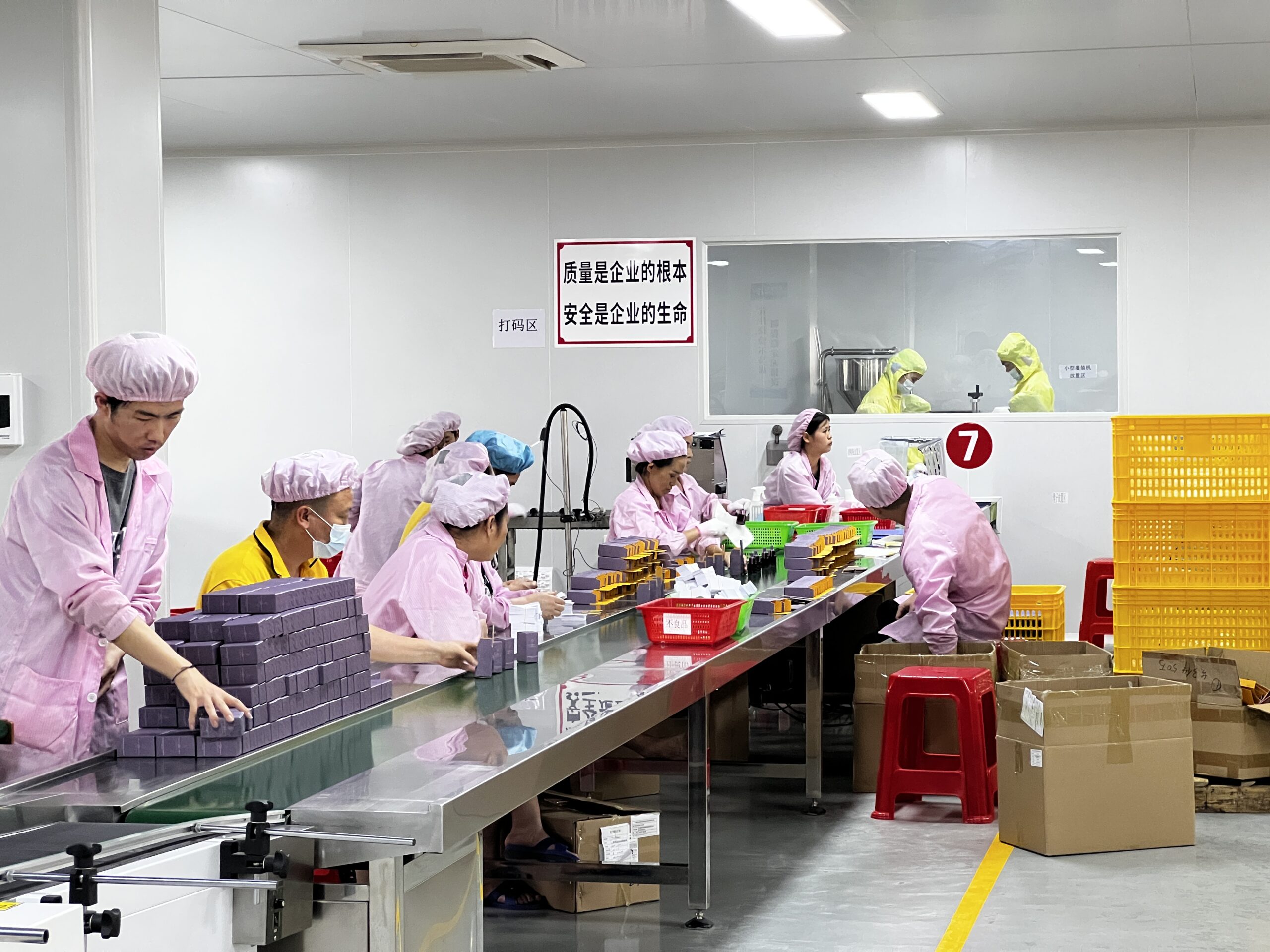
Your Trusted Microneedle Patch Manufacturer

We help you launch faster, start smaller, and stand out with custom formulas, pro-grade quality, and trend-driven skincare that sells — all built to grow with your brand.

Private Label Microneedle Patch

At Metro Private Label, we know that a microneedle patch isn’t a trend product—it’s a precision skincare format. Brands choose microneedle patches because they want targeted delivery, visible results, and a product that immediately signals advanced care to their customers. That’s exactly how we approach private label microneedle patch manufacturing.
 
We design our microneedle patch solutions around real use scenarios—under-eye fine lines, puffiness, dark circles, forehead wrinkles, and expression lines—not generic claims. From hyaluronic acid and peptide micro-needles for instant smoothing, to retinol-based overnight wrinkle patches and depuffing eye treatments with caffeine and niacinamide, our formulations reflect what’s actually performing across premium DTC brands, Amazon bestsellers, and clinic-inspired skincare routines.
 
Behind every project, we study top-selling microneedle patches, ingredient trends, and customer feedback to understand what works—and what doesn’t. That way, when we develop a microneedle patch for your brand, it’s not just technically feasible, but commercially relevant and easy to position in your market.

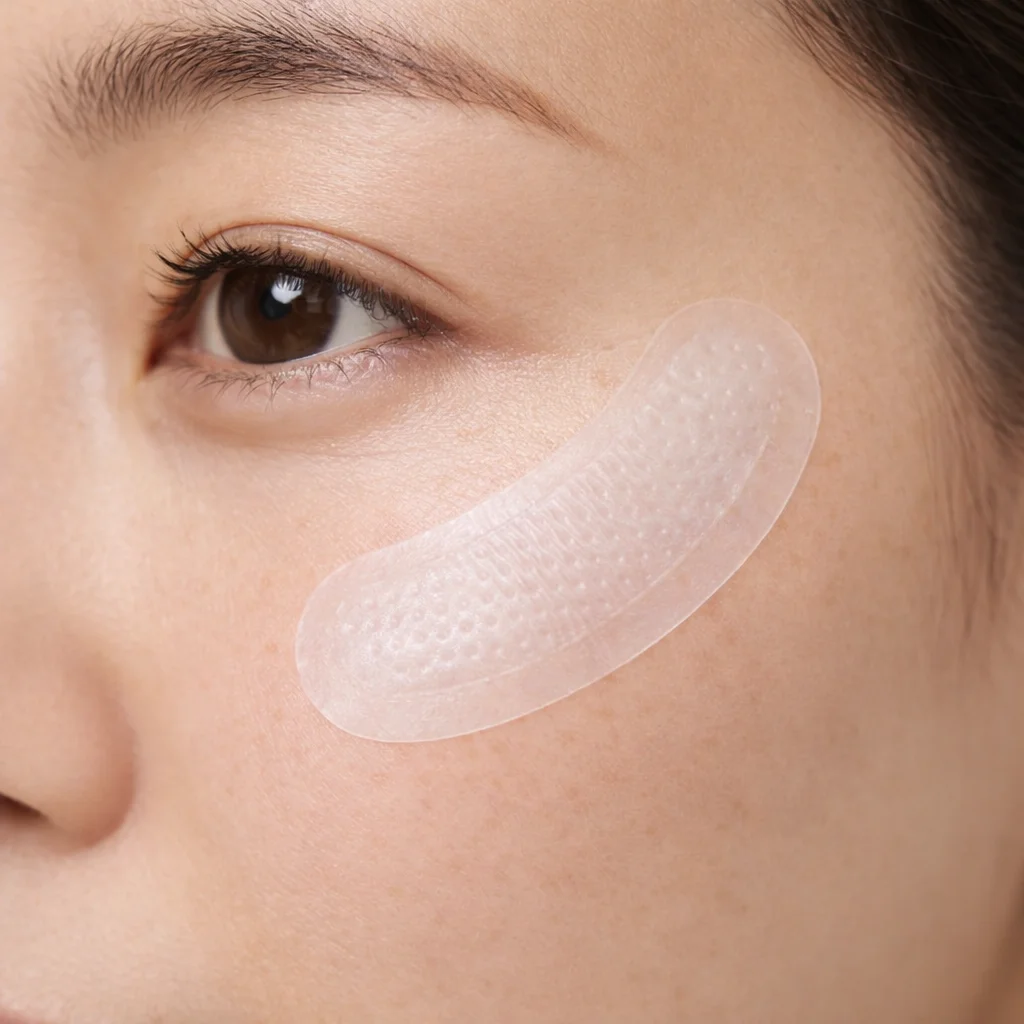
Microneedle Under-Eye Patches (Fine Lines + Firming)

Microneedle Depuffing & Dark Circle Eye Patches (Overnight / No-Slip)

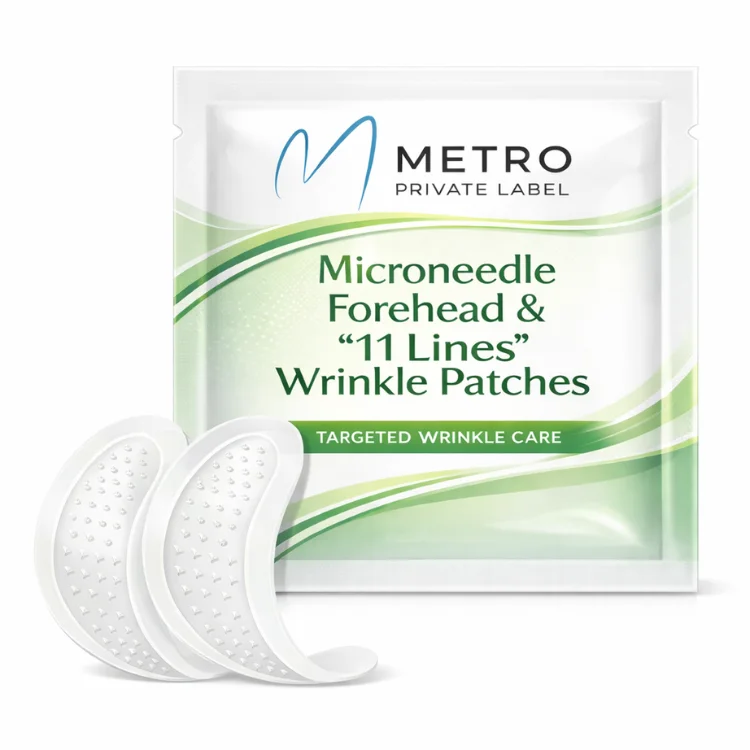
Microneedle Forehead & ‘11 Lines’ Wrinkle Patches

Microneedle Smile Line / Crow’s Feet Targeted Wrinkle Patches

Build a Microneedle Patch Line That Actually Performs

At Metro Private Label, we know a successful microneedle patch isn’t about adding “micropoints” to a patch and calling it innovation. It’s about getting the needle dissolve speed right, ensuring comfortable skin contact, maintaining active stability, and delivering results customers can see—and trust—after real use. Today’s buyers are smart. They care about how the patch feels on skin, whether it stays in place overnight, and if it truly targets a specific concern without irritation. That’s why every private label microneedle patch we manufacture is designed around real usage scenarios, proven actives, and validated market demand.
 
Whether you’re launching an under-eye microneedle patch for fine lines, a depuffing eye treatment for tired eyes, a targeted forehead wrinkle patch, or a precision patch for smile lines and crow’s feet, we start with a clear purpose from day one. Our development decisions are guided by what’s already working across premium DTC brands, Amazon best sellers, and clinic-inspired skincare routines—so your microneedle patch doesn’t just look advanced on the box, it performs where customers feel it most.
As your manufacturing partner, we go beyond assembling patches. We focus on microneedle structure, active loading balance, adhesion performance, and packaging compatibility, so your product stays stable in transit, comfortable in use, and consistent at scale. From ingredient direction and claim positioning to patch shape, packaging format, and reorder planning, we help you launch, test, and grow your microneedle patch line with confidence—built on sound formulation logic and real market behavior, not guesswork.
 
💡 Our 4 Most In-Demand Private Label Microneedle Patch Types
1️⃣ Under-Eye Microneedle Patches (Fine Lines & Firming) Targeted eye patches designed to smooth fine lines and support firmness, often built around hyaluronic acid, peptides, or age-supporting actives.
2️⃣ Depuffing & Dark Circle Eye Microneedle Patches Overnight or no-slip eye patches focused on puffiness and dark circles, commonly positioned for tired eyes, travel recovery, and daily maintenance.
3️⃣ Forehead & “11 Lines” Microneedle Wrinkle Patches Precision patches for expression lines between the brows and across the forehead, designed for visible smoothing and premium anti-aging positioning.
4️⃣ Smile Line & Crow’s Feet Microneedle Patches Targeted wrinkle patches for high-movement areas, ideal for brands focusing on localized, results-driven anti-aging solutions.
 
🎯 MOQ & Packaging Options (Based on Real Microneedle Production)
At Metro Private Label, microneedle patches are true molded delivery systems, not standard sheet masks or hydrogel patches. Because of the microneedle molding process and active loading requirements, production always starts from a total needle-patch quantity, not by retail boxes.
Standard Production MOQ Our microneedle patch projects start from 5,000 individual microneedle patches. For example:
  • If your retail format is 1 box = 5 pairs (10 patches)
  • The minimum order would be 1,000 retail boxes
This structure keeps production realistic while allowing brands to launch with a commercially viable SKU.
What This MOQ Is Designed For This MOQ works well for:
  • First product launches
  • Hero SKU testing
  • DTC, Amazon, and clinic-exclusive lines
It balances manufacturing feasibility, cost control, and market testing—without forcing brands into oversized inventory.
Packaging Formats Available • Single-pair sachets • Multi-pair retail boxes (e.g. 3–5 pairs per box) • Clinic or professional-use formats (subject to project scope)
Included Support Every microneedle patch project includes patch quantity planning, retail box configuration guidance, labeling support, and stability considerations, so your SKU structure makes sense both in production and at market level.

More Than Just a Microneedle Patch Manufacturer

At Metro Private Label, we don’t just manufacture microneedle patches — we help you build products your customers actually trust, use, and repurchase. A good microneedle patch isn’t about exaggerated claims or complex technology on paper. It’s about how comfortably it sits on skin, how reliably the needles dissolve, whether it stays in place overnight, and whether users can feel a real difference after use. That’s how confidence is built — and that’s how brands grow.

✅ Launch Products the Market Is Already Asking For

We don’t develop microneedle patches based on assumptions — we follow demand. By studying top-selling Amazon products, premium DTC brands, and real customer feedback, we focus on microneedle patch formats buyers already recognize and search for: under-eye patches for fine lines and puffiness, forehead and “11 lines” wrinkle patches, and targeted patches for smile lines and crow’s feet. This allows you to enter the market with clear positioning, simple messaging, and lower risk.

✅ Small MOQ That Makes Testing and Scaling Practical

We make it realistic to start — and straightforward to grow. You can launch from 1,000 units using ready-to-label microneedle patch formats to test pricing, demand, and user response. When the market validates your product, we scale smoothly to 5,000 units and beyond for custom patch design, active combinations, or printed packaging — without forcing you to change suppliers or restart development.

✅ Performance That Builds Long-Term Brand Trust

Customers don’t repurchase concepts — they repurchase results. Our microneedle patch development focuses on controlled needle dissolution, skin comfort, adhesion stability, and active delivery balance. Whether the goal is smoothing fine lines, reducing puffiness, or targeting expression wrinkles, we design each patch to perform consistently — not just on first use, but throughout its shelf life and repeated wear.

✅ Compliance That Supports Global Expansion

We prepare your microneedle patch for real markets, not just samples. From INCI lists and ingredient documentation to labeling guidance and export readiness, we help ensure your product is compliant before it leaves the factory. Whether you’re selling on Amazon, through distributors, or in cross-border channels, we reduce delays, rework, and regulatory surprises — so you can focus on launching and scaling with confidence.
  • METRO
  • Typical OEM factory
METROTypical OEM factory
$
/year
/year
Minimum order quantity✅ 500 units for startup brands — low-risk entry for first-time founders.❌ 3,000 units minimum, limiting flexibility.
Packaging recommendations✅ Compatibility + visual templates to ensure perfect fit and premium look.❌ Not provided.
Launch support✅ Label compliance & claim copywriting included for export markets.❌ Not available.
Sample delivery time✅ 7–14 days with labeled packaging.❌ Usually 30+ days.
Compliance & Documentation✅ INCI, COA, SDS, GMP-ready — export with confidence.❌ Basic INCI only.
Buy Now

✨ Build a Microneedle Patch Line That Truly Delivers

When you work with Metro Private Label, you’re not just choosing a factory — you’re partnering with a GMPC-certified manufacturer that understands how microneedle patches perform in real life. A great microneedle patch isn’t about sounding high-tech on paper. It’s about how comfortably it sits on skin, how reliably the needles dissolve, whether it stays in place overnight, and whether users can actually feel a difference after use. That’s what builds trust — and that’s what drives repeat purchases.
 
Whether you’re launching an under-eye microneedle patch for fine lines, a depuffing eye treatment for tired eyes, a forehead or “11 lines” wrinkle patch, or a targeted patch for smile lines and crow’s feet, we design every product to fit naturally into real daily routines. Our goal isn’t a one-time launch — it’s a microneedle patch your customers keep using and coming back for.
🧪 Formulation Built on Real-World Performance
We don’t rely on copy-paste formulas or generic microneedle designs. Every microneedle patch we manufacture is developed with clear logic around needle composition, dissolution speed, active loading balance, adhesion performance, and skin comfort. We work with proven cosmetic-grade actives and delivery systems so the patch feels comfortable on application, performs consistently during wear, and stays stable through shipping and storage.
If there’s a trade-off between potency, comfort, or stability, we explain it clearly and help you choose what actually makes sense for your brand and market — not just what looks impressive in a spec sheet.
 
📦 Packaging & MOQ That Reflect How Microneedles Are Really Made
Microneedle patches are molded delivery systems, not standard sheet masks — so production always starts from patch quantity, not retail boxes.
Our standard starting point is 5,000 individual microneedle patches. For most retail formats, this equals 1,000 boxes when packed as 5 pairs (10 patches) per box. This structure is designed for first launches and hero SKU testing, while keeping inventory and risk manageable.
Packaging Notes:
  • Microneedle patch MOQ: 5,000 patches (≈ 1,000 boxes at 5 pairs/box)
  • Single-use sachets and multi-pair retail boxes available
  • Patch configuration, labeling, cartons, and finishing coordinated as one system
Everything is aligned so your product arrives cohesive, compliant, and ready to sell.
 
⚙️ A Clear, Reliable Production Process
From formulation and sampling to microneedle forming, quality control, and export preparation, our process is structured, transparent, and realistic. We communicate clearly, flag risks early, and set timelines that match real launch plans — not over-promised schedules.
Think of us as an extension of your operations team, focused on helping you bring a market-ready microneedle patch to launch without unnecessary delays or surprises.
 
🌿 Built for Brands That Want to Grow
We measure success by how well your product scales. That’s why we focus on production-stable formulations, practical microneedle MOQs, and export-ready documentation for markets like the U.S., EU, UK, and cross-border e-commerce.
With Metro Private Label, your microneedle patch line is built to launch smoothly, perform consistently, and grow confidently — not just sell once.

Who We Work With (Designed Around Your Real Needs)

We build partnerships by thinking the way our clients do — understand first → provide solutions → deliver results. Every client type has different priorities, and our role is to translate those into clear, actionable outcomes.

Medical Aesthetic / SPA Professionals

You care about: post-treatment comfort, product safety, and documentation that meets regulatory and audit standards.
What we deliver:

  • Clinical-grade formulations: CICA, ceramides, and peptides; pH-balanced, fragrance-free options with full preservative logic provided.

  • Regulatory documentation: INCI, COA, SDS, stability and compatibility reports; CPSR/CPNP preparation handled with third-party testing support.

  • Professional aesthetic: minimalist, medical-style packaging suitable for back-bar or retail; traceable batches for consistent results.
    Immediate outcome: a post-treatment testing set, compliant label guide, and batch consistency plan ready for your internal validation.

Funded New Entrepreneurs

You care about: low-risk entry, a clear roadmap, and a premium finish that looks ready for market.
What we deliver:

  • Smart start: choose from proven skincare bases (serums, creams, masks); pilot runs from 500 units with optional custom cartons.

  • All-in-one process: formula → visual template → compliant label copy → production → export-ready documentation.

  • Transparent costing: clear breakdown of your key cost drivers — formula type, active concentration, and packaging complexity — so you can plan pricing and profit with confidence.
    Immediate outcome: 2–3 customized samples, a detailed quotation breakdown, and a timeline showing every stage from sample to shipment.

Boutique DTC Brand Owners

You care about: originality, visual consistency, and storytelling through ingredients.
What we deliver:

  • Ownable sensorials: bio-cellulose or vegan carrageenan textures paired with signature actives like peptides, niacinamide, or botanical blends.

  • Design alignment: typography, color, and label systems that match your brand aesthetic; compatibility checks before full production.

  • Global readiness: INCI, COA, SDS, and stability data included; EU/UK/US label claim review support for smooth registration.
    Immediate outcome: packaging mockups, ingredient story sheets, and a coordinated multi-SKU rollout plan that keeps your range cohesive.

Why this works:
We don’t sell production capacity — we deliver strategic understanding, technical precision, and verifiable results.
By connecting your goals with regulatory, design, and manufacturing expertise, we help your brand move faster, reduce uncertainty, and build trust that lasts.

FAQs Microneedle Patch

For your convenience, we’ve gathered the most commonly asked questions about our Microneedle Patch. However, should you have any further queries, please don’t hesitate to reach out to us.
What types of microneedle patches can you manufacture?
We focus on non-acne, premium microneedle patch formats that are already well understood by the market. This includes under-eye microneedle patches for fine lines and puffiness, forehead and “11 lines” wrinkle patches, and targeted patches for smile lines and crow’s feet. We don’t chase gimmicks—we build formats customers recognize, trust, and repurchase.
Yes. We can customize needle composition, active ingredients, loading levels, dissolution speed, and skin feel based on your brand positioning. If something isn’t realistic from a comfort, stability, or compliance perspective, we’ll tell you upfront and help you choose the best alternative.
Microneedle patches are molded delivery systems, so MOQ is based on patch quantity, not boxes. Our standard MOQ starts at 5,000 individual microneedle patches, which typically equals 1,000 retail boxes when packed as 5 pairs per box. This structure is designed for first launches and hero SKU testing.
Yes. Many brands start with ready-to-label microneedle patch formats to test pricing, demand, and user feedback. Once the product is validated, we can scale into custom patch designs, actives, or printed packaging without changing suppliers or restarting development.
Typically, sampling takes 3–5 weeks, followed by 4–6 weeks for production, depending on patch type and packaging. If you have a launch deadline, let us know early—we’ll give you a realistic timeline and flag any risks upfront.
Yes. We work with cosmetic-grade actives and support compliance for major markets including the U.S., EU, UK, and cross-border e-commerce. We provide INCI lists, ingredient documentation, and labeling guidance to help keep your launch on track.
We do. We help you plan patch count per box, sachet format, retail box structure, and labeling layout so the SKU makes sense both for production and for how customers actually use the product. Everything is coordinated as one system, not pieced together.
Every project includes needle dissolution checks, adhesion performance review, stability considerations, and compatibility evaluation. Our goal is consistency—so the patch performs the same way across batches, during shipping, and throughout its shelf life.
Yes. While we don’t write marketing hype, we help you shape clear, realistic, and compliant claims based on how the patch actually performs—such as smoothing fine lines, improving skin comfort, or supporting overnight use. This helps reduce claim risk and customer complaints later.
Yes. We work with brands globally and support export documentation, packing coordination, and shipping preparation. Whether you’re selling on Amazon, through distributors, or via cross-border channels, we help make the process smoother and more predictable.

Metro Private Label in Numbers

Happy Clients
0 +
Million-dollar Buyers
0 +
Formulation
0 +
Professional Staffs
0 +

Your Ultimate Guide to Microneedle Patch

If you’re planning to add a Microneedle Patch to your product lineup—whether it’s your first solid-format SKU or an expansion of an existing body care range—you’re not just choosing a new texture. You’re stepping into one of the most high-repeat, trust-driven categories in modern skincare. Microneedle Patchs are not impulse buys. Consumers expect them to solve real problems like dryness, friction, sensitivity, or daily comfort, and they expect them to work consistently. When they do, customers don’t just repurchase—they build habits around them.
 
We’ve watched this category evolve from simple cocoa butter sticks into performance-driven, lifestyle products. At Metro Private Label, we’ve worked with micro brand founders launching their first hero product, Amazon and Shopify sellers optimizing for reviews and reorders, salons and clinics creating professional-grade retail SKUs, and distributors looking for stable formulas that can move across regions without issues. And in every case, we’ve seen the same pattern: Microneedle Patchs look simple on the surface, but they require far more strategic thinking than most liquid body products.
 
This guide is built on what we’ve learned behind the scenes. Not theory, not trends pulled from headlines, but real development decisions that affect whether a Microneedle Patch succeeds or struggles. We’ll share how different stick types perform across channels, what consumer problems actually justify a stick format, which ingredients behave well—or poorly—in solid systems, and why packaging, durability, pricing logic, and early testing often matter more than adding another “hero” ingredient.

Table of Contents

What Problems Do Microneedle Patches Actually Solve for Consumers?

When I explain microneedle patches to brand founders, clinic owners, or operators, I always start by resetting expectations. Microneedle patches are not general skincare products, and they are not meant to compete with creams, serums, or masks. In my experience, they work best when they are treated as precision tools—products designed to address very specific skin problems in very specific areas, where traditional skincare often underperforms.
 
Why Microneedle Patches Exist in the First Place
The core reason microneedle patches exist is simple: many skin concerns are localized, but most skincare products are designed to spread. When I look at under-eye fine lines, forehead expression wrinkles, or areas of skin that constantly look tired, I see zones where creams tend to migrate, evaporate, or absorb unevenly. Microneedle patches solve this by staying exactly where they are placed. They create a controlled environment that allows actives to work over time instead of disappearing into surrounding skin or pillowcases.
 
Solving the “I Need Results in One Specific Area” Problem
From a consumer’s point of view, microneedle patches answer a very practical question: “I don’t need my whole face treated—just this spot.” Whether it’s puffiness under the eyes after a poor night’s sleep or expression lines that show up clearly in the mirror, these are problems people can point to. In my view, that clarity is one of the biggest strengths of microneedle patches. When the problem is clear, usage becomes intuitive, and expectations become more realistic.
 
Addressing Tired-Looking Skin, Not Abstract Aging
One important distinction I always make is that microneedle patches are more effective at addressing how skin looks and feels right now than at promising long-term anti-aging. Consumers respond much more strongly to “my eyes look less puffy in the morning” or “this line looks softer after use” than to broad claims about reversing aging. Microneedle patches fit naturally into this mindset because they are often used overnight or during recovery moments, when consumers are actively looking for visible improvement by the next day.
 
Why Targeted Delivery Changes How Consumers Judge Performance
I’ve noticed that consumers judge microneedle patches differently from creams. When someone applies a patch, they expect a focused outcome. They don’t ask whether their entire face feels hydrated; they ask whether the specific area looks better. This changes how performance is perceived. Even subtle improvements can feel meaningful because the product was clearly designed for that one job. That psychological alignment between product and expectation is critical for satisfaction and repeat purchase.
 
Reducing Routine Fatigue and Decision Overload
Another problem microneedle patches quietly solve is routine fatigue. Many consumers are overwhelmed by multi-step routines and conflicting advice. A microneedle patch simplifies the process. There’s no question about how much to apply or whether it absorbed properly. The user places the patch, leaves it on, and removes it. In my experience, that simplicity increases consistency, and consistency is often the missing link between “good skincare” and “skincare that actually gets used.”
 
Helping Consumers Feel in Control of Their Skin
Microneedle patches also offer something emotional: a sense of control. When someone targets a specific line or area with a patch, it feels intentional and proactive. Instead of passively hoping a product works, the consumer feels like they are actively addressing a problem. That sense of control builds confidence in both the product and the brand behind it.
 
Why Clear Problem Definition Drives Repeat Purchases
From a business perspective, the clearest link to repeat purchase is how well the original problem was defined. When a microneedle patch is positioned around one main concern—fine lines, puffiness, or expression wrinkles—consumers know exactly when to use it and why they need it again. When brands try to make one patch solve too many problems, users become unsure when to reach for it, and repurchase rates suffer.
 
The Foundation of Positioning, Claims, and Long-Term Success
In my experience, every successful microneedle patch starts with a clearly defined problem. That clarity shapes everything that follows: formulation decisions, usage instructions, packaging design, and claims. When the problem is well understood, the product feels honest, the messaging stays grounded, and customers trust what they are buying. That trust is what turns a microneedle patch from a novelty into a repeat-use product in a real skincare routine.
Ultimately, microneedle patches succeed when they are positioned as solutions to specific, visible problems, not as general skincare miracles. The brands that perform best are the ones that begin by asking a very direct question: what exact issue is this patch solving for the person using it, and when will they notice the difference?

Which Consumer Scenarios Are Best Suited for Microneedle Patches?

When I evaluate whether microneedle patches will succeed for a brand or a clinic, I don’t start with ingredients or technology. I start with when and why a real person will actually use the product. In my experience, microneedle patches perform extremely well in certain moments and perform poorly when they’re forced into the wrong routine. Understanding those scenarios is one of the most important factors behind strong reviews, repeat purchases, and long-term product relevance.
 
Why Microneedle Patches Belong in Night Routines, Not Morning Ones
From everything I’ve seen, night routines offer the most stable and forgiving environment for microneedle patches. At night, the skin is clean, relaxed, and not under immediate pressure from makeup, sun exposure, or facial movement. When a patch is worn overnight, needle dissolution happens gradually and evenly, and the patch has time to stay in full contact with the skin. Psychologically, night use also creates a clear expectation. People apply a microneedle patch at night because they want to wake up feeling or seeing a change, which aligns perfectly with the strengths of this format.
 
Recovery Moments After Stress, Travel, or Poor Sleep
One of the most natural use cases I see for microneedle patches is recovery. After a long day, a flight, emotional stress, or a poor night’s sleep, consumers don’t want a complicated routine. They want something targeted and reassuring. Applying a microneedle patch in these moments feels like an intentional act of care. It signals that the product is there to help the skin recover, not to maintain an already perfect routine. This emotional context matters because it changes how consumers judge performance and value.
 
Targeted Treatments for Problems That Feel Urgent
Microneedle patches excel when the concern feels immediate and visible. Fine lines under the eyes, puffiness before an event, or expression wrinkles that seem more pronounced after fatigue are all situations where consumers actively look for a solution. In my experience, people reach for microneedle patches when they want to address one problem in one place, not when they are thinking about overall skin improvement. That sense of urgency makes the product feel purposeful rather than optional.
 
Why Daily Full-Face Use Often Leads to Disappointment
I’m often asked why microneedle patches don’t work well as daily, full-face products. The issue isn’t effectiveness, it’s friction. Daily use increases cost awareness, effort, and time pressure. Consumers start to question whether the product is worth using every day, and that doubt quickly turns into dissatisfaction. Microneedle patches are better positioned as occasional or targeted treatments. When used this way, they feel special and intentional rather than burdensome.
 
The Importance of Wear Duration and Uninterrupted Contact
Wear time plays a bigger role than many people expect. In my experience, microneedle patches perform best when they can stay on the skin without interruption for an extended period. Overnight wear or long evening wear allows the needles to dissolve in a controlled way and reduces the risk of premature removal. When consumers rush the process, they often feel the product didn’t work, even if the formulation itself is sound. Clear expectations around wear duration are essential for satisfaction.
 
Lifestyle Habits That Support Consistent Use
Lifestyle has a strong influence on how well microneedle patches are received. People with busy schedules, frequent travel, or a preference for low-effort skincare tend to appreciate this format more. These consumers value simplicity. They like knowing that once the patch is applied, the step is complete. There’s no layering, no measuring, and no uncertainty. When a microneedle patch fits naturally into someone’s lifestyle, it becomes easier to use consistently and easier to trust.
 
Professional and Clinic-Adjacent Use Scenarios
In clinical or professional contexts, microneedle patches also make sense as maintenance or recovery tools. They feel controlled, hygienic, and purposeful. From what I’ve observed, this setting reinforces the perception that microneedle patches are a serious skincare solution rather than a novelty. This credibility often carries over into home use, especially when consumers are looking for products that feel medically inspired but still easy to use.
 
How Usage Scenarios Shape Reviews and Repurchase Behavior
One thing I’ve learned over time is that the same microneedle patch can receive very different reviews depending on how it is used. When consumers apply it in the right scenario, with realistic expectations, feedback tends to focus on comfort, convenience, and visible improvement. When it’s forced into the wrong routine, complaints often center on value, fit, or lack of results. The product hasn’t changed, but the context has.
In my view, microneedle patches succeed not because they are complex, but because they are used at the right moment. Night routines, recovery periods, and targeted treatment scenarios create the conditions where this format can truly perform. When brands understand and respect these usage scenarios, they give microneedle patches the best possible chance to earn trust, positive reviews, and long-term loyalty.

How to Choose the Right Microneedle Patch Type for Your Market

When I advise brands on microneedle patches, I often notice that the decision is treated as a design choice rather than a market decision. In reality, patch type is one of the most commercially sensitive variables in this category. Under-eye patches, forehead or “11 lines” patches, and smile-line patches may share similar technology, but they live in completely different mental spaces for consumers. Choosing the wrong format doesn’t just slow sales; it actively creates negative reviews, even when the product itself is technically solid.
 
Why Patch Placement Shapes Consumer Psychology
In my experience, consumers don’t approach all facial areas with the same mindset. The under-eye area is associated with fatigue, stress, and short-term appearance changes. People expect improvement without discomfort and without committing to long-term routines. The forehead and “11 lines” area is associated with aging, self-image, and long-term concerns, which immediately raises emotional sensitivity and performance expectations. Smile lines sit somewhere in between, touching both expression and identity, but they introduce physical complexity because of constant facial movement. These psychological differences strongly influence how forgiving consumers are and how they judge results.
 
Under-Eye Microneedle Patches as a Familiar Upgrade
When I look at market data and consumer feedback, under-eye microneedle patches consistently act as an entry point for this category. Consumers are already comfortable with eye patches, so the microneedle element feels like an enhancement rather than a risk. Expectations tend to focus on comfort, hydration, and looking more rested rather than dramatic transformation. This makes under-eye patches more resilient to mixed reviews and better suited for repeat purchases, especially for first-time users.
 
Forehead and “11 Lines” Patches Carry Higher Emotional Stakes
Forehead and “11 lines” patches are evaluated more harshly. In my experience, consumers associate this area with visible aging and loss of control, which makes them more emotionally invested in outcomes. They often expect visible smoothing and are less patient with subtle improvements. This means that messaging, usage instructions, and realistic claims are critical. Even a high-quality product can struggle if the consumer expects overnight transformation and doesn’t see it.
 
Smile-Line Patches Demand Physical and Behavioral Precision
Smile-line patches are among the most technically challenging formats, not because of formulation alone, but because of how people move. These areas are constantly in motion, especially during speaking and sleeping. I’ve seen products fail because the patch felt intrusive or awkward, even when the formulation performed well. Consumers who buy smile-line patches are often more experienced and more critical. They expect the patch to stay in place, feel comfortable, and integrate seamlessly into their routine. This makes this format less forgiving and more niche, but potentially very strong when executed correctly.
 
How Patch Type Influences Price Sensitivity
One of the less obvious differences between patch types is how consumers think about price. Under-eye patches are often used more frequently, which makes buyers more sensitive to cost per use. Forehead and smile-line patches are typically used less often and are seen as targeted treatments, which allows for higher price points. However, higher prices also increase scrutiny. In my experience, misaligning price strategy with patch type is one of the fastest ways to erode trust.
 
Usage Frequency Shapes Long-Term Satisfaction
Usage frequency is often underestimated when choosing a patch type. Under-eye patches tend to fit naturally into weekly or as-needed routines. Forehead and smile-line patches are used more selectively, often during recovery periods or specific concerns. When brands push unrealistic usage expectations, such as daily application in high-sensitivity areas, consumers feel pressured and disappointed. Aligning patch type with natural usage behavior reduces friction and improves satisfaction.
 
Why Technically Good Products Still Receive Poor Reviews
I’ve reviewed many negative customer comments where the formulation was not the real problem. The issue was mismatch. The patch didn’t fit the consumer’s lifestyle, expectations, or tolerance for effort. When that happens, feedback often focuses on comfort, value, or “not seeing results,” even though the underlying problem is strategic, not technical. This is why patch type selection matters as much as formulation quality.
 
Choosing Patch Types Based on Market Reality
In my view, the right microneedle patch type is chosen by observing how people actually live, not how brands want them to live. It requires understanding what problems feel urgent, how much effort consumers are willing to invest, and how often they want to use a product. When patch type, usage behavior, and pricing align, even modest visible improvements feel meaningful and trustworthy.
Ultimately, choosing the right microneedle patch type is about alignment. Alignment between the problem being solved, the expectations attached to that facial area, and the real habits of the end user. When that alignment is achieved, microneedle patches stop being experiments and start becoming dependable tools that consumers return to again and again.

What to Consider Before Developing a Microneedle Patch Formula

When I approach a microneedle patch project, I always treat formulation as the most sensitive and least forgiving part of the entire product. Unlike creams or serums, microneedle patches leave almost no room for error. Every choice made at the formula stage will directly affect comfort, safety, performance, shelf life, and ultimately whether consumers trust the product enough to use it again. In my experience, this is where many otherwise promising microneedle concepts quietly fail.
 
Why Microneedle Patches Are Not “Modified Serums”
One of the first misconceptions I usually have to correct is the idea that a microneedle patch is just a concentrated serum in a different format. It isn’t. A microneedle patch is a solid delivery structure that must remain stable before use and behave predictably once it touches skin. When I evaluate a formula, I’m thinking about mechanical strength, moisture behavior, and chemical stability at the same time. An ingredient that works beautifully in liquid form may weaken needle structure or degrade quickly when locked into a solid matrix.
 
Needle Dissolution Speed Defines the User Experience
Dissolution speed is not a technical detail; it is the core of how the product feels. If needles dissolve too fast, users may feel nothing and assume the patch didn’t work. If they dissolve too slowly, users may feel discomfort or anxiety, especially in sensitive areas. In my experience, the ideal dissolution window depends on where the patch is used and how long it is worn. Under-eye patches often need a gentler, faster-feeling dissolution, while forehead or expression-line patches can tolerate a slightly longer process. Getting this balance wrong creates confusion, even if the actives are effective.
 
Active Stability Is More Important Than Active Popularity
There is constant pressure to include the latest trending ingredients at high concentrations. I’ve learned to be cautious here. Many popular actives are unstable when exposed to moisture, heat, or long storage periods, especially in solid microneedle form. I always prioritize ingredients that remain stable over time and under real shipping conditions. A modest but stable formula will outperform an aggressive formula that degrades, oxidizes, or causes irritation halfway through its shelf life.
 
Why Higher Potency Often Reduces Consumer Trust
“Stronger” sounds appealing on paper, but on skin it can be a liability. In delicate areas like under the eyes, even mild irritation can feel alarming. I’ve seen consumers abandon products entirely after a single uncomfortable experience. From my perspective, comfort is not a compromise; it is a requirement. A microneedle patch that feels safe and calm builds confidence, and confidence leads to repeat use. No level of technical sophistication can compensate for a formula that makes users uneasy.
 
Moisture Sensitivity Starts Before the Product Is Used
Many people focus on how the patch behaves on skin, but I spend just as much time thinking about how it behaves before it ever reaches the customer. Microneedle patches are highly sensitive to ambient moisture. Excess humidity can soften needles and reduce structural integrity, while overly dry conditions can make them brittle. These behaviors influence packaging design, storage recommendations, and shipping routes. In my experience, shelf life issues are often rooted in moisture management decisions made early in formulation.
 
Skin Feel Is Part of Performance, Not an Afterthought
I always pay close attention to what users feel during and after application. Sensations like tightness, tingling, or lingering pressure can quickly change how a product is perceived. Even when actives are working, discomfort creates doubt. A well-formulated microneedle patch should feel intentional and reassuring, not intrusive. Comfort signals quality, especially for first-time users who may already feel cautious about applying needles to their skin.
 
Usage Behavior Must Shape Formulation Decisions
Formulas don’t exist in isolation from behavior. I constantly ask how long the patch will realistically be worn, whether it will be used overnight, and how often consumers are expected to apply it. A formula that requires perfect conditions to work will disappoint real users. In my experience, the best microneedle patches are designed to perform reliably even when usage isn’t ideal. That tolerance is what separates laboratory success from commercial success.
 
Long-Term Scalability Begins at the Formula Stage
One detail that’s often underestimated is how formulation affects scalability. Ingredients that are difficult to source consistently, sensitive to small process variations, or dependent on tight environmental controls can become major problems at scale. I’ve learned that conservative, well-understood formulation logic scales far more smoothly than experimental systems that look impressive but are fragile in mass production.
 
Why Safety and Consistency Outweigh Innovation
Innovation matters, but in microneedle patches, trust matters more. Consumers are placing a foreign structure on their skin and leaving it there for an extended period. They need to feel safe doing so. From my point of view, safety, predictability, and comfort are not limitations on creativity; they are the foundation that allows a product to survive in the market long enough to build loyalty.
 
Formulation as a Long-Term Relationship With the User
Ultimately, I see microneedle patch formulation as a commitment to the end user. Every decision sends a signal about how much the brand respects their skin and their time. When dissolution speed, active stability, moisture control, and comfort are carefully balanced, the product feels thoughtful and dependable. That feeling is what turns a microneedle patch from a curiosity into a product people are willing to keep in their routine.
In my experience, developing a microneedle patch formula is less about pushing boundaries and more about understanding constraints deeply. When those constraints are respected, the product becomes safer, more comfortable, and more reliable over time. That balance is what allows a microneedle patch to succeed not just at launch, but throughout its entire lifecycle.

Compatibility Matters: Formula, Patch Structure, and Skin Feel

When I work on microneedle patch projects, compatibility is the topic I return to again and again. In my experience, it’s also the topic that causes the most expensive mistakes when it’s ignored. Microneedle patches are not forgiving products. Formula, patch structure, and skin feel are deeply interconnected, and even a small mismatch between them can quietly undermine an otherwise well-designed product.
 
Why Compatibility Is More Critical in Microneedle Patches Than in Other Skincare
What makes microneedle patches different from creams or serums is that there is no buffer. In liquid skincare, emulsifiers, textures, and application methods can hide small formulation flaws. In microneedle patches, everything is exposed. The ingredient system must physically support the needle shape, remain stable over time, and interact gently with skin once applied. When I assess compatibility, I’m not just asking whether an ingredient is effective, but whether it behaves predictably inside a solid structure before, during, and after use.
 
The Gap Between Ingredient Reputation and Real-World Behavior
One of the hardest lessons I’ve learned is that an ingredient’s reputation does not guarantee compatibility. I’ve seen ingredients that perform beautifully in serums create problems when used in microneedle form. Some attract moisture too aggressively, causing needles to soften or deform before use. Others crystallize as conditions change, leading to uneven needle dissolution. These issues rarely show up immediately, which is why compatibility problems are often discovered late, after samples have already been approved.
 
How Formula Decisions Shape Needle Strength and Reliability
When I look at a microneedle patch, I always think in terms of structural stress. The formula determines whether the needles can survive molding, packaging, shipping, and handling by the end user. Ingredients that make the matrix too flexible can cause needles to bend or blunt. Ingredients that make it too rigid can lead to brittleness and breakage. Both scenarios reduce user confidence. If the patch doesn’t look or feel structurally sound, consumers immediately question its quality and safety.
 
Uneven Dissolution as a Source of Consumer Anxiety
Uneven needle dissolution is one of the most damaging compatibility failures I’ve encountered. From a technical perspective, it might seem minor. From a consumer perspective, it feels alarming. When part of a patch dissolves quickly and another part feels persistent or uncomfortable, users don’t think about formulation chemistry. They think something is wrong. In my experience, once a consumer feels uncertainty during use, trust is lost, even if the product is technically safe.
 
Skin Feel Is Where Compatibility Becomes Personal
Skin feel is not an abstract concept to the end user. It’s the moment where technical decisions become emotional experiences. I pay close attention to sensations like pressure, tingling, tightness, or lingering awareness of the patch after application. Even subtle discomfort can make users shorten wear time or remove the patch early. When that happens, performance suffers and reviews reflect disappointment. In my view, skin comfort is not optional. It’s a direct outcome of how well formula and structure work together.
 
Why Sensitive Facial Areas Expose Compatibility Flaws
Compatibility issues are amplified in delicate areas such as under the eyes or around expression lines. These zones have lower tolerance for irritation and unfamiliar sensations. Ingredients that feel acceptable on the cheeks or forehead can feel aggressive here. I’ve seen products that perform well in one area fail completely in another because the compatibility profile wasn’t reassessed. In these areas, restraint and balance matter more than innovation.
 
Moisture, Environment, and Time as Silent Stress Tests
Compatibility isn’t only tested on skin. It’s tested by time and environment. I always consider how a microneedle patch behaves in different humidity levels, during long storage, and through temperature changes in shipping. Moisture absorption can weaken needle structure long before the product reaches the customer. These issues often surface months later as complaints about texture, performance, or appearance, even though the root cause was an early compatibility oversight.
 
The Hidden Cost of Late-Stage Reformulation
One of the most painful scenarios I’ve witnessed is discovering compatibility problems after production has begun. Reformulating a microneedle patch is not a simple ingredient swap. Changes ripple through the entire system, affecting needle formation, dissolution behavior, packaging requirements, and stability. In my experience, fixing compatibility late costs exponentially more than addressing it early, both financially and in lost market momentum.
 
Why Conservative Compatibility Choices Often Win Commercially
It’s tempting to push boundaries with new ingredients or complex systems. I’ve learned that conservative, compatibility-first choices often perform better in the real market. Products that feel reliable, comfortable, and predictable earn better reviews and stronger loyalty than products that promise more but feel uncertain to use. Consumers reward consistency, even if they don’t consciously articulate it.
 
Compatibility as a Marker of Manufacturing Maturity
From my perspective, how a manufacturer talks about compatibility reveals a lot. Teams that understand compatibility don’t just list ingredients; they explain behavior, trade-offs, and limitations. That depth of understanding shows up in the final product as stability, comfort, and confidence. When compatibility is treated seriously, the product feels cohesive rather than experimental.
 
Protecting the User Experience Through Compatibility
At the end of the process, compatibility is about protecting the user experience. A microneedle patch is intimate. It sits on the skin, often overnight, and interacts with sensitive areas. When formula, patch structure, and skin feel are aligned, the user feels safe, calm, and confident. That feeling is what turns first-time use into repeat use.
In my experience, compatibility is not a constraint that limits creativity. It is the foundation that allows a microneedle patch to succeed outside the lab. When early technical decisions respect how ingredients, structure, and skin feel interact, costly reformulation can be avoided and trust can be built from the very first use.

Cost Structure: How Microneedle Patch Pricing Really Works

When I discuss microneedle patch pricing with brands, I often notice a moment of surprise. Many people expect the cost logic to resemble creams, serums, or sheet masks. In reality, microneedle patches follow a completely different economic model. In my experience, misunderstanding this model is one of the main reasons brands struggle with margins, pricing confidence, or long-term scalability in this category.
 
Why Microneedle Patch Costs Are Not Driven by “Formula Volume
In traditional skincare, cost conversations usually start with how much formula goes into a bottle. With microneedle patches, that thinking simply doesn’t apply. I always explain that the true unit of cost is the patch itself. Each patch is an individual manufactured object that requires precise shaping, controlled drying, and careful handling. Whether the formula weight is small or large matters far less than how many patches must be produced, inspected, and packaged.
 
Patch Molding Time and Yield Shape the Real Cost
Patch molding is one of the most expensive and least visible parts of the process. In my experience, production speed is slower than liquid filling, and yield losses matter much more. If needle density is high or the patch design is complex, rejection rates can increase. That means more time, more labor, and more material wasted per acceptable unit. These realities quietly push costs up, even when raw materials appear reasonable on paper.
 
Why Active Loading Changes Cost Disproportionately
Active ingredients behave very differently in microneedle patches than in liquid formulas. Because actives are concentrated into a solid needle structure, they often require higher purity grades and stricter stability controls. I’ve seen small increases in active loading lead to surprisingly large jumps in cost, not because the ingredient is expensive by weight, but because it becomes harder to process, stabilize, or scale consistently. In microneedle patches, actives influence cost through complexity, not just price per kilogram.
 
Patch Count per Box Is a Strategic Cost Decision
One of the most important pricing levers is how many patches are included in a retail box. I’ve learned that this decision affects almost everything else. Fewer patches lower the entry price but raise cost per use. More patches improve perceived value but push retail pricing higher. In my experience, brands that don’t think carefully about patch count often end up with products that feel either overpriced or underpowered, even if the patch itself performs well.
 
Packaging Format Can Quietly Double Your Cost
Packaging is often treated as a branding discussion, but in microneedle patches it is a structural necessity. These patches are highly sensitive to moisture and physical stress. Single-use sachets, blister trays, protective films, and cartons all add cost through materials and manual assembly. I’ve seen projects where packaging ended up costing nearly as much as the patch itself. Ignoring this early almost always leads to budget surprises later.
 
MOQ Realities Shape Unit Economics
Minimum order quantities play a much bigger role in microneedle patch pricing than many buyers expect. Patch molding requires setup time and tooling that don’t scale down easily. In my experience, small production runs carry disproportionately high unit costs. This doesn’t mean small brands can’t enter the category, but it does mean they need to be realistic about margins and initial pricing strategy.
 
Why Wholesale Expectations Often Clash With Reality
One of the most challenging conversations I have is around wholesale pricing. Many brands want microneedle patches to fit into familiar wholesale-to-retail ratios, but the manufacturing cost often doesn’t support that. In my experience, microneedle patches perform best when positioned as targeted, premium solutions rather than everyday consumables. Trying to force them into low-price brackets usually leads to compromised quality or unsustainable margins.
 
The Long-Term Cost of Chasing Low Prices
I’ve seen brands attempt to reduce costs by thinning needles, lowering active quality, or simplifying packaging too aggressively. These decisions often look good on a spreadsheet but show up later as inconsistent performance, discomfort, or poor reviews. In my view, true cost efficiency comes from intelligent design decisions, not from weakening the core function of the patch.
 
Evaluating Feasibility Before Development Begins
Before committing to development, I always encourage brands to look at the full pricing chain. Manufacturing cost, expected wholesale price, and realistic retail positioning must align from the beginning. In my experience, adjusting patch size, patch count, or packaging early is far easier than trying to fix margins after launch.
 
Pricing as a Reflection of Product Intent
Over time, I’ve come to see pricing as an extension of product design. Every cost decision communicates something to the consumer. A microneedle patch that is priced appropriately for its format and performance feels intentional and credible. One that is priced without regard to its true cost structure feels confusing and fragile.
In my experience, microneedle patch pricing works best when it is understood, not forced. When brands respect the unique cost structure of this category and design within it, they gain control over margins, confidence in pricing, and a much stronger foundation for sustainable growth.

Retail Pricing Strategy: What Consumers Are Willing to Pay

When I look at microneedle patches that truly succeed in the market, pricing is never an afterthought. In my experience, retail pricing is one of the strongest signals a brand sends to consumers about what kind of product this really is. Microneedle patches are not impulse skincare. They sit in a space between cosmetic treatment and precision tool, and consumers approach them with a very different mindset than they do everyday creams or masks.
 
Why Microneedle Patches Are Seen as Treatments, Not Basics
From everything I’ve observed, the moment consumers see the word “microneedle,” they mentally shift categories. They no longer think in terms of daily maintenance or bulk value. Instead, they think in terms of targeted results, controlled use, and problem-solving. This is why successful microneedle patches are rarely priced like mass skincare. When a microneedle patch is priced too low, it doesn’t feel like a bargain. It feels suspicious, as if corners were cut where safety or performance matters most.
 
How Price Shapes Expectations Before First Use
Long before a consumer applies a patch, price has already shaped their expectations. In my experience, price acts as a promise. A higher price suggests precision, safety, and intention. A lower price suggests experimentation or disposability. If that price signal does not match the actual experience, disappointment follows quickly. This is why pricing must align with how refined, controlled, and intentional the product feels from the moment it is opened.
 
Typical Willingness to Pay in 2025–2026 Markets
Looking ahead to 2025–2026, I see consumers becoming even more deliberate. They are not unwilling to pay premium prices, but they demand clarity. For under-eye and expression-line microneedle patches, consumers already accept higher price ranges because these areas are emotionally charged and visually important. What they want in return is not miracles, but reassurance that the product is well-designed, safe, and purposeful. In my experience, pricing works best when it feels calm and confident rather than aggressive or promotional.
 
Perceived Value Is Built on Precision, Not Abundance
One mistake I often see is trying to justify higher prices by offering more patches, more claims, or more complex messaging. In reality, perceived value in microneedle patches comes from precision. Consumers want to know exactly what the patch is for, how often they should use it, and what kind of improvement is realistic. When that clarity exists, even a small box can feel worth the price. When it doesn’t, no amount of extra content can compensate.
 
Patch Count and the Psychology of Cost per Use
Even when consumers don’t consciously calculate cost per use, they feel it. In my experience, patch count strongly influences whether a price feels fair. A very low patch count can feel risky if the price is high and results are uncertain. A very high patch count can reduce the sense of specialness and make the product feel generic. The most successful products strike a balance that matches real usage frequency. Occasional-use treatments can justify higher prices with fewer patches, while more frequent-use concepts require careful restraint.
 
How Packaging Reinforces Price Credibility
Packaging plays a much larger role in price acceptance than many brands expect. I’ve noticed that consumers are far more comfortable paying premium prices when packaging communicates protection, hygiene, and control. Individually sealed patches, rigid trays, and clean layouts reinforce the idea that this is a serious product. When packaging feels flimsy or overly decorative, consumers start questioning whether the price is justified, even before trying the patch.
 
Trust as the Invisible Driver of Price Tolerance
Trust is the real currency behind pricing. In my experience, consumers are willing to pay more when they feel the brand understands their concern and respects their intelligence. Clear instructions, realistic claims, and calm communication all increase willingness to pay. When brands exaggerate or overpromise, price resistance increases sharply. Even modest prices can feel expensive when trust is missing.
 
Why Discounting Often Damages Long-Term Perception
I’ve seen many brands rely on discounts to drive volume, especially during launch. In the microneedle patch category, this often backfires. Frequent discounts train consumers to wait and undermine the idea that the product is a precise treatment. Over time, the product starts to feel less credible and more transactional. In my experience, stable pricing builds far more confidence than constant promotions.
 
Aligning Price With Real Usage Behavior
The strongest pricing strategies I’ve seen are rooted in how consumers actually use the product. Microneedle patches are often used during recovery moments, before important events, or when a concern feels urgent. In these moments, consumers are less price-sensitive and more outcome-focused. Pricing that reflects this reality feels natural. Pricing that ignores it creates friction and hesitation.
 
Pricing as a Long-Term Brand Signal
Ultimately, I see retail pricing as a long-term signal, not a short-term tactic. It tells consumers whether this is a product meant to be trusted, repeated, and valued over time. When pricing aligns with precision, packaging, and performance, microneedle patches feel justified and reassuring. When it doesn’t, even a well-formulated product struggles to earn loyalty.
In my experience, consumers in the 2025–2026 market are not resistant to paying for microneedle patches. They are resistant to confusion. Brands that treat pricing as part of the product design, rather than an afterthought, are the ones that will build sustainable demand, stronger reviews, and long-term trust in this category.

2026 Trends: How Consumer Demand Is Shaping Microneedle Patches

When I think about where microneedle patches are heading in 2026, I don’t start with new molds or lab concepts. I start with conversations, reviews, and usage patterns. In my experience, the future of this category is being shaped less by technological breakthroughs and more by how clearly consumers now understand what they want and what they are no longer willing to tolerate. Microneedle patches are moving from novelty to necessity, and that shift is changing everything.
 
Precision Is Replacing Broad Promises
One of the strongest shifts I see is the rejection of broad, undefined claims. Consumers no longer want products that “improve skin overall.” They want to know exactly what problem is being addressed and where. In my experience, microneedle patches succeed when they are designed for a single concern, such as under-eye fatigue or expression lines, and communicate that focus clearly. This precision builds confidence before the product is even opened, because the consumer feels the product was designed with intention rather than ambition.
 
Short Routines Reflect Emotional and Mental Fatigue
By 2026, shorter routines are not just about saving time. They are about reducing mental load. I’ve noticed that many consumers feel overwhelmed by complex skincare regimens. Microneedle patches fit perfectly into this emotional landscape because they simplify decision-making. Apply the patch, wait, remove. There is a clear beginning and end. In my experience, products that offer this sense of closure are far more likely to be used consistently and appreciated over time.
 
The Demand for Results That Feel Real, Not Dramatic
Consumers are becoming far more realistic about what skincare can achieve. I see a clear move away from exaggerated transformation toward improvements that feel believable. In microneedle patches, this means smoother appearance, reduced puffiness, or skin that looks more rested. I’ve found that when results align with what consumers intuitively expect, satisfaction increases even if the change is subtle. Overpromising, on the other hand, is quickly punished through negative reviews and lost trust.
 
Comfort Is Becoming a Primary Purchase Filter
Comfort is no longer secondary. In my experience, consumers now actively avoid products that cause stinging, redness, or lingering discomfort, especially in sensitive areas. Microneedle patches that rely on aggressive sensations to signal effectiveness are losing relevance. Instead, there is growing demand for formulations that feel calm and controlled. Comfort reassures users that the product is safe, well-designed, and appropriate for repeated use.
 
Premium Packaging Is Being Redefined by Practicality
The idea of premium is evolving. In 2026, premium does not mean excessive or decorative. It means thoughtful. I’ve noticed that consumers respond positively to packaging that protects the patch, maintains hygiene, and feels intuitive to use. Individually sealed patches and clean, minimal layouts communicate seriousness and care. Oversized boxes or unnecessary embellishments are increasingly seen as wasteful rather than luxurious.
 
The Rise of Subtle, Confident Branding
Another trend I see clearly is the move toward quiet confidence in branding. Loud claims and aggressive visuals are being replaced by calm language and restrained design. In microneedle patches, this approach aligns well with the idea of precision treatment. Consumers in 2026 seem to trust brands that explain rather than shout. In my experience, this kind of branding also supports higher price tolerance because it feels mature and intentional.
 
How These Trends Are Shaping Formulation Logic
These behavioral shifts are directly influencing how microneedle patches are formulated. Short routines and comfort-focused expectations push formulations toward stability, balance, and predictability. Instead of chasing the newest active, I see greater success with well-understood ingredients used thoughtfully. In my experience, consumers are more impressed by products that work consistently than by ones that sound innovative but feel unpredictable.
 
Packaging as a Reflection of Consumer Values
Packaging is increasingly evaluated as a reflection of values, not just aesthetics. Consumers notice whether packaging protects the product properly, whether it’s easy to store, and whether it feels excessive. In 2026, I believe brands that show restraint and purpose in packaging choices will earn more trust than those that focus on visual impact alone. Practical premium packaging communicates respect for both the product and the user.
 
Reduced Tolerance for Learning Curves
One subtle but important trend I see is reduced tolerance for learning curves. Consumers want products that make sense immediately. If instructions feel complicated or usage feels uncertain, interest drops quickly. Microneedle patches that integrate smoothly into existing routines without requiring explanation are more likely to succeed. This pushes brands to design products that are intuitive rather than impressive on paper.
 
Why Trend Alignment Lowers Long-Term Risk
From a commercial perspective, aligning with these consumer trends reduces long-term risk. Products built around real behavior patterns age more gracefully and require fewer corrections. In my experience, microneedle patches that respect how people actually live are easier to scale and defend in competitive markets.
 
2026 as the Year of Refinement, Not Reinvention
Looking ahead, I see 2026 as a year of refinement for microneedle patches. The novelty phase is over. What remains is thoughtful design, honest communication, and respect for the user’s time and comfort. Brands that understand this shift will not need to chase trends; they will naturally fit into them.
In my view, the microneedle patches that thrive in 2026 will feel calm, precise, and quietly effective. When consumer demand, formulation logic, and packaging choices align, these products stop feeling like experiments and start feeling like dependable tools people are willing to trust and return to.

Packaging Decisions That Affect Usability and Repurchase

When I review why some microneedle patches become part of a consumer’s routine while others are used once and forgotten, packaging is almost always a deciding factor. In my experience, microneedle patches are judged as much by how they are handled as by how they perform. Because these are single-use products that involve close contact with the skin, packaging becomes the user experience itself, not just a container around it.
 
Why Packaging Carries More Responsibility in Microneedle Products
Microneedle patches already ask the consumer to trust an unfamiliar format. The moment they pick up the box, that trust is either reinforced or weakened. I’ve seen excellent formulas struggle because the packaging introduced doubt before the patch ever touched the skin. If the packaging feels flimsy, confusing, or overly complicated, consumers subconsciously question safety and quality. In this category, packaging has to do emotional work before it does physical work.
 
Patch Count per Box Sets the Tone for Commitment
One of the first things consumers register is how many patches are inside the box. In my experience, this number quietly defines the relationship between the user and the product. A very low patch count can feel like a gamble, especially for first-time users who are unsure about results. A very high patch count can feel like an obligation rather than an invitation. When patch count aligns with realistic usage frequency, the product feels approachable and repeatable. That balance makes it easier for consumers to imagine buying the product again.
 
The First Open Experience Shapes Trust Immediately
The first time a consumer opens a microneedle patch sachet is a critical psychological moment. I pay close attention to how cleanly the sachet opens, whether the patch is immediately visible, and whether the needles feel protected rather than exposed. In my experience, any struggle at this stage creates tension. If the sachet tears unevenly, sticks to the patch, or requires too much force, users become cautious. Even small frustrations here can overshadow the actual performance of the patch.
 
Protection Versus Accessibility Is a Delicate Balance
Microneedle patches need strong protection from moisture and pressure, but protection should never feel like a barrier to use. I’ve seen packaging designs that technically protect the patch well but make removal awkward or stressful. When consumers worry about damaging the patch or touching the needles incorrectly, confidence drops. The most effective packaging designs I’ve encountered allow the patch to be removed smoothly and intuitively, without making the user think too much.
 
Storage Convenience Influences Whether the Product Is Finished
Storage behavior is often overlooked, but it has a direct impact on repurchase. Consumers don’t store microneedle patches in ideal conditions. They keep them in bathroom drawers, bedside tables, handbags, or carry-ons. In my experience, slim, flat packaging that stays clean and organized encourages continued use. Bulky boxes, loose inserts, or awkward trays tend to get pushed aside or damaged. When the product becomes inconvenient to store, it slowly disappears from the routine.
 
Travel Friendliness Expands Usage Occasions
One of the strongest but least discussed advantages of microneedle patches is portability. I’ve noticed that consumers often use these patches while traveling, during stressful periods, or before important events. Packaging that supports this behavior quietly increases usage frequency. When packaging is compact, durable, and easy to slip into a bag, the product feels adaptable to real life. When it isn’t, one of the format’s biggest strengths is lost.
 
Hygiene as an Emotional Reassurance Tool
Hygiene is not just a technical requirement; it is an emotional reassurance. Consumers want to feel that each patch is untouched and protected until the moment of use. Individually sealed patches and clear separation communicate safety instantly. In my experience, when hygiene is obvious, users feel calmer applying the patch, especially in sensitive areas like under the eyes. That calmness directly affects how they judge comfort and results.
 
How Packaging Ages Over the Life of the Box
Repurchase decisions are often made after several uses, not after the first. I always think about how packaging looks and functions halfway through the box. Does it stay neat, or does it fall apart? Does it still feel clean and organized? In my experience, packaging that degrades quickly makes the product feel disposable, even if the patches themselves are effective. Durable, tidy packaging reinforces the sense that the product is worth finishing and buying again.
 
Packaging’s Silent Influence on Reviews
Many negative reviews don’t explicitly mention packaging, but they describe feelings like inconvenience, awkwardness, or lack of confidence. I’ve learned to read these comments carefully. Very often, the issue is not the patch, but the way it was packaged. When packaging works well, reviews focus on results. When it doesn’t, the entire experience feels compromised, and performance is judged more harshly.
 
Designing for Life After the First Impression
A common mistake I see is designing packaging primarily for online photos. While first impressions matter, repurchase is driven by what happens after the product arrives. Packaging that remains functional, protective, and easy to live with over weeks of use supports loyalty far more than visually impressive designs that age poorly.
 
Packaging as Part of the Product’s Promise
Ultimately, I see packaging as part of the promise the brand makes to the consumer. It communicates how carefully the product was designed and how much the user’s experience was considered. When patch count, sachet usability, storage convenience, and travel friendliness align, the microneedle patch feels dependable rather than experimental.
In my experience, consumers rarely repurchase microneedle patches based on results alone. They repurchase because the entire experience feels safe, easy, and respectful of their time. Packaging decisions shape that experience every step of the way. When packaging quietly supports use instead of complicating it, repurchase becomes a natural next step rather than a difficult decision.

How to Evaluate and Select a Microneedle Patch Manufacturer

When I look back at projects that succeeded versus those that struggled, the difference almost always comes down to the manufacturer choice. In microneedle patches, this decision carries more weight than in most skincare categories. These products are technically sensitive, highly regulated in perception, and unforgiving when something goes wrong. In my experience, selecting the right manufacturer is less about finding a supplier and more about choosing a risk management partner.
 
Why Price Is the Weakest Starting Point
I understand why price is often the first question. Budgets matter. But when I see buyers anchor too early on unit cost, I know problems are coming. Microneedle patches hide complexity behind a small physical form. A low quote can easily mask compromises in needle consistency, dissolution control, packaging protection, or quality testing. In my experience, the cost you don’t see upfront is usually the one that appears later, in delays, reformulation, or damaged brand trust.
 
Evaluating True Technical Capability Beyond Marketing Claims
One of the first things I listen for is how a manufacturer explains their microneedle process. Not what they promise, but how they describe it. A technically capable manufacturer can walk through needle formation logic, explain how dissolution speed is controlled, and describe how structural consistency is monitored across batches. When explanations stay abstract or overly confident without detail, I take that as a signal that the technology may be surface-level rather than deeply understood.
 
How Transparency Reveals Manufacturing Maturity
Transparency is one of the clearest indicators of whether a manufacturer is experienced or simply eager. In my experience, mature manufacturers talk openly about constraints. They explain what is realistic, what needs compromise, and where risks exist. This honesty is especially important in microneedle patches, where pushing beyond technical limits can lead to subtle failures that only show up after launch. When a manufacturer is willing to say no and explain why, that usually means they are protecting you rather than selling to you.
 
Understanding MOQ Logic Instead of Negotiating Blindly
MOQ often becomes a point of tension, but I’ve learned to treat it as a diagnostic tool. In microneedle patch manufacturing, MOQ is usually tied to mold setup, drying cycles, yield stability, and packaging configuration. A capable manufacturer can clearly explain why a certain quantity is required and how changing the patch count per box or packaging format affects feasibility. When MOQs feel arbitrary or endlessly flexible, it often means the production process itself is not well controlled.
 
Compliance Readiness Is a System, Not a Folder
Many buyers ask whether a manufacturer can “provide compliance documents.” I’ve learned to ask a different question: how does compliance influence development decisions from day one? A reliable manufacturer understands ingredient restrictions, labeling expectations, and export realities before production begins. In my experience, compliance failures rarely come from missing paperwork; they come from early formulation or packaging decisions that didn’t consider the target market. A manufacturer who integrates compliance into development dramatically reduces launch risk.
 
Communication Style Predicts Project Outcomes
Communication is not a soft skill in microneedle patch projects. It is a technical requirement. I pay close attention to how timelines are explained, how uncertainties are framed, and how feedback is handled. These projects almost always involve adjustments. In my experience, manufacturers who communicate clearly and calmly during sampling continue to do so during production. Those who avoid details early often create confusion later, when changes are more expensive and stressful.
 
Sampling Behavior Shows How Production Will Be Treated
Sampling is where I learn the most about a manufacturer’s standards. I watch how feedback is documented, how revisions are tracked, and whether changes are explained or simply applied. In microneedle patches, sampling is not about getting something “good enough.” It is about stress-testing the system. Manufacturers who rush sampling often rush production. Those who treat sampling seriously tend to deliver far more consistent results at scale.
 
Problem-Solving Ability Matters More Than Perfect Execution
No microneedle patch project is perfect from the start. Issues will arise, whether in dissolution behavior, packaging interaction, or storage stability. What matters is how the manufacturer responds. In my experience, the best partners don’t deflect responsibility or hide issues. They analyze the cause, explain it clearly, and propose realistic solutions. This ability to troubleshoot calmly is one of the strongest predictors of long-term success.
 
Assessing Scalability Before You Need It
Many brands only think about scalability after demand appears. I try to evaluate it much earlier. I ask whether the same process used for the first production run can support larger volumes without changing core parameters. In microneedle patches, scalability depends on disciplined formulation logic, repeatable molding, and controlled environmental conditions. In my experience, manufacturers who plan for scale early prevent painful transitions later.
 
Why the Cheapest Option Is Often the Most Expensive
I’ve seen brands choose the lowest-priced manufacturer and then spend months fixing issues that could have been avoided. Reformulation, repackaging, delayed launches, and poor reviews all carry real costs. In microneedle patches, aggressive pricing often signals shortcuts that are invisible at the quotation stage. From my perspective, a realistic price paired with clear technical explanations is far safer than an attractive number with few details.
 
Selecting a Manufacturer as a Strategic Decision
Ultimately, I don’t view manufacturer selection as a purchasing decision. I see it as a strategic one. The right manufacturer reduces uncertainty, clarifies trade-offs, and protects the brand from preventable mistakes. In my experience, the best partners don’t just make microneedle patches. They help you make better decisions before problems appear.
Choosing a microneedle patch manufacturer is about alignment. Alignment of technical capability, transparency, communication, and long-term thinking. When that alignment exists, production becomes predictable, compliance becomes manageable, and growth becomes far less risky. That, more than any single price point, is what determines whether a microneedle patch project truly succeeds.

Why Partner with Metro Private Label for Your Microneedle Patch Line?

If you’re planning to launch a Microneedle Patch line in 2026 or 2027, you’re entering one of the most trust-driven and behavior-dependent segments in modern skincare. Microneedle patches are no longer experimental add-ons or trend-driven novelties. Today, brands use them as targeted treatment tools for fine lines, puffiness, expression wrinkles, and tired-looking skin—areas where consumers expect visible results and are willing to repurchase when those expectations are met. People don’t choose microneedle patches out of curiosity alone. They choose them because they want precision, controlled delivery, and results that feel intentional rather than cosmetic.
 
Real-World Experience Across Brands, Channels, and Markets
Over the years, we’ve worked with micro brand founders launching their first treatment SKU, Amazon and DTC operators focused on repeat purchase performance, aesthetic clinics introducing professional-grade retail products, and distributors sourcing stable, export-ready patch formats. Across all of these projects, one thing is consistent: microneedle patches may look simple on the surface, but developing one that performs reliably across skin types, climates, and usage habits requires far more planning than most brands expect.
 
Built on What We See Behind the Scenes
Everything we do is shaped by what we see in real production and real consumer feedback. We focus on what actually determines success, such as how needle structure behaves during storage, why dissolution speed affects comfort and trust, how adhesion performance impacts overnight wear, and how early decisions around claims, pricing, and patch count quietly determine whether a product earns five-star reviews or stalls after launch. Our role is to help brands avoid expensive trial-and-error and move forward with clarity instead of assumptions.
 
Developing Microneedle Patches Consumers Already Understand and Use
We don’t develop microneedle patches in isolation. Our approach is guided by how consumers actually search, compare, and use these products. By studying usage scenarios, complaint patterns, and repurchase behavior across e-commerce and professional channels, we focus on patch formats that integrate naturally into real routines—such as under-eye treatments, forehead or “11 lines” patches, and localized expression-area patches—rather than chasing concepts that look exciting but confuse the market.
 
Custom Formulation Aligned With Your Brand Positioning
There is no single “best” microneedle patch. Every brand serves a different audience with different priorities. That’s why we align formulation logic with your positioning. Whether you’re building a calming under-eye patch, a depuffing treatment for tired skin, or a targeted wrinkle patch for expression lines, we develop needle composition, active balance, dissolution timing, and skin feel together. This ensures the product performs consistently from first sample to scaled production, not just in theory but in real use.
 
Compliance and Stability That Protect Your Launch
Microneedle patches carry high expectations around safety and performance. We prepare every project to be market-ready from the start, with clear INCI alignment, cosmetic-grade active selection, stability considerations for different climates, and packaging compatibility checks. This preparation helps brands avoid reformulation, relabeling, or launch delays—especially when selling across borders or expanding into new channels.
 
Packaging That Supports Real-World Use, Not Just Shelf Appeal
Packaging plays a functional role in microneedle patch success. We help brands select and validate sachets, trays, and retail box formats that protect needle structure, maintain hygiene, and feel intuitive to use. Whether the goal is overnight wear, travel-friendly use, or e-commerce shipping stability, packaging is chosen to reduce damage, confusion, and customer complaints—not just to look good in product photos.
 
Practical MOQs That Match How Brands Actually Grow
Most successful brands don’t launch with a full treatment line. They start with one well-positioned microneedle patch, validate demand, and expand from there. We support that reality with clear, practical MOQs based on real production logic. For microneedle patches, this typically means starting from 5,000 patches per SKU, which translates to 1,000 retail boxes when packed as 5 pairs per box. As volumes grow, we maintain formulation continuity and packaging consistency so scaling feels like a natural step forward, not a restart.
 
A Long-Term Microneedle Patch Manufacturing Partner
Partnering with Metro Private Label means working with a team that understands microneedle structure, formulation constraints, packaging mechanics, cost logic, and global compliance expectations. Many of our clients begin with a single microneedle patch and later expand into broader treatment or eye-care lines because this category performs best when it’s built with structure and foresight.
At Metro Private Label, we don’t just manufacture microneedle patches. We help brands build treatment products that perform reliably in real routines, remain stable across markets, scale smoothly in production, and earn long-term consumer trust. Our goal is to make sure your microneedle patch line isn’t just launch-ready—but designed to grow.

Ready to Launch Your Skincare Line?

*Metro Private Label takes your privacy very seriously. All information is only used for technical and commercial communication and will not be disclosed to third parties.
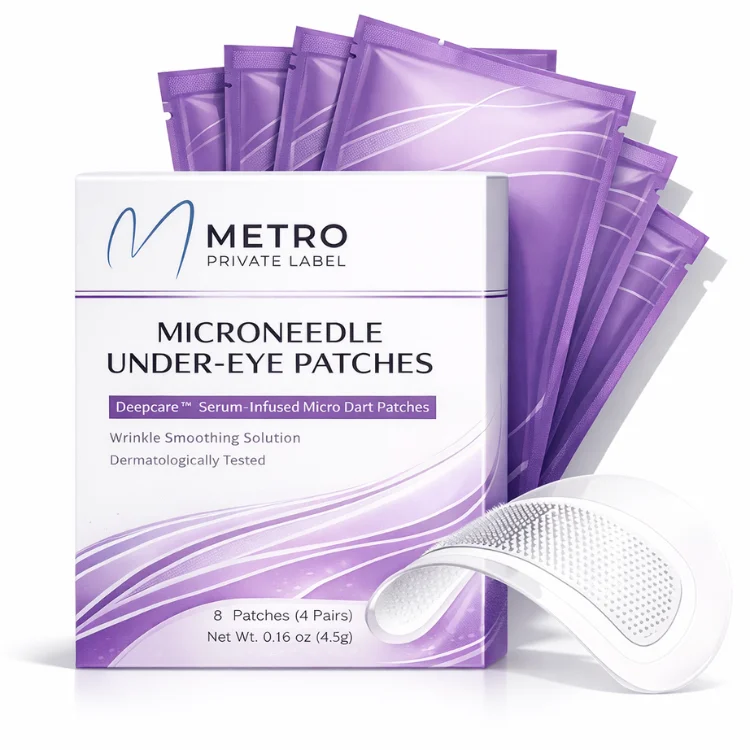
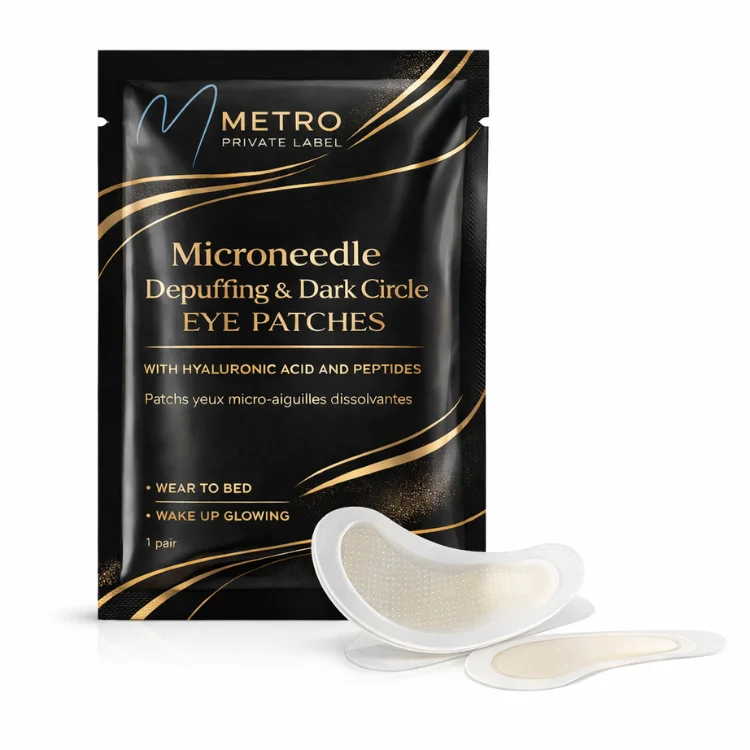
Get Your Custom Skincare Solution Today!

Don’t wait—fill out the form and let our team create the perfect skincare solution for your brand. Expect a personalized quote within 24 hours and start building your brand’s success now!

Submit Your
Private Label Skin Care Request

Fill out this form with your detailed needs and our customer support team will contact you shortly. We will assign a professional agent to follow up on your project and provide personalized assistance.

To get the fastest response, submit your inquiries using the form. If you encounter any issues with submission, you can also email us directly at info@metroprivatelabel.com .

*Metro Private Label takes your privacy very seriously. All information is only used for technical and commercial communication and will not be disclosed to third parties.
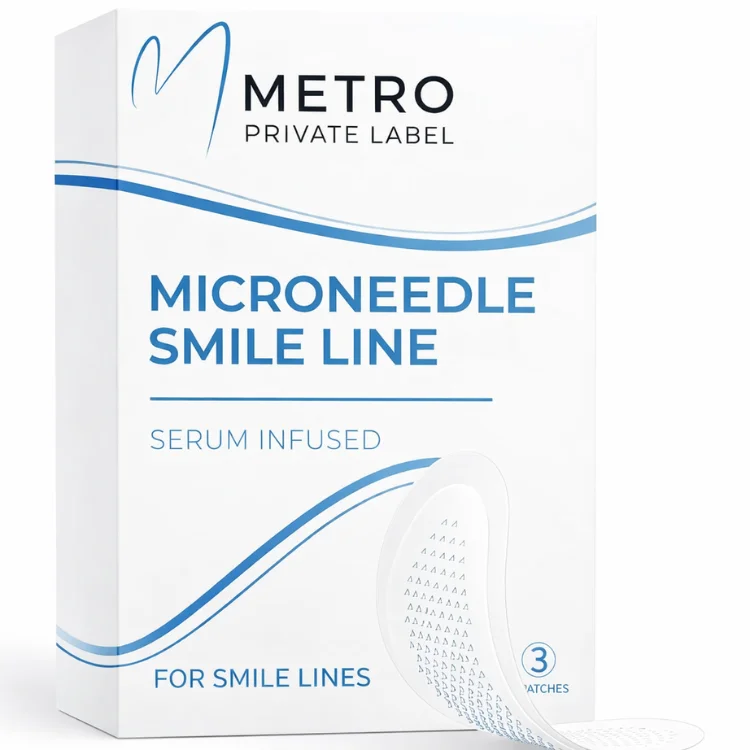
Submit Your
Private Label Skin Care Request

Fill out this form with your detailed needs and our customer support team will contact you shortly. We will assign a professional agent to follow up on your project and provide personalized assistance.

To get the fastest response, submit your inquiries using the form. If you encounter any issues with submission, you can also email us directly at info@metroprivatelabel.com .

*Metro Private Label takes your privacy very seriously. All information is only used for technical and commercial communication and will not be disclosed to third parties.