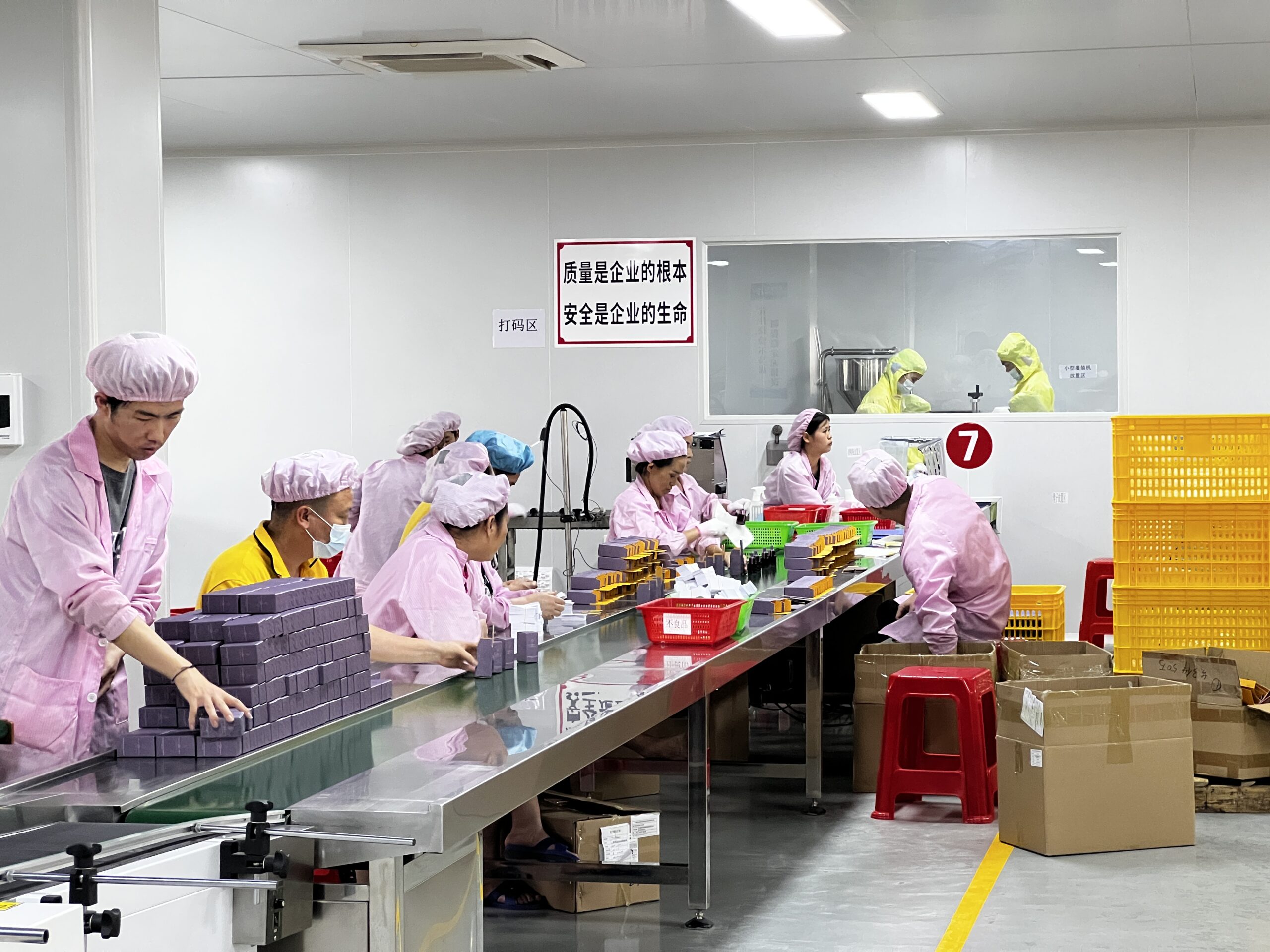
Your Trusted Micro Infusion Facial System Manufacturer

We help you launch faster with low MOQs, market-ready kits, and high-performance formulas—designed to look premium, feel safe, and scale smoothly as your brand grows.

Private Label Micro Infusion Facial System

A Micro Infusion Facial System isn’t just a “device + serum” product — it’s a high-perceived-value skincare solution that can instantly make your brand feel more premium. Done right, it supports higher AOV, stronger repeat purchases, and a product story that’s easy to communicate in ads, product pages, and short-form videos.
 
That’s why we design Micro Infusion systems around what customers actually want today: visible results, low irritation risk, and ingredient logic that makes sense. We pay close attention to what’s performing on Amazon, what’s trending on TikTok, and what real reviews reveal about texture, comfort, and outcomes — so your final product isn’t just impressive, but genuinely market-ready.
 
And we don’t stop at manufacturing a tool. We help you shape a complete system — stamp, cartridges, serum, and aftercare — with the right packaging, claims direction, and customization options for your channel. Whether you’re launching for e-commerce speed, building a long-term brand line, supplying retail, or offering a clinic-friendly kit, the goal stays the same: a Micro Infusion product that looks premium, feels safe, and sells consistently.

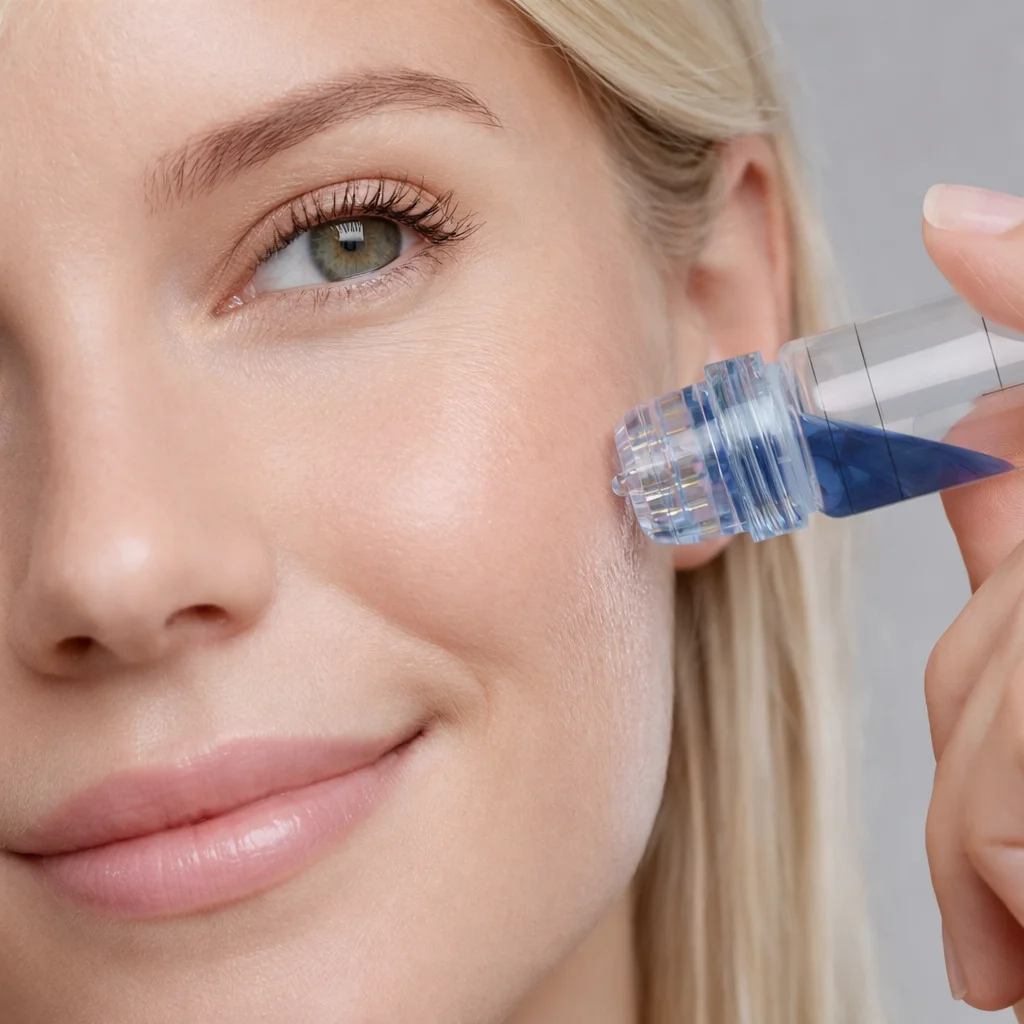
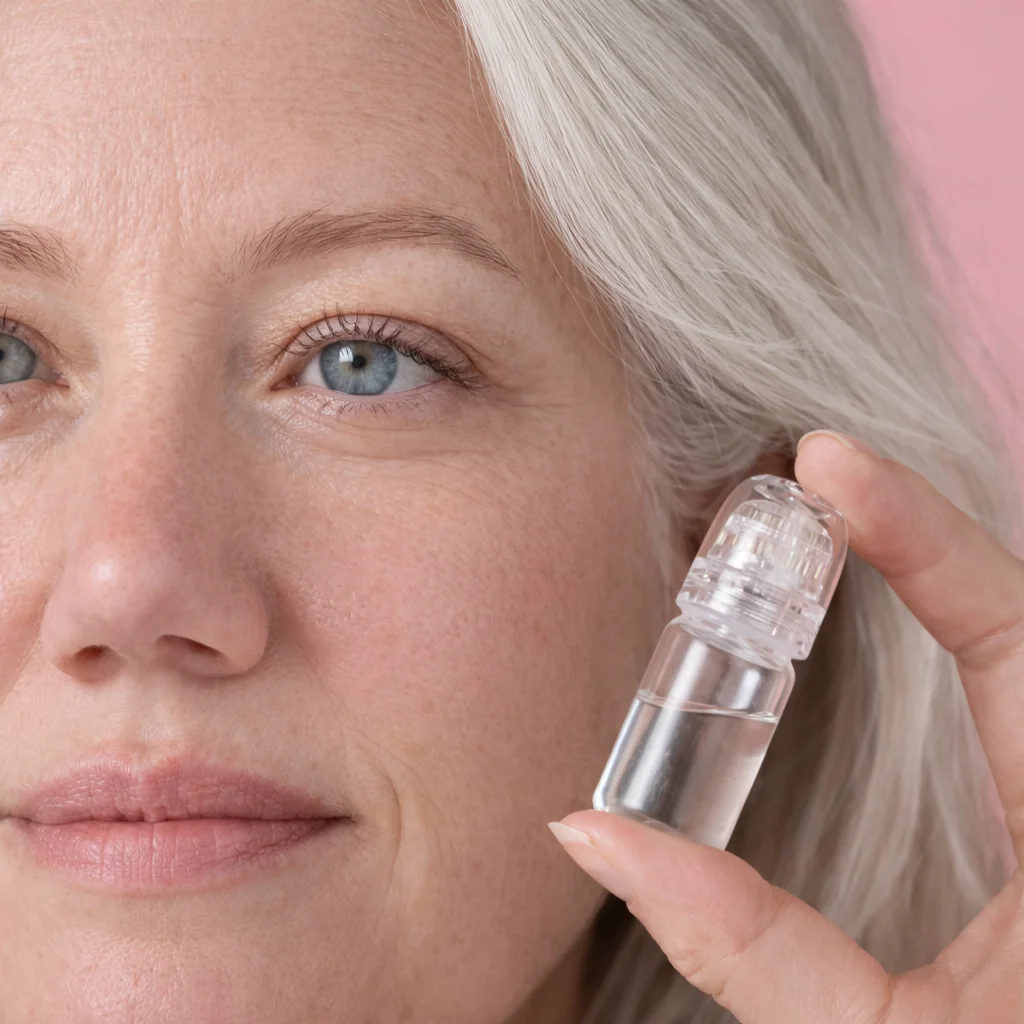
Micro Infusion “Stamp” System (Reusable Device + Serum)

Single-Use Micro Infusion Cartridge / Head Refill System

Micro Infusion Serum Ampoules / Vials (System Refill Serum)

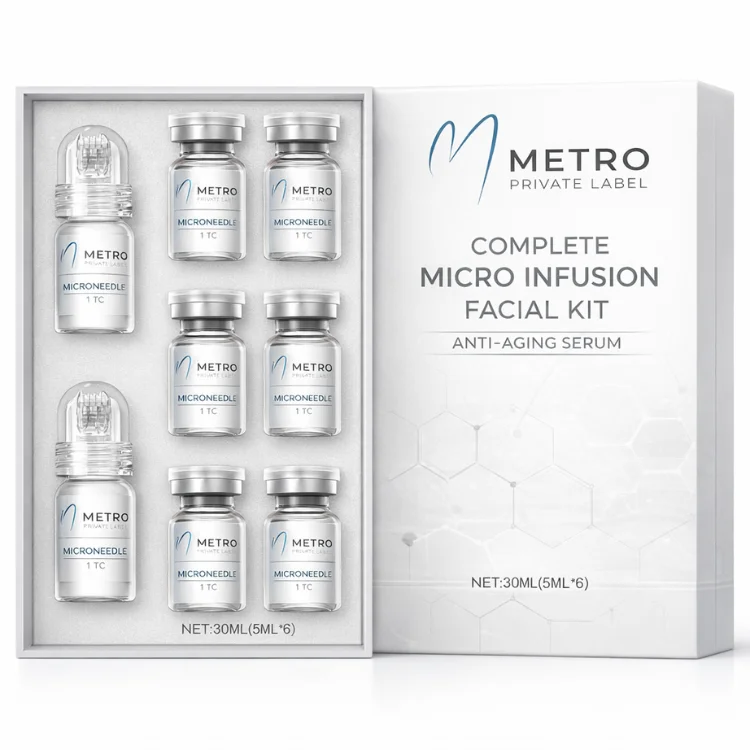
Complete Micro Infusion Facial Kit (Full Retail Set)

Build a Micro Infusion Facial System Line That Actually Sells

We know a Micro Infusion Facial System isn’t just a trending beauty gadget — it’s a high-perceived-value hero product that needs to feel safe, look premium, and deliver results people actually trust. Today’s customers are picky. They care about comfort, visible glow, irritation risk, and whether the routine is simple enough to keep using. That’s why we build every private label Micro Infusion system around real market demand, proven kit formats, and clear use scenarios that make sense for daily skincare — not just marketing claims.
 
Whether you’re launching a barrier-repair Micro Infusion kit for sensitive skin, a brightening system for uneven tone, an anti-aging concept built around peptides, or a calming set designed for stressed skin and redness, we develop each project with commercial performance in mind. We pay close attention to what consistently sells on Amazon, what DTC brands scale successfully, and what buyers and reviews reveal about what actually works — so your product doesn’t only look good on ads, it performs in real hands and earns repeat purchases.
As your manufacturing partner, we also make sure your Micro Infusion Facial System is production-stable, channel-ready, and easy to scale. From device style and cartridge planning to serum texture, active compatibility, packaging structure, and MOQ strategy, we help you launch lean, test faster, and expand your product line with confidence — without overbuilding or taking unnecessary risks.
 
💡 Our 4 Most In-Demand Private Label Micro Infusion Facial System Types
1️⃣ Micro Infusion Stamp Systems
The best “hero product” format for DTC brands and Amazon sellers — easy to explain, easy to market, and high perceived value.
2️⃣ Disposable Cartridge / Refill Head Systems
Built for hygiene, repeat purchase, and smoother scaling — perfect for brands planning long-term retention and refills.
3️⃣ Micro Infusion Serum Ampoules / Refill Serums
Targeted formulas that support the system concept — ideal for brands that want visible results and a stronger ingredient story.
4️⃣ Complete Micro Infusion Facial Kit (Boxed Set)
A ready-to-sell full kit with premium packaging — great for retail buyers, distributors, and clinics that want a professional look.
 
🎯 MOQ & Packaging Options (Built for Real Micro Infusion Brands) We keep Micro Infusion projects practical, launch-friendly, and scalable. Most entry-level programs start from 1,000 sets, depending on the device type, refill structure, serum formula, and packaging complexity. Packaging options include boxed kits, insert trays, labeling, and retail-ready outer cartons, with support that covers formula feasibility checks, active compatibility, stability planning, and production coordination — so your system stays consistent from first batch to repeat orders.

More Than Just a Micro Infusion Facial System Manufacturer

At Metro Private Label, we don’t just manufacture Micro Infusion Facial Systems — we help you build products your customers actually understand, trust, and come back to buy again. A great Micro Infusion system isn’t about overpromising or “hype-only” positioning. It’s about how safe it feels on skin, how easy the routine is to follow, how consistent the results are, and whether users feel confident enough to keep using it and recommend it. That’s what creates real brand credibility — and that’s what helps you scale beyond a one-time trend.

✅ Launch What the Market Already Wants

We don’t guess what might work — we follow demand. By tracking what performs on Amazon, what DTC brands are successfully scaling, and what customers actually say in reviews, we focus on Micro Infusion concepts people already recognize: barrier repair and calming systems for sensitive skin, brightening routines for uneven tone, anti-aging kits built around peptides and hydration, and simple “glow + texture” solutions that are easy to explain in ads. This gives you clearer positioning, cleaner messaging, and a much lower-risk launch.

✅ Small MOQ That Reduces Your Risk

We keep your first production realistic — and your growth path simple. You can start with practical MOQs to test price points, conversion, and feedback, then scale into larger volumes once the product is validated. As you grow, we can expand into refill cartridges, upgraded actives, more SKUs, or premium packaging — without forcing you to switch suppliers, rebuild your system, or restart development from zero.

✅ Visible Results That Win Customer Trust

Customers don’t repurchase Micro Infusion systems because they look cool — they repurchase because they feel the difference. Our focus is on comfort, user experience, and results that make sense over repeated use. Whether your goal is smoother texture, better glow, a stronger barrier, or a calmer look after stress and irritation, we design each system to perform consistently — not just for a first impression, but for long-term repeat buying.

✅ Compliance That Makes Export Easy

We prepare your Micro Infusion Facial System for real markets, not just samples. From ingredient logic and INCI documentation to labeling guidance and export readiness, we help reduce delays, rework, and compliance surprises. Whether you’re selling through Amazon, Shopify, clinics, or distribution channels, we keep the project aligned with what your market actually requires — so you can launch faster and scale with confidence.
  • METRO
  • Typical OEM factory
METROTypical OEM factory
$
/year
/year
Minimum order quantity✅ 500 units for startup brands — low-risk entry for first-time founders.❌ 3,000 units minimum, limiting flexibility.
Packaging recommendations✅ Compatibility + visual templates to ensure perfect fit and premium look.❌ Not provided.
Launch support✅ Label compliance & claim copywriting included for export markets.❌ Not available.
Sample delivery time✅ 7–14 days with labeled packaging.❌ Usually 30+ days.
Compliance & Documentation✅ INCI, COA, SDS, GMP-ready — export with confidence.❌ Basic INCI only.
Buy Now

✨ Build a Micro Infusion Facial System Line That Truly Sells

When you work with us, you’re not just choosing a factory — you’re working with a team that understands how Micro Infusion Facial Systems are actually used in real life. A great Micro Infusion product isn’t about exaggerated claims or “fancy ingredients on paper.” It’s about how safe it feels on skin, how easy the routine is to follow, how consistent the results are, and whether users feel confident enough to keep using it and recommend it. That’s what builds trust — and that’s what drives repeat purchases.
 
Whether you’re building a barrier-repair Micro Infusion kit for sensitive skin, a brightening system for uneven tone, a glow-and-texture hero product for e-commerce, or a clinic-friendly option designed for post-treatment routines, we design every system to fit into real customer habits. Our goal isn’t a one-time launch — it’s a Micro Infusion Facial System your customers can understand quickly, use comfortably, and come back to buy again.
🧪 Formulation Built on Real-World Performance We don’t rely on copy-paste formulas or trend-only concepts. Every Micro Infusion Facial System we develop is built with practical logic around active compatibility, skin comfort, texture stability, and everyday usability. If there’s a trade-off between performance strength and irritation risk, we’ll explain it clearly and help you choose what actually makes sense for your target market, price point, and sales channel — not just what looks impressive in a product brief.
 
📦 Packaging & MOQ That Match Real Launch Scenarios Micro Infusion Facial Systems don’t scale smoothly unless the packaging, refills, and formula are planned as one system — and that’s exactly how we approach it. Most launches start with practical MOQs based on your kit structure (device style, refill strategy, and retail packaging format), so you can test demand first and scale up without restarting development. Common formats include stamp-style devices, disposable cartridges, serum ampoules, and complete boxed kits — all coordinated into one cohesive retail-ready setup.
 
⚙️ A Clear, Reliable Production Process We keep the process structured and realistic — from sampling and refinement to production, QC, packing, and export preparation. We communicate clearly, flag risks early, and set timelines that match real business launches, not over-promised schedules. Think of us as an extension of your operations team, focused on helping you launch a market-ready Micro Infusion Facial System without unnecessary delays or surprises.
 
🌿 Built for Brands That Want to Grow We measure success by how well your Micro Infusion line performs after launch — not just how fast the first order ships. That’s why we focus on production-stable formulas, scalable packaging systems, and export-ready documentation for channels like Amazon, Shopify, clinics, and retail distribution. With us, your Micro Infusion Facial System is built to launch smoothly, earn repeat purchases, and scale with confidence.

Who We Work With

We work best with skincare buyers who already have a real plan—either a sales channel, an industry background, or a proven service model. Our job is to make manufacturing feel simple, scalable, and predictable: we listen first, translate your goals into a clear product plan, and deliver something you can confidently sell, reorder, and grow into a real product line.

Clinic Owners

You care about: safety, professional credibility, and products that support client retention.

We work with clinics and professional skincare businesses that need products clients can trust and comfortably use long-term. We focus on practical, low-risk formula direction, professional packaging presentation, and compliance-ready labeling so your products fit naturally into retail shelves, aftercare routines, and repeat-purchase behavior.
Immediate outcome: a clinic-ready product plan, stable production strategy, and a scalable setup for ongoing reorders and line extensions.

Beauty Industry Founders

You care about: ingredient logic, brand differentiation, and long-term scalability.

We support founders who want more than a generic private label product. We help you build skincare with a strong “reason to exist”—from formula direction and skin feel to packaging structure and claims alignment—so your first hero SKU can actually carry the brand. Instead of over-complicating development, we focus on making the product modern, believable, and scalable for future line expansion.
Immediate outcome: a clear concept direction, a workable development roadmap, and a product system that can grow into multiple SKUs.

E-commerce Brand Operators

You care about: speed, consistency, and products that convert without creating review risk.

We help you launch skincare SKUs that are built for real e-commerce performance—fast-moving formats, stable textures, and clear positioning that customers understand in seconds. We also guide you on the details that protect ratings and reduce refunds, like packaging practicality, ingredient communication, and production consistency across batches.
Immediate outcome: a launch-ready product plan, clear MOQ and timeline, and a production setup designed for repeat ordering.

Why this works:
We’re not here to “just produce skincare.” We’re here to help you build products that feel credible, perform consistently, launch smoothly, and scale without supply-chain headaches—so you can focus on sales, brand growth, and customer retention.

FAQs Micro Infusion Facial System

For your convenience, we’ve gathered the most commonly asked questions about our Micro Infusion Facial System . However, should you have any further queries, please don’t hesitate to reach out to us.
1) What types of Micro Infusion Facial Systems can you manufacture?
We support the most commercial-ready formats, including micro infusion stamp systems, disposable refill cartridges/heads, micro infusion serum ampoules or refill serums, and complete boxed kits (device + serum + aftercare). If you’re not sure which format fits your sales channel, we’ll recommend the best setup based on how you plan to sell.
Yes — and we keep it realistic. We can customize your active direction (barrier repair, brightening, anti-aging, calming), texture, absorption, and skin feel, while making sure the formula stays stable and easy to manufacture at scale. Tell us your target customer and price point, and we’ll build the best formula plan around it.
Our typical MOQ starts from 1,000 sets per SKU, but the final MOQ depends on your device format, cartridge/refill plan, and packaging complexity. If you want to start lean, we’ll help you choose the most practical structure for testing first and scaling later.
Most projects take 2–4 weeks for sampling and 4–6 weeks for production, depending on how many revisions you need and whether packaging is ready. If you’re working around an Amazon launch window or a campaign deadline, just tell us early — we’ll plan the timeline properly from day one.
Absolutely. For retail and e-commerce, we focus on comfort + consistency + low irritation risk. We’ll guide the formula and usage design so it feels suitable for long-term use, and not like a harsh “professional-only” treatment that creates complaints or refunds.
We can do both. If you want the fastest route, we can start with ready-to-launch base concepts and adjust the key details. If you want a stronger brand moat, we can co-develop a more customized formula and kit system. We’ll recommend the best path depending on your budget and timeline.
Yes — and this is where many brands win or lose. We can support the full kit setup, including device style, refill packaging, serum bottle/ampoule choice, labels, inserts, and boxed set structure. The goal is simple: your customer opens the kit and immediately understands how to use it.
We build projects to be production-stable, not just sample-ready. We support stability planning, packaging compatibility checks, basic QC standards, and documentation alignment for export markets. If you have a target market like the U.S. or EU, we’ll also guide what documentation is typically expected for a smooth launch.
Yes — we can help you shape claims that are clear, realistic, and easier to market. For example: “barrier-support,” “glow + texture refinement,” “hydration-focused infusion,” or “calming after-stress care.” We’ll also provide ingredient highlights and usage angles that work well for Amazon listings, DTC product pages, and clinic retail.
Yes, we work with brands selling globally. We can support the export process with product documentation, packing coordination, and shipping planning based on your preferred method. Whether you’re selling through Amazon, Shopify, clinics, or distribution partners, we’ll help keep the workflow smooth and predictable.

Metro Private Label in Numbers

Happy Clients
0 +
Million-dollar Buyers
0 +
Formulation
0 +
Professional Staffs
0 +

Your Ultimate Guide to Micro Infusion Facial System

If you’re planning to add a Micro Infusion Facial System to your product lineup—whether it’s your first “hero kit” SKU or an upgrade to an existing skincare range—you’re not just adding another product. You’re stepping into one of the most high-perceived-value, high-AOV categories in modern beauty. Customers don’t buy Micro Infusion systems the way they buy a basic serum. They buy the experience, the routine, and the promise of results they can actually feel—so trust, comfort, and clarity matter just as much as the formula itself.
 
We’ve watched this category grow fast across Amazon, Shopify, TikTok Shop, clinics, and wholesale channels. And we’ve worked with all kinds of buyers in that process: DTC operators who care about conversion and reviews, experienced founders who want a defensible product concept, clinics building retail revenue through aftercare routines, and distributors who need stable, market-ready kits that can move quickly and reorder smoothly. What we’ve learned is simple—Micro Infusion Facial Systems can sell extremely well, but only when the system is designed with real-world usage and the sales channel in mind.
 
This guide is built from what we see behind the scenes every day—what actually makes a Micro Infusion Facial System convert, what causes refunds and bad reviews, which kit formats scale best, and how packaging, comfort, claims, pricing, and compliance can either make your launch feel premium… or make it feel risky. If you want a Micro Infusion system that sells consistently instead of peaking once, the details matter.

Table of Contents

What Is a Micro Infusion Facial System (And Why Micro Infusion Facial Systems Sell So Well in DTC)?

A Micro Infusion Facial System Is a Ritual-Based Product, Not Just a Beauty Device
When I explain a Micro Infusion Facial System to brand owners, I always start with one simple idea: it’s not a gadget, it’s a repeatable skincare ritual that customers can understand in seconds. In the DTC world, people don’t buy “tools” because they love tools—they buy outcomes, confidence, and the feeling of doing something premium at home. A well-designed Micro Infusion Facial System gives that experience immediately because it looks like a complete solution: the device, the serum, the routine, and the promise of visible skin improvement all packaged into one story.
 
What “Micro Infusion” Really Means in Simple, Honest Terms
In plain English, micro infusion is about creating a controlled, intentional way to deliver skincare actives while giving the user a sense of active treatment happening in real time. I’ve seen brands overcomplicate the concept with scientific-sounding explanations, but the market doesn’t need that. What customers actually care about is whether the system feels safe, whether it’s comfortable enough to use consistently, and whether it improves skin texture and glow in a way they can see. When the experience is designed properly, the product doesn’t rely on hype—it earns trust through usability and results.
 
Why Micro Infusion Facial Systems Fit DTC Better Than Traditional Serums and Creams
DTC is crowded, and most skincare ads look the same because they’re selling similar formats: bottles, droppers, jars, and vague claims. A Micro Infusion Facial System is different because it’s visual and structured, which makes it easier for customers to understand what they’re buying without overthinking. I’ve noticed that when a product has a clear “step-by-step” routine built in, it reduces friction and increases conversion because customers feel guided. That’s why Micro Infusion Facial Systems often outperform basic skincare SKUs in paid traffic environments—especially when attention spans are short and trust needs to be built fast.
 
The High-AOV Advantage: Why This Product Type Holds Premium Pricing
One of the most practical reasons Micro Infusion Facial Systems sell so well is that they naturally justify a higher price point. Customers accept premium pricing more easily when they feel like they’re getting a full system rather than a single product. I often call this the “kit psychology” effect: a serum alone can feel expensive, but a device + serum + routine feels like value. That makes Micro Infusion Facial Systems powerful as a hero SKU because they can lift your average order value, support bundles, and create a premium anchor for your brand positioning even if you’re still early-stage.
 
Why Micro Infusion Facial Systems Perform Strongly on Amazon
Amazon shoppers move fast, compare aggressively, and want immediate clarity. A Micro Infusion Facial System works well on Amazon because it’s highly visual and easy to evaluate at a glance, which helps your listing convert. I also see systems outperform basic skincare on Amazon because they reduce guesswork: customers know what they’re buying and how they’ll use it. When the kit structure is clean and the instructions are straightforward, the product feels “professional” and less risky, which supports better reviews and repeat purchases—two things that matter more on Amazon than almost anywhere else.
 
Why Micro Infusion Facial Systems Convert Better on Shopify DTC Stores
On Shopify, you’re not only selling a product—you’re selling a brand story, a premium experience, and a reason to trust you. I like Micro Infusion Facial Systems for Shopify brands because they make storytelling easier and more believable. Instead of writing another generic “hydrating serum” page, you can build a narrative around an at-home system that fits into a weekly routine and delivers a specific skin outcome. That structure naturally creates stronger product pages because you can clearly explain what’s inside the kit, why it works, and what results to expect, which reduces hesitation and improves conversion rates.
 
Why Micro Infusion Facial Systems Go Viral on TikTok Shop
TikTok doesn’t reward long explanations—it rewards products that can be understood through demonstration. Micro Infusion Facial Systems are made for this environment because creators can show the kit, the usage, and the “treatment vibe” in seconds. I’ve watched how these products succeed in short-form content, and the common pattern is always the same: the routine looks premium, the results feel plausible, and the visual format makes people want to try it. The system also creates natural content angles like unboxing, first-use reactions, and “weekly glow routine” videos, which helps brands generate repeat content without constantly inventing new hooks.
 
Why Customer Trust Comes From Comfort, Consistency, and Repeatability
If there’s one mistake I see brands make with Micro Infusion Facial Systems, it’s chasing intensity instead of designing for repeat use. A DTC customer won’t repurchase a product that feels harsh, confusing, or risky. The system has to feel comfortable enough for real-life routines, and the results have to be consistent enough that customers believe the product is worth keeping. When the user experience is smooth—easy to apply, easy to understand, and not intimidating—the product becomes something customers incorporate into their habits, and habits are what create strong lifetime value.
 
Why Micro Infusion Facial Systems Are Built for Refills and Line Expansion
From a business perspective, Micro Infusion Facial Systems are not just a one-time sale category, and that’s a major reason I like them for modern DTC brands. The moment a customer understands and enjoys the system, refill logic becomes natural: new serum options, replacement cartridges, upgraded versions, or companion aftercare products. This changes the economics of growth because you’re not relying only on acquiring new customers every month—you can build repeat revenue from the same buyer base. And because the system format stays consistent, you can expand into multiple benefit directions without confusing your audience.
 
Why Micro Infusion Facial Systems Often Become a Brand’s “Hero SKU
A hero SKU is not just your best-selling product—it’s the product that makes your brand feel legitimate. Micro Infusion Facial Systems do this well because they look different from generic skincare, they feel like a premium concept, and they carry a strong story that customers remember. I’ve seen brands launch with a Micro Infusion system as the anchor and then build the rest of the line around it, because once the hero SKU earns trust, it becomes much easier to sell supporting products like cleansers, moisturizers, and recovery serums. The hero product gives the brand a strong identity, and identity makes scaling easier.
 
My Take: Micro Infusion Facial Systems Are One of the Smartest DTC Product Formats Right Now
I don’t see Micro Infusion Facial Systems as a “flash trend” when they’re developed properly—they’re a format that fits how modern consumers buy skincare. They are visual, routine-based, premium by nature, and easy to market across Amazon, Shopify, and TikTok Shop. They also support the most important DTC metrics: higher AOV, stronger differentiation, and better repeat purchase potential. When you combine that with the ability to expand into refills and multiple benefit directions, it becomes clear why this category is so attractive for brands that want more than a one-time launch—they want a system they can scale.

Micro Infusion Facial System Product Types: Stamp Systems, Cartridges, Serums & Full Kits

Why Product Structure Matters More Than Most Brands Expect
When I talk to founders who are exploring a Micro Infusion Facial System launch, the first thing I clarify is that this category is not defined by a single “formula.” It’s defined by structure. The structure determines how customers experience the product, how confidently they use it, how your reviews look after launch, and how easily you can scale into repeat purchases. I’ve seen brands spend weeks debating ingredient trends, but the truth is that the kit format often makes a bigger difference in conversion than one extra active on the INCI list. A Micro Infusion Facial System needs to feel intuitive, premium, and repeatable, and that starts with choosing the right product type from day one.
 
Micro Infusion Facial System Stamp Systems: The Hero Product Format for DTC
If you want one format that works almost everywhere in DTC, the Micro Infusion Facial System stamp system is usually the simplest to understand and the easiest to sell. It’s a device-led experience, which means the value is visible instantly. Customers can see the tool, imagine the routine, and understand why it might deliver better results than applying skincare with their hands. From a brand strategy perspective, I like stamp systems because they create a strong “hero SKU” impression and make your product feel like a premium solution rather than a commodity serum. This format is especially effective for Amazon listings and TikTok demonstrations because the physical product itself becomes the story, and customers don’t need a long explanation to feel the value.
 
Micro Infusion Facial System Cartridges: The Retention Engine Most Brands Underestimate
Cartridges are where Micro Infusion Facial Systems start behaving like a real scalable business model. In a lot of cases, the disposable cartridge or replaceable head is what creates the repeat purchase pathway, because it makes hygiene clear, use safer, and refills logical. When customers know they need replacement components, they stay connected to your brand longer, and your product stops being a one-time purchase. I always tell brand owners that cartridges aren’t just an accessory—they’re a retention strategy. They also make the system feel more professional and trustworthy, which matters for clinic buyers and more sophisticated e-commerce audiences who are careful about safety and cleanliness.
 
Micro Infusion Facial System Serums: Where Differentiation Actually Happens
If the stamp is the “wow factor,” the serum is where your brand earns long-term loyalty. Micro Infusion Facial System serums are not the same as standard facial serums, because they need to work within a specific usage style and customer expectation. In a commercial launch, I look for serum directions that are easy to understand, low-risk, and highly repeatable, such as barrier support, calming hydration, tone-evening glow, and anti-aging reinforcement. The serum also gives you the cleanest way to expand a product line without confusing customers. Once someone loves the system, it’s natural for them to buy another serum direction for a different skin goal, and that’s where cross-selling becomes smooth and scalable. In many successful brands, the first profit driver is the kit, but the long-term growth is powered by serum refills and variations.
 
Micro Infusion Facial System Full Kits: The Best Choice When Packaging Sells the Product
A complete Micro Infusion Facial System kit is the “ready-to-sell solution” format, and I often recommend it when a brand wants a high-end, giftable, or retail-friendly presentation. Full kits usually combine the stamp device, cartridges, serum, and aftercare into one boxed set, which makes the product feel premium immediately. This is especially important for distributors and retail buyers, because the packaging has to sell the product before a salesperson does. For DTC, full kits can justify premium pricing and increase conversion by reducing confusion. The customer opens the box and understands exactly what to do, which is one of the most underrated drivers of good reviews and low refund rates in this category.
 
How Brands Choose the Best Micro Infusion Facial System Format for Launch
When I’m helping a brand decide which format to launch first, I always start with their sales channel and timeline rather than personal preference. For Amazon sellers, the most practical path is usually a stamp-led hero kit with a clear serum direction, because it performs well visually and builds trust quickly. For Shopify brands, a full kit with premium packaging can create a stronger brand impression and higher AOV, especially when paired with refill logic. For clinics and medspas, comfort, hygiene, and professional feel matter most, so cartridges and gentle serum directions become the priority. For distributors, the winning format is the one that is easiest to explain, fastest to move, and cleanest to restock, which often means a retail-ready boxed kit with clear labeling and simple usage steps. No matter the channel, I always aim for a structure that is easy to launch lean but still scalable, because the goal is not just to ship the first batch—it’s to build a Micro Infusion Facial System line that grows into repeat orders and multiple SKUs.
 
My Practical Recommendation: Start Simple, Then Scale the System
If I had to give one universal strategy for launching a Micro Infusion Facial System, it would be this: start with a structure that customers immediately understand, and then scale through refills and variations. Many brands fail not because the product isn’t “good enough,” but because the system is confusing, overbuilt, or too risky for first-time buyers. A clean stamp system paired with a market-friendly serum direction is often the fastest way to validate demand. Once the product proves itself, adding cartridges, serum variants, and a premium full kit becomes a natural next step. That’s how you turn a product trend into a real product line—and how you build something that can sell consistently in DTC rather than peaking once and disappearing.

Micro Infusion Facial System Formula Directions That Sell: Barrier Repair / Brightening / Anti-Aging / Calming

Why Formula Direction Matters More Than “More Ingredients”
When I review Micro Infusion Facial System projects, I rarely see brands fail because they didn’t add enough actives. Most of the time, they fail because the formula direction is unclear. Customers don’t buy a Micro Infusion system to collect ingredients—they buy it to solve a specific skin problem with a routine that feels premium and effective. That’s why I always push brands to choose one strong formula direction first, then build supporting variations later. A Micro Infusion Facial System is already a high-perceived-value format, so the smartest way to win is to keep the formula story clean, believable, and repeatable rather than trying to cram every trend into one bottle.
 
Barrier Repair Micro Infusion Facial Systems: The Safest Route to Repeat Purchases
If I had to pick one formula direction that works across almost every channel, it would be barrier repair. Barrier repair is one of the most commercially reliable themes because it connects directly to what modern skincare buyers worry about most: sensitivity, over-exfoliation, redness, dryness, and “my skin is reacting to everything.” In Micro Infusion formats, barrier repair has an extra advantage because it signals comfort and safety, which reduces hesitation for first-time buyers. Customers typically expect a soothing, hydrating feel with a non-sticky finish, and they want results that show up as calmer-looking skin, smoother texture, and less irritation over time. For e-commerce, barrier repair positioning performs well because it lowers refund risk and supports strong reviews. For clinics, it aligns perfectly with post-treatment routines and trust-building. For retail, it’s easy to explain quickly on shelf because “repair and restore” is universally understood.
 
Brightening Micro Infusion Facial Systems: The Conversion-Friendly “Glow” Story
Brightening is the formula direction I often recommend for brands that want higher conversion rates from ads, because “glow” is instantly visual and emotionally appealing. The key, in my opinion, is to position brightening the right way: not as an aggressive bleaching promise, but as tone-evening clarity, fresher radiance, and improved dullness over consistent use. Buyers expect a lightweight, elegant texture that feels fresh on application and layers well with other skincare. In DTC, brightening Micro Infusion Facial Systems work best when the messaging is simple and results-focused, because customers want a quick reason to click “add to cart.” In clinics, brightening becomes more effective when positioned as part of an overall tone-management routine, often paired with barrier support so it feels professional and safe. In retail distribution, brightening sells when it’s paired with clear packaging design and a clean benefit statement that doesn’t require long education.
 
Anti-Aging Micro Infusion Facial Systems: The Premium Positioning Powerhouse
Anti-aging is where Micro Infusion Facial Systems can become a true premium hero product, but only if the brand positions it intelligently. Customers who buy anti-aging are usually more skeptical, because they’ve already tried many products that promised too much. That’s why I prefer to position anti-aging Micro Infusion systems around “skin renewal,” “smoother texture,” and “supported firmness” rather than unrealistic transformation claims. Buyers expect a richer, more cushioned skin feel, and they often prefer packaging that looks high-end and clinical at the same time. In e-commerce, anti-aging can hold higher price points, but the product needs credible messaging and strong user experience to avoid disappointment. In clinic environments, anti-aging Micro Infusion systems work well as a retail add-on because clients already trust the clinic’s recommendations and are willing to invest in supportive home routines. In retail channels, anti-aging is competitive, so it performs best when the product looks premium, communicates the routine clearly, and feels like a complete system rather than a single serum.
 
Calming Micro Infusion Facial Systems: The Smart Play for Sensitive-Skin Markets
Calming is often underestimated, but I see it performing extremely well when the market is saturated with aggressive actives and irritated skin complaints. A calming Micro Infusion Facial System is not about being “weak.” It’s about being comfortable enough to use consistently, which is what creates real results and repeat purchasing behavior. Buyers expect zero sting, a soft hydrating glide, and a finish that feels balanced rather than greasy or heavy. This direction is especially strong for brands targeting customers with redness-prone skin or those recovering from overuse of acids and retinoids. For e-commerce, calming systems build trust and reduce negative reviews because they feel safe and predictable. For clinics, calming becomes an easy recommendation because it supports professional treatment routines without creating extra risk. For retail, calming sells when it’s packaged as a “comfort and recovery” system that feels modern and gentle, not boring.
 
How I Recommend Positioning Each Formula Direction by Sales Channel
When the sales channel is e-commerce, the best-performing formula directions are the ones that combine clarity with broad appeal. Barrier repair and brightening usually win because they are easy to understand and create fast emotional buy-in, while still being safe enough to support repeat use. When the channel is clinics and medspas, comfort and credibility become the priority, so barrier repair and calming typically perform best, with anti-aging positioned as a premium add-on for clients who want a next-level routine. When the channel is retail distribution, simplicity sells fastest, and packaging has to do a lot of the work, so barrier repair and brightening tend to be the most commercially reliable, while anti-aging needs to be positioned as premium and differentiated to avoid direct price comparisons.
 
My Best Advice for Brands: Pick One Hero Direction, Then Build Variations
If I’m advising a brand on their first Micro Infusion Facial System launch, I always recommend choosing one hero direction that fits their audience and channel, then expanding later through serum variations and refill logic. Barrier repair is usually the safest entry point because it lowers risk and builds trust quickly. Brightening is the fastest for conversion and social selling because it connects to immediate “glow” expectations. Anti-aging is the best for premium positioning if the brand can support it with strong messaging and packaging. Calming is the most powerful long-term strategy for sensitive-skin markets where repeat purchase behavior is driven by comfort. When you pick the right direction early, you don’t just create a product—you create a Micro Infusion Facial System line that can scale naturally without losing clarity or credibility.

Micro Infusion Facial System User Comfort Strategy: What “At-Home Safe” Should Really Mean

“At-Home Safe” Is a Business Decision, Not Just a Safety Phrase
When I hear brands say they want an “at-home safe” Micro Infusion Facial System, I know they’re usually thinking about avoiding complaints. But I look at it from a bigger angle: at-home safety is one of the most important business decisions in the entire project. It directly affects your review score, return rate, customer trust, and whether people feel confident enough to use the product again. In DTC, the second purchase is where the real money is made, and customers only repurchase when the experience feels predictable and comfortable. So for me, “at-home safe” isn’t a vague promise—it’s a deliberate strategy to protect your brand from unnecessary risk while still delivering results people can feel.
 
Why Comfort Is Often the Real Driver of Repeat Purchases
Many founders assume performance is what drives loyalty, but I’ve seen the opposite happen again and again: comfort is what keeps people coming back. If a Micro Infusion system feels harsh, stings, causes redness that lasts too long, or leaves the user uncertain about whether they did something wrong, it doesn’t matter how “strong” the formula is. The customer will stop using it, and the next thing they do is write a hesitant review or request a refund. Comfort creates confidence, and confidence creates consistent usage. Consistent usage is what produces visible improvement over time, which is what turns customers into repeat buyers instead of one-time testers.
 
The Real Balance: Enough Sensation to Feel Effective, Not Enough to Feel Risky
One tricky part of Micro Infusion products is that customers often expect a sensation. They want to feel like the system is doing something, because that reinforces the idea of a premium treatment. But sensation is a dangerous thing to chase, especially for at-home users who don’t have professional guidance. In my experience, the best-performing products create the feeling of effectiveness through a controlled, comfortable experience, not through intensity. A clean glide, a pleasant skin feel, and a visible post-use glow can signal “this works” without pushing users into irritation territory. The goal is not to eliminate sensation entirely—it’s to keep it within a range that feels safe enough for repeat use.
 
What “Low Irritation Risk” Actually Looks Like in Real Customer Use
Low irritation risk doesn’t mean the product does nothing. It means the user can follow the routine without fear, even if they’re a beginner. In the real world, customers misuse products. They apply too much, use it too often, combine it with strong actives, or ignore aftercare. That’s why I always evaluate formulas and systems based on “real user behavior,” not ideal behavior. A truly at-home safe Micro Infusion Facial System is one that still performs when used imperfectly. It doesn’t punish the customer for being human. It guides them toward good outcomes even when their routine isn’t flawless, and that’s a huge advantage for DTC brands trying to protect review scores.
 
Why Overpromising Results Creates More Refunds Than More Sales
Micro Infusion Facial Systems are naturally premium, which tempts brands to make premium-level promises. But overpromising is one of the fastest ways to increase refunds. Customers don’t get upset because they didn’t transform overnight—they get upset because the brand made them expect a transformation that was never realistic. I always encourage founders to position results in a way that feels achievable and progressive. Smoothness, glow, hydration, and improved texture over repeat use are strong claims because they align with what customers can actually notice. If you promise extreme changes too quickly, you attract the wrong buyers and lose trust even when the product is good.
 
How I Position “At-Home Safe” Differently for E-Commerce, Clinics, and Retail
The phrase “at-home safe” means slightly different things depending on where you sell. For e-commerce, it needs to translate into low drama: a product that feels comfortable, is easy to use, and doesn’t trigger fear-based reviews. For clinics, it means something even stricter: it must feel professional and gentle enough to recommend confidently as part of a routine, without creating client complaints. For retail, it means instant clarity: the consumer should understand how to use it quickly and feel reassured that it fits into normal skincare habits. In every channel, the core idea stays the same, but the way you communicate it should match what that buyer expects.
 
Why Usage Instructions Are Part of Comfort Strategy, Not Just Packaging Detail
A lot of brands treat instructions as an afterthought, but I see them as part of the product itself. A Micro Infusion Facial System can be extremely well-designed, but if the user doesn’t understand frequency, pressure, or aftercare, comfort becomes unpredictable. Unpredictable comfort leads to anxiety, and anxiety leads to bad reviews. That’s why I believe the best Micro Infusion products include a routine that feels simple enough to follow, even for someone who has never used anything like it before. When the instructions are clear, customers feel guided instead of uncertain, and that single difference can dramatically change how the product performs commercially.
 
The Long-Term Win: Designing for Week 4, Not Just Day 1
Many brands focus on the first impression, because they want customers to feel something immediately. But for me, the real win is designing for week four. That’s when customers decide whether the product becomes part of their routine or gets forgotten in a drawer. The most successful at-home Micro Infusion systems are the ones that feel comfortable enough to use repeatedly, while still delivering gradual improvement that customers trust. When you design for repeat use, you create a product that scales cleanly, supports stronger lifetime value, and stays profitable even when ad costs rise.
 
My Practical Rule: If Comfort Isn’t Consistent, Performance Doesn’t Matter
If I could give only one piece of advice to any brand entering this category, it would be this: prioritize consistent comfort over extreme performance. Extreme performance might create exciting short-term feedback, but consistent comfort creates long-term revenue. A Micro Infusion Facial System that customers trust is the one that survives scaling, because it keeps reviews strong, reduces customer service issues, and builds real loyalty. In DTC, the brands that win are not the ones with the loudest claims—they’re the ones with products people feel safe using again and again.

Micro Infusion Facial System Packaging That Converts: Kit Structure, Inserts, and First-Impression Trust

Packaging Is the Silent Salesperson of Every Micro Infusion Facial System
When I look at why certain Micro Infusion Facial Systems convert well online, it’s rarely because they have the most complicated formula. It’s because the packaging instantly communicates value. In DTC, customers make decisions quickly, and they judge credibility in seconds. If the kit looks confusing, messy, or cheap, it doesn’t matter how good the product is inside—the customer hesitates, and hesitation kills conversion. I treat packaging as the silent salesperson: it sets the expectation, frames the perceived price, and tells the buyer whether this system feels “safe and professional” or “random and risky.”
 
Kit Structure Determines Whether Customers Understand the Product Immediately
Micro Infusion Facial Systems perform best when people can understand the routine without reading a long explanation. That’s why kit structure matters so much. A clean, well-organized kit makes the product feel intuitive, even for first-time users. When the device, serum, and refill components are presented in a logical way, the customer feels guided rather than overwhelmed. I’ve seen brands lose sales simply because the kit looks like a bunch of parts instead of a system. The moment the buyer understands what’s included and what comes first, the purchase feels safer, and the brand feels more credible.
 
Boxed Sets Create Premium Pricing Power and Reduce “Is This Worth It?” Doubt
If you’re trying to build a hero product in DTC, a boxed set is one of the most powerful packaging choices you can make. It doesn’t only look premium—it helps justify premium pricing in the customer’s mind. A Micro Infusion Facial System is already a format that customers expect to pay more for, and a well-designed box amplifies that perception. What I like about boxed sets is that they reduce doubt. Instead of customers wondering whether they’re paying too much for a serum, they see a complete system designed to deliver a specific outcome, and the price makes more sense emotionally and logically.
 
Inserts Are Not Decoration—They Are How You Protect Reviews
I never treat inserts as a “nice to have,” because in this category, inserts are part of your risk control. Micro Infusion systems are routine-based, and if the customer doesn’t know how often to use it or what to do afterward, their experience becomes unpredictable. Unpredictable experiences lead to mixed reviews, and mixed reviews destroy long-term sales. A good insert makes the routine feel simple, safe, and repeatable. It also reduces customer service messages, prevents misuse, and helps the buyer feel confident using the system on day one instead of feeling nervous or confused.
 
Refill Presentation Is What Turns a One-Time Purchase Into a Repeat Business Model
I often say that a Micro Infusion Facial System doesn’t scale because of the first sale—it scales because of what happens after the first sale. Refill presentation is what makes that possible. When cartridges or refills are packaged clearly and professionally, customers understand that replacement is normal, and repeat purchasing becomes a natural habit. If refills look like an afterthought, customers treat them like an afterthought, and you lose one of the biggest advantages of selling a system. The brands that grow the fastest are usually the ones that present refills as part of the experience, not a separate, confusing add-on.
 
“Clinic-Style” Design Is Really About Trust, Not Luxury
A lot of brands misunderstand clinic-style packaging and think it means sterile white boxes and medical fonts. That’s not what I mean. For me, clinic-style design is about trust signals. It’s clean, structured, and professional. It feels like the product was developed intentionally, not assembled randomly. In DTC, clinic-style design helps increase conversion because it reduces perceived risk, especially for customers who are careful with skin treatments. In clinics and medspas, it matters even more because the packaging has to match the professional environment and support the credibility of the recommendation.
 
Packaging Must Match Your Sales Channel or You’ll Create Friction
I always remind brands that packaging isn’t just aesthetic—it’s channel strategy. On Amazon, packaging must photograph well, communicate what’s included instantly, and survive shipping without drama. On Shopify, packaging supports brand positioning and premium storytelling, so the unboxing experience becomes part of what customers pay for. For distributors and retail buyers, packaging needs to be retail-ready, consistent, and easy to restock. For clinics, it needs to feel professional and safe, because the packaging reflects the clinic’s own reputation. If packaging and channel are mismatched, sales slow down even when the product itself is good.
 
My Packaging Rule: If It Doesn’t Look Easy, It Won’t Sell Easily
When I evaluate a Micro Infusion Facial System kit, I ask one question: does it look easy? If the answer is no, conversion drops. Customers want premium results, but they don’t want complicated routines. A winning Micro Infusion packaging design makes the system feel simple, organized, and trustworthy from the first glance. When the kit structure is clear, the insert guides the routine, and refills are presented as part of the system, the product becomes easier to buy, easier to use, and easier to repurchase. And in DTC, that’s what turns a trendy idea into a stable, scalable product line.

Micro Infusion Facial System MOQ & Cost Structure: How Brands Launch Lean and Scale Fast

Why MOQ Is Not a Fixed Number in Micro Infusion Facial Systems
When brands ask me for the MOQ of a Micro Infusion Facial System, I understand why they want a simple answer. But in reality, MOQ in this category is not a single fixed number because you’re not manufacturing one item—you’re manufacturing a system. A Micro Infusion Facial System can include a device, refill components, serum packaging, printed inserts, and a boxed kit structure, and each part has its own production constraints. That’s why two projects with the same “1,000 sets” target can still have very different cost structures and timelines. The real goal is not just hitting a minimum number, but building an MOQ plan that makes your first launch practical and your second order easier.
 
The Device Is Usually the Core MOQ Driver
In most Micro Infusion Facial System projects, the device format is what sets the baseline for MOQ, because it’s often the most specific and least flexible component. Device supply is not like filling a cream jar where you can easily adjust quantities. The manufacturing and sourcing of stamp-style systems typically involves tooling, assembly, and consistent components that need a certain volume to make sense. I always advise brands to choose the device type first, because once that decision is locked, the rest of the kit becomes much easier to plan. If you change the device midway, it can ripple through the entire packaging layout, insert design, and even customer usage instructions.
 
Cartridges and Refills Are What Turn Your First Order Into a Scalable Model
Refill cartridges are where MOQ planning becomes strategic instead of purely logistical. In a Micro Infusion Facial System, refills don’t just add cost—they add a repeat purchase pathway. The key is that refills often come with their own packaging requirements, which can influence minimum quantities. Some brands try to launch with too many refill variations too early, and they end up holding inventory that doesn’t move. I prefer to keep the first launch clean: start with one strong refill setup that matches your main device and your main serum direction. Once your system proves demand, you can expand into multi-pack refills, upgraded versions, or different refill bundles without overbuilding your inventory from day one.
 
Packaging Complexity Can Quietly Increase MOQ and Cost
Many brands underestimate how much packaging decisions influence MOQ and unit cost. A simple setup with one label and one carton is very different from a premium boxed kit with foam inserts, multiple printed components, and layered unboxing presentation. In Micro Infusion systems, packaging is not only about looking good—it changes production efficiency. Every extra packaging element adds a coordination point: printing, die lines, fitting, assembly, and quality checks. That’s why I recommend designing packaging based on your sales channel and speed-to-launch goals. If you’re launching on Amazon and need to validate quickly, a clean, reliable kit structure often wins. If you’re building a premium Shopify brand, more complex packaging can be worth it, but it should be timed after the market is proven.
 
Why Your First Batch Should Be a “Market Test,” Not a Full Brand Portfolio
One mistake I see is brands trying to launch like a big company on day one. They want multiple serum directions, multiple packaging variations, and a full lineup before they’ve even validated demand. That approach usually creates slow-moving inventory and delays. I always push for a lean test launch, because the goal of the first batch is learning: testing price point, conversion rate, customer feedback, and usage behavior. A Micro Infusion Facial System is a premium category, and when it works, scaling happens naturally. But if you overbuild too early, you lock yourself into inventory and packaging choices before the market tells you what it actually wants.
 
How I Recommend Testing the Market Without Overbuilding Inventory
If I’m advising a DTC brand, I usually recommend starting with one hero Micro Infusion system configuration that communicates value clearly and fits the channel. That means one device format, one core serum direction, and one packaging structure that photographs well and feels premium enough to justify the price. From there, you monitor the metrics that matter: conversion, review feedback, refund rate, and repeat intent. Once you see consistent traction, scaling becomes safer and faster because you’re not guessing anymore—you’re responding to proven demand. The best scaling strategy in this category is not expanding randomly, but expanding based on what customers already trust.
 
Why Cost Structure Is About Systems, Not Just Unit Price
Micro Infusion Facial System cost structure is often misunderstood because brands focus only on the ex-factory unit price. But in reality, your real cost is the combined system cost: the device, refills, serum, packaging, inserts, and assembly. A low unit price on one component means nothing if the system is difficult to assemble or if packaging quality creates returns. I always look at cost through the lens of customer experience. If a slightly better box or insert reduces confusion and improves reviews, it’s not an “extra cost”—it’s a conversion and retention investment. That’s why the smartest brands think in terms of total system performance, not just the cheapest possible quote.
 
Scaling Fast Means Keeping the Same Structure While Expanding Variations
The fastest-growing Micro Infusion brands usually scale by keeping the core structure stable and expanding through variations that don’t disrupt the supply chain. Instead of changing the entire kit every time, they add refill packs, new serum directions, seasonal bundles, or upgraded packaging tiers. This approach protects your momentum because it avoids reworking everything from scratch. When your device format and packaging structure stay consistent, your production planning becomes smoother, your lead times become more predictable, and your customer experience stays reliable. That reliability is what makes scaling fast possible.
 
My Practical Rule: Start Lean, Build Proof, Then Upgrade
If I had to summarize Micro Infusion MOQ and cost strategy in one line, it would be this: start lean, build proof, then upgrade. A Micro Infusion Facial System can become a powerful hero SKU, but only if the first launch is realistic, clean, and market-ready. Once you have real sales data, scaling becomes much easier because you know what works. At that point, investing in more advanced packaging, more serum variations, and a stronger refill ecosystem becomes a growth engine instead of a gamble. And that’s how brands in this category launch lean and scale fast without drowning in inventory or unnecessary complexity.

Micro Infusion Facial System Compliance Checklist for U.S., EU/UK & Cross-Border E-commerce

Compliance Is Not a “Later Problem” in Micro Infusion—It’s the Launch Strategy
When a brand tells me they’ll “handle compliance later,” I already know they’re about to lose time and money. A Micro Infusion Facial System sits in a sensitive space because it looks more advanced than everyday skincare, and the more advanced a product looks, the more questions your market will ask. In my experience, compliance is not just paperwork—it’s what keeps your launch smooth, your listings stable, and your scaling predictable. The brands that move fastest are usually the ones that plan documentation, labeling, and claims direction early, because they avoid rework and last-minute delays that destroy momentum.
 
Start With the Most Important Decision: Is It a Cosmetic or a Device-Led System?
Before any document checklist makes sense, I always clarify how the product will be positioned legally and commercially. Many Micro Infusion Facial Systems are sold as cosmetics paired with an applicator, but the more “medical” your wording becomes, the more risk you invite. I always recommend positioning the system with cosmetic-friendly language and routines that fit at-home beauty use, because that aligns better with mainstream DTC channels and reduces platform friction. The structure of your kit matters here, but your claims matter even more. If you communicate like a cosmetic, you’ll be evaluated like a cosmetic. If you communicate like a medical treatment, you can attract the kind of scrutiny that slows everything down.
 
INCI and Ingredient Transparency: The Foundation of Every Market
If I had to pick one compliance requirement that touches every region, it would be your INCI list. INCI is not just something you put on a label—it’s the baseline information that distributors, clinics, and marketplaces use to evaluate risk. For cross-border e-commerce, I always advise keeping ingredient naming clean, standardized, and consistent across documents, packaging artwork, and marketing pages. In practice, problems appear when a brand’s website uses one naming style, the artwork uses another, and the documentation doesn’t match either. That mismatch creates uncertainty, and uncertainty slows approvals, causes listing edits, and makes buyers lose confidence even when your product is perfectly safe.
 
Labeling That Actually Works for E-Commerce, Not Just “Looks Nice”
A label for Micro Infusion products has to do more than look premium. It has to communicate clearly while staying within cosmetic labeling rules. When I review labels, I’m always looking for the same commercial risks: missing mandatory information, unclear usage expectations, and claims that sound too close to medical outcomes. For Amazon, the label and listing content often get reviewed through a strict lens, and even small issues can trigger compliance flags or customer confusion. The best labels in this category are not the busiest ones—they are the clearest ones. They make it easy for customers to understand what’s inside the kit, what the serum is designed for, and how to use it safely.
 
Claims Direction: How Brands Accidentally Create Regulatory and Platform Problems
Claims are where most Micro Infusion brands accidentally create trouble. This category is tempting because it feels like an “advanced treatment,” and marketing teams often want to use medical-adjacent language to increase perceived performance. But the moment your claims cross certain lines, you may trigger the wrong type of attention from regulators, marketplaces, or even consumers who feel misled. I always recommend positioning claims in a way that is strong but realistic, focusing on appearance-based, cosmetic-friendly outcomes such as smoother-looking skin, improved radiance, and a healthier-looking complexion. When claims are believable, customers trust them more, and your risk drops across every sales channel.
 
Export Readiness: What “Documentation” Actually Means in Real Trade
Export readiness is not one document—it’s a complete set of consistent information that makes customs, buyers, and marketplaces comfortable. In my experience, smooth shipping happens when the documentation, packaging artwork, and product description all match. When brands get stuck, it’s often because they treat each piece as separate. A Micro Infusion Facial System is a multi-component kit, which means you need alignment not only for the serum, but also for how the overall product is described and categorized. This becomes especially important for wholesale buyers and distributors, because they want predictable supply and minimal customs friction, not surprises that delay shipments and disrupt their sales plans.
 
What U.S. Buyers Typically Expect for Cosmetic-Focused Micro Infusion Systems
For U.S. DTC, the most successful compliance strategy is keeping the system positioned clearly as a cosmetic product with responsible usage guidance. The U.S. market is extremely competitive, and brands move quickly, but platforms still expect basic professionalism. I’ve found that U.S. buyers respond best when your documentation and labeling look organized and consistent, because it signals that the product is stable, scalable, and not a short-term trend item. When everything is aligned, you avoid the kind of back-and-forth that can slow an Amazon launch or create listing instability.
 
What EU/UK Buyers Expect: More Structure, More Proof, More Consistency
The EU and UK tend to demand stronger compliance structure and clearer documentation habits. When I work with buyers in these markets, they usually want a higher level of confidence before they scale. They expect consistent labeling, accurate ingredient documentation, and a careful approach to product positioning. Even when the product is designed for e-commerce, the compliance expectations can feel closer to professional procurement standards, especially for retailers and distributors. That’s why I always advise brands targeting EU/UK to build their compliance foundation early, because it creates a smoother path to scaling and reduces the risk of needing expensive changes later.
 
Marketplace Expectations: Amazon and Cross-Border Platforms Reward Clarity
Marketplaces are not regulators, but they behave like gatekeepers. I’ve seen Micro Infusion products perform extremely well on Amazon and cross-border platforms, but only when the listing content and labeling are simple, consistent, and realistic. Confusing product descriptions, aggressive claims, or unclear usage instructions tend to create customer service issues and negative reviews, even if the product quality is high. The brands that win are the ones that make the product easy to understand and safe to use, because that reduces confusion and supports long-term listing stability.
 
My Practical Checklist Mindset: Align Everything Before You Ship Anything
When I think about compliance for Micro Infusion Facial Systems, I don’t approach it as a box-ticking exercise. I treat it as alignment. Your INCI list, your artwork, your usage instructions, your claims direction, and your export documentation all need to tell the same story. If they don’t, the launch becomes slower, the customer experience becomes uncertain, and the scale-up becomes harder than it needs to be. The best brands I’ve seen in this category are not the ones that chase the most extreme claims—they’re the ones that build trust through clarity, consistency, and real-world readiness.

Micro Infusion Facial System for Clinics: How Medspas Use Micro Infusion Systems to Grow Retail Revenue

Why Clinics Sell Micro Infusion Facial Systems Differently Than DTC Brands
When I work with clinics and medspas, I notice they succeed with Micro Infusion Facial Systems for a completely different reason than e-commerce brands. DTC is powered by ads, visuals, and impulse conversions, but clinics are powered by trust. A clinic doesn’t need to convince a customer that the product is “worth trying” in the same way an online brand does. The clinic already has credibility, and that credibility turns retail into something much easier: the client is not buying based on hype, they’re buying based on professional recommendation. That’s why I always tell clinic operators that the best Micro Infusion Facial System strategy is not to compete with TikTok trends—it’s to build a product that fits your service flow and strengthens your client retention.
 
How Clinics Position a Micro Infusion Facial System as a High-Value Aftercare Product
The strongest clinic positioning I see is aftercare, because it makes the purchase feel responsible rather than optional. Instead of selling it as “another skincare product,” clinics frame a Micro Infusion Facial System as the at-home extension of professional care. It supports smoother texture, healthier-looking skin, and better consistency between appointments, which is exactly what clients want when they’ve already invested in treatments. I like aftercare positioning because it removes price resistance. When a product is presented as part of protecting results and maintaining progress, clients don’t compare it to random online alternatives—they compare it to the cost of losing the outcome they paid for.
 
Why Add-On Retail Works So Well With Micro Infusion Systems
Micro Infusion Facial Systems are a perfect retail add-on because they feel like a professional tool, not a basic cosmetic. Clients are already in the mindset of improvement when they visit a clinic, and a Micro Infusion system feels like the next step they can take at home. In my experience, add-on retail works best when it is introduced as a simple “take-home plan” rather than a sales pitch. The clinic is essentially saying, “Here’s how you keep your skin improving between visits.” When the product is tied to a routine, not just a bottle, it becomes easier to justify and easier for clients to follow.
 
What Clinics Need From Micro Infusion Facial System Formulas to Avoid Complaints
Clinics usually succeed when the Micro Infusion system is designed around comfort and low risk. The clinic’s reputation is on the line, so the product can’t be overly aggressive or unpredictable. Clients trust clinics because they expect safe recommendations, and that means the formula direction needs to feel gentle enough for repeated use and stable enough for different skin types. I find that clinic-friendly Micro Infusion systems perform best when they focus on hydration, calming support, barrier reinforcement, and recovery-friendly glow, because those benefits align with what clients notice quickly without triggering irritation issues that lead to unhappy messages.
 
How Clinic Packaging Builds Trust Before the Client Even Uses the Product
Packaging matters more in clinics than people assume, because the product becomes part of the professional environment. A Micro Infusion Facial System that looks too playful or overly trendy can feel less credible on a clinic shelf. Clinic clients expect clean, minimal, professional packaging that looks like it belongs in an aesthetic setting. In my opinion, the best clinic packaging is not necessarily luxury—it’s reassuring. It communicates that the system was developed intentionally, the routine is clear, and the product is safe enough to be recommended by professionals. That first impression reduces hesitation and makes clients feel confident about taking it home.
 
The Clinic Sales Script That Converts Without Feeling “Salesy”
The clinics that sell the most retail rarely “sell” in the traditional sense. They recommend. The Micro Infusion Facial System becomes an easy recommendation when it is presented as a structured routine with a clear benefit timeline. Instead of pushing a product, the clinic is guiding the client: how often to use it, what to expect, and what to avoid. Clients respond well when the recommendation feels personal and practical, not generic. I always advise clinics to treat the Micro Infusion system like part of their treatment plan, because once it feels like a plan, the purchase becomes natural.
 
How Clinics Increase Repeat Purchase Behavior With Refills and Routine Design
Repeat purchase in clinics usually comes from two things: clear routine expectations and a refill pathway that feels normal. When clients understand that cartridge replacement or serum refills are part of maintaining hygiene and results, they don’t feel like they’re being upsold—they feel like they’re staying consistent. I’ve seen clinics boost retention simply by offering refills as a scheduled follow-up, especially when the clinic ties it to the next appointment cycle. The most successful approach is when refills are positioned as the easiest way to keep results steady, not as a separate product to evaluate from scratch.
 
Why Micro Infusion Systems Create a Stronger Retail Business Model Than Single Serums
A single serum can sell once, but it often competes with everything else on the market. A Micro Infusion Facial System is different because it creates a “system lock-in” effect. When clients adopt a system, they’re more likely to stay loyal because the routine feels specific and the products feel designed to work together. That loyalty is what makes clinic retail profitable long term. I like Micro Infusion systems for clinics because they create a structured reason for repeat purchases, and they feel like a professional extension of the clinic experience rather than a random retail shelf item.
 
My Best Clinic Advice: Build Retail Around Trust and Simplicity
If I could give clinics one piece of advice for Micro Infusion Facial Systems, it would be this: prioritize trust and simplicity over intensity and hype. Clients will pay more for products that feel safe and professional, and they will repurchase when the routine is easy and the results are consistent. When the system fits smoothly into aftercare, looks credible on the shelf, and has a clear refill pathway, it becomes a reliable retail revenue stream instead of a one-time seasonal offer. In the clinic world, that kind of predictable retail performance is exactly what turns product sales into a true second profit pillar.

Micro Infusion Facial System Wholesale Strategy: How Distributors Choose Fast-Selling SKUs

Why Distributors Evaluate Micro Infusion Facial Systems Like a Business Model, Not a Trend
When I speak with wholesale buyers and distributors, I can tell immediately that they’re not shopping the same way a DTC founder shops. They don’t fall in love with a concept because it looks exciting. They evaluate whether a Micro Infusion Facial System can move reliably across multiple accounts, whether the pricing structure leaves room for margin, and whether the product can be explained quickly by staff who are not skincare experts. In wholesale, excitement is optional, but predictability is everything. That’s why distributors usually choose Micro Infusion systems that feel familiar, easy to sell, and stable enough to reorder without worrying about quality shifts or confusing customer feedback.
 
What “Fast-Selling” Really Means in Wholesale
Fast-selling does not mean viral. It means a product turns over smoothly at a consistent rate, with minimal friction and minimal returns. The distributors I respect most don’t chase the newest hook every month, because wholesale inventory is expensive when it sits. They look for Micro Infusion Facial System SKUs that have broad appeal, clear benefits, and safe usage expectations. In many cases, the best wholesale winners are the least controversial. They don’t trigger irritation complaints, they don’t require long education, and they don’t depend on a niche audience. They simply offer a premium at-home routine that customers can understand and trust.
 
How Distributors Choose the “Right” Micro Infusion Facial System Concept
The strongest wholesale concepts usually sit in the intersection of clarity and confidence. If a Micro Infusion Facial System sounds complicated, the buyer hesitates, the store staff struggles to explain it, and the product turns into slow inventory. That’s why distributors often prefer concept directions like barrier repair glow, gentle texture refinement, tone clarity, or hydration support. These are themes that customers recognize instantly and feel safe buying without deep research. I also notice that distributors are careful with anything that feels too aggressive, because aggressive claims can create customer service issues and damage retailer relationships. In wholesale, the right concept is the one that sells to many, not the one that impresses a few.
 
Why Shelf Communication Is a Bigger Deal Than Most Brands Think
In retail and wholesale, the product has to sell itself before anyone touches a marketing funnel. That means packaging and naming are not just branding choices—they are conversion tools. I’ve watched distributors reject products that were technically good simply because the kit looked confusing or the benefit was unclear in one glance. A Micro Infusion Facial System needs to communicate what it is, who it’s for, and what it does in a simple way that works in a store environment. If the customer can’t understand the routine quickly, they move on to something easier. Wholesale buyers know this, which is why they prioritize clean, structured packaging and benefit messaging that feels instantly obvious.
 
How Wholesale Buyers Avoid Slow Inventory From Over-Variety
One common mistake brands make when pitching to distributors is offering too many variations at once. In DTC, variety can help with targeting, but in wholesale, too many SKUs becomes a liability. Distributors want a small number of winners that they can push hard, reorder consistently, and scale across accounts. When I advise wholesale-focused brands, I usually recommend a tight starting range with the safest, broadest benefit directions, and only expanding after sales data proves there’s demand. The fastest way to create slow inventory is launching too many micro-variants before the channel has even established a repeat buying pattern.
 
Why Refill Logic Is the Real Growth Lever in Wholesale
I believe refill logic is one of the biggest reasons Micro Infusion Facial Systems make sense for wholesale, because it creates a repeat buying cycle that feels natural. Distributors love products that can generate reorders without relying on constant new launches. When a Micro Infusion system is built with refill components, the business model becomes stronger because the customer doesn’t just buy once and disappear. They come back for replacement cartridges or serum refills, and that creates ongoing movement at the shelf level. In the wholesale world, repeat purchasing is the difference between a product that “sold well once” and a product that becomes a stable category driver.
 
What Makes a Micro Infusion Facial System Easy to Reorder at Scale
For distributors, scaling is not about a single big order—it’s about consistent reorders with minimal problems. That’s why they care so much about quality consistency, lead time stability, and packaging reliability. If a Micro Infusion Facial System changes slightly from batch to batch, the distributor has to deal with retailer complaints, customer confusion, and slowdowns in trust. I always tell brands that wholesale buyers want boring operations in the best way possible. They want predictable delivery, consistent quality, and a product that stays the same every time they reorder, because that reliability is what allows them to expand distribution without fear.
 
How Distributors Balance Price, Margin, and Premium Positioning
Wholesale pricing is a tight game. Distributors need margin, retailers need margin, and the final customer still needs to feel the price makes sense. Micro Infusion Facial Systems help because they naturally support premium pricing, but only if the packaging and positioning justify it. A distributor is not just asking “can I buy this cheap,” they’re asking “can I sell this at a price that moves.” That means the kit has to look premium enough to hold value, while the concept has to be simple enough to sell quickly. The best wholesale Micro Infusion projects hit that balance by pairing a clean system format with an easy-to-understand benefit direction and a professional, retail-ready presentation.
 
My Wholesale Recommendation: Start With Two Winners, Not Ten Experiments
If I were building a wholesale Micro Infusion Facial System strategy from scratch, I would start with two strong SKUs that cover the broadest demand, then expand after the channel proves repeat movement. Wholesale rewards focus, not experimentation. The distributors who win are the ones who pick fast-selling concepts, keep the range clean, and build a refill ecosystem that encourages reorders. When your Micro Infusion system is easy to understand, safe to use, and structured for refills, it stops being a risky trend product and starts becoming the kind of SKU that wholesale buyers can confidently scale.

Micro Infusion Facial System Launch Mistakes to Avoid (Refunds, Bad Reviews, and Rework)

Why Most Micro Infusion Facial System Launches Don’t Fail Because of “Bad Products”
When I analyze Micro Infusion Facial System projects that struggle after launch, the root cause is rarely that the product is objectively terrible. Most of the time, the product is decent, the idea is strong, and the market demand is real. The failure usually happens in the details that customers feel immediately but brands underestimate during development. In this category, small gaps in comfort, clarity, packaging logic, or expectations can turn into big commercial problems like refunds, review damage, and expensive rework. Micro Infusion products are premium by nature, and premium products are held to a higher standard. Customers expect them to feel safe, perform consistently, and make sense from the first use, so the margin for error is smaller than it looks.
 
Mistake #1: Building for “Strongest Possible Results” Instead of Repeatable Comfort
One of the most common mistakes I see is brands chasing intensity because they think stronger equals better. In reality, the fastest way to earn bad reviews is to create a Micro Infusion Facial System that feels harsh, unpredictable, or intimidating for at-home users. A customer doesn’t repurchase something that makes them nervous. Even if the product delivers a visible effect once, they will stop using it if the comfort is inconsistent. Over time, that leads to the exact outcome brands fear: “it burned,” “my skin reacted,” “I don’t know if I used it correctly.” The best launches I’ve seen focus on repeatable comfort first, because comfort creates confidence, and confidence drives long-term repeat purchase behavior.
 
Mistake #2: Overpromising Results and Attracting the Wrong Buyers
Micro Infusion Facial Systems are easy to oversell because they look advanced and feel like a treatment. But I’ve learned that the more aggressive the promise, the more fragile the launch becomes. Overpromising doesn’t just disappoint customers—it attracts buyers with unrealistic expectations, and those buyers are the fastest to refund and leave harsh reviews. A Micro Infusion system can be an incredible hero SKU, but it still has to live in the real world of skin variability and consistent routine use. I always prefer brands to position results as progressive and believable, because believable claims build trust, and trust is what protects your review score and conversion rate over time.
 
Mistake #3: Launching a Kit That Looks Premium but Feels Confusing
I’ve seen brands invest heavily into beautiful packaging and still struggle because customers don’t understand the routine. Micro Infusion Facial Systems are not like a moisturizer where anyone can figure it out instantly. If the kit structure is messy, the components feel random, or the instructions are unclear, the product becomes stressful rather than exciting. Confusion creates customer service requests, misuse, and inconsistent outcomes, which is the perfect recipe for mixed reviews. In my opinion, packaging should make the product feel easier, not more complicated. The best systems feel intuitive the moment the customer opens the box, because the structure guides the experience automatically.
 
Mistake #4: Ignoring Refill Logic and Losing Long-Term Profit Potential
Some brands treat Micro Infusion as a one-time kit sale, and they miss the most profitable part of the model. Without refills, you might get a strong first-order burst, but you’ll struggle to build predictable repeat revenue. Refills are not just an extra SKU—they are how you protect lifetime value when ad costs rise. I’ve watched brands spend heavily on customer acquisition, only to realize they have no clean follow-up product to sell. A well-designed refill strategy turns one purchase into a relationship, and without it, the Micro Infusion system stays a trend product instead of becoming a scalable product line.
 
Mistake #5: Underestimating How MOQ and Cost Structure Actually Work
Micro Infusion Facial Systems are not priced like simple skincare because you’re dealing with a device-led kit, multiple components, and packaging assembly. The brands that run into cost problems usually assumed they could price the system like a serum and still keep margins healthy. They discover too late that packaging complexity, refill configuration, and component sourcing can push costs higher than expected. When that happens, they either raise prices and lose conversion or keep prices low and destroy margin. I always advise founders to plan cost structure as a system from the start, because the right kit configuration can make a huge difference in both manufacturing efficiency and final profitability.
 
Mistake #6: Choosing Packaging That Doesn’t Match the Sales Channel
Packaging is not just design—it’s channel strategy. A Micro Infusion Facial System that looks perfect for a Shopify premium brand might be too delicate for Amazon shipping. A kit designed for a clinic shelf might not communicate quickly enough for a fast-scrolling TikTok buyer. A wholesale-ready format requires retail clarity and consistency, not overly complex presentation. I’ve seen brands get stuck with expensive rework simply because the packaging was beautiful but wrong for the channel. The smartest approach is designing packaging that fits how the product will actually be sold, photographed, delivered, and explained.
 
Mistake #7: Treating Instructions as an Afterthought
In Micro Infusion, instructions are not a “nice extra.” They are part of product performance. Customers need clear guidance on routine frequency, pressure expectations, aftercare habits, and what to avoid. When instruction quality is weak, even a well-made product can generate inconsistent outcomes. Inconsistent outcomes lead to inconsistent reviews, which kills scaling. I’ve learned that the brands with the strongest review performance are often the brands with the clearest routine education, because they protect the customer from misusing the product and blaming the product for it.
 
Mistake #8: Launching Too Many Variations Before Proving Demand
Another mistake I see is brands launching multiple serum directions, multiple packaging versions, and too many options on day one. It looks impressive internally, but it creates slow inventory and operational complexity. A Micro Infusion Facial System should be launched like a hero product, not like a full catalog. When you spread your budget across too many variations, you lose focus, you complicate your supply chain, and you reduce the speed of learning from the market. I always prefer a lean launch with one strong concept that can be tested quickly, because once the market proves demand, scaling becomes easier and expansion becomes safer.
 
Mistake #9: Not Planning for Review Risk and Customer Experience
Refunds and bad reviews are rarely caused by one problem. They’re usually caused by a chain reaction: the kit was confusing, the expectation was too high, the experience felt uncomfortable, the results were unclear, and the customer concluded it wasn’t worth it. When I look at successful Micro Infusion brands, they don’t just optimize the formula—they optimize the entire customer experience. They design for comfort, clarity, routine simplicity, and consistent results. That’s what protects your reviews, and reviews are the engine that keeps your product scaling across Amazon, Shopify, and wholesale channels.
 
My Final Advice: Build the System Like a Long-Term Product Line, Not a One-Time Launch
If I could summarize why Micro Infusion Facial System projects fail, it’s because the brand treated the product like a quick trend launch instead of a scalable system. The strongest brands win by designing for repeat use, planning refills early, keeping packaging channel-ready, and making the routine easy for real customers. When the system is simple, comfortable, and believable, it becomes a product customers trust. And when customers trust the product, they buy again, leave better reviews, and help the brand grow without constant reinvention. That’s how you prevent refunds, protect performance, and avoid the costly cycle of rework after launch.

Why Partner with Metro Private Label for Your Micro Infusion Facial System Line?

If you’re planning to launch a Micro Infusion Facial System line in 2026 or 2027, you’re stepping into one of the most results-driven and review-sensitive categories in modern skincare. Micro Infusion systems are no longer bought as a “nice-to-try” beauty trend. Customers choose them because they want a routine they can control, results they can actually feel, and a premium-looking kit that earns a permanent spot in their weekly skincare habit. When people buy a system like this, they’re not just paying for ingredients — they’re paying for confidence.
 
Real-World Experience Across Brands, Channels, and Markets Over the years, we’ve worked behind the scenes with DTC and Amazon sellers who care about conversion and repeat orders, experienced beauty founders building a defensible hero SKU, clinics adding retail aftercare revenue, and distributors testing fast-moving concepts for multiple stores. Across all these projects, one thing stays consistent. A Micro Infusion Facial System may look simple on the surface, but building one that performs consistently across different skin types, climates, and user habits takes far more planning than most brands expect.
 
Built on What We See in Real Production and Real Feedback Our approach is shaped by what we see in actual production runs and what end customers complain about when things go wrong. We pay attention to the details that quietly determine whether you scale or struggle, like how a serum feels during use, whether the kit looks confusing after unboxing, how packaging choices impact leakage risk in shipping, and why “too strong” often creates refunds even when the formula is technically high-performance. Our job is to help you avoid expensive trial-and-error and move forward with clarity instead of guesswork.
 
Developing Micro Infusion Facial Systems People Already Understand and Use We don’t build Micro Infusion systems in isolation. Everything we develop is guided by how customers actually search, compare, and purchase these products. We focus on system structures and benefit directions that are easy to understand in seconds, easy to demonstrate in short-form content, and easy to repeat in real life. That means we prioritize concepts that translate cleanly across channels — not ideas that sound impressive in a product brief but confuse the market or create inconsistent usage.
 
Formula Logic Aligned With Your Brand Positioning There is no single “best” Micro Infusion Facial System, because every brand sells to a different audience with different expectations. That’s why we align the formula direction with your positioning, whether you want a barrier-support system that feels safe for long-term use, a brightening concept designed for DTC conversion, an anti-aging premium kit with strong perception value, or a calming routine that clinics can recommend confidently. We balance performance, comfort, and stability as one complete system so your product works in real routines — not just on paper.
 
Compliance and Stability That Protect Your Launch Micro Infusion Facial Systems naturally attract higher scrutiny because they look like a treatment, not just skincare. We help you stay launch-ready from the start by keeping documentation, labeling direction, and formulation choices aligned for real markets. When compliance and stability are planned early, you avoid delays, relabeling, and reformulation — which is exactly what protects your launch timeline, your budget, and your momentum once sales start coming in.
 
Packaging Designed for First-Impression Trust and Repeat Use In this category, packaging isn’t just decoration — it’s part of the product performance. We help you choose kit structures, inserts, and presentation that make customers feel confident immediately, because confidence is what drives good reviews. Whether you’re selling through Amazon, Shopify, clinics, or wholesale accounts, we focus on packaging that looks premium, makes the routine easy to follow, and holds up through real-world handling and shipping, so you don’t lose margin to breakage, confusion, or refunds.
 
Practical MOQs That Match How Brands Actually Scale Most successful brands don’t launch with ten variations. They start with one clear, well-positioned Micro Infusion Facial System, test demand, collect feedback, and expand once the market proves it’s working. We support that reality with practical MOQ planning based on real production logic, so you can start lean without building unnecessary inventory. As you scale, we keep the structure consistent and the system stable, so growth feels like a smooth upgrade — not a restart.
 
A Long-Term Micro Infusion Facial System Manufacturing Partner Partnering with us means you’re working with a team that understands how system products succeed: the formula feel, the routine design, the packaging mechanics, the cost structure, and the details that protect reviews. Many of our clients start with one Micro Infusion Facial System hero kit and expand into a full line because this category rewards brands that build with structure and foresight. We don’t just manufacture Micro Infusion Facial Systems — we help you build products that perform in real life, launch without drama, scale smoothly, and earn long-term customer trust.

Ready to Launch Your Skincare Line?

*Metro Private Label takes your privacy very seriously. All information is only used for technical and commercial communication and will not be disclosed to third parties.
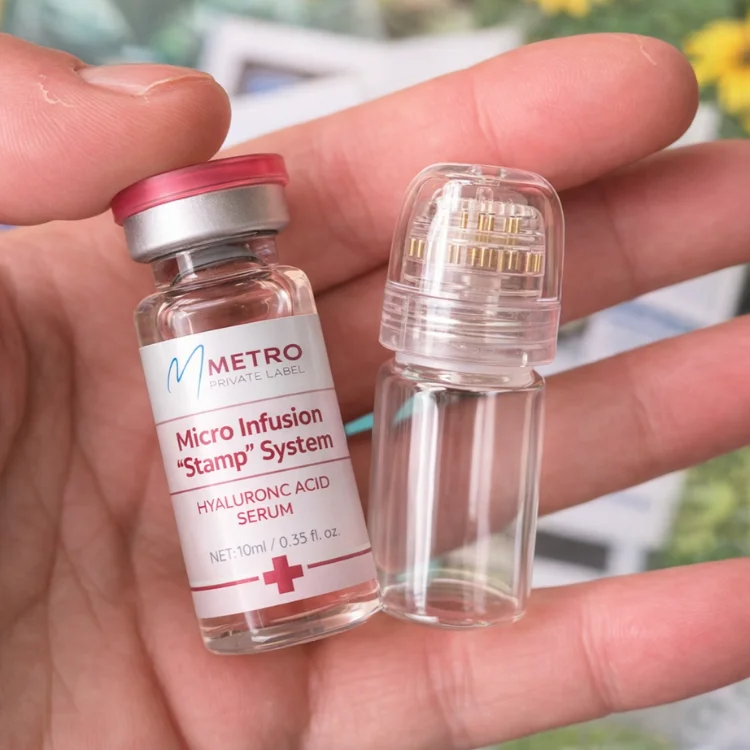
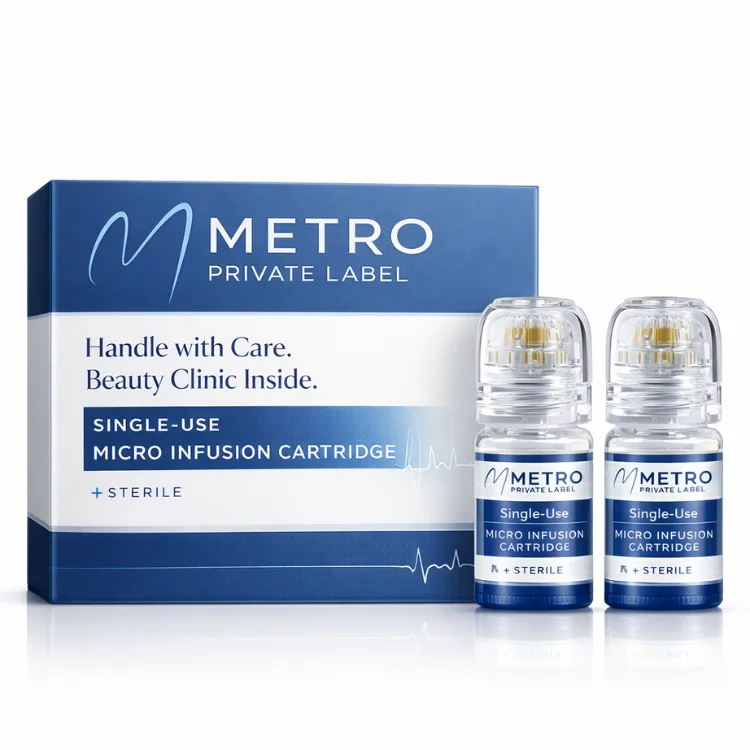
Get Your Custom Skincare Solution Today!

Don’t wait—fill out the form and let our team create the perfect skincare solution for your brand. Expect a personalized quote within 24 hours and start building your brand’s success now!

Submit Your
Private Label Skin Care Request

Fill out this form with your detailed needs and our customer support team will contact you shortly. We will assign a professional agent to follow up on your project and provide personalized assistance.

To get the fastest response, submit your inquiries using the form. If you encounter any issues with submission, you can also email us directly at info@metroprivatelabel.com .

*Metro Private Label takes your privacy very seriously. All information is only used for technical and commercial communication and will not be disclosed to third parties.
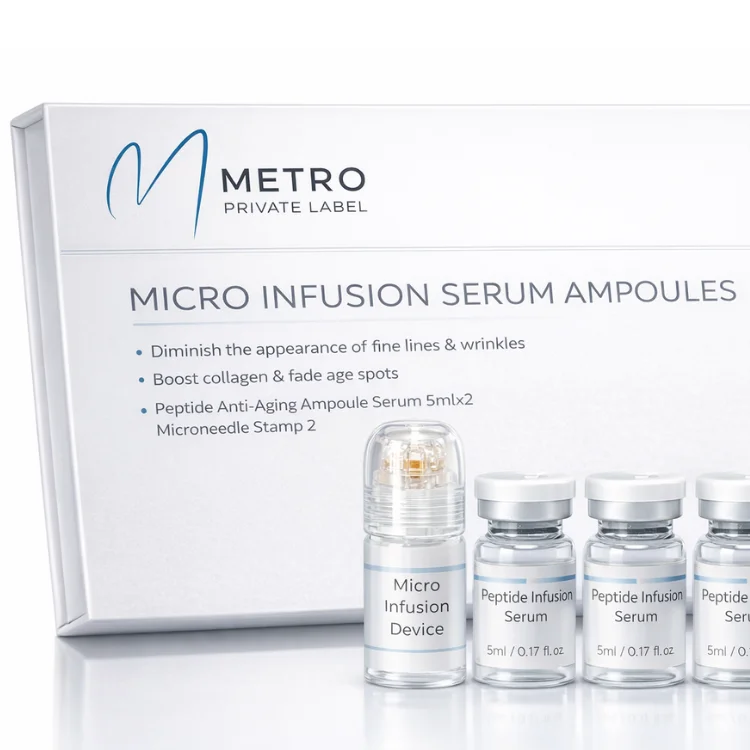
Submit Your
Private Label Skin Care Request

Fill out this form with your detailed needs and our customer support team will contact you shortly. We will assign a professional agent to follow up on your project and provide personalized assistance.

To get the fastest response, submit your inquiries using the form. If you encounter any issues with submission, you can also email us directly at info@metroprivatelabel.com .

*Metro Private Label takes your privacy very seriously. All information is only used for technical and commercial communication and will not be disclosed to third parties.