Your Trusted Men's Skincare Manufacturer
We help skincare brands develop market-ready products with reliable formulations, professional packaging, and scalable manufacturing support—so you can launch confidently and grow your product line with a stable supply chain.

Private Label Men's Skincare
At Metro Private Label, we see Men’s Skincare as more than simply changing the packaging of a traditional skincare product. For brands, the real challenge is understanding what modern male consumers actually want — products that feel comfortable to use, fit into daily routines, and solve specific skin concerns. This may include a lightweight facial serum for hydration and repair, an oil-control cleanser for active lifestyles, a firming cream for mature skin, or a professional grooming product designed for beard and shaving care. In this category, the formula concept, texture, ingredients, packaging, and brand positioning all need to work together.
From what we see across e-commerce platforms, men’s grooming channels, beauty retailers, and professional skincare businesses, successful men’s skincare products usually focus on several clear directions: Daily Hydration and Barrier Care, Anti-Aging and Firming Solutions, Oil Control and Acne Care, and Premium Men’s Grooming Essentials. These product directions help brands create a stronger reason for customers to choose their products instead of competing only on price.
We help brands transform these market opportunities into production-ready men’s skincare collections. This includes recommending suitable formula directions, adjusting textures based on male consumer preferences, selecting appropriate packaging solutions, and managing the complete manufacturing process from samples to mass production. We also support international market requirements with documents such as INCI lists, COA, SDS, and product specifications. Our goal is practical: to help you build men’s skincare products that are clearly positioned, stable in production, commercially competitive, and ready for your sales channels.

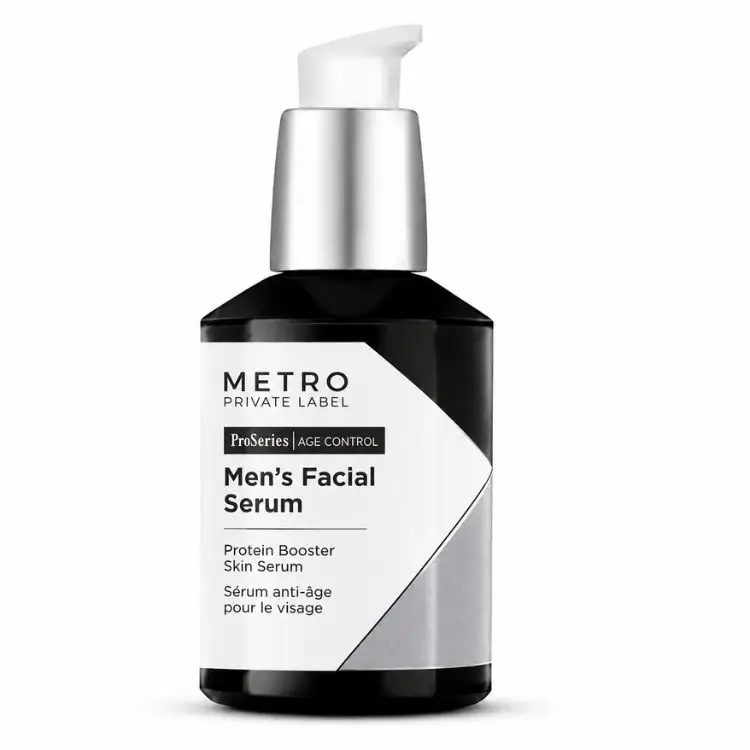
Men's Facial Serum
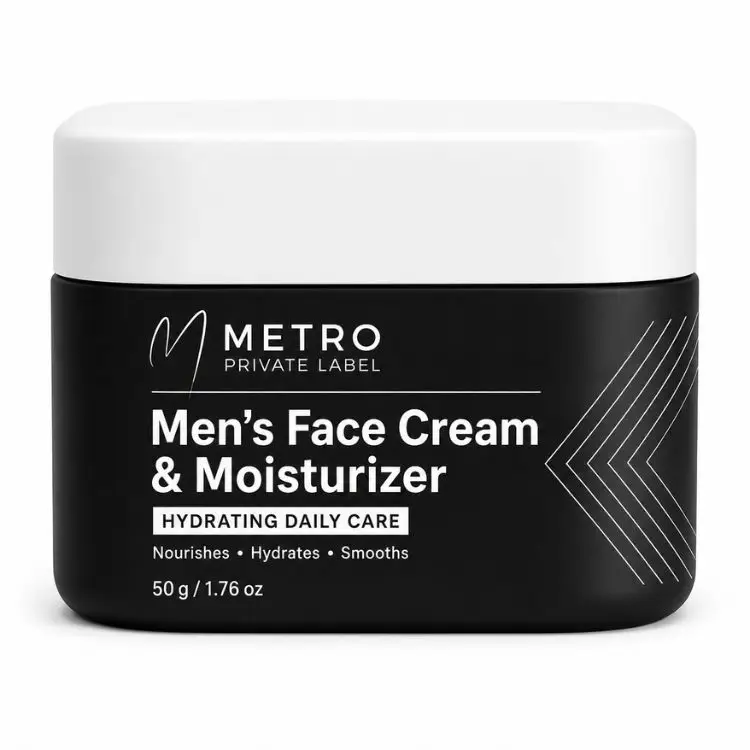
Men's Face Cream & Moisturizer
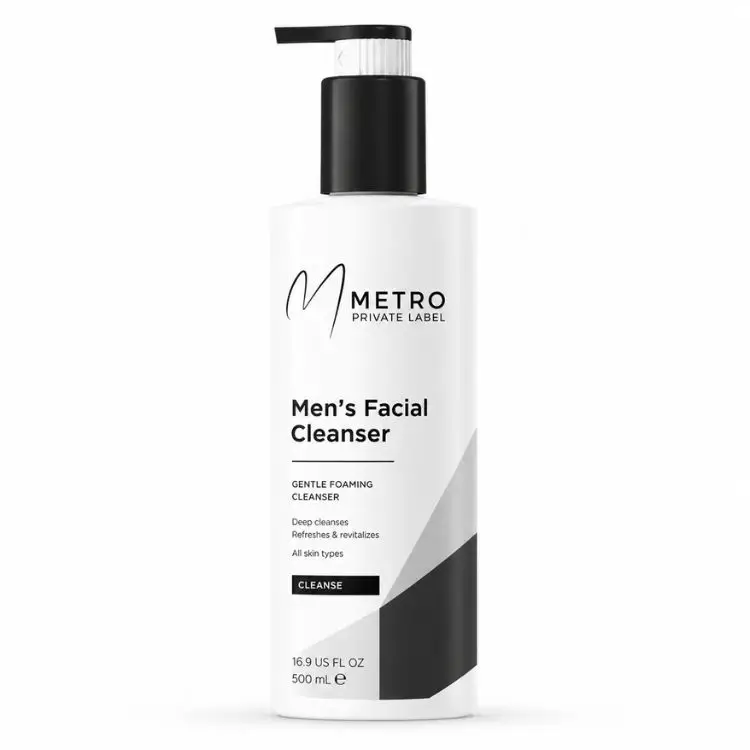
Men's Facial Cleanser
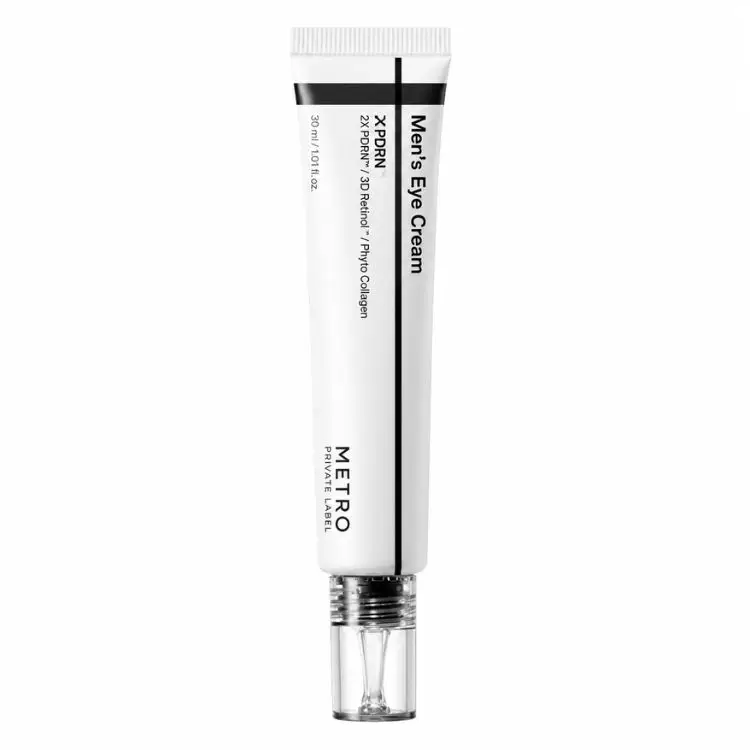
Men's Eye Cream & Eye Serum
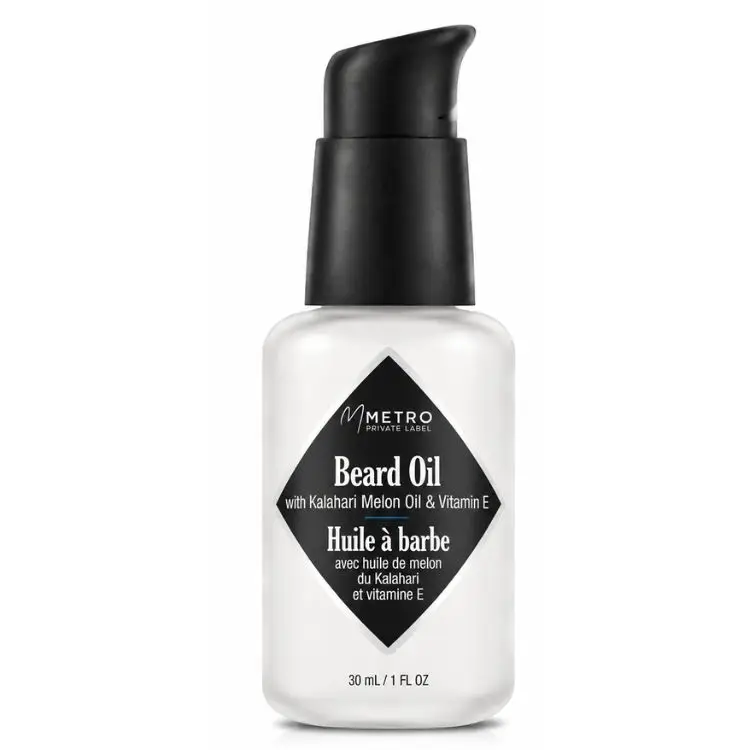
Men's Beard Care Products
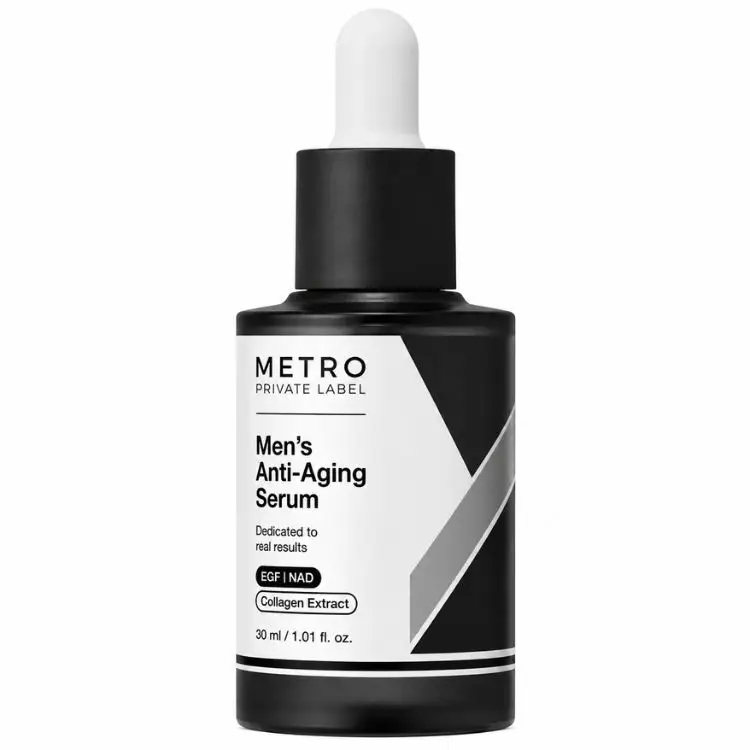
Men's Anti-Aging Skincare
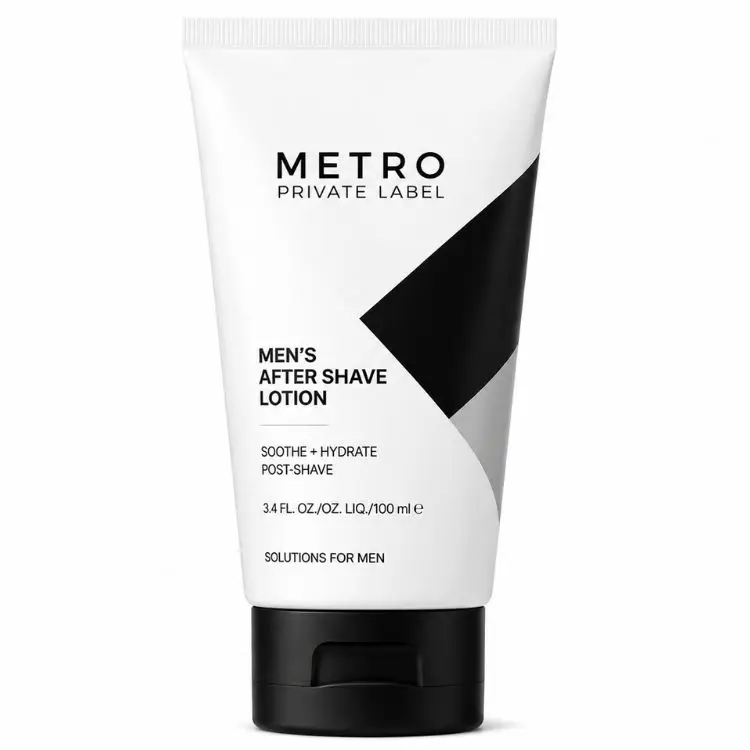
Men's After Shave Repair
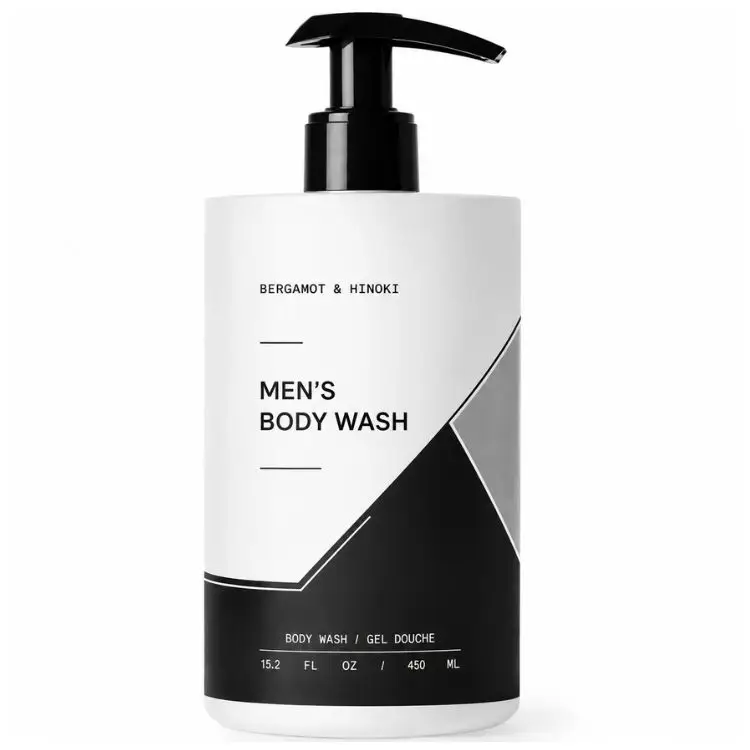
Men's Body Wash & Grooming Products
Build a Private Label Men's Skincare Line That Fits Today’s Market
If you’re looking for a private label Men’s Skincare manufacturer, you are probably already beyond simply researching skincare ingredients. In most cases, you already have a sales channel, an existing beauty business, or a clear plan to expand your product range into men’s skincare.
You may be developing a men’s serum, moisturizer, cleanser, beard care product, or a complete grooming collection for Amazon, Shopify, retail distribution, barber businesses, or professional beauty channels.
In this category, success is not about simply adding a “men’s” label to an existing formula. The real challenge is creating products that match male consumer expectations — comfortable textures, clear benefits, practical routines, suitable packaging, and a positioning that gives customers a reason to choose your brand.
From what we see across e-commerce brands, men’s grooming businesses, and professional skincare channels, successful products usually focus on clear market needs: daily hydration, anti-aging solutions, oil control, skin repair, and premium grooming experiences. The strongest brands are not built around ingredients alone. They are built around a clear customer, a clear product purpose, and a formula concept that can be communicated quickly.
That is how we approach Men’s Skincare development at Metro Private Label. We look at your target market, sales channel, price positioning, competitors, and brand direction before discussing formulas. From ingredient selection and texture adjustment to packaging and compliance documents, we help turn your product idea into a market-ready solution.
Our goal is simple: to help you develop Men’s Skincare products that are not only manufacturable, but also practical to launch, sell, and scale.
Our Core Private Label Men’s Skincare Concepts
Men’s Facial Serum: Men’s serums are often chosen by brands looking for higher-value skincare products with clear benefits. We help develop concepts focused on hydration, repair, anti-aging, brightening, and skin barrier support using suitable active ingredient systems.
Men’s Face Cream & Moisturizer: A successful men’s moisturizer needs more than hydration. Texture and user experience are critical. We help brands create lightweight, fast-absorbing formulas suitable for daily male skincare routines.
Men’s Facial Cleanser: As an entry product, cleansers are often the first step in a men’s skincare routine. We develop gentle cleansing solutions that balance effective cleansing with skin comfort.
Men’s Eye Cream & Eye Serum: Eye care allows brands to create premium positioning around concerns such as tired appearance, puffiness, and visible signs of aging. We support customized concepts with targeted active ingredients.
Men’s Anti-Aging Skincare: More male consumers are looking for professional skincare solutions beyond basic grooming. We help brands develop firming, repair, and mature-skin concepts designed for premium markets.
Men’s Beard Care Products: Beard oil, beard balm, and grooming products remain key categories in men’s beauty. We help brands create products that combine grooming habits with skincare benefits.
Men’s After-Shave Repair Products: After-shave care connects traditional grooming with modern skincare. We develop soothing and barrier-support products suitable for barber brands and men’s grooming businesses.
Men’s Body Wash & Grooming Products: For brands building a complete men’s collection, multi-functional cleansing and grooming products provide opportunities for daily-use products and repeat purchases.
Manufacturing Support For Growing Men’s Skincare Brands
We understand that choosing a manufacturer is not only about producing a formula. A successful men’s skincare product requires the right balance between formula performance, packaging, cost structure, compliance, and market positioning.
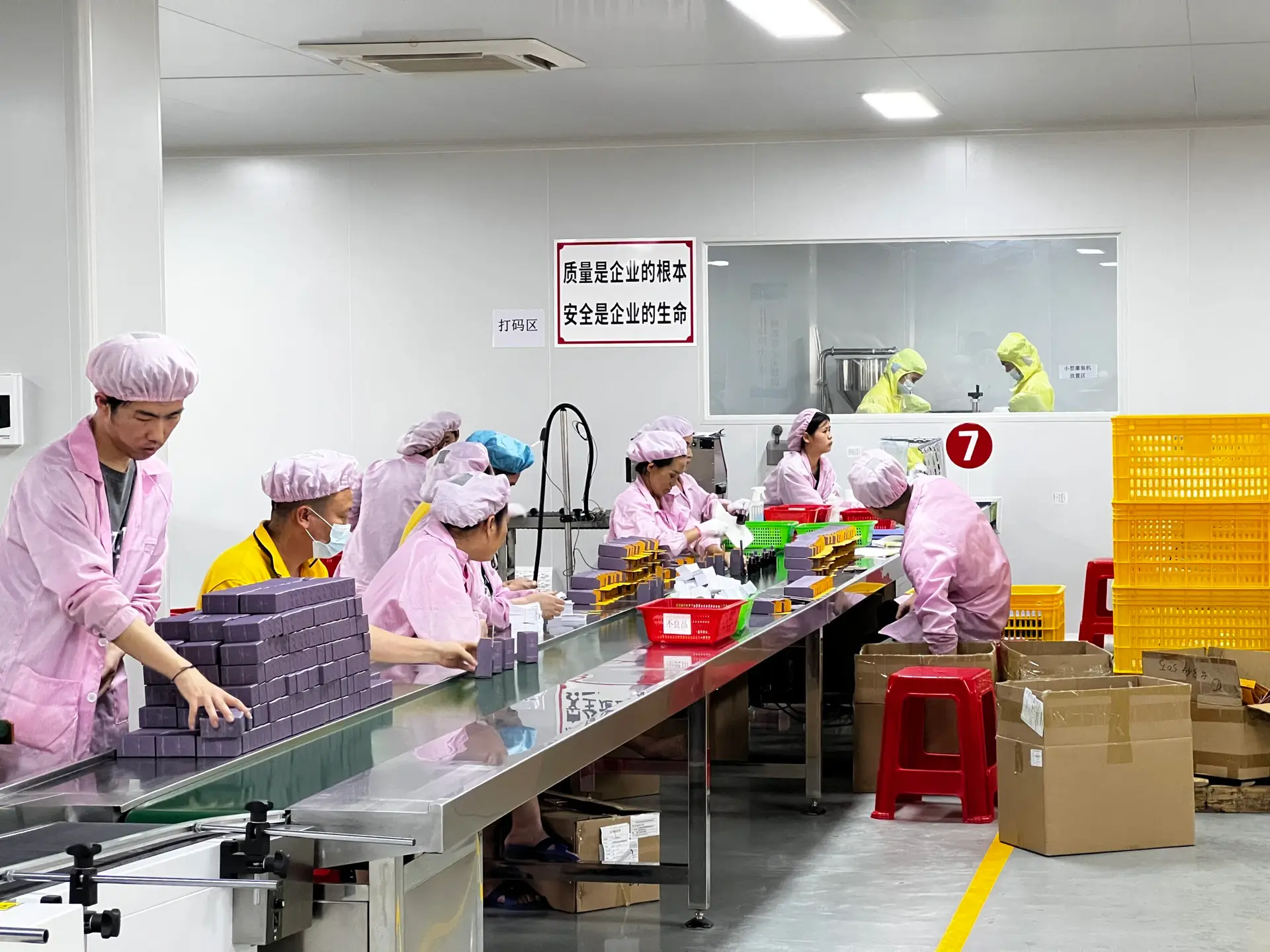
At Metro Private Label, we support the complete development process, including formula direction, sample evaluation, packaging coordination, artwork review, and documents such as INCI lists, COA, SDS, and product specifications.
Whether you are launching your first men’s skincare SKU, expanding an existing product line, or developing a complete grooming collection, our goal is to help you create products with a clear market position, stable production quality, and long-term growth potential.

More Than Just a Private Label Men's Skincare Manufacturer
At Metro Private Label, we understand that your goal is not simply to produce another Men’s Skincare product. Your goal is to create a product that can enter the market, attract customers, generate repeat sales, and support long-term brand growth.

Develop Products with a Clear Commercial Direction
We help you connect your Men’s Skincare concept with your target customer, sales channel, and price positioning before production begins. By understanding your market first, we can reduce unnecessary adjustments and help you move faster from idea to sample and quotation.
Reduce Development and Production Risks
We look beyond the formula itself. We evaluate ingredient systems, texture, packaging compatibility, production requirements, and cost structure together to help avoid common problems such as unstable formulas, unsuitable packaging, poor user experience, or unexpected production challenges.
Create Products Customers Want to Use Again
We believe successful Men’s Skincare products are built around real user experience. Texture, absorption, comfort, and daily usability are just as important as active ingredients. These details help your product achieve better customer satisfaction and stronger repeat purchase potential.
Support Your Growth with One Reliable Manufacturing Partner
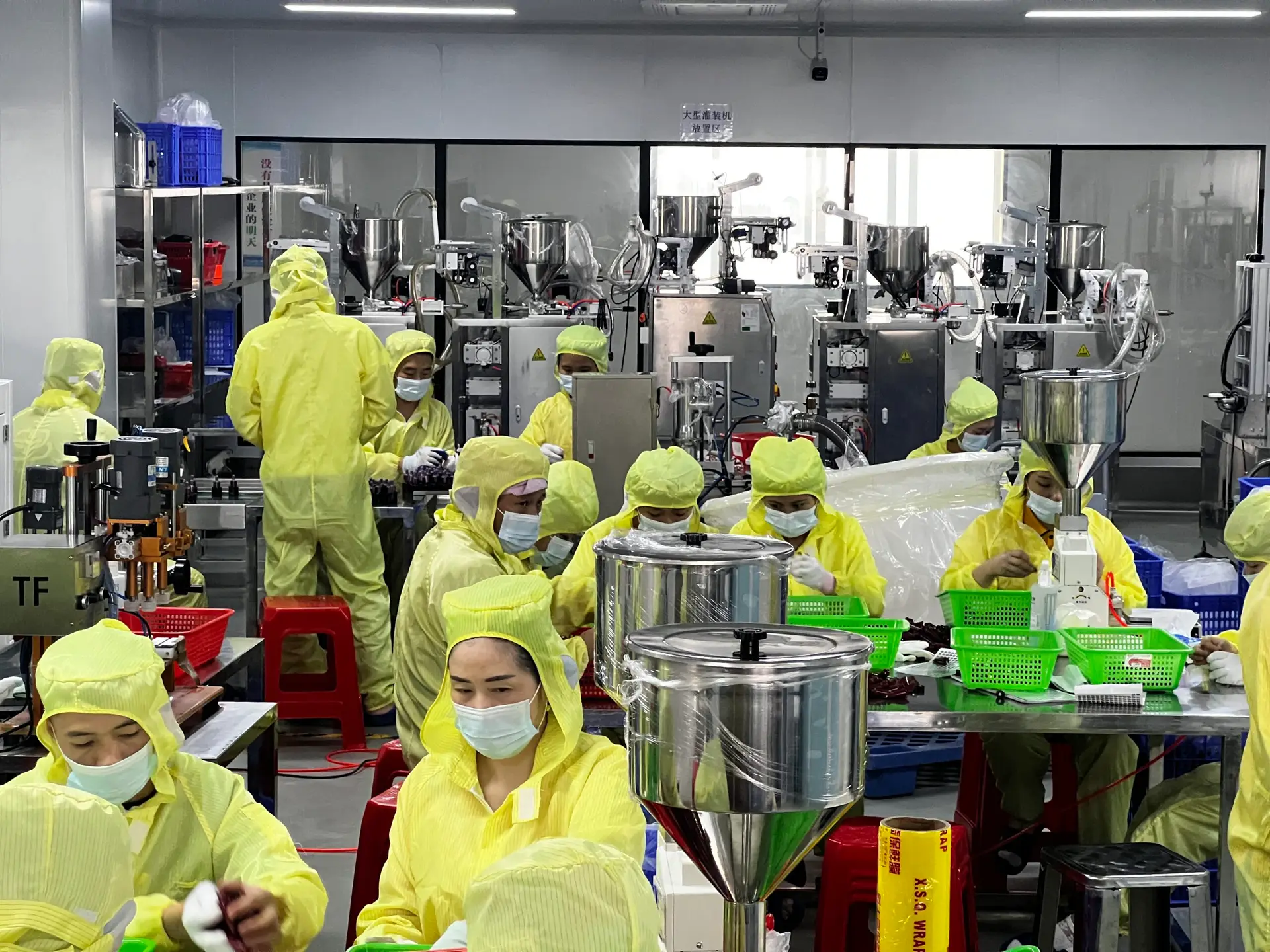
From formula development and packaging coordination to production and supporting documents, we help manage the complete process through one supply chain. This allows you to spend less time solving manufacturing issues and more time building your brand and sales channels.
Build a Private Label Men's Skincare Line Designed Around Your Business Goals
At Metro Private Label, we understand that developing a Men’s Skincare product is not simply about finding a formula and putting it into a bottle. If you are already selling through Amazon, Shopify, retail, or professional channels, you are probably looking for something more valuable — a product that fits your customers, your price position, and your long-term brand direction.
Many brands come to us with a product idea, but the real questions usually come later: Will customers understand the product quickly? Does the formula match the expected price point? Is the packaging suitable for your sales channel? Can the product be produced consistently when your orders grow?
That is where we believe a manufacturing partner should bring more value.
Developed Around Your Market, Not Just Your Ingredient List
When we discuss a Men’s Skincare project, we do not start by asking only which ingredients you want to add. We first understand your target customer, sales channel, competitors, and the reason why customers should choose your product.A men’s skincare product for Amazon may focus on clear benefits, competitive pricing, and shipping-friendly packaging. A premium DTC brand or clinic may require a different approach with stronger branding, refined textures, and a more professional product experience.We help you connect formula direction, product positioning, and manufacturing feasibility together, so your final product has a clearer commercial purpose before production begins.
Making Better Packaging Decisions Before You Invest
Many brands underestimate how important packaging decisions are during product development. The right bottle or container is not only about appearance — it affects product protection, customer experience, production cost, and future reordering.For e-commerce brands, we consider practical details such as leakage prevention, shipping durability, and fulfillment requirements. For premium brands, we help evaluate packaging options that better support brand value and customer perception.Our goal is to help you choose packaging that works for your current launch while still making sense for future growth.
A Clear Process That Reduces Unnecessary Problems
From our experience, many production problems do not happen because of the formula itself. They often come from unclear communication between formula, packaging, artwork, compliance, and production planning.That is why we organize projects step by step — from product positioning and sample evaluation to packaging confirmation, production preparation, and quality control.We keep you updated on important decisions and explain how each choice may affect cost, timeline, and production results. This helps you avoid unexpected changes after moving into mass production.
Building Products That Can Grow With Your Brand
We know your first Men’s Skincare product is usually not the final goal. For many brands, one successful product becomes the foundation for a complete product line.After launching your first SKU, we can support future expansion into related categories such as cleansers, moisturizers, eye treatments, peptide products, and other grooming solutions.We do not measure success only by completing one order. We believe a successful partnership comes from helping you create products that customers want to buy, use, and purchase again.
When your brand grows, your production needs grow with it — and that is where we hope to build a long-term partnership with you.
FAQs Men's Skincare
For your convenience, we’ve gathered the most commonly asked questions about our Men’s Skincare . However, should you have any further queries, please don’t hesitate to reach out to us.
1. What types of Men's Skincare products can you manufacture?
We manufacture a wide range of Men’s Skincare products, including facial serums, moisturizers, cleansers, eye treatments, anti-aging products, beard care, after-shave products, and grooming solutions.
You can start with one hero product or develop a complete men’s skincare collection. We can help you choose the right product direction based on your target customers, sales channel, and brand positioning.
2. Can you help us develop a Men's Skincare formula that fits our brand?
Yes. We do not believe every brand should use the same formula.
We help you develop products based on your market position, including ingredient selection, texture preference, skin feel, product claims, and target price range. Whether you want a lightweight daily moisturizer, a premium anti-aging serum, or a professional grooming product, we can help turn your concept into a production-ready formula.
3. What is your minimum order quantity (MOQ) for Men's Skincare products?
Our standard MOQ usually starts from approximately 1,000 units per SKU for many packaging formats.
However, the final MOQ depends on your formula, packaging selection, customization level, and production requirements. We understand that many brands need to test the market first, so we help you find a practical balance between initial investment and future scalability.
4. How long does it take to develop and produce Men's Skincare products?
The timeline depends on whether you choose an existing formula or a fully customized development process.
Normally, samples can be prepared within around 7–15 working days, while mass production usually takes approximately 25–35 days after final approval.
We organize each stage clearly, including formula confirmation, packaging preparation, artwork review, and production scheduling, so you can plan your launch more confidently.
5. Can you create Men's Skincare products for different markets such as the US, EU, or UK?
Yes. We work with brands targeting different international markets and understand that each market may have different expectations for ingredients, labeling, and product positioning.
We can support you with practical manufacturing information, including INCI lists, COA, SDS, product specifications, and label review guidance based on your target market requirements.
6. Can you help with Men's Skincare packaging design and sourcing?
Yes. We support the complete packaging process, from bottle and jar sourcing to labels, cartons, and final product assembly.
Whether you prefer a minimalist men’s grooming style, a premium luxury appearance, or an e-commerce-friendly package designed for shipping, we help you evaluate options based on brand image, cost, MOQ, and production feasibility.
7. Do you offer ready-made formulas or fully customized Men's Skincare development?
We offer both options.
If you want a faster launch, we can recommend existing formulas that already match popular market directions. If you have a specific brand concept, we can also customize the formula, texture, ingredients, and positioning based on your requirements.
Our role is to help you choose the most suitable development path for your business stage and budget.
8. What quality control and testing do you perform during production?
Quality and consistency are essential for long-term brand growth, so we monitor every important production stage.
Depending on the project, we support stability evaluation, formula compatibility checks, microbial testing, and production quality control. We also prepare important product documents such as COA, SDS, INCI lists, and specifications to support your business needs.
9. Can you help us create a Men's Skincare product concept that customers understand?
Yes. Many successful products are not simply based on impressive ingredients — they are built around a clear reason for customers to buy.
We can help you evaluate product positioning, key ingredients, texture direction, and market communication. For example, a men’s serum can be positioned around hydration, anti-aging, oil control, repair, or premium grooming depending on your target customer.
10. Do you support international brands with shipping and long-term production?
Yes. We work with brands from different regions and support the complete manufacturing process from development to shipment preparation.
We can coordinate production, packaging, documentation, and shipping arrangements to make supplier management easier for you. Our goal is not only to complete your first order, but to become a reliable manufacturing partner as your Men’s Skincare brand grows.
Working with Metro Private Label gave us much more confidence in developing our first men's skincare collection. We appreciated how the team helped us refine the product direction, from formula selection and texture preferences to packaging decisions. The communication was clear, practical, and focused on creating a product that could truly fit our target customers.
Emily Carter, Founder & Brand Directorfrom United Kingdom
Metro Private Label has been a reliable manufacturing partner throughout our men's skincare development process. Their team supported us with formula adjustments, packaging coordination, and product documentation, which made the entire project much easier to manage. We especially valued their practical suggestions and fast response during development.
Luca Moretti, Product Development Specialistfrom Italy
Metro Private Label has been a reliable manufacturing partner throughout our men's skincare development process. Their team supported us with formula adjustments, packaging coordination, and product documentation, which made the entire project much easier to manage. We especially valued their practical suggestions and fast response during development.
Sophie Laurent, Purchasing Managerfrom France
We were looking for a manufacturer who could understand the needs of an online skincare business, not just produce products. Metro Private Label helped us create a men's skincare range with the right balance between quality, cost, and market positioning. Their support during sampling and production made the process much smoother than we expected.
Michael Anderson, E-commerce Brand Operatorfrom United States
The biggest advantage of working with Metro Private Label was their ability to combine manufacturing knowledge with commercial thinking. They helped us evaluate different product concepts, packaging options, and production choices before moving forward. This approach helped us avoid unnecessary costs and build a stronger foundation for future product expansion.
Thomas Weber, Beauty Industry Consultantfrom Germany





Metro Private Label in Numbers
Happy Clients
0 +
Million-dollar Buyers
0 +
Formulation
0 +
Professional Staffs
0 +
Your Ultimate Guide to Men's Skincare
If you’re planning to develop a private label men’s skincare product—whether you are expanding an existing grooming brand, launching your first skincare SKU, or adding new products to an e-commerce catalogue—you are not simply choosing another cosmetic category. You are entering a market where customer expectations are becoming more specific. Today’s men’s skincare buyers are looking for products that are easy to understand, comfortable to use, and suitable for their daily routines. They are not only interested in ingredients; they want products that solve clear problems such as hydration, oil control, shaving comfort, visible signs of aging, or maintaining healthier-looking skin. When developed with the right positioning, men’s skincare can become a repeat-purchase category that supports long-term brand growth.
Over the past few years, we’ve seen men’s skincare move beyond traditional grooming products such as beard oils and shaving products into a broader skincare routine that includes cleansers, serums, moisturizers, eye treatments, and barrier-support products. At Metro Private Label, we’ve worked with brands that understand the opportunity is not simply creating a product designed “for men,” but building a product that fits a specific customer, sales channel, and market expectation. The brands that succeed are usually not the ones launching the largest number of SKUs. They are the ones that carefully connect formula direction, texture, packaging, pricing, compliance preparation, and customer experience from the beginning.
This guide is based on what we have learned from developing private label men’s skincare products across different business models, including e-commerce brands, distributors, grooming businesses, and beauty entrepreneurs. Instead of focusing only on popular ingredients or surface-level trends, we want to share the practical decisions that influence whether a men’s skincare product can become a sustainable commercial success. From selecting the right first products, choosing between white label and custom development, evaluating texture and packaging performance, understanding MOQ and compliance requirements, to planning future reorders, every decision plays a role in creating a product that is easier to launch, easier to sell, and easier to scale.
Table of Contents
What Are Buyers Really Looking for When They Search for a Men's Skincare Manufacturer?
When I see someone searching for a “private label men’s skincare manufacturer,” I rarely assume that the buyer is simply looking for a factory that can fill a cleanser, serum, or moisturizer into a bottle. The search term may appear straightforward, but the business need behind it is usually much more specific. In my experience, most serious buyers are already trying to solve an existing commercial problem. An established grooming brand may need to replace an unreliable supplier. An Amazon seller may be looking for better margins or a product that is easier to differentiate. A distributor may want mature products that can be labelled and introduced to retailers quickly. A barbershop group may be trying to turn its existing customer relationships into a new source of recurring product revenue.
These buyers may enter similar phrases into Google, but they are not looking for the same manufacturing solution. The right development route depends on the buyer’s sales channel, current business stage, customer base, pricing model, initial order quantity, and preferred launch date. A company that urgently needs to replenish an existing product should not be taken through the same process as a founder creating a premium custom formula from the beginning. This is why I believe the real purpose of a manufacturer search is not merely to find production capacity. It is to find a supply model that fits the commercial situation behind the search.
The Search Term Usually Hides a More Specific Business Problem
When a buyer searches for “men’s skincare manufacturer,” “private label men’s grooming products,” or “OEM men’s skincare factory,” the keyword itself tells me very little about the real project. I first want to understand why the search has started. The buyer may be replacing a supplier, expanding an existing range, testing a new category, responding to customer requests, improving profit margins, or preparing products for a new sales channel. Each motivation creates a different set of priorities.
A brand replacing a supplier may already have approved artwork, a familiar product texture, established customer reviews, and a packaging format that should remain consistent. That project is mainly about continuity, quality matching, documentation, and reliable replenishment. A beauty entrepreneur entering men’s grooming may instead need help defining the product concept, texture, packaging, ingredient direction, price position, and launch range. An Amazon operator may already know exactly which product category is needed but may be searching because the current cost structure no longer supports advertising and fulfilment expenses.
I therefore regard the search keyword as the beginning of the conversation, not the full brief. Before discussing ingredients or quotation details, I try to understand what is happening inside the buyer’s business. A technically correct product can still fail commercially if it does not solve the problem that originally caused the buyer to search for a new manufacturer.
Established Brands Are Usually Searching for Supply Chain Stability
When an established men’s grooming or skincare brand begins looking for a new manufacturer, the problem is often not a shortage of product ideas. The brand may already know which products sell, what customers expect, and how frequently stock needs to be replenished. The search is more likely to have been triggered by delayed production, inconsistent quality, changing prices, unavailable packaging, poor communication, or incomplete technical documents.
I treat this type of inquiry as a continuity project rather than a conventional new-product project. The brand may already have repeat customers who recognize the product’s fragrance, colour, viscosity, absorption, and dispensing experience. Even a relatively small change can generate complaints because the customer is comparing the new batch with something familiar. The challenge is therefore not simply to produce a similar formula. It is to preserve the customer experience while improving the reliability of the supply chain.
This may involve comparing benchmark samples, reviewing the existing ingredient list, studying the packaging structure, evaluating formula-matching feasibility, and planning the transition carefully enough to avoid stock interruption. In this situation, I do not believe that the most valuable supplier is necessarily the one offering the most innovative ingredients. The greater value often comes from stable batch quality, clearer communication, predictable production timing, and a replenishment process the brand can plan around.
Amazon Sellers Are Often Looking for Better Economics or Clearer Differentiation
Amazon sellers usually evaluate men’s skincare manufacturing through a performance and profitability lens. They understand that the factory price is only one part of the final cost. Packaging, international shipping, fulfilment fees, advertising, storage, promotions, returns, and discounts can significantly reduce the margin that initially appears attractive.
When I review an Amazon-focused project, the real question is not simply whether the product can be manufactured. I want to know whether it can remain commercially viable after every major operating cost has been included. Some sellers begin searching for another manufacturer because the existing product leaves too little room for advertising. Others are selling a formula that looks almost identical to dozens of competing listings and need a clearer reason for customers to choose their product.
Differentiation in this environment needs to be understandable quickly. A long ingredient list does not automatically create a stronger Amazon product. A lightweight moisturizer designed for men who dislike greasy creams may be easier to communicate than a formula containing many unrelated actives. An after-shave serum focused on comfort and barrier support may have a clearer use occasion than a generic multipurpose serum. An eye treatment positioned around tired-looking eyes and puffiness may be easier to explain through a listing image than a technically complex formula with no obvious consumer.
When margins are under pressure, I also look beyond the formula. Decorative packaging may add cost without improving conversion. An oversized carton may increase fulfilment expenses. A poorly sealed pump may lead to leakage, returns, and negative reviews. The objective is not to create the cheapest possible product. It is to remove costs that customers do not value while protecting the formula experience, packaging reliability, and product positioning that support sales.
Distributors Want Products That Can Move Through Existing Channels
Distributors and retail buyers normally approach private label men’s skincare differently from direct-to-consumer brands. They may already have relationships with pharmacies, grooming stores, salons, independent retailers, or regional sales representatives. Their main concern is whether the product can be introduced, priced, supplied, and reordered efficiently through those channels.
This is why distributors frequently search for white label men’s skincare, ready-to-label grooming products, and fast private label manufacturing. They are not always looking for a completely original formula. In many cases, they prefer a mature product with familiar benefits, clear wholesale pricing, and packaging that can be adapted for retail without a long development cycle. However, speed does not remove the need for market suitability.
A ready-made formula still needs to fit the local customer base, climate, fragrance preference, expected retail price, label language, packaging style, and regulatory environment. A rich moisturizer that works well in a colder market may feel unsuitable in a hot and humid region. A heavily fragranced product may fit a traditional grooming range but conflict with sensitive-skin positioning. A premium glass bottle may look attractive but create an unrealistic wholesale cost.
I have found that the strongest distributor ranges usually combine familiar categories with enough differentiation to avoid pure price competition. A cleanser, moisturizer, beard oil, eye treatment, or after-shave balm is easier for a sales team and retail buyer to understand than a highly technical product requiring extensive education. For distributors, innovation has value, but recognizability, supply continuity, and commercial repeatability often matter more.
Barbershops Are Trying to Turn Existing Trust into Retail Revenue
Barbershops and men’s grooming service businesses already have something many new skincare brands struggle to build: regular customer access and professional trust. Their clients return for haircuts, shaving, beard care, and grooming advice. This creates a natural opportunity to introduce private label products, but the product range needs to connect closely with the services already being provided.
When I evaluate a barbershop project, I think about how the product will be introduced during the appointment. A beard oil can be demonstrated while finishing a beard service. An after-shave balm connects directly with comfort after shaving. A facial cleanser or lightweight moisturizer can be recommended as a simple home-care extension. These products have a natural explanation because the customer has already experienced the relevant need.
The product should also be easy for staff to describe. A barber should be able to explain what the product does, when to use it, and why it suits the customer without giving a long technical presentation. This becomes even more important when the business operates several locations and needs a consistent retail message across different employees.
I therefore do not automatically recommend a large skincare range for this channel. A focused collection that connects grooming services with daily home care is often more practical. The long-term commercial value comes from extending an existing service relationship into recurring product purchases between appointments.
Different Commercial Needs Require Different Manufacturing Routes
One of the most common mistakes I see is treating every private label project as though it should follow the same process. In reality, ready-to-label, semi-custom, and fully custom development routes serve different business objectives.
A ready-to-label formula may be appropriate when speed, lower development risk, and controlled investment are the main priorities. This route can work well for a distributor testing a new category, a barbershop launching its first retail products, or an established seller that needs a familiar product quickly. The formula development stage is shorter, but the packaging, label, product name, and positioning still need to be planned carefully.
Semi-custom development offers a middle route. The main formula structure may remain established while selected ingredients, fragrance, colour, texture, or product positioning are adjusted. I often see this approach work well for buyers who want more distinction than a standard white label product but do not need the cost and development time of a completely new formula.
Fully custom development makes sense when the brand has a specific benchmark, texture requirement, ingredient system, claim direction, target consumer, or premium positioning. However, I do not assume that full customization always creates more commercial value. The additional development work should produce a difference that the customer can notice, understand, or justify paying for. Otherwise, the project becomes more complicated without becoming more competitive.
The Sales Channel Should Be Defined Before the Formula
I believe the intended sales channel should be clarified before the formula direction is finalized because the channel affects nearly every important product decision. A product developed for Amazon faces different commercial and operational requirements from one created for Shopify, retail distribution, or professional grooming businesses.
For Amazon, the benefit needs to be understood quickly through the product title, packaging, main images, and first section of the listing. The packaging must also survive warehousing, fulfilment, and individual parcel delivery. Leakage, damaged cartons, unclear labels, and poor dispensing can quickly appear in customer reviews. At the same time, the cost structure needs to leave room for platform fees and advertising.
A Shopify brand may have more space to explain ingredients, routines, texture, and brand philosophy, but customer acquisition can be expensive. The product normally needs stronger perceived value, clearer differentiation, and enough margin to support content, promotions, sampling, and repeat-purchase campaigns.
Retail and distribution introduce additional considerations such as barcodes, carton information, shelf presentation, wholesale margins, case packing, and supply consistency. A barbershop product needs to connect naturally with a service and be easy for staff to recommend. The same formula cannot be evaluated properly until the intended sales environment is understood.
The Target Consumer Must Be More Specific Than “Men”
“Men” is not a sufficiently detailed target customer. A product for a young consumer with oily skin should not be developed in the same way as a product for a mature customer concerned about dryness, firmness, and visible signs of aging. A beard-focused grooming customer has different expectations from someone purchasing professional post-treatment skincare.
The target consumer influences the texture, active ingredients, fragrance, packaging, product instructions, and retail price. Younger e-commerce customers may respond to lightweight textures, straightforward benefits, and simple visual communication. Mature customers may place more value on hydration, comfort, professional presentation, and a refined product experience. A busy customer may prefer one multifunctional product, while a premium skincare buyer may accept a more structured routine.
Lifestyle can be as important as age or skin type. A customer who dislikes complicated skincare may abandon an excellent product if it does not fit easily into the daily routine. A barbershop customer may understand an after-shave balm immediately but feel uncertain about a highly technical treatment serum.
When the target customer remains vague, the formula often becomes a collection of popular ingredients without a focused purpose. A specific customer profile creates better decisions because it clarifies which benefit matters, which texture is suitable, which packaging looks credible, and what price the market is likely to accept.
The Expected Retail Price Should Be Considered Before the Quotation
I always want to understand the intended retail price before recommending formula and packaging options. A product planned to retail at $20 should not normally carry the same packaging structure, decoration process, and active system as a product intended to retail at $70.
The retail price affects the acceptable unit cost, packaging weight, formula complexity, decoration method, marketing story, and level of customization. It also needs to leave enough margin for the chosen sales model. An Amazon seller needs to account for platform and advertising costs. A distributor needs room for wholesale and retailer margins. A barbershop may need enough markup to make staff recommendations commercially worthwhile.
A heavier bottle, metallic decoration, or expensive active ingredient may increase the factory cost without creating a stronger reason to buy. I therefore evaluate whether the target customer is likely to notice and value the improvement. Premium positioning is most credible when the formula, texture, packaging, message, and retail environment support one another. Isolated expensive features do not automatically create premium value.
A commercially sensible product is not simply the cheapest product or the most expensive one. It is a product whose cost structure, perceived value, channel margin, and retail price work together.
The Initial Quantity Should Match the Real Launch Plan
The first production quantity should reflect expected sales, available budget, inventory risk, packaging requirements, and the likely reorder cycle. The manufacturing MOQ is only one part of the decision because different components may carry different minimum quantities.
A formula may be manufactured from 1,000 units, while a custom-coloured bottle may require 3,000 or 5,000 pieces. Labels, cartons, pumps, printing, spraying, electroplating, and moulded components may each have separate supplier requirements. This can create a situation where the requested filling quantity is possible, but the preferred packaging is not commercially practical at the same volume.
When packaging MOQ exceeds the initial filling quantity, the buyer may need to purchase and store unused materials. That remaining stock can support future production, but it also creates risk if the artwork, volume, formula name, or brand direction later changes.
For a new category, I believe the initial quantity should be large enough to support a meaningful launch while remaining controlled enough to limit unnecessary stock exposure. The first order should not only generate sales. It should also provide data about which product converts, what customers mention in reviews, how quickly stock moves, whether the packaging performs well, and when replenishment needs to begin.
The Preferred Launch Date Must Include the Entire Project
A launch date is useful only when it includes every stage required to move from an idea to a finished product. Sampling is only one part of the timeline. A complete project may involve positioning, formula selection, sample preparation, adjustments, packaging sourcing, compatibility review, artwork confirmation, material production, filling, quality inspection, and shipping preparation.
These stages depend on one another. Final label content cannot be prepared accurately before the formula information is confirmed. Packaging decoration cannot begin before the artwork is approved. Shipping costs and carton planning cannot be finalized until the product dimensions, case quantity, and weight are known.
In my experience, many delays are caused by unresolved decisions rather than production itself. A late packaging change may require a new quotation and another compatibility check. Revised artwork may delay label or carton printing. A new marketing claim may require additional review or supporting evidence.
I treat the preferred launch date as a planning tool rather than a promise made without context. When the deadline is fixed, the buyer may need to use a mature formula, standard packaging, and simpler decoration. When a highly customized product is the priority, the timeline may need more flexibility. The important point is to make these trade-offs visible before they become urgent problems.
An Accurate Quotation Can Still Be Commercially Unsuitable
A manufacturer can provide a technically accurate quotation and still offer something that does not fit the buyer’s business model. One quotation may be based on a standard bottle and mature formula, while another includes custom decoration, premium actives, and additional packaging components. Comparing only the unit price would create a misleading conclusion because the proposals do not represent the same product.
A low quotation may also hide future costs. Weak packaging can lead to leakage and returns. An unusual bottle may become difficult to reorder. Missing documentation may delay registration or marketplace review. Inconsistent production may create complaints and replacement expenses. These costs can become much greater than the initial saving.
The opposite can also happen. A quotation for a highly customized product may be completely accurate, but the finished cost may leave no room for Amazon advertising or distributor margins. A premium formula may exceed the price level accepted by the existing customer base. A standard stock formula may meet the target cost but fail to provide the differentiation expected by a specialist brand.
I therefore believe a useful quotation should be connected to the full commercial context. The intended channel, target customer, retail price, initial quantity, packaging structure, timeline, and compliance responsibilities all need to be understood. Without this context, buyers may spend weeks comparing accurate numbers that represent commercially incompatible solutions.
The Buyer Is Ultimately Searching for a Suitable Supply Solution
Although the visible Google search is for a private label men’s skincare manufacturer, the buyer is usually searching for a supply solution that fits a specific stage of the business. An established brand may need continuity and more dependable replenishment. An Amazon seller may need better margins or clearer differentiation. A distributor may prioritize speed, familiar product categories, and stable supply. A barbershop may want products that convert professional trust into recurring retail revenue. A beauty founder may need a product system that can grow into a long-term brand range.
From what I have seen, the strongest projects do not begin with the longest ingredient list, the most expensive packaging, or the lowest quotation. They begin with commercial clarity. Before comparing manufacturers, the buyer should understand the intended sales channel, target consumer, expected retail price, initial quantity, and preferred launch date.
Once these five points are clear, formula, packaging, documentation, MOQ, and production decisions become easier to evaluate. The manufacturer search becomes more focused, the quotations become more meaningful, and the finished product has a better chance of fitting the business it was created to support. That is what serious buyers are really trying to find when they search for a men’s skincare manufacturer.
Which Men's Skincare Products Should a Brand Launch First?
When I review a new men’s skincare project, I usually begin with a different question from the one most buyers expect. Instead of asking how many products the brand wants to manufacture, I ask which products make sense together and why the existing customer would buy them. A large catalogue may look impressive in a presentation, but launching too many SKUs at once often divides the available budget across formula development, packaging, artwork, testing, inventory, photography, advertising, and logistics. This can leave the brand with several finished products but not enough resources to market any of them properly. In my experience, the strongest first launch is rarely the largest range. It is usually a focused collection that solves one connected group of needs, fits the existing sales channel, and gives the customer a clear reason to purchase more than one product.
Why More Products Do Not Always Create a Stronger Launch
I often see brands assume that a complete men’s skincare line must include a facial cleanser, serum, moisturizer, eye cream, beard oil, after-shave balm, body wash, and several treatment products from the beginning. On paper, this makes the brand appear established, but every additional SKU creates another formula to approve, another package to source, another label and carton to design, and another minimum order quantity to finance. The commercial difficulty becomes even greater after production because every product needs its own photography, product page, advertising message, inventory plan, and customer education. If the brand does not already have proven demand across all these categories, the first order can become a large amount of slow-moving stock. I therefore prefer to see a smaller number of products developed properly, with enough budget remaining to explain, promote, test, and reorder them.
Start with the Existing Customer Journey
Before I recommend a launch range, I look at how customers already discover and buy from the business. An established beard-care brand has a different customer journey from an Amazon skincare seller, a regional distributor, or a group of barbershops. A beard-care customer may already trust the brand for grooming products and be open to a facial cleanser, after-shave product, or lightweight moisturizer. An Amazon customer may discover the brand by searching for one specific concern, such as oily skin, visible signs of aging, or non-greasy hydration. A barbershop customer may first experience a product during a service and then purchase it for home use. The first range should follow this existing behaviour rather than forcing customers into an unfamiliar and complicated routine. When the product selection feels like a natural next step, the brand usually needs less education to create the first purchase.
Existing Beard-Care Brands Should Expand Naturally into Facial Skincare
For an established beard-care brand, I normally see the strongest opportunity in products that connect facial skincare with grooming habits the customer already understands. A facial cleanser can remove oil, sweat, and residue from both the skin and beard area, while a lightweight moisturizer can support daily hydration without creating a heavy or greasy finish. An after-shave balm or soothing serum can connect directly with shaving comfort and provide a clear reason for the customer to add skincare to an existing routine. This approach usually makes more commercial sense than suddenly introducing an advanced collection of eye creams, exfoliants, anti-aging treatments, and facial oils. The new products should feel like a logical extension of the brand, not a separate business placed beside the original range. When the packaging, fragrance direction, texture, and communication remain connected, cross-selling becomes easier because the customer already understands where each new product belongs.
Amazon Sellers May Benefit More from One Hero Product
For a skincare-focused Amazon seller, I often believe one clearly positioned hero product can create more value than several average products launched together. A hero product gives the seller one main search intent, one customer problem, and one message to concentrate on across the title, product images, advertising, reviews, and listing content. This may be a lightweight anti-aging serum, an oil-control treatment, a barrier-support moisturizer, or an eye product designed around tired-looking eyes. The product should not be selected only because an ingredient is trending. I look at whether the benefit is easy to understand, whether the price can remain competitive after Amazon fees and advertising costs, and whether the product has enough distinction to avoid direct comparison with generic alternatives. Once the hero product has gained sales and reviews, a cleanser or moisturizer can be added to create a routine, improve bundle value, and give existing customers a natural second purchase.
Distributors Usually Need Familiar Products That Retailers Can Understand
Distributors and retail buyers often need a different starting range because their success depends on how easily products can move through stores, pharmacies, grooming outlets, or local sales networks. In this situation, familiar categories such as facial cleanser, moisturizer, beard oil, eye treatment, and after-shave balm are often easier to introduce than highly technical products that require long explanations. This does not mean the formulas should be generic. Differentiation can still come from texture, fragrance, active ingredients, packaging, or a more focused consumer benefit. However, the retailer and final customer should immediately understand what the product is, how it is used, and why it deserves shelf space. I usually prefer a distributor range with clear entry, core, and premium products rather than several items competing for the same purpose. This makes the assortment easier to present, price, sell, and replenish.
A Simple Daily Routine Often Creates the Clearest Product System
For many men’s skincare brands, I find that a routine built around cleansing, targeted treatment, and hydration provides the clearest starting structure. The cleanser prepares the skin by removing excess oil, sweat, and daily buildup. The serum or treatment product addresses the main concern, such as aging, oil control, uneven-looking skin, or barrier support. The moisturizer completes the routine by improving comfort and making the products easier to use consistently. This structure works because every SKU has a separate role, but the products still support one another. It is also easy to explain through packaging, product pages, advertising, and educational content. The customer can begin with one product or purchase the full routine without feeling overwhelmed. I do not believe every brand must launch exactly three products, but I do believe every product in the first range should have a clear purpose and a clear relationship with the others.
Grooming-Led Businesses Should Build Around Familiar Use Occasions
For barbershops and men’s grooming service businesses, the strongest launch products are often those that can be introduced naturally during a service. A beard oil can be demonstrated during beard grooming, an after-shave balm can be applied after shaving, and a lightweight facial moisturizer can be recommended as a simple home-care product. These use occasions make the retail conversation easier because the customer has already experienced the product or the need it addresses. I am cautious about recommending a complicated skincare range to a barbershop unless its staff are trained and its customer base already expects advanced facial treatments. A focused range normally works better because employees can explain each product confidently and customers can understand the benefit in a few seconds. The commercial objective is to turn professional trust into repeat retail purchases, and that usually happens through products that fit naturally into the services and routines customers already know.
Connected Products Make Cross-Selling More Natural
I consider cross-selling much easier when the products solve connected needs rather than unrelated concerns. A cleanser, serum, and moisturizer form a recognizable skincare routine. A beard wash, beard oil, and beard balm create a complete grooming system. A facial cleanser, after-shave balm, and moisturizer connect cleansing, shaving comfort, and daily hydration. In each case, the customer can understand why the products belong together and what should be used next. This allows the brand to create bundles, routine guides, subscription offers, and follow-up marketing without forcing unrelated products into the same promotion. It also gives customers a clearer path from the first purchase to the second and third purchase. For a new men’s skincare range, this is especially important because many male consumers prefer a simple buying decision and may not want to compare several similar formulas before choosing.
The First Range Must Leave Enough Budget for the Actual Launch
I always evaluate product selection together with the complete launch budget because manufacturing is only one part of the investment. The brand still needs to consider packaging, printing, testing, freight, import costs, photography, product pages, samples, promotions, advertising, and future replenishment. A company may technically have enough capital to manufacture six products but not enough remaining budget to generate traffic and sales for them. In that situation, a smaller range is usually the stronger commercial decision. Packaging can also be simplified by using one bottle family, one carton structure, or related decoration methods across several SKUs. This reduces sourcing complexity, creates visual consistency, and may make reordering easier. I prefer a launch plan that leaves the business with enough working capital to market the products, learn from customer response, and place a second order rather than using the entire budget to create the largest possible first catalogue.
The Best Starting Range Is the One That Fits the Customer Journey
When I evaluate whether a men’s skincare launch plan is commercially realistic, I return to one question: does the range fit the way the existing customer already discovers, purchases, and uses products? An Amazon customer may enter through one concern-driven hero product and later add a cleanser or moisturizer. A barbershop customer may first experience an after-shave balm during a service and then purchase it for home use. A beard-care customer may naturally progress from beard products into facial cleansing and hydration. A retailer may prefer familiar categories that can be displayed and explained without extensive training. The best starting range is therefore not the one with the most SKUs. It is the range that creates a believable path from first purchase to regular use, cross-selling, and repeat orders. In my experience, three well-connected products with a clear purpose usually create a stronger commercial foundation than eight unrelated products launched at the same time.
White Label, Semi-Custom, or Fully Custom Formula?
When I discuss a private label men’s skincare project, one of the first decisions I help clarify is whether the product should follow a white label, semi-custom, or fully custom development route. These three options are often presented as different levels of the same service, but I see them as three distinct commercial strategies. Each route involves a different balance of cost, speed, differentiation, technical risk, and long-term brand value.
The most suitable option is not automatically the one with the highest level of customization. A business preparing a quick market test does not need the same development process as an established brand creating a premium hero product. In my experience, the right choice depends on what the product must achieve, how quickly it needs to launch, how much customers are expected to pay, and whether the proposed differences will be meaningful enough for the market to notice.
Why These Three Development Routes Should Not Be Treated as Interchangeable
I often see buyers use the terms white label, private label, custom formula, and OEM as though they all describe the same process. In practice, the words may be used differently by different manufacturers, which can create confusion during quotations and project comparisons. One supplier may describe a formula with a changed fragrance as custom, while another may reserve that term for a formula developed from the beginning around a new technical brief.
For that reason, I prefer to focus on what is actually being changed rather than relying only on the service name. I want to know whether the main formula already exists, whether its ingredient structure will remain unchanged, whether only sensory details are being adjusted, or whether the entire formulation needs to be developed around a new product concept. These differences affect the number of samples, the amount of technical evaluation, the testing route, the cost, and the realistic launch date.
A quotation can appear attractive until the buyer realizes that the proposed “customization” is limited to packaging and fragrance. The opposite can also happen: a buyer may request a fully custom formula when an existing platform formula could already deliver the required texture, positioning, and customer experience. Clear definitions at the beginning prevent both overpaying and under-developing.
White Label Is Designed for Speed and Lower Development Risk
When I refer to white label men’s skincare, I generally mean an established formula that can be offered to different brands with limited or no changes to its core composition. The buyer normally selects the product, packaging, label, carton, and brand presentation, while the underlying formula remains largely unchanged.
This route is most useful when speed, lower technical risk, and straightforward market testing are the main priorities. Because the formula has already been developed, the sampling process can often focus on confirming texture, fragrance, packaging, and overall suitability rather than repeatedly rebuilding the product. This can make the project easier to quote, easier to schedule, and more predictable during the initial launch.
I often see white label work well for distributors, barbershops, retail buyers, and e-commerce sellers who already understand which category they want to test. A distributor may need a familiar cleanser, moisturizer, beard oil, or after-shave balm that can be prepared for retail without a long formulation stage. A barbershop may want to introduce a small branded grooming collection while keeping the first investment controlled. An Amazon seller may use an established formula to validate the category before committing to deeper customization.
The main limitation is that the formula itself may not create strong technical differentiation. The brand therefore needs to build value through product positioning, packaging, customer experience, channel execution, and communication. White label does not automatically mean low quality, but it does mean the brand should be realistic about where the differentiation is coming from.
White Label Can Be Commercially Strong When the Market Need Is Clear
I do not view white label as an inferior option. In some projects, it is the most commercially disciplined route because the customer is buying a familiar benefit rather than a completely new formulation concept. A lightweight moisturizer, facial cleanser, after-shave balm, or beard oil does not always need a highly complex ingredient system to succeed. It needs to feel right, solve a recognizable need, fit the price point, and reach the market at the correct time.
A common mistake is assuming that customers will reject a product because the formula is not exclusive. In reality, most consumers do not compare manufacturing histories or formulation ownership. They compare the product promise, texture, packaging, reviews, price, and overall trust in the brand. If an established formula performs well and supports the required positioning, replacing it with a more complicated custom formula may add cost without creating a visible advantage.
I usually consider white label strongest when the business already has a channel advantage. A distributor may have retailer access, a barbershop may have trusted customer relationships, and an e-commerce operator may have strong advertising or content capabilities. In these cases, speed and execution can be more valuable than technical exclusivity.
Semi-Custom Development Creates Controlled Differentiation
Semi-custom development sits between an established white label formula and a completely new formulation. I normally use this route when the buyer wants the product to feel more specific to the brand but does not need to rebuild the entire formula structure.
The possible adjustments may include fragrance, colour, viscosity, absorption, finish, selected supporting ingredients, or a shift in product positioning. For example, an existing moisturizer may be adjusted to feel lighter and less glossy for a men’s daily-use concept. A beard oil may use a different scent profile or botanical oil balance. A facial serum may retain its main hydration structure while adding selected ingredients that support a barrier-care or anti-aging direction.
This route can provide meaningful brand distinction while controlling development time and technical uncertainty. Because the main formula platform remains familiar, the project may require fewer rounds of redevelopment than a fully custom formula. However, every change still needs to be evaluated carefully. Adding an ingredient can affect viscosity, colour, odour, pH, preservation, stability, and skin feel, even when the rest of the formula remains unchanged.
I find semi-custom development particularly useful for experienced sellers who understand what they want customers to notice. They may not need a completely new formula, but they may know that the stock version feels too rich, carries the wrong fragrance, or lacks one ingredient that is important to the brand story. Semi-custom work is most valuable when these changes are specific, controlled, and connected to a clear commercial reason.
Semi-Custom Does Not Mean Every Requested Change Is Simple
One issue I regularly encounter is the assumption that a small ingredient change must be a small technical change. From a marketing perspective, replacing one ingredient or adding a popular active may look straightforward. From a formulation perspective, it can influence the entire system.
A new active may change the pH or create colour variation. A fragrance adjustment may interact with the base or affect consumer tolerance. Reducing viscosity may change how the product dispenses from the selected pump. Increasing the level of botanical extracts may affect odour, stability, or preservation requirements. Even a change that looks minor on the ingredient list may require new samples and additional evaluation.
This is why I prefer semi-custom projects with a defined purpose. If the goal is a faster-absorbing moisturizer, the work should focus on achieving that sensory result rather than adding several unrelated actives. If the goal is a professional after-shave product, the texture, comfort, fragrance level, and packaging should support that use occasion. A focused modification usually produces more value than a long list of changes made only to create a different ingredient declaration.
Fully Custom Development Begins with a Detailed Product Brief
A fully custom men’s skincare formula should begin with a clear product brief rather than a list of trending ingredients. I normally expect the brief to describe the target customer, intended benefit, preferred texture, benchmark product, sales channel, retail price, packaging format, ingredient preferences, restrictions, fragrance direction, and expected claims.
The purpose of this information is not to make the project unnecessarily complicated. It allows the formula to be developed around a realistic commercial target. A premium anti-aging serum for a Shopify brand may require a different active system, texture, and packaging approach from a mass-market moisturizer intended for Amazon. A professional barbershop after-shave product may prioritize fast absorption and comfort, while a mature-skin cream may require a richer sensory profile and more complex positioning.
Full custom development usually involves more sampling because the first version is rarely the final answer. The buyer may evaluate texture, absorption, fragrance, colour, layering, dispensing, and comparison with the benchmark. Adjustments can then affect other parts of the formula, which means the development process should allow enough time for review rather than treating every sample as a simple approval step.
Once the direction is confirmed, the formula may also require stability evaluation, packaging compatibility work, microbial testing, and other checks depending on the product and market. This is why fully custom development normally carries a higher cost and a longer timeline than white label or semi-custom routes.
A Benchmark Product Helps, but It Should Not Replace the Product Strategy
I often ask buyers whether they have a benchmark product because it gives useful information about texture, absorption, fragrance, finish, packaging, and price expectations. However, I do not treat a benchmark as an instruction to create an exact copy.
Two products can feel similar while using different ingredient systems and manufacturing approaches. The benchmark may also be designed for a different market, climate, packaging format, or retail price. Trying to reproduce every detail without understanding why the customer likes it can lead the project in the wrong direction.
I prefer to identify the important benchmark characteristics. The buyer may like how quickly the moisturizer absorbs, how the serum layers, how the cleanser rinses, or how the after-shave balm feels without leaving residue. These observations are more useful than simply requesting the same ingredient list.
A strong custom brief uses the benchmark as a reference point while still defining what the new product must do differently for its own customer and sales channel.
Fully Custom Formulas Need a Commercial Reason to Exist
The most common strategic mistake I see is assuming that full customization automatically creates greater brand value. It can create value, but only when the difference is relevant to the customer and commercially visible.
A highly customized formula may include a unique active combination, refined texture, specialized delivery format, or carefully developed sensory profile. These differences can support premium pricing and a stronger product story when the target customer understands them. However, if the distinction is too technical, too subtle, or disconnected from the customer’s priorities, the brand may absorb the additional development cost without gaining a stronger reason to buy.
I always ask whether the customer can notice the difference during use, understand it through the product communication, or accept a higher price because of it. If the answer is no, the customization may be serving the development process rather than the business.
For example, changing a moisturizer so it absorbs faster and leaves a matte finish may create an immediate benefit for male consumers who dislike greasy creams. Developing a product around an unusual ingredient that customers do not recognize may require more education without improving the use experience. The first difference has a clear commercial role; the second may not.
Cost Should Be Evaluated Across the Entire Project
Formula development cost is only one part of the decision between white label, semi-custom, and fully custom routes. I also consider sampling rounds, testing, packaging compatibility, custom raw materials, minimum purchase quantities, artwork changes, launch delays, and future reorder complexity.
A fully custom formula may require an ingredient that carries a higher supplier MOQ or longer purchasing time. A semi-custom texture may need different packaging from the original formula. A white label product may launch quickly but require more marketing investment to establish a distinctive position. Each route shifts cost and risk into different parts of the business.
I therefore do not evaluate the options only by comparing sample fees or unit prices. I consider how much working capital the brand will need before launch, how quickly the product can begin generating sales, and how practical the product will be to replenish later.
A development route that appears cheaper at the beginning can become more expensive if it leads to weak positioning or unsuitable packaging. A fully custom route can also become financially inefficient if the project consumes too much budget before the brand has validated demand.
Timeline Should Match the Actual Business Opportunity
The urgency of the launch is another important factor. A business responding to an immediate retail request, seasonal opportunity, or declining stock position may not have time for several months of custom development. In that case, an established formula or controlled semi-custom route may protect the commercial opportunity better than a more ambitious custom project.
A brand developing a long-term hero product may have a different priority. It may accept a longer process because the formula needs to support premium positioning, repeat sales, and future range expansion. The additional development time can be justified when the product is expected to remain central to the brand for several years.
I believe the timeline should reflect the role of the product. A fast market test should not be burdened with unnecessary development stages. A strategic hero product should not be rushed into production before the texture, formula, packaging, and positioning have been properly aligned.
The Right Route Depends on What the Buyer Needs to Prove
When I help evaluate these options, I think about what the business needs to prove through the first order. A new Amazon seller may need to prove that customers will purchase the product at the planned price. A distributor may need to prove that retailers will accept the category. A barbershop may need to test whether clients will purchase home-care products after a service. An established beauty brand may need to prove that a differentiated men’s range can attract a new customer segment.
If the main question is market demand, white label or semi-custom development may provide the fastest and most financially controlled answer. If demand is already proven and the business needs stronger differentiation, full custom development may be more appropriate.
This distinction matters because product development should reduce uncertainty, not add complexity for its own sake. The route should help the buyer answer the most important commercial question at the current stage of the business.
Choosing the Most Suitable Route
When I compare white label, semi-custom, and fully custom development, I do not rank them from basic to superior. I see them as different tools for different business situations. White label is strongest when speed, lower development risk, and market testing matter most. Semi-custom development is useful when the brand needs controlled differentiation without rebuilding the complete formula. Full custom development is appropriate when a specific product experience, technical direction, or premium position is central to the commercial strategy.
The best choice is the one that fits the target customer, sales channel, retail price, launch timeline, budget, and need for differentiation. A formula does not create value simply because it is exclusive. It creates value when customers can feel the difference, understand the benefit, and accept the price required to support it.
In my experience, the most disciplined brands do not begin by asking for the highest possible level of customization. They begin by asking what the product needs to accomplish. Once that answer is clear, the correct development route becomes much easier to identify.
What Makes a Men's Skincare Product Feel Right to the Customer?
When I review a men’s skincare formula, I do not judge it only by the ingredient list. I pay close attention to what happens from the moment the customer opens the package, dispenses the product, spreads it across the skin, and decides whether it is comfortable enough to use again the next day. In my experience, this complete sensory journey often has more influence on customer satisfaction than one fashionable active ingredient printed on the front label. A product may look impressive in a specification sheet, but if it feels heavy, sticky, strongly fragranced, difficult to dispense, or inconvenient to layer, customers may stop using it before the formula has any opportunity to deliver its intended benefits. The product therefore needs to feel consistent with its promise, its target consumer, and the routine it is designed to support.
Men’s Skincare Is More Than a Standard Formula in Masculine Packaging
I do not believe a men’s skincare product is created simply by taking an existing facial formula, adding a stronger fragrance, and changing the bottle to black, grey, or navy blue. Packaging may help communicate the category, but the product experience needs to reflect how the intended customer actually uses skincare. Many male consumers prefer a routine that feels direct, efficient, and easy to repeat, which means texture, absorption, dispensing, fragrance, and product instructions all need to support that behaviour. A moisturizer marketed as lightweight should not leave a heavy film, and an after-shave product should not create discomfort when used on freshly shaved skin. When the formula experience contradicts the positioning, the customer quickly loses confidence in both the product and the brand.
Texture Is Often the Most Important Part of the Product Brief
When buyers first discuss a formula, they often begin with ingredients, but the conversation usually returns to texture once the first samples are evaluated. I regularly hear requests for products that spread easily, absorb quickly, and leave the skin comfortable without a greasy or sticky residue. These requirements are especially important for moisturizers, serums, eye products, and after-shave care because they are applied directly to visible facial areas and often used before work, exercise, social activities, or other products. A formula that takes too long to absorb can make the entire routine feel inconvenient, while a product that leaves excessive shine may conflict with the customer’s expectation of a clean, fresh finish. For this reason, I consider texture a commercial feature, not simply a technical preference.
Fast Absorption Should Not Mean the Formula Feels Empty
A fast-absorbing product can be attractive to male consumers, but I do not assume that the lightest possible texture is always the best one. Some formulas disappear quickly because they contain very little emollient or barrier-support value, leaving the skin feeling dry again soon after application. The real objective is to create a product that absorbs efficiently while still leaving enough comfort and conditioning for the intended benefit. A lightweight daily moisturizer should feel different from a richer night cream, but it should still make the skin feel properly hydrated. An eye serum should spread without dragging delicate skin, yet it should not remain wet or sticky for several minutes. I look for a balance between speed, comfort, and lasting skin feel rather than treating rapid absorption as the only measure of success.
A Strong Ingredient List Cannot Rescue a Poor Use Experience
I often see formulas with peptides, niacinamide, hyaluronic acid, ceramides, botanical extracts, and several other recognizable ingredients that still fail during practical use. The problem is not always the active system itself. The serum may become tacky as it dries, the cream may feel waxy, or the product may leave small residues when rubbed into the skin. Customers do not experience an INCI list in isolation; they experience a finished formula. If that formula feels unpleasant, they may conclude that the product is ineffective or poorly made even when the ingredients are technically appropriate. This is why I evaluate whether the actives, base structure, viscosity, fragrance, and packaging work together. A simpler formula with an excellent texture can often create stronger repeat-purchase potential than a crowded formula that is difficult to enjoy.
Layering Problems Can Damage the Entire Routine
A men’s skincare product may perform well when tested alone but create problems when used with other products. I pay particular attention to this because many brands want to build routines around a cleanser, serum, moisturizer, eye product, or sunscreen. A serum may pill when a cream is applied over it, or a moisturizer may become sticky when layered over a treatment formula. In other cases, two products may absorb at different speeds and leave the customer unsure about how long to wait between steps. These issues can make a three-product routine feel more complicated than intended. I therefore prefer to evaluate connected products together rather than approving each formula separately. If a range is marketed as a simple daily routine, the products should layer smoothly, absorb in a logical order, and leave a consistent final finish.
Climate Changes How a Formula Feels
I do not evaluate texture without considering the market and climate where the product will be sold. A cream that feels comfortable in a cold, dry environment may feel too rich in a warm and humid region. A very light gel that performs well in summer may not provide enough comfort during winter or in air-conditioned environments. Heat can also affect fragrance perception, product viscosity, and the amount customers are willing to apply. This is particularly relevant for distributors and international brands that intend to sell one formula across several countries. I look at whether the product is designed for one specific climate, whether it needs broader all-season usability, or whether separate texture directions would make more sense for different markets. The target region should influence the product brief before the final texture is approved.
Cleansers Should Feel Effective Without Leaving the Skin Stripped
Men’s facial cleansers are often expected to remove oil, sweat, sunscreen, and daily buildup, which can lead buyers to request strong foam and a very clean after-feel. I understand why that sensation is attractive, but I also know that excessive cleansing can leave the skin tight, dry, or uncomfortable. A cleanser may create satisfying foam during use and still weaken the customer experience after rinsing. If the skin feels stripped, the customer may believe that a stronger moisturizer is required or may simply stop using the cleanser regularly. I therefore evaluate the rinsing experience, post-wash comfort, fragrance, foam structure, and compatibility with shaving routines. The product should feel effective enough to build confidence without creating dryness that undermines the rest of the skincare range.
After-Shave Products Need to Be Evaluated on Freshly Shaved Skin
After-shave care has a use condition that ordinary moisturizers do not always face. Freshly shaved skin can feel more sensitive, and ingredients or fragrance levels that seem comfortable during normal testing may feel different immediately after shaving. I pay close attention to stinging, cooling intensity, fragrance, alcohol level, absorption, and the residue left around facial hair. A product positioned for post-shave comfort should not rely only on a soothing ingredient story; it should feel genuinely comfortable in the moment it is designed to be used. The dispensing format also matters because customers may apply the product with wet hands or while standing at a sink. A practical pump, tube, or controlled opening can make the product easier to use and reduce waste.
Fragrance Should Support the Product, Not Overpower It
Fragrance is often an important part of men’s grooming, but I do not believe stronger fragrance automatically creates a more masculine or premium product. A heavily scented face cream or eye product may become tiring during daily use, especially when the customer also wears cologne, beard oil, deodorant, or hair products. Fragrance can also influence how customers judge mildness, freshness, and product quality. I usually consider the product type, intended use, channel, and target customer before deciding how noticeable the scent should be. A beard balm may support a more distinctive fragrance profile, while a facial serum, eye product, or sensitive-skin moisturizer may benefit from a low-fragrance or fragrance-free direction. The scent should reinforce the product identity without becoming the dominant part of the experience.
Dispensing Is Part of the Formula Experience
I consider packaging and formula together because the customer does not separate them during use. A good serum can feel frustrating if the dropper does not collect enough product, while a thick cream may fail to dispense through an unsuitable pump. A bottle may release too much product, leak around the neck, or leave residue that makes the package appear dirty. These details affect the customer’s perception of quality and can lead to complaints even when the formula itself performs well. I therefore look at viscosity, pump output, opening size, container shape, and the amount required for each application. The package should deliver the correct quantity cleanly and consistently, because easy dispensing helps the customer use the product correctly and makes the routine feel more professional.
The Finish Should Match the Product Positioning
The final finish is what remains after the product has absorbed, and I see it as one of the clearest signals of whether the formula matches its promise. A matte moisturizer should reduce the appearance of shine without making the skin feel dry. A hydrating serum may leave a comfortable, smooth finish but should not remain sticky. An anti-aging cream can feel richer, yet it should still be appropriate for the intended time of use and climate. I evaluate how the skin feels after several minutes, not only during initial application, because some formulas become tackier or heavier as they settle. The finish should support the message used in advertising, packaging, and product descriptions. When the customer receives the experience that was promised, trust becomes easier to build.
Daily Usability Creates Repeat Purchase Potential
A product may have an advanced formula, but it will not create long-term value if customers find it inconvenient to use consistently. I look at whether the application is simple, whether the texture encourages the correct amount, whether the product layers well, and whether the packaging fits naturally into a daily routine. Men’s skincare often succeeds when it reduces friction rather than adding complexity. A customer who can cleanse, apply one treatment product, and moisturize without waiting, pilling, or excessive residue is more likely to repeat the routine. That repeated use supports customer satisfaction, reviews, reorders, and the opportunity to introduce complementary products later. Daily usability is therefore not a minor sensory detail; it is closely connected to the commercial performance of the product.
The Final Experience Must Deliver the Product Promise
When I approve a men’s skincare formula, I ask whether the complete use experience supports what the brand plans to say about it. If the product is described as lightweight, it should absorb without heaviness. If it is positioned for post-shave comfort, it should feel suitable on freshly shaved skin. If it promises a simple routine, it should layer easily with the other products in the range. If it is marketed as premium, the formula, fragrance, dispensing, packaging, and finish should all reinforce that impression.
In my experience, customers do not separate formula performance from sensory experience. They judge the product as one complete result. This is why absorption, finish, layering, fragrance level, dispensing, climate suitability, and use after shaving deserve the same attention as active ingredients. The product feels right when every part of the experience supports the same clear promise, and that alignment is what gives customers a stronger reason to keep using and repurchasing it.
How Does the Sales Channel Change the Product Brief?
When I review a men’s skincare project, I never treat the sales channel as a detail to discuss after the formula has been developed. I see it as one of the first decisions that should shape the product brief because the same formula may perform very differently on Amazon, Shopify, through retail distribution, or inside a barbershop. Each channel changes how customers discover the product, how quickly they need to understand it, what price structure the business can support, how the packaging will be handled, and what kind of repeat-purchase behaviour is realistic. A product can be technically strong and still fail commercially if it has been designed for the wrong selling environment. This is why I prefer to define the channel before sampling begins, while there is still time to adjust the formula, packaging, product message, and target cost around the way the product will actually reach the customer.
Amazon Requires Immediate Clarity
When I look at a men’s skincare product intended for Amazon, I focus first on whether the main benefit can be understood within a few seconds. Customers are often comparing several similar listings at the same time, so the product cannot depend on a long brand story before its purpose becomes clear. A lightweight moisturizer for non-greasy daily hydration, an eye product for tired-looking eyes, or an after-shave serum for comfort and barrier support usually provides a clearer buying reason than a formula built around several unrelated ingredients. The product title, primary image, packaging, and first part of the listing need to communicate the same benefit without forcing the customer to study the entire ingredient list. I also consider how easily the product can be compared with competitors, because an unclear concept often pushes the buyer back toward price as the main decision factor.
Amazon Packaging Must Survive the Fulfilment System
For Amazon, packaging performance is not separate from product performance. The bottle may pass a normal factory inspection and still fail after warehouse handling, temperature changes, storage, and individual parcel delivery. I pay particular attention to leakage, pump locking, dropper sealing, cap security, carton strength, and the amount of empty space inside the retail box. A damaged carton, loose pump, or leaking bottle can quickly become a negative review even when the formula itself is excellent. Dispensing also matters because customers often judge quality during the first use. A pump that releases too much product, a dropper that fails to collect the serum, or a tube that becomes messy around the opening can damage the overall rating. For Amazon projects, I therefore see shipping resistance and dispensing reliability as part of the product brief from the beginning.
Amazon Economics Influence Formula and Packaging Choices
An Amazon seller does not operate on the difference between factory cost and retail price alone. The business still needs to absorb fulfilment fees, advertising, storage, promotions, returns, and international shipping. I consider these costs before recommending expensive packaging or a highly complex formula because they can reduce the room available for advertising and discounting. A heavier bottle may improve perceived value but also increase freight and fulfilment costs. A large carton may look premium while creating an inefficient shipping size. A long list of high-cost ingredients may sound impressive but offer little commercial advantage if the customer cannot understand the difference from the listing. The product brief should therefore protect margin as carefully as it protects product quality. I look for places where cost can be controlled without weakening the use experience or the main reason to buy.
Shopify Gives the Brand More Space to Educate the Customer
A Shopify brand usually has more control over how the product is presented. The website can explain the ingredient system, show the texture, describe the routine, compare products, and build a stronger emotional connection with the customer. This makes it possible to develop a more detailed or differentiated men’s skincare concept than would normally be practical in a crowded marketplace listing. A brand may position a serum around barrier support, explain why a lightweight gel cream suits a particular lifestyle, or build a complete routine around cleansing, treatment, and hydration. I see this as an opportunity to create a product with a richer story, but the story still needs to be supported by the formula and user experience. Education cannot compensate for poor texture, weak packaging, or an unclear benefit.
Shopify Products Need Stronger Margins and Differentiation
Although Shopify provides more storytelling freedom, direct-to-consumer brands often face high customer acquisition costs. Paid advertising, content creation, influencer partnerships, sampling, email marketing, and promotions can consume a significant part of the retail price. I therefore look closely at whether the product has enough margin and perceived value to support the channel. A generic formula in standard packaging may be difficult to scale if the brand must pay heavily to attract every customer. Stronger differentiation can come from a more specific product purpose, a refined texture, a recognizable active system, premium packaging, or a clearer routine position. However, I do not recommend adding cost simply to make the product look more complex. The difference should be visible enough for the customer to understand and valuable enough to support the higher retail price.
Shopify Packaging Must Support the Brand Experience
For a Shopify brand, packaging is often part of the entire customer journey, from the advertisement to the product page, unboxing experience, and social-media content. I consider whether the bottle, carton, label finish, and dispensing system reinforce the intended brand position. A premium men’s skincare brand may benefit from a heavier airless bottle, soft-touch carton, refined colour system, or more controlled decoration. At the same time, the package still needs to remain practical for shipping and replenishment. I have seen brands invest heavily in a beautiful first batch only to discover that the custom finish carries a high reorder quantity or inconsistent lead time. The best DTC packaging should look distinctive enough to support the brand while remaining dependable enough for repeated production.
Distributors Prioritize Familiar Categories and Clear Commercial Structure
When I work through the logic of a distributor-focused project, I pay less attention to novelty for its own sake and more attention to whether the product can move easily through an existing sales network. Distributors usually need categories that retailers and sales representatives already understand, such as facial cleanser, moisturizer, beard oil, eye treatment, and after-shave balm. A highly technical product may create interest, but it can also require more education and slow down the sales process. I normally look for a balance between familiarity and differentiation. The category should be recognizable, while the texture, packaging, fragrance, ingredient direction, or target concern gives the retailer a reason to select it over competing products.
Wholesale Pricing Must Work for More Than One Business
A distributor needs enough margin to sell to retailers, and the retailer also needs enough margin to justify shelf space and staff effort. I therefore do not judge the product cost only against the final retail price. I consider how many parties need to earn from the product before it reaches the customer. Premium packaging, small production quantities, and expensive actives can quickly create a cost structure that no longer works at wholesale. A product may look attractive from a brand perspective but become difficult for the distributor to place because the retailer cannot achieve a suitable markup. The product brief should include the expected wholesale and retail levels before formula and packaging decisions are finalized. This makes it easier to separate features that support value from features that simply increase cost.
Distributors Need Stable Supply and Retail-Ready Details
For distributors, supply continuity is part of the product itself. An attractive product loses commercial value if the bottle becomes unavailable, the decoration changes between batches, or the replenishment lead time is unpredictable. I consider whether the packaging can be sourced repeatedly, whether the raw materials are practical at the expected order volume, and whether the range can be expanded without creating too many different components. Retail-ready details also matter, including barcode placement, label language, carton information, case packing, and shelf presentation. These points may appear operational, but they directly affect whether retailers can accept and reorder the product. A distributor usually benefits more from a reliable, clearly structured range than from a highly customized assortment that becomes difficult to reproduce.
Barbershop Products Should Connect Naturally with a Service
A barbershop has a different advantage from an online brand because the customer can experience the product during a service. I therefore look for products that fit naturally into haircutting, shaving, beard grooming, or facial-care moments. Beard oil can be applied during beard finishing, an after-shave balm can be used immediately after shaving, and a lightweight moisturizer can be recommended as a simple daily extension of the service. These products are easier to sell because the customer has already felt the texture, noticed the fragrance, or experienced the result before being asked to purchase. A complex treatment serum may still have a place, but it usually requires more staff education and a clearer reason for use.
Barbershop Staff Need a Product They Can Explain Easily
The commercial success of a barbershop product often depends on whether staff feel comfortable recommending it. I prefer product concepts that can be explained in one natural sentence without technical language. The barber should be able to say what the product does, when to use it, and why it suits the customer’s routine. If the formula requires a long ingredient explanation or complicated application instructions, the product may remain on the shelf even when it is technically excellent. This becomes even more important for businesses with several locations because the message needs to remain consistent across different employees. The product brief should therefore consider not only the final customer but also the person who will introduce and demonstrate the product.
The Channel Changes the Ideal Product Range
The number and type of SKUs should also reflect the channel. Amazon may work best with one concern-driven hero product supported by a simple cleanser or moisturizer. Shopify may justify a more complete routine because the brand has more space to educate and bundle products. A distributor may prefer several familiar categories that can be offered across different retail accounts. A barbershop may achieve better results with a focused grooming collection linked directly to its services. I do not believe one range structure should be copied across every channel. The products should follow how customers enter, understand, and move through that specific buying environment.
Product Claims Should Match the Way the Channel Communicates
I also adjust the product brief according to how claims and benefits will be presented. Amazon requires concise, immediately understandable wording because customers compare quickly. Shopify allows more detailed explanation, but the content still needs a clear central message. Retail packaging must communicate the category and benefit from a shelf, where the customer may not have access to a long product page. Barbershop products often depend on spoken recommendations and product demonstration. The formula, packaging, product name, and claims should support the same message in the format that the channel uses most effectively. A benefit that works well in a detailed online article may be too complicated for a carton front or a thirty-second staff recommendation.
The Channel Should Be Decided Before Sampling Begins
I have seen projects lose time and money because the formula was approved before the channel requirements were fully considered. A beautiful glass bottle may later prove too fragile or expensive for Amazon. A generic formula may be difficult to support through Shopify advertising. A highly customized product may not fit distributor margins. A complex serum may be difficult for barbershop staff to explain. These problems are easier to prevent than to correct after samples, packaging, and artwork have already been approved.
For this reason, I define the sales channel as part of the product brief from the beginning. It influences the main benefit, formula complexity, texture, packaging, cost target, MOQ, label content, and range structure. The same formula can be commercially strong in one channel and poorly suited to another. When the channel shapes the product before sampling begins, the final result is more likely to fit the way customers discover it, understand it, receive it, and decide whether to purchase it again.
What Does the Real MOQ Include?
When buyers ask me for the minimum order quantity for a private label men’s skincare product, they often expect one simple number. They may want to know whether the MOQ is 500, 1,000, or 3,000 units per SKU. In practice, the answer is rarely that simple because a finished skincare product is not made from one item. It is made from a formula, bottle or jar, pump or cap, label, carton, decoration process, shipping carton, and sometimes additional protective components.
Each part of that product may come from a different production line or supplier, and each supplier may apply a different minimum quantity. This is why a factory may be able to fill 1,000 units of a moisturizer while the selected custom-coloured airless bottle requires an order of 5,000 pieces. The formula MOQ and the final commercial MOQ are therefore not always the same. I believe buyers need to understand these layers before approving packaging or comparing quotations, because the real investment is determined by the complete bill of materials rather than the filling quantity alone.
Why MOQ Is Not One Fixed Number
I normally explain MOQ as a group of connected minimum quantities rather than a single factory rule. The formula may have one minimum batch size, the primary container may have another, and the printed carton may follow a different supplier requirement. Labels, pumps, inserts, decorative processes, and master cartons may each add another production threshold. A quotation that says “MOQ 1,000 units” may only refer to the amount of finished product that can be filled, while the buyer still needs to purchase more packaging than will be used in the first production run. This is not necessarily a problem, but it changes the initial cash requirement and creates remaining inventory that must be stored and managed.
The Formula MOQ Is Only the Starting Point
The formula MOQ is usually based on the smallest practical manufacturing batch, the available production equipment, expected processing loss, and the amount of material required for stable filling. A standard cleanser, serum, moisturizer, or after-shave product may technically support production from around 1,000 units, depending on the container size and formula structure. However, the formula batch does not determine whether every packaging choice is available at the same quantity. I often see buyers assume that once the factory confirms a 1,000-unit formula MOQ, any bottle, colour, printing method, or carton can also be ordered at 1,000 pieces. In reality, the formula may be the easiest part of the project to scale down.
Primary Packaging Often Determines the Practical MOQ
The bottle, jar, tube, pump, dropper, or cap frequently becomes the main factor that determines the practical order quantity. Standard packaging held in regular supplier inventory may be available in smaller quantities, while custom colours, special shapes, and less common dispensing systems usually require higher commitments. A stock black bottle with a printed label may support a relatively lean launch, whereas the same bottle produced in a custom navy colour with a matching pump could require 3,000 or 5,000 pieces. I always encourage buyers to separate the desire for a distinctive appearance from the operational reality of replenishment. A package should not only look suitable for the first launch; it should also remain available at a quantity and lead time the business can support when sales begin.
Custom Colours and Surface Finishes Create Separate Minimums
Custom decoration can increase the MOQ even when the base bottle is available in small quantities. Processes such as spraying, electroplating, gradient coating, soft-touch finishing, screen printing, hot stamping, embossing, and special metallic effects usually require machine setup, colour preparation, tooling, and production loss. The decorating supplier may therefore set a minimum that is higher than the bottle supplier’s MOQ. A standard clear bottle may be purchased from stock, but spraying it in a custom matte colour may still require several thousand pieces. I do not consider these decoration minimums merely technical details because they can significantly change the launch budget, the amount of unused packaging, and the time required for future reorders.
Labels and Printed Cartons Follow Their Own Production Logic
Labels and cartons are often more flexible than custom bottles, but they still have minimum quantities and setup costs. A label printer may accept 1,000 pieces, yet the price per label can be much higher at that quantity because plate preparation, colour matching, cutting, lamination, and inspection costs are divided across a small run. Printed cartons may also have a minimum economic quantity even when the supplier is willing to produce fewer units. Special papers, foil stamping, embossing, soft-touch lamination, spot UV, and internal inserts can raise the minimum or make a small batch disproportionately expensive. I therefore look at both the formal MOQ and the economic MOQ. A supplier may technically agree to manufacture 500 cartons, but the cost difference between 500 and 1,000 may be small enough that the lower quantity provides little financial advantage.
Mould Development Changes the Entire MOQ Structure
Custom mould development belongs to a different level of packaging investment. When a brand wants a unique bottle shape, cap, jar, applicator, or structural component, the project is no longer using standard packaging with decoration. It is creating a new industrial part. This usually involves design files, engineering review, prototype development, mould fees, material testing, and larger production runs. The first order quantity may need to be much higher because the packaging factory must recover setup time and run the mould efficiently. I normally see custom moulds as appropriate for established brands with proven demand and a long-term packaging plan rather than for a first market test. A distinctive mould can strengthen brand recognition, but it also creates dependence on one supply chain and makes future changes more difficult.
Shipping Cartons and Protective Materials Also Matter
The master shipping carton is sometimes ignored during early MOQ discussions, yet it affects packing efficiency, freight costs, and warehouse handling. The number of retail units packed into each carton influences the final carton dimensions, weight, and total shipment count. E-commerce sellers may need stronger dividers, inner trays, shrink wrapping, or additional leak protection, while distributors may require specific case quantities for retail handling. These materials may not always carry high minimums, but they still affect the final unit cost and production plan. I prefer to confirm the finished product dimensions and weight before finalizing the shipping carton because using a generic carton can create wasted space, higher freight charges, or inadequate protection.
The Common Conflict Between Product MOQ and Packaging MOQ
One of the most common situations I encounter is that the product can technically be manufactured at the buyer’s requested quantity, but the preferred packaging cannot. A brand may request 1,000 units of a men’s anti-aging serum and select a custom-coloured airless bottle that requires 5,000 pieces. The factory can fill 1,000 units, but the brand must decide whether to purchase 5,000 bottles, change to a stock colour, use a label instead of direct printing, or increase the first production quantity. None of these options is automatically correct. The right decision depends on available capital, expected sales, storage conditions, artwork stability, and how certain the buyer is that the same package will be used for future orders.
Excess Packaging Stock Is Both an Asset and a Risk
Remaining packaging can reduce the lead time and cost of future production because the bottles, cartons, or labels are already available. However, I do not treat excess stock as automatically beneficial. Packaging becomes risky when the brand changes the formula name, product volume, artwork, claims, responsible-party information, or visual identity before the remaining materials are used. Printed cartons and labels are especially sensitive because even a small regulatory or branding update can make the old stock unusable. Bottles without permanent decoration are usually easier to reuse, but custom printing, spraying, or moulded logos reduce flexibility. Before approving a packaging quantity higher than the filling quantity, I believe the buyer should understand exactly which components will remain, where they will be stored, how long they can be kept, and whether they can still be used if the product changes.
The Initial Order Should Be Planned Around the Full Bill of Materials
I always prefer to plan the first order by reviewing the complete bill of materials rather than discussing the formula in isolation. The buyer should understand the quantity and cost of the bulk formula, primary container, closure, pump or dropper, label, printed carton, internal insert, protective seal, shrink film, shipping carton, and any decorative process. This creates a more accurate picture of the real investment and makes quotations easier to compare. Two suppliers may both quote an MOQ of 1,000 units, but one may include stock packaging while the other requires the buyer to purchase several thousand custom bottles separately. Without reviewing the full material structure, the two offers can appear similar even though the financial commitment is very different.
MOQ Should Be Evaluated Together with the Reorder Plan
The most suitable MOQ is not simply the lowest quantity a supplier is willing to accept. I also consider how the product will be reordered. A very low initial quantity may reduce inventory risk but create a higher unit cost and shorter time before replenishment is needed. A larger packaging purchase may improve the cost structure but tie up more capital and warehouse space. The correct balance depends on sales history, marketing budget, lead time, shipping method, and expected growth. Amazon sellers need to avoid stockouts that can damage ranking, while distributors may need enough inventory to supply several retail accounts. Barbershops may prefer smaller quantities because sales build gradually through service locations. The MOQ should support the actual sales model rather than follow one general rule.
Buyers Should Ask for Each MOQ Separately
When I review a project, I believe the most useful MOQ discussion separates every major component. The buyer should know the formula MOQ, filling MOQ, primary packaging MOQ, label MOQ, carton MOQ, decoration MOQ, and any minimum connected to moulds or special materials. This makes it easier to identify which part of the project is creating the highest commitment and whether a more practical alternative exists. A custom bottle colour may be replaced with a stock bottle and a premium label. Direct screen printing may be changed to pressure-sensitive labelling. A moulded insert may be replaced with a simpler carton structure. These adjustments can preserve the brand position while reducing the amount of unused material and initial investment.
Understanding the Real MOQ Prevents Expensive Surprises
I see MOQ as a commercial planning issue rather than a single number printed on a quotation. The formula may support 1,000 units, but custom bottles, printing, cartons, and decoration can increase the real quantity and cash requirement. Buyers who understand these layers early can choose packaging more intelligently, compare suppliers more accurately, and protect their working capital.
The most practical first order is not always the one with the lowest filling quantity or the most customized package. It is the order in which the formula, packaging, decoration, inventory, and reorder plan all fit the business. When the complete bill of materials is reviewed before production, the brand is less likely to face excess packaging, unexpected costs, or a package that becomes difficult to replenish as sales grow.
Why Can Packaging Become a Bigger Risk Than the Formula?
When I discuss product development with men’s skincare brands, I often find that most buyers begin with the formula. They want to know which active ingredients can create differentiation, which claims can be communicated, and how the product can achieve a stronger position in the market. These questions are important, but in many commercial projects, packaging creates more unexpected challenges than the formula itself. A well-developed serum, moisturizer, or cleanser can still fail if the bottle does not dispense correctly, the package leaks during transportation, the carton cannot survive delivery, or the packaging becomes impossible to reorder when sales begin to grow.
In my experience, packaging should not be treated as the final step after the formula has already been approved. The container, dispensing system, label, carton, and shipping structure all influence the final customer experience and production feasibility. The best packaging is not necessarily the most expensive or visually impressive option. It is the package that continues to work from manufacturing, filling, storage, shipping, customer use, and future replenishment.
Why Buyers Often Underestimate Packaging Challenges
When a brand starts developing a new men’s skincare product, the formula naturally receives most of the attention because ingredients are easier to discuss in marketing terms. Buyers often focus on peptides, vitamins, botanical extracts, hydration systems, anti-aging concepts, or other active ingredients that can create a product story. Packaging is sometimes selected later because it appears to be a visual decision rather than a technical one.
However, I have found that packaging decisions can influence almost every stage of the project. The container needs to match the formula viscosity, the dispensing method needs to deliver the correct amount of product, the bottle needs to work with filling equipment, the label needs to fit the available surface area, the carton needs to protect the product, and the final package needs to suit the intended sales channel. A decision that looks simple from a design perspective can create production problems if these factors are not considered together.
This is why I prefer to evaluate packaging at the same time as the formula direction. The bottle is not just a container holding the product. It becomes part of how the customer experiences the formula and how efficiently the brand can manufacture and sell it.
The Formula and Packaging Must Work as One System
One of the biggest mistakes I see is selecting packaging based only on appearance. A bottle may look premium in a catalogue image but perform poorly when combined with the actual formula. The relationship between the formula texture and the dispensing system is especially important for skincare products.
For example, a thick cream may not move effectively through a narrow pump channel. A rich moisturizer may require a larger opening, airless pump, jar format, or a different dispensing structure to provide a consistent application experience. A lightweight serum may work well with a dropper, but a very fluid formula can create problems if the dropper releases too much product or does not control the dosage properly.
I also consider how customers use the product in daily life. A pump that requires repeated pressing, a dropper that becomes messy around the neck, or a container that cannot deliver the remaining product near the end of use can create frustration. These small details may not appear during the first factory sample review, but they directly influence customer satisfaction after purchase.
A successful package should therefore support the formula rather than simply display it. The product texture, dispensing experience, and packaging design need to be developed as one complete system.
Attractive Packaging Can Still Create Production Problems
Many brands naturally want packaging that looks premium because appearance influences customer perception. A heavier glass bottle, custom colour, metallic finish, unique shape, or special surface treatment can help create a stronger brand image. However, I always remind buyers that visual appeal must be balanced with production reality.
A custom-coloured bottle may require higher minimum quantities than a standard bottle. A special finish such as electroplating, spraying, embossing, or soft-touch coating may introduce additional suppliers, longer lead times, and more complicated quality control. A unique bottle shape may require mould development, which increases both investment and future dependence on one packaging source.
I do not believe premium packaging is a bad choice. For the right brand and price position, it can create meaningful value. The important question is whether the packaging improvement supports the commercial strategy. If the customer notices the difference, accepts a higher price, and the brand has enough sales volume to justify the investment, premium packaging can be valuable. If the packaging only increases cost without improving customer perception, it may become unnecessary risk.
Packaging Availability Affects Future Growth
One area that many first-time brands underestimate is future replenishment. A package that works perfectly for the first production run may become a problem later if the supplier cannot provide the same component consistently.
Standard bottles are usually easier to reorder because they are produced regularly and may be available from multiple packaging suppliers. Highly customized containers, however, may depend on one specific factory, one mould, one decoration process, or one production schedule. If that supplier changes availability, increases MOQ, or extends lead time, the brand may face delays even when customer demand is growing.
This is especially important after a successful launch. A product that begins selling faster than expected needs a reliable replenishment system. Running out of packaging can create the same commercial problem as running out of formula because production cannot continue without both.
When evaluating packaging, I therefore consider not only how it looks at launch but also whether it can support the next order, the next year, and possible product expansion.
E-Commerce Packaging Must Survive Real Delivery Conditions
For Amazon, Shopify, and other e-commerce channels, packaging faces challenges that are different from traditional retail. The product may experience warehouse movement, long storage periods, temperature changes, multiple handling stages, and individual parcel delivery directly to the customer.
I pay close attention to sealing, leakage prevention, bottle strength, pump protection, carton structure, and internal protection. A serum dropper that looks elegant on a website may still leak inside a parcel. A glass bottle may create a premium impression but require stronger protection to reduce breakage risk. A carton with insufficient structure may become damaged before the customer even opens it.
Customer reviews often reflect these packaging problems immediately. A leaking product, damaged box, broken bottle, or difficult-to-use dispenser can create negative feedback even if the formula itself performs well. For e-commerce brands, packaging is therefore not only a branding decision. It is part of quality control and customer retention.
Retail Packaging Has Different Priorities
Retail projects require another type of packaging consideration because the product needs to succeed before the customer even uses it. Shelf visibility, product recognition, barcode placement, carton information, and case packing become important factors.
A retail buyer needs packaging that can be displayed efficiently, scanned correctly, stored easily, and understood by shoppers. The product name, front label information, ingredient communication, and visual hierarchy all influence whether a customer picks it up from the shelf.
I also consider the needs of retailers and distributors. Case quantities, carton dimensions, stacking strength, and warehouse handling can affect whether the product is practical for large-scale distribution. A beautiful individual package may still create operational problems if the outer carton configuration is inefficient or difficult to manage.
For retail, the best packaging is not only attractive on the shelf. It also needs to work within the complete supply chain from manufacturer to distributor to store.
Packaging Should Match the Product Position and Customer Expectation
I believe packaging should reinforce the reason customers choose the product. A professional anti-aging serum, a barbershop after-shave balm, and a daily moisturizer for younger men may all belong to the same category, but they may require different packaging approaches.
A premium anti-aging product may benefit from a more sophisticated bottle and refined finishing. A daily moisturizer designed for convenience may be better suited to a practical pump or tube. A barbershop product may need packaging that feels professional, durable, and easy to use during a service environment.
The package should communicate the same message as the formula. If the product promises simplicity, the packaging should feel simple. If it promises premium performance, the package should support that perception. When the visual identity and product experience match, customers develop stronger confidence in the brand.
The Best Packaging Is the One That Supports the Entire Business
When I evaluate packaging options, I do not ask only whether the package looks impressive. I ask whether it works through the entire commercial journey. Can the formula be filled efficiently? Can the customer dispense the product easily? Can the package survive shipping? Can the supplier provide it again when sales increase? Can the brand maintain reasonable costs while scaling?
A highly customized package may create a strong first impression but become difficult to reorder. A simple standard package may appear less unique but provide better reliability, faster replenishment, and lower risk during early growth.
The most successful packaging decisions usually come from balancing appearance, function, cost, availability, and scalability. The package should support the formula, the sales channel, and the customer experience at the same time.
In my experience, packaging becomes a risk when it is treated as decoration rather than part of the product strategy. The strongest brands understand that the container, dispensing system, label, carton, and shipping structure are all connected to the final commercial result. The best package is not simply the one that looks the most premium. It is the one that remains practical from production to purchase, delivery, daily use, and future growth.
Which Documents and Compliance Tasks Belong to the Manufacturer?
When international buyers search for a private label men’s skincare manufacturer, they often include terms such as “FDA-compliant,” “EU-compliant,” or “UK-compliant” because they want confidence that the product can legally enter their target market. However, I often find that buyers misunderstand what compliance actually means. Compliance is not completed by receiving one certificate from a factory or adding one document to the product file. It is a process involving product information, manufacturing quality, market requirements, responsible parties, product claims, labelling, and sometimes additional testing.
From my experience, the most successful projects begin by clearly separating the responsibilities of the manufacturer, the brand owner, and the sales platform. The manufacturer plays an important role by providing technical information, quality records, and production-related documents. However, the brand still has responsibilities because it controls the final market positioning, claims, packaging communication, and legal route for selling the product in its chosen country. When these responsibilities are understood early, the product launch becomes much smoother and avoids situations where the finished goods are ready but the brand is still missing the information required to sell them.
Compliance Is More Than a Factory Certificate
Many buyers initially believe that working with an “FDA-registered” or “GMP-certified” manufacturer means the entire compliance process is complete. I understand why this assumption exists because factory certifications provide important confidence about manufacturing standards. However, they do not automatically mean that every requirement for every market has been completed.
A manufacturing certificate demonstrates that the factory follows certain quality and production practices. It does not replace the need for market-specific obligations such as product notification, responsible person requirements, label review, claim support, or marketplace documentation. A product manufactured in a qualified facility can still face problems if the final label, claims, registration process, or distribution documents do not meet the requirements of the destination market.
I therefore encourage buyers to think about compliance as a shared process rather than a single approval step. The manufacturer provides the technical foundation, while the brand completes the market-facing responsibilities required to legally and commercially sell the product.
What Technical Documents Can the Manufacturer Normally Provide
From the manufacturing side, I focus on preparing accurate technical information that allows the brand, regulatory consultants, distributors, and platforms to understand the product clearly. These documents usually begin with the formula and production records.
The full INCI ingredient list is one of the most important documents because it shows the complete cosmetic ingredient composition and allows the brand to review whether the formula fits the target market requirements. The Certificate of Analysis provides batch-related quality information, while the Safety Data Sheet or SDS supports product handling and logistics requirements where applicable. Product specifications can describe key characteristics such as appearance, colour, odour, pH range, viscosity, filling quantity, and storage conditions.
Manufacturing records, batch information, and quality control documentation also help demonstrate production traceability. These records are particularly valuable when a brand grows, works with distributors, responds to customer questions, or needs to investigate a quality issue.
I see these documents as the technical foundation of the product. They allow the brand to build its compliance file and communicate accurately with regulators, retailers, logistics partners, and marketplaces.
Additional Testing Depends on the Product and Market
Although manufacturers can provide core technical documents, additional testing requirements depend on the formula, product claims, target country, and sales channel. Not every cosmetic product requires the same level of evaluation.
For example, a standard moisturizer may require different supporting information compared with a product making stronger functional claims, a sensitive-skin positioning, or a product containing more complex active ingredients. A formula designed for a professional channel may also face different expectations from one sold directly to consumers through e-commerce.
I usually recommend evaluating testing needs based on the actual commercial plan rather than ordering every possible test from the beginning. Excessive testing can increase unnecessary cost, while insufficient testing can create problems later. The right approach is to understand the product category, intended claims, market requirements, and customer expectations before deciding which evaluations are appropriate.
A reliable manufacturer should help clarify what information is available, what additional evaluation may be useful, and where specialist regulatory support may still be required.
The Brand Still Has Important Compliance Responsibilities
One of the most important points I explain to buyers is that the manufacturer cannot complete every legal responsibility on behalf of the brand. The brand owner controls the market identity of the product and therefore carries several responsibilities.
For example, selling in the European Union or United Kingdom may involve appointing the appropriate responsible party, completing product notification procedures, maintaining the Product Information File, confirming label compliance, and ensuring that claims are properly supported. The brand also needs to review whether the product name, marketing language, website content, advertising materials, and customer communication remain appropriate for cosmetic regulations.
This responsibility exists because the same formula can be marketed in different ways. A cosmetic serum described as supporting hydration has a different regulatory situation from a product making medical-style claims about treating disease, repairing damage, or producing guaranteed results. The manufacturer can provide technical information about the formula, but the brand decides how the product is presented to consumers.
Product Claims Require Careful Management
I often see new brands become excited about powerful marketing language because they want their product to stand out. However, compliance problems frequently appear not because of the formula itself, but because of exaggerated claims.
A product may contain ingredients associated with brightening, anti-aging, hydration, or barrier support, but the wording used in advertisements and packaging still needs to match what a cosmetic product can reasonably communicate. The difference between a consumer-friendly cosmetic claim and a medical-style promise can be significant.
For example, describing a moisturizer as helping maintain skin hydration is different from claiming it permanently repairs a medical skin condition. Describing a serum as supporting smoother-looking skin is different from guaranteeing the removal of wrinkles. These differences matter because claims influence how regulators, marketplaces, and customers interpret the product.
I believe strong brands do not need exaggerated promises. Clear, realistic, and well-supported communication often creates more long-term trust because it matches the actual customer experience.
Marketplace Requirements Are Separate from Legal Compliance
Another area where buyers can become confused is the difference between regulatory compliance and marketplace requirements. A product may meet cosmetic regulations but still need additional documents or information before it can be sold through platforms such as Amazon or other online marketplaces.
Marketplaces may request ingredient information, safety documents, manufacturing details, invoices, testing reports, or other verification materials depending on the product category and account requirements. These requests are designed around platform risk management rather than replacing government regulations.
I always recommend that brands consider both sides. Meeting legal requirements allows the product to enter the market, while satisfying platform requirements allows the product to operate successfully within the chosen sales channel. A product that is legally acceptable may still experience delays if marketplace documentation has not been prepared.
Labels Connect Manufacturing Information with Consumer Communication
The product label is where technical information becomes customer-facing communication. It contains important details such as ingredients, product identity, usage instructions, warnings, manufacturer or responsible party information, and other market-specific requirements.
The manufacturer can provide accurate formula information and production details, but the final label responsibility often belongs to the brand because the brand controls the artwork, claims, and market presentation. A label created for one country may not automatically satisfy another market because language, formatting, ingredient naming, and required information can differ.
I recommend reviewing label requirements before printing rather than after packaging has already been produced. Changing thousands of printed cartons or labels after production can create unnecessary cost and delays. Early review allows the brand to make adjustments while the project still has flexibility.
A Clear Responsibility Plan Prevents Launch Delays
One of the most practical steps I recommend is creating a document responsibility plan before production begins. The goal is not to create unnecessary paperwork, but to make sure everyone understands who prepares, reviews, and approves each requirement.
The manufacturer should know which technical documents the brand needs and when they are required. The brand should understand which regulatory tasks must be completed independently or through a local consultant. If a distributor or marketplace has additional requirements, those should also be considered before the final production stage.
Without this planning, a common situation can occur: the factory has completed production, the products are packed and ready to ship, but the brand cannot launch because the responsible person, product notification, label approval, or marketplace documentation is incomplete.
A clear responsibility structure protects both sides because it reduces misunderstandings and allows each party to prepare the information they control.
The Best Compliance Process Starts Before Production
I believe compliance should be considered during product development, not after manufacturing is complete. The chosen market, sales channel, product claims, packaging format, and formula direction all influence the required documentation and review process.
A brand planning to sell through Amazon may need to consider marketplace verification early. A European brand may need to prepare for responsible person and product notification requirements. A distributor may need additional technical documents for retail customers. These requirements can influence label design, product positioning, and launch timing.
When compliance is considered from the beginning, the project becomes easier to manage. The manufacturer can prepare the correct technical documents, the brand can complete its market responsibilities, and the final product can move from production to sales without unnecessary delays.
Compliance Is a Shared Responsibility Between Manufacturer and Brand
When buyers search for a compliant men’s skincare manufacturer, what they are really looking for is confidence that the product can move from development to market successfully. The manufacturer provides the technical foundation through formula information, quality records, specifications, and production documentation. The brand completes the market responsibilities through regulatory decisions, claims management, labelling, and sales-channel requirements.
I do not view compliance as a barrier to launching a product. I see it as part of building a reliable brand. When responsibilities are clear and documents are prepared at the correct stage, compliance becomes a structured process rather than a last-minute problem.
The strongest projects are not only focused on creating a good formula. They are planned around creating a product that is technically documented, responsibly communicated, suitable for the target market, and ready for customers to purchase with confidence.
Representative Project Case: Expanding a Beard-Care Brand into Facial Skincare
When I review private label men’s skincare projects, I often see the same pattern: a brand has already built trust in one category and wants to expand into a broader routine. The opportunity is attractive because existing customers already recognize the brand, but the challenge is deciding how to expand without creating unnecessary complexity. The following is a representative composite case based on recurring private label project patterns. The identifying details and commercial information have been generalized, but the situation reflects many of the practical decisions that happen during real product development.
The Brand Already Had Customer Trust, but Needed the Right Expansion Strategy
The brand in this case was an established online business already selling beard oil, beard balm, and beard wash. Through customer feedback and purchasing behaviour, the brand noticed increasing interest in facial skincare. Customers who trusted the grooming products were asking about products that could support a more complete daily routine, including facial cleansing, hydration, and post-shave care.
The initial idea was ambitious. The brand wanted to launch six products at the same time: a cleanser, serum, moisturizer, eye cream, after-shave balm, and face mist. From a product catalogue perspective, this looked like a complete men’s skincare collection. It covered multiple concerns and created the impression of a mature brand entering a new category.
However, when I evaluated the project from a commercial perspective, the main challenge was not whether all six products could be manufactured. The manufacturing process itself was achievable. The bigger question was whether the brand could successfully introduce and support six new products at the same time.
A wider range does not automatically create a stronger launch. Each additional product requires its own formula decisions, packaging selection, photography, product education, inventory investment, and marketing message. For a brand entering facial skincare for the first time, spreading resources across six SKUs could reduce the attention each product received.
The First Challenge Was Reducing Complexity Without Losing the Brand Vision
The original six-product plan represented the brand’s vision of creating a complete men’s skincare system, and I did not want to remove that ambition. Instead, I looked at which products created the strongest customer journey and which products were most connected to the brand’s existing beard-care audience.
The key question became: what does this customer need after using beard oil, beard balm, or beard wash?
A customer who already invests in grooming is likely to understand cleansing, hydration, and post-shave comfort. These needs naturally connect with facial skincare. However, an eye cream and face mist, while interesting products, required additional education and created less immediate connection with the existing purchase behaviour.
The final launch structure was narrowed to three connected products: a gel cleanser, a lightweight treatment serum, and a moisturizer that could also be used as an after-shave care product. This did not reduce the brand opportunity. Instead, it created a clearer routine that customers could understand quickly.
The cleanser became the preparation step. The serum became the targeted treatment product. The moisturizer became the daily comfort and hydration product. Together, the three products created a simple routine that matched how many men prefer to approach skincare.
A Smaller Range Created a Stronger Customer Message
One of the biggest improvements after narrowing the range was communication clarity. Before the adjustment, the brand needed to explain six different products, each with its own purpose and marketing angle. This created a challenge because customers could easily become uncertain about where to start.
With the three-product system, the message became much easier. The brand could explain a simple daily routine: cleanse, treat, and moisturize. The products supported each other instead of competing for attention.
I often see this as an important lesson for new men’s skincare brands. The customer does not always need more choices. Sometimes the customer needs more confidence in the choice they already have.
A focused range also helped the brand allocate resources more effectively. Instead of dividing photography, advertising content, packaging investment, and inventory across six products, the business could concentrate on making three products stronger. This created a more realistic launch plan and allowed the brand to learn from customer feedback before expanding.
Formula Development Revealed Problems That Were Not Visible on Paper
After the product structure was confirmed, the project moved into sampling. This stage showed why formula development should not be evaluated only through ingredient lists or individual product testing.
The first moisturizer sample looked suitable based on the product brief, but during practical use it felt too rich for the intended customer. The brand wanted a daily moisturizer that could also function after shaving, but the texture created a heavier finish than expected. For many male consumers, especially those who prefer simple routines, this could reduce daily usage.
The serum created another challenge. When tested alone, the texture performed well. However, when applied underneath the moisturizer, the two products did not work perfectly together. The serum showed some pilling during layering, which could create a poor customer experience because the range was designed as a routine rather than three independent products.
Instead of evaluating each formula separately, we adjusted the process and tested the products together. The goal was not only to create a good cleanser, serum, and moisturizer individually, but to create a routine where all three products worked naturally in sequence.
This is one reason I believe skincare development should consider the final customer journey. A product may pass individual evaluation but still fail when used the way the customer will actually use it.
Packaging Evaluation Prevented a Future Customer Problem
During the packaging evaluation stage, another issue appeared with the original bottle selection. The brand preferred a decorative dropper bottle because it created a premium appearance and matched the visual direction of many skincare brands.
However, during practical evaluation, concerns appeared regarding leakage risk and transportation reliability. A package that looks attractive during a presentation is not always the best choice for e-commerce distribution, where products experience storage, handling, and parcel delivery.
Because the brand planned to sell online, packaging reliability was more important than simply achieving a premium appearance. A leaking serum could damage customer trust, create negative reviews, and increase replacement costs.
The packaging direction was therefore adjusted toward a more practical solution that protected the formula, improved delivery reliability, and remained consistent with the brand’s positioning. This decision was not about choosing cheaper packaging. It was about selecting packaging that supported the complete business model.
The Final Project Became Easier to Manufacture, Market, and Scale
The final result was a transition from a broad product wish list into a focused, production-ready men’s skincare routine. The brand did not launch fewer products because the original idea was unrealistic. It launched fewer products because the stronger commercial foundation came from creating a clear customer journey.
The three-product range reduced packaging complexity, simplified inventory management, created a clearer marketing message, and allowed the brand to focus on customer response. The products were developed as a connected system rather than separate items.
This also created a stronger foundation for future expansion. Once the brand collected sales data and customer feedback, additional products such as an eye treatment, face mist, or specialized treatment product could be introduced with a clearer understanding of customer demand.
A focused first launch did not limit the brand’s future. It created a more stable path for growth.
The Main Lesson: A Strong Product Line Is Built Through Decisions, Not Quantity
The most important lesson from this project was that reducing the number of products did not weaken the brand concept. It improved it. The goal of the first launch was not to prove that the brand could manufacture six different products. The goal was to create a routine that customers could understand, enjoy using, and purchase again.
In my experience, successful private label projects are rarely defined by how many SKUs are created in the beginning. They are defined by how well each decision supports the customer, the sales channel, and the long-term business model.
A strong men’s skincare range is not built by adding more products. It is built by understanding which products deserve to exist together, which packaging supports the customer experience, which textures encourage repeat use, and which launch structure gives the brand the best opportunity to grow.
What Should Be Planned Before the First Reorder?
When I discuss production planning with a men’s skincare brand, I often explain that the first order and the first reorder represent two completely different business milestones. The first production order proves that the product can be developed, manufactured, packaged, and delivered. However, the reorder proves whether the entire supply chain can support real commercial growth. Many brands focus heavily on getting the first batch completed, but the long-term success of the product depends on whether the business can maintain availability, control costs, and respond quickly when customer demand increases.
In my experience, the strongest brands begin planning the reorder before the first production run is even completed. They do not wait until inventory is almost finished to ask about production time, packaging availability, or material preparation. A successful product can create its own challenge: demand grows faster than the supply chain can respond. Without proper planning, a brand that has finally achieved market traction may lose sales because the product is temporarily unavailable.
The First Order Creates the Foundation, but the Reorder Tests the System
The first production order is often treated as the final goal because it represents the transition from an idea into a real product. The formula has been approved, the packaging has been produced, the labels are printed, and customers can finally purchase the product. However, I see the first order as the beginning of the commercial process rather than the end.
The reorder reveals whether the decisions made during development were practical for long-term operation. A product may sell well, but if the packaging requires too much time to replenish, if the raw materials have long purchasing cycles, or if the reorder quantity is too high for the brand’s cash flow, growth can become difficult.
This is why I encourage brands to ask not only “Can this product be produced?” but also “Can this product be produced repeatedly at the speed our customers require?” A sustainable skincare business depends on consistency, not only successful product creation.
Lead Time Should Be Understood Before Sales Begin
One of the most important factors to plan before the first reorder is the complete production timeline. Many buyers only consider the filling and manufacturing period, but the actual replenishment cycle may include formula preparation, raw material purchasing, packaging availability, artwork confirmation, production scheduling, quality inspection, and shipment arrangement.
A product may require only several weeks for manufacturing once all materials are ready, but packaging or specific ingredients may create additional waiting time. A custom bottle, special decoration process, or imported raw material can extend the timeline significantly.
I believe brands should understand the realistic lead time before the first launch rather than learning it after inventory becomes low. If the product sells faster than expected, knowing the actual replenishment timeline allows the business to place orders early and avoid unnecessary pressure.
For e-commerce brands, timing is especially important because customer demand does not always match manufacturing speed. A product that becomes popular cannot generate additional sales if it is unavailable.
Packaging Replenishment Should Be Planned Separately from Production
Many brands assume that once the formula is ready, the next production order can start immediately. In reality, packaging often becomes the limiting factor. The bottle, pump, dropper, jar, label, carton, and decoration process may each have different replenishment times.
A standard packaging component may be available relatively quickly, while a custom-coloured bottle or special finish may require additional production scheduling. A printed carton with unique materials or decorative effects may also need more preparation time than expected.
I often recommend that brands review packaging inventory separately from finished product inventory. A company may still have enough formula capacity but be unable to manufacture because bottles or cartons are unavailable. This is particularly important for brands using customized packaging because the visual identity that supports the first launch also becomes part of the future supply chain.
Before the first reorder, buyers should understand which packaging components remain, which need to be purchased again, and how early those orders need to be placed.
Minimum Reorder Quantity Affects Cash Flow Planning
The reorder quantity is another factor that should be considered before the first production run. A brand may successfully sell the first batch but discover that the next production requirement is significantly larger than expected.
Formula MOQ, packaging MOQ, and decoration MOQ may not always remain identical. If the brand used custom packaging during the first order, the supplier requirements for the next production may influence how much inventory must be purchased. A higher reorder quantity may reduce unit cost but also requires more working capital.
I believe the right reorder strategy depends on sales speed, cash flow, storage capacity, and confidence in future demand. A fast-growing Amazon product may benefit from larger inventory planning to protect ranking and avoid stockouts. A smaller direct-to-consumer brand may prefer more controlled production cycles until sales become more predictable.
The lowest possible MOQ is not always the best solution. The best reorder quantity is the one that balances availability, cost efficiency, and financial flexibility.
Remaining Packaging Inventory Can Influence Future Decisions
After the first production run, many brands still have unused packaging materials. These remaining components can be valuable because they may reduce the lead time and cost of the next order. However, they also need to be managed carefully.
I pay particular attention to whether the remaining packaging still matches the brand’s future plan. A bottle without permanent decoration may remain flexible, but printed cartons and labels may become unusable if the brand changes the product name, claims, ingredients, artwork, or regulatory information.
Before placing the first order, I recommend considering how much packaging inventory will remain afterward and whether that quantity makes sense. Buying too little can create production delays. Buying too much can lock up cash in materials that may not be used.
The ideal situation is packaging inventory that supports the next production cycle without limiting future improvements.
Raw Material Planning Becomes More Important as Sales Grow
A product that sells consistently requires stable access to its key raw materials. Some ingredients are easy to source, while others may involve longer purchasing cycles, minimum purchase quantities, or supplier-specific availability.
This becomes especially important when a brand develops a hero product with a unique ingredient system. If the product depends on a specific active ingredient, botanical extract, or specialized material, the supply chain should be considered before demand increases.
I often see brands focus heavily on marketing success but overlook whether the manufacturing side can support that success. A product becoming popular is only beneficial when the business can continue producing it.
Understanding which raw materials have longer preparation cycles allows manufacturers and brands to plan purchasing earlier and reduce the risk of unexpected delays.
Amazon Sellers Need to Protect Inventory Availability
For Amazon sellers, reorder planning is particularly important because stock availability can influence sales performance. Running out of inventory may reduce ranking, interrupt advertising campaigns, and create a difficult recovery process after the product returns.
I often advise Amazon-focused brands not to wait until inventory is almost finished before starting the next production discussion. The reorder decision should consider manufacturing lead time, shipping method, customs clearance, and the possibility of unexpected delays.
Airfreight can solve urgent shortages, but it can also significantly reduce profit margins. A product that normally works with sea freight may become much less profitable if emergency shipping becomes necessary.
Inventory planning is therefore not only an operational decision. It directly affects the financial performance of the product.
Distributors Need Reliable Supply for Retail Relationships
For distributors and retail buyers, stock availability can affect relationships beyond one product. When retailers accept a new men’s skincare product, they expect consistent supply and predictable replenishment.
A distributor may lose retail opportunities if a product cannot be delivered during a promotional period or if stores experience repeated shortages. Unlike a single online customer, retail partners plan around availability, sales cycles, and shelf management.
I therefore consider supply reliability part of the product value for distributor projects. A slightly lower-cost product with unstable supply may create more commercial problems than a product with a stronger and more predictable production system.
Before expansion into more retailers, the brand and manufacturer should understand whether the supply chain can support larger demand.
The First Order Should Generate Business Data
The first production order is not only a manufacturing event. It is also a market learning opportunity. The sales data, customer feedback, and operational experience from the first launch should influence future decisions.
I always encourage brands to look beyond total sales volume. They should understand which SKU sells fastest, which product receives the strongest customer response, which packaging creates complaints, which products are purchased together, and whether the retail price creates enough margin after all selling costs are included.
A product that sells well may reveal an opportunity for a broader range. A moisturizer with strong repeat purchases may support a matching cleanser or eye treatment. A beard product with strong customer loyalty may create opportunities for additional grooming products.
The purpose of collecting this information is not only to evaluate the first product. It is to understand where the next commercial opportunity actually exists.
Expansion Should Follow Proven Customer Demand
I believe successful men’s skincare brands are usually built through controlled expansion rather than launching every possible category immediately. One product that customers trust can become the foundation for a broader product ecosystem.
A successful serum may lead to a supporting cleanser, moisturizer, eye treatment, or night-care product. A strong beard-care product may create opportunities for shaving products, facial hydration, or grooming accessories. However, these decisions should come from customer behaviour rather than assumptions about what the catalogue should contain.
Expanding too early can divide resources and create unnecessary complexity. Expanding after understanding customer demand allows the brand to build products that customers already have a reason to purchase.
The strongest product lines usually grow outward from one successful customer need.
A Reorder Plan Should Begin Before the First Launch
When I look at a men’s skincare project, I do not only evaluate whether the first production order can be completed. I also consider whether the product has a realistic path to becoming a stable business.
Before launch, the brand should understand production lead time, packaging replenishment time, reorder quantity, remaining inventory, raw material availability, and the operational requirements of the chosen sales channel. These decisions may not appear urgent during development, but they determine whether the brand can respond when customers begin purchasing.
The first order proves that the product can be made. The first reorder proves that the business can grow.
A strong men’s skincare brand is not built only through creating a good formula. It is built through a supply chain that can support customer demand, maintain product availability, and create the foundation for future expansion.
What Are Buyers Really Looking for When They Search for a Men’s Skincare Manufacturer?
Ready to Launch Your Skincare Line?
*Metro Private Label takes your privacy very seriously. All information is only used for technical and commercial communication and will not be disclosed to third parties.