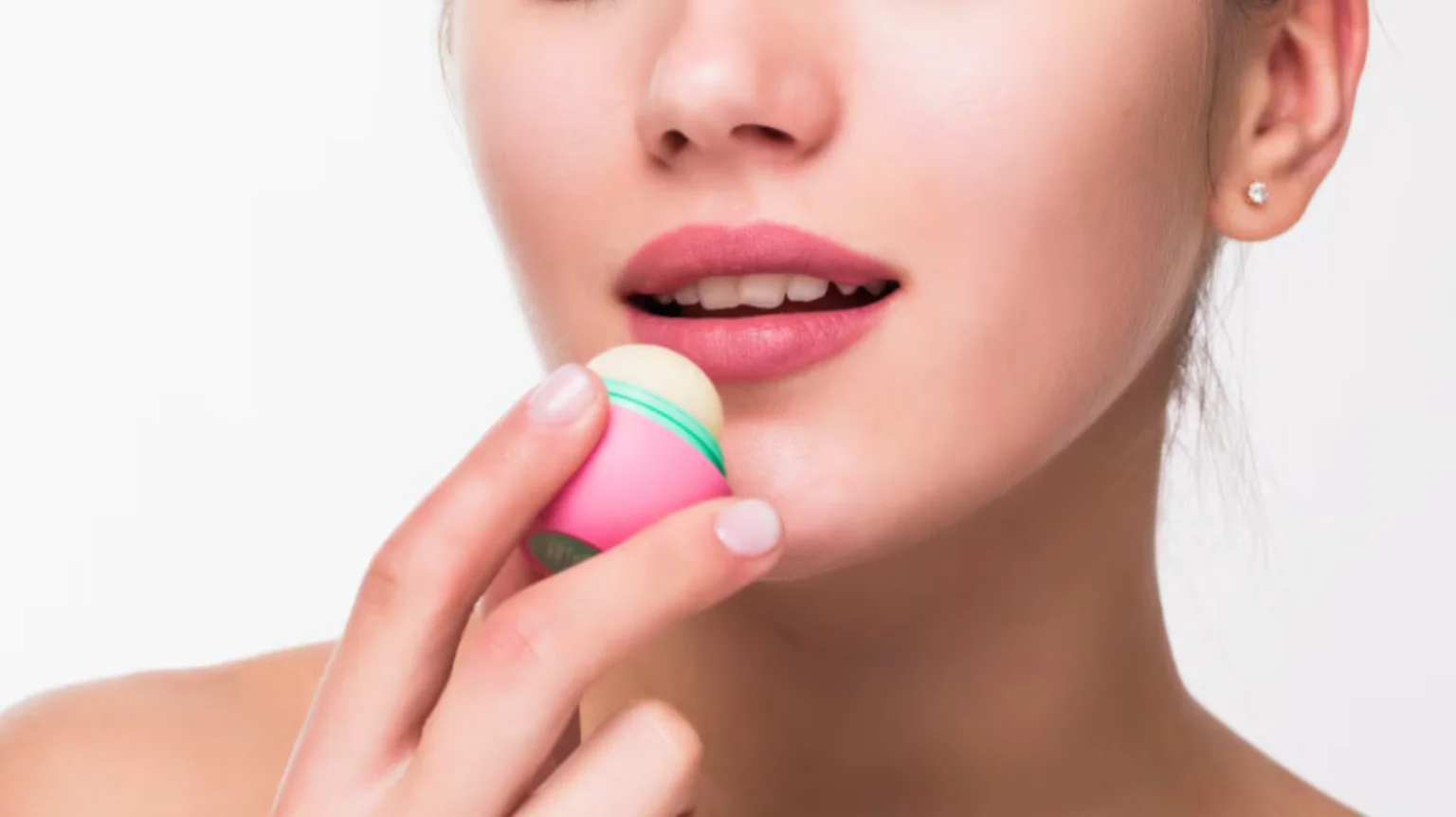
Your Trusted Lip Balm Manufacturer
We help skincare brands develop market-ready products with reliable formulations, professional packaging, and scalable manufacturing support—so you can launch confidently and grow your product line with a stable supply chain.

Private Label Lip Balm
At Metro Private Label, we understand that a successful lip balm isn’t just about moisturizing—it’s about creating a product your customers use daily, repurchase consistently, and trust as part of their routine. In a category where price competition is high and differentiation is subtle, the right texture, format, and positioning are what make your product actually sell.
That’s why we build our private label lip balm solutions around real market demand and production realities. From classic moisturizing balms and rich lip butter textures to tinted balms, peptide treatments, SPF protection, and overnight lip masks, our range reflects what customers are already buying across Amazon, Sephora, and fast-growing DTC brands. At the same time, we design every product with manufacturing in mind—because in lip balm, packaging format and batch scale directly impact your cost, MOQ, and launch strategy.
As your manufacturing partner, we don’t just produce a formula—we help you choose the right direction from the start. Whether you’re building a high-volume e-commerce SKU with stick packaging or testing the market with a lower-MOQ jar format, we guide you through formulation, texture, claims, and packaging so your product is not only aligned with your brand—but also realistic to produce, scale, and repeat successfully.

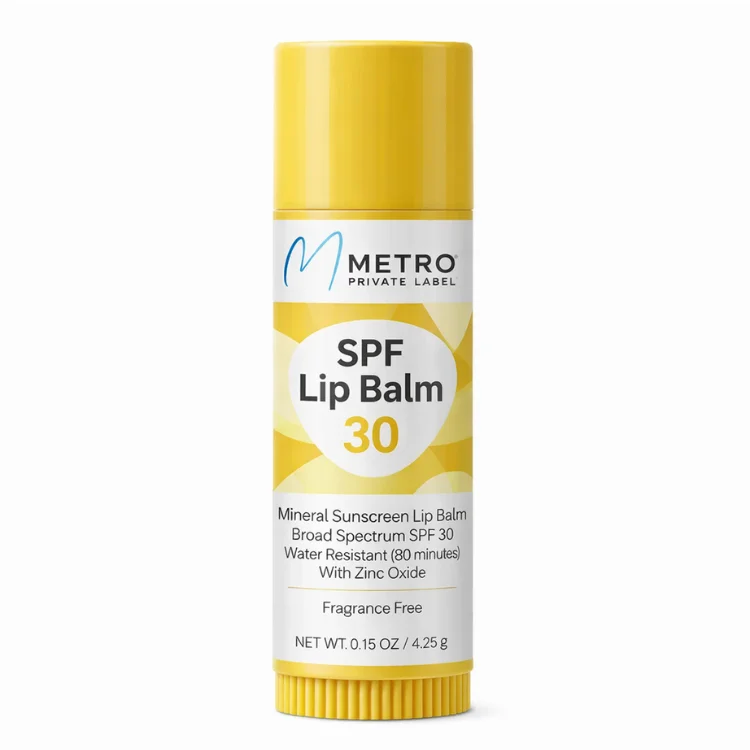
SPF Lip Balm
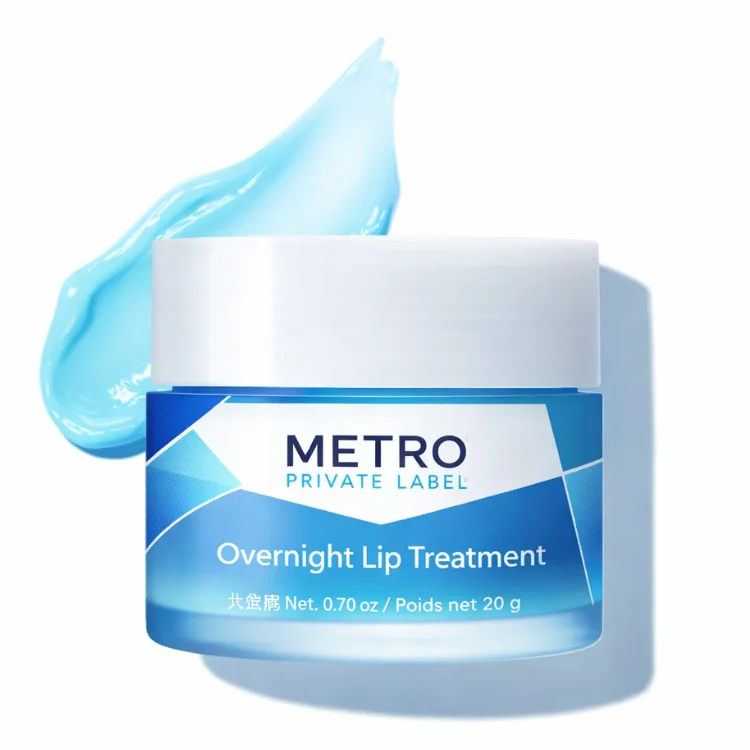
Lip Mask / Overnight Lip Treatment
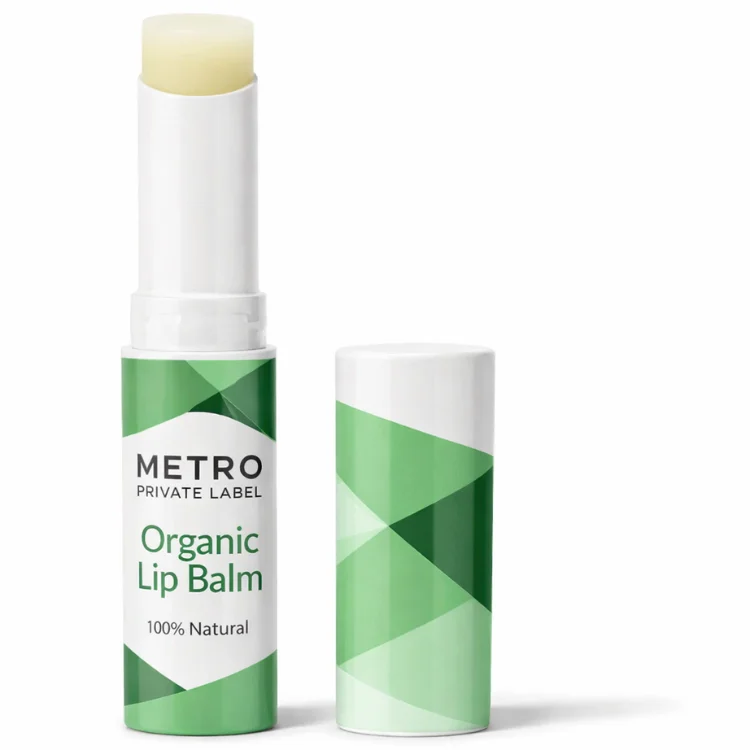
Natural / Organic Lip Balm
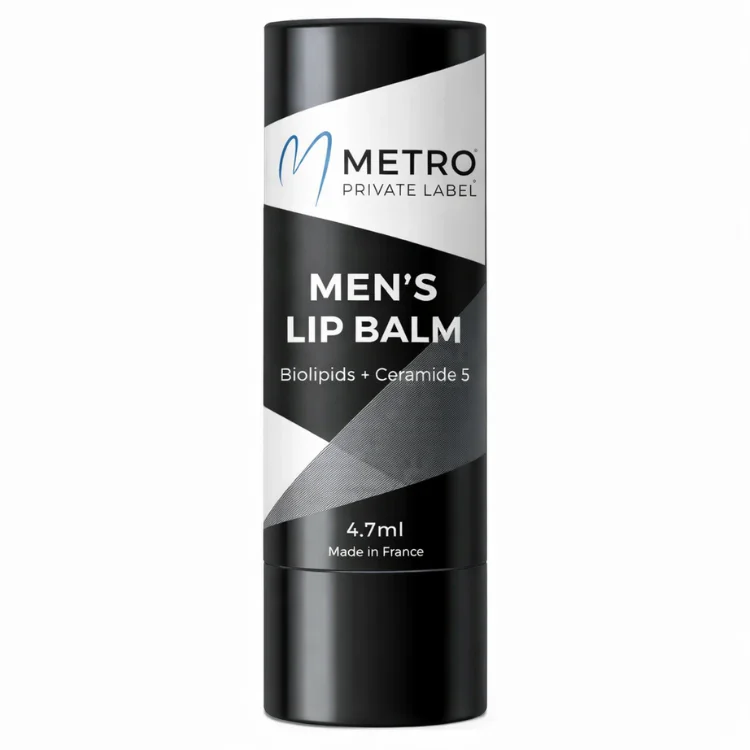
Men’s Lip Balm
Build a Private Label Lip Balm Line That Actually Sells
At Metro Private Label, we don’t see lip balm as just a simple add-on product. We see it as one of the most competitive everyday-use categories in beauty—where texture, finish, format, and positioning all directly affect whether customers repurchase or move on. In this market, a lip balm only works when the product experience matches the audience, the channel, and the price point.
That’s why we don’t approach private label lip balm as a generic SKU. We help you define the right direction based on how your product will actually be sold—whether that means a fast-moving moisturizing balm for Amazon, a tinted daily-use product for DTC brands, a peptide treatment for premium skincare positioning, or a men’s lip balm with a more functional, low-shine profile. From texture and actives to format and packaging, every detail needs to fit your market.We’ve seen many brands underestimate this category. A balm that feels too waxy, too greasy, too light, or too ordinary is easy for customers to forget. A formula that looks good on paper but doesn’t match usage habits will struggle to build repeat orders. That’s why we guide you early—so the product is not only possible to manufacture, but also more realistic to sell.
As your manufacturing partner, we focus on helping you build lip balm products for real commercial use. Whether you’re launching a hero SKU for e-commerce, expanding a clean beauty line, or building a more treatment-focused lip care range, we support you across formula direction, sampling, packaging coordination, and production planning. Our goal is simple: help you launch a lip balm line that is easier to position, easier to produce, and easier to scale.
Our 8 Core Private Label Lip Balm Types
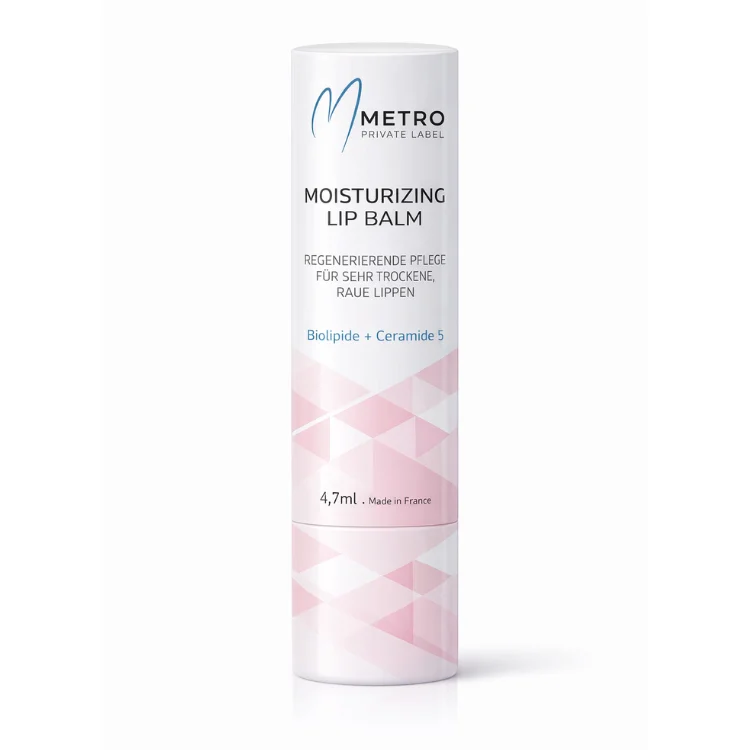
1. Moisturizing Lip Balm This is the core everyday SKU for daily hydration and broad-market demand. It works well for brands that want a reliable, high-frequency product with strong repeat-use potential.
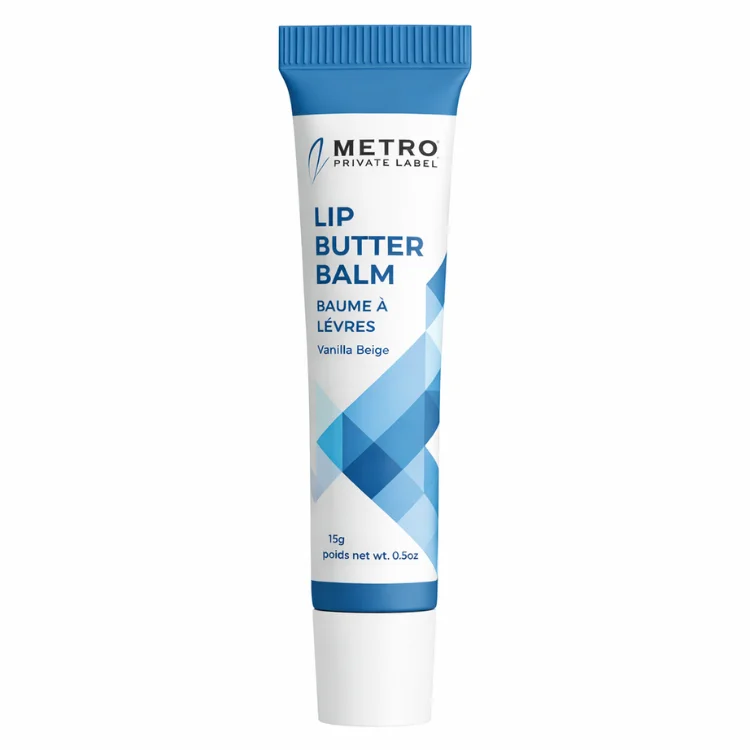
2. Lip Butter Balm This type focuses more on rich texture, smoother glide, and a softer sensory experience. It is especially suitable for DTC and premium-positioned brands that want a more indulgent product feel.
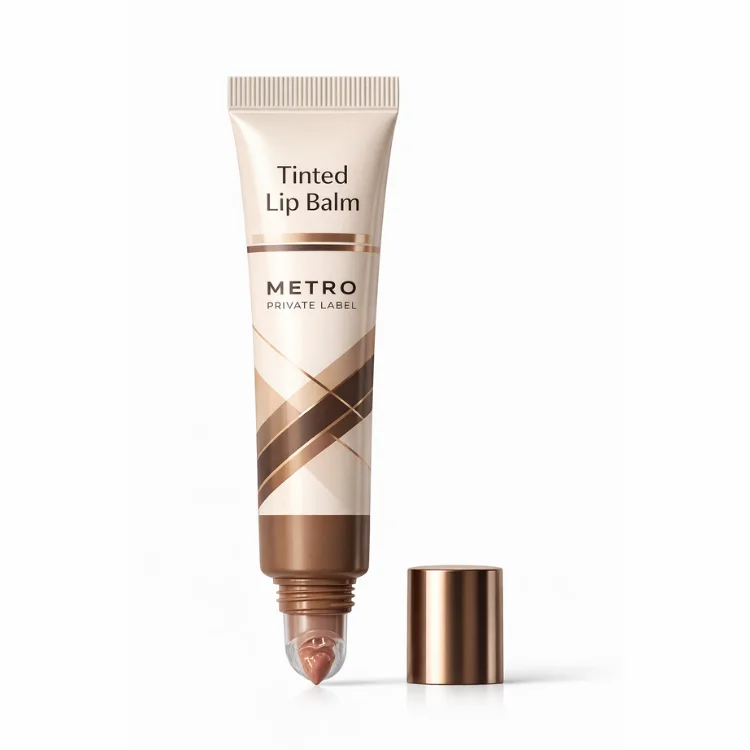
3. Tinted Lip Balm Tinted lip balm combines hydration with a light makeup effect, making it ideal for beauty-led brands and visual-first channels. It is often used to create a more lifestyle-oriented SKU with stronger margin potential.
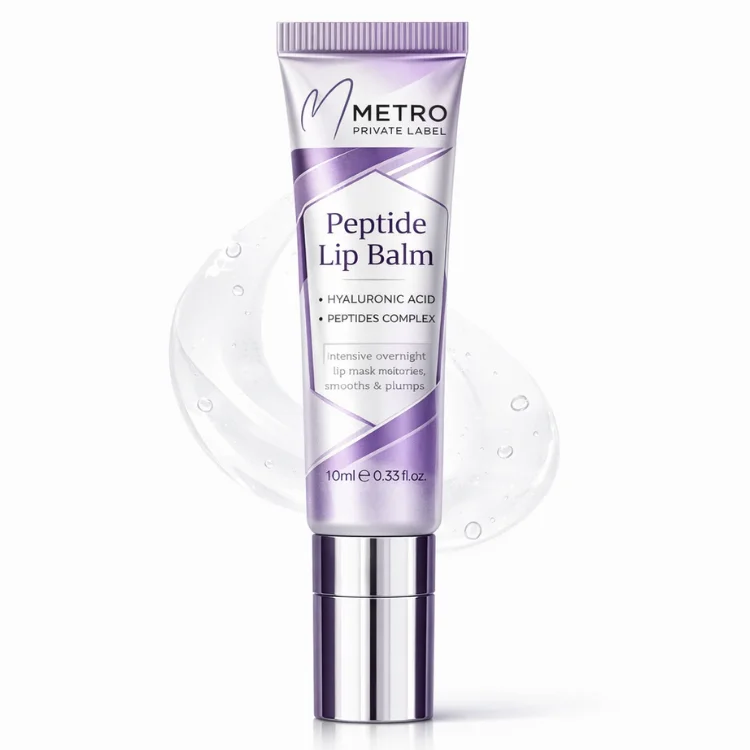
4. Peptide Lip Balm / Peptide Lip Treatment This is a more premium, skincare-driven direction that speaks to repair, smoothing, and visible lip care benefits. It fits brands that want to position lip balm as a treatment product rather than just basic hydration.
5. SPF Lip Balm SPF lip balm is built around daily protection and outdoor-use demand. It is a strong direction for brands targeting functional lip care, but it also requires more careful consideration around claims and market requirements.
6. Lip Mask / Overnight Lip Treatment This type is designed for intensive care, usually with a richer texture and a repair-focused positioning. It works well for brands that want to create a more premium or routine-based lip care product.
7. Natural / Organic Lip Balm Natural or organic lip balm is a strong choice for clean beauty brands and ingredient-conscious audiences. It is especially relevant for brands selling into markets where plant-based, minimalist, or “clean label” positioning matters.
8. Men’s Lip Balm Men’s lip balm is usually built around a more functional image, lighter shine, and simpler branding direction. It fits brands targeting male grooming, outdoor use, or more understated everyday care.
MOQ & Production Strategy Built Around Real Lip Balm Manufacturing
We also believe buyers should understand the real production logic behind lip balm, because this category is heavily shaped by packaging and batch size. Standard lip balm sticks are usually 5g, and from a production perspective, the minimum formula batch often starts at around 30kg, which equals roughly 6,000 units. At the same time, most stick packaging suppliers require a minimum order of 10,000 pieces.
That’s why, in real manufacturing, 10,000 units is the practical starting point for stick-format lip balm. This is not just our factory rule—it is also a common industry standard. For brands that want a lower starting quantity, 15g wide-mouth jar formats are often more flexible, with production starting from around 3,000 units.
Our job is not just to quote a number. We help you choose a format and product direction that actually fits your budget, your sales channel, and your launch plan—so your lip balm line is built for real market execution, not just concept-stage discussion.
If you want, I can next turn this into a more polished tank-page layout version with tighter paragraph spacing and stronger CTA flow for direct website use.

More Than Just a Private Label Lip Balm Manufacturer
At Metro Private Label, we don’t just produce lip balm—we help you build a product that customers actually use every day and come back to. In this category, success isn’t about having “a formula.” It’s about getting the texture, finish, and format right. If a lip balm feels too waxy, too greasy, or doesn’t last long enough, customers won’t complain—they just won’t repurchase. That’s why we focus on making your product easy to use, easy to position, and aligned with real customer habits.

Built Around What Already Sells
We don’t ask you to guess what might work. We guide you toward product types that customers already recognize and buy—like moisturizing daily balms, tinted lip balms, peptide treatments, SPF protection, and overnight lip masks. These are not trends—they are established demand across Amazon, Sephora, and DTC brands. When your product fits into a familiar category, your messaging becomes clearer, your conversion becomes easier, and your repeat purchase rate improves.

Designed for Real Market Launch
Lip balm production is not just about formulation—it’s shaped by packaging and scale. Standard 5g stick formats typically require around 10,000 units due to both formula batching and packaging MOQ. This is not just our requirement—it’s how the industry works. Starting at this level allows you to launch with stable quality, better cost control, and a pricing structure that actually supports your margins. For brands that need more flexibility, we also offer jar-based formats with lower starting quantities.
Consistency That Protects Your Reviews
In lip balm, small differences are easy to notice. If the texture changes between batches, if the glide is inconsistent, or if the product doesn’t perform the same way each time, customers lose trust quickly. We focus on consistency from the start—so your product feels the same across every order, helping you maintain stable reviews, reduce returns, and build a product that can scale instead of being replaced.
Support That Helps You Move Faster
We know your goal is not just to develop a product—it’s to launch and sell it. That’s why we support you with the key areas that usually slow brands down, including ingredient documentation, labeling guidance, and packaging coordination. Instead of spending time figuring out production details, you can stay focused on your channel, your marketing, and your growth.
✨ Build a Private Label Lip Balm Line That Performs Beyond Expectations
When you work with Metro Private Label, you’re not just choosing a lip balm manufacturer—you’re working with a team that understands how this product actually performs in the real market. In this category, success isn’t defined by how complex the formula sounds, but by how it feels in daily use. If the texture is off, if it wears too quickly, or if it doesn’t fit into the customer’s routine, it simply won’t be used again.
Lip balm is a highly experience-driven product. Customers notice everything—how smooth it glides, how long it lasts, whether it feels too waxy or too oily, and whether it actually improves their lips over time. If the experience isn’t right, they won’t repurchase. What drives growth is a product that feels comfortable, works consistently, and fits naturally into everyday use. That’s exactly where we focus—helping you create lip balms that customers rely on, not just try once.
Whether you’re launching a high-volume moisturizing SKU for e-commerce, a tinted balm for lifestyle branding, a peptide-based treatment for premium positioning, or a men’s lip balm with a more functional profile, we structure every project around how your product will actually be used and sold. Details like texture balance, finish, absorption, and packaging format all directly affect how your product performs in the market—and we help you get these right from the beginning.
🧪 Formulation Built for Real Product Experience
We don’t rely on generic formulas or one-size-fits-all structures. Every lip balm we develop is built around real usage scenarios—how it feels on application, how it holds over time, and how it performs across different environments.
From balancing waxes and oils for the right glide and stability, to adjusting richness for different climates, to creating a finish that feels nourishing rather than heavy, we focus on what your customer actually experiences. We also consider how the formula behaves during storage, how stable it remains across seasons, and how consistent it performs across production batches.
Our goal is simple—we help you build a lip balm that doesn’t just sound good, but actually feels right every time it’s used.
📦 Packaging & MOQ That Match Real Production Conditions
Lip balm is not a category where you can separate formula from packaging. Standard 5g stick formats typically require around 10,000 units due to both production batching and packaging MOQ. This is not just our setup—it’s the practical standard across the industry.
Starting at this level allows us to ensure consistent filling, stable structure, and a cost that supports real pricing and margins. For brands that need more flexibility, we also offer jar-based formats (such as 15g wide-mouth jars) with lower starting quantities around 3,000 units.
From stick mechanisms to jars and outer packaging, we help you align your packaging with how your product will actually be sold—whether that’s e-commerce shipping, retail display, or bundled sets—so the product arrives exactly as your customer expects.
⚙️ A Clear and Efficient Production Process
We keep the process structured and easy to follow, so you always know what comes next. From initial direction and sampling to packaging confirmation and production scheduling, every step is designed to help you move forward without unnecessary delays.
This is especially important for brands working with launch timelines, seasonal demand, or fast-moving channels like Amazon and TikTok. Whether you’re launching your first SKU or scaling an existing line, we help you stay on track and reduce the uncertainty that often slows projects down.
🌿 Built for Brands Ready to Launch and Scale
We don’t measure success by production—we measure it by how your product performs after it reaches the market. That’s why everything we do is built around repeat use, consistent quality, and long-term scalability.
From the first sample to full production, we focus on helping you create a lip balm that customers will keep using, keep buying, and keep trusting. With Metro Private Label, your lip balm line is not just manufactured—it’s built to perform, built to scale, and built to support your brand as it grows.

FAQs Lip Balm
For your convenience, we’ve gathered the most commonly asked questions about our Lip Balm . However, should you have any further queries, please don’t hesitate to reach out to us.
1. What types of lip balm can you manufacture?
We focus on the formats that actually sell in today’s market—such as moisturizing lip balms, lip butter textures, tinted lip balms, peptide treatments, SPF lip balms, overnight lip masks, natural/organic options, and men’s lip balm. Instead of offering endless variations, we guide you toward product types that already have proven demand and are easier to position and scale.
2. Can you customize the formula based on our brand positioning?
Yes, that’s a big part of what we do. We don’t just adjust ingredients—we help you align texture, finish, and performance with your target customer. Whether you want something lightweight for daily use, richer for repair, or more premium with actives like peptides, we’ll help you shape a product that fits your channel and pricing strategy.
3. What’s your MOQ for private label lip balm?
For standard 5g stick lip balm, our MOQ typically starts at 10,000 units per SKU. This is mainly due to packaging and production batching requirements—it’s also the common industry standard. If you’re looking for a lower starting point, we can explore jar formats (like 15g), which usually start from around 3,000 units.
4. Why is the MOQ higher compared to other skincare products?
Lip balm is heavily driven by packaging. Stick components usually require large minimum orders, and production batches need to be stable for consistent filling and quality. Starting at the right scale helps ensure your product performs well, maintains consistency, and supports a workable cost structure from the beginning.
5. How long does it take to go from sampling to production?
In most cases, sampling takes around 10–14 working days, including stability observation. Once everything is confirmed, production usually takes about 4 weeks. We keep the process structured so you can plan your launch timeline with more confidence.
6. Can you help with packaging selection and coordination?
Yes. Lip balm is not just about formula—the packaging format (stick vs jar) directly affects your MOQ, cost, and user experience. We help you choose packaging that fits your product direction, sales channel, and price positioning, and we coordinate sourcing, labeling, and compatibility.
7. Do you offer stock formulas or fully custom development?
We support both. If you want to move fast, we can start from proven base formulas and adjust them to fit your brand. If you’re building something more specific, we can develop a custom formula from scratch. We’ll guide you based on your timeline, budget, and goals.
8. How do you ensure product consistency across batches?
Consistency is critical in lip balm because customers notice even small differences in texture and performance. We control raw materials, formulation structure, and filling processes to make sure your product feels the same across every batch—so your reviews and customer trust stay stable.
9. Can you support compliance and documentation for our market?
Yes. We provide the necessary documentation such as INCI lists, MSDS, COA, and labeling guidance based on your target market. Whether you’re selling on Amazon, Shopify, or into EU/US markets, we help you avoid common compliance issues that can slow down your launch.
10. Do you work with international clients? How does the process work?
We work with brands globally. Once your formula and packaging are confirmed, we handle production, quality checks, and coordinate shipping through our logistics partners. We also support documentation for customs and import requirements, so you can focus on selling while we manage the supply side.
What stood out to us was how practical and clear the whole process was. Metro Private Label didn’t just talk about formulas—they helped us choose the right lip balm type and packaging based on how we actually sell online. That made a big difference in how quickly we could move from idea to launch.
James Walker, E-commerce Brand Operatorfrom United Kingdom
We’ve worked with several manufacturers before, but this was the first time we felt the team truly understood our product direction. From texture adjustments to packaging alignment, everything was explained in a way that made sense. The final lip balm matched exactly what we had in mind.
Sophie Laurent, Product Managerfrom France
We didn’t just need a manufacturer—we needed someone who could help us make the right decisions early on. The team helped us choose the right format and texture for our market, and explained the production logic behind it. That gave us much more confidence moving forward.
Emma Schneider, Brand Founderfrom Germany
For us, speed and consistency are everything. Metro Private Label was able to guide us through MOQ, packaging, and production timelines without overcomplicating things. What we appreciated most is that the product we received was consistent with the samples, which is critical for our reviews.
Michael Turner, Amazon Sellerfrom United States
What we value most is reliability. Metro Private Label helped us select lip balm products that are easy to position and reorder. The communication was straightforward, and the production process was well structured. It made it much easier for us to plan our inventory and sales.
Luca Bianchi, Distributorfrom Italy
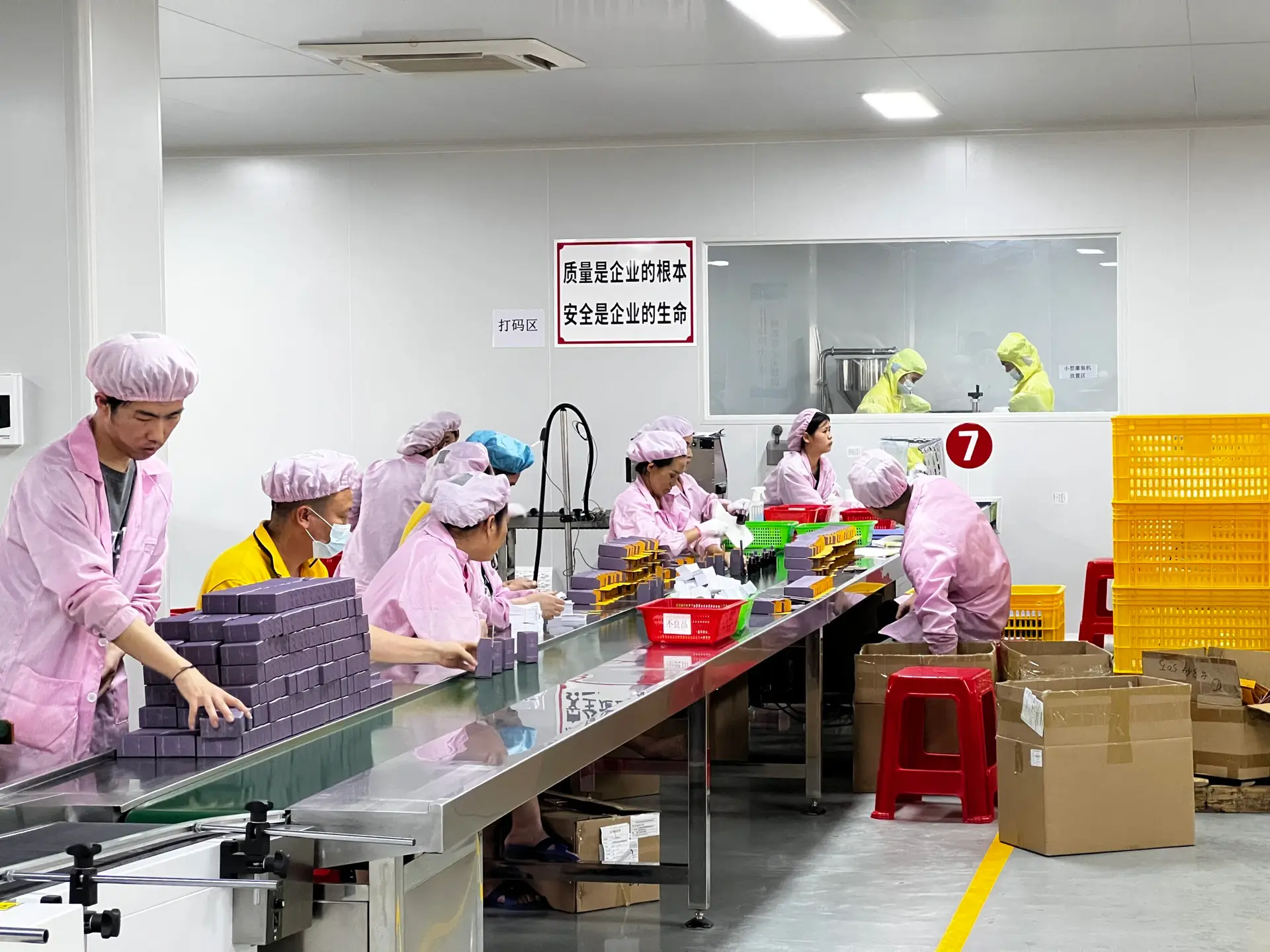






Metro Private Label in Numbers
Happy Clients
0 +
Million-dollar Buyers
0 +
Formulation
0 +
Professional Staffs
0 +
Your Ultimate Guide to Lip Balm
If you’re planning to launch a private label lip balm—whether it’s your first entry product or an expansion into a high-frequency category—you’re not just choosing a simple skincare item. You’re stepping into one of the most competitive yet repeat-driven segments in the entire beauty market. Lip balm is a product customers use daily, often multiple times, which means success is not defined by how complex the formula is, but by how naturally it fits into everyday routines. When developed correctly, a lip balm becomes a habit product rather than a trial product, helping brands build consistent repeat sales instead of relying on constant new launches.
Over the years, we’ve seen lip balm evolve from a basic moisturizing item into a highly segmented category across e-commerce, DTC brands, retail shelves, and professional channels. At Metro Private Label, we’ve observed that the brands that scale successfully are not necessarily the ones with the most “innovative” ideas, but the ones that align product type, texture experience, packaging format, pricing logic, and production strategy from the very beginning. Lip balm may look simple, but in reality, it is extremely sensitive to execution. Small details—such as how smoothly it glides, how stable it feels across temperatures, or how well the packaging fits daily use—can determine whether customers repurchase or switch.
This guide is built from what we’ve learned working on lip balm projects across different markets and customer types. Instead of focusing only on ingredients or trends, we want to show how lip balm products actually perform in real commercial environments. Decisions like choosing the right format for your sales channel, balancing texture with long-term comfort, selecting packaging that survives shipping and daily use, planning MOQ based on realistic production constraints, and aligning positioning with pricing all directly impact whether your product can launch smoothly and scale over time. Our goal is to help you see lip balm not as a simple SKU, but as a product that requires the right structure behind it to truly succeed.
Table of Contents
How to Choose the Right Lip Balm Type for Your Market
Choosing the right lip balm type is not simply a product decision—it is a market decision that determines whether your product will convert, repeat, and scale. From my experience, many brands approach this step from the wrong direction. They start with what they want to create instead of where the product will actually be sold. But in reality, every sales channel comes with its own expectations, pricing logic, and customer behavior. If the lip balm type does not align with that environment, even a well-formulated product can struggle to perform. That is why I always begin with understanding the market context first, and then build the product around it.
Why Your Sales Channel Should Decide Your Product Type
When I evaluate a lip balm project, I always treat the sales channel as the foundation of every decision that follows. Not all lip balm types perform the same across different channels, and this difference is often underestimated. Each platform shapes how customers think, how they compare products, and how quickly they make decisions. On some platforms, customers are actively searching for a solution, while on others, they are passively discovering products through content and visuals. If the lip balm does not match that behavior, it creates friction. I’ve seen cases where a product required too much explanation for a fast-paced platform, or where a highly visual product was placed in a channel that prioritizes function over appearance. In both situations, the mismatch reduced conversion, even though the product itself was not the problem. This is why I always define the channel first, because it allows me to align the product with how customers already think and shop.
What Works in Mass-Market and E-commerce Platforms
When I look at mass-market platforms like Amazon, I approach product selection with a focus on clarity, efficiency, and repeat purchase behavior. Customers in this environment are usually searching with intent, which means they already know what they need and are comparing options quickly. This is why basic moisturizing lip balms and SPF lip balms consistently perform well. They are easy to understand, easy to evaluate, and easy to use without any learning curve. In this space, the product does not need to feel unique—it needs to feel reliable. What matters most is whether the product delivers a consistent experience every time it is used. If the texture is smooth, the hydration lasts, and the function is clear, customers are more likely to reorder. On the other hand, products that introduce unfamiliar formats or unclear benefits often struggle, because customers are not looking to experiment—they are looking to solve a problem quickly and confidently.
Why DTC Brands Focus More on Experience and Visual Appeal
When I work with DTC brands, I notice that the decision-making process shifts from function to experience. Customers are no longer just solving a problem—they are engaging with a brand. In this environment, tinted lip balms and lip butter textures become more relevant because they offer something beyond basic hydration. They provide a sensory experience that can be communicated visually and emotionally. I pay close attention to how the product looks in use, how it reflects light, how it feels during application, and how it fits into a lifestyle narrative. These details matter because they influence how the product is presented in content, and ultimately how it is perceived by the customer. A lip balm in this space is often part of a routine that customers want to share, which means the product needs to feel enjoyable, not just effective. If the experience is strong, it creates a deeper connection with the customer and increases the likelihood of repeat purchase.
How Professional and Clinic Channels Think Differently
When I consider lip balm development for clinic or professional channels, I approach it with a completely different mindset. In these environments, the product is not just a standalone item—it is often part of a broader treatment or skincare system. Customers expect a higher level of trust, which means the product must feel purposeful, stable, and aligned with a specific function. Treatment-focused lip balms tend to perform better here because they provide a clear role within a routine, whether it is repair, recovery, or maintenance. I focus less on visual appeal and more on how the product communicates reliability. The texture needs to feel controlled, the performance needs to be consistent, and the positioning needs to be precise. If the product feels too generic, it loses credibility, and if it feels overly complicated, it becomes difficult for customers to adopt. The balance between clarity and effectiveness is what determines whether the product fits into this channel.
Start with Where You Sell, Not What You Want to Make
Over time, I have found that the most effective way to choose the right lip balm type is to remove personal preference from the decision and focus entirely on the market. It is natural to start with an idea or a concept, but without a clear understanding of how that product will be positioned and sold, the idea often remains disconnected from real demand. I always begin by asking where the product will appear, how customers will encounter it, and what they expect at that price point. This allows me to narrow down the product type in a way that feels logical rather than experimental. Once the channel and customer behavior are clear, the rest of the decisions—texture, format, ingredient direction—become much easier to define. Instead of trying to create something that works everywhere, I focus on creating something that works extremely well in one specific context, because that is what ultimately leads to stronger conversion, better reviews, and more sustainable growth.
Stick vs Jar Lip Balm: What’s the Real Difference?
When I look at lip balm development, I never treat format as a simple packaging choice. In reality, the decision between stick and jar is one of the most defining factors in how a product will be produced, priced, positioned, and ultimately used by customers. I’ve seen brands spend a lot of time refining formulas, only to realize later that the format they chose limited their ability to scale or didn’t match how customers actually use lip balm. From my experience, format is not the final step—it is the starting point that shapes everything else.
Why Format Is a Structural Decision, Not a Design Detail
When I evaluate a project, I always think about format as a structural decision that connects manufacturing logic with user behavior. A stick and a jar may seem interchangeable at first glance, but they operate under completely different systems. The way the product is filled, the way it behaves under temperature changes, the way it is applied, and even how it is perceived in terms of value are all influenced by this decision. I’ve seen products fail not because the formula was weak, but because the format created friction in usage or didn’t align with the customer’s expectations. This is why I always slow down at this stage and look beyond appearance, focusing instead on how the format will perform across the entire lifecycle of the product.
How Stick Lip Balm Defines Convenience, Habit, and Scale
When I think about stick lip balm, I immediately associate it with habit and repetition. The typical 5g stick format is deeply ingrained in consumer behavior, which means customers already understand how to use it without any explanation. It fits naturally into daily routines, whether it’s carried in a pocket, a handbag, or used throughout the day without interruption. This familiarity is one of its strongest advantages, especially in mass-market and e-commerce environments where simplicity drives conversion.
From a production standpoint, stick lip balm introduces a different level of discipline. The filling process requires controlled temperature management, consistent viscosity, and precise alignment with the packaging mechanism. At the same time, packaging components for sticks are usually produced at scale, which means minimum order quantities are higher. In my experience, this is often misunderstood as a limitation, but it is actually what allows the product to be produced consistently and at a cost level that supports competitive pricing. When done correctly, stick formats create a stable foundation for repeat orders and long-term scalability, which is why they dominate high-volume channels.
Why Jar Lip Balm Opens More Flexibility in Development
When I shift my focus to jar lip balm, I see a format that offers more flexibility in both formulation and production strategy. Typically ranging from 10g to 15g, jar formats allow for softer textures and more expressive formulations because they are not constrained by the structural requirements of a stick. This means it becomes easier to develop richer, more nourishing products that emphasize feel and experience rather than just convenience.
From a production perspective, jars often allow lower starting quantities because the packaging is simpler and does not require the same level of mechanical precision. This makes them more accessible for brands that are testing a concept or entering the market with a more controlled investment. However, I always consider how this flexibility affects the end user. Jar lip balms require finger application, which changes how and when the product is used. They are less suited for quick, on-the-go use and more aligned with slower, intentional routines. This difference may seem small, but it directly affects how often customers reach for the product and how it fits into their daily habits.
How Texture and Formula Behave Differently in Each Format
One aspect that I pay close attention to is how the same formulation behaves differently depending on the format. In stick lip balm, the formula needs to maintain structural integrity, which means balancing waxes and oils carefully to ensure the product holds its shape while still gliding smoothly. If the balance is off, the product may feel too hard, drag during application, or become unstable in higher temperatures.
In jar formats, the constraints are different. Without the need to maintain a solid structure, the formula can be softer and more fluid, which allows for a more indulgent and immediate application experience. However, this also introduces challenges in stability and consistency, especially across different climates. I’ve found that understanding how formulation interacts with format is essential, because it determines not just how the product feels initially, but how it performs over time and across different usage conditions.
How Pricing and Perceived Value Are Influenced by Format
Another factor I always consider is how format influences pricing and perceived value. Stick lip balms are often associated with everyday use, which means customers expect them to be accessible and easy to repurchase. This creates a certain pricing pressure, especially in competitive markets. Jar lip balms, on the other hand, are often perceived as more premium or treatment-oriented, partly because of their size and the way they are used. This perception can support higher price points, but it also raises expectations around texture, performance, and overall experience.
I’ve seen situations where a brand selected a format that didn’t align with their intended price positioning, which created confusion for customers. If the format suggests one level of value but the product delivers another, it becomes harder to justify the price. This is why I always look at format and pricing together, ensuring they reinforce each other rather than conflict.
Choosing the Right Format Based on Real Business Conditions
In the end, I don’t believe there is a universally better format between stick and jar. What matters is how well the format aligns with the brand’s actual business conditions. I always consider where the product will be sold, how customers will interact with it, what price point it needs to support, and how much volume the brand is prepared to produce. When these elements are aligned, the format becomes a strategic advantage rather than a constraint.
From my experience, the most successful products are not the ones that try to do everything, but the ones that are built with a clear understanding of their environment. When the format fits the market, the usage feels natural, the production becomes more efficient, and the product is much more likely to succeed over time.
What Makes a Lip Balm Product “Sellable”?
When I think about what actually makes a lip balm sell in the real market, I don’t start by asking how advanced the formula is. I start by asking how the product behaves in someone’s daily life. Lip balm is one of the most frequently used products in personal care, which means customers don’t evaluate it in the same way they evaluate serums or creams. They don’t spend time analyzing ingredient lists or comparing technical claims in depth. Instead, they make fast, experience-based judgments—often within the first few uses. From my experience, the difference between a product that gets repurchased and one that gets forgotten comes down to how natural, comfortable, and reliable it feels over time.
Why Ingredients Alone Rarely Determine Success
I’ve worked on many lip balm projects where the initial focus was heavily placed on ingredients, especially trending ones. While ingredients do matter, I’ve found that they rarely determine whether a product succeeds on their own. Most customers are not making decisions based on formulation complexity. They are reacting to the result they feel and the experience they have. I’ve seen formulas with premium ingredients underperform simply because the texture didn’t meet expectations, or the product didn’t feel right during use. On the other hand, I’ve seen simpler formulations perform extremely well because they delivered a clean, consistent experience that customers trusted. This is why I always treat ingredients as part of a larger system, where their role is to support the experience rather than define it.
How First Contact Defines Customer Perception
The moment a customer applies a lip balm for the first time, their perception is formed almost instantly. I always pay attention to this first interaction because it sets the tone for everything that follows. If the product feels too hard, requires pressure to apply, or drags across the lips, it creates resistance. If it feels too soft or oily, it can feel uncontrolled or messy. The ideal application feels smooth, balanced, and effortless, allowing the product to glide without drawing attention to itself. What I’ve learned is that customers don’t consciously analyze this—they simply decide whether it feels “right” or “wrong.” That immediate reaction often determines whether they continue using the product or not.
Why Wear Time and Performance Shape Real Value
After the initial application, I always look at how the product performs over time. This is where the real value of a lip balm is defined. Customers expect hydration to last, but they also expect the product to remain comfortable throughout the day. If the product disappears too quickly, it feels ineffective. If it lingers but feels heavy, sticky, or noticeable, it becomes uncomfortable. The challenge is finding a balance where the product provides enough lasting effect without becoming intrusive. From my experience, this balance is what separates products that are used occasionally from those that are used consistently. Customers may not describe this in technical terms, but they feel it clearly in their daily use.
How Routine Integration Drives Repeat Purchase Behavior
One of the most important factors I consider is how easily a lip balm becomes part of a customer’s routine. A truly sellable product is one that people reach for without thinking. It fits into moments throughout the day—before going out, during work, after meals, or before sleep. If the product feels natural in these situations, it becomes part of a habit. This is where repeat purchase comes from. I’ve noticed that products that require extra effort, feel inconsistent, or don’t align with daily habits tend to be used less frequently, even if they are technically well-formulated. The easier it is for the customer to use the product repeatedly, the stronger its long-term performance in the market.
Why Consistency Builds Trust Over Time
Consistency is something I consider essential, especially in a category like lip balm where the product is used frequently and closely experienced. Customers notice even small changes in texture, scent, or performance. If the product feels different from one use to another, or from one purchase to the next, it creates uncertainty. Over time, this uncertainty reduces trust and affects repeat purchase behavior. I’ve seen brands struggle not because their product was ineffective, but because it was inconsistent. On the other hand, products that deliver the same experience every time tend to build stronger customer loyalty. Consistency is not something customers talk about directly, but it is something they feel and remember.
How Simplicity Often Outperforms Complexity
Over time, I’ve learned that the most successful lip balms are not necessarily the most complex ones. In fact, complexity can sometimes work against the product if it doesn’t translate into a better experience. Customers don’t interact with a formula—they interact with how it feels, how it applies, and how it performs throughout the day. A simple product that consistently delivers comfort, smooth application, and lasting hydration often performs better than a complex formula that introduces unnecessary variables. From my perspective, the goal is not to create the most advanced lip balm, but to create one that feels right every time it is used.
Balancing Experience, Performance, and Market Expectations
When I bring all of these factors together, I always think about balance. A sellable lip balm is not defined by one feature, but by how well multiple elements work together. The texture needs to feel smooth and controlled, the performance needs to last without discomfort, the product needs to fit naturally into daily routines, and the experience needs to remain consistent over time. At the same time, all of this needs to align with the expectations of the target market and the positioning of the product. When these elements are aligned, the product becomes easy to use, easy to understand, and easy to repurchase. That is what ultimately defines whether a lip balm succeeds in the market.
Understanding MOQ in Lip Balm Manufacturing
When I discuss MOQ in lip balm manufacturing, I always begin by clarifying that MOQ is not an arbitrary number or a negotiation starting point. It is the natural outcome of how this product is physically produced and packaged. In lip balm, production scale is closely tied to both the behavior of the formula and the realities of packaging supply. If this relationship is not understood early, it often leads to confusion during development or unrealistic expectations around cost and quantity. From my experience, once the logic behind MOQ is fully understood, it becomes a useful framework for planning rather than a limitation.
Why MOQ in Lip Balm Is Structurally Higher Than Other Categories
When I compare lip balm to other skincare categories, the difference in MOQ becomes much more logical. In liquid products such as serums or lotions, filling processes are more flexible, and packaging components are often easier to source in smaller quantities. Lip balm, however, is a solid or semi-solid system that requires controlled heating, blending, pouring, and cooling. These steps are not easily scaled down without affecting the stability of the formula or the consistency of the final product.
At the same time, lip balm packaging—especially for stick formats—is manufactured using molds and automated systems designed for high-volume output. These systems are not efficient at low quantities, which means suppliers typically require larger minimum orders. When I look at MOQ in this category, I don’t see it as a pricing issue. I see it as a reflection of how the product is engineered and produced. This is why lip balm naturally sits at a higher starting point compared to many other skincare products.
How Stick Lip Balm Creates a Fixed Production Threshold
When I analyze stick lip balm production, I always focus on how the formula and packaging interact. A standard stick lip balm is usually around 5g, and the production process begins with a bulk batch of melted formula. In order to maintain proper temperature control, mixing consistency, and filling efficiency, the batch size typically starts at around 30 kilograms. This alone already defines a baseline for how many units can be produced in a single run.
However, what truly fixes the MOQ is the packaging. Stick components—such as the base, mechanism, and cap—are manufactured in large quantities, often starting at around 10,000 units. These components are produced using specialized molds, and the cost structure only makes sense at scale. Even if a smaller formula batch were technically possible, the packaging requirement would still set the practical minimum. From my perspective, this is where the real constraint lies. The formula defines the process, but the packaging defines the scale.
Why Jar Lip Balm Allows More Flexibility in Starting Quantity
When I shift my attention to jar lip balm formats, I see a more flexible production model. Jar packaging is structurally simpler, which means it does not rely on complex mechanical components. This reduces the minimum packaging requirement and allows for smaller production runs. In many cases, this makes jar formats a more accessible starting point for brands that are entering the market or testing a concept.
From a formulation standpoint, jar formats also reduce certain constraints. The product does not need to maintain the same structural firmness required for stick application, which allows for more variation in texture and consistency. This can make development more adaptable, especially in early-stage projects. However, I always consider how this flexibility affects the overall positioning of the product. Jar formats change how the product is used, how it is perceived, and how it fits into daily routines. While they offer lower MOQ, they also require a different approach to market positioning.
How Production Scale Directly Affects Cost Efficiency
One of the most important relationships I observe in lip balm manufacturing is between scale and cost. When production volumes are too low, the cost per unit increases significantly because materials, labor, and processing are not being used efficiently. Fixed costs such as setup time, heating cycles, and filling preparation are spread across fewer units, which raises the overall cost.
When production reaches a stable scale, these costs become more balanced. The formula behaves more consistently, the filling process becomes smoother, and the overall efficiency improves. This results in a more competitive unit cost, which is critical in a category where pricing pressure is high. From my experience, MOQ is not just about how much you need to produce—it is about reaching a level where production becomes both stable and economically viable.
Why Stability and Consistency Depend on Proper Batch Size
Another factor I always emphasize is the relationship between batch size and product consistency. Lip balm requires controlled cooling and solidification, and these processes behave differently depending on volume. If the batch is too small, it becomes more difficult to maintain uniform temperature distribution, which can lead to variations in texture or appearance.
When the batch size is appropriate, the process becomes more predictable. The formula cools evenly, the structure remains consistent, and the final product performs the same across all units. This consistency is especially important in lip balm because customers use the product frequently and are sensitive to even small changes. In my experience, proper batch sizing is one of the key factors that ensures a reliable and repeatable product.
How MOQ Influences Pricing Strategy and Market Positioning
MOQ also plays a significant role in how a product is positioned in the market. A higher MOQ often requires a larger initial investment, which means the pricing strategy must be carefully aligned to recover costs while remaining competitive. If the production volume is too low relative to the target price, margins can become difficult to sustain.
I always consider MOQ as part of a broader pricing strategy. It defines not only how much product is produced, but also how that product is priced, marketed, and scaled. When MOQ and pricing are aligned, the product has a clearer path to profitability. When they are misaligned, even a well-developed product can struggle to perform financially.
Why Understanding MOQ Early Prevents Costly Mistakes
From my experience, one of the most common issues in lip balm development is addressing MOQ too late in the process. When brands focus first on concept or formulation without considering production scale, they often reach a point where the project needs to be restructured. This can lead to delays, additional costs, or compromises in product design.
I always recommend understanding MOQ at the very beginning. This allows the product concept, packaging choice, and pricing strategy to be built around realistic production conditions. When MOQ is integrated into the planning stage, the entire development process becomes more efficient and predictable.
Balancing Flexibility with Long-Term Scalability
In the end, I see MOQ as a balance between flexibility and scalability. Lower quantities may provide an easier entry point, but they can introduce challenges in cost and consistency. Higher quantities require more commitment, but they create a more stable foundation for production and growth.
From my perspective, the goal is not to minimize MOQ, but to align it with the product’s intended market and long-term potential. When MOQ, format, and positioning work together, the production process becomes smoother, the product becomes more reliable, and the business behind it becomes easier to scale over time.
How Product Positioning Affects Pricing and Margins
When I look at a lip balm project, I never separate positioning from pricing, because in reality they are the same decision expressed in two different ways. Pricing is not something that should be adjusted at the end of development—it is something that is built into the product from the very beginning through how it is positioned. Lip balm is a category where customers already have strong expectations shaped by years of exposure to different brands and price points. If a product does not clearly signal where it belongs, customers hesitate, compare, and often choose something else. From my experience, strong positioning creates clarity, and clarity is what allows a product to hold its price and maintain its margins over time.
Why Positioning Defines the Price Before Cost Is Even Considered
When I analyze pricing strategy, I always start with perception rather than cost. A lip balm is not evaluated purely based on what it contains, but on how it is understood within the broader market. Customers instinctively categorize products into different tiers, and this categorization happens almost instantly. If a product is positioned as a basic daily moisturizer, it is automatically compared to other similar products, regardless of whether the formula is technically better. If it is positioned as a tinted or treatment-oriented product, it enters a different comparison set where expectations shift and pricing flexibility increases. From my perspective, positioning sets the boundaries within which pricing can operate, and trying to price outside of those boundaries without adjusting perception almost always leads to resistance.
How Basic Lip Balms Enter a Price-Constrained Market
When I consider basic moisturizing lip balms, I see a category that is driven by familiarity and routine. Customers in this space are not exploring—they are replacing or restocking. This creates a highly competitive environment where price sensitivity is high and differentiation is limited. Even if the formula is slightly improved, customers may not perceive enough value to justify a higher price. In my experience, this segment rewards efficiency rather than innovation. Brands that succeed here are usually those that manage cost effectively, maintain consistent quality, and operate at scale. Without a clear reason for customers to pay more, margins tend to be narrow, and pricing flexibility remains limited.
Why Added Function and Experience Expand Pricing Potential
When I shift my focus to tinted lip balms or treatment-focused products, I notice that the pricing logic changes significantly. These products are not just functional—they offer an additional layer of value that customers can recognize and justify. A tinted lip balm introduces a visual and lifestyle element, while a treatment-focused balm suggests a more targeted benefit. These added dimensions change how customers perceive the product and how they evaluate its worth. From my experience, the more clearly a product communicates its additional value, the easier it becomes to support a higher price point. The key is not simply adding features, but making sure those features are understood and felt by the customer.
What Premium Positioning Demands Beyond the Formula
When I think about premium positioning, I always look beyond the ingredient list. A higher price point raises expectations across every aspect of the product, not just its formulation. The texture needs to feel refined and controlled, the application needs to be smooth and satisfying, and the finish needs to align with what customers associate with quality. At the same time, packaging becomes a critical part of the experience. Customers expect visual and tactile cues that reinforce the price they are paying. If any element feels out of place, the perception of value is weakened. From my experience, premium positioning is not created by adding more—it is created by ensuring that every detail works together in a consistent and convincing way.
How Misalignment Between Positioning and Price Creates Pressure
One of the most common challenges I encounter is a disconnect between how a product is positioned and how it is priced. When a product is priced higher than what its positioning supports, customers hesitate because they cannot clearly understand why it costs more. When it is priced too low relative to its positioning, it may generate sales, but it undermines perceived value and reduces long-term profitability. This misalignment creates ongoing pressure, forcing brands to rely on discounts or adjustments to maintain sales. In a category like lip balm, where alternatives are easy to find, this issue becomes even more pronounced. From my experience, maintaining alignment between perception and price is essential for stability.
Why Consistent Positioning Protects Long-Term Margins
Over time, I have observed that products with clear and consistent positioning tend to maintain healthier margins. When customers understand what a product represents, they are less likely to question its price. This reduces the need for constant promotional adjustments and allows the product to perform more steadily. In contrast, products with unclear positioning often face fluctuating demand and pricing pressure. Consistency in how the product is presented, experienced, and perceived creates a stable foundation for long-term growth. From my perspective, this stability is one of the most valuable outcomes of strong positioning.
How Market Context Shapes Acceptable Price Ranges
Another factor I always consider is the broader market context in which the product will compete. Each segment has an established range of acceptable prices, and customers tend to operate within those ranges when making decisions. If a product is introduced at a price that falls outside of this range without a clear reason, it creates friction. Understanding where similar products sit in the market helps define what customers are willing to accept. From my experience, successful pricing strategies are not created in isolation—they are developed by carefully observing how the market behaves and positioning the product accordingly.
Balancing Cost Structure with Perceived Value
When I bring cost into the equation, I see it as the foundation rather than the driver of pricing. Cost determines the minimum viable price, but perceived value determines how far that price can be extended. The relationship between these two factors defines the margin. If the perceived value is strong, the product has room to support higher pricing while maintaining healthy margins. If the perceived value is weak, even a low-cost product can struggle to generate profit. From my perspective, the goal is to expand the space between cost and perceived value by strengthening positioning, rather than relying solely on cost reduction.
Building a Pricing Strategy That Can Scale Over Time
In the end, I always think about pricing in terms of sustainability rather than short-term performance. A product that is priced correctly for its positioning not only performs better at launch, but also maintains its performance over time. It is easier to scale, easier to reorder, and less dependent on constant adjustments. From my experience, the most successful lip balm products are those that are built with a clear understanding of how positioning, pricing, and market expectations interact. When these elements are aligned, the product becomes easier to manage, easier to grow, and more resilient in a competitive market.
Ingredient Trends: What Actually Matters
When I evaluate ingredient trends in lip balm, I don’t start by asking what is popular—I start by asking what actually changes the user experience. In this category, trends move quickly, and it’s easy to assume that adding well-known ingredients like peptides, ceramides, natural oils, or SPF filters will automatically make a product more competitive. But from my experience, lip balm doesn’t work that way. Customers don’t interact with a formula on paper—they interact with how it feels, how it performs, and how it fits into their daily routine. This is why I always treat ingredients as part of a functional system rather than as individual selling points.
Why Popular Ingredients Don’t Automatically Create a Better Product
Over time, I’ve seen many products built around trending ingredients, but not all of them perform well in the market. The reason is that ingredient popularity does not guarantee product performance. A lip balm can include peptides or ceramides and still feel heavy, unstable, or ineffective if the base formulation is not properly structured. From my perspective, ingredients are only as effective as the environment they are placed in. If the surrounding formulation does not support them, their impact becomes minimal. This is why I always focus first on the structure of the product, and only then on which ingredients can enhance it.
How Formulation Balance Determines Real Performance
When I develop or evaluate a lip balm, I pay close attention to how all components work together as a system. Lip balm is not a simple mixture—it is a balance between waxes, oils, emollients, and active ingredients. Each element affects the others, and even small adjustments can change the entire experience. If the wax content is too high, the product becomes hard and difficult to apply. If the oil phase is too dominant, it may feel greasy and lack staying power. If actives are added without considering their compatibility, they can disrupt the overall texture. In my experience, the success of a lip balm depends far more on this internal balance than on the presence of any individual ingredient.
Why Texture and Sensory Experience Override Ingredient Claims
When I think about how customers judge a lip balm, I always come back to the sensory experience. The way the product glides, how it spreads across the lips, how it settles, and how it feels over time are what customers notice first. These factors are immediate and instinctive, and they shape the user’s perception of quality. Most customers are not reading ingredient lists during use—they are responding to how the product behaves. If the texture feels smooth and controlled, the product is perceived as high quality. If it feels inconsistent or uncomfortable, even the best ingredients will not change that perception. This is why I always prioritize how ingredients influence texture rather than how they appear in marketing.
Understanding the Functional Role of Advanced Ingredients
Ingredients like peptides and ceramides are often associated with advanced skincare benefits, but their role in lip balm needs to be understood in context. Peptides are typically linked to smoothing and conditioning, while ceramides support barrier function. However, in a lip balm format, these ingredients operate within a much simpler delivery system compared to serums or creams. Their effectiveness depends on how they are integrated into the base and how the product is used over time. From my experience, these ingredients can add value when they are aligned with a clear product purpose, but they do not define the product on their own.
How Natural Oils Influence Both Performance and Perception
Natural oils are one of the most commonly used components in lip balm, and for good reason. They contribute to glide, softness, and overall comfort. However, I’ve learned that simply including natural oils does not automatically create a better or more differentiated product. Many formulations rely on similar oil systems, which means the outcome depends on how those oils are balanced and processed. The choice of oil, its viscosity, and how it interacts with waxes all affect the final result. From my perspective, natural oils are a foundational element, but their value comes from how they are used rather than their presence alone.
Why SPF Filters Require Careful Integration
SPF lip balms are a distinct category because they introduce an additional layer of functional complexity. UV filters need to be properly dispersed and stabilized within the formula, which can affect both texture and appearance. I’ve seen SPF lip balms that feel heavier or less smooth because the formulation was not optimized to accommodate the filters. At the same time, SPF positioning changes how customers evaluate the product, as they expect both protection and comfort. From my experience, incorporating SPF is not just about adding an ingredient—it requires adjusting the entire formulation to maintain a balanced user experience.
Aligning Ingredients with Product Positioning
One of the most important principles I follow is ensuring that ingredient selection supports the overall positioning of the product. If a lip balm is designed as a simple, everyday moisturizer, the formulation should focus on stability and comfort rather than complexity. If it is positioned as a treatment or premium product, the ingredient structure should reflect that purpose in a way that customers can understand and feel. Misalignment between ingredients and positioning often leads to confusion. A product that claims advanced benefits but delivers a basic experience will struggle to build trust. This is why I always make sure that the formulation and positioning move in the same direction.
Why Chasing Trends Without Context Creates Weak Products
Ingredient trends can be useful indicators of market interest, but they can also become distractions if not applied thoughtfully. I’ve seen products overloaded with trending ingredients that ultimately do not improve performance. Adding more components does not necessarily create more value, and in some cases, it can make the formulation more difficult to stabilize. From my perspective, trends should be evaluated carefully and only applied when they align with the product’s purpose and target market. A focused, well-structured formula often performs better than one that tries to incorporate every new idea.
How Real-World Conditions Affect Ingredient Performance
One factor that is often overlooked is how ingredients behave outside of controlled conditions. Lip balm is exposed to different temperatures, carried in pockets or bags, and used multiple times throughout the day. These factors can influence how the formula performs. Some ingredients may behave differently under heat or cold, which can affect texture and stability. I always consider how the product will perform in real-world conditions, not just in a controlled environment. This ensures that the product remains consistent and reliable regardless of how it is used.
Building a Formula That Balances Trend, Performance, and Stability
In the end, I see ingredient selection as a balancing process rather than a checklist. A successful lip balm is built by combining the right ingredients in the right proportions to create a product that feels good, performs consistently, and aligns with its intended use. Trends can provide direction, but they should never override the fundamentals of formulation. From my experience, the products that succeed are those where every ingredient has a clear purpose, and where the overall system works together to deliver a reliable and satisfying experience.
Packaging Considerations for Different Sales Channels
When I approach lip balm packaging, I always think beyond how it looks on the surface. In reality, packaging is one of the most underestimated factors that determines whether a product succeeds or fails in the market. It directly affects how the product survives shipping, how it is perceived on a shelf, and how customers interact with it every day. I’ve seen situations where a well-formulated product lost customer trust simply because the packaging did not perform as expected. From my experience, packaging is not a finishing step—it is a core part of product design that must be aligned with the sales channel from the very beginning.
Why Packaging Is a Functional System, Not Just a Visual Layer
When I evaluate packaging, I always treat it as a system that connects product performance with user behavior. It is not just about color, branding, or aesthetics. It defines how the product is protected, how it is dispensed, and how it feels during use. A lip balm is handled frequently, exposed to temperature changes, and often carried in bags or pockets, which means the packaging must maintain its integrity under real-life conditions.
I pay close attention to how each component performs over time. A cap that loosens after repeated use, a stick mechanism that becomes unstable, or a jar that is difficult to open can all negatively affect the experience. These issues may seem minor during development, but they become very noticeable after repeated use. From my perspective, packaging must be reliable first, and visually appealing second. If the functional foundation is not strong, design alone cannot compensate.
How E-commerce Packaging Must Be Built for Transportation Reality
When I design packaging for e-commerce, I always think about what happens after the product leaves the warehouse. Lip balm products often go through long shipping routes, multiple handling points, and varying environmental conditions. Temperature fluctuations can soften or harden the formula, while physical pressure during transit can affect the structure of the packaging.
I’ve seen products arrive with minor leakage, cap loosening, or slight deformation, and even small issues like these can lead to negative reviews. In e-commerce, the first interaction the customer has with the product is the unboxing experience, and if something feels wrong at that moment, it is very difficult to recover that impression. This is why I focus heavily on sealing performance, structural strength, and compatibility between the formula and packaging. The packaging must not only protect the product, but also ensure that the product arrives in the same condition it left the factory.
Why Retail Packaging Must Compete for Attention Instantly
When I shift my thinking to retail environments, I approach packaging from a completely different angle. In physical stores, products are competing side by side, and customers often make decisions within seconds. This means packaging must communicate clearly and attract attention immediately. It needs to stand out visually while still conveying what the product is and why it is relevant.
From my experience, retail packaging is about balance. It needs to be visually strong enough to capture attention, but not so complex that it becomes confusing. Customers should be able to understand the product’s purpose quickly without needing to read detailed information. At the same time, the packaging must feel consistent with the price point. If the design looks too basic for a higher-priced product, it weakens perceived value. If it looks overly complex for a simple product, it may feel unnecessary. The goal is to create a visual language that aligns with customer expectations in that specific retail environment.
How Clinic and Professional Channels Require a Different Kind of Trust
When I consider packaging for clinic or professional channels, I immediately shift my focus from attraction to trust. In these environments, customers are not looking for visual excitement—they are looking for reassurance. The packaging needs to feel controlled, clean, and consistent with a professional setting. It should support the idea that the product is safe, reliable, and suitable for regular use.
I’ve noticed that overly decorative or trend-driven packaging can actually reduce credibility in these channels. Instead, simplicity becomes a strength. The design should be clear, the materials should feel stable, and the overall presentation should align with a clinical or treatment-focused environment. From my perspective, packaging in this context is about reinforcing confidence rather than creating visual impact.
Why Material Choice Impacts Both Performance and Perception
Material selection is another area where I always go deeper than surface-level decisions. Different materials behave differently under stress, temperature changes, and repeated use. Some plastics may be lightweight and cost-effective, but they may not provide the same durability or premium feel as other options. At the same time, heavier materials can enhance perceived quality but may introduce higher costs and logistical considerations.
I always evaluate how the material interacts with both the formula and the user. For example, a material that feels too light may not match a premium positioning, while a material that is too rigid may affect usability. The goal is to find a material that supports the product’s function while also reinforcing its positioning. From my experience, material choice is one of the most subtle yet powerful ways to influence how a product is perceived.
How Packaging Design Influences Daily Usage Habits
One aspect that I find often overlooked is how packaging affects daily usage behavior. Lip balm is not a product that is used occasionally—it is used multiple times a day. This means the packaging must support repeated interaction without creating friction. If the cap is difficult to remove, if the mechanism feels unstable, or if the product is inconvenient to apply, customers may unconsciously reduce how often they use it.
I’ve seen how small improvements in usability can significantly change how a product is experienced. A smooth rotation mechanism, a secure but easy-to-remove cap, or a jar that opens cleanly without resistance all contribute to a more natural usage flow. Over time, these details influence whether the product becomes part of a daily habit or something that is used only occasionally. From my perspective, packaging should make usage effortless, not noticeable.
Why Packaging Must Align with Product Positioning and Pricing
When I look at packaging in relation to pricing, I always consider it as a signal of value. Customers use packaging as a visual and tactile reference to judge whether a product is worth its price. If there is a mismatch, it creates confusion. A product that is priced as premium but packaged in a way that feels basic will struggle to justify its cost. At the same time, over-engineering packaging for a simple product can increase costs unnecessarily without adding real value.
I always aim for alignment. The packaging should feel consistent with what the product promises and what the customer expects at that price point. When this alignment is achieved, the product feels complete. When it is not, even a good formula may struggle to gain trust.
Adapting Packaging Strategy to Real Market Conditions
In the end, I always remind myself that there is no single packaging solution that works across all channels. Each sales environment places different demands on the product, and packaging needs to respond to those demands in a practical way. E-commerce requires durability and protection, retail requires visibility and clarity, and professional channels require trust and consistency.
From my experience, the most successful products are those where packaging is designed with a clear understanding of how the product will be sold and used. When packaging aligns with real market conditions, it becomes a strength that supports the product’s performance rather than a risk that needs to be managed.
Common Mistakes in Lip Balm Product Development
When I reflect on lip balm product development, I’ve realized that most failures are not caused by major mistakes, but by small misjudgments that accumulate over time. Lip balm is a deceptively simple product. On the surface, it looks easy to develop, but in reality, it is one of the most experience-sensitive categories in skincare. Customers use it frequently, often multiple times a day, which means they quickly notice anything that feels slightly off. From my experience, a product can be technically correct in formulation, yet still fail in the market because it does not fully align with how customers expect it to perform. The difference between a product that succeeds and one that struggles often comes down to how well these subtle details are handled.
When Texture Feels Technically Balanced but Emotionally Wrong
One of the first issues I always pay attention to is texture, because it is the most immediate and unforgiving part of the user experience. A formula may be perfectly balanced in terms of wax-to-oil ratio, but that does not guarantee it will feel right during application. When a lip balm feels slightly too waxy, customers experience resistance when applying it, which creates a sense of dryness rather than hydration. On the other hand, when it feels too greasy, it can create a heavy, uncontrolled sensation that makes users uncomfortable, especially in warmer environments.
What I’ve learned is that texture is not just a technical outcome—it is an emotional response. Customers rarely describe it in precise terms, but they immediately know whether it feels right or not. Even a small deviation from the expected feel can make the product seem lower in quality. This is why I always test texture under different conditions and over repeated use, because what feels acceptable once may become irritating over time.
Why Hydration That “Feels Good” at First Often Fails Over Time
Another common mistake I see is overestimating hydration performance based on the initial application. Many lip balms feel smooth and moisturizing at the moment they are applied, but that effect does not always last. Customers quickly notice if the product fades too fast or requires frequent reapplication to maintain comfort.
From my perspective, hydration is not defined by how the product feels in the first few minutes, but by how it performs over several hours. If the product disappears too quickly, it creates a sense of inconsistency. Customers may not consciously analyze this, but they begin to feel that the product is unreliable. Over time, this reduces trust and discourages repeat purchase. I always look at how the product behaves across a full day of use, because that is where real performance is judged.
How Packaging Decisions Quietly Undermine User Experience
Packaging is often underestimated during development, but I’ve found that it plays a critical role in how the product is experienced. A lip balm may be well-formulated, but if the packaging does not align with how customers expect to use it, it creates friction. For example, a product designed for quick application loses its advantage if it requires finger use. A stick format loses its appeal if the mechanism feels unstable or inconsistent.
What I’ve observed is that customers rarely separate packaging from product—they experience them as one system. If the packaging feels inconvenient, the product itself is perceived as inconvenient. This is why I always evaluate packaging in the context of daily habits. Lip balm is used frequently and often in spontaneous moments, which means the packaging must support that behavior without adding any resistance.
Why Unclear Positioning Leads to Misaligned Expectations
One of the more subtle but impactful mistakes I see is unclear product positioning. A lip balm may be well-developed, but if it is not clearly defined, customers struggle to understand what it is meant to do. Is it a basic daily moisturizer, a tinted lifestyle product, or a targeted treatment? If the answer is not immediately clear, customers begin to form their own assumptions, which may not align with the product’s actual performance.
From my experience, this leads to inconsistent feedback. Some users may expect a premium experience and feel disappointed, while others may treat it as a basic product and overlook its strengths. This mismatch creates mixed reviews, not because the product is flawed, but because expectations were not properly set. Clear positioning helps guide how the product is perceived, which in turn affects how it is evaluated.
How Small Frictions Accumulate Into Negative Feedback
What I’ve learned over time is that lip balm is a product where small issues rarely go unnoticed. Because it is used repeatedly, even minor inconveniences become more significant over time. A texture that feels slightly off, a hydration effect that fades too quickly, or a packaging detail that feels inconvenient may not seem critical individually, but together they shape the overall experience.
Customers may not articulate these issues in technical terms, but they express them through their behavior and feedback. They may stop using the product as frequently, choose alternatives, or leave reviews that reflect a general sense of dissatisfaction. From my perspective, it is not one major flaw that causes this—it is the accumulation of small inconsistencies.
Why “Correct Formulation” Does Not Equal Market Success
One of the most important lessons I’ve learned is that a technically correct formula is only the starting point, not the final goal. A lip balm can meet all expected formulation standards and still fail to connect with customers. This is because customers are not evaluating the product based on formulation logic—they are evaluating it based on experience.
I always approach development from a user perspective rather than a purely technical one. I ask how the product feels after multiple uses, how it fits into daily routines, and whether it creates a sense of reliability. These factors are what determine whether a product becomes part of a customer’s habit or something that is used occasionally and eventually replaced.
How Overcomplication Often Reduces Product Clarity
Another pattern I’ve observed is the tendency to overcomplicate lip balm formulations in an attempt to differentiate. Adding multiple active ingredients, combining different positioning ideas, or trying to address too many benefits at once can make the product harder to understand. Instead of feeling more valuable, it often feels less clear.
From my experience, lip balm performs best when it has a focused purpose. Customers respond better to products that are easy to understand and easy to use. When the product tries to do too much, it becomes harder to communicate and harder for customers to form a clear expectation. This often leads to hesitation during purchase and uncertainty during use.
Building a Lip Balm That Avoids These Development Pitfalls
In the end, I approach lip balm development as a process of removing friction rather than adding features. Every decision—whether it relates to texture, hydration, packaging, or positioning—should contribute to making the product easier to use, easier to understand, and more consistent over time.
From my experience, the most successful products are not the ones that appear the most complex, but the ones that feel the most natural. When a lip balm glides smoothly, maintains comfort, fits seamlessly into daily routines, and delivers a consistent experience, customers begin to trust it. That trust is what drives repeat purchase, positive feedback, and long-term success in the market.
Why Consistency Is Critical for Repeat Orders
When I evaluate lip balm as a product category, I always come back to one core idea: consistency is not just important—it is the foundation of repeat purchase. Lip balm is used frequently, often multiple times a day, which means customers build a very clear memory of how it should feel, how it should perform, and what they expect every time they use it. Unlike products that are used occasionally, lip balm is part of a daily habit. From my experience, once a product becomes part of that habit, even the smallest inconsistency can disrupt it. And when that happens, customers do not just notice—they start to question the product.
Why High-Frequency Use Magnifies Every Small Detail
One thing I’ve observed consistently is that the more frequently a product is used, the more sensitive customers become to its performance. Lip balm is not tested once—it is experienced dozens of times over days and weeks. This repeated interaction creates a very strong reference point in the user’s mind. They remember how smoothly it glides, how it feels after application, and how long the hydration lasts.
Because of this, even a slight change becomes noticeable. A formula that feels just a bit firmer, a scent that is slightly different, or a finish that feels less comfortable can stand out immediately. From my perspective, this is what makes lip balm unique. It is not judged based on a single experience, but on a pattern of repeated experiences. If that pattern changes, customers quickly lose confidence.
How Micro Variations Turn Into Macro Perception Problems
What I’ve learned over time is that small variations rarely stay small in the eyes of the customer. When a product behaves differently from one purchase to another, customers do not isolate the issue—they generalize it. A slight difference in texture may be interpreted as a drop in quality. A subtle change in scent may be perceived as a reformulation. Even if the core performance remains acceptable, the perception of inconsistency begins to take over.
From my experience, this shift in perception is one of the most damaging things for a product. Once customers start to feel that the product is not reliable, they begin to explore alternatives. Lip balm is a low-barrier category, which means switching brands requires very little effort. This is why consistency is not just about maintaining quality—it is about maintaining confidence.
Why Sensory Memory Is Stronger Than Technical Specifications
One aspect that I always pay attention to is how customers remember lip balm. They do not remember it in terms of ingredients or formulation structure. They remember it in terms of sensation. They remember how it felt when applied, how it sat on the lips, and how it performed throughout the day.
This sensory memory is extremely precise. Customers may not be able to explain what changed, but they can immediately feel that something is different. From my perspective, this is why consistency must be maintained at a sensory level, not just a technical level. A product can be chemically similar across batches, but if it feels different, it will still be perceived as inconsistent.
How Production Variability Translates Into User Experience
When I look at the manufacturing side, I see that lip balm is particularly sensitive to small changes in production conditions. Factors such as heating temperature, mixing time, cooling speed, and raw material variation can all influence the final texture and performance. Even slight deviations in these variables can result in noticeable differences in the product.
I’ve found that maintaining consistency requires a high level of control across the entire production process. It is not enough to have a stable formula—the process itself must also be stable and repeatable. From my experience, consistency is achieved through discipline in execution, not just design. Every batch needs to behave the same way, from the first unit to the last.
Why Inconsistent Products Quickly Lead to Negative Feedback Loops
In today’s market, especially in e-commerce, customer feedback spreads quickly. What I’ve observed is that inconsistency often triggers a chain reaction. A few customers notice a difference and leave reviews mentioning that the product feels “different” or “not the same as before.” These comments then influence new customers, who become more cautious or choose alternative products.
At the same time, existing customers begin to lose confidence in reordering. Even if they liked the product initially, the uncertainty about future consistency creates hesitation. From my perspective, this is how inconsistency evolves from a technical issue into a commercial problem. It affects not only individual experiences, but also the overall perception of the product in the market.
How Consistency Builds Habit and Locks in Repeat Purchase Behavior
When a lip balm delivers the same experience every time, it becomes part of a customer’s routine. They stop evaluating it and start relying on it. This is one of the most valuable positions a product can achieve. The customer no longer compares options or looks for alternatives—they simply repurchase.
I’ve seen how powerful this habit can be. Once established, it creates a form of loyalty that is difficult to break. However, this habit is also fragile. If the product changes, even slightly, it forces the customer to reconsider their choice. From my experience, consistency is what protects this habit and allows it to continue over time.
Why Consistency Is the Foundation of Brand Trust
Over time, I’ve come to see consistency as one of the most direct ways to build trust. Customers may not consciously think about it, but they associate consistent products with reliability. When a product behaves the same way every time, it creates a sense of certainty. That certainty reduces hesitation and increases confidence in repeat purchases.
From my perspective, this trust extends beyond a single product. It influences how customers view the brand as a whole. A consistent product signals that the brand is controlled, reliable, and dependable. An inconsistent product signals the opposite, even if the differences are small.
How Consistency Supports Scalable Growth, Not Just Stability
What I’ve found particularly important is that consistency is not only about maintaining existing customers—it is also essential for scaling. As a product grows, it reaches more customers, more markets, and more usage scenarios. Any inconsistency becomes amplified at this scale.
A product that is consistent can expand smoothly because it delivers the same experience regardless of where or how it is used. A product that is inconsistent struggles to scale because each variation introduces risk. From my experience, consistency is what allows a product to move from a small success to a stable, scalable business.
Building Consistency Into Both Formula and Process
In the end, I always approach consistency as something that must be built into every stage of development. It starts with a stable formulation, but it extends into raw material selection, process control, and quality management. Every variable needs to be understood and controlled to ensure that the final product remains unchanged over time.
From my perspective, the most successful lip balm products are not necessarily the most innovative, but the most reliable. When customers know exactly what they will get every time they purchase, they stop questioning the product and start trusting it. That shift—from evaluation to trust—is what ultimately drives repeat orders and long-term growth.
Typical Timeline from Development to Launch
When I plan a lip balm project, I always treat the timeline as part of the product strategy, not just a scheduling detail. Many brands underestimate how much coordination is required between formulation, packaging, and production, especially in a category like lip balm where structure and consistency matter. From my experience, delays rarely happen because one step takes longer than expected—they happen because one step cannot start until another is fully completed. This chain effect is what defines the real timeline. Understanding it early allows me to avoid unnecessary pressure, reduce back-and-forth revisions, and move toward a more predictable and controlled launch.
Why Lip Balm Development Moves in Sequential Layers, Not in Parallel
One thing I’ve learned is that lip balm development is not a process where everything can move at the same time. Each stage depends heavily on the previous one being finalized. I cannot confirm packaging until I understand the formula behavior, and I cannot begin full production until both the formula and packaging are locked. This creates a layered process rather than a flexible one.
I’ve seen projects where brands try to accelerate timelines by overlapping too many steps, only to create rework later. For example, finalizing packaging before confirming the exact formula can lead to compatibility issues, such as filling problems or texture mismatches. From my perspective, moving in the correct sequence may feel slower at the beginning, but it prevents much larger delays later in the process.
How the Sampling Phase Shapes Everything That Follows
When I begin the sampling phase, I treat it as the foundation of the entire project. This stage usually takes around ten to fourteen working days, but the real value is not in the duration—it is in the decisions made during this time. The goal is not just to create a sample that works, but to create a sample that can be reproduced consistently at scale.
I always evaluate how the formula behaves during melting, pouring, and cooling, because lip balm is highly sensitive to these processes. I also consider how the product feels during repeated use, not just during the first application. From my experience, a sample that feels good once is not enough. It needs to feel right consistently, because that is what customers will experience after launch. This is why I often refine samples more carefully at this stage, even if it adds a bit more time.
Why Stability Observation Reveals What Sampling Cannot
After the sample is created, I never move forward immediately. I always allow time for stability observation, even if it only takes a few additional days. This is because lip balm continues to evolve after it is filled. The cooling process affects its final structure, and small changes can appear over time.
I’ve seen cases where a sample looked perfect initially but developed slight inconsistencies after settling, such as changes in texture or surface appearance. These issues may not be obvious at first, but they become more noticeable during repeated use. From my perspective, this observation phase is where hidden risks are identified. It is a quiet step, but it plays a critical role in ensuring that the product is truly ready for production.
How Production Time Reflects Process Stability, Not Just Volume
When the project moves into production, I always set the expectation that it will take around four weeks. This is not simply about manufacturing speed—it is about ensuring that the process is stable and repeatable. Lip balm production involves multiple stages, including heating, mixing, filling, cooling, and assembly, all of which must be carefully controlled.
I’ve found that rushing production often leads to inconsistencies, especially in a product that depends on precise structural balance. Each batch needs to behave the same way, which requires time for setup, calibration, and quality checks. From my experience, production is not where speed should be prioritized. It is where consistency must be secured.
Why Packaging Development Often Becomes the Hidden Bottleneck
One area that I always pay close attention to is packaging preparation, because it often becomes the hidden factor that delays projects. While formula development is progressing, packaging components such as tubes, jars, labels, and boxes are usually being prepared in parallel. However, these components often have their own production timelines, especially when customization is involved.
I’ve seen situations where the formula was fully ready, but packaging was still in production, which delayed the entire launch. This is why I always align packaging timelines early and ensure that design, material selection, and supplier coordination are handled proactively. From my perspective, packaging is not just a supporting element—it is a critical path that must be managed carefully.
How Logistics and Shipping Extend Beyond Production Completion
Even after production is completed, the project is not finished. Shipping and logistics add another layer of time that must be considered. Depending on the destination, shipping can take anywhere from several days to a few weeks, and this time varies based on transportation method and customs processes.
I always think about how the product will travel and how that affects both timing and condition. Lip balm is sensitive to temperature, which means that shipping conditions can influence how the product arrives. From my experience, planning logistics early helps avoid surprises and ensures that the product reaches the customer in the expected condition.
Why Timeline Delays Often Come from Decision Bottlenecks
Another pattern I’ve observed is that delays are often not caused by production itself, but by decision-making. Waiting for feedback on samples, finalizing packaging designs, or confirming specifications can all extend the timeline. Each delay at these points pushes the entire project forward because the next step cannot begin until the decision is made.
From my perspective, the most efficient projects are those where decisions are made clearly and promptly. When the direction is well-defined from the beginning, the process flows much more smoothly. This is why I always encourage clear alignment early, because it reduces hesitation and keeps the timeline under control.
How Realistic Timeline Planning Reduces Risk and Improves Outcomes
In the end, I always see timeline planning as a form of risk management. A realistic timeline allows each stage to be completed properly, without forcing compromises. It ensures that the formula is stable, the packaging is ready, and the production process is consistent.
From my experience, the most successful launches are not the ones that move the fastest, but the ones that move with clarity. When every stage is given the time it needs, the final product is more reliable, the launch is smoother, and the overall experience is more controlled. A well-planned timeline does not slow a project down—it gives it the structure needed to succeed.
Why Partner with Metro Private Label for Your Lip Balm Line?
When we work with brands entering the lip balm category, the first thing we always do is reset expectations. Lip balm is not just a “simple” product that sits next to your other skincare SKUs. It’s a high-frequency, experience-driven product where customers notice everything—how it glides, how it feels after 30 minutes, and whether they want to reach for it again. That’s why we don’t approach this as basic OEM production. We approach it as building a product that needs to perform consistently in real-life use. From the beginning, we look at how formulation, packaging, positioning, and usage habits come together. When these elements are aligned, the result is not just a launch, but a product that customers actually keep using and repurchasing.
Why We Always Start From the Market, Not Just the Formula
One of the biggest differences in how we work is where we begin. We don’t start by asking what ingredients you want in your lip balm. We start by understanding where you plan to sell it and who you’re selling to. Over time, we’ve seen many technically “good” products fail simply because they didn’t match how customers actually shop and evaluate lip balm.
When we work with you, we look closely at your main channel. If you’re focused on Amazon, we guide the product toward clear function, fast understanding, and repeat-use practicality. If you’re building a DTC brand, we think more about texture experience, visual appeal, and how the product fits into a lifestyle routine. If you’re targeting clinics or professional use, we focus on safety, stability, and long-term usability. By starting from the market instead of the formula, we help you create a product that is easier to position, easier to explain, and much easier to sell.
How We Turn a Simple Idea Into a Product People Actually Use Daily
Many brands come to us with a clear idea, but lip balm is one of those categories where execution matters far more than the concept. Customers don’t judge lip balm by reading the ingredient list. They judge it the moment it touches their lips.
What we focus on is the real experience. We look at how smoothly the balm applies, whether it feels too waxy or too oily, how long the hydration lasts, and how comfortable it feels throughout the day. If the product feels slightly off, customers notice immediately and often don’t come back. We refine the formula so that the experience feels natural, consistent, and easy to rely on. That’s what turns a product from something people try once into something they use every day.
Why We Build Every Project for Speed, Clarity, and Repeat Production
From our experience, most delays in product development don’t come from technical issues—they come from unclear structure. When decisions are made without a clear sequence, projects slow down and become harder to control. That’s why we always build a structured path from the beginning.
We define each stage clearly, from sampling and texture confirmation to packaging alignment and production planning. Every step connects to the next, so progress feels smooth instead of fragmented. At the same time, we are not just thinking about your first order. We design the process so that your product can be reproduced consistently and scaled easily. This means you are not just launching once—you are building something that can be reordered and grown without friction.
How We Align Formula, Packaging, and Positioning Into One System
One of the most common issues we see in lip balm is misalignment. A formula may feel good, but the packaging doesn’t match how it’s used. Or the product is positioned as premium, but the experience feels basic. Customers pick up on this immediately.
What we do differently is develop everything together. We look at how the texture supports daily use, how the packaging fits real habits like carrying and reapplying, and how the overall product matches your price positioning. This is not just about making the product look good. It’s about making it feel logical and trustworthy from the first use to the last. When everything is aligned, customers feel confident—and that confidence directly leads to better reviews and repeat orders.
Why We Integrate Compliance Early Instead of Fixing It Later
In many projects, compliance is treated as a final step, but this often leads to delays and unnecessary changes. We approach it differently by building compliance into the process from the beginning.
We consider your target market early, whether it’s the US, EU, or other regions, and align ingredient selection, labeling, and documentation accordingly. This avoids last-minute adjustments and ensures that when your product is ready for production, it’s also ready to be sold. For you, this means fewer surprises, smoother timelines, and a more predictable launch.
How We Help You Start at the Right Scale for Lip Balm
Lip balm is not a category where extremely low MOQs are practical, especially for stick formats. We are always transparent about this because it affects both cost and production stability. Instead of pushing unrealistic starting points, we help you choose the right format and scale based on your situation.
If your strategy requires flexibility, we may guide you toward jar formats. If your goal is to build a scalable product for e-commerce or retail, we help you structure your project around stick formats with the right production planning. The goal is not just to start—it’s to start in a way that actually works for your business.
Why We Focus on Long-Term Product Performance, Not Just One Order
For us, a successful project is not defined by one production run. It’s defined by how your product performs after it reaches the market. Lip balm is a repeat-use product, which means long-term consistency matters more than short-term results.
As your brand grows, you may want to expand your range, adjust your formula, or enter new markets. We stay involved in that process, helping you refine and scale without losing consistency. This continuity allows you to move faster and with more confidence, because you are building on something stable rather than starting from scratch.
How We Help You Build a Lip Balm That Actually Scales
At the end of the day, what we help you create is not just a lip balm. It’s a product designed for real-world performance. Every decision we make—from how it feels during application to how it holds up during shipping—is based on how your customers will actually use it.
We’ve seen how the right structure can turn a simple product into a strong, repeat-driven SKU. When everything works together, your product becomes easier to sell, easier to reorder, and easier to scale. That’s what we focus on when we partner with you—not just helping you launch, but helping you build something that can grow consistently over time.
Ready to Launch Your Skincare Line?
*Metro Private Label takes your privacy very seriously. All information is only used for technical and commercial communication and will not be disclosed to third parties.