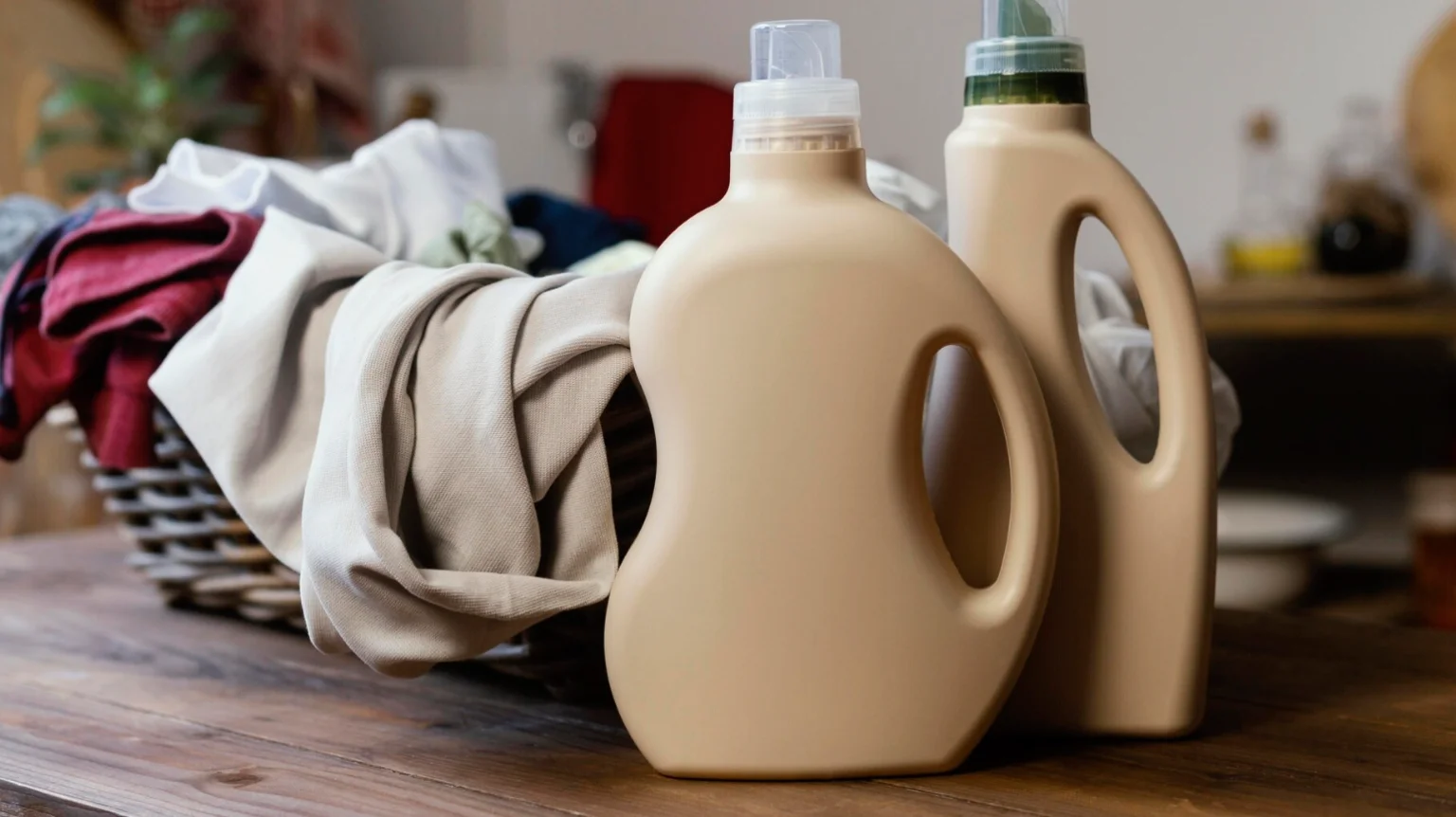
Your Trusted Laundry Detergent Manufacturer
We help you launch a laundry detergent product that actually sells—by getting the formula, scent, packaging, and cost structure right from the start. So you avoid delays, reduce risk, and scale smoothly without reworking your product later.


Private Label Laundry Detergent
At Metro Private Label, we understand that a successful laundry detergent product isn’t just about cleaning clothes—it’s about helping your brand deliver consistent performance, build trust with customers, and stand out in a highly competitive home-care market. That’s why we design our private label laundry detergent solutions around real consumer needs, proven formulation systems, and the product formats that are already performing across Amazon, retail shelves, and DTC brands.
From everyday liquid detergents designed for mass-market use, to convenient pods for premium positioning, cost-effective powder options for bulk buyers, and high-demand “Free & Clear” formulas for sensitive skin and baby care, our range reflects how today’s customers actually shop. We continuously study best-selling products, ingredient trends, and real user feedback, so the formulas we develop for you are not only functional—but aligned with what your market is already searching for.
As your manufacturing partner, we don’t just produce detergent—we help you build a product that fits your business model. Whether you’re targeting price-sensitive retail, eco-conscious consumers, or premium fragrance-driven branding, we’ll support you in shaping the formula, scent profile, packaging format, and positioning to match your audience and sales channel.

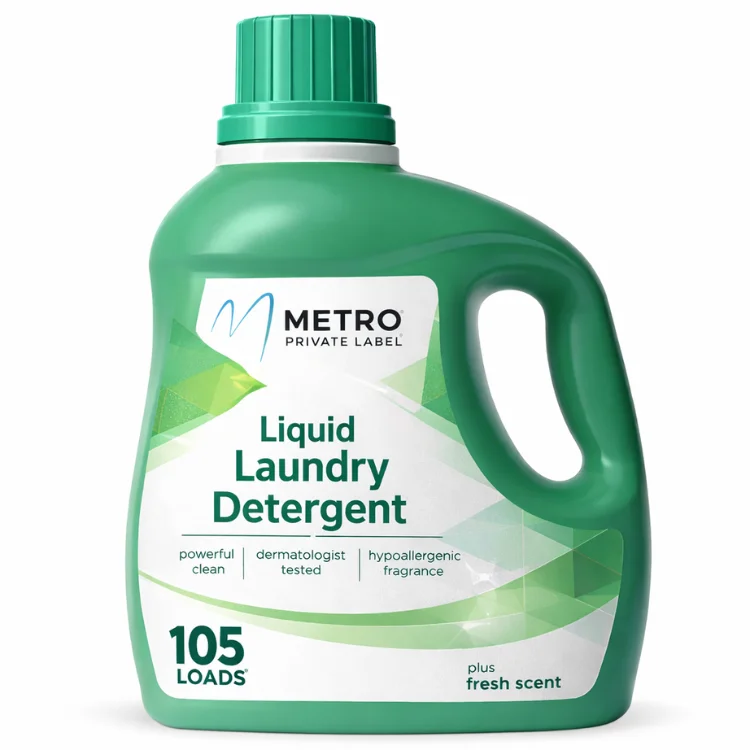
Liquid Laundry Detergent

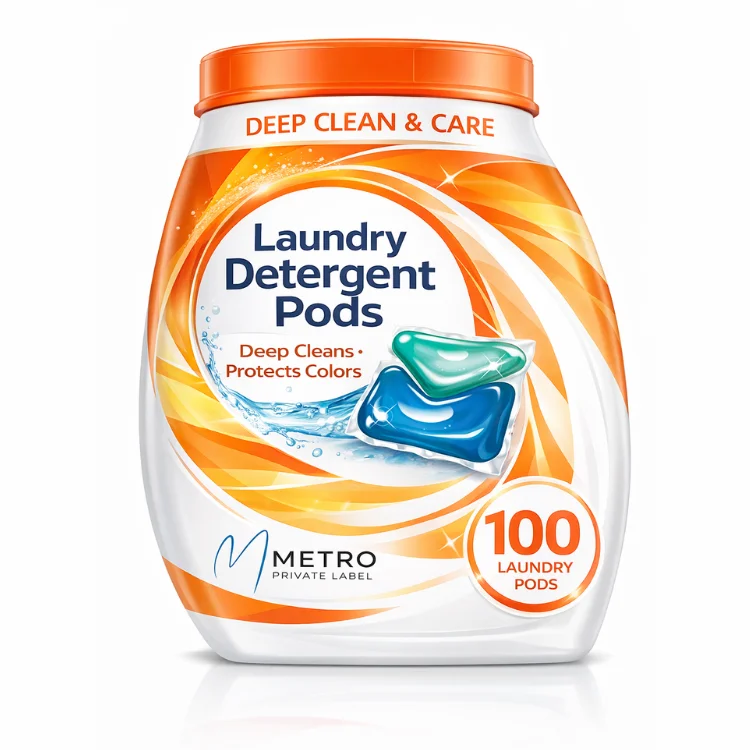
Laundry Detergent Pods / Capsules

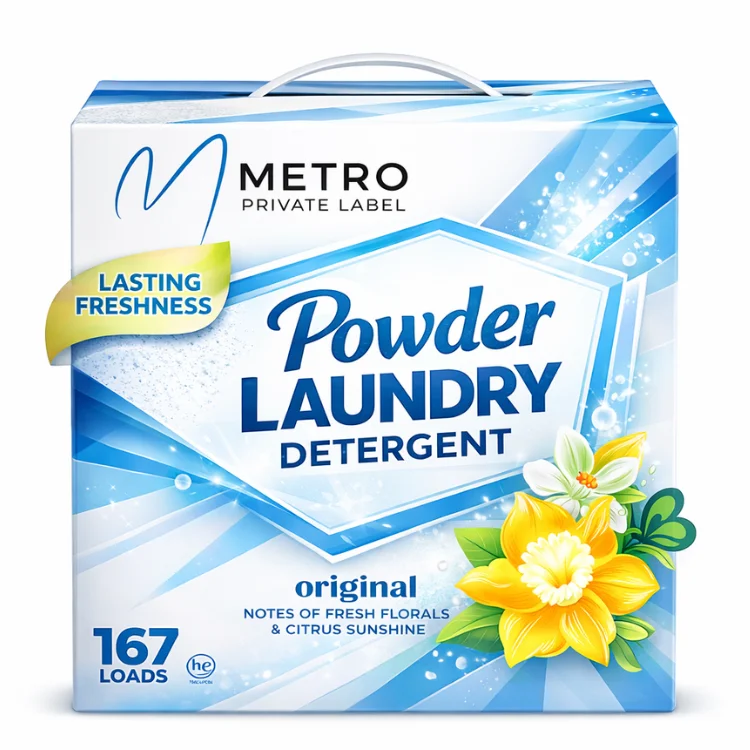
Powder Laundry Detergent

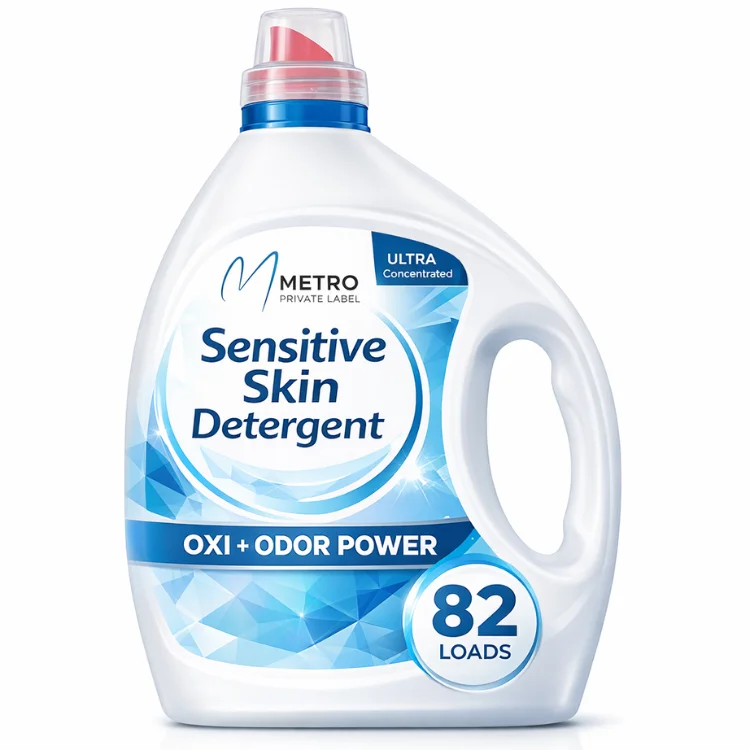
Free & Clear / Sensitive Skin Detergent
Build a Private Label Laundry Detergent Line That Actually Sells
At Metro Private Label, we understand that launching a laundry detergent product isn’t just about putting a cleaning formula into a bottle—it’s about creating something your customers trust, use regularly, and reorder without hesitation. In the home-care category, performance, scent experience, and positioning matter just as much as price. If the detergent doesn’t clean effectively, smells off, or feels inconsistent with your brand image, customers won’t come back—and without repeat purchase, there’s no real growth.
Laundry detergent products often fail when the positioning is unclear, the formula doesn’t match user expectations, or the product format doesn’t align with the target market. We help you avoid these issues from the start by guiding you toward the right formulation direction, realistic performance claims, and packaging strategy—so what you launch is not only marketable, but also reliable, scalable, and commercially viable.
As your manufacturing partner, we focus on helping you build detergent SKUs that fit real sales environments. Whether you’re targeting Amazon shoppers, launching a DTC brand, or supplying local distributors, we work with you to define the right product structure early on. From formula selection and scent development to packaging coordination and production planning, we help you move faster, reduce risk, and build a product line that can actually grow.
💡 Our 4 Core Private Label Laundry Detergent Product Types
1️⃣ Liquid Laundry Detergent
This is the most widely used format and often the best starting point for new brands. It works well for everyday cleaning needs and supports a wide range of positioning—from budget-friendly to premium scented lines. For e-commerce and retail brands, liquid detergent is typically the core product that drives consistent sales and repeat orders.
2️⃣ Laundry Pods / Capsules
Pods offer convenience, precise dosing, and a more premium user experience. This format is especially popular for modern consumers and works well for brands targeting higher-margin positioning. It’s also a strong choice for Amazon and DTC channels where differentiation and perceived value are key.
3️⃣ Powder Laundry Detergent
Powder detergent is a cost-effective solution often used for bulk sales, wholesale distribution, or price-sensitive markets. It provides strong cleaning performance and long shelf life, making it suitable for brands focused on volume and competitive pricing strategies.
4️⃣ Free & Clear / Sensitive Skin Detergent
This category is built for consumers who prioritize safety, mildness, and skin compatibility. Fragrance-free, hypoallergenic, and baby-safe positioning makes it one of the fastest-growing segments in the market. It’s ideal for brands targeting families, sensitive skin users, or clean-label positioning.
🎯 MOQ & Production Strategy (Built for Real Market Testing)
At Metro Private Label, we know that one of the biggest challenges when launching a new detergent product is finding the right starting quantity. You want to test the market—but without taking on unnecessary inventory risk.
That’s why we structure our MOQ to balance production efficiency with real business flexibility.
For liquid laundry detergent, production starts at 1,000 bottles, making it suitable for brands that want to launch quickly and validate demand. For laundry pods or capsules, the MOQ begins at 2,000 boxes, reflecting the more complex production and packaging process. For powder detergent, the MOQ starts at 5,000 bags, which helps maintain cost efficiency for this bulk-oriented format.
Our goal isn’t to push volume—it’s to help you start with the right structure, test your market with confidence, and scale at the right pace.

More Than Just a Private Label Laundry Detergent Manufacturer
At Metro Private Label, we don’t see laundry detergent as just another product you add to your catalog. For many brands, this category quickly becomes a core SKU—it defines how customers judge your quality, your pricing, and whether they trust your brand enough to repurchase. If the cleaning performance feels weak, the scent doesn’t match expectations, or the packaging looks inconsistent, customers notice immediately—and they won’t come back.
A successful laundry detergent product isn’t about adding more features or making exaggerated claims. It’s about creating something that works reliably, feels consistent in every use, and fits naturally into your customer’s daily routine. That’s what turns a basic product into a dependable one—and a dependable product into a long-term revenue driver for your brand.

✅ Product Formats That Already Work in the Market
We don’t build products based on assumptions—we focus on what is already proven to sell. By analyzing high-performing SKUs across Amazon, retail, and DTC brands, we concentrate on formats that customers already understand and are actively buying. These include liquid detergents for everyday use, convenient pods for premium positioning, powder formats for bulk and value-driven markets, and sensitive skin formulas that meet growing demand for safer, gentler products.
When you start with a format your customers already recognize, it becomes easier to position your product, easier to communicate your value, and much easier to scale. Our role is to help you build on that proven foundation—so you’re not guessing what might work, but launching with confidence.

✅ Production Models That Match How Brands Actually Launch
We understand that not every brand starts with large volumes—especially when entering a new category like laundry detergent. That’s why we structure our production to balance efficiency with flexibility.
For liquid detergents, production typically starts at 1,000 bottles, allowing you to launch and test the market without overcommitting inventory. For pods or capsules, the MOQ begins at 2,000 boxes, reflecting the additional complexity in production and packaging. For powder detergent, production starts at 5,000 bags, which helps maintain cost efficiency for bulk-oriented products.
As your brand grows, we support scaling without disrupting your product structure—so you can increase volume while keeping consistency in packaging, formula, and positioning.

✅ Consistent Formulas That Support Long-Term Growth
Laundry detergent is a repeat-use product, which means consistency matters more than anything. If performance changes from batch to batch, or if the scent and texture feel different over time, it directly impacts customer trust.
We focus on maintaining stable formulations, refining cleaning performance, and ensuring compatibility between formula and packaging. This allows every batch to deliver the same experience—so your customers know exactly what to expect every time they use your product.
That consistency is what leads to better reviews, stronger brand recognition, and repeat purchases that actually sustain your business.

✅ Execution & Compliance Support That Keeps You Moving
We don’t just manufacture—we help you move your product into the market with fewer obstacles. From ingredient documentation and labeling guidance to packaging coordination, we simplify the process so you can focus on building your brand.
Whether you’re targeting e-commerce platforms or international markets, we help you align your product with the necessary requirements while maintaining clear positioning. By defining the right structure early, you avoid delays, reduce revisions, and move forward with confidence.
Our goal is simple: to help you launch a laundry detergent line that is not only effective and market-ready, but also practical to produce, easy to scale, and built for long-term success.
✨ Build a Private Label Laundry Detergent Line That Performs Beyond Expectations
When you work with Metro Private Label, you’re not just choosing a factory—you’re working with a team that understands how laundry detergent actually performs in the real market. A successful product in this category isn’t defined by how strong the claim sounds, but by how well it cleans, how consistent the scent feels, and whether customers are willing to repurchase it again and again.
Laundry detergent is a repeat-use product, which means expectations are very clear. If the cleaning performance isn’t stable, if the scent feels inconsistent, or if the overall experience doesn’t match your brand positioning, customers will switch quickly. Our role is to help you build products that feel reliable from the first wash, stay consistent over time, and support long-term customer retention—not just a one-time purchase.
Whether you’re launching a core liquid detergent, a premium pod format, a bulk powder line, or a sensitive skin product, we structure every project around how customers actually choose and use detergent. In this category, details like cleaning strength, scent profile, residue level, and packaging convenience directly influence how your product is perceived. We help you get these details right from the beginning—so your product is not just ready to launch, but ready to compete.
🧪 Formulation Designed for Real Market Performance
We don’t rely on generic formulas. Every laundry detergent we develop focuses on balancing cleaning efficiency, fabric safety, and user experience. Whether your brand is targeting everyday use, premium fragrance positioning, or sensitive skin users, we help align the formula with your market expectations and price level.
Our goal is simple: create a product that doesn’t just claim performance—but delivers it consistently in real use.
📦 Packaging & MOQ Designed for Real Launch Conditions
We know that launching a new product always comes with risk, especially when you’re testing a new category. That’s why we structure both packaging and MOQ to support real business needs.
For liquid laundry detergent, production starts at 1,000 bottles, giving you a practical entry point for market testing. For pods or capsules, the MOQ begins at 2,000 boxes, and for powder detergent, production starts at 5,000 bags to ensure cost efficiency.
We also support a range of packaging options—from standard bottles and refill packs to retail-ready cartons—designed for both e-commerce and retail channels. Our team ensures that formula, packaging, and logistics all work together, so your product performs consistently from first launch to scale.
⚙️ A Clear and Structured Production Process
We keep the process simple and transparent. From initial concept and sampling to packaging confirmation and production scheduling, every step is clearly communicated so you can plan your launch with confidence.
Whether you’re preparing for an Amazon launch, building a DTC brand, or supplying distributors, we help you move forward efficiently—without unnecessary delays or confusion.
🌿 Built for Brands Ready to Launch and Scale
We don’t measure success by production alone—we measure it by how your product performs in the market. That’s why we focus on stable formulations, scalable production systems, and practical execution that supports long-term growth.
With Metro Private Label, your laundry detergent line is designed to launch smoothly, deliver consistent performance, and drive repeat purchases—so your brand grows beyond the first order.

FAQs Laundry Detergent
For your convenience, we’ve gathered the most commonly asked questions about our Laundry Detergent . However, should you have any further queries, please don’t hesitate to reach out to us.
1. What types of laundry detergent can you manufacture?
We focus on the formats that are already proven to sell in the market—liquid detergents, pods or capsules, powder detergents, and “Free & Clear” formulas for sensitive skin. These cover most real business needs, whether you’re targeting e-commerce, retail, or wholesale distribution.
2. Can you customize the formula to fit our brand positioning?
Yes, that’s a big part of what we do. We can adjust cleaning strength, fragrance profile, foam level, and positioning direction—whether you want a budget-friendly daily detergent, a premium scented product, or a gentle formula for sensitive users. You tell us your target market, and we’ll help shape the formula accordingly.
3. What’s your MOQ for private label laundry detergent?
Our MOQ is designed to help you start without taking on too much risk. Liquid detergent starts at 1,000 bottles, pods at 2,000 boxes, and powder detergent at 5,000 bags. We’ll also guide you on which format makes the most sense based on your business model.
4. How long does it take to go from sampling to production?
In most cases, sampling takes around 2–4 weeks, depending on how many adjustments are needed. Once everything is confirmed, production typically takes 4–6 weeks. If you’re working with a tight timeline, let us know early—we’ll help you plan it properly.
5. Do you offer ready formulas or fully custom development?
We offer both. If you want to move fast, you can start with our ready-to-use formulas that are already market-tested. If you’re building a more unique brand, we can develop a custom formula with you from scratch. We’ll help you choose the right approach based on your timeline and budget.
6. Can you help with fragrance and scent development?
Yes. Scent plays a big role in laundry detergent, especially for repeat purchases. We can offer a range of fragrance directions—from fresh and clean to more premium or long-lasting scents—and help you match it with your brand positioning.
7. Do you support packaging and labeling?
We do. We can help you source bottles, pouches, or boxes, and support label printing and layout. Whether you’re selling on Amazon or in retail, we’ll make sure your packaging works for both presentation and logistics.
8. How do you ensure product quality and consistency?
We focus heavily on consistency because detergent is a repeat-use product. Each batch goes through internal checks for stability, performance, and compatibility with packaging. Our goal is to make sure your customers get the same experience every time they use your product.
9. Can you help with compliance and documentation?
Yes, we can support you with ingredient documentation, labeling guidance, and basic compliance requirements for different markets. We’ll help you prepare what’s needed so your product can move smoothly into your target market.
10. Do you work with international clients? How does shipping work?
Yes, most of our clients are overseas. We handle export coordination, documentation, and shipping support. Whether you’re selling in the U.S., EU, or other regions, we’ll guide you through the process so you can focus on launching your product.
What stood out to us was how Metro Private Label guided us through the entire process. We had no prior experience in laundry detergent, but they helped us define the right product type, scent direction, and packaging. The first batch performed exactly as expected, and our customers started reordering much faster than we anticipated.
James Walker, Founderfrom United Kingdom
We were looking for a manufacturer that understood how products actually sell online, not just how to produce them. Metro Private Label helped us choose the right format and positioning for our target audience. The communication was clear, the timelines were realistic, and the product quality has been very consistent.
Emily Carter, E-commerce Brand Ownerfrom United States
What we appreciated most was the balance between flexibility and professionalism. Metro Private Label worked with our requirements and helped us optimize both cost and product structure. The detergent quality is stable, and the production process has been smooth from the beginning.
Luca Moretti, Purchasing Managerfrom Italy
We wanted to introduce a private label detergent line that matched our brand image, and Metro Private Label made the process much easier than expected. They helped us refine the product concept and supported us with packaging and labeling. The result feels aligned with our brand, and our clients trust the product.
Sophie Dubois, Spa Ownerfrom France
Metro Private Label understood our need for reliable supply and consistent quality. They helped us choose the right product format for our market and ensured everything was well-coordinated from sampling to delivery. It’s been a dependable partnership, and we’ve been able to scale without issues.
Michael Schneider, Distributorfrom Germany

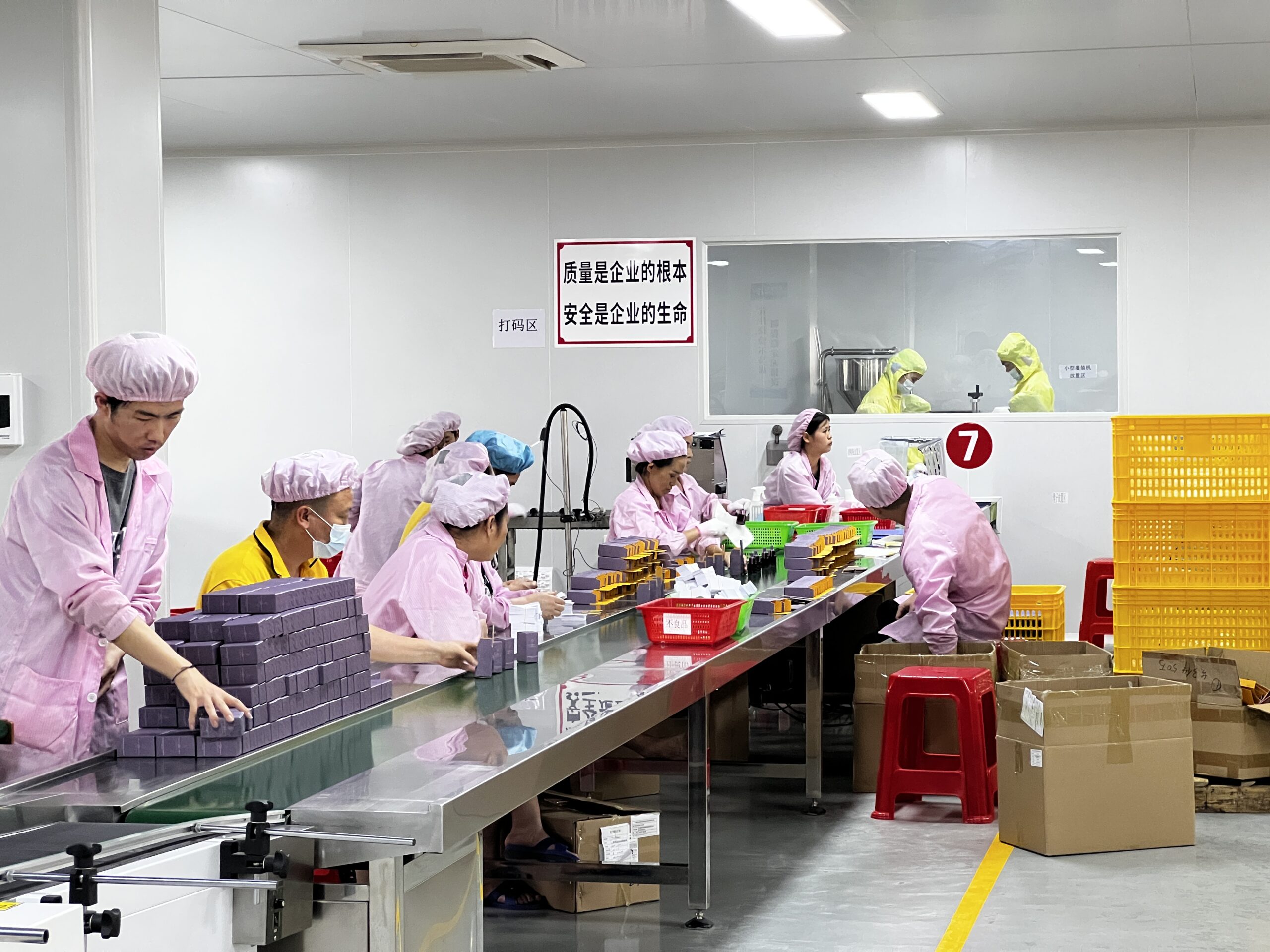





Metro Private Label in Numbers
Happy Clients
0 +
Million-dollar Buyers
0 +
Formulation
0 +
Professional Staffs
0 +
Your Ultimate Guide to Laundry Detergent
If you’re planning to launch a private label laundry detergent—whether it’s your first product or an expansion into a new category—you’re not just adding another SKU to your lineup. You’re entering one of the most competitive yet stable consumer product categories, where repeat purchase behavior defines long-term success. Unlike trend-driven products, laundry detergent is part of a customer’s daily routine, which means expectations are higher in terms of performance, scent, usability, and overall experience. When developed correctly, a detergent product doesn’t just sell once—it becomes a habit, and that’s where real brand growth happens.
Over the past few years, we’ve seen laundry detergent evolve from a purely functional product into a more experience-driven category. Customers are no longer choosing based on cleaning ability alone. They care about fragrance longevity, packaging convenience, visual presentation, and how the product fits into their lifestyle. Across Amazon, DTC brands, retail shelves, and distribution markets, the products that succeed are the ones that align these elements from the beginning. At Metro Private Label, we’ve seen firsthand how brands gain traction when formulation, packaging, pricing, and compliance are planned as one system, rather than treated as separate decisions.
This guide is built from what we’ve learned working with brands across different markets and business models. Instead of focusing only on technical formulation, we want to share how laundry detergent products actually perform in real commercial environments. Decisions such as choosing the right product format for your sales channel, building a scent profile that drives repeat purchase, selecting packaging that balances cost and customer perception, planning production quantities that reduce risk, and preparing compliance early all play a role in whether your product becomes a long-term seller or just another short-lived launch.
Table of Contents
How to Choose the Right Laundry Detergent Type for Your Business Model
When I work with brands on launching a private label laundry detergent, I always emphasize that this is not just a product decision—it’s a business decision. The type of detergent you choose will directly influence how you price your product, how you position your brand, how you ship your goods, and ultimately how customers perceive and repurchase from you. I’ve seen many brands invest time and money into formulas and packaging, only to struggle because the format didn’t match their actual sales channel. That’s why I always guide this decision from a commercial perspective first, not just a product perspective.
Why Product Format Is the Foundation of Your Entire Strategy
In my experience, the format you choose is the framework that everything else builds on. It affects how your product is displayed online, how customers evaluate it, and even how they compare it to competitors. For example, a liquid detergent is often judged on volume, scent, and everyday usability, while pods are judged more on convenience and perceived innovation. Powder, on the other hand, is often evaluated through price and quantity. When I assess a project, I look at how the product will live in the real world—on a retail shelf, in an Amazon listing, or inside a distributor’s catalog—because that context determines what format will actually perform.
If You’re Launching Online, Liquid Detergent Gives You the Fastest Path to Market
When I work with e-commerce sellers, especially those entering through Amazon or Shopify, I almost always suggest starting with liquid detergent. The reason is not just because it’s popular, but because it’s predictable. Customers already understand how to use it, how to compare it, and what they expect in terms of performance and scent. This reduces the need for heavy education in your product listing and allows you to focus more on positioning and branding. I’ve found that liquid detergent also offers more flexibility in pricing, which is important when you’re still testing your market and trying to find your ideal customer segment.
If You Want to Build a Premium Brand, Pods Change How Customers Perceive Value
When a client tells me they want to position their brand as more premium or design-driven, I usually guide them toward pods or capsules. This format naturally communicates convenience and modernity, which allows you to move away from pure price competition. From what I’ve seen in the market, pods often perform well in environments where visual appeal and user experience matter, such as DTC brands or curated retail spaces. However, I always remind clients that choosing pods also raises expectations. Customers expect a complete experience—from packaging to scent to usability—and if any of those elements feel inconsistent, it can quickly affect how your brand is perceived.
If Your Business Is Built on Volume, Powder Offers Practical Advantages
For clients who are focused on distribution, wholesale, or price-sensitive markets, I usually recommend powder detergent. This is not because it is the most exciting format, but because it is often the most efficient one. Powder allows for better cost control, easier bulk production, and more competitive pricing in markets where value is the primary driver. When I work with distributors, the conversation is very different from e-commerce brands. It becomes more about logistics, margin structure, and supply stability. In that context, powder detergent often becomes the most practical and scalable option.
How Format Impacts Logistics, Pricing, and Customer Expectations
One thing I always explain to clients is that the format decision goes far beyond the product itself. Liquid detergents involve heavier shipping and higher logistics costs, but they are easier for customers to adopt. Pods are lighter and more compact, but they require more precise packaging and safety considerations. Powder is efficient for transport and storage, but may not align with all modern branding strategies. These factors directly impact your pricing structure and profitability. I always encourage clients to think about how their product will move—from factory to warehouse to customer—because those details can significantly affect long-term success.
The Risk of Choosing the Wrong Format Too Early
I’ve seen many brands make decisions based on trends or personal preference, only to realize later that the format doesn’t fit their market. For example, choosing a premium pod format without having the branding and pricing to support it, or launching powder in a market where consumers expect liquid convenience. These misalignments create friction at every stage, from marketing to customer satisfaction. In some cases, it leads to slow sales and difficult reorders. That’s why I always stress that this decision should be made with clarity and based on real business conditions, not assumptions.
My Approach: Align the Product with How You Actually Sell
Whenever I guide a client through this process, I focus on aligning the product with their actual sales strategy. I look at who they are selling to, where they are selling, and how they plan to grow. Once those pieces are clear, the right product format becomes much easier to define. I don’t believe in one “best” detergent type—I believe in the right fit for the right business model. When that alignment is correct from the beginning, it simplifies everything else, from product development to marketing to scaling.
Stock Formula vs Custom Formula: Which One Should You Start With?
When I talk to brands about launching a private label laundry detergent, this is almost always one of the first strategic decisions we need to make. Many founders come in with the assumption that going fully custom from day one is the “correct” way to build a brand, because it sounds more unique and more competitive. But in reality, I’ve found that this decision has much more to do with timing, clarity, and business maturity than with ambition. The real question I help clients answer is not “Which is better?” but “Which is right for you at this stage?”
Why Starting with a Stock Formula Often Leads to Faster and Smarter Launches
In most early-stage projects, I recommend starting with a proven stock formula, and there’s a very practical reason behind that. At the beginning, your biggest challenge is not creating the most unique product—it’s getting into the market, learning from real customers, and building momentum. A stock formula allows you to bypass the long development cycle and move directly into testing your product in real conditions. From my experience, brands that launch earlier and gather feedback tend to grow faster than those that spend months perfecting something they haven’t validated yet.
What I’ve seen repeatedly is that customers don’t initially judge your product based on how “custom” the formula is. They judge it based on whether it works, whether it smells good, whether it feels consistent, and whether it fits the price they’re paying. A well-developed stock formula already meets these expectations, which makes it a strong and reliable starting point.
What You’re Actually Testing When You Use a Stock Formula
When I guide clients toward a stock formula, I always explain that you’re not just testing the product—you’re testing your entire business model. You’re learning how your target customers respond to your pricing, your packaging, your branding, and your messaging. You’re also learning how your product performs in real logistics conditions, such as shipping, storage, and repeat purchasing behavior.
This stage is where you gather the insights that will shape your future decisions. Without this feedback, any customization you invest in is based on assumptions. I’ve worked with clients who initially wanted highly customized formulations, but after launching with a stock formula, they realized that what their customers actually cared about was different from what they expected. That shift in understanding is incredibly valuable.
When Custom Formulation Becomes a Strategic Advantage Instead of a Risk
Custom development becomes much more meaningful once you have a clear direction for your brand. I usually recommend moving into customization when you can answer specific questions about your market. You should know who your core customer is, what problem you are solving for them, and how you want to differentiate from competitors.
At this stage, customization is no longer about experimenting—it’s about refining. You might want to develop a signature scent that becomes part of your brand identity, adjust cleaning performance for specific use cases, or create a formula that aligns with a particular positioning such as sensitive skin or eco-conscious consumers. When these decisions are based on real data and customer feedback, custom formulation becomes a powerful tool rather than an unnecessary risk.
The Time, Cost, and Complexity Behind Custom Development
One thing I always make clear is that custom formulation involves more than just “creating something new.” It requires multiple rounds of testing, adjustments, and validation to ensure stability, performance, and compatibility with packaging. This process takes time, and it also increases your initial investment.
If you don’t have a clear goal, this process can become inefficient. I’ve seen projects where brands kept adjusting details without a clear benchmark, which delayed their launch and increased costs without improving their market performance. That’s why I always encourage clients to approach customization with a clear objective, rather than treating it as a default starting point.
How I Help Clients Balance Speed, Cost, and Differentiation
My role is to help you find the balance between moving fast and building something meaningful. I look at your sales channel, your budget, and how quickly you want to enter the market, and then I help you choose the approach that makes the most sense. In many cases, that means starting with a stock formula to gain traction, and then gradually introducing custom elements as your brand evolves.
This approach allows you to control your risk while still leaving room for differentiation. It also ensures that every step you take is supported by real market feedback, rather than assumptions. I see this as building your brand in layers, where each stage adds more clarity and strength to your product.
My Perspective: Build with Intention, Not Complexity
Over time, I’ve realized that the most successful brands are not the ones that start with the most complex products, but the ones that make clear and intentional decisions at each stage. Starting with a stock formula is not a limitation—it’s a strategic choice that allows you to move forward with confidence. Once you understand your market, your customers, and your positioning, you can introduce customization in a way that truly adds value.
From my perspective, the goal is not to create the most complicated product, but to create the right product at the right time. When you approach it this way, you’re not just launching a detergent—you’re building a brand that can grow sustainably and compete effectively in the market.
What MOQ Really Means in Laundry Detergent Manufacturing
When I discuss MOQ with clients, I always notice that most people treat it as a simple number they need to “negotiate down.” But in reality, MOQ is one of the most misunderstood parts of manufacturing. It’s not just a minimum requirement set by a factory—it’s a reflection of how production, packaging, and cost structures actually work together. If you understand what’s behind MOQ, you can make much smarter decisions about how to launch your product, how to control your risk, and how to scale efficiently. That’s exactly what I focus on helping my clients do.
Why MOQ Is About Production Logic, Not Just a Minimum Requirement
From my experience, MOQ is fundamentally tied to how a production line operates. Every time we start a production run, there is a fixed amount of preparation involved. This includes equipment setup, formula mixing, machine calibration, cleaning processes, and quality control checks. These steps take time and resources regardless of whether we produce 500 units or 5,000 units.
What this means in practice is that producing very small quantities does not significantly reduce production effort, but it does increase the cost per unit. That’s why MOQ exists—it ensures that the production process is efficient enough to deliver stable quality and reasonable costs. When I explain this to clients, I want them to see MOQ not as a restriction, but as a way to ensure that what they receive is consistent, reliable, and commercially viable.
How Different Product Formats Naturally Lead to Different MOQs
One of the first things I clarify is that MOQ is not universal—it changes depending on the type of detergent you choose. Liquid detergent is typically the most flexible format, which is why we can often start from around 1,000 bottles. The production process for liquid is relatively straightforward, and the packaging options are more standardized, making it easier to support smaller initial runs.
When we move into pods or capsules, the situation becomes more complex. These products require specialized equipment, precise filling and sealing systems, and more structured packaging formats. Because of this, the MOQ usually increases to around 2,000 boxes. It’s not just about volume—it’s about ensuring that the production process remains stable and efficient.
Powder detergent works differently again. It is usually produced in larger batches to maintain cost efficiency, especially since it is often sold in bulk or through distribution channels. This is why the MOQ typically starts from around 5,000 bags. When I walk clients through these differences, I always connect the MOQ back to how the product is manufactured and how it is expected to perform in the market.
Why Packaging Decisions Can Quietly Increase Your MOQ
One of the most overlooked factors I see is packaging. Many clients focus heavily on the formula, but in reality, packaging often has an even bigger impact on MOQ. Custom bottles, containers, or boxes usually come with their own minimum production requirements from packaging suppliers. If you choose a unique bottle design or highly customized packaging, the MOQ will naturally increase because those components cannot be produced in very small quantities.
This is why I often recommend starting with in-stock or standard packaging options, especially in the early stage. By doing this, you can keep your initial order more manageable while still maintaining a professional appearance. Once your product has traction and you better understand your market, you can then invest in more customized packaging without taking unnecessary risks.
How MOQ Directly Affects Your Cost, Pricing, and Profitability
MOQ is closely linked to your cost structure, and this is something I always encourage clients to think about early. When production quantities increase, the cost per unit generally decreases because the fixed production costs are spread across more units. This gives you more flexibility in pricing and allows you to build healthier margins.
On the other hand, when you start with smaller quantities, the cost per unit is higher. This doesn’t mean it’s the wrong decision—it simply means your pricing strategy needs to account for it. I often work with clients to align their MOQ with their target price point and expected sales volume, so they are not caught off guard by margin pressure after launch.
How I Help Clients Choose the Right MOQ for Their Stage
I always emphasize that the “right” MOQ is not the lowest possible number—it’s the number that makes sense for your business. If you are just entering the market, your priority is usually to test demand, validate your product, and minimize risk. In that case, starting with the minimum viable quantity is often the smartest approach, even if the cost per unit is slightly higher.
If you are more established or working with distribution channels, the conversation changes. Larger quantities may be more appropriate because they improve cost efficiency and ensure stable supply. I guide this decision by looking at your budget, your sales expectations, and how quickly you plan to reorder. The goal is always to align production with your real business conditions.
Why MOQ Should Be Treated as Part of Your Launch Strategy
Over time, I’ve come to see MOQ as an integral part of a brand’s launch strategy, not just a manufacturing detail. It influences how you enter the market, how you manage inventory, and how you plan your growth. When clients approach MOQ with the right mindset, they are able to make more confident decisions and avoid unnecessary pressure.
Instead of focusing only on reducing MOQ, I encourage clients to think about how MOQ fits into their overall plan. When you understand what drives it and how it impacts your business, you can use it to your advantage. From my perspective, this is when MOQ stops being a constraint and starts becoming a tool that helps you build a more structured and scalable brand.
How to Build a Laundry Detergent Product That Actually Sells
When I work with brands developing a private label laundry detergent, I always make one thing very clear from the beginning: a product that sells is never built on performance alone. Cleaning ability is just the entry ticket into the market. What truly determines whether your product succeeds is how well it fits into the customer’s daily life and how consistently it meets their expectations across every touchpoint. I’ve seen many technically strong products struggle because they were designed in isolation, without considering how real customers evaluate, compare, and repurchase detergent. My role is to help you connect all these elements into a product that not only works—but actually sells.
Why “Working Well” Is Only the Baseline, Not the Advantage
In most markets today, customers already assume that a laundry detergent will clean their clothes effectively. This means that performance alone rarely gives you a competitive edge. What I’ve observed is that once a product reaches a certain level of functionality, customers start evaluating it based on more subtle and experiential factors. They pay attention to how it smells after washing, how it feels to use, and whether it fits into their routine without inconvenience. If your product only focuses on cleaning strength but ignores these aspects, it may meet expectations—but it won’t exceed them. And without exceeding expectations, it’s difficult to create loyalty.
How Scent Shapes Emotional Connection and Repeat Purchase
If there is one factor that consistently influences repeat purchase, it is scent. From my experience, customers often associate the smell of their laundry with comfort, cleanliness, and even personal identity. This makes fragrance a powerful emotional trigger. When I help clients develop a detergent, I treat scent as a core branding element rather than a secondary detail. A fresh, clean fragrance may support a mass-market positioning, while a more refined or long-lasting scent can elevate a product into a premium category. The key is not just choosing a scent that smells good, but choosing one that aligns with your brand story and remains consistent across every batch. That consistency is what builds trust over time.
Why Packaging Is More Than Just Appearance
Packaging is often underestimated, but in reality, it plays a critical role in how your product is perceived before it is even used. When a customer sees your product for the first time—whether online or on a shelf—they make an immediate judgment about its quality and value. If the packaging feels inconsistent with your positioning, it creates hesitation. I always guide clients to think about packaging as part of the overall experience. For e-commerce brands, it needs to look strong in product images and withstand shipping conditions. For retail environments, it needs to stand out and communicate clearly within seconds. The goal is to ensure that the packaging reinforces the product’s value, not undermines it.
How Positioning Defines Customer Expectations from the Start
One of the most important steps in building a product that sells is defining its positioning clearly. I’ve seen many products fail because they try to appeal to everyone, which ends up resonating with no one. When I work on a project, I always ask: who is this product for, and why should they choose it? Whether the focus is on affordability, premium experience, eco-conscious living, or sensitive skin care, this positioning needs to be consistent across every element of the product. When positioning is clear, customers immediately understand what they are buying and why it fits their needs. When it is unclear, even a good product can feel confusing.
The Role of Price in Reinforcing or Undermining Your Product
Pricing is not just a financial decision—it is a communication tool. It tells the customer what level of quality and experience they should expect. I’ve seen situations where a product is positioned as premium but priced too low, which creates doubt rather than attraction. I’ve also seen products priced too high without a clear justification, which leads to hesitation. When I guide clients, I always look at how price interacts with packaging, scent, and performance. All these elements need to feel aligned. When they are, the product feels coherent and trustworthy. When they are not, customers sense the inconsistency immediately.
Why Many Products Fail Despite Having Good Formulas
Over the years, I’ve worked on projects where the formula itself was not the problem. The product cleaned well, the ingredients were solid, and the production was consistent. Yet, the product struggled in the market. The reason was almost always a mismatch between the product and customer expectations. The scent didn’t align with the target audience, the packaging didn’t reflect the intended positioning, or the pricing didn’t make sense for the perceived value. These gaps may seem small individually, but together they create a disconnect that customers notice. Once that trust is lost, it’s very difficult to recover.
How I Build Products Around Real Customer Experience
My approach is always centered on how the customer experiences the product from start to finish. I think about how they first discover it, what they notice when they see it, how it feels during use, and how they evaluate it after repeated use. Every detail matters, from the ease of pouring the detergent to the way the scent lingers on fabric. When these elements are aligned, the product feels natural and reliable. This is what encourages customers to repurchase without hesitation.
My Perspective: A Product That Sells Is One That Feels Right
At the end of the day, I don’t believe that successful products are defined by complexity or novelty. I believe they are defined by how well they fit into the customer’s expectations and daily routine. When a product feels right—when the scent matches the positioning, the packaging supports the price, and the performance meets expectations—customers don’t need to think twice. They simply continue using it. From my perspective, that is what it means to build a laundry detergent product that actually sells.
The Role of Fragrance in Laundry Detergent Branding
When I work with brands developing a laundry detergent, I always tell them that fragrance is not just a product detail—it is one of the most decisive factors behind whether a customer comes back or not. In this category, customers don’t build loyalty based on technical specifications. They build it based on how the product makes them feel after every wash. The scent of clean clothes becomes part of their daily life, and over time, it becomes something they associate directly with your brand. From my perspective, if you treat fragrance as an afterthought, you are missing one of the most powerful tools for building long-term customer retention.
Why Fragrance Is the First Thing Customers Remember and the Last Thing They Forget
In real-world usage, customers rarely analyze a detergent in a technical way. They don’t measure surfactant performance or compare ingredient lists in detail. What they notice immediately is how their clothes smell when they take them out of the machine, when they wear them, and even when they store them. This scent experience stays with them throughout the day, which is why it becomes such a strong memory trigger. I’ve seen many cases where customers cannot recall the exact brand name, but they clearly remember “the one that smells fresh” or “the one that lasts longer.” This is where fragrance moves from being a feature to becoming a defining characteristic of your product.
How Scent Becomes an Emotional Anchor for Your Brand
What I find most interesting is how fragrance connects directly to emotion. A clean, fresh scent can create a feeling of comfort and reliability, while a more refined or layered fragrance can create a sense of premium quality. Over time, customers begin to associate that feeling with your brand. This is what turns a functional product into something personal. When I guide clients, I always encourage them to think beyond “what smells good” and instead consider “what feeling do you want your customer to experience every time they use your product.” That emotional consistency is what builds brand attachment.
How I Help Clients Choose a Fragrance That Matches Their Market
When selecting a fragrance direction, I never treat it as a purely subjective decision. I always connect it back to the target customer and the intended positioning. If the product is aimed at a mass-market audience, a clean and familiar scent is often the safest and most effective choice because it aligns with everyday expectations. If the brand is positioned around natural or gentle care, softer and more subtle fragrance profiles tend to work better. For premium brands, I often explore more distinctive and long-lasting scent structures that create a sense of refinement. The key is not to choose a scent in isolation, but to ensure it fits naturally within the overall product concept.
Why Fragrance Can Justify a Higher Price Point
One of the patterns I’ve consistently observed is that fragrance has a direct impact on perceived value. A well-crafted scent can elevate the entire product experience and make customers feel that they are using something more refined. This allows brands to position their products at a higher price point with greater confidence. On the other hand, if the fragrance feels too artificial or inconsistent, it can quickly reduce the perceived value, even if the product performs well. When I work on pricing strategy, I always consider how the fragrance contributes to the overall perception of quality.
The Technical Side of Fragrance That Brands Often Overlook
While fragrance is often discussed in emotional terms, there is also a technical side that cannot be ignored. Not all scents behave the same way in a detergent formula. Some fade quickly after washing, while others remain on fabric for a longer period. Some interact differently with various materials, affecting how the scent is perceived during use. I always make sure that the fragrance not only smells right at the formulation stage, but also performs well after washing and drying. This is a critical detail, because the customer experience happens after the product is used, not just when it is opened.
Why Consistency in Fragrance Builds Long-Term Trust
Consistency is something I pay close attention to, especially when a product moves from sampling to full-scale production. Customers expect the same scent every time they purchase your product. Even small variations can be noticeable and can affect their perception of reliability. I’ve seen brands lose customer trust simply because the scent changed slightly between batches. That’s why I focus on maintaining strict control over fragrance consistency, ensuring that what you launch is what your customers will continue to receive.
How Fragrance Creates Real Differentiation in a Saturated Market
In a market where many detergents offer similar cleaning performance, fragrance becomes one of the few areas where real differentiation is possible. It allows you to create a product that feels distinct and recognizable. I’ve worked with brands that built strong customer loyalty not through technical innovation, but through a scent that customers genuinely enjoyed and remembered. This kind of differentiation is subtle but powerful, because it is rooted in experience rather than claims.
My Approach: Build a Fragrance That Becomes Part of Your Customer’s Routine
When I approach fragrance development, I always think about how the product will fit into the customer’s daily life. The goal is not to create the most intense or complex scent, but to create one that feels natural, consistent, and enjoyable over time. It should be something customers look forward to experiencing, not something they notice once and forget. From my perspective, the best fragrance is the one that quietly becomes part of a customer’s routine. When that happens, your product is no longer just a detergent—it becomes a habit, and that is what drives long-term success.
Packaging Options That Influence Sales Performance
When I work with brands building a private label laundry detergent line, I always spend more time on packaging than most clients initially expect. From my experience, packaging is not just about how your product looks—it directly shapes how your product is shipped, how it is perceived, how it is priced, and ultimately how well it sells. I’ve seen strong formulas fail because the packaging didn’t align with the market, and I’ve also seen average formulas perform extremely well simply because the packaging made sense for the customer and the sales channel. This is why I always approach packaging as a strategic decision that connects logistics, user experience, and brand positioning into one cohesive system.
Why Packaging Defines Your Product Before It’s Even Used
Before a customer experiences your detergent, they interact with your packaging. That moment—whether it’s scrolling on Amazon, walking past a retail shelf, or opening a delivery box—is where the first judgment happens. I’ve learned that customers form expectations instantly based on packaging structure, material, and design language. A heavy, structured bottle may communicate reliability and strength, while a flexible pouch may suggest convenience and modern sustainability. If the packaging feels inconsistent with the price point or brand message, customers start questioning the value before they even try the product. That’s why I always guide clients to think of packaging as the first layer of product experience, not the final step.
How I Align Packaging with Different Sales Channels
One of the first questions I ask any client is where the product will actually be sold, because packaging decisions change significantly depending on the channel. For Amazon and Shopify brands, I focus heavily on shipping efficiency and durability. I consider how the product will be handled, how much space it will occupy, and how to reduce the risk of leakage or damage during transit. For retail environments, I shift the focus toward visibility and shelf impact, because the packaging needs to compete visually with other products in a crowded space. For distributors and wholesalers, I look at packaging from a cost and transport perspective, where volume efficiency and ease of handling become more important than presentation. In each case, I’m not choosing packaging based on preference, but based on how the product will actually move through the market.
Understanding the Real Trade-Offs Between Bottles, Pouches, and Containers
When clients ask me which packaging type is “best,” I always explain that there is no universal answer—only trade-offs. Bottles are often the most straightforward option because they are familiar, easy to use, and suitable for many markets, especially e-commerce. However, they can increase shipping weight and cost. Refill pouches offer a more flexible and cost-efficient solution, particularly for brands that want to emphasize sustainability or reduce logistics expenses, but they require careful positioning to maintain perceived value. For laundry pods, the container becomes part of the product identity, and it needs to balance practicality with a sense of structure and safety. Bulk bags are typically used in wholesale scenarios where efficiency matters more than branding. My role is to walk clients through these trade-offs in detail, so they understand not just how each option looks, but how it performs in real business conditions.
How Packaging Impacts Pricing Strategy and Profit Margins
What many brands underestimate is how strongly packaging influences pricing. From my experience, customers don’t evaluate price in isolation—they evaluate it in relation to how the product looks and feels. A well-designed, sturdy package can justify a higher price point because it signals quality and reliability. At the same time, packaging directly affects your cost structure, from material expenses to shipping fees. I always help clients find the balance between perceived value and actual cost, because a product that looks premium but erodes your margin is not sustainable. The goal is to create packaging that supports both your pricing strategy and your long-term profitability.
The Hidden Logistics Layer That Most Brands Overlook
Behind every packaging decision, there is a logistics layer that many first-time brands don’t fully consider. I always think about how the product will be packed into cartons, how many units can fit into a shipment, how stable the packaging is during stacking, and how it behaves under different shipping conditions. Small details, such as the shape of a bottle or the thickness of a pouch, can have a measurable impact on shipping efficiency and cost. I’ve worked on projects where adjusting the packaging structure slightly resulted in significant savings at scale. This is why I treat logistics as an integral part of packaging design, not something that comes after production.
Why Compatibility Between Formula and Packaging Is Critical
Another area I pay close attention to is how the packaging interacts with the detergent formula itself. Not all materials are suitable for all formulations, and this is something that can easily be overlooked in early-stage development. Certain formulas may require specific sealing structures to prevent leakage, while others may interact differently with different types of plastic. I always ensure that the packaging is tested and compatible with the formula, because even a small mismatch can lead to performance issues or customer complaints. This is one of those technical details that customers may never see, but it directly affects product reliability and brand reputation.
How Packaging Influences Customer Experience Over Time
Packaging is not only about the first impression—it also shapes how the product is used over time. I always think about how easy it is for customers to pour, store, and reuse the product. If the packaging is inconvenient or messy to use, it creates friction in the daily routine, and that can reduce the likelihood of repeat purchase. On the other hand, packaging that feels intuitive and reliable becomes part of a positive user experience. This is especially important for products like laundry detergent, which are used regularly. The goal is to make the product feel effortless to use, so it fits naturally into the customer’s lifestyle.
My Approach: Packaging That Works From First Order to Scale
When I help clients choose packaging, I never focus only on the initial launch. I always think about how that packaging will perform as the business grows. The ideal solution is one that allows you to start efficiently without overcommitting, but also supports larger production volumes without needing to redesign everything later. From my perspective, good packaging is not just about looking right—it’s about working consistently across production, shipping, and customer use. When all these elements are aligned, packaging becomes a strong foundation for both short-term success and long-term growth.
Compliance and Labeling: What You Actually Need to Prepare
When I guide clients through launching a private label laundry detergent, I often notice that compliance is the part that creates the most hesitation. It’s not because it is impossible to handle, but because it feels unclear, fragmented, and sometimes even intimidating—especially when you’re entering international markets for the first time. What I always tell clients is that compliance is not something you “deal with later.” It is something that quietly shapes your entire product from the beginning, from how you name it, to how you formulate it, to how you present it on the label. When this part is handled early and correctly, everything else—production, shipping, and market entry—becomes significantly smoother and more predictable.
Why I Always Start Compliance Thinking at the Product Planning Stage
From my experience, one of the biggest mistakes brands make is treating compliance as a final checklist rather than an early-stage decision framework. I always integrate compliance thinking into the product planning phase, because even small decisions—like choosing a fragrance claim or positioning the product as “eco-friendly”—can have regulatory implications. If these decisions are made without considering compliance, they often need to be adjusted later, which leads to delays and additional costs. By aligning the product concept with regulatory expectations from the start, I help clients avoid unnecessary back-and-forth and create a much more efficient development process.
How I Break Down Documentation So It Becomes Manageable
When clients first ask about documentation, they often expect a long and complicated list. What I do instead is break it down into what is actually required for their specific market and business model. In most cases, this includes core documents such as ingredient information, safety-related data, and product specifications. If needed, there may also be supporting documents related to testing or performance. The key is not to overwhelm the process with unnecessary paperwork, but also not to miss anything essential. I focus on relevance, making sure every document we prepare serves a clear purpose in helping your product enter the market without issues.
Why Labeling Is Where Most Real Problems Happen
If there is one area where I see the most delays and corrections, it is labeling. Many brands underestimate how precise labeling requirements can be, especially when selling across different regions. A compliant label is not just about listing ingredients—it needs to clearly communicate product identity, usage instructions, safety information, and responsible party details in a way that aligns with local regulations. I’ve seen cases where products were ready for shipment but had to be held back because of small labeling inconsistencies. That’s why I always review labeling as a critical step, ensuring that it is both compliant and clear from the customer’s perspective.
How I Help Clients Navigate Differences Between Markets
One of the more complex aspects of compliance is that there is no single global standard. Each market has its own expectations, and those differences can affect both documentation and labeling. For example, some regions require more detailed ingredient disclosure, while others place greater emphasis on language or safety instructions. When clients are targeting multiple markets, I always help them think strategically about how to structure their labeling so it can work across regions without constant redesign. This forward-thinking approach saves time and prevents the need for repeated adjustments as the brand expands.
The Real Risks of Getting Compliance Wrong
From a business perspective, compliance is not just a regulatory issue—it is a timing and cost issue. When something is missed or done incorrectly, it often leads to delays in production, shipping, or market entry. In some cases, it can even result in products being rejected or needing to be reworked. I’ve seen projects where a simple oversight in labeling caused weeks of delay, which directly impacted the brand’s launch timeline. This is why I always emphasize that getting compliance right is not just about avoiding problems—it is about protecting your momentum.
Why Clear and Realistic Claims Matter More Than You Think
Another area I always pay attention to is how the product is positioned through its claims. It’s tempting for brands to use strong or exaggerated language to stand out, but this can create compliance risks if the claims are not supported or not appropriate for the product category. I guide clients toward claims that are both effective and realistic, ensuring they align with the product’s actual performance and regulatory expectations. In my experience, clear and credible claims build more trust than overly ambitious ones, especially in markets where customers are becoming more informed.
How I Turn Compliance Into a Structured, Predictable Workflow
What I aim to do for every client is transform compliance from something uncertain into something structured and predictable. Instead of reacting to issues as they arise, I map out what needs to be prepared, when it needs to be done, and how it connects to the overall timeline. This includes coordinating documentation, reviewing labeling, and aligning everything with the production schedule. When this workflow is clear, clients feel more in control of the process, and the project moves forward with fewer interruptions.
My Approach: Helping You Launch Without Unnecessary Delays
At the end of the day, my goal is not just to make your product compliant—it is to make your launch process smoother and more efficient. I approach compliance as part of a larger system that supports your business, rather than as a separate task. By handling documentation and labeling early, aligning them with your target market, and avoiding common mistakes, I help you move from concept to launch with greater confidence. From my perspective, when compliance is done right, it becomes almost invisible—but its impact is what allows everything else to work seamlessly.
How Long It Really Takes to Launch a Laundry Detergent Product
When I speak with clients about launching a laundry detergent product, I always notice a common expectation—they want a clear number, a fixed timeline, something they can immediately plug into their business plan. What I always explain is that while most projects fall within a 6 to 10 week range, the real timeline is not just about time—it’s about decision speed, alignment, and how well each stage connects to the next. In my experience, the difference between a smooth 6-week launch and a delayed 12-week project is rarely about factory capacity. It almost always comes down to how clearly the product is defined, how quickly feedback is given, and whether key decisions are made at the right moment. My role is not just to tell you how long it takes, but to help you understand what actually drives that timeline.
Why I Always Start by Aligning Timeline with Your Business Goal
Before we even talk about weeks and schedules, I always bring the conversation back to your business model. Are you preparing for an Amazon launch with a specific listing deadline, or are you building a long-term brand where refinement matters more than speed? These two scenarios require very different approaches to timing. I’ve seen clients push for speed when their product concept was not yet clear, which ultimately slowed them down. At the same time, I’ve seen others over-refine early-stage products when they actually needed to move quickly to test the market. This is why I always align the timeline with your commercial goal first, because the “right” speed depends entirely on how you plan to sell.
The Hidden Work Before Sampling Even Begins
One part of the timeline that is often overlooked is what happens before sampling starts. This includes defining the product type, deciding on positioning, choosing fragrance direction, and thinking through packaging format. I always spend time here because this stage determines how efficient the rest of the process will be. If this foundation is unclear, sampling becomes a trial-and-error process that adds unnecessary time. When this stage is done properly, sampling becomes focused and purposeful. From my experience, investing time here actually shortens the overall timeline, even though it may feel like a slower start.
Sampling: Where the Product Becomes Real and Expectations Are Tested
Once sampling begins, the project shifts from concept to something tangible. This is where clients start to evaluate whether the product truly matches their expectations. I always remind clients that sampling is not just about receiving something to approve—it is about discovering what needs to be refined. Fragrance intensity, cleaning performance, texture, and even subtle details like how the product pours or dissolves all come into focus at this stage. Typically, this phase takes around one to two weeks, but what really determines the speed is how quickly feedback is given and how clear that feedback is. When clients engage actively in this stage, we can move forward much more efficiently.
Adjustments: The Stage That Defines Final Product Quality
In almost every project I’ve worked on, there is a stage where adjustments are needed. This is not a sign of delay—it is a necessary part of building a product that actually works in the market. I always encourage clients to see this stage as an opportunity rather than an obstacle. Small refinements made here can significantly improve the final product experience. Whether it’s adjusting the scent profile to better match the target market or fine-tuning the formulation for better usability, this stage ensures that the product is not just acceptable, but competitive. Skipping or rushing this step often leads to issues that are much harder to fix later.
Packaging Development: Where Brand, Logistics, and Product Must Align
Once the formula is confirmed, the project moves into packaging, and this is where many timelines either stay on track or start to slip. Packaging is not just about selecting a bottle or container—it involves confirming structure, material, labeling layout, and compatibility with the formula. I always guide clients to think about how the packaging will perform in real conditions, including shipping, storage, and customer use. This stage typically takes one to two weeks, but delays often happen when decisions are postponed or when design files are not ready. From my perspective, packaging is the bridge between product development and real-world sales, and it needs to be handled with the same level of attention as the formula itself.
Production: The Most Predictable Part—If Everything Before Is Done Right
Interestingly, production is usually the most predictable stage in the entire process. Once the formula and packaging are finalized, production becomes a matter of execution. This phase generally takes around three to four weeks, depending on order size and scheduling. What I’ve observed is that production rarely causes delays on its own. When delays happen, they are usually the result of earlier stages not being fully aligned. This is why I focus so much on getting the earlier steps right—because a well-prepared project moves through production smoothly and without surprises.
How Communication Speed Directly Impacts Your Timeline
One factor that is often underestimated is how much communication speed affects the overall timeline. Every time a decision is delayed, even by a few days, it can create a ripple effect across the entire schedule. I always keep communication structured and clear, so clients know exactly what needs to be confirmed and when. In my experience, projects where feedback is timely and decisions are made confidently tend to stay within the expected timeframe, while projects with slower communication naturally extend beyond it.
Why Most Projects Fit Within 6–10 Weeks—And When They Don’t
When everything is aligned—clear product definition, efficient sampling, timely feedback, and well-coordinated packaging—most projects fall comfortably within a 6 to 10 week window. Simpler projects using stock formulas and standard packaging often move closer to the shorter end of that range. More customized projects, especially those involving unique formulations or complex packaging, may extend slightly beyond it. What matters is not just the duration, but the predictability. I always aim to give clients a timeline they can rely on, rather than an overly optimistic estimate that leads to frustration later.
My Approach: Turning Uncertainty Into a Controlled, Step-by-Step Process
At the core of my approach is the idea that launching a product should feel controlled, not chaotic. I break down the entire process into clear stages, explain what happens at each step, and guide clients through decisions in a structured way. Instead of reacting to problems, we anticipate them and address them early. From my perspective, a successful launch is not just about speed—it is about clarity, coordination, and confidence. When these elements are in place, the timeline becomes something you can plan around, rather than something you have to worry about.
How to Control Cost Without Compromising Product Quality
When I work with brands developing a private label laundry detergent, cost is always part of the conversation—but I’ve learned that the way you approach cost will determine whether your product succeeds or struggles. Many first-time founders focus on reducing cost as much as possible, thinking that lower cost automatically means higher profit. In reality, I’ve seen the opposite happen many times. When a product feels cheap, performs inconsistently, or doesn’t match customer expectations, it leads to poor reviews, low repeat purchase, and ultimately higher long-term costs. That’s why I always approach cost control from a different angle. My goal is not to make your product cheaper—it’s to make your product commercially viable, where cost, performance, and positioning all work together in a way that supports real sales.
Why I Always Start from Your Selling Price, Not Your Production Cost
The first thing I always do is shift the conversation from “how much does it cost to make” to “how much do you want to sell it for.” This might sound simple, but it changes the entire strategy. Your target retail price defines your margin, your positioning, and your acceptable cost range. If you start from production cost alone, you risk building a product that cannot compete in the market or cannot sustain your business. I help clients reverse-engineer their product from the market price backward, so every decision—from formula to packaging—fits within a structure that makes financial sense. This is how you avoid building a product that looks good on paper but doesn’t work in reality.
How I Refine Formula Structure Without Reducing Real Performance
When it comes to formulation, I always look beyond the idea of “more ingredients equals better product.” In many cases, I’ve found that a well-structured, focused formula performs better than an overly complex one. Cost control at the formulation level is about removing unnecessary complexity while maintaining or even improving performance. I evaluate how each component contributes to cleaning efficiency, stability, and user experience. Sometimes this means simplifying the formula, and other times it means investing slightly more in key elements that directly impact performance. The goal is to ensure that every part of the formula adds value, so you are not paying for features that customers will never notice.
Why Packaging Is One of the Most Powerful Cost Levers
Packaging is often where I see the biggest opportunity for cost optimization, but it is also where mistakes can be costly if not handled carefully. I always explain to clients that packaging affects not only material cost, but also shipping, storage, and even damage rates. A heavier or bulkier package may look more premium, but it can significantly increase logistics expenses, especially for e-commerce. On the other hand, a lighter or more compact design can reduce cost across the entire supply chain. What I focus on is finding a packaging solution that maintains the right level of perceived value while improving efficiency. This balance is what allows you to control cost without weakening your brand image.
How Production Volume Shapes Your Real Cost Structure
One of the most important factors in cost control is production quantity, and it’s something I always explain in detail. Smaller orders give you flexibility and reduce upfront risk, but they come with higher unit costs. Larger orders reduce cost per unit, but require stronger confidence in your sales. I don’t believe in pushing clients toward large volumes too early, but I also don’t recommend staying at very low quantities for too long. Instead, I help clients find a strategic starting point based on their sales plan, and then build a clear path to scale. This approach allows you to gradually improve your cost structure as your business grows, rather than trying to optimize everything at the very beginning.
The Hidden Costs That Can Quietly Erode Your Profit
What I’ve learned over time is that the most dangerous costs are often the ones that are not immediately visible. These include shipping inefficiencies, packaging damage, product returns, and even the cost of redesigning or reformulating if something goes wrong. I always take these factors into account when planning a product, because they can have a significant impact on your overall profitability. A product that looks cost-effective at the production stage may become expensive once these hidden factors are considered. By addressing them early, I help clients avoid unexpected losses and build a more stable cost structure.
Why Cutting Too Much Cost Can Damage Your Brand Long-Term
I’ve seen many brands fall into the trap of trying to reduce cost at every step, only to realize later that the product no longer meets customer expectations. When the fragrance feels weak, the packaging feels fragile, or the overall experience feels inconsistent, customers notice immediately. This leads to poor reviews and low repeat purchase, which are much more expensive problems to fix than the initial cost savings were worth. I always remind clients that customers don’t evaluate your cost—they evaluate your product experience. If that experience doesn’t meet their expectations, the product will struggle regardless of how efficient your cost structure is.
How I Balance Cost, Experience, and Market Positioning as One System
When I approach cost control, I never look at it in isolation. I always consider how cost interacts with performance and positioning. These three elements form a system, and if one is out of balance, the entire product becomes unstable. For example, a product positioned as premium must deliver a corresponding experience, which may require a certain level of investment. At the same time, a mass-market product must maintain efficiency to stay competitive. My role is to help you find the right balance, so your product feels appropriate for its price and performs consistently in its target market.
My Approach: Building a Cost Structure That Supports Growth, Not Just Launch
Ultimately, I don’t see cost control as a short-term task—it’s part of building a foundation for long-term growth. I help clients make decisions that not only work for the first production run, but also scale effectively as the business expands. This means choosing the right formula structure, the right packaging system, and the right production strategy from the beginning. From my perspective, the best outcome is not a product that is simply low-cost, but one that is efficient, reliable, and capable of supporting repeat purchase and brand growth. When cost is managed this way, it becomes an advantage rather than a limitation.
How to Scale from First Order to Long-Term Supply
When I work with brands on launching a laundry detergent product, I always make it clear that the first order is not the goal—it is simply the entry point. What truly determines whether a brand succeeds is what happens after that first batch sells. Can you reorder smoothly without delays? Can you maintain consistent quality as volume increases? Can your product adapt to new markets without needing to be redesigned? From my experience, scaling is not a separate phase that comes later. It is something that needs to be built into the product from the very beginning. If this foundation is not in place, growth often creates friction instead of momentum. My role is to help you build a system where your product can expand naturally, without constant adjustments or unexpected disruptions.
Why I Treat the First Order as a Foundation, Not a One-Time Project
One of the biggest mindset shifts I try to create for clients is to stop thinking of the first order as a standalone project. Many brands focus on getting the first batch out as quickly as possible, but they don’t consider whether the same product can be reproduced consistently at a larger scale. I always approach the first order as a prototype for long-term supply. Every decision—formula structure, packaging selection, labeling format, and even supplier coordination—is made with future orders in mind. This ensures that when demand increases, you are not forced to rework the product or rebuild the supply chain from scratch.
How I Ensure Formula Stability Across Growing Volumes
As your product begins to sell and reorder cycles become more frequent, formula consistency becomes one of the most critical factors. Customers expect the same scent, the same cleaning performance, and the same overall experience every time they use your product. I’ve seen brands struggle when their product changes slightly between batches, even if those changes seem minor from a technical perspective. From the customer’s point of view, inconsistency creates doubt. That’s why I focus heavily on formula stability from the beginning, ensuring that the product can be reproduced accurately whether you are producing 1,000 units or scaling to much larger volumes. This consistency is what protects your brand reputation over time.
Why Packaging Scalability Is Just as Important as Product Design
Packaging is another area where scaling challenges often appear. A packaging solution that works well for a small batch may not always be suitable for larger production runs. I’ve seen situations where brands had to change packaging because the original option was difficult to source consistently or became too expensive at scale. This not only creates operational issues, but also affects brand consistency. I always guide clients toward packaging choices that are stable, widely available, and suitable for long-term use. This ensures that your product maintains a consistent appearance across all batches, which is essential for building recognition and trust in the market.
How Production Planning Evolves as Your Business Grows
In the early stage, production is often reactive—you produce based on immediate need. As your business grows, this approach needs to shift toward more structured planning. I help clients move from one-off production decisions to a more predictable production rhythm. This includes planning reorder cycles, aligning production schedules with sales trends, and preparing for periods of higher demand. When production is planned properly, it reduces the risk of stock shortages and allows you to maintain a steady presence in the market. From my perspective, reliable supply is just as important as product quality when it comes to scaling.
Preparing Your Product for Expansion into New Markets
As brands grow, they often expand beyond their initial sales channel into new regions or distribution models. This is where early planning becomes especially valuable. Different markets may have different requirements in terms of labeling, documentation, or packaging preferences. If these factors were not considered at the beginning, expansion can become complicated and time-consuming. I always think ahead about where the product might go next, and I help structure it in a way that makes future expansion easier. This allows you to enter new markets with minimal adjustments, rather than having to redesign your product each time.
How I Help You Avoid Continuous Product Changes
One of the most common challenges I see during scaling is the need for constant changes. This can happen when the initial product was not built with long-term supply in mind. Frequent adjustments to formula, packaging, or labeling create confusion not only internally, but also for your customers. It disrupts production, increases cost, and weakens brand consistency. My approach is to minimize these changes by making sure the product is well-defined and stable from the start. A product that does not need to be constantly adjusted is much easier to scale and manage.
The Role of Forecasting in Building a Stable Supply System
As your business grows, forecasting becomes a key part of maintaining smooth operations. I always encourage clients to look beyond their current order and think about future demand. Even a basic forecast can help align production planning, reduce lead time pressure, and prevent last-minute decisions. I support this process by helping clients understand realistic production timelines and how to plan around them. When forecasting and production are aligned, scaling becomes much more controlled and less stressful.
Why Strong Communication Becomes More Important as You Scale
As order volumes increase and operations become more complex, communication becomes even more critical. Clear and timely communication helps ensure that every part of the process—from production to delivery—runs smoothly. I always keep communication structured and transparent, so clients know exactly what to expect at each stage. This becomes especially important when coordinating larger orders or managing multiple SKUs. From my experience, strong communication is one of the key factors that allows scaling to happen without disruption.
My Approach: Building a System That Supports Long-Term Growth
At the core of my approach is the idea that scaling should feel like a natural continuation of your initial success, not a series of challenges that need to be solved one by one. I focus on building a system where formula consistency, packaging stability, and production reliability all work together to support growth. This means thinking beyond the first order and creating a structure that can handle increasing demand, new markets, and evolving business goals. From my perspective, the best product is not just one that launches successfully, but one that continues to perform, scale, and grow with your brand over time.
Why Partner with Metro Private Label for Your Laundry Detergent Line?
When we work with brands building a laundry detergent line, we always understand that what they are really looking for is not just a factory, but a partner who can help them turn an idea into a product that actually performs in the market. Laundry detergent may seem like a functional category, but in reality, it is highly competitive, experience-driven, and deeply connected to daily habits. Customers care about scent, convenience, packaging, and consistency just as much as cleaning performance. That means every decision—from formulation to packaging to positioning—directly affects whether your product will succeed or struggle. That is why we don’t position Metro Private Label as just a manufacturer. We position ourselves as a partner who helps you connect all these elements into a system that works in real business conditions.
We Focus on Helping You Build Products That Actually Sell
One of the first things we always consider is whether the product we are developing will perform in the real market, not just in a lab. We’ve seen many detergent products that technically work but fail to generate repeat purchase because the scent fades too quickly, the packaging feels inconvenient, or the positioning is unclear. When we work with you, we focus on aligning cleaning performance, fragrance experience, and customer expectations from the beginning. Whether you are targeting Amazon, DTC, retail shelves, or wholesale distribution, we help you define a product direction that fits how customers actually choose and use laundry products. This reduces trial-and-error and increases your chances of launching something that truly gains traction.
We Help You Translate Brand Ideas Into Real, Scalable Formulations
Many of the brands we work with come in with a clear idea of what they want to build, but need support in turning that idea into a formula that makes sense both technically and commercially. We act as the bridge between your concept and the final product. If your goal is to create a detergent with a long-lasting premium scent, or a gentle formula for sensitive fabrics, or a cost-efficient product for mass-market distribution, we guide the formulation so it aligns with your positioning. In laundry detergent, this balance is especially important because performance, cost, and user experience must all work together. We don’t just produce what is requested—we help refine it so it works in real use and real markets.
We Structure Your Project for a Smooth and Predictable Launch
Launching a detergent product involves more than just production. There are multiple moving parts, including sampling, adjustments, packaging confirmation, and compliance. What we focus on is creating a clear and structured process that allows you to move step by step without confusion. From the first sample to final production, we make sure each stage is transparent and aligned with your timeline. We also think ahead about how your product will scale, so the decisions made during your first launch will support your future growth. This approach helps you avoid delays, reduce uncertainty, and move forward with confidence.
We Align Formula, Packaging, and Pricing Into One System
One of the most common issues we see in detergent product development is a disconnect between formula, packaging, and pricing. A product may have strong cleaning performance but packaging that feels too basic for its price point, or a premium design that does not match the actual user experience. When we work on your project, we make sure these elements are aligned from the beginning. We help you choose packaging that fits your sales channel, adjust the formula to match the intended positioning, and ensure that the final product feels consistent as a whole. This alignment is what creates a product customers trust and are willing to buy again.
We Build Compliance Into the Process, Not at the End
For brands targeting international markets, compliance is often one of the biggest concerns. Instead of treating it as a final step, we integrate compliance into the entire development process. From ingredient selection to labeling structure and documentation preparation, we guide you so your product is ready for your target market from day one. This proactive approach helps you avoid delays, reduce rework, and move your product into the market more efficiently. It also allows you to focus on growing your business rather than dealing with preventable issues.
We Help You Control Cost Without Weakening Your Product
We understand that cost is a key factor, especially for new brands. What we focus on is helping you control cost in a smart way, without compromising the core performance of your product. This includes optimizing the formula structure, choosing the right packaging format, and planning production quantities that fit your sales strategy. The goal is not to create the cheapest detergent, but to create a product that delivers value at its price point and supports sustainable margins. This is what allows your brand to grow without constant pressure on cost.
We Help You Start Lean While Preparing for Scale
Not every brand is ready to commit to large volumes from the beginning, and we fully understand that. We help you structure your first order in a way that allows you to test the market while still building a foundation for future growth. Whether that means starting with liquid detergent at 1,000 units or planning for higher-volume formats like pods or powders later, we guide you toward a strategy that balances flexibility and scalability. This ensures that when your product starts to grow, you can scale smoothly without needing to redesign everything.
We Work With You as a Long-Term Partner, Not a One-Time Supplier
What matters most to us is not just completing a single order, but supporting your brand as it grows over time. As your business develops, your needs will evolve, and we aim to grow with you. Whether you are expanding your product line, optimizing existing SKUs, or entering new markets, we stay involved in the process and help you make decisions that support your long-term strategy. From our perspective, strong brands are built through consistent collaboration, not one-time transactions.
We Help You Turn a Product Into a Scalable Brand System
At the end of the day, our role is not just to help you create a laundry detergent product, but to help you build a system that can scale with your brand. Every decision we make—from formulation and packaging to compliance and production—is designed to support both your initial launch and your future expansion. We’ve seen how a well-structured approach can turn a single product into a full product line that customers recognize and trust. When you partner with Metro Private Label, you are not just developing a detergent—you are building a brand designed to perform, scale, and succeed in real market conditions.
Ready to Launch Your Skincare Line?
*Metro Private Label takes your privacy very seriously. All information is only used for technical and commercial communication and will not be disclosed to third parties.