Your Trusted Glutathione Skincare Manufacturer
We help skincare brands develop market-ready products with reliable formulations, professional packaging, and scalable manufacturing support—so you can launch confidently and grow your product line with a stable supply chain.

Private Label Glutathione Skincare
At Metro Private Label, we believe private label Glutathione skincare is not simply about adding a popular ingredient into a formula and creating a new label. Glutathione has already gained strong recognition in the global beauty market, especially in brightening and antioxidant skincare, but this also means brands need a clearer product strategy to stand out. The key question is not only “How much Glutathione should be added?” but “What role should this product play for your customers?” It could be positioned as a daily brightening serum for uneven-looking skin tone, a gentle moisturizer for barrier-focused skincare routines, an intensive ampoule for premium beauty brands, or a body care product targeting larger consumer markets. The formula concept, supporting ingredients, texture, packaging, claims, and target price should all work together to create a product that makes commercial sense.
From our experience working with skincare brands, e-commerce sellers, distributors, and beauty professionals, successful Glutathione products are rarely built around the ingredient name alone. The strongest products usually combine Glutathione with complementary ingredients that support a clear consumer purpose. For example, Glutathione with Niacinamide for brightening and daily skin tone care, Glutathione with Tranexamic Acid for dark spot-focused positioning, Glutathione with Panthenol and Ceramides for sensitive and barrier-support concepts, or Glutathione with Peptides for a more premium anti-aging direction. Product format also plays an important role. A serum or ampoule may become a hero product for online brands, while creams, lotions, or complete skincare routines can help brands increase repeat purchases and expand their product portfolio.
At Metro Private Label, we help brands transform Glutathione skincare ideas into market-ready products. Whether you prefer to start with one of our existing mature formulations for a faster launch or develop a more customized solution based on your target customers, sales channel, and price positioning, our team can support the complete process. We provide formula recommendations, texture optimization, packaging coordination, sample development, stability evaluation, and production management. We can also support your product preparation with technical documents including INCI lists, COA, SDS, specifications, and available testing information. Our goal is simple: to help you create Glutathione skincare products that customers can easily understand, brands can confidently market, and businesses can scale with reliable long-term manufacturing support.

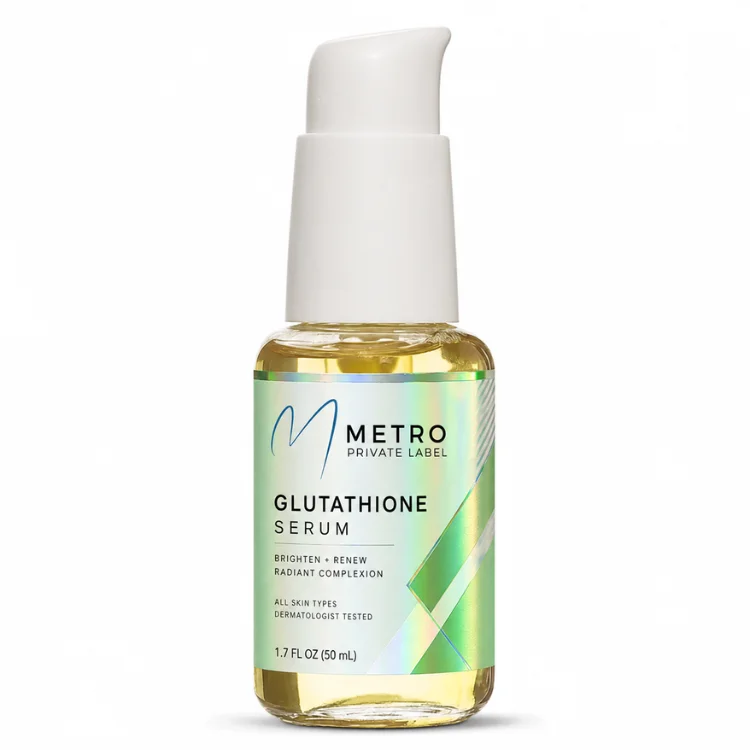
Glutathione Serum
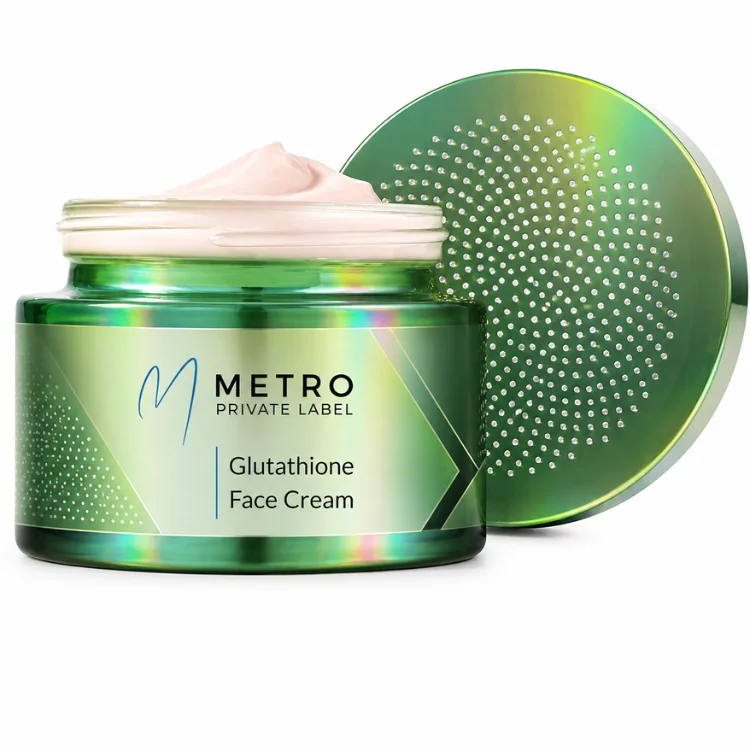
Glutathione Face Cream
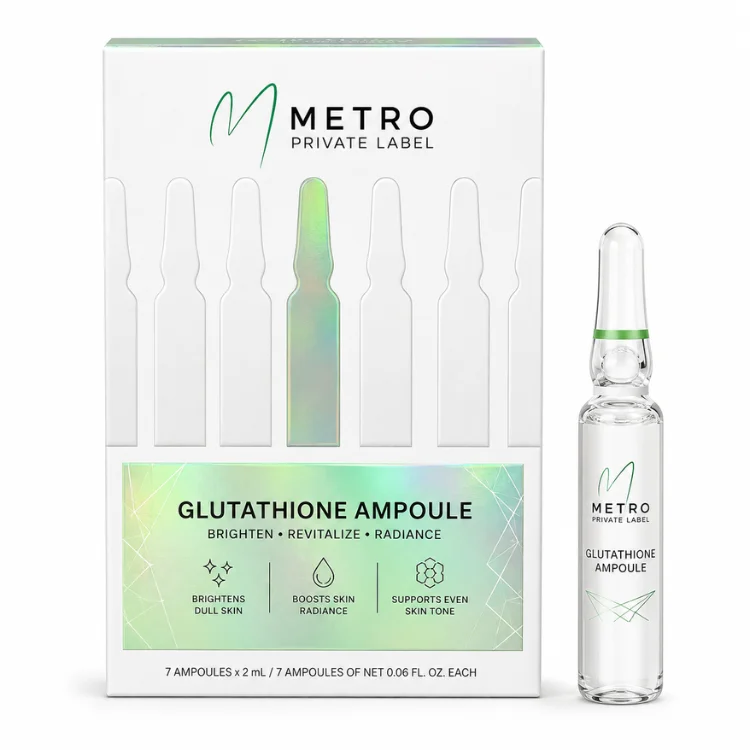
Glutathione Ampoule / Essence
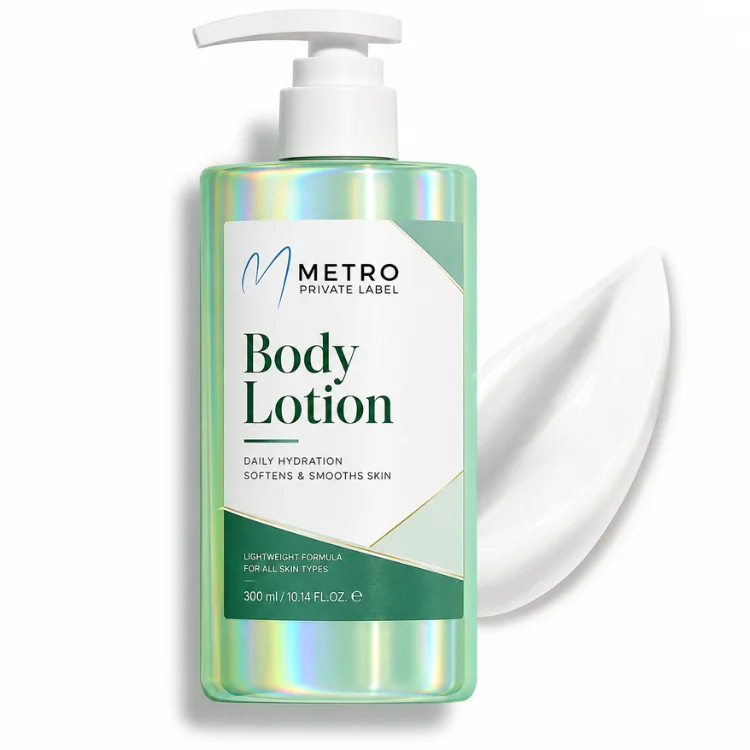
Glutathione Body Lotion / Cream
Build a Private Label Glutathione Skincare Line That Fits Your Market
If you are looking for a private label Glutathione skincare manufacturer, you are likely looking for more than a standard formula supplier. You may already have an e-commerce brand, beauty business, clinic, or distribution channel and need a reliable partner to develop products that match your customers, pricing strategy, and market expectations.
You have come to the right place. At Metro Private Label, we understand that successful Glutathione skincare products are not created by simply adding Glutathione into a formula and changing the label. Different brands require different solutions. A premium serum for Amazon, a daily moisturizer for retail, and a professional skincare line for clinics all require different formula concepts, textures, packaging, and product positioning.
From what we see across global beauty markets, successful Glutathione products usually focus on clear consumer needs such as brightening care, uneven-looking skin tone, hydration, antioxidant protection, and barrier support. We help brands select suitable Glutathione combinations, product formats, and positioning strategies to create products that are easier to market and more competitive.
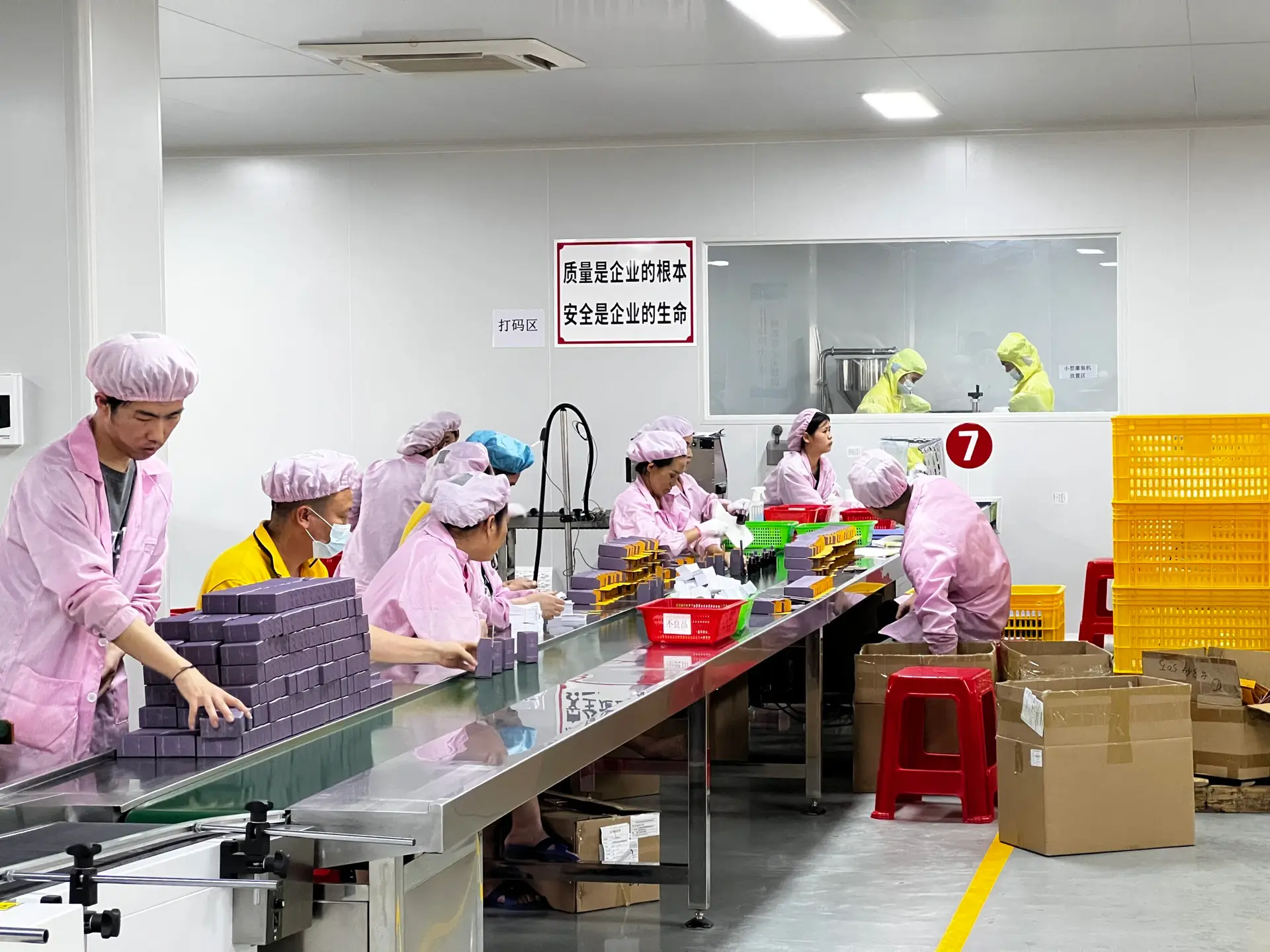
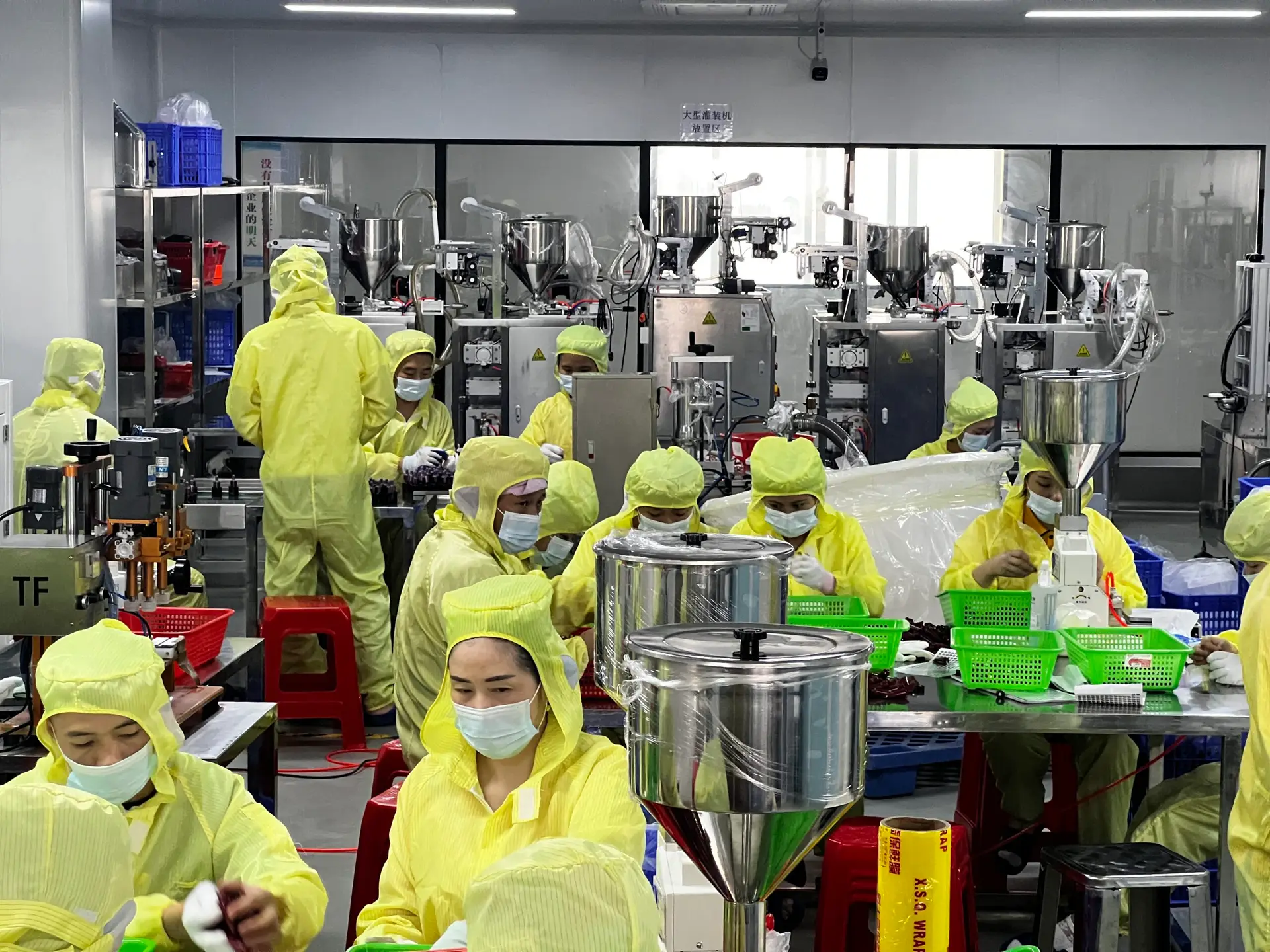
At Metro Private Label, we support the complete development process from formula selection and customization to packaging coordination, sampling, technical documentation, and mass production. Whether you are launching one hero product or expanding an existing skincare collection, our goal is to help you create Glutathione products with reliable quality and long-term commercial potential.
Our Core Private Label Glutathione Skincare Concepts
Glutathione Face Serum: A popular choice for e-commerce and beauty brands. We develop brightening serum concepts combining Glutathione with ingredients such as Niacinamide, Tranexamic Acid, Zinc PCA, Ectoin, or Peptides for different market positions.
Glutathione Face Cream: Designed for daily skincare routines, we support lightweight moisturizers, barrier-support creams, and richer nourishing creams to match different customer preferences.
Glutathione Ampoule & Essence: Inspired by K-beauty trends, ampoule formats allow brands to create more concentrated and premium skincare concepts with targeted ingredient combinations.
Glutathione Body Care: We develop body lotions, creams, and serums for brands targeting hydration, smoother-looking skin, and body brightening care in global markets.
Manufacturing Support for Glutathione Skincare Brands
We understand that choosing a manufacturing partner is not only about finding a formula. The product also needs to fit your target customers, sales channel, packaging requirements, and future growth plans.
At Metro Private Label, we provide formula recommendations, customization support, packaging solutions, sample development, and production management. We can also support your market preparation with technical documents including INCI lists, COA, SDS, and product specifications.
Our goal is simple: to help you turn Glutathione skincare ideas into products that are practical to manufacture, ready for market, and suitable for long-term brand growth.

More Than Just a Private Label Glutathione Skincare Manufacturer
At Metro Private Label, we understand that your goal is not simply to produce another Glutathione skincare product. Your goal is to create a product that fits your market, attracts the right customers, supports repeat purchases, and helps your brand grow over time. That is why we do not only focus on manufacturing — we focus on helping you make better product decisions before production begins.

Develop Products Around Your Market Needs
We help connect your Glutathione skincare idea with your target customers, sales channel, and business goals. Whether you are launching an e-commerce hero serum, expanding your existing skincare range, or developing products for retail and clinic channels, we consider the commercial purpose behind the product before recommending formulas, textures, and packaging solutions.
Reduce Development Risks Before Production
We know that a successful skincare product requires more than a popular ingredient. Formula stability, skin feel, packaging compatibility, production feasibility, and cost structure all need to work together. Our approach helps reduce common challenges such as unsuitable formulas, unclear product positioning, unexpected costs, or products that do not match customer expectations.
Create Products Designed for Long-Term Value
We believe customers do not repurchase skincare products because of Glutathione alone. They repurchase because the product fits their daily routine, provides a comfortable experience, and solves a clear skincare need. That is why we pay attention to details such as texture, absorption, ingredient combinations, and overall product positioning.
Support Your Growth Through One Manufacturing Partner
From formula selection and sample development to packaging coordination, production, and technical documentation, we support the complete private label process. This allows you to focus on growing your brand, marketing your products, and developing your sales channels while we manage the manufacturing process behind the scenes.
Build a Private Label Glutathione Skincare Line Around Your Business Goals
At Metro Private Label, we understand that developing a Glutathione skincare product is not simply about selecting a formula and putting it into packaging. If you already sell through Amazon, Shopify, retail, distribution, or professional beauty channels, your real goal is to create a product that matches your customers, supports your target price, fits your sales model, and has the potential to grow with your brand.
Many brands come to us with a product idea, but successful products usually require deeper decisions before production begins. Will the formula match the customer expectation? Does the texture support the intended market position? Is the packaging suitable for your sales channel? Can the product maintain stable quality when your order volume increases? This is where we believe a manufacturing partner should provide more value than simply producing products.
Develop Products Based on Your Market, Not Only Ingredients
When we develop a Glutathione skincare product, we look beyond the ingredient list. We consider your target customers, sales channel, price positioning, and product goals before recommending a direction. A serum for Amazon may focus on clear benefits, competitive pricing, and practical packaging, while a premium brand or clinic may require a more refined formula, stronger sensory experience, and professional positioning. By connecting market needs with manufacturing possibilities, we help you create products with a clearer purpose.
Make Smarter Decisions Before Production
A successful skincare product depends on many details working together. Formula stability, texture experience, packaging compatibility, production cost, and future scalability all influence the final result. We help evaluate these factors early to reduce unnecessary changes, repeated sampling, unexpected costs, and production challenges later.
Build Products That Support Long-Term Growth
We understand that your first Glutathione product is often the beginning of a larger product strategy. A successful serum may later expand into creams, ampoules, body care, or a complete skincare collection. That is why we consider not only your first order, but also how your formula, packaging, and product positioning can support future growth.
From formula development and sample evaluation to packaging coordination, production, and technical documentation, we work as your long-term manufacturing partner. Our goal is to help you create Glutathione skincare products that customers understand, enjoy using, and continue purchasing as your brand grows.
FAQs Glutathione Skincare
For your convenience, we’ve gathered the most commonly asked questions about our Glutathione Skincare . However, should you have any further queries, please don’t hesitate to reach out to us.
1. What types of Glutathione skincare products can you manufacture?
We manufacture a wide range of Glutathione skincare products, including face serums, ampoules, creams, moisturizers, toners, and body care products. You can start with one hero product for your brand or develop a complete Glutathione skincare collection. We will help you choose the right product format based on your target customers, sales channel, and market positioning.
2. Can you help us customize the Glutathione formula for our brand?
Yes. We can help customize formulas based on your product goals, customer profile, and price positioning. Whether you want a brightening serum, barrier-support moisturizer, premium anti-aging concept, or a K-beauty inspired ampoule, we can recommend suitable ingredient combinations, textures, and product directions to match your market.
3. What is the minimum order quantity (MOQ) for private label Glutathione skincare?
Our standard MOQ usually starts from 1,000 units per SKU, depending on the formula, packaging, and customization requirements. For new brands, we can help you choose a practical starting solution, while also considering how the product can scale when your sales grow.
4. How long does it take to develop and manufacture Glutathione skincare products?
The timeline depends on whether you choose an existing formula or a customized development project. Generally, samples can be prepared within several weeks, followed by production after formula, packaging, and artwork approval. We will provide a clear timeline from sampling to final delivery so you can plan your launch more efficiently.
5. Do you offer ready-made Glutathione formulas or only custom development?
We offer both options. If you want a faster launch, you can select from our existing Glutathione skincare formulas and customize key elements such as packaging and product positioning. If you already have a specific concept, we can also support customized formula development based on your requirements.
6. Can you help us with packaging design and product customization?
Yes. We support complete packaging solutions, including bottle and jar sourcing, label printing, box packaging, and artwork coordination. We understand that packaging is not only about appearance — it also needs to match your sales channel, customer expectations, shipping requirements, and target price.
7. Can you provide documents required for international markets?
Yes. We can support essential technical documents such as INCI lists, COA, SDS, product specifications, and available testing information. We understand that different markets have different requirements, so we work with you to prepare the necessary product information for your business planning.
8. Are your Glutathione skincare products suitable for Amazon, Shopify, and retail brands?
Yes. We work with different types of beauty businesses, including e-commerce brands, distributors, clinics, and retail-focused companies. We understand that products for Amazon may require cost control and shipping-friendly packaging, while premium brands and clinics may focus more on texture, experience, and professional positioning.
9. Can you help us choose the right Glutathione product concept for our market?
Absolutely. We believe successful products start with the right positioning, not only the formula. We can discuss your target customers, competitors, sales channels, and price range to help recommend suitable concepts, such as brightening care, antioxidant skincare, barrier support, or premium treatment products.
10. Do you support long-term product expansion after the first Glutathione product?
Yes. We see our relationship with brands as a long-term partnership. Many clients start with one product and later expand into additional SKUs such as creams, ampoules, cleansers, body care, or complete skincare collections. We support ongoing formula development, packaging coordination, production planning, and future replenishment.
Metro Private Label brought valuable manufacturing experience into our Glutathione skincare project. Instead of simply following our initial idea, their team asked the right questions about our customers, pricing strategy, and product direction. Their recommendations helped us create a more commercially focused product with a clearer purpose.
Oliver Bennett, Skincare Brand Consultantfrom United Kingdom
We chose Metro Private Label because we needed a manufacturing partner who could support both product quality and business requirements. Their team provided clear information about formulas, packaging options, production planning, and technical documents. We felt confident throughout the process because communication was always transparent and practical.
Laura Schneider, Cosmetic Purchasing Specialistfrom Germany
Metro Private Label brought valuable manufacturing experience into our Glutathione skincare project. Instead of simply following our initial idea, their team asked the right questions about our customers, pricing strategy, and product direction. Their recommendations helped us create a more commercially focused product with a clearer purpose.
Oliver Bennett, Skincare Brand Consultantfrom United Kingdom
For our clinic, product safety, skin comfort, and professional presentation were extremely important. Metro Private Label understood that our customers needed more than a trendy ingredient — they needed a product they could trust and use regularly. Their support helped us develop a Glutathione skincare concept that fits our treatment services and customer expectations.
Amélie Laurent, Beauty Clinic Ownerfrom France
Metro Private Label impressed us with their flexibility and understanding of different market needs. They provided suitable product options, realistic production guidance, and support throughout the customization process. Their approach helped us move forward efficiently while maintaining control over quality, cost, and future expansion opportunities.
Luca Romano, International Beauty Buyerfrom Italy





Metro Private Label in Numbers
Happy Clients
0 +
Million-dollar Buyers
0 +
Formulation
0 +
Professional Staffs
0 +
Your Ultimate Guide to Glutathione Skincare
If you’re planning to develop a private label Glutathione skincare product—whether it’s your first skincare SKU, an expansion of an existing product range, or a new category for your beauty business—you’re not simply choosing another trending ingredient. You’re entering one of today’s highly competitive skincare markets where product positioning, formula strategy, customer expectations, and brand differentiation all play an important role. Glutathione has gained strong recognition among consumers because it connects with popular skincare needs such as brighter-looking skin, antioxidant care, and uneven skin tone support. When developed correctly, Glutathione products can become daily skincare essentials that encourage repeat purchases rather than short-term trend products.
Over the past few years, we’ve seen Glutathione skincare evolve from traditional brightening concepts into more modern skincare positioning focused on balanced formulas, skin comfort, barrier support, and complete skincare routines. At Metro Private Label, we’ve worked with brands that understand the opportunity of this category but also recognize the challenge of creating a product that stands out in a crowded market. A successful Glutathione product is not created by adding the ingredient name to a bottle. It requires thoughtful decisions around formula direction, supporting ingredients, texture experience, packaging selection, pricing strategy, and production planning.
This guide is based on what we’ve learned from developing Glutathione skincare products across different brand stages, sales channels, and market requirements. Instead of focusing only on ingredient information, we want to share how Glutathione products are developed from a real commercial perspective. Choosing the right product format, creating a formula that matches customer expectations, selecting packaging that supports both e-commerce and retail needs, preparing compliance documents early, and building a product roadmap for future expansion all influence whether a Glutathione product becomes a sustainable brand asset or simply another product competing on price.
Table of Contents
How to Choose the Right Glutathione Skincare Product for Your Brand
Choosing the right Glutathione skincare product is not simply a matter of identifying which format is currently popular. From my experience, the product format needs to match the brand’s target customer, sales channel, retail price, marketing capability, and long-term development plan. A serum, face cream, ampoule, and body lotion may all feature Glutathione, but each format creates different customer expectations, pricing opportunities, operational requirements, and repeat-purchase patterns. In this guide, I will explain how I evaluate these differences and how a brand can decide whether to launch one hero product or build a broader Glutathione skincare collection.
Understanding the Real Decision Behind a Glutathione Product Launch
Many brands enter this category because Glutathione already has strong consumer recognition, particularly in products positioned around radiance, antioxidant care, dark spots, and uneven-looking skin tone. However, ingredient awareness alone does not determine which product a brand should launch. When I evaluate a project, I first ask who the customer is, where the product will be sold, what retail price the market can accept, and what role the product should play within the brand. A serum developed for Amazon requires a different commercial strategy from a moisturizer created for retail or a professional product intended for an aesthetic clinic. Even when the main ingredient is the same, the supporting ingredients, texture, packaging, product claims, cost structure, and customer experience need to reflect the expectations of that specific channel.
I also consider how quickly customers can understand the product, how often they are likely to use it, and whether the format can support future expansion. These questions matter because the product decision affects much more than the formula. It influences packaging investment, advertising content, fulfillment costs, inventory planning, and future replenishment. For this reason, I recommend beginning with the commercial purpose of the product rather than starting with a long ingredient list.
Glutathione Serum: A Strong Hero Product for E-Commerce Brands
A Glutathione serum is often the most practical starting point for an e-commerce brand that wants to launch one focused hero product. Consumers already associate serums with concentrated ingredients, targeted skincare benefits, and higher perceived performance, making the format relatively easy to position around radiance, antioxidant support, or uneven-looking skin tone. On Amazon, where shoppers frequently search by ingredient and skin concern, a serum can communicate its purpose quickly through the product title, images, ingredient story, reviews, and comparison content. For Shopify and direct-to-consumer brands, the format also provides enough flexibility to build a stronger narrative around the formula and the customer problem it is designed to address.
The challenge is that Glutathione serum is already a competitive category. I rarely consider a formula commercially strong simply because it contains Glutathione. The supporting ingredients need to reinforce a clear direction, such as Niacinamide for daily tone care, Tranexamic Acid for a more targeted dark-spot concept, or Peptides and barrier-support ingredients for premium positioning. Texture, absorption, packaging, retail price, and visual presentation also need to support the same message. A serum is usually the right choice when the brand needs a recognizable format, a clear hero SKU, and a product that can be marketed effectively through ingredient-led e-commerce content.
Glutathione Face Cream: A Daily Product with Strong Retention Potential
A Glutathione face cream is often more suitable for brands that want to build daily use and long-term customer retention. Consumers already understand where a moisturizer fits into their routine, so the format usually requires less education than an ampoule or specialized treatment. Depending on the target customer, the product could be developed as a lightweight gel cream for younger consumers and warmer climates, a daily moisturizer for broad retail audiences, or a richer barrier-support cream for dry or sensitive-feeling skin. Glutathione can remain part of the brightening story, while ingredients such as Ceramides, Panthenol, Ectoin, Squalane, or Hyaluronic Acid improve comfort and daily usability.
From my perspective, texture is one of the most commercially important factors in this category. A moisturizer may have an impressive ingredient list, but customers are unlikely to repurchase it if the formula feels sticky, greasy, heavy, or difficult to layer with sunscreen and makeup. Absorption, after-feel, fragrance level, and climate suitability can influence customer satisfaction as much as the headline active ingredient. Face creams may generate less immediate excitement than serums, but when the formula fits naturally into a daily routine, they can become reliable products with strong repeat-order potential for brands, retailers, and clinics.
Glutathione Ampoule: A Format for Premium and Trend-Led Positioning
A Glutathione ampoule can create a more concentrated, specialized, and premium product story. I usually see this format working best for K-beauty-inspired brands, experienced skincare consumers, and businesses with enough marketing capability to explain why the product is different from a regular serum. The word “ampoule” creates expectations of greater concentration, advanced formulation, and intensive care, which may support a higher retail price. At the same time, it also places more pressure on the brand to provide a clear reason for the product’s existence.
I believe an ampoule should offer more than a different name or smaller bottle. The formula concept, ingredient delivery, texture, packaging, and usage instructions should support the premium positioning. Glutathione may be paired with fermented ingredients, Tranexamic Acid, Niacinamide, Peptides, or specialized delivery systems to create a more focused treatment narrative. For a new brand that depends mainly on marketplace search traffic, a serum may still be easier to communicate. For an established brand, beauty retailer, or K-beauty-focused business, an ampoule can provide stronger differentiation and a more advanced product experience.
Glutathione Body Care: A Larger-Volume Opportunity Beyond Facial Skincare
Glutathione body care allows brands to expand beyond the crowded facial serum category and address a broader daily-use market. Body lotions, body creams, and body serums can be positioned around hydration, smoother-looking texture, radiance, and more even-looking skin tone. These products are especially relevant in markets where body-brightening routines already have strong consumer awareness. They can also become a natural extension for a brand that already sells a successful Glutathione facial product and wants to increase average order value through a complementary category.
Body care requires a different commercial calculation because consumers expect a larger volume at a reasonable price. A facial serum may be sold in a 30 ml bottle, while a body lotion commonly requires 200 ml or more, which makes raw material cost, packaging cost, filling efficiency, and shipping weight more significant. I also pay close attention to spreadability, absorption, residue, pump performance, bottle durability, and leakage risk. A body product may use more formula and carry a lower price per milliliter, but its higher consumption rate can create valuable repeat-purchase potential when the product is comfortable enough for regular use.
Matching the Product Format to the Sales Channel
The sales channel should influence product development from the beginning because each channel creates different expectations. For Amazon, I generally prioritize a familiar product format, clear benefits, competitive pricing, durable packaging, and a concept that can be understood quickly from search results. Serums often fit this environment because customers actively search by ingredient and skincare concern. On Shopify and other direct-to-consumer platforms, brands have more control over education, visual storytelling, bundling, and customer retention, which means a serum can attract the first purchase while a cream, ampoule, or body product helps build a wider routine.
For retail and wholesale distribution, I consider shelf recognition, accessible pricing, packaging clarity, and dependable replenishment. Creams, body lotions, and coordinated collections may perform well because they are easy for consumers to understand and can serve a broader audience. In clinic and professional beauty channels, I focus more on skin comfort, professional presentation, routine compatibility, and the product’s role within an existing treatment or homecare program. A clinic may prefer a gentle moisturizer or targeted serum that can be confidently recommended to clients, while a distributor may prioritize mature formulas, stable supply, and a product range that can be introduced quickly across several retail accounts.
How Product Format Shapes Customer Expectations
Every format communicates an expectation before the customer reads the ingredient list. A serum suggests concentrated and targeted skincare, a cream suggests daily comfort and maintenance, an ampoule suggests intensive or premium treatment, and a body lotion suggests regular use across larger areas of skin. I consider these assumptions during development because customers will judge the product against the natural expectations created by its format. A serum that feels too basic may disappoint because the category implies advanced performance, while a daily cream that feels too active, sticky, or uncomfortable may fail because customers expect convenient everyday use.
The formula, packaging, claims, and marketing message should therefore reinforce the meaning of the product format. When these elements are disconnected, the product becomes harder to explain. An ampoule without a clear point of difference can feel like a serum with a more expensive name, while a body lotion packaged in a small premium bottle may create a mismatch between expected usage and perceived value. When the format and product concept are aligned, customers can understand the proposition more quickly and the product feels more commercially credible.
How Product Format Influences Retail Pricing
Product format strongly affects what customers are willing to pay and how a brand should calculate its margins. Serums and ampoules usually support higher prices per milliliter because consumers associate them with concentrated actives and targeted care. Creams often provide more volume and can communicate daily value, while body products require significantly larger fills and therefore need tighter control over formula and packaging costs. I do not recommend setting the retail price by simply applying a standard multiplier to the factory cost because the real commercial calculation also needs to include platform fees, advertising, fulfillment, shipping, import costs, promotions, returns, and distributor margins.
The suitable format therefore depends partly on the business model. A premium Shopify brand may be able to support a higher-priced ampoule with sophisticated packaging and stronger educational content. An Amazon operator may need a serum with clearer search demand, more practical packaging, and stricter cost control. A wholesale buyer may prefer a cream or body lotion that can reach a broader customer base at a more accessible retail price. I believe a commercially sensible product is one that supports both the customer’s perceived value and the brand’s actual cost structure.
How Product Format Changes the Marketing Strategy
The format determines how the product should be explained and what type of content the brand needs to create. Serum marketing usually focuses on active ingredients, specific skin concerns, texture demonstrations, and routine placement. Cream marketing is more likely to emphasize comfort, hydration, barrier support, finish, and daily use. Ampoule marketing needs to explain concentration, specialization, and the difference from a standard serum, while body care marketing often focuses on application experience, consistent routine use, skin feel, and value across a larger product volume.
I recommend choosing a format that matches the brand’s ability to communicate it. A business with strong educational content, professional photography, and an established audience may successfully introduce an ampoule or advanced treatment concept. A brand relying mainly on marketplace search traffic may perform better with a familiar serum or moisturizer whose purpose is immediately clear. The strongest formula will still struggle if the brand cannot explain why customers need it, so marketing capability should be considered before development rather than after production.
How Product Format Affects Repeat Purchase Potential
Repeat purchase depends on how often customers use the product, how quickly they finish it, and how comfortably it fits into their routine. Creams and body lotions often perform well because they are applied daily and consumed in relatively larger amounts. Serums can also create strong repeat purchase when the texture is pleasant, the product layers well, and customers view it as an essential treatment step. Ampoules may support a higher retail price, but some consumers treat them as occasional intensive products rather than permanent daily essentials, which can create a different purchasing cycle.
From what I have observed, Glutathione may attract the first purchase, but the product experience determines whether the customer returns. Customers repurchase because the formula feels good, the packaging works reliably, the product fits their routine, and the experience remains consistent from one bottle to the next. Ingredient recognition can create initial attention, but repeat sales usually come from usability, comfort, and trust.
Should I Launch One Hero Product or a Complete Glutathione Collection?
I generally recommend launching one focused hero product when a brand is entering the Glutathione category for the first time, testing a new audience, or operating with a controlled launch budget. A serum is often a practical starting point because it can carry a clear ingredient story, generate customer feedback, and help the brand understand which benefits and supporting ingredients create the strongest response. Beginning with one product also reduces the amount of capital tied up in packaging, inventory, artwork, testing, and marketing content.
A complete collection may make more sense for an established brand, distributor, or retailer that already has customer traffic, working capital, and the operational ability to manage several SKUs. A coordinated serum, moisturizer, ampoule, and body product can increase average order value and create a stronger retail presentation, but each SKU needs a distinct role. I do not believe a larger range automatically makes a brand more professional. A practical expansion path may begin with a hero serum, followed by a daily cream, and later extend into an ampoule or body product once real customer behavior provides evidence for the next decision.
Making the Final Product Decision
When I evaluate which Glutathione product a brand should launch, I connect four elements: the target customer, the sales channel, the intended retail price, and the product’s role within the wider brand. A serum is often the strongest option for an e-commerce hero product, a cream may offer greater daily-use and retention potential, an ampoule can support premium or K-beauty positioning, and body care can provide access to larger-volume routines and different regional markets. A complete collection becomes more appropriate when the business already has the demand, capital, and supply-chain capacity to support multiple products.
I do not believe there is one universally superior Glutathione format. The right product is the one customers can understand quickly, the brand can market confidently, and the manufacturer can produce consistently at a sustainable cost. Glutathione may create interest, but the product format determines how that interest becomes a purchase, how the product fits into the customer’s routine, and whether the business can build lasting commercial value around it.
Glutathione Skincare Market Analysis: Why Brands Are Expanding Into This Category
Glutathione skincare is no longer defined only by traditional whitening products. I now see the category moving toward broader and more internationally acceptable concepts such as radiance, uneven-looking skin tone, antioxidant care, dark-spot support, hydration, and barrier-friendly daily use. This evolution matters for brand founders, distributors, and product buyers because it changes both the commercial opportunity and the type of product that can succeed. Glutathione still has strong ingredient recognition, but the market increasingly rewards brands that place it inside a complete product concept rather than relying on the ingredient name alone.
Is Glutathione Skincare Still a Good Product Opportunity?
I believe Glutathione remains commercially relevant, but I would not describe it as an easy or automatic product opportunity. The category already contains many serums, creams, ampoules, toners, masks, and body products, which confirms that consumer interest exists but also means new products must enter a competitive environment. Major beauty retailers currently group Glutathione products around radiance, uneven-looking skin tone, blemish appearance, antioxidant protection, and brightening rather than presenting the ingredient only through traditional whitening language. Current listings include concentrated serums, dark-spot products, soothing toners, moisturizers, and sensitive-skin-friendly creams, showing that the category has expanded into several modern skincare concerns.
From a business perspective, this means Glutathione is still attractive when a brand has a clear answer to three questions: which customer problem the product addresses, how the product differs from existing options, and why the chosen format fits the sales channel. I would be cautious about launching a generic Glutathione serum with no supporting concept, because ingredient recognition alone is unlikely to create lasting differentiation. I see stronger potential when Glutathione is used as part of a specific proposition, such as daily radiance care, post-blemish mark support, antioxidant protection, gentle tone care, or a premium formula built around several complementary actives.
How the Market Moved Beyond Traditional Whitening Positioning
The Glutathione category developed strong visibility through products associated with whitening and skin-lightening claims, particularly in parts of Asia, Africa, the Middle East, and other markets where these categories had long-established demand. However, I now see many international brands using language that focuses more on visible radiance, dullness, dark spots, discoloration, clarity, and uneven-looking skin tone. This shift is commercially important because it makes the category easier to position across global retail environments while reducing reliance on language that may feel outdated, culturally sensitive, or difficult to support from a cosmetic-claims perspective.
I do not interpret this shift as a simple wording change. It reflects a broader change in how consumers think about skincare. Many customers are no longer looking for one-dimensional “whitening” products. They are looking for healthier-looking skin, a more even appearance, improved radiance, hydration, comfort, and formulas that can be used consistently without excessive irritation. Current products from international and Korean brands commonly connect Glutathione with Vitamin C, Niacinamide, N-acetyl glucosamine, licorice, allantoin, Vitamin E, Coenzyme Q10, and other ingredients that broaden the product beyond a single whitening story.
Brightening Care Has Become More Sophisticated
Brightening remains the central commercial territory for Glutathione skincare, but I see the meaning of brightening becoming more sophisticated. A modern brightening product is expected to address more than general dullness. Customers may also expect support for post-breakout marks, uneven-looking tone, visible discoloration, skin clarity, texture, and overall luminosity. This creates opportunities for brands to develop more targeted concepts, but it also raises the standard for formula design and communication.
I believe the strongest brightening products are those with one clearly defined purpose. A Glutathione and Vitamin C serum may focus on radiance and antioxidant care, while a Glutathione, Niacinamide, and N-acetyl glucosamine formula may be positioned more directly around uneven-looking tone and post-blemish marks. A cream with Glutathione, fermented ingredients, and moisturizing components may emphasize daily glow and comfort rather than aggressive treatment. Existing retail products already illustrate this segmentation, with some focusing on clinical-strength Vitamin C combinations and others promoting gentle daily use, moisture, tone evenness, or dark-spot care.
Uneven Skin Tone Support Is Replacing One-Size-Fits-All Claims
Uneven-looking skin tone has become one of the most useful product concepts in the Glutathione category because it is broad enough to be relevant to many consumers but specific enough to support a clear purchase decision. I see customers connecting uneven tone with several visible concerns, including post-acne marks, sun-related discoloration, dull patches, and a lack of overall clarity. For brands, this creates more room to build products around recognizable skincare experiences rather than making broad promises about changing a person’s natural skin color.
This positioning also allows a product range to address different levels of customer experience. An entry-level toner may offer hydration and a brighter-looking complexion, while a serum may focus more strongly on dark spots and residual marks. A moisturizer can then support daily use, comfort, and barrier care. Current products at major retailers already use language around discoloration, dark spots, post-breakout marks, clearer-looking skin, and improved tone evenness, which suggests that consumers are being introduced to Glutathione through a wider problem-solution framework.
Antioxidant Skincare Gives Glutathione a Broader Role
I see antioxidant positioning as one of the most important reasons Glutathione can remain relevant beyond short-term brightening trends. Glutathione is increasingly presented alongside Vitamin C, Vitamin E, Alpha Lipoic Acid, Coenzyme Q10, fermented extracts, and other ingredients associated with environmental stress, radiance, and healthy-looking skin. This allows brands to position the ingredient within daily preventative skincare rather than limiting it to a corrective product used only for pigmentation concerns.
For a brand founder or buyer, this broader role can support several commercial directions. A product may be positioned as a morning antioxidant serum, a glow-supporting ampoule, a daily toner, or a moisturizer that combines antioxidant care with hydration. I find this particularly useful for brands that already sell Vitamin C or Niacinamide products and want to introduce Glutathione without creating a completely disconnected product story. The market already shows Glutathione being combined with well-established antioxidants and tone-support ingredients, helping the ingredient fit into familiar routines while still offering a point of difference.
Barrier-Friendly Formulas Are Changing Customer Expectations
The wider skincare market has placed increasing emphasis on gentle efficacy, barrier support, and formulas that customers can use consistently. In 2026, skincare trend coverage continues to highlight targeted formulas, improved delivery systems, gentleness, barrier-first care, and products that combine scientific positioning with a pleasant user experience. K-beauty is also moving toward skin longevity, barrier-focused routines, and advanced but tolerable actives rather than relying only on aggressive correction.
I believe this has direct implications for Glutathione product development. A brightening product that causes dryness, stinging, excessive tackiness, or poor layering may struggle to achieve repeat purchase, regardless of how attractive the ingredient list appears. Brands now have an opportunity to combine Glutathione with Panthenol, Ceramides, Ectoin, Allantoin, Centella-derived ingredients, Hyaluronic Acid, or other supportive materials that improve comfort and daily usability. Retail products are already presenting Glutathione creams and toners as moisturizing, non-sticky, soothing, or suitable for sensitive-feeling skin, which shows how far the category has moved from narrow, treatment-only positioning.
How Consumer Demand Is Changing
I see three important changes in consumer demand. First, customers increasingly expect a clear connection between the ingredient and a visible skincare concern. Simply writing “Glutathione” on the front of the packaging is no longer enough when competing products explain whether they target dark spots, dullness, post-breakout marks, hydration, or antioxidant protection. Second, consumers are paying more attention to how a product feels. Lightweight, non-sticky, milky, soothing, and easily layered textures have become part of the value proposition, especially for products intended for daily use. Third, customers increasingly expect formulas to combine several familiar ingredients rather than relying on a single hero active.
These shifts increase the importance of product concept development. A brand needs to decide whether the product is primarily about visible radiance, spot-focused care, antioxidant support, barrier-friendly daily use, or premium treatment. I would not try to include every possible benefit in one formula because this often creates unclear positioning and difficult marketing. The market evidence suggests that products with a specific concern, recognizable supporting ingredients, and a clear sensory experience are easier for customers to understand than products built around a long but unfocused ingredient list.
The Influence of K-Beauty on Glutathione Skincare
K-beauty has played a major role in turning Glutathione from a narrow brightening ingredient into a flexible skincare concept. Korean brands frequently present it through ampoules, capsule serums, milky toners, glow creams, masks, patches, and multi-step routines. This format innovation makes the ingredient feel more modern and gives consumers several ways to incorporate it into their skincare routines. Current K-beauty retail listings show Glutathione being used in concentrated serums, antioxidant ampoules, toner formats, dark-spot kits, creams, and patches rather than remaining limited to one standard product type.
I believe K-beauty’s greatest influence is not simply introducing more ingredients. It has taught consumers to value texture, layering, packaging innovation, and highly specific product concepts. Recent industry coverage continues to describe K-beauty as a major force in ingredient-focused skincare, biotech-inspired formulas, barrier care, skin longevity, and global product innovation. Glutathione is increasingly discussed as part of this wider movement toward antioxidant care, radiance, and skin optimization.
Why Product Format Matters More Than Ingredient Popularity
The commercial opportunity differs significantly by format. I see serums as the most recognizable choice for online brands because customers associate them with targeted benefits and concentrated actives. Ampoules can create stronger K-beauty or premium positioning, but they require more education. Creams and moisturizers offer daily-use potential and may produce stronger customer retention when the texture is comfortable. Toners can support routine-building and K-beauty storytelling, while body lotions and body serums provide access to larger-volume usage and markets with established demand for body-tone care.
I would therefore avoid treating the Glutathione category as one single market. A 30 ml premium serum sold through Shopify is commercially different from a 200 ml body lotion distributed through regional retail. The customer expectation, acceptable price per milliliter, packaging structure, advertising message, and replenishment cycle will all change. Product format should be selected according to the business model rather than chosen only because a competitor is selling it successfully.
Product Differentiation Opportunities for New Brands
I see the strongest differentiation opportunities coming from product purpose, supporting ingredients, sensory experience, packaging, and channel fit. A brand does not necessarily need a completely unfamiliar ingredient combination to be distinctive. It may create differentiation by offering a lightweight Glutathione serum designed for humid climates, a fragrance-free moisturizer for sensitive-skin routines, a Vitamin C and Glutathione antioxidant treatment, a dark-spot product that also supports post-breakout comfort, or a body serum with faster absorption than a traditional lotion.
The important point is that differentiation should be meaningful to the customer. Increasing the number of actives, using an unusually high percentage, or choosing expensive packaging does not automatically create a stronger product. I look for a clear relationship between the customer problem, formula design, texture, claims, package format, and retail price. When those elements support the same concept, the product becomes easier to explain and more credible in the market.
Opportunities for Existing E-Commerce Brands
For an existing Amazon or Shopify operator, Glutathione can be attractive because it connects with ingredient-led search behavior and several established skincare concerns. A brand that already sells brightening, Vitamin C, Niacinamide, dark-spot, or barrier-care products may be able to introduce Glutathione as a logical extension rather than building demand from zero. The challenge is avoiding internal competition between similar SKUs. I would define a specific role for the new product, such as a more advanced antioxidant serum, a gentler daily tone-care option, or a premium ampoule for experienced customers.
E-commerce brands also need to consider the economics behind the trend. The product should support the intended advertising cost, marketplace fees, fulfillment expenses, discount strategy, and customer acquisition model. A popular ingredient can improve click interest, but the formula, packaging, reviews, and repurchase experience determine whether the SKU remains commercially sustainable after launch.
Opportunities for Distributors and Wholesale Buyers
For distributors, the category can be attractive because it offers several recognizable formats and price positions. A buyer may introduce a hero serum, an accessible face cream, a body lotion, or a coordinated product collection depending on local demand. I see particular value in markets where customers already understand brightening and body-tone products because less education may be required at retail. However, distributors should still examine whether the proposed claims and visual language match current consumer expectations and local regulatory requirements.
I would also consider supply continuity more important than novelty for this customer group. A distributor may gain initial attention from an innovative ampoule or capsule serum, but repeated sales depend on stable quality, consistent packaging, reliable replenishment, and a price structure that leaves enough margin for the channel. The best opportunity is usually a product that feels current without being so technically complex that it becomes difficult to reproduce or restock.
Risks Brands Should Understand Before Entering the Category
The first risk is market sameness. Many Glutathione products use similar brightening language and combine the ingredient with Niacinamide or Vitamin C, so a new launch can become interchangeable with existing options. The second risk is unclear claims. Brands need to distinguish cosmetic language around radiance, dullness, and uneven-looking tone from stronger promises that may be difficult to substantiate or unsuitable in the target market. The third risk is formulation and sensory performance. A product can have a strong ingredient story but still fail if it oxidizes, changes color, feels unpleasant, or does not work well with its packaging.
Another risk is launching too many products before understanding demand. I often see new businesses assume that a complete collection will look more professional, but multiple SKUs increase packaging commitments, inventory exposure, marketing requirements, and working-capital pressure. For many brands, one well-positioned serum or cream provides a better market test than a large range of similar products. A complete collection becomes more sensible when the brand already has customer traffic, distribution capacity, and a clear product architecture.
Is Glutathione Still Commercially Attractive for a New Product Launch?
My conclusion is that Glutathione remains commercially attractive, but the opportunity has matured. It is no longer enough to treat the ingredient as a trend or place it into a standard serum without a clear market role. The category is now supported by international retail visibility, K-beauty innovation, consumer interest in dark spots and uneven-looking tone, and the wider movement toward antioxidant and barrier-friendly skincare. At the same time, these strengths create more competition and higher expectations.
I would consider the category a good opportunity when the brand has an existing audience, a clear customer problem, an appropriate sales channel, and a product concept that connects formula, texture, packaging, claims, and price. I would be less confident when the entire strategy is based on the belief that Glutathione is popular. The ingredient can still attract attention, but commercial success depends on what the product helps the customer understand, experience, and purchase again.
How to Develop a Private Label Glutathione Serum That Can Compete in the Market
A Glutathione serum is one of the most common products brands choose when entering the brightening skincare category, but it is also one of the easiest products to make look generic. From my experience, the difference between a competitive serum and an interchangeable one usually comes down to product positioning, ingredient logic, texture, packaging, and price architecture. A strong formula matters, but a formula alone does not create a commercially successful product. The serum needs to give customers a clear reason to notice it, understand it, trust it, and purchase it again.
Why Glutathione Serum Is Often Chosen as a Hero SKU
I see Glutathione serum used as a hero SKU because the serum format naturally supports ingredient-led marketing. Consumers already associate serums with concentrated actives, targeted skincare benefits, and higher perceived performance. This makes it easier for Amazon sellers and Shopify brands to communicate a focused product story around radiance, dark spots, uneven-looking skin tone, antioxidant care, or post-blemish marks.
Serums also work well in e-commerce because they are easy to demonstrate visually. A brand can show the texture, absorption, packaging, application, ingredient combinations, and place within a skincare routine. Compared with a cleanser or toner, a serum usually carries greater perceived value and can support a higher retail price in a smaller package. This makes it commercially attractive for brands that need enough margin to cover advertising, fulfillment, marketplace fees, promotional discounts, and customer acquisition costs.
However, popularity creates competition. A customer searching for a Glutathione serum will usually see many similar products using the same words, the same supporting ingredients, and nearly identical packaging. I therefore treat the hero-SKU decision as more than a choice of product format. The brand needs to define what this serum does better, differently, or more clearly than the alternatives already available.
Start with a Clear Glutathione Positioning
When I develop a Glutathione serum concept, I do not begin by adding as many popular actives as possible. I begin by deciding what the product should mean to the customer. Glutathione can support several commercial directions, but a serum becomes difficult to market when it tries to represent all of them at once.
One product may be positioned as a daily radiance serum for dull-looking skin, while another may focus more directly on visible discoloration and post-blemish marks. A premium formula may combine Glutathione with Peptides for a broader age-support story, while a gentler formula may use Ectoin and Ceramides to connect brightening care with skin comfort. The ingredient may remain the same, but the customer expectation changes completely.
I believe the most competitive serum usually has one primary benefit and one supporting benefit. For example, the main message may focus on uneven-looking tone, while hydration and barrier support make the product more comfortable for daily use. This creates a clearer product story than trying to promote brightening, anti-aging, pore care, acne care, hydration, repair, and sensitivity support within the same serum.
Using Niacinamide to Build a Familiar Daily Brightening Concept
Niacinamide is one of the most commercially useful ingredients to combine with Glutathione because consumers already understand it. I often see this pairing used in products positioned around radiance, uneven-looking tone, post-blemish marks, oil balance, and daily skin maintenance. For an Amazon seller, this familiarity can make the product easier to explain because both ingredients already appear frequently in customer searches and competitor listings.
The challenge is that Glutathione and Niacinamide is also a very common combination. Simply placing both names on the label will not create meaningful differentiation. I would look at concentration strategy, texture, skin comfort, supporting ingredients, and the target customer. A lightweight, fast-absorbing serum may be designed for oily or combination skin, while a more hydrating version may suit consumers who want brightening care without the dry or tight feeling associated with some active products.
I also consider how the pair will influence pricing. Niacinamide is familiar and commercially accessible, which can help a brand maintain a competitive cost structure. This makes it useful for marketplace products, but the rest of the formulation and packaging still need to provide enough perceived value to prevent the serum from appearing cheap or ordinary.
Using Tranexamic Acid for a More Targeted Tone-Care Position
Tranexamic Acid can give a Glutathione serum a more specific and advanced product direction. I usually see this combination as more suitable for brands that want to focus on visible dark spots, post-blemish marks, or uneven-looking skin tone rather than using a broad “glow” message. This targeted positioning can be especially useful on Shopify, where a brand has more space to educate customers and explain how the formula fits into a consistent skincare routine.
A more focused ingredient combination can support a stronger retail price, but it also creates higher expectations. The formula needs to feel refined, the marketing language needs to remain clear and responsible, and the product should avoid becoming overloaded with additional actives that weaken the central message. I would rather see a well-built Glutathione and Tranexamic Acid concept with appropriate hydration and soothing support than a serum containing ten headline ingredients with no obvious hierarchy.
Texture is particularly important in this type of product. Customers may use it consistently over an extended period, so stickiness, pilling, fragrance, and poor layering can reduce repeat purchase even when the ingredient story is strong. I always consider whether the serum can fit comfortably beneath moisturizer, sunscreen, and makeup because that daily usability often determines whether a targeted treatment becomes part of the customer’s routine.
Using Peptides for Premium and Age-Support Positioning
Peptides can move a Glutathione serum away from basic brightening and toward a more premium skin-renewal or age-support concept. I see this combination working best for Shopify brands, professional beauty businesses, and established e-commerce operators that can support more detailed product education and stronger visual branding.
The key is to avoid using Peptides only as a luxury-sounding addition. The formula should have a coherent purpose. Glutathione may support radiance and antioxidant positioning, while Peptides contribute to a firmer-looking, smoother, or more refined skin appearance. The texture, packaging, and claims should reinforce that premium direction. A watery commodity-style serum in a low-cost package may not support the higher-value story customers expect from a peptide concept.
I also consider the price implications carefully. Peptide systems can increase formula cost, and premium packaging may increase the total unit cost further. This can make sense when the target retail price, audience, and brand identity support it. It becomes commercially risky when a brand selects expensive ingredients but still needs to compete at the lowest price point on Amazon.
Using Ceramides to Connect Brightening with Barrier Support
Ceramides give Glutathione serum a more barrier-conscious and comfort-focused direction. I find this relevant because many consumers want visible tone care without feeling that they are compromising skin comfort. A formula that combines radiance with barrier support may appeal to dry, sensitive-feeling, or over-treated skin types, especially when paired with Panthenol, Squalane, Beta-Glucan, or other supportive ingredients.
The main formulation challenge is creating a serum texture that remains elegant. Ceramide-containing systems can become heavier, milkier, or more emulsion-like depending on how they are incorporated. This is not necessarily a disadvantage, but the final sensory profile needs to match the brand promise. A milky barrier serum may work well for a skin-comfort concept, while a brand promising an ultra-light watery serum may need a different delivery approach.
I believe this combination provides useful differentiation because it moves the product beyond conventional brightening language. Instead of asking customers to choose between tone care and barrier care, the serum can be positioned as a more balanced daily product. That can support long-term use and repeat purchasing, provided the texture remains comfortable and the formula does not feel overly rich for the intended audience.
Using Ectoin to Support Gentle, Modern Positioning
Ectoin can help create a more contemporary Glutathione serum concept focused on comfort, environmental stress support, hydration, and daily resilience. I see it as especially valuable for brands trying to avoid aggressive or outdated brightening narratives. The combination can be positioned around a healthier-looking, more even, and more comfortable complexion rather than rapid or extreme transformation.
This direction may appeal to consumers who already use actives but want a serum that feels gentle enough for regular use. It also gives brands an opportunity to communicate modern formulation thinking, particularly when Ectoin is combined with Glutathione, humectants, and barrier-support ingredients in a lightweight formula.
The difficulty is that Ectoin may be less familiar to mainstream customers than Niacinamide or Vitamin C. For Amazon, the product title and images still need to communicate the customer benefit quickly. For Shopify, the brand can provide more education about why the ingredient is included. I would not rely on Ectoin as the only differentiator, but I see it as a valuable supporting ingredient when the overall product concept focuses on gentle efficacy and consistent daily use.
Build the Formula Around One Clear Customer Benefit
A competitive Glutathione serum should be easy to summarize in one sentence. I use this as a practical test during product development. If the product cannot be explained clearly without listing every active ingredient, the positioning is probably too broad.
The benefit could be daily radiance for dull-looking skin, targeted tone care for post-blemish marks, premium antioxidant and age-support care, or barrier-friendly brightening for sensitive-feeling skin. Each direction can work, but the formula, packaging, price, and marketing need to support the same message.
I also look at the target customer’s level of skincare knowledge. An experienced skincare audience may respond well to a Glutathione, Tranexamic Acid, and Peptide formula with a more technical explanation. A broader Amazon audience may understand a Glutathione and Niacinamide serum more quickly. Clear positioning does not mean oversimplifying the formula. It means making the reason to buy immediately understandable.
Texture Is Part of the Product’s Commercial Value
I consider texture one of the most underestimated parts of serum development. Customers may purchase the product because of the ingredients, but they decide whether to continue using it based on the experience. A serum that feels sticky, pills beneath sunscreen, leaves residue, or takes too long to absorb may receive poor reviews even when the formula appears impressive on paper.
For a daily e-commerce serum, I usually look for a texture that spreads easily, absorbs at a reasonable speed, and layers well with other products. The exact texture should still match the positioning. A watery serum may feel fresh and accessible, a gel serum may communicate hydration, and a milky serum may support barrier-care or premium positioning.
Climate and customer preference also matter. A richer formula may perform well in colder or drier markets but feel uncomfortable in humid conditions. A very lightweight serum may suit oily skin but feel insufficient for customers seeking comfort and nourishment. I therefore treat texture selection as a market decision, not only a laboratory preference.
Create a Price Position That Can Survive Real E-Commerce Costs
A serum may have an attractive factory cost but still fail commercially if the retail price cannot support the full business model. I evaluate price positioning by considering product cost, packaging, shipping, marketplace fees, fulfillment, advertising, promotions, returns, and channel margins. This is especially important for Amazon sellers, where a highly competitive retail price can leave little room for an expensive formula or heavy package.
A Shopify brand may have more flexibility to support a premium price through storytelling, visual identity, bundles, and customer retention. However, the product still needs to justify that price through formula quality, texture, packaging, and brand experience. A premium ingredient list in a generic bottle can create a disconnect, just as expensive packaging around a basic formula can feel superficial.
I believe the best price position is not the highest possible price or the lowest possible cost. It is the point where the customer sees clear value and the brand can continue advertising, replenishing, and scaling the product without destroying its margin.
Packaging Should Protect the Formula and Support the Brand Story
Packaging plays both a technical and commercial role. For a Glutathione serum, I consider light exposure, air exposure, dispensing accuracy, compatibility, leakage risk, filling efficiency, and shipping durability. The packaging also needs to support the intended customer experience and retail position.
Dropper bottles remain visually familiar and can communicate a classic serum identity, but they may expose the formula to more air during use and can create leakage or dosing concerns. Pump and airless packaging may provide better control and a cleaner experience, although the cost and component availability may be higher. The final decision should depend on the formula, target price, brand image, and sales channel rather than appearance alone.
For Amazon, I prioritize shipping durability, leakage prevention, and efficient secondary packaging because packaging failures can lead directly to negative reviews and returns. For Shopify brands, appearance may carry more weight, but reliability should never be sacrificed for visual impact. A beautiful package that arrives damaged or dispenses poorly is not a premium experience.
Avoid the Most Common Generic-Serum Mistakes
The first mistake I see is copying a popular ingredient combination without understanding why it works for the original brand. A Glutathione and Niacinamide serum may sell well for one company because of its price, audience, reviews, and distribution, not simply because of the formula. Copying the ingredient list does not copy the business model.
The second mistake is adding too many actives. Brands sometimes assume that more ingredients create more value, but the result is often an unfocused product with higher cost, greater formulation complexity, and difficult claims. The third mistake is choosing packaging before confirming formula compatibility. The fourth is ignoring texture until late in the development process. The fifth is setting the retail price without accounting for advertising and fulfillment costs.
I also see brands launch with vague positioning such as “brightening, anti-aging, hydrating, soothing, repairing, pore-refining, and acne care.” This may sound comprehensive, but it gives the customer no clear reason to choose the product. A narrower and more believable promise usually creates stronger communication.
Validate the Serum Before Mass Production
Before production, I believe the serum should be evaluated as a complete product rather than as a formula in isolation. The formula should be assessed for appearance, odor, color, viscosity, pH, sensory performance, and stability. The selected packaging should be checked for compatibility, dispensing, leakage, label fit, and overall presentation.
I also recommend evaluating the sample in the way a real customer would use it. The serum should be applied after cleansing or toner, layered with moisturizer and sunscreen, and tested across different routines. This often reveals practical issues that are not obvious from a laboratory sample alone, such as pilling, tackiness, slow absorption, or incompatibility with common skincare products.
The purpose of validation is not to eliminate every possible risk, which is unrealistic. It is to identify the most avoidable problems before the brand commits to packaging and mass production. This can reduce repeated sampling, unexpected delays, and costly adjustments later.
How Amazon Sellers Should Approach the Product
For an Amazon seller, I would focus on fast customer understanding, practical packaging, controlled cost, and a product benefit that matches real search behavior. The serum should be recognizable enough to convert shoppers quickly, but differentiated enough to avoid competing only on price. A clear combination such as Glutathione and Niacinamide for daily tone care may be easier to communicate than an overly technical formula with unfamiliar actives.
The packaging must perform well during fulfillment, and the product listing needs to explain the texture, routine placement, key ingredients, and realistic cosmetic benefits. I would also consider how easily the product can generate reviews around sensory experience and daily use, because customer feedback often becomes more influential than the original ingredient story.
Amazon rewards clarity and operational efficiency. A commercially successful serum in this channel is usually not the most complicated formula. It is the one that customers understand quickly, receive in good condition, enjoy using, and feel comfortable repurchasing.
How Shopify Brands Should Approach the Product
For a Shopify brand, I see more opportunity to build a differentiated concept because the brand controls the website, education, visual content, bundles, and customer journey. A Shopify operator may be able to support a premium Glutathione serum with Tranexamic Acid, Peptides, Ceramides, or Ectoin, provided the product story remains clear and the experience justifies the price.
The brand can explain why the ingredients were chosen, how the serum fits into a routine, and what type of customer it is designed for. It can also connect the serum to complementary products and build stronger retention through email, subscriptions, bundles, and educational content.
However, greater storytelling freedom should not become an excuse for unnecessary complexity. I still recommend one central benefit, one clearly defined audience, and a product experience that supports repeat use. Shopify allows a brand to tell a deeper story, but the story needs to remain commercially understandable.
How to Avoid Creating Another Generic Glutathione Serum
To avoid creating another generic Glutathione serum, I would begin with the customer problem rather than the trend. I would choose a primary positioning, select supporting ingredients that reinforce that direction, develop a texture suited to the target market, choose packaging that protects the formula and fits the sales channel, and build a price structure that works after real operating costs.
I would not judge the product only by how impressive the ingredient list looks. I would judge whether customers can understand it quickly, whether the experience matches the promise, whether the brand can explain it convincingly, and whether the supply chain can reproduce it consistently.
A competitive Glutathione serum does not need to contain the most ingredients or use the most expensive packaging. It needs a clear identity. When the formula, texture, package, price, and marketing all communicate the same purpose, the product has a much better chance of becoming a real hero SKU rather than another serum in a crowded market.
Glutathione Skincare Formula Development: What Makes a Product Marketable?
A marketable Glutathione skincare formula is not created by adding a fashionable ingredient to a standard base and expecting the product to sell. From my experience, successful product development follows a much more connected process: the ingredient choice shapes the formula, the formula shapes the consumer experience, and the consumer experience determines the market position. When these elements support one another, the product feels clear, credible, and commercially relevant. When they do not, even an impressive ingredient list can result in weak customer understanding, poor repeat purchase, or an unclear place in the market.
The Relationship Between Ingredient, Formula, Experience, and Positioning
When I develop an ingredient-led skincare product, I think of the process as a chain rather than a list of separate decisions. Glutathione may be the headline ingredient, but it does not define the final product on its own. Its meaning changes depending on the supporting actives, delivery system, texture, packaging, claims, and target customer. A Glutathione serum combined with Niacinamide may naturally support a brightening and uneven-tone concept, while the same Glutathione used with Ceramides and Panthenol may create a gentler barrier-support product. If Peptides are introduced, the formula may move toward a more premium age-support position.
This relationship matters because customers do not experience ingredients in isolation. They experience a complete product. They notice whether the serum absorbs quickly, whether the cream feels comfortable, whether the product layers well, and whether the packaging matches the expected price. I therefore consider marketability to be the result of alignment. The formula needs to deliver an experience that supports the message the brand is communicating.
Why Glutathione Alone Is Not a Complete Product Concept
Glutathione has strong recognition in brightening and antioxidant skincare, but I rarely consider “Glutathione skincare” to be a complete commercial concept by itself. The ingredient may attract initial attention, but the customer still needs to understand what problem the product is designed to address. Without that clarity, the product risks becoming interchangeable with many other serums and creams using the same ingredient name.
I usually begin by identifying the primary customer need. The product may focus on dull-looking skin, uneven-looking tone, post-blemish marks, daily antioxidant care, barrier comfort, or premium age support. Once that purpose is clear, the supporting ingredients and texture can be selected with greater discipline. This approach prevents the formula from becoming overloaded with unrelated actives and gives the brand a more focused story to communicate.
Glutathione and Niacinamide for Brightening Positioning
Glutathione and Niacinamide form one of the most recognizable combinations in modern brightening skincare. I see this pairing as commercially useful because customers are already familiar with Niacinamide and often associate it with tone care, oil balance, post-blemish marks, and daily skin maintenance. This familiarity can reduce the amount of education required, especially for Amazon and broader retail audiences.
The challenge is differentiation. Because the combination is common, I would not rely only on the ingredient names to create value. I would decide whether the serum is intended for oily skin, sensitive-feeling skin, younger consumers, or customers seeking more targeted tone care. A lightweight water-gel texture may support an oil-control and daily-use message, while a more hydrating serum may appeal to customers who want brightening without dryness. The formula becomes marketable when the concentration strategy, texture, supporting ingredients, and packaging all reinforce one specific customer expectation.
Glutathione, Ceramides, and Panthenol for Barrier Support Positioning
Combining Glutathione with Ceramides and Panthenol creates a very different product direction. I see this concept as suitable for brands that want to move away from aggressive brightening language and toward gentler, barrier-conscious skincare. Glutathione can support radiance and antioxidant positioning, while Ceramides and Panthenol contribute to comfort, moisture retention, and daily usability.
The formulation challenge is to maintain an elegant sensory profile. Ceramide systems can create richer, milkier, or more emulsion-like textures, which may be ideal for a barrier serum or light cream but less suitable for a brand promising an ultra-watery finish. I therefore consider texture part of the positioning from the beginning. If the product is designed for dry or sensitive-feeling skin, a slightly more nourishing texture may support the customer expectation. If the target market prefers lightweight products, the delivery system and emulsification approach need to be adjusted accordingly.
Glutathione and Peptides for Premium Age-Support Positioning
Glutathione and Peptides can support a more premium anti-aging or skin-renewal concept. I usually see this combination working best for experienced skincare customers, higher-priced Shopify brands, professional beauty channels, and companies that can explain a more advanced formula story. Glutathione contributes to radiance and antioxidant positioning, while Peptides may support smoother-looking, firmer-looking, or more refined skin.
The commercial value depends on whether the product experience justifies the premium message. A formula with expensive actives but a basic texture, generic packaging, and weak communication may feel inconsistent. I would expect a peptide-led Glutathione product to offer a refined sensory profile, stable dispensing, thoughtful packaging, and a clear explanation of the customer benefit. Premium positioning is not created by ingredient cost alone. It is created by the complete experience surrounding the formula.
Texture Determines Whether the Formula Feels Believable
Texture is one of the strongest links between formula design and market perception. I often see brands focus heavily on actives while treating texture as a secondary issue, but customers judge the product through touch before they can evaluate long-term results. A sticky serum may undermine a premium message, while a watery cream may feel insufficient for a barrier-support concept.
I choose texture based on the intended usage, climate, skin type, and sales channel. A lightweight serum may work well for humid markets and younger consumers, while a milky serum or gel-cream may better support comfort and barrier care. I also evaluate spreadability, absorption, residue, pilling, fragrance, and compatibility with sunscreen or makeup. A formula becomes more marketable when the sensory experience confirms what the packaging and claims have promised.
Stability Is a Commercial Requirement, Not Only a Technical Test
Formula stability is often discussed as a laboratory concern, but I see it as a direct commercial requirement. A product that changes color, separates, develops odor, loses viscosity, or reacts poorly with packaging can damage customer trust and create costly production problems. Glutathione formulas may require careful attention to pH, oxidation, packaging protection, and interactions with other actives.
I consider stability early rather than treating it as a final-stage check. The active system, antioxidant support, chelating approach, packaging material, air exposure, and light protection can all influence the final result. A formula that performs well in a laboratory sample but becomes unstable in the selected bottle is not commercially ready. Stability needs to be evaluated together with packaging compatibility and realistic storage conditions.
Ingredient Compatibility Shapes the Entire Formula
A strong ingredient concept does not guarantee a stable or pleasant formula. I frequently see brands request several popular actives without considering whether they work well together in the same pH range, solvent system, texture, and preservation environment. Each additional ingredient can affect viscosity, color, odor, solubility, and skin feel.
I therefore evaluate compatibility at both a chemical and sensory level. The formula needs to keep the headline actives stable while remaining comfortable enough for regular use. If the ingredient combination creates excessive tackiness, discoloration, or instability, I would rather simplify the system than preserve an overloaded marketing list. A smaller number of well-integrated ingredients usually creates a more reliable product than a long list of actives competing inside an unstable base.
Consumer Expectations Must Guide Formula Decisions
Consumers bring expectations to the product before they use it. A brightening serum is expected to feel active but comfortable. A barrier-support cream is expected to feel nourishing without becoming heavy. A premium peptide ampoule is expected to feel more refined than a basic daily serum. I treat these expectations as part of the development brief because the formula must deliver the experience associated with the category.
This is also where market knowledge becomes important. A formula designed for Amazon may need immediate clarity, familiar ingredients, and a practical texture. A Shopify brand may have more freedom to introduce a specialized concept, but the product still needs to justify its price and storytelling. A clinic may prioritize comfort, consistency, and professional presentation. The same active system may need different textures and supporting ingredients depending on the channel.
Why Overloaded Formulas Often Underperform
Many ingredient-based products fail because they try to communicate too many benefits at once. I often see formulas built around Glutathione, Niacinamide, Tranexamic Acid, Peptides, Ceramides, Ectoin, Vitamin C, and several botanical extracts in one product. While this may look impressive on paper, it can create higher cost, greater instability, more difficult claims, and an unclear customer message.
A product becomes harder to understand when every ingredient competes for attention. I prefer to establish one primary benefit and one supporting benefit. A serum may focus on uneven-looking tone with hydration support, or barrier comfort with radiance support. This creates a clearer hierarchy and makes the product easier to explain, price, and market.
Packaging Must Match the Formula and the Positioning
Packaging is part of formula development because it influences protection, dispensing, leakage risk, and user experience. I do not select packaging only by appearance. I consider whether the formula is sensitive to air or light, whether the viscosity works with the pump, whether the bottle material is compatible, and whether the product can survive shipping conditions.
The package also needs to support the market position. A premium peptide serum may require a more controlled and refined dispensing system, while a mass-market brightening serum may need a cost-efficient bottle that remains durable during fulfillment. The best packaging is the one that protects the formula, supports the brand message, and performs consistently throughout the product’s life.
Price Positioning Must Be Built into the Formula
A formula can be technically excellent but commercially unsuitable if the cost structure does not support the intended retail price. I evaluate formula cost, packaging cost, filling, testing, logistics, platform fees, advertising, and channel margin together. This is especially important for Amazon sellers and distributors, where price competition and operational costs can reduce margin quickly.
I do not believe the cheapest formula is automatically the best commercial option, but I also do not believe expensive actives automatically justify a premium price. The formula needs to create value that customers can understand. A well-positioned Glutathione and Niacinamide serum may outperform a complex peptide formula if the target audience prefers familiar ingredients and accessible pricing.
Why Some Ingredient-Based Products Succeed
Ingredient-based products succeed when the entire product communicates one coherent idea. The headline active attracts attention, the supporting ingredients strengthen the concept, the texture confirms the expected experience, the packaging supports the price, and the claims remain clear and believable. I see these products perform well because customers understand what they are buying and why it fits their routine.
Success also depends on repeatability. The product must be stable enough to manufacture consistently, comfortable enough for daily use, and reliable enough to maintain customer trust across multiple batches. A strong launch may come from marketing, but long-term performance comes from formula quality and consistent experience.
Why Others Fail Despite Strong Ingredient Lists
Products often fail when the ingredient story is stronger than the actual user experience. A serum may contain several popular actives but feel unpleasant, oxidize quickly, or arrive in unsuitable packaging. A brand may also choose a formula that does not fit the retail price or a concept that customers cannot understand quickly.
I have seen products struggle because the formula was designed in isolation from the market. The brand focused on what could be added rather than what the customer needed. The result was a product with no clear position, weak repeat purchase, or an unsustainable cost structure. The failure was not caused by Glutathione itself. It was caused by the lack of alignment between formula, experience, and commercial strategy.
How I Evaluate Whether a Glutathione Formula Is Marketable
When I assess a Glutathione formula, I ask whether the primary customer benefit is clear, whether the supporting ingredients strengthen that benefit, whether the texture matches the positioning, whether the formula can remain stable, and whether the packaging and price make sense for the target channel. I also consider whether the product has enough differentiation to compete without becoming too complex to explain or manufacture.
A marketable formula is not necessarily the most advanced formula. It is the formula that connects scientific logic with customer understanding and business reality. The product should be technically sound, pleasant to use, easy to communicate, and practical to reproduce at scale.
Final Perspective: Formula Development Is Commercial Design
I view Glutathione formula development as a form of commercial design. The goal is not simply to create a stable mixture of ingredients. The goal is to create a product that delivers a clear experience, supports a specific market position, and can be manufactured consistently at a sustainable cost.
The relationship between ingredient, formula, consumer experience, and market position explains why some products succeed while others fail. Glutathione may open the door by attracting attention, but the complete formula determines whether the customer believes the product, enjoys using it, and chooses to purchase it again.
From Idea to Market: A Real Glutathione Skincare Brand Development Journey
Creating a successful skincare product is often described as choosing ingredients, designing packaging, and starting production. However, from my experience, the real development process is much more complex. A commercially successful product needs to connect market demand, customer expectations, formula strategy, packaging decisions, manufacturing capability, and future brand growth. In this case study, I will share a real-style Glutathione skincare development journey that reflects the challenges many overseas brands face when moving from an initial product idea to a market-ready product.
This project represents a common situation I see among growing beauty businesses. The client already understood the importance of having a differentiated product, but they needed a manufacturing partner who could help transform an idea into a product with clear positioning, suitable cost structure, and long-term expansion potential.
Background: A Brand Looking to Enter the Glutathione Skincare Market
The client approached us with the goal of developing a Glutathione skincare product for overseas consumers. They already had a sales channel and understood their customer base, which made the project different from a first-time entrepreneur who was only researching the market. Their challenge was not simply finding a factory that could produce a Glutathione product. Their challenge was creating a product that could compete after entering an already crowded category.
At the beginning of the project, the client had identified Glutathione as an attractive ingredient because of its strong consumer recognition in international skincare markets. However, they also understood that many brands were already selling Glutathione serums, creams, and brightening products. Launching another similar product would make it difficult to build customer interest, justify the retail price, and create long-term brand value.
I believe this is one of the most important stages of skincare development. Many brands start with an ingredient because they see market demand, but the ingredient itself is rarely the final reason customers choose a product. The real question is how the ingredient should be transformed into a product concept that customers can understand and trust.
Initial Situation: Existing Sales Channel but Limited Product Differentiation
The client already had a clear advantage because they were not starting from zero. They had a sales channel and an understanding of how to reach overseas consumers. This meant the focus was not only on creating a formula, but also on making sure the product matched the expectations of their existing market.
During the initial discussion, we identified three important requirements. First, the product needed stronger differentiation because the Glutathione category already contained many similar products. Second, the formula needed a clear positioning that customers could understand quickly. Third, the final product cost needed to support the client’s retail strategy and future growth.
I often find that experienced brands are less concerned about simply obtaining a low factory price. They understand that the cheapest product does not always create the best business result. They need a product that balances formula quality, customer perception, packaging experience, and commercial feasibility. This requires looking beyond production and understanding how the product will perform after it reaches the market.
Challenge: Turning a Popular Ingredient into a Meaningful Product Concept
The biggest challenge was that Glutathione had already become a familiar ingredient category. Many existing products promoted similar messages around brightening, glow, and even-looking skin tone. Without a clearer product direction, the new product risked becoming another standard Glutathione serum competing mainly through price.
I approached the challenge by looking at what customers increasingly expect from modern skincare products. Consumers are no longer only searching for traditional whitening concepts. Many international customers are looking for products that support radiance, healthier-looking skin, antioxidant care, hydration, and long-term skin comfort. This created an opportunity to move the product toward a more modern positioning.
The second challenge was packaging. The packaging needed to match the target market’s expectations while remaining practical for manufacturing, transportation, and future replenishment. A visually attractive package that creates production problems or excessive cost pressure is not a successful solution. The packaging needed to support both customer perception and business reality.
Step 1: Defining the Market Positioning
The first step was establishing a clear product direction. Instead of positioning the product as another general brightening serum, we developed the concept around “Brightening + Barrier Support.” This approach allowed the product to address two connected consumer needs: achieving a more radiant-looking complexion while maintaining skin comfort.
I considered this positioning more suitable for overseas consumers because many customers are becoming increasingly interested in gentle efficacy. They want products that provide visible skincare benefits but can also fit into daily routines without creating discomfort. This direction also created more opportunities for communication because the product was not relying only on Glutathione as the selling point.
The positioning decision influenced every following stage, including ingredient selection, texture development, packaging style, and product messaging. Without this foundation, the formula and packaging decisions would have been disconnected.
Step 2: Developing the Formula Direction
After confirming the positioning, we focused on the formula strategy. The selected direction was based on Glutathione combined with Niacinamide and Panthenol. Each ingredient had a specific role within the overall concept rather than being added only because it was popular.
Glutathione supported the brightening and antioxidant positioning, while Niacinamide provided additional support for tone care and daily skincare familiarity. Panthenol helped strengthen the comfort aspect of the formula by supporting hydration and a more soothing user experience.
During development, I paid close attention to how the ingredients worked together rather than evaluating them individually. A formula needs to deliver more than an attractive ingredient list. The final product needs the right texture, absorption, stability, and sensory experience. A customer does not experience a product by reading the INCI list. They experience how it feels when applied every morning and evening.
Step 3: Selecting Packaging That Matches the Market
Packaging selection was the next important stage because the package needed to support both the product positioning and the sales channel. We evaluated different options based on appearance, functionality, formula protection, production feasibility, and cost structure.
For an overseas skincare brand, packaging plays a major role in customer perception. The bottle, pump, label design, and overall presentation influence whether customers view the product as affordable, professional, or premium. However, I always believe packaging decisions need to balance appearance with practicality.
We considered how the packaging would perform during transportation, whether the filling process would remain efficient, and whether the selected components could support future production. This helped avoid common problems such as packaging delays, compatibility issues, or unexpected cost increases after the product was already finalized.
Step 4: Sample Evaluation and Product Refinement
After the initial formula and packaging direction were confirmed, we moved into sample evaluation. This stage is where many important details become visible because a formula that looks suitable on paper may need adjustments after real testing.
We evaluated the texture, absorption speed, skin feel, appearance, and compatibility with the selected packaging. The goal was not simply to confirm whether the formula contained the correct ingredients. The goal was to ensure that the product delivered the expected consumer experience.
I believe sample evaluation is one of the most valuable stages because it allows brands to make improvements before entering mass production. Small adjustments in texture, fragrance level, viscosity, or packaging can significantly influence customer satisfaction after launch.
Step 5: Preparing for Stable Production
Once the formula, packaging, and product experience were confirmed, the focus moved toward production preparation. At this stage, consistency becomes the priority. A successful product launch requires more than producing the first batch. The product needs to be reproducible when the brand grows and requires future replenishment.
We reviewed production requirements, packaging coordination, quality expectations, and technical documentation to ensure the transition from development to manufacturing was controlled. This stage helps reduce unexpected issues during bulk production and creates a stronger foundation for long-term cooperation.
I always consider production preparation as the bridge between product development and commercial success. A product that cannot be manufactured consistently cannot support a growing brand.
Result: Creating a Product Ready for Market Growth
The final result was a Glutathione skincare product with clearer market positioning, a more defined customer purpose, and a production approach designed for long-term development. Instead of competing as another generic brightening product, the product had a stronger story around brightening care combined with barrier support.
The development process also created a more suitable cost structure. The formula, packaging, and production decisions were considered together, helping the client balance product quality with commercial requirements. This allowed the product to remain competitive while maintaining room for future growth.
Another important outcome was expansion potential. Because the initial product had a clear positioning, the brand could later consider extending into related categories such as Glutathione toner, moisturizer, ampoule, eye cream, or body care products. A successful first product can become the foundation of a wider skincare collection when the original concept is developed correctly.
What Actually Happens When Developing a Skincare Product from Zero to Launch?
From my perspective, skincare development is not simply a manufacturing process. It is a process of connecting market understanding with technical execution. The journey starts with a customer problem, develops through positioning and formula strategy, becomes tangible through packaging and sampling, and finally reaches the market through controlled production.
Many brands believe the biggest challenge is finding a factory that can produce a formula. In reality, the more important challenge is creating a product that makes commercial sense. A good manufacturer should understand not only how to make the product, but also why the product exists, who will buy it, and how it can grow with the brand.
This Glutathione skincare development journey shows that successful products are created through many connected decisions. The ingredient creates interest, but positioning creates understanding. The formula creates performance, but the experience creates loyalty. The production creates availability, but the overall strategy creates long-term business value.
How Much Does It Cost to Launch a Private Label Glutathione Skincare Product?
Launching a private label Glutathione skincare product is often easier than many entrepreneurs expect, but understanding the real cost structure is essential before starting. From my experience working with skincare brands, the biggest mistake new founders make is looking only at the factory unit price and assuming that this represents the total investment required. In reality, the cost of launching a product includes formula selection, minimum order quantity, packaging, testing, artwork, production preparation, logistics, and future inventory planning.
A successful launch is not about finding the lowest possible manufacturing price. It is about building a product that fits the target market, can be produced consistently, and has enough commercial potential to recover the initial investment. A cheaper product may create hidden costs later through poor packaging, unsuitable formulas, weak customer feedback, or the need to redesign and reproduce the product.
Understanding the Real Cost Behind a Private Label Glutathione Product
When I evaluate the budget required for a Glutathione skincare launch, I first separate the investment into product development costs and manufacturing costs. Product development includes decisions such as formula direction, sample evaluation, packaging selection, artwork preparation, and testing. Manufacturing includes the actual production of the finished goods, including filling, assembly, quality control, and packaging.
Many first-time entrepreneurs underestimate this process because they imagine private label manufacturing as simply choosing an existing product and adding a logo. While ready-made formulas can reduce development time and cost, the product still needs to match the brand positioning, target customer, market regulations, packaging expectations, and sales channel requirements.
The total budget depends heavily on the business model. A small entrepreneur testing the market may choose a mature formula with simple packaging, while an established beauty brand may invest more into customized development, premium packaging, and stronger differentiation. The important question is not only “How much does the product cost?” but “How much investment is required to create a product that has a realistic chance of selling?”
Formula Selection: The First Decision That Affects Your Budget
Formula selection is one of the earliest decisions that influences the overall launch cost. I usually see three common approaches: using a ready-made formula, modifying an existing formula, or developing a completely customized formula.
A ready-made Glutathione formula is usually the most cost-efficient option because the research, testing, and development work have already been completed. This approach can be suitable for entrepreneurs who want to enter the market quickly, test customer response, or launch their first skincare product with controlled investment. However, the limitation is that differentiation may be more challenging because other brands may use similar concepts.
A modified formula provides a balance between speed and uniqueness. The brand can adjust elements such as supporting ingredients, texture, fragrance level, or positioning. For example, a standard Glutathione serum may be developed into a Glutathione and Niacinamide brightening serum or a Glutathione and Panthenol barrier-support serum. This approach often creates stronger market positioning without the cost and timeline of full custom development.
A completely custom formula requires more investment because it involves additional research, development, testing, and adjustment stages. This option is usually more suitable for experienced brands that already understand their customer, have a clear product strategy, and want stronger differentiation in a competitive category.
MOQ: How Order Quantity Influences Your Initial Investment
Minimum order quantity is one of the most important cost factors for a private label skincare launch. A lower MOQ can reduce initial financial pressure, but it may also increase the unit cost because production efficiency, packaging purchases, and material sourcing are less optimized.
For a new brand, starting with a smaller quantity can be useful because it allows market testing before committing significant capital. However, I always encourage entrepreneurs to think beyond the first order. A product that sells successfully requires reliable replenishment, and the brand needs to understand whether the supplier can support future growth.
A larger MOQ usually provides better unit economics because formula production, filling, and packaging costs can be distributed across more units. However, ordering too much inventory before validating demand can create unnecessary financial pressure. The right MOQ is not simply the lowest possible quantity or the largest possible order. It is the quantity that matches the brand’s market confidence, budget, and growth plan.
Packaging: Why the Bottle and Box Affect More Than Appearance
Packaging is often underestimated during the early planning stage because many entrepreneurs view it mainly as a design decision. From my perspective, packaging affects product cost, customer perception, shipping performance, and even formula stability.
A simple stock bottle with a standard label can significantly reduce launch costs and may be suitable for brands testing the market. However, a premium brand may need customized bottles, special finishes, glass packaging, airless pumps, or unique decoration techniques to support a higher retail price.
I also consider packaging from a practical business perspective. The packaging needs to protect the formula, work with the filling process, survive transportation, and create a positive customer experience after delivery. A beautiful package that leaks, breaks easily, or creates production problems can become more expensive than a slightly higher initial packaging investment.
For e-commerce brands, packaging also affects customer reviews. Damaged boxes, leaking bottles, difficult pumps, or poor presentation can directly influence customer satisfaction and repeat purchases. Therefore, packaging should be considered part of the product strategy rather than an optional decoration.
Testing and Compliance: The Cost of Building Customer Trust
Testing is another area where new entrepreneurs sometimes try to reduce costs too aggressively. While not every market requires the same testing package, a professional skincare product needs appropriate quality evaluation before reaching customers.
Depending on the product and target market, testing may include stability evaluation, compatibility testing between formula and packaging, microbial testing, safety assessments, and documentation preparation. These processes help confirm that the product remains safe, stable, and consistent during its expected shelf life.
I believe testing should be viewed as risk management rather than an unnecessary expense. The cost of testing is usually much smaller than the potential cost of handling customer complaints, product recalls, marketplace issues, or damaged brand reputation. For brands selling internationally, proper documentation also helps build confidence with distributors, retailers, and customers.
Artwork and Design: Turning a Formula into a Brand Product
A formula does not become a marketable product until the customer understands what it represents. Artwork, label design, packaging graphics, and product communication all influence how the market perceives the product.
Some entrepreneurs attempt to reduce costs by using very basic artwork, but this can create problems when competing in crowded categories such as Glutathione skincare. Customers often judge product quality before they try the formula, and packaging design plays an important role in establishing trust.
I do not believe every new brand needs expensive luxury design. The goal is not simply to spend more money on appearance. The goal is to create a visual identity that matches the target customer and retail price. A professional but controlled design approach can often create stronger commercial value than an expensive design that does not match the product positioning.
Production Costs: More Than Just the Unit Price
The production quotation is usually the number entrepreneurs focus on first, but it is only one part of the total investment. The unit price may include the formula, filling, packaging assembly, and standard production processes, but brands should also consider other costs connected to launching and selling the product.
Production efficiency, material availability, packaging choices, order quantity, and quality requirements all influence the final cost. A supplier offering an extremely low unit price may not always provide the best commercial outcome if the formula quality, communication, lead time, or consistency creates problems later.
I believe the right manufacturing partner should help brands understand the relationship between cost and value. The goal is not to minimize every individual expense. The goal is to create a product that can be manufactured reliably, priced competitively, and supported through future growth.
Why the Cheapest Option Is Not Always the Lowest-Cost Option
One of the most common mistakes I see from new skincare entrepreneurs is choosing the cheapest option without considering the total business impact. A low-cost formula may appear attractive initially, but if customers dislike the texture, the packaging feels low quality, or the product cannot support the intended retail price, the brand may lose much more money later.
A product with slightly higher manufacturing costs may actually create better financial results if it receives stronger reviews, supports higher pricing, generates repeat purchases, and reduces operational problems. The cheapest product is only valuable if it helps the business succeed.
I often compare product development to building a long-term asset. The purpose is not to reduce the first investment at any cost. The purpose is to create a product that can generate revenue, build customer trust, and support future expansion.
Realistic Budget Expectations for Different Types of Brands
The budget required depends on the type of business and the level of customization required. A new entrepreneur testing a market may choose a ready-made Glutathione serum with standard packaging and a smaller initial order to control risk. This approach prioritizes speed and learning.
A growing Shopify brand may invest more in formula customization, premium packaging, professional artwork, and stronger product differentiation because the goal is not only to launch but also to build a recognizable brand identity.
An experienced beauty company or distributor may have a larger budget because they are considering multiple SKUs, retail requirements, higher inventory levels, and long-term supply planning. Their focus is usually less about reducing initial cost and more about creating a scalable product system.
I always recommend entrepreneurs prepare a realistic budget based on their business goal rather than comparing their investment directly with another brand. A first product launch and a brand expansion project require very different financial planning.
Planning Your Investment Before Starting Production
Before committing to a Glutathione skincare project, I recommend understanding the complete journey from concept to customer. The initial budget should consider not only manufacturing but also development decisions that influence the final market performance.
A well-planned launch considers the target customer, product positioning, formula direction, packaging strategy, production quantity, compliance requirements, and future replenishment plan. This prevents situations where a brand spends money producing a product that does not match the market.
I believe the most successful skincare launches happen when entrepreneurs balance creativity with commercial thinking. A strong idea needs a realistic budget, and a realistic budget needs a clear product strategy.
Final Perspective: The Right Investment Creates Long-Term Opportunity
Launching a private label Glutathione skincare product is not simply a manufacturing purchase. It is an investment into a market opportunity. The formula, packaging, testing, artwork, and production decisions all influence whether the product can compete after launch.
From my perspective, the best approach is not searching for the cheapest supplier or the lowest initial cost. It is finding the right balance between product quality, customer expectations, manufacturing reliability, and financial sustainability.
A successful Glutathione skincare product does not need to start with the largest budget. It needs to start with clear planning. When the investment decisions are aligned with the brand strategy, even a small skincare business can create a product with the potential to grow.
Glutathione Skincare Packaging Guide: How Packaging Influences Product Success
When brands develop a Glutathione skincare product, packaging is often considered the final step after the formula has already been decided. From my experience, this approach can create unnecessary problems because packaging influences much more than appearance. The bottle, jar, tube, or pump system affects how customers perceive the product, how safely it travels through the supply chain, how enjoyable it is to use, and how efficiently it can be manufactured.
I see packaging as part of the product strategy rather than simply a container. A successful Glutathione serum, cream, or body care product needs packaging that matches the formula, sales channel, customer expectations, and retail price. A premium skincare brand, an Amazon seller, and a professional beauty distributor may all use Glutathione, but the ideal packaging solution for each business model can be completely different.
Why Packaging Is a Business Decision, Not Only a Design Choice
Many new brands initially focus on formula ingredients because they believe the formula creates the product value. While the formula is important, customers experience the product as a complete package. Before they test the texture or understand the ingredients, they first see the bottle, label, color, shape, and overall presentation.
I often compare packaging to the first communication between the brand and the customer. A well-designed package can immediately suggest whether the product feels affordable, professional, clinical, natural, or premium. This is especially important in skincare because consumers frequently compare products visually before making a purchase decision. In competitive categories like Glutathione skincare, where many products share similar ingredient stories, packaging can become one of the strongest elements of differentiation.
However, attractive packaging alone is not enough. I also consider practical factors such as formula protection, filling efficiency, transportation durability, minimum order quantity, and future replenishment. The best packaging choice is not necessarily the most expensive one. It is the one that supports the product’s commercial purpose.
How Packaging Influences Brand Perception
Packaging plays a major role in shaping customer expectations before the first use. When customers see a glass serum bottle with a refined design, they may expect a premium formula and advanced skincare experience. When they see a simple plastic tube, they may associate the product with convenience, portability, and daily usability.
I believe packaging should communicate the same message as the formula. For example, a Glutathione serum positioned around advanced antioxidant care and premium ingredients should have packaging that supports a higher-value perception. A gentle barrier-support cream may benefit from packaging that communicates comfort, safety, and everyday use. A body lotion designed for frequent application may require packaging that emphasizes practicality and ease of use.
A mismatch between formula and packaging can create customer disappointment. A high-priced serum in low-quality packaging may reduce trust, while expensive luxury packaging around a basic formula may create unrealistic expectations. The strongest products are those where the formula, packaging, price, and brand message feel consistent.
How Packaging Influences Shipping Safety and Product Protection
For international skincare brands, packaging needs to survive a much longer journey than the customer sees. Products may experience transportation vibration, temperature changes, warehouse handling, and multiple delivery stages before reaching the final consumer. I therefore consider shipping safety a critical part of packaging selection.
This is especially important for e-commerce businesses selling through Amazon, Shopify, and other online channels. A leaking bottle, broken cap, damaged carton, or poor sealing system can directly affect customer reviews and return rates. A packaging choice that looks attractive in a factory sample may create problems when thousands of units are shipped internationally.
I also consider formula protection. Some skincare ingredients are sensitive to air exposure, light, or repeated opening. The packaging needs to help maintain product stability throughout the customer’s usage period. The right packaging is not only about protecting the product during transportation. It also protects the customer experience after delivery.
How Packaging Influences Customer Experience
Customer experience begins when the product arrives and continues every time the customer uses it. The dispensing method, opening experience, application convenience, and overall feeling of the package all contribute to how the brand is remembered.
A serum with a difficult dropper, a cream jar that feels inconvenient, or a pump bottle that stops working can negatively influence customer perception even if the formula itself performs well. On the other hand, a well-designed package can make a simple daily routine feel more professional and enjoyable.
I pay attention to practical details such as whether the customer can control the dosage, whether the packaging feels clean and hygienic, whether the product is easy to carry, and whether it matches the customer’s lifestyle. These small details often influence repeat purchases because customers do not only buy ingredients. They buy the complete experience of using the product.
Choosing Packaging for Glutathione Serum Products
Glutathione serums are one of the most common formats for private label skincare brands, especially Amazon sellers and Shopify businesses. The packaging choice usually depends on the formula characteristics, brand positioning, and target price.
Dropper Bottles: A Classic Serum Packaging Choice
Dropper bottles remain popular because consumers immediately recognize them as serum packaging. I often see this option used for ingredient-focused products because it visually communicates concentration and active skincare. A glass dropper bottle can create a premium appearance and works well for brands that want a traditional skincare image.
However, I also consider the limitations. Dropper systems require customers to open the bottle repeatedly, which may increase exposure to air depending on the formula design. The dispensing experience may also vary because customers manually control the amount used. For some formulas, especially those with sensitive active ingredients, the packaging compatibility needs careful evaluation.
Dropper bottles can be suitable for brands that prioritize visual appeal, premium presentation, and a classic serum experience. They are often a strong choice for Shopify brands, beauty retailers, and brands that rely heavily on product photography and visual storytelling.
Airless Pumps: A More Controlled Serum Experience
Airless pump packaging has become increasingly popular because it provides a cleaner and more controlled dispensing experience. I often recommend this type of packaging for brands that want a more modern, professional, or sensitive-skin-oriented positioning.
The main advantage is that the product is protected from repeated air exposure, and customers can dispense a consistent amount without touching the formula directly. This can improve hygiene, user experience, and product perception.
The trade-off is that airless pumps may involve higher packaging costs and require careful compatibility testing with the formula viscosity. A very thick serum may not dispense properly, while a very fluid formula may not use the system efficiently. The packaging decision needs to consider both customer experience and manufacturing practicality.
Choosing Packaging for Glutathione Cream Products
Cream products create different packaging considerations because their texture, usage frequency, and customer expectations differ from serums. A Glutathione cream is often positioned as a daily-use product, which means convenience, hygiene, and texture experience become especially important.
Jars: A Traditional Cream Packaging Option
Jars remain one of the most recognizable packaging formats for skincare creams. They provide a premium visual appearance and allow customers to easily access richer textures. Many luxury skincare products use jars because they create a sense of abundance and product value.
However, I also consider the practical limitations. Customers need to use their fingers or a tool to remove the product, which may not provide the same hygienic experience as a pump system. For brands targeting sensitive-skin consumers or professional channels, this factor may influence the packaging decision.
Jars can work well for richer Glutathione creams, night creams, and premium positioning where the sensory experience is part of the product story.
Tubes: Practical and E-Commerce Friendly Cream Packaging
Tubes are often a practical alternative for skincare creams because they combine convenience, hygiene, and shipping efficiency. I see them commonly used for products designed for daily application, travel convenience, and online sales.
For Amazon brands, tubes can provide advantages because they are lightweight, durable, and less likely to break during transportation compared with glass packaging. They are also easier for customers to use because the product can be dispensed without direct contact.
For brands targeting younger consumers, active lifestyles, or larger-scale distribution, tubes can provide a strong balance between cost, functionality, and customer experience.
Choosing Packaging for Glutathione Body Care Products
Body care products create different packaging requirements because customers usually use larger amounts and expect convenience. A Glutathione body lotion or body serum often needs packaging that supports frequent use, easy dispensing, and cost control.
Pump Bottles: The Preferred Choice for Body Products
Pump bottles are one of the most practical choices for body lotions because they provide easy application and controlled dispensing. Customers applying products over larger areas of the body usually prefer packaging that allows quick and convenient use.
I consider pump performance extremely important for body care. The pump needs to handle the formula viscosity, remain reliable throughout the product’s lifespan, and prevent leakage during transportation. A body lotion package that feels difficult to use can negatively influence customer satisfaction because the product is intended for regular application.
Pump bottles also support commercial efficiency. Larger-volume products require packaging that remains affordable while still creating a professional appearance. This makes them suitable for Amazon brands, retail products, and distributor-focused skincare lines.
How Sales Channel Should Influence Packaging Decisions
The correct packaging choice depends heavily on where the product will be sold. I do not recommend choosing packaging only based on appearance because each sales channel creates different requirements.
For Amazon sellers, I usually prioritize durability, cost efficiency, shipping safety, and customer convenience. Products need to survive fulfillment processes while maintaining enough visual appeal to compete online. Airless pumps, durable tubes, and practical packaging structures often perform well because they reduce operational risks.
For Shopify brands, packaging can play a stronger role in storytelling and premium positioning. Brands have more control over customer education and visual presentation, so they may choose more distinctive materials, finishes, or designs to strengthen brand identity.
For retail buyers and distributors, packaging needs to balance shelf appeal, cost structure, reliability, and consumer understanding. Products displayed in physical stores need to communicate value quickly because customers often make decisions within seconds.
For professional beauty channels such as clinics, packaging should communicate trust, quality, and professionalism. Clean design, reliable dispensing, and practical usage are often more important than excessive decoration.
Balancing Packaging Cost and Product Value
One of the biggest mistakes I see is treating packaging as either an unnecessary expense or the main source of product differentiation. Both approaches can create problems. Low-cost packaging may damage brand perception, while excessive packaging investment may make the product difficult to price competitively.
I believe packaging should support the product’s commercial position. A premium skincare product may justify higher packaging investment because the customer expects a stronger experience. A marketplace product may require a more practical approach to protect margins. The decision should always connect back to the target customer and sales model.
The best packaging is not the one with the highest cost. It is the one that creates the right customer perception while maintaining production and business sustainability.
Final Perspective: Packaging Is Part of Product Success
From my perspective, packaging is not the final decoration added after product development. It is one of the factors that determines whether a skincare product can succeed in the market.
The right packaging protects the formula, improves customer experience, supports brand positioning, controls production costs, and matches the expectations of the sales channel. A Glutathione serum, cream, or body product can have an excellent formula, but if the packaging does not support the product strategy, the market response may still be disappointing.
Successful skincare brands understand that customers do not experience only the ingredients. They experience the complete product journey from the first visual impression to every daily application. Choosing the right packaging is therefore not simply a manufacturing decision. It is a business decision that influences customer trust, repeat purchases, and long-term brand growth.
Glutathione Skincare Compliance Guide for US and EU Markets
Launching a Glutathione skincare product in international markets requires much more than creating an attractive formula and packaging design. From my experience working with overseas skincare brands, compliance is one of the most important parts of product development because it affects formula selection, ingredient decisions, labeling, documentation, and even the sales strategy. Many brands focus on production first and think about regulations later, but this approach can create expensive adjustments when the product is already manufactured.
I believe compliance should be considered from the beginning of development. A formula that works technically in the factory may still require changes to meet a specific market’s ingredient requirements, labeling standards, or product claim expectations. For brands selling in the United States or European Union, understanding the regulatory framework before production helps reduce delays, avoid unnecessary costs, and create a smoother path from manufacturing to market launch.
Why Cosmetic Compliance Should Be Considered Before Production
When a brand develops a new Glutathione skincare product, compliance influences many decisions before the first unit is produced. The ingredient list, product claims, packaging materials, label content, testing requirements, and documentation all need to be considered together.
I often see new brands treat compliance as a document collection process after production. However, the reality is that compliance begins during formula development. For example, an ingredient combination may need additional review depending on the target market, a product claim may need to be adjusted to remain within cosmetic regulations, and the packaging label may require specific information before printing.
Making these decisions early is especially important for international brands because a product designed for one market may not automatically meet the expectations of another. A successful global skincare product requires a balance between consumer appeal, manufacturing feasibility, and regulatory preparation.
Understanding US Cosmetic Requirements for Glutathione Skincare Products
The United States cosmetic market provides significant opportunities for skincare brands, but companies must understand the difference between cosmetic products and regulated drug products. A Glutathione skincare product marketed as a cosmetic should focus on appearance-related benefits, such as improving the look of dull skin, supporting a radiant complexion, or helping skin appear more even-toned.
I always remind brands that product claims are closely connected to compliance. The same formula can be positioned as a cosmetic when the claims focus on appearance, but stronger claims involving treating, preventing, or changing a biological condition may create regulatory concerns. This means marketing language should be carefully considered during product development, not created after production is complete.
For US brands, compliance preparation typically involves ensuring the manufacturing facility follows appropriate quality practices, maintaining product information, preparing accurate labeling, and ensuring that the formula and claims are suitable for cosmetic positioning. Since the US regulatory environment has continued evolving, especially with increased attention to cosmetic facility registration and product reporting requirements, brands should ensure their compliance approach matches current expectations.
Product Information Preparation for the US Market
Before selling a Glutathione skincare product in the US, brands should prepare complete product information that supports quality control, customer communication, and regulatory readiness. I consider this information part of the product foundation because it helps brands manage future questions from retailers, distributors, and consumers.
Important product information typically includes the full ingredient list, product specifications, manufacturing details, batch information, and quality documentation. Depending on the product category and business needs, brands may also prepare supporting documents such as Certificates of Analysis, Safety Data Sheets, stability information, and testing records.
For serious brands and distributors, this information provides more than regulatory support. It creates confidence when working with retail partners, marketplace platforms, and professional buyers. A brand that can clearly explain its product background is usually better prepared for long-term growth.
US Label Considerations for Glutathione Skincare Products
The product label is one of the most visible compliance elements because it communicates essential information directly to customers. I believe many packaging problems happen because brands finalize artwork before confirming regulatory requirements.
For the US market, skincare labels generally need to provide accurate product identity, ingredient information, responsible business information, net contents, and appropriate usage instructions. The exact requirements depend on the product type and market situation, but the key principle is accuracy and transparency.
I also recommend reviewing marketing statements before printing labels. Words such as “whitening,” “repair,” “anti-inflammatory,” or “treatment” may create different regulatory interpretations depending on context. A well-designed label should not only look attractive but also support the intended cosmetic positioning.
Understanding EU Cosmetic Requirements for Glutathione Products
The European Union has one of the most structured cosmetic regulatory systems in the world. For brands entering the EU market, compliance preparation is usually more detailed because products require specific safety documentation and responsible parties before being placed on the market.
I often explain to brands that EU compliance is not only about whether a formula contains permitted ingredients. It is about demonstrating that the finished product has been properly evaluated, documented, labeled, and managed throughout its lifecycle.
For Glutathione skincare products, this means considering ingredient status, formula safety, product claims, packaging information, and required documentation before production. A brand that prepares these elements early can avoid situations where finished products require relabeling or additional adjustments before entering the market.
INCI List: The Foundation of EU Cosmetic Compliance
The INCI ingredient list is one of the most important documents for EU cosmetic products because it defines exactly what ingredients are contained in the formula. I consider the INCI list the foundation that connects formula development, labeling, safety assessment, and regulatory review.
During development, brands should not only consider whether ingredients are popular with consumers. They also need to understand whether the ingredients are suitable for the target market and whether the final formula can be properly documented.
For international brands, ingredient naming consistency is particularly important. The formula developed in the factory, the technical documents, and the final product label should all match accurately. Even small inconsistencies can create problems during retailer review, marketplace approval, or regulatory checks.
EU Safety Assessment and Cosmetic Product Safety Report
One of the major requirements for selling cosmetics in the European Union is the preparation of a Cosmetic Product Safety Report. This process evaluates whether the product is safe for consumers under normal conditions of use.
I see safety assessment as more than a regulatory requirement. It is also a valuable quality-control process because it reviews the relationship between the formula, ingredients, usage conditions, and consumer exposure. For brands selling premium skincare products, having proper safety documentation also helps build credibility with distributors and retail partners.
The safety evaluation should be considered during product development because formula adjustments made after production can affect the documentation process. A product developed with compliance in mind will usually move through the preparation stage more efficiently.
Responsible Person Requirement for EU Market Entry
The European Union requires cosmetic products to have a designated Responsible Person before they can be sold. This person or organization is responsible for ensuring that the product complies with applicable cosmetic regulations and that required documentation is maintained.
For international brands manufacturing outside Europe, this is an important consideration because the brand needs to understand who will manage compliance responsibilities within the EU market. This may involve working with an importer, distributor, or specialized compliance partner depending on the business structure.
I consider this an important part of market preparation because compliance responsibility does not end when the product leaves the factory. A successful international skincare business needs a clear system for managing documentation, updates, and regulatory communication.
Product Claims: Making Marketing Attractive and Compliant
One of the most common challenges I see with Glutathione skincare products is balancing attractive marketing with appropriate cosmetic claims. Brands naturally want to communicate strong benefits, but claims must remain consistent with the product category and regulatory expectations.
Modern skincare consumers respond well to clear and realistic messages. Instead of focusing only on aggressive transformation claims, brands can communicate concepts such as brighter-looking skin, improved radiance, smoother appearance, hydration support, or healthier-looking complexion.
I believe compliant claims can still be powerful. In fact, brands that communicate clearly and responsibly often build stronger consumer trust because the product promise matches the customer experience.
Documentation That Serious Brands Should Prepare Before Selling
For serious brands and distributors, documentation should be viewed as part of the product asset rather than administrative paperwork. These documents support retailer discussions, marketplace requirements, customer questions, and future expansion into additional markets.
The exact documentation package depends on the market and product, but brands should generally prepare technical information that demonstrates product quality, ingredient transparency, manufacturing control, and safety considerations.
I recommend preparing these materials before launch because obtaining or adjusting documents after production can slow down sales plans. A product that is ready technically but missing essential documentation may not be ready commercially.
How Compliance Influences Formula Development Decisions
Compliance is closely connected with formula development because every ingredient decision can affect market access. I consider this especially important for Glutathione products because brands often want to combine multiple active ingredients to create differentiation.
A formula containing Glutathione, Niacinamide, Tranexamic Acid, Peptides, Ceramides, or other popular ingredients needs to be evaluated not only for performance and texture but also for regulatory suitability in the target market.
This is why I recommend defining the target market before finalizing the formula. A product intended for the US, EU, or multiple international markets may require different considerations. Planning early allows brands to create a formula that is commercially attractive while remaining easier to document and sell.
Preparing for International Growth Beyond the First Market
Many brands start with one market but eventually want to expand internationally. I believe compliance preparation from the beginning creates stronger long-term opportunities because the product foundation is already organized.
A Glutathione serum that is properly documented, consistently manufactured, and clearly labeled is easier to introduce to new distributors, retailers, and online channels. The investment in compliance can therefore support future expansion rather than only solving immediate requirements.
Brands that think internationally from the beginning usually make better product decisions because they consider not only today’s launch but also tomorrow’s growth opportunities.
Final Perspective: Compliance Is Part of Building a Strong Brand
From my perspective, compliance is not a barrier to launching skincare products. It is part of building a professional and sustainable beauty business. The strongest brands do not treat regulations as a final checkpoint. They integrate compliance into formula development, packaging decisions, documentation preparation, and market strategy.
For Glutathione skincare products entering the US or EU markets, success depends on more than a popular ingredient or attractive packaging. The product needs a suitable formula, accurate information, responsible claims, proper documentation, and a clear understanding of customer expectations.
When compliance is considered early, brands can reduce risks, launch with greater confidence, and build products that are not only ready for the market but also prepared for long-term growth.
How to Build a Complete Glutathione Skincare Product Line Instead of One Product
Many skincare brands begin with one product because it is the easiest way to test market demand, control initial investment, and understand customer response. However, from my experience working with growing beauty businesses, a successful skincare brand is rarely built around only one SKU. The strongest brands usually develop a product ecosystem where each product supports the others, improves customer retention, and creates more opportunities for long-term growth.
A Glutathione serum is often a strong starting point because it is easy for customers to understand, simple to communicate online, and suitable for e-commerce, retail, and professional channels. However, the long-term opportunity is not only selling one serum repeatedly. The bigger opportunity is transforming that successful product into a complete skincare routine where customers can discover multiple products that solve different steps of their daily care.
I believe the key is not expanding randomly. Successful product expansion follows a clear roadmap where each new product has a commercial purpose and strengthens the original brand positioning.
Stage 1: Start with a Hero Product — Glutathione Serum
When I help brands plan their first Glutathione product, I usually consider the serum as the natural starting point because it allows the brand to introduce its main concept with a focused message. Customers already understand serums as concentrated skincare products, which makes it easier to communicate ingredient benefits and product value.
A Glutathione serum can become the foundation of the brand story. The positioning could focus on brightening care, uneven-looking skin tone, antioxidant support, barrier-friendly skincare, or premium age-support concepts depending on the target audience. The important point is that the first product should represent a clear customer need rather than simply following an ingredient trend.
For example, a Glutathione and Niacinamide serum may attract customers looking for daily radiance and tone-care support, while a Glutathione, Panthenol, and Ceramide serum may appeal to consumers who want brightening benefits with a stronger focus on skin comfort. A premium Glutathione and Peptide serum may support a higher-value positioning for customers interested in advanced skincare routines.
The hero product should also be designed with future expansion in mind. I consider whether the formula concept, packaging style, and brand message can naturally extend into other categories later. A strong first product does not only generate sales; it creates the foundation for a wider product system.
Why the Hero Product Determines Future Brand Expansion
Many brands make the mistake of launching multiple products too early. They create a cleanser, toner, serum, cream, and mask at the same time without knowing which product customers actually want. This approach increases inventory pressure, marketing complexity, and financial risk.
I believe a stronger strategy is to first identify the product that customers understand and purchase most easily. The hero product becomes the entry point into the brand. It provides customer feedback, reviews, market data, and insights that guide future product decisions.
A successful Glutathione serum can reveal important information. Brands can understand whether customers are mainly interested in brightening, hydration, sensitive-skin support, or premium anti-aging positioning. This information becomes valuable when developing the next products because expansion is based on real customer behavior rather than assumptions.
Stage 2: Expand the Routine with Supporting Products
Once the hero serum has established customer interest, the next stage is building a skincare routine around the same product concept. At this point, the goal is not simply adding more products. The goal is creating a logical customer journey where each product supports the others.
I often recommend expanding into products such as Glutathione cream, toner, and ampoule because these formats naturally connect with the serum category. They allow customers to build a complete routine while giving the brand more opportunities to increase purchase frequency.
The key is maintaining consistency. The products should feel like part of the same family through ingredient philosophy, packaging design, texture experience, and brand positioning. A customer who trusts the serum should immediately understand why the cream or toner belongs in the same collection.
Glutathione Cream: Adding Daily Moisturization and Retention
A Glutathione cream is often one of the strongest expansion products because moisturizers have a natural place in almost every skincare routine. While serums are often viewed as treatment-focused products, creams become daily-use products that customers frequently repurchase.
I see creams as an opportunity to improve customer retention because they encourage routine completion. A customer may purchase a serum for a specific concern, but adding a moisturizer creates a more complete skincare experience.
The formula direction can also create additional positioning opportunities. A lightweight gel cream may attract younger consumers or customers in warmer climates, while a richer barrier-support cream with Ceramides and Panthenol may appeal to customers seeking comfort and hydration. The product should extend the original Glutathione story rather than simply repeat it.
Glutathione Toner: Creating a Complete Skincare Routine
Toners have become increasingly important in modern skincare routines, especially through the influence of K-beauty. I see toner as a valuable expansion product because it creates another step where customers interact with the brand every day.
A Glutathione toner can support different positioning directions. A hydrating toner may focus on preparation and moisture, an essence-style toner may support a premium skincare routine, and a brightening toner may strengthen the overall product concept.
From a business perspective, toner can help brands increase customer engagement because it allows customers to experience multiple products together. When the routine feels intentional, customers are more likely to stay connected with the brand.
Glutathione Ampoule: Creating a More Premium Product Layer
Ampoules provide an opportunity to introduce a higher-value product within the collection. I often see ampoules used by brands that want to create a more advanced skincare image because customers associate them with concentrated formulas and targeted care.
A Glutathione ampoule can be positioned differently from the hero serum by focusing on a more premium experience. Supporting ingredients such as Peptides, Ectoin, Tranexamic Acid, or advanced barrier-support ingredients can help create a more specialized concept.
The important consideration is avoiding unnecessary overlap. If the serum and ampoule provide exactly the same experience, customers may not understand why both products exist. Each product should have a clear role within the routine.
Stage 3: Building a Complete Glutathione Skincare Collection
After establishing the core routine, brands can continue expanding into supporting categories such as cleanser, body lotion, and masks. These products help transform a single successful product into a complete skincare ecosystem.
At this stage, the brand is no longer only selling individual products. It is creating a routine experience that encourages customers to stay within the same product family.
I believe this is where long-term brand value begins to develop. A customer who purchases one serum has one relationship with the brand. A customer who uses cleanser, toner, serum, moisturizer, and mask has a much deeper connection and a higher potential lifetime value.
Glutathione Cleanser: Creating the First Step of the Routine
A cleanser is often the first product customers use in their skincare routine, which makes it an important brand introduction point. While cleansers are usually lower-priced compared with serums and creams, they can help increase customer loyalty by making the entire routine more convenient.
A Glutathione cleanser can support the overall brand concept by preparing the skin for following products. The key is maintaining balance because customers expect cleansing products to remove impurities while still feeling comfortable and non-drying.
For brands with strong e-commerce channels, cleanser can also become a useful bundle product. Combining cleanser with serum or moisturizer can increase average order value while giving customers a simpler way to try multiple products.
Glutathione Body Lotion: Expanding Beyond Facial Skincare
Body care represents a significant expansion opportunity because many consumers are interested in maintaining an even-looking and healthy appearance across the entire body. A successful facial Glutathione concept can often extend naturally into body lotion or body serum.
I see body products as especially interesting for brands because they usually have higher consumption rates. Customers may finish body products faster than facial products, creating additional repeat purchase opportunities.
The positioning needs to remain consistent with customer expectations. A Glutathione body lotion may focus on hydration, smooth-looking skin, radiance, and daily body care rather than simply copying facial skincare claims.
Glutathione Mask: Creating Treatment and Engagement Opportunities
Masks provide another way for brands to strengthen customer engagement. They are often viewed as treatment products and can create opportunities for customers to experience the brand beyond daily essentials.
A Glutathione mask can take different forms, including sheet masks, hydrogel masks, sleeping masks, or wash-off treatments. The right format depends on the target market, sales channel, and brand positioning.
I also see masks as useful for marketing because they are visually attractive products that work well for social media content, product bundles, gifting opportunities, and promotional campaigns.
Why Brands Expand from One Product into a Full Collection
The reason successful brands expand is not simply to increase the number of products they sell. The deeper purpose is creating a stronger business model.
A complete skincare line can increase customer lifetime value because customers have more opportunities to purchase additional products over time. Instead of relying on one product sale, the brand can develop a relationship where customers continue purchasing different products within the same routine.
Expansion also improves brand credibility. When customers see a complete collection, they often perceive the company as more established and professional compared with a brand selling only one product.
I also believe a complete product system creates stronger customer retention. When products are designed to work together, customers have fewer reasons to switch to competitors because the brand already provides a complete solution.
Building a Product Roadmap Based on Business Growth
I do not recommend every brand immediately creating a full collection. The right expansion speed depends on sales performance, customer feedback, financial resources, and operational capability.
A practical roadmap usually starts with validating the hero product, understanding customer behavior, and then expanding strategically. The first product creates market knowledge. The second and third products strengthen customer relationships. The complete collection creates long-term brand value.
The most successful brands I see are not those with the largest number of products. They are the brands that develop products with a clear purpose and create a logical journey for customers.
Final Perspective: Turning One Successful Product into a Skincare Brand
From my perspective, a successful Glutathione serum should not be viewed only as a single product opportunity. It can become the foundation of a complete skincare brand when the expansion strategy is planned correctly.
The journey usually begins with one focused hero product, develops into a supporting routine, and eventually grows into a complete collection that increases customer value and strengthens brand credibility.
A skincare brand is not built by producing more products. It is built by creating products that customers understand, enjoy using, and want to purchase again. When one successful Glutathione product becomes part of a larger product ecosystem, it has the potential to become the foundation of long-term business growth.
How to Choose a Glutathione Skincare Manufacturer: Key Questions Before Starting Production
Choosing the right Glutathione skincare manufacturer is one of the most important decisions a brand makes before entering production. From my experience working with skincare businesses, many brands initially believe that finding a factory is mainly about comparing prices and production capabilities. However, the reality is that manufacturing is only one part of building a successful skincare product. The real challenge is finding a partner who can help transform an idea into a product that fits the market, meets customer expectations, and can grow with the brand.
A reliable manufacturer should understand the relationship between formula development, packaging, compliance, production consistency, and commercial strategy. A product may have a popular ingredient such as Glutathione, but without the right positioning, suitable texture, practical packaging, and stable manufacturing process, it can still struggle after launch. This is why I believe choosing a manufacturer should be treated as a strategic business decision rather than simply a sourcing decision.
Look Beyond Production Capacity: Evaluate Real Skincare Manufacturing Experience
When I evaluate a skincare manufacturer, the first question I consider is not only whether they can produce the product, but whether they understand the category they are producing. Glutathione skincare belongs to a highly competitive market where many brands are launching similar concepts. A manufacturer with relevant experience should understand how different formulas, textures, and product formats influence customer perception and market positioning.
For example, a Glutathione serum designed for an Amazon brand may require a different approach compared with a premium Shopify skincare line or a professional clinic product. The formula concentration, packaging choice, price structure, and product communication all need to match the target customer. A manufacturer with category experience can help identify these differences before production begins, reducing unnecessary development mistakes.
I also believe manufacturing experience should not only be measured by the number of years a factory has operated. More importantly, it should be measured by problem-solving ability. A professional manufacturer should be able to explain why a formula direction works, what challenges may appear during production, and how decisions could influence cost, quality, and future scalability.
Formula Development Capability Determines Whether a Product Can Compete
A common mistake brands make is choosing a manufacturer based only on whether they have existing Glutathione formulas. While ready-made formulas can help brands launch faster, a strong manufacturing partner should be able to explain how the formula connects with the target customer and market opportunity.
From my perspective, formula development is not simply about adding popular ingredients together. A successful product requires a clear purpose. For example, Glutathione combined with Niacinamide may create a brightening and uneven-tone positioning, while Glutathione with Ceramides and Panthenol may support a barrier-care concept. Glutathione with Peptides may allow a brand to move toward a more premium anti-aging direction.
The important question is not “How many active ingredients can we include?” The important question is “Why would a customer choose this product instead of another one?” A capable manufacturer should help brands create formulas where ingredients, texture, customer expectations, and pricing strategy work together.
Communication Quality Determines the Efficiency of the Entire Project
In international skincare manufacturing, communication quality is often one of the strongest indicators of future cooperation. Product development involves many decisions, including formula adjustments, packaging selection, artwork confirmation, testing requirements, production planning, and quality expectations. Poor communication can create delays and unnecessary costs even when the factory itself has good production capabilities.
I believe a professional manufacturing partner should not only answer questions but also explain the impact of each decision. For example, if a packaging option increases cost or affects lead time, the manufacturer should explain the reason instead of simply providing a quotation. If a formula adjustment affects stability or production difficulty, the brand should understand why.
This type of communication is especially important for overseas buyers because they usually cannot visit the factory frequently. Transparent communication creates confidence and allows brands to make better decisions before investing in samples and bulk production.
Documentation Support Is Essential for Serious Brands
Many new brands focus heavily on formula and packaging but underestimate the importance of technical documentation. From my experience, documentation becomes increasingly important when brands expand into marketplaces, retail channels, distributors, or international markets.
A professional skincare manufacturer should be able to support essential product information, including ingredient documentation, product specifications, quality records, and relevant testing information. For brands targeting the US or EU markets, proper preparation before production can prevent problems during market entry.
I always recommend brands evaluate documentation support before placing orders. A product is not truly ready when it leaves the factory. It needs to be ready for customers, retailers, distributors, and regulatory expectations. A manufacturer who understands this process can help brands build a stronger foundation for long-term growth.
Packaging Capability Influences Both Brand Image and Production Success
Packaging is another area where many brands underestimate the importance of the manufacturer’s capability. A skincare product is not only the formula inside the container. The bottle, pump, jar, tube, label, and outer packaging all influence customer perception and product performance.
For Glutathione skincare products, packaging selection should consider formula protection, customer experience, shipping safety, and production feasibility. A sensitive serum may require packaging that minimizes exposure to air or light, while a cream or body lotion may require packaging that provides convenient daily use.
I believe a strong manufacturer should support packaging decisions rather than simply ask the customer to choose from available options. The right packaging should match the product positioning. A premium serum, an Amazon bestseller, and a clinic skincare product may require completely different packaging strategies.
Production Consistency Determines Long-Term Brand Reputation
A successful first production order does not guarantee long-term success. For growing brands, the ability to maintain consistent quality across future batches is even more important.
I often see brands focus on obtaining samples because samples represent the first product experience. However, the real test begins after customers start purchasing repeatedly. Changes in texture, color, fragrance, packaging performance, or product stability between batches can negatively affect customer trust.
A reliable manufacturer should have a structured quality control process and production management system. The goal is not only producing the first order successfully but ensuring that the tenth or twentieth production batch maintains the same customer experience.
Avoid Choosing a Manufacturer Only Based on Price
Price is an important factor, but I believe it should not be the only decision-making criteria. The lowest quotation may appear attractive initially, but hidden costs can appear later through formula adjustments, packaging problems, delayed production, poor communication, or inconsistent quality.
A skincare product is a business investment. The real cost includes not only manufacturing but also marketing, inventory, customer acquisition, and brand reputation. A slightly higher production cost may actually create better business results if the product performs better, receives stronger customer feedback, and supports repeat purchases.
The right question is not “Which supplier offers the cheapest price?” The better question is “Which supplier provides the best balance between quality, reliability, cost, and long-term value?”
Avoid Ignoring Packaging Until After Formula Development
Another common mistake is treating packaging as the final step after the formula has already been completed. In reality, packaging decisions should be considered during product development because they influence formula compatibility, filling processes, cost structure, and customer experience.
For example, a thick cream formula may require different packaging compared with a lightweight serum. A premium skincare product may need packaging that supports a higher retail price, while an e-commerce product may prioritize durability and shipping efficiency.
By considering packaging earlier, brands can avoid unnecessary redesign, additional costs, and production delays. A strong manufacturer should help coordinate formula and packaging decisions together rather than treating them as separate processes.
Avoid Choosing a Manufacturer Without Considering Future Expansion
Many brands start with one product, but successful skincare businesses usually expand their product range over time. A Glutathione serum may later develop into a complete collection including toner, cream, cleanser, mask, eye care, or body products.
When selecting a manufacturing partner, I believe brands should consider not only the first product but also future possibilities. Can the manufacturer support new formulas? Can they help develop additional SKUs? Can they maintain quality when production volume increases?
A manufacturer that supports long-term expansion can become a valuable business partner rather than simply a production supplier.
Questions I Would Ask Before Selecting a Glutathione Skincare Manufacturer
Before starting production, I would evaluate whether the manufacturer understands my target customer, sales channel, and product positioning. I would ask whether they can explain the formula strategy, support compliance preparation, coordinate packaging, maintain production consistency, and support future product expansion.
The answers reveal much more than a simple quotation. A manufacturer who understands the business purpose behind the product is usually better positioned to help the brand succeed.
Final Perspective: The Right Manufacturer Becomes Part of Your Brand Growth
From my perspective, choosing a Glutathione skincare manufacturer is not about finding someone who can simply make products. It is about finding a partner who understands how products become successful businesses.
The right manufacturing partner combines formula knowledge, production capability, packaging experience, documentation support, and clear communication. These elements work together to reduce risk and create a stronger foundation for growth.
A successful skincare brand is built through many connected decisions. Choosing the right manufacturer is one of the first and most important decisions because it influences everything that happens afterward. When the partnership is built correctly, the manufacturer becomes more than a supplier — they become part of the brand’s long-term development journey.
Ready to Launch Your Skincare Line?
*Metro Private Label takes your privacy very seriously. All information is only used for technical and commercial communication and will not be disclosed to third parties.