Your Trusted Serum Manufacturer

We help you launch faster, start smaller, and stand out with custom formulas, pro-grade quality, and trend-driven skincare that sells — all built to grow with your brand.

Private Label Serum

At Metro Private Label, we understand that a serum isn’t just another skincare step—it’s the hero product your customers trust to deliver visible results. A great serum can boost your brand reputation, increase repeat purchases, and become the centerpiece of your entire product line. That’s why we build every serum around real skin needs, proven ingredients, and what the market is actually buying.
 
From brightening Vitamin C and niacinamide serums to anti-aging retinol treatments, hydrating hyaluronic acid boosters, soothing CICA formulas, firming peptide blends, and trending PDRN or snail mucin repair serums—we develop products based on high-performing categories seen on Amazon best sellers, TikTok trends, and dermatologist-recommended routines. When you create with us, you’re not guessing what works—you’re tapping into what consumers already love.
 
As your manufacturing partner, we’re not just filling bottles—we’re helping you build a winning skincare SKU. Whether your audience needs gentle serums for sensitive skin, clinical-strength actives for fast results, or clean beauty formulas with transparent INCI lists, we’ll tailor the potency, texture, packaging, and positioning to match your brand vision and target customers.

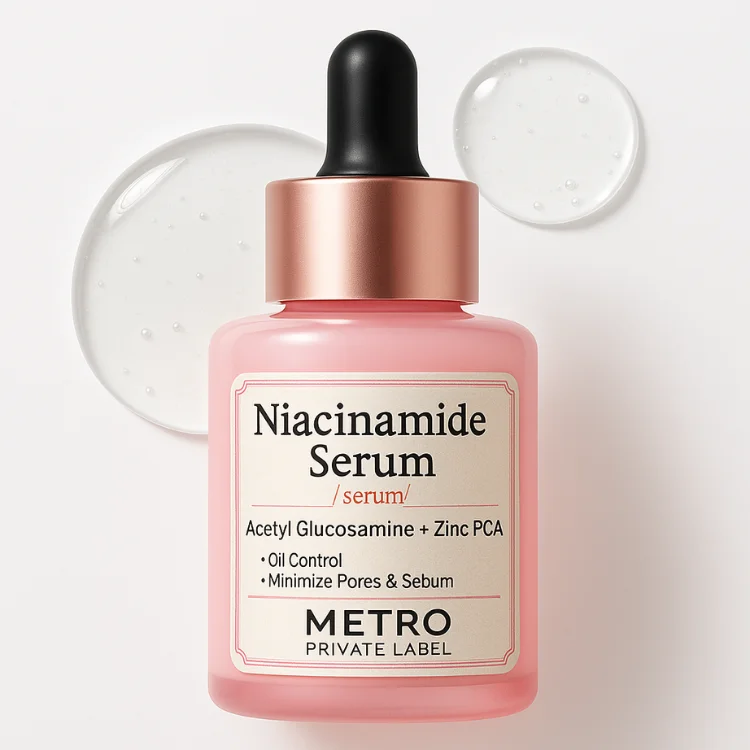
Niacinamide Serum (often 10%, with Zinc 1%)

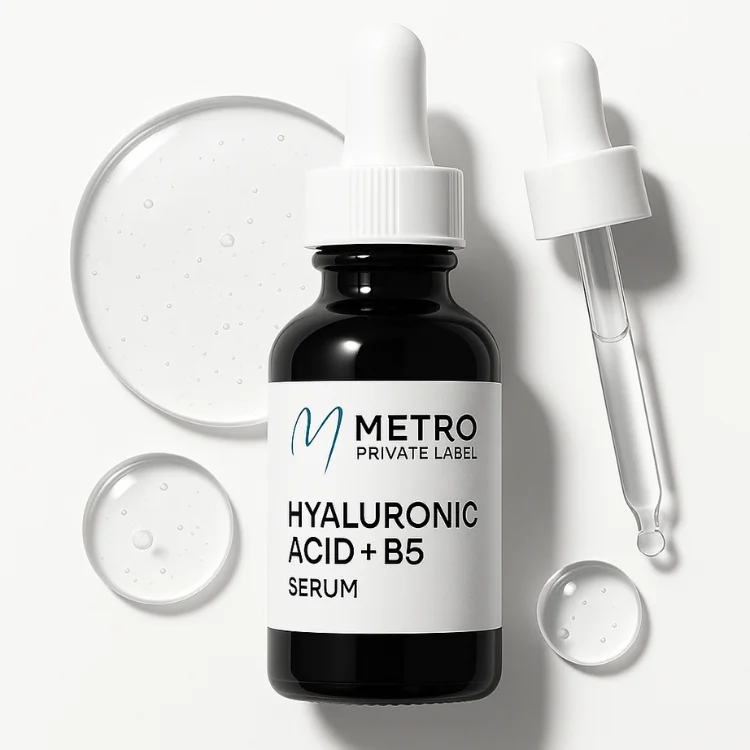
Hyaluronic Acid + B5 (often with Ceramides)

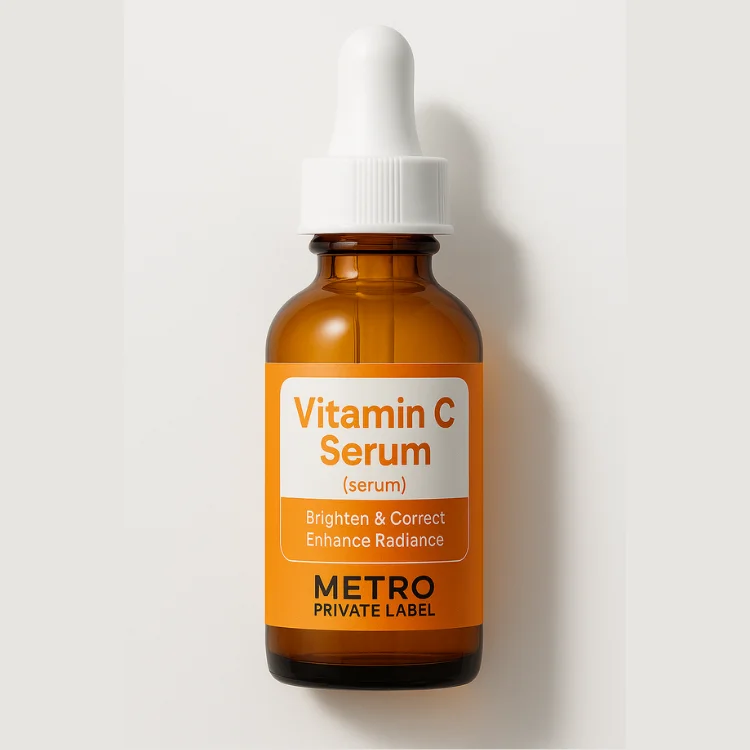
Vitamin C (with Ferulic Acid / Vitamin E)

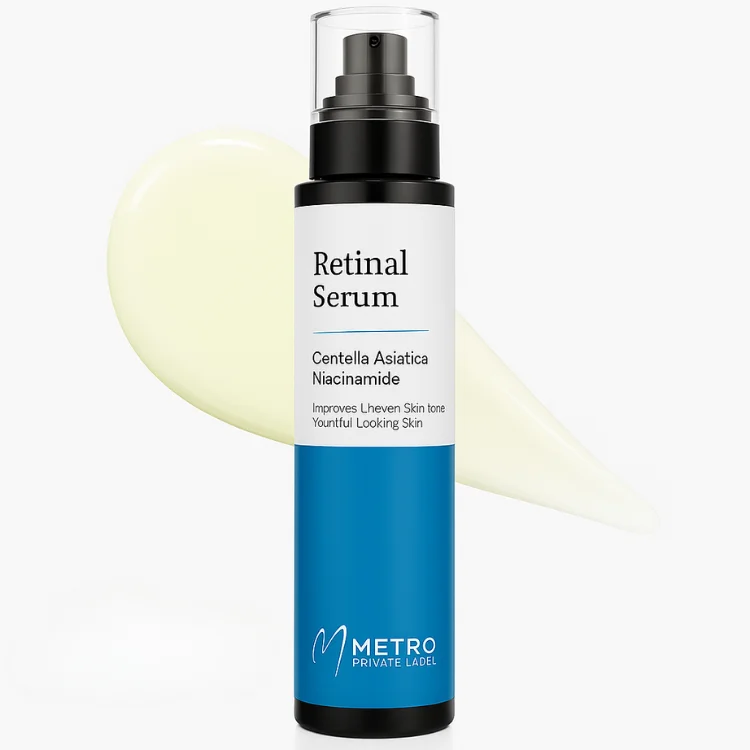
Retinol / Retinal Serum (Encapsulated / Squalane base)

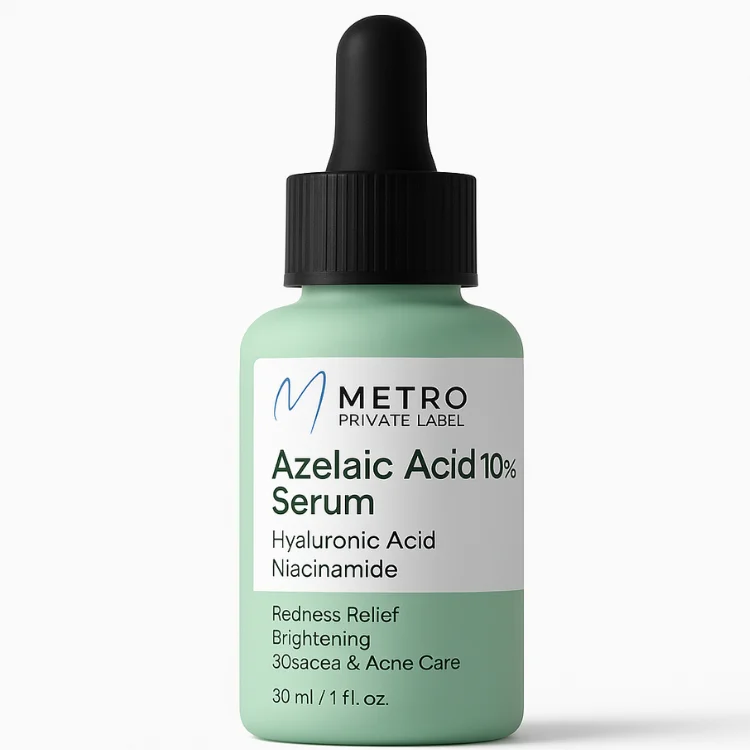
Azelaic Acid 10% (often with HA / Niacinamide)

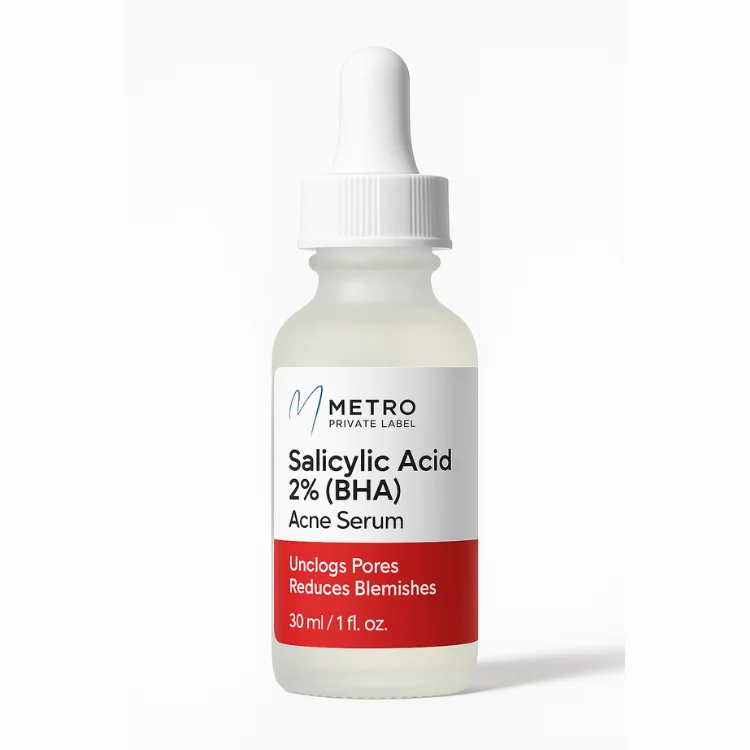
Salicylic Acid 2% (BHA) Acne Serum

Peptide / Collagen-Boosting Serum (e.g., Matrixyl, Copper Peptides)

Snail Mucin Repair Serum (often with Niacinamide / HA)

Build a Serum Line That Customers Can’t Stop Using

At Metro Private Label, we get it—serums aren’t just another skincare step. They’re the power product that gets 5-star reviews on Amazon, fuels TikTok skincare routines, and drives repeat sales for brands that want long-term growth.
 
That’s why our private label serum program is built around real results, trending actives, and formats customers actually search for—and buy again.
 
Whether you’re launching your first brand, scaling your e-commerce lineup, or upgrading a professional skincare range, we help you create serums that deliver visible transformation your customers can feel—and refuse to live without.
🧪 We Don’t Just Fill Bottles—We Build Best-Sellers
Our serum development is inspired by Amazon best-sellers, dermatologist-approved ingredients, and viral beauty trends, so the formulas we manufacture are always market-ready.
Here are just a few high-performance serum types we produce every day:
  • Niacinamide + Zinc — Pore care, oil control, brightening (The Ordinary bestseller).
  • 💧 Hyaluronic Acid + B5 + Ceramides — Deep hydration and barrier support.
  • 🌞 Vitamin C + Ferulic Acid — Brightening, antioxidant protection, dark spot care.
  • 🔄 Retinol / Retinal Serums — Anti-aging, wrinkle smoothing, skin renewal.
  • 🧬 Peptide & Collagen Boosters — Firming, elasticity, and anti-sagging.
  • 🌿 Snail Mucin / CICA Repair Serums — Barrier repair and sensitive-skin soothing.
  • Azelaic Acid / Tranexamic Acid — Redness, discoloration, post-acne marks.
  • 🧼 Salicylic Acid (BHA) Treatments — Acne control, exfoliation, texture refining.
 
🎯 We Start With Your Brand Vision—Not Just a Stock Formula
When you work with us, you’re not forced into generic bases—you’re building a product that matches your audience, positioning, and growth stage.
From day one, we support you with:
  • Custom or semi-custom formulas based on your target skin concern.
  • Ingredient upgrades using trending actives (PDRN, peptides, exosomes, niacinamide, HA).
  • Texture and absorption options (lightweight, milky, gel, oil-based, water-based).
  • Packaging and label design that tells your brand story.
  • MOQ flexibility that lets you launch lean and scale fast.
 
🚀 Launch With Confidence
We know formulation, packaging, and MOQ decisions can make or break your launch. That’s why we make everything simple, transparent, and scalable:
  • Stock packaging: 500–800 units per SKU — fast launch with custom labels.
  • Custom packaging: 5,000+ units — premium dropper bottles, airless pumps, frosted glass.
  • Compliance-ready: INCI list, COA, SDS, GMP certification.
  • Smooth reorders: scale easily once your hero SKUs start taking off.

More Than Just a Serum Manufacturer

At Metro Private Label, we don’t just make serums—we help you build products that customers rave about, retailers trust, and distributors reorder. From formulation to packaging and compliance, we guide you through every step so your line launches with confidence and long-term potential.

✅ Launch What Customers Already Search For

We track demand across Google, Amazon, and TikTok to align your serums with proven market trends. From Vitamin C, niacinamide, retinol, and hyaluronic acid to peptides, CICA, snail mucin, azelaic acid, and PDRN—we develop formulas customers actively search for and repurchase.

✅ Formulas That Sell Themselves

We create serums that solve real skin concerns: brightening dark spots, smoothing wrinkles, hydrating dry skin, repairing the barrier, calming sensitivity, or clearing acne. With trending actives like peptides, HA, niacinamide, retinol, and exosomes, your products stand out and drive repeat sales.

✅ Start Small. Scale Smart.

Our MOQ starts at 500–800 units using in-stock packaging for fast market entry. Need a premium look? We offer fully custom glass droppers, airless pumps, and serum sticks from 5,000 units. Every format is built to scale across Amazon, Shopify, spas, and retail chains.

✅ We Handle the Compliance

We make regulatory approvals easy. We provide INCI lists, COA, GMP certificates, and safety testing for US, UK, and EU markets. From stability reports to export paperwork, we manage the technical side so you can focus on branding and growth—without stress or delays.
  • METRO
  • Typical OEM factory
METROTypical OEM factory
$
/year
/year
Minimum order quantity500 units for start-up brands3,000 units for established brands
Packaging recommendationsStructural compatibility recommendations + visual templatesNot provided
Launch supportLabel compliance copy + channelThis service is not available
Sample delivery time7–14 days for samples with labelsUsually more than 30 days
Buy Now

✨ Build a Serum Line Customers Actually Trust

When you partner with Metro Private Label, you’re not just choosing a serum manufacturer—we become your beauty partner who understands what sells, what complies, and what keeps customers coming back.
Whether you’re launching your first DTC hero SKU, scaling an e-commerce catalog, or building a spa-grade range, we help you create serums that are effective, trend-driven, and built for repeat sales.
🧪 Formulas Customers Are Already Searching For
We develop data-backed, high-performance serums based on proven consumer demand across Google, Amazon, and TikTok. Popular directions include:
  • Niacinamide + Zinc — Pore care and oil control
  • 💧 Hyaluronic Acid + B5 + Ceramides — Deep hydration & barrier support
  • 🌞 Vitamin C + Ferulic Acid — Brightening & dark spot correction
  • 🔄 Retinol / Retinal — Anti-aging & wrinkle treatment
  • 🧬 Peptides & Collagen Boosters — Firming & elasticity
  • 🌿 CICA / Snail Mucin Repair — Sensitive-skin calming & barrier repair
  • Azelaic / Tranexamic Acid — Redness & hyperpigmentation care
  • 🧼 Salicylic Acid (BHA) — Acne treatment & exfoliation We’ll help you refine texture, hero ingredients, and marketing claims so your serums are market-ready for Amazon, TikTok Shop, salon retail, or distributors.
 
📦 Packaging That Sells Before They Try It
Before anyone feels your formula, they judge your packaging. We design every option to match your brand vision and target customer:
  • 💎 Frosted glass droppers for luxury brands
  • 🌱 Eco-friendly PET or recyclable airless pumps for clean beauty
  • 🎨 Custom labels, gradient finishes, and limited edition kits that tell your story From minimal clinical looks to bold prestige aesthetics, we deliver packaging that builds instant shelf appeal and boosts perceived value.
 
⚙️ Built for Fast, Compliant Growth
We’re structured for speed, flexibility, and global compliance, so you can launch quickly and scale confidently:
  • 🧪 Co-developed or ready-to-go formulas aligned with your positioning
  • 🔬 Lab samples + stability testing before mass production
  • 📝 INCI lists, COA, SDS, MoCRA / EU compliance support
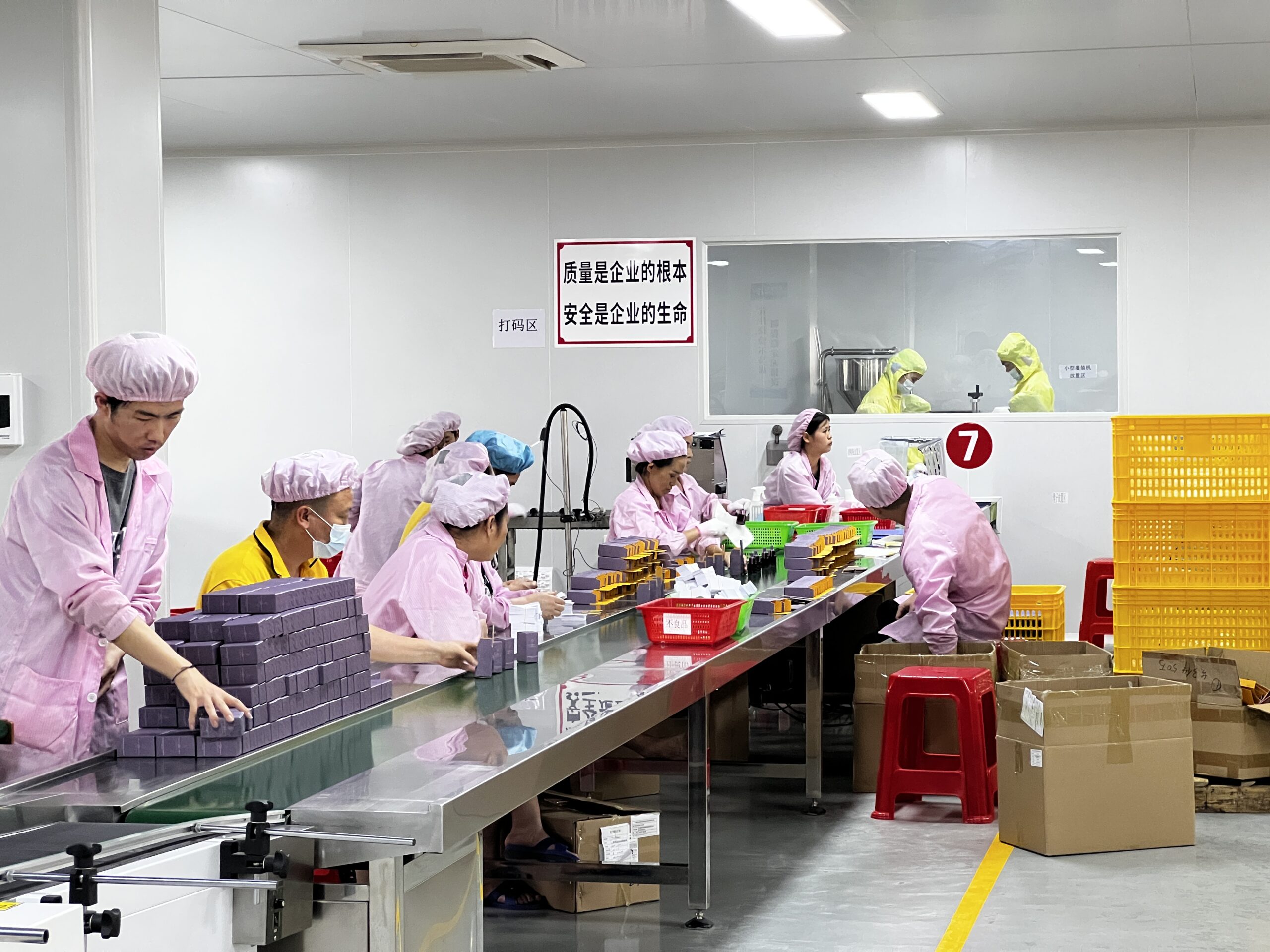
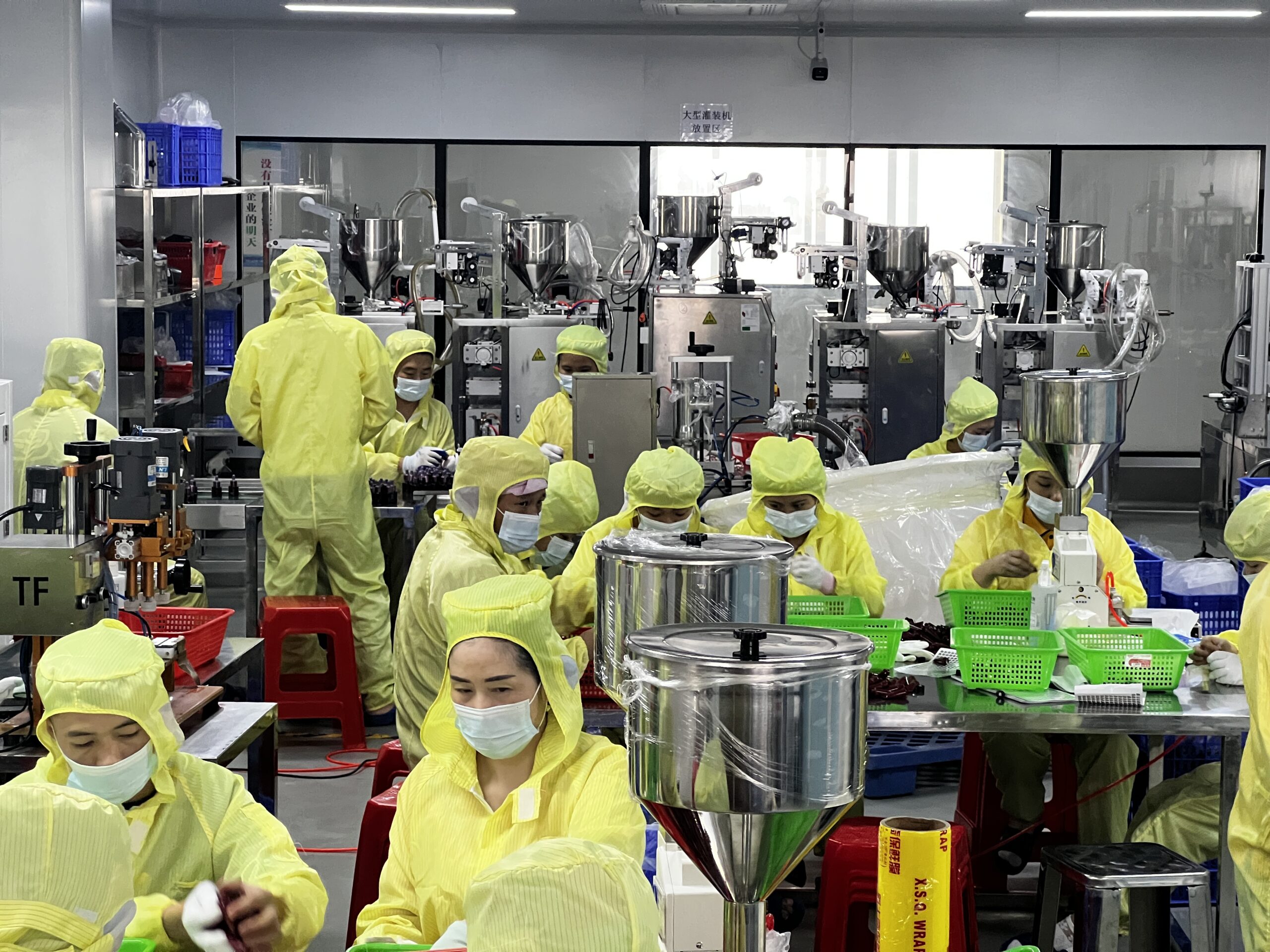
  • 🏭 Manufactured in our GMPC & ISO 22716-certified facility You get reliable quality without regulatory headaches.
 
🧴 Let’s Build a Serum Line Worth Reordering
You bring the vision—we handle formulation, packaging, production, and compliance to make it real. From one hero SKU to a full range, we help you create serums your customers trust, love, and repurchase again and again.
👉 MOQ: 500–800 units with stock packaging, or 5,000 units for custom bottles and droppers. 👉 Formats: Glass droppers, airless pumps, serum sticks, ampoules—scalable across all retail channels. Let’s create your next bestseller together.

Who We Work With (And Why They Choose Us)

Whether you’re launching your first skincare product or expanding an established line,
we provide tailored support designed to help your brand grow.

For New Brands & First-Time Founders

You’re building something special. We help you get there — fast.
 
  • Start with proven skincare formulas (serums, sunscreens, toners)
  • MOQ from 500 pcs — ideal for market testing & tight budgets
  • Standard packaging with custom label support
 
Why it works: less guesswork, faster samples, and clear next steps.

For DTC Brands Scaling on Amazon, Shopify & TikTok

You know what sells — now you need a supplier who gets it.
 
  • Trend-backed ingredients & functions (niacinamide, peptides, SPF…)
  • Packaging designed for clicks, unboxing & fulfillment
  • Modular launch kits with quick turnaround + FNSKU & label-ready setup
 
We help optimize not just production, but how it shows up online.

For Established Product Teams & Boutique Brands

When you need precision, documentation, and batch-to-batch consistency.
 
  • Semi-custom & custom development (MSDS / COA / stability support)
  • Multi-SKU coordination & project timelines
  • Packaging compatibility checks before production
 
You need a factory that speaks your language — and your audit checklists.

FAQs Serum

For your convenience, we’ve gathered the most commonly asked questions about our Serum. However, should you have any further queries, please don’t hesitate to reach out to us.
1. What types of serums can you manufacture?
We offer a full range of face serums—brightening (Vitamin C), hydrating (Hyaluronic Acid), anti-aging (Retinol, Peptides), barrier-repair (Ceramides, CICA), acne-control (Niacinamide, Salicylic Acid), soothing (Snail Mucin), and even advanced actives like PDRN or exosomes. Stock or fully custom—your choice.
Absolutely. We can adjust the active ingredients, concentration, texture, absorption speed, scent, skin type focus, and even claim strategy. Just tell us your target audience or benchmark product—we’ll create a formula that matches your positioning.
Our standard MOQ starts at 500–800 units with stock packaging (fastest and most cost-effective). For fully custom bottles or droppers, the MOQ is typically 5,000 units per SKU. We’ll help you start lean and scale smart.
Sampling usually takes 3–5 weeks, depending on formula complexity. Full production takes 4–6 weeks after sample approval and deposit. Need to launch faster? Let us know—we often accelerate timelines for DTC and seasonal launches.
Yes! Most of our serums can be made vegan, cruelty-free, fragrance-free, or clean beauty compliant. We can also follow Sephora Clean, EU standards, EWG, or any specific ingredient restrictions you need for your market.
Definitely. We handle bottle sourcing (glass droppers, airless pumps, serum sticks), label printing, artwork layout, and even branding guidance. Whether you’re aiming for a luxury, clinical, or clean beauty look—we’ll make sure your packaging sells itself.
Yes, both options. ✅ Private Label (stock formulas): Fastest, most affordable. ✅ Custom Development: Built from scratch around your vision. We’ll recommend the best path based on your budget, speed, and unique positioning.
All formulas go through stability testing, microbial testing, compatibility checks, and batch quality control. We manufacture in a GMPC & ISO 22716-certified facility and follow US, EU, and global regulatory standards to ensure safety and consistency.
Yes. We’ll help you shape compliant and compelling claims (e.g., “Fade dark spots in 4 weeks,” “Clinically tested peptides,” “Fragrance-free sensitive skin formula”), and we can provide ingredient stories and educational content to support your launch.
We work with clients in the U.S., Canada, EU, UK, Middle East, Asia, and Australia. We handle INCI lists, COAs, export documents, customs guidance, and logistics coordination. Whether it’s air freight or sea freight—we make global shipping smooth and compliant.

Metro Private Label in Numbers

Happy Clients
0 +
Million-dollar Buyers
0 +
Formulation
0 +
Professional Staffs
0 +

Your Ultimate Guide to Makeup Remover

When you decide to launch a serum—whether it’s your very first skincare SKU or the hero product in a growing beauty lineup—you’re not just choosing an active or selecting a fancy bottle. You’re defining how your brand performs. Serums sit at the heart of modern skincare routines because customers expect real results, elegant textures, and trustworthy claims. They’ll judge everything else in your line based on how this serum feels, works, and delivers.

We’ve lived inside this category for years.
At Metro Private Label, we’ve partnered with founders launching their first “hero” formula, ecommerce sellers tailoring products to win Amazon search and conversion, DTC operators using serums to drive high LTV, product managers at boutique and mid-size brands scaling successful SKUs, and global distributors who need consistent formulations with export-ready compliance. Across all of these cases, we’ve seen one pattern: serums are the most strategic product in the skincare lineup—high expectation, high margin, high opportunity.

What makes a serum truly sell (it’s more than just “10% niacinamide”), how different formats perform across channels (water-based vs. anhydrous vs. emulsion vs. ampoule), which ingredient stories are winning right now (retinal, peptides, barrier repair, brightening complexes), and how packaging decisions can protect actives or trigger returns. We also break down why compliance and claims matter more than ever (MoCRA, Amazon policy, retail approvals), and how to scale without reformulating, losing texture, or tying up cash in dead stock.

Table of Contents

How to Choose the Right Serum Base for Your Brand

When we start working with new clients on a serum project—whether you’re a first-time founder or a scaling e-commerce brand—the first decision we guide you through is this: what type of serum base makes the most sense for your brand?
Because the truth is, your base isn’t just a texture—it’s the foundation of your brand’s experience. It affects how actives are delivered, how customers feel during and after use, what your packaging options are, and how your product will be perceived in the market.
Let’s walk you through the main serum base types we formulate, test, and scale for our clients—and how we help you choose the one that sets your product up for success.
 
💧 Water-Based Serums: Clean, Clinical, Lightweight
Water-based serums are fast-absorbing, layer-friendly, and usually the go-to base for brightening, hydrating, or acne-prone skin formulas. We often recommend this base when your hero actives include niacinamide, vitamin C (ascorbic acid), azelaic acid, tranexamic acid, or hyaluronic acid—all of which require water to dissolve and work effectively.
What we love about water-based serums:
  • They absorb fast with no greasy residue
  • Perfect for a minimalist, clinical, or science-backed positioning
  • Great for layering with other skincare (which consumers love)
  • Compatible with airless pumps, droppers, and tubes
However, we also know that some clients want a more sensorial or “rich” experience. In that case, we might suggest an emulsion or oil-based alternative—but more on that below.
 
🪔 Oil-Based Serums: Rich, Restorative, Luxe
Oil-based serums are perfect when your brand wants to lean into a more nourishing, soothing, or luxurious feel. These work beautifully for sensitive skin, mature skin, and dry skin formulas—especially if you’re using plant oils like rosehip, squalane, or seabuckthorn, or oil-soluble actives like bakuchiol or vitamin E (tocopherol).
In our lab, we design oil-based serums for:
  • High-end holistic skincare brands
  • Brands targeting skin barrier repair or overnight regeneration
  • Simpler ingredient lists with a “less is more” approach
We also help you choose between dry-touch esters vs. occlusive oils, depending on how you want your serum to feel (light vs. cushiony). Oil-based serums have a natural glow finish, which many of our DTC clients love for their marketing visuals.
 
🧴 Emulsion-Based Serums: Balanced, Elegant, Layered
Now if you’re looking for a serum that offers hydration + nourishment in one, an emulsion might be your winning base. Emulsion serums are essentially a blend of oil and water, stabilized through emulsifiers, and they offer a creamy-but-light feel that works across many skin types.
We find emulsions are especially popular in:
  • K-beauty, J-beauty, and spa-focused brands
  • Brands wanting to combine peptides + oils + humectants in one formula
  • Scenarios where you want a more “milky” look for your packaging aesthetic
What’s great about emulsions is that they allow a broader formulation playground. You can combine both oil-soluble and water-soluble actives, which lets us create richer multi-functional formulas without needing to sacrifice texture or absorption.
 
🧊 Gel-Based Serums: Cooling, Calming, and TikTok-Friendly
Gel serums are having a moment—especially in TikTok/Gen Z and hot-weather markets. We develop gel textures that are fresh, water-light, and visually appealing, often paired with actives like centella asiatica, aloe vera, green tea, or niacinamide.
When clients come to us with ideas for:
  • Acne care
  • Soothing masks or spot treatments
  • “Cool on contact” sensations
…we often prototype gel-based formats. They feel great on camera, spread well, and offer a fast-dry experience that plays well under makeup or sunscreen.
We can also customize these with natural gums (like xanthan), synthetic gelling agents, or cooling polymers depending on the feel you want—whether that’s slick, bouncy, or break-into-water.
 
🔍 How We Help You Choose the Right Base
Let’s be honest—most brands we work with don’t walk in knowing which base they want. That’s our job. Here’s how we help:
  • We ask your brand questions that matter: Are your customers layering multiple steps? Do they want instant glow or matte finish? What’s your brand’s scent and texture philosophy?
  • We review your active ingredient wishlist: Some actives must go into water. Some degrade in emulsions. We help you balance effectiveness + stability.
  • We give you real, physical textures to test: We don’t just talk in theory—we create touchable samples of 2–3 textures, and invite your team to review, compare, and decide.
  • We map out your packaging options early: Some bases clog pumps. Some leak in droppers. We help you lock in your primary packaging options early to avoid surprises.
 
🧠 Why Your Serum Base Isn’t Just Texture—It’s Strategy
In our experience, choosing the right base sets the tone for your entire product line. It shapes your:
  • Brand identity (clinical, clean, luxe, eco, holistic…)
  • Marketing language (brightens vs nourishes vs calms)
  • Ingredient compatibility (what’s possible, what’s not)
  • Production and scale-up process (viscosity, fill speed, preservation)
This is why we always say: formulation starts with the base. And we’re here to make sure that choice isn’t just beautiful—it’s functional, stable, and aligned with your customer promise.
 
🚀 Ready to Prototype?
Whether you’re just starting out or refreshing an existing formula, we’d love to help you compare base types and bring your brand vision to life.
👉 Tell us your hero ingredients or target market—We’ll recommend 2–3 base types to sample. Let’s start building your best-selling serum.

Ingredient Trends in 2025–2026: What’s Hot and What’s Overdone

When new clients come to us with serum ideas, the first thing we notice is this: Everyone wants trending ingredients… but not everyone understands how to use them strategically.
As a private label serum manufacturer, we sit at the center of the conversation between consumer demand, scientific innovation, market trends, and regulatory reality. We see which ingredients shoppers are searching for, which actives actually deliver results, and which buzzwords convert into sales (or just hype).
Let me walk you through the serum ingredient landscape for 2025–2026—what’s exploding in popularity, what’s getting saturated, what’s emerging, and how we help our clients build formulas that are both scientifically credible and commercially successful.
 
🔥 CATEGORY 1: The Powerhouse “Hero” Ingredients Dominating 2025–2026
These are not just trends—they’re full-blown movements. We’re seeing them across luxury, dermocosmetic, K-beauty, and even mass retail.
 
⭐ 1. PDRN – The “Medical-Grade” Anti-Aging Star
We’ve had more PDRN serum requests in the last 12 months than in the previous 5 years combined. It’s originally used in injectables and wound healing, which gives it a powerful “medical science” appeal.
Why brands love it:
  • Boosts collagen production and elasticity
  • Speeds up skin repair (post-treatment, damaged barrier)
  • Strong anti-inflammatory and rejuvenating effect
  • “Medical-inspired skincare” = powerful marketing story
What we’ve learned: Not all PDRN is equal. True PDRN = Sodium DNA. Many brands market “PDRN” but don’t actually include it in INCI. We help clients use either Cosmetic-Grade PDRN (more affordable) or Medical-Grade PDRN (premium positioning) and remain transparent + compliant.
✅ Best used for: Luxury anti-aging, post-procedure repair, K-beauty-inspired products.
 
⭐ 2. Exosomes – The Next “Hyaluronic Acid” of Skincare?
Exosomes are tiny vesicles that deliver bioactive molecules to skin cells. They’re positioned as “intelligent cellular messengers”, which sounds futuristic and exciting to consumers.
Why exosomes are blowing up:
  • Support skin regeneration at a deeper level
  • Trending in Korea, Japan, and now US clinical spas
  • Can be derived from plants, yeast, or stem cell cultures
  • Strong storytelling: “Smart delivery system”
Our experience: We’ve tested plant-derived and biotech-derived exosomes. Stability and purity matter a LOT. We guide clients on sourcing, regulatory compliance (since some countries restrict human/stem cell sources), and pairing with peptides or PDRN for next-level results.
✅ Best for: Advanced anti-aging, barrier repair, post-laser/post-acne products.
 
⭐ 3. Peptides – But Not the Same Old Peptides
Peptides will NEVER go out of style. But 2025 is the era of next-gen peptides.
What’s trending now:
  • Signal peptides (tell skin to build collagen)
  • Copper peptides (wound healing, blue serums are trending visually)
  • Neuro-peptides (Botox-like smoothing without injections)
Why brands love them:
  • Clinical feel, luxury positioning
  • Proven science + gentle on skin
  • Perfect for aging, brightening, firming, barrier repair
  • “Lab-grade skincare without prescription”
What we do: Peptides can be unstable if pH or preservatives are wrong. We help clients build buffer systems, choose the right packaging (airless, tubes, opaque), and test stability so peptides stay active and effective.
✅ Best for: High-end anti-aging, firming, or serum systems (day/night peptide routines).
 
⭐ 4. Tranexamic Acid (TXA) – The New Gold Standard for Hyperpigmentation
Tranexamic acid has quietly dethroned high-dose vitamin C and hydroquinone in many markets.
Why it’s winning:
  • Targets dark spots and melasma at the source (prevents melanin transfer)
  • Gentle enough for sensitive skin
  • Effective on all skin tones (especially deeper tones)
  • Can be combined with niacinamide, kojic acid, azelaic acid
Our approach: We typically use 2–3% TXA depending on region regulations. We often combine TXA + Niacinamide + Botanical Extracts to create brightening serums that WORK without irritation.
✅ Best for: Brightening lines, acne-scarring serums, all-skin-tone brands, clinical formulas.
 
⭐ 5. Niacinamide – Still Powerful, But Needs Strategy
Niacinamide isn’t new, but it’s still one of the top requested ingredients by Amazon and DTC brands.
Why it still sells:
  • Brightening, anti-inflammatory, barrier-supporting
  • Reduces oil production and redness
  • Extremely well-studied and trusted
BUT… here’s the problem: Most brands still use 5–10% niacinamide, which can cause irritation. Also, every serum on the market has niacinamide. If you just launch “another niacinamide serum”, you’ll drown in competition.
How we make it DIFFERENT:
  • Use at 2–5% for gentler daily formulas
  • Pair with unique hero actives (PDRN, TXA, peptides)
  • Build a story around synergy, not just niacinamide alone
✅ Best for: Daily use serums, balancing serums, combination skin products.
 
⚠️ CATEGORY 2: Ingredients That Are Becoming Oversaturated (Or Poorly Used)
We don’t just follow trends—we prevent our clients from wasting time or blending in. Here’s what we’re cautious about in 2025–2026:
❌ 1. Generic Hyaluronic Acid Serums
Consumers are bored. Every brand has one. Unless you have multi-weight HA + supporting actives + a unique texture story, it’s just “water with marketing”.
❌ 2. Overloaded Vitamin C Formulas
The market is flooded with unstable, oxidizing vitamin C serums. Many brands don’t use proper pH systems or packaging. We guide clients to stable vitamin C derivatives or dual-chamber systems if they want premium performance.
❌ 3. “Everything in One Bottle” Serums
We get briefs asking for “Niacinamide + Retinol + Vitamin C + Acids + Peptides”. Sounds powerful—but it destroys stability and confuses the skin barrier. More actives ≠ better formula.
Our approach = 1 hero + 1 booster + 1 soothing support ingredient.
 
🌱 CATEGORY 3: Emerging Ingredients We’re Excited About
 
✅ Postbiotics & Skin Microbiome Technology
  • Supports barrier health
  • Reduces irritation, redness
  • Big in sensitive & medical-grade skincare
  • Perfect for “skin cycling” and recovery products
 
✅ Botanical Stem Cells
  • Edelweiss, Lotus, Apple, Ginseng
  • High in antioxidants
  • A “natural but scientific” positioning
  • Great for luxury, spa, or clean beauty brands
 
✅ Bio-Ferments & Enzyme Actives
  • Papain, Lactobacillus ferment, yeast filtrate
  • Exfoliate gently without acids
  • Improve texture and glow safely
  • Trending in Asian markets and making their way to US/Europe
 
🧠 The Real Secret: Trend Alone Isn’t Enough
Here’s what we tell every client:
A trending ingredient will only sell if the story, formula, positioning, and price point align with your brand strategy.
We don’t just say “Yes” to actives—we evaluate:
✅ Target market expectations
✅ Skin type & sensitivity levels
✅ Regulatory rules in your selling regions
✅ Cost vs perceived value
✅ Marketing angles (science? natural? luxury?)
✅ Competition landscape (are you first… or #5000?)
✅ Long-term supply stability for scale-up
Because anyone can chase trends. We help you build formulas that LAST.
 
🤝 How We Help You Choose the Right Actives (Our Process)
When you work with us, we guide you through a strategic active selection process:
  1. We start with your positioning
Clinical? Clean? Luxury? TikTok-viral? Medical spa grade?
  1. We look at your customer’s pain point
Anti-aging? Hyperpigmentation? Acne? Barrier repair?
  1. We create 2–3 active combinations
One “hero” version, one “balanced” version, one “cost-effective” version.
  1. We check regulatory & stability requirements
We prevent compliance headaches and formula failure.
  1. We help you build the marketing story
Science + benefits + claims + visuals = sellable product.
  1. We test real samples in your target packaging
Dropper vs pump? Gel vs emulsion? Texture matters as much as active.
 
🎯 Final Reality Check: Science vs Marketability vs Profit
We believe a winning serum formula is not just trendy. It is: ✅ Scientifically credible ✅ Market-ready ✅ Scalable in manufacturing ✅ Profitable in retail ✅ Aligned with your brand identity
And our job? To help you find that perfect balance.
 
🚀 Ready to Build a Serum That Actually Stands Out?
Whether you want to create the next viral TikTok serum, a dermatologist-trusted clinical formula, or a luxury anti-aging hero product, we’ll help you choose ingredients that are more than just trendy—they’re strategic.
👉 Tell us your serum idea or target skin concern, and we’ll recommend the smartest active combinations for 2025–2026. Let’s create something your customers will obsess over.

Understanding pH, Viscosity & Stability in Serum Formulation

Let’s be real: ingredients and packaging get all the spotlight when you’re building a serum brand. But if there’s one thing we’ve learned after formulating hundreds of custom and white-label serums, it’s this—your product will only succeed long-term if you get the basics right.
That means mastering three technical fundamentals from day one: pH, viscosity, and stability.
At Metro Private Label, we’ve built our formulation and QC process around making sure your serum doesn’t just look beautiful, but also behaves beautifully—in transit, on the skin, and over time. Here’s a deeper look at how we approach each factor, and why it matters far more than most founders realize.
 
pH: Why This Invisible Factor Dictates Whether Your Serum Actually Works
Let’s start with pH. You can’t see it, smell it, or feel it—but it plays a critical role in ingredient efficacy, product safety, skin compatibility, and shelf life.
We test pH on every single prototype we develop, not just to “check the box,” but because different actives thrive in different environments, and if your pH isn’t aligned with your formula goals, the whole thing can collapse quietly in the background.
 
💡 What happens if pH is too low or too high?
  • Vitamin C (ascorbic acid) becomes unstable above pH 3.5 and loses potency fast
  • Peptides can break down in low pH formulas (common mistake!)
  • Poor pH control can lead to preservative failure, opening the door to mold and bacteria
  • High pH (above 6.5) can irritate the skin and trigger negative reviews
🧪 Here’s what we do:
When you give us your ideal actives, we immediately map out their optimal pH zones. For example:
  • Acids and brightening agents → pH 3.2–4.0
  • Peptides, ceramides, panthenol → pH 5.0–6.0
  • Enzyme-based ferments → pH 4.5–5.5
Then we buffer the formula accordingly so pH doesn’t drift over time. We also help you understand how pH affects marketing claims—for example, you can’t legally call something “acid-based exfoliating” if it’s not under pH 4.
🧾 Real case:
One of our clients wanted a triple-action serum: vitamin C + tranexamic acid + peptides. But those three actives all required different pH ranges to remain stable. So we worked with them to split the concept into two synergistic serums (AM/PM routine), each optimized for pH, so they could still sell the combo—but with better efficacy and no formula compromise.
 
Viscosity: The Unsung Hero of User Experience, Packaging, and Perceived Quality
Viscosity is the “thickness” or “flow” of your serum, and it shapes almost every interaction your customer has with your product.
It affects:
  • How smoothly the serum dispenses from the dropper or pump
  • How fast it absorbs or sits on the skin
  • How the product feels—light and watery, or rich and cushiony
  • Whether it leaks, separates, or sticks during transport
And from our perspective, viscosity directly impacts how your serum is perceived in terms of “luxury feel”.
🔍 How we work with viscosity:
In our lab, we measure viscosity in centipoise (cP) and create benchmarks based on category and packaging:
Texture TypeTarget cP RangeTypical Packaging
Watery serum5–50Dropper, fine mist
Classic fluid serum100–300Dropper, airless pump
Gel-like texture400–800Pump, tube
Lotion-emulsion1000+Tube, jar, pump
If your viscosity doesn’t match your packaging, you end up with:
  • Droppers that clog or under-dose
  • Serums that leak in transit
  • “Too runny” or “too sticky” complaints in reviews
  • Increased return rates due to poor sensory feel
👨🔬 Real scenario:
A startup client came to us with a watery 25cP formula and wanted to use a glass dropper bottle. It looked elegant in pictures—but 20% of customers reported spills and “messy” use. We reworked the viscosity to 150cP using a natural thickener blend (no silicones), optimized the fill speed for their machinery, and added a slight cushion feel. Return rate dropped by 80%—and reviews praised the “luxury feel.”
 
Stability: Your Formula’s Long-Term Health Insurance
Let’s say you nailed the ingredients, pH, and viscosity. Now ask: Will this serum still look, feel, and perform the same after 3 months? After sitting in a warehouse? After going through an overseas shipment in August?
That’s where stability testing comes in—and we treat it as non-negotiable.
 
🧬 What we do in our stability testing protocol:
  • Temperature cycling (4°C → 25°C → 45°C over 6 weeks): simulates global shipping and storage
  • Light exposure simulation: critical for clear packaging and sensitive actives (vitamin C, ferments)
  • Freeze-thaw cycles: identify issues in cold-chain shipping or winter climates
  • pH + viscosity re-tests every 7–10 days
  • Packaging compatibility: we test plastic (PET, HDPE, PP), glass, and metal on all new formulas
🧾 Real example:
For one of our luxury EU clients, we created a dual-phase brightening serum with sensitive ferments and botanical oils. During our simulated stability tests, we noticed minor separation after 30 days at 45°C.
Instead of risking a post-launch recall, we:
  • Adjusted the emulsifier ratio
  • Ran 14-day micro and preservative testing
  • Confirmed 6-month stability at all conditions → Their product passed EU, UK, and GCC market requirements—and was featured in multiple press reviews as “flawless formulation.”
 
🧩 Why Founders and Brand Operators Should Care About This
We know these technical topics can sound boring—especially when you’re trying to design a hero product or grow your DTC sales. But here’s the truth:
Your pH affects your claims and ingredient performance. Your viscosity affects packaging, reviews, and perceived quality. Your stability affects your margins, your return rate, and your brand’s long-term trust.
Getting these wrong means your serum might separate, oxidize, smell off, or become ineffective—all while sitting in a customer’s bathroom.
Getting these right means you win repeat buyers, strong reviews, and the confidence to scale.
That’s why, at Metro Private Label, we treat pH, viscosity, and stability as critical control points, not afterthoughts. We work closely with each client to align lab science with brand storytelling—so you get a formula that works on every level.
 
🚀 Want to Test Your Formula for Real-World Success?
Whether you’re formulating from scratch or upgrading an existing serum, we’ll walk you through:
  • Ideal pH range based on your actives and claim
  • Target viscosity profile for your packaging + texture goals
  • Custom stability protocol for your launch region and supply chain
👉 Send us your current brief—or even just your dream serum idea—and we’ll start engineering a lab-tested formula built for scale. Let’s build a serum that doesn’t just look good on a shelf, but actually performs on the skin.

Clean, Clinical, or Cosmeceutical? Positioning Your Serum for Your Market

When clients approach us to develop a serum, one of the first things we ask isn’t “What ingredients do you want?”—it’s: “What kind of brand do you want to be?”
Because in today’s saturated skincare landscape, a serum is not just a formula—it’s a statement. It’s how your customers decide whether you belong in their shopping cart. Whether you earn a second glance on a shelf. Whether they trust you over the other 13 open tabs they’re comparing.
At Metro Private Label, we help brands define that positioning—Clean, Clinical, or Cosmeceutical—and then we reverse-engineer every aspect of the product: formula, packaging, claims, even scent and texture—so everything aligns with your vision, your customers’ expectations, and your target retailers’ requirements.
Let’s break down the differences, and I’ll walk you through how we tailor each serum to feel and function like a perfect match for your market.
 
🌱 Clean Beauty: Simple, Honest, and Ingredient-Conscious
If you want your brand to communicate purity, transparency, and natural integrity, clean beauty is your path.
We’ve helped many founders build clean beauty lines that prioritize:
  • Short, readable ingredient lists
  • No synthetic fragrance, colorants, or parabens
  • Vegan, cruelty-free, non-toxic standards
  • Compliance with Sephora Clean, Credo, or Whole Foods Body Care guidelines
  • Aesthetic that speaks “minimal but premium”: frosted glass, matte white, soft pastel tones
For these brands, the packaging is often as important as the formula. Think: kraft paper boxes, FSC-certified labels, or refillable airless systems.
 
🔬 How we formulate “clean” serums:
We start by understanding what “clean” means to your brand—because let’s face it, this term is still evolving.
  • We avoid PEGs, silicones, ethanol, and petrochemicals
  • We choose plant-based humectants like betaine, sugarcane squalane, and sodium PCA
  • We use natural emulsifiers like lecithin, cetearyl glucoside, or gums
  • For preservation, we focus on EcoCert-approved systems (e.g., potassium sorbate + glyceryl caprylate)
  • We support low-pH formulas with natural acids, like lactobionic or gluconolactone
One of our favorite clean projects? A UK-based zero-waste brand that asked us to design a “3-ingredient brightening serum” for sustainable refill packaging. We delivered a minimalist, pH-stable blend of 5% niacinamide, 1% licorice root extract, and fermented radish preservative—no filler, just function. Their refill rate now exceeds 60%.
 
⚕️ Clinical / Derm-Grade: Proven Actives, Visible Results
On the opposite end of the spectrum, some brands want to lean heavily into science-backed skincare. If your goal is to build trust through data, dermatology alignment, and visible results, then clinical positioning is the right lane.
Clinical doesn’t mean boring—it means purpose-built formulas that work, backed by peer-reviewed ingredients, tested for irritation, and compatible with medical channels like:
  • Dermatologist offices
  • Medspas
  • Amazon DTC
  • Distributors looking for strong before/after efficacy
These brands often use sterile, no-nonsense aesthetics—white, navy, charcoal, or metallics. Tubes, airless pumps, and precise dosage droppers are preferred over jars or luxury glass.
 
🔬 How we formulate clinical-grade serums:
When we develop a clinical serum, we start by defining the hero actives and their clinical dose range. For example:
  • Azelaic Acid at 10% needs pH ~4.5 and micro-size adjustment to reduce grittiness
  • Tranexamic Acid at 3% needs to be stabilized in a gel or emulsion, not a watery serum
  • Signal peptides or EGF must avoid low-pH environments or harsh preservatives
We test every prototype against:
  • Stability in high heat (40–45°C)
  • pH drift across 90 days
  • Preservative challenge (ISO 11930)
  • Dropper or pump flow rate vs viscosity
And we support claims development with studies, literature, and labeling language that’s FDA/MoCRA/CPNP aligned.
An example: We developed a dual-active serum for melasma featuring 2% TXA and 5% niacinamide in a fragrance-free, clear gel base. The client was preparing for distribution in UAE and EU markets, so we ran challenge tests, micro, and freeze/thaw cycles, and helped them draft claims like “Helps visibly fade dark spots in 6–8 weeks”. This product is now stocked in 28 medspas.
 
✨ Cosmeceutical / Luxury Natural: Where Nature Meets Innovation
This is the category that bridges both worlds: brands that want science-backed results, but with a luxury sensorial experience.
We love building cosmeceutical serums. They often feature:
  • High-efficacy actives like peptides, exosomes, or fermented ingredients
  • Botanical stem cells or flower distillates for softness and brand story
  • Silkier textures, emulsions over gels, subtle scent from real essential oils
  • Premium packaging—amber glass, gold foils, minimal labeling, tactile dropper bottles
The customers in this segment are paying not just for results, but for experience. Texture, scent, absorption, finish—it all matters. Many of these brands position their products as “skin rituals”, not just skincare.
 
🔬 How we formulate cosmeceuticals:
  • We balance hero actives (peptides, PDRN, TXA) with emotional botanicals (rose hydrosol, green tea, edelweiss stem cells)
  • We control viscosity and finish to hit that “glide but absorb” feel
  • We work with transparent essential oil blends, no synthetic fragrance
  • We test compatibility with frosted glass, metallic droppers, and airless chambers
  • We often include a luxury texture enhancer, like silk protein, tremella mushroom, or fermented rice filtrate
We recently worked with a Dubai-based spa brand that wanted a rose gold anti-aging serum featuring real 24k gold shimmer, EGF, rose stem cells, and a neroli-peony natural fragrance. It was housed in a frosted airless pump bottle with silk screen gold foil—and retailed at $105 per unit.
 
🧩 Why Defining Positioning Early Makes Everything Easier
This isn’t just about aesthetics. Your positioning affects:
  • Which ingredients are allowed or expected
  • Which retailers you’ll have access to
  • How customers interpret your packaging
  • What claims are safe (or even legal) to make
  • Your price point and margin expectations
  • The formulation complexity you’re signing up for
When you define whether your serum is clean, clinical, or cosmeceutical—you’re not just deciding how it looks. You’re deciding how it performs, where it sells, who buys it, and how your brand is remembered.
And the earlier we define that together, the smoother your development process will be.
 
🤝 How We Match Formulas to Brand Identity
Here’s how we do it:
  1. We listen to your brand voice and values. What do you stand for? What’s non-negotiable?
  2. We study your customers. Are they ingredient nerds, self-care seekers, or skeptical buyers?
  3. We map your goals. Launch speed? Retail shelf? PR buzz? Amazon domination?
  4. We build three formula pathways based on your positioning:
    1. Hero version (high-efficacy, high-cost)
    2. Balanced version (mid-tier)
    3. Scalable version (cost-optimized)
Every decision—from dropper size to emulsion system—is rooted in your positioning strategy.
 
🚀 Ready to Build a Serum That Reflects Your True Brand?
Whether your vision is clean and minimalist, science-led and clinical, or indulgent and botanical, we’re here to help translate your brand into a high-performance serum your customers will come back for.
👉 Share your brand deck, mood board, or just a rough idea—and we’ll build a formulation blueprint to match. Let’s create something your market not only wants, but remembers.

Label Claims & Regulatory Guidelines You Must Know

When clients come to us excited to launch their private label serum, they often say things like:
“Can we say it’s anti-aging?” “I want to put ‘whitening’ on the front.” “Can we call it medical-grade?” “Do I need to list every ingredient in INCI format?”
We totally get it—marketing a skincare product today means striking a delicate balance between aspiration and regulation. But if you’re not careful, what sounds great on a label could quickly get your product flagged by Amazon, retailers, customs, or regulators.
At Metro Private Label, we help our clients navigate these waters safely and confidently—especially when you’re planning to sell in the U.S., EU, UK, or the Middle East, where the rules around skincare claims and labeling vary dramatically.
So let me walk you through what you can say, what you shouldn’t say, and how we help you build labels that sell—without crossing legal lines.
 
🇺🇸 United States: MoCRA, FDA, and the Cosmetic vs. Drug Line
In the U.S., the FDA does not pre-approve cosmetics, but they do regulate claims. The key distinction is this:
If your product is marketed to treat or alter a bodily function, it becomes a drug. If it’s about appearance only, it can remain a cosmetic.
Here’s a cheat sheet:
❌ Avoid Saying✅ Say Instead
“Treats acne”“Helps reduce visible blemishes”
“Whitens skin”“Visibly brightens skin tone”
“Removes wrinkles”“Softens the appearance of fine lines”
“Heals eczema”“Soothes dry, irritated skin”
“Boosts collagen”“Improves skin firmness”
The FDA’s updated MoCRA (Modernization of Cosmetics Regulation Act) now requires:
  • Mandatory adverse event reporting
  • Responsible person on file (usually the brand or distributor)
  • Product facility registration
  • Ingredient safety substantiation
That’s why we keep detailed formulation records, CoA files, and help clients prepare ingredient dossiers for compliance. We also help build MoCRA-ready labels with required warnings, batch codes, and INCI names.
📝 Real example:
One of our DTC clients wanted to claim “anti-melasma” on their label. We guided them to instead say:
“Formulated with tranexamic acid to help visibly fade discoloration and uneven skin tone.” Same selling point—now legally safe.
 
🇪🇺 European Union: CPNP, INCI, and Evidence-Backed Claims Only
The EU is strict—and clear: every claim must be substantiated, and marketing must not mislead.
In the EU, your serum:
  • Must be registered on the Cosmetic Product Notification Portal (CPNP)
  • Must be supported by a Product Information File (PIF)
  • Must have a responsible person based in the EU
  • Must only include permitted cosmetic claims under EU Regulation 655/2013
What this means practically:
  • You can’t say “anti-acne” unless you have clinical proof
  • You can’t use “medical terms” (no “prescription strength,” “injectable alternative,” etc.)
  • You must list all ingredients in INCI format, descending by weight
Here are some compliant examples:
❌ Non-Compliant✅ Compliant
“Cures rosacea”“Reduces the look of redness”
“Boosts collagen levels”“Improves the look of skin firmness”
“Eliminates wrinkles”“Helps reduce appearance of wrinkles”
We help our clients create EU-ready PIF documentation, including stability, micro, and packaging compatibility. We also provide claim matrices where we map each proposed claim to a study or active supplier file—so when you say it “firms,” you’ve got the proof.
 
🇬🇧 United Kingdom: Post-Brexit, but Similar to EU
Since Brexit, the UK requires its own:
  • Responsible person based in the UK
  • Notification through the UK Submit Cosmetic Products service
  • Full compliance with UK Cosmetic Products Enforcement Regulations 2013
The claims rules? Still closely aligned with the EU. If you pass EU, you’ll usually pass UK—but the registration process is separate.
We guide clients through dual listings for CPNP + UK portal when they plan to sell across both regions.
 
🌍 Middle East (UAE, Saudi Arabia, GCC): Imports, Arabic Labels & Certification
Here’s where things can get tricky. Selling in the Middle East requires understanding local nuances in:
  • Language requirements (bilingual English + Arabic labels)
  • Ingredient restrictions (some essential oils or alcohols flagged)
  • Cultural preferences (“whitening” is still requested by buyers, but needs careful phrasing)
  • Packaging compliance (outer carton, sealed caps, expiry clearly printed)
Depending on the country, you may also need:
  • SASO certification for Saudi Arabia
  • Montaji registration for Dubai
  • Country-specific importer documentation
What we help you do:
  • Translate your label copy into proper Arabic (no AI mishmash!)
  • Flag problematic claims like “bleaching,” and replace with “brightening,” “tone evening,” or “radiance-enhancing”
  • Format your INCI list + packaging so it passes port inspection (especially if your product contains alcohol or acids)
A Middle East client once asked us to create a “whitening and anti-wrinkle serum.” Our final product label said:
“Enriched with niacinamide and peptides to visibly brighten dull areas and soften signs of aging.” → Passed SASO, no delays at customs, and secured 3 retail chains.
 
🧾 What We Put On Your Serum Labels (The Right Way)
Here’s what we include (and double-check) for every serum project:
  1. Front label claims: We help you shape 1–2 compliant and strategic phrases that speak to your buyer’s need—but stay within regulatory lines.
  2. INCI list (back label): Listed in descending order, using the correct international ingredient names, including colorants and preservatives.
  3. Batch code and shelf life: For tracking and compliance.
  4. Manufacturer or brand address: Often both are required.
  5. Warnings (when needed): “Avoid eye contact,” “External use only,” or UV warnings if using vitamin A derivatives.
  6. Allergen declarations (especially for EU): If you’re using essential oils or fragrance components.
  7. Net contents in ml
  8. Language requirements: English + local language (EU: multiple languages depending on country, UAE: Arabic)
 
🔍 Claim Language: Strategic AND Legal
We always tell our clients: You don’t have to sound boring to be compliant.
We help you find ways to describe your product that:
  • Stay within cosmetic claim regulations
  • Reflect your brand voice (clean, clinical, or cosmeceutical)
  • Actually help consumers understand the benefits
  • Pass retailer, customs, and platform requirements
Instead of just “brightening serum,” we might write:
“A lightweight serum with niacinamide and tranexamic acid to visibly reduce discoloration and promote an even skin tone.”
Instead of “anti-aging,” we’ll say:
“Formulated to soften the look of fine lines and improve skin elasticity with clinically studied peptides.”
 
🛡️ Our Label & Regulatory Support Services Include:
  • Label claim audit and editing
  • INCI formatting and allergen flagging
  • US MoCRA and EU PIF readiness
  • CPNP + UK submission guidance
  • Arabic translation and packaging formatting for Middle East
  • Document prep for customs and port clearance (COA, MSDS, Ingredient List, etc.)
When you work with us, you’re not just getting a formula—you’re getting global market readiness built in.
 
🚀 Ready to Build a Serum That’s Fully Compliant & Market-Ready?
Whether you’re selling in the U.S., EU, UK, Middle East—or across all four—we’re here to help you get every claim, label, and requirement just right.
👉 Send us your draft label or marketing brief—we’ll review and guide you on compliant, high-converting claims. Let’s make sure your serum gets to market—and stays there.

Pricing Models & Profit Margins for Serum Brands

When a new brand founder comes to us and says, “I want to create a serum that retails for $30–$40,” our immediate question is: “Great—what’s your expected cost structure, and where are you selling it?”
Because the truth is, there’s no one-size-fits-all answer when it comes to skincare pricing. Whether you’re launching on Shopify, selling on Amazon FBA, pitching to retailers, or working with international distributors, your serum pricing model needs to work backward from your actual costs—and forward into your real margins.
At Metro Private Label, we don’t just help you make a serum that feels amazing and looks high-end—we help you design your cost structure and pricing logic so that you can actually make money while staying competitive in your category.
Let me walk you through how we help clients understand EXW vs. landed cost, build channel-specific pricing tiers, and structure real-world markups that turn a $3 serum into a profitable $35 hero SKU.
 
🏭 Step One: Know Your Real Costs—EXW vs. Landed Cost
Let’s start with the basics. When we quote you a serum, the first number we usually give you is the EXW price—which stands for Ex Works, or the cost to manufacture your finished product at our factory.
This includes:
  • All active and base ingredients
  • Mixing, filling, capping, labeling
  • Your primary packaging (bottle + label + box, if included)
  • Batch-level QC and documentation
For a standard 30ml serum, we typically help clients hit EXW costs between $2.80–$5.50, depending on complexity. A minimalist niacinamide serum might cost around $3.20. A peptide-rich anti-aging serum with rose stem cells and gold shimmer? More like $6.50–$8.00.
But EXW is only part of the picture. You still need to factor in:
  • Freight cost (air or sea)
  • Customs and import duties
  • 3PL warehouse receiving & prep
  • Amazon labeling, bundling, or storage fees (if applicable)
We call this the landed cost—the total cost per unit once it’s physically in your hands or your fulfillment center.
So if your EXW is $3.25, and you add $0.40 for sea freight, $0.25 for customs, $0.30 for labeling, and $0.20 for local warehouse handling—you’re looking at a real landed cost of $4.40 per unit.
This number is what we use to calculate profit margins—and it’s the baseline for your pricing model.
 
🛒 DTC, Amazon, or Wholesale? Your Pricing Model Depends on Where You Sell
Once we’ve confirmed your landed cost, we help you map out pricing for each of your distribution channels—because every channel comes with its own fee structure, risk profile, and margin expectations.
 
1. Direct-to-Consumer (DTC) Pricing: Shopify, WooCommerce, TikTok Shop
If you’re selling through your own store, you keep the largest share of the sale—but also shoulder the costs of traffic, fulfillment, and packaging.
For DTC brands, we generally recommend:
  • 4–6X markup over landed cost
  • Final retail price between $28–$55 per serum
  • Room for discounting (launch promo, bundle, subscription)
  • A cost structure that absorbs ad spend, email retention, fulfillment, and returns
Here’s a sample breakdown we recently did for a clean beauty client:
Line ItemCost
Landed cost$4.40
Outer mailer & inserts$0.90
Shopify + Stripe fees$1.75
3PL pick/pack + postage$3.25
Facebook/IG CAC (avg.)$7.50
Total cost to sell$17.80
Selling price (retail)$35.00
Net margin~$17.20 (~49%)
We help clients build bundle strategies (e.g., Serum + Toner Kits), loyalty incentives, and email flows to drive up AOV and LTV—so you’re not just profitable, but scalable.
 
2. Amazon (FBA or FBM): High Volume, Lower Margins, Tighter Math
Amazon is one of the most powerful channels for serum brands, but it also comes with:
  • 15% referral fee off retail price
  • FBA storage + fulfillment costs (~$3.50–$4.50 per unit)
  • Additional PPC budget to gain visibility
  • Limited brand experience control
We typically recommend Amazon brands aim for a retail price between $25–$45, with landed cost under $5, and a minimum 40% net margin after fees and ads.
Here’s what that looks like in practice:
Line ItemCost
Landed cost$4.20
Amazon FBA fee$3.80
Referral fee (15%)$5.25 (on $35)
Amazon PPC (avg.)$4.00
Total cost to sell$17.25
Selling price$35.00
Net profit~$17.75 (50%)
We guide our Amazon clients on packaging optimization, insert card compliance, review follow-up, and Subscribe & Save pricing to maximize return per order.
 
3. Wholesale & Distributor Pricing: Lower Margins, Bigger Volumes
If you’re planning to work with salons, spas, retailers, or international distributors, expect to offer 40–60% off your MSRP.
That means a serum retailing at $35 may wholesale for $14–$18. Distributors will often request even lower pricing for bulk orders or exclusivity.
Here’s what we do to help:
  • Build tiered price lists by MOQ: 500 / 1,000 / 5,000+
  • Offer lower-cost SKUs with more affordable packaging
  • Design display-ready packaging for retailers
  • Provide full COA, INCI, and export documents for customs clearance
One of our Gulf clients buys serums at $3.60 EXW, ships via DDP sea freight, and wholesales them to pharmacies at $11.50. They retail at $32. That’s 68% gross margin at retail, and over 200% profit at wholesale.
 
🧪 Real Case Study: From $3.30 to $35—Without Compromising Feel
A U.S. DTC brand came to us asking, “Can we make a luxury-feeling brightening serum that costs under $4 and retails for $35?”
Here’s what we delivered:
  • Formula: 5% niacinamide + 2% tranexamic acid + 3% licorice root + low-weight hyaluronic acid
  • Packaging: Frosted 30ml glass bottle, matte label, textured paper box
  • EXW: $3.30
  • Landed cost (air freight, FBA, labeling): $4.70
  • Retail: $35
  • Net margin (after Amazon fees + ads): ~$17.50 per unit
  • Monthly reorder: From 1,000 to 3,000 units in 4 months
They now have a second SKU in development and bundle both into a “Day & Night Routine Kit” that retails for $65 and costs under $10 landed.
 
📊 How We Help You Optimize Pricing from Day One
When you work with us, we help you:
  1. Break down your landed cost with real shipping quotes
  2. Map out pricing models for each channel—Shopify, Amazon, Wholesale
  3. Select packaging that supports your positioning and margins
  4. Create multi-SKU strategies (like a low-cost hero and a premium booster)
  5. Forecast profits with tiered MOQ scaling—so you know what happens at 500 vs 5,000 units
  6. Adjust formula cost-efficiency without sacrificing performance
Because we don’t believe in building serums that just exist. We build serums that sell, scale, and leave you room to reinvest.
 
🚀 Ready to Build a Serum That Actually Makes You Money?
Whether you’re trying to hit a $25 price point or scale a $120 cosmeceutical line, we’ll guide you through realistic margin planning, channel-specific pricing models, and smart formula/packaging pairing—so your serum looks premium and performs profitably.
👉 Send us your target MSRP or budget, and we’ll reverse-engineer your ideal cost structure—from formula to packaging to shipping. Let’s make your serum a bestseller and a business win.

From Sample to Scale: A Timeline for Launching Your Private Label Serum

When founders come to us with a great serum idea, one of the first questions they ask is:
“How long will it take to go from sample to production—and start selling?”
And our honest answer is: it depends on how ready you are, how decisive you can be, and how clearly we map out each stage together.
At Metro Private Label, we’ve helped hundreds of skincare entrepreneurs, brand operators, and distributors launch their first—or fifth—serum. Some wanted a fast 45-day turnaround with in-stock packaging. Others built a fully customized luxury line that took closer to 120 days.
But no matter the budget or ambition, our role is the same: to walk with you from the first drop of a lab sample to your first shipment leaving the dock.
Let’s break it down step by step, with realistic timelines, what happens at each phase, and how we keep everything moving smoothly.
 
🧪 Stage 1: Sample Development (Estimated: 7–21 Days)
This is where the magic begins. You come to us with your product idea—maybe it’s inspired by a best-selling competitor, a trending ingredient on TikTok, or your own customer’s skincare concerns.
From there, we help you translate that idea into a real, working formula. Here’s what happens in this phase:
  • We confirm your target skin concern, texture preference, and actives wishlist
  • Our chemists build a formulation blueprint based on your positioning and claims
  • We create 2–3 sample versions so you can test different textures, scent profiles, or active %
  • We send out physical samples (INCI list included) for your team to test and review
🧭 What delays this phase? Too many rounds of back-and-forth. We recommend you stick to 2 rounds of sampling max. We’ll guide you toward a clear “go” formula so we can keep moving forward.
Standard turnaround:
  • First round: 7–10 working days
  • Second round (if needed): 5–7 working days
  • Shipping time (via FedEx/DHL): 3–5 days depending on region
This means if you’re clear and decisive, you can lock in your formula within 2–3 weeks.
 
🎨 Stage 2: Packaging Selection & Label Design (Estimated: 10–30 Days)
While your formula is being finalized, we start work on the outside of your product—because in skincare, packaging is part of the product experience.
At this stage, we’ll help you:
  • Choose from our stock bottle options (fastest) or explore custom packaging (longer lead time)
  • Decide on label material, finish, and adhesive
  • Design your bottle label and outer box layout—we can handle this in-house or work with your designer
  • Confirm bottle volume, fill level, and viscosity compatibility (we test this for you)
We also make sure your packaging is:
  • Functional (pump vs. dropper, no clogging)
  • Brand-appropriate (clinical, clean, luxury)
  • Cost-aligned (so your packaging cost matches your target retail price)
🧭 What delays this phase? Waiting too long to approve packaging. We always recommend locking packaging by the time your formula is approved—that way, we can begin preparing production components right away.
Timeframes:
  • Stock packaging (from our ready inventory): 10–15 days
  • Custom printed boxes or bottles: 20–40 days depending on finishing (foil, embossing, matte lamination)
 
📋 Stage 3: Label Compliance & Regulatory Review (Estimated: 5–10 Days)
Before we go into production, we make sure your labels and box design are fully compliant with your destination market.
Here’s what we do in this stage:
  • Verify your INCI list (correct order, INCI names, allergens if needed)
  • Review your front-facing claims (to make sure they meet FDA, MoCRA, EU 655/2013, or GCC guidelines)
  • Confirm the right warnings and usage statements are included
  • Add batch coding, expiration date formatting, and importer address if needed
  • Help you prepare multilingual layouts (English + Arabic for Middle East, or 3–5 languages for EU markets)
We’ll also prepare documents like:
  • COA (Certificate of Analysis)
  • Ingredient Declaration Sheet
  • MSDS/SDS
  • Packaging Specs
  • Testing Summary (micro, stability if needed)
🧭 What delays this phase? Using unverified claims (e.g. “anti-eczema,” “medical-grade”) or missing regulatory data. We offer pre-built claim templates to help you avoid rewrites.
Timeline: 5–10 days (assuming no major content changes)
 
🏭 Stage 4: Batch Production (Estimated: 15–30 Days)
Once your formula and packaging are approved, we schedule your serum for full production in our GMPC and ISO-certified facility.
This is what happens in the factory:
  • We order and receive your raw materials (some specialty actives have longer lead times—plan accordingly)
  • We prepare the batch according to your approved formula, under quality-controlled conditions
  • The bulk is stability checked, pH/viscosity tested, and preserved
  • We then fill, cap, label, and shrink-wrap each bottle
  • Boxes are folded, inserted, and sealed (if part of your order)
  • Final cartons are weighed, palletized, and inspected for export
🧭 What delays this phase?
  • Sudden packaging changes
  • Revisions to label file after print starts
  • Ingredient supply delays (especially peptides, exosomes, or imported ferments)
Standard lead time:
  • For orders under 5,000 units: 15–25 days
  • For larger orders or custom requests: 25–35 days
We keep you updated with batch photos, filling videos, and QC updates, so you’re always in the loop.
 
🚚 Stage 5: Export, Shipping & Fulfillment (Estimated: 7–30 Days)
Once your products are packed and ready to ship, we coordinate export.
We’ll help you:
  • Choose your shipping method: Air freight (fast), sea freight (economical), or express courier (for small batches)
  • Prepare your shipping documents: CI, PL, HS code, COO, declaration sheet
  • Confirm receiving address, import duty requirements, or Amazon FBA compliance
  • Notify your 3PL or warehouse ahead of delivery
🧭 What delays this phase?
  • Last-minute address changes
  • Incomplete customs information
  • Choosing sea freight too close to your launch date (this takes time!)
Shipping timeline estimates:
  • Air freight: 7–10 days door to door
  • Sea freight: 25–40 days port to warehouse
  • Express (DHL/FedEx): 3–5 days (higher cost, best for small batch or PR kits)
 
📅 Total Timeline: What You Can Realistically Expect
Here’s a simplified launch timeline:
PhaseEstimated Duration
Sample Development7–21 days
Packaging + Label Design10–30 days
Regulatory & Label Review5–10 days
Batch Production15–30 days
Shipping & Delivery7–30 days
Total Estimated Timeline~45–90 Days
If you start your project on August 1, you could be holding your finished, boxed, export-ready serums by late September (if you use air freight and in-stock packaging). With sea freight or custom bottles, expect an arrival closer to late October or early November.
 
🧠 How We Help You Stay On Track
Our job isn’t just to manufacture—it’s to guide and manage your timeline proactively.
We help you:
  • Set realistic launch goals
  • Track each milestone using our production dashboard
  • Flag risks before they cause delays
  • Parallel process formula, packaging, and documentation
  • Keep communication open, fast, and flexible
We’re here to be your manufacturing partner, not just a vendor.
 
🚀 Ready to Launch Your Serum With Confidence?
If you’ve been unsure how long it’ll take, or overwhelmed by the steps—don’t worry.
We’ve done this before. Many times. And we’ll walk you through it again—this time, for your brand.
👉 Send us your launch goal (e.g., “I need inventory in hand by January”)—we’ll build a step-by-step timeline, backed by real data, to get you there smoothly. Let’s go from sample to scale—on your terms, with no surprises.

Serum Packaging 101: Droppers, Airless Pumps & Ampoules

When clients come to us excited about their serum formula, one of the first things we say is:
“Let’s talk about your packaging—because it’s not just a bottle, it’s part of the product.”
At Metro Private Label, we treat packaging as strategic. The right packaging does more than look good. It protects your formula, aligns with your brand positioning, ensures smooth e-commerce fulfillment, and creates a satisfying unboxing experience.
Over the years, we’ve worked with a full range of serum packaging formats—glass droppers, airless pumps, ampoules, tubes, vials, and custom hybrid designs—across clinical, clean, and luxury brands. In this post, we’ll walk you through the most common options we use, the pros and cons of each, and how we help you balance cost, function, and feel.
 
💧 1. Glass Dropper Bottles: The Classic Choice
This is by far the most popular format for serums—and for good reason. Glass dropper bottles offer a minimalist, clean, and premium feel that consumers associate with efficacy and purity.
✅ Pros:
  • Great for viscous or watery serums
  • Clear or frosted options offer high-end visual appeal
  • Compatible with most low-pH and non-volatile actives
  • Easy for consumers to dose and layer
  • Ideal for photography, influencer content, and reviews
❌ Cons:
  • Exposure to air each time it’s opened = less ideal for unstable actives like L-ascorbic acid
  • Breakable during e-commerce shipping unless well packed
  • Dropper dosing is inconsistent and may leak in travel
📦 MOQ & Customization:
  • Stock dropper bottles: MOQ 500 units
  • Custom dropper caps (metallic, matte, color-matched): MOQ 3,000–5,000 units
  • Silkscreen print, embossing, or foil logo on bottle available at 1,000+ MOQ
💡 When we recommend it:
If you’re launching a daily-use serum, especially for hydration, brightening, barrier repair, or sensitive skin, and want a balance of affordability and perceived value, droppers are an excellent choice.
 
🧴 2. Airless Pump Bottles: High Protection, Sleek Experience
Airless pumps are gaining popularity—especially among brands who want precision, hygiene, and a modern edge.
✅ Pros:
  • No exposure to air or fingers → better for oxygen-sensitive actives like retinol, peptides, or vitamin C derivatives
  • Prevents oxidation, contamination, and product waste
  • Smoother consumer experience (click-dispense, no leaks)
  • Ideal for clinical, derm-grade, or luxury positioning
❌ Cons:
  • Slightly higher packaging cost vs droppers
  • Not suitable for watery-thin serums unless thickened
  • Can be difficult to source in small MOQs for customized colors or materials
📦 MOQ & Customization:
  • Stock airless pumps: MOQ 500–1,000 units
  • Custom color-matching or metallic finish: MOQ 3,000+
  • Logo printing / wraparound labels available from 1,000 units
💡 When we recommend it:
If your formula includes oxygen-sensitive actives, or if you want to position your brand as clinical, science-backed, or dermatologically formulated, airless pumps are a smart—and increasingly expected—choice. We especially recommend this for anti-aging, firming, or treatment serums.
 
🧪 3. Ampoules (Glass or PET): Single-Dose, Sterile, and Aesthetic
Ampoules are having a resurgence—especially with brands focused on ritual, purity, and clinical efficacy. These are either single-dose glass vials or multi-pack PET ampoules that feel like a high-end spa experience.
✅ Pros:
  • Excellent for high-potency, preservative-free, or 7-day boost programs
  • Eliminates contamination risk (each use is sealed)
  • Fantastic visual storytelling for spa, TikTok, or gifting
  • Feels pharma-grade, especially in glass
❌ Cons:
  • Less convenient for daily use or long-term routines
  • Higher packaging and labor cost (especially glass ampoules that need breaking tips)
  • Not ideal for Amazon FBA due to fragility and repacking complexity
📦 MOQ & Customization:
  • Stock PET ampoules: MOQ 1,000 sets
  • Glass ampoules with branded box: MOQ 5,000 pcs
  • Inserts, trays, and paper wrap can be customized with metallic, foil, or velvet finish
💡 When we recommend it:
For launch campaigns, post-procedure serums, or aesthetic clinic brands that want a product to feel like a treatment—not just skincare—ampoules make a memorable first impression. They also work beautifully for mini kits, gifting, or “7-day glow” challenges.
 
🧴 4. Tubes & Vials: Practical, Portable, and Underrated
For some serum textures—especially gel-creams, silicone-free emulsions, or oil-based boosters—tubes or vials can be a fantastic solution.
✅ Pros:
  • Great for travel sets or sample programs
  • Squeezable + lightweight = ideal for e-commerce
  • Can use metal-free laminate for sustainable or clean-beauty feel
  • Lower breakage risk compared to glass
❌ Cons:
  • Less premium in perception for high-end skincare
  • Not suitable for thin, watery serums without a pump
  • Vial caps can sometimes leak if improperly sealed
📦 MOQ & Customization:
  • Stock tubes: 500–1,000 units
  • Custom color + print: MOQ 3,000–5,000
  • Airless mini tubes and droppers also available for sampling or DTC kits
💡 When we recommend it:
If you’re planning a starter kit, influencer send-out, or subscription model, tubes and vials keep things light, cost-effective, and leak-free. They’re also ideal for serums that live in gym bags or purses—where weight and portability matter more than packaging glam.
 
🧩 So… Which One Should You Choose?
Here’s how we guide the decision process with our clients:
Brand PositioningBest Fit
Clean / OrganicGlass droppers or PET airless bottles
Clinical / Derm-GradeAirless pump bottles, tubes
Luxury BotanicalFrosted glass droppers, glass ampoules
TikTok-viral / TrendyColored PET, mini vials, or aesthetic dropper sets
Functional DTCAirless or squeeze tubes for leak-free logistics
Sample / Kit SKUVials, tubes, mini droppers (5ml–10ml)
 
🛠️ How We Help You Balance Looks, Logistics & Longevity
Packaging isn’t just about looking pretty—it affects:
  • Shipping costs & breakage rates
  • Filling machine compatibility & line speed
  • Shelf appeal and perceived value
  • Compliance with your claims (e.g., “sterile,” “oxidation-safe”)
  • Consumer reviews and repeat purchase behavior
At Metro Private Label, we don’t just send you a catalog—we help you:
  • Test your serum viscosity against real packaging samples
  • Estimate final weights + shipping box specs
  • Calculate price vs. margin across 3–5 options
  • Mockup your product for photos, Amazon listings, and investor decks
  • Lock in packaging that scales from 500 to 5,000+ units
 
🚀 Ready to Package Your Serum With Purpose?
Whether you’re looking for a sleek clinical pump or a tactile frosted bottle that feels like glass skincare luxury, we’ll help you choose the right packaging that protects your actives, elevates your brand, and works with your logistics.
👉 Send us your target market, formula type, and visual inspiration—we’ll recommend 2–3 packaging directions with real MOQs, lead times, and margin math to back them up. Let’s make sure your serum doesn’t just perform—it gets noticed.

Scaling Without Surprises: QC, Batch Consistency & Reorders

A lot of manufacturers can help you launch your first serum. Very few can help you scale it with confidence.
What separates hobby brands from real, sustainable skincare businesses is not the first 500 bottles…it’s what happens when you start producing 3,000 units, 10,000 units, 50,000 units and beyond.
And trust me—scaling is where most brands get burned.
  • The texture changes.
  • The color shifts.
  • The pH drifts.
  • The active % isn’t the same.
  • The serum feels different.
  • Customers say “This is not what I bought last time.”
Game over.
This is why at Metro Private Label, we’ve built an entire internal system designed for consistency, transparency, and reorder predictability. Here’s exactly how we protect your brand as you grow.
 
✅ 1. We Lock in Your “Gold Standard” Formula—Scientifically, Not Just “By Feel”
The final version of your approved sample isn’t just a sample—it becomes your Master Formula Specification.
For every serum, we create a detailed QC blueprint that defines:
✅ Sensory Specs
  • Texture feel (light, silky, cushiony?)
  • Spreadability
  • Absorption time
  • Finish (dewy, matte, semi-matte?)
✅ Physical Specs
  • pH range (e.g. 5.2–5.6)
  • Viscosity range (e.g. 250–300 cP)
  • Color (Pantone or visual standard)
  • Odor (fragrance %, natural scent intensity)
✅ Active Ingredient % (verified)
We don’t “assume” actives are present. We verify with lab testing—HPLC, titration, or supplier COAs—so your marketing claims remain true and defensible.
Once these specs are locked in, every batch must match them before it can be filled and shipped.
 
✅ 2. Our Retain Sample Policy = Your Insurance Plan
For every batch we produce, we keep a physical “retain” sample stored in controlled conditions for 12–24 months.
Why does this matter?
If there’s ever a:
  • Customer complaint
  • Retailer inspection
  • Amazon investigation
  • Distributor quality check
…we don’t guess—we physically compare your current batch with the original.
It’s like having a time capsule of every production run. Most factories don’t do this. We do—because consistency = trust.
 
✅ 3. CoA, COC & Lot Traceability = Full Transparency
Every batch comes with: ✅ CoA (Certificate of Analysis)COC (Certificate of Conformity, if required)Batch and lot tracking records
These documents show:
  • pH verification
  • Viscosity measurement
  • Microbial safety result
  • Appearance check
  • Confirmed active percentages
  • Packaging lot numbers
  • Production date and expiry
Why this matters: If you ever need to trace an issue—from raw materials to final product—we can identify exactly which supplier, date, line, and operator touched that batch.
That level of detail is what big retailers, EU regulators, and serious distributors expect.
 
✅ 4. How We Maintain Quality from Batch #1 to Batch #10,000
Scaling production can challenge consistency—but only if your manufacturer “wings it.”
Here’s how we avoid surprises:
✅ Same raw material suppliers (we lock your sources)
We don’t “swap” suppliers without telling you.
If an ingredient needs to change (rare), we:
  • Notify you
  • Reformulate + re-test
  • Reconfirm stability + performance
Your formula stays YOUR formula.
 
✅ Same equipment & process controls
Your serum isn’t mixed “by hand.” It’s produced in GMPC & ISO22716 certified rooms with controls over:
  • Mixing temperature
  • Shear speed
  • Cooling time
  • Filling torque
  • Cleanroom air quality
  • Batch size scale-up calculations
We treat your formula like a scientific recipe, not a kitchen experiment.
 
✅ In-Line QC + Final QC Checks
We don’t wait until the end to check quality.
During production, we perform:
  • pH checks during mixing
  • Viscosity checks before filling
  • Visual + sensory checks
  • Preservative activation checks
  • Fill weight accuracy
  • Seal integrity tests
Only AFTER passing all QC gates does your batch move to packaging.
 
✅ 5. Reorder Planning: We Build Your Supply Chain Like a Real Business
Most emerging serum brands run out of stock because they don’t understand production timing vs. sales velocity.
We fix that.
When you work with us, we:
 
✅ Ask for your monthly sales goal
Example: “We aim to sell 2,000 units/month.”
 
✅ Reverse-calculate production scheduling
If production + shipping takes 45 days, and you sell 2,000/month, → You must place your reorder by Week 2 of your current stock.
We help you build a rolling reorder rhythm like this:
2,000 units per month goal =
  • Initial order: 3,000 units (1.5 months of stock)
  • Reorder every 30 days: 2,000–3,000 units
  • Always hold minimum 1-month safety stock to avoid sell-outs
 
✅ 6. MOQ Flexibility as You Scale
We don’t force you into massive MOQs from day one.
Here’s how we scale with you:
StageMOQ Options
Launch Stage500–1,000 units (stock packaging)
Growth Stage2,000–5,000 units
Expansion Stage10,000+ units (custom packaging, better rates)
As your volume increases:
✅ Your per-unit cost decreases
✅ Your shipping becomes more efficient
✅ Your margins get stronger (especially on sea freight)
We help you calculate when it makes financial sense to scale.
 
✅ 7. We Plan for Growth Before Problems Happen
We constantly ask you:
  • “When is your next promotion?”
  • “Are you launching in retail soon?”
  • “Do you plan to sell in EU / Middle East?”
  • “Do you need bilingual labels for new markets?”
  • “Do you want to upgrade packaging on batch #2?”
We’re not reactive—we’re proactive.
Our best clients treat us like part of their internal team, not just “a manufacturer.”
 
✅ 8. Most Common Scaling Problems (And How We Prevent Them)
Brand Pain PointHow We Solve It
Product feels different in new batchLocked QC specs + retain samples
Ran out of stockReorder planning + MOQ strategy
Formula separation during shippingStability testing in high/low temps
Actives losing potency over timeVerified supplier potency + pH control
Regulatory issues in new regionsINCI review + documentation support
Different smell or colorSensory QC + raw ingredient standardization
 
✅ 9. Bottom Line: Batch Consistency = Brand Trust
When your customers reorder your serum, they expect it to feel exactly the same. When retailers bring you in, they expect reliability. When investors look at your brand, they expect scalability. When distributors order 10,000 units, they expect zero surprises.
And our job—every single day—is to make sure you deliver.
 
✅ 10. Want Us to Build a Reorder & QC System for Your Serum?
Here’s what we can do for you: ✅ Create your QC spec sheet (texture, pH, viscosity, actives, scent) ✅ Build your batch retention policy ✅ Provide CoA/COC + traceability records ✅ Design your reorder schedule based on your sales goals ✅ Set up a scalable formula + packaging supply chain
Whether you’re just launching or preparing for your first 10,000-unit run—we’ll help you scale without losing identity, quality, or momentum.
👉 Tell us your current sales or growth target—and we’ll build you a consistency + reorder roadmap you can rely on.
Ready to scale like a real brand? Let’s do it the smart way—together.

White Label vs Custom Formulation: Which Is Right for You?

When new and growing skincare brands come to us, one of the first questions we get is: “Should I start with a white label formula or invest in custom formulation?”
The truth is, there’s no one-size-fits-all answer. But over the years, we’ve worked with hundreds of serum brands—some just launching their first hero product, others scaling a multi-SKU line across Amazon, TikTok Shop, and retail—and we’ve developed a clear way to guide you through this decision.
Let me walk you through how we help you choose the right path and avoid unnecessary delays or overspending.
 
White Label: Fast, Lean, Proven
If your goal is to launch fast, test market demand, and reduce upfront investment, we typically recommend starting with one of our white label serum bases. These are pre-formulated, pre-tested, and designed to meet today’s consumer demand across categories like:
  • Hydrating serums (with Hyaluronic Acid)
  • Anti-aging retinol serums
  • Brightening serums (with Niacinamide + Vitamin C)
  • Soothing serums (with Centella Asiatica or Green Tea)
  • Pore refining (with AHA/BHA blends)
You can choose from these “ready-to-go” formulas and apply your own brand name, packaging, and label. We keep low MOQs—starting at 500 units—and offer standard packaging or semi-custom tweaks like label printing, dropper bottle color options, or outer box design.
⏱️ Typical timeline:
  • Sampling: 7–10 days
  • Label & packaging prep: 14–20 days
  • Production: 25–30 days
  • Total launch time: ~45–60 days
💡 Best for: Startup founders, DTC brands testing a hero product, TikTok creators launching a limited drop, Amazon sellers needing fast restocks.
 
Custom Formulation (ODM): Unique, Differentiated, Brand-Building
If your brand is built around a specific skin concern, rare ingredient, or sensory signature—then custom formulation is the way to go.
We co-develop custom serums that match your marketing story, active % targets, and skin feel goals. For example, we’ve helped clients create:
  • A caffeine + niacinamide undereye serum with a creamy non-pilling texture
  • A minimalist calming serum for rosacea-prone skin (fewer than 8 ingredients, alcohol-free)
  • A luxury 3-peptide booster with dual-chamber packaging and European fragrance notes
We always start with a concept brief, then provide 2–3 lab samples for feedback. Once the formula is finalized, we’ll conduct compatibility testing with your chosen packaging and handle registration support if needed.
⏱️ Typical timeline:
  • R&D: 15–30 days
  • Packaging sourcing: 30–45 days (if custom mold)
  • Final production: 30–40 days
  • Total launch time: ~90–120 days
💡 Best for: DTC operators looking for lasting competitive edge, product managers in mature brands, or distributors targeting prestige retail.
 
Hybrid Model: The Best of Both Worlds
Here’s something most labs don’t tell you: you don’t always have to choose just one.
A growing number of our clients start with a white label base—but request minor ingredient tweaks (e.g., remove fragrance, increase niacinamide to 10%, switch to organic aloe base). This gives you speed + some uniqueness without the full cost of R&D.
We call this our “Hybrid Private Label” approach, and it’s saved many startup founders thousands of dollars in unnecessary delays.
⏱️ Typical timeline: 45–75 days depending on level of adjustment.
 
Cost Snapshot: What to Expect
OptionTypical MOQFormula CostLabel/PackagingTimeline
White Label500 units$2.50–$4.50Semi-custom OK45–60 days
Custom Formulation1000 units+$5.00–$12.00+Full custom90–120 days
Hybrid White Label500–1000$3.50–$6.00Customizable45–75 days
 
Final Thoughts: We’ll Help You Choose What Fits You
We’ve seen both approaches succeed—and sometimes fail—depending on the brand’s stage, marketing capabilities, and budget.
If you’re unsure, just share your launch vision, budget, and hero ingredient ideas. We’ll advise whether you’re better off starting lean or going all-in with a differentiated formula.
📩 Let’s chat. Tell us your brand goals—and we’ll help you build the right serum strategy from day one.

Why Partner with Metro Private Label for Your Serum Line?

If you’re planning to launch a serum line in 2025, you’re not just creating another cosmetic—you’re entering one of the most profitable and in-demand categories in skincare. At Metro Private Label, we don’t just fill bottles. We become your development partner, helping startup founders, DTC operators, product managers, and distributors build high-performance, compliant, market-ready serums from concept to launch.
From brightening Vitamin C serums and peptide repair formulas to barrier-boosting ceramide blends and trendy K-beauty textures—we know how to help you stand out.
 
🎯 We Build Serums People Are Already Searching For
Serums sell when they solve real consumer problems. That’s why we align every formula with:
✅ Google search trends
✅ Amazon Best Sellers
✅ TikTok & influencer demand
✅ Dermatologist-recommended actives
We’ve helped brands succeed in top-performing categories like:
  • 💧 Hyaluronic Acid + Ceramide Serums – barrier repair & hydration
  • 🍊 Vitamin C + Ferulic – brightening & antioxidant protection
  • 🌿 Niacinamide + Zinc – oil control & pore refining
  • 🧬 Peptide / Growth Factor Serums – anti-aging innovation
  • 🌸 Azelaic / Salicylic Blends – acne & texture solutions
  • 🔄 Exosome / PDRN Serums – next-gen skin regeneration
By starting with proven demand, you reduce risk and launch with higher confidence.
 
🛠️ Every Formula Is Customized to Your Brand
We don’t believe in “one-size-fits-all.” We ask the right questions first:
  • Who are you selling to—clean beauty fans, pro clinics, or Amazon shoppers?
  • Do you want vegan, cruelty-free, natural, or clinical positioning?
  • Do you want a lightweight gel, milky lotion, ampoule, or jelly serum?
Then we customize everything:
✅ Texture & sensory feel
✅ Key actives & % levels
✅ Packaging design & dropper style
✅ Product families (serum + cream + mask sets)
Your serum won’t just perform—it will feel like your brand.
 
✅ Compliance & Documentation = Zero Guesswork
Scaling globally? We’ve got you covered.
  • Full INCI list + COA
  • Safety, stability, microbial testing
  • FDA label compliance (U.S. market)
  • EU 1223/2009 & UK CPSR documentation
  • Export-ready papers (SDS, GMP/ISO, customs)
With us, your serum is not just well-formulated—it’s legally ready to sell worldwide.
 
📦 Packaging That Drives Perceived Value
Before customers feel your formula, they judge your packaging. We guide you through:
  • 💎 Premium glass droppers, frosted bottles, metallic accents
  • 🌱 Eco-friendly PET, airless pumps, refillable systems
  • 🩺 Professional clinic packaging for treatment rooms
  • 📦 DTC-friendly lightweight bottles for lower shipping costs
Right packaging = higher price, higher trust, higher reorder rate.
 
🚀 Small MOQs. Smart Scaling. Global Support.
We make launching easier—no huge risk.
  • ✅ 500 pcs MOQ with in-stock bottles (fast + affordable)
  • ✅ 3,000–5,000 pcs MOQ for full custom packaging
  • ✅ Flexible reorders to match growth
  • ✅ Worldwide logistics & export documentation
Start lean, validate demand, then scale fast with us behind you.
 
🤝 Not Just a Manufacturer—Your Strategic Partner
We don’t just “produce serums.” We help you build a winning product line.
From R&D and ingredient sourcing to packaging, compliance, and global shipping—we provide a full solution, not just a factory.
We’ve helped:
✨ Startup founders launch their first hero serum
⚡ DTC brands go viral on TikTok and Amazon
🌍 Distributors develop private-label clinical lines
And now—we’d love to help you create a serum line that customers trust, love, and rebuy again and again.

Ready to Launch Your Skincare Line?

*Metro Private Label takes your privacy very seriously. All information is only used for technical and commercial communication and will not be disclosed to third parties.
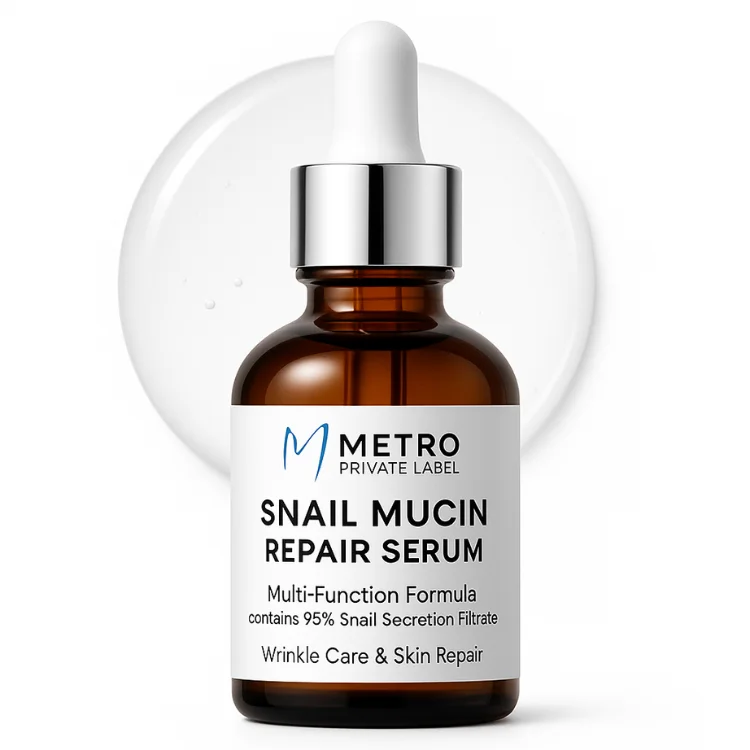
Get Your Custom Skincare Solution Today!

Don’t wait—fill out the form and let our team create the perfect skincare solution for your brand. Expect a personalized quote within 24 hours and start building your brand’s success now!

Submit Your
Private Label Skin Care Request

Fill out this form with your detailed needs and our customer support team will contact you shortly. We will assign a professional agent to follow up on your project and provide personalized assistance.

To get the fastest response, submit your inquiries using the form. If you encounter any issues with submission, you can also email us directly at info@metroprivatelabel.com .

*Metro Private Label takes your privacy very seriously. All information is only used for technical and commercial communication and will not be disclosed to third parties.
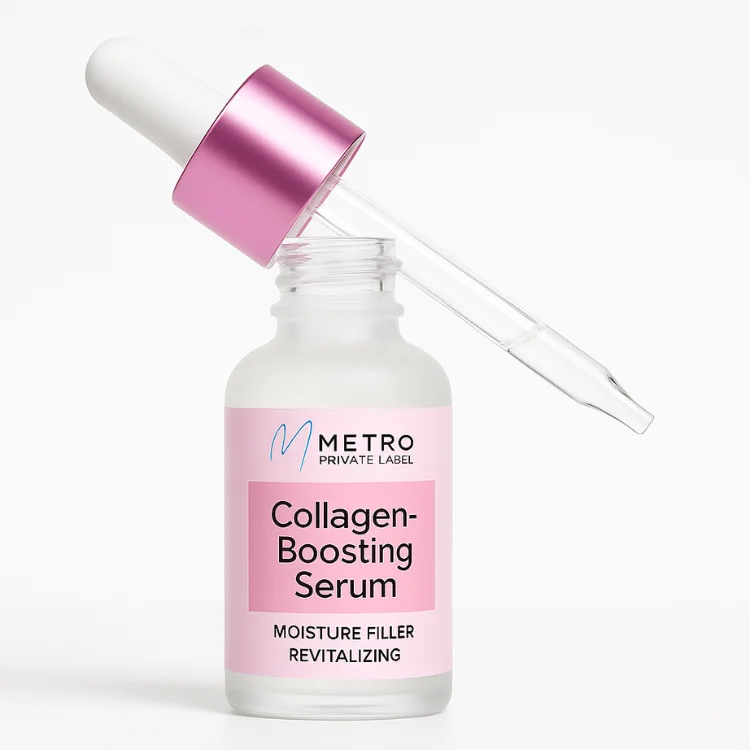
Submit Your
Private Label Skin Care Request

Fill out this form with your detailed needs and our customer support team will contact you shortly. We will assign a professional agent to follow up on your project and provide personalized assistance.

To get the fastest response, submit your inquiries using the form. If you encounter any issues with submission, you can also email us directly at info@metroprivatelabel.com .

*Metro Private Label takes your privacy very seriously. All information is only used for technical and commercial communication and will not be disclosed to third parties.