Your Trusted Eye Patches Manufacturer

We help you launch faster, start smaller, and stand out with custom formulas, pro-grade quality, and trend-driven skincare that sells — all built to grow with your brand.

Private Label Eye Patches

At Metro Private Label, we know that a successful eye patch isn’t just about hydration or cooling—it’s about helping your brand create a product that customers feel working, trust enough to repurchase, and recognize instantly in a crowded eye-care market. That’s why we design our private label eye patches around real under-eye concerns, proven delivery formats, and what’s already selling at scale.
 
From hydrogel under-eye patches for dark circles and puffiness, to wrinkle-smoothing overnight patches for crow’s feet and forehead lines, and advanced microneedle or micro-crystal eye patches targeting fine lines, our development direction mirrors what shoppers are actively buying on Amazon, TikTok, and professional skincare channels. We analyze best-seller listings, ingredient trends, pricing structures, and customer reviews—so the products we manufacture for you are aligned with demand, not guesswork.
 
As your manufacturing partner, we don’t just produce eye patches—we help you shape a hero SKU. Whether you’re launching a daily self-care hydrogel patch in a 60-pair jar, a high-performance overnight wrinkle patch, or a premium treatment positioned for visible results, we work with you to fine-tune the format, actives, usage logic, and packaging. The goal is simple: a product that fits your brand positioning, matches your sales channel, and makes commercial sense from day one.

Hydrogel / Gel Under-Eye Patches

Wrinkle Smoothing / Anti-Wrinkle Patches

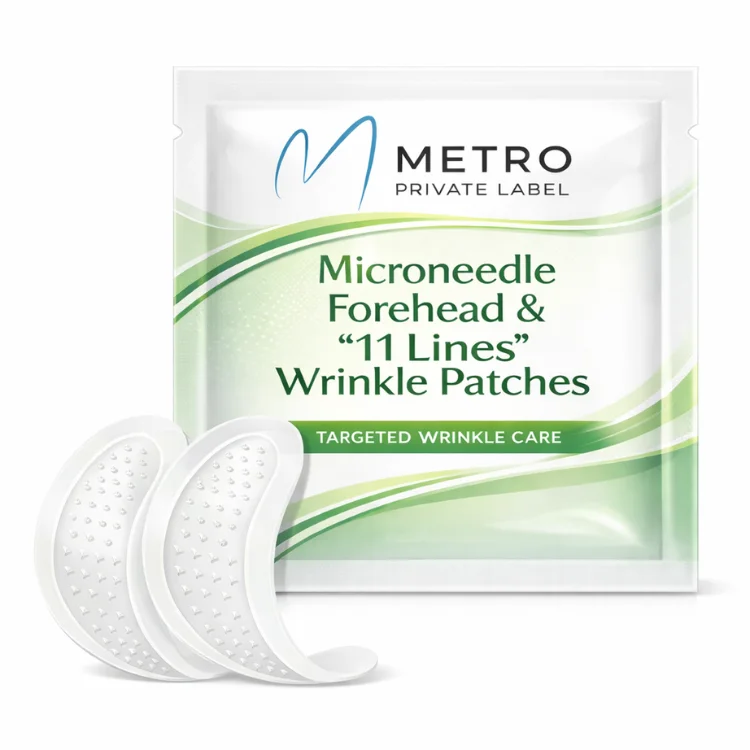
Microneedle / Micro-Crystal Eye Patches

Professional / Utility Eye Pads

Build an Eye Patches Line That Actually Sells

At Metro Private Label, we know that a successful eye patch isn’t just about hydration or cooling sensations — it’s about helping your brand deliver visible results, clear usage value, and a product experience customers trust enough to repurchase. Today’s eye-care buyers are far more selective. They pay attention to results, ingredients, wear time, comfort, and whether an eye patch truly fits into their daily or overnight routine. That’s why every private label eye patch we manufacture is built around real market demand, proven formats, and clear use scenarios.
 
Whether you’re launching a daily hydrogel under-eye patch for dark circles and puffiness, an overnight wrinkle-smoothing patch for crow’s feet or forehead lines, a premium microneedle eye patch targeting fine lines, or professional eye pads designed for salons and lash studios, we develop each product with commercial performance in mind. Our decisions are guided by what consistently sells on Amazon, what DTC brands successfully scale, and what consumers actually say in reviews — so your eye patch doesn’t just look good in marketing, it performs in the real market.
As your manufacturing partner, we also make sure every eye patch project is production-stable, export-ready, and aligned with your sales channel. From material selection and active compatibility to packaging formats and MOQ planning, we help you launch, test, and scale with confidence — without overbuilding or unnecessary risk.
 
💡 Our 4 Most In-Demand Private Label Eye Patch Types
1️⃣ Hydrogel / Gel Under-Eye Patches
The market’s best-selling format for dark circles, puffiness, hydration, and daily self-care. Ideal for Amazon, DTC, and K-beauty-inspired brands.
2️⃣ Wrinkle Smoothing & Anti-Wrinkle Patches
Overnight or extended-wear patches designed to smooth crow’s feet, forehead lines, and expression wrinkles through physical support and skin adhesion.
3️⃣ Microneedle / Micro-Crystal Eye Patches
Premium, high-intent treatment patches positioned for fine lines and visible results, using dissolving microstructures and advanced active delivery concepts.
4️⃣ Professional & Utility Eye Pads
Functional eye pads developed for salons, lash extensions, and professional use — high-volume, stable demand with strong repeat purchasing.
 
🎯 MOQ & Packaging Options (Built for Real Eye Patch Brands)
At Metro Private Label, we keep eye patch projects practical, scalable, and launch-friendly:
Product MOQ Entry-level eye patch projects typically start from 5,000–20,000 pairs, depending on patch type, material, and format.
Packaging Options We support multiple commercial formats, including: • Jar packaging (30 / 60 / 90 pairs) • Sachet or multi-pair box sets • Bulk packs for professional use
Included Support Every project includes formula and material compatibility checks, stability evaluation, packaging guidance, and production feasibility review — ensuring your eye patches remain consistent from manufacturing to end customer.

More Than Just an Eye Patches Manufacturer

At Metro Private Label, we don’t just manufacture eye patches — we help you build products your customers actually understand, trust, and repurchase. A good eye patch isn’t about flashy ingredients or oversized claims. It’s about how it feels on the skin, whether it stays in place, how comfortable it is during wear, and whether users see a real difference after use. That’s what builds credibility — and that’s what allows eye-patch brands to scale.

✅ Launch Products the Market Is Already Asking For

We don’t develop eye patches based on assumptions — we follow demand.
By studying Amazon best sellers, fast-growing DTC brands, and real customer reviews, we focus on eye-patch formats shoppers already recognize and search for: hydrogel under-eye patches for dark circles and puffiness, wrinkle-smoothing patches for crow’s feet and forehead lines, and premium treatment patches positioned for visible results. This helps you enter the market with clear positioning, simple messaging, and lower risk.

✅ Small MOQ That Makes Testing and Scaling Practical

We make it realistic to start — and straightforward to grow.
You can launch with market-proven eye patch formats using practical MOQs to test pricing, demand, and user feedback. Once the product is validated, we scale smoothly into larger volumes, custom patch shapes, upgraded actives, or branded packaging — without forcing you to change suppliers or restart development.

✅ Performance That Builds Long-Term Brand Trust

Customers don’t repurchase eye patches because of concepts — they repurchase them because they work.
Our development focus is on adhesion stability, skin comfort, wear time, and active balance. Whether the goal is depuffing, hydration, wrinkle smoothing, or overnight use, we design each eye patch to perform consistently — not just for a first impression, but for long-term repeat use.

✅ Compliance That Supports Global Expansion

We prepare your eye patches for real markets, not just samples.
From ingredient logic and INCI documentation to labeling guidance and export readiness, we help make sure your eye-patch product is compliant before it leaves the factory. Whether you’re selling on Amazon, through distributors, or via cross-border channels, we reduce delays, rework, and regulatory surprises — so you can focus on launching and scaling with confidence.
  • METRO
  • Typical OEM factory
METROTypical OEM factory
$
/year
/year
Minimum order quantity✅ 500 units for startup brands — low-risk entry for first-time founders.❌ 3,000 units minimum, limiting flexibility.
Packaging recommendations✅ Compatibility + visual templates to ensure perfect fit and premium look.❌ Not provided.
Launch support✅ Label compliance & claim copywriting included for export markets.❌ Not available.
Sample delivery time✅ 7–14 days with labeled packaging.❌ Usually 30+ days.
Compliance & Documentation✅ INCI, COA, SDS, GMP-ready — export with confidence.❌ Basic INCI only.
Buy Now

✨ Build an Eye Patches Line That Truly Sells

When you work with Metro Private Label, you’re not just choosing a factory — you’re partnering with a GMPC-certified manufacturer that understands how eye patches are actually used in real life. A great eye patch isn’t about exaggerated claims or fancy ingredients on paper. It’s about how well it adheres, how comfortable it feels during wear, whether it stays in place, and whether users notice real improvement after use. That’s what builds trust — and that’s what drives repeat purchases.
 
Whether you’re launching hydrogel under-eye patches for dark circles and puffiness, overnight wrinkle-smoothing patches for crow’s feet or forehead lines, premium treatment eye patches with advanced actives, or professional eye pads for salon and lash use, we design every product to fit naturally into real daily or overnight routines. Our goal isn’t a one-time launch — it’s an eye patch your customers keep using and coming back for.
🧪 Formulation Built on Real-World Performance
We don’t rely on copy-paste formulas or trend-only concepts.
Every eye patch we manufacture is developed with clear logic around serum loading, material compatibility, adhesion performance, wear time, and skin comfort. We work with proven cosmetic-grade actives and delivery systems so the patch feels comfortable on application, performs consistently during use, and remains stable through shipping and storage.
If there’s a trade-off between strength, comfort, or stability, we explain it clearly and help you choose what actually makes sense for your brand, price point, and sales channel — not just what looks impressive in a specification sheet.
 
📦 Packaging & MOQ That Reflect How Eye Patches Are Really Made
Eye patches are produced and costed by pair quantity, not by retail boxes — and we plan every project around that reality. Most eye patch launches start from 5,000–20,000 pairs, depending on patch type, material, and packaging format. From there, we configure the most practical retail setup for testing and scaling.
Packaging Notes:
  • MOQ based on patch pairs, not cartons
  • Common formats include jars (30 / 60 pairs), multi-pair boxes, and professional bulk packs
  • Patch material, serum volume, labeling, and cartons are coordinated as one system
Everything is aligned so your product arrives cohesive, compliant, and ready to sell.
 
⚙️ A Clear, Reliable Production Process
From formulation and sampling to patch soaking, forming, quality control, and export preparation, our process is structured, transparent, and realistic. We communicate clearly, flag risks early, and set timelines that match real launch plans — not over-promised schedules.
Think of us as an extension of your operations team, focused on helping you bring a market-ready eye patch to launch without unnecessary delays or surprises.
 
🌿 Built for Brands That Want to Grow
We measure success by how well your product scales. That’s why we focus on production-stable formulations, practical eye patch MOQs, and export-ready documentation for markets like the U.S., EU, UK, and cross-border e-commerce.
With Metro Private Label, your eye patches line is built to launch smoothly, perform consistently, and grow confidently — not just sell once.
 

Who We Work With (Designed Around Your Real Needs)

We build partnerships by thinking the way our clients do — understand first → provide solutions → deliver results. Every client type has different priorities, and our role is to translate those into clear, actionable outcomes.

Medical Aesthetic / SPA Professionals

You care about: post-treatment comfort, product safety, and documentation that meets regulatory and audit standards.
What we deliver:

  • Clinical-grade formulations: CICA, ceramides, and peptides; pH-balanced, fragrance-free options with full preservative logic provided.

  • Regulatory documentation: INCI, COA, SDS, stability and compatibility reports; CPSR/CPNP preparation handled with third-party testing support.

  • Professional aesthetic: minimalist, medical-style packaging suitable for back-bar or retail; traceable batches for consistent results.
    Immediate outcome: a post-treatment testing set, compliant label guide, and batch consistency plan ready for your internal validation.

Funded New Entrepreneurs

You care about: low-risk entry, a clear roadmap, and a premium finish that looks ready for market.
What we deliver:

  • Smart start: choose from proven skincare bases (serums, creams, masks); pilot runs from 500 units with optional custom cartons.

  • All-in-one process: formula → visual template → compliant label copy → production → export-ready documentation.

  • Transparent costing: clear breakdown of your key cost drivers — formula type, active concentration, and packaging complexity — so you can plan pricing and profit with confidence.
    Immediate outcome: 2–3 customized samples, a detailed quotation breakdown, and a timeline showing every stage from sample to shipment.

Boutique DTC Brand Owners

You care about: originality, visual consistency, and storytelling through ingredients.
What we deliver:

  • Ownable sensorials: bio-cellulose or vegan carrageenan textures paired with signature actives like peptides, niacinamide, or botanical blends.

  • Design alignment: typography, color, and label systems that match your brand aesthetic; compatibility checks before full production.

  • Global readiness: INCI, COA, SDS, and stability data included; EU/UK/US label claim review support for smooth registration.
    Immediate outcome: packaging mockups, ingredient story sheets, and a coordinated multi-SKU rollout plan that keeps your range cohesive.

Why this works:
We don’t sell production capacity — we deliver strategic understanding, technical precision, and verifiable results.
By connecting your goals with regulatory, design, and manufacturing expertise, we help your brand move faster, reduce uncertainty, and build trust that lasts.

FAQs Eye Patches

For your convenience, we’ve gathered the most commonly asked questions about our Eye Patches. However, should you have any further queries, please don’t hesitate to reach out to us.
1. What types of eye patches can you manufacture?
We manufacture a full range of commercially proven eye patch formats. This includes hydrogel and gel under-eye patches, wrinkle-smoothing patches for crow’s feet and forehead lines, premium treatment eye patches with advanced actives, and professional eye pads for salon or lash use. You can start with market-ready formats or work with us to customize the structure and positioning.
Yes. We customize eye patches based on how you plan to sell them. That includes serum concentration, active combinations, cooling or soothing feel, wear time, adhesion strength, and skin comfort. If there’s a trade-off between strength, comfort, and stability, we’ll explain it clearly and help you choose what actually works for your target customer.
Eye patch MOQs are based on pair quantity, not retail boxes. Most projects start from 5,000–20,000 pairs, depending on patch type, material, and packaging format. This structure allows brands to test the market first and scale later without unnecessary inventory pressure.
Sampling usually takes around 3–5 weeks, depending on format and customization level. Mass production typically takes another 4–6 weeks. We set timelines based on real production capacity, not ideal scenarios, and we flag risks early if your schedule is tight.
Yes. Many of our eye patch formulas are already vegan and cruelty-free, and we can adjust ingredient systems to meet clean beauty, fragrance-free, or market-specific requirements. Just tell us what standards matter in your sales region.
We do. We support jar packaging (30 / 60 / 90 pairs), multi-pair retail boxes, single-use sachets, and bulk packs for professional use. We help coordinate patch format, inner packaging, labeling, and cartons as one system so everything works together smoothly.
Both options are available. Many brands start with our market-tested base formats to launch faster and reduce cost. If you want deeper differentiation, we can customize actives, texture, patch shape, or usage logic once the product is validated.
Every eye patch project goes through stability checks, material compatibility testing, adhesion evaluation, and performance review. Our production follows GMPC standards, and we focus on consistency from batch to batch — not just passing initial samples.
Yes. While we don’t do marketing copy for consumers, we help you shape clear, realistic, and compliant product claims based on how the patch actually performs. This includes usage positioning, ingredient highlights, and claim logic that aligns with Amazon, DTC, or distributor channels.
Yes. We work with brands selling in the U.S., EU, UK, and cross-border e-commerce markets. We support INCI documentation, labeling guidance, and export preparation so your eye patches are ready for real sales — not just production.

Metro Private Label in Numbers

Happy Clients
0 +
Million-dollar Buyers
0 +
Formulation
0 +
Professional Staffs
0 +

Your Ultimate Guide to Eye Patches

If you’re planning to add eye patches to your product lineup—whether it’s your first targeted treatment SKU or an extension of an existing skincare range—you’re not just choosing a format. You’re stepping into one of the most performance-driven, trust-sensitive categories in beauty. Eye patches are experience products. Customers expect visible results, immediate comfort, and a sense that the product is doing something the moment it touches skin. When that expectation is met, they’re far more willing to repurchase and recommend.
 
We’ve watched the eye patch category evolve from simple cooling gels into a diverse ecosystem of hydrogel patches, wrinkle-smoothing patches, microneedle treatments, and professional eye pads. At Metro Private Label, we’ve worked behind the scenes with startup founders launching their first hero SKU, Amazon and DTC operators optimizing for reviews and repeat orders, clinic and spa brands demanding tolerance and consistency, and international buyers who need stable, compliant products that perform reliably across markets. What becomes clear very quickly is that eye patches require more strategic thinking than most brands expect.
 
This guide is built from what we’ve learned through real development and production—not trend headlines. It reflects what actually makes an eye patch sell, how different patch formats perform in different channels, what consumers truly notice during use, and how decisions around formulation, patch material, packaging, pricing, and compliance shape success or failure after launch.

Table of Contents

What Consumer Problems Do Eye Patches Actually Solve?

When I look at eye patches as a product category, I don’t see them as a trend or a luxury add-on. I see them as a very specific response to how consumers experience the eye area in daily life. Eye patches exist because the skin around the eyes shows fatigue, stress, dehydration, and aging faster than most other areas, and consumers want something that works immediately, visibly, and without long-term commitment. To understand eye patches properly, especially from a business perspective, it’s essential to separate real consumer problems from marketing language and ask a more practical question: what problem is this product truly solving at the moment of use?
 
Puffiness Is a Temporary Appearance Issue That Demands Immediate Results
Puffiness is one of the most common reasons consumers reach for eye patches, and I always classify it as a visibility problem rather than a skin condition. In most cases, under-eye puffiness is caused by fluid retention, lack of sleep, diet, allergies, or circulation issues, not structural skin damage. Eye patches work here because they deliver fast, observable improvement through occlusion, cooling sensation, and gentle compression. Consumers are not buying eye patches to cure puffiness permanently; they are buying them to look less tired before work, before an event, or before going on camera. The value lies in speed and perception, and eye patches solve that problem better than creams or serums in the short term.
 
Dark Circles Are About Visual Correction More Than Pigment Repair
Dark circles are often misunderstood in product development, and I’ve found that this misunderstanding leads to unrealistic claims and disappointed customers. In reality, many dark circles are caused by vascular visibility, shadowing, thin skin, or overall fatigue rather than excess pigmentation. Eye patches solve this problem by improving how the area looks rather than changing the underlying biology. Hydration plumps the skin, reflective ingredients brighten the surface, and temporary tightening improves light reflection. From a consumer’s perspective, this feels like a real solution because the visual change is immediate. From a business standpoint, it’s important to recognize that eye patches are managing perception, not rewriting skin structure.
 
Dehydration Under the Eyes Is a Comfort and Recovery Problem
The under-eye area is especially prone to dehydration, and this is one of the most honest problems eye patches address. I see dehydration less as a cosmetic flaw and more as a comfort issue that affects how skin looks, feels, and responds to makeup or active skincare. Eye patches work extremely well here because they deliver concentrated moisture in an occlusive format that reduces evaporation and allows the skin to recover quickly. Consumers often describe the result as smoother, softer, and more rested, even if the effect is temporary. That combination of immediate comfort and visible improvement makes dehydration one of the strongest and most repeatable use cases for eye patches.
 
Fine Lines Are Softened Through Surface Hydration, Not Structural Change
Fine lines around the eyes are a sensitive topic because consumers want improvement but also understand limitations. I always treat fine lines as an appearance concern that can be softened, not erased. Eye patches perform well here because hydration and surface plumping can visibly reduce the depth and sharpness of fine lines for several hours. Consumers don’t expect permanent change from a patch; they expect smoother skin, better makeup application, and a refreshed look. When eye patches are positioned as temporary smoothing solutions rather than long-term anti-aging treatments, they align much more closely with real consumer experience and satisfaction.
 
Expression Wrinkles Are a Mechanical Problem as Much as a Skin Problem
Expression wrinkles, such as crow’s feet or lines that deepen with movement, represent a different category altogether. In this case, eye patches often solve a physical problem rather than a biochemical one. I see wrinkle-smoothing and overnight eye patches functioning through mechanical support by limiting repetitive folding and maintaining skin position during rest. Consumers understand this intuitively, even if they don’t articulate it that way. They feel that the skin looks smoother after use because movement was reduced, not because an ingredient performed a miracle. This distinction matters because it changes how the product should be explained, designed, and evaluated.
 
Eye Patches Solve Short-Term Appearance Needs, Not Long-Term Skin Health
One of the most important clarifications I make when thinking about eye patches is that they are not meant to replace long-term skincare routines. Eye patches excel at solving short-term, situational appearance problems such as looking tired, puffy, dehydrated, or lined at a specific moment. Long-term skin health still depends on consistent care, lifestyle, and maintenance products. Eye patches complement those routines by offering immediate, visible improvement when consumers want to look better right now. This is not a weakness of the category; it is the reason the category exists.
 
Why Understanding the Real Problem Matters for Brands
For anyone developing or evaluating an eye patch product, I believe this is the most important question to answer early on: what problem am I actually selling a solution for? If the answer is immediate depuffing, visual brightening, hydration recovery, or overnight smoothing, then eye patches make strong commercial sense. If the answer is permanent correction or deep structural change, expectations will not align with reality. When brands clearly understand the problem they are solving, decisions around format, formulation strength, packaging, pricing, and messaging become far more coherent. Eye patches succeed not because they promise everything, but because they solve very specific problems extremely well.

Eye Patches vs Eye Creams: When Does a Patch Make More Commercial Sense?

When brands start planning an eye-care product, one question almost always comes up early: should the focus be an eye cream, or should eye patches take center stage? I’ve seen many teams treat eye patches as a secondary or seasonal SKU, while eye creams are positioned as the “serious” long-term product. But when I look at consumer behavior and commercial performance across channels, the answer is not that simple. Eye patches and eye creams solve different problems, trigger different buying psychology, and perform very differently depending on where and how they are sold.
 
How Consumers Actually Use Eye Creams Versus Eye Patches
Eye creams are typically integrated into daily skincare routines. Consumers apply them morning and night, often without expecting immediate visual change. The value of an eye cream is cumulative and long-term, which means trust builds slowly. Eye patches, on the other hand, are used with a clear short-term intention. When someone reaches for an eye patch, they usually want to look better within minutes or hours. I find this difference critical because it shapes how consumers judge success. Creams are evaluated over weeks, while patches are judged almost instantly, which gives patches a stronger emotional payoff when they work as expected.
 
Perceived Effectiveness and Why Visibility Matters
From a consumer perspective, perceived effectiveness often matters more than technical formulation. Eye patches have a structural advantage here because they create visible change that users can see and feel immediately. The cooling sensation, the reduction in puffiness, and the smoother appearance after removal all reinforce the feeling that the product “did something.” Eye creams rarely offer that same instant feedback. This is one reason eye patches often receive stronger reviews and word-of-mouth traction, especially in fast-moving channels where attention spans are short and results need to be obvious.
 
Pricing Tolerance and Why Eye Patches Feel Easier to Sell
I’ve noticed that consumers are often more tolerant of higher per-use pricing for eye patches than for eye creams. A jar of eye cream is judged as a long-term investment, and buyers scrutinize its value over time. Eye patches are seen as targeted treatments or self-care moments, which makes consumers more comfortable paying a premium per application. This pricing psychology is especially relevant in online marketplaces and gifting scenarios, where eye patches feel indulgent, purposeful, and easy to justify as a purchase.
 
Usage Frequency and Its Impact on Repeat Purchases
Eye creams rely on habit. If the product doesn’t integrate smoothly into a daily routine, it risks being forgotten or replaced. Eye patches rely on intention. Consumers use them when they feel tired, stressed, or want to look better quickly. While patches may be used less frequently than creams, the repeat purchase behavior is driven by situational needs rather than routine discipline. I often see that brands underestimate this dynamic and assume lower usage frequency means weaker sales, when in reality the opposite can be true if the use case is clear and compelling.
 
Why Eye Patches Often Outperform Eye Creams on Amazon
Amazon rewards products that communicate value quickly and deliver visible results with minimal explanation. Eye patches naturally fit this environment. Product images show immediate benefits, reviews describe fast outcomes, and buyers understand what they’re getting without deep education. Eye creams, by contrast, require more trust, longer explanations, and patience. This is why I frequently see eye patches outperform eye creams on Amazon, especially for newer brands that don’t yet have established credibility.
 
Gifting and Seasonal Sales Favor Eye Patches Over Creams
In gifting scenarios, eye patches have a clear advantage. They feel special, self-contained, and easy to use without commitment. An eye cream implies routine and long-term use, which can feel personal or risky as a gift. Eye patches communicate care without obligation. This makes them particularly strong performers during holiday seasons, promotional bundles, and limited-edition launches. From a commercial standpoint, this flexibility gives brands more opportunities to activate sales throughout the year.
 
Clinic and Professional Channels Change the Equation
In clinic-driven or professional retail environments, the comparison shifts again. Eye patches are often used as part of treatments or post-procedure routines, where immediate soothing or visible calming is expected. Eye creams still play an important role in long-term maintenance, but patches align better with the clinical promise of quick recovery and noticeable improvement. In these settings, eye patches often feel more purposeful and easier to recommend during consultations.
 
When Eye Creams Still Make More Sense
Despite all this, I don’t believe eye patches should replace eye creams entirely. Eye creams remain essential for brands focused on long-term skin health, minimal packaging, and daily routine positioning. Creams are better suited for customers who value simplicity and consistency over instant results. The key is understanding that creams and patches are not competing products; they occupy different roles in the consumer’s mind and routine.
 
Choosing the Right Hero Product Based on Channel and Strategy
When deciding whether an eye patch or an eye cream should be the hero SKU, I always come back to channel and intent. If the goal is fast traction, visible results, gifting potential, or marketplace performance, eye patches often make more commercial sense. If the strategy is long-term skincare education and routine building, eye creams play a stronger role. Brands that succeed are usually the ones that make this choice intentionally, rather than defaulting to tradition.
 
Seeing Eye Patches as a Commercial Tool, Not a Supporting Product
The biggest shift I’ve seen in recent years is brands beginning to treat eye patches not as accessories, but as strategic products with their own logic. When eye patches are designed around clear use cases and sold in the right channels, they can outperform eye creams in both visibility and revenue. Understanding when and why this happens allows brands to build smarter product portfolios instead of following assumptions.

Choosing the Right Eye Patch Format Based on Your Target Market

When I see brands struggle with eye patch launches, the issue is rarely formula quality or ingredient choice. Much more often, the problem is format mismatch. Eye patches come in several established formats, but each one carries different expectations in the consumer’s mind, different cost implications for the brand, and different usage behaviors in real life. Choosing the right eye patch format is not about technical superiority. It’s about market fit. The format needs to make sense for who you’re selling to, where you’re selling, and how the product is actually going to be used.
 
Why Format Matters More Than Most Brands Expect
From a business perspective, eye patch format shapes almost everything downstream. It influences perceived value, pricing tolerance, usage frequency, review behavior, and even how easily the product can be explained in one sentence. I’ve seen technically excellent products fail simply because the format didn’t align with the target customer’s expectations. Consumers don’t evaluate eye patches as skincare engineers. They evaluate them based on how familiar the format feels, how intuitive the use is, and whether the result matches what they believed they were buying.
 
Hydrogel Eye Patches and the Mass-Market Mindset
Hydrogel eye patches are the most widely recognized format, and that familiarity carries enormous commercial weight. When consumers see a hydrogel patch, they immediately associate it with hydration, cooling, depuffing, and self-care. I’ve found that this format performs best in mass retail, Amazon, and DTC channels because it requires almost no education. Buyers understand how to use it, what it’s supposed to do, and when to reach for it. Cost-wise, hydrogel patches sit in a comfortable middle ground, allowing brands to scale volume while maintaining reasonable margins. For markets where speed, clarity, and repeat purchase matter, hydrogel patches often provide the lowest-friction entry point.
 
Wrinkle-Smoothing Patches and Behavior-Driven Use
Wrinkle-smoothing eye patches operate under a different psychological model. Consumers don’t approach these patches as skincare in the traditional sense. Instead, they see them as tools that physically influence the skin. These patches are often used overnight or for extended wear, and their value is tied to restraint and support rather than serum delivery. I’ve noticed that this format resonates more strongly with consumers who are already thinking about aging, expression lines, and preventative care. Commercially, wrinkle-smoothing patches work well in niche DTC brands, subscription models, and educational sales environments where the brand can explain why physical support matters. They are less impulse-driven but often generate strong loyalty when expectations are set correctly.
 
Microneedle Eye Patches and Premium Perception
Microneedle eye patches sit firmly in the premium and high-intent category. The format itself signals advanced treatment, even before ingredients are mentioned. Consumers who buy microneedle patches expect noticeable results and are willing to accept higher prices and more deliberate usage. From my experience, this format performs best in brands that already have a clear authority position or in channels where education is part of the buying process. The cost structure is naturally higher, and the audience is smaller, but the perceived value per unit is significantly stronger. Microneedle patches are not designed for mass adoption. They are designed for customers who want to feel they are using something purposeful and advanced.
 
Professional Eye Pads and Utility-First Markets
Professional eye pads occupy a category that many brands overlook, but the demand here is steady and practical. These patches are designed for salon use, lash treatments, and professional services, and they are evaluated almost entirely on function. Comfort, stability, non-slip performance, and skin tolerance matter more than branding or story. I’ve seen this format perform exceptionally well in wholesale and B2B supply environments, where repeat orders are driven by routine usage rather than consumer excitement. The margins are often tighter, but the predictability of demand makes this format attractive for brands focused on volume and long-term supply relationships.
 
Consumer Perception Shapes Willingness to Pay
One of the most important lessons I’ve learned is that consumers don’t price eye patches based on ingredient lists. They price them based on format perception. Hydrogel patches feel approachable and affordable. Wrinkle-smoothing patches feel functional and preventative. Microneedle patches feel clinical and premium. Professional pads feel utilitarian and cost-driven. Understanding these mental shortcuts allows brands to price realistically instead of forcing margins that the market won’t support.
 
Usage Expectations Define Satisfaction
Every eye patch format carries an unspoken usage expectation. Hydrogel patches are expected to feel good and look refreshing. Wrinkle-smoothing patches are expected to work through consistent use. Microneedle patches are expected to deliver noticeable results after limited applications. Professional pads are expected to perform consistently without irritation. When a format fails to meet its expected role, dissatisfaction follows, even if the product is technically sound. Matching format to use case is one of the most effective ways to protect brand reputation.
 
Matching Format to Sales Channel, Not Just Product Vision
I always advise brands to think about format through the lens of where the product will live. Marketplaces reward clarity and familiarity, which favors hydrogel patches. DTC sites can support education, making room for wrinkle-smoothing or microneedle formats. Clinics and salons prioritize function and trust, making professional pads or calming patches more suitable. A strong product vision is important, but it needs to be grounded in the realities of the channel.
 
Choosing Market Fit Over Technical Complexity
One of the biggest mistakes I see is brands choosing the most complex format because it feels impressive. Complexity does not guarantee commercial success. In many cases, the simplest format that aligns with consumer expectations outperforms technically advanced options. Eye patch success is rarely about doing more. It’s about doing the right thing for the right market.
 
Format as a Strategic Business Decision
Choosing an eye patch format is not a cosmetic choice. It’s a strategic decision that affects cost, pricing, messaging, and scalability. When brands understand how different formats are perceived and used, they can build products that feel natural to consumers instead of forcing behavior changes. In my experience, the brands that succeed with eye patches are the ones that treat format as a business tool, not just a product feature.

Key Things to Consider Before Developing an Eye Patch Product

When brands decide to develop an eye patch product, the conversation often starts with ingredients. Everyone wants to talk about actives, concentrations, and trends. But in my experience, that’s rarely where the most important decisions should begin. Eye patches are a system product. They sit at the intersection of formulation, material science, packaging, cost structure, and consumer behavior. If those pieces aren’t aligned early, even a good formula can lead to reformulation, margin pressure, or a launch that simply doesn’t work in the market.
 
Why Ingredients Alone Are Not a Product Strategy
I’ve seen many early-stage projects fail because the product was built around an ingredient story rather than a usage reality. Consumers don’t experience eye patches as ingredient lists. They experience them as something that sits on delicate skin, feels a certain way, stays in place for a certain amount of time, and delivers a visible result without irritation. A technically impressive formula means very little if it causes discomfort, slips during wear, or creates sensitivity after repeated use. Thinking beyond ingredients early helps brands avoid chasing claims that the format cannot realistically support.
 
Balancing Formula Strength With Skin Tolerance
The under-eye area is one of the most sensitive zones on the face, and this changes how formulation decisions should be made. I always approach eye patch development with the understanding that stronger is not always better. High concentrations of actives may look attractive on paper, but they increase the risk of irritation, tingling, or redness, especially under occlusion. Eye patches amplify whatever is inside them because they limit evaporation and increase skin contact time. The real challenge is finding the point where performance feels noticeable without crossing the line into discomfort. Brands that ignore this balance often end up reformulating after negative feedback, which is far more costly than making conservative choices upfront.
 
Patch Material and Serum Compatibility Shape Performance
One of the most underestimated decisions in eye patch development is the relationship between patch material and serum composition. Not all materials behave the same way when soaked with the same formula. Some hold serum better, some release it faster, and some interact with viscosity and humectants in unexpected ways. I’ve seen projects where a formula performed beautifully in testing but failed once paired with a different patch base. Compatibility affects adhesion, wear time, and how evenly actives are delivered. Treating the patch and the serum as a single system rather than separate components is essential for predictable results.
 
Packaging Decisions Directly Affect Cost and Shelf Life
Packaging is often treated as a branding exercise, but in eye patch development it has real technical and financial consequences. Jar packaging, sachets, and box sets each introduce different cost structures, exposure risks, and shelf-life considerations. I always encourage brands to think about how often the package will be opened, how much air exposure the patches will face, and how the packaging choice affects preservative strategy. A visually appealing package that compromises stability or inflates cost can quietly undermine the entire project. Packaging should support the product’s intended use, not fight against it.
 
Understanding Retail Price Before Locking Production Decisions
One of the most common early-stage mistakes I see is developing the product first and thinking about retail price later. Eye patch economics don’t work that way. The number of pairs per unit, the patch material, serum loading, and packaging format all directly influence whether a product can realistically sit at a certain price point. If the target retail price doesn’t align with manufacturing reality, margins disappear quickly. I always recommend defining a realistic retail range early and working backward to ensure the product can be produced, shipped, and sold sustainably within that range.
 
Margin Reality Is Often Different From Initial Expectations
Eye patches can look deceptively profitable on paper, especially when compared to creams or serums. But once all factors are considered, including materials, labor, packaging, freight, and platform fees, margins can tighten fast. I’ve found that brands that succeed long term are the ones that accept realistic margins early rather than forcing aggressive cost targets that compromise quality or consistency. Margin pressure is much harder to fix after launch than it is during development.
 
How Early Decisions Influence Reformulation Risk
Reformulation is one of the most expensive and disruptive outcomes in product development. In eye patch projects, reformulation often stems from avoidable early decisions, such as pushing actives too far, choosing incompatible materials, or underestimating packaging impact. Each change cascades into new testing, new timelines, and new costs. Taking the time to think holistically before committing to production significantly reduces this risk and leads to smoother launches.
 
Designing for Repeat Use, Not Just First Impressions
I always remind brands that eye patches are judged over repeated use, not just the first application. A product that feels impressive once but causes dryness, sensitivity, or inconsistency over time will struggle to retain customers. Comfort, predictability, and trust matter more than novelty. Early development decisions should always be filtered through the question of whether someone would feel confident using the product again and again.
 
Why Early Framework Thinking Saves Time and Money
Developing an eye patch product is not just a creative process. It’s a sequence of interdependent decisions that shape cost, performance, and market fit. Brands that slow down at the beginning and think through formula tolerance, material behavior, packaging logic, and pricing reality tend to move faster later. In my experience, the most successful launches are rarely the most complicated ones. They are the ones built on clear priorities and realistic assumptions.
 
Seeing Development as a Business Decision, Not Just a Formulation Task
Ultimately, developing an eye patch product is a business decision as much as a technical one. Every choice made early on sends a signal to the market about who the product is for, how it should be used, and what it’s worth. When brands treat development as a strategic process rather than a checklist, they dramatically increase their chances of launching something that not only looks good, but actually works commercially.

How Cost, MOQ, and Retail Price Are Actually Connected

When I speak with brands planning their first eye patch product, pricing is often discussed backwards. Many teams start with a retail price they like, then try to force manufacturing to fit that number. In reality, eye patch pricing freedom is shaped much earlier by manufacturing logic. Cost, MOQ, and retail price are not independent decisions. They are tightly connected, and misunderstanding that relationship is one of the fastest ways to create an unsustainable product from day one.
 
Why Eye Patch Pricing Is Different From Creams and Serums
Eye patches behave very differently from bottled skincare products. With creams, cost scales relatively smoothly with volume. With eye patches, cost is driven by discrete physical elements: the number of patch pairs, the patch material, the amount of serum each pair carries, and how the product is packed. Each of these elements has minimum production thresholds, which means pricing flexibility is narrower than many first-time buyers expect. I’ve learned that once brands understand this structural difference, their pricing decisions become far more realistic.
 
Patch Quantity Is the True Starting Point of Cost
The most important cost driver in eye patch manufacturing is not the box or the jar, but the number of patch pairs being produced. Patch materials are cut, formed, or molded in fixed batch sizes, and labor and yield are calculated around those quantities. When brands focus only on units or boxes, they often miss the fact that increasing or decreasing the number of pairs per unit directly changes the cost structure. I always encourage teams to think in terms of total patch pairs first, because that is where MOQ and cost efficiency truly begin.
 
Material Choice Sets the Cost Floor
Patch material defines the baseline cost that no amount of branding can override. Hydrogel, wrinkle-smoothing substrates, microneedle structures, and professional pads each come with very different production requirements and waste rates. Some materials are forgiving at lower volumes, while others only become cost-efficient at scale. I’ve seen brands design beautiful retail concepts only to discover later that their chosen material simply cannot support their intended price point at realistic order quantities. Material choice is not just a technical decision; it is a pricing decision made early, whether consciously or not.
 
Serum Loading Influences Both Cost and Perceived Value
Serum loading is another factor that quietly shapes pricing. Higher serum volumes increase ingredient cost, but they also affect weight, packaging requirements, shipping cost, and shelf-life considerations. Consumers often associate heavier, more saturated patches with better value, but there is a point where additional serum adds cost without improving perceived performance. I’ve found that the most successful products are those where serum loading feels generous but controlled, aligning sensory experience with margin reality rather than excess.
 
Packaging Is Where Cost and Retail Psychology Intersect
Packaging plays a dual role in eye patch pricing. On one hand, it adds direct cost through materials, printing, and assembly. On the other hand, it strongly influences how much consumers are willing to pay. Jar formats, sachets, and boxed sets each create different value perceptions and come with different cost implications. I often see brands underestimate how much packaging decisions affect their margin until very late in the process. When packaging is chosen with both cost and retail psychology in mind, pricing becomes far easier to defend in the market.
 
MOQ Determines How Much Freedom You Actually Have
MOQ is not just a supplier requirement; it is a boundary on pricing flexibility. Lower MOQs almost always mean higher unit costs because materials, setup, and labor are spread across fewer units. This doesn’t mean small launches are impossible, but it does mean that retail price expectations must adjust accordingly. I’ve seen many first-time brands struggle because they expected mass-market pricing at test-scale volumes. Understanding what MOQ realistically allows in terms of cost helps brands set prices that make sense rather than chasing margins that only exist at scale.
 
Retail Price Must Match the Sales Channel
Retail price cannot be separated from where the product will be sold. Marketplaces like Amazon reward competitive pricing and fast decision-making, which limits how much cost can be absorbed. DTC channels allow for more storytelling but require higher margins to cover marketing spend. Clinics and professional channels tolerate higher prices when the use case is clear. I always stress that a price that works beautifully in one channel can fail completely in another, even if the product itself is unchanged.
 
Why Unsustainable Pricing Shows Up After Launch, Not Before
One of the most dangerous things about eye patch pricing is that unsustainable models don’t always fail immediately. A product can launch successfully, generate early interest, and still be financially fragile underneath. Margin pressure often appears during reorders, promotions, or scale-up, when costs become harder to hide. In my experience, brands that struggle later are usually paying for early pricing decisions that ignored manufacturing reality.
 
Working Backward From Reality Instead of Aspirations
The most reliable approach I’ve seen is working backward from manufacturing reality rather than aspirational retail prices. When brands understand their true cost drivers and MOQ implications early, they can design products that fit naturally into a sustainable price range. This approach may feel restrictive at first, but it actually creates more freedom by reducing surprises and allowing smarter decisions about format, packaging, and positioning.
 
Building Pricing That Supports Long-Term Growth
Eye patch success is rarely about the cheapest cost or the highest margin in the first order. It’s about building a pricing structure that survives testing, reorders, scaling, and market changes. When cost, MOQ, and retail price are aligned from the beginning, brands gain stability. In my experience, that stability is what allows eye patch products to grow from first launch into long-term, repeat-driven SKUs instead of short-lived experiments.

What Makes an Eye Patch Perform Well in Real Consumer Use

When I evaluate whether an eye patch product truly works, I don’t start with the ingredient list. I start with how consumers actually experience the product in their daily lives. In real markets, especially on Amazon and DTC platforms, performance is not defined by what sounds impressive on paper. It’s defined by whether the patch stays on, feels comfortable, delivers a visible result, and leaves the user confident enough to use it again. Eye patches succeed or fail in the real world based on experience, not intention.
 
Why Real-World Performance Matters More Than Ingredient Hype
I’ve seen many eye patch products with excellent formulations receive poor reviews, and the reason is almost never the actives themselves. Consumers rarely complain that an ingredient didn’t penetrate deeply enough. Instead, they complain that the patch slid off, felt irritating, dried out too quickly, or didn’t look any different after use. In fast-feedback environments like Amazon, performance issues surface immediately through reviews, and once those reviews accumulate, no amount of marketing can undo the damage. Real-world performance determines trust, and trust determines repeat purchases.
 
Adhesion Is the First Test Every Eye Patch Must Pass
The moment a consumer applies an eye patch, adhesion becomes the primary measure of quality. If the patch doesn’t stay in place, everything else becomes irrelevant. I’ve learned that consumers expect eye patches to hold comfortably through normal movement, whether they are sitting, walking, or multitasking. Overly wet patches that slide or overly dry patches that lift at the edges both signal poor design. Good adhesion feels secure without feeling aggressive, and that balance is one of the hardest things to get right. When adhesion fails, consumers don’t blame their skin or application technique. They blame the product.
 
Comfort Determines Whether Consumers Finish the Wear Time
Even if a patch adheres well, comfort determines whether it stays on long enough to deliver any benefit. The under-eye area is sensitive, and consumers are quick to notice tingling, tightness, or irritation. I’ve found that many performance complaints stem from formulas that are technically strong but uncomfortable under occlusion. Real-world users don’t tolerate discomfort in eye products, especially for optional self-care steps. A patch that feels gentle, soothing, and non-intrusive is far more likely to be worn for the full intended time and used repeatedly.
 
Wear Time Shapes Perceived Effectiveness
Consumers judge eye patches based on what they see when they remove them. Wear time plays a critical role in this perception. If a patch dries out too quickly, users feel shortchanged. If it becomes uncomfortable over time, they remove it early and question its effectiveness. I’ve noticed that patches designed with realistic wear times, whether short and refreshing or longer and more treatment-focused, tend to perform better than those promising extended use without supporting comfort and hydration. Performance is not about how long a patch could theoretically stay on, but how long people actually want to keep it on.
 
Stability Affects Performance Long After Manufacturing
Stability is one of the least visible but most important aspects of eye patch performance. Consumers may not use a product immediately after purchase, and conditions during shipping, storage, and repeated opening all affect how the patch performs later. I’ve seen products that tested well initially but lost adhesion, consistency, or comfort after a few weeks. When that happens, consumers experience inconsistency, which quickly erodes trust. A stable eye patch should feel the same on the last use as it did on the first, and achieving that consistency is a core performance requirement.
 
Why Headline Actives Rarely Save Poor Performance
Actives matter, but they don’t compensate for poor execution. I often see brands assume that a recognizable ingredient will carry the product, but consumers don’t evaluate eye patches like a scientific paper. They evaluate them emotionally and visually. If a patch feels unpleasant or underperforms visibly, the presence of popular actives doesn’t change the outcome. In reviews, I see far more complaints about slipping, irritation, and dryness than about ingredient dissatisfaction. This is why performance-first development consistently outperforms ingredient-first thinking.
 
How Performance Directly Impacts Reviews and Conversion
On Amazon and DTC platforms, performance issues translate directly into negative reviews, lower ratings, and reduced conversion. A single repeated complaint, such as patches sliding or causing irritation, can dominate customer perception. I’ve noticed that even well-priced, well-marketed products struggle once performance complaints become visible. On the other hand, products with modest claims but reliable performance often accumulate strong reviews and steady sales. Real-world performance becomes a form of marketing that consumers trust more than any brand message.
 
Designing for Real Behavior Instead of Ideal Use
One of the biggest gaps between development and reality is assuming ideal use. Consumers apply eye patches in imperfect conditions, sometimes with makeup residue, sometimes while moving, sometimes for shorter or longer periods than recommended. I always evaluate performance through this lens. A patch that only works perfectly under ideal conditions is not ready for the market. Designing for real behavior means accepting variability and building tolerance into adhesion, comfort, and stability.
 
Why Performance Drives Repeat Purchases More Than Claims
Repeat purchases are not driven by claims or novelty. They are driven by confidence. When consumers know that an eye patch will behave predictably every time they use it, they are far more likely to repurchase, recommend, and integrate it into their routine. In my experience, the most successful eye patch products are not the most complex or trend-driven ones. They are the ones that quietly do what users expect, every single time.
 
Seeing Performance as a Commercial Advantage
For brands and operators, especially in Amazon and DTC environments, performance is not just a quality issue. It’s a commercial advantage. Products that perform well reduce returns, protect ratings, and support long-term growth. When eye patches are developed with real consumer use in mind, they become easier to sell, easier to scale, and harder to replace. That is why I believe real-world performance should always come before ingredient hype in eye patch development.

Clinic vs Retail Eye Patches: Different Expectations, Different Design Logic

When brands talk about eye patches, they often treat clinics and retail as interchangeable sales channels. From my experience, that assumption causes more confusion and failed positioning than almost anything else. Eye patches sold through clinics or aesthetic channels are evaluated under a completely different mindset than those sold through mass retail or e-commerce. The difference is not subtle. It affects how the product is used, what the user expects to feel, how results are judged, and even how trust is built. Understanding this distinction early is essential if a brand wants its eye patch product to feel credible instead of misplaced.
 
Usage Context Shapes Everything From Design to Performance
The first and most important difference between clinic and retail eye patches is the context in which they are used. In retail, eye patches are usually applied by consumers at home, often as part of self-care, pre-event preparation, or daily routines. In clinics, eye patches are often applied during or after treatments, sometimes by professionals, sometimes under guidance, and often on skin that has just undergone stress. I always start here because usage context defines how forgiving the product needs to be, how quickly it should work, and how predictable the outcome must feel.
 
Clinics Expect Function and Control, Not Sensory Indulgence
In clinic environments, eye patches are rarely chosen for how luxurious they feel. They are chosen for how reliably they perform within a treatment flow. Skin may be sensitized, compromised, or freshly treated, which raises the bar for tolerance and consistency. I’ve noticed that clinics prioritize calmness, stability, and predictability far more than sensory excitement. If an eye patch tingles, shifts, or behaves inconsistently, it breaks professional trust immediately. In this context, performance is measured by how quietly and reliably the product does its job.
 
Retail Consumers Judge Eye Patches Emotionally and Visually
Retail eye patches operate under a different logic. Consumers judge them based on how they feel during use and how they look afterward. Cooling sensations, visible plumping, hydration feel, and even the unboxing experience matter a great deal. I’ve seen retail products succeed because they deliver a satisfying experience, even if the underlying mechanism is simple. Retail buyers are not comparing protocols or treatment outcomes. They are comparing how refreshed they look in the mirror and how confident they feel recommending the product to someone else.
 
Skin Sensitivity Expectations Are Higher in Clinical Settings
One of the biggest design differences I see between clinic and retail eye patches is tolerance expectations. In clinics, even mild irritation is unacceptable. Products are expected to work on a wide range of skin conditions, including post-procedure or compromised barriers. That changes formulation logic, patch material choice, and even wear time assumptions. In retail, consumers may accept a mild sensation if it feels like the product is “working.” In clinics, sensation is often interpreted as risk. This difference alone should influence how brands design and position their eye patches.
 
Packaging Style Reflects Trust, Not Branding
Packaging is another area where clinic and retail logic diverge sharply. In retail, packaging is part of the selling experience. It communicates value, identity, and appeal. In clinics, packaging is more about reassurance and hygiene. I’ve observed that clinical buyers prefer packaging that feels professional, controlled, and easy to integrate into their workflow. Overly decorative or consumer-style packaging can actually reduce credibility in a clinical setting. This is not about minimalism for aesthetics, but about signaling seriousness and reliability.
 
Product Claims Must Match the Channel’s Language
Claims that work in retail can feel out of place in clinics. Retail messaging often focuses on visible results, quick fixes, and lifestyle benefits. Clinic environments operate on a different language system. Claims are expected to be conservative, functional, and aligned with treatment outcomes rather than beauty promises. I’ve seen brands struggle because they reused retail claims in clinical contexts, creating discomfort for professionals who are cautious about what they recommend. Matching claim tone to channel is one of the most overlooked aspects of eye patch positioning.
 
Why Mismatched Positioning Confuses Buyers
When an eye patch is designed with retail logic but pushed into clinics, or vice versa, confusion follows quickly. Clinics may feel the product lacks seriousness, while retail consumers may feel the product is too clinical or emotionally flat. I’ve seen excellent products underperform simply because they were placed in the wrong context without adjustment. Eye patches are not universally interpreted products. Their meaning changes depending on where and how they are sold.
 
Designing With the End User in Mind, Not Just the Channel Name
What I always come back to is the end user’s mindset. In clinics, the end user is often trusting the professional more than the product itself. In retail, the consumer is trusting the product directly. That difference changes how risk is perceived and how value is assigned. Successful brands design eye patches that respect these psychological differences instead of trying to force a single design logic across all channels.
 
When Brands Successfully Bridge Clinic and Retail Worlds
Some brands manage to operate in both clinic and retail spaces, but they rarely do so with identical products. From what I’ve observed, they adapt formulation strength, packaging presentation, and messaging while keeping the core function consistent. The success comes from understanding that the same eye patch cannot speak the same language everywhere. Bridging channels requires intention, not compromise.
 
Avoiding Confusion by Choosing a Clear Design Direction Early
The simplest way to avoid mismatched positioning is clarity from the beginning. Brands that decide early whether an eye patch is meant for clinical use or retail experience make better decisions across development, pricing, and messaging. In my experience, eye patch products fail less often due to poor quality and more often due to unclear identity. When design logic matches expectations, both clinics and consumers respond with confidence rather than hesitation.

2026 Eye Patch Trends: Consumer Demand, Ingredients, and Packaging Direction

When I look ahead to 2026, I don’t see eye patch trends as sudden shifts or viral moments. What I see is a steady tightening of consumer expectations. Buyers are becoming more experienced, more skeptical, and far more aware of how products actually perform in their daily routines. For brands, this means that success in eye patches will depend less on chasing novelty and more on making thoughtful product decisions that align with how consumers feel, use, and judge these products in real life.
 
Visible and Feel-Based Results Are Becoming the Primary Measure of Value
One of the clearest changes I’ve observed is that consumers increasingly judge eye patches by what they can see and feel immediately. In 2026, abstract promises and long ingredient explanations matter less than tangible experience. People want to feel cooling, smoothing, calming, or tightening while the patch is on, and they want to see a difference when it comes off. This doesn’t mean that ingredients are irrelevant, but it does mean that ingredients are now evaluated through experience rather than reputation. Products that deliver a clear sensory and visual payoff tend to earn trust faster, especially in fast-moving retail and e-commerce environments.
 
Simplified Routines Are Reshaping How Eye Patches Are Used
Consumers are moving away from overly complex skincare routines, and eye patches are being pulled into this simplification. I see growing interest in products that clearly fit into a single moment of the day, such as morning refresh or overnight recovery. Eye patches that are designed for specific timing and purpose are easier for consumers to adopt and repeat. In 2026, eye patches that try to do everything at once often struggle to communicate their value, while those with a clear role in a simplified routine tend to feel more intuitive and trustworthy.
 
Overnight Eye Patches Reflect a Shift Toward Passive Performance
Another trend I see gaining strength is the rise of overnight eye patches. This reflects a broader consumer preference for passive skincare that works while they rest. Instead of adding steps to busy daytime routines, people want products that deliver results without requiring attention. Overnight eye patches align well with this mindset because they promise visible improvement without competing for time. From a product development perspective, this trend pushes brands to think carefully about comfort, wear stability, and tolerance over longer periods rather than immediate intensity.
 
Ingredient Transparency Is Now About Understanding, Not Just Disclosure
In 2026, ingredient transparency is no longer just about listing what’s inside the product. Consumers want to understand why certain ingredients are included and how they behave on sensitive areas like the under-eye. I’ve noticed increased awareness around irritation potential, tolerance, and cumulative use. This shifts formulation strategy away from stacking actives for impact and toward thoughtful combinations that feel safe and predictable. Transparency, in this sense, is about building confidence rather than impressing with complexity.
 
Tolerance Awareness Is Replacing Aggressive Performance Claims
Alongside transparency, tolerance awareness is becoming a defining factor in consumer trust. Shoppers are more informed about skin sensitivity and more willing to stop using products that cause discomfort, even if those products promise results. Eye patches, because they sit on delicate skin and often create occlusion, are especially affected by this shift. In 2026, products that communicate gentleness, reliability, and comfort tend to perform better long term than those that emphasize strength or intensity without context.
 
Packaging Is Being Judged on Function as Much as Appearance
Packaging trends for eye patches are also evolving in a more pragmatic direction. While premium appearance still matters, consumers are paying closer attention to how packaging affects daily use, hygiene, and waste. I see a growing expectation that packaging should feel intentional rather than excessive. This means designs that protect product stability, support repeat use, and avoid unnecessary materials. In many cases, packaging that feels thoughtful and restrained communicates quality more effectively than overt luxury.
 
Sustainability Is Becoming a Design Constraint, Not a Marketing Angle
Sustainability in 2026 is less about claims and more about constraints. Brands are expected to make reasonable choices that reduce waste without compromising performance or safety. For eye patches, this often translates into careful consideration of materials, secondary packaging, and pack sizes. Consumers may not demand perfection, but they notice inconsistency. When sustainability choices feel integrated rather than promotional, they enhance brand credibility instead of distracting from the product itself.
 
Why Trend-Chasing Creates Short-Lived Products
One pattern I’ve consistently observed is that brands chasing trends too aggressively often struggle to sustain sales. Eye patch products built around fleeting ingredients or exaggerated claims tend to spike briefly and then fade once consumer curiosity wears off. In contrast, products designed around durable behaviors, such as daily refresh or overnight recovery, tend to maintain relevance even as trends shift. In 2026, longevity comes from alignment with habits, not headlines.
 
How Trends Should Guide Decisions, Not Dictate Them
I believe the most effective way to approach trends is to treat them as signals rather than instructions. Trends highlight what consumers are becoming more sensitive to, such as comfort, clarity, and practicality. They should inform decisions about format, formulation, and packaging, but not override fundamentals like performance, cost structure, and usability. Brands that filter trends through real-world constraints tend to build products that feel timely without becoming obsolete.
 
Building Eye Patch Products That Stay Relevant Beyond 2026
Ultimately, the eye patch products that succeed in 2026 will be those that feel grounded. They will deliver visible, comfortable results, fit naturally into simplified routines, communicate clearly about ingredients and tolerance, and use packaging that balances appeal with responsibility. From my perspective, the future of eye patches is not about doing more, but about doing fewer things better. When brands understand this, they create products that don’t just launch successfully, but remain relevant long after the trend cycle moves on.

Common Mistakes Brands Make When Launching Eye Patch Products

When I look back at failed or underperforming eye patch launches, the reasons are rarely mysterious. Most problems come from a small set of recurring mistakes that brands make early, often with good intentions. Eye patches may look simple, but they are unforgiving products. Small misjudgments around formulation, positioning, or usage behavior tend to surface quickly in reviews and reorders. Understanding these mistakes before committing resources can save brands months of rework and significant cost.
 
Treating Eye Patches Like Traditional Skincare Products
One of the most common mistakes I see is treating eye patches as if they function like eye creams or serums. Brands often apply the same logic around actives, claims, and long-term treatment narratives. In reality, eye patches are experience-driven products. Consumers judge them immediately, not over weeks. When brands frame eye patches as long-term corrective skincare, expectations drift away from what the product can realistically deliver. This mismatch often leads to disappointment, even when the product performs well within its actual role.
 
Overcomplicating Formulas to Sound Impressive
Another frequent mistake is overengineering the formula. I’ve seen eye patches loaded with multiple trending actives, high concentrations, and complex ingredient stories that look impressive in presentations but perform poorly on skin. Under occlusion, even mild actives can feel intense, and complex formulas increase the risk of irritation, instability, or inconsistent performance. Consumers don’t reward complexity. They reward comfort, predictability, and visible improvement. Overcomplication often creates problems that no amount of marketing can fix.
 
Making Claims That Don’t Match Real Usage
Unrealistic claims are one of the fastest ways to erode trust. I’ve seen products promise permanent wrinkle reduction, dramatic lifting, or clinical-grade results without considering how consumers actually use eye patches. Eye patches are often worn for short periods, in casual settings, or as part of self-care routines. When the promised outcome doesn’t align with this reality, consumers feel misled. Even strong performance can’t compensate for a claim that feels exaggerated or disconnected from the experience.
 
Ignoring How Consumers Actually Use Eye Patches
Many brands design eye patches assuming ideal use. They imagine users lying still, following instructions precisely, and wearing the product for the full recommended time. In reality, consumers move around, multitask, apply patches inconsistently, or remove them early if they feel uncomfortable. I’ve seen otherwise good products fail because they slipped during normal movement or felt distracting during wear. Designing for real behavior rather than ideal scenarios is essential for positive reviews and repeat use.
 
Choosing Packaging Based on Aesthetics Alone
Packaging decisions are often driven by branding ambitions rather than functional reality. I’ve watched brands invest heavily in packaging that looks beautiful but introduces problems with stability, hygiene, or cost. Eye patch packaging is opened repeatedly, exposed to air, and handled with wet hands. If packaging doesn’t support this behavior, performance suffers over time. When packaging inflates cost or compromises shelf life, it quietly undermines the entire launch, even if the product initially sells well.
 
Misjudging the Relationship Between MOQ and Retail Price
Many first-time launches fail because brands underestimate how MOQ shapes pricing. I’ve seen teams expect mass-market retail prices at test-scale volumes, only to discover that margins disappear once production costs are fully calculated. Eye patches are particularly sensitive to this because materials and labor don’t scale smoothly at low volumes. When pricing models are built on unrealistic assumptions, brands often face painful choices later between raising prices, cutting quality, or absorbing losses.
 
Assuming Ingredients Will Carry the Product
There is a persistent belief that a recognizable ingredient will guarantee success. In practice, consumers rarely forgive poor performance because an ingredient sounds good. I’ve read countless reviews where users mention sliding patches, discomfort, or dryness while barely referencing actives at all. Ingredients matter, but they don’t rescue a product that fails on basic execution. Performance fundamentals always outweigh ingredient storytelling in real consumer environments.
 
Launching Without a Clear Channel Strategy
Another costly mistake is launching an eye patch product without a clear understanding of where it will primarily be sold. Products designed for clinics behave differently from those meant for Amazon or DTC. When brands try to make one product work everywhere without adjustment, confusion follows. I’ve seen products that feel too clinical for retail and too cosmetic for clinics. Clear channel intent should shape design decisions from the start, not be an afterthought.
 
Underestimating the Speed of Negative Feedback
Eye patches live in fast-feedback environments. On platforms like Amazon, issues surface quickly and publicly. A few recurring complaints can define the product’s reputation long before a brand has time to respond. I’ve seen brands invest heavily in marketing only to struggle because early reviews highlighted avoidable performance issues. This speed makes early-stage mistakes far more expensive than in slower-moving categories.
 
Failing to Learn From Early Signals
Perhaps the most damaging mistake is ignoring early warning signs. When consumers mention discomfort, slipping, or confusion, those comments are not edge cases. They are signals. Brands that dismiss them as isolated incidents often repeat the same mistakes in future batches. In my experience, successful eye patch brands treat early feedback as diagnostic information rather than criticism. Small adjustments made early often prevent much larger failures later.
 
Seeing Launch as an Endpoint Instead of a Learning Phase
Many brands treat the launch as the finish line. In reality, it’s the beginning of validation. Eye patches that succeed long term are rarely perfect at first release, but they are built on solid fundamentals that allow for refinement. When brands approach launch as a learning phase rather than a final judgment, they remain flexible and responsive instead of defensive.
 
Learning From Industry Mistakes Before Making Your Own
Every mistake I’ve described here is common, costly, and avoidable. They are not signs of poor intention or lack of effort, but of misunderstanding how eye patches function as products in the real world. Brands that take the time to learn from these patterns tend to make calmer decisions, allocate resources more effectively, and launch products that stand a far better chance of succeeding. In eye patches, discipline and clarity almost always outperform ambition without structure.

How to Evaluate and Select the Right Eye Patch Manufacturer

When brands start looking for an eye patch manufacturer, the process often feels overwhelming. There are many factories claiming similar capabilities, similar certifications, and similar experience. I’ve learned that choosing the right manufacturer is not about finding the one that says “yes” the fastest or quotes the lowest price. It’s about understanding how eye patches are actually made, how decisions are communicated, and where responsibility realistically sits between brand and factory. When buyers approach this evaluation with clarity, they avoid many of the problems that appear later in production.
 
Understanding Production Capabilities Beyond Marketing Claims
The first thing I always look at is whether a manufacturer’s production capabilities truly match the eye patch format being developed. Eye patches are not a single category. Hydrogel patches, wrinkle-smoothing patches, microneedle patches, and professional eye pads all require different equipment, processes, and quality controls. A factory that produces general sheet masks may not automatically be equipped to handle eye patch adhesion consistency or microneedle forming. I’ve seen brands assume capability based on broad claims, only to encounter limitations once sampling begins. Asking how a product is made, not just whether it can be made, reveals far more than a product list ever will.
 
Why Clear Communication Is a Manufacturing Capability
Communication is not a soft skill in manufacturing. It is a technical one. I’ve learned to evaluate manufacturers by how clearly they explain trade-offs, limitations, and timelines. When a factory communicates in vague reassurances or avoids explaining risks, it usually means problems will surface later. Clear communication shows that the manufacturer understands the process well enough to anticipate issues. It also shows whether they are willing to treat the brand as a long-term partner rather than a short-term order. In eye patch production, misunderstandings around materials, wear time, or packaging often stem from communication gaps rather than technical inability.
 
Evaluating Stability and Consistency Over Time
Stability is not just a testing result; it’s a production discipline. I always pay attention to how a manufacturer talks about consistency from batch to batch. Eye patches are sensitive to small variations in material quality, serum loading, and environmental conditions. A reliable manufacturer understands how to control these variables and how to respond when something shifts. I’ve seen factories produce excellent samples but struggle with consistency at scale. Asking how they monitor performance over repeated production runs reveals whether quality is systematic or incidental.
 
Looking at Quality Control as a Process, Not a Promise
Many manufacturers say they have quality control, but the meaning of that phrase varies widely. What matters to me is whether quality control is integrated into the production process or treated as a final checkpoint. Eye patches require ongoing checks during soaking, forming, packing, and storage. When quality is only inspected at the end, issues like uneven saturation or adhesion inconsistency often slip through. A manufacturer that understands eye patches as a system tends to describe quality control as something continuous rather than reactive.
 
Knowing What a Manufacturer Should Be Responsible For
One of the most important parts of evaluating a manufacturer is understanding where their responsibility begins and ends. I’ve seen brands expect factories to handle everything from claims to market compliance to consumer education. In reality, manufacturers are responsible for producing what is agreed upon, maintaining consistency, and supporting documentation related to production. They are not responsible for a brand’s pricing strategy, marketing language, or channel-specific positioning. Clear boundaries protect both sides. When a manufacturer promises responsibility beyond their control, it often signals future confusion rather than added value.
 
Understanding What a Manufacturer Should Not Control
Just as important is recognizing what manufacturers should not dictate. A factory should not be making strategic decisions about retail price, brand messaging, or target audience unless explicitly asked for guidance. I’ve seen brands lose direction by deferring too much control to suppliers who are focused on production efficiency rather than market fit. The healthiest partnerships are those where the manufacturer provides technical clarity and operational support, while the brand retains ownership of commercial strategy.
 
Evaluating Problem-Solving Attitude Before Problems Occur
Every production run encounters issues at some point. What differentiates good manufacturers from poor ones is how they approach problem-solving. I pay close attention to how a factory discusses hypothetical challenges. Do they acknowledge risks openly, or do they dismiss them? Do they offer structured solutions, or vague reassurance? Eye patch production involves variables that cannot always be eliminated, but they can be managed. A manufacturer that treats problem-solving as part of the process rather than a failure is far easier to work with long term.
 
Assessing Scalability Without Overcommitting Early
Scalability is another area where clarity matters. I look for manufacturers who can explain how production scales from initial orders to larger volumes without requiring fundamental changes to the product. If scaling requires reformulation, material changes, or process redesign, that should be transparent from the start. Brands often assume that scaling is automatic, but in eye patches, it is only smooth when the initial setup was designed with growth in mind.
 
Using Samples as a Diagnostic Tool, Not a Sales Demo
Sampling is often treated as a test of whether the product “looks good.” I see it differently. Samples reveal how a manufacturer thinks, communicates, and executes. Delays, unexplained changes, or inconsistent samples are signals worth paying attention to. A smooth sample process doesn’t guarantee long-term success, but a chaotic one almost always predicts future issues. Samples are less about perfection and more about reliability.
 
Building Confidence Through Understanding, Not Dependence
The goal of selecting a manufacturer should not be dependence. It should be confidence. When brands understand how production works, how decisions are made, and where responsibilities lie, they become better partners and better decision-makers. I’ve found that the most successful brand-manufacturer relationships are built on mutual understanding rather than blind trust. Confidence comes from clarity, not from promises.
 
Empowering Better Decisions Through Evaluation
Choosing the right eye patch manufacturer is not about finding the “best” factory. It’s about finding the right fit for the product, the market, and the brand’s stage of growth. By evaluating production capability, communication clarity, consistency, and responsibility boundaries, buyers can make informed decisions that reduce risk and increase long-term success. In my experience, this approach doesn’t just lead to better products. It leads to calmer launches, stronger partnerships, and brands that scale with far fewer surprises.

Why Partner with Metro Private Label for Your Eye Patches Line?

If you’re planning to launch an eye patches line in 2026 or 2027, you’re entering one of the most trust-driven and behavior-sensitive segments in modern skincare. Eye patches are no longer impulse add-ons or trend experiments. Today, they function as targeted treatment tools for puffiness, fine lines, expression wrinkles, and tired-looking eyes—areas where consumers expect immediate feedback and are willing to repurchase when results feel real. People don’t choose eye patches out of curiosity alone. They choose them because they want precision, controlled delivery, and outcomes that feel intentional rather than cosmetic.
 
Real-World Experience Across Brands, Channels, and Markets
Over the years, we’ve worked behind the scenes with micro brand founders launching their first treatment SKU, Amazon and DTC operators optimizing for reviews and repeat purchases, aesthetic clinics introducing professional retail products, and distributors sourcing stable, export-ready eye patch formats. Across all of these projects, one reality stays consistent: eye patches may look simple, but developing one that performs reliably across skin types, climates, and usage habits requires far more planning than most brands anticipate.
 
Built on What We See in Real Production and Real Feedback
Our approach is shaped by what we observe in actual production runs and consumer feedback loops. We pay close attention to factors that quietly determine success, such as how patch materials behave during storage, why adhesion stability affects wear confidence, how serum balance influences comfort, and how early decisions around patch count, pricing, and claims often determine whether a product earns strong reviews or struggles after launch. Our role is to help brands avoid costly trial-and-error and move forward with clarity instead of assumptions.
 
Developing Eye Patches Consumers Already Understand and Use
We don’t develop eye patches in isolation. Everything we build is guided by how consumers actually search, compare, and use these products. By studying usage scenarios, complaint patterns, and repurchase behavior across e-commerce and professional channels, we focus on patch formats that integrate naturally into real routines—such as under-eye treatments, forehead or “11 lines” patches, and localized expression-area patches—rather than concepts that look exciting but confuse the market.
 
Formulation Logic Aligned With Your Brand Positioning
There is no single “best” eye patch. Every brand serves a different audience with different expectations. That’s why we align formulation logic with your positioning. Whether the goal is a calming under-eye patch, a depuffing treatment for tired skin, or a wrinkle-smoothing patch for expression lines, we balance actives, serum feel, tolerance, and wear time together. This ensures the product performs consistently from first sample to scaled production, not just on paper but in real use.
 
Compliance and Stability That Protect Your Launch
Eye patches carry high expectations around safety, comfort, and consistency. We prepare each project to be market-ready from the beginning, with clear INCI alignment, cosmetic-grade ingredient selection, stability considerations for different climates, and packaging compatibility checks. This preparation helps brands reduce the risk of reformulation, relabeling, or delayed launches—especially when selling cross-border or expanding into new channels.
 
Packaging Designed for Real-World Use, Not Just Shelf Appeal
Packaging plays a functional role in eye patch success. We help brands select and validate sachets, trays, and retail box formats that protect patch integrity, maintain hygiene, and feel intuitive to use. Whether the product is designed for overnight wear, travel convenience, or e-commerce shipping stability, packaging decisions are made to reduce damage, confusion, and customer complaints—not just to look good in product photos.
 
Practical MOQs That Match How Brands Actually Grow
Most successful brands don’t launch with a full treatment range. They start with one well-positioned eye patch, validate demand, and expand from there. We support that reality with practical MOQs based on real production logic. For most eye patch formats, this means starting from production-efficient quantities that allow testing without locking brands into excessive inventory. As volumes grow, we maintain formulation and packaging continuity so scaling feels like a natural progression, not a restart.
 
A Long-Term Eye Patches Manufacturing Partner
Partnering with Metro Private Label means working with a team that understands formulation behavior, patch materials, packaging mechanics, cost structure, and global compliance expectations. Many of our clients begin with a single eye patch SKU and later expand into broader eye-care or treatment lines because this category performs best when it’s built with structure and foresight.
At Metro Private Label, we don’t just manufacture eye patches. We help brands build treatment products that perform reliably in real routines, remain stable across markets, scale smoothly in production, and earn long-term consumer trust. Our goal is to make sure your eye patches line isn’t just launch-ready—but designed to grow.

Ready to Launch Your Skincare Line?

*Metro Private Label takes your privacy very seriously. All information is only used for technical and commercial communication and will not be disclosed to third parties.

Get Your Custom Skincare Solution Today!

Don’t wait—fill out the form and let our team create the perfect skincare solution for your brand. Expect a personalized quote within 24 hours and start building your brand’s success now!

Submit Your
Private Label Skin Care Request

Fill out this form with your detailed needs and our customer support team will contact you shortly. We will assign a professional agent to follow up on your project and provide personalized assistance.

To get the fastest response, submit your inquiries using the form. If you encounter any issues with submission, you can also email us directly at info@metroprivatelabel.com .

*Metro Private Label takes your privacy very seriously. All information is only used for technical and commercial communication and will not be disclosed to third parties.

Submit Your
Private Label Skin Care Request

Fill out this form with your detailed needs and our customer support team will contact you shortly. We will assign a professional agent to follow up on your project and provide personalized assistance.

To get the fastest response, submit your inquiries using the form. If you encounter any issues with submission, you can also email us directly at info@metroprivatelabel.com .

*Metro Private Label takes your privacy very seriously. All information is only used for technical and commercial communication and will not be disclosed to third parties.