Your Trusted Dog Conditioners Manufacturer

We help you launch faster with low MOQs, market-ready kits, and high-performance formulas—designed to look premium, feel safe, and scale smoothly as your brand grows.
Private Label Dog Conditioners
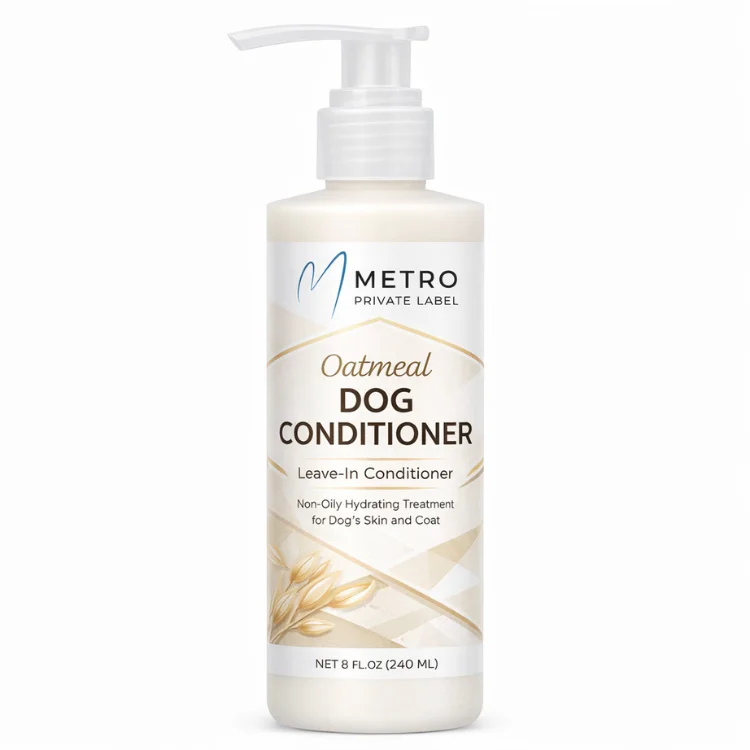
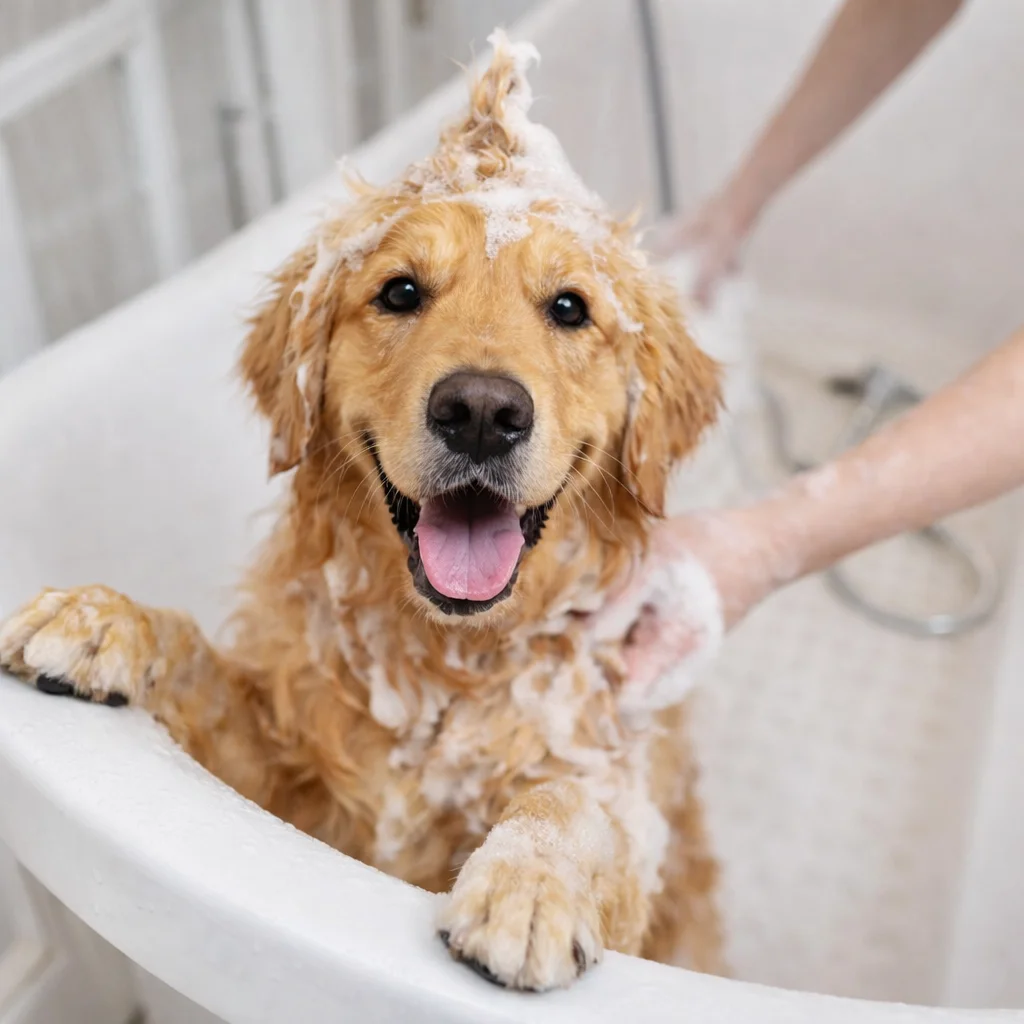
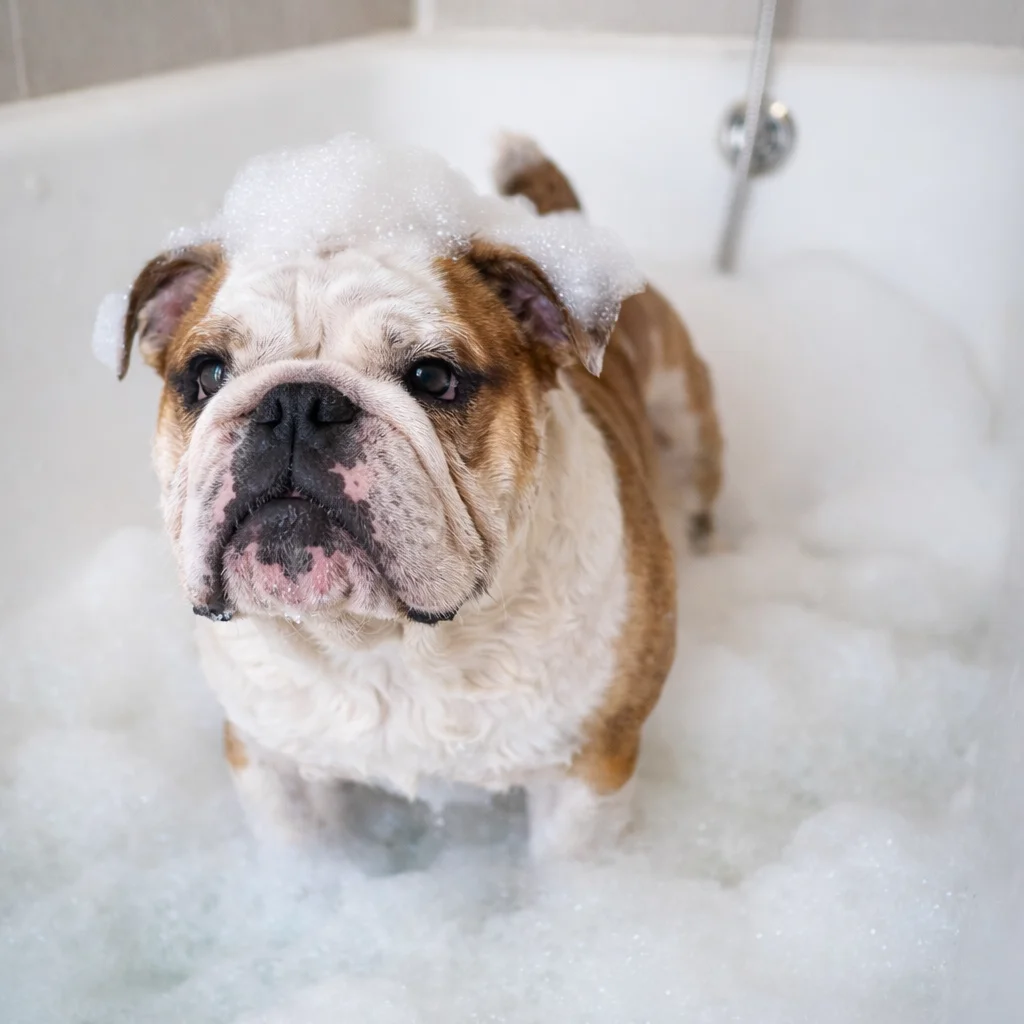
At Metro Private Label, we understand that a high-quality dog conditioner isn’t just about making a coat feel softer—it’s about helping your brand deliver visible grooming results, earn customer trust, and build a product line that pet owners will come back to again and again. That’s why we design our private label dog conditioners around real grooming needs, proven conditioning systems, and the exact product types that today’s pet brands are successfully selling across Amazon, Shopify, and professional grooming channels.
 
From soothing oatmeal conditioners for sensitive skin, to detangling formulas that improve coat manageability, deeply moisturizing conditioners for dry or damaged fur, and convenient leave-in sprays for modern pet care routines, our portfolio reflects what pet owners are actively searching for—and what top-performing brands are already scaling. We continuously analyze best-selling products, grooming trends, and customer feedback so the formulas we help you launch are not only effective, but commercially relevant and positioned to succeed in your market.
 
As your manufacturing partner, we do far more than simply produce a formula—we help you create a conditioner that fits naturally into your brand’s grooming system and supports your long-term growth. Whether you’re building a premium grooming line, expanding your existing SKU range, or launching your first private label pet care product, we work with you to refine the formula performance, texture, ingredient positioning, packaging compatibility, and compliance support needed to bring your product to market with confidence.

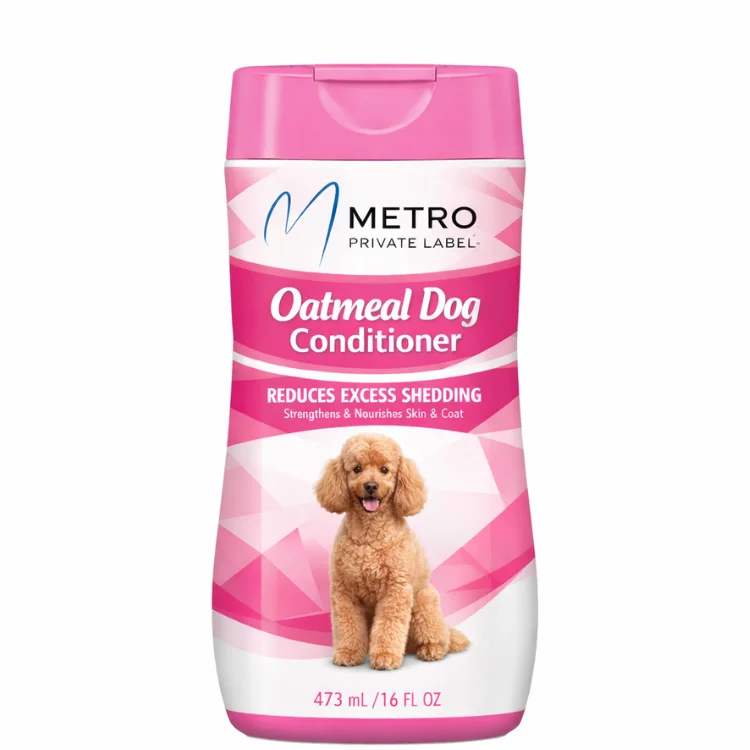
Oatmeal Dog Conditioner

Detangling Dog Conditioner
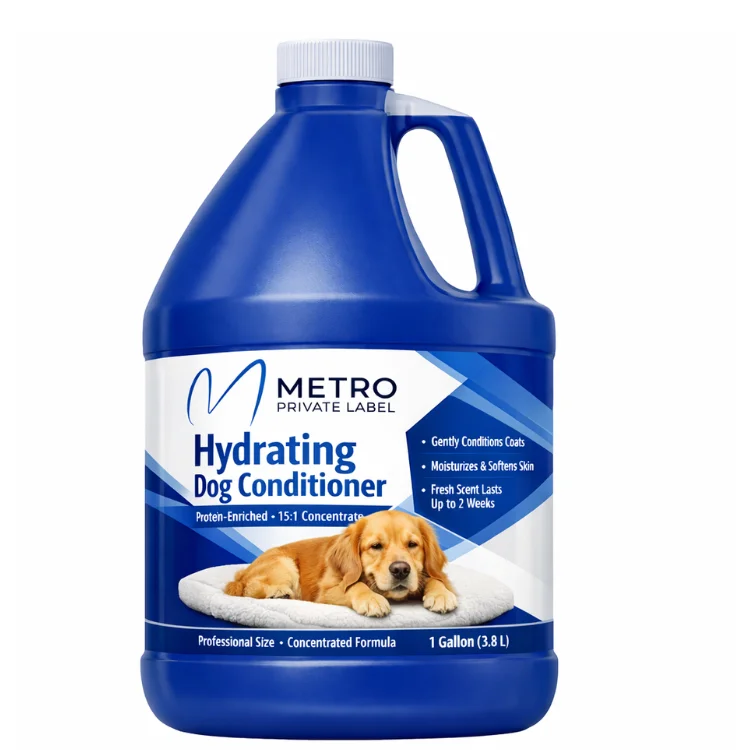
Moisturizing / Hydrating Dog Conditioner
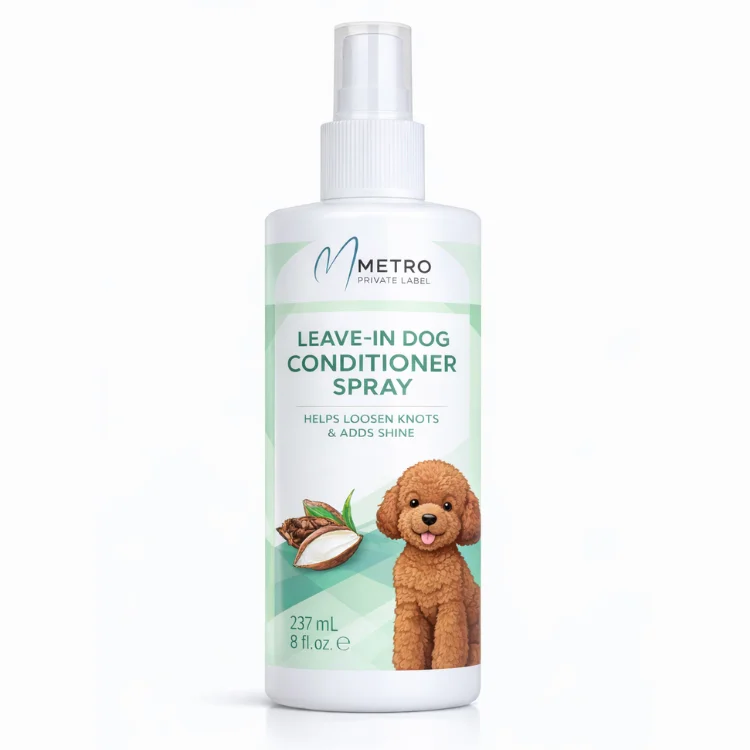
Leave-In Dog Conditioner Spray

Build a Private Label Dog Conditioners Line That Actually Sells
At Metro Private Label, we know dog conditioners aren’t something serious pet brands launch just to “add another SKU.” They’re a core part of the grooming routine that directly affects how customers judge your product quality, how often they repurchase, and whether they trust your brand long term. When pet owners use your conditioner, they expect immediate, visible improvements—softer coats, easier detangling, reduced dryness, and a finish that feels healthy and well cared for. From your perspective as a brand, the real question isn’t just whether the formula exists—it’s whether the product performs consistently, avoids complaints like greasiness or irritation, and earns the kind of reviews that drive repeat sales. That’s why we approach private label dog conditioners from a performance-first and commercially practical perspective, not just as a routine manufacturing job.
 
When we develop dog conditioners, we start by analyzing what’s already working in real markets. We study top-performing Amazon listings, fast-growing DTC pet brands, and grooming salon product lines to understand what pet owners and groomers actually value—effective detangling, skin-friendly ingredients, reliable moisture, and easy-to-use packaging formats. Conditioners fail when they leave residue, don’t condition effectively, or don’t match the expectations created by the brand’s positioning. Our role is to help you avoid those risks early by guiding formula structure, ingredient selection, and packaging compatibility, so the product you launch is built for real-world performance, stable shipping, and long-term customer satisfaction.
As your manufacturing partner, we focus on helping you build dog conditioner SKUs that work in real sales environments—whether that’s Amazon fulfillment, Shopify direct-to-consumer shipping, grooming salon retail, or distributor channels. We help you define the right formula type, ensure production stability, and support documentation, labeling, and packaging coordination so your product is ready for market. Just as importantly, we make sure the final product—from texture to packaging presentation—aligns with your brand positioning, pricing strategy, and customer expectations. Our goal is simple: help you launch dog conditioners that are reliable, scalable, and capable of supporting your brand’s growth over time.
 
💡 Our 4 Core Private Label Dog Conditioners Types
1️⃣ Oatmeal Dog Conditioner One of the most in-demand formats for modern pet brands, especially those targeting sensitive skin positioning. Oatmeal-based formulas help soothe irritation, support skin comfort, and build trust with customers looking for gentle, reliable grooming solutions.
2️⃣ Detangling Dog Conditioner A core SKU for brands focused on grooming performance. Designed to improve coat manageability, reduce knots, and enhance brushing efficiency, making it highly popular among e-commerce brands and professional grooming product lines.
3️⃣ Moisturizing Dog Conditioner A foundational product type that supports coat softness, hydration, and overall coat health. Ideal for brands building a complete grooming system and targeting customers concerned about dryness, coat quality, and long-term maintenance.
4️⃣ Leave-In Dog Conditioner Spray One of the fastest-growing formats driven by convenience-focused pet owners. These lightweight, no-rinse conditioners are easy to use, ideal for daily grooming routines, and especially attractive for premium and modern DTC pet care brands.
 
🎯 MOQ & Packaging Options (Built for Real Launches)
We structure our private label dog conditioner programs to be practical and scalable for growing brands. Most projects begin at around 1,000 units per SKU, depending on formula selection, packaging type, and customization level. We support a wide range of packaging formats, including bottles, spray containers, squeeze tubes, and retail-ready cartons. Our team helps coordinate formula stability, packaging compatibility, and production planning, so your product performs reliably from sampling through full-scale production.
If you already have a sales channel, a defined target customer, or a clear product direction, we’re ready to help you move forward efficiently. Our focus is to help you launch dog conditioner products that fit your market, meet your quality expectations, and support repeat orders—products that don’t just complete your lineup, but actively strengthen your brand.

More Than Just a Private Label Dog Conditioners Manufacturer

At Metro Private Label, we don’t see Dog Conditioners as just another styling product to fill a gap in your catalog. We treat it as a commercial decision that directly impacts how your brand performs in the market. A successful Dog Conditioners isn’t defined by hold strength alone—it’s about how easily it applies, how it feels throughout the day, and whether customers trust it enough to repurchase. When your product delivers consistent results without greasiness, flaking, or performance issues, it builds confidence in your brand. That’s what turns a single launch into a long-term, repeatable product line.

✅ Launch What the Market Already Wants

We don’t build products based on assumptions—we focus on formats customers already understand and actively buy. By analyzing Amazon bestsellers, barber-recommended products, and fast-growing grooming brands, we concentrate on the Dog Conditioners types that perform consistently in real markets: portable wax sticks for quick styling and flyaway control, matte waxes for natural texture, shine waxes for defined polished looks, and strong hold formulas designed for all-day control. These are proven product concepts customers recognize, which makes your launch easier, your positioning clearer, and your chances of repeat sales much stronger.

✅ Small MOQ That Reduces Your Risk

We structure our private label Dog Conditioners programs to support real business launches—not unrealistic production barriers. Most brands begin with manageable order quantities to validate demand, test packaging performance, and confirm customer response. Once your product gains traction, we help you scale smoothly—whether that means adjusting the finish, refining the texture, upgrading packaging, or expanding into additional SKUs—without forcing you to restart development or change suppliers.

✅ Visible Results That Win Customer Trust

Dog Conditioners success isn’t based on first use alone. Customers continue buying when the product performs consistently and fits into their daily routine. We focus on formula stability, texture balance, and packaging compatibility so your product maintains its quality from production to final use. This ensures your Dog Conditioners delivers the hold, finish, and usability your customers expect—helping you build trust, reduce complaints, and support long-term product growth.

✅ Compliance That Makes Export Easy

We prepare your Dog Conditioners products for real-world sales environments, not just lab samples. From providing compliant ingredient documentation to supporting packaging compatibility and production coordination, we help ensure your product is ready for e-commerce, distribution, or retail channels. Our goal is to keep your project moving efficiently, reduce avoidable delays, and give you the operational stability needed to grow your brand with confidence.
  • METRO
  • Typical OEM factory
METROTypical OEM factory
$
/year
/year
Minimum order quantity✅ 500 units for startup brands — low-risk entry for first-time founders.❌ 3,000 units minimum, limiting flexibility.
Packaging recommendations✅ Compatibility + visual templates to ensure perfect fit and premium look.❌ Not provided.
Launch support✅ Label compliance & claim copywriting included for export markets.❌ Not available.
Sample delivery time✅ 7–14 days with labeled packaging.❌ Usually 30+ days.
Compliance & Documentation✅ INCI, COA, SDS, GMP-ready — export with confidence.❌ Basic INCI only.
Buy Now

✨ Build a Private Label Dog Conditioners Line That Performs Beyond Expectations
When you work with Metro Private Label, you’re not just choosing a dog conditioners manufacturer—you’re partnering with a team that understands how pet grooming products actually perform in real sales environments. A successful dog conditioner isn’t defined by marketing claims alone. It’s about how effectively it softens the coat, how easily it detangles, and whether pet owners trust it enough to use it regularly and repurchase it. That’s what builds lasting brand value. Our role is to help you launch dog conditioners that don’t just look good on the shelf, but deliver consistent performance your customers can rely on.
 
Whether you’re launching a soothing oatmeal conditioner for sensitive skin, a detangling conditioner for easier grooming, a moisturizing formula for coat health, or a leave-in spray designed for convenience, we build every project around real customer expectations. Our focus isn’t just helping you release a product—it’s helping you create one that pet owners immediately understand, enjoy using, and continue buying as part of their grooming routine.
🧪 Formulation Built for Real Grooming Performance We don’t rely on generic, one-size-fits-all formulas. Every dog conditioner we develop is designed with real-world usability in mind—effective conditioning performance, smooth application, easy rinsing or absorption, and long-term formula stability. When there are different formulation approaches—such as balancing lightweight conditioning with deeper moisturization—we explain those options clearly so you can choose what aligns best with your brand positioning, target customers, and pricing strategy. Our goal is to ensure your product performs consistently, not just during testing, but throughout everyday use.
 
📦 Packaging & MOQ Designed for Real Launch Conditions Dog conditioners succeed when formula performance and packaging work together. Most projects begin with practical MOQs that allow you to test your product in real market conditions before scaling. We support a wide range of packaging formats, including bottles, spray containers, squeeze tubes, and retail-ready cartons—selected to protect product quality, improve usability, and support both e-commerce fulfillment and retail distribution. Our team helps ensure packaging compatibility so your product arrives safely and performs as expected.
 
⚙️ A Clear and Reliable Production Process We keep the entire development and production process transparent and structured—from initial sampling and formula refinement to packaging coordination and final production. We communicate timelines clearly and help you align manufacturing with your launch schedule. Our team works alongside you to ensure your dog conditioner products move from concept to finished goods efficiently and without unnecessary delays.
 
🌿 Built for Brands That Are Ready to Grow We measure success by how well your product performs after launch—not just how quickly it’s produced. That’s why we focus on scalable formulations, stable packaging systems, and production processes designed for repeat orders and long-term growth. With Metro Private Label, your dog conditioner line is built to launch with confidence, earn customer trust, and grow alongside your brand as your business expands.

Who We Work With

We work best with skincare buyers who already have a real plan—either a sales channel, an industry background, or a proven service model. Our job is to make manufacturing feel simple, scalable, and predictable: we listen first, translate your goals into a clear product plan, and deliver something you can confidently sell, reorder, and grow into a real product line.
Clinic Owners

You care about: safety, professional credibility, and products that support client retention.

We work with clinics and professional skincare businesses that need products clients can trust and comfortably use long-term. We focus on practical, low-risk formula direction, professional packaging presentation, and compliance-ready labeling so your products fit naturally into retail shelves, aftercare routines, and repeat-purchase behavior.
Immediate outcome: a clinic-ready product plan, stable production strategy, and a scalable setup for ongoing reorders and line extensions.

Beauty Industry Founders

You care about: ingredient logic, brand differentiation, and long-term scalability.

We support founders who want more than a generic private label product. We help you build skincare with a strong “reason to exist”—from formula direction and skin feel to packaging structure and claims alignment—so your first hero SKU can actually carry the brand. Instead of over-complicating development, we focus on making the product modern, believable, and scalable for future line expansion.
Immediate outcome: a clear concept direction, a workable development roadmap, and a product system that can grow into multiple SKUs.

E-commerce Brand Operators

You care about: speed, consistency, and products that convert without creating review risk.

We help you launch skincare SKUs that are built for real e-commerce performance—fast-moving formats, stable textures, and clear positioning that customers understand in seconds. We also guide you on the details that protect ratings and reduce refunds, like packaging practicality, ingredient communication, and production consistency across batches.
Immediate outcome: a launch-ready product plan, clear MOQ and timeline, and a production setup designed for repeat ordering.

Why this works:
We’re not here to “just produce skincare.” We’re here to help you build products that feel credible, perform consistently, launch smoothly, and scale without supply-chain headaches—so you can focus on sales, brand growth, and customer retention.

FAQs Dog Conditioners

For your convenience, we’ve gathered the most commonly asked questions about our Dog Conditioners . However, should you have any further queries, please don’t hesitate to reach out to us.
1. What types of private label dog conditioners can you manufacture?
We focus on the conditioner types that real pet brands and grooming businesses actually sell—such as oatmeal conditioners for sensitive skin, detangling conditioners for easier brushing, moisturizing conditioners for coat health, and leave-in conditioner sprays for convenience. You can start with our proven base formulas or customize the formula to match your exact brand positioning and target market.
Yes, and this is where we add the most value. We can adjust conditioning strength, ingredient profile, scent, texture, and functional positioning—whether your brand focuses on sensitive skin, premium grooming performance, or daily maintenance. We’ll explain the available options clearly so you can choose what fits your customer expectations and price point.
Our standard MOQ typically starts at 1,000 units per SKU, depending on the formula and packaging you select. This allows you to launch efficiently without overcommitting inventory, while still maintaining stable production quality. As your brand grows, we can scale production smoothly to support larger volumes.
Both options are available. Many brands start with our existing conditioner formulas because they are already tested, stable, and faster to launch. If you want something more unique, we can also customize the formula to match your brand concept. We’ll help you choose the most practical approach based on your timeline and goals.
Most projects follow a clear and predictable timeline. Sampling usually takes around 2–4 weeks, depending on the level of customization. Once everything is approved, production typically takes 4–6 weeks. We communicate timelines clearly so you can align manufacturing with your product launch schedule.
Yes. We support packaging selection, bottle sourcing, label compatibility, and retail-ready carton coordination. Whether your product is designed for Amazon fulfillment, retail shelves, or grooming salons, we help ensure the packaging protects the formula and aligns with your brand image.
Yes. Many of our clients sell through Amazon, Shopify, grooming salons, and distribution networks. We help ensure your product is manufactured with stable quality, consistent packaging, and the documentation needed to support your sales channel requirements.
We follow structured production and quality control processes to ensure formula stability and batch consistency. This includes raw material verification, formula compatibility checks, and controlled production conditions. Our goal is to ensure your product performs reliably from the first batch to future repeat orders.
Absolutely. Many brands start with one conditioner and expand into a full grooming system over time. We help ensure formula compatibility, packaging consistency, and production continuity so your product line grows in a structured and scalable way.
Yes, we work with pet care brands around the world. We support export documentation, production coordination, and shipping preparation to help ensure your products are delivered safely and efficiently. Our team helps make the process clear and manageable, even if this is your first time working with an overseas manufacturer.

Metro Private Label in Numbers

Happy Clients
0 +
Million-dollar Buyers
0 +
Formulation
0 +
Professional Staffs
0 +

Your Ultimate Guide to Dog Conditioners

If you’re planning to add a private label dog conditioner to your product line—whether you’re expanding an existing pet grooming range or launching your first complementary SKU—you’re not simply introducing another optional product. You’re strengthening one of the most important structural components of a complete pet care system. Dog conditioners play a central role in improving coat softness, manageability, and overall grooming results, which makes them highly relevant for customers who already use shampoo and want consistent, professional-quality outcomes. When positioned and developed correctly, conditioners naturally integrate into routine grooming habits, making them one of the most reliable products for generating repeat purchases and building long-term customer relationships rather than relying on one-time sales.
 
Over the past few years, we’ve seen dog conditioners evolve from being treated as secondary add-ons into core SKUs across e-commerce pet brands, grooming salons, and global distribution channels. At Metro Private Label, we’ve worked closely with brands at different growth stages, and we’ve consistently seen that the brands achieving the strongest results are those that approach conditioner development strategically from the beginning. While conditioners may appear straightforward, the difference between products that scale successfully and those that struggle often comes down to decisions made early in the process. Factors such as formula positioning, packaging durability for shipping, production consistency, and alignment with the brand’s target customer all directly influence whether the product performs reliably in real market conditions.
 
This guide is built from what we’ve learned supporting brands through the development and launch of private label dog conditioners across a wide range of business models, including Amazon sellers, professional grooming businesses, and international distributors. Rather than focusing only on technical formulation theory, we want to share how dog conditioners function as commercial products within real supply chains and competitive markets. Decisions such as selecting formats that customers already trust, choosing packaging that protects the product during transportation, planning production quantities that align with demand, and ensuring formula consistency across batches all play a critical role in determining whether a conditioner becomes a stable, scalable SKU. Our goal with this guide is to help you approach your launch with clarity, reduce avoidable risks, and build a product that supports both immediate market entry and long-term brand growth.

Table of Contents

Why Dog Conditioners Are a Core SKU for Modern Pet Care Brands

I’ve worked with pet care brands at many different stages, from first-time founders launching their initial product to established companies expanding full grooming systems, and one pattern has become very clear to me. Dog conditioners are no longer secondary products added later—they are foundational SKUs that directly influence how customers perceive brand quality, how often they repurchase, and how complete the overall product line feels. When I help brands plan their product roadmap, I always treat conditioners as strategic products rather than optional additions, because they play a critical role in strengthening product ecosystems, improving customer retention, and supporting long-term brand scalability.
 
Dog Conditioners Transform a Product Line from Single SKU to Complete Grooming System
I’ve seen firsthand how adding a dog conditioner immediately elevates a brand’s positioning from a single-product seller to a complete grooming solution provider. When customers discover a pet care brand, they rarely think in terms of individual products—they think in terms of routines. If a brand offers only shampoo, it can feel incomplete, even if the shampoo itself performs well. However, when I help brands launch both shampoo and conditioner together, the entire product line feels more intentional and professionally developed. Customers naturally expect a conditioner to follow the cleaning process, and when that expectation is met, the brand appears more credible and reliable. This shift in perception makes a significant difference in how customers evaluate the brand, especially in competitive e-commerce environments where trust and completeness directly influence purchasing decisions.
 
Dog Conditioners Increase Average Order Value and Strengthen Revenue Efficiency
From a commercial standpoint, I’ve consistently observed that dog conditioners play a powerful role in increasing average order value without requiring additional marketing investment. When customers trust a brand’s shampoo, they are highly likely to purchase the matching conditioner at the same time, especially when both products are presented as part of a cohesive grooming system. This natural pairing increases the value of each transaction and improves overall revenue efficiency. Instead of relying solely on acquiring new customers, brands can generate more value from existing customers by offering complementary products that logically fit into the same routine. This makes conditioners one of the most efficient expansion SKUs because they integrate seamlessly into existing product ecosystems while directly contributing to higher per-customer revenue.
 
Dog Conditioners Play a Critical Role in Driving Repeat Purchases and Customer Retention
One of the most important long-term benefits I’ve seen with dog conditioners is their ability to drive repeat purchase behavior. Conditioners are used regularly, and their performance is immediately noticeable through improved coat softness, easier brushing, and overall grooming comfort. When customers experience these improvements, they associate those results with the brand itself. This creates trust, and trust is what drives repeat purchases. In my experience, products that deliver consistent, visible results become part of the customer’s routine rather than occasional purchases. Over time, this repeat purchase cycle becomes the foundation of stable brand growth, reducing dependence on constant customer acquisition and allowing brands to scale more sustainably.
 
Dog Conditioners Strengthen Brand Credibility and Professional Positioning
I’ve also noticed that dog conditioners play an important role in how professional a brand appears, especially to experienced buyers such as grooming businesses, distributors, and established e-commerce operators. These buyers evaluate brands based not only on individual product performance but also on overall product line completeness. When a brand offers a well-developed conditioner alongside its shampoo, it signals that the brand understands grooming needs at a deeper level. This strengthens credibility and makes the brand more attractive to professional buyers who prioritize reliability and consistency. For grooming salons in particular, conditioners are essential tools that directly impact grooming efficiency and coat quality, making them indispensable products rather than optional retail additions.
 
Dog Conditioners Deliver Immediate Performance Benefits That Reinforce Customer Trust
I’ve found that dog conditioners are especially effective at reinforcing customer trust because their benefits are immediately visible. Customers can feel the difference in coat texture, notice reduced tangling, and experience easier grooming after just one use. These tangible improvements create a direct connection between product performance and brand value. When customers see and feel real results, their confidence in the brand increases significantly. This confidence often leads to repeat purchases, positive reviews, and long-term brand loyalty. In competitive markets, products that deliver immediate and reliable performance are far more likely to build strong customer relationships and support sustainable growth.
 
Dog Conditioners Are Strategic SKUs That Support Long-Term Brand Expansion
When I look at brands that successfully scale over time, I consistently see that they focus on building complete grooming systems rather than relying on individual hero products. Dog conditioners play a central role in that system because they strengthen the product ecosystem, improve customer retention, and increase overall brand credibility. Adding a conditioner is not simply about expanding a product catalog—it is about building a more resilient and scalable business model. Brands that invest in complete grooming solutions position themselves to serve customers more effectively, generate repeat revenue more consistently, and establish stronger long-term market presence.

The 4 Most Commercially Proven Dog Conditioner Types to Launch First

When I help pet care brands decide which dog conditioner to launch, I don’t start by asking what sounds innovative or different. I start by asking what customers already trust, what they already search for, and what they already buy repeatedly. Over the years, I’ve studied countless e-commerce listings, analyzed grooming product expansions, and worked directly with brands scaling from their first SKU to full product systems. What I’ve learned is that success rarely comes from introducing unfamiliar concepts. It comes from launching product types that align with existing customer expectations and grooming habits. The four conditioner categories I recommend most often—oatmeal conditioners, detangling conditioners, moisturizing conditioners, and leave-in conditioners—are not random selections. They represent the formats that consistently deliver strong commercial performance because they solve clear problems that customers already recognize and are actively trying to address.
 
Oatmeal Dog Conditioners Create Immediate Credibility and Reduce Purchase Resistance
When I see a brand preparing to launch its first conditioner, oatmeal is often the positioning I recommend first, especially when the goal is to build trust quickly. I’ve observed that pet owners naturally associate oatmeal with gentleness, comfort, and safety, even if they don’t fully understand the technical formulation behind it. This association matters because customers make purchasing decisions based on perceived safety as much as performance. When customers see oatmeal listed prominently, they feel reassured that the product is suitable for regular use and unlikely to cause irritation. This reassurance is particularly important in e-commerce environments, where customers cannot physically examine the product before purchasing. I’ve seen brands gain traction much faster when their conditioner communicates sensitive skin compatibility clearly, because customers feel confident introducing it into their pet’s routine without hesitation. This early trust significantly improves conversion rates and lays the foundation for repeat purchases.
 
Detangling Dog Conditioners Deliver Immediate, Visible Results That Strengthen Brand Perception
Detangling conditioners have always stood out to me as one of the most commercially reliable formats because their benefits are immediately noticeable. When a customer uses a conditioner and sees that brushing becomes easier, tangles are reduced, and grooming time decreases, they instantly recognize the product’s value. This visible improvement reinforces their perception that the brand delivers real performance, not just marketing claims. I’ve worked with brands that experienced a clear increase in positive customer feedback after launching detangling conditioners because customers could directly feel and see the difference. This type of performance-driven product helps brands build credibility faster because customers associate the improved grooming experience directly with the brand itself. Over time, this connection strengthens customer loyalty and makes the conditioner a permanent part of the customer’s grooming routine rather than a one-time purchase.
 
Moisturizing Dog Conditioners Establish a Stable Foundation for Long-Term Product Line Growth
When I look at brands that successfully scale over time, I almost always see moisturizing conditioners included as part of their core product offering. Moisturizing conditioners address one of the most universal grooming needs: maintaining coat softness and preventing dryness. Unlike specialized products that target specific concerns, moisturizing conditioners remain relevant for nearly every dog owner, regardless of breed or coat type. This broad relevance makes them one of the safest and most scalable product categories to launch. I’ve found that moisturizing conditioners help brands establish consistency in customer experience, which is critical for long-term growth. When customers notice that their dog’s coat remains softer, smoother, and easier to manage over time, they begin to trust the brand’s overall grooming system. This trust extends beyond the conditioner itself and increases the likelihood that customers will explore additional products from the same brand.
 
Leave-In Dog Conditioners Align Perfectly with Modern Customer Preferences for Convenience
In recent years, I’ve seen a significant shift toward convenience-driven grooming products, and leave-in conditioners are a direct reflection of that shift. Many customers prefer solutions that simplify their routines without compromising effectiveness. Leave-in conditioners eliminate the rinsing step, making them easier to use and more practical for regular maintenance. This convenience makes them particularly attractive to e-commerce customers who prioritize ease of use and efficiency. I’ve also observed that leave-in conditioners perform exceptionally well when positioned as maintenance products between full grooming sessions. Customers appreciate having an option that allows them to maintain coat quality without repeating the entire washing process. From a brand perspective, this creates additional opportunities for repeat purchases because the product becomes integrated into daily or weekly care routines rather than occasional grooming events.
 
Choosing Proven Conditioner Types Increases Launch Success and Reduces Market Uncertainty
When I guide brands through product launch decisions, my primary goal is to reduce uncertainty and increase the likelihood of long-term success. Launching unfamiliar or overly experimental product types often creates unnecessary risk because customers may not immediately understand the product’s purpose. In contrast, oatmeal, detangling, moisturizing, and leave-in conditioners align with established grooming expectations. Customers already recognize these product types and understand their benefits, which makes the purchasing decision easier. This familiarity accelerates product adoption and allows brands to focus on building customer relationships rather than explaining entirely new concepts. By launching with proven conditioner formats, brands position themselves within an established framework of customer trust, which makes it easier to generate consistent sales, build repeat purchase behavior, and expand their product line strategically over time.

How E-commerce Pet Brands Use Dog Conditioners to Increase Revenue and Retention

Over the years, I’ve worked closely with Amazon sellers, Shopify founders, and fast-growing direct-to-consumer pet brands, and I’ve consistently observed that dog conditioners play a much larger role in revenue growth than most founders initially expect. Many new brands focus heavily on launching their first hero product, which is usually a dog shampoo, because it feels like the most obvious entry point into the grooming category. However, the brands that successfully transition from early traction to stable, scalable revenue almost always expand into conditioners shortly afterward. I’ve seen how this single decision can transform a brand from selling isolated products into building a complete grooming system that strengthens customer relationships, increases order value, and improves long-term retention. Conditioners are not simply additional SKUs—they are structural components that allow brands to grow more efficiently by extracting more value from every customer they already acquire.
 
Expanding from Shampoo to Conditioner Creates a Natural and Highly Efficient Growth Path
When I work with brands that already have a shampoo performing well, one of the first expansion strategies I recommend is introducing a conditioner designed to complement that shampoo. This is not just about adding variety—it’s about deepening the customer relationship. When customers have already had a positive experience with a shampoo, they are far more receptive to purchasing additional grooming products from the same brand. I’ve seen that customers naturally assume that the matching conditioner will work well with the shampoo, because they trust the brand’s formulation approach and product philosophy. This trust significantly lowers the resistance that usually comes with trying new products. Instead of needing to convince customers from scratch, brands can build upon an existing foundation of confidence. This makes conditioners one of the most efficient expansion SKUs because they allow brands to grow revenue without requiring entirely new customer acquisition efforts.
 
Bundling Dog Conditioners with Shampoo Increases Average Order Value Without Increasing Advertising Costs
One of the most immediate and measurable commercial impacts I’ve observed when brands introduce conditioners is the increase in average order value. When customers see shampoo and conditioner presented together as part of a complete grooming system, they are far more likely to purchase both products at the same time. This behavior is driven by a natural desire for completeness and convenience. Customers prefer to solve their grooming needs in a single purchase rather than assembling products from multiple brands. I’ve seen how this bundling strategy improves conversion efficiency because customers perceive greater value in purchasing a complete system. Importantly, this increase in order size happens without requiring additional advertising spend. Brands are able to generate more revenue from each visitor simply by offering a more complete solution. Over time, this significantly improves the efficiency of customer acquisition investments and strengthens overall profitability.
 
Creating a Complete Grooming Routine Strengthens Customer Loyalty and Reduces Brand Switching
One of the most powerful long-term benefits I’ve seen when brands introduce conditioners is the strengthening of customer loyalty. When customers use both shampoo and conditioner from the same brand, they begin to adopt a consistent grooming routine built around that brand’s products. This routine becomes familiar, reliable, and trusted. Once this routine is established, customers are far less likely to experiment with competing products. Switching brands would require disrupting a system that already delivers satisfactory results. I’ve seen how this routine-based loyalty creates stability in customer behavior. Instead of making isolated purchasing decisions each time, customers develop ongoing relationships with the brand. This shift transforms individual transactions into continuous engagement, which is essential for sustainable brand growth in competitive e-commerce environments.
 
Dog Conditioners Increase Customer Lifetime Value by Encouraging Predictable Repeat Purchases
From a financial perspective, one of the most important metrics I focus on when evaluating brand growth is customer lifetime value. Dog conditioners contribute directly to increasing this metric because they are products that customers use regularly and replenish consistently. I’ve observed that customers who adopt a shampoo-and-conditioner system tend to reorder more frequently than customers who purchase only a single product. This repeat purchase behavior creates predictable revenue streams and reduces the brand’s reliance on constantly acquiring new customers. Over time, this improves the overall stability of the business. Instead of relying entirely on paid advertising to generate growth, brands can build momentum through repeat purchases from existing customers. This shift toward recurring revenue is one of the key characteristics I’ve seen in brands that successfully scale beyond their early stages.
 
Offering Dog Conditioners Strengthens Brand Credibility and Improves Conversion Confidence
Another important effect I’ve observed is the way conditioners influence how customers perceive the brand itself. When customers visit a product page and see that a brand offers a complete grooming system rather than just a single product, the brand appears more established and professionally developed. This perception influences purchasing decisions in subtle but meaningful ways. Customers are more likely to trust brands that demonstrate product depth and category understanding. I’ve seen how brands that expand their product line with conditioners often experience improved overall conversion rates, even for their existing products. The presence of complementary products signals that the brand is serious about serving the category, which increases customer confidence and strengthens the brand’s positioning.
 
Turning First-Time Buyers into Long-Term Customers Through System-Based Product Strategy
Ultimately, what I’ve learned from working with successful e-commerce pet brands is that long-term growth comes from building systems rather than relying on individual products. Dog conditioners play a crucial role in this system-based strategy because they help transform first-time buyers into long-term customers. When customers adopt multiple products from the same brand, their relationship with the brand deepens. The brand becomes part of their routine rather than a one-time purchase. This transition is one of the most important milestones in brand development. It creates customer stability, improves revenue predictability, and supports scalable growth. In the highly competitive pet care market, brands that build complete grooming systems consistently outperform those that rely on isolated hero products.
 

How to Position Your Dog Conditioner to Compete in Today’s Market

When I help brands enter the dog conditioner category, I always emphasize that formulation alone is not what determines success. What truly determines whether a product gains traction is how clearly customers understand its purpose and value. In today’s market, customers are overwhelmed with choices. On platforms like Amazon, a single search for dog conditioner can return hundreds of options that appear similar at first glance. In that environment, customers do not analyze products deeply—they scan quickly and make decisions based on clarity, familiarity, and perceived relevance. I’ve seen that the brands that succeed are not necessarily the ones with the most complex formulas, but the ones that communicate their product’s purpose in a way customers immediately recognize. Strong positioning reduces hesitation, increases trust, and makes it easier for customers to choose your product over competitors.
 
Positioning Around Sensitive Skin Addresses One of the Most Common Customer Concerns
One of the most reliable positioning strategies I’ve worked with is focusing on sensitive skin compatibility. Many pet owners have experienced negative reactions from grooming products in the past, or they worry about introducing something that could cause discomfort. This concern makes them cautious when selecting conditioners. When I help brands position their conditioner around sensitive skin support, it directly addresses this hesitation. Customers feel reassured when they see that the product is designed with gentleness and skin comfort in mind. This reassurance simplifies the decision-making process because customers perceive the product as safe and reliable. I’ve observed that sensitive skin positioning often leads to faster initial adoption because it reduces perceived risk. Customers are more willing to try a product when they feel confident it will not harm their pet, and that confidence creates a strong foundation for future repeat purchases.
 
Positioning Around Coat Hydration Connects with Customers’ Desire for Visible Improvement
Coat hydration is another positioning approach that consistently performs well because it aligns directly with outcomes customers can see and feel. When customers purchase a conditioner, they expect to notice improvements in coat softness, smoothness, and overall appearance. Hydration-focused positioning communicates that the product supports these visible improvements. I’ve seen how customers respond positively when they understand that a conditioner is designed to restore coat softness and maintain coat health. This positioning makes the product feel purposeful rather than generic. Customers can easily visualize the benefit and imagine how the product will improve their pet’s grooming experience. This clarity strengthens confidence and increases the likelihood of purchase because customers understand exactly what the product offers.
 
Positioning Around Grooming Performance Appeals to Customers Seeking Efficiency and Practical Results
Another highly effective positioning strategy I often recommend is focusing on grooming performance, particularly detangling and coat manageability. Many pet owners struggle with brushing and grooming, especially with longer-haired breeds or dogs prone to matting. When I help brands position their conditioner as a solution that improves brushing efficiency and reduces grooming difficulty, it resonates strongly with customers who prioritize practicality. This positioning communicates that the product does more than condition the coat—it improves the grooming process itself. I’ve seen how performance-driven positioning attracts customers who want reliable, functional solutions rather than purely cosmetic improvements. Grooming professionals are especially responsive to this positioning because efficiency directly affects their daily workflow.
 
Clear Positioning Makes Your Product Easier to Understand in Crowded Online Marketplaces
One of the most important realities I’ve learned is that customers rarely spend time trying to interpret unclear product positioning. If they cannot immediately understand what a conditioner is designed to do, they simply move on to another option. In highly competitive marketplaces, clarity is essential. When a product communicates its purpose clearly, customers can quickly determine whether it fits their needs. This simplicity increases engagement and conversion rates. I’ve seen brands struggle when their positioning is too vague, even when the product quality is excellent. Without clear positioning, customers cannot easily distinguish the product from competitors. Strong positioning eliminates this problem by making the product’s value immediately recognizable.
 
Strong Positioning Builds Trust Faster and Strengthens Brand Credibility
Trust is one of the most important factors influencing purchasing decisions, especially when customers are trying a new brand for the first time. Clear positioning helps establish trust by demonstrating that the brand understands specific grooming needs. When customers see that a conditioner is designed to address sensitive skin, improve coat hydration, or enhance grooming performance, they feel that the brand has a clear purpose. This clarity makes the brand appear more professional and credible. I’ve seen how brands with well-defined positioning build trust more quickly because customers perceive them as specialists rather than generalists. This perception strengthens brand reputation and supports long-term growth.
 
Effective Positioning Creates a Foundation for Future Product Expansion
Beyond the initial product launch, positioning plays a critical role in shaping the brand’s long-term trajectory. When a brand establishes a clear positioning strategy, it creates a framework that can be extended to additional products. For example, a brand positioned around sensitive skin care can expand into shampoos, sprays, and treatments designed for the same purpose. This consistency strengthens brand identity and makes product expansion more effective. I’ve seen how brands that establish strong positioning early are able to grow more efficiently because customers already understand and trust the brand’s focus. This makes it easier to introduce new products without needing to rebuild customer confidence from the beginning.
 
Positioning Is Ultimately What Transforms a Conditioner into a Scalable Commercial Product
Through years of working with pet care brands, I’ve learned that positioning is not simply a marketing detail—it is a core strategic decision that determines how the product is perceived and adopted. A well-positioned conditioner becomes more than just another option in the market. It becomes a product customers recognize, trust, and integrate into their grooming routine. This integration is what drives repeat purchases, strengthens customer relationships, and supports sustainable brand growth. Brands that invest in clear, purposeful positioning consistently achieve stronger results because they make it easier for customers to understand, trust, and choose their products.
 

Choosing the Right Formula Strategy for Your Target Market

When I guide brands through the process of developing a dog conditioner, one of the most important conversations we have is not about ingredients first, but about customers. I’ve learned that formula strategy only makes sense when it is built around the expectations, habits, and priorities of the people who will actually buy and use the product. Too often, brands focus on adding popular ingredients or following general trends without asking whether those choices align with their target market. In reality, the most successful dog conditioners are those that deliver the exact performance customers expect based on the brand’s positioning. Formula strategy influences everything from how customers perceive product quality to how willing they are to reorder and recommend the product. When formula design aligns with customer expectations, the product feels intentional and trustworthy. When it doesn’t, customers may struggle to understand the product’s value, even if the formula itself is technically sound.
 
Understanding That Premium Customers Expect Refined Performance, Not Just Basic Conditioning
When I work with premium pet care brands, I quickly realize that their customers evaluate products differently than mass-market buyers. Premium customers are highly sensitive to how the product feels during use, how the coat looks afterward, and whether the overall grooming experience feels elevated. These customers expect conditioners that provide softness, smoothness, and coat comfort without creating heaviness or residue. I’ve seen how even small differences in formula texture can significantly influence customer perception. A conditioner that feels clean, lightweight, and easy to rinse reinforces the impression that the brand is carefully developed and trustworthy. Premium customers are not just buying functionality—they are buying confidence in product quality. When the formula delivers a refined and consistent experience, customers begin to associate the brand with reliability and expertise. This association becomes a powerful driver of repeat purchases and long-term loyalty.
 
Supporting Grooming-Focused Customers Who Prioritize Efficiency and Practical Results
In contrast, when I work with grooming-focused brands or customers who value efficiency above all else, the formula strategy must prioritize functional performance. These customers are less concerned with luxury perception and more focused on whether the conditioner makes grooming easier and faster. They want products that improve coat manageability, reduce tangling, and allow brushing to proceed smoothly without resistance. I’ve observed that grooming professionals and performance-oriented customers evaluate conditioners based on how much time and effort they save during grooming sessions. If a conditioner improves workflow efficiency and reduces frustration, it immediately earns trust. This trust is built through performance, not marketing claims. When formula strategy focuses on real functional improvement, the product becomes an essential tool rather than just another grooming accessory.
 
Ensuring Formula Performance Matches the Brand’s Pricing Strategy and Market Expectations
One of the most critical aspects of formula strategy that I help brands understand is how closely formula performance must align with pricing and positioning. Customers subconsciously evaluate whether a product’s performance justifies its price. If a conditioner is positioned as a premium product but delivers an average or inconsistent experience, customers quickly lose confidence. On the other hand, when formula performance clearly reflects the brand’s positioning, customers feel that the product delivers fair and expected value. I’ve seen how brands that align formula quality with their pricing strategy achieve stronger customer acceptance and fewer negative reviews. Customers are not just buying ingredients—they are buying the overall experience and reliability that the formula provides. When formula performance reinforces the brand’s positioning, customers feel confident that they made the right purchasing decision.
 
Recognizing That Different Sales Channels Require Different Formula Priorities
Another important factor I consider when developing formula strategy is the brand’s primary sales channel. E-commerce brands often need formulas that perform consistently across shipping conditions and customer environments. Products must remain stable during transportation and deliver predictable performance regardless of climate or handling conditions. Grooming salons, on the other hand, may prioritize formulas that work efficiently during repeated use throughout the day. Distributors often prefer formulas that appeal to broad customer segments and maintain stable quality across larger production volumes. I’ve seen how understanding these operational realities helps ensure that formula strategy supports real-world usage rather than ideal laboratory conditions. A formula must perform consistently not only in controlled environments but also in the varied conditions customers encounter.
 
Building Customer Trust Through Consistent Formula Performance Over Time
From my experience, the most important outcome of a well-designed formula strategy is consistency. Customers may try a product once based on marketing, but they continue buying based on performance. When customers repeatedly experience reliable coat softness, improved manageability, and easy grooming, they begin to trust the product as part of their routine. This trust is the foundation of long-term brand success. I’ve seen how brands that prioritize formula consistency create stronger customer relationships because customers know exactly what to expect each time they reorder. Consistency reduces uncertainty, which makes customers more comfortable remaining loyal to the brand rather than experimenting with alternatives.
 
Formula Strategy Is Ultimately a Commercial Decision That Determines Long-Term Scalability
Over time, I’ve come to see formula strategy as one of the most important commercial decisions a brand makes. It influences customer satisfaction, repeat purchase behavior, and overall brand credibility. A well-aligned formula makes it easier for customers to understand the product’s value, trust its performance, and integrate it into their grooming routine. This alignment creates stability, which allows brands to grow more confidently. When formula strategy supports both customer expectations and brand positioning, the product becomes more than just a single SKU—it becomes part of a scalable system that supports long-term brand expansion and sustainable growth.

Packaging Decisions That Directly Impact Sales and Customer Experience

When I work with pet care brands developing dog conditioners, I often explain that packaging is not simply a container—it is a critical component of the product’s commercial success. Packaging influences how customers perceive quality, how the product performs during transportation, and how easy it is to use during daily grooming routines. I’ve seen brands invest heavily in formula development but overlook packaging strategy, only to encounter customer complaints related to leakage, inconvenience, or poor presentation. Over time, I’ve learned that packaging plays a central role in shaping the customer’s overall experience. It is the first physical interaction customers have with the brand, and it continues to influence their perception every time they use the product. Well-designed packaging protects product integrity, reinforces brand positioning, and ensures the product performs consistently from the factory to the customer’s hands.
 
Protecting Product Integrity During Transportation Is Essential for Maintaining Customer Trust
One of the most important realities I’ve seen in e-commerce and global distribution is that products are exposed to a wide range of transportation conditions before reaching the customer. Dog conditioners may travel across long distances, pass through warehouses, and experience handling by multiple logistics partners. If packaging is not designed to withstand these conditions, leakage or damage can occur. I’ve seen how even small leakage issues can significantly impact customer perception. When customers receive a product that has leaked or appears compromised, their trust in the brand is immediately affected. This experience often leads to negative reviews, refund requests, and reduced willingness to reorder. On the other hand, when packaging protects the product effectively, customers receive it in perfect condition. This reinforces confidence and creates a positive first impression, which is critical for long-term customer retention.
 
Packaging Structure Directly Influences Daily Usability and Customer Satisfaction
Beyond transportation, packaging plays a major role in how customers interact with the product during everyday use. I’ve observed that customers quickly notice whether packaging feels convenient and easy to handle. When packaging allows smooth dispensing and comfortable handling, it improves the overall grooming experience. Customers appreciate products that integrate seamlessly into their routine without creating inconvenience or mess. Poorly designed packaging, however, can create frustration. If dispensing is difficult or inconsistent, customers may associate that inconvenience with the product itself. Over time, this can reduce customer satisfaction even if the formula performs well. When packaging supports smooth and reliable use, it enhances the customer’s perception of product quality and strengthens their connection to the brand.
 
E-commerce Brands Must Prioritize Packaging That Minimizes Leakage and Shipping Risk
When I support e-commerce brands selling on platforms like Amazon and Shopify, I always emphasize the importance of packaging that can survive real-world shipping environments. Unlike retail environments, where products move in bulk and are handled more predictably, e-commerce orders are shipped individually and exposed to more unpredictable conditions. Packaging must be structurally reliable and properly sealed to prevent leakage or damage. I’ve seen how brands that invest in shipping-resistant packaging experience fewer customer complaints and lower return rates. This directly improves operational efficiency and protects the brand’s reputation. Customers who receive products in perfect condition are far more likely to trust the brand and continue purchasing from it.
 
Grooming Professionals Value Packaging That Supports Efficiency and Workflow Consistency
When working with grooming professionals and salon operators, I’ve learned that packaging must support practical daily use. Groomers use conditioners repeatedly throughout the day, often in fast-paced environments. Packaging must allow them to dispense the product efficiently and maintain workflow consistency. If packaging slows down the grooming process or creates inconvenience, it becomes a barrier to continued use. I’ve seen how professional groomers quickly develop preferences for packaging that supports efficiency and reliability. When packaging integrates naturally into their routine, it improves their overall experience and increases their willingness to continue using the product. This professional trust can significantly influence broader brand credibility.
 
Packaging Presentation Strongly Influences Customer Perception and Brand Credibility
One of the most powerful roles packaging plays is shaping how customers perceive the brand before they even use the product. Packaging communicates professionalism, quality, and attention to detail. I’ve observed that customers often associate packaging quality with formula quality. When packaging looks clean, well-constructed, and professionally designed, customers are more likely to trust the product inside. This perception strengthens brand credibility and supports higher price acceptance. Customers are naturally more confident purchasing products that appear carefully developed and thoughtfully presented. Packaging becomes a visual representation of the brand’s commitment to quality.
 
Durable Packaging Supports Distributor Confidence and Retail Scalability
When I work with distributors and retail partners, packaging durability becomes even more important. Distributors handle large volumes of products, and packaging must remain intact throughout storage, handling, and shelf placement. Weak or inconsistent packaging creates operational challenges and reduces distributor confidence. I’ve seen how reliable packaging strengthens distributor relationships because it ensures products can be handled, stored, and displayed without risk. Strong packaging supports scalability by allowing brands to expand into broader distribution channels with confidence.
 
Packaging Plays a Strategic Role in Supporting Long-Term Brand Growth
Over time, I’ve come to see packaging as a strategic investment rather than a simple operational decision. Packaging protects product quality, supports customer satisfaction, and reinforces brand positioning. When customers consistently receive products that arrive safely and function reliably, their trust in the brand grows. This trust leads to repeat purchases and stronger brand loyalty. I’ve seen how brands that invest in proper packaging from the beginning create more stable and scalable growth trajectories. Packaging becomes part of the brand’s identity and contributes to its long-term success.

How Private Label Dog Conditioners Help Brands Expand Product Lines Efficiently

When I work with pet care brands that are preparing to grow beyond their initial hero product, I often explain that expansion is not just about adding more products—it is about expanding in a way that strengthens the brand’s ecosystem rather than diluting it. Over time, I’ve seen that dog conditioners represent one of the most efficient and strategically sound expansion products a brand can introduce. This is because conditioners naturally complement shampoos, which are usually the first grooming product a brand launches. Customers already understand the relationship between shampoo and conditioner, so introducing a conditioner does not require educating the market or redefining the brand’s identity. Instead, it builds upon existing customer expectations and reinforces the brand’s presence within the grooming category. This makes conditioners uniquely positioned to support product line expansion while maintaining brand clarity and operational efficiency.
 
Dog Conditioners Allow Brands to Expand Within an Established Customer Behavior Pattern
One of the key reasons dog conditioners are so effective for expansion is that they align with grooming habits customers already follow. When customers purchase a shampoo, they are often already aware that conditioner is the next logical step for improving coat softness, reducing tangles, and maintaining overall coat health. I’ve seen how this existing behavioral pattern makes conditioners easier to introduce than entirely new product categories. Customers do not need to be convinced that they need a conditioner—they simply need to trust that your brand’s conditioner will deliver reliable results. This familiarity significantly accelerates product adoption. Instead of overcoming customer hesitation, the brand is fulfilling an expectation that already exists. This alignment between product offering and customer behavior creates a smoother expansion process and reduces the risk associated with introducing new SKUs.
 
Expanding with Dog Conditioners Strengthens the Brand’s Internal Product Ecosystem
As brands grow, one of the most important structural developments I’ve observed is the transition from selling individual products to offering integrated grooming systems. When a brand introduces a conditioner alongside its shampoo, it begins to establish a cohesive product ecosystem. This ecosystem strengthens the brand’s overall value proposition. Customers perceive the brand as more complete and capable of meeting their grooming needs. Instead of relying on a single product, the brand offers a system that supports multiple stages of the grooming process. This transformation improves brand credibility and creates a stronger foundation for future product development. Once this ecosystem is established, it becomes easier to introduce additional complementary products because customers already trust the brand’s expertise.
 
Increasing SKU Depth Improves Revenue Efficiency and Maximizes Customer Value
One of the most significant commercial advantages I’ve observed when brands introduce conditioners is the improvement in revenue efficiency. Customer acquisition is often one of the most expensive aspects of growing a pet care brand, particularly in e-commerce environments where advertising costs continue to rise. When a brand offers multiple complementary products, it can increase the revenue generated from each customer interaction. Customers who trust the shampoo are far more likely to purchase the matching conditioner, especially when it is presented as part of a complete grooming routine. This increases average order value and strengthens overall revenue stability. Instead of relying solely on attracting new customers, the brand can generate additional revenue from existing customers. This makes growth more sustainable and reduces dependence on continuous advertising investment.
 
Maintaining Consistent Brand Positioning While Expanding Product Offerings
One of the challenges I’ve seen brands face during expansion is maintaining clarity in their brand identity. When brands introduce products that feel disconnected from their core expertise, customers may become uncertain about what the brand represents. Dog conditioners, however, allow brands to expand while reinforcing their existing positioning. If a brand is known for coat care, introducing a conditioner strengthens that positioning rather than distracting from it. This consistency is critical for building long-term customer trust. Customers prefer brands that demonstrate focus and expertise rather than those that expand unpredictably. By introducing conditioners, brands can grow their product line while maintaining a clear and coherent brand identity.
 
Dog Conditioners Help Transform Single-Product Brands into Complete Grooming Solution Providers
Over time, I’ve seen how introducing conditioners helps brands evolve from being perceived as single-product sellers into comprehensive grooming solution providers. This shift has significant implications for customer perception. Customers are more likely to trust and remain loyal to brands that offer complete solutions rather than isolated products. When customers rely on a brand for multiple grooming needs, their relationship with the brand becomes deeper and more stable. This stability supports long-term growth and improves customer retention. Instead of competing for one-time purchases, the brand becomes part of the customer’s ongoing grooming routine.
 
Expanding with Conditioners Reduces Development Risk Compared to Entering New Categories
Another important advantage I’ve observed is that introducing conditioners carries less development risk compared to entering entirely new product categories. Brands already understand their customers’ grooming needs, preferences, and expectations based on shampoo performance and customer feedback. This existing knowledge provides valuable insight that can be applied to conditioner development. Instead of starting from zero, brands build upon an established foundation. This reduces uncertainty and improves the likelihood of successful product adoption. Development becomes more efficient because the brand is refining its existing grooming system rather than creating an entirely new one.
 
Private Label Dog Conditioners Create a Scalable Framework for Long-Term Product Line Growth
Ultimately, I see dog conditioners as a strategic expansion product that supports scalable, long-term growth. They strengthen the brand’s product ecosystem, improve revenue efficiency, and reinforce brand positioning. By introducing conditioners, brands create a more complete grooming system that customers trust and rely on. This trust forms the foundation for future expansion into additional grooming products. When expansion is built upon a strong and coherent product ecosystem, growth becomes more predictable and sustainable. Dog conditioners are not just an additional SKU—they are a structural step that helps brands transition from early-stage product sellers into fully developed pet care brands capable of long-term success.

Key Production and Supply Chain Factors That Affect Long-Term Scalability

When I speak with pet care brands that are preparing to scale their dog conditioner line, I always emphasize that growth is not determined solely by marketing success or product demand. True scalability depends on the strength and reliability of the production and supply chain systems behind the product. I’ve seen brands achieve rapid early success, only to encounter operational bottlenecks because their manufacturing processes, raw material sourcing, or packaging systems were not designed to support long-term expansion. Scaling a product successfully requires more than the ability to produce one batch—it requires the ability to produce thousands or tens of thousands of units consistently, reliably, and predictably. Customers expect every reorder to deliver the same performance, and distribution channels expect stable supply. When production systems are unstable, growth becomes fragile. When production systems are structured and reliable, growth becomes sustainable and scalable.
 
Reliable Production Capacity Protects Brands from Inventory Disruptions and Lost Revenue
One of the most critical factors I’ve observed in scalable brands is reliable and predictable production capacity. As demand grows, brands must be able to replenish inventory without delay. If production cannot keep up with demand, inventory shortages occur, and those shortages directly impact revenue and customer retention. I’ve seen how customers who cannot reorder a product when they expect to often turn to alternative brands, and once that switch happens, it is difficult to recover their loyalty. Reliable production capacity ensures that inventory planning remains stable and predictable. When brands can confidently forecast production timelines and output volumes, they can align their marketing, promotions, and sales strategies without fear of running out of stock. This operational stability allows brands to grow without constantly reacting to supply constraints.
 
Formula Consistency Ensures Customers Receive the Same Trusted Experience Every Time
From my experience, formula consistency is one of the most important factors influencing long-term brand credibility. Customers expect the conditioner they purchase today to perform exactly like the one they purchased months earlier. They remember how the product felt, how it improved coat softness, and how it performed during grooming. If a reordered product behaves differently, even slightly, customers notice immediately. I’ve seen how even minor inconsistencies in texture, viscosity, or conditioning performance can create uncertainty in the customer’s mind. This uncertainty weakens trust and increases the likelihood that customers will explore alternative brands. Maintaining formula consistency requires disciplined manufacturing processes, controlled raw material sourcing, and strict quality management systems. When formula consistency is preserved over time, customers develop confidence in the product, and that confidence becomes the foundation of repeat purchasing behavior.
 
Packaging Compatibility Is Essential for Maintaining Production Efficiency and Product Integrity
Packaging compatibility is another factor that I’ve learned plays a central role in scalable production. The packaging must function seamlessly with both the formula and the production process. If packaging components are inconsistent or incompatible, production efficiency suffers. Filling lines may experience interruptions, leakage risks increase, and operational timelines become less predictable. I’ve seen how packaging issues can slow production, increase waste, and create unexpected costs. Proper packaging selection ensures that the formula remains stable, protected, and easy to dispense throughout the product’s lifecycle. Packaging must also withstand transportation conditions without compromising product quality. When packaging compatibility is properly managed, production runs smoothly, and customers receive products that perform consistently and reliably.
 
Stable Raw Material Supply Ensures Production Can Scale Without Compromising Quality
Another key factor I always evaluate is the stability of raw material supply. As brands grow, production volume increases, and raw material demand rises accordingly. If raw material supply is inconsistent, production schedules become unpredictable. This unpredictability can lead to delays, inventory shortages, and quality inconsistencies. I’ve seen how stable raw material sourcing allows production to scale smoothly without introducing variability into the formula. Reliable supply chains ensure that each production batch maintains the same performance characteristics. This stability allows brands to expand confidently, knowing that product quality will remain consistent even as production volume increases.
 
Structured Production Processes Create Predictability and Operational Control
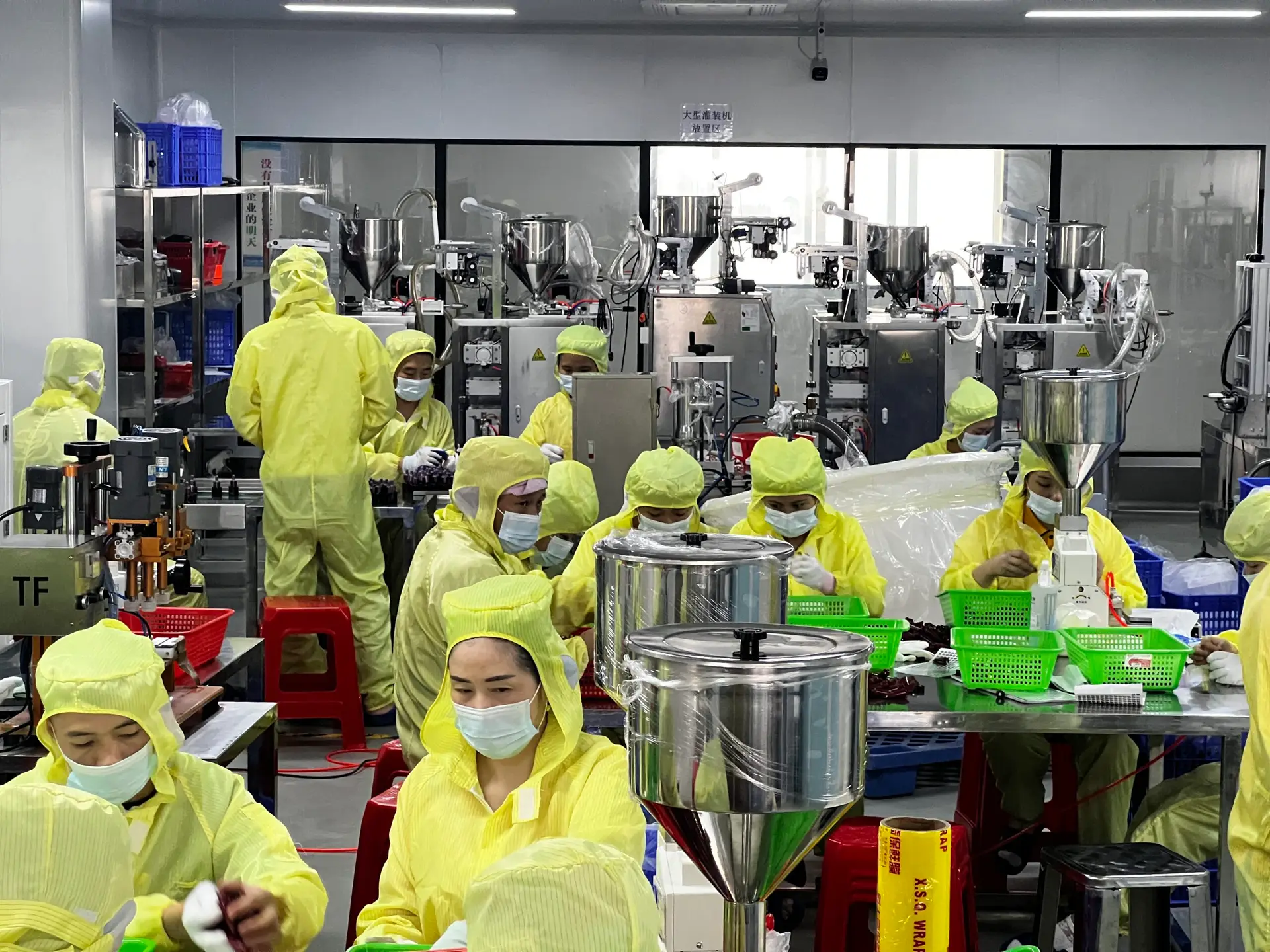
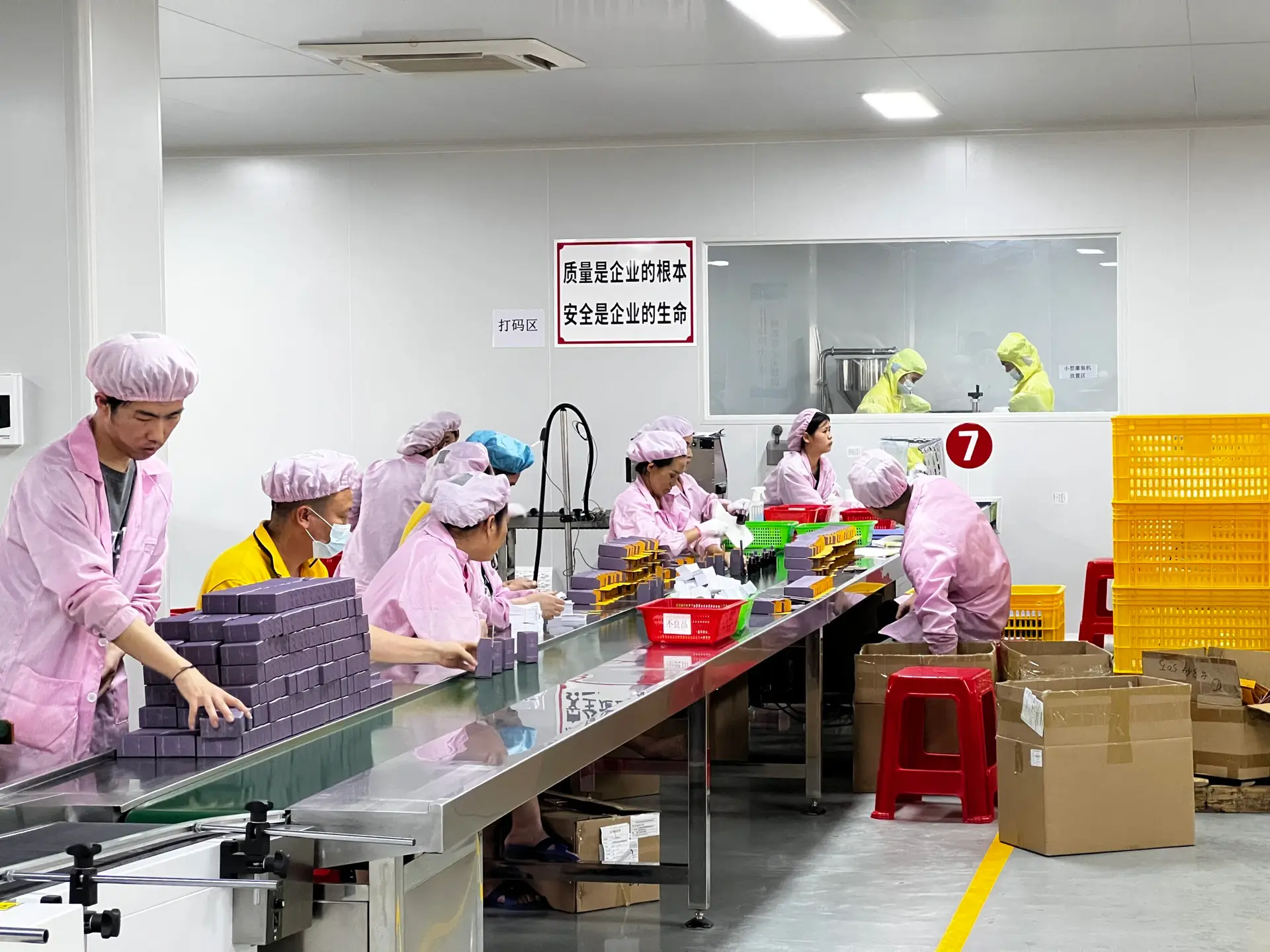
One of the most valuable characteristics I’ve observed in scalable manufacturing systems is process structure. Structured production processes ensure that every step of manufacturing follows consistent procedures. This includes raw material handling, mixing, filling, packaging, and quality inspection. When production follows structured protocols, variability is minimized, and output becomes predictable. Predictability is essential for scaling because it allows brands to plan inventory, coordinate logistics, and align product availability with market demand. I’ve seen how structured processes reduce operational risk and allow brands to grow more confidently. Without structure, production becomes reactive and unpredictable. With structure, production becomes stable and scalable.
 
Supply Chain Reliability Supports Efficient Inventory Planning and Market Expansion
Inventory planning is one of the most challenging aspects of scaling a product line, and it depends entirely on supply chain reliability. Brands must balance inventory levels carefully to avoid both overstocking and stockouts. Overstocking ties up capital and increases storage costs, while stockouts result in lost sales and weakened customer trust. I’ve seen how reliable supply chains allow brands to plan inventory with greater accuracy. When production timelines and delivery schedules are predictable, brands can maintain optimal inventory levels and respond more effectively to market demand. This operational control allows brands to expand into new markets, support larger customer bases, and scale their business more efficiently.
 
Production and Supply Chain Stability Strengthen Brand Reputation and Customer Confidence
Ultimately, I’ve learned that production and supply chain stability are deeply connected to brand reputation. Customers may not see the manufacturing process, but they experience its results every time they use the product. When customers consistently receive products that perform reliably and are available when needed, their confidence in the brand grows. This confidence leads to repeat purchases, positive reviews, and long-term customer loyalty. On the other hand, supply disruptions or inconsistent product performance can quickly damage brand credibility. Maintaining stable production and supply chain systems ensures that customers can trust the brand over time. This trust is one of the most valuable assets a brand can build.
 
The Right Manufacturing Infrastructure Provides the Foundation for Long-Term Scalability
Over the years, I’ve come to understand that scalable growth is built upon reliable infrastructure. Manufacturing systems, supply chains, and operational processes must be designed with long-term scalability in mind. Brands that invest in stable production systems position themselves for sustainable expansion. When manufacturing infrastructure supports consistent production, reliable quality, and predictable supply, brands can focus on growth strategies rather than operational challenges. This operational foundation allows brands to expand confidently, strengthen customer relationships, and build product lines capable of supporting long-term success in competitive pet care markets.

How Grooming Salons and Professional Groomers Use Private Label Conditioners to Build Brand Value

When I work closely with grooming salons and professional groomers, one of the most important shifts I help them understand is that their long-term value is not limited to the grooming service itself. The most successful grooming businesses eventually evolve beyond service providers and become trusted pet care brands in their own right. Private label dog conditioners play a central role in enabling that transformation. I’ve seen how introducing a proprietary conditioner allows grooming businesses to extend their expertise into a tangible product that customers can take home and use regularly. This creates continuity between the in-salon grooming experience and the customer’s ongoing pet care routine. Instead of the grooming relationship ending when the appointment finishes, the brand continues to be present every time the customer uses the conditioner. This ongoing interaction strengthens the brand’s presence in the customer’s daily life and builds deeper long-term trust.
 
Private Label Conditioners Help Grooming Businesses Establish Authority and Professional Identity
One of the most profound effects I’ve observed is how private label conditioners help grooming salons establish a clear and recognizable professional identity. When customers see a grooming salon offering its own branded conditioner, they immediately perceive the business differently. The salon is no longer just providing a service—it is demonstrating expertise in product selection, formulation, and coat care management. This elevates the salon’s perceived authority. Customers naturally assume that a grooming professional would only offer products that meet their own standards of performance and safety. This perception strengthens trust. I’ve seen how this trust translates into stronger customer relationships because customers begin to associate the salon not only with grooming results but also with reliable product recommendations. The conditioner becomes a representation of the salon’s expertise, reinforcing its reputation every time it is used.
 
Retailing Private Label Conditioners Creates a Stable and Scalable Revenue Stream
Another important benefit I’ve seen is the creation of additional revenue streams through retail sales. Grooming services generate income only during scheduled appointments, which limits revenue potential to available service hours. Private label conditioners allow grooming businesses to generate revenue continuously through product sales. When customers purchase conditioners for home use, the business earns revenue outside of grooming sessions. This creates a more stable financial model. I’ve seen grooming salons significantly increase their overall profitability by incorporating retail products into their business structure. This retail component reduces reliance on appointment volume alone and creates opportunities for ongoing income. It also allows the business to grow financially without necessarily increasing service capacity, which can be constrained by staffing and time limitations.
 
Private Label Products Strengthen Customer Loyalty by Extending the Grooming Experience Beyond the Salon
One of the most powerful long-term effects I’ve witnessed is how private label conditioners strengthen customer loyalty by extending the grooming experience into the customer’s home environment. When customers use a conditioner branded by the grooming salon they trust, the salon remains part of their pet care routine. Each time they use the product, they are reminded of the professional grooming experience and the results it delivered. This ongoing reinforcement strengthens the emotional connection between the customer and the grooming business. I’ve seen how customers who adopt a salon’s private label products are more likely to return consistently for grooming services because they associate the product’s performance with the salon’s expertise. This continuity strengthens retention and reduces the likelihood that customers will switch to competing grooming providers.
 
Private Label Conditioners Enhance Perceived Professionalism and Differentiate Salons from Competitors
In competitive markets, differentiation is essential for attracting and retaining customers. I’ve seen how private label conditioners help grooming businesses stand out by demonstrating a higher level of professionalism and commitment to pet care. Customers often compare grooming providers based on perceived expertise and service quality. When a grooming business offers its own branded products, it signals that the business has invested in developing a comprehensive approach to coat care. This creates a perception of specialization and expertise. Customers view the salon as more advanced and more dedicated to delivering consistent results. This differentiation strengthens the salon’s competitive position and makes it more attractive to customers who prioritize quality and reliability.
 
Offering Proprietary Conditioners Allows Grooming Businesses to Control the Full Customer Experience
Another key advantage I’ve observed is that private label conditioners allow grooming salons to control more aspects of the customer’s grooming experience. When customers use generic retail products between appointments, the grooming salon has no influence over product quality or performance. However, when customers use the salon’s own conditioner, the salon maintains influence over coat care outcomes. This helps ensure that grooming results remain consistent between visits. I’ve seen how this control improves overall customer satisfaction because customers experience consistent coat quality and grooming results. This consistency reinforces the salon’s reputation for delivering reliable outcomes.
 
Private Label Conditioners Help Grooming Businesses Build Long-Term Brand Equity and Market Recognition
Over time, I’ve seen how private label conditioners contribute to building long-term brand equity for grooming businesses. Each product sold strengthens brand visibility and reinforces the business’s identity. Customers become familiar with the brand not only through services but also through product usage. This repeated exposure strengthens brand recognition and builds customer confidence. As the brand becomes more established, it becomes easier for the grooming business to expand its product offerings and grow its market presence. Private label conditioners serve as a foundation for this broader brand development.
 
Private Label Conditioners Transform Grooming Salons into Trusted Pet Care Brands with Scalable Growth Potential
Ultimately, I’ve seen that private label conditioners play a transformative role in helping grooming salons evolve into full pet care brands. They create new revenue opportunities, strengthen customer loyalty, reinforce professional authority, and support long-term brand growth. Instead of being limited to appointment-based income, grooming businesses gain the ability to generate continuous value through product sales. This transformation creates a more scalable and sustainable business model. Private label conditioners become more than just grooming products—they become strategic tools that support brand development, customer retention, and long-term business success.

How to Launch a Private Label Dog Conditioner Successfully

When I guide brands through launching a private label dog conditioner, I always emphasize that the launch itself is not just a manufacturing event—it is a strategic milestone that shapes how the brand evolves over time. I’ve seen many brands approach product launches as simple product additions, but the brands that achieve the strongest results treat the process as a carefully structured expansion of their product ecosystem. Launching successfully requires clarity, preparation, and alignment between the product, the target customer, and the brand’s long-term growth strategy. Every decision made during the launch process influences customer perception, operational efficiency, and the product’s ability to scale. When brands approach the launch with structure and intention, the conditioner becomes more than a single SKU—it becomes a foundational part of a scalable grooming system.
 
Establishing Clear Market Positioning Before Entering Development
The first and most important step I focus on is defining how the conditioner will be positioned in the market. I’ve learned that positioning determines whether customers immediately understand the product’s purpose and relevance. When customers browse grooming products, they are not just comparing ingredients—they are evaluating whether a product fits their needs and expectations. I work with brands to identify the specific role the conditioner will play within their product line. This may involve positioning the product around coat hydration, sensitive skin care, grooming performance, or maintenance support. Clear positioning ensures that the product communicates its value immediately. When positioning is well-defined, every aspect of the product—from formula selection to packaging design—can reinforce the same message. This alignment strengthens customer trust and improves the likelihood of successful adoption.
 
Aligning Formula Strategy with Customer Expectations and Brand Identity
Once positioning is established, I focus on selecting a formula strategy that aligns with both the brand’s identity and its target customer. I’ve seen how formula performance directly influences how customers perceive product quality and brand credibility. Customers expect consistent conditioning performance, reliable coat softness, and a comfortable grooming experience. The formula must deliver these outcomes consistently. I help brands evaluate how the conditioner will perform in real-world conditions, ensuring that it meets the expectations created by its positioning. When formula performance aligns with brand positioning, customers feel confident in their purchasing decision. This confidence leads to repeat purchases and stronger brand loyalty.
 
Selecting Packaging That Reinforces Brand Perception and Supports Operational Efficiency
Packaging is another critical element of a successful launch, and I’ve learned that it influences both customer perception and operational reliability. Packaging is the first physical interaction customers have with the product, and it shapes their initial impression of the brand. I work with brands to select packaging that protects the formula, supports efficient dispensing, and aligns with the brand’s visual identity. Packaging must also perform reliably during shipping and storage, especially for e-commerce distribution. When packaging is structurally sound and visually aligned with the brand, it enhances the overall product experience and strengthens customer confidence.
 
Using Sampling to Validate Product Performance Before Full Production
Sampling is one of the most valuable stages in the launch process because it allows brands to evaluate product performance before committing to full production. I always encourage brands to approach sampling carefully and intentionally. Testing the conditioner allows brands to assess coat softness, conditioning performance, ease of use, and overall product experience. Sampling also allows brands to confirm that packaging functions properly with the formula. I’ve seen how thorough sampling helps prevent costly mistakes and ensures that the final product meets customer expectations. Sampling provides clarity and confidence before scaling production.
 
Confirming Production Specifications to Ensure Consistency and Reliability
Once the formula and packaging are finalized, I help brands confirm production specifications to ensure consistent manufacturing outcomes. This stage ensures that the product can be produced reliably at scale. Production specifications include formula preparation, filling processes, packaging assembly, and quality control procedures. These structured processes ensure that each unit performs consistently. I’ve seen how careful production planning reduces variability and ensures that customers receive the same reliable experience every time they purchase the product.
 
Planning Production Timelines to Align with Launch Strategy and Market Readiness
Production timelines play a significant role in determining how smoothly the launch proceeds. I’ve learned that brands benefit greatly from understanding production timelines early so they can coordinate marketing, inventory planning, and distribution effectively. Production involves multiple coordinated steps, including raw material preparation, manufacturing, packaging, and quality inspection. When timelines are clearly understood, brands can prepare their launch strategy more effectively. This preparation ensures that the product becomes available when customers are ready to purchase it, which strengthens initial launch momentum.
 
Integrating the Conditioner into the Brand’s Existing Product System to Strengthen Long-Term Growth
Introducing a conditioner is most effective when it is integrated into the brand’s broader grooming system. I’ve seen how conditioners help transform product lines from isolated offerings into cohesive grooming solutions. When customers see that the brand offers both shampoo and conditioner, the brand appears more complete and professional. This strengthens customer confidence and encourages repeat purchases. The conditioner becomes part of an integrated grooming routine, which strengthens the customer’s relationship with the brand.
 
Building a Scalable Foundation That Supports Future Product Expansion
Ultimately, I see launching a private label dog conditioner as a strategic step that supports scalable brand growth. A well-executed launch strengthens the brand’s product ecosystem, improves customer retention, and creates opportunities for future expansion. When the launch process is structured carefully, the conditioner becomes more than a standalone product—it becomes part of a scalable system that supports long-term brand development. This foundation allows brands to expand confidently, knowing that their product infrastructure supports sustainable growth and consistent customer satisfaction.

Why Partner with Metro Private Label for Your Dog Conditioners Line?

If you’re planning to launch a private label dog conditioner line in 2026 or beyond, you’re entering a category that offers strong repeat purchase behavior and long-term brand-building potential—but only when it’s executed correctly. Dog conditioner isn’t a one-time purchase product. It becomes part of a pet owner’s ongoing grooming routine, which means customers quickly notice whether the product performs consistently, detangles effectively, and maintains coat softness over time. We approach dog conditioners not as a simple add-on product, but as a core commercial SKU designed to perform reliably across real customer usage, shipping conditions, and long-term production cycles.
 
Built on Real Market Experience Across E-commerce, Grooming, and Distribution Channels
Over the years, we’ve supported dog conditioner projects for Amazon sellers, Shopify-based pet brands, professional grooming salons, and international distributors. One consistent pattern we’ve observed is that most products don’t fail because the concept is wrong—they fail because execution isn’t aligned with how customers actually use and evaluate the product. Pet owners expect conditioners to improve coat softness immediately, reduce tangles during grooming, and remain easy to use across repeated applications. Our experience across multiple sales channels allows us to guide formula positioning, packaging selection, and production planning so your product aligns with real market expectations from the beginning.
 
Developed With Real Grooming Behavior and Repeat Purchase Patterns in Mind
Our development process always focuses on what happens after the product reaches the customer. We consider how easily the conditioner spreads through different coat types, how effectively it improves coat manageability, and how the product performs over repeated use. Dog conditioners are routine-use products, which means consistency is critical. When customers experience reliable performance every time they groom their pet, the product naturally becomes part of their regular purchase cycle. We structure formula development around this repeat-use behavior, helping ensure your product builds long-term customer confidence rather than short-term novelty.
 
Product Direction That Matches Your Brand Positioning and Target Market
Every brand operates with a different positioning strategy, and dog conditioners must align with that identity to succeed. Some brands focus on sensitive skin solutions using oatmeal and gentle conditioning systems, while others emphasize detangling performance for grooming-focused customers or moisturizing benefits for coat health maintenance. We help you align formula characteristics, texture profile, and packaging format with your brand’s pricing strategy, target customer, and sales channel. This alignment ensures your product feels intentional and credible, strengthening your overall product ecosystem rather than functioning as an isolated SKU.
 
Packaging Designed for Real Shipping Conditions and Customer Usability
Packaging is more than visual presentation—it directly affects product protection, usability, and customer satisfaction. Dog conditioners must maintain structural integrity during shipping, prevent leakage, and remain easy for customers to handle during grooming sessions. We help coordinate packaging solutions that balance durability, usability, and brand presentation, ensuring your product arrives safely and performs reliably. Strong packaging not only protects the formula but also reinforces your brand’s perceived quality and professionalism in competitive markets.
 
Production Stability That Supports Both Initial Launch and Future Growth
Launching a dog conditioner successfully is only the first step. Long-term success depends on maintaining consistent supply, reliable formula performance, and predictable production timelines. We structure our manufacturing systems to ensure batch consistency, packaging compatibility, and scalable production planning. This allows you to reorder confidently and expand production smoothly as your brand grows. Establishing production stability early ensures your supply chain can support both your first launch and future expansion without unnecessary disruption.
 
Practical Minimum Order Quantities That Support Real Business Launches
We understand that most brands prefer to validate demand before committing to large production volumes. Our private label dog conditioner programs are designed with practical minimum order quantities that allow you to enter the market efficiently while managing inventory risk. This approach allows you to gather real customer feedback, refine your positioning, and scale production gradually based on actual demand rather than speculation. As your sales increase, production can expand seamlessly without requiring major changes to your formula or packaging structure.
 
Compliance and Documentation Prepared for Global Market Requirements
Dog conditioners sold through e-commerce platforms, distributors, and retail channels require proper ingredient documentation and compliant labeling. We help prepare ingredient listings, technical documentation, and packaging structure so your product aligns with the regulatory expectations of your target markets. Preparing compliance elements early ensures smoother product launches and prevents avoidable delays during expansion into new regions or sales channels.
 
A Long-Term Manufacturing Partner Focused on Your Brand’s Sustainable Growth
When you partner with Metro Private Label, you’re working with a team that understands how dog conditioner products perform not only during launch, but throughout their entire lifecycle. We focus on building stable formulas, reliable packaging systems, and scalable production processes that support repeat orders and long-term expansion. Many of the brands we work with begin with a single conditioner SKU and later expand into complete grooming systems. Our goal is not simply to manufacture your product, but to help you build a dog conditioner line that launches smoothly, performs consistently, and supports your brand’s growth over time.

Ready to Launch Your Skincare Line?

*Metro Private Label takes your privacy very seriously. All information is only used for technical and commercial communication and will not be disclosed to third parties.

Get Your Custom Skincare Solution Today!

Don’t wait—fill out the form and let our team create the perfect skincare solution for your brand. Expect a personalized quote within 24 hours and start building your brand’s success now!

Submit Your
Private Label Skin Care Request

Fill out this form with your detailed needs and our customer support team will contact you shortly. We will assign a professional agent to follow up on your project and provide personalized assistance.

To get the fastest response, submit your inquiries using the form. If you encounter any issues with submission, you can also email us directly at info@metroprivatelabel.com .

*Metro Private Label takes your privacy very seriously. All information is only used for technical and commercial communication and will not be disclosed to third parties.

Submit Your
Private Label Skin Care Request

Fill out this form with your detailed needs and our customer support team will contact you shortly. We will assign a professional agent to follow up on your project and provide personalized assistance.

To get the fastest response, submit your inquiries using the form. If you encounter any issues with submission, you can also email us directly at info@metroprivatelabel.com .

*Metro Private Label takes your privacy very seriously. All information is only used for technical and commercial communication and will not be disclosed to third parties.