Your Trusted Centella Skincare Manufacturer
We help skincare brands develop market-ready products with reliable formulations, professional packaging, and scalable manufacturing support—so you can launch confidently and grow your product line with a stable supply chain.

Private Label Centella Skincare
At Metro Private Label, we believe private label Centella skincare is not simply about adding Cica extract to a standard formula. Centella is already widely recognized for soothing, hydration, and barrier-support positioning, so brands need a clearer reason for customers to choose their product. Before discussing ingredient percentages, we first consider the target consumer, product format, texture, sales channel, and price range. A Centella ampoule may work as an e-commerce hero product, while a barrier cream, calming toner pad, or gentle cleanser may be more suitable for a complete sensitive-skin range.
From our experience, successful Centella products are usually built around a specific skincare need rather than the ingredient name alone. Centella can be combined with Panthenol and Ceramides for barrier support, Hyaluronic Acid and Ectoin for hydration, or Niacinamide and Azelaic Acid for blemish-prone and uneven-looking skin. However, more active ingredients do not automatically create a better formula. The ingredient combination, concentration, texture, stability, claims, packaging, and target retail price must all work together.
At Metro Private Label, we help brands turn Centella skincare ideas into market-ready products. You can start with one of our mature formulas for a faster launch or adjust the formula, texture, and packaging around your target market. We support formula selection, sample development, packaging coordination, stability evaluation, bulk production, and available technical documents such as INCI lists, COA, SDS, and product specifications. Our goal is to help you create Centella skincare that customers can understand, brands can market clearly, and businesses can reorder with confidence.

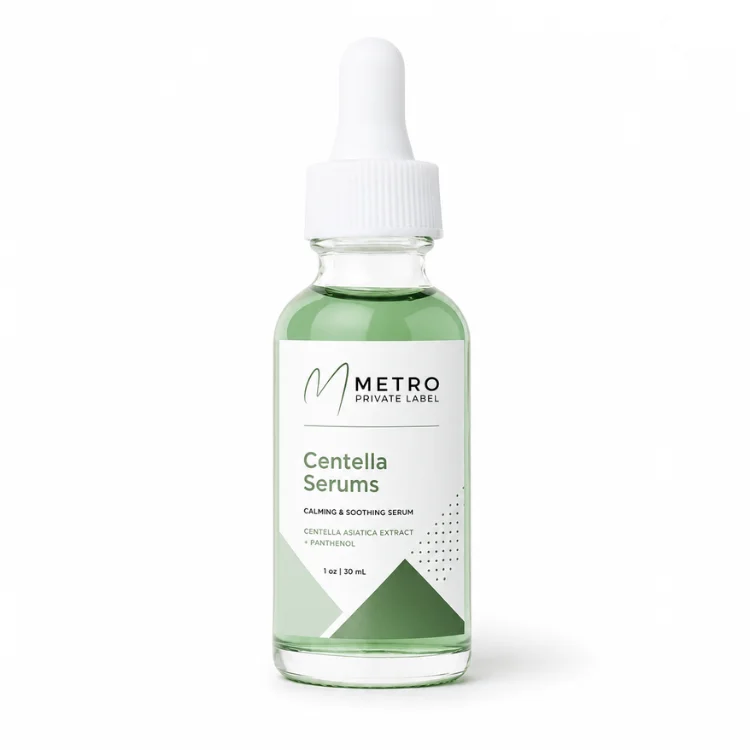
Centella Serums & Ampoules
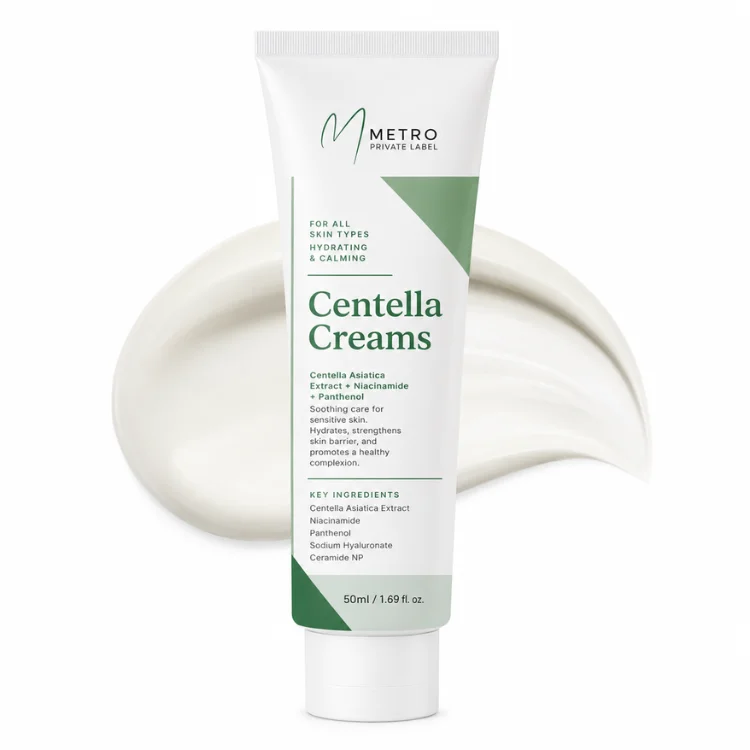
Centella Creams & Moisturizers
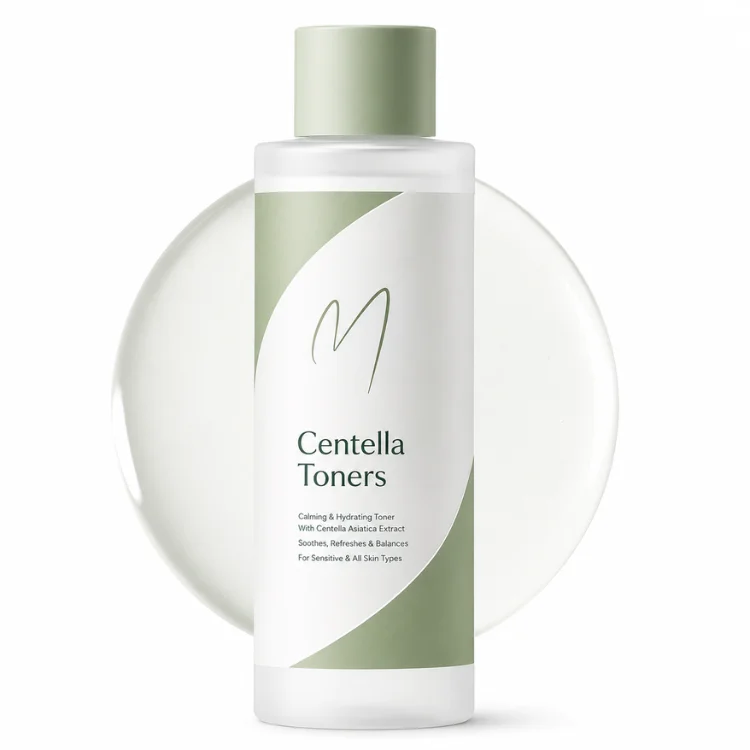
Centella Toners & Essences
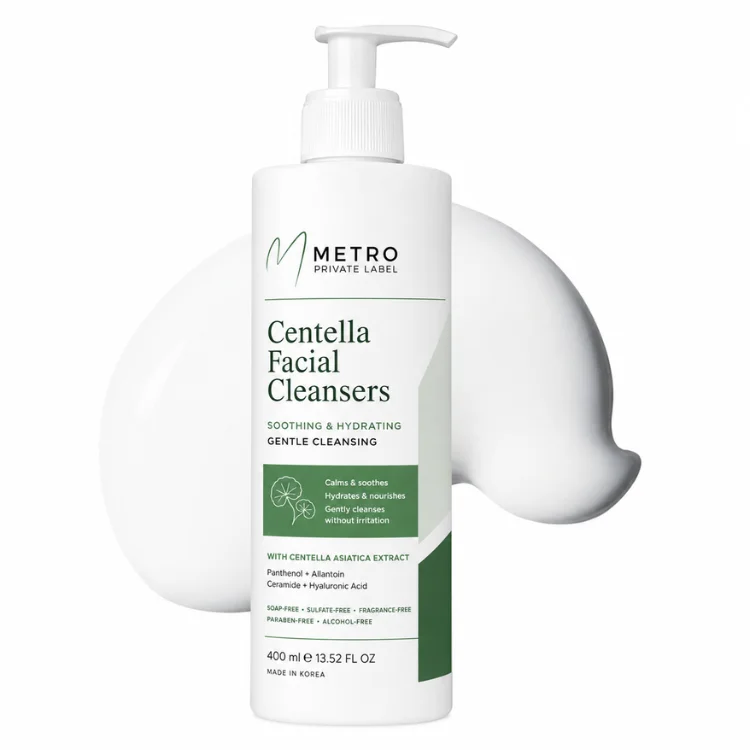
Centella Facial Cleansers
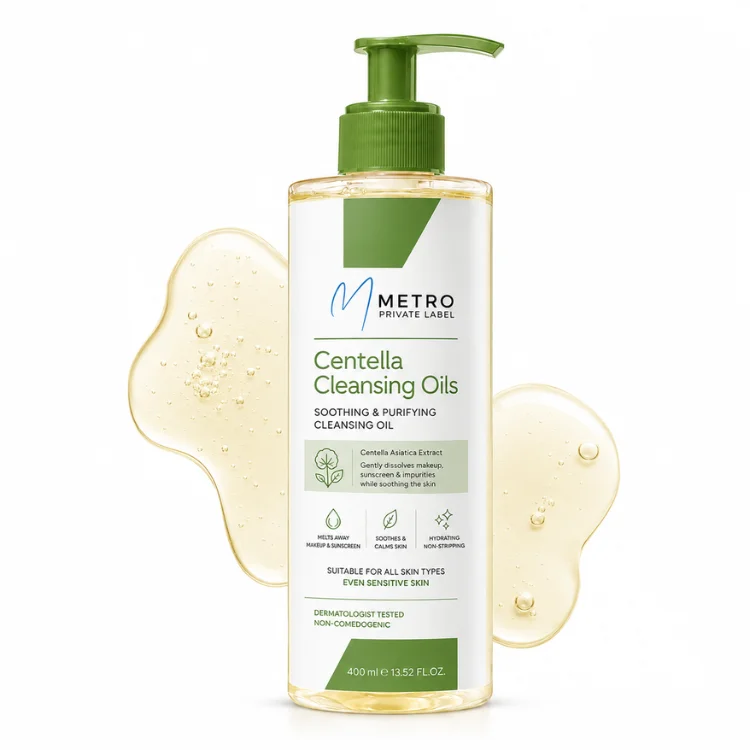
Centella Cleansing Oils & Balms
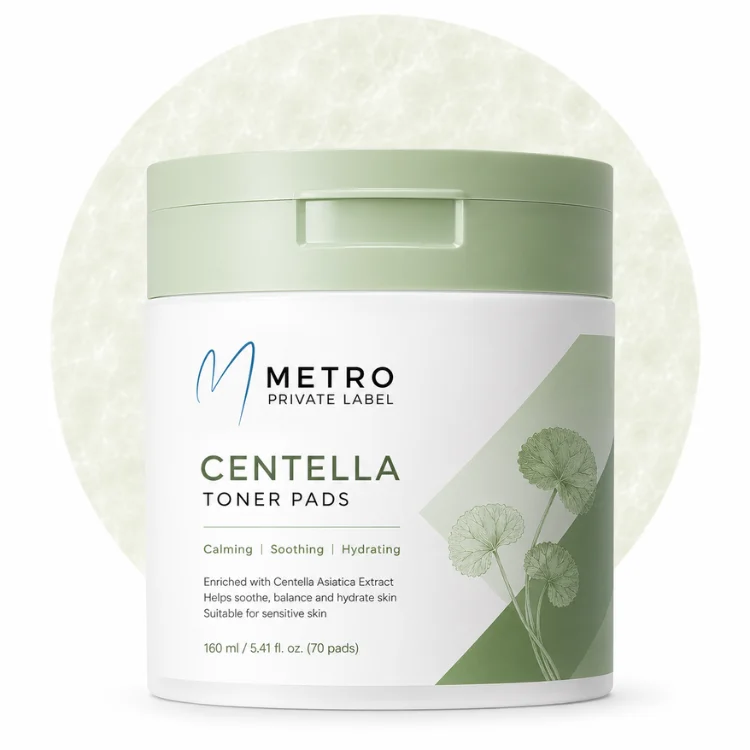
Centella Toner Pads
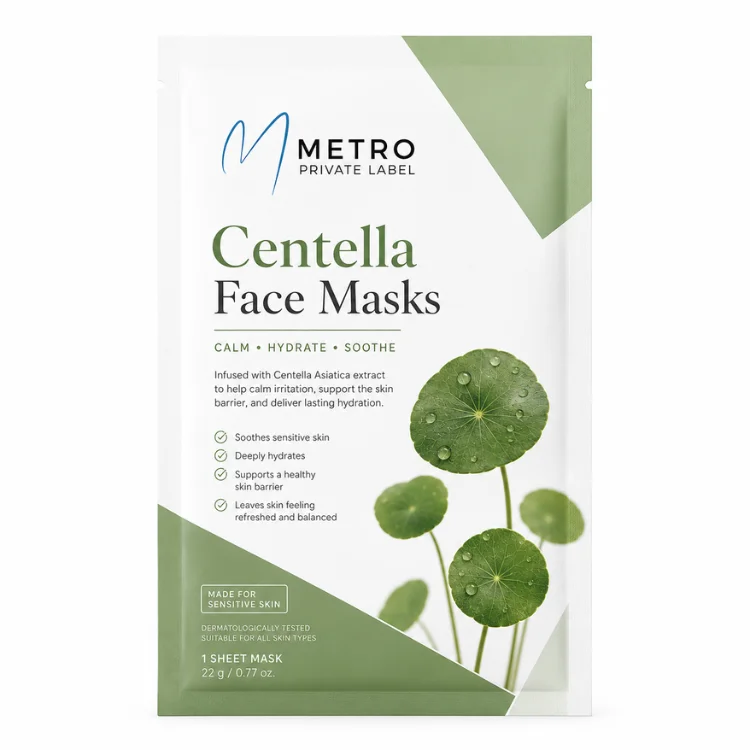
Centella Face Masks
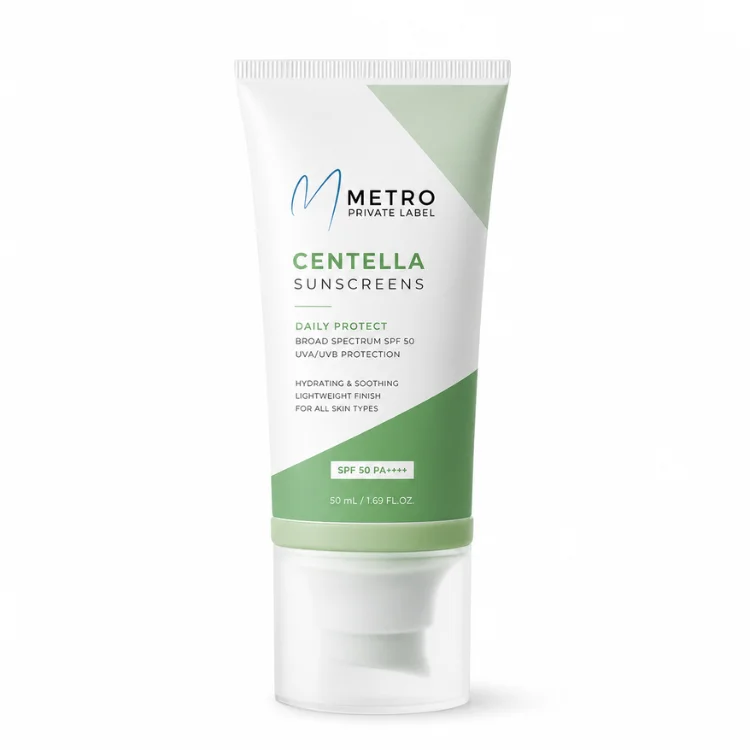
Centella Sunscreens & Sun Sticks
Build a Private Label Centella Skincare Line That Fits Your Market
If you are looking for a private label Centella skincare manufacturer, you probably need more than a factory with a standard formula. You may already operate an e-commerce brand, clinic, beauty business or distribution channel and need products that fit your customers, selling price and market positioning.
You have come to the right place. At Metro Private Label, we understand that a successful Centella product is not created by simply adding Cica extract and changing the packaging. An Amazon hero serum, a lightweight moisturizer for retail and a professional barrier-care range for clinics require different textures, ingredient combinations, packaging and claims.
From what we see in the market, the strongest Centella products focus on clear consumer needs such as soothing care, lightweight hydration, barrier support and care for sensitive or blemish-prone skin. We help you choose the right product format and formulation direction so the finished product is easier for customers to understand and easier for your brand to sell.
Our Core Private Label Centella Skincare Products
Centella Serums & Ampoules: Hero products for Amazon, Shopify and beauty brands, with soothing, barrier-support, brightening, blemish-care or premium anti-aging concepts.
Centella Creams & Moisturizers: Available as lightweight gel creams, daily soothing moisturizers and richer barrier creams for different skin types and climates.
Centella Toners & Essences: Watery toners, essence toners and milky formulas designed for hydration, soothing care and complete Cica skincare routines.
Centella Facial Cleansers: Gentle gel, foam, milk and amino-acid cleansers developed for daily cleansing without creating a heavy or stripping skin feel.
Centella Cleansing Oils & Balms: First-step cleansers that remove makeup, sunscreen and oil-based impurities while supporting a complete double-cleansing routine.
Centella Toner Pads: Convenient pre-soaked pads for daily hydration, calming care and localized use, especially suitable for e-commerce and social-media brands.
Centella Face Masks: Sheet masks, hydrogel masks, sleeping masks and clay masks developed for intensive hydration, soothing and barrier-care positioning.
Centella Sunscreens & Sun Sticks: Daily sun creams, sun milks and portable sticks that combine UV protection with Centella-based skincare positioning.
Manufacturing Support for Centella Skincare Brands
We know that choosing a manufacturer is not only about finding a formula. Your product must also fit your sales channel, packaging requirements, target cost and future product plans.
At Metro Private Label, we support formula selection, customization, sample development, packaging coordination and bulk production. We can also provide available technical documents such as INCI lists, COA, SDS and product specifications.
Our goal is simple: to help you turn a Centella skincare idea into a product that is practical to manufacture, clear to market and reliable enough to support long-term growth.

More Than Just a Private Label Centella Skincare Manufacturer
At Metro Private Label, we understand that your goal is not simply to manufacture another Centella skincare product. You want a product that fits your market, connects with the right customers, supports repeat purchases, and gives your brand room to grow. That is why we look beyond production and help you make better product decisions before time and budget are committed.

Develop Products Around Real Market Needs
We start by understanding who will buy the product, where it will be sold, and what role it should play in your range. An Amazon hero ampoule, a clinic barrier cream, and a retail toner pad require different formulas, textures, packaging, pricing, and product stories. We use this commercial context to recommend options that make sense for your channel.

Reduce Risks Before Mass Production
A popular ingredient alone does not guarantee a successful product. Formula stability, skin feel, packaging compatibility, production feasibility, and cost structure must work together. By reviewing these factors during development, we help reduce unsuitable formulas, unclear positioning, unexpected packaging costs, and products that fail to match customer expectations.
Build Products Customers Will Reorder
Consumers do not repurchase a product simply because it contains Centella. They repurchase because the texture feels comfortable, the product fits naturally into their routine, and its purpose is easy to understand. We therefore pay close attention to absorption, ingredient combinations, packaging experience, and the overall value your customers receive
Grow Through One Manufacturing Partner
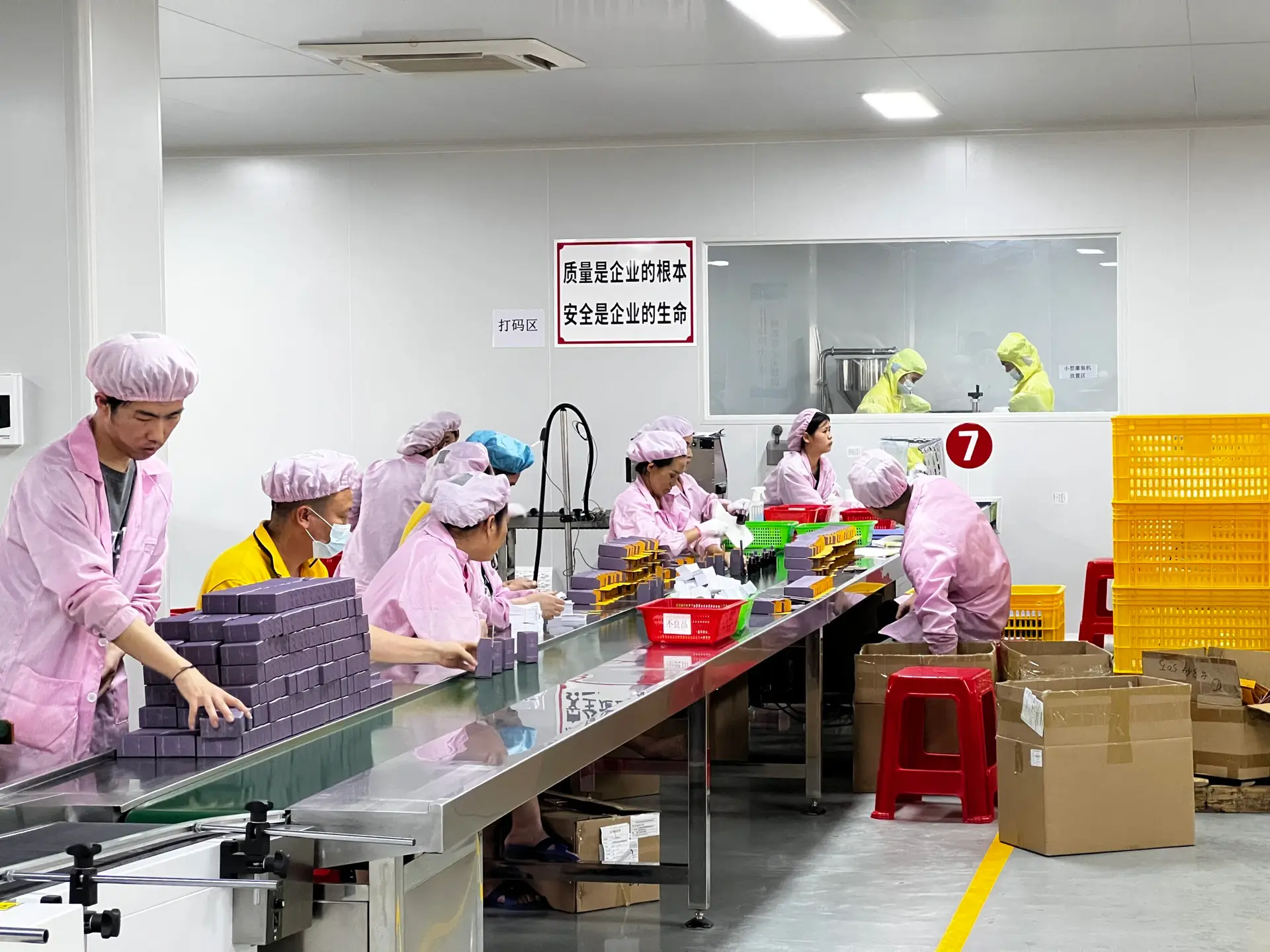
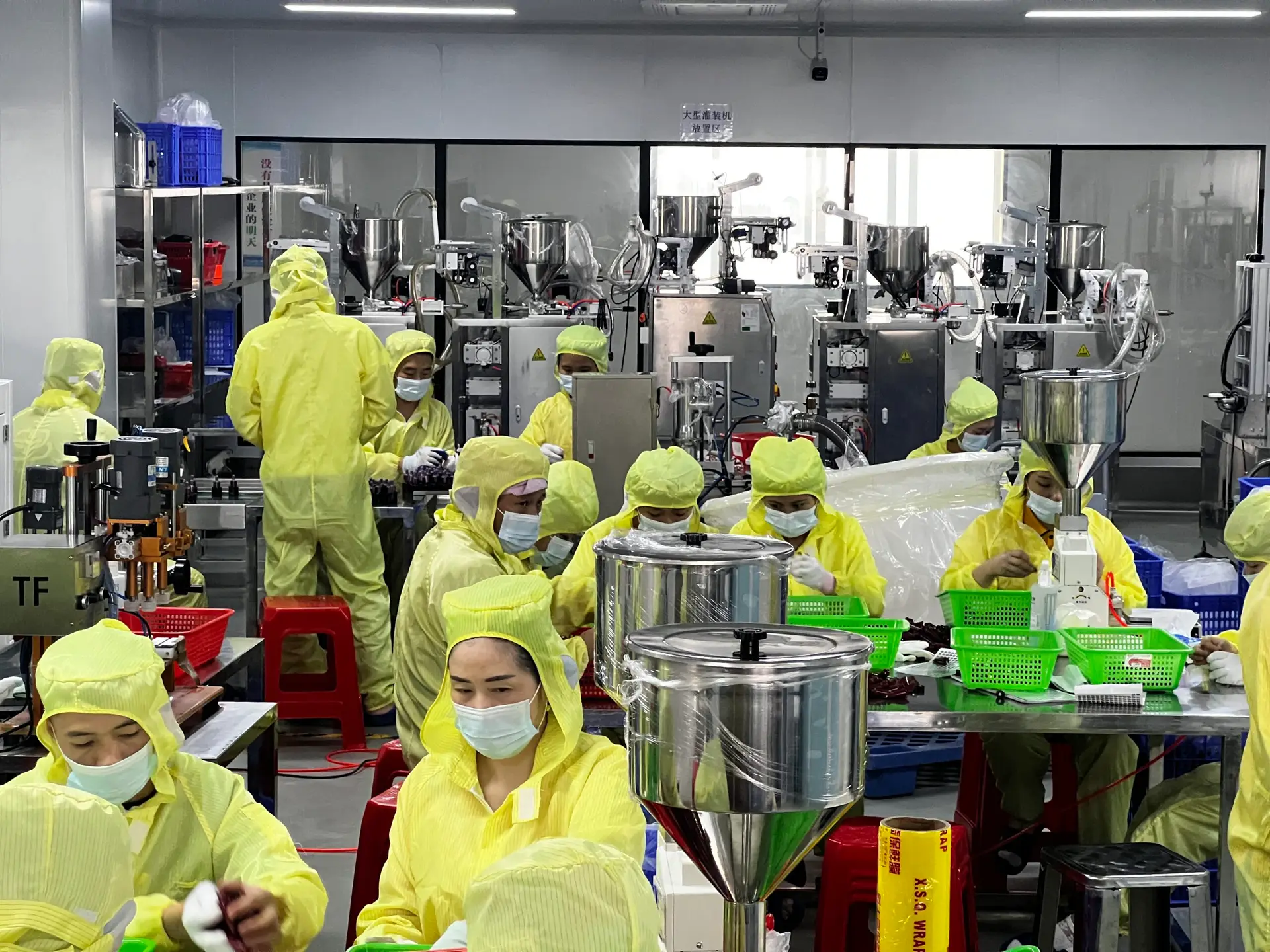
From formula selection and sample development to packaging coordination, documentation, production, and repeat orders, we support the complete private label process. This gives you more time to focus on marketing, customer acquisition, and channel growth while we manage the manufacturing details behind the product.
Build a Private Label Centella Skincare Line Around Your Business Goals
At Metro Private Label, we understand that developing a Centella skincare product is not simply about choosing a formula, selecting a bottle, and adding your logo. If you already sell through Amazon, Shopify, retail stores, distribution networks, clinics, or professional beauty channels, your real goal is to create a product that fits your customers, supports your target selling price, works within your sales model, and has the potential to generate repeat orders.
Many clients first come to us with a general idea, such as a soothing Centella serum, a barrier cream, or a complete Cica skincare range. However, turning that idea into a commercially practical product requires several important decisions before production begins. Will the formula meet your customers’ expectations? Does the texture match your intended positioning? Is the packaging suitable for e-commerce shipping or retail display? Can the cost structure support your required margin? This is where we believe a manufacturing partner should provide more value than simply filling products into packaging.
Develop Products Based on Your Market, Not Only Ingredients
When we work on a Centella skincare project, we do not begin by adding as many active ingredients as possible. We first consider who will buy the product, where it will be sold, what problem it should address, and how much the customer is expected to pay.An Amazon hero ampoule may require clear benefits, competitive pricing, strong visual presentation, and packaging that can withstand fulfilment and transportation. A professional clinic range may need gentler positioning, comfortable textures, reliable daily use, and packaging that communicates trust. A distributor may prefer mature formulas, multiple coordinated SKUs, and a simpler route to market. By connecting your commercial needs with realistic manufacturing options, we help you create products with a clearer purpose.
Make Smarter Decisions Before Production
A successful Centella product depends on many details working together. Formula stability, ingredient compatibility, absorption, skin feel, packaging performance, production cost, documentation, and future scalability can all affect the final result.We help evaluate these factors during the development stage instead of waiting until mass production to discover problems. This can reduce repeated sampling, unsuitable packaging, unexpected cost increases, unclear product claims, and unnecessary production delays. We will also tell you when a concept needs to be simplified or adjusted, because agreeing with every request is not always the best way to protect your project.
Build Products Customers Will Continue Using
Consumers do not repurchase skincare simply because Centella appears on the ingredient list. They repurchase because the product feels comfortable, fits naturally into their routine, and gives them a clear reason to continue using it.That is why we pay attention to practical details such as texture, spreadability, absorption, fragrance level, ingredient combinations, packaging experience, and ease of use. Whether you are developing a lightweight ampoule, a soothing toner pad, a gentle cleanser, or a richer barrier cream, the product must make sense to the person using it—not only look attractive in a product presentation.
Plan Beyond Your First Centella Product
Your first product may only be a Centella serum or cream, but it can later become the foundation of a wider skincare range. A successful hero ampoule may expand into toners, cleansers, moisturizers, toner pads, masks, cleansing oils, or sun-care products.We therefore consider not only your first purchase order, but also how the formula direction, packaging style, price positioning, and customer story can support future products. This helps you build a more consistent range instead of developing unrelated SKUs one at a time.From formula selection and sample evaluation to packaging coordination, technical documentation, production, and repeat-order planning, we work as your long-term manufacturing partner. Our goal is to provide more value than you may expect from a private label factory and help you create Centella skincare products that customers can understand, enjoy using, and continue purchasing as your business grows.
FAQs Centella Skincare
For your convenience, we’ve gathered the most commonly asked questions about our Centella Skincare . However, should you have any further queries, please don’t hesitate to reach out to us.
1. What types of Centella skincare products can you manufacture?
We can manufacture Centella serums and ampoules, creams and moisturizers, toners and essences, facial cleansers, cleansing oils and balms, toner pads, face masks, sunscreens, and sun sticks. We can also help you combine several products into a coordinated Cica skincare routine based on your sales channel and target customers.
2. Can you customize the Centella formula for our brand?
Yes. We can adjust the texture, ingredient combination, skin feel, fragrance level, product positioning, and target cost. Centella can be combined with ingredients such as Panthenol, Ceramides, Ectoin, Hyaluronic Acid, Niacinamide, Azelaic Acid, or Peptides. We will recommend a direction that fits your customers instead of simply adding more active ingredients.
3. Do you offer ready-made and fully customized formulas?
We offer both options. Our mature formulas are suitable for brands that want a faster and more cost-effective launch. We can also modify an existing formula or develop a more customized concept around your target market, reference product, desired texture, and retail price. We will help you choose the most practical route for your project.
4. What is your minimum order quantity for Centella skincare?
Our standard MOQ normally starts from 1,000 units per SKU. The final quantity may depend on the formula, packaging, printing process, and product format. Toner pads, sheet masks, sunscreens, or fully customized packaging may have different requirements, so we review the complete project before confirming the MOQ.
5. How long does sampling and mass production take?
Samples normally take around 7–10 working days after the formula direction and requirements are confirmed. Mass production usually takes approximately 25–35 working days after the formula, packaging, artwork, and deposit are approved. Custom formulas, special packaging, testing, or sunscreen projects may require additional time.
6. Can you help us choose the right Centella product for our sales channel?
Yes. We first consider where the product will be sold and who will buy it. A serum or ampoule may work well as an Amazon or Shopify hero product, while clinics may prefer a gentle cleanser, barrier serum, and repair cream routine. Distributors may need mature formulas, multiple SKUs, clear pricing, and faster private-label preparation.
7. Can you source and customize the packaging?
Yes. We can support bottles, jars, tubes, droppers, airless pumps, toner-pad jars, mask sachets, labels, cartons, and master cartons. We also consider practical issues such as leakage, breakage, product compatibility, e-commerce shipping, retail display, and target cost. You can use an existing packaging option or ask us to source a more customized solution.
8. What documents can you provide for the finished products?
Depending on the formula and project, we can provide available documents such as the INCI list, COA, SDS, product specification, batch information, and relevant testing records. Documentation requirements differ between markets, so please tell us whether you plan to sell in the United States, United Kingdom, European Union, Middle East, or another region.
9. What testing and quality checks do you perform?
We review formula stability, appearance, odor, texture, pH, packaging compatibility, and production feasibility before mass production. Quality checks are also carried out during raw-material receiving, filling, packaging, and finished-product inspection. Additional microbiological, compatibility, efficacy, SPF, or market-specific testing can be arranged according to the product and your requirements.
10. Do you support international shipping and repeat orders?
Yes. We work with international skincare brands, e-commerce sellers, clinics, and distributors. We can coordinate export packaging, commercial documents, and shipping arrangements with your nominated forwarder or available logistics partners. We also keep project and production information organized to make repeat orders and future SKU expansion easier.
Metro Private Label understood that we needed more than a standard Centella formula. Their team considered our target customer, Amazon pricing, packaging durability, and launch schedule before recommending a direction. The process was organized, practical, and helped us move from sampling to production with fewer revisions than expected.
Megan Whitmore, E-commerce Brand Directorfrom United States
What stood out was the way Metro Private Label explained the reasoning behind each recommendation. They helped us compare serum textures, supporting ingredients, packaging options, and cost levels without pushing us toward unnecessary customization. We always understood what we were approving and how each decision affected the final product.
Callum Fraser, Skincare Product Founderfrom United Kingdom
We needed a supplier that could provide mature Centella formulas, clear quotations, and dependable repeat-production planning. Metro Private Label responded quickly and gave us realistic information about MOQ, lead times, packaging, and documentation. Their straightforward communication made the entire sourcing process easier for our team.
Katharina Vogel, Cosmetics Category Buyerfrom Germany
Our priority was to create a professional Centella range that felt gentle, credible, and suitable for regular client use. Metro Private Label helped us develop a clear routine instead of treating each product as a separate item. Their guidance on texture, packaging, and product positioning gave the final collection a much more consistent identity.
Élodie Marchand, Aesthetic Clinic Directorfrom France
Metro Private Label helped us select products that suited our retail channels rather than simply showing us a large formula catalogue. Their team provided clear options for Centella serums, creams, cleansers, and toner pads, along with practical packaging and production advice. This allowed us to evaluate costs quickly and plan future SKU expansion with greater confidence.
Matteo Bianchi, Regional Beauty Distributorfrom Italy





Metro Private Label in Numbers
Happy Clients
0 +
Million-dollar Buyers
0 +
Formulation
0 +
Professional Staffs
0 +
Your Ultimate Guide to Centella Skincare
If you’re planning to add Centella skincare products to your lineup—whether it’s your first soothing serum, a new barrier-care range, or an expansion of an existing sensitive-skin collection—you’re not simply following another K-beauty ingredient trend. You’re entering a category that already has strong consumer recognition across e-commerce, clinics, retail, and international distribution. Centella, also widely known as Cica, is associated with soothing care, lightweight hydration, skin-barrier support, and products designed for sensitive-feeling or blemish-prone skin. When the product purpose is clear and the daily-use experience is comfortable, Centella products can become routine essentials that support repeat purchases rather than short-term ingredient-driven sales.
Over the past few years, we’ve seen Centella develop from a niche K-beauty ingredient into a much broader commercial skincare direction. At Metro Private Label, we’ve also seen that the products most likely to succeed are not always the ones with the longest active-ingredient lists or the highest Centella percentages. The stronger projects usually begin with a clear target customer, sales channel, product format, texture, price structure, and supply plan. A Centella ampoule for Amazon, a barrier cream for a clinic, and a ready-to-launch range for a distributor may use the same hero ingredient, but they require very different development and manufacturing decisions.
This guide is built around what actually happens behind Centella skincare projects, from selecting the right first SKU and choosing supporting ingredients to deciding between ready-made and custom formulas, planning packaging, calculating MOQ and margins, and preparing for mass production. Instead of discussing Centella only from an ingredient perspective, we want to explain how these products are developed, priced, tested, packaged, launched, and reordered in real business environments. These decisions often determine whether a Centella product becomes a scalable part of a brand or simply another similar-looking item in an already competitive category.
Table of Contents
Why Are Brands Searching for Centella Skincare Manufacturers?
When a buyer searches for a Centella skincare manufacturer, they are usually no longer researching Centella as an ordinary skincare consumer. In most cases, they already understand the ingredient’s general market position and are now evaluating whether it can support a commercially viable product. They may operate an Amazon or Shopify brand, manage a professional beauty clinic, develop products for an existing skincare business, or purchase for a retail and distribution network. What they need is not another explanation of Centella’s basic benefits, but a clearer understanding of how the ingredient can be turned into a product that fits a specific customer, sales channel, price range, and long-term supply plan.
From my experience in private label skincare development, the real question behind this search is rarely “Is Centella popular?” Centella, also widely marketed as Cica, already has strong recognition in soothing, hydration, sensitive-skin, blemish-care, and barrier-support categories. The more important question is whether a new Centella product can enter an increasingly competitive market with a clear reason for customers to choose it. That requires much more than placing Centella on the ingredient list. The product format, supporting ingredients, texture, packaging, claims, retail price, and channel strategy must all communicate one consistent commercial idea.
Centella Has Recognition, but the Category Is Already Competitive
Centella has become familiar to many consumers through K-beauty products, online marketplaces, beauty retailers, clinics, and social media. Shoppers now regularly encounter Centella ampoules, Cica creams, calming toner pads, gentle cleansers, masks, and barrier-focused moisturizers. This existing awareness can reduce the amount of education required when launching a product because customers already associate Centella with a recognizable skincare purpose.
However, the same recognition also means that brands are entering a crowded category. A new product cannot rely on the ingredient name alone when customers already have many comparable options. A statement such as “made with Centella” may explain what the product contains, but it does not explain who the product is for, how it fits into a skincare routine, or why it deserves attention over an established competitor. In practice, ingredient popularity makes a product easier to introduce but not necessarily easier to sell.
A commercially stronger concept gives Centella a specific role. It may be a lightweight ampoule for oily and sensitive-feeling skin, a richer moisturizer for dry and barrier-compromised routines, a calming toner pad for convenience-led e-commerce customers, or a professional home-care cream for clinic clients. Each direction requires different decisions around formula structure, texture, packaging, product language, and price. The clearer that role is, the easier it becomes for customers to understand the product and for the brand to market it consistently.
Different Buyers Search for Different Business Reasons
Although several buyer groups may use the same search phrase, they are often trying to solve very different commercial problems. An e-commerce operator may be looking for a hero SKU that can be explained quickly through images, videos, marketplace listings, and paid advertising. Serums and ampoules are often attractive in this environment because the texture, ingredient concentration, and product application are easy to demonstrate. At the same time, the operator must consider advertising costs, fulfilment fees, packaging durability, review performance, inventory turnover, and replenishment speed.
Beauty-industry founders and product developers usually approach the search with a deeper understanding of ingredients, textures, reference products, and positioning. They may want to know which type of Centella material is being used, how it is supported by ingredients such as Panthenol, Ceramides, Ectoin, Niacinamide, or Azelaic Acid, and whether the final sensory experience matches the intended market level. Their concern is not simply whether a manufacturer has an available formula, but whether the product concept can be translated into a stable, repeatable, and commercially realistic result.
Clinic and professional skincare operators often focus more on skin comfort, product consistency, professional presentation, and repeat use. Their products may be introduced through treatments, consultations, membership programmes, or home-care recommendations. In this setting, a gentle and dependable product can be more commercially valuable than a complicated formula with too many active ingredients and an unclear purpose. Distributors and retail buyers, by comparison, are usually more concerned with mature formulas, workable margins, product variety, lead time, documentation, and reliable supply. They need products that retailers can understand quickly and that suppliers can reproduce consistently.
Product Format Determines How the Opportunity Is Used
The Centella category includes many product formats, but not every format serves the same business purpose. Serums and ampoules are often selected as hero products because they support a focused ingredient story and can command a higher perceived value. Creams and moisturizers may provide stronger repeat-purchase potential because they fit naturally into daily routines and can be positioned around lightweight soothing, intensive moisturization, or barrier support.
Toners, essences, and toner pads can help a brand develop a broader Cica routine while offering different customer experiences. Toner pads are especially useful for convenience-led and social-media-driven markets because their use is visually easy to demonstrate. Facial cleansers, cleansing oils, and masks can extend a product collection, although Centella may play a supporting rather than dominant role in rinse-off products. Sunscreens can combine daily UV protection with soothing skincare positioning, but they normally require more complex testing, longer development timelines, and closer attention to market-specific regulations.
For this reason, I do not believe a brand should choose a serum only because serums appear frequently in the market. The right first SKU should be based on the customer’s routine, the sales channel, the expected retail price, and the role the product will play in the wider range. A strong product decision connects consumer behavior with manufacturing practicality rather than following category popularity alone.
More Ingredients Do Not Automatically Create Better Differentiation
One of the most common development mistakes is trying to make a Centella product appear more competitive by adding as many active ingredients as possible. Centella may be paired with Panthenol, Ceramides, Beta-Glucan, or Ectoin for barrier-focused concepts. Hyaluronic Acid and Betaine may support hydration, while Niacinamide and Azelaic Acid may suit products intended for blemish-prone or uneven-looking skin. Peptides, fermented ingredients, or specialized Centella components may support a more technical or premium product story.
These combinations can be valuable when they serve a clear purpose, but a longer ingredient list does not automatically produce a stronger product. Every additional ingredient may affect formula stability, texture, skin feel, cost, claims, production complexity, and customer understanding. If a product tries to communicate soothing, brightening, acne care, pore care, anti-aging, hydration, and barrier repair at the same time, the message can become too broad to be meaningful.
A more effective approach is to begin with one primary customer need and build the formula around it. Once the product purpose is clear, the supporting ingredients, texture, packaging, product name, and claims can work together. This creates a more coherent product and makes it easier for customers to understand why they should use it.
Cost, Packaging, and Retail Price Must Support the Same Strategy
Many Centella projects become commercially difficult because the formula, packaging, quantity, and target retail price are planned separately. A founder may request several premium active ingredients, a heavy glass bottle, complex decoration, an outer carton, extensive testing, and a small initial order, while still expecting a low unit cost and an accessible retail price. Each request may be reasonable on its own, but together they may create a product that cannot support the intended business model.
Manufacturing cost is only one part of the final calculation. An e-commerce brand must also account for advertising, marketplace commissions, fulfilment, discounts, returns, shipping, and customer acquisition. A distributor needs sufficient margin for both wholesale and retail partners. A clinic needs a price that supports professional positioning while remaining acceptable to its existing clients. If the formula and packaging consume too much of the available margin, even a technically impressive product may become commercially unsustainable.
This is why product development should often begin with the target retail price and channel structure. Once the intended selling price, expected margin, order quantity, and customer position are understood, the formula and packaging can be designed within a realistic cost framework. This approach does not reduce product quality; it helps ensure that quality is delivered in a form the business can actually sell and reorder.
Reliable Reproduction Matters More Than One Attractive Sample
A good sample is important, but it is not the final measure of a successful private label project. The product must also be capable of being manufactured consistently in larger batches, transported safely, stored under realistic conditions, and reproduced during future orders. An e-commerce operator cannot afford a long stockout after a product begins gaining sales. A clinic cannot confidently recommend a product if its availability is uncertain, and a distributor cannot maintain retailer relationships if quality or lead times change from one shipment to the next.
Raw-material availability, packaging lead times, production scheduling, formula stability, compatibility, quality inspection, batch consistency, and documentation are therefore part of the product’s commercial value. These areas may receive less attention than the formula or packaging design during the early development stage, but they often determine whether the product can support long-term growth.
When I review a Centella project, I therefore look beyond whether the first sample feels attractive. I also consider whether the formula is practical to reproduce, whether the packaging can remain available, whether the cost can support repeat orders, and whether future batches can remain consistent with the approved standard. A product only becomes a reliable business asset when it can perform across repeated production, not just during initial development.
What the Search Really Reveals About the Buyer
A search for a Centella skincare manufacturer usually represents several business decisions happening at the same time. The buyer is evaluating the market opportunity, product format, formula direction, manufacturing route, cost structure, packaging system, documentation requirements, production timeline, and supply reliability. They are not only searching for someone who can make a Centella product; they are trying to determine whether the concept can survive the practical realities of a competitive market.
The strongest Centella projects usually share a clear foundation. They have a defined target customer, one primary product purpose, a suitable format, understandable differentiation, realistic pricing, practical packaging, and a plan for repeat production. These factors may be less visible than the ingredient name on the front label, but they often determine whether the finished product becomes a sustainable part of the business or simply another Centella SKU competing for attention.
Centella, Cica, Madecassoside, and Asiaticoside: What Is the Difference?
Centella skincare is often described using several related names, including Centella Asiatica, Cica, Madecassoside, Asiaticoside, Madecassic Acid, and Asiatic Acid. These terms may appear together on product pages, packaging, formula briefs, and ingredient presentations, which can make them seem interchangeable. They are connected, but they do not describe exactly the same thing.
From a product-development perspective, understanding these differences matters because the chosen ingredient affects the formula cost, technical documentation, ingredient list, product positioning, and claims that a brand can reasonably communicate. A Centella plant extract, a standardized extract, and purified Madecassoside may all support a Cica-focused product concept, but they do not provide the same formulation story or the same level of ingredient specificity.
Centella Asiatica Is the Botanical Source
Centella Asiatica is the botanical plant from which Centella extracts and several recognized triterpenoid compounds are derived. It is a herbaceous species found across tropical and subtropical regions and has a long history of traditional use. In cosmetics, manufacturers generally use processed raw materials made from the plant rather than adding the untreated plant directly to a skincare formula.
When I review a formula described as containing “Centella,” I first look at the actual INCI name and raw-material specification. A product may contain a Centella Asiatica extract made from a particular part of the plant, extracted using water, glycerin, butylene glycol, or another solvent system. It may also use a standardized extract designed to contain controlled levels of selected triterpenes. These materials can all be presented commercially as Centella ingredients, but their composition and concentration may differ considerably.
Research examining Centella raw materials has repeatedly identified Madecassoside, Asiaticoside, Madecassic Acid, and Asiatic Acid among its major triterpenoid constituents. However, the amounts found in an extract can vary according to the plant source, growing conditions, plant part, extraction method, and standardization process. This means the phrase “Centella extract” alone does not provide enough information to determine the active composition or commercial value of the raw material.
Cica Is Mainly a Consumer-Facing Skincare Term
“Cica” is widely used in skincare marketing as a shorter and more consumer-friendly way to refer to Centella-based products. It is especially common in K-beauty-inspired ranges, where terms such as Cica cream, Cica serum, Cica toner, and Cica balm help communicate a soothing or barrier-focused product concept quickly.
I normally treat “Cica” as a product-positioning term rather than a precise raw-material identity. Seeing the word Cica on the front of a package does not reveal whether the formula contains a general Centella extract, a standardized triterpene-rich extract, purified Madecassoside, or a combination of several Centella-related ingredients. The accurate ingredient identity must be confirmed through the INCI list and the supplier’s technical documents.
This distinction is important because two products may both be promoted as Cica skincare while using very different ingredient systems. One may contain a low-use-level botanical extract supplied in a water-and-glycerin base, while another may contain a standardized extract or individually added Madecassoside. The front-label language may look similar, but the formulation cost, technical story, and supporting documentation can be quite different.
For brands, “Cica” can be useful because consumers often recognize it more quickly than the full botanical name. However, I would not use the marketing term as a substitute for understanding what is actually being purchased and formulated. The consumer-facing story and the technical ingredient identity should support each other rather than create an impression that the formula cannot substantiate.
Madecassoside and Asiaticoside Are Triterpenoid Glycosides
Madecassoside and Asiaticoside are naturally associated with Centella Asiatica and belong to a class of compounds commonly described as pentacyclic triterpenoid glycosides or triterpenoid saponins. They contain sugar groups attached to their underlying triterpene structures. Research on Centella biosynthesis and composition identifies both compounds as prominent secondary metabolites of the plant.
In practical product development, these compounds may be present as components of a Centella extract, concentrated within a standardized botanical material, or supplied as more purified cosmetic ingredients. This creates an important distinction. A formula containing Centella extract may naturally contain some Madecassoside or Asiaticoside, but that does not necessarily mean the product contains a separately added or precisely standardized amount of either compound.
When a brand wants to make Madecassoside or Asiaticoside central to the product story, I would review whether the supplier provides a defined assay or specification for that ingredient. A statement such as “Centella extract with Madecassoside” is not as technically specific as documentation confirming a standardized Madecassoside content or the separate use of Madecassoside as an INCI ingredient.
This difference also affects cost and positioning. A broad botanical extract may suit an accessible daily soothing product, while a standardized or purified ingredient may support a more technical or premium formulation story. Neither route is automatically superior. The appropriate choice depends on the product’s target customer, price, claim direction, and the level of ingredient specificity the brand wants to communicate.
Asiatic Acid and Madecassic Acid Are Related Aglycones
Asiatic Acid and Madecassic Acid are also major triterpenoid compounds associated with Centella Asiatica. Chemically, they are the corresponding aglycone forms related to Asiaticoside and Madecassoside. In simplified terms, the glycosides contain attached sugar groups, while the aglycones represent the underlying non-sugar triterpene structures. Research on Centella composition and biosynthesis consistently distinguishes Asiaticoside and Madecassoside from their corresponding aglycones, Asiatic Acid and Madecassic Acid.
These names may appear in standardized extracts, raw-material specifications, research literature, and technical marketing materials. Their presence can help create a more detailed Centella ingredient story, but the same commercial principle applies: a brand should confirm whether the compounds are merely naturally present in an extract, standardized to a specified level, or added as individual ingredients.
The difference is not only academic. A supplier may present a total triterpene percentage that combines several compounds, while another may specify the individual amounts of Madecassoside, Asiaticoside, Asiatic Acid, and Madecassic Acid. Those two specifications should not be compared as though they describe the same measurement.
When evaluating quotations, I pay close attention to the basis of the percentage. A raw material described as containing a certain percentage of total triterpenes is different from a material containing the same stated percentage of purified Madecassoside. Without reviewing the test method and specification, the number alone can create a misleading impression of strength.
A Centella Extract Is Not the Same as Purified Madecassoside
One of the most common sources of confusion is comparing a botanical extract percentage directly with the percentage of an isolated compound. For example, a formula containing 2% Centella extract does not necessarily contain 2% Madecassoside. The extract may include water, extraction solvents, plant-derived compounds, and relatively small amounts of several triterpenes.
The actual active composition depends on the raw material. A supplier might offer a liquid Centella extract at a recommended use level of several percent, while another supplier may offer a concentrated powder or purified Madecassoside used at a much lower level. The lower use percentage does not automatically make the purified material weaker. In many cases, it reflects a higher concentration of a specific compound.
This is why I avoid judging a Centella formula only by the percentage shown in a product brief. I want to know the trade name of the raw material, full INCI composition, physical form, carrier system, assay, recommended use level, solubility, processing requirements, and available evidence. Those details explain what the percentage actually represents.
The supplier’s certificate of analysis is also important because it may identify the tested content of specific triterpenes or the total triterpenoid fraction. Analytical studies commonly use methods such as high-performance liquid chromatography to distinguish and quantify Madecassoside, Asiaticoside, Madecassic Acid, and Asiatic Acid in Centella materials.
Raw-Material Specifications Shape the Product Story
The same ingredient name can describe raw materials with very different commercial and technical characteristics. A Centella extract may be water-soluble or dispersible, supplied as a liquid or powder, preserved or preservative-free, and carried in water, glycerin, glycols, or another system. These differences influence how the ingredient is processed and how it affects the finished formula.
Color and odor also matter. Some botanical extracts can contribute a noticeable natural color or scent, which may be acceptable in a botanical product but less suitable for a transparent serum or fragrance-free premium formula. A highly purified ingredient may offer more control over appearance, although it may introduce different solubility, processing, or cost considerations.
Standardization is another major factor. A non-standardized extract may contain naturally variable levels of its characteristic compounds, while a standardized material is manufactured to meet a defined compositional range. Studies of Centella raw materials show that triterpene content can vary according to biological and processing factors, making supplier quality control especially relevant when a brand wants consistency between production batches.
For this reason, the raw-material decision should be made before the final marketing story is written. If a brand wants to emphasize Madecassoside or a defined Cica complex, the formula should use a material and specification capable of supporting that language. It is risky to create a detailed ingredient narrative first and only later discover that the selected extract does not provide the required compositional information.
The INCI List and Front-Label Story Serve Different Purposes
The front of a skincare package is designed to help consumers understand the product quickly. Terms such as Centella serum, Cica barrier cream, or Madecassoside soothing ampoule can communicate the product concept in a simple and recognizable way. The ingredient list has a different function: it identifies the ingredients using the applicable cosmetic ingredient names.
The European Commission’s CosIng system and the official glossary of common ingredient names provide reference information for cosmetic ingredient identification and labelling in the European market. A product developer should therefore verify the actual INCI name supplied with the raw material rather than assuming that the marketing name and ingredient-list name will be identical.
For example, a branded “Cica complex” may consist of Centella extract, Madecassoside, solvents, humectants, and preservatives. The trade name may appear in the supplier’s brochure, but the finished product’s ingredient list must reflect the actual INCI components rather than the proprietary marketing name alone.
I consider this review essential before artwork approval. Changing the ingredient story after labels and cartons have been printed can create unnecessary cost and delay. The formula, supplier documentation, ingredient list, claims, and front-label language should all be checked together while the project is still in development.
Concentration Claims Need Context
Brands frequently ask how much Centella, Cica, or Madecassoside they should add. There is no single percentage that automatically creates the best product because the correct use level depends on the specific raw material and the formulation objective.
A liquid botanical extract with a relatively dilute active composition may be used at a higher percentage than a purified or standardized ingredient. Two suppliers may also recommend different use levels because their materials use different extraction ratios, carriers, assays, or manufacturing processes. Comparing the headline percentages without this context can lead to incorrect conclusions.
I also distinguish between the input percentage and the concentration of the named active compound. If a formula contains 5% of a raw-material blend that itself contains only a fraction of Centella-derived solids, the finished product does not contain 5% pure Centella triterpenes. This does not make the product invalid, but the commercial description should accurately reflect what has been used.
When a numerical claim is important to the product’s positioning, it should be traceable through the raw-material specification and formula calculation. If that evidence is unavailable, qualitative language may be more appropriate than presenting a large percentage that consumers could easily misunderstand.
The Ingredient Name Does Not Prove the Finished Product’s Performance
Scientific studies have investigated Centella extracts and individual triterpenes in a range of biological models. However, findings associated with a plant extract or isolated compound cannot automatically be transferred to every finished cosmetic formula containing a similarly named ingredient. The concentration, vehicle, delivery system, supporting ingredients, application conditions, test model, and finished-product stability all influence the relevance of the evidence.
This is an important point for product developers because ingredient-level research can help explain why a material is interesting, but finished-product claims may require evidence that is more directly connected to the final formula. A supplier presentation, laboratory study, and clinical test on the finished product provide different levels and types of support.
I therefore separate the ingredient story from the claim strategy. The ingredient story explains why Centella, Madecassoside, or another component was selected. The claim strategy defines what the finished product can responsibly communicate to consumers based on its formula, testing, and target-market requirements.
This approach usually creates stronger marketing rather than weaker marketing. A clear, supportable statement about skin comfort, hydration, or the appearance of redness is more credible than an aggressive medical-style promise that exceeds the evidence or cosmetic positioning of the product.
How I Would Choose Between the Different Options
For a straightforward daily soothing product, a well-documented Centella extract may provide an understandable ingredient story and a workable cost structure. For a more technical barrier-focused product, a standardized extract or the addition of Madecassoside may offer greater specificity. For a premium product, a defined complex containing several Centella triterpenes may provide a deeper formulation narrative, provided the supplier can document its composition.
The choice should also reflect the product format. A rinse-off cleanser may not need the same expensive ingredient system as a leave-on serum. A mass-market toner may prioritize affordability and pleasant daily use, while a premium ampoule may justify a more concentrated or standardized ingredient. A clinic product may place greater value on formula simplicity, comfort, and consistency than on a long front-label ingredient list.
From my perspective, the best ingredient is not necessarily the one with the most technical name or the highest quoted percentage. It is the one that fits the target customer, formula design, cost structure, evidence, claims, and product story without creating contradictions.
What Product Developers Should Remember
Centella Asiatica is the botanical source, while Cica is primarily the consumer-facing language used to describe Centella-oriented skincare. Madecassoside and Asiaticoside are triterpenoid glycosides associated with the plant, while Madecassic Acid and Asiatic Acid are their related aglycone forms. They belong to the same wider ingredient family, but they should not be treated as identical names for the same material.
The most important work happens beneath the marketing terminology. A product developer should verify the actual raw material, INCI composition, assay, carrier, recommended use level, processing requirements, supplier evidence, cost, and intended finished-product claims before deciding how the ingredient will be presented.
In my experience, Centella projects become much clearer once these distinctions are understood. Instead of asking only which Centella name sounds most impressive, the development team can ask a more commercially valuable question: which material provides the right balance of formula performance, customer understanding, technical support, manufacturing practicality, and cost for this particular product?
Which Centella Product Should a Brand Launch First?
Choosing the first Centella product is not simply a matter of selecting the category with the highest visibility or copying the format used by a successful competitor. In my experience, the strongest first SKU is the one that fits the way the business already sells, the routine of its target customer, the planned retail price, and the expected pattern of repeat orders. A serum may be the right starting point for one brand, while a cleanser, cream, toner, or mask may create more commercial value for another.
The First SKU Should Match the Sales Channel
The sales channel usually gives the clearest indication of which Centella product should come first. An Amazon or Shopify operator often needs one product that can carry a strong and immediate story. Serums and ampoules work well in this environment because they are easy to explain through an ingredient-led product title, benefit-focused images, short-form video, texture demonstrations, and comparison content.
A Centella ampoule can be positioned around lightweight soothing, hydration, barrier support, blemish-prone skin, or uneven-looking skin tone. The format also supports a wide range of price levels, from accessible daily serums to more concentrated premium products. For online brands, this creates flexibility when balancing formula cost, packaging, advertising expenses, marketplace fees, and the target selling price.
However, I would not automatically recommend a serum simply because it is popular. The e-commerce market already contains many Centella ampoules, and a new product needs a clear reason to exist. The product may require a more specific target customer, a distinctive texture, a supporting ingredient system, more practical packaging, or a stronger price-value position to avoid becoming another generic Cica serum.
E-Commerce Brands Often Need a Hero Product First
For Amazon, Shopify, TikTok Shop, and social-media-led brands, the first SKU often needs to function as a hero product. A hero product is not necessarily the most technically advanced item in the range. It is the product that communicates the brand’s value most clearly and gives customers the easiest reason to make an initial purchase.
Centella serums and ampoules are often suitable because the product purpose can be understood quickly. A lightweight Centella and Panthenol serum may support a daily soothing and barrier-care message, while a Centella and Niacinamide formula may suit a brand focused on blemish-prone or uneven-looking skin. A more concentrated Madecassoside or peptide concept may support a premium direction.
The packaging must also fit the online sales model. A fragile glass dropper may look attractive, but an airless pump may provide more practical dosing and better protection during fulfilment and transport. A slightly less decorative package can sometimes create more commercial value if it reduces leakage, breakage, customer complaints, and returns.
For this reason, I normally evaluate the first e-commerce SKU as a complete selling system rather than only as a formula. The product name, formula story, texture, packaging, cost, listing visuals, and review risks should all support one another.
Clinics May Need a Small Routine Rather Than One Hero SKU
Clinic and professional skincare operators often have a different starting point. Their customers may already receive treatments, consultations, or membership-based services, so the product is introduced through professional recommendation rather than only through online advertising.
In this setting, one isolated Centella serum may not create as much value as a small, structured home-care routine. A clinic may begin with a gentle cleanser, a soothing serum, and a barrier moisturizer because these products can support the steps customers already follow after a treatment or during a sensitive-skin programme.
The cleanser provides a low-risk entry point and helps remove unsuitable products from the customer’s existing routine. The serum introduces the main Centella story, while the moisturizer supports comfort, hydration, and regular use. Together, the three products create a clearer professional system than a single product with no surrounding routine.
I also find that clinics need formulas that are easy to recommend consistently. A complicated ingredient story may be less useful than a gentle texture, low fragrance level, clear usage instructions, and stable availability. The clinic’s reputation is connected to the customer experience, so skin comfort, packaging reliability, and batch consistency often matter more than following every new ingredient trend.
Beauty-Industry Founders Should Begin with Their Strongest Product Idea
Founders with skincare, beauty, formulation, marketing, or product-development experience may already have a clear vision for the first SKU. They may understand the desired texture, target consumer, benchmark products, retail price, and future product range. For these buyers, the best first product is often the concept that expresses the brand’s point of view most clearly.
A founder focused on sensitive and barrier-support skincare may begin with a Centella cream rather than a serum. A brand inspired by Korean skincare routines may select an ampoule or essence toner. A founder targeting oily and blemish-prone skin may prefer a lightweight gel cream, while a more clinical or premium brand may begin with a concentrated Madecassoside serum.
The most important consideration is whether the first product can establish a clear foundation for future development. A brand that plans to expand into a complete barrier-care range should avoid creating a first SKU with packaging, pricing, or claims that cannot be carried across future products.
In my view, the first product should demonstrate the brand’s formulation logic and market position. It does not need to solve every skincare concern, but it should give customers a clear understanding of what the brand stands for and why its approach is different.
Distributors Usually Benefit from Mature, Fast-to-Launch Products
Distributors and retail buyers often prioritize speed, assortment, pricing, and supply reliability over highly customized formulation. Their business depends on placing products into existing accounts, maintaining workable margins, and responding to retailer demand without waiting through a long development cycle.
For these buyers, mature creams, toners, cleansers, and masks may be more practical than a fully custom hero serum. These formats can be grouped into a recognizable Centella collection, adapted with suitable packaging, and introduced across several retail accounts with lower development risk.
Creams and moisturizers often have broad customer appeal and fit naturally into daily routines. Toners and cleansers help create a complete assortment, while sheet masks can offer a lower-priced entry product or promotional item. A distributor may also prefer several coordinated SKUs because retail buyers often evaluate the strength of the range rather than one isolated item.
The first order should still be controlled carefully. Launching too many products at once can create excessive inventory and make it difficult to identify which SKU is driving demand. A more practical approach is often to begin with a small group of proven formats and expand after the distributor has clearer sales data from its channels.
Customer Routine Matters More Than Ingredient Popularity
The most commercially suitable product is usually the one that fits naturally into the customer’s existing skincare behavior. A product that requires customers to adopt an unfamiliar routine may face more resistance than one that replaces a product they already use every day.
Moisturizers and cleansers often benefit from routine familiarity. Customers already understand when and how to use them, which can support repeat purchases. Serums and ampoules may offer stronger ingredient storytelling, but they compete within a crowded treatment category. Toner pads may appeal to convenience-focused and younger consumers, while masks may be better suited to trial, gifting, professional treatments, or occasional use.
This difference affects reorder patterns. A daily cleanser or moisturizer may be finished more predictably than a clay mask or spot treatment. A serum may generate a higher selling price but could take longer to use depending on the bottle size and application instructions. These factors influence customer lifetime value, inventory forecasting, and the timing of repeat production.
When selecting the first SKU, I therefore consider not only whether the product can attract an initial purchase, but also whether it has a realistic place in the customer’s daily or weekly routine.
Target Price Should Influence the Product Format
The planned retail price places practical limits on the formula and packaging. A premium Centella ampoule may support specialized ingredients, a refined sensory profile, and higher-end packaging. An accessible retail cream may need a simpler formula structure and more cost-efficient tube or jar packaging to preserve margins.
The same product format can also support different price positions. A basic Centella gel cream in a tube may suit a mass-market or marketplace brand, while an airless barrier cream using standardized Centella components and a richer lipid system may support a premium or clinic-oriented price.
The important point is that the price should not be decided after the product has already been developed. Formula cost, packaging, testing, fulfilment, advertising, retailer margins, and discounts must all fit within the commercial model. A product that looks excellent in the sample stage may still be unsuitable if the final unit cost forces the selling price beyond what the target customer will accept.
Reorder Potential Should Be Considered Before Launch
A successful first SKU should be practical to reorder, not only attractive to launch. This means the formula should use materials with dependable availability, the packaging should remain accessible, and production lead times should fit the expected sales cycle.
E-commerce operators need to avoid stockouts that can damage listing performance and advertising efficiency. Clinics need continuous availability once staff begin recommending products. Distributors need reliable delivery dates because retailer relationships can be affected by delayed replenishment.
The order quantity should also match realistic demand. A brand launching an untested product should be careful about committing too much budget to customized packaging or a wide product range. At the same time, ordering too little may create a high unit cost and a very short inventory window if the product begins selling well.
I view reorder planning as part of the initial product decision. The best first SKU is one the business can produce again with consistent quality, acceptable lead time, and a cost structure that remains workable as order volume increases.
The First Product Should Create a Logical Expansion Path
The first Centella product often becomes the foundation of a wider collection. A successful ampoule may later expand into a toner, gel cream, cleanser, and toner pads. A clinic barrier cream may lead to a gentle cleanser, soothing serum, and professional mask. A distributor may add additional formats after identifying which products perform best in its retail network.
This future expansion should be considered from the beginning. The packaging style, ingredient story, price architecture, and product naming should leave enough room for additional SKUs. A brand may face unnecessary redesign costs if its first product uses a visual or commercial position that cannot be extended naturally.
However, I do not recommend developing the first SKU as though every future product must already be decided. The initial product should be strong enough to succeed independently while creating a clear direction for future growth. Expansion should follow real customer response and sales data rather than assumptions made before launch.
How I Would Make the Final Decision
When deciding which Centella product a brand should launch first, I begin with the business rather than the ingredient. I look at where the product will be sold, who will buy it, what routine it will enter, how much the customer is expected to pay, how quickly the inventory may move, and how the product could be reordered.
For an e-commerce operator, a well-positioned serum or ampoule may offer the clearest hero-product opportunity. For a clinic, a small routine built around cleansing, soothing, and barrier support may create stronger professional and repeat-purchase value. For a distributor, mature creams, toners, cleansers, and masks may provide faster market entry and easier retail placement. For an experienced beauty founder, the best first SKU may be the product that communicates the brand’s formulation philosophy most clearly.
Centella’s popularity can help create interest, but it should not make the decision. The right first product is determined by the commercial system around it: the sales channel, customer behavior, price structure, positioning, operational risk, and expected reorder pattern. When these factors are aligned, the first SKU can become more than a product launch. It can become the foundation of a sustainable Centella skincare range.
How Should a Centella Product Be Positioned?
“Contains Centella” tells customers which ingredient is present, but it does not explain what the product is designed to do, who should use it, or why it deserves a place in a crowded skincare market. When I evaluate a Centella product concept, I treat the ingredient as the starting point rather than the complete position. The stronger commercial question is not simply whether Centella appears in the formula, but what specific customer need the product is built around and how every development decision supports that purpose.
A Centella product may be positioned around lightweight soothing care, daily hydration, skin-barrier support, blemish-prone skin, the appearance of redness, uneven-looking skin tone, or premium age-support skincare. Each direction can be commercially valid, but each requires a different formula structure, texture, packaging system, claim strategy, and retail price. When too many directions are combined in one product, the message often becomes difficult for customers to understand and even harder for a brand to market consistently.
Start with the Customer Problem, Not the Ingredient Name
The first question I ask when reviewing a Centella concept is not how much Centella should be used. I first want to understand who will buy the product and what problem they expect it to solve. A customer with oily, blemish-prone skin may want lightweight hydration and a non-heavy finish, while a customer with dry, sensitive-feeling skin may expect richer moisturization and stronger barrier-support positioning. Both products can contain Centella, but they should not look, feel, or communicate in the same way.
This distinction matters because ingredient-led products often become generic when the brand begins with the material rather than the customer. If the product brief says only “Centella serum,” the development team still does not know whether the intended result should be watery, milky, gel-like, calming, brightening, barrier-focused, or premium. Without that clarity, formula decisions are made in isolation and the finished product can feel disconnected from the audience it is supposed to serve.
A clearer position might be a lightweight Cica ampoule for oily and sensitive-feeling skin, a rich Centella barrier cream for dry skin, or a calming toner pad for customers who want quick and convenient daily care. Once the customer problem is defined, the supporting ingredients, texture, packaging, product name, and claims can all be developed around the same commercial purpose.
Lightweight Soothing Care Requires Simplicity and Comfort
Lightweight soothing is one of the most recognizable Centella positions, especially in e-commerce and K-beauty-inspired categories. The customer usually expects a fresh texture, fast absorption, minimal residue, and comfortable daily use. The product may appeal to oily, combination, sensitive-feeling, or blemish-prone skin, particularly in warm or humid climates.
For this direction, I would usually avoid an overly rich oil phase or a formula that feels heavy under sunscreen and makeup. Supporting ingredients may include Panthenol, Beta-Glucan, Allantoin, Betaine, or Ectoin, depending on the desired price and technical story. The purpose is not to create the longest possible ingredient list, but to reinforce a clear message of skin comfort and lightweight hydration.
Packaging should also reflect that experience. A transparent or lightly tinted ampoule bottle, practical pump, or clean serum bottle can support a fresh and modern position. The product language should remain direct and easy to understand. Customers should quickly recognize that the product is designed to calm the feeling of stressed skin and provide comfortable hydration without heaviness.
The retail price must remain consistent with the formula and presentation. A simple daily soothing serum can succeed at an accessible price, while a more premium version may use standardized Centella components, refined texture technology, or elevated packaging. The premium story needs to come from meaningful formula and experience differences rather than decorative language alone.
Daily Hydration Needs a Stronger Routine Role
A Centella product positioned around daily hydration should be designed as something customers can use consistently rather than only when their skin feels irritated. This changes the product’s commercial role. Instead of being seen as an occasional rescue product, it becomes part of a regular morning or evening routine.
In this direction, Centella may be combined with ingredients such as Hyaluronic Acid, Betaine, Glycerin, Polyglutamic Acid, or Ectoin. The formula should provide immediate comfort while maintaining a pleasant finish throughout the day. A hydrating toner, essence, serum, gel cream, or moisturizer can all support this position, but the texture should match the climate, customer age, and preferred skincare routine.
I often see brands make the mistake of describing a hydrating product with too many corrective claims. If the main value is comfortable daily moisture, that benefit should remain clear. The addition of brightening, pore care, anti-aging, and blemish claims can make a simple hydration product sound unfocused.
Hydration-led Centella products may also support repeat purchases because customers use them regularly and understand when they need to reorder. For this reason, bottle size, dispensing control, application amount, and price per use should be considered alongside the formula. A commercially strong position connects the customer benefit with a realistic usage pattern.
Barrier-Support Positioning Requires More Than Centella Alone
Skin-barrier support is one of the strongest directions for Centella, but it needs a more complete formulation strategy than simply adding a botanical extract. Customers searching for barrier products often expect lasting comfort, reduced dryness, a protective skin feel, and a formula suitable for regular use when the skin feels stressed or compromised.
A barrier-focused formula may combine Centella with Panthenol, Ceramides, Cholesterol, Fatty Acids, Squalane, Beta-Glucan, or Ectoin. The exact system depends on whether the product is intended to be a lightweight serum, daily moisturizer, or richer intensive cream. The product should feel supportive without becoming unpleasantly greasy or occlusive for the target customer.
Texture is especially important in this category. A clinic client may prefer a richer cream with a more protective finish, while an e-commerce customer in a humid market may want a lighter barrier gel cream. Both products can support the same general concern, but their sensory experience and packaging should be different.
The claims also need careful control. Barrier-support language should remain aligned with cosmetic positioning and available evidence. Aggressive medical-style statements about treating skin conditions or healing after procedures can create regulatory and credibility risks. A stronger approach is to communicate hydration, comfort, reduced feelings of dryness, and support for the skin’s protective barrier in language the formula can reasonably support.
Blemish-Prone Skin Needs Balance, Not Aggression
Centella is frequently used in products for blemish-prone skin because it can support a gentler and more balanced story than aggressive acne-care formulas. However, the product should not be positioned as though Centella alone treats acne. The commercial opportunity lies in addressing customers who want care for blemish-prone skin without making the routine feel harsh or drying.
Supporting ingredients may include Niacinamide, Zinc PCA, Azelaic Acid, Green Tea, Succinic Acid, or gentle exfoliating ingredients, depending on the product type and target market. The formula must balance effectiveness, comfort, pH, stability, and irritation risk. Adding several strong actives simply to create a more impressive label can make the product harder to formulate and less comfortable to use.
Texture should normally remain lightweight, especially when the target audience has oily or combination skin. A fast-absorbing serum, gel cream, spot product, or toner may fit this direction better than a rich moisturizer. Packaging should also be practical and hygienic, particularly for products used on localized areas.
I prefer positioning this type of product around clearer-looking skin, balanced care, lightweight hydration, or the appearance of blemish-prone skin rather than making unsupported treatment claims. The customer should understand that the product is designed for their skin type while still fitting within a cosmetic skincare routine.
Redness-Prone Appearance Needs Careful Language
Products positioned for redness-prone skin can be commercially attractive because customers often search for soothing products that help their complexion look calmer and more even. Centella fits naturally into this direction, but brands need to distinguish cosmetic appearance claims from medical claims related to rosacea, inflammation, or skin disease.
A redness-focused formula may include Centella, Madecassoside, Panthenol, Ectoin, Bisabolol, Allantoin, or Beta-Glucan. Some products may also use green-tinted pigments or color-correcting technology to provide an immediate visual effect. These two approaches should not be confused. A soothing serum and a color-correcting cream solve different customer needs, even if both are marketed around the appearance of redness.
The texture and packaging should reinforce trust and gentleness. Fragrance level, alcohol content, colorants, and potential irritants need careful consideration because the target customer may already feel cautious about trying new products. A simple and transparent product story often works better than aggressive transformation language.
From a marketing perspective, phrases related to skin comfort, a calmer-looking complexion, and reduced appearance of visible redness are usually clearer and more defensible than medical-style promises. The product position should make customers feel understood without overstating what a cosmetic product can achieve.
Uneven-Looking Skin Tone Requires a Clear Supporting System
Centella can also be included in brightening or uneven-tone products, but it is usually not the only ingredient carrying that position. In this category, Centella often plays a supporting role by helping create a gentler and more balanced formula story around ingredients more directly associated with tone care.
Niacinamide, Tranexamic Acid, Alpha-Arbutin, Vitamin C derivatives, Licorice, or selected exfoliating ingredients may be used depending on the formulation and market. The exact combination should be chosen according to the desired strength, stability, skin feel, and claim direction.
A brightening Centella product may work well for customers who want tone care without an aggressive or irritating image. A capsule ampoule, milky serum, essence, or lightweight cream can create a visually distinctive product, but the format should still support the ingredient system and price.
I would avoid positioning the same product equally around dark spots, acne, anti-aging, pores, redness, hydration, and barrier repair. Uneven-tone care is already a clear and competitive category. The product needs a focused message that explains why Centella is included and how the supporting ingredients contribute to the intended result.
Premium Age-Support Positioning Needs More Than Expensive Packaging
Centella can be part of a premium age-support concept when combined with Peptides, Ceramides, fermented ingredients, PDRN, Bakuchiol, antioxidants, or refined emulsion systems. However, the word “premium” should describe the complete product experience rather than only the bottle or carton.
The formula should offer a refined texture, controlled absorption, a credible ingredient system, and a consistent sensory experience. A richer cream may target dry or mature skin, while a lightweight peptide ampoule may suit customers who want a more modern anti-aging routine. The product story should explain how the ingredients work together without becoming a list of fashionable actives.
Packaging can support premium positioning through airless dispensing, high-quality decoration, controlled dosing, and a coherent visual identity. However, unnecessarily heavy components or complex finishes can increase cost and shipping risk without improving the product itself. Premium packaging should improve both perception and usability.
The retail price must also be supported by the formula, evidence, volume, and brand channel. A high price based only on Centella and an expensive bottle may be difficult to defend. Customers increasingly compare ingredient lists, reviews, textures, and competing products, so the perceived value must exist throughout the complete experience.
Texture Is Part of the Positioning
Texture is often treated as a technical detail, but I see it as one of the strongest ways a product communicates its position. A watery ampoule suggests freshness, concentration, and lightweight use. A gel cream suggests cooling hydration and suitability for oily or combination skin. A rich cream communicates nourishment, protection, and barrier care.
Two products with similar ingredient lists can feel completely different because of their texture. This affects customer reviews, climate suitability, layering with other products, and whether the product is used consistently. A formula intended for daytime use should work comfortably under sunscreen and makeup, while a nighttime barrier cream may support a richer finish.
Texture also influences packaging. A thin serum may suit a dropper or pump, while a rich cream may require a tube, jar, or airless container. Toner pads need an essence with suitable viscosity and absorption, while masks require careful control of essence volume and sheet compatibility.
For this reason, I do not finalize product positioning without considering the sensory experience. The message on the package should describe the product customers actually feel when they apply it.
Packaging Must Communicate the Same Market Position
Packaging is not separate from positioning. It shapes the customer’s first impression, affects ease of use, and influences whether the product feels appropriate for the intended price.
A minimalist dropper bottle may suit a concentrated ampoule story, while an airless pump may better communicate hygiene, protection, and controlled dispensing. A soft tube can make a barrier cream feel practical and accessible, while a heavy jar may create a richer appearance but increase transport cost and breakage risk. Toner pads need packaging that prevents drying and allows convenient access, while clinic products may require a more professional and consistent visual system.
The packaging should also fit the sales channel. E-commerce products need to survive fulfilment and shipping. Retail products need clear front-panel communication. Clinic products must look credible when displayed alongside professional treatments. Distributor products often need efficient cartons, barcodes, and clear product distinctions across a wider range.
When formula, texture, packaging, and pricing tell different stories, the product can feel confusing. A mass-market formula in overly expensive packaging may damage margins, while a premium formula in weak or inconvenient packaging may reduce perceived value.
Claims Should Be Clear, Relevant, and Supportable
A strong product position depends on claims customers can understand and the brand can support. The goal is not to include the maximum number of claims, but to identify the few statements that communicate the product’s main value clearly.
A lightweight Centella serum may focus on soothing hydration and skin comfort. A barrier cream may focus on lasting moisture and support for dry, stressed-feeling skin. A blemish-care product may focus on lightweight hydration and clearer-looking skin. These messages are easier to understand than a crowded list of unrelated benefits.
Claims should be reviewed against the actual formula, raw-material evidence, finished-product testing, and target-market requirements. Ingredient research can support the product story, but it does not automatically prove every claim for the finished formula.
In my experience, restrained and specific language often creates more trust than exaggerated promises. Customers are more likely to understand a product that clearly explains its purpose, intended user, and place in the routine.
Retail Price Must Match the Promise
Positioning is incomplete until the product’s price makes sense. An accessible daily Centella serum requires a different cost structure from a premium clinic ampoule. Formula complexity, raw-material quality, packaging, decoration, testing, order quantity, and channel margins all affect the final retail price.
The product promise should feel credible at that price. A low-cost product may focus on simple, comfortable daily use, while a premium product needs stronger differentiation through formula design, sensory quality, ingredient specificity, packaging, or evidence.
I prefer to work backwards from the intended retail price, expected sales channel, and required margin. This helps determine how much can reasonably be invested in the formula, packaging, and testing. It also reduces the risk of developing a product that customers like but the business cannot sell profitably.
One Product Should Not Try to Say Everything
The most common positioning mistake is trying to make one Centella product cover every major skincare concern. A brand may want the same serum to soothe, hydrate, repair the barrier, brighten dark spots, control oil, reduce blemishes, minimize pores, fight aging, and improve elasticity.
This usually happens because every benefit appears commercially attractive. However, combining all of them weakens the hierarchy of the message. Customers may see many claims but still not understand the main reason to buy the product.
A stronger product normally has one primary position and a small number of supporting benefits. A barrier serum may also hydrate and soothe, but barrier support remains the central story. A blemish-care serum may also provide comfort, but clearer-looking skin remains the main reason for use.
This focus improves formula development, packaging copy, advertising, photography, sales training, and customer reviews. When customers understand the product clearly, they are more likely to use it correctly and evaluate it according to the intended benefit.
How I Would Define the Final Position
When defining a Centella product position, I bring together the target customer, primary skin concern, product format, texture, supporting ingredients, packaging, claims, retail price, and sales channel. None of these decisions should be made independently.
A clear position might be a lightweight Centella and Panthenol ampoule for oily, sensitive-feeling skin sold through e-commerce. Another could be a rich Centella and Ceramide cream designed for professional barrier-care routines. A third might be a Centella and Niacinamide gel serum positioned for blemish-prone and uneven-looking skin.
Each concept is easy to understand because the customer, benefit, format, and experience support one another. The Centella ingredient remains important, but it is not expected to carry the entire commercial story.
From my perspective, the strongest positioning does not begin with the question, “How can we put Centella on the label?” It begins with, “What should this product mean to the customer?” Once that answer is clear, the ingredient becomes part of a more complete and defensible product strategy.
Which Ingredients Work Well with Centella?
Centella works best when it is part of a clear formulation strategy rather than treated as a standalone marketing ingredient. When I review a Centella product concept, I first ask what the formula is expected to do for the customer. A barrier-support cream, a lightweight hydrating serum, and a blemish-focused gel may all contain Centella, but they require different supporting ingredients, textures, concentrations, and cost structures. The strongest combinations are usually the ones built around one primary product purpose, with every additional ingredient reinforcing that direction.
Panthenol, Ceramides, Beta-Glucan, and Ectoin for Barrier Support
For barrier-focused Centella products, Panthenol is one of the most practical supporting ingredients because it fits naturally into soothing, hydration, and skin-comfort concepts. It can be used in serums, creams, toners, and masks without making the product story unnecessarily complicated. A Centella and Panthenol formula is also easy for customers to understand, which is valuable for brands selling through e-commerce, clinics, or professional skincare channels.
Ceramides are more suitable when the product needs a stronger barrier-care position. However, adding the word “ceramide” to a formula does not automatically create a well-designed barrier product. The ceramide type, delivery system, supporting lipids, use level, and emulsion structure all influence the result. In richer creams, Ceramides may be combined with Cholesterol, Fatty Acids, Squalane, or other emollients to create a more complete lipid-support system. In lightweight serums, the formulation challenge is to maintain a comfortable texture while still delivering a credible barrier-focused story.
Beta-Glucan can support hydration and skin comfort while helping the formula feel more refined than a basic humectant system. Ectoin may also suit products positioned for stressed, dry, or environmentally exposed skin. I often see these ingredients used effectively in formulas where the goal is not aggressive correction, but reliable daily support. The key is to avoid adding all of them at high levels simply to create a longer front-label story. The finished product still needs to remain stable, pleasant to use, and commercially realistic.
Hyaluronic Acid and Betaine for Hydration
Hyaluronic Acid is one of the most familiar ingredients to combine with Centella because customers already associate it with hydration. This combination can work well in ampoules, serums, toners, gel creams, and sheet masks. However, the performance and texture depend on more than whether Hyaluronic Acid appears in the formula. Molecular weight, total use level, supporting humectants, polymer interactions, and the overall base can affect whether the product feels silky, watery, tacky, or heavy.
When I develop a hydration-led Centella concept, I do not rely on Hyaluronic Acid alone. Glycerin, Betaine, Propanediol, Sodium PCA, or other humectants may help create a more balanced hydration system. Betaine is particularly useful because it can support moisture and improve the overall comfort of the formula without forcing the product into a highly technical position.
A lightweight hydrating serum for oily or combination skin should feel different from a richer essence for dry skin. The same ingredient combination may need different concentrations and rheology depending on the target customer and climate. This is why texture should be developed together with the ingredient story, not treated as a final adjustment after the formula has already been decided.
Niacinamide and Azelaic Acid for Blemish-Prone or Uneven-Looking Skin
Niacinamide is frequently paired with Centella because it can support several commercially relevant directions, including uneven-looking skin tone, oil-balance positioning, barrier support, and care for blemish-prone skin. The combination can work well when the product needs to feel active but still gentle enough for regular use.
The challenge is that Niacinamide has become so common that its presence alone no longer creates strong differentiation. The formula still needs a specific customer and product purpose. A Centella and Niacinamide serum for oily, sensitive-feeling skin should not be positioned in the same way as a richer tone-care cream for dry skin. The use level, texture, supporting ingredients, claims, and packaging should reflect the intended audience.
Azelaic Acid can support a more targeted blemish or uneven-tone concept, but it requires more careful formulation work. Solubility, suspension, pH, texture, stability, crystallization risk, and skin feel all need to be considered. A product may use Azelaic Acid itself, a derivative, or a delivery system designed to improve formulation performance. These routes are not identical, and the product story should reflect the actual material used.
I would not combine Niacinamide, Azelaic Acid, exfoliating acids, Zinc PCA, and several brightening agents automatically. A more complex formula may sound stronger in a sales presentation, but it may also create greater stability risk, irritation concerns, higher cost, and a message that is difficult for customers to understand.
Peptides and Fermented Ingredients for Premium Positioning
Peptides can help move a Centella product into a more premium age-support or skin-renewal direction. A Centella and peptide serum may appeal to customers who want soothing care without giving up anti-aging positioning. However, the peptide must have a clear role in the formula rather than being added only because the word looks valuable on the packaging.
Different peptides support different commercial stories, and their cost can vary substantially. The supplier specification, recommended use level, compatibility, processing temperature, and available evidence should be reviewed before the formula and claims are finalized. A formula containing several peptides at very low or poorly documented levels may not provide more value than a simpler system built around one well-chosen peptide.
Fermented ingredients may also support a premium or K-beauty-inspired concept. They can add depth to the product story and may work well in essences, ampoules, and creams. However, fermentation is not automatically a guarantee of better performance. The actual fermented material, composition, preservation system, odor, color, and stability must still be evaluated.
When I use peptides or fermented ingredients with Centella, I usually expect the product to justify a higher price through the complete experience. The texture, packaging, formula logic, and brand communication should all support the premium direction. Expensive ingredients placed in a basic formula or unsuitable package rarely create a convincing premium product.
Madecassoside, Asiaticoside, and Standardized Centella Components
Specialized Centella components such as Madecassoside, Asiaticoside, Madecassic Acid, and Asiatic Acid can support a more technical and specific ingredient story. These materials may be used individually, as part of a standardized extract, or within a supplier-developed Centella complex.
The value of these ingredients depends heavily on the documentation. I look at whether the supplier specifies the active content, assay method, carrier system, recommended use level, solubility, and processing requirements. A product described as containing a standardized Centella complex can support a different level of specificity from a product using a broad botanical extract with limited compositional information.
This does not mean that every Centella product should use purified or standardized components. A well-documented botanical extract may be completely suitable for an accessible soothing toner or daily moisturizer. More specialized materials are most useful when the product needs a technical point of difference and the target price can support the additional cost.
The mistake is treating every Centella-related name as though it offers the same formulation and marketing value. The raw material selected should match the product’s intended position, evidence level, and budget.
The Formula Must Be Designed as a Complete System
Ingredient combinations cannot be evaluated only by reading the front-label actives. A formula is a complete system that includes solvents, humectants, emulsifiers, thickeners, preservatives, antioxidants, chelating agents, fragrances, colorants, and packaging interactions. These supporting components may not be prominent in marketing, but they determine whether the product remains stable and pleasant to use.
For example, several active ingredients may compete within the same pH range or affect viscosity, color, odor, and preservation. Botanical extracts can introduce electrolytes or natural variation. Peptides may be sensitive to heat or processing conditions. Azelaic Acid may create suspension challenges. Ceramide systems may require specialized emulsification. Hyaluronic Acid can change the texture significantly depending on grade and concentration.
This is why I do not recommend ingredient combinations based only on trend compatibility. The formula must be evaluated for physical stability, microbiological protection, packaging compatibility, sensory quality, and production feasibility. A combination that looks attractive in a concept document may still require simplification before it becomes suitable for manufacturing.
Concentration Matters More Than the Length of the Ingredient List
A longer ingredient list often creates the impression of greater value, but the commercial strength of a formula depends more on how the ingredients are selected and used. Ten fashionable actives at token levels may create less meaningful differentiation than three carefully chosen ingredients at appropriate concentrations.
Concentration must also be interpreted in context. A high percentage of a diluted botanical solution is not equivalent to the same percentage of a purified active. Supplier blends may contain carriers, solvents, and supporting materials, so the input percentage does not always represent the amount of the named active in the finished product.
I prefer to understand what each ingredient contributes, why it is present, and whether its use level supports the intended product story. This creates a more credible relationship between the formula, claims, technical documents, and marketing content.
Brands should also consider whether they are willing to disclose or emphasize numerical concentrations. Once a percentage becomes central to the product story, it should be supported by accurate formula calculations and raw-material specifications. Large numbers may attract attention, but they can also create confusion when customers compare materials that are not directly equivalent.
Texture and Customer Understanding Are Part of Ingredient Selection
The best ingredient combination is not only technically stable. It also needs to create a product customers enjoy using and can understand quickly. A barrier cream should feel supportive enough to match its position. A hydrating ampoule should spread easily and absorb without excessive tack. A blemish-focused gel should feel light and appropriate for oily or combination skin.
Customers rarely judge ingredients in isolation. They judge the texture, packaging, application, scent, finish, and results as one complete experience. An excellent ingredient system can still receive weak reviews if the product pills under sunscreen, feels sticky, leaks during shipping, or leaves an unexpected residue.
Ingredient selection should therefore be connected to customer language. If the formula requires a long technical explanation before the buyer understands its purpose, the positioning may be too complex. A clear combination such as Centella, Panthenol, and Ceramides for barrier support is often easier to communicate than a crowded formula with several unrelated actives.
Target Cost Should Guide the Final Combination
Every supporting ingredient affects the commercial model. Premium peptides, standardized botanical extracts, ceramide systems, fermented ingredients, and specialized delivery technologies can increase raw-material and processing costs. These costs may be justified for a premium serum or clinic product but may be unsuitable for a price-sensitive retail range.
The target cost should be established before the ingredient list becomes fixed. An Amazon seller needs room for marketplace fees, advertising, fulfilment, and promotions. A distributor needs wholesale and retail margin. A clinic may support a higher selling price, but the product still needs to feel appropriate for the client base.
I often find that a simpler formula with one clear purpose creates more commercial value than a complex formula that forces the retail price too high. The objective is not to remove useful ingredients, but to invest the budget where customers can understand and experience the difference.
How I Would Build the Ingredient Strategy
When deciding which ingredients should accompany Centella, I begin with the primary product purpose. For barrier support, I may explore Panthenol, Ceramides, Beta-Glucan, and Ectoin. For hydration, Hyaluronic Acid, Betaine, and a balanced humectant system may be more appropriate. For blemish-prone or uneven-looking skin, Niacinamide or Azelaic Acid may provide a clearer direction. Peptides, fermented ingredients, or standardized Centella components can support a more premium concept when the price and evidence justify them.
I then review the target customer, product format, texture, climate, packaging, sales channel, claims, stability, and cost. This prevents the ingredient list from becoming disconnected from the product customers will actually buy.
From my perspective, the strongest Centella formulas are not the ones containing the greatest number of fashionable ingredients. They are the ones where every ingredient has a clear role, the formula remains stable and pleasant, the claims are understandable, and the final cost supports the business model. When those elements align, the ingredient combination becomes more than a marketing list. It becomes a coherent product strategy.
Ready-Made, Semi-Custom, or Fully Custom: Which Route Makes Sense?
Choosing between a ready-made, semi-custom, and fully custom Centella formula is one of the most important early decisions in a private label project. I often see buyers assume that the most customized route must produce the strongest product, but that is not always true. Each development path solves a different business problem, and the right choice depends on the launch timeline, budget, market experience, required differentiation, testing plan, and level of technical control the brand genuinely needs.
A ready-made formula can help a buyer enter the market quickly with lower development risk. Semi-custom development can create meaningful differentiation without rebuilding the formula from the beginning. Fully custom development offers the greatest control, but it also requires clearer decisions, more testing, a longer timeline, and greater financial commitment. The best route is therefore not the one with the most customization. It is the one that gives the business enough differentiation to compete without creating unnecessary cost and complexity.
Ready-Made Formulas Are Built for Speed and Controlled Risk
A ready-made formula is an existing formulation that has already been developed and is generally available for private label production. The brand can usually select the product, choose suitable packaging, prepare its artwork, and proceed through sampling and production without beginning a complete formulation project.
I see this route as particularly useful for distributors, retail buyers, clinics testing private label products, and e-commerce operators entering a new category. These buyers may already have a sales channel but need to validate customer demand before investing heavily in exclusive formulation work. A mature Centella serum, soothing cream, toner, cleanser, or mask can provide a practical way to test the category while keeping the first project manageable.
The main advantage is speed. Because the formula already exists, the development process normally involves fewer technical decisions and fewer sample revisions. The buyer does not need to define every raw material, processing requirement, or sensory detail from the beginning. This can reduce development fees, shorten communication time, and make the production schedule easier to estimate.
Ready-made formulas can also offer lower technical risk because the manufacturer already understands how the formula behaves during processing and filling. However, this does not mean every existing formula is automatically suitable for every market. The ingredient list, claims, packaging compatibility, documentation, and target-country requirements still need to be reviewed before launch.
Ready-Made Does Not Mean the Product Must Feel Generic
Some buyers avoid ready-made formulas because they assume the final product will look identical to everything else on the market. In practice, formula exclusivity is only one source of differentiation. Packaging, product naming, target audience, routine placement, content strategy, pricing, and channel execution can also create a distinct market position.
A mature Centella ampoule may be positioned differently for an Amazon brand, a professional clinic, or a regional distributor. The e-commerce brand may focus on lightweight daily barrier support, while the clinic may present it as part of a gentle home-care routine. The underlying formula may be similar, but the customer, communication, packaging, and use context can create very different products.
I also find that many customers care more about the complete experience than whether the formula began as an exclusive development. If the texture feels pleasant, the packaging works well, the product purpose is clear, and the price offers good value, a ready-made formula can still perform commercially.
The limitation is that the brand has less control over the formula architecture and may not be able to claim strong technical exclusivity. If the product’s main selling point depends on a unique ingredient system, a precise benchmark texture, or proprietary performance, a more customized route may be necessary.
Semi-Custom Development Offers a Practical Middle Ground
Semi-custom development begins with an existing formula base and adjusts selected elements to fit the brand’s requirements. Depending on the formula and technical feasibility, this may include changing the fragrance, texture, color, viscosity, selected supporting ingredients, active positioning, packaging format, or sensory finish.
I often consider semi-custom development the most commercially balanced route for growing skincare brands. It gives the buyer more differentiation than a standard stock formula while avoiding much of the time, expense, and uncertainty associated with developing from zero.
For example, an existing Centella serum may already have a stable base and suitable preservation system. The brand may want a less tacky texture, a fragrance-free version, the addition of Panthenol or Ectoin, or a clearer barrier-support position. If those changes are compatible with the original formula, the product can become more aligned with the brand without requiring a complete redevelopment.
The value of this route lies in selective customization. The goal is not to change every part of the formula, but to identify which adjustments customers will actually notice and value. A refined texture, more relevant supporting ingredient, improved fragrance profile, or better packaging system may create more meaningful differentiation than rebuilding the entire ingredient list.
Semi-Custom Projects Still Require Technical Evaluation
Semi-custom development is sometimes described as a simple change, but even small adjustments can affect the formula. Adding an ingredient may change the pH, viscosity, color, odor, preservation system, or long-term stability. Reducing fragrance may reveal the natural odor of botanical materials. Changing the packaging may create compatibility or dispensing problems.
For this reason, I do not treat semi-custom work as a purely marketing exercise. The requested change must be reviewed against the complete formulation system. A buyer may ask to add Niacinamide, Azelaic Acid, Ceramides, Peptides, and several botanical extracts to an existing Centella serum, but the base may not support those additions without significant redevelopment.
The most successful semi-custom projects usually begin with a small number of well-defined changes. If the brand knows that its customers prefer fragrance-free skincare, a fragrance adjustment may be commercially valuable. If benchmark reviews repeatedly mention stickiness, improving the absorption and finish may matter more than adding another active ingredient.
Semi-customization works best when the buyer understands which characteristics are essential to the product position and which are only optional preferences. This keeps the development focused and helps prevent repeated revisions.
Fully Custom Development Begins with a Clear Product Brief
Fully custom development is more appropriate when the buyer needs a formula created around a specific concept rather than adapted from an existing base. This route can involve defining the formula architecture, active system, texture, pH, color, fragrance, sensory profile, product format, packaging interaction, claims, and target cost from the beginning.
I would normally recommend this route when the brand has a clear product strategy, relevant market knowledge, reference benchmarks, and a realistic development budget. The buyer should be able to explain who the product is for, how it should feel, what role it will play in the range, where it will be sold, and what retail price the market can support.
A request such as “I want a unique Centella serum” is not yet a complete custom brief. A stronger brief might describe a lightweight fragrance-free Centella and Madecassoside serum for oily, redness-prone skin, with fast absorption, no sticky finish, compatibility under sunscreen, a defined target cost, and reference products that demonstrate the desired texture.
The more clearly the product is defined at the beginning, the more efficiently the formulator can evaluate suitable ingredients and technical routes. Without that clarity, the project may go through many sample rounds because the buyer is discovering the product concept during formulation rather than before it.
Custom Development Requires Realistic Benchmarks
Reference products are useful in custom development because they help translate subjective descriptions into something more concrete. Words such as lightweight, rich, silky, premium, refreshing, and fast-absorbing can mean different things to different people. A physical reference allows the development team to understand the desired viscosity, spreadability, absorption, finish, color, and fragrance more accurately.
However, a reference product should be treated as a benchmark rather than a request for exact duplication. The original product may use proprietary ingredients, specialized equipment, patented technologies, or a cost structure that is not available to the new project. Packaging can also influence the perceived texture and user experience.
I usually recommend identifying which aspects of the benchmark are essential. The buyer may value the watery break, low tack, cushion-like cream texture, matte finish, or elegant fragrance rather than every element of the product. This helps the development team focus on the characteristics that matter most.
A fully custom product becomes much easier to manage when the benchmark, target cost, formula direction, and non-negotiable requirements are clearly separated from preferences that can be adjusted.
Testing and Validation Become More Important as Customization Increases
The more a formula moves away from an established base, the more validation work is generally required. A newly developed formula may need stability evaluation, microbiological testing, preservative efficacy testing, packaging compatibility review, and additional performance or claims testing depending on the product and target market.
These steps affect both the timeline and budget. A formula may appear acceptable during the first weeks after sampling but change after longer storage, temperature exposure, light exposure, or contact with the final packaging. Color, odor, viscosity, separation, pH, or dispensing performance may shift over time.
I believe buyers should understand that custom development does not end when the texture feels right. The formula must also remain stable, manufacturable, and consistent under realistic production and storage conditions. This is especially important for products containing botanical extracts, high active loads, complex emulsions, suspended ingredients, or sensitive compounds.
Brands with fixed launch dates should include sufficient time for evaluation and potential adjustment. Compressing the timeline may reduce the opportunity to identify problems before production and can transfer more risk into the commercial launch.
Customization Must Fit the Target Cost
One of the most common contradictions in fully custom development is the desire for premium ingredients, specialized texture, exclusive packaging, low MOQ, and a low target unit price at the same time. Each requirement may be reasonable independently, but the full combination may not be commercially feasible.
A custom Centella product may include standardized botanical materials, Madecassoside, Ceramides, Peptides, Ectoin, fermented ingredients, or specialized delivery systems. These materials can increase raw-material costs and may also require more complex processing, testing, or preservation.
The packaging may add another layer of cost through custom colors, molds, decoration, airless systems, or low-volume production. When these decisions are made without reference to the planned retail price and channel margins, the final product may become too expensive for the intended customer.
I prefer to define a target cost range early and use it as a development boundary. This does not mean selecting the cheapest ingredients. It means investing in the elements that support the product’s main value while removing complexity that customers are unlikely to recognize or pay for.
The Sales Channel Should Influence the Development Route
An Amazon seller launching a new Centella category may benefit more from a mature or semi-custom formula because speed, reviews, inventory planning, and advertising efficiency are often more important than complete formulation exclusivity. The seller can use market feedback to decide whether deeper customization is justified in a second generation.
A Shopify brand with a strong community and clear brand philosophy may benefit from semi-custom or fully custom development, especially when the audience expects distinctive textures, ingredient transparency, or a specific brand standard.
Clinics may prefer proven gentle formulas or controlled semi-customization because comfort, consistency, and repeat availability are usually more important than novelty. Distributors often need ready-made products that can be launched quickly across several retail accounts, although they may customize packaging, fragrance, or range structure to fit the local market.
Beauty-industry founders with product-development experience are often better prepared for fully custom work because they can provide a clearer brief and evaluate samples more effectively. Even then, the market opportunity should justify the additional time and investment.
Market Differentiation Should Be Proportionate to the Investment
A product does not need to be completely unique in every dimension to compete successfully. The required degree of differentiation depends on how crowded the category is, what the target customer values, and how the brand plans to acquire sales.
For some brands, a mature Centella formula with distinctive packaging, strong educational content, a clear audience, and reliable supply may be sufficient. For others, the business model depends on a specific formula concept or sensory experience that competitors do not offer.
I often ask whether the customer will understand the difference created by customization. If a formula change increases development cost but is invisible to the buyer and difficult to explain, it may not create enough commercial return. A noticeable improvement in texture, reduced irritation potential, better packaging function, or clearer ingredient story may be more valuable than technical complexity that remains hidden.
Customization should therefore be judged by the value it creates in the market, not only by how much work it requires in development.
Ready-Made Can Be a First Stage Rather Than a Final Limitation
Starting with a ready-made product does not prevent a brand from developing more customized products later. It can be a practical way to collect real customer feedback, validate pricing, test packaging, and understand reorder behavior before committing to deeper development.
A brand may launch a mature Centella serum, study customer reviews, and then develop an improved second version with a more refined texture or additional barrier-support ingredients. A distributor may begin with several ready-to-label products and later customize the strongest-performing SKU. A clinic may test retail demand with a simple routine before investing in a proprietary professional range.
I see this staged approach as particularly useful for businesses that have sales capability but limited product-development data. Real market feedback can provide more reliable direction than assumptions made before the first launch.
The important point is to plan the first product honestly. It should still offer acceptable quality and a clear purpose rather than being treated as a disposable trial. A well-selected ready-made product can build customer trust and provide a foundation for future customization.
Fully Custom Is Not Automatically More Exclusive
Brands sometimes assume that paying for a custom formula guarantees complete exclusivity. In practice, exclusivity depends on the development agreement, ownership terms, intellectual-property structure, raw materials, and manufacturing arrangement.
A formula can be customized for one brand without necessarily being legally exclusive in every market or permanently unavailable to all other customers. Some manufacturers may offer exclusivity under specific order commitments, development fees, territories, or contractual conditions.
I believe these expectations should be clarified before development begins. The buyer should understand whether they are paying for formula development, formula ownership, market exclusivity, or simply a customized version produced for their brand.
This distinction affects the commercial value of the project and prevents misunderstandings later. The word “custom” describes the development process, but it does not by itself define the legal or commercial ownership of the formula.
How I Compare the Three Routes
When I compare ready-made, semi-custom, and fully custom development, I look at the business stage, sales channel, timeline, budget, technical capability, testing requirements, and amount of differentiation needed.
A ready-made formula generally makes sense when speed, cost control, and lower complexity are the priorities. Semi-custom development is suitable when the brand needs noticeable but focused differentiation without rebuilding the formula from zero. Fully custom development is appropriate when the buyer has a clear brief, defined benchmarks, realistic cost expectations, sufficient testing budget, and enough time to complete the process properly.
None of these routes is inherently more professional than the others. A poorly planned custom product can create more risk than a well-selected mature formula, while a carefully managed semi-custom project may provide the best balance of speed, differentiation, and commercial value.
How I Would Make the Final Decision
I would begin by asking what the market requires rather than how much customization the brand would ideally like. If the category opportunity depends mainly on speed, price, distribution, or channel execution, a ready-made or semi-custom formula may be the strongest choice. If the product needs a specific texture, ingredient system, performance profile, or brand philosophy that existing formulas cannot provide, fully custom development may be justified.
I would then review the launch deadline, target retail price, expected order quantity, testing budget, packaging plan, and internal ability to make technical decisions. A buyer who cannot yet define the target customer or product purpose may not benefit from starting with full customization.
From my perspective, the correct route is the one that creates enough differentiation for the intended market while keeping development risk, cost, and time under control. The objective is not to make the most customized Centella product possible. It is to create the most commercially sensible product for the business that will sell it.
How Should Packaging Be Selected for Centella Skincare?
Packaging for Centella skincare should never be selected only because it looks attractive in a catalogue. In my experience, the right package must work with the formula, support the intended product format, communicate the correct market position, survive the sales channel, and remain available when the brand needs to reorder. A beautiful bottle can quickly become a commercial problem if it leaks during fulfilment, reacts with the formula, creates inaccurate dosing, or disappears from the supplier’s inventory after the first production run.
I therefore treat packaging selection as part of product development rather than a separate design task. The formula, container, closure, decoration, label, carton, transport conditions, and customer-use experience all influence one another. These factors should be evaluated before the artwork is finalized, because changing packaging after labels or cartons have been printed can create unnecessary cost, delays, and inventory waste.
Start with the Formula, Not the Visual Style
The formula should be the first factor considered when selecting packaging. A watery Centella toner, concentrated ampoule, rich barrier cream, cleansing balm, and pre-soaked toner pad all behave differently and require different dispensing systems.
A thin serum may work in a dropper bottle, pump bottle, or airless container, but each option creates a different user experience. A rich cream may require a tube, jar, or airless pump with a suitable outlet. A cleansing oil needs a closure system that can control leakage and resist long-term contact with oils. Toner pads require a wide-mouth jar that allows easy access while minimizing evaporation.
I also consider viscosity, pH, solvent content, oil phase, fragrance, botanical extracts, and suspended ingredients. These characteristics can influence how the formula interacts with plastics, seals, coatings, adhesives, and decoration. A package that works well for one Centella formula may not automatically be suitable for another, even when the products appear similar from the outside.
This is why I avoid approving packaging based only on an empty sample. The complete formula should be placed into the proposed container and observed under realistic conditions before mass production. The package needs to dispense properly, remain sealed, preserve the product’s appearance, and continue functioning throughout the intended shelf life.
Dropper Bottles Can Support an Ampoule Story
Dropper bottles are strongly associated with facial serums and ampoules, especially in ingredient-led and K-beauty-inspired skincare. They can help communicate concentration, precision, and a treatment-oriented product story. For a transparent or lightly colored Centella ampoule, a glass dropper may also create a visually premium presentation.
However, droppers are not always the most practical option. The user must open the bottle repeatedly, which exposes the formula to air and increases the chance of product contact around the neck and pipette. The closure can become messy if the serum is too thick, while a formula that is too thin may drip too quickly. The pipette must also draw and release the product consistently.
Glass packaging can increase perceived value, but it also adds weight and breakage risk during fulfilment and international shipping. A brand selling mainly through Amazon or direct-to-consumer channels should compare the visual benefit with the cost of protective packing, higher freight weight, and possible damage claims.
When I consider a dropper bottle, I review whether the formula viscosity matches the pipette, whether the bottle opening remains clean, whether the closure seals properly, and whether the completed set can survive the intended logistics environment. A dropper should support the product experience rather than being selected only because ampoules are expected to look a certain way.
Pumps and Airless Packaging Offer Controlled Dosing
Pump packaging can offer cleaner and more controlled dispensing than a dropper. It may be suitable for Centella serums, gel creams, lotions, emulsions, and barrier-care products. A pump also allows the customer to use the product without repeatedly exposing the main contents to direct contact.
Airless packaging can provide additional protection by reducing air intake during use. It may be valuable for formulas positioned around sensitive ingredients, premium presentation, or hygienic dispensing. It can also help users access more of the product than some conventional pump systems.
However, airless packaging needs careful compatibility and filling evaluation. The formula must move correctly through the internal mechanism, and the pump output should match the recommended application amount. A rich cream may require a different actuator and outlet size from a lightweight serum. Some formulas may trap air during filling or require a specific priming process before the pump begins dispensing.
I also review whether the consumer will understand how the package works. Airless bottles can sometimes appear defective when the pump is not primed correctly or when the product becomes trapped because of filling or assembly issues. Clear testing and usage instructions can prevent avoidable complaints.
The packaging cost is usually higher than a basic bottle or tube, so the commercial position should justify the investment. A premium clinic serum or high-value barrier cream may benefit from airless packaging, while an accessible daily moisturizer may achieve better margins with a simpler pump or tube.
Tubes Are Practical for Creams and Cleansers
Tubes are often one of the most practical choices for Centella creams, gel moisturizers, cleansers, and some masks. They are relatively lightweight, convenient to use, and generally more resistant to breakage than glass jars or bottles.
For e-commerce products, tubes can reduce transport weight and simplify protective packaging. They also allow customers to control the amount dispensed and reduce direct contact with the remaining product. Depending on the design, tubes can support both accessible and premium market positions.
The material and structure of the tube still matter. Different laminates and plastic types provide different barrier properties, decoration options, and squeezing experiences. A very thick cream may require a wider orifice, while a thin gel may leak if the opening is too large or the closure is not secure.
The cap design should also match the use environment. Flip-top caps are convenient but need to close firmly enough for shipping. Screw caps may offer stronger security but are less convenient during daily use. The tube should stand properly if the product is intended to be stored cap-down, and the formula should not collect around the opening in a way that becomes messy.
I often recommend tubes when the product needs to feel practical, hygienic, and easy to transport. They may not create the same visual weight as a heavy glass jar, but they can offer greater commercial reliability, especially for brands selling through online channels.
Jars Must Match the Product’s Usage Pattern
Jars remain common for creams, cleansing balms, sleeping masks, clay masks, and toner pads. They provide a wide opening and allow easy access to products that are too thick or structurally unsuitable for a pump or tube.
For creams and balms, the jar creates a generous and sensory experience. Customers can see the formula directly and control the amount they take. However, direct finger contact can raise hygiene concerns, so brands may include a spatula or recommend clean-hand use.
The inner lid, seal, cap thread, and liner should all be reviewed carefully. A rich cream may migrate into the cap during transport if the fill level or sealing system is not appropriate. Cleansing balms may soften in heat and move within the jar. Botanical formulas may also leave visible residue around the rim if the closure design is not clean.
Toner pads create a different packaging requirement. They normally need a wide-mouth jar so users can remove individual pads easily. The jar must also limit evaporation and keep the pads evenly saturated. The essence volume, pad material, jar dimensions, inner lid, tweezers, and sealing system all influence the final experience.
When I assess toner-pad packaging, I pay particular attention to whether the upper pads begin drying before the product is finished. A visually attractive jar does not add value if the essence evaporates too quickly or the pads become difficult to remove.
Cleansing Oils and Balms Need Strong Leakage Control
Centella cleansing oils and cleansing balms create packaging challenges that are different from water-based skincare. Oils can migrate through weak seals, loosen some adhesives, and leave visible residue around pumps and caps. Balms can soften or partially melt during high-temperature transportation.
A cleansing oil usually requires a pump with reliable locking or a protective clip. The bottle neck, gasket, pump thread, and overcap must work together to reduce leakage. I would not rely only on the pump supplier’s general claim that the package is leakproof. The complete filled product should be tested in different orientations and under temperature changes.
Cleansing balms often use jars, but the fill level and temperature behavior need careful attention. If the balm becomes softer during transport, it may move into the inner lid or cap. When the temperature falls again, the formula may solidify in an uneven position and appear damaged even if its performance has not changed.
For e-commerce brands, these issues are especially important because a small amount of leakage can damage the carton, label, shipping box, or neighboring products. The customer may interpret the problem as poor product quality rather than a packaging failure.
I therefore consider transport simulation and temperature exposure essential when selecting packaging for cleansing products. The goal is not only to keep the formula inside the container, but also to maintain a clean and professional unboxing experience.
E-Commerce Packaging Must Survive Fulfilment
Packaging designed for Amazon, Shopify, TikTok Shop, or other online channels must be evaluated beyond shelf appearance. Products may pass through warehouses, automated handling, long-distance transport, air freight, courier networks, and repeated drops before reaching the customer.
Glass bottles, droppers, pumps, caps, and cartons all face different risks. A premium bottle may require an insert, protective sleeve, shrink seal, or stronger outer carton. A pump may need a locking system or clip. A jar may need an inner seal to prevent movement and leakage.
Temperature changes can also affect both the formula and package. Heat may reduce viscosity, soften balms, expand air inside containers, or increase leakage pressure. Cold conditions may thicken emulsions, affect pump performance, or make some plastic components more brittle.
I often see brands focus heavily on the retail unit while overlooking the master carton and shipping configuration. The number of units per carton, divider structure, carton strength, internal movement, pallet arrangement, and orientation during transport all influence damage rates.
For e-commerce, packaging should be judged by the complete delivery experience. A product that looks excellent in a studio photograph but arrives leaking or broken will create negative reviews, refunds, and increased fulfilment costs. Practical durability is therefore part of the brand image, not merely a logistics issue.
Retail Packaging Must Communicate Quickly
Retail products face a different challenge because customers often compare several products on the shelf within a short time. The packaging must make the product category, primary benefit, product format, and brand position understandable without requiring a long explanation.
A Centella serum should be easy to distinguish from a toner, cream, or cleanser. The front panel should communicate the main product purpose clearly, while the side and back panels can provide directions, ingredient information, warnings, and supporting details.
The physical package also influences shelf presence. A slim bottle may look elegant but disappear among larger competitors. An oversized carton may create stronger visibility but increase material cost and shelf-space requirements. The package should fit the retailer’s display environment and target price.
I also consider how several products will look together. If a brand plans a Centella range, the packaging needs enough consistency to appear connected while maintaining clear differences between SKUs. Color coding, product names, bottle shapes, and icon systems can help, but too many visual elements may make the range feel complicated.
Retail packaging should therefore balance clarity, differentiation, compliance, and production practicality. It needs to attract attention without promising more than the formula can support.
Clinic Packaging Should Build Professional Trust
Clinic and professional skincare ranges usually require a more controlled and credible visual language. The packaging does not need to imitate medical products, but it should feel organized, hygienic, consistent, and appropriate for professional recommendation.
Airless pumps, clean tubes, restrained colors, and clear usage instructions often work well in this environment. Customers may be introduced to the product during a treatment or consultation, so the package should support the professional explanation rather than compete with it.
Consistency across the range is especially important. A cleanser, serum, and barrier cream should look like parts of the same home-care system. This helps clinic staff explain the routine and gives customers confidence that the products were developed to work together.
The product size should also fit the business model. A clinic may need retail sizes for customer purchase, professional sizes for treatment use, or travel sizes for trial programmes use, or travel sizes for trial programmes. Each format has different cost, filling, labelling, and inventory implications.
I would also avoid packaging that is unnecessarily fragile or difficult to use. Clinic clients may use products when their skin feels sensitive or after a professional service, so controlled dispensing and simple instructions are often more valuable than complex decorative features.
Packaging Should Support the Intended Retail Price
Packaging has a major influence on product cost and perceived value. A heavy glass bottle, custom color, metallized pump, special coating, embossed carton, and insert can create a premium presentation, but each element increases cost and complexity.
The investment should match the product’s target retail price and channel margins. A premium Centella peptide ampoule may support higher packaging expenditure, while a mass-market cleansing foam may need a more efficient tube or pump bottle.
I often work backwards from the expected retail price. After allowing for manufacturing, marketplace fees, distribution margins, advertising, freight, and promotions, the remaining packaging budget becomes clearer. This prevents the brand from approving an expensive package that leaves too little margin for the rest of the business.
Premium does not always mean heavy or complicated. A well-proportioned bottle, reliable pump, clean decoration, and consistent carton can communicate higher value without excessive material use. Functionality and visual discipline often create a stronger impression than unnecessary decoration.
The customer experience must justify the cost. If the packaging feels expensive but leaks, dispenses poorly, or becomes difficult to reorder, the premium appearance does not create sustainable value.
Decoration Must Be Compatible with the Package and Formula
Labels, screen printing, hot stamping, coatings, and other decorative methods should be selected according to the package material, product environment, order quantity, and expected handling.
Labels offer flexibility and may be suitable for lower quantities or products that require multiple languages. However, the adhesive must remain secure when exposed to moisture, oil, temperature changes, and curved surfaces. Poorly selected labels may lift at the edges, wrinkle, or move during transport.
Direct printing can create a cleaner appearance, but it may require higher minimum quantities and more setup control. Color matching should be confirmed using actual package samples because printing on clear, frosted, colored, or metallic surfaces can produce different results from digital artwork.
Hot stamping and coatings may enhance premium presentation, but they can scratch or wear if the process and material are not compatible. Cleansing oils, creams, and wet bathroom environments can also affect decoration durability.
I recommend testing decorated samples rather than approving only digital renderings. The final package should be checked for color, readability, alignment, adhesion, scratch resistance, rub resistance, and consistency across components.
Artwork Should Follow Packaging Approval, Not Come Before It
One of the most avoidable project problems occurs when the brand finalizes artwork before the actual package dimensions and print areas are confirmed. A supplier catalogue may provide approximate measurements, but the final bottle, cap, curvature, label area, and carton fit can differ.
Labels need to account for tapering, seams, panel transitions, and curvature. Text placed too close to the edge may become distorted or difficult to read. A carton must fit the filled product securely without being so tight that assembly becomes difficult or so loose that the package moves during transport.
The final artwork should also reflect the actual ingredient list, product directions, warnings, responsible-party information, coding area, barcode, and market-specific requirements. If the formula or package changes after artwork approval, the printed materials may no longer be accurate.
I therefore prefer to confirm the formula, packaging structure, decoration method, label size, carton dimensions, and required text before the final files are released for printing. This sequence reduces rework and helps keep the production schedule under control.
Packaging Compatibility Must Be Tested with the Finished Formula
Packaging compatibility means more than confirming that the formula fits into the container. The package and product should be observed together over time to identify changes in appearance, odor, viscosity, color, sealing, dispensing, or material performance.
A formula may cause a pump spring to corrode, soften a gasket, stain a plastic component, affect a label adhesive, or interact with an inner coating. The package may also allow moisture loss, fragrance loss, air entry, or light exposure that changes the product.
The testing conditions should reflect the expected market and logistics environment. Elevated temperature, low temperature, cycling conditions, upright and inverted storage, and light exposure may all reveal different problems.
I also look at usability during the test. The pump should continue dispensing, the cap should remain secure, the label should not lift, and the package should not become difficult to open. The customer will experience the product as a complete system, so functional performance matters as much as chemical compatibility.
Compatibility testing cannot remove every commercial risk, but it can identify many problems before large quantities of packaging and printed materials are committed.
Packaging Availability Matters for Repeat Orders
A package may be technically suitable and visually attractive but still create long-term risk if it is difficult to source consistently. Custom molds, uncommon colors, low-volume specialty components, and single-source pumps may become unavailable or experience long lead times.
This matters because a repeat order should ideally match the first production. Changing the bottle, cap, pump, or decoration can affect customer recognition, carton dimensions, filling equipment, artwork, and compatibility testing.
When I evaluate packaging, I ask whether the supplier can support repeat quantities, whether the color can be reproduced, whether the pump and bottle are sourced together, and whether equivalent alternatives exist. I also consider minimum order quantities and production lead times.
A package that requires a much larger MOQ than the formula can create excess inventory and tie up cash. The brand may also be forced to reorder packaging long before it needs another production batch.
For businesses expecting growth, supply continuity can be more valuable than selecting the most unusual package. A reliable component with consistent quality often supports the brand better than a distinctive design that becomes impossible to reproduce.
Sustainability Claims Should Be Practical and Verifiable
Many brands want packaging that appears more sustainable, but the discussion should go beyond visual cues and broad environmental language. Recyclability, recycled content, refill systems, material reduction, and component separation all depend on the actual package structure and the target market’s waste system.
A package containing multiple bonded materials may be difficult to recycle even if individual components are technically recyclable. Heavy glass may support reuse and premium perception but increases transport weight. Refill systems can reduce some material use, but only if customers actually purchase and use the refill.
I prefer to evaluate sustainability together with formula protection, customer behavior, transport impact, cost, and local recycling realities. Reducing unnecessary packaging weight or simplifying components may create more practical value than adding a vague environmental claim.
Any sustainability language should be supported by supplier information and should describe the specific feature accurately. The package should still perform its primary role of protecting the product and delivering a reliable customer experience.
How I Would Make the Final Packaging Decision
When selecting packaging for Centella skincare, I begin with the formula and product format. I then review the target customer, sales channel, price position, dispensing needs, transport environment, decoration method, compatibility requirements, and future availability.
A Centella ampoule may use a dropper when the visual treatment story is central, but a pump may be more suitable when clean dosing and e-commerce durability matter more. A barrier cream may work best in a tube or airless bottle, while toner pads require a wide-mouth jar with reliable moisture control. A clinic range may prioritize consistency and professional presentation, while a retail product needs stronger shelf communication.
I do not consider the package approved until the formula dispenses correctly, the closure seals reliably, the decoration remains stable, the transport risks are understood, and the component can be sourced again. The artwork should only be finalized after these practical decisions are confirmed.
From my perspective, successful packaging does not simply make a Centella product look attractive. It protects the formula, supports the product position, survives the sales channel, makes daily use easier, and allows the business to reorder with confidence. When these functions work together, packaging becomes part of the product’s commercial value rather than merely a container around it.
How Do MOQ, Product Cost, and Retail Price Affect Development?
MOQ, product cost, and retail price are closely connected, but they are often discussed as if they were separate decisions. In practice, the commercial viability of a Centella skincare product depends on how these three factors work together across the entire supply chain. A low MOQ may reduce the buyer’s initial inventory commitment, but it can increase the unit cost. A premium formula may improve the product story, but it may also leave insufficient margin if the intended retail price is too low. A lower manufacturing quotation may appear attractive, but it may exclude packaging, testing, assembly, freight, import costs, and channel expenses that later change the financial picture completely.
When I assess a private label project, I therefore do not begin by asking only how many units the buyer wants to produce. I look at where the product will be sold, how much the customer is expected to pay, what margin the channel requires, and how much budget remains for the formula, packaging, testing, logistics, and future promotions. The objective is not simply to manufacture the product at the lowest possible price. It is to create a cost structure that allows the product to launch, compete, and be reordered without placing unnecessary pressure on the business.
MOQ Is Only the Starting Point
MOQ, or minimum order quantity, tells the buyer the smallest production quantity a supplier is prepared to manufacture under a particular formula, packaging, and printing arrangement. It does not explain the full economics of the project. Two Centella serums may both have an MOQ of 1,000 units, but their final costs can be very different because one uses a mature formula in a standard pump bottle while the other uses a customized ingredient system, decorated glass packaging, and a printed carton.
The formula itself may have one MOQ, while the bottle, pump, label, carton, and decorative process may each have separate supplier requirements. A factory may be able to fill 1,000 units, but the packaging supplier may require 3,000 custom-colored bottles or 5,000 printed cartons. This can leave the buyer with excess packaging inventory even when the finished-product order remains relatively small.
I therefore treat MOQ as a project-level calculation rather than one fixed number. The practical MOQ is determined by the most restrictive component in the supply chain. If the buyer wants to keep the first order lean, standard packaging, labels, and mature formulas may provide more flexibility than custom molds, direct printing, or specialized decoration.
A lower MOQ can reduce the amount of cash tied up in finished inventory, which is valuable when testing a new product. However, smaller production runs often carry higher per-unit costs because raw-material preparation, equipment cleaning, quality checks, filling setup, printing setup, and assembly labor are spread across fewer units. The buyer saves on total commitment but may sacrifice some margin at the unit level.
Formula Complexity Directly Affects Product Cost
The formula is one of the most visible parts of the product cost, but its impact is not determined only by the number of ingredients. The type, purity, concentration, supplier, processing requirements, and availability of those ingredients all matter.
A straightforward Centella serum using a mature extract and conventional humectant system may have a relatively controlled cost. A more technical formula using standardized Centella components, Madecassoside, Ceramides, Ectoin, Peptides, fermented ingredients, or specialized delivery systems may cost significantly more. Some materials also require minimum purchasing quantities, controlled storage, specialized processing, or longer sourcing times.
I often see buyers focus on the percentage of one hero ingredient without considering the cost of the complete formulation system. A higher active concentration may require changes to solubility, preservation, viscosity, pH, antioxidants, emulsification, or packaging. The additional cost may therefore extend beyond the active ingredient itself.
A technically possible formula may also be commercially unsuitable if it consumes too much of the available cost budget. The question is not only whether the factory can manufacture it. The more important question is whether the target customer and sales channel will support the retail price required to maintain a healthy margin.
Supporting Ingredients Should Earn Their Place in the Budget
Centella is frequently combined with Panthenol, Ceramides, Beta-Glucan, Ectoin, Hyaluronic Acid, Niacinamide, Azelaic Acid, Peptides, and other active ingredients. These combinations can strengthen the product when they support a clear customer need, but they can also create unnecessary cost when they are added mainly for marketing decoration.
Each ingredient should contribute to the formula performance, sensory experience, claims, or product positioning. If an expensive active is used at a level that customers cannot experience and the brand cannot communicate clearly, it may not produce enough commercial value to justify its cost.
I prefer to prioritize the ingredients that support the product’s main purpose. A barrier-focused Centella cream may benefit more from a well-designed lipid system and comfortable texture than from adding several fashionable brightening and anti-aging ingredients. A lightweight blemish-care serum may need careful control of oiliness, tack, and irritation risk rather than the longest possible active list.
This type of prioritization protects both the formula and the margin. It allows the brand to invest where the customer is most likely to notice the difference, while avoiding complexity that increases cost without improving the product’s commercial position.
Packaging Can Cost as Much as the Formula
Packaging is sometimes treated as a secondary expense, but it can represent a substantial portion of the final unit cost. The bottle or jar is only one part of that calculation. Pumps, droppers, caps, inner plugs, liners, spatulas, labels, cartons, inserts, shrink seals, and master cartons all contribute to the finished cost.
A standard plastic pump bottle may provide a practical and cost-efficient solution for a daily Centella serum. A heavy glass bottle with a custom color, metallized dropper, screen printing, and embossed carton can create a more premium presentation, but the cost difference may be significant. The premium package may also increase freight weight, breakage risk, protective packing requirements, and replacement costs.
Printing processes influence MOQ and price as well. Pressure-sensitive labels are often more flexible for smaller orders and multiple language versions. Direct printing, hot stamping, special coatings, and custom color matching may create a cleaner appearance but usually involve higher setup costs and larger minimum quantities.
When I compare packaging options, I consider not only the purchase price but also how the package affects assembly, transport, customer experience, returns, and future availability. An inexpensive pump that leaks during shipping can ultimately cost more than a reliable component with a slightly higher initial price.
Testing and Documentation Must Be Included Early
Testing costs are often underestimated during the first quotation stage. Stability evaluation, microbiological testing, preservative efficacy testing, packaging compatibility, claims testing, SPF testing, and market-specific assessments may all be required depending on the product and intended market.
A mature ready-made Centella formula may already have some supporting information available, which can reduce development complexity. A semi-custom or fully custom formula may require additional testing because changes to active ingredients, texture, fragrance, preservation, or packaging can affect the finished product’s behavior.
Sunscreens, strong active formulations, and products carrying specific performance claims usually require more extensive evidence than a basic moisturizer or cleanser. These costs should not be added as an afterthought once the formula and packaging budget have already been exhausted.
I also consider the cost of technical documents, regulatory preparation, label review, translations, responsible-party services, product notification, or local compliance support where applicable. Not every item is supplied by the manufacturer, and responsibilities vary between markets. The brand should understand which costs belong to production and which remain part of market entry.
Assembly and Secondary Packaging Influence the Final Price
The cost of turning individual components into a finished retail product is easy to overlook. Filling is only one step. Products may also require bottle cleaning, pump assembly, cap tightening, label application, batch coding, carton folding, insert placement, shrink wrapping, sealing, inspection, and master-carton packing.
A simple serum bottle with one label may have a relatively efficient assembly process. A premium set containing a bottle, inner tray, printed insert, custom carton, tamper seal, and protective sleeve requires more labor and quality control. The increased handling can also create additional opportunities for scratches, misalignment, or packing defects.
Toner pads, sheet masks, travel kits, and multi-product sets may involve different assembly structures from standard bottles and jars. Their finished-product MOQ and cost can therefore differ even when the formula itself is simple.
I find that buyers sometimes reduce the formula cost successfully but then add several packaging layers that remove the savings. The complete bill of materials and assembly process should be reviewed together so that cost decisions remain consistent with the intended retail price.
Freight and Import Costs Change the Real Landed Cost
The factory price is not the same as the landed cost. Freight, insurance, customs duties, import taxes, brokerage, warehouse receiving, domestic transport, and fulfilment preparation all affect how much the business actually pays before the product is ready for sale.
Packaging weight and volume can have a major influence. Heavy glass bottles and oversized cartons may increase both air and sea freight costs. A product that appears affordable at the factory level may become much more expensive after dimensional weight, protective packing, and customs expenses are included.
The shipping method also matters. Air freight provides speed but may be too expensive for heavy or low-priced products. Sea freight offers better unit economics at larger volumes but requires longer planning and higher inventory commitment. Delays can affect launch dates, promotional calendars, and replenishment.
When I assess the commercial model, I prefer to calculate the estimated landed cost rather than relying only on the ex-factory quotation. This gives the buyer a more realistic basis for setting the retail price and understanding the true margin.
Sales Channels Require Different Margin Structures
The same Centella product can have very different economics depending on where it is sold. A Shopify brand selling directly to consumers may keep a larger share of the retail price, but it must fund advertising, payment fees, fulfilment, shipping subsidies, customer service, and returns.
An Amazon seller must account for marketplace commissions, fulfilment fees, storage, advertising, coupons, deals, damaged inventory, and possible reimbursement gaps. A product that appears highly profitable when comparing the factory price with the listing price may have a much smaller contribution margin after these expenses are included.
Distributors and retail brands need enough room for multiple layers of margin. The brand may sell to a distributor, who then sells to a retailer, who finally sells to the consumer. Each participant needs a financially workable price. A product with a high manufacturing cost may leave insufficient margin for the channel, even if the final retail price appears reasonable.
Clinics may have a shorter channel structure, but the price still needs to fit the client base and professional positioning. Staff commissions, treatment bundles, samples, and promotional support may also affect profitability.
This is why I never consider one universal markup suitable for every project. The product cost must be evaluated against the actual channel structure and the expenses specific to that route to market.
Promotions and Discounts Should Be Planned Before Launch
Many brands set the retail price based on the assumption that the product will sell at full price. In reality, e-commerce and retail businesses often rely on launch promotions, coupons, bundles, subscription discounts, influencer codes, seasonal campaigns, and distributor incentives.
A Centella serum listed at $30 may frequently sell at $24 or be included in a bundle that lowers the effective selling price. If the original margin was already narrow, these promotions can turn a seemingly profitable product into a weak or negative contribution.
Returns and damaged goods also need to be considered. Skincare products may be refunded because of leakage, breakage, customer dissatisfaction, shipping damage, or marketplace policies. Not every returned item can be resold.
I prefer to test the financial model at several realistic selling prices rather than only at the full recommended retail price. The product should remain commercially workable during ordinary promotions, not only under ideal conditions.
The Retail Price Should Be Set Before the Formula Is Finalized
A common development mistake is creating the ideal formula and packaging first, then deciding what the product must sell for. This can result in a retail price that is disconnected from the brand, target customer, or competing products.
A more practical method is to work backwards from the target retail price. The business first considers what the intended customer is likely to pay, how competing products are priced, and what margin the channel requires. From there, it can estimate the maximum acceptable landed cost and divide the available budget between formula, packaging, testing, assembly, and freight.
This does not mean that the cheapest possible formula should be selected. It means that product quality and differentiation should be developed within a structure the business can sustain.
A premium Centella ampoule may support specialized ingredients, refined texture, and higher-end packaging because its retail price allows more investment. An accessible daily gel cream may require a simpler formula and efficient tube packaging. Both can be commercially strong when their cost and value are aligned with the customer expectation.
Low MOQ Is Not Always the Lowest-Risk Option
A low initial order reduces inventory exposure, but it does not remove commercial risk. Higher unit costs can make advertising, wholesale, and promotions more difficult. The brand may also run out of stock quickly if the product performs well, especially when repeat production and shipping require several months.
A larger order can improve unit economics and provide more inventory coverage, but it ties up more cash and increases the risk of slow-moving stock. The correct quantity depends on the strength of the sales channel, launch plan, forecast confidence, shelf life, and replenishment timeline.
For a new e-commerce product, I would compare the expected monthly sales with the total lead time for formula preparation, packaging production, manufacturing, quality release, and shipping. If the complete reorder cycle is four months, the brand needs enough inventory and reorder discipline to avoid a stockout.
Distributors and clinics may have more predictable existing demand, but they should still avoid overestimating how quickly a new Centella product will be adopted. Controlled initial quantities combined with a clear reorder plan can often provide a better balance than choosing the lowest or highest possible MOQ without considering sales behavior.
Customization Should Be Measured Against Commercial Return
Customization can increase differentiation, but it also adds development cost, testing, MOQ, and lead time. A custom bottle color, exclusive active blend, complex carton, or specialized texture may be valuable when customers can recognize and pay for the difference.
If the customization is difficult to communicate or invisible to the customer, the additional cost may not generate enough return. A semi-custom adjustment that improves texture or reduces stickiness may provide more commercial value than an expensive ingredient that appears only near the end of the ingredient list.
I evaluate customization by asking whether it improves customer understanding, usage experience, conversion, repeat purchase, or brand credibility. If it does not strengthen one of those areas, it may be better to allocate the budget to packaging reliability, testing, content, or inventory.
The goal is not to create the most technically complicated Centella product. It is to invest in differences that improve the product’s ability to compete and generate sustainable sales.
The Cheapest Quotation Can Create Hidden Costs
Comparing quotations is necessary, but the lowest quoted unit price does not always represent the lowest total cost. One quotation may include filling, labels, cartons, testing, and inspection, while another covers only the bulk formula and basic packaging.
Lower-cost components may also create more defects, leakage, printing variation, or supply interruptions. A saving of a few cents per unit can be lost quickly through returns, rework, replacements, negative reviews, or missed launch dates.
I prefer quotations that clearly separate the formula, primary packaging, decoration, secondary packaging, testing, assembly, and other services. This makes it easier to compare projects accurately and identify which elements are creating the largest cost differences.
Transparency is more valuable than an artificially low headline price. A brand needs to know what it is buying, what is excluded, and how changes in quantity or specification will affect the final cost.
Repeat Orders Should Be Considered in the First Cost Model
The economics of the first order may differ from future production. Initial development can include sample fees, printing plates, setup charges, testing, design adjustment, or packaging deposits. These costs may not repeat in the same way during later orders.
At the same time, future material prices, exchange rates, freight costs, packaging availability, and order quantities may change. A first quotation should therefore not be treated as a permanent price guarantee unless specific validity terms have been agreed.
I consider whether the product will still make sense if certain costs increase moderately. A business model that works only when every supplier price and freight rate remains at the lowest possible level is vulnerable.
Repeat production may become more efficient as order volumes grow, but the brand should not rely on future volume discounts to rescue an unprofitable first launch. The initial product should already have a workable commercial foundation.
How I Would Plan the Cost Structure
When developing a Centella skincare product, I begin with the target customer, sales channel, and realistic retail price. I then estimate the channel fees, fulfilment, freight, duties, discounts, returns, and margin requirements. What remains becomes the approximate budget available for the finished landed product.
Within that budget, I prioritize the formula elements that support the main product purpose, select packaging that protects the product and fits the sales channel, and include the necessary testing and documentation. I also consider the initial MOQ, reorder cycle, and amount of cash the business can reasonably commit to inventory.
From my perspective, the correct cost is not simply the lowest manufacturing number. It is the cost that allows the product to meet customer expectations while leaving enough margin for marketing, distribution, promotions, operational risk, and future growth.
MOQ determines how much the business must commit at one time, but product cost determines how much room the business has to operate, and retail price determines whether the market will accept the complete value proposition. When these three factors are planned together, product development becomes more disciplined, quotations become easier to evaluate, and the brand is less likely to create a technically attractive product that cannot succeed commercially.
An Anonymized 0-to-1 Centella Project: From a General Idea to a Clear Product Plan
The following project has been anonymized to protect commercial information, but the development problems reflect situations that commonly occur in private label skincare. A beauty operator approached a manufacturer with what initially sounded like a straightforward request: develop a “premium Centella repair serum” for an upcoming online launch. The buyer already understood that Centella had strong recognition in soothing and barrier-focused skincare, but the idea had not yet been translated into a product that could be priced, formulated, packaged, tested, and launched realistically.
When I reviewed the original concept, the main issue was not a lack of ambition. The problem was that too many decisions had been combined before the target customer and commercial model were clearly defined. The proposed formula contained a long list of popular active ingredients, the packaging direction was expensive, the intended retail price was relatively accessible, and the requested launch schedule left very little time for formula evaluation or packaging compatibility work. The product looked attractive as a concept, but the different parts of the project did not yet support one another.
The Original Request Sounded Clear but Was Still Too Broad
The buyer described the product as a premium Centella repair serum, but this phrase left several important questions unanswered. “Premium” could refer to the ingredient system, sensory experience, packaging, price, clinical positioning, or visual identity. “Repair” could mean daily barrier support, post-blemish care, intensive moisturization, redness-focused skincare, or a professional clinic concept. Without a more precise definition, each person involved in the project could interpret the product differently.
The original active list included Centella extract, Madecassoside, Ceramides, Panthenol, Hyaluronic Acid, Niacinamide, Peptides, Ectoin, Beta-Glucan, and several additional botanical extracts. Each ingredient could support a useful product direction, but together they created an unfocused brief. The buyer wanted soothing, brightening, anti-aging, blemish care, hydration, redness reduction, and barrier repair from the same product. The list sounded commercially impressive, but it was difficult to identify the single most important reason a customer would purchase the serum.
At the same time, the brand had selected a heavy glass dropper bottle with custom decoration and an outer carton. The packaging supported a premium visual impression, but it also increased the unit cost, shipping weight, breakage risk, and production lead time. The planned retail price did not leave enough room for the formula, packaging, fulfilment, advertising, promotions, and returns. The project was technically possible in parts, but not commercially aligned as a complete system.
Defining the Target Customer Changed the Entire Project
The most useful step was to stop discussing ingredients temporarily and define the intended customer. The buyer’s existing audience consisted mainly of women and men between their mid-twenties and early forties who already used skincare but were dissatisfied with products that felt sticky, heavy, or irritating. Many described their skin as sensitive, combination, dehydrated, or easily stressed by active routines.
Once this audience was defined, the product purpose became much clearer. The serum did not need to address every major skincare concern. Its primary role would be to provide lightweight daily barrier support for sensitive-feeling skin, especially for customers who wanted hydration and comfort without a rich or greasy finish.
This decision influenced every later stage of development. The formula no longer needed to carry an aggressive anti-aging, brightening, acne, and pore-care story at the same time. The texture needed to absorb quickly and layer well under moisturizer and sunscreen. The packaging needed to be practical for daily use and suitable for e-commerce fulfilment. The retail price needed to remain accessible enough for the brand’s existing audience.
In my experience, this is often the point where a vague product idea begins turning into a workable brief. The project becomes easier not because the team has added more information, but because it has removed conflicting directions.
The Formula Was Simplified Around One Primary Purpose
After defining the customer, the formula brief was reorganized around soothing hydration and barrier support. Centella remained the central ingredient story, while Panthenol and a selected barrier-support system were retained because they reinforced the main product purpose. A carefully controlled humectant system was used to provide hydration without excessive tack, and Ectoin was considered for additional product differentiation within the available budget.
Several ingredients were removed or postponed. High-level brightening actives were unnecessary because uneven tone was not the primary concern. Multiple peptides increased the cost but did not strengthen the central message enough to justify their inclusion. Several botanical extracts were removed because they made the ingredient list longer without creating a clearer benefit for the target customer.
The revised formula was not weaker. It was more disciplined. Every important ingredient had a reason to be present, and the formula could be explained in one natural sentence: a lightweight Centella serum designed to support hydration, comfort, and the skin barrier for sensitive-feeling skin.
This simplification also reduced formulation risk. Fewer active systems meant fewer potential interactions affecting viscosity, pH, color, odor, preservation, or stability. It allowed more attention to be given to the factors customers would actually experience, including absorption, spreadability, residue, layering, and comfort.
A Clear Texture Benchmark Reduced Repeated Sampling
The buyer initially requested a texture that was “lightweight, premium, silky, watery, cushiony, and deeply moisturizing.” These descriptions were understandable, but they could lead to different interpretations during development. A watery serum may absorb quickly but feel too simple. A cushiony texture may feel elegant but become heavier than the target customer prefers. Deep moisturization can also conflict with the request for an almost weightless finish.
The project moved forward more efficiently once the buyer selected two reference products and identified the exact characteristics they valued. One benchmark demonstrated the desired fast absorption and low tack, while the other showed the preferred level of cushion and after-feel. The goal was not to copy either product but to create a clearer sensory target.
The development brief was then translated into practical requirements. The serum should spread easily, absorb without leaving a sticky film, feel comfortable under sunscreen, and provide enough body to avoid feeling like a basic toner. It should work for morning and evening use and remain suitable for warm climates.
This level of clarity reduced unnecessary sample rounds. Instead of reacting to each sample with broad comments such as “make it more premium,” the buyer could evaluate viscosity, absorption, tack, finish, and layering against an agreed benchmark. In product development, specific sensory language often saves more time than adding another active ingredient.
The Packaging Was Changed from a Dropper to a Pump
The original heavy glass dropper bottle supported the desired premium appearance, but it created several practical concerns. The product was intended for e-commerce, where long-distance shipping, warehouse handling, courier delivery, and customer returns all needed to be considered. Glass increased weight and breakage risk, while the dropper created greater potential for residue around the bottle neck and inconsistent dosing.
A compact pump bottle was eventually selected. It offered cleaner application, more controlled dispensing, and better suitability for daily use. It was also easier to protect during fulfilment and created fewer concerns around leakage and breakage. The final package still looked refined, but the premium impression came from proportion, decoration, color control, and usability rather than weight alone.
This change also improved the commercial model. The lower packaging and logistics costs created more room for the formula and quality controls without forcing the retail price above what the target customer would reasonably pay. The buyer initially worried that the pump would look less premium than the dropper, but physical samples showed that a well-designed pump could still support the intended market position.
I often see packaging decisions improve once the team stops asking which container looks most luxurious in isolation and starts asking which package best supports the formula, customer, channel, and cost structure.
The Retail Price Was Used to Rebuild the Cost Structure
The buyer originally selected the formula and packaging first, then tried to fit them into a predetermined retail price. This created a narrow margin before advertising, fulfilment, discounts, and returns had been included.
The project was therefore recalculated backwards from the intended selling price. The brand reviewed its marketplace and direct-to-consumer expenses, expected promotional discounts, shipping support, return allowance, and desired operating margin. This created a more realistic maximum landed cost for the finished product.
Once the available cost structure was visible, development decisions became easier. The team could identify which formula elements created meaningful customer value, which packaging features were worth retaining, and which decorative or technical additions could be removed. The product no longer needed to look inexpensive to remain commercially viable, but every cost needed to support the customer experience or the brand’s market position.
This exercise also showed why a low unit quotation is not the only measure of a good product. A cheaper component that caused leakage, poor dosing, or weak visual presentation could create greater costs through returns and negative reviews. The correct goal was not the lowest possible manufacturing price, but a product cost that left enough room for the business to market, sell, and reorder sustainably.
The Launch Plan Was Reduced to One Hero SKU
The original plan included a serum, cleanser, toner, and cream launching together. The buyer believed a complete range would create a stronger brand impression, but it also multiplied the development work, packaging decisions, artwork, testing, inventory, and launch costs.
After reviewing the available budget and deadline, the serum was selected as the first hero SKU. It had the clearest ingredient story, fit the buyer’s e-commerce model, and could represent the brand’s sensitive-skin and barrier-support direction on its own. The cleanser and cream were reserved for a second stage, while the toner was postponed until the brand had collected more customer feedback.
This phased approach reduced the initial inventory commitment and allowed the business to focus its content, advertising, and customer education around one product. It also created an opportunity to use real reviews and usage data to guide future range development.
The planned cleanser would later support a gentle daily routine, while the cream would provide a richer option for customers who wanted more moisture. Because these products were considered during the first project, the serum’s packaging, visual identity, ingredient story, and pricing were designed with future expansion in mind. The brand did not need to launch everything at once to build a coherent range.
The Deadline Was Adjusted to Match the Real Development Process
The original launch schedule assumed that formula development, packaging confirmation, testing, artwork, production, and shipping could all be completed with very little contingency. This is common when the product is connected to a seasonal campaign, marketplace event, or investor expectation.
Once the project requirements were mapped more realistically, the buyer understood that several stages depended on one another. Final artwork could not be approved before the packaging dimensions were confirmed. Compatibility evaluation could not begin before the formula and container were selected. Production could not proceed responsibly before the sample, specification, decoration, and documentation were approved.
The launch date was adjusted rather than forcing every stage into an unrealistic timeline. This gave the team enough time to evaluate the formula, confirm dispensing, check packaging decoration, review technical information, and prepare production materials correctly.
A delayed but controlled launch usually creates less commercial damage than launching on time with unstable packaging, unclear claims, or a formula that still requires adjustment. Speed matters, especially in e-commerce, but speed without sequencing can create rework that makes the project slower overall.
What Finally Made the Project Ready for Production
The project became ready to move forward when the main decisions stopped contradicting one another. The target customer wanted lightweight daily barrier support. The serum format supported a clear e-commerce hero-product story. The simplified ingredient system reinforced the intended purpose. The texture matched the customer’s routine and climate. The pump packaging supported clean dosing and fulfilment. The retail price could support the revised landed cost, while the phased launch reduced inventory and development pressure.
The finished concept was less complicated than the original request, but it was commercially stronger. The product could be explained clearly, sampled against defined standards, packaged practically, and expanded into a future range. The buyer also understood what needed to be approved before production and which decisions would remain relevant for repeat orders.
This alignment made communication more efficient because the development team was no longer trying to satisfy several conflicting product identities. Formula feedback became more specific, packaging choices became easier to compare, and the quotation reflected a stable specification rather than a constantly changing idea.
The Real Lesson from the 0-to-1 Process
The most important lesson was that the project did not improve because more active ingredients were added. It improved because the business clarified who the customer was, what the product should do, how it should feel, how much it could cost, how it would be sold, and what should be launched first.
Centella remained an important part of the product story, but it was no longer expected to carry the entire commercial strategy. The customer need defined the position. The product purpose guided the ingredients. The texture supported daily use. The packaging matched the sales channel. The price protected the business model, and the launch sequence controlled risk.
From my perspective, this is what a real zero-to-one skincare project often looks like. The early stage is rarely limited by a shortage of ideas. It is more often limited by too many ideas competing for the same product. Progress begins when those ideas are organized into one clear commercial plan.
A successful first product does not need to solve every skincare concern or display every fashionable ingredient. It needs to give the right customer a clear reason to buy, provide an experience that encourages continued use, and remain practical for the business to produce again. Once those elements are aligned, the first Centella serum can become a credible foundation for a cleanser, moisturizer, and wider skincare range rather than an isolated product created around a trend.
What Should Buyers Verify Before Mass Production?
Approving a sample is an important milestone, but it does not mean a Centella skincare project is automatically ready for mass production. A sample mainly shows that the proposed formula, texture, color, fragrance, and packaging direction are acceptable at a small scale. Mass production introduces a different set of risks involving raw-material batches, manufacturing equipment, filling tolerances, packaging variation, printing accuracy, assembly, inspection, transportation, and regulatory preparation.
Before authorizing production, I prefer to review the project as one complete commercial system. The approved formula must match the ingredient list and product specification. The packaging must be compatible with the formula and available in the required quantity. The artwork must fit the actual container and include the correct market information. The inspection standard, production schedule, technical documents, and responsibilities of each party should also be confirmed in writing. The goal is not simply to reproduce one attractive sample. It is to ensure that the finished product can be manufactured consistently, shipped safely, introduced into the intended market, and reordered without rebuilding the project from the beginning.
Confirm the Final Approved Formula
The first item I verify is the exact formula approved for production. During development, several samples may have been created with different ingredient combinations, viscosities, colors, fragrances, or active levels. Referring only to “the last sample” can create confusion if the sample code, formula version, and approval date have not been recorded clearly.
The final production formula should have a unique version number or internal reference. Any agreed changes should be reflected in that version before the production order is released. This includes small adjustments such as fragrance removal, viscosity changes, color correction, pH adjustment, preservative modification, or substitution of a supporting ingredient.
I also confirm whether the approved sample was produced using the same raw-material grades intended for bulk manufacturing. Two materials may share a similar ingredient name while differing in concentration, carrier system, color, odor, purity, or supplier specification. If the development sample used one Centella extract and production uses another, the finished product may not match the approved appearance or sensory experience.
The buyer should know whether the formula is a ready-made factory formula, a modified existing formula, or a fully customized version. Formula ownership, exclusivity, and permitted future changes should also be understood before production if these points are commercially important to the project.
Review the Final Ingredient List
The ingredient list should be generated from the approved production formula, not copied from an early sample, supplier presentation, competitor product, or marketing draft. Every formula revision can affect the final INCI declaration, especially when raw materials contain carriers, solvents, preservatives, or multi-component blends.
For Centella products, this review is particularly important because a material marketed as a “Cica complex” may contain Centella Asiatica extract together with water, glycerin, glycols, Madecassoside, preservatives, or other ingredients. The proprietary raw-material name may be useful in product development, but the finished ingredient list must reflect the actual ingredient components required for the intended market.
I also compare the ingredient list with the product claims and front-label language. If the packaging highlights Madecassoside, Ceramides, Peptides, or another supporting ingredient, the approved formula should genuinely contain the corresponding material. Numerical concentration claims should be traceable through the formula and raw-material specifications rather than based on an unsupported marketing estimate.
The ordering and naming requirements for ingredients can vary by market. The buyer should therefore confirm whether the manufacturer is providing a technical ingredient list only or a market-ready declaration reviewed for the intended country. This distinction prevents the factory’s internal formulation document from being mistaken for a complete regulatory label review.
Approve the Product Specification
A product specification converts subjective sample approval into measurable production standards. Without it, descriptions such as “light green,” “fresh scent,” “medium viscosity,” or “silky texture” can be interpreted differently by the buyer, laboratory, production team, and quality department.
The specification may define appearance, color, odor, pH, viscosity, fill weight or volume, and other relevant physical characteristics. The acceptable range should reflect normal manufacturing variation while remaining close enough to protect the approved product identity.
I pay particular attention to viscosity because laboratory samples and production batches can behave differently. Larger equipment, mixing speed, heating and cooling conditions, raw-material addition sequence, and batch size can all influence the final texture. A product should not be rejected simply because it differs slightly from a hand-made laboratory sample, but the acceptable production range should be agreed before manufacturing.
Color and odor also need realistic standards. Botanical extracts can introduce natural batch variation, especially when the formula does not use strong artificial color or fragrance to mask those differences. The buyer should understand whether the product is expected to match an exact color standard or remain within an approved natural range.
A clear specification provides a shared reference for production release, quality inspection, complaint investigation, and repeat orders. It reduces the risk of judging each batch only through personal preference after the product has already been manufactured.
Verify Raw-Material and Active-Ingredient Requirements
If the product position depends heavily on specific Centella materials or supporting actives, I confirm the agreed raw-material identity before production. This may include the material trade name, INCI composition, supplier, country of origin, assay, concentration, or other specification relevant to the product story.
This matters because the phrase “Centella extract” can describe materials with very different strengths and compositions. A liquid extract carried in water and glycerin is not equivalent to a concentrated powder, standardized triterpene extract, or purified Madecassoside. Substituting one material for another may affect formula performance, appearance, cost, and marketing claims.
The buyer should also clarify how the manufacturer handles raw-material substitutions. Supply interruptions sometimes make a technically equivalent alternative necessary, but the approval process should be defined in advance. A manufacturer should not make a commercially meaningful change to a hero active, fragrance, preservative, colorant, or supplier-specific complex without notifying the buyer when that change could affect the product or documentation.
For long-term projects, raw-material availability should be considered alongside initial performance. A highly specialized ingredient may strengthen the launch story but create future reorder risk if it has a long lead time, high purchase minimum, or only one approved supplier.
Confirm the Primary Packaging Components
Every primary packaging component that directly contacts or dispenses the product should be confirmed before production. This includes the bottle, jar, tube, pump, dropper, inner plug, gasket, liner, cap, spatula, toner-pad jar, tweezers, sachet film, or other component required by the product format.
I do not rely only on catalogue photographs or general descriptions. The actual material, capacity, neck size, closure, color, finish, weight, dimensions, and supplier reference should be recorded. Small differences between apparently similar components can affect filling, sealing, label fit, carton dimensions, and customer use.
The approved package should also match the approved sample. If a sample was filled into a temporary container, the final production package still needs separate evaluation. A formula that dispenses well from a laboratory bottle may perform differently in the intended pump, dropper, tube, or airless system.
For toner pads, the jar, pad size, pad count, essence volume, inner lid, tweezers, and seal should be reviewed together. For cleansing oils, pump locking and leakage protection are essential. For creams, the outlet size and dispensing force should match the viscosity. For sheet masks, the sachet structure, seal strength, mask material, folding method, and essence volume all influence the finished result.
Complete Packaging Compatibility Evaluation
Packaging compatibility should be reviewed with the actual finished formula, not with water, a substitute base, or an empty container. The product and package may influence one another over time, especially under heat, cold, light, inversion, and transport conditions.
I look for changes in formula color, odor, pH, viscosity, separation, evaporation, leakage, dispensing, and residue around the closure. The packaging should also be checked for swelling, softening, cracking, staining, corrosion, delamination, decoration damage, label lifting, or seal failure.
Compatibility is not only a chemical question. The consumer-use experience matters as well. A pump may function during the first week but begin clogging later. A dropper may struggle to collect a thicker serum. A tube may dispense too much product. A toner-pad jar may allow the upper pads to dry before the container is finished.
If compatibility work is still ongoing when production is scheduled, the buyer should understand what has been completed, what remains unconfirmed, and what level of risk is being accepted. The absence of an immediate problem in a short sample period does not prove long-term compatibility.
Approve the Artwork on the Final Packaging Template
Artwork should be created using the confirmed dimensions and printable area of the actual production package. A design prepared from approximate catalogue measurements may not fit correctly once it is placed around a curved bottle, tapered jar, narrow tube, or small carton panel.
I verify the label size, bleed, safe area, seam position, barcode size, text readability, print orientation, and coding area. Text placed too close to a curve or package edge may become distorted or difficult to read. Small packages may require careful prioritization because all desired marketing copy may not fit while remaining legible.
The final artwork should be checked against the approved formula and intended market information. Product name, net contents, directions, warnings, ingredient declaration, responsible-party details, country-of-origin statement, batch coding area, shelf-life information, barcode, and other required content should be reviewed before files are released for printing.
I also distinguish between design approval and regulatory approval. A graphic designer may confirm that the artwork looks correct, but this does not necessarily mean the wording meets the target market’s cosmetic requirements. The buyer should understand who is responsible for the final label compliance review.
Establish Color and Printing Standards
Digital artwork does not always reproduce accurately on physical packaging. The appearance of a color can change depending on the printing method, package material, transparency, background, coating, and lighting. A color printed on white paper may look very different on frosted glass, clear plastic, aluminum film, or a colored tube.
For important brand colors, I prefer to approve a physical printed sample or defined color reference rather than relying only on a screen image. The buyer should also understand the acceptable production tolerance because printing processes naturally involve some variation.
Metallic foils, gradient effects, white ink layers, spot coatings, and fine lines require additional attention. A design that looks clean in a digital rendering may appear less precise when produced at scale. Small text can fill in, metallic details can shift, and transparent labels can reveal seams or trapped air.
The printing standard should include not only color but also alignment, adhesion, scratch resistance, rub resistance, and consistency across components. If the bottle, pump, label, and carton use different suppliers or printing processes, perfect visual matching may not be realistic unless the standards are carefully coordinated.
Confirm Coding and Traceability Information
Batch coding and shelf-life information should be planned before production rather than added at the last moment. The package needs a clear area where the code can be printed, embossed, laser marked, or otherwise applied without covering required text or important design elements.
The buyer should confirm the coding format, such as batch number, manufacturing date, expiration date, or period-after-opening symbol where applicable. The exact requirement depends on the product, shelf-life evidence, package size, and target market.
I also verify whether the code will appear on the primary container, outer carton, or both. If the carton and bottle can become separated, coding only one component may create traceability problems. The printing method should remain readable during handling, transport, and normal use.
Traceability is essential if a complaint, quality investigation, or recall ever occurs. The manufacturer should be able to connect the finished batch with production records, raw-material lots, packaging components, inspection results, and release information. A visually attractive product without reliable batch identification creates unnecessary commercial and quality risk.
Confirm Secondary Packaging and Carton Requirements
The retail carton, insert, seal, shrink wrap, protective sleeve, tray, and master carton should all be confirmed before production. These components influence presentation, assembly time, transport protection, freight volume, and inspection.
A retail carton should fit the product securely without crushing it or allowing excessive movement. The opening method, board thickness, coating, insert structure, and closing tabs should be tested using the filled product. A carton designed around an empty bottle may not account for the final weight or pump height.
For e-commerce products, internal protection may be necessary even when the retail carton looks strong. Glass bottles may need dividers or protective sleeves. Pumps may require clips or locking mechanisms. Products that can leak should be packed in an orientation and configuration that reduces pressure on the closure.
Master-carton requirements should include the number of units, arrangement, dimensions, gross weight, carton strength, markings, and palletization where relevant. These details affect freight quotations, warehouse handling, customs documents, and damage risk.
I consider the shipping carton part of the product system because a perfect retail unit has little value if it arrives crushed, leaking, or broken.
Define the Inspection Criteria Before Production
Quality standards should be agreed before the goods are manufactured and inspected. If the buyer waits until the finished order is ready, personal expectations may be applied to issues that were never defined in the specification.
Inspection criteria may cover formula appearance, fill quantity, leakage, pump function, label alignment, printing defects, scratches, carton damage, coding, barcode readability, assembly, and packing accuracy. The buyer and manufacturer should also understand how defects are classified and what acceptance standard applies.
Cosmetic packaging is rarely visually perfect at unlimited magnification. Minor molding marks, small color variation, or slight printing differences may be normal within an agreed commercial standard. At the same time, leakage, incorrect formula, missing labels, unreadable codes, major contamination, or nonfunctioning dispensers may require stricter treatment.
I prefer inspection criteria that distinguish between critical, major, and minor defects in a way appropriate to the product. The sampling plan, inspection timing, responsible party, and handling of opened or destructively tested units should also be defined.
If a third-party inspection company will be used, the checklist should be provided in advance. Inspectors can only evaluate effectively when the buyer’s requirements are translated into measurable standards.
Clarify the Approved Quantity and Allowance Units
The purchase quantity should clearly state how many sellable finished units the buyer expects to receive. Additional units used for quality testing, destructive inspection, regulatory samples, shipping checks, retention samples, or replacements should be discussed separately.
This point is often overlooked. If the order is for 1,000 sellable units and several units must be opened for microbiological testing, pump testing, inspection, or customs evaluation, the parties should agree whether those units are included within the contracted quantity or produced as additional allowance units.
The ownership, cost, and final disposition of extra units should also be clear. Retention samples may remain with the manufacturer for traceability. Testing units may be destroyed or become unsellable. Inspection samples may return to the batch only if the inspection is non-destructive and the units remain clean, unopened, and undamaged.
Clarifying these details prevents disagreement after production when the buyer expects the full sellable quantity but some units have already been used for necessary quality activities.
Review the Required Testing
Testing needs depend on the formula, product type, target market, claims, packaging, and development route. A mature ready-made formula may already have useful supporting data, while a customized formula or new package may require additional evaluation.
Stability testing helps assess whether the product maintains acceptable appearance, odor, pH, viscosity, and physical condition over time under selected storage conditions. Packaging compatibility evaluates how the formula and container behave together. Microbiological quality testing examines whether the product meets agreed limits at the time of testing.
Preservative efficacy or challenge testing may be appropriate for water-containing cosmetics, particularly when the formula, preservation system, packaging, or target market requires stronger validation. Performance testing may be needed when the brand intends to make measurable claims related to hydration, appearance, barrier support, sebum, redness, or other outcomes.
Sunscreens require specialized testing and regulatory planning that differs substantially from ordinary skincare. Products intended for professional or post-treatment positioning may also need more careful claims and safety evaluation.
I do not assume that one general factory test report proves every claim for every product. The buyer should understand whether the available evidence applies to the exact finished formula, an earlier version, a raw material, or a similar product. These sources provide different levels of support.
Confirm Microbiological and Preservative Controls
Water-based Centella serums, toners, creams, masks, and toner pads require appropriate microbiological control. Botanical extracts can add formulation complexity because they may introduce nutrients, color, odor, or additional microbial considerations depending on their processing and preservation.
The manufacturer should have controls for raw-material receiving, purified water, equipment cleaning, production hygiene, filling, environmental conditions, and finished-product release. The formula’s preservation system should also remain suitable after customization.
Changing fragrance, botanical load, pH, packaging, or active ingredients can affect preservation. A ready-made formula that was previously acceptable should not automatically be assumed unchanged after significant modification.
I also consider the package’s effect on microbiological risk. A pump or airless container may reduce direct user contact, while a wide-mouth jar is opened repeatedly. Toner pads require repeated access and must retain sufficient essence throughout use. These factors should be considered when selecting both the preservation approach and testing plan.
Verify the Production and Filling Process
A formula that performs well in the laboratory still needs to be suitable for full-scale manufacturing. I confirm whether the production equipment, batch size, mixing sequence, heating, cooling, homogenization, and filling method are appropriate for the product.
Scale-up can influence viscosity, air incorporation, color, emulsion structure, and active distribution. A clear gel may develop bubbles during mixing. A rich cream may require controlled cooling to maintain texture. Suspended ingredients may settle if filling takes too long or agitation is insufficient.
The filling process should also match the container. Thin products may drip during filling, oils may contaminate the bottle neck, creams may trap air, and toner-pad jars require accurate distribution of both pads and essence. Fill tolerances and product loss should be considered in the batch calculation.
For the first mass-production batch, I value stronger in-process observation because it creates the reference for future orders. Production records should capture the important parameters needed to reproduce the product consistently.
Agree on Fill Quantity and Measurement Method
The declared net content and the manufacturing fill target are not always identical. Manufacturers often need an internal target and tolerance that account for filling variation while ensuring the finished product meets the declared quantity requirements.
The buyer should confirm whether the product is controlled by weight, volume, or another applicable method. A 30 ml serum may be filled and checked using a method different from a 50 g cream or a jar containing a specified number of toner pads and essence.
Container capacity should not be confused with net content. A bottle described by a supplier as 30 ml may have an overflow capacity above 30 ml, while the visual headspace depends on the bottle shape and actual fill. Customers may incorrectly interpret necessary headspace as underfilling if the package design creates a large empty-looking area.
I prefer to evaluate the filled appearance before production and define the acceptable fill range clearly. This helps prevent disputes based only on visual judgment after the products are packed.
Confirm the Technical Documents
Before production, the buyer should identify which documents are required for market entry, retailer review, marketplace submission, customs, or internal quality records. The manufacturer may be able to provide documents such as the finished ingredient list, product specification, certificate of analysis, safety data sheet, batch records, testing reports, or packaging information depending on the project.
However, the availability and purpose of each document should be understood. A raw-material COA is different from a finished-product COA. An SDS supports hazard and transport communication but is not a complete cosmetic safety assessment. A factory specification does not replace market-specific product registration or responsible-party obligations.
The buyer should request documents early because some reports require additional testing, fees, or preparation time. Waiting until the goods are ready to ship can delay launch or customs clearance.
I also verify that the documents match the production version. Formula codes, product names, batch numbers, manufacturing dates, and ingredient declarations should remain consistent across the technical file and physical product.
Separate Manufacturer Documents from Brand-Owner Responsibilities
One of the most important pre-production discussions concerns regulatory responsibility. Manufacturers can supply technical and production information, but the brand owner, importer, distributor, or designated responsible party may retain significant obligations in the target market.
These responsibilities may include safety assessment, product notification or registration, label compliance, claims substantiation, adverse-event procedures, local-language requirements, responsible-party details, and maintenance of the product information file. The exact structure depends on where and how the product is sold.
I avoid assuming that a statement such as “FDA compliant,” “EU compliant,” or “internationally compliant” transfers all responsibility to the factory. Compliance applies to the complete product, claims, label, business entity, market route, and ongoing obligations—not only to the manufacturing site.
The buyer should confirm which services are included, which are available at additional cost, which require a third-party specialist, and which remain entirely under the brand owner’s control. This is especially important when selling through Amazon, retail chains, clinics, or distributors that may request their own documentation.
Review Claims Before They Are Printed
Claims should be checked against the final formula, available evidence, product category, and target market before the artwork is approved. Changing claims after printing can be expensive and may delay the launch.
Centella products are commonly positioned around soothing care, hydration, skin comfort, barrier support, blemish-prone skin, or the appearance of redness. These can be useful cosmetic directions, but the wording should not imply treatment of a disease or medical condition unless the product is regulated and supported accordingly.
Ingredient-level studies do not automatically prove the performance of the finished formula. A claim based on Madecassoside, Ceramides, or Ectoin should reflect the actual ingredient used, its concentration, supplier evidence, and the role it plays within the complete product.
I prefer claims that are specific enough to help customers understand the product but restrained enough to remain credible. A clear statement about lightweight hydration and barrier support may provide more value than a long list of aggressive promises that the formula cannot substantiate.
Confirm the Production Timeline and Dependencies
The production lead time should be based on the actual project status, not only on the factory’s filling capacity. Raw materials, packaging, printing, testing, artwork, deposits, and approvals may each have separate timelines.
I usually map the dependencies in sequence. Production cannot begin until the formula is approved and required raw materials are available. Printed packaging cannot be released until the artwork and dimensions are final. Assembly cannot be completed until all packaging components have passed receiving inspection. Shipping cannot proceed until production, quality release, packing, and export documents are complete.
Custom colors, specialized pumps, glass bottles, cartons, or imported active ingredients may extend the schedule. Public holidays, peak seasons, port congestion, and testing turnaround can also affect the launch.
A realistic timeline should include approval deadlines for the buyer. Delayed feedback on samples, artwork, or quotations can shift the production window even when the factory is prepared to proceed. Recording these dependencies creates a more accurate schedule and makes responsibility clearer.
Understand the Payment and Change-Control Terms
The quotation, pro forma invoice, or manufacturing agreement should reflect the final approved specification. It should identify the quantity, formula, packaging, decoration, testing, unit price, payment schedule, lead time, shipping term, and important exclusions.
Any change after deposit should follow an agreed change-control process. Altering the formula, packaging, artwork, quantity, or testing requirement may affect cost, lead time, and previously purchased materials. Informal requests made through chat can create confusion if they are not incorporated into the final production documents.
I also confirm the quotation validity because raw-material, packaging, currency, and freight costs can change. The price for a future reorder may not remain identical unless the terms specifically guarantee it.
Clear commercial documentation protects both parties. It prevents the buyer from assuming that an unquoted service is included and prevents the manufacturer from proceeding with an outdated specification.
Prepare for Pre-Shipment Inspection and Product Release
The buyer should decide before production whether the goods will be inspected by the factory, the buyer’s team, or a third-party company. The inspection timing, sampling standard, checklist, and release authority should be confirmed.
A pre-shipment inspection can evaluate finished appearance, packaging, quantity, coding, carton condition, basic function, and other agreed criteria. However, it does not replace all laboratory testing or long-term stability evaluation. Inspectors can only assess what is visible and measurable within the inspection scope.
I also clarify what happens when defects are found. The possible response may include sorting, rework, replacement, acceptance with concession, or another agreed solution depending on the severity and quantity. These decisions are easier when the defect classifications and acceptance limits were defined in advance.
The products should not be shipped merely because production is complete. They should be formally released after the required quality checks, documentation review, and buyer approval conditions have been satisfied.
Consider Transportation Before the Goods Are Packed
Transport conditions should influence packing and release decisions. The product may travel by air, sea, truck, courier, or a combination of methods. Each route creates different exposure to vibration, stacking, pressure, heat, cold, and delivery handling.
Glass components may need stronger dividers. Pumps may require clips. Oils may need additional leakage protection. Balms and creams should be evaluated for temperature sensitivity. Cartons should be strong enough for stacking and the expected humidity environment.
The buyer should also confirm whether pallets, fumigated wooden materials, special marks, dangerous-goods review, or destination-specific shipping documents are required. Some requirements depend on the logistics provider or importing country rather than the formula itself.
I view transport preparation as the final stage of product protection. Quality cannot be judged only at the factory door. The product must remain acceptable when it reaches the warehouse, retailer, clinic, or end customer.
Build a Reorder File from the First Production
The first production should create a complete reference file for future orders. This may include the approved formula version, ingredient list, specification, packaging references, color standards, artwork files, printing plates, coding format, carton configuration, inspection standard, production records, and approved finished samples.
Without this information, a repeat order may be treated almost like a new development project. Packaging suppliers may change, artwork versions may become confused, and the buyer may struggle to explain which sample represents the approved standard.
I prefer to retain sealed reference samples from the approved batch where practical. These can help compare future production for color, odor, texture, printing, and assembly. The reference should be stored appropriately and identified by batch.
The buyer should also record any issues discovered after launch. Leakage complaints, pump difficulty, label lifting, customer feedback on texture, or carton damage can all guide improvements before the next order. Repeat production should preserve what worked while correcting documented weaknesses through controlled changes.
The Final Approval Should Cover the Whole Product
Mass-production approval should not be limited to a message saying that the sample looks good. The buyer should be confident that the approved formula, ingredient list, specification, packaging, artwork, testing plan, inspection criteria, documentation, quantity, timeline, and commercial terms all describe the same finished product.
In my experience, many costly problems occur because one part of the project changes while the others remain outdated. The formula changes but the ingredient list does not. The bottle changes but the label size remains the same. The carton is printed before the responsible-party details are confirmed. The order quantity changes but the packaging MOQ and price are not recalculated.
A disciplined final review connects every decision before materials and production capacity are committed. This may appear slower than approving each item informally, but it usually prevents far more delay later.
What Production Readiness Really Means
A Centella skincare product is ready for mass production when the development result has been translated into controlled manufacturing information. The product should have an approved formula, accurate ingredient declaration, measurable specification, compatible packaging, finalized artwork, defined quality standard, realistic timeline, and clear documentation responsibilities.
The testing plan should be appropriate for the formula, packaging, claims, and intended market. The buyer should understand which evidence already exists, which testing is still in progress, and which regulatory obligations remain outside the manufacturer’s scope.
From my perspective, the final objective is not to produce a batch that looks close to one laboratory sample. It is to establish a repeatable system that can deliver the same product identity across manufacturing, inspection, shipping, market entry, and future reorders.
When these elements are confirmed before production, the buyer gains more than quality control. The business gains clearer costs, fewer surprises, better traceability, faster repeat orders, and a stronger foundation for scaling the Centella product into a reliable long-term range.
Ready to Launch Your Skincare Line?
*Metro Private Label takes your privacy very seriously. All information is only used for technical and commercial communication and will not be disclosed to third parties.