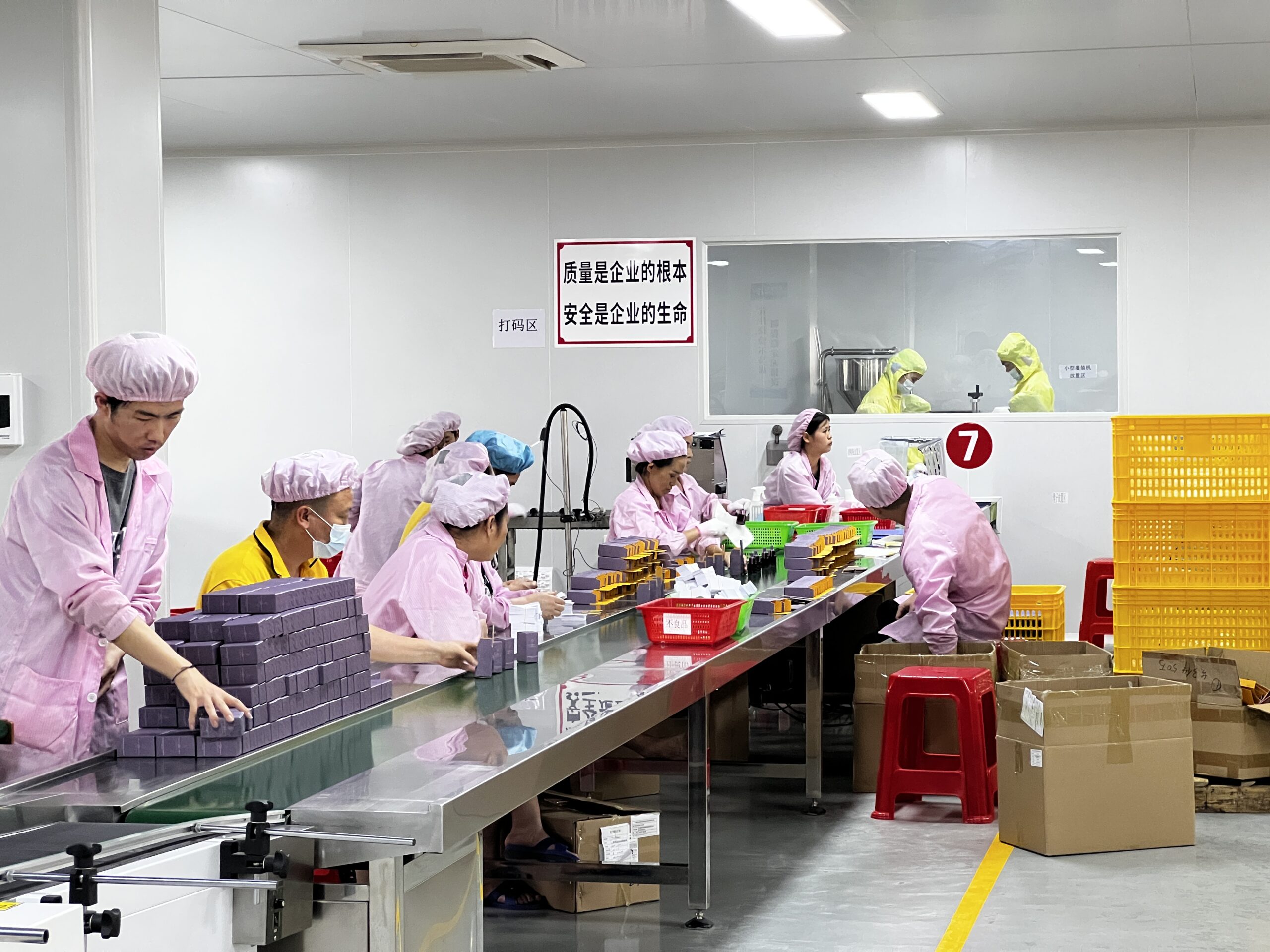
Your Trusted Body Lotion Manufacturer

We help you launch faster, start smaller, and stand out with custom formulas, pro-grade quality, and trend-driven skincare that sells — all built to grow with your brand.

Private Label Body Lotion

At Metro Private Label, we know that a great body lotion isn’t just about hydration—it’s about helping your brand deliver real skin results, keep customers coming back, and compete confidently in a saturated market. That’s why we built our private label body lotion solutions around the formulas, textures, and ingredients today’s shoppers are actively searching for.
 
From everyday hydrating lotions with aloe and shea butter, to brightening niacinamide body lotions, firming peptide creams, soothing sensitive-skin formulas, and lightweight fragrance collections inspired by top-selling DTC brands—we design our range based on real consumer demand. We analyze Amazon bestsellers, global ingredient trends, and TikTok-driven beauty moments so the products you launch actually match what people want to buy.
 
As your manufacturing partner, we don’t just make a lotion—we help you build a category-leading SKU. Whether your brand needs a silky, fast-absorbing daily moisturizer, a ceramide recovery lotion for sensitive skin, an AHA body lotion for KP concerns, or a premium scented collection with custom packaging, we’ll tailor the texture, active ingredients, claims, and packaging so your product feels truly built for your audience.

Hydrating & Moisturizing Body Lotion

Soothing & Sensitive-Skin Body Lotion

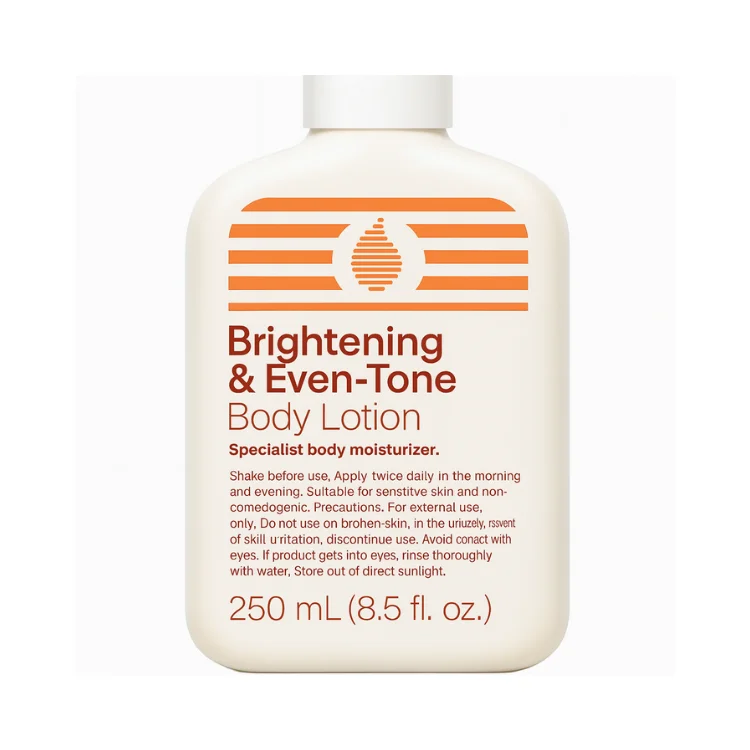
Brightening & Even-Tone Body Lotion (Niacinamide / Vitamin C)

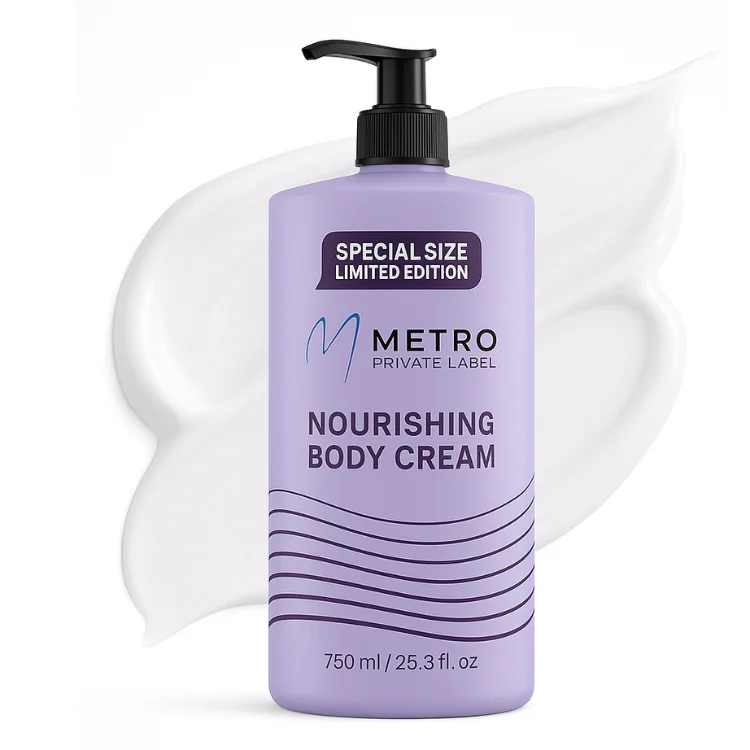
Nourishing Body Cream & Body Butter

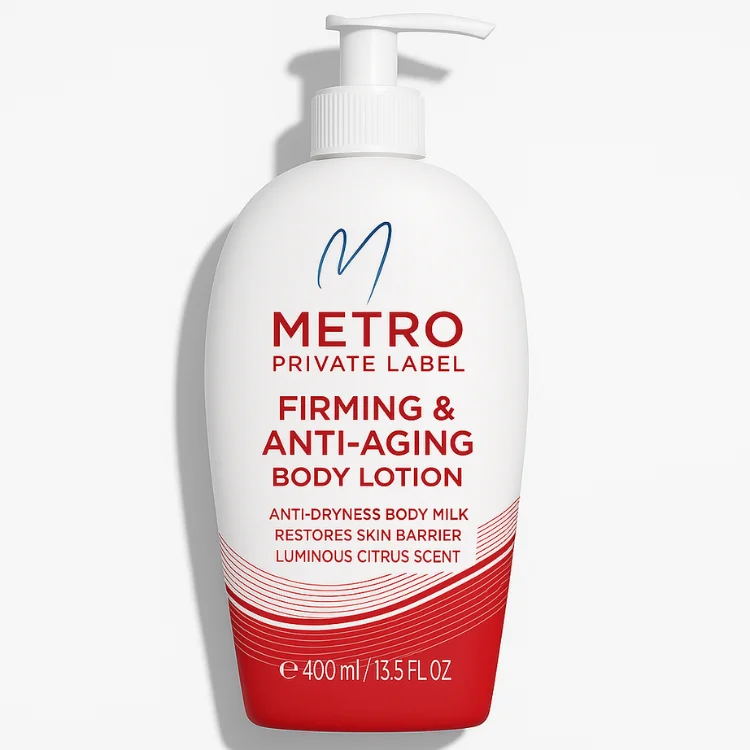
Firming & Anti-Aging Body Lotion (Peptides / Retinol / Honey Regeneration)

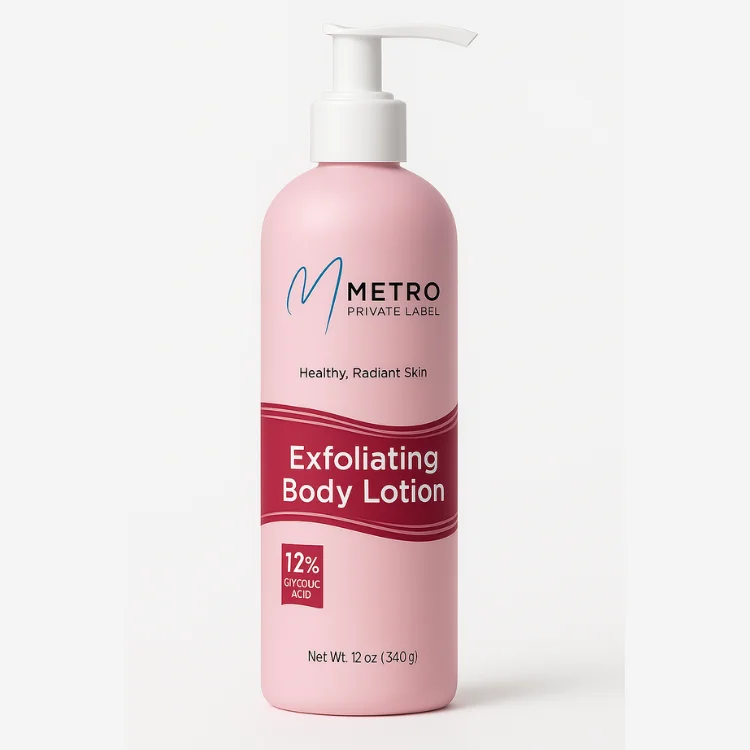
Exfoliating Body Lotion (AHA/BHA/Urea)

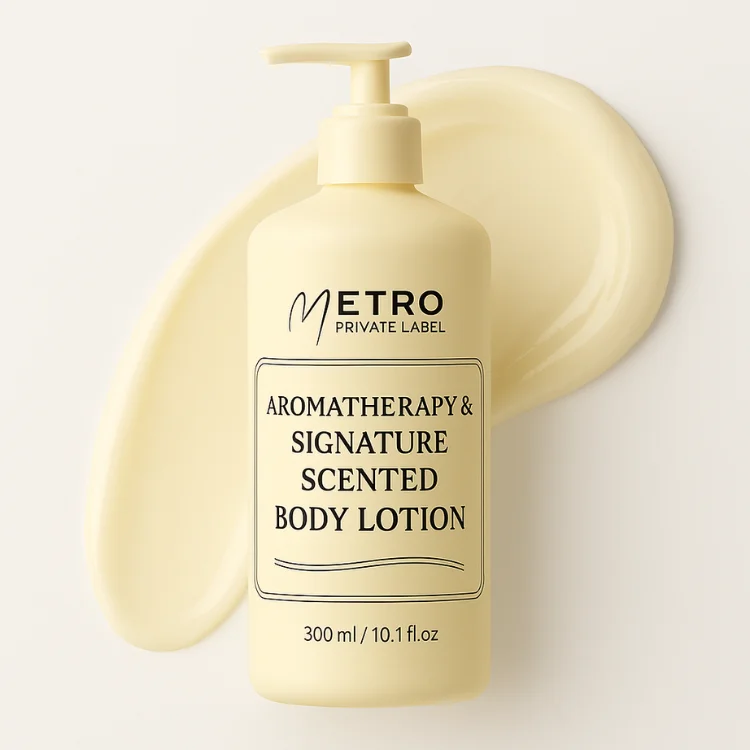
Aromatherapy & Signature Scented Body Lotion

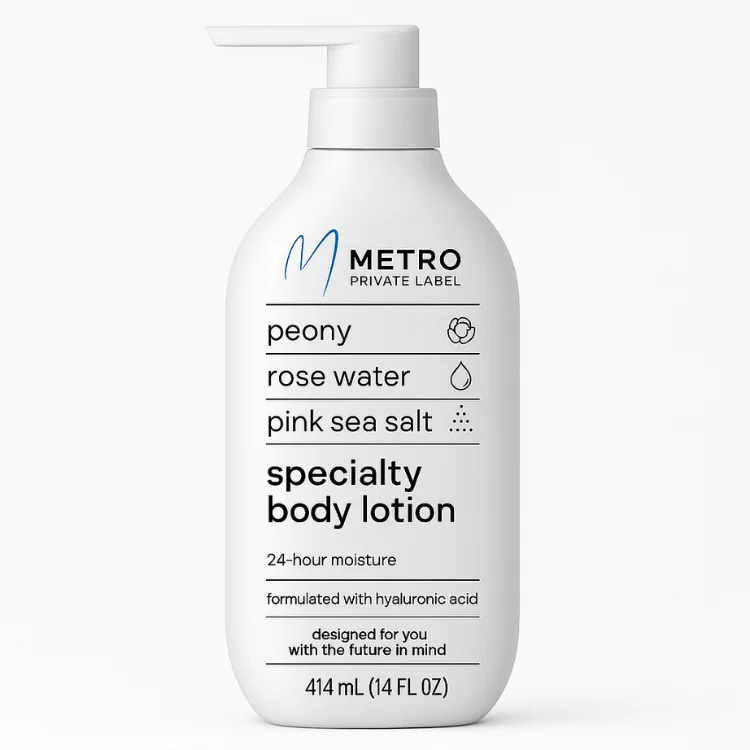
Specialty Body Lotions (Muscle Relief / Warming / Menthol)

Build a Body Lotion Line That Elevates Your Brand

At Metro Private Label, we understand that a successful body lotion isn’t just about hydration—it’s about giving your brand a product that feels premium, performs beautifully, and earns long-term loyalty from your customers. Today’s shoppers expect more than a basic moisturizer. They want clean formulas, smoother skin, body care that fits their lifestyle, and textures that feel luxurious. That’s why every body lotion we create is built around real consumer needs, proven ingredients, and global trends shaping the body care category.
 
Whether you’re looking to launch a silky daily moisturizer, a rich nourishing cream for dry skin, a brightening niacinamide lotion, a soothing sensitive-skin formula, an exfoliating AHA body treatment for KP, or a premium scented collection, we develop products that help your brand stand out. Our formulations are inspired by what sells on Amazon, what creators highlight on TikTok, and what dermatologists recommend—so your products align with high-demand categories from day one.
We also ensure every formula meets EU/UK, CPSR, FDA-related, and export-ready compliance standards. That means you can scale your brand globally with confidence, knowing your lotion line is built on stable, safe, and market-ready foundations.
 
💡 Our 8 Bestselling Body Lotion Formulas
1️⃣ Hydrating Daily Body Lotion – Lightweight, fast-absorbing, ideal for universal everyday use.
2️⃣ Nourishing Body Cream / Body Butter – Rich textures with shea or honey regeneration for dry skin.
3️⃣ Brightening Niacinamide Body Lotion – Evens tone and boosts radiance, one of the most searched categories.
4️⃣ Sensitive Skin Soothing Body Lotion – Ceramides, oat, aloe, panthenol; fragrance-free options available.
5️⃣ Firming & Anti-Aging Body Lotion – Peptides, botanical firming actives, and retinol alternatives.
6️⃣ AHA/BHA Exfoliating Body Lotion – Lactic acid, urea, or salicylic acid for smoother, KP-prone skin.
7️⃣ Aromatherapy & Signature Scented Lotions – Premium scents like orchid, sandalwood, mango, mint, yuzu.
8️⃣ Specialty Warming or Muscle-Relief Lotions – Menthol and camphor blends for sports, wellness, and recovery lines.
 
🎯 MOQ & Packaging Options (Practical and Flexible)
At Metro Private Label, we make it easy for new and growing brands to launch body lotion products with realistic minimums:
• Product MOQ: Most body lotion and cream formulas start at 500–800 units depending on packaging choice.
• Custom Packaging MOQ: If you need fully customized packaging—such as unique colors, shapes, or printed bottles—the MOQ starts from 3,000 pieces.
• Packaging Formats We Offer: You can customize your lotion line using multiple packaging formats, including:
  • Jars (ideal for body creams and butters)
  • Pump bottles (standard for daily body lotions)
  • Gallon sizes (perfect for refill, wholesale, salon, and professional use)
• Included Support: Every project includes stability testing, compatibility checks, filling guidance, and packaging suitability review to ensure your formula + container combination performs perfectly during transport and consumer use.

More Than Just a Body Lotion Manufacturer

At Metro Private Label, we don’t just fill bottles—we create moisturizing, brightening, soothing, and firming body care formulas that shape how customers experience your brand. Every lotion and cream we develop is built to deliver real skin benefits, clean ingredients, luxurious textures, and the modern claims shoppers actively search for across Amazon, TikTok, and global retailers.

✅ Launch What the Market Already Wants

We build body lotion formulas based on real data—not guesswork.
By tracking top-performing ingredients, bestselling categories, and trending consumer concerns, we make sure the products you launch match proven demand. Hydrating aloe blends, niacinamide brightening lotions, ceramide repair creams, AHA smoothing treatments, premium scented collections—our range reflects what shoppers are already buying, so your brand grows faster with less risk.

✅ Small MOQ That Supports Realistic Scaling

We make it easy to start small and scale confidently. You can launch your first SKU with 500–800 pcs using ready packaging, test your market, gather feedback, and build momentum. When you’re ready to grow, scaling to 3,000+ pcs customized packaging or 5,000+ pcs full production is seamless—no reformulation, no supplier change, and no disruption to your brand roadmap.

✅ Visible Results That Build Brand Loyalty

Customers repurchase the products that work—so performance is always our priority. Our body lotion formulas feature actives like ceramides, niacinamide, peptides, shea butter, AHAs, panthenol, and botanical extracts to deliver real hydration, smoother texture, brightening, barrier repair, firming, and softening results. When your lotion feels good and performs well, it becomes a hero SKU your customers keep coming back to.

✅ Compliance That Makes Global Launches Easy

We prepare everything you need to launch internationally with confidence. From INCI lists, COA, SDS, stability testing, and compatibility data to EU/UK/FDA-related compliance documentation, we ensure your body lotion meets regulatory expectations from day one. Whether you’re selling in the US, Europe, the Middle East, or global e-commerce platforms, we help you avoid delays and regulatory surprises.
  • METRO
  • Typical OEM factory
METROTypical OEM factory
$
/year
/year
Minimum order quantity✅ 500 units for startup brands — low-risk entry for first-time founders.❌ 3,000 units minimum, limiting flexibility.
Packaging recommendations✅ Compatibility + visual templates to ensure perfect fit and premium look.❌ Not provided.
Launch support✅ Label compliance & claim copywriting included for export markets.❌ Not available.
Sample delivery time✅ 7–14 days with labeled packaging.❌ Usually 30+ days.
Compliance & Documentation✅ INCI, COA, SDS, GMP-ready — export with confidence.❌ Basic INCI only.
Buy Now

✨ Build a Body Lotion Line That Defines Your Brand

When you work with us, you’re partnering with a GMPC-certified team that transforms your body lotion ideas into stable, effective, export-ready products. We focus on hydration, brightening, barrier repair, soothing care, and premium sensorial textures — so your body care line earns customer trust from the very first application.
 
Whether you want a lightweight daily moisturizer, a rich nourishing cream for dry skin, a brightening niacinamide lotion, a dermatologist-inspired sensitive-skin formula, an AHA smoothing treatment, or a premium scented body collection, we design every product to feel silky, absorb beautifully, and deliver results your customers can feel — and repurchase.
🧪 Custom Formulation That Builds Real Trust
We don’t rely on generic lotion bases — every formula is created from scratch using cosmetic science and real market insight. Our lab works with ceramides, niacinamide, peptides, AHAs/BHAs, shea butter, squalane, panthenol, hyaluronic acid, antioxidant botanicals, and soothing actives tailored to your target customers.
Each prototype goes through pH checks, stability testing, viscosity tuning, and packaging compatibility to ensure consistency from sample to final production. If there’s a smarter way to enhance hydration, improve texture, increase spreadability, or elevate your market positioning, we’ll explain the science clearly and guide you through every decision.
This hands-on, collaborative approach helps your body lotion line stand out from “me-too” products and build long-term credibility through performance and premium skin feel.
 
📦 Packaging That Reflects Your Brand Identity
We believe packaging sets the tone for your entire body care line. Start quickly with 500–800 pcs using our ready stock jars, pump bottles, or gallon containers — ideal for DTC launches, market testing, or first-time SKUs.
When you’re ready to scale, move into 3,000+ pcs custom packaging, including unique colors, custom molds, airless pumps, premium prints, and elevated artwork that communicates the quality of your brand.
Special Packaging Notes:
  • Body lotion / body cream: 500–800 pcs using stock packaging
  • Custom bottles or jars: 3,000 pcs minimum
  • Gallon-size packaging: available for salons, refill programs, and B2B distribution We manage labels, cartons, printing, and finishing so your packaging looks cohesive, clean, and retail-ready from day one.
 
⚙️ A Seamless, Transparent Production Process
Everything happens under one roof — formulation, sampling, compatibility checks, filling, quality control, and export documentation. We keep communication clear, anticipate issues before they appear, and ensure every milestone stays on schedule. Think of us as an extension of your operations team, fully aligned with your goal of launching a premium, high-performing body lotion line.
 
🌿 Your Growth Is Our Daily Benchmark
Our success isn’t measured by one-time orders — it’s measured by how confidently you scale. That’s why we offer flexible MOQs, stable formulas, strong packaging solutions, and complete documentation for U.S., EU, UK, GCC, and global markets. With Metro Private Label, your body lotion line is built to perform, impress customers, and grow sustainably across every channel you sell in.

Who We Work With (Designed Around Your Real Needs)

We build partnerships by thinking the way our clients do — understand first → provide solutions → deliver results. Every client type has different priorities, and our role is to translate those into clear, actionable outcomes.

Medical Aesthetic / SPA Professionals

You care about: post-treatment comfort, product safety, and documentation that meets regulatory and audit standards.
What we deliver:

  • Clinical-grade formulations: CICA, ceramides, and peptides; pH-balanced, fragrance-free options with full preservative logic provided.

  • Regulatory documentation: INCI, COA, SDS, stability and compatibility reports; CPSR/CPNP preparation handled with third-party testing support.

  • Professional aesthetic: minimalist, medical-style packaging suitable for back-bar or retail; traceable batches for consistent results.
    Immediate outcome: a post-treatment testing set, compliant label guide, and batch consistency plan ready for your internal validation.

Funded New Entrepreneurs

You care about: low-risk entry, a clear roadmap, and a premium finish that looks ready for market.
What we deliver:

  • Smart start: choose from proven skincare bases (serums, creams, masks); pilot runs from 500 units with optional custom cartons.

  • All-in-one process: formula → visual template → compliant label copy → production → export-ready documentation.

  • Transparent costing: clear breakdown of your key cost drivers — formula type, active concentration, and packaging complexity — so you can plan pricing and profit with confidence.
    Immediate outcome: 2–3 customized samples, a detailed quotation breakdown, and a timeline showing every stage from sample to shipment.

Boutique DTC Brand Owners

You care about: originality, visual consistency, and storytelling through ingredients.
What we deliver:

  • Ownable sensorials: bio-cellulose or vegan carrageenan textures paired with signature actives like peptides, niacinamide, or botanical blends.

  • Design alignment: typography, color, and label systems that match your brand aesthetic; compatibility checks before full production.

  • Global readiness: INCI, COA, SDS, and stability data included; EU/UK/US label claim review support for smooth registration.
    Immediate outcome: packaging mockups, ingredient story sheets, and a coordinated multi-SKU rollout plan that keeps your range cohesive.

Why this works:
We don’t sell production capacity — we deliver strategic understanding, technical precision, and verifiable results.
By connecting your goals with regulatory, design, and manufacturing expertise, we help your brand move faster, reduce uncertainty, and build trust that lasts.

FAQs Body Lotion

For your convenience, we’ve gathered the most commonly asked questions about our Body Lotion .However, should you have any further queries, please don’t hesitate to reach out to us.
1. What types of body lotion can you manufacture?
We offer a full range of body care formats, including lightweight daily lotions, rich body creams, body butters, niacinamide brightening lotions, AHA/BHA exfoliating treatments, ceramide repair lotions, sensitive-skin formulas, and premium scented collections. You can choose from our market-tested bases or co-develop something fully custom.
Absolutely. We customize everything—texture, viscosity, fragrance, active ingredients, skin benefits, color, and skin feel. Whether you want a clean formula, a dermatologist-inspired repair lotion, or a luxury fragrance-driven body cream, we’ll build it around your vision.
Our standard MOQ is 500–800 units per SKU for ready packaging. If you need custom bottles or jars, the MOQ starts from 3,000 pieces. We support small launches so you can start lean, test your market, and scale with confidence.
Sampling typically takes 7–14 working days, depending on complexity. Full production usually requires 25–35 days after approval. If you’re working with a tight deadline, just let us know—we’ll do our best to support your launch schedule.
Most of our body lotion formulas can be made vegan, cruelty-free, silicone-free, sulfate-free, paraben-free, and aligned with clean beauty standards. Just tell us your ingredient philosophy and we’ll build your formula accordingly.
Yes. We provide complete packaging support—including jars, pump bottles, and gallon-size packaging options. You can start with our ready packaging for fast launches or upgrade to full custom packaging from 3,000 pcs. We also help with label layout, artwork guidance, and print specifications.
Yes—both paths are available.
You can launch quickly using our bestselling stock lotions (fastest and most cost-effective), or work with us to develop a fully custom formula from scratch. We’ll guide you based on your budget, timelines, and positioning.
Every formula goes through stability testing, micro checks (optional), pH and viscosity validation, compatibility checks with packaging, and internal quality control at each production stage. We follow GMPC standards and EU/US cosmetic manufacturing guidelines to ensure consistency and safety.
Definitely. We can support you with clear, compliant claim language such as “hydrates for 24 hours,” “brightening effect,” “AHA smoothing,” “supports skin barrier,” or fragrance-focused positioning. We also help highlight your key ingredients to strengthen your marketing content.
Yes, we ship worldwide. We provide all required documents—INCI list, COA, SDS, stability data, and export paperwork. Whether you’re launching in the U.S., EU, UK, GCC, or Southeast Asia, we’ll guide you through customs preparation and coordinate with your freight forwarder or our trusted partners.

Metro Private Label in Numbers

Happy Clients
0 +
Million-dollar Buyers
0 +
Formulation
0 +
Professional Staffs
0 +

Your Ultimate Guide to Body Lotion

When we talk to founders about adding a Body Lotion to their skincare line—whether it’s their very first SKU or an upgrade to an existing range—we always tell them the same thing: you’re not just choosing a texture or a scent. You’re entering one of the most competitive, high-expectation categories in personal care. Body lotions are emotional purchases. People expect hydration that actually lasts, textures that absorb beautifully, formulas that feel safe for daily use, and ingredient stories that align with what they’ve seen recommended by dermatologists and trending online.
 
Over the years, we’ve watched this category evolve from basic moisturizers into highly specialized treatment products. We’ve partnered with startup founders building simple, clean body care lines; Amazon sellers looking for formulas that convert quickly and generate strong review velocity; spa and clinic owners who need professional-grade actives; and international distributors who require stable, compliant formulas that survive long-distance transport. And in every case, we’ve seen how body lotions require far more strategy than most people expect.
 
This guide is built from what we’ve learned behind the scenes—what consistently sells, which textures consumers repurchase, how ingredient trends shift across markets, and why packaging, claims, and compliance rules can make or break a launch. The truth is, body lotion performance isn’t just about moisture. It’s about sensory experience, long-term skin behavior, ingredient credibility, and clear messaging that resonates with your audience.

Table of Contents

Understanding Body Lotion Categories and Their Market Fit

Hydrating Body Lotions — The Universal Anchor of Every Body Care Line
When I talk to new founders about launching a body lotion, the hydrating category is usually where we begin. In my experience, this is the most versatile and forgiving category because it appeals to nearly every type of consumer. Hydrating lotions focus on moisture balance and comfort, using ingredients like glycerin, hyaluronic acid, shea butter, and lightweight emollients. What I find fascinating is how different markets interpret “hydration.”
Consumers in Europe prefer lighter, cleaner-feeling formulations, while customers in the U.S. often gravitate toward richer, more nourishing textures. In Southeast Asia, fast absorption is essential due to humidity. And on Amazon, “daily moisturizing lotion” remains one of the most consistently high-performing search terms. For founders, this category offers a safe, scalable entry point with a universal value proposition.
 
Brightening Body Lotions — Ideal for Radiance, Glow, and Tone Correction
Brightening lotions are built around visible transformation, which is why they’re so compelling for marketing and storytelling. Ingredients like niacinamide, vitamin C derivatives, licorice root extract, and botanical brighteners can deliver noticeable improvements in overall radiance and evenness. From my experience working with brands in the Middle East, Africa, Southeast Asia, and multicultural U.S. markets, the demand for brightening body products is consistently strong.
The key is understanding that customers in this category aren’t just seeking hydration—they’re seeking confidence. They want smoother, more even-toned skin that looks healthier in natural light. This makes brightening formulas especially effective for brands that rely on before-and-after visuals, influencer-driven reviews, or active ingredient narratives. With thoughtful formulation and correct use of claims, this category can become a powerful growth driver.
 
Exfoliating Body Lotions — The High-Conversion, Problem-Solution Category
One of the categories that consistently surprises founders with its performance is exfoliating body lotion. These formulas target clear concerns such as keratosis pilaris, rough texture, ingrown hairs, and dull or uneven skin. When I work with Amazon sellers or brands focused on clinical results, this category almost always rises to the top.
Customers searching for “AHA body lotion,” “BHA body lotion,” or “KP treatment lotion” already know what they want—meaning they are further along in the buying journey and more likely to convert quickly. Lactic acid, urea, and salicylic acid are the most effective actives for this space, each serving different skin types and sensitivities. If a founder wants a product that delivers noticeable improvements within days or weeks, exfoliating lotions are one of the strongest strategic choices.
 
Barrier-Repair Body Lotions — For Sensitive, Stressed, and Compromised Skin
Barrier-repair lotions are a category I often recommend to brands that want to build trust through science and performance. These formulations are designed to strengthen the skin’s natural defense system using ceramides, cholesterol, fatty acids, panthenol, oat extract, squalane, and other soothing ingredients.
What I’ve observed is that barrier-repair products resonate deeply with customers experiencing sensitivity, eczema, irritation, or dryness from harsh exfoliation. SPAs, dermatology clinics, and wellness centers often prefer fragrance-free, minimalist formulations because they reduce the risk of irritation for sensitive clients. If your brand aims for a “clinical” or “dermatologist-inspired” positioning, this category offers both credibility and long-term customer loyalty.
 
Sensitive-Skin / Fragrance-Free Lotions — The Minimalist Choice with Maximum Loyalty
Despite appearing simple on the surface, sensitive-skin lotions are one of the most meaningful categories in the body care world. I’ve noticed that EU and UK consumers are especially conscious of allergens, fragrance sensitivity, and clean-label preferences, which makes fragrance-free or hypoallergenic formulas highly attractive.
This category is important for parents, individuals with eczema or rosacea, and anyone whose skin reacts easily to fragrances or essential oils. What I emphasize to founders is that once a sensitive-skin user finds a lotion that works, they tend to remain loyal for years. This makes the category ideal for brands that value trust, safety, and long-term customer retention.
 
Scented & Aromatherapy Body Lotions — Where Emotion and Brand Identity Come Alive
Of all the categories I work with, scented body lotions are the most emotionally driven. These formulas are less about solving a skin problem and more about creating an experience. A fragrance can inspire nostalgia, comfort, luxury, sensuality, or seasonal excitement—making this category incredibly powerful for storytelling.
In my projects with lifestyle brands, vanilla, coconut, mango, citrus, orchid, and sandalwood consistently rank as top-requested scents. Seasonal fragrances like pumpkin spice or holiday blends also perform extremely well in gifting markets. If a brand wants to create a sensual, mood-based, or ritual-driven product range, this is the perfect category to explore. It’s flexible, expressive, and capable of creating strong brand identity through scent memory.
 
How I Help Founders Match Categories to Their Market Fit
When founders ask me which type of body lotion they should launch first, I always come back to three core questions: Who are you selling to? What price tier do you want to compete in? And where will your customers discover your product? A sensitive-skin clinical brand should not begin with a tropical-scented lotion. A Gen Z lifestyle brand shouldn’t start with a medical ceramide formula. An Amazon seller should not launch a generic hydrating lotion without a clear problem-solution angle. Matching the category to the audience, platform, and positioning is ultimately what separates a product that sells from a product that simply exists. And understanding these categories with clarity helps founders make smarter, more confident decisions—before they invest in formulation, design, or marketing.

Choosing the Right Texture: Lotion vs. Cream vs. Butter

Why Texture Is a Strategic Choice, Not Just a Sensory One
When founders come to me asking what type of body product they should create, they often focus on ingredients first. But in my experience, texture plays a much bigger role in how customers judge a product. Texture defines the emotional experience of using the product—whether it feels light, indulgent, protective, or luxurious. It also determines how often customers will use it, how it behaves in specific climates, and how it aligns with your brand identity. Over the years, I’ve seen that choosing the wrong texture can cause customer dissatisfaction even when the formula is technically excellent. This is why I treat texture selection as a strategic decision that affects both product performance and commercial success.
 
Lightweight Lotions: Best for Daily Use and Warm or Humid Climates
A lightweight lotion is the texture I usually recommend when a founder wants a product that fits seamlessly into everyday life. Lotions are water-rich, fast-absorbing emulsions that leave almost no residue. In warm or humid regions, such as Southeast Asia or the Middle East, customers often describe heavier textures as “sticky,” so lotions perform significantly better in these markets. I also see lotions succeed with younger demographics and busy professionals who don’t want to feel product sitting on their skin. From a formulation standpoint, lotions allow active ingredients—like niacinamide, panthenol, or lightweight botanical extracts—to shine without overwhelming the skin. If your brand vision includes words like “fresh,” “clean,” “easy,” or “lightweight,” then lotion is usually the best texture to start with.
 
Rich Creams: Ideal for Dry Skin, Winter Seasons, or a Premium Feel
Creams sit comfortably between lotions and butters, offering more richness and cushion without becoming too heavy. When I work with brands targeting countries with long winters—Canada, Germany, Sweden, etc.—creams consistently outperform lotions in customer satisfaction because they provide the level of comfort cold-weather skin demands. I also recommend creams to founders who want to position their product as soothing, barrier-repairing, or clinically inspired. Ceramides, cholesterol, and fatty acids perform particularly well in cream textures because the richer emulsion helps reinforce the skin barrier. A well-formulated cream feels comforting without being greasy, and it creates a more premium sensory experience. For brands aiming for a mid- to high-tier price point, creams naturally elevate the perception of quality.
 
Body Butters: The Deeply Nourishing Option for Luxury and Self-Care Markets
When a founder tells me they want their product to feel luxurious, indulgent, or giftable, I immediately think of body butter. Butters are dense, oil-rich formulas that melt into the skin slowly, creating a long-lasting moisturizing effect. They are especially loved in dry or cold climates, where customers seek heavy nourishment to relieve tight or flaky skin. From a sensory standpoint, butters provide a “moment” during use—customers tend to massage them longer, often turning the application into a small self-care ritual. This makes butters ideal for SPA brands, fragrance-driven collections, or lifestyle-focused beauty lines. They also pair beautifully with rich fragrances because the high oil phase helps anchor scent. If your brand wants to stand out through sensory luxury rather than minimalism, body butter is the texture that communicates that message instantly.
 
How I Help Founders Match Texture to Their Target Market
Selecting the right texture isn’t about personal preference—it’s about understanding what your customer expects and how they live. When guiding a founder, I look at several factors: climate, daily routines, lifestyle, age demographic, skin concerns, packaging compatibility, and even retail channel. For example, an Amazon-focused brand looking for fast adoption often performs best with lotions. A clinic or medical aesthetic brand should almost always choose creams because of their barrier-supporting effect. A SPA or wellness brand will naturally gravitate toward butters due to the sensory richness. I also consider emotional cues—whether the product needs to feel light, comforting, therapeutic, or luxurious. By aligning texture with functional and emotional expectations, founders can create products that feel “right” from the very first application.
 
Texture as a Reflection of Brand Identity and Market Positioning
Over time, I’ve come to believe that texture is one of the clearest expressions of a brand’s identity. A lotion says your brand values freshness, simplicity, and easy routines. A cream communicates care, comfort, and clinical reliability. A butter suggests indulgence, richness, and sensorial pleasure. Texture even affects price positioning—lotions typically sit in the mass-market range, creams occupy the mid-tier, and butters often command premium pricing due to their rich feel and higher oil content. When founders choose a texture that aligns with their desired message, the product feels coherent, intentional, and trustworthy. And when customers feel that alignment, they repurchase.

Key Active Ingredients and What They Do

Why Founders Must Understand Actives Before Choosing Their Formula Direction
Over the years, I’ve learned that one of the biggest challenges for early-stage beauty founders is feeling overwhelmed by ingredients. I meet so many people who know the names — niacinamide, ceramides, peptides — but don’t actually know what each one contributes to the user experience or how it shapes the product’s identity. Whenever I guide someone through formulation decisions, I always start with this principle: Active ingredients should reflect the story your brand is trying to tell and the problem your customer actually wants solved. Once we match the active to the story and the story to the customer, the formula begins to take shape in a way that feels authentic, purposeful, and commercially strong. Below, I’ll walk through each of the key actives I use most frequently, sharing not only what they do chemically — but how they influence consumer perception, digital marketing, and long-term brand strategy.
 
Niacinamide — My Go-To Ingredient for Even Tone, Clarity, and Universal Appeal
If I had to choose one ingredient that consistently delivers results across all skin types, climates, and demographics, it would be niacinamide. I often describe it to founders as the “Swiss Army knife” of skincare because it improves skin tone, supports the barrier, reduces dullness, and smooths texture — all without irritation.
From a product development perspective, I love working with niacinamide because it integrates beautifully into almost any formula without destabilizing the emulsion. It’s also highly compatible with other actives, which gives me flexibility when designing brightening or multi-benefit lotions.
Consumers respond very positively to niacinamide because they’ve seen it in dermatologist recommendations and social media routines. When I look at search data across Amazon and Google, “niacinamide lotion” or “niacinamide body cream” ranks consistently high, especially in regions where customers prioritize radiance and clarity.
If a founder wants a body lotion that feels modern, trustworthy, and visibly effective, niacinamide is almost always my first recommendation.
 
Ceramides — The Foundation of Any Barrier-Repair or Sensitivity-Focused Formula
Whenever I develop a formula for sensitive skin, dry climates, or post-treatment use, ceramides immediately become the backbone of the formulation. Ceramides are naturally occurring lipids that act like the “mortar” between skin cells, keeping the barrier strong and resilient.
What I find fascinating is how quickly customers notice the difference when ceramides are included. The skin feels more comfortable, less tight, and visibly smoother within days, often even before the customer understands the science behind it.
I work with multi-ceramide complexes — typically NP, AP, NS, and EOP — because they mimic the skin’s natural lipid profile more closely. These blends perform exceptionally well in rich creams, especially when paired with cholesterol and fatty acids, recreating the optimal “3:1:1” ratio used by dermatologists.
Ceramides also create a strong emotional reassurance. They signal “safety,” “repair,” and “clinical integrity” — qualities that help brands targeting sensitive or dry-skin customers build long-term loyalty.
 
Peptides — The Elegant, Technical Approach to Firming and Anti-Aging Results
Peptides are one of the most interesting categories to work with because they don’t behave like aggressive exfoliants or retinoids. Instead, they communicate with the skin to encourage collagen production, improve firmness, and enhance resilience over time.
Whenever I work with founders building a premium line or a product targeting mature skin, peptides often become the hero. They are gentle yet effective, and they enhance the perceived value of the product simply by being present.
One thing I always emphasize is that peptides work best in well-supported formulas — textures that allow slow release and deeper absorption, such as creams or butters. A peptide in a thin gel may perform, but a peptide in a rich, cushiony cream feels like a true anti-aging ritual.
Peptides appeal strongly to customers who want genuine results without irritation — a demographic that is increasingly important as more consumers step away from harsh actives and look for “intelligent” skincare solutions.
 
AHAs (Lactic Acid, Glycolic Acid) — My Solution for Texture, Brightness, and KP-Smoothing
When a founder wants a lotion that delivers immediate visible change, I almost always bring up AHAs. Lactic acid, glycolic acid, and mandelic acid are exfoliants that dissolve dead skin cells, brighten dull areas, and smooth bumpy texture.
Lactic acid is one of my favorite AHAs for body care because it hydrates while exfoliating, making it gentle enough for most skin types. Glycolic acid is more intensive and works beautifully for customers who want faster, more dramatic resurfacing.
AHAs are especially powerful for treating:
  • Keratosis Pilaris (KP)
  • Dull, rough patches
  • Discoloration from sun or friction
  • Ingrown-prone areas
  • General uneven texture
What I’ve observed is that AHA lotions perform extremely well on Amazon and TikTok because they offer clear before-and-after results. They thrive in problem-solution categories where payoff matters. When balanced correctly with soothing ingredients, AHA lotions can become one of the highest-retention SKUs in a body care line.
 
BHAs (Salicylic Acid) — The Best Choice for Breakouts and Deep Pore Clarifying
BHAs behave differently from AHAs because they are oil-soluble. This allows salicylic acid to penetrate into pores, unclog buildup, and reduce inflammation — making it an excellent choice for formulas targeting body acne, ingrowns, or rough texture.
I often use BHA in products aimed at active lifestyles or regions with high humidity where sweat and excess oil contribute to breakouts. What makes BHA so valuable is that it treats the problem at its root while still being gentle enough for regular use when formulated correctly.
Customers looking for clarity, smoothness, and ingrown prevention respond extremely well to salicylic acid because results are visible and repeatable. For founders interested in the “functional body care” space, BHA is one of the most reliable actives to include.
 
Shea Butter — The Sensory Anchor for Deep Moisture and Softness
Whenever I want a formula to feel luxurious, comforting, and body-melting, I turn to shea butter. It has a uniquely rich, velvety texture that customers instantly recognize and appreciate.
Shea butter provides deep nourishment, locks in moisture, and supports the skin barrier. It performs especially well in cold climates or dry-skin formulas where the customer expects long-lasting moisture rather than quick absorption.
I find that shea butter carries emotional weight — it makes a product feel indulgent, warm, and nurturing. When brands want to create self-care rituals or premium winter lines, shea butter is almost always the right choice. It also pairs beautifully with natural fragrances, giving the entire product a cohesive, sensory identity.
 
Squalane — The Lightweight Oil That Elevates Texture Without Greasiness
Squalane is one of the oils I trust most when I need a formula to feel silky without any heaviness. Unlike many plant oils, squalane absorbs quickly and leaves a smooth, elegant finish that feels instantly modern.
I often use it in products for warmer climates, premium lines, and body lotions designed for daily use. Squalane helps create the “soft but not oily” after-feel that customers repeatedly mention in high-rated reviews.
It’s also incredibly stable, which makes it an excellent choice when working with more complex active blends. When a founder wants a texture that feels elevated and refined, squalane is my go-to oil.
 
Aloe Vera — My Reliable Base for Calming, Cooling, and Sensitive-Skin Support
Aloe may sound simple, but it remains one of the most effective soothing ingredients available. I use aloe frequently in formulas for irritated skin, post-shave care, sun-exposed areas, or customers who prefer botanical-based products.
Aloe provides an immediate cooling effect while also supporting hydration and reducing visible redness. Its familiar reputation makes customers feel safe — which is critically important when launching a product for sensitive or reactive skin types.
Whenever a founder wants a body lotion that feels fresh, calming, or spa-like, aloe becomes an essential part of the foundation.
 
Panthenol (Vitamin B5) — My Underrated Hero for Hydration and Repair
Panthenol is one of those ingredients that quietly improves almost every formula it touches. It increases the skin’s ability to retain water, enhances softness, and reduces irritation — all without calling attention to itself.
I rely on panthenol when creating barrier-repair creams, sensitive-skin lotions, or products meant for daily use after showering. It makes formulas feel smoother, more resilient, and more comforting on compromised skin.
What I appreciate most is how panthenol improves formula performance without complicating stability — a rare and valuable quality in product development.
 
How I Guide Founders in Choosing the Right Actives for Their Product Vision
One of the biggest mistakes I see founders make is trying to include every trending ingredient in a single product. Instead, I guide them to identify the primary goal of the formula and choose actives that reinforce that message. If the goal is radiance, we focus on niacinamide and AHAs. If the goal is repair, we prioritize ceramides and panthenol. If the goal is luxury, we build around peptides, squalane, and shea. If the goal is clarity, we look at BHAs and texture-refining agents.
Each active ingredient shapes the formula’s identity — but more importantly, it shapes customer expectations. Understanding these differences helps founders make informed, strategic decisions that lead to stronger products and stronger brands.

How to Define Your Body Lotion’s Value Proposition

Why Your Value Proposition Must Come Before the Formula
When I begin guiding a founder through the development of a body lotion, the very first thing I look for is clarity around the product’s value proposition. This is because the value proposition determines how the customer will interpret the purpose of the product and whether they will feel compelled to choose it over the many other lotions available to them. I’ve seen beautifully formulated products struggle simply because their core promise was vague or generic. To me, defining a value proposition isn’t about marketing buzzwords — it’s about anchoring the formula and the brand in a meaningful intention. When I understand exactly what the product is meant to do and why it deserves to exist, every decision that follows becomes more focused and strategic.
 
Defining the Core Skin Concern You Want to Target
Whenever I help a founder shape a new product, I ask them to identify the primary skin concern their body lotion aims to address. This step is essential because it prevents the formula from drifting into a confusing mix of unrelated benefits and ensures that customers immediately understand the lotion’s purpose. Some products exist to deeply moisturize dry skin, while others brighten dull tone, smooth rough texture, calm sensitivity, or strengthen the barrier. Each of these goals demands different active ingredients, different textures, and even different regulatory considerations. By defining the skin concern first, I can design a formula that delivers measurable results instead of an unfocused product that tries to be everything at once and ends up resonating with no one.
 
Understanding the Demographic You Want to Serve
Defining the demographic is one of the most overlooked but most impactful elements of building a strong value proposition. I always ask founders to think about who they’re creating the lotion for — not in a broad sense, but with real specificity. A teenager living in a humid climate, a mature customer in a cold region, and a clinic patient with compromised skin will all want very different experiences from a body lotion. Their preferences extend far beyond skin type: they relate to texture differently, interpret fragrance differently, and respond emotionally to different claims. When I design a formula with a defined demographic in mind, the product feels intuitive to that user; it behaves exactly the way they expect it to, and that alignment creates trust.
 
Choosing a Price Tier That Supports the Formula and the Claims
Selecting the price tier early on is essential because it shapes the entire formulation strategy. A mass-market lotion must prioritize affordability and simplicity, while a premium or luxury lotion must justify its price through richer textures, more advanced actives, and a more sophisticated sensory experience. I’ve watched products fail because they delivered a mass-market formula wrapped in luxury pricing — customers immediately sense that mismatch. Conversely, formulas packed with high-end ingredients struggle when forced into a low-cost positioning. When the price tier is clear, I can build a formula that meets customers’ expectations and supports consistent profitability. Price, performance, and experience must work together smoothly; otherwise, the value proposition collapses.
 
Defining the Claims You Want Your Product to Deliver
Claims are where your value proposition becomes concrete and communicable. Whenever I review a founder’s concept, I ask them to narrow their claims to one or two strong promises that align with the skin concern and demographic. Customers process claims quickly, and they trust products that make clear, focused commitments. A body lotion promising brightening must feature ingredients like niacinamide or gentle AHAs; a sensitive-skin lotion must avoid fragrance and include barrier-strengthening actives; a smoothing lotion must demonstrate measurable textural improvement. When claims are vague, overly broad, or scientifically unsupported, customers lose confidence. But when claims are specific, realistic, and experience-driven, the product stands out immediately and delivers on its promise.
 
Bringing All Elements Together Into a Coherent Product Identity
Once the skin concern, demographic, price tier, and claims are clearly defined, the entire product identity comes into alignment. At this stage, I begin to see the formula take shape — not just as a collection of ingredients, but as a meaningful solution created for a specific person with a specific need. A strong value proposition ensures that the texture, fragrance, packaging, and marketing all feel coherent and intentional. It also prevents costly revisions later because every decision is made with purpose. When this foundation is strong, customers understand the product instantly, trust the brand more deeply, and feel genuinely connected to the final experience. In a crowded market, that clarity can be the deciding factor between a product that simply exists and one that truly succeeds.

Fragrance vs. Fragrance-Free: What Brands Need to Know

Why Fragrance Is One of the Most Influential Decisions in Your Formula
Whenever I work with a brand on a new body lotion, one of the first questions I ask is whether they want the formula fragranced or fragrance-free. It may sound like a small detail, but in my experience, fragrance influences user perception more than almost any other characteristic — sometimes even more than texture. A beautifully formulated lotion can feel completely wrong if the scent doesn’t align with the brand identity or the target customer. At the same time, fragrance decisions affect regulatory labeling, allergen disclosures, stability, and even suitability for sensitive skin. Over the years, I’ve learned that choosing the right approach to fragrance isn’t simply about what smells good — it’s about understanding who the product is for, how it will be used, and what expectations it must meet.
 
Understanding How Fragrance Shapes the Consumer Experience
When I evaluate scented formulas, I pay close attention to how the fragrance interacts with the lotion’s texture and application. Some customers prefer light, clean scents that fade quickly because they apply lotion alongside their perfume; others want a luxurious, long-lasting scent that becomes part of their daily self-care ritual. Different markets also vary widely — for example, Southeast Asian shoppers often prefer refreshing or floral notes, while North American consumers gravitate toward warm, gourmand scents like vanilla, mango, or shea butter. A brand serving spa environments may choose calming aromatherapy profiles like lavender or eucalyptus. Every fragrance carries an emotional message, and when I match that message to the brand’s story and the customer’s lifestyle, the entire product becomes more cohesive and memorable.
 
IFRA Compliance: Why It Matters More Than Many Founders Realize
One of the biggest misconceptions I encounter is the idea that fragrance is simply an add-on, something that can be chosen casually. But every fragrance used in cosmetics must comply with IFRA (International Fragrance Association) guidelines, which set safety limits based on concentration and product category. When I review a fragrance for a body lotion, I check whether it meets IFRA Category 5 standards, confirm allowable percentages, and ensure that no restricted components exceed safety thresholds. IFRA compliance isn’t optional — it protects both the brand and the consumer by ensuring the fragrance poses no irritation or sensitization risks when used as intended. Without following these guidelines, a brand could face regulatory issues, failed inspections, or even customer complaints.
 
Allergen Disclosure: What You Must List on Your Label
Another critical aspect of scented formulations is allergen disclosure. EU and UK regulations require brands to list specific fragrance allergens (such as linalool, limonene, or citronellol) on the ingredient list whenever they exceed defined thresholds. I always explain to founders that these allergens don’t inherently mean the fragrance is unsafe — they’re naturally occurring components found in many essential oils and aromatic compounds. However, they must be declared clearly to protect sensitive users and maintain regulatory compliance. When I help a client choose between a fragrance oil, essential oil, or a hypoallergenic fragrance, I walk them through how each option impacts their label, their claims, and the perception of their target demographic.
 
When a Fragrance-Free Formula Is the Smarter Choice
There are many situations where I deliberately recommend a fragrance-free formula. In my experience, brands serving medical aesthetic clinics, dermatologists, post-procedure care, or customers with eczema and compromised skin barriers are much better suited to fragrance-free lotions. These users often have heightened sensitivity, and even low-allergen fragrances can trigger irritation. Additionally, fragrance-free formulas reduce regulatory complexities, avoid allergen disclosures, and support claims like “dermatologist-tested,” “sensitive-skin safe,” or “clinically clean.” When the product’s purpose is therapeutic or repair-focused, removing fragrance often strengthens the brand’s credibility and improves user trust.
 
Essential Oils vs. Synthetic Fragrance: What Brands Should Consider
Many founders assume essential oils are automatically the cleaner or more natural option. But in my formulation work, I’ve learned that essential oils come with their own regulatory and safety considerations — including allergens, phototoxicity risks (like those in citrus oils), and varying IFRA limits. Synthetic fragrances, on the other hand, can be designed to be allergen-free and are often more stable in emulsion systems. When I help a brand decide between essential and synthetic fragrance, I emphasize the performance, safety, and labeling implications of each approach, rather than leaning on misconceptions about “natural” versus “synthetic.” The right choice always depends on the product’s purpose and the expectations of its audience.
 
Balancing Scent Strength, Longevity, and Market Expectations
Fragrance intensity is something I constantly calibrate during development. A lotion intended for premium retail might benefit from a long-lasting signature scent, while an everyday family lotion requires something softer and universally appealing. Some regions — such as the Middle East — prefer more pronounced fragrance profiles, whereas Scandinavian markets often lean toward subtle or fragrance-free formulations. I’ve watched products succeed or fail simply based on how strongly they are scented. When I guide a founder through testing, I encourage them to assess the scent not just at application, but after absorption, after 30 minutes, and even after several hours. This helps them understand how the fragrance lives on the skin in real use conditions.
 
How Fragrance Affects Claims and Marketing Positioning
Whether a lotion contains fragrance or not directly influences the claims a brand is allowed to make. A “fragrance-free” claim means no fragrance compounds are added deliberately — but it also requires ensuring the formula has no fragrance contaminants from raw materials. Meanwhile, “hypoallergenic” claims must be supported by allergen-free fragrance choices and often require safety testing. A “spa-inspired aromatherapy” lotion, on the other hand, must rely on essential oil blends that align with emotional or functional messaging, like calming or energizing effects. When I help founders map out claims, I always make sure the fragrance choice reinforces the story they want to tell — not complicates it.
 
Final Thoughts: Make Fragrance a Strategic Decision, Not an Afterthought
In my experience, fragrance is one of the most underestimated yet strategically important decisions a brand will make when creating a body lotion. It influences sensory experience, regulatory compliance, label design, market acceptance, and even pricing. When approached thoughtfully, fragrance becomes a powerful part of the product’s identity; when approached casually, it becomes a liability. My advice to every founder is to treat fragrance with the same seriousness as any active ingredient. When you understand how it interacts with your target market, your claims, and your regulatory landscape, you not only create a better formula — you create a more trustworthy, compelling product that resonates deeply with the people it’s meant for.

Understanding Packaging: Pumps, Jars, Tubes, and Gallon Formats

Why Packaging Matters Just as Much as the Formula
Whenever I guide a founder through the development of a body lotion, I emphasize that packaging is not an afterthought — it’s a functional part of the product ecosystem. Packaging affects stability, shelf life, user experience, cost, transportation safety, and even the perceived value of the formula inside. I’ve seen formulas deteriorate because of poor oxygen control, and I’ve seen beautiful textures feel disappointing simply because the packaging didn’t dispense them well. To me, packaging is where formulation science meets real-world usability. Understanding pumps, jars, tubes, and gallon formats helps brands choose packaging that protects the formula, supports their claims, and matches their target customer’s expectations.
 
Pump Bottles: Clean, Convenient, and Ideal for Daily Use
Pump bottles are often my first recommendation for lightweight to medium-viscosity lotions because they offer a hygienic, user-friendly dispensing method. Pumps limit oxygen exposure, reduce contamination risks, and allow for portion control — which appeals strongly to everyday consumers and professional environments like clinics or spas. I always consider pump strength and dip-tube length to ensure smooth, consistent dispensing, especially for thicker emulsions. However, pumps are slightly more expensive than simple caps, and shipping large quantities requires protective measures to prevent unintentional pressing. When a brand wants a clean, modern aesthetic with strong practical functionality, a pump bottle often becomes the perfect fit.
 
Jars: Luxurious Presentation With Important Hygiene Trade-Offs
Jars create a premium, sensorial experience — and I understand why many founders gravitate toward them. You can showcase rich, buttery textures beautifully, and fingers can scoop out the product with ease. But I always caution founders about the hygiene and oxidation considerations that come with jar packaging. Each time the jar is opened, air enters, and the formula becomes more vulnerable to microbial contamination and texture shift over time. Preservative systems must be carefully tested, and sensitive actives (like vitamin C or retinol) are rarely compatible. Jars are best for thick creams, body butters, or indulgent formulations where sensory pleasure outweighs the need for strict air control. For retail brands that emphasize luxury and tactile experience, jars can be an excellent strategic choice — as long as stability is managed well.
 
Tubes: Travel-Friendly, Durable, and Cost-Effective
Tubes strike a sweet spot between affordability and durability, making them one of my favorite recommendations for brands planning e-commerce or international shipping. Tubes can protect formulas from light and oxygen, depending on the material structure, and they are less likely to crack or leak during transport. They also appeal to customers who want lightweight, portable packaging that fits easily into bags or carry-ons. However, tubes require additional compatibility testing because the inner coating can interact with certain actives over time. I always test viscosity stability in tubes because squeezing pressure changes how the formula is perceived. For brands aiming for mid-tier pricing with strong market versatility, tubes offer an excellent balance of cost and performance.
 
Airless Packaging: When Precision and Protection Are Essential
Airless packaging is one of the most misunderstood options, so I spend a lot of time explaining when it’s truly necessary. Airless pumps actively minimize oxygen exposure, prevent contamination, and support long-term stability of sensitive actives. If a formula contains peptides, ceramides, botanicals prone to oxidation, or a light emulsion that needs consistent dosing, airless packaging can dramatically extend shelf life and maintain texture integrity. However, the cost per unit is higher, and the minimum order quantity for custom designs is typically larger. In my experience, airless packaging is not just a visual upgrade — it’s a scientific decision that protects formula potency. I recommend it when a brand’s value proposition depends on high-performance actives or clinical positioning.
 
Gallon Formats: Best for Spas, Professionals, and Distributors
When I work with B2B clients like salons, clinics, and distributors, gallon packaging often becomes the most practical solution. Gallon jugs reduce packaging costs, simplify bulk supply, and allow clients to refill smaller bottles on-site. This format is ideal for back-bar use, professional treatments, or wholesale distribution. However, gallons require extremely stable formulas because the product will be exposed to air repeatedly during refilling. The packaging material must also withstand the weight and pressure of transportation; I always ensure reinforced caps and thick walls for international shipments. For brands catering to professional buyers, gallon formats offer unbeatable efficiency and cost savings.
 
How Packaging Influences Shipping Durability and Global Logistics
Having worked extensively with international buyers, I always highlight how packaging must survive the journey long before it reaches a consumer. Pump bottles can loosen under vibration, jars may crack in extreme cold, and poorly sealed tubes can leak when air pressure changes during air freight. Gallons require sturdy cartons and leak-proof seals. For humid regions, I consider how label adhesives, inks, and surface textures respond to moisture. Packaging must withstand compression, temperature swings, impacts, and stacking — otherwise, even the best lotion becomes unsellable. When I design packaging recommendations, I balance aesthetics with engineering because global logistics are unforgiving, and damaged products undermine brand trust instantly.
 
Choosing Packaging That Aligns With Your Formula and Price Tier
Ultimately, packaging must support the story your product is telling. A clinical barrier-repair lotion benefits from airless pumps that reinforce precision and cleanliness; a pampering body butter thrives in a luxurious jar; a practical everyday lotion belongs in a pump bottle; a spa back-bar product fits naturally into gallon jugs. Cost, performance, and brand identity must work together. When founders understand these relationships, they make packaging decisions that elevate the formula instead of compromising it. For me, the most successful products are the ones where the packaging doesn’t just hold the formula — it enhances the entire user experience from first glance to final application.

The Lifecycle of Developing a Body Lotion (From Concept to Launch)

Step 1: Defining the Concept Clearly and Intentionally
Whenever I begin developing a body lotion, the very first thing I do is define the concept with precision. This is where the entire project gains its direction. I ask myself — and the founder I’m working with — what exact problem this lotion exists to solve. Are we targeting dryness, dullness, rough texture, sensitivity, or barrier repair? Who is the target demographic, and what do they expect from a daily body care product? I’ve learned that vague concepts lead to vague formulas, while specific concepts create powerful, focused products that resonate immediately with customers. At this stage, I write down the product’s purpose, the intended mood or sensory experience, and the claims we want to support. This becomes the blueprint for everything that follows.
 
Step 2: Selecting the Right Active Ingredients for the Product’s Purpose
Once the concept is clear, I move into ingredient strategy. I examine which actives genuinely support the claims we want to make and which ones are unnecessary embellishments. For hydration-focused lotions, I gravitate toward glycerin, squalane, hyaluronic acid, or panthenol. For brightening, I consider niacinamide or gentle AHAs. For sensitive skin, ceramides and soothing botanicals become essential. I also evaluate ingredient compatibility because not all actives coexist peacefully in an emulsion. I’ve seen founders assume they can “stack” many trending actives into one formula, but doing so often leads to instability or irritation. My goal at this step is to translate the product’s promise into a smart, cohesive ingredient system that performs well and remains stable over time.
 
Step 3: Creating the First Samples and Evaluating the Formula Experience
When the active system is finalized, I prepare the first set of samples. This is always an exciting moment because the formula moves from concept into physical reality. But I also remind founders to approach sampling with patience and curiosity. The first sample is rarely the final version — it’s a starting point for exploration. At this stage, I evaluate viscosity, absorption speed, slip, after-feel, scent harmony, and how the lotion behaves on different skin types. I encourage founders to test in multiple conditions: on damp skin, dry skin, warm climates, and cooler environments. Early sampling teaches us how the formula expresses itself in real life, and that insight becomes invaluable for refining the next iteration.
 
Step 4: Adjusting Texture, Fragrance, and Sensory Details
Once the founder and I review the initial samples, we begin refining the texture and fragrance — two of the most emotionally influential characteristics of a body lotion. Sometimes the lotion is too thick, too runny, or too sticky; other times, the fragrance may overpower the formula or feel disconnected from the product’s intended positioning. I make adjustments gradually, always measuring how each change affects stability and user experience. Many founders are surprised by how small tweaks — adjusting emulsifier ratios, shifting humectant levels, or modifying fragrance percentage — can dramatically reshape the formula. This iteration stage continues until both performance and sensory experience align with the product’s concept.
 
Step 5: Conducting Stability and Compatibility Testing
Before any lotion can move into production, it must pass stability and compatibility testing. I consider this step non-negotiable because it ensures that the formula remains safe, stable, and effective throughout its shelf life. Stability tests involve evaluating how the lotion responds to time, temperature shifts, and repeated opening. Compatibility testing ensures that the formula does not react with the packaging — especially important for tubes, pumps, or airless systems. Over the years, I’ve seen formulas that looked perfect in a jar fail inside a pump or become discolored when paired with certain fragrance oils. Testing allows us to catch issues early and refine the formula so it performs reliably for consumers everywhere.
 
Step 6: Preparing Labels, Claims, and Regulatory Documentation
Once stability is confirmed, I shift focus to regulatory and labeling preparation. I review the INCI list carefully, ensure allergens are correctly disclosed, and verify that all claims are truthful and compliant with the regulations in the regions where the product will be sold. Different markets — the U.S., EU, UK, Middle East — all have distinct requirements. A claim like “fragrance-free,” “hypoallergenic,” or “dermatologist-tested” must be supported by the formula and by testing. I guide founders through common pitfalls, such as overpromising results or using restricted terminology. At this stage, packaging artwork is finalized, ingredient panels are validated, and the entire product identity becomes visually and legally complete.
 
Step 7: Moving Into Final Production With Confidence
With all testing, refinement, and labeling complete, the formula is ready for production. This step is often the most rewarding because months of work come together in a full-scale manufacturing run. I oversee key checkpoints: verifying raw materials, reviewing batch records, monitoring emulsification phases, checking viscosity, and ensuring filling and sealing are performed precisely. Production is not just about making large quantities — it’s about ensuring that every unit feels identical to the approved sample. Once filled, labeled, and packaged, the product undergoes final QC checks to confirm consistency, safety, and shelf stability. Only when every standard is met do I consider the product fully ready for launch.
 
Step 8: Preparing for Launch and Post-Launch Evaluation
A product’s lifecycle doesn’t end the moment it ships. After launch, I monitor early feedback from users, analyze texture or fragrance performance over time, and watch for any unexpected concerns. I often recommend gathering structured feedback during the first 30–60 days because customer insights reveal how well the value proposition is resonating. If needed, subtle improvements can be planned for future batches. This final step ensures that the body lotion not only makes it to market — it thrives, evolves, and earns long-term loyalty.

Compliance Essentials for Body Lotion in EU/UK/US Markets

Why Compliance Shapes Every Decision in Body Lotion Development
When I started working with international skincare brands, one of the first lessons I learned was that compliance isn’t just a final step — it influences every choice along the development journey. From selecting ingredients to writing a simple claim like “brightening” or “fragrance-free,” regulatory frameworks quietly determine what is allowed, what must be documented, and how the finished product must be labeled. I’ve watched great formulas struggle in the market simply because the brand underestimated compliance requirements. That’s why, whenever I evaluate a new body lotion concept, I look at it through the lens of EU, UK, and US regulations. Understanding these rules early prevents delays, protects the brand, and builds consumer trust.
 
Understanding INCI Requirements: The Universal Language of Ingredients
INCI (International Nomenclature of Cosmetic Ingredients) is the standardized naming system used across global markets, and I always treat it as the foundation of compliant labeling. When I help founders review their ingredient lists, I focus on consistency, correct ordering by concentration, and accuracy in botanical naming. Many new entrepreneurs don’t realize that even small mistakes — like listing marketing names instead of INCI names — can lead to regulatory problems or product recalls. INCI listings must reflect the exact formula used in production, including solvents, preservatives, and fragrance allergens when required. For me, a clean, correct INCI list is a signal of professionalism and regulatory readiness, and it’s one of the most important tools brands have for transparency.
 
Allergen Labeling: What Must Be Declared and Why It Matters
Fragrance allergens are one of the most misunderstood areas of compliance, especially for founders who are new to the EU and UK markets. In these regions, certain substances — often naturally occurring components of essential oils or fragrance compositions — must be listed separately on the label when they exceed defined thresholds. Common allergens include linalool, limonene, citronellol, and geraniol. I always remind founders that these allergens are not “bad”; they simply need to be communicated clearly for sensitive users. Accurate allergen labeling protects consumers, prevents legal issues, and ensures retailers feel confident stocking the product. Whenever we evaluate fragrance options, I take allergen disclosure into account from the very beginning, not as an afterthought.
 
CPSR for the EU/UK: The Safety Assessment Every Lotion Must Pass
One of the most critical steps for selling body lotion in the EU or UK is obtaining a CPSR (Cosmetic Product Safety Report). When I explain this process to founders, I describe it as the official validation that the product is safe for human use. The CPSR includes a toxicological review of each ingredient, assessment of exposure levels, microbiological considerations, packaging compatibility, and the formula’s stability profile. It also requires supporting documents such as COAs, MSDS/SDS sheets, and manufacturing information. I always encourage founders to think of the CPSR not as a hurdle but as a quality benchmark. A well-prepared CPSR reassures regulators, retailers, and consumers that the lotion meets the highest standards of safety.
 
FDA Considerations for the U.S.: What Many New Brands Overlook
Unlike the EU and UK, the U.S. does not require pre-market approval for most cosmetic products — but that does not mean the regulatory environment is lenient. Under FDA guidelines, body lotions must avoid drug-like claims such as “treats eczema,” “heals dermatitis,” or “repairs damaged skin,” unless the product is formulated and tested as an OTC drug. I’ve seen brands unintentionally cross this line simply by using overly ambitious marketing language. In the U.S., accurate labeling, tamper-evident packaging when applicable, GMP compliance, and avoidance of misleading claims are essential. Another common oversight is failing to list ingredients in descending order of concentration — something FDA inspectors do notice. For me, U.S. compliance is about disciplined communication and consistent documentation.
 
Documentation: SDS, COA, and Stability Testing Are Not Optional
Every professional lotion, regardless of market, should be supported by a core set of documents:
  • SDS (Safety Data Sheet): explains safe handling and hazard information for the formula.
  • COA (Certificate of Analysis): verifies that the product meets quality specifications for each batch.
  • Stability Testing Reports: confirm the product’s shelf life, pH, viscosity integrity, and resistance to separation under temperature stress.
  • Microbiological Tests: ensure preservative efficacy and contamination-free production.
Whenever I prepare a product for regulatory review, these documents form the backbone of the compliance file. They also reduce retailer hesitation, speed up onboarding, and prevent disputes with distributors. In my experience, brands that maintain strong documentation earn trust faster and face fewer operational delays.
 
Why Packaging Compatibility Is a Compliance Requirement — Not Just a Technical Detail
Many founders assume packaging is purely a design decision, but in reality, it’s deeply connected to regulatory safety. The EU’s CPSR, for example, requires proof that the formula remains stable and safe when stored in its chosen container. I’ve seen fragrances discolor bottles, emulsions separate inside soft tubes, and high-oil formulas weaken plastic if compatibility isn’t tested. That’s why I always pair packaging decisions with stability and compatibility studies. The right packaging ensures that the product performs reliably from the first application to the last, regardless of climate, storage, or transport conditions.
 
Claims: How Compliance Defines What You Can and Cannot Say
Claims like “moisturizing,” “brightening,” or “fast-absorbing” are generally accepted in most regions, but anything suggesting medical or physiological modification falls under stricter regulations. When reviewing claims, I ask myself:
  • Can this claim be supported by the formula’s actives?
  • Is it appropriate for the regulatory category?
  • Does it risk crossing into drug territory (especially in the U.S.)?
  • Does it require specific tests to substantiate?
Clear, compliant claims build trust, reduce legal risk, and help customers understand what the lotion is realistically designed to do.
 
Final Thoughts: Compliance Protects the Brand, the Product, and the Consumer
Through years of working with international markets, I’ve learned that compliance is not a barrier — it’s a strategic foundation. A lotion that meets EU/UK/US standards communicates reliability, professionalism, and long-term vision. When founders understand INCI rules, allergen requirements, CPSR expectations, FDA boundaries, and documentation essentials, they create products that move smoothly through regulatory processes and earn credibility among retailers and consumers. Compliance is both a shield and a competitive advantage, and investing in this knowledge early always pays off.

How to Build a Body Lotion Line That Sells (Data-Driven Insights)

Why a Data-Driven Approach Matters More Than Ever
When I look at the current body lotion market, one thing becomes clear: the brands that win are the brands that treat product development as a data exercise, not a guessing game. Over the years, I’ve analyzed thousands of product listings, retail launches, dermatology recommendations, and TikTok consumer behaviors. What I’ve learned is that customers rarely purchase lotion based on marketing hype alone — they buy based on texture, ingredient familiarity, and how well the product fits into their daily routines. By studying real market behavior, I can see why some products become repeat-purchase essentials while others become forgettable. In this chapter, I share the insights that guide me whenever I help founders design lotion lines with real sales potential.
 
Consumers Rebought Certain Textures for Predictable, Emotional Reasons
Something I’ve noticed consistently is that consumers repurchase lotions they feel they can trust — and texture is often the first factor shaping that trust. Lightweight lotions with fast absorption perform exceptionally well in warm climates or for customers who dislike residue. Rich creams, on the other hand, dominate in colder regions or among customers with dryness or eczema-prone skin. The emotional side of texture also matters: a silky lotion tends to feel “luxurious,” while a dense butter feels “comforting.” I’ve watched brands struggle because their texture didn’t match their audience’s climate, lifestyle, or expectations. When founders understand the sensory preferences of their target demographic, they can create lotions that users not only buy — but keep buying.
 
Ingredient Trends on Amazon Reveal What Customers Actively Search For
I study Amazon ingredient trends closely because they reflect real consumer demand in real time. Ingredients like niacinamide, hyaluronic acid, ceramides, AHA/BHA exfoliants, shea butter, coconut oil, and aloe consistently rank at the top of search queries. These aren’t random spikes; they reveal that customers gravitate toward ingredients they can pronounce, recognize, and understand. For example, ceramide lotions have exploded in popularity because consumers associate ceramides with dermatologists and skin-barrier health. Meanwhile, niacinamide appeals to customers who want brightening and smoother texture without irritation. When I advise founders, I encourage them to pay attention to these trends not because they should chase every one, but because ingredient popularity tells us what consumers feel confident investing in.
 
Why “Clean” and Minimal Formulas Outperform Complex Ones
In my experience, one of the strongest trends in modern skincare is the shift toward minimal, clean, and simple formulas. This doesn’t mean “empty” formulas — it means intentional formulas with clear benefits and without unnecessary clutter. Customers today are wary of long ingredient lists, harsh fragrances, parabens, or overly complicated actives that don’t translate into real results. They want products that respect sensitive skin, deliver hydration effectively, and don’t trigger irritation. I’ve seen minimal formulas outperform highly complex ones simply because the marketing message is clearer: your skin barrier, protected and nourished. When brands simplify their formulas and focus on clarity, they create trust — and trust drives repeat purchases.
 
How Skin-Care Routines Create Opportunities for Product Pairings
One pattern I see repeatedly in consumer behavior is the way routines influence purchasing decisions. Customers rarely view a body lotion as a standalone product; they see it as part of a larger ritual. For example, exfoliate → moisturize routines are extremely common. Customers who use AHA/BHA body exfoliants often look for fragrance-free or soothing lotions to rebalance the skin afterward. Conversely, customers who buy highly scented body washes often seek matching scented lotions for layering. When founders understand these pairing behaviors, they can expand their body lotion lines into supportive SKUs like exfoliating scrubs, body wash, or targeted treatments (e.g., KP creams). The stronger the routine, the stronger the long-term customer retention.
 
Consumers Want Lotions That Fit Into Their Day, Not Disrupt It
Every time I review long-term purchasing data, I notice a simple truth: lotions that integrate seamlessly into a person’s lifestyle sell better. If a lotion feels greasy, pills under clothing, or takes too long to absorb, customers abandon it no matter how impressive the ingredient list may be. On the other hand, lotions with formulas designed for real-life use — fast absorption, smooth spreadability, lightweight after-feel — see significantly higher retention rates. I always encourage founders to think beyond the label claim and consider the actual daily experience of the user. A great lotion is one that disappears into the customer’s routine without friction.
 
The Rising Power of Barrier-Repair Messaging
Most of the fastest-growing body lotions today share a common theme: they focus on restoring or strengthening the skin barrier. In my conversations with consumers and dermatology professionals, the message is consistent — barrier repair is no longer a niche concept; it’s mainstream. Ingredients like ceramides, cholesterol, fatty acids, and panthenol communicate safety, trust, and long-term skin health. When brands emphasize barrier support, they appeal not only to sensitive-skin customers but also to buyers who are weary of over-exfoliation or harsh products. This shift toward “repair” and “balance” framing significantly influences purchasing decisions, and I expect it to keep growing.
 
Data Shows That Formula Integrity Drives Word-of-Mouth Growth
Whenever I evaluate customer reviews across Amazon and major retailers, one theme emerges: customers talk about lotions that genuinely work. They describe improvements in dryness, sensitivity, rough texture, and overall smoothness. They also mention when formulas feel inconsistent, separate in the bottle, or smell unusual. This kind of feedback reveals that real-world performance — not storytelling alone — drives sustained growth. A formula that maintains stability, feels good every time, and delivers visible improvements becomes a product that people recommend spontaneously. In today’s crowded market, word-of-mouth performance is one of the strongest indicators of long-term success.
 
Why “Hero SKU” Strategy Matters in a Lotion Line
One mistake I’ve seen many founders make is launching too many SKUs at once. Data consistently shows that brands grow faster when they build around a “hero” lotion — one formula that anchors the entire line. Once that hero product gains traction, additional variations (unscented, scented, richer texture, brightening version) become easier to introduce. A hero SKU creates brand identity, customer familiarity, and predictable revenue. When I help founders plan a line, we always begin by identifying which formula has the strongest potential to become that foundational product.
 
Final Thoughts: Successful Lotion Lines Are Built on Understanding Human Behavior
The longer I work in product development, the more I realize that selling body lotion isn’t just about ingredients or packaging — it’s about understanding how people behave, how they shop, and how they care for their skin. When founders ground their decisions in data — not trends or assumptions — they build products that connect meaningfully with customers. The result is a lotion line that feels intuitive, trustworthy, and easy to love. And when you create products that people genuinely enjoy using every day, you don’t just build sales — you build loyalty.

Understanding MOQs, Cost Structure & Scaling Strategy

Why Minimum Order Quantities Exist in the First Place
When I first began working with skincare production, I didn’t fully understand why MOQs (Minimum Order Quantities) seemed unavoidable. Over time, I realized that MOQs aren’t arbitrary; they exist because manufacturing requires setup costs that stay the same whether you’re producing 100 units or 10,000. The moment a batch enters the mixer, the machinery must be cleaned, calibrated, and prepared. Raw materials often come in minimum purchase volumes, and packaging suppliers operate their own MOQs that cascade down to the brand. From a business perspective, MOQs ensure the production run is efficient, safe, and cost-effective for everyone involved. Whenever founders ask me why they can’t order extremely small quantities, I explain that cosmetics manufacturing is engineered around batch consistency — and consistency becomes difficult and disproportionately expensive below a certain threshold.
 
How Packaging Choices Dramatically Influence Cost Structure
I’ve observed that packaging decisions often affect the final product cost even more than the formula itself. A simple HDPE bottle may cost a fraction of an airless pump, and a custom-colored jar may require thousands of pieces upfront, even if you only need a small run. Each packaging format brings different tooling requirements, material costs, freight weight, and storage considerations. For example, tubes require specialized printing processes, while pumps involve springs, dip-tubes, and multiple assembly components. When founders ask me why costs change so dramatically when they switch packaging, I remind them that packaging is not just a container — it’s an engineered piece of the product system. Choosing wisely means balancing aesthetics, functionality, and financial reality.
 
Testing the Market With Small Batches: When It Works and When It Doesn’t
I’m a strong believer in testing products with smaller batches whenever budgets allow. In my experience, early market testing provides invaluable insights that protect founders from scaling a product that isn’t fully validated. Small runs allow you to gather feedback on texture, fragrance preferences, absorption, packaging feel, and real-world performance before committing to a full commercial run. That said, small batches often mean higher per-unit costs because production inefficiencies are absorbed into fewer units. I always advise founders to set expectations accordingly: small MOQ runs are about learning, not maximizing profit. When treated as a research investment rather than a revenue generator, small batches become a powerful strategic tool.
 
When Brands Should Consider Larger Production Runs
Deciding when to scale is one of the most important decisions a founder can make. I typically recommend increasing production size when three conditions are met:
  1. Demand is predictable — whether through preorders, retail commitments, or repeat customer patterns.
  2. The formula and packaging are stable — meaning no revisions are expected for upcoming cycles.
  3. Cash flow can support inventory without creating strain.
Producing larger volumes reduces the per-unit cost significantly, strengthens margins, and supports stronger retail negotiations. But scaling too early can lead to dead inventory or wasted packaging if the formula evolves. For me, scaling is never just about ordering more — it’s about ensuring that expansion aligns with operational stability and an accurate understanding of your market.
 
Understanding the True Cost Structure Behind a Body Lotion
When founders ask me why their unit cost is higher or lower than expected, I walk them through the five components that truly shape the economics:
  • Raw materials: high-performance actives, fragrances, and oils differ radically in cost.
  • Packaging: sometimes 30–60% of the total product cost.
  • Filling and assembly: varies by complexity (tubes vs. pumps vs. jars).
  • Compliance and testing: safety assessments, stability, and documentation must be accounted for.
  • Logistics: freight, warehousing, and quality checks all influence the final price.
Understanding these components allows founders to adjust variables — such as packaging or fragrance type — without compromising the formula’s integrity.
 
How Scaling Impacts Pricing, Cash Flow, and Brand Strategy
Scaling production is more than a logistical milestone; it becomes a moment that reshapes a brand’s entire pricing and growth strategy. When I model scaling costs with founders, I show them how a drop in unit cost can allow for competitive retail pricing, bundling strategies, wholesale programs, and even seasonal launches. At the same time, scaling affects cash flow cycles: larger orders require higher upfront payments but often create higher long-term margins. I encourage founders to consider both the financial and operational implications — because scaling too quickly can create stress, while scaling too slowly can limit growth opportunities.
 
Balancing Risk and Opportunity in Your Scaling Timeline
Every founder I’ve worked with faces the same core question: Should I move cautiously, or push forward aggressively? There is no universal answer. What I’ve learned is that scaling requires thoughtful risk management. If customer feedback is strong and consistent, scaling becomes a logical next step. If feedback is mixed, refining the product first may be the wiser path. The key is to avoid scaling based on excitement alone — data should guide the timeline. Strong repeat-purchase patterns, steady wholesale interest, or clear traction on e-commerce platforms are indicators I watch closely before advising a scale-up.
 
Why Transparent Budget Planning Protects Long-Term Sustainability
One of the biggest issues I see with early-stage founders is underestimating the full cost of bringing a lotion to market. It’s not just about unit cost — it’s about the total operational picture: compliance, packaging artwork, shipping, storage, reorders, and marketing spend. I encourage founders to build budgets that reflect the entire lifecycle of the product, not just the first batch. Understanding MOQs and cost structure early helps avoid rushed decisions, over-ordering, or compromising quality. In my view, transparency in planning is what separates brands that grow steadily from those that struggle with inventory and cash-flow issues.
 
Final Thoughts: Scaling Is Not Linear — It’s Strategic
Over years of working in product development, I’ve learned that scaling is not a straight line; it’s a series of decisions that balance ambition with discipline. When founders understand why MOQs exist, how packaging affects cost, how to test the market intelligently, and when scaling makes sense, they build lotion lines that grow sustainably and profitably. A smart scaling strategy is not about producing as much as possible — it’s about producing the right amount, at the right time, to support both the brand’s vision and its long-term financial health.
 

Why Partner with Metro Private Label for Your Body Lotion Line?

If you’re planning to launch a Body Lotion line in 2026 or 2027, you’re entering one of the most consistently high-volume, high-engagement categories in skincare. What used to be a simple “moisturizer” category has evolved into a diverse space—hydration treatments, barrier-repair creams, brightening body serums, sensitive-skin lotions, exfoliating moisturizers, and premium scented collections. And consumers expect far more than basic hydration: they want clean ingredients, long-lasting moisture, elegant textures, universal skin compatibility, and claims they can trust.
 
Over the years, we’ve worked with founders developing their first body-care hero SKU, Amazon and DTC operators optimizing for conversion and repeat purchases, spa and clinic brands wanting professional-grade formulations, and international distributors who rely on formulas that stay stable across different climates. One thing we’ve learned is that Body Lotion requires deeper strategy than most people realize—from texture engineering to packaging, compliance, and ingredient storytelling.
 
This guide is built from everything we’ve learned behind the scenes—what makes a Body Lotion sell, which ingredient systems consumers gravitate toward, how different textures perform in various markets, and why packaging, claims, and regulatory decisions matter just as much as the formula itself. If you’re building a clean body-care brand, a dermatologist-led sensitive-skin line, or a high-volume retail product, this guide will help you understand how to build Body Lotions that deliver results and secure long-term loyalty.
 
🎯 We Develop Body Lotions People Are Already Searching For
We never guess what customers want—we study actual data.
Our product-planning process looks at:
  • Amazon search volume & conversion behavior
  • TikTok trends (e.g., “barrier repair,” “glazed skin,” “body retinol,” “KP care”)
  • Dermatologist-recommended ingredient lists
  • Regional preferences (EU sensitive skin, US brightening, Middle East rich textures)
  • Seasonal behavior patterns (winter creams vs. summer gels)
This is how we identify body-care formats with consistently high demand:
  • Hydrating Lotions — fast-absorbing, daily-wear formulas
  • Ceramide Barrier Creams — for sensitive or irritated skin
  • Brightening Body Lotions — niacinamide, AHAs, vitamin C systems
  • Exfoliating & KP Lotions — AHA/BHA smoothing treatments
  • Rich Body Butters — shea, cocoa butter, or squalane-heavy formulas
  • Scented Lotions — premium fragrances for luxury or spa positioning
  • Fragrance-Free Dermatology Lotions — ideal for clinics and eczema-prone customers
  • Self-Care & Aromatherapy Lotions — sensory-focused experiences
These categories align directly with what consumers search for—and more importantly, what they repurchase.
 
🧪 Custom Formulations Built Around Your Brand Identity
There is no universal “best” Body Lotion. Every brand has a different audience, story, and price point.
That’s why we personalize:
  • Texture profiles — lightweight lotion, gel-cream, rich cream, body butter
  • Skin goals — deep hydration, brightening, smoothing, firming, barrier repair
  • Active ingredient systems — niacinamide, AHAs, ceramides, peptides, squalane, panthenol
  • Fragrance strategy — signature scent, essential-oil minimal, IFRA-safe, or fragrance-free
  • Sensory feel — absorption speed, non-greasy finish, glide, richness
  • Claims direction — “24-hour moisture,” “barrier-supporting,” “brightening,” “sensitive-skin safe”
Every prototype is tested for consistency, texture integrity, microbial safety, and market-specific compliance.
 
🔬 Compliance & Stability Testing That Protect Your Launch
Body Lotions look simple—but regulatory compliance is not.
We run structured documentation and testing to ensure smooth global distribution:
  • Full INCI, COA, SDS, and raw material data
  • EU/UK allergen declarations
  • Microbial challenge testing
  • Accelerated stability: heat, freeze-thaw, pH drift, viscosity changes
  • Packaging compatibility (tube, pump, jar, gallon formats)
  • EU/UK CPSR & CPNP-ready documentation
  • U.S. MoCRA-compliant labeling & ingredient review
  • GCC/Asia export paperwork preparation
Great formulas only succeed when documentation is clean, complete, and retailer-ready.
 
📦 Packaging That Shapes the Body Lotion Experience
Body Lotion packaging doesn’t just hold the formula—it defines the user experience and protects formula stability.
We help you evaluate options like:
  • Pumps — hygienic, convenient, perfect for everyday lotions
  • Tubes — durable, travel-friendly, e-commerce safe
  • Jars — ideal for rich creams and body butters
  • Airless bottles — best for sensitive or active-rich formulas
  • Gallon formats — perfect for spas, clinics, and distributors
  • FBA-ready packaging — designed to minimize leakage and damage during fulfillment
Every packaging choice is compatibility-tested to prevent issues like oxidation, thinning, or fragrance degradation.
 
⚙️ Flexible MOQ Options Designed for Real Brand Growth
We understand that most body-care brands start with one hero SKU and scale from there.
That’s why our approach supports gradual, realistic growth:
  • 500–1,000 units — small-batch testing, DTC launches, influencer seeding
  • 2,000–5,000 units — boutique retail, spas, and Amazon growth
  • 10,000+ units — distributors, multi-country expansion, chain retail
We maintain detailed batch records so your reorders remain perfectly consistent over time.
 
🤝 More Than a Manufacturer — We’re a Strategic Body Lotion Partner
Working with us means partnering with a team that understands:
  • formulation science
  • sensory engineering
  • consumer psychology
  • e-commerce performance
  • retail packaging requirements
  • global compliance
We collaborate with:
  • 🚀 Startup founders creating their first signature body-care SKU
  • 💡 Amazon & DTC operators optimizing for conversion and AOV
  • 🧴 Spa & aesthetic clinic brands needing professional-grade formulations
  • 🌍 Distributors supplying multiple regions with varying climate conditions
Most brands we support start with one Body Lotion—and later expand into full body-care ranges because the category performs exceptionally well when formulated correctly.
At Metro Private Label, we don’t just manufacture Body Lotion—we help you create products that feel amazing, meet global standards, and build long-term customer loyalty.

Ready to Launch Your Skincare Line?

*Metro Private Label takes your privacy very seriously. All information is only used for technical and commercial communication and will not be disclosed to third parties.

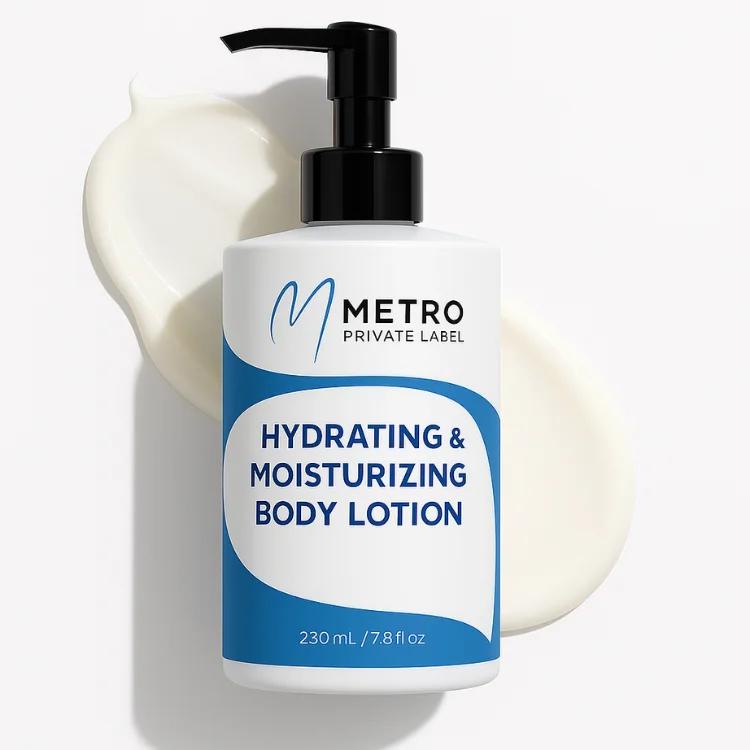
Get Your Custom Skincare Solution Today!

Don’t wait—fill out the form and let our team create the perfect skincare solution for your brand. Expect a personalized quote within 24 hours and start building your brand’s success now!

Submit Your
Private Label Skin Care Request

Fill out this form with your detailed needs and our customer support team will contact you shortly. We will assign a professional agent to follow up on your project and provide personalized assistance.

To get the fastest response, submit your inquiries using the form. If you encounter any issues with submission, you can also email us directly at info@metroprivatelabel.com .

*Metro Private Label takes your privacy very seriously. All information is only used for technical and commercial communication and will not be disclosed to third parties.
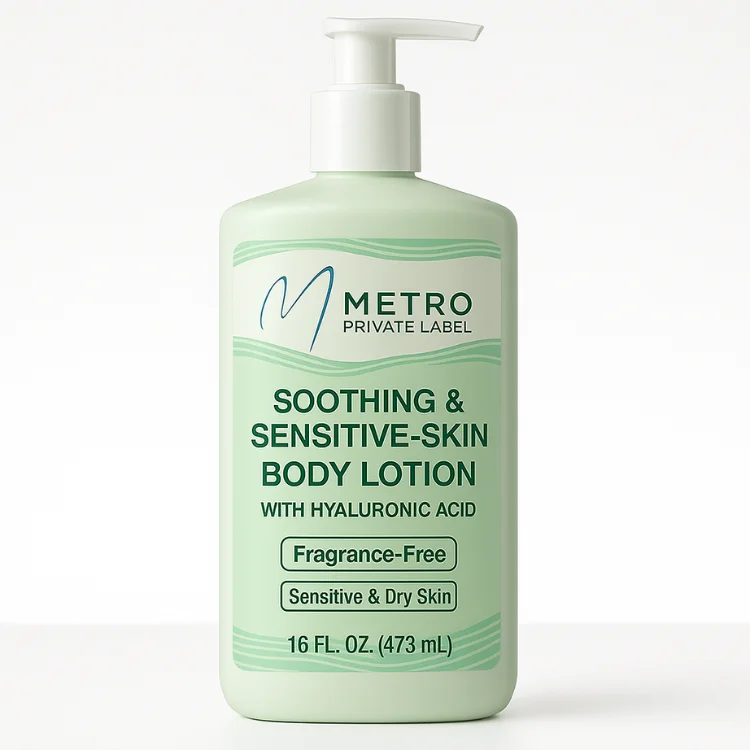
Submit Your
Private Label Skin Care Request

Fill out this form with your detailed needs and our customer support team will contact you shortly. We will assign a professional agent to follow up on your project and provide personalized assistance.

To get the fastest response, submit your inquiries using the form. If you encounter any issues with submission, you can also email us directly at info@metroprivatelabel.com .

*Metro Private Label takes your privacy very seriously. All information is only used for technical and commercial communication and will not be disclosed to third parties.