Your Trusted Body Bronzer Shimmer Manufacturer

We help you launch faster, start smaller, and stand out with custom formulas, pro-grade quality, and trend-driven skincare that sells — all built to grow with your brand.

Private Label Body Bronzer Shimmer

At Metro Private Label, we know that a successful body bronzer shimmer product isn’t just about sparkle or color—it’s about helping your brand deliver an instant glow, look premium on the shelf, and convert trend-driven demand into real sales. That’s why we design our private label body bronzer shimmer solutions around proven textures, market-tested formats, and what buyers are actively searching for on Amazon, TikTok, and seasonal beauty launches.
 
From lightweight bronzing drops and glow serums, to fast-absorbing shimmer body oils, cooling bronzing gels, wash-off instant body bronzers, and hydrating shimmer body lotions, our range reflects how today’s consumers actually use glow products—for daily wear, summer launches, festivals, photoshoots, and retail add-ons. We study top-selling SKUs, ingredient trends, and real customer reviews, so the products we manufacture for you stay relevant, compliant, and easy to sell.
 
As your manufacturing partner, we don’t just produce a formula—we help you build a hero glow product. Whether your brand needs a subtle satin finish for clinics, a high-shine shimmer for influencer launches, or a fast-dry, transfer-resistant bronzer for e-commerce, we’ll tailor the texture, shimmer level, claims, and packaging to match your positioning and target customer—so your product doesn’t just launch, it performs.

Bronzing Drops / Glow Drops (Face & Body)

Shimmer Body Oil / Dry Oil

Bronzing Gel / Shimmer Gel

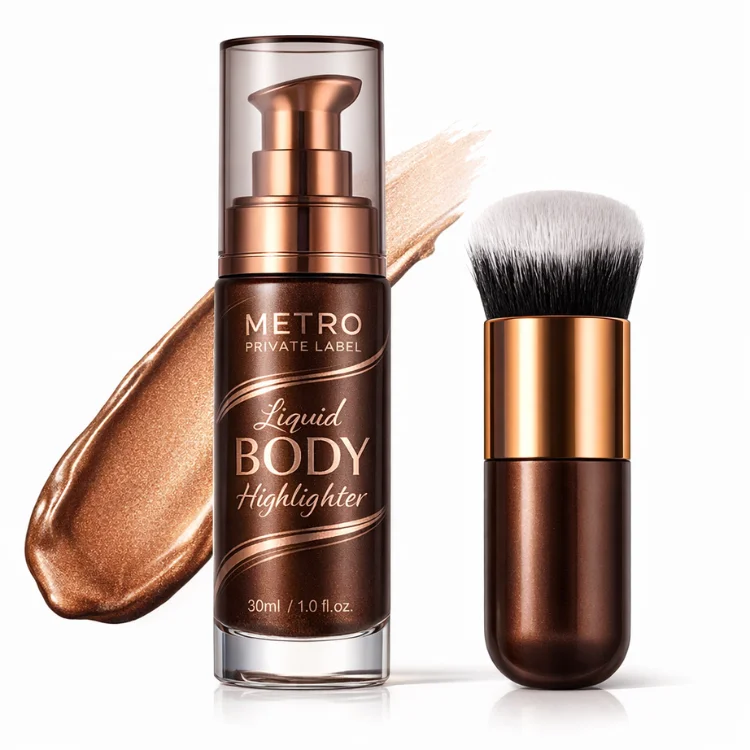
Liquid Body Highlighter / Body Luminizer

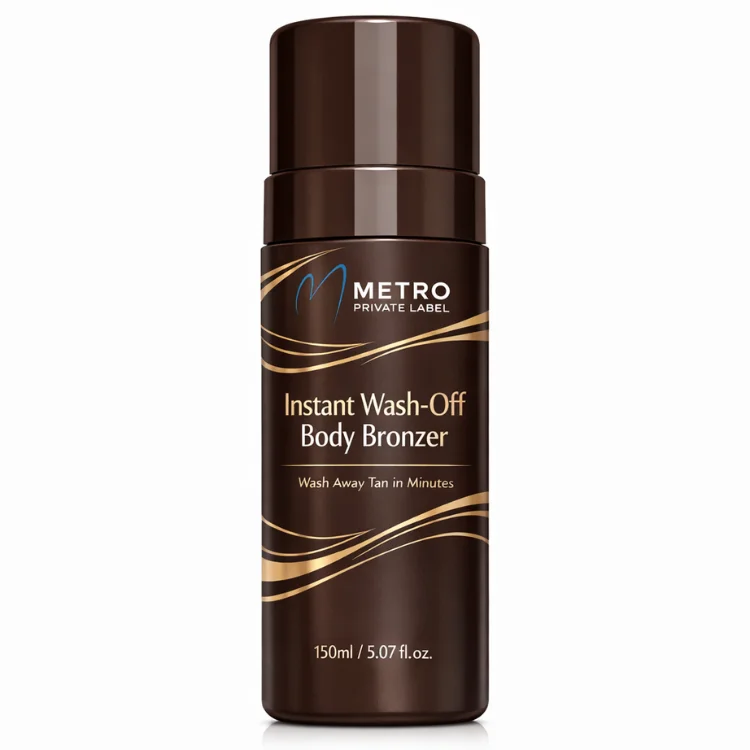
Instant Wash-Off Body Bronzer (Body Makeup / Body Blur)

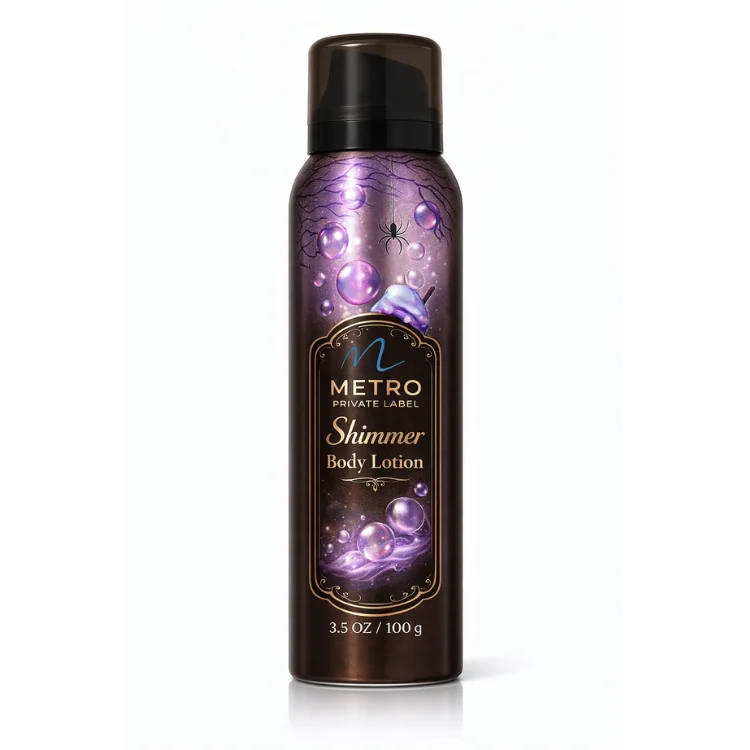
Shimmer Body Lotion / Glow Body Cream

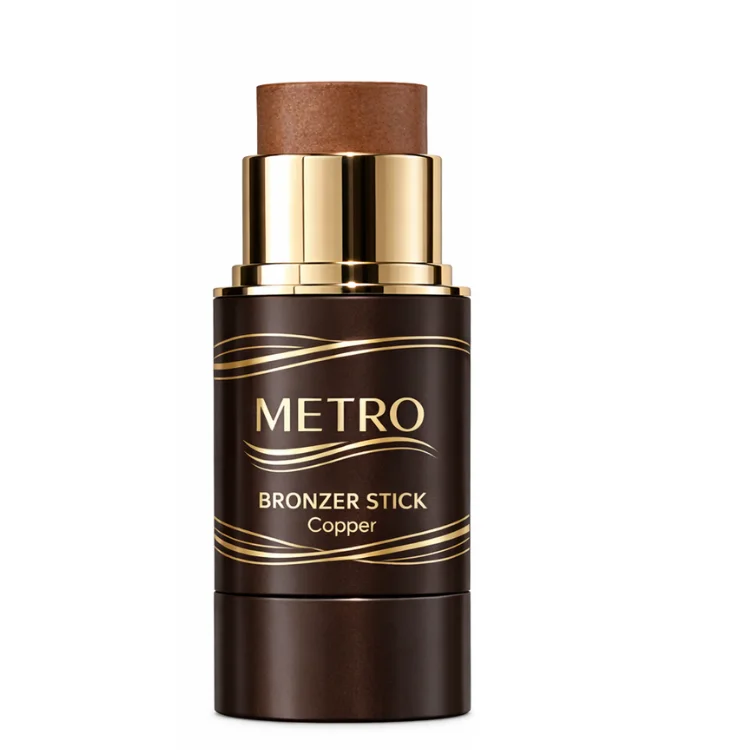
Bronzer Stick / Highlighter Stick (Multi-Use, Cream Stick)

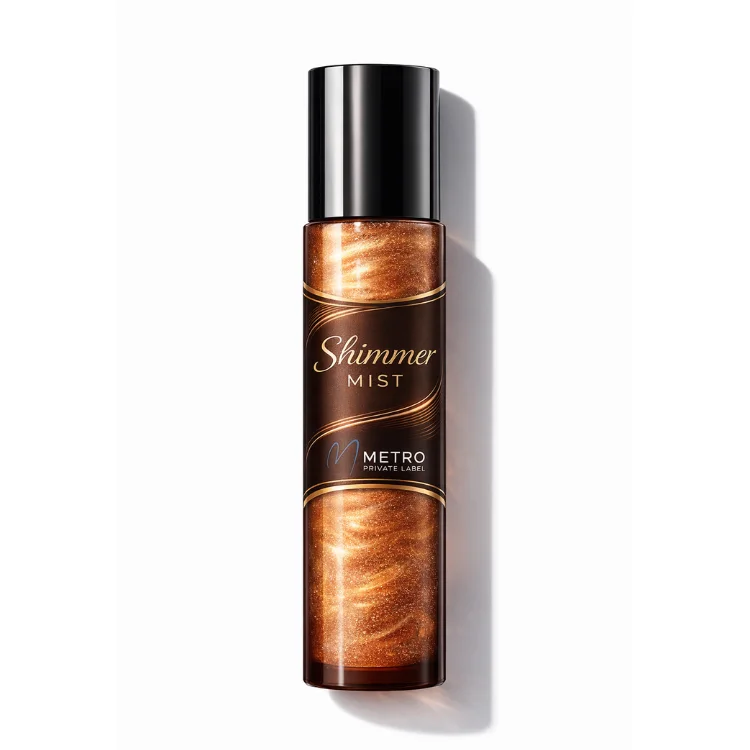
Shimmer Mist / Body Glow Spray

Build a Body Bronzer Shimmer Line That Truly Sells

At Metro Private Label, we understand that a successful Body Bronzer Shimmer isn’t just about shine—it’s about helping your brand deliver an instant glow, look premium on the shelf, and meet what today’s consumers actually want. Shoppers are no longer looking for basic body products. They want visible radiance, flattering bronze tones, lightweight textures, and formulas that feel luxurious but easy to use. That’s why every Body Bronzer Shimmer we manufacture is built around real market demand, proven ingredients, and fast-moving global trends.
Whether you’re launching bronzing drops, a shimmer body oil, a cooling bronzing gel, a wash-off instant body bronzer, or a hydrating glow lotion, we develop products designed to help your brand stand out from day one. Our formulations are guided by what sells on Amazon, what goes viral on TikTok, and what consumers repeatedly praise in reviews—so your product doesn’t just look good, it performs in the market.
We also make sure every Body Bronzer Shimmer formula is EU/UK-ready, CPSR compliant, and suitable for international export. That means you can launch, test, and scale your glow products with confidence, knowing your line is built on safe, stable, and market-approved foundations.
 
💡 Our 8 Most In-Demand Body Bronzer Shimmer Formats
1️⃣ Bronzing Drops / Glow Drops – Lightweight liquid drops for face & body, perfect for mix-and-customize routines. 
2️⃣ Shimmer Body Oil / Dry Oil – Fast-absorbing oils with a smooth, non-greasy glow finish. 
3️⃣ Bronzing Gel / Shimmer Gel – Cooling, water-light textures ideal for summer and humid climates. 
4️⃣ Liquid Body Highlighter / Body Luminizer – Buildable glow for shoulders, collarbone, legs, and décolletage. 
5️⃣ Instant Wash-Off Body Bronzer (Body Makeup) – Immediate bronze effect, transfer-resistant, and easy to remove. 
6️⃣ Shimmer Body Lotion / Glow Body Cream – Daily moisturizers with a soft bronze sheen and skincare benefits. 
7️⃣ Bronzer Stick / Cream Stick (Non-Powder) – Solid, mess-free formats for precise, on-the-go application. 
8️⃣ Shimmer Mist / Body Glow Spray – Quick-dry sprays for festival, party, and limited-edition launches.
 
🎯 MOQ & Packaging Options (Built for Real Brands)
At Metro Private Label, we keep Body Bronzer Shimmer projects practical and launch-friendly:
  • Product MOQ Most Body Bronzer Shimmer formulas start from 500–800 units, depending on formula type and packaging.
  • Custom Packaging MOQ Fully customized bottles, colors, or printing typically start from 3,000 pieces.
  • Packaging Formats Available We support multiple packaging options, including: • Glass or PET bottles (oils, drops, gels) • Pump bottles and squeeze tubes (lotions, body makeup) • Spray bottles (shimmer mists) • Stick packaging (cream bronzer sticks)
  • Included Support Every project includes formula stability testing, packaging compatibility checks, filling guidance, and transport suitability review—so your Body Bronzer Shimmer performs consistently from factory to customer.

More Than Just a Body Bronzer Shimmer Manufacturer

At Metro Private Label, we don’t just manufacture Body Bronzer Shimmer products—we help shape how customers experience your brand. Every glow oil, bronzing drop, lotion, or gel we create is designed to deliver visible results, premium textures, and the kind of modern claims shoppers actively look for on Amazon, TikTok, and seasonal beauty launches.

✅ Launch What the Market Already Wants

We build Body Bronzer Shimmer formulas based on real demand, not assumptions.
By tracking top-selling SKUs, trending ingredients, and consumer feedback, we make sure the products you launch align with what’s already performing in the market. From lightweight shimmer oils and bronzing drops to wash-off body bronzers and glow lotions, our range reflects proven categories—so your brand enters with less risk and faster traction.

✅ Small MOQ That Reduces Your Risk

We make it easy to start small and grow with confidence. You can launch with 500–800 units using ready packaging to test your market and gather feedback. When demand grows, scaling to 3,000+ units with customized packaging or 5,000+ units for full production is smooth and efficient—no reformulation, no supplier change, and no disruption to your brand plan.

✅ Visible Results That Win Customer Trust

Customers repurchase glow products that actually work—and we never forget that.
Our Body Bronzer Shimmer formulas focus on real performance, using ingredients like niacinamide, ceramides, peptides, panthenol, shea butter, botanical extracts, and skin-conditioning actives. The result is hydration, smoother texture, even tone, and a flattering bronze glow that turns your product into a repeat-buy hero SKU.

✅ Compliance That Makes Export Easy

We prepare your Body Bronzer Shimmer for international markets from day one.
From INCI lists, COA, SDS, stability and compatibility testing to EU/UK CPSR and FDA-related documentation, we make sure your products meet regulatory expectations before they ship. Whether you sell in the US, Europe, the Middle East, or through global e-commerce platforms, we help you launch smoothly—without delays or compliance surprises.
  • METRO
  • Typical OEM factory
METROTypical OEM factory
$
/year
/year
Minimum order quantity✅ 500 units for startup brands — low-risk entry for first-time founders.❌ 3,000 units minimum, limiting flexibility.
Packaging recommendations✅ Compatibility + visual templates to ensure perfect fit and premium look.❌ Not provided.
Launch support✅ Label compliance & claim copywriting included for export markets.❌ Not available.
Sample delivery time✅ 7–14 days with labeled packaging.❌ Usually 30+ days.
Compliance & Documentation✅ INCI, COA, SDS, GMP-ready — export with confidence.❌ Basic INCI only.
Buy Now

✨ Build a Body Bronzer Shimmer Line That Sets Your Brand Apart

When you work with Metro Private Label, you’re partnering with a GMPC-certified manufacturer that helps turn Body Bronzer Shimmer ideas into stable, effective, and export-ready products. We focus on flattering bronze tones, skin-conditioning performance, and premium textures—so your products feel good on application, look beautiful on skin, and earn trust with every use.
 
Whether you’re launching bronzing drops, a shimmer body oil, a cooling bronzing gel, an instant wash-off body bronzer, or a hydrating glow lotion, we design every formula to spread smoothly, absorb well, and deliver a visible, wearable glow your customers want to repurchase—not just try once.
🧪 Custom Formulation That Supports Real Brand Credibility
We don’t rely on generic bases. Every Body Bronzer Shimmer formula is developed with cosmetic science and real market insight. Our lab works with ingredients like niacinamide, ceramides, peptides, panthenol, shea butter, squalane, hyaluronic acid, botanical extracts, and carefully selected shimmer pigments—balanced to suit your target customer and positioning.
Each prototype goes through pH control, stability testing, viscosity adjustment, and packaging compatibility checks to ensure consistency from sampling to full production. If there’s a better way to improve spreadability, reduce greasiness, enhance glow payoff, or refine skin feel, we explain it clearly and guide you through the decision. This collaborative process helps your Body Bronzer Shimmer line stand out from “me-too” products and build long-term trust through performance.
 
📦 Packaging That Matches Your Brand Vision
We believe packaging plays a huge role in how your Body Bronzer Shimmer is perceived. You can start quickly with 500–800 pcs using our ready stock bottles, pumps, tubes, or jars—ideal for DTC launches, market testing, or first SKUs.
When you’re ready to scale, move into 3,000+ pcs custom packaging, including custom colors, finishes, airless systems, premium printing, and elevated artwork that reflects your brand’s quality.
Packaging Notes:
  • Body Bronzer Shimmer (oil, gel, lotion): 500–800 pcs with stock packaging
  • Fully customized bottles or jars: 3,000 pcs minimum
  • Gallon-size packaging: available for salons, refill programs, and B2B distribution
We manage labels, cartons, printing, and finishing—so your packaging looks cohesive, clean, and retail-ready from day one.
 
⚙️ A Clear, Reliable Production Process
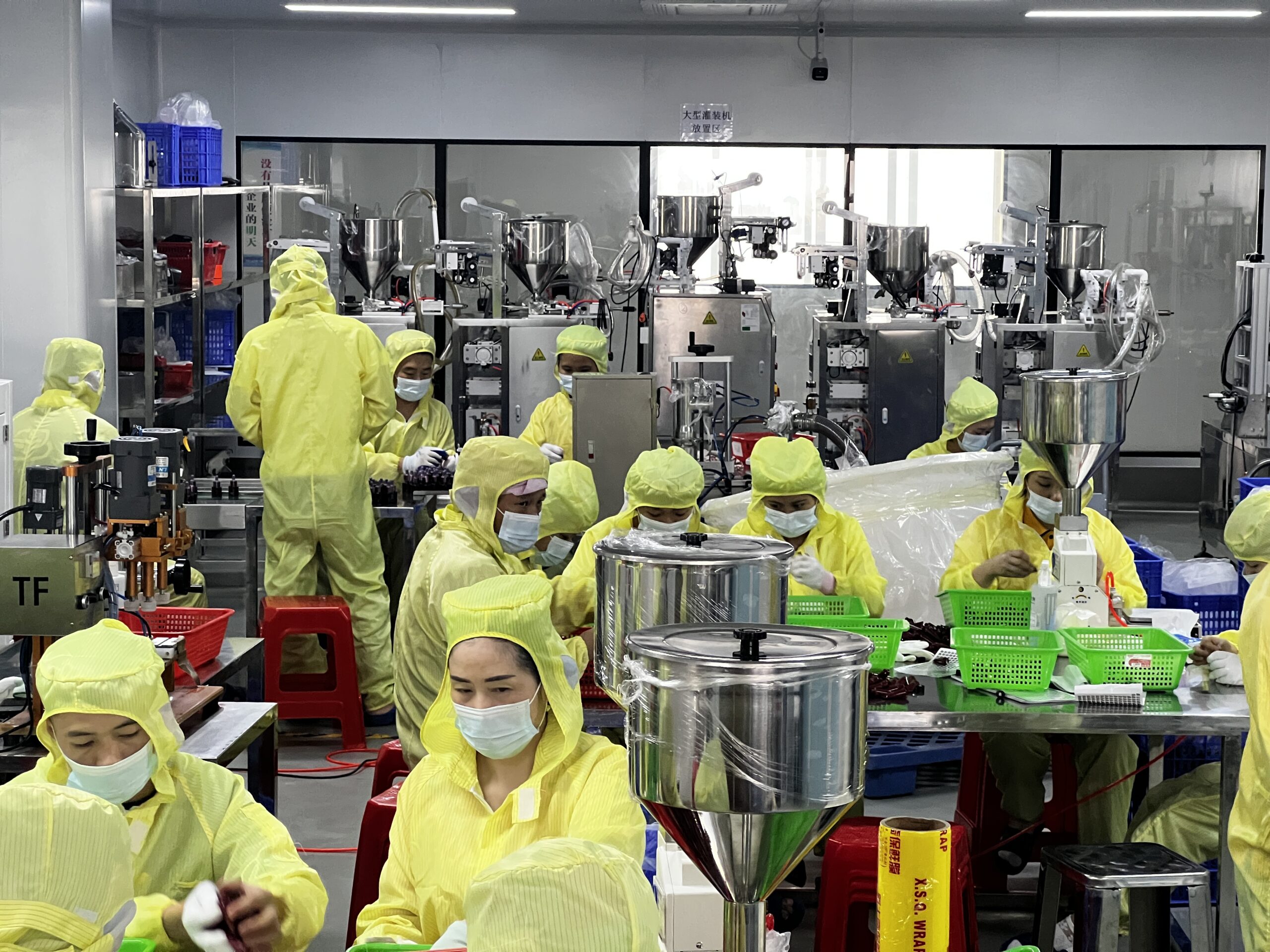
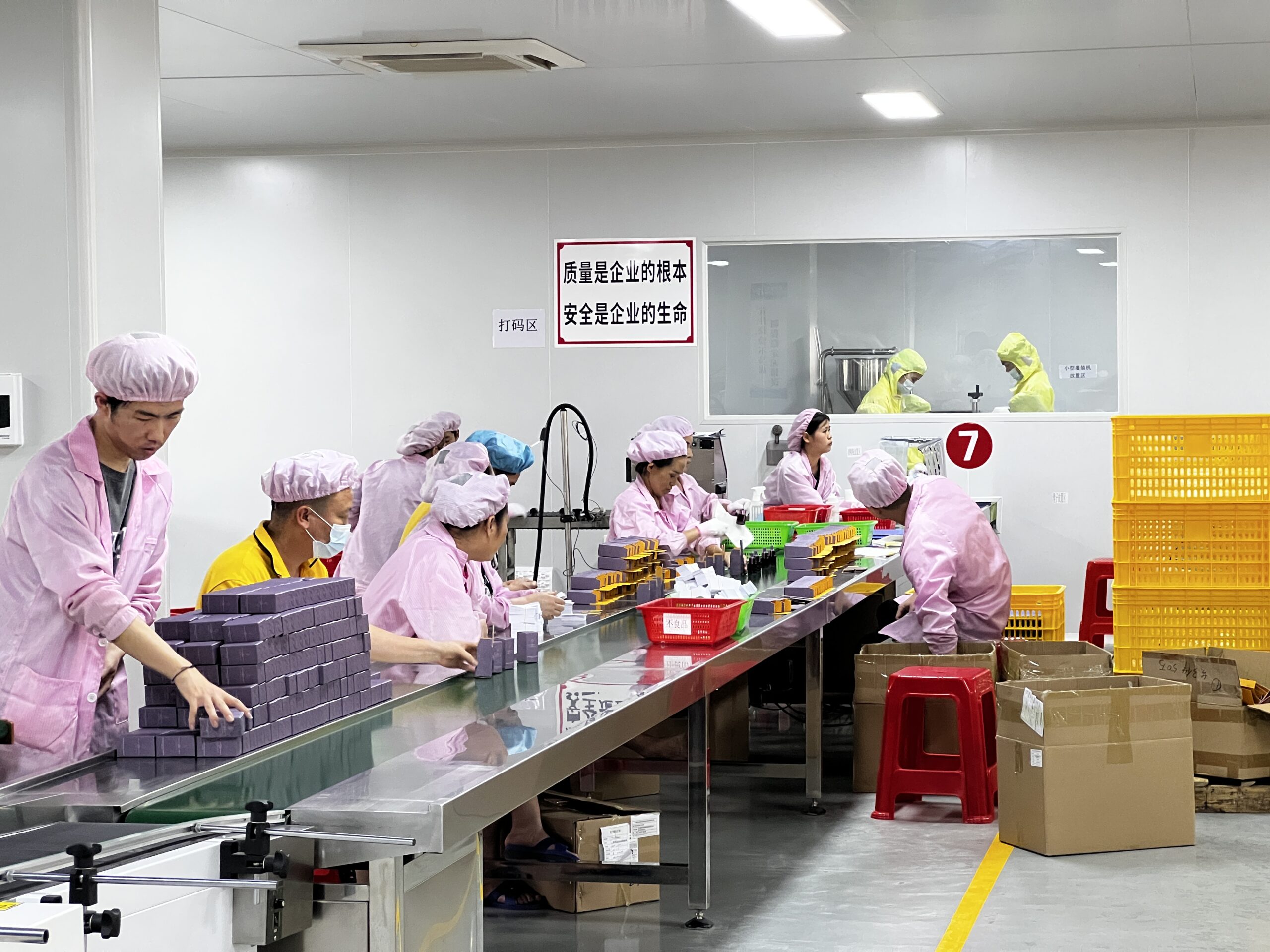
Everything happens in a coordinated workflow—from formulation and sampling to filling, quality control, and export documentation. We keep communication simple, flag potential issues early, and make sure timelines stay realistic. Think of us as an extension of your operations team, aligned with your goal of launching a premium, high-performing Body Bronzer Shimmer line.
 
🌿 Built for Growth, Not One-Time Orders
We measure success by how well your brand scales. That’s why we support flexible MOQs, stable formulas, packaging that grows with you, and full documentation for U.S., EU, UK, GCC, and global markets.
With Metro Private Label, your Body Bronzer Shimmer line is designed to launch smoothly, perform consistently, and grow confidently across every channel you sell in.

Who We Work With (Designed Around Your Real Needs)

We build partnerships by thinking the way our clients do — understand first → provide solutions → deliver results. Every client type has different priorities, and our role is to translate those into clear, actionable outcomes.

Medical Aesthetic / SPA Professionals

You care about: post-treatment comfort, product safety, and documentation that meets regulatory and audit standards.
What we deliver:

  • Clinical-grade formulations: CICA, ceramides, and peptides; pH-balanced, fragrance-free options with full preservative logic provided.

  • Regulatory documentation: INCI, COA, SDS, stability and compatibility reports; CPSR/CPNP preparation handled with third-party testing support.

  • Professional aesthetic: minimalist, medical-style packaging suitable for back-bar or retail; traceable batches for consistent results.
    Immediate outcome: a post-treatment testing set, compliant label guide, and batch consistency plan ready for your internal validation.

Funded New Entrepreneurs

You care about: low-risk entry, a clear roadmap, and a premium finish that looks ready for market.
What we deliver:

  • Smart start: choose from proven skincare bases (serums, creams, masks); pilot runs from 500 units with optional custom cartons.

  • All-in-one process: formula → visual template → compliant label copy → production → export-ready documentation.

  • Transparent costing: clear breakdown of your key cost drivers — formula type, active concentration, and packaging complexity — so you can plan pricing and profit with confidence.
    Immediate outcome: 2–3 customized samples, a detailed quotation breakdown, and a timeline showing every stage from sample to shipment.

Boutique DTC Brand Owners

You care about: originality, visual consistency, and storytelling through ingredients.
What we deliver:

  • Ownable sensorials: bio-cellulose or vegan carrageenan textures paired with signature actives like peptides, niacinamide, or botanical blends.

  • Design alignment: typography, color, and label systems that match your brand aesthetic; compatibility checks before full production.

  • Global readiness: INCI, COA, SDS, and stability data included; EU/UK/US label claim review support for smooth registration.
    Immediate outcome: packaging mockups, ingredient story sheets, and a coordinated multi-SKU rollout plan that keeps your range cohesive.

Why this works:
We don’t sell production capacity — we deliver strategic understanding, technical precision, and verifiable results.
By connecting your goals with regulatory, design, and manufacturing expertise, we help your brand move faster, reduce uncertainty, and build trust that lasts.

FAQs Body Bronzer Shimmer

For your convenience, we’ve gathered the most commonly asked questions about our Body Bronzer Shimmer. However, should you have any further queries, please don’t hesitate to reach out to us.
1. What types of Body Bronzer Shimmer products can you manufacture?
We manufacture a wide range of non-powder Body Bronzer Shimmer formats, including bronzing drops, shimmer body oils, dry oils, bronzing gels, liquid body highlighters, wash-off body bronzers, glow lotions, shimmer creams, sticks, and shimmer sprays. You can start with proven formats or build a custom texture based on your brand vision.
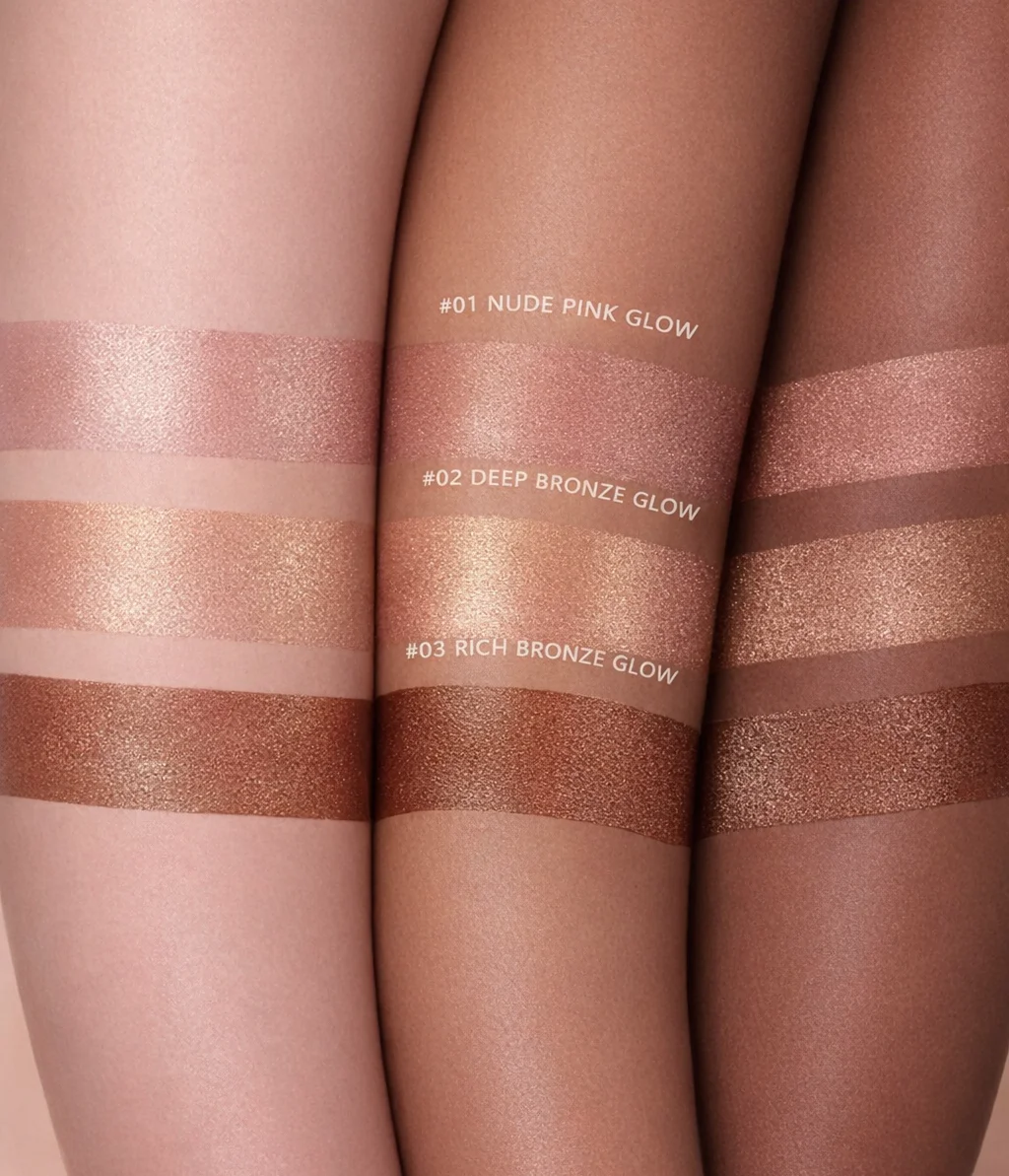
Yes—customization is what we do best. We can adjust bronze intensity, shimmer particle size, undertone (golden, neutral, rose), skin feel, absorption speed, and finish (sheer, satin, high-shine). We also tailor skincare actives like niacinamide, ceramides, peptides, panthenol, or botanical extracts to fit your target customer.
Our typical MOQ starts from 500–800 units per SKU when using stock packaging. For fully customized packaging, MOQs usually begin at 3,000 units. We’re very transparent about costs and help you choose the best option to start small and scale smoothly.
Sampling usually takes 2–4 weeks, depending on customization level. Once samples are approved, full production typically takes 4–6 weeks. If you’re working toward a seasonal or promotional launch, let us know early—we’ll plan the timeline with you.
Yes. Our formulas are designed for daily body use and focus on skin comfort and performance. We can develop options that are vegan, cruelty-free, fragrance-free, or suitable for sensitive skin, depending on your market requirements.
Absolutely. We support bottle, jar, tube, spray, and stick packaging, along with label layout and print coordination. Whether you want a clean DTC look, a premium glass bottle, or practical salon packaging, we’ll help you choose packaging that fits your brand and budget.
Yes, both options are available. You can start with our market-tested stock formulas for faster launch and lower cost, or work with us to co-develop a custom Body Bronzer Shimmer formula from scratch. We’ll guide you based on your timeline and goals.
Every Body Bronzer Shimmer product goes through stability testing, viscosity control, pH checks, compatibility testing with packaging, and batch quality inspection. We manufacture under GMPC standards and follow international cosmetic quality requirements.
Yes. We help you shape clear, compliant claims such as “instant bronze glow,” “non-greasy finish,” “transfer-resistant,” “buildable shimmer,” or “skin-conditioning formula.” We can also support ingredient highlights and usage guidance to make your product easier to market.
Yes. We work with brands worldwide and support U.S., EU, UK, GCC, and global markets. We prepare INCI lists, COA, SDS, and other export-ready documents, and assist with shipping coordination so your launch runs smoothly across borders.

Metro Private Label in Numbers

Happy Clients
0 +
Million-dollar Buyers
0 +
Formulation
0 +
Professional Staffs
0 +

Your Ultimate Guide to Body Bronzer Shimmer

If you’re planning to add a Body Bronzer Shimmer to your product lineup—whether as a fast-moving seasonal SKU, a clinic-exclusive glow product, or a hero item for DTC or Amazon—you’re not just adding another body care product. You’re stepping into one of the highest-return, lowest-barrier categories in modern beauty. Body Bronzer Shimmers sell because they deliver instant results, visible glow, and a premium sensorial experience—without asking consumers to wait weeks to see an effect.
 
We’ve watched this category grow far beyond basic shimmer oils. Today’s Body Bronzer Shimmers are expected to hydrate, smooth, even tone, feel weightless on skin, and look good on camera. At Metro Private Label, we’ve worked with micro brand founders launching their first glow product, Amazon sellers optimizing for conversion and reviews, clinics and spas building professional add-on SKUs, and distributors who need stable, compliant formulas that ship and scale globally. In every case, the brands that succeed treat Body Bronzer Shimmer as a strategic product, not an impulse add-on.
 
This guide is built from what we see behind the scenes every day—what actually makes a Body Bronzer Shimmer sell, which formats are easiest to manufacture and scale, how undertones and finishes affect returns and complaints, which ingredients add real value beyond shine, and how packaging, claims, MOQ planning, and compliance decisions can quietly determine whether a product becomes a repeat-purchase hero or a short-lived launch.

Table of Contents

1️⃣ Body Bronzer Shimmer: Product Definition from a Manufacturer’s View

When a client approaches me with a Body Bronzer Shimmer idea, the very first thing I do is slow the process down, not speed it up. Before we talk about colors, shimmer levels, or packaging, I define the product from a manufacturing and regulatory standpoint. In my view, Body Bronzer Shimmer is a temporary cosmetic enhancement product. Its role is visual—adding warmth, glow, and light reflection to the skin—without changing the skin biologically. This definition sets the foundation for every technical and commercial decision that follows.
 
Why Body Bronzer Shimmer Is Categorized as a Cosmetic Glow Product
From a factory perspective, Body Bronzer Shimmer belongs to the category of leave-on cosmetic products with surface-level visual effect. The bronze tone comes from pigments and shimmer particles, not from chemical reactions with the skin. This matters because regulatory bodies evaluate products based on how they work, not how they are marketed. When I classify Body Bronzer Shimmer correctly, it allows us to design formulas that are stable, predictable, and easier to approve across markets.
 
Why I Always Separate Body Bronzer Shimmer from Self-Tanning Products
One of the biggest mistakes I see is brands treating Body Bronzer Shimmer as a “light tanning product.” From a manufacturing standpoint, this is incorrect and risky. Self-tanners rely on DHA or similar actives that react with amino acids in the skin. Body Bronzer Shimmer does not. It creates an instant, wash-off effect. By separating these categories early, I help brands avoid unnecessary regulatory complexity, stricter testing expectations, and customer confusion after launch.
 
Shimmer Bronzer vs. Body Makeup vs. Glow Lotion: How I Draw the Line
Although these products often appear together on shelves, I treat them very differently in development. Shimmer Bronzers prioritize visual glow and reflectivity. Body Makeup or Wash-Off Bronzers focus on tone correction and coverage, often requiring better transfer resistance. Glow Lotions and Oils lean closer to skincare, where hydration, spreadability, and skin feel take priority over strong pigment payoff. When I define which role the product plays, I can build a formula that actually meets user expectations.
 
How Product Definition Impacts Formula Architecture
Once the category is clear, I design the formula structure accordingly. A shimmer-focused product needs stable pigment dispersion and consistent shimmer distribution. A body makeup product needs better film-forming and rub resistance. A glow lotion needs a balanced emulsion that supports daily use. These structural decisions happen before ingredient selection, not after. This is why correct definition saves time and cost later in development.
 
Why Correct Classification Reduces Regulatory and Market Risk
From my experience, misclassified products are the ones that face the most problems after launch. Claims get questioned. Documentation needs revision. Customers complain because the product does not behave as expected. By defining Body Bronzer Shimmer accurately from the beginning, I align formulation, claims, labeling, and compliance documents into one clear direction. This significantly reduces the risk of recalls, relabeling, or blocked shipments.
 
How This Definition Shapes Claims and Consumer Expectations
I always remind brands that customers judge products based on expectations. If Body Bronzer Shimmer is positioned as an instant glow enhancer, users understand that it washes off. If it is confused with tanning, disappointment follows. Proper definition allows me to help brands craft clear, compliant, and honest claims, which leads to better reviews, fewer returns, and stronger brand trust.
 
How Early Definition Supports Scalable Manufacturing
From a production standpoint, well-defined products scale better. When the category is clear, batch-to-batch consistency is easier to maintain, packaging compatibility is easier to test, and line extensions are easier to plan. In my experience, brands that start with the right definition are the ones that can scale without reformulating every time they grow.
If I had to summarize this section in one sentence, it would be this: a successful Body Bronzer Shimmer starts with understanding what it is not, just as much as what it is. When brands adopt a manufacturer’s view early, they make smarter decisions, move faster, and build products that last beyond a single trend cycle.

2️⃣ Core Product Formats That Dominate the Body Bronzer Shimmer Market

When brands ask me which Body Bronzer Shimmer product they should develop, I almost never begin with ingredients. From a manufacturing standpoint, product format defines everything—from formula architecture and stability risk to filling speed, packaging compatibility, and long-term scalability. In my experience, brands that choose the wrong format early usually end up spending more time and money fixing problems that could have been avoided at the planning stage.
 
Bronzing Drops: Low Barrier, High Flexibility, Easy to Scale
Bronzing drops are one of the most common starting points I recommend, especially for micro brand founders and Amazon sellers. From a factory perspective, this format is flexible and forgiving. The texture is typically serum-like, which allows easy control over bronze intensity and undertone without destabilizing the system. When properly formulated, bronzing drops scale very smoothly because they behave consistently in both small test batches and larger production runs.
 
Shimmer Body Oils: Strong Visual Impact With Clear Manufacturing Rules
Shimmer body oils dominate the Body Bronzer Shimmer market for one simple reason—they deliver instant results. From my manufacturing experience, oils are straightforward to produce as long as shimmer dispersion is handled correctly. The key technical challenge is preventing shimmer sedimentation during storage, which I address through proper particle size selection and viscosity balance. Once this is solved, shimmer oils are among the most repeatable formats in mass production.
 
Bronzing Gels: More Technical, But Increasingly Requested
Bronzing gels require more formulation control than oils or drops, but demand for them has grown quickly. I see this especially from brands targeting hot climates or customers who dislike oily textures. From a factory view, gels require careful polymer selection and strict viscosity tuning. When done properly, they offer excellent stability and consumer satisfaction, but they are less forgiving during development than liquid formats.
 
Shimmer Lotions and Glow Creams: Skincare-First Formats With Strong Longevity
Shimmer lotions and creams appeal strongly to clinics and skincare-oriented brands. From a manufacturing standpoint, these are emulsions, which means stability testing is more involved. However, once the emulsion system is optimized, lotions and creams are extremely reliable at scale. I often recommend this format to brands planning long-term lines rather than short seasonal launches.
 
Wash-Off Body Bronzers: High Performance, Higher Production Discipline
Wash-off body bronzers are designed to visually correct skin tone and provide coverage. From my perspective, this is one of the most demanding formats to manufacture because it combines pigment load, film formation, and rub resistance. I usually caution brands that this format requires stricter quality control and clearer usage communication to avoid customer complaints.
 
Bronzer Sticks: Solid Formats With Packaging Sensitivity
Bronzer sticks attract brands looking for portability and premium presentation. From a factory point of view, sticks are less about formula difficulty and more about process control. Temperature, cooling speed, and mold consistency must be tightly managed. Once finalized, stick formats can scale well, but they are not ideal for very small trial runs.
 
Shimmer Sprays and Mists: Efficient at Scale, Sensitive in Design
Shimmer sprays are popular for festival, event, and limited-edition products. From a production standpoint, the main challenge is ensuring shimmer particles do not clog spray systems. I always design these formulas with spray mechanics in mind first, aesthetics second. When optimized, sprays are fast to fill and efficient for larger orders.
 
Which Formats Are Most Stable in Long-Term Production
Based on years of manufacturing experience, bronzing drops, shimmer oils, and shimmer lotions are the most stable formats over time. They tolerate batch size increases well, show minimal performance drift, and are easier to reproduce consistently. These formats are ideal for brands planning repeat orders and international distribution.
 
How I Help Brands Choose the Right Format Strategically
I never recommend formats based purely on trends. Instead, I evaluate market demand, manufacturing risk, and scalability together. Sometimes the “most exciting” format is not the smartest one to launch first. My role is to help brands choose a format that will still perform well after the third or fourth production run—not just the first sample.
If there’s one principle I stand by, it’s this: the best-selling Body Bronzer Shimmer products are almost always the ones that are easiest to manufacture consistently. When a format aligns with production reality, everything else—compliance, logistics, customer satisfaction, and scaling—becomes far easier to manage.

3️⃣ Market Demand: Where Body Bronzer Shimmer Is Growing Fastest

When people talk about market demand, they often look at social media trends or bestseller lists. From my position as a manufacturer, I look at demand very differently. I pay attention to how often brands come back to reorder, how quickly they expand shades or formats, and whether Body Bronzer Shimmer becomes part of a long-term product roadmap rather than a one-off idea. These signals tell me far more about real demand than short-term hype.
 
Why Direct-to-Consumer Brands Move First
DTC brands are usually the earliest adopters of Body Bronzer Shimmer, and I see this pattern repeatedly. These brands need products that show results immediately, photograph well, and are easy to explain in one sentence. Body Bronzer Shimmer fits perfectly because customers can see the effect the moment they apply it. From a manufacturing standpoint, this explains why DTC brands are willing to test the category early and reorder quickly if feedback is positive.
 
How Amazon Demand Shows Up in Manufacturing Orders
Amazon sellers validate demand through numbers, not storytelling. What I observe is that Body Bronzer Shimmer performs well because it avoids many issues that hurt reviews—no waiting period, no complicated usage instructions, and no long-term skin reactions. When sellers see stable review scores and repeat purchases, they move from small test batches to larger production runs. That transition is one of the strongest demand indicators I see at the factory level.
 
Why Clinics and Aesthetic Practices Adopt This Category Carefully but Consistently
Clinics and aesthetic practices rarely chase trends. When they choose Body Bronzer Shimmer, it’s because the category is low-risk, non-invasive, and easy to retail alongside treatments. From my experience, clinics prefer products that enhance appearance without interfering with procedures or recovery. Body Bronzer Shimmer meets that requirement, which is why it often becomes a steady retail add-on rather than a seasonal experiment.
 
Seasonal Demand: What I See Before and After Summer
Summer is the most obvious demand peak, but what matters more to me is how brands plan around the season. Many of my clients start development months in advance, launch in early summer, and then follow up with limited editions for festivals, holidays, or special campaigns. This pattern shows me that Body Bronzer Shimmer is not just a summer product—it’s a seasonally repeatable category that brands can reintroduce without fatigue.
 
Why Limited Editions Drive Safer Market Testing
From a manufacturing perspective, limited editions are one of the smartest ways brands test market demand. Body Bronzer Shimmer works especially well for this because brands can adjust undertone, finish, or packaging without changing the core formula. I often see brands use limited runs to test new concepts, then convert the best-performing version into a permanent SKU. This behavior is a strong signal of healthy market demand.
 
Why Brands View Body Bronzer Shimmer as a Low-Risk Entry Product
Compared to treatment-focused body care or self-tanning products, Body Bronzer Shimmer carries fewer risks. There are fewer regulatory hurdles, fewer performance promises, and fewer consumer misunderstandings. From my side of the business, this is why many brands choose Body Bronzer Shimmer as their first body product before expanding into more complex categories.
 
Repeat Purchase Behavior That Confirms Long-Term Demand
Although I don’t sell directly to consumers, repeat purchase behavior shows up clearly in manufacturing data. Brands reorder Body Bronzer Shimmer because consumers use it regularly, finish it quickly, and repurchase without hesitation. This short usage cycle is one of the reasons the category maintains momentum even in competitive markets.
 
Regional Markets Where Growth Is Most Consistent
Based on the brands I work with, demand is strongest in North America, the UK, Southern Europe, Australia, and the Middle East. These regions share a cultural preference for bronzed, glowing skin and a lifestyle that supports visible body care products. When brands target these markets, Body Bronzer Shimmer often outperforms more technical or treatment-heavy products.
 
Why Market Saturation Has Not Slowed This Category
Even though many glow products exist, Body Bronzer Shimmer continues to grow because differentiation is straightforward. From a manufacturing point of view, brands can stand out through undertone balance, texture, skin feel, packaging quality, and positioning without reinventing the formula system. This flexibility keeps the category open to new entrants.
 
How I Validate Demand Before Recommending Production
Before I advise a client to move forward, I look for practical signals: a clear sales channel, realistic MOQ expectations, and a defined customer use case. When those elements are present, Body Bronzer Shimmer almost always performs well. That consistency is why I continue to recommend this category to brands looking for validated market opportunities.
From everything I’ve observed, Body Bronzer Shimmer is not a short-lived trend. It’s a repeatable, scalable product category with strong cross-channel demand. For brands that want to enter body care with controlled risk and clear consumer appeal, this category offers one of the most reliable market opportunities available today.

4️⃣ Choosing the Right Bronzing Effect: Sheer, Satin, or High-Shine

When brands tell me they want a Body Bronzer Shimmer that looks “natural” or “eye-catching,” I always translate that request into technical language before doing anything else. From a manufacturing standpoint, bronzing effect is not a visual preference—it’s a formulation variable that controls cost, stability, tolerance, and complaint risk. The glow level you choose will directly affect how easy the product is to manufacture and how well it performs in the real market.
 
How Bronzing Effect Is Engineered at Formula Level
At the formula level, bronzing effect is created by a combination of pigment load, shimmer concentration, particle size, base transparency, and film formation. Changing even one of these parameters alters the final appearance and the product’s behavior during filling, transport, and storage. This is why I always lock the target effect early—late-stage changes almost always increase cost and delay production.
 
Sheer Bronzing: Built for Tolerance and Broad Acceptance
Sheer bronzing effects use very low pigment levels and finely milled shimmer in a transparent or semi-transparent base. From my experience, this is the most forgiving finish across different skin tones. Manufacturing-wise, sheer formulas are easier to stabilize and show fewer batch-to-batch variations. I often recommend this option to brands launching their first Body Bronzer Shimmer or selling in clinics where subtlety matters more than drama.
 
Why Sheer Formulas Produce the Lowest Complaint Rates
Post-launch feedback tells a clear story. Sheer bronzing products generate fewer “too dark,” “uneven,” or “unnatural” complaints. Because the effect is subtle, consumers are more forgiving of application differences. From a risk-control perspective, this makes sheer bronzing the safest commercial option, especially for Amazon and professional channels.
 
Satin Bronzing: The Commercial Sweet Spot
Satin bronzing sits between sheer and high-shine and represents the largest share of successful commercial launches I see. Technically, satin finishes use moderate pigment combined with controlled pearl or mica systems to create a smooth, skin-like glow. From a formulation standpoint, this requires tighter balancing than sheer products but remains manageable at scale.
 
Why Satin Finishes Scale Best for Long-Term SKUs
Satin bronzing formulas strike a balance between impact and stability. They deliver visible results without pushing pigment or shimmer levels too far. This balance reduces production risk, keeps raw material costs reasonable, and maintains consistency across large batches. For brands planning permanent SKUs rather than short campaigns, satin is often the smartest choice.
 
High-Shine Bronzing: Maximum Impact, Maximum Sensitivity
High-shine bronzing products are designed to stand out visually. They rely on high concentrations of reflective particles, sometimes combined with deeper pigments. From a manufacturing standpoint, these formulas are the most sensitive. Shimmer settling, uneven application, and clogging risks increase significantly as reflectivity rises.
 
Why High-Shine Products Create Polarized Consumer Feedback
Based on post-market data I’ve seen, high-shine bronzers produce the most extreme reactions. Some customers love the bold glow; others describe it as glittery or unnatural. This polarization leads to higher return rates and inconsistent reviews, particularly on Amazon. For this reason, I usually recommend high-shine finishes only for limited editions, influencer collaborations, or seasonal drops.
 
Pigment Load: Where Cost Escalates Faster Than Brands Expect
Increasing pigment load doesn’t just intensify color—it increases raw material cost, mixing time, dispersion difficulty, and rejection risk. From a factory perspective, high pigment systems require stronger dispersants and tighter quality control. Many brands underestimate how quickly costs rise when pigment levels increase beyond functional necessity.
 
Shimmer Particle Size: A Small Detail With Big Consequences
Particle size is one of the most overlooked formulation details. Fine shimmer creates a smooth glow and better stability but costs more. Larger particles are cheaper but increase sedimentation, uneven payoff, and customer complaints. I always match particle size to the application method, packaging format, and brand positioning—not just visual preference.
 
How Bronzing Effect Impacts Packaging Compatibility
Glow level directly affects packaging choices. High-shine formulas may clog narrow pumps or spray systems, requiring wider channels or jars. Sheer and satin products are far more packaging-friendly and compatible with standard components. Aligning effect level with packaging early avoids costly redesigns later.
 
Over-Formulation: The Most Common Mistake I See
One of the biggest mistakes brands make is over-formulating to “stand out.” From my experience, adding more shimmer or pigment often reduces stability and increases complaint risk without improving customer satisfaction. The best-performing products are not the boldest—they are the most technically balanced.
 
How I Help Brands Choose the Right Bronzing Effect
When I guide brands, I look at channel, target customer, price point, and tolerance for risk. A DTC brand may succeed with a richer satin finish. A clinic brand usually benefits from a sheer glow. My role is to align bronzing effect with real usage scenarios, not just visual trends.
From everything I’ve seen in development, production, and post-launch performance, the right bronzing effect protects your margins, your reviews, and your brand credibility. Choosing between sheer, satin, and high-shine is not about aesthetics—it’s about engineering a product that works in the real world.

5️⃣ Key Ingredients That Add Real Value Beyond Glow

From a manufacturer’s perspective, I never treat Body Bronzer Shimmer as pure body makeup. Shimmer creates attention, but it does not build trust. In real market performance, the brands that succeed long-term are the ones whose bronzing products still feel good on the skin after the visual effect wears off. That’s why, when I design formulas, I start by asking how the skin should feel after one hour, four hours, and repeated use—not just how it looks in the first minute.
 
How Ingredient Selection Directly Affects Repeat Purchase Behavior
I see repeat behavior clearly at the factory level: products that deliver hydration, comfort, and smoothness get reordered; products that only look good once do not. Ingredients are the reason. When customers feel dryness, tightness, or irritation after the glow fades, they rarely repurchase. This is why I treat ingredient selection as a retention strategy, not a marketing add-on.
 
Niacinamide: A Strategic Ingredient for Brightening Without Risk
Niacinamide is one of the most reliable ingredients I use in Body Bronzer Shimmer. From a formulation standpoint, it integrates well into lotions, gels, and drops without disrupting shimmer systems. From a claim perspective, it allows brands to communicate tone-evening and radiance—claims that are widely understood and regulator-friendly. I typically keep niacinamide at conservative, effective levels because overuse adds cost without improving consumer perception.
 
Ceramides: Turning a Visual Product Into a Barrier-Supporting One
Ceramides change how customers perceive a product. From my experience, when ceramides are included, Body Bronzer Shimmer shifts from “cosmetic glow” to skin-respecting body care. This is especially important for brands selling in clinics, dry climates, or mature-skin markets. Ceramides reduce dryness complaints and help customers feel comfortable using the product repeatedly, which directly impacts loyalty.
 
Panthenol: The Quiet Ingredient That Prevents Complaints
Panthenol rarely sells a product on its own, but it quietly prevents problems. From a manufacturing view, panthenol is stable, compatible, and easy to formulate. From a user perspective, it reduces redness, dryness, and post-sun discomfort. I often include panthenol not because customers demand it, but because it lowers the chance they complain later.
 
Peptides: Elevating Perceived Value Without Medical Claims
Peptides are useful when brands want to position their Body Bronzer Shimmer at a higher price point. I use them selectively. From my experience, peptides work best in satin or lotion-based formulas where consumers already expect skincare benefits. They support claims around smoothness and firmness without crossing into therapeutic territory. Overuse, however, increases cost without increasing trust.
 
Botanical Oils: Where Sensory Experience Shapes Brand Memory
Botanical oils play a major role in how a product is remembered. Oils like squalane, jojoba, sunflower, or sweet almond oil affect spreadability, slip, and after-feel. From my point of view, these oils are less about dramatic claims and more about how premium the product feels during use. The wrong oil can make a product greasy or heavy; the right one makes customers associate your brand with comfort and quality.
 
Humectants: The Most Undervalued Drivers of Loyalty
Humectants are rarely highlighted in marketing, but from a formulation standpoint, they are essential. Glycerin, propanediol, and hyaluronic acid help maintain hydration throughout wear. I’ve seen many shimmer products fail because they looked good but left skin feeling dry. Well-balanced humectant systems significantly reduce this risk and improve overall satisfaction.
 
How Ingredient Choices Shape Claim Strategy
Every ingredient I include has a claim purpose. Niacinamide supports brightening. Ceramides support barrier repair. Panthenol supports soothing. Peptides support smoothness. These are cosmetic claims with strong regulatory acceptance, which makes them suitable for global markets. I avoid ingredients that sound impressive but create unclear or risky claims.
 
Ingredient Compatibility With Shimmer and Pigment Systems
One of the most technical parts of my work is ensuring ingredients do not interfere with shimmer dispersion. Certain botanical extracts, heavy actives, or unstable oils can destabilize shimmer systems over time. I always test compatibility early because uneven shimmer or sedimentation damages consumer trust faster than almost anything else.
 
Why Ingredient Overload Hurts More Than It Helps
A common mistake I see is brands trying to include “everything.” From a manufacturing perspective, more ingredients mean higher cost, more stability risk, and less clear messaging. The strongest Body Bronzer Shimmer formulas I’ve worked on usually focus on two or three hero benefits, supported by a clean, well-structured base.
 
How Ingredients Reduce Returns and Negative Reviews
From post-launch feedback, products that feel moisturizing, comfortable, and non-irritating generate fewer negative reviews—even if the glow level is similar to competitors. Ingredients are the reason. This is why I treat ingredient strategy as part of review management, not just formulation.
 
How I Balance Cost, Performance, and Market Expectation
Every ingredient decision involves trade-offs. I balance raw material cost, consumer understanding, and real skin benefit. The goal is not to build the most complex formula, but the most reliable and repeatable one. When that balance is right, brands can scale confidently without reformulation.
From my experience, shimmer attracts attention, but ingredients decide whether a product survives beyond its first launch. When Body Bronzer Shimmer delivers real skin comfort alongside glow, it becomes a product customers trust—and trust is what builds long-term brand value.
 

6️⃣ Stability & Texture Control in Body Bronzer Shimmer Manufacturing

From my experience, instability is rarely an accident—it is almost always a design flaw. Many formulas look perfect at the sample stage, but fail quietly weeks or months later. That’s why I never ask “Is this stable?” at the end. I ask “What stress will break this formula?” at the beginning. Stability, for me, is something you engineer into the product, not something you hope for after filling.
 
How Shimmer Settling Actually Happens Inside the Formula
Shimmer settling is not just “heavy particles falling down.” In real manufacturing, it happens because density, particle size, and base structure are misaligned. If shimmer particles are denser than the surrounding medium and the internal structure lacks enough yield stress, gravity wins. This issue may not show in fresh samples but becomes obvious after transport, vibration, or temperature fluctuation.
 
Why “Shake Before Use” Is a Failure Signal in B2B Manufacturing
Whenever I hear “shake before use” proposed as a solution, I know the formulation architecture is wrong. From a B2B perspective, that instruction shifts responsibility from the manufacturer to the consumer. It also increases complaint risk and lowers perceived quality. In professional manufacturing, shimmer should stay evenly suspended without relying on user behavior.
 
How I Engineer Shimmer Suspension at Scale
To prevent shimmer settling, I focus on three variables together: particle selection, viscosity profile, and internal network strength. I don’t simply increase thickness, because that harms spreadability. Instead, I build a system where shimmer particles are physically supported by the structure of the base—whether that is a polymer network, oil structuring system, or emulsion framework. This balance is what allows both visual uniformity and elegant skin feel.
 
Phase Separation: The Silent Failure That Appears Too Late
Phase separation is one of the most damaging issues because it often appears after products have already shipped. From my experience, separation is rarely caused by a “bad emulsifier.” It is usually caused by overloading the formula—too many oils, too many actives, or incompatible botanical extracts. The emulsion simply cannot carry the stress long-term.
 
Why Emulsion “Passing at Room Temperature” Means Nothing
Many brands are reassured when a formula looks fine at room temperature. From a manufacturing standpoint, that test is meaningless. Products will face heat, cold, vibration, and long static storage. I design emulsions with structural tolerance, meaning they can absorb stress without breaking. If an emulsion only works under perfect conditions, it is not production-ready.
 
Viscosity Drift: When Texture Slowly Betrays the Brand
Viscosity drift is one of the hardest problems to detect early. A product may start with a luxurious texture and gradually become thinner, stringy, or heavy. This usually happens because polymers hydrate over time, humectants redistribute moisture, or internal networks relax. Consumers notice this immediately—even if they can’t explain it technically.
 
How I Lock Texture Over the Entire Shelf Life
To control viscosity drift, I evaluate time-based behavior, not just initial feel. I run accelerated aging, temperature cycling, and mechanical agitation to see how the internal structure evolves. I adjust polymer systems and solvent balance until texture remains stable across months, not days. Texture consistency is part of quality assurance—not an aesthetic afterthought.
 
Uneven Payoff: Why Good Ingredients Can Still Apply Badly
Uneven payoff is often blamed on pigment quality, but in reality it is usually a dispersion and film-formation issue. If shimmer or pigment is not evenly dispersed at micro level, or if the base dries unevenly, the product will streak. This problem becomes more visible as glow intensity increases.
 
Why Increasing Pigment Is the Wrong Fix
A common mistake I see is brands asking to “add more pigment” to fix uneven payoff. From my experience, this makes the problem worse. Higher pigment loads increase aggregation risk and amplify application defects. The correct fix is improving dispersion energy, wetting systems, and film behavior—not intensity.
 
Why Lab Samples Lie About Production Reality
Small lab batches are mixed differently than production batches. Shear force, mixing time, cooling rate, and filling pressure all change at scale. I’ve seen formulas that look flawless at 5 kg fail completely at 500 kg. That’s why I evaluate formulas as if they are already in production, not as lab experiments.
 
Stability Testing: What I Actually Look For
When I review stability results, I’m not satisfied with “no separation.” I look for no shimmer migration, no texture shift, no change in spreadability, and no visual dulling. If a product applies differently after testing, it has failed—even if it technically remains mixed.
 
Texture as a Psychological Quality Signal
Texture is one of the strongest quality signals to consumers. If a Body Bronzer Shimmer feels inconsistent, watery, or unpredictable, trust drops immediately. From my experience, consumers forgive subtle color differences, but they do not forgive texture instability. This is why texture control directly protects brand reputation.
 
Why Fixing Stability Issues After Launch Is a Business Disaster
Once a product is in the market, instability becomes exponentially expensive. Reformulation means re-testing, re-documentation, potential relabeling, and damaged reviews. From a manufacturing standpoint, every problem you fail to solve before production will multiply after launch. This is why prevention is always cheaper than correction.
 
How Stability Enables Confident Scaling
Stable formulas scale cleanly. They behave the same at 1,000 units and 100,000 units. They survive shipping, storage, and real-world use. From my perspective, stability is what allows brands to grow without fear. Without it, every reorder becomes a risk.
From everything I’ve learned, stability and texture control are not technical details—they are strategic decisions. A Body Bronzer Shimmer that remains uniform, consistent, and elegant over time protects margins, reduces complaints, and earns long-term trust. In manufacturing, what holds together is what sells again.

7️⃣ Packaging Compatibility for Shimmer & Bronzing Formulas

From my experience, packaging is never a neutral container. For shimmer and bronzing formulas, packaging actively interacts with the product every day it exists—during filling, transport, storage, and consumer use. When brands treat packaging as a final design decision, they usually pay for it later through leakage, clogging, inconsistent dosing, or negative reviews. I always treat packaging as part of the engineering system, not a decorative shell.
 
How Shimmer Formulas Behave Differently Once They Are Sealed
In an open lab beaker, shimmer looks stable and well-dispersed. Once sealed inside packaging, everything changes. Gravity, pressure, vibration, and temperature fluctuation all start to act on the formula. From my perspective, packaging is where theoretical stability is tested against real-world physics. Many failures only appear after the product is boxed and shipped, not during formulation.
 
Pump Bottles: Efficient on Paper, Conditional in Reality
Pump bottles are often chosen because they look professional and are familiar to consumers. From a manufacturing standpoint, pumps only work reliably when viscosity, shimmer size, and internal channel design are aligned. If shimmer particles are slightly too large or viscosity drifts upward over time, pumps clog. If viscosity drops, pumps mis-dose or leak. This is why I never approve a pump without long-term compatibility testing.
 
Why Pump Selection Is More Important Than the Bottle Itself
Brands often focus on bottle shape and ignore the pump mechanism. From my experience, the pump is the failure point. Nozzle diameter, spring resistance, piston tolerance, and air-return design all determine whether shimmer formulas flow smoothly. A pump that works in hand-filling can fail completely at production speed. Poor pump choice leads to slow filling lines, higher rejection rates, and rising labor costs.
 
Spray & Mist Packaging: Where Shimmer Becomes High-Risk
Spray formats look attractive for glow products, but they are technically unforgiving. Shimmer formulas require extremely fine particle systems to pass through spray channels. Even minor aggregation over time can cause clogging. From my experience, most spray failures happen after consumers have used the product halfway—not at first use—making them especially damaging to brand trust.
 
Why Spray Systems Demand Stronger Stability Margins
Unlike pumps, spray systems have almost zero tolerance for change. Any viscosity drift, shimmer migration, or air bubble formation can disrupt performance. I only recommend spray packaging when brands accept higher component cost and longer testing timelines. Without these safeguards, spray formats become one of the most expensive mistakes a brand can make.
 
Droppers: Premium Look, Inconsistent Reality
Droppers give an impression of precision and luxury, but shimmer formulas behave poorly inside pipettes. Shimmer can cling to the glass or plastic walls, settle unevenly, or deliver inconsistent dosing. From a manufacturing perspective, droppers only work with very light shimmer loads and highly stable bases. Otherwise, complaint rates rise quickly.
 
Tubes: One of the Most Underestimated Packaging Formats
Tubes rarely excite marketing teams, but from an engineering standpoint, they are one of the safest choices for shimmer formulas. Tubes tolerate viscosity changes, reduce air exposure, and minimize leakage risk. They also perform well during transport and stacking. I often recommend tubes to brands that prioritize reliability, cost control, and global shipping stability.
 
Jars: Forgiving for Formula, Sensitive for Usage
Jars work well for thick shimmer creams and body butters because they eliminate narrow flow channels. From a stability perspective, jars are forgiving. However, they introduce risks related to hygiene and repeated exposure. I usually recommend jars only when texture and usage justify open access, and when brands accept that consumer handling becomes part of the quality equation.
 
Stick Packaging: Where Process Control Becomes Critical
Stick formats shift the challenge from chemistry to process control. From my experience, most stick failures are not formulation-related but thermal-related. Incorrect cooling rates cause cracking, sweating, or shrinkage. Stick packaging requires tight control of temperature, mold precision, and filling timing. Once optimized, sticks scale well—but they demand discipline.
 
Leakage Risk: What Happens After the Factory Gate
Many brands test packaging by turning bottles upside down for a few minutes. That test is meaningless. Leakage often happens during long-distance transport, where pressure changes, vibration, and heat cycles combine. Shimmer formulas amplify this risk because they often contain oils and suspended solids. I always simulate transport stress early, because leakage discovered after shipping is extremely expensive to fix.
 
How Packaging Geometry Influences Shimmer Sedimentation Visibility
Two formulas with identical stability can look very different depending on packaging geometry. Narrow-neck bottles exaggerate sediment lines. Wide-mouth containers visually mask shimmer movement. Transparent packaging exposes everything. From my experience, packaging geometry plays a major role in how consumers perceive stability—even when the formula itself is sound.
 
Filling Accuracy: A Hidden Driver of Production Cost
Incompatible packaging slows filling speed, increases spillage, and creates inconsistent fill weights. From a manufacturing standpoint, filling accuracy directly affects unit cost. A formula that flows poorly in a chosen container can turn a profitable SKU into a loss-making one. This is why I always test flow behavior at production-level filling speeds, not just manually.
 
Why Packaging Mistakes Multiply After Launch
Once packaging molds are made and inventory is produced, changing packaging becomes extremely expensive. New tooling, new testing, new compatibility studies, and potential relabeling all add cost and delay. From my experience, most packaging disasters are not caused by lack of options—but by decisions made too early without engineering input.
 
How I Guide Brands to Choose Packaging Strategically
When advising brands, I balance aesthetics, cost, logistics, and failure risk. A beautiful package that clogs, leaks, or applies inconsistently will destroy trust faster than a simple one that works flawlessly. My goal is to help brands choose packaging that performs invisibly—because the best packaging is the one customers never complain about.
From everything I’ve seen, packaging compatibility is not optional—it is foundational. When shimmer formulas and packaging are engineered together, brands reduce defects, control costs, and scale with confidence. In Body Bronzer Shimmer manufacturing, packaging success is often the difference between a product that survives and one that quietly disappears.

8️⃣ MOQ Strategy: How Brands Launch Body Bronzer Shimmer Safely

From my perspective as a manufacturer, MOQ is never just a minimum quantity requirement. It is a strategic decision that directly affects cash flow, risk exposure, and long-term scalability. In Body Bronzer Shimmer projects, the right MOQ strategy determines whether a brand can test the market safely or becomes locked into inventory before demand is proven.
 
Why Body Bronzer Shimmer Is Naturally Suitable for Low-Risk Launches
Body Bronzer Shimmer is not a treatment product and not classified as a self-tanning cosmetic. Because of this, it carries lower regulatory complexity, faster consumer acceptance, and shorter decision cycles. In practice, this makes it one of the most forgiving categories for controlled, low-MOQ launches—especially for new brands, clinics, and Amazon sellers.
 
Entry-Level MOQ: 500–800 Units for Real Market Validation
For most first launches, I recommend starting at 500–800 units using stock packaging. This range is intentional. It is large enough to reflect real production behavior and logistics, yet small enough to limit financial risk. At this stage, the goal is not margin optimization—it is market validation through real customer feedback.
 
What Brands Learn During a 500–800 Unit Test Run
A low-MOQ launch allows brands to evaluate key performance indicators that cannot be predicted in a lab. These include shimmer transfer, absorption speed, shade versatility, texture acceptance, and repurchase intent. From my experience, these insights are far more valuable than early cost savings because they shape every scaling decision that follows.
 
Why Stock Packaging Is Essential at Low MOQ
I strongly advise using stock bottles, jars, tubes, or pumps during the initial run. Stock packaging keeps lead times short, reduces tooling risk, and allows formula or positioning adjustments without wasted investment. Most importantly, it ensures the product being tested is already production-grade, not a temporary prototype.
 
Designing Formulas That Scale Without Reformulation
When I develop a Body Bronzer Shimmer formula, I never treat early batches as “trial formulas.” Every formula is engineered from the start to remain stable and consistent at 500 units, 3,000 units, and beyond. This prevents reformulation, retesting, and compatibility issues when the brand scales.
 
Scaling to 3,000+ Units: Where Branding Enters the Equation
Once demand is validated, most brands move into 3,000+ units to access custom packaging. At this stage, the formula remains unchanged, while the brand upgrades visual identity through custom colors, finishes, or packaging formats. This is where branding and cost efficiency begin to align without increasing product risk.
 
Why Mid-Scale Formula Changes Create Unnecessary Risk
One of the most common mistakes I see is changing the formula during scaling. Even small changes can trigger new stability tests, compatibility concerns, and regulatory reviews. If the product already performs well in the market, altering the formula introduces risk without adding real value.
 
High-Volume MOQ: 5,000+ Units and Supply Chain Stability
At 5,000 units and above, the focus shifts from launch to supply chain control. Raw material consistency, batch uniformity, filling accuracy, and yield control become critical. Brands that planned their MOQ path early can scale smoothly, while those that did not often face delays or quality variation.
 
How MOQ Planning Protects Cash Flow and Brand Longevity
MOQ strategy is directly tied to financial health. Smaller initial runs preserve liquidity and allow reinvestment based on real sales data. Larger runs reduce unit cost but increase exposure. I always advise brands to prioritize survivability first and efficiency second—because only surviving brands get the chance to optimize.
 
Building a Long-Term MOQ Roadmap Instead of One-Off Orders
Rather than thinking order by order, I encourage brands to plan a 12–24 month MOQ roadmap. This includes initial testing, packaging upgrades, seasonal expansion, and volume consolidation. A clear roadmap reduces reactive decisions and creates predictable growth.
 
Why MOQ Flexibility Signals a Reliable Manufacturing Partner
From my experience, manufacturers that only push high MOQs are selling capacity, not partnership. True long-term partners allow brands to test, learn, adjust, and scale gradually. That flexibility is what supports sustainable brand growth in the Body Bronzer Shimmer category.
Launching Body Bronzer Shimmer safely is not about ordering more units—it is about building a launch path that can handle success without breaking. When MOQ strategy is designed correctly, brands scale with confidence, consistency, and control.

9️⃣ Compliance Basics for Body Bronzer Shimmer (EU / UK / US)

When brands approach me about Body Bronzer Shimmer, one of the first things I clarify is compliance positioning. Regulatory classification determines everything that follows—formula design, ingredient selection, claims language, documentation, and even packaging layout. If this step is skipped or misunderstood, brands often face relabeling, blocked listings, or rejected shipments later. My goal is always to help brands avoid those risks before they invest in production.
 
How Body Bronzer Shimmer Is Classified at a Regulatory Level
From a regulatory standpoint, Body Bronzer Shimmer is classified as a wash-off-free cosmetic that provides temporary visual effect. It does not alter skin color through chemical reaction, which means it is not a self-tanning product and not regulated as such. This distinction is critical because self-tanning products trigger different claim scrutiny and consumer expectations. Body Bronzer Shimmer falls under decorative or glow-enhancing body cosmetics, even when skincare benefits are included.
 
EU Compliance: CPSR and Responsible Person Requirements
For the European Union, Body Bronzer Shimmer must comply with EU Cosmetics Regulation (EC) No. 1223/2009. Before selling, brands must have a Cosmetic Product Safety Report (CPSR) prepared by a qualified safety assessor. In addition, a Responsible Person (RP) must be appointed within the EU to hold the Product Information File (PIF) and manage regulatory accountability. Without these elements, products cannot legally enter the EU market.
 
UK Compliance: UK CPSR and Post-Brexit Differences
In the UK, the process is similar but not identical. Products require a UK CPSR and a UK Responsible Person, separate from the EU system. Since Brexit, EU CPSR documentation cannot be reused directly for the UK without formal adaptation. I always advise brands to plan EU and UK compliance together from the start to avoid duplication, delays, and unnecessary cost.
 
FDA Perspective: How Body Bronzer Shimmer Is Viewed in the US
In the United States, Body Bronzer Shimmer is regulated as a cosmetic under the Federal Food, Drug, and Cosmetic Act (FD&C Act). The FDA does not require pre-market approval for cosmetics, but brands are fully responsible for product safety, labeling accuracy, and ingredient legality. Claims must remain cosmetic in nature—focused on appearance and skin feel—rather than therapeutic or drug-like outcomes.
 
The Importance of Proper INCI Labeling
Accurate INCI labeling is one of the most common failure points I see. Every ingredient must be listed using its correct International Nomenclature of Cosmetic Ingredients (INCI) name, in descending order of concentration (above 1%). Pigments and colorants must be declared correctly, and fragrance allergens must be disclosed when required by EU or UK regulations. Poor labeling alone can block customs clearance or trigger retailer rejection.
 
SDS and COA: Why These Documents Matter in Cross-Border Trade
Although not always visible to consumers, Safety Data Sheets (SDS) and Certificates of Analysis (COA) are critical for logistics, customs, and distributor confidence. SDS supports transport compliance and hazard classification, while COA confirms batch-level quality and conformity. I always prepare these documents as part of export-ready production, especially for brands selling across borders or working with Amazon FBA.
 
Claims Control: Staying Within Cosmetic Boundaries
One of my key responsibilities is helping brands stay compliant through claims control. Body Bronzer Shimmer can legally claim temporary glow, radiance enhancement, skin smoothing, and cosmetic appearance benefits. It cannot claim tanning, melanin stimulation, sun protection (unless SPF-tested), or skin color change over time. Staying within cosmetic claim boundaries protects brands from regulatory action and consumer complaints.
 
Documentation Brands Must Prepare Before Selling Internationally
Before selling across borders, brands must have a complete documentation set. This typically includes INCI lists, CPSR or safety assessment, product specifications, stability data, SDS, COA, and compliant artwork files. From my experience, having these documents ready before launch prevents last-minute delays and builds trust with distributors, platforms, and customs authorities.
 
Why Early Compliance Planning Reduces Long-Term Cost
Many brands assume compliance is a final step, but in reality it should guide early decisions. Ingredient choices, fragrance levels, pigment loads, and even packaging formats all affect regulatory outcomes. When compliance is integrated early, brands avoid reformulation, re-testing, and relabeling costs later. This is one of the most effective ways to protect both budget and launch timelines.
 
How I Help Brands Stay Compliant Without Slowing Growth
As a manufacturer, my role is to translate regulations into practical decisions. I help brands choose compliant ingredients, structure safe claims, prepare documentation, and design labels that meet EU, UK, and US requirements without over-engineering the product. The goal is always the same: launch confidently, scale smoothly, and avoid regulatory surprises that could interrupt growth.
 
Compliance is not just a legal requirement—it is a growth enabler. When Body Bronzer Shimmer products are positioned, formulated, and documented correctly, brands gain access to multiple markets with confidence. From my experience, the brands that succeed long-term are the ones that treat compliance as part of their product strategy, not an afterthought.

🔟 Turning One Body Bronzer Shimmer SKU into a Manufacturable Line

When brands first approach me, many want to launch three, five, or even eight Body Bronzer Shimmer products at once. From my experience, this usually creates more risk than opportunity. Manufacturing works best when there is one anchor SKU—a product that proves demand, validates texture, and confirms consumer acceptance. I treat this first SKU as the technical backbone of the entire future line.
 
How I Design the First SKU to Be Line-Ready from Day One
I never formulate a “single-use” product. When I design the first Body Bronzer Shimmer, I already think about how it might evolve. That means choosing an emulsion system, pigment structure, and stabilizer balance that can tolerate changes in undertone, shimmer intensity, and fragrance without breaking. This approach ensures that future SKUs are variations, not new projects.
 
Using Undertone Variations to Expand Without Increasing Complexity
Undertone expansion is one of the safest ways to grow a line. In practice, I usually start with a neutral bronze that works across skin tones, then expand into warm bronze or deeper bronze versions by adjusting pigment ratios. Because the base system remains unchanged, raw materials, filling parameters, and stability profiles stay consistent. This allows brands to serve more customers without multiplying production complexity.
 
Why Finish Differentiation Is a High-ROI Expansion Strategy
From a manufacturing standpoint, finish variation offers strong market differentiation with minimal disruption. By controlling shimmer particle size, reflectivity, and loading level, I can create sheer glow, satin radiance, or high-shine finishes using the same base formula. This gives brands multiple SKUs that feel intentional while keeping the production process stable.
 
Texture Evolution Without Structural Reformulation
Texture is where many brands accidentally complicate manufacturing. I always separate perceived texture from structural formulation changes. Small viscosity adjustments—such as moving from a lotion to a lotion-gel—can often be achieved within the same system. This avoids the need for new emulsifiers, new stability testing frameworks, or new filling setups.
 
Creating Seasonal Editions Without Permanent Supply Chain Burden
Seasonal launches are powerful, but only when they are operationally temporary. When I plan seasonal Body Bronzer Shimmer SKUs, I keep the core formula unchanged and adjust fragrance direction, shimmer tone, or artwork. This allows brands to capture seasonal demand without committing to long-term raw material inventory or complex compliance updates.
 
Building Clinic-Exclusive Variants Without Splitting Production
For clinics and aesthetic practices, exclusivity often matters more than visual variety. I usually recommend fragrance-free, calming, or professional-size variants built on the same base formula. This creates a clinic-specific identity without requiring a separate manufacturing workflow. The result is channel differentiation without operational fragmentation.
 
Why I Control Raw Material Diversity Across a Line
One of the fastest ways to increase production risk is to introduce too many unique raw materials. Each new pigment, fragrance, or functional active adds purchasing complexity and batch-to-batch variability. I actively limit raw material diversity across a Body Bronzer Shimmer line so that scaling remains predictable and cost-controlled.
 
Managing Compliance as the SKU Count Grows
Every new SKU adds compliance responsibility. That’s why I structure expansions so they share documentation logic wherever possible. When undertone or finish changes stay within defined parameters, safety assessments and regulatory updates remain manageable. This is especially important for brands selling simultaneously in the EU, UK, and US.
 
Packaging Consistency as a Manufacturing Advantage
From my side of the factory, consistent packaging formats are a major advantage. Using the same bottle, pump, or tube across multiple SKUs reduces filling errors, leakage risk, and compatibility testing. I often recommend visual differentiation through labels or color coding instead of changing container structures during early expansion phases.
 
Planning SKU Expansion Around Production Reality
Instead of adding SKUs reactively, I help brands plan expansion based on production reality. This includes raw material lead times, filling capacity, and packaging availability. When expansion decisions align with factory operations, lead times shorten and quality becomes easier to control.
 
How I Map a 12–24 Month Body Bronzer Shimmer Line Roadmap
I don’t think in launches—I think in timelines. I help brands map out which SKUs appear at launch, which are added after validation, and which are reserved for seasonal or channel-specific releases. This roadmap approach prevents rushed decisions and keeps production aligned with growth.
 
Why Manufacturability Is the Real Competitive Advantage
Many brands focus on aesthetics or storytelling, but manufacturability is what sustains growth. A line that is easy to produce, refill, and scale will outperform a more complex line over time. From my experience, brands that design with manufacturing in mind grow faster and with fewer disruptions.
Turning one Body Bronzer Shimmer SKU into a full line is not about multiplying formulas—it’s about designing controlled variations that production can support long-term. When expansion is intentional and technically sound, brands gain speed, consistency, and confidence as they scale.

Why Partner with Metro Private Label for Your Body Bronzer Shimmer Line?

Entering a High-Return, High-Engagement Body Care Category
If you’re planning to launch a Body Bronzer Shimmer line in 2026 or 2027, you’re entering one of the most commercially efficient categories in modern body care. What was once a simple shimmer lotion has evolved into a results-driven product category where consumers expect instant glow, visible skin enhancement, refined textures, and clean, trustworthy formulations. Body Bronzer Shimmer products perform well because they deliver immediate payoff, photograph beautifully, and fit naturally into seasonal and everyday routines.
 
Real-World Experience Across Brands, Channels, and Markets
Over the years, we’ve worked with micro brand founders launching their first hero SKU, Amazon and DTC operators optimizing for conversion and reviews, spa and clinic brands building professional add-on products, and international distributors who need formulas that remain stable across climates and regulations. Across all these projects, one thing is consistent: Body Bronzer Shimmer looks simple on the surface, but success depends on strategic decisions around formulation, finish, packaging, compliance, and scale.
 
Built from What We See Behind the Scenes
This guide is built from what we see every day inside the factory and across global markets. We focus on what actually makes a Body Bronzer Shimmer sell, which formats scale smoothly, how undertones and textures influence returns and complaints, and why packaging, claims, and regulatory planning matter just as much as the formula itself. Our goal is to help brands avoid costly trial-and-error and make informed decisions from the start.
 
Developing Body Bronzer Shimmers People Are Already Searching For
We don’t rely on assumptions when developing products. Our approach is driven by real market demand—how consumers search, buy, and repurchase Body Bronzer Shimmer products across platforms like Amazon, TikTok, clinics, and retail. By tracking seasonal behavior, regional preferences, and consumer expectations around glow, hydration, and skin comfort, we focus on formats that consistently perform rather than short-lived trends.
 
Custom Formulation That Reflects Your Brand Identity
There is no universal “best” Body Bronzer Shimmer. Every brand has a different audience, price point, and positioning. That’s why we tailor texture, glow level, undertone balance, ingredient systems, fragrance direction, and sensory feel to match your brand identity. Each formula is developed with stability, consistency, and market-specific compliance in mind, so the product performs the same way from sampling to scale.
 
Compliance and Stability That Protect Your Launch
Body Bronzer Shimmer products may appear straightforward, but compliance is often where brands run into trouble. We prepare every project to be export-ready, not just launch-ready. This includes ingredient review, INCI accuracy, stability testing, microbial control, packaging compatibility, and documentation aligned with EU, UK, and US requirements. Clean documentation and tested stability are what allow brands to scale without delays or relabeling issues.
 
Packaging That Supports Performance and User Experience
Packaging plays a critical role in both product performance and brand perception. We guide brands through packaging formats that support formula stability, ease of use, and e-commerce safety. Whether the goal is daily convenience, professional application, or premium presentation, packaging is selected and tested to prevent issues like separation, leakage, or texture breakdown during transport and storage.
 
Flexible MOQ Options That Match Real Growth Paths
Most successful brands don’t launch with a full line—they start with one strong SKU and expand from there. We support that reality with flexible MOQs that allow brands to test the market, gather feedback, and scale confidently. As volumes increase, we maintain batch consistency and documentation continuity so growth doesn’t introduce quality risk.
 
A Long-Term Body Bronzer Shimmer Manufacturing Partner
Working with Metro Private Label means partnering with a team that understands formulation science, sensory engineering, consumer psychology, e-commerce performance, packaging logistics, and global compliance. Many of our clients begin with a single Body Bronzer Shimmer and later expand into full body-care ranges because the category performs exceptionally well when it’s built correctly.
At Metro Private Label, we don’t just manufacture Body Bronzer Shimmer products. We help brands create glow products that feel right on skin, stay compliant across markets, scale smoothly in production, and earn long-term customer loyalty. Our role is to make sure your Body Bronzer Shimmer line is not only launch-ready, but built for sustainable growth.

Ready to Launch Your Skincare Line?

*Metro Private Label takes your privacy very seriously. All information is only used for technical and commercial communication and will not be disclosed to third parties.
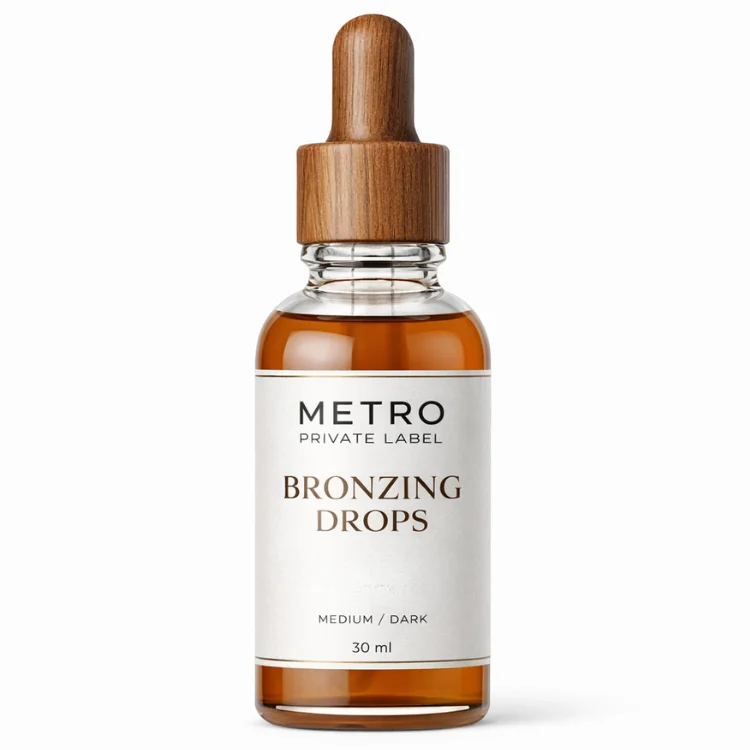
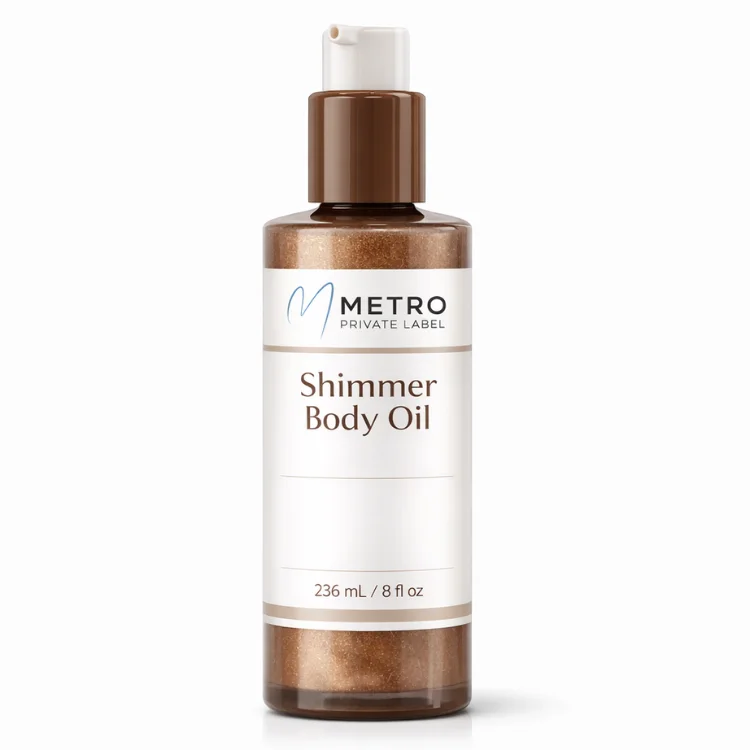
Get Your Custom Skincare Solution Today!

Don’t wait—fill out the form and let our team create the perfect skincare solution for your brand. Expect a personalized quote within 24 hours and start building your brand’s success now!

Submit Your
Private Label Skin Care Request

Fill out this form with your detailed needs and our customer support team will contact you shortly. We will assign a professional agent to follow up on your project and provide personalized assistance.

To get the fastest response, submit your inquiries using the form. If you encounter any issues with submission, you can also email us directly at info@metroprivatelabel.com .

*Metro Private Label takes your privacy very seriously. All information is only used for technical and commercial communication and will not be disclosed to third parties.
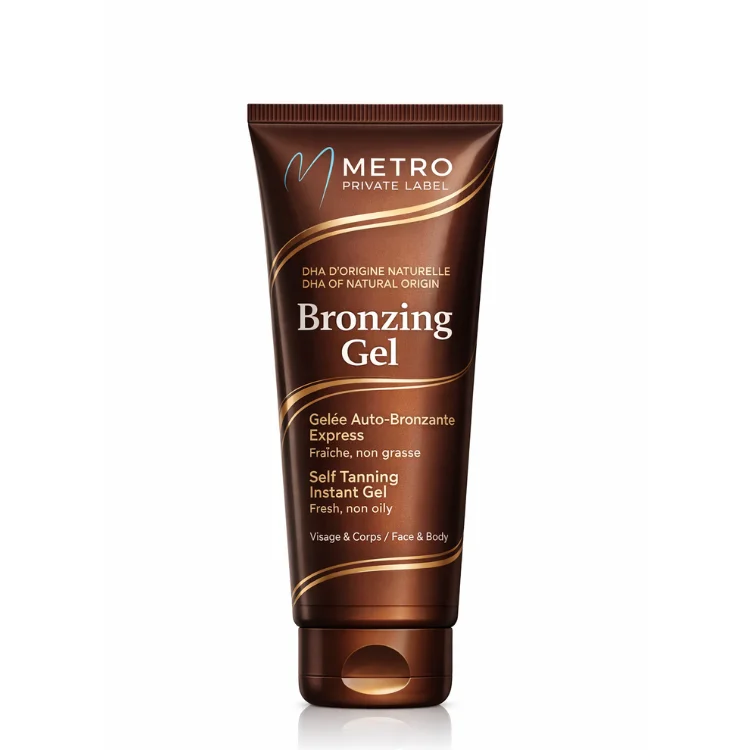
Submit Your
Private Label Skin Care Request

Fill out this form with your detailed needs and our customer support team will contact you shortly. We will assign a professional agent to follow up on your project and provide personalized assistance.

To get the fastest response, submit your inquiries using the form. If you encounter any issues with submission, you can also email us directly at info@metroprivatelabel.com .

*Metro Private Label takes your privacy very seriously. All information is only used for technical and commercial communication and will not be disclosed to third parties.