When buyers search for “UK cosmetic compliance private label,” “CPSR private label skincare,” or “UK skincare manufacturer compliance,” they are usually trying to answer a practical question: what needs to be completed before a cosmetic product manufactured by a private label supplier can actually be sold in the UK? From what I have seen in product-development projects, the biggest compliance problems rarely begin because a brand deliberately ignores regulation. They usually begin because compliance is discussed too late. The formula may already be approved, bottles may already be ordered, artwork may already be printed, and only then does the Responsible Person or safety assessor identify missing information, unsuitable wording, additional warnings, or technical data that still needs to be collected.
This is why I believe UK cosmetic compliance should be treated as part of product development rather than as a final administrative step. Formula development, safety assessment, packaging, technical documentation, claims, and notification are connected. A change in one area can affect several others. The purpose of this guide is therefore not simply to explain what a CPSR or PIF means, but to show what should realistically be confirmed with your manufacturer and UK compliance partners before money is committed to mass production.
First, Be Clear About Whether You Mean Great Britain or Northern Ireland
When people say they want to sell cosmetics in the “UK,” the first question I would clarify is where the product will actually be placed on the market. Great Britain means England, Scotland, and Wales, while Northern Ireland follows a different cosmetics regulatory route under the Windsor Framework. This distinction matters because the Responsible Person and notification systems are not the same.
For products placed on the Great Britain market, there must be a Responsible Person established in the UK, and the product must be notified through the UK Submit Cosmetic Product Notification service before it is placed on the market. Northern Ireland continues to follow the applicable EU cosmetics framework, including notification through the EU Cosmetic Products Notification Portal, or CPNP, with a Responsible Person established in Northern Ireland or the EEA.
I consider this one of the first questions to settle because a brand saying “we sell in the UK” may actually intend to sell across England, Scotland, Wales, Northern Ireland, and the EU from one launch. That creates a different compliance plan from a brand selling only in Great Britain. The target markets should therefore be defined before the final artwork, Responsible Person details, notification route, and supporting documentation are fixed.
Understand What the Responsible Person Is Actually Responsible For
The Responsible Person is central to Great Britain cosmetic compliance, but I often see confusion about what this role means. A Chinese or other overseas contract manufacturer does not automatically become the UK Responsible Person simply because it manufactures the product. Under the Great Britain rules, a cosmetic product cannot be placed on the GB market without a Responsible Person established in the UK. The Responsible Person is responsible for ensuring the relevant regulatory obligations are met.
In practical terms, the Responsible Person must ensure that the product is safe, that an appropriate safety assessment has been completed, that the Product Information File is maintained, that required labelling information is present, that the product is notified before it is made available to consumers, and that claims can be supported. The Responsible Person also has ongoing responsibilities after launch, including keeping information current and dealing with serious undesirable effects where relevant.
This distinction is important when working with a private label manufacturer. I expect the manufacturer to supply accurate formula, ingredient, manufacturing, specification, testing, and packaging information needed for the compliance process. I do not expect the factory alone to replace the Responsible Person or the qualified safety assessor. When those roles are confused, brands can assume “the factory handles compliance” without knowing who is actually carrying the legal responsibility in Great Britain.
Confirm the CPSR Before Treating the Formula as Final
The Cosmetic Product Safety Report, or CPSR, is one of the most important parts of the compliance process. Before a cosmetic product is made available to consumers in Great Britain, its safety must be assessed by a suitably qualified safety assessor. The CPSR forms part of the Product Information File and is divided into Part A, which contains the cosmetic product safety information, and Part B, which contains the safety assessor’s assessment and conclusions.
Part A is much more than an INCI list. The official guidance identifies information including the quantitative and qualitative composition, physical and chemical characteristics, stability, microbial quality, impurities and traces, packaging material, normal and foreseeable use, exposure, toxicological profiles, and relevant undesirable effects. The safety assessor then uses this information to determine whether the product is safe and whether any additional warnings or instructions are required.
This is why I do not recommend approving a formula purely because the sample looks and feels good. A formula can be commercially attractive and still require further information before the safety assessment is complete. If the assessor identifies a concern after mass production, the brand may face reformulation, new testing, packaging changes, or additional label wording. It is much less expensive to resolve these questions while the formula is still in development.
Treat the PIF as a Working Regulatory File, Not a Certificate
The Product Information File, or PIF, is sometimes misunderstood as a certificate that a factory simply issues when production is finished. In reality, it is a regulatory file maintained by the Responsible Person and contains the evidence supporting the product’s safety, manufacture, performance, and compliance.
For Great Britain, the PIF must be maintained in English and includes a description of the cosmetic product, the CPSR, information showing how good manufacturing practice has been followed, evidence supporting the effects claimed for the product, and information concerning animal testing. The Responsible Person must keep the PIF for ten years after the last batch of the cosmetic product has been placed on the market, and it should be updated as necessary when relevant information changes.
I think this matters particularly for private label brands because the PIF depends on information coming from several parties. The manufacturer may provide formula and manufacturing data, ingredient suppliers may provide technical information, laboratories may provide test results, the safety assessor prepares the safety assessment, and the Responsible Person maintains the final file. If one part of that information chain is incomplete, the PIF can become difficult to finalize. That is why documentation availability should be confirmed before mass production rather than requested casually after the goods are already finished.
Ask for More Than an INCI List From the Manufacturer
An INCI list is essential, but it is not enough to support the entire UK compliance process. One of the most common sourcing mistakes I see is assuming that if the manufacturer can provide an ingredient list, the regulatory information is complete.
The safety assessment may require quantitative composition information, ingredient identities, physical and chemical characteristics, microbial information, stability data, information about impurities, packaging materials, and other technical details depending on the formula. Some of this information may be commercially sensitive, so the manufacturer may provide it directly to the appointed safety assessor or Responsible Person rather than sending the complete formulation openly to the brand. What matters is not who physically receives every document, but whether the information can be made available when required.
Before production, I would therefore confirm whether the manufacturer can support the information required for the safety assessment and PIF, rather than simply asking, “Can you provide UK documents?” That question is too broad. A more useful discussion is whether the supplier can provide the final INCI, quantitative formula information through an appropriate confidential route, finished-product specifications, relevant manufacturing information, test data, packaging information, and other supporting technical documents needed by the compliance parties.
Finalize Product Specifications Before Mass Production
Product specifications often receive less attention than the CPSR or PIF, but they are important because they define what the approved product is supposed to be. A formula name alone does not adequately describe the product that will be manufactured repeatedly.
Depending on the product, specifications may include appearance, colour, odour, viscosity, pH, microbiological limits, fill weight or volume, and other relevant parameters. These specifications create a reference point between the approved development sample and future production batches. They are also useful when technical information needs to be shared with the safety assessor or Responsible Person.
From a manufacturing perspective, I see specifications as the bridge between compliance and repeatability. If a serum is approved at one viscosity and pH range but future production drifts significantly, the issue is not only whether the product still “looks acceptable.” The change may affect stability, packaging performance, user experience, and potentially the information supporting the existing safety assessment. Clear specifications reduce ambiguity before production and make later batch comparisons much easier.
Confirm Stability, Microbiological, and Packaging Information Early
Safety assessment requires information about product stability, microbial quality, preservation, and packaging. That means the regulatory discussion cannot be completely separated from the testing and packaging decisions made during development. The UK guidance specifically identifies stability, microbial contamination, preservative performance, impurities, and packaging among the information considered in the safety assessment.
This becomes particularly important for products such as water-based serums, creams, low-preservative concepts, sensitive-skin formulations, airless systems, and formulas containing ingredients that are sensitive to oxygen, heat, or light. A beautiful bottle does not automatically mean it is suitable for the formula. Packaging can influence product protection, dispensing, contamination risk, leakage, and stability.
I therefore prefer to confirm the intended commercial packaging before the compliance file is treated as final. If the safety assessment was built around one packaging system and the brand later switches to a materially different container, it may be necessary to review whether the existing assessment and supporting information are still appropriate. This is another reason why formula, packaging, testing, and compliance should develop together rather than sequentially.
Review the Label Before Printing Thousands of Boxes
One of the most avoidable compliance problems in private label manufacturing is printing final packaging before the label has been properly reviewed. Once cartons, bottles, or labels have been produced in volume, even a small wording or information change can become expensive.
For Great Britain, cosmetic labelling requirements include the Responsible Person’s name and address, country of origin for imported cosmetics, nominal content, minimum durability information or Period After Opening where applicable, warnings and precautions, batch identification, product function when it is not obvious, and the ingredients list. The detailed UK guidance also explains where particular information must appear and how durability information is handled.
For products manufactured in China and imported into Great Britain, the country of origin is therefore not a decorative marketing choice. Imported cosmetics must identify the country of origin. Similarly, the Responsible Person information should not be treated as something to “add later somewhere on a sticker” without checking the final layout. I prefer to have the Responsible Person and compliance reviewer examine the near-final artwork before mass printing so changes can still be made at low cost.
Do Not Finalize Marketing Claims Separately From Compliance
Claims are another area where product development and compliance often become disconnected. Marketing teams naturally want strong language such as “repairs the skin barrier,” “clinically proven,” “reduces wrinkles,” or “for post-treatment recovery,” but the question is whether the product and available evidence support the exact claim being made.
The Great Britain guidance states that cosmetic labelling and advertising must not imply that a product has characteristics or functions it does not possess, and the Responsible Person must be able to support claims made when marketing the product. The PIF also includes evidence relating to the claimed effects of the cosmetic product.
This is why I prefer to discuss claims while the formula is being developed. If a brand wants a specific performance claim, that may influence ingredient selection, testing strategy, usage instructions, or the evidence that needs to be collected. Writing ambitious claims only after the formula, packaging, and testing are finished can create a mismatch between what marketing wants to say and what the product file can actually support.
Understand What SCPN Notification Does—and What It Does Not Do
For Great Britain, the Responsible Person must notify the product before it is placed on the market using the Submit Cosmetic Product Notification service. The notification includes information such as the product category and name, Responsible Person details, the address where the PIF is kept, contact information for urgent enquiries, ingredient-related information, and original labelling and packaging imagery where required.
I think it is important to understand that notification is not the beginning of compliance. It comes after much of the product information has already been finalized. If the brand reaches the notification stage and only then discovers that the final label, formulation information, or PIF is incomplete, the project has been managed in the wrong order.
The SCPN also should not be interpreted as government approval of the commercial quality of the product. The legal responsibility remains with the Responsible Person to ensure the applicable requirements are met. I therefore see notification as one part of a larger compliance system rather than a standalone certificate that makes every other issue disappear.
Be Careful When the Formula Changes After the CPSR
Formula changes are common in private label development. A brand may want to increase a hero ingredient, change the preservative system, remove fragrance, add another active, adjust colour, or modify texture after receiving market feedback. The compliance question is whether the existing safety information still reflects the final product being manufactured.
The UK guidance describes the PIF as a living document that should be updated when relevant information changes, and the CPSR should also be reviewed when new information becomes available that could alter the safety conclusion. Where a product changes significantly, updating an existing file may not always be sufficient.
For that reason, I prefer a clear formula freeze before mass production. Once the safety assessor has reviewed the final formulation and the compliance documents are moving toward completion, casual ingredient changes should stop. If a commercial reason requires another change, it should be communicated to the Responsible Person and safety assessor rather than treated simply as an internal manufacturing adjustment.
Packaging Changes Can Also Affect the Compliance File
Brands sometimes understand that changing the formula matters but assume changing the bottle is purely cosmetic. In practice, packaging is part of the information considered during product safety assessment, particularly because the material that contacts the formula may influence compatibility, contamination, stability, and exposure.
If the original product was assessed in an airless pump and the final commercial version is moved to a jar, for example, the change can alter the way the product is exposed to air and consumer contact during use. A switch from opaque to transparent packaging can also matter for a light-sensitive formulation. These changes do not automatically mean the entire project must restart, but they should be reviewed rather than assumed to be irrelevant.
This is why I prefer to finalize the intended commercial packaging before the last stages of safety assessment and artwork approval. It keeps the physical product, technical documentation, and compliance file aligned around the same version of the product.
Confirm Good Manufacturing Practice, Not Just the Formula
UK compliance does not stop at whether the ingredients are permitted. Cosmetic manufacturing must also follow good manufacturing practice so that the product can be produced consistently and safely. The Great Britain guidance identifies ISO 22716 as a designated standard that can demonstrate cosmetic GMP, while also recognizing that it is not the only possible way to demonstrate good manufacturing practice.
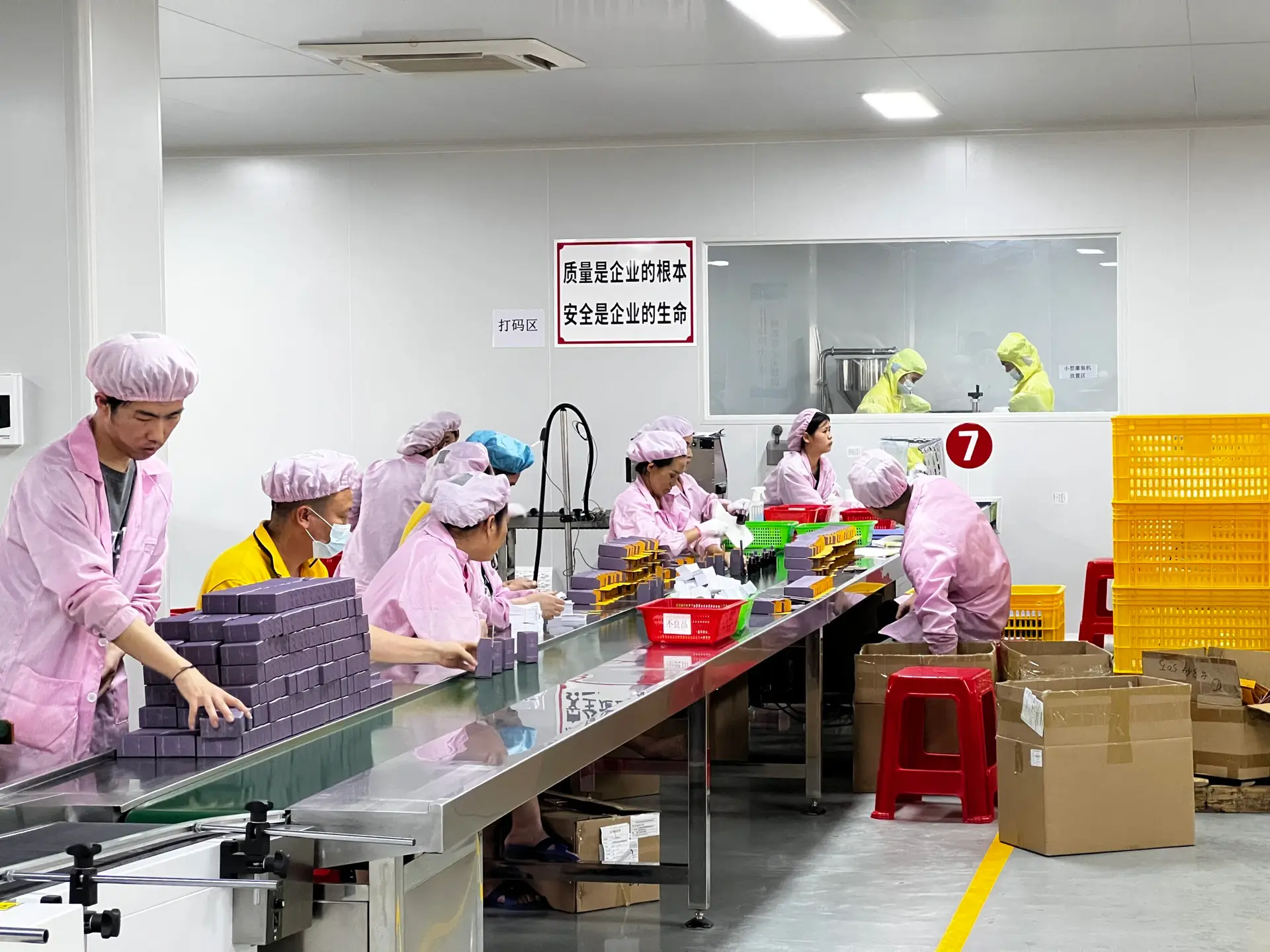
When sourcing internationally, I therefore look beyond the sample formula and ask how production is controlled. Batch records, raw-material controls, filling procedures, cleaning, storage, quality inspection, and traceability all matter because the commercial product must repeatedly match the version that was assessed and approved.
This is particularly important for brands planning repeat orders. Compliance should not be viewed as something completed once for the launch and then forgotten. The manufacturing process needs to continue producing a product that remains consistent with the specifications, safety assessment, and information maintained by the Responsible Person.
Decide Who Will Provide Which Information Before Production
One of the most practical improvements I recommend is establishing responsibilities early. Many compliance delays happen because the brand assumes the manufacturer will provide something, the manufacturer assumes the Responsible Person will handle it, and the Responsible Person is waiting for technical information from both parties.
A cleaner process is to establish from the beginning who supplies the formula information, specifications, raw-material documents, packaging details, stability data, microbiological information, claims evidence, label artwork, Responsible Person information, safety assessment, PIF maintenance, and notification. Not every party needs to produce every document, but everyone should understand where the required information will come from.
This distinction is especially important when the manufacturer is outside the UK. The factory may be responsible for producing the product and providing technical manufacturing data, while the safety assessor independently evaluates safety and the Responsible Person maintains the regulatory responsibility for the GB market. Keeping those roles separate makes the project easier to manage and reduces the risk of assuming that “compliance support” means one supplier legally performs every function.
Complete the Compliance Review Before the Packaging Becomes Expensive to Change
The most useful time to review compliance is not after mass production and not even immediately before shipping. It is when the product is developed enough to be technically defined but still early enough for formula, artwork, packaging, or instructions to be adjusted without major financial loss.
In a well-managed project, the formula direction, quantitative composition, intended use, target market, packaging, technical specifications, available testing information, claims direction, Responsible Person arrangement, and draft label should all be sufficiently clear before the commercial packaging is printed in volume. The safety assessor and Responsible Person can then identify gaps while changes are still relatively inexpensive.
From what I have seen, this single change in project sequencing can prevent many of the problems that buyers later describe as “compliance delays.” Often the regulation itself did not suddenly create the delay. The project simply reached the regulatory review too late.
What I Would Confirm Before Approving Mass Production
Before giving final approval for production, I want the commercial product and regulatory product to be the same product. The finalized formula should match the formula being safety assessed. The packaging should match what has been reviewed for compatibility and documentation. The artwork should contain the required information for the intended market. Product specifications and relevant testing information should be available, and the Responsible Person and safety assessor should have access to the technical information they need.
I would also make sure the brand understands what is still outstanding before launch. Production and legal market placement are not always the same milestone. A product may physically exist while the safety assessment, PIF, final notification, or another compliance activity still needs to be completed. The commercial launch date should therefore be based on the complete compliance pathway rather than the factory completion date alone.
This is the mindset I believe helps serious private label buyers avoid unnecessary risk. Instead of asking only, “Does the manufacturer offer UK compliance support?” I would ask whether the entire project has been structured so the manufacturer, safety assessor, Responsible Person, packaging supplier, and brand are working from the same final product information.
UK Cosmetic Compliance Works Best When It Starts With Product Development
The most important lesson I have learned from private label projects is that compliance is easier when it begins early. The difficult projects are usually the ones where the formula has already been finalized, packaging has already been printed, marketing claims have already been written, and the compliance team is then asked to make everything fit.
A stronger process works in the opposite direction. The target market is confirmed first, the Responsible Person and safety-assessment route are understood, the manufacturer provides the necessary technical information, the commercial formula and packaging are developed with those requirements in mind, and the label is reviewed before mass printing. The CPSR, PIF, product specifications, testing information, and notification then describe the product that will actually be sold rather than an earlier version of it.
For buyers comparing a “UK skincare manufacturer compliance” service or asking about “CPSR private label skincare,” this is ultimately the distinction I would focus on. Compliance is not one document purchased at the end of production. It is a chain of responsibilities and technical information that should remain aligned from formulation through packaging, safety assessment, production, notification, launch, and future product changes.