Your Trusted Scalp Serum Manufacturer
We help skincare brands develop market-ready products with reliable formulations, professional packaging, and scalable manufacturing support—so you can launch confidently and grow your product line with a stable supply chain.

Private Label Scalp Serum
At Metro Private Label, we believe a successful scalp serum starts with understanding today’s scalp care market, not simply choosing a few trending ingredients. Consumers are becoming more aware that a healthy scalp is the foundation of healthy-looking hair, creating growing demand for lightweight, targeted scalp serums that fit naturally into everyday haircare routines. That’s why we help brands develop products around real consumer needs and long-term market opportunities rather than short-lived trends.
Our most requested private label concepts include Hydrating Scalp Serums, Balancing Scalp Serums, Soothing Scalp Serums, and Barrier Repair Scalp Serums. These product directions are increasingly popular among Amazon sellers, Shopify brands, professional salons, scalp care clinics, and beauty retailers looking to expand into premium scalp care with differentiated products.
As your manufacturing partner, we do more than produce a formula. We work with you to refine product positioning, recommend suitable active ingredients and textures, select packaging that fits your brand, and prepare the documentation needed for international markets. Our goal is to help you launch a scalp serum collection that is not only ready for production, but also ready to compete in today’s growing scalp care category.

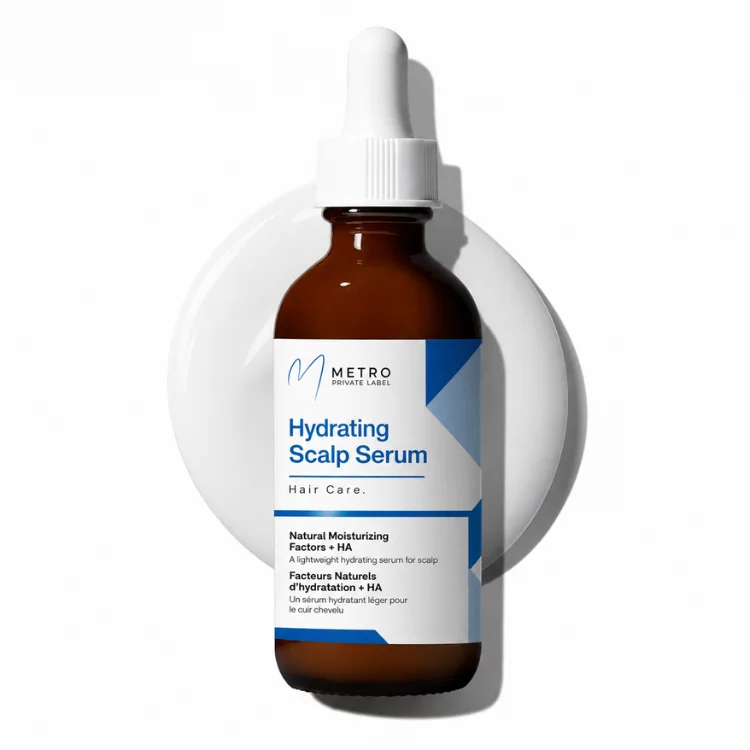
Hydrating Scalp Serum
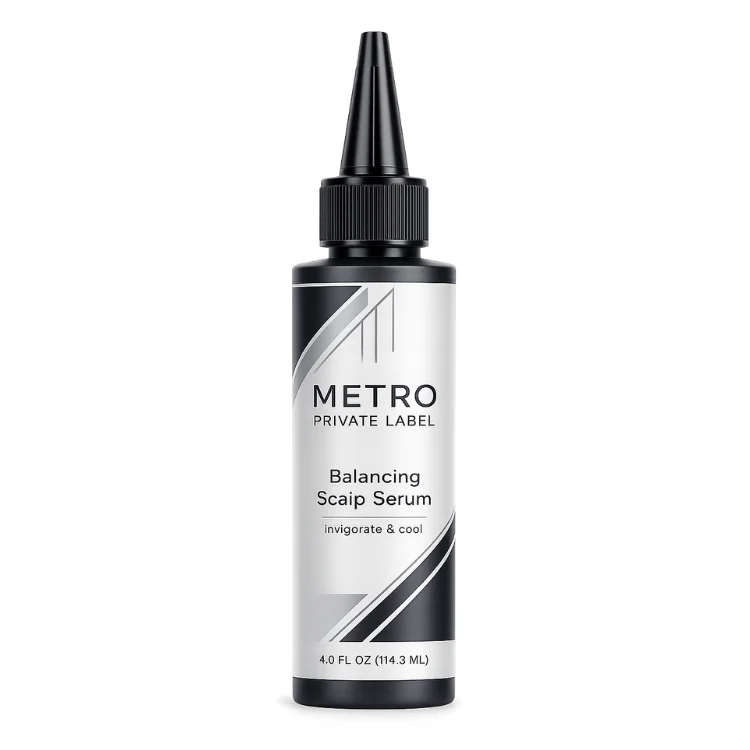
Balancing Scalp Serum
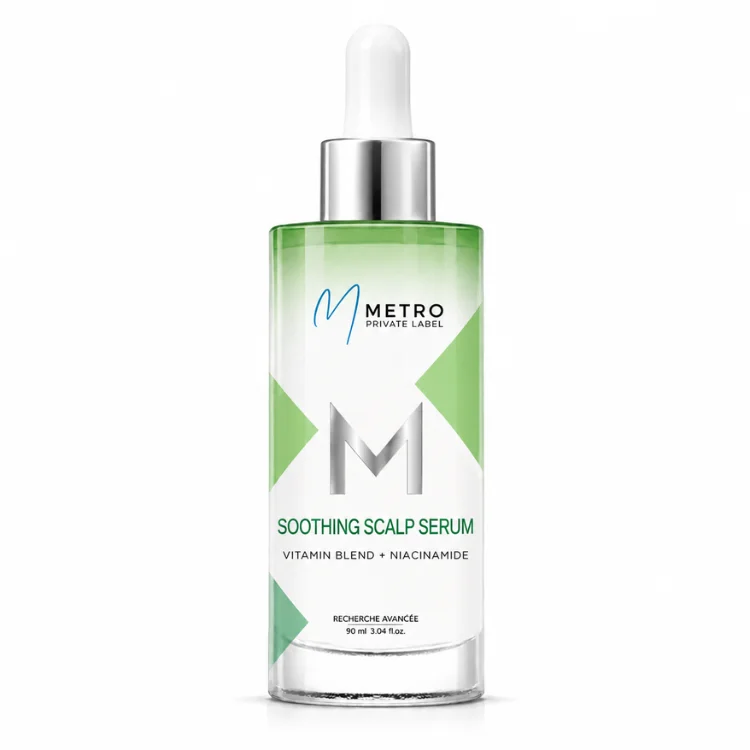
Soothing Scalp Serum
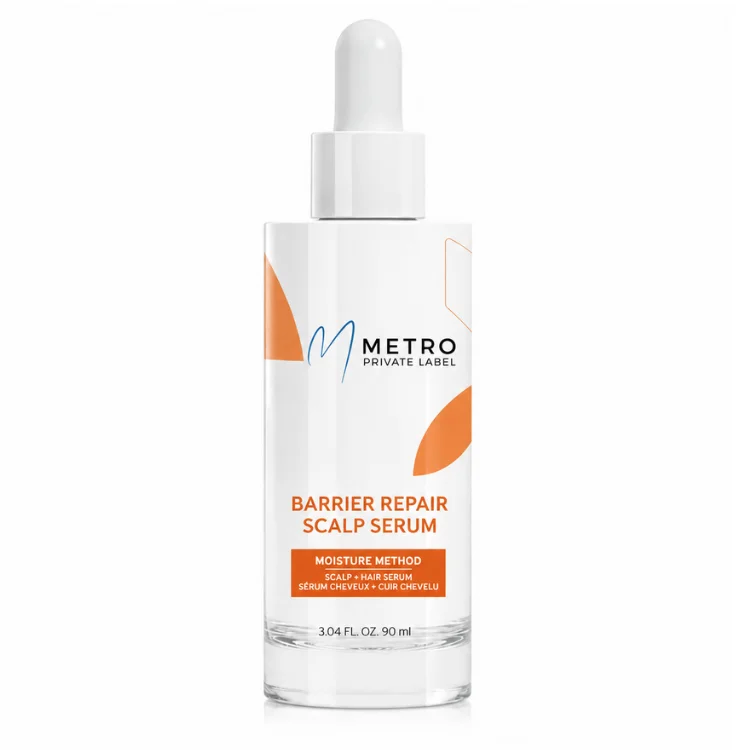
Barrier Repair Scalp Serum
Build a Private Label Scalp Serum Line That Fits Today's Market
If you’re looking for a private label scalp serum manufacturer, you’re probably planning much more than a single SKU. Whether you’re expanding an existing hair care collection or launching a new scalp care line, the goal is the same—develop products that meet real consumer needs and stand out in an increasingly competitive market.
From what we’ve seen working with beauty brands, e-commerce businesses, clinics, and distributors, successful scalp serums are no longer built around one trending ingredient alone. Consumers are paying more attention to overall scalp health, creating demand for products that hydrate, soothe, balance, and strengthen the scalp as part of a complete hair wellness routine.
That’s why we focus on helping you build product concepts with long-term market potential. Instead of simply manufacturing a formula, we work with you to select the right product direction, ingredient story, texture, packaging, and positioning, so your scalp serum line is built around what customers are actively looking for today.
Our 4 Core Private Label Scalp Serum Concepts
Hydrating Scalp Serum: Developed for dry, dehydrated scalps that need lightweight, long-lasting moisture. A popular choice for everyday scalp care collections and clean beauty brands.
Balancing Scalp Serum: Designed to help maintain a fresh-feeling scalp by targeting excess oil and supporting overall scalp balance. Ideal for daily-use hair care lines and younger consumer markets.
Soothing Scalp Serum: Formulated for sensitive-feeling scalps with gentle, calming ingredients that help improve comfort without leaving a heavy residue. Frequently selected by premium brands and professional scalp care collections.
Barrier Repair Scalp Serum: Inspired by the growing “skinification of hair care” trend, this concept focuses on supporting the scalp’s natural moisture barrier for healthier-looking hair over time. A strong direction for premium brands and clinic-inspired product lines.
Manufacturing That Supports Real Brand Growth
We know choosing a manufacturer is about much more than comparing prices. You’re looking for a partner who understands product development, packaging, compliance, and how to turn an idea into a market-ready product.
Our minimum order quantity depends on your packaging choice. For stock dropper bottles or airless packaging, production typically starts from 1,000 units per SKU, making it ideal for market testing and new product launches. For fully customized packaging, the MOQ may vary depending on the bottle, decoration, and printing process.
Before production begins, we’ll help you evaluate the most suitable packaging, formula direction, and production plan based on your target market, brand positioning, and budget, giving your scalp serum collection a practical foundation for long-term growth.

More Than Just a Private Label Scalp Serum Manufacturer
At Metro Private Label, we believe building a successful scalp serum brand takes more than choosing a formula. Whether you’re launching on Amazon, growing a Shopify brand, supplying distributors, or developing a professional salon or clinic collection, success comes from offering products that match today’s scalp care trends—and working with a manufacturing partner who understands how those products are brought to market.

Develop Products That Match Today's Scalp Care Trends
We don’t recommend formulas simply because they’re popular for a short time. We help you build scalp serum collections around proven consumer needs, including hydration, scalp balancing, soothing care, and barrier support. These product concepts are easier for customers to understand, fit naturally into modern hair care routines, and give your brand a stronger long-term foundation.
Choose the Right Packaging for Your Business
Packaging should support your launch strategy, not create unnecessary costs. We help you select practical bottle options based on your budget, target market, and brand positioning. For many stock packaging options, production can start from 1,000 units per SKU, making it easier to test new products before expanding into custom packaging.
Build Products That Encourage Repeat Purchases
Consumers rarely stay loyal because of one trending ingredient alone. Texture, absorption, scalp feel, packaging quality, and the overall user experience all influence whether they’ll purchase again. We focus on creating scalp serum products that feel premium, perform consistently, and support long-term customer satisfaction.
One Manufacturing Partner from Development to Production
Launching a private label scalp serum involves much more than manufacturing. We support formula development, packaging selection, label guidance, and production planning, helping simplify every stage of the process. Instead of coordinating multiple suppliers, you can work with one experienced team that understands both product development and scalable manufacturing.
Build a Private Label Scalp Serum Line That Fits How Customers Shop Today
At Metro Private Label, we don’t believe a successful scalp serum starts with choosing the latest trending ingredient. It starts with understanding how today’s consumers think about scalp health and what motivates them to purchase again. As scalp care becomes part of everyday beauty routines, brands that solve real consumer needs are far more likely to build repeat sales than those simply following short-term ingredient trends.
Developed Around Real Market Demand
We help brands develop scalp serum collections based on proven market demand rather than temporary product trends. Whether you’re building a hydrating scalp care line, a balancing collection for oily scalps, a soothing solution for sensitive scalps, or a barrier repair concept inspired by the growing “skinification of hair care” movement, we’ll help you choose a product direction that fits your target customers, sales channels, and long-term business goals.
Packaging & MOQ That Match Your Launch Plan
We believe every product launch should begin with a production strategy that makes commercial sense. For stock dropper bottles and airless packaging, MOQ typically starts from 1,000 units per SKU, making it ideal for market testing and new brand launches. If you choose fully customized packaging or specialty decoration, the minimum order quantity may vary depending on the packaging specifications. We’ll help you balance investment, brand positioning, and future scalability before production begins.
A Manufacturing Process You Can Plan Around
Launching a scalp serum becomes much easier when every stage is clearly planned. From selecting the right formula concept and developing samples to confirming packaging, coordinating artwork, scheduling production, and preparing shipment, we keep the entire process transparent so you can make informed decisions, reduce development risks, and launch with greater confidence.
Supporting Long-Term Brand Growth
We don’t see a scalp serum as a standalone SKU. We see it as the starting point of a complete scalp care collection that grows alongside your brand. Whether your next step is expanding into scalp shampoos, conditioners, exfoliating scalp treatments, scalp masks, or complementary hair care products, we’ll help you build a scalable product portfolio that encourages repeat purchases, increases customer lifetime value, and supports sustainable business growth.
FAQs Scalp Serum
For your convenience, we’ve gathered the most commonly asked questions about our Scalp Serum . However, should you have any further queries, please don’t hesitate to reach out to us.
1. What types of private label scalp serums can you manufacture?
We develop scalp serums around today’s most requested market needs, including Hydrating, Balancing, Soothing, and Barrier Repair concepts. If you already have a product idea or a benchmark brand in mind, we can also help customize a formula that matches your positioning and target market.
2. Can you customize a scalp serum formula for our brand?
Yes. We can adjust the texture, ingredient combination, botanical extracts, active ingredients, fragrance, and overall product feel based on your brand positioning. Whether you’re building a premium salon collection or an everyday retail line, we’ll help create a formula that fits your goals.
3. What is your minimum order quantity for private label scalp serums?
For many stock dropper bottles and airless packaging options, our MOQ starts from 1,000 units per SKU. If you’re using fully customized packaging, the MOQ may vary depending on the bottle, decoration, and printing requirements. We’ll recommend the most practical option based on your launch plan.
4. How long does the product development and production process take?
Formula sampling typically takes 7–10 working days, while mass production generally requires 25–35 days after formula and packaging approval. We’ll provide a clear production timeline before your project begins so you can plan your launch with confidence.
5. Can you help us choose the right scalp serum concept?
Absolutely. Many customers come to us with a business idea rather than a finished formula. We’ll discuss your target customers, sales channels, and brand positioning, then recommend product concepts, textures, and ingredient directions that best fit your market.
6. Can you support packaging selection and private label branding?
Yes. We can help source suitable bottles, droppers, pumps, airless packaging, labels, folding cartons, and outer cartons. Our goal is to recommend packaging that matches your brand image while keeping your production budget realistic.
7. Do you offer both stock formulas and custom formulation?
Yes. If speed to market is your priority, you can start with one of our proven stock formulas and customize the fragrance or packaging. If you’re looking to differentiate your brand, we can also develop a fully customized formula based on your product brief.
8. What quality control and testing do you perform?
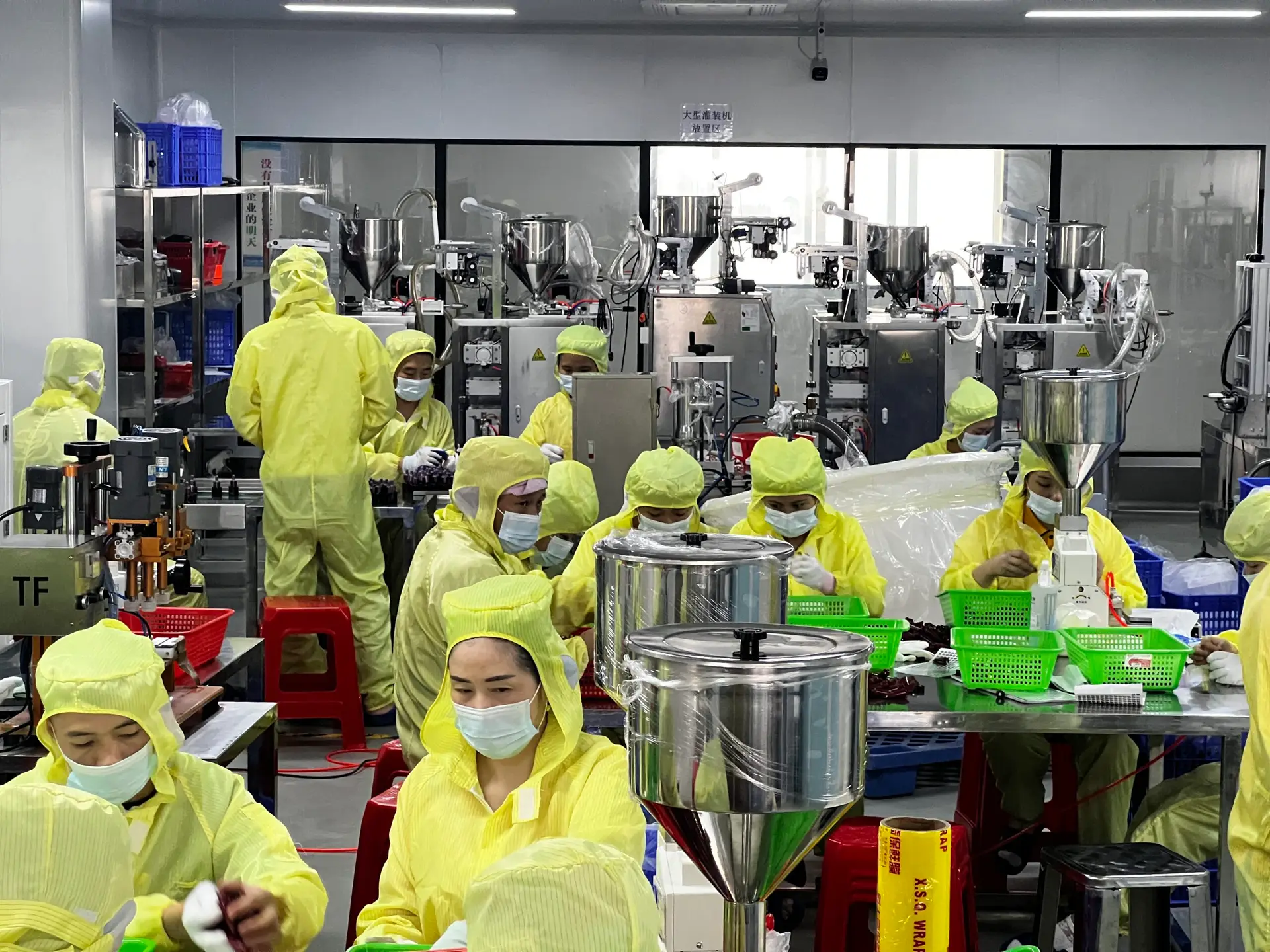
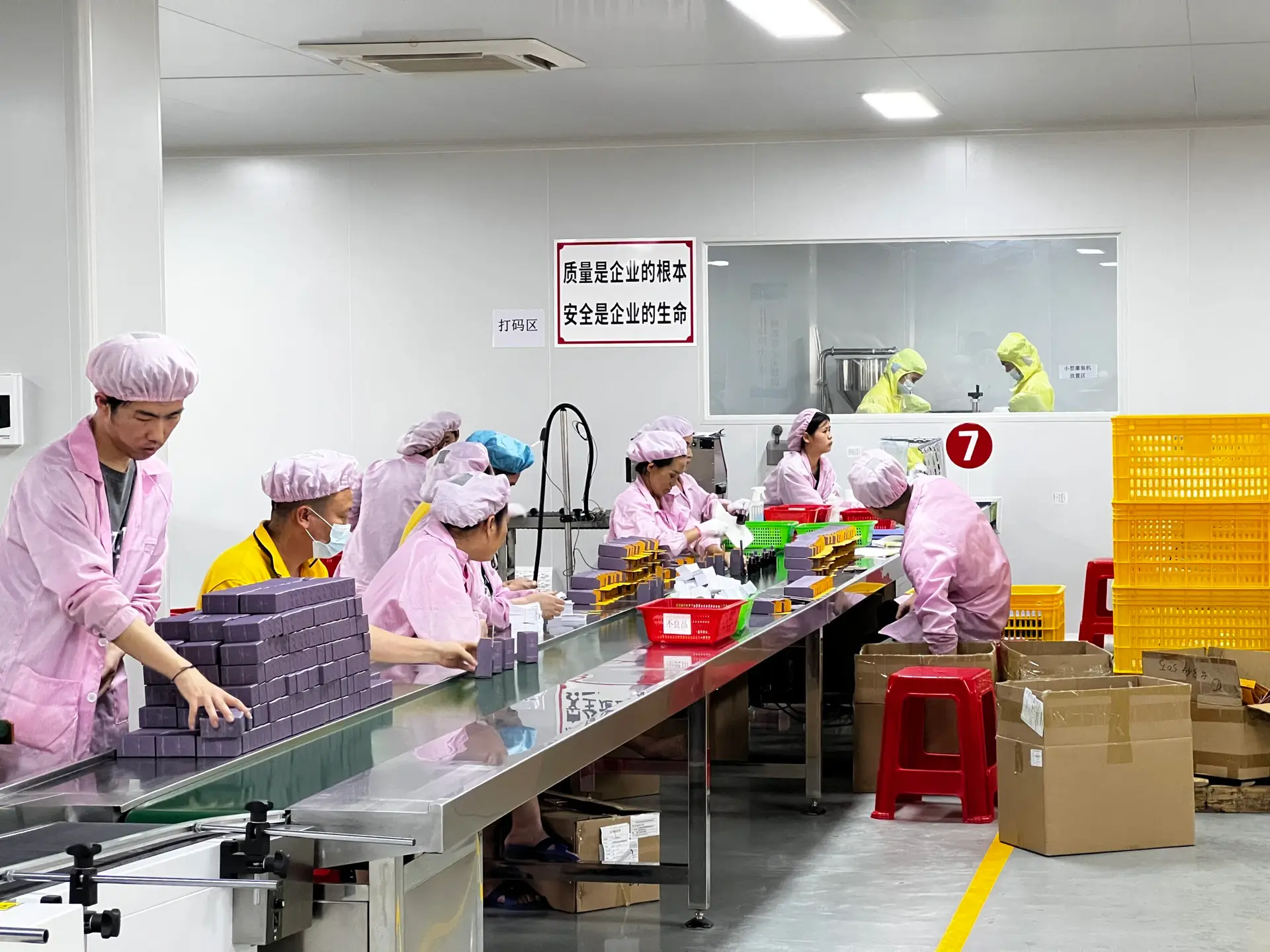
Every production batch follows strict quality control procedures, including raw material inspection, production monitoring, filling inspection, packaging checks, and finished product evaluation. We also perform stability and compatibility testing during product development to help ensure consistent quality.
9. Can you provide the documents needed for international markets?
Yes. Depending on your project, we can provide documents such as INCI lists, COA, MSDS, ingredient information, and other manufacturing documentation commonly requested for cosmetic product registration and international distribution. We’ll explain which documents are appropriate for your target market.
10. How do you help reduce the risk of launching a new scalp serum?
Our role goes beyond manufacturing. We help you evaluate product concepts, packaging options, production quantities, and launch strategies before mass production begins. By planning each stage together, we aim to help you avoid unnecessary costs, shorten development time, and build a scalp serum collection with stronger long-term market potential.
"Metro Private Label didn't just manufacture our scalp serum—they helped us refine the product concept from the beginning. Their recommendations on texture, packaging, and ingredient positioning made the entire development process much easier, and we launched with far more confidence than we expected."
Emily Carter, Founderfrom United Kingdom
"What stood out to us was how well the team understood the needs of an online brand. They weren't focused on selling us more products—they focused on helping us choose the right scalp serum concept, packaging, and production plan for our market."
Lucas Martin, E-commerce Brand Managerfrom Canada
"We've worked with several cosmetic manufacturers before, but Metro Private Label was one of the few that explained every stage clearly. From sampling to packaging selection and production scheduling, communication was always professional and transparent."
Sophie Dubois, Product Development Specialistfrom France
"As a distributor, we needed a manufacturing partner that could provide consistent quality and dependable lead times. Metro Private Label delivered exactly that. Their production planning and documentation support made importing and launching our products much smoother."
James Wilson, Purchasing Managerfrom Australia
"We wanted to develop a professional scalp care line that reflected our clinic's standards. Metro Private Label helped us choose gentle formulations, premium packaging, and practical product positioning. The result felt much more like a true partnership than a typical OEM project."
Isabella Rossi, Clinic Directorfrom Italy





Metro Private Label in Numbers
Happy Clients
0 +
Million-dollar Buyers
0 +
Formulation
0 +
Professional Staffs
0 +
Your Ultimate Guide to Scalp Serum
If you’re planning to add a scalp serum to your product lineup—whether it’s your first scalp care SKU or an expansion of an existing hair care collection—you’re not simply introducing another cosmetic product. You’re entering one of the fastest-growing segments in modern hair care. Consumers are paying much closer attention to scalp health because they increasingly recognize that healthy-looking hair starts with a healthy scalp. Instead of searching only for shampoos, they’re looking for leave-on treatments that help hydrate the scalp, reduce dryness, balance excess oil, soothe discomfort, and support a healthier scalp environment as part of their daily routine. When developed with the right positioning, a scalp serum becomes more than a trend-driven product—it becomes a routine essential that encourages repeat purchases and strengthens long-term customer loyalty.
Over the past few years, we’ve watched scalp serums evolve from niche salon treatments into mainstream products across Amazon, Shopify, beauty retailers, clinics, and professional hair care brands. At Metro Private Label, we’ve seen that successful scalp serum brands don’t win simply because they include popular ingredients. They succeed because every part of the product—from formula texture and scalp feel to packaging compatibility, pricing strategy, and compliance planning—is considered from the beginning. A scalp serum may appear simple, but long-term commercial success often depends on how well the product balances performance, user experience, manufacturing consistency, and market positioning.
This guide is built around what we’ve learned from developing private label scalp serums for brands serving different markets and customer needs. Rather than focusing only on ingredient lists, we want to share how scalp serums perform in real commercial environments. From selecting product concepts that match current market demand, to choosing packaging suitable for daily use and e-commerce shipping, planning production quantities that reduce inventory risk, and preparing compliance documentation before launch, every decision influences whether a scalp serum becomes a long-term bestseller or simply another product competing in an increasingly crowded market.
Table of Contents
How to Choose the Right Private Label Scalp Serum Manufacturer
Finding a Manufacturer Is Easy. Finding the Right Manufacturing Partner Is Much Harder
Most businesses begin their search by looking for a manufacturer, but I believe the real challenge is finding a partner who can support long-term brand growth rather than simply producing a product. Over the years, I’ve seen the difference between these two choices determine whether a product launch becomes a success or an expensive lesson.
When I first speak with potential customers, I often notice the same purchasing process. They search online for a private label scalp serum manufacturer, collect several quotations, compare prices, and assume the lowest cost offers the best value. On paper, this approach seems logical because manufacturing costs directly affect profit margins. However, after working with e-commerce brands, beauty founders, distributors, and professional clinics, I’ve learned that the quotation is only one small part of the decision.
A manufacturer becomes involved in almost every stage of product development, from formula recommendations and packaging selection to production scheduling and quality management. If communication is slow, technical support is limited, or manufacturing experience is inconsistent, even a competitive quotation can become expensive. Delayed product launches, repeated sampling, packaging problems, and inconsistent production quality often create far greater costs than the initial savings achieved by choosing the cheapest supplier.
Why Price Is Only One Part of the Manufacturing Decision
Although pricing is always important, I believe experienced buyers understand that manufacturing should be evaluated as a complete business partnership instead of a simple purchasing transaction. Looking beyond the quotation helps reduce long-term risk and creates a stronger foundation for future growth.
Throughout different projects, I’ve seen brands experience unexpected challenges after production begins. Sometimes the formula performs well during sampling but changes slightly in mass production because quality control standards are inconsistent. Other times, packaging suppliers fail to coordinate with filling schedules, resulting in shipping delays that affect product launches. In many cases, the problem isn’t the formula itself—it’s the lack of project management behind it.
For this reason, I always encourage buyers to ask questions that cannot be answered by a price sheet alone. How does the manufacturer manage production timelines? How do they communicate during development? Can they recommend packaging based on practical manufacturing experience instead of simply offering whatever is available? These answers usually reveal much more about the future working relationship than the unit price ever will.
Experienced Brands Evaluate Manufacturers Differently
The more successful brands I work with tend to follow a completely different evaluation process. Instead of searching for the lowest quotation, they focus on finding a manufacturer that understands both product development and commercial strategy.
I often notice that experienced buyers ask questions about formulation capability, production scalability, packaging compatibility, quality management, and future product expansion. They understand that launching a scalp serum is rarely about creating one product. More often, it’s the beginning of a complete scalp care collection that may eventually include shampoos, conditioners, scalp scrubs, masks, or leave-in treatments. Choosing a manufacturing partner capable of supporting that growth becomes much more valuable than achieving a slightly lower production cost today.
Different business models also require different manufacturing support. An Amazon seller may prioritize fast replenishment and packaging that survives e-commerce shipping. A beauty founder may focus on creating a unique product concept with premium positioning. A distributor often values consistent production quality across multiple orders, while a clinic may require professional formulations that align with treatment protocols. I believe a manufacturer should understand these differences and adapt recommendations accordingly rather than offering every customer exactly the same solution.
Formula Development Is About Building a Marketable Product
Choosing ingredients is only one part of product development. In my experience, the brands that perform well in today’s market succeed because every element of the product works together to create a clear customer experience.
The scalp care category has changed significantly over the past few years. Consumers are no longer interested only in products with fashionable ingredients. Instead, they are paying greater attention to scalp wellness, comfortable textures, lightweight application, and products that integrate naturally into their daily hair care routine. This shift has created opportunities for brands that focus on solving practical consumer needs rather than simply highlighting one trending active ingredient.
When developing a private label scalp serum, I always believe the conversation should begin with the target customer rather than the ingredient list. Understanding who the product is for, how it will be sold, what price segment it belongs to, and how it fits into a broader product collection creates a much stronger foundation for formulation decisions. Ingredients support the positioning, but they should never become the positioning itself.
Communication and Project Management Matter More Than Most Buyers Expect
One lesson I’ve learned repeatedly is that successful product development depends just as much on communication as it does on technical capability. Even an excellent formula can become a difficult project if expectations, timelines, and responsibilities are not clearly managed.
Throughout the development process, there are dozens of small decisions involving artwork, packaging confirmation, sampling revisions, production scheduling, and logistics coordination. When communication remains transparent and proactive, these decisions happen naturally and projects continue moving forward. When communication becomes inconsistent, even relatively simple projects can experience unnecessary delays and misunderstandings.
This is why I always suggest evaluating a manufacturer’s communication style before placing an order. The responsiveness, technical knowledge, and willingness to explain the development process during the quotation stage often provide an accurate picture of how the entire project will be managed after production begins.
Choose a Partner That Can Grow Alongside Your Brand
Selecting a private label scalp serum manufacturer should never be viewed as a one-time purchasing decision. I believe the best manufacturing relationships are built with future growth in mind because today’s first production order often becomes tomorrow’s complete product portfolio.
As brands become more established, they frequently expand into additional scalp care products, introduce new packaging formats, improve formulations, and enter new international markets. These developments become much easier when the manufacturing partner already understands the brand’s positioning, quality expectations, and long-term objectives. Instead of rebuilding the relationship with every new product, both sides continue improving together.
For me, manufacturing has never been only about filling bottles. My goal is always to help brands make better product decisions, reduce unnecessary development risks, and create products that are commercially sustainable. I believe the right private label scalp serum manufacturer should not simply produce what you request today, but should also provide the experience, technical knowledge, and long-term support that help your brand continue growing for years to come.
Why Scalp Care Is Becoming One of the Fastest-Growing Beauty Categories
The Beauty Industry Is Shifting from Hair Care to Scalp Care
Understanding why scalp care is growing so quickly requires looking beyond product trends and examining how consumer behavior is changing. In my experience, the brands that achieve sustainable growth are those that recognize these long-term market shifts early and build products around them, rather than reacting to short-lived ingredient trends after they become saturated.
When I first began working with private label hair care products, most brand discussions centered on making hair look healthier, smoother, or shinier. Consumers evaluated shampoos, conditioners, and styling products almost entirely by their visible effects on hair. Today, I see a completely different conversation taking place. More brands are asking about scalp serums, scalp wellness routines, moisture balance, and daily scalp maintenance because consumers have started viewing the scalp as the foundation of healthy-looking hair rather than simply the place where hair grows.
This shift is significant because it changes the purchasing mindset. Instead of buying products only when a problem appears, consumers are becoming more interested in maintaining scalp health as part of their everyday self-care routine. From my perspective, this is exactly what transforms scalp care from a temporary trend into a category with long-term commercial potential.
Consumers Are Treating Their Scalp Like They Treat Their Skin
One of the most important developments I’ve observed is the growing influence of skincare philosophy on hair care. The beauty industry often refers to this movement as the “skinification of hair care,” but behind the terminology is a very practical change in consumer expectations.
People have become comfortable using facial cleansers, toners, serums, moisturizers, and barrier repair products as part of a daily skincare routine. Naturally, many consumers are beginning to apply the same thinking to scalp care. Instead of expecting shampoo alone to solve every concern, they are adding lightweight leave-on scalp serums that fit naturally into their existing beauty routine.
I believe this is one of the strongest reasons the category continues expanding. Consumers are no longer purchasing scalp serums only when they experience discomfort. Instead, they increasingly view them as preventative maintenance products that help support overall scalp condition over time. This behavioral shift creates stronger repeat purchase potential and allows brands to build lasting customer relationships rather than relying on one-time problem-solving products.
Why Scalp Serums Are Growing Faster Than Ingredient Trends
Every year, I see new ingredients become popular across social media and the beauty industry. Some generate enormous attention for a few months before gradually disappearing as the next trend emerges. While ingredient innovation remains valuable, I have learned that products built entirely around a single fashionable ingredient often struggle to maintain long-term demand once consumer attention shifts elsewhere.
Scalp serums are developing differently because the category is driven primarily by consumer needs rather than individual ingredients. Consumers consistently look for products that hydrate dry scalps, maintain oil balance, improve scalp comfort, and support the skin barrier. These needs remain relevant regardless of which ingredient happens to be popular at any given moment.
For brands, this distinction is extremely important. Building a product around a lasting consumer need usually creates a more sustainable business than building around a temporary ingredient trend. Ingredients will continue evolving, but healthy scalp routines are becoming part of everyday beauty habits, making the category itself much more resilient.
E-commerce and Social Media Have Accelerated Market Growth
I also believe the rapid growth of scalp care has been strongly influenced by digital commerce and educational content. Consumers today have access to significantly more information than they did only a few years ago. Through product reviews, educational videos, dermatologist interviews, salon professionals, and beauty creators, people are learning why scalp health affects overall hair appearance and why preventative care matters.
As consumer education improves, purchasing behavior changes as well. Buyers become more interested in product texture, ingredient combinations, packaging quality, and overall user experience rather than simply choosing the lowest-priced product. This creates opportunities for brands that invest in thoughtful product development instead of competing only through promotions or discounts.
From what I have observed across Amazon sellers, Shopify brands, and direct-to-consumer businesses, educational marketing often performs particularly well in the scalp care category because consumers actively seek explanations before making purchasing decisions. Brands that help customers understand the value of scalp wellness frequently build stronger trust and higher customer retention.
Professional Channels Are Expanding Beyond Traditional Retail
Retail stores and e-commerce platforms are no longer the only drivers behind scalp care growth. I have also seen increasing demand from professional salons, scalp treatment centers, aesthetic clinics, and wellness businesses that want to offer branded scalp care products alongside their services.
These businesses are looking for products that extend professional treatments into customers’ daily routines. Instead of viewing scalp serums as standalone retail products, they use them to strengthen treatment outcomes, encourage repeat visits, and increase customer loyalty. This creates additional business opportunities because the same product category can perform successfully across multiple sales channels while maintaining a consistent professional image.
For manufacturers and brand owners alike, this demonstrates that scalp serums are no longer limited to one customer group. They have become relevant across e-commerce, professional services, specialty retail, and premium beauty markets.
Why I Believe Scalp Care Represents a Long-Term Business Opportunity
When customers ask whether scalp care is worth entering today, I encourage them to focus less on current popularity and more on the underlying consumer behavior driving the category. In my experience, categories built on permanent changes in consumer habits almost always create stronger long-term opportunities than those driven by temporary trends.
Everything I have observed over recent years points in the same direction. Consumers are treating scalp care as an extension of skincare. They are adopting daily routines instead of occasional treatments. Professional channels continue expanding their product offerings, while e-commerce brands are building complete scalp wellness collections instead of relying on individual hero products.
That is why I believe scalp serums have become much more than another beauty trend. For brands planning future growth, they represent an opportunity to build recurring customer relationships, expand into complementary product categories, and establish a stronger long-term position in one of the beauty industry’s fastest-evolving markets. Rather than asking whether scalp care is popular today, I believe the more valuable question is whether your brand is prepared to participate in where the market is heading over the next five to ten years.
How to Choose the Right Scalp Serum Concept for Your Brand
Choosing the Right Product Concept Is More Important Than Choosing the Right Ingredient
When brands begin planning a private label scalp serum, many immediately start comparing ingredients. From my experience, however, the success of a product rarely begins with an ingredient list. It begins with understanding the customer, the market, and the role the product is expected to play within the brand. I have found that brands with the strongest long-term growth almost always spend more time defining the product concept than selecting the latest active ingredient.
Whenever I discuss new product development with customers, I encourage them to think beyond what is currently trending on social media. A scalp serum should never exist simply because a particular ingredient has become popular. Instead, it should solve a clearly defined consumer need while supporting the overall positioning of the brand. When the product concept is built around a genuine customer expectation, every later decision—from formulation and packaging to marketing and pricing—becomes much easier and far more consistent.
Most First-Time Brands Start with Ingredients Instead of Customer Problems
One of the most common patterns I notice is that first-time brand owners often begin by asking whether they should use peptides, botanical extracts, fermented ingredients, or another trending active. While ingredient innovation certainly has value, I believe this approach often skips the most important question: what problem is the customer actually trying to solve?
Over the years, I have seen many products enter the market with impressive ingredient lists but weak commercial performance because customers never fully understood why the product existed. Consumers rarely purchase a scalp serum simply because it contains a fashionable ingredient. They purchase it because they want a healthier-feeling scalp, a more comfortable daily routine, or a product that aligns with their personal care goals. When those customer motivations are overlooked, even technically excellent formulas can struggle to build lasting demand.
For this reason, I always recommend identifying the customer problem first. Once the desired outcome is clear, selecting suitable ingredients becomes a much more strategic process instead of an attempt to follow temporary market trends.
Understanding Your Customer Should Guide Every Development Decision
Before I recommend any formula direction, I always try to understand who the product is being created for. Different customers have very different expectations, even when they are shopping within the same scalp care category. A consumer looking for everyday hydration has completely different priorities from someone purchasing products through a professional clinic or premium salon.
This is why I believe product development should begin with customer profiling rather than formulation. Once I understand the target audience, I can evaluate which product concept, texture, packaging style, and ingredient combination will best support the brand’s positioning. Every development decision becomes more logical because it is guided by the customer’s expectations instead of assumptions made during product design.
In my experience, brands that consistently perform well are those that build products around everyday consumer habits. They focus on creating products that naturally become part of a customer’s routine rather than relying on temporary excitement generated by a new ingredient launch.
Your Sales Channel Should Influence Your Product Strategy
One lesson I have learned from working with different business models is that no scalp serum concept performs equally well across every sales channel. A product that succeeds on Amazon may require completely different positioning from one designed for professional clinics or specialty retailers.
An e-commerce brand often needs concise product messaging, highly recognizable positioning, and packaging that supports online fulfillment. A clinic, on the other hand, may place greater emphasis on professional presentation, treatment compatibility, and customer education during consultations. Distributors frequently prioritize broad market appeal and stable long-term demand because they need products that perform consistently across multiple retail partners.
Because every sales channel operates differently, I believe the product concept should never be developed independently of the sales strategy. When the product, packaging, pricing, and customer experience are aligned with the intended sales channel from the beginning, brands usually experience a much smoother product launch and stronger long-term performance.
Strong Product Positioning Creates Stronger Brands
Many people assume that product differentiation comes from discovering an ingredient competitors have not yet used. In reality, I have found that customers rarely compare ingredient lists in the same way manufacturers do. Instead, they compare overall product experiences and how clearly a product communicates its purpose.
A scalp serum that is positioned around hydration, scalp balance, soothing care, or barrier support is often easier for customers to understand because it immediately communicates the value of the product. The formulation, texture, fragrance, packaging, and visual identity then work together to reinforce that positioning rather than competing for attention.
I have found that the most successful brands maintain this consistency throughout their entire development process. Every decision supports one clear message, making it easier for customers to recognize the product, understand its purpose, and remember the brand long after their first purchase.
I Always Encourage Brands to Think Beyond Their First SKU
One of the biggest differences I notice between growing brands and struggling brands is how they approach product planning. Businesses that focus only on launching one scalp serum often make short-term decisions based primarily on development cost or current market trends. Brands that achieve sustainable growth usually view their first product as the foundation of a much larger product ecosystem.
When I work with customers, I often ask them to imagine where their brand could be three years from now rather than concentrating only on the first production order. A well-positioned scalp serum can naturally evolve into a broader scalp care collection that includes complementary shampoos, conditioners, exfoliating treatments, masks, and leave-in products. This not only increases customer lifetime value but also creates stronger brand recognition and encourages repeat purchases.
For me, choosing the right scalp serum concept has never been about selecting today’s most fashionable formula. It is about creating a product direction that remains commercially relevant as consumer expectations continue to evolve. Brands that build around genuine customer needs, clear positioning, and long-term product planning are the ones I most often see succeed in today’s increasingly competitive beauty market.
Case Study: How We Helped a Brand Launch Its First Private Label Scalp Serum Collection
Every Successful Product Begins with a Clear Conversation, Not a Finished Formula
When people ask me whether I can help develop a private label scalp serum, they often assume the project starts with a complete product specification. In reality, I have found that most successful projects begin much earlier than that. More often than not, customers approach me with an exciting business idea but very few technical details. They know they want to enter the growing scalp care market, yet they are uncertain about the formulation, packaging, positioning, or even which type of scalp serum will best fit their customers.
This situation has become increasingly common as more e-commerce brands, beauty entrepreneurs, distributors, and professional clinics expand into scalp care. Rather than viewing this uncertainty as a problem, I see it as an opportunity. The earliest stage of product development is where thoughtful planning creates the greatest commercial advantage. Before discussing ingredients or packaging, I always try to understand the business behind the product because every successful formulation starts with a clear understanding of who will eventually buy it.
The First Meeting Was About the Brand, Not the Product
Before recommending a single ingredient, I wanted to understand how the customer planned to build the business. My first questions focused on their target audience, sales channels, pricing strategy, competitors, and long-term product roadmap. These discussions often reveal much more than a technical product brief because they explain the commercial purpose behind the project.
In this representative project, the customer intended to launch a premium scalp care collection through their own e-commerce store while gradually expanding into selected beauty retailers. Initially, they believed the product needed several highly fashionable ingredients because those ingredients were receiving significant attention online. However, after discussing their customer profile in greater detail, I realized that the people they hoped to attract were not looking for ingredient complexity. They wanted a lightweight, elegant scalp serum that felt comfortable to use every day and complemented their existing hair care routine.
That conversation completely changed the direction of the project. Instead of following short-term ingredient trends, we focused on creating a product that solved an everyday consumer need while supporting the brand’s premium positioning.
Product Positioning Became the Foundation for Every Decision
Once the target customer became clear, every development decision became much easier. Rather than debating individual ingredients, I concentrated on defining the overall experience the product should deliver. I believe customers rarely remember ingredient percentages, but they always remember how a product feels, how easily it fits into their routine, and whether it consistently delivers the experience they expected.
Together, we positioned the product as a daily scalp wellness serum designed to support hydration, scalp comfort, and long-term scalp balance. This positioning influenced much more than the formula itself. It guided the texture, absorption speed, fragrance intensity, packaging appearance, label design, and even the tone of the marketing message. Because every element worked toward the same objective, the product developed a clear identity before production had even begun.
Formula Development and Packaging Were Planned Together
One mistake I frequently see is treating formulation and packaging as two completely separate projects. From my experience, they should always be developed together because customers experience both at the same time. A beautifully formulated serum can still create a disappointing first impression if the packaging does not reflect the brand’s positioning or if the dispensing system does not complement the texture.
For this project, I evaluated several bottle options before recommending a premium stock dropper package. This decision balanced aesthetics, production efficiency, and investment cost, allowing the customer to launch with a professional appearance while avoiding the higher minimum order quantities associated with fully customized packaging.
At the same time, we refined the formulation through multiple sampling rounds. Rather than making changes simply to increase ingredient complexity, each adjustment focused on improving the overall user experience. I paid close attention to spreadability, absorption, residue, and how the serum felt immediately after application because those factors often influence customer satisfaction more than the ingredient list itself.
Sampling Became a Stage for Refinement, Not Just Approval
Many people think sampling exists only to approve the formula before production. I see it differently. Sampling is one of the most valuable stages of the entire project because it allows both the customer and the manufacturer to evaluate the complete product experience before significant production resources are committed.
During this stage, we reviewed much more than the formulation. We evaluated bottle compatibility, filling performance, artwork placement, label readability, packaging presentation, and overall usability. Every adjustment made during sampling reduced potential risks later in production while giving the customer greater confidence in the final product.
By the time the customer approved the sample, there was no uncertainty about what would be manufactured. Every major decision had already been carefully evaluated, making the transition into production considerably smoother.
Production Was Planned Around the Launch Strategy
I have always believed that manufacturing should support the customer’s business plan rather than simply produce products as quickly as possible. Before scheduling production, I reviewed the customer’s expected launch timeline, inventory planning, packaging availability, and logistics requirements to ensure every stage aligned with their commercial objectives.
Because the earlier planning stages had been completed thoroughly, production progressed efficiently without repeated design changes or unexpected technical discussions. This allowed the customer to focus on preparing photography, marketing materials, and launch campaigns while I concentrated on production management and quality control. In my experience, projects that invest time in planning almost always encounter fewer delays and achieve more successful product launches.
What This Project Reinforced About Successful Product Development
Every project strengthens my understanding of what separates successful brands from those that struggle after launch. This experience confirmed something I have observed repeatedly throughout my career: successful private label products are rarely created by following ingredient trends alone. They are built through careful planning, realistic business decisions, and a clear understanding of customer expectations.
When I look back at projects like this, I do not see them as manufacturing assignments. I see them as collaborative product development journeys where every conversation, every sample revision, and every packaging decision contributes to building a stronger brand. For me, the greatest value of a manufacturing partnership is not simply producing a scalp serum. It is helping transform an early-stage business idea into a commercially viable product collection that is positioned for sustainable growth rather than short-term market attention.
Stock Formula vs. Custom Formula: Which Is the Better Choice?
The Best Formula Strategy Depends on Where Your Brand Is Today
When customers ask me whether they should choose a stock formula or develop a completely custom scalp serum, I rarely answer immediately. Instead, I usually ask several questions about their business first. I want to understand how they plan to sell the product, how much market validation they already have, what their launch timeline looks like, and where they expect the brand to be in the next few years. In my experience, the right decision has very little to do with whether one option is technically better than the other. It has everything to do with choosing the development strategy that best supports the current stage of the business.
Over the years, I have worked with first-time entrepreneurs, growing e-commerce brands, established distributors, and professional clinics. One lesson has remained remarkably consistent. Brands that make development decisions based on their commercial objectives tend to launch more successfully than those that simply assume customization automatically creates a better product. Formula development should always serve the business strategy rather than become the strategy itself.
Why Many New Brands Believe Custom Formulas Are Always Better
I completely understand why many first-time founders immediately ask for a custom formula. Building something unique feels like the logical way to differentiate a new brand. Many customers worry that using an existing formulation will make their products look ordinary or reduce their competitiveness in the market.
However, after guiding many product launches, I have learned that uniqueness alone rarely creates commercial success. Consumers do not compare products the way manufacturers do. Most customers cannot evaluate formulation complexity or recognize subtle ingredient differences. What they remember is whether the product fits their needs, feels enjoyable to use, and delivers a consistent experience that justifies purchasing it again.
I have seen brands spend months refining custom formulations before they had even confirmed whether their target customers wanted the product category itself. Looking back, many of those businesses would have benefited more from launching earlier, gathering real customer feedback, and improving the product through actual market experience instead of relying entirely on assumptions during development.
Why Proven Stock Formulas Often Create Stronger Business Results
One misconception I frequently encounter is that stock formulas are simply generic products waiting for a private label. In reality, many well-developed stock formulations represent years of refinement through repeated production, customer feedback, stability evaluation, and practical manufacturing experience. They are often chosen because they consistently perform well across different markets rather than because they are easy to manufacture.
For many businesses, especially those introducing their first scalp serum, I believe a proven stock formula offers an important commercial advantage. It shortens development time, reduces technical uncertainty, and allows the brand to focus on areas that often have a greater influence on commercial success, including packaging, pricing, photography, marketing, customer education, and launch execution.
In my experience, customers never ask whether a formula was originally developed as a stock formula or a custom formula. They simply judge the quality of the final product and the experience it provides. If a well-established formulation already delivers excellent performance, there is often little business value in redesigning it before the market has been properly validated.
When Custom Development Becomes the Smarter Investment
Although I frequently recommend stock formulations for newer brands, there comes a stage where custom development becomes much more meaningful. This usually happens after a business has already established its customer base, understands what consumers expect, and has identified opportunities that existing products cannot fully address.
At that point, a custom formula becomes more than a technical exercise. It becomes part of the brand’s competitive strategy. Instead of asking how to make the product different, the discussion shifts toward how the formulation can better support the brand’s positioning, pricing, customer experience, and future product portfolio.
I particularly enjoy working on projects at this stage because development decisions become highly intentional. Every ingredient, every texture adjustment, and every formulation refinement serves a clearly defined commercial purpose rather than simply adding complexity for marketing value.
Your Business Model Should Always Guide Formula Development
One principle I have followed throughout my career is that no formulation strategy should exist independently of the customer’s business model. Before recommending any development direction, I always try to understand how the product will actually reach the customer because different sales channels create different priorities.
An Amazon brand preparing for a competitive product launch often benefits from reducing development time so resources can be invested in advertising, inventory planning, and customer acquisition. A premium beauty founder may have already validated a unique market opportunity and require exclusive product development to support higher positioning. A distributor usually values consistency, production stability, and repeat supply, while a clinic may prioritize formulations that complement professional treatment protocols and reinforce customer confidence.
Because every business grows differently, I believe the formulation strategy should always reflect commercial reality instead of following industry assumptions.
I Believe Commercial Success Matters More Than Technical Complexity
One observation has become stronger with every project I complete. The brands that succeed over the long term rarely ask whether a formula is stock or custom. Instead, they ask whether the product gives them the highest probability of building a sustainable business.
Throughout my experience, I have seen simple formulations outperform technically complex products because they were launched at the right time, positioned clearly, and supported by strong branding. I have also seen highly customized formulas struggle because they entered the market without a clearly defined customer or commercial strategy.
That is why I always encourage customers to think beyond formulation itself. Choosing between a stock formula and a custom formula is not simply a product development decision. It is a business decision that influences investment, launch speed, operational risk, future product expansion, and long-term profitability. My role is never to convince customers that one option is universally better than the other. Instead, I help them choose the approach that gives their business the strongest foundation for sustainable growth, both today and as the brand continues to evolve.
How to Select Packaging That Matches Your Brand Positioning
Packaging Is More Than Design—It Is Part of Your Business Strategy
When customers ask me which packaging they should choose for their private label scalp serum, they often expect me to recommend a particular bottle or dispensing system. In reality, I rarely begin the conversation with packaging itself. Instead, I want to understand the business they are trying to build. In my experience, packaging is not simply about making a product look attractive. It is one of the earliest business decisions that influences manufacturing efficiency, customer perception, production investment, logistics planning, and long-term brand development.
Over the years, I have seen beautifully designed products struggle because the packaging was selected without considering commercial reality. I have also seen relatively simple packaging contribute to highly successful product launches because every decision supported the brand’s positioning and business objectives. That experience has taught me that effective packaging is never chosen in isolation. It should always reflect how the product will be manufactured, marketed, sold, and experienced by the customer.
Attractive Packaging Does Not Always Create a Better Product
One of the most common mistakes I encounter is that packaging decisions are made almost entirely through visual preference. Customers naturally gravitate toward premium finishes, custom bottle shapes, or luxury decoration because those features create an immediate impression. While visual appeal certainly matters, I have learned that appearance alone rarely determines whether packaging becomes a commercial success.
Every packaging decision creates practical consequences that are often invisible during the design stage. Production minimum order quantities, decoration lead times, supplier availability, filling compatibility, inventory management, and international shipping costs are all directly affected by the packaging selected. These operational factors may not appear on a product rendering, but they can significantly influence launch schedules, investment requirements, and overall profitability.
Whenever I review packaging options with customers, I encourage them to think beyond aesthetics. The most successful packaging is rarely the option that attracts the most attention during development. It is usually the solution that balances visual quality with manufacturing practicality and commercial sustainability.
Your Packaging Should Reflect the Story Your Brand Wants to Tell
Before recommending any packaging direction, I always ask myself a simple question: what should customers feel when they receive this product for the first time? I believe packaging is one of the strongest ways a brand communicates its identity because customers begin forming opinions long before they experience the formula itself.
A premium direct-to-consumer brand may benefit from clean, minimalist packaging that photographs beautifully across digital platforms while reinforcing a modern lifestyle image. A professional clinic often requires packaging that communicates expertise, safety, and trust through understated, clinical aesthetics. A distributor may prefer packaging with broad retail appeal that performs consistently across different customer groups, while an emerging beauty brand may need packaging that creates a premium impression without exceeding its initial investment budget.
From my experience, customers rarely separate packaging from product performance. Instead, they evaluate the entire experience as one unified impression. When the packaging, formula, pricing, and brand message all support the same positioning, the product feels authentic and professionally developed.
Manufacturing Reality Should Always Influence Packaging Decisions
One lesson I have learned through years of private label manufacturing is that every attractive package must also perform efficiently on the production line. Beautiful packaging that complicates filling, increases production risk, or creates unnecessary delays eventually becomes an expensive business decision regardless of how impressive it appears.
Before confirming any packaging solution, I evaluate how it will perform throughout the entire manufacturing process. Filling efficiency, bottle consistency, decoration methods, labeling accuracy, transportation durability, and supplier reliability all become part of the discussion. These factors are rarely visible to consumers, yet they often determine whether a project progresses smoothly or experiences avoidable complications.
I believe this is where an experienced manufacturer provides real value. Rather than simply offering catalog options, I can explain how each packaging decision may influence production efficiency, delivery schedules, and future scalability. This perspective helps customers make decisions based not only on design preferences but also on practical manufacturing knowledge.
Customer Experience Begins Before the Formula Is Used
Many people assume product performance begins with the formulation. I see it differently. In my experience, the customer experience starts the moment someone receives the package, removes it from the carton, and holds the bottle for the first time. Before the scalp serum is ever applied, the packaging has already communicated the brand’s quality, professionalism, and attention to detail.
Small details often have a greater influence than people expect. The way a dropper dispenses the formula, the balance of the bottle in the hand, the durability of the label, the finish of the packaging, and the overall presentation all contribute to customer satisfaction. These experiences shape online reviews, repeat purchases, and long-term brand perception just as much as the formulation itself.
This is particularly important for e-commerce businesses because customers cannot physically examine the product before placing an order. The package they receive becomes the first physical confirmation that the brand delivers the quality promised online.
I Always Recommend Packaging That Can Grow with the Brand
One principle has consistently guided my packaging recommendations throughout my career. I never choose packaging only for the first production order. Instead, I think about how that decision will support the brand as it grows over the next several years. Packaging should make future expansion easier rather than creating limitations that require expensive changes later.
Many successful brands begin with practical, professionally presented stock packaging that allows them to enter the market efficiently while validating demand. As sales increase and the brand becomes more established, they gradually introduce custom decoration, premium finishes, or exclusive packaging that further strengthens differentiation. I have found this phased approach often creates a healthier balance between investment and growth than attempting to customize every packaging element before the business has fully matured.
Ultimately, I believe packaging is not a cosmetic decision. It is a strategic investment that influences production efficiency, operational costs, customer perception, and brand credibility. The most successful packaging is rarely the most elaborate or the most expensive. It is the packaging that consistently reinforces the brand’s positioning while supporting sustainable commercial growth at every stage of the business.
The Most Common Mistakes New Scalp Serum Brands Make Before Production
Successful Product Launches Are Usually Decided Before Production Begins
When customers ask me how they can avoid expensive mistakes during product development, many expect me to talk about manufacturing or quality control. While those stages are certainly important, I have found that most production problems actually begin much earlier. Long before the first bottle is filled, decisions about product positioning, packaging, artwork, timelines, and project planning have already determined whether the launch will move smoothly or become unnecessarily complicated.
After supporting many private label projects, I have realized that first-time brands often face similar challenges regardless of their country or sales channel. These challenges are rarely caused by a lack of commitment or creativity. More often, they happen because product development is a connected process, where every early decision influences several later stages. Once I understood this pattern, I began encouraging customers to spend more time planning before production instead of trying to solve problems after they appear.
Many Brands Focus on the Formula Before Defining Their Business Strategy
One situation I encounter frequently is that customers become excited about formulation before they have clearly defined what role the product will play within their business. I completely understand this because the formula feels like the heart of the product. However, I have learned that even an excellent scalp serum can struggle commercially if the brand has not first identified its target customer, sales channel, and market positioning.
Whenever I begin a new project, I prefer to discuss the business before discussing the ingredients. I want to understand who the customer is trying to reach, how the product will be sold, what price level it should occupy, and how it fits within the long-term development of the brand. Once those commercial objectives become clear, formulation decisions naturally become much easier because every technical choice supports a clearly defined business purpose rather than following temporary market trends.
Looking back at successful projects, I have rarely found that formulation alone created commercial success. Much more often, success came from making sure the product solved the right customer problem from the very beginning.
Packaging Decisions Often Create Unexpected Delays
Packaging is another area where I frequently see brands underestimate the complexity of product development. Most customers naturally begin by choosing the package that looks most attractive because visual presentation is an important part of branding. While appearance certainly matters, I have learned that packaging influences far more than aesthetics.
Every bottle, dropper, pump, decoration method, and carton creates practical manufacturing considerations. Minimum order quantities, procurement schedules, compatibility with filling equipment, decoration lead times, shipping efficiency, and inventory planning are all directly affected by packaging decisions. These operational details may not be immediately visible during product planning, but they often become the reason projects experience delays later.
For this reason, I always evaluate packaging from two perspectives simultaneously. I want it to strengthen the brand’s image while also supporting efficient manufacturing and realistic business planning. When those two objectives remain balanced, projects generally move much more smoothly from development into production.
Artwork Should Be Developed Alongside the Product, Not After It
Another lesson I have learned is that artwork should never be treated as the final step before manufacturing. Many customers assume label design can wait until the formula and packaging have already been approved because it appears to be a relatively simple creative task. In reality, artwork often affects production more than people expect.
Product information, regulatory wording, printing specifications, barcode placement, label dimensions, and packaging layouts all require careful coordination. If artwork begins too late, even a fully approved formula may be forced to wait while labels are revised, cartons are reprinted, or technical information is corrected.
I have found that projects become much more efficient when artwork development begins alongside packaging discussions. This allows enough time for technical review, design refinement, and printing preparation without creating unnecessary pressure on the production schedule.
Production Timelines Depend on More Than Manufacturing
One misconception I encounter quite often is that production starts immediately after the sample has been approved. Although formula approval is an important milestone, it represents only one stage of the overall project. Before manufacturing can begin efficiently, packaging materials must arrive, decorations must be completed, printed components must be verified, production schedules must be arranged, and quality preparations must be finalized.
Because these activities happen simultaneously, the overall timeline depends on careful coordination rather than manufacturing speed alone. I have found that brands often underestimate how closely these stages are connected, especially during their first product launch.
Whenever customers ask me how long production will take, I explain that successful scheduling is less about accelerating individual steps and more about ensuring every stage progresses in the correct sequence. Good planning almost always produces a faster launch than rushing isolated parts of the project.
Regulatory Preparation Is Easier When It Begins Early
As brands expand into international markets, regulatory preparation becomes another area where early planning makes a significant difference. I have seen projects where formulation and packaging were completed successfully, only for the launch schedule to be delayed because supporting documentation or labeling requirements had not been considered from the beginning.
That experience has taught me to discuss target markets as early as possible. Different countries, retail platforms, and distribution channels may require different product information or supporting documentation. Addressing these considerations during development allows the project to progress much more smoothly than attempting to resolve them shortly before shipment.
From my perspective, regulatory preparation should be viewed as part of product development rather than a final administrative task. When it is integrated into the planning process, brands gain much greater confidence entering new markets.
Careful Planning Is the Most Effective Way to Reduce Risk
Every project I complete reinforces the same conclusion. The brands that experience the smoothest product launches are rarely the ones with the biggest budgets or the most complicated formulas. They are usually the businesses that invest time in planning each stage before production begins.
Formula strategy, packaging selection, artwork preparation, manufacturing schedules, and regulatory planning all influence one another. When these elements are considered together, product development becomes far more predictable and efficient. Small decisions made early often prevent expensive problems from appearing later, allowing both the customer and the manufacturer to focus on building a successful launch instead of solving avoidable issues.
That is why I see my role as much more than manufacturing a scalp serum. I believe my greatest responsibility is helping customers make better decisions before production ever begins. In my experience, thoughtful preparation consistently reduces development risk, improves communication, shortens project timelines, and creates a much stronger foundation for long-term brand growth. Ultimately, the most successful launches are not those that move the fastest—they are the ones that are planned with the greatest clarity from the very beginning.
What Documents Do You Really Need for International Cosmetic Markets?
The Right Documents Depend on Your Business Model, Not Just Your Product
When customers first contact me about developing a private label scalp serum, one of the earliest questions is usually about documentation. Some ask for every certificate they have seen mentioned online, while others are unsure which documents they actually need. After working with brands selling through Amazon, Shopify, distributors, and professional clinics, I have learned that documentation is often one of the most misunderstood parts of cosmetic product development.
Many people assume there is one universal checklist that applies to every cosmetic project. In reality, I have found that documentation requirements are closely connected to how the product will be sold, where it will be imported, and which market it is intended to enter. Rather than collecting every available document, I believe the better approach is to understand the purpose of each one and determine which documents genuinely support the customer’s business objectives.
Documentation Should Support the Entire Product Journey
Whenever I discuss documentation with a customer, I try to shift the conversation away from paperwork and toward the overall product journey. Every document exists for a specific reason, and together they help products move more smoothly through development, manufacturing, transportation, importation, and commercial distribution.
From my experience, confusion usually happens because customers see long lists of technical document names without understanding how those documents are actually used. Once I explain where each document fits into the product lifecycle, the entire process becomes much easier to understand. Documentation no longer feels like an administrative burden. Instead, it becomes an important part of building a reliable international supply chain.
This perspective also helps customers avoid requesting unnecessary documentation while ensuring they prepare the information that truly matters for their chosen market.
Every Document Has a Different Role Throughout Product Development
One lesson I have learned over the years is that documentation works best when customers understand its purpose rather than simply its name. Although many documents are discussed together, they each support a different part of the product development and commercialization process.
The INCI list serves as the internationally recognized ingredient declaration that supports cosmetic labeling and ingredient transparency. It provides consistency when products are prepared for different international markets and helps ensure ingredients are identified using standardized terminology.
The Certificate of Analysis, commonly referred to as the COA, plays a very different role. Instead of describing the formulation itself, it documents quality information for a specific production batch and demonstrates that the manufactured product meets agreed production specifications before shipment.
The Material Safety Data Sheet, or MSDS, focuses primarily on safe handling, storage, and transportation. Depending on the destination country and shipping method, this document may become particularly important during logistics planning rather than product marketing.
Manufacturing records and production documentation provide another level of assurance by demonstrating that products have been produced through controlled manufacturing procedures and consistent quality management systems. Although consumers rarely see these records, they represent an important part of professional cosmetic manufacturing behind every finished product.
When I explain documentation in this way, customers usually become much more confident because they understand not only which documents they receive but also why those documents exist.
Different Markets Often Require Different Documentation
One of the biggest lessons I have learned from international projects is that documentation expectations are rarely identical across different countries or sales channels. A product entering one market may require supporting information that is completely different from another market, even when the formulation itself remains unchanged.
The same principle applies to different business models. An Amazon seller may focus on documentation that supports marketplace compliance and product transparency. A distributor importing products into multiple countries may require additional manufacturing records or supporting information requested by local authorities or retail partners. Professional clinics often prioritize documentation that helps reinforce product quality and manufacturing consistency.
Because of these differences, I never assume one documentation package fits every customer. Instead, I prefer discussing target markets and business objectives during the earliest planning stages so the documentation strategy develops naturally alongside the product itself.
Early Planning Prevents Documentation Delays Later
Looking back at many international projects, I have noticed that documentation rarely causes problems because documents are difficult to prepare. More often, delays occur because documentation is discussed too late in the project. By the time production has already been completed, customers may suddenly realize additional information is required for importation, labeling, or product registration.
That experience has convinced me that documentation should never be treated as a final administrative task completed just before shipment. Instead, I believe it should be integrated into product planning from the very beginning. When target markets are confirmed early, both the manufacturer and the customer can prepare the appropriate documentation while formulation, packaging, and production continue progressing at the same time.
This coordinated approach not only reduces unnecessary delays but also gives customers much greater confidence when preparing for international product launches.
I Believe Good Documentation Creates Confidence Rather Than Complexity
Throughout my career, I have come to view documentation as much more than a collection of technical files. Well-prepared documentation reflects an organized manufacturing process, transparent communication, and a clear understanding of international cosmetic business. It helps manufacturers, importers, logistics providers, retailers, and brand owners work together with fewer misunderstandings and greater efficiency.
Whenever I support a new project, my goal is never to overwhelm customers with paperwork. Instead, I focus on helping them understand which documents genuinely support their business, why those documents are important, and how they contribute to a successful product launch. I have found that customers become far more confident once they understand the role each document plays within the broader development process.
Ultimately, I believe documentation should simplify international business rather than make it feel more complicated. When customers understand not only what documents they need but also why they need them, they are able to make better commercial decisions, prepare more efficiently for international markets, and build stronger long-term partnerships with their manufacturing team.
How Long Does It Really Take to Launch a Private Label Scalp Serum?
A Successful Launch Depends More on Planning Than Production Speed
One of the questions I hear most often is, “How long will it take to launch my private label scalp serum?” At first glance, it seems like a straightforward question, but after managing many product development projects, I have learned that there is rarely a single answer. The total timeline depends on far more than manufacturing alone. It is influenced by how quickly decisions are made, how clearly the product is defined, how efficiently packaging is prepared, and how well every stage of development is coordinated.
Many first-time brands assume that once they contact a manufacturer, production begins almost immediately. In reality, launching a cosmetic product is a structured process where each stage builds upon the one before it. Product planning, formulation, sampling, packaging, artwork, production scheduling, quality control, and shipping all contribute to the final launch date. From my experience, brands that understand this complete process are much more likely to launch on time than those focusing only on the factory’s production lead time.
Every Timeline Begins with Clear Product Planning
Before I discuss manufacturing schedules, I always spend time understanding the customer’s business goals. I want to know who the product is for, where it will be sold, whether the customer intends to use a stock formula or develop a custom formulation, and what type of packaging best supports the brand. These early discussions may seem unrelated to production, but I have found that they often determine how efficiently the entire project will move forward.
When customers have already defined their product positioning and business strategy, development usually progresses with fewer revisions because everyone is working toward the same objective. By contrast, projects that begin without clear direction often experience repeated adjustments to the formula, packaging, or branding, extending the launch schedule long before manufacturing officially begins.
Looking back at many successful projects, I have found that investing additional time in planning almost always reduces the overall timeline because it prevents unnecessary changes later in development.
Sampling Is Where Confidence Is Built
Once the product concept has been established, the next stage focuses on formulation and sampling. Whether I am working with a proven stock formula or a completely custom development project, I always encourage customers to evaluate samples carefully before approving production.
During sampling, I want customers to experience much more than the formulation itself. They should evaluate the texture, absorption, application, fragrance, packaging compatibility, and how well the product reflects the positioning of their brand. If refinements are necessary, this is the ideal stage to make them because adjustments become significantly more complicated after production begins.
The amount of time required for sampling depends largely on how many revisions are needed and how quickly feedback is provided. I have found that projects move much more efficiently when customers review samples promptly and communicate clear observations rather than requesting broad changes without specific objectives.
Packaging and Artwork Often Determine the Overall Schedule
One of the biggest surprises for first-time brands is that packaging preparation frequently requires as much time as formulation itself. Many customers assume that once the sample has been approved, production can begin immediately. In reality, packaging often becomes the stage that determines the overall project schedule.
Bottle sourcing, decoration, label printing, carton production, and artwork approval all require careful coordination before filling can begin. If packaging specifications change repeatedly or artwork is finalized too late, production schedules may need to be adjusted even though the formulation has already been approved.
For this reason, I always encourage customers to develop packaging and artwork alongside formulation rather than treating them as separate stages. When these activities progress simultaneously, projects become much more efficient and the likelihood of unnecessary delays decreases significantly.
Manufacturing Is a Coordinated Process Rather Than a Single Event
Many people think manufacturing begins the moment a sample receives approval. From my experience, production is actually the result of many activities coming together at the right time. Raw materials need to be prepared, packaging components must arrive, production schedules have to be coordinated, equipment requires preparation, and quality procedures must be completed before filling can begin.
Once manufacturing starts, every batch moves through formulation preparation, filling, packaging, inspection, and final quality verification before shipment is arranged. Although customers often focus on the production lead time itself, I believe these supporting activities are equally important because they ensure every finished product meets consistent quality standards.
Rather than measuring manufacturing by speed alone, I always focus on balancing efficiency with reliability. A product that is manufactured correctly the first time creates a much stronger foundation for long-term brand growth than one produced quickly but without sufficient planning.
Shipping Should Be Planned Before Production Is Finished
Another area that is frequently underestimated is international logistics. I have seen many brands carefully calculate production schedules while forgetting that products still need to travel from the factory to their warehouse, fulfillment center, distributor, or retailer.
Shipping times vary depending on transportation methods, customs procedures, destination countries, and seasonal demand. These factors exist outside the manufacturing facility, yet they directly influence when products are available for sale. Because of this, I always recommend incorporating logistics planning into the launch schedule from the beginning rather than waiting until production has already been completed.
When manufacturing and transportation are planned together, brands are much better prepared to meet marketing campaigns, retailer deadlines, and inventory requirements without creating unnecessary pressure during the final stages of the project.
I Believe Realistic Timelines Create More Successful Product Launches
After supporting many private label scalp serum projects, I have reached one consistent conclusion. The brands that launch successfully are rarely those that simply ask for the fastest production schedule. They are usually the businesses that understand the complete development process and allow every stage enough time to be completed properly.
Whenever I manage a project, I do not think of the timeline as a production calendar. I see it as a roadmap that connects product strategy, formulation, packaging, artwork, manufacturing, quality management, and logistics into one coordinated process. Every milestone supports the next, and the overall success of the launch depends on how well those milestones work together.
That is why I always encourage customers to plan their launch around realistic expectations rather than optimistic assumptions. In my experience, careful preparation consistently leads to fewer delays, smoother communication, higher product quality, and a far more confident market launch. A successful launch is not defined by how quickly the factory finishes production. It is defined by how effectively the entire journey—from the first product idea to the arrival of finished goods—has been planned and executed.
How to Build a Scalp Serum Collection That Encourages Repeat Purchases
Long-Term Brand Growth Begins with a Product Collection, Not a Single SKU
When customers first contact me about developing a private label scalp serum, they are usually focused on launching one product as quickly as possible. That is a completely natural starting point because every successful brand begins somewhere. However, after working with brands at different stages of growth, I have learned that the businesses achieving the strongest long-term results rarely think in terms of individual products. From the very beginning, they think about how their first product can become the foundation of a larger scalp care collection that continues generating value over time.
Throughout my experience, I have found that relying on one hero product eventually creates limitations. Markets become more competitive, customer expectations evolve, and competitors introduce similar products. Brands that continue growing are usually those that develop complementary products that naturally fit together, creating a complete customer journey instead of a single purchase. For me, the most successful product launches are not those that introduce only one excellent scalp serum—they are the ones that establish the beginning of a scalable product ecosystem.
Your First Scalp Serum Should Open the Door to Future Purchases
Whenever I discuss product planning with customers, I encourage them to think beyond the initial sale. Instead of asking how to make one product successful, I ask how that first product can encourage customers to return. This small shift in perspective often changes the entire development strategy.
A scalp serum should not represent the end of the customer relationship. Instead, it should introduce customers to the brand and create confidence that naturally leads them to explore additional products. When customers have a positive experience with their first purchase, they become much more receptive to complementary solutions that fit into the same daily routine. In my experience, this approach produces much healthier business growth because repeat customers generally contribute more long-term value than continuously acquiring new customers through advertising alone.
I believe every first product should answer not only the question, “Why should someone buy this?” but also, “Why should they come back to this brand again?”
The Strongest Product Collections Are Built Around Customer Routines
One pattern I have consistently observed is that successful brands rarely expand by introducing random products simply because they are trending. Instead, they build collections that follow how customers actually care for their scalp over time. This creates a much more natural progression for both the customer and the brand.
When customers begin using a scalp serum as part of their routine, they often become interested in other products that support the same overall objective. Rather than solving only one isolated concern, the brand gradually becomes associated with complete scalp wellness. This makes every additional product feel like a logical extension of the original purchase rather than an unrelated sales opportunity.
From my perspective, product development becomes much more effective when it follows customer behavior instead of constantly chasing the newest ingredient trend. Customers appreciate routines that are easy to understand, and brands benefit from creating collections that encourage ongoing engagement rather than one-time purchases.
Every New Product Should Increase the Value of the Existing Collection
Whenever I help customers plan future product expansion, I encourage them to avoid treating each new SKU as an independent project. Instead, I ask how each additional product can strengthen the value of everything that already exists within the brand.
I have found that customers are far more likely to purchase multiple products when they clearly understand how those products work together. Instead of competing for attention, each product reinforces the purpose of the others. This creates a more complete brand experience while increasing customer confidence in the entire collection.
From a commercial perspective, this approach also supports healthier business performance. As customers purchase multiple complementary products instead of only one, average order value naturally increases. At the same time, repeat purchases become more frequent because customers continue returning to maintain the routines they have already established.
Customer Loyalty Is Built Through Consistency Rather Than Constant Innovation
The beauty industry introduces new ingredients and trends every year, and innovation certainly has its place. However, I have learned that long-term customer loyalty rarely comes from constantly introducing the newest formulation. Instead, loyalty develops when customers know they can rely on a consistent brand experience every time they purchase.
Consistency extends far beyond the formulation itself. Packaging, product performance, visual identity, messaging, and overall quality all contribute to how customers perceive the brand. When every product reflects the same standards and philosophy, customers begin trusting the brand as a whole rather than evaluating each product independently.
I have seen brands achieve impressive growth without launching dozens of products every year. Instead, they focused on building a carefully planned collection where every product reinforced the credibility of the others. In my experience, that consistency creates much stronger customer retention than simply expanding a catalogue as quickly as possible.
Product Roadmaps Should Follow Business Growth, Not Short-Term Trends
As brands become more established, I believe product development should become increasingly strategic. Instead of reacting to every market trend, successful businesses gradually build roadmaps based on customer feedback, purchasing behavior, and long-term commercial objectives.
Whenever I discuss future product planning, I encourage customers to look several years ahead rather than concentrating only on the next launch. Understanding how today’s scalp serum can support tomorrow’s product collection creates much stronger decision-making throughout formulation, packaging, branding, and manufacturing. Every new product should contribute to the long-term direction of the business rather than simply responding to temporary demand.
This way of thinking also creates greater operational efficiency because products are developed with a shared brand identity, coordinated packaging strategy, and consistent customer experience from the very beginning.
I Believe Great Brands Build Customer Relationships, Not Just Product Lines
After supporting many private label projects, I have become convinced that the strongest brands are not defined by the number of products they sell. They are defined by the relationships they build with their customers over time. Every successful scalp serum collection I have worked on shared one common characteristic: each product encouraged customers to continue their journey with the brand instead of treating every purchase as a separate transaction.
That is why I always encourage customers to think beyond the first production order. Formula development, packaging, positioning, and manufacturing are all important, but they should support a much larger objective. A scalp serum should introduce customers to a brand experience that continues expanding through complementary products, consistent quality, and a growing sense of trust.
Ultimately, I believe sustainable brand growth comes from creating collections that evolve alongside customer needs rather than simply increasing the number of available SKUs. When every product has a clear purpose within a thoughtfully planned portfolio, repeat purchases become a natural outcome of delivering genuine value rather than something brands must constantly chase through promotions or discounts.
Ready to Launch Your Skincare Line?
*Metro Private Label takes your privacy very seriously. All information is only used for technical and commercial communication and will not be disclosed to third parties.