Your Trusted SNAP-8 Peptide Serum Manufacturer
We help skincare brands develop market-ready products with reliable formulations, professional packaging, and scalable manufacturing support—so you can launch confidently and grow your product line with a stable supply chain.

Private Label SNAP-8 Peptide Serum
At Metro Private Label, we understand that a successful SNAP-8 peptide serum is no longer just about adding another “anti-aging product” to the market. Today’s customers are looking for formulas that feel advanced, visible, and premium enough to justify repeat purchases and higher price points. That’s why we develop our private label SNAP-8 peptide serum solutions around real market demand, fast-growing peptide trends, and the actual concerns consumers are already searching for across Amazon, TikTok, Shopify, and professional skincare channels.
From expression line smoothing SNAP-8 serums and multi-peptide firming concentrates to copper peptide repair formulas and hyaluronic acid lifting serums, we focus on the types of products that modern anti-aging brands are actively trying to build right now. We continuously study top-selling peptide products, ingredient positioning trends, consumer reviews, and competitor launches so the formulas we help you create are not only technically stable—but commercially relevant.
As your manufacturing partner, we do much more than simply produce a peptide serum. We help you shape a product that fits your brand positioning, target audience, and selling channel. Whether you are building a premium Shopify anti-aging brand, launching a new Amazon hero SKU, creating a clinic-inspired peptide line, or developing a professional retail product for aesthetic customers, we can help customize the formula texture, peptide combination, packaging style, claim direction, and overall product experience to match your market strategy.

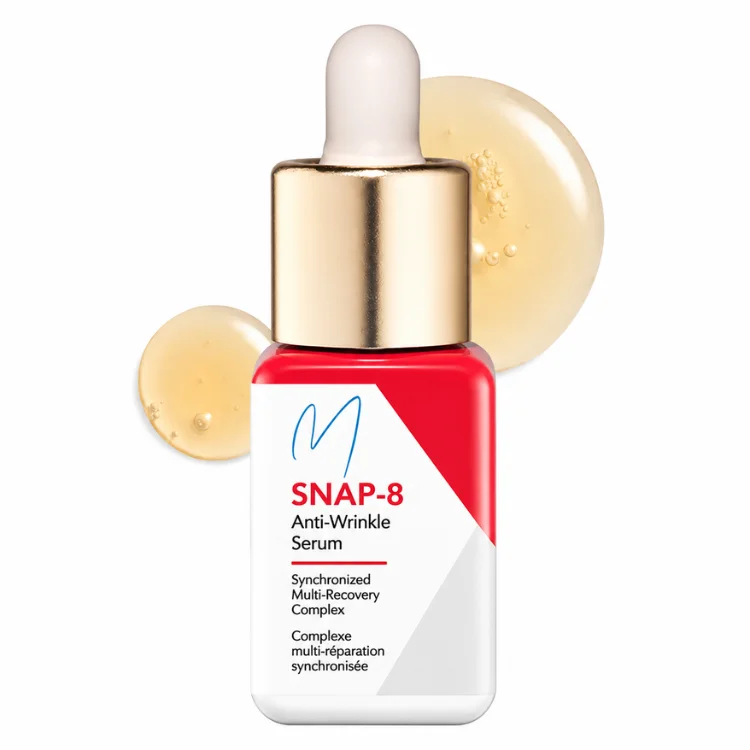
SNAP-8 Anti-Wrinkle Serum
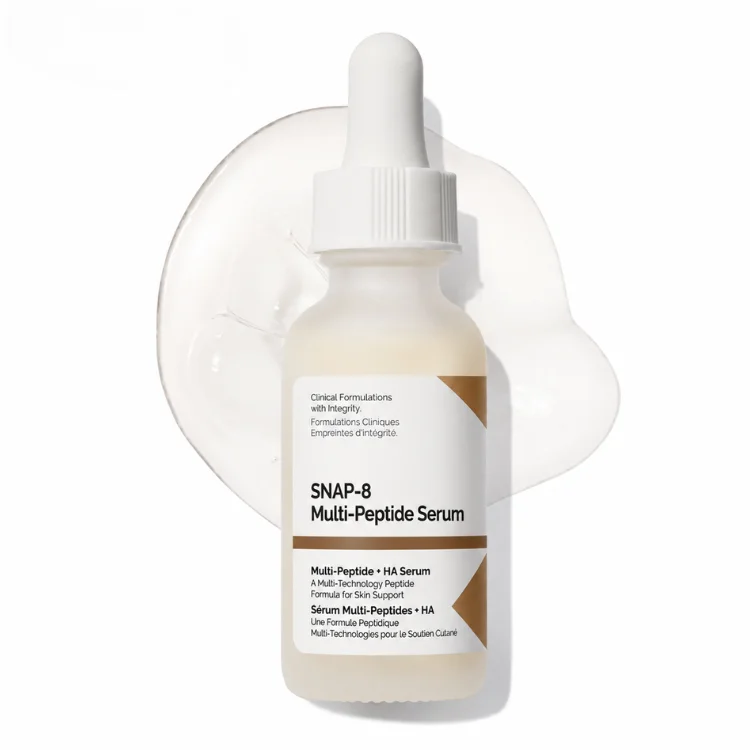
SNAP-8 Multi-Peptide Serum
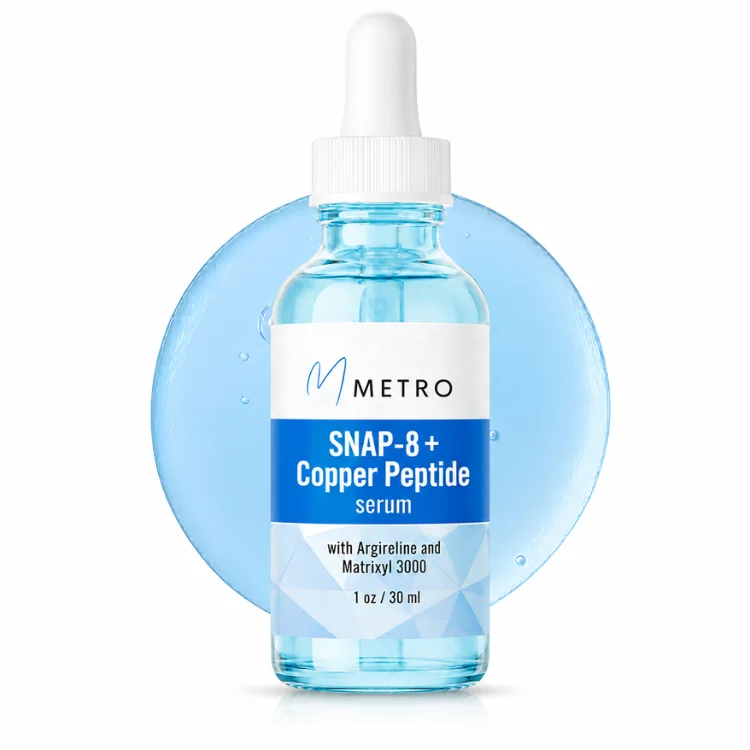
SNAP-8 + Copper Peptide Serum
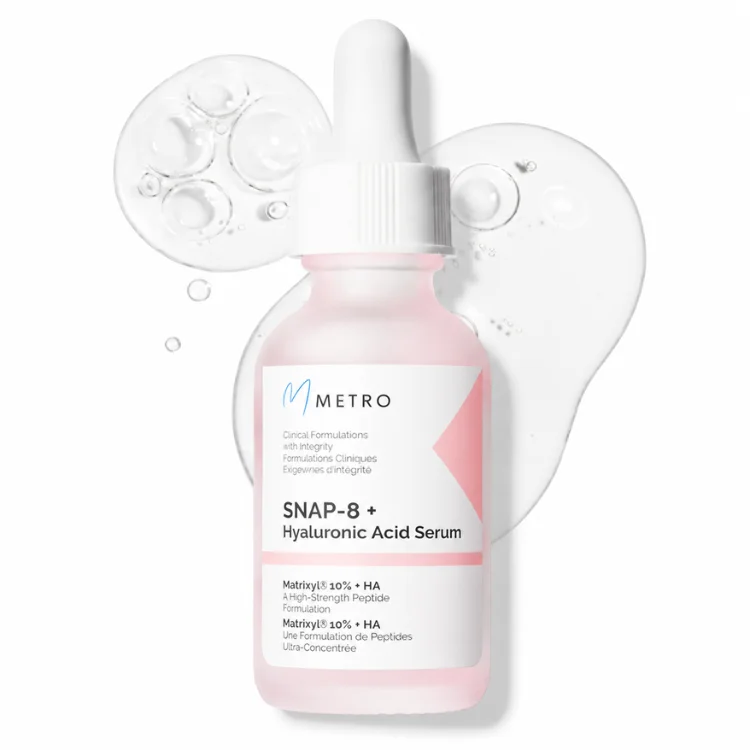
SNAP-8 + Hyaluronic Acid Serum
Build a Private Label SNAP-8 Peptide Serum Line That Fits How Modern Anti-Aging Brands Actually Sell
At Metro Private Label, we don’t see SNAP-8 peptide serum as just another trending ingredient product. We see it as a highly competitive anti-aging category where positioning, texture, packaging, and formula direction directly affect whether a product becomes a repeat-purchase hero SKU—or simply disappears in an overcrowded market.
Over the past few years, we’ve noticed that customers searching for SNAP-8 products are usually not looking for “basic skincare” anymore. They are looking for advanced anti-aging concepts that feel more premium, more targeted, and more commercially differentiated than traditional hyaluronic acid or vitamin C products. That’s why we don’t approach private label SNAP-8 peptide serum as generic OEM manufacturing. We help brands build products around how consumers actually search, compare, and purchase anti-aging skincare today.
Whether you are developing an anti-wrinkle serum for Amazon, a multi-peptide formula for a Shopify DTC brand, a copper peptide repair serum for mature-skin positioning, or a hyaluronic acid peptide serum designed for daily hydration and firming, every formula direction is built around real market demand—not just ingredient trends on paper.
Our 4 Core Private Label SNAP-8 Peptide Serum Types
SNAP-8 Anti-Wrinkle Serum
This is one of the strongest commercial directions in the current peptide skincare market. It focuses on expression lines, fine lines, forehead wrinkles, and daily anti-aging care. The positioning is easy for consumers to understand, which makes it especially suitable for Amazon, TikTok Shop, and fast-moving ecommerce brands.
SNAP-8 Multi-Peptide Firming Serum
A more premium formula direction designed for brands that want stronger “advanced anti-aging” positioning. This type usually combines SNAP-8 with ingredients like Matrixyl, Argireline, or other peptide complexes to create a more sophisticated firmness and elasticity story.
SNAP-8 + Copper Peptide Repair Serum
This category targets higher-end anti-aging customers looking for visible skin firmness, repair, and luxury skincare positioning. Copper peptides pair naturally with SNAP-8 because they help create a stronger perception of clinical-level skincare and premium formulation value.
SNAP-8 + Hyaluronic Acid Lifting Serum
One of the most commercially scalable directions for modern skincare brands. By combining SNAP-8 with hyaluronic acid, the product becomes easier for consumers to understand while still delivering strong anti-aging positioning around hydration, plumping, and smoother-looking skin.
MOQ & Production Strategy Designed for Real Brand Launches
We also believe it’s important to speak honestly about how peptide skincare manufacturing actually works. Products like SNAP-8 serums are closely connected to formula stability, active ingredient compatibility, packaging protection, and long-term customer experience.
Our standard MOQ usually starts from 1,000 units per SKU when using stock packaging options. For most Amazon sellers, Shopify brands, clinic operators, and distributors, this creates a practical starting point for testing the market without forcing unrealistic inventory pressure upfront.
More importantly, we don’t just give clients an MOQ number and leave them to figure out the rest. We help structure the product launch around your sales channel, pricing strategy, packaging direction, and long-term scaling goals, so your first production batch makes sense not only from a manufacturing perspective—but from a real commercial perspective as well.

More Than Just a Private Label SNAP-8 Peptide Serum Manufacturer
At Metro Private Label, we don’t believe a successful SNAP-8 peptide serum is created by simply choosing a trendy ingredient and putting it into a bottle. In today’s anti-aging market, customers expect products that feel premium, deliver a visible experience, and fit naturally into their skincare routine. That’s why we focus not only on manufacturing, but on helping brands build peptide products that are commercially realistic, scalable, and easier to position in a crowded market.

Built Around How Modern Anti-Aging Brands Actually Sell
We know most brands launching SNAP-8 products are not trying to create “just another serum.” They are trying to build a hero SKU that can compete on Amazon, Shopify, TikTok, clinics, or retail shelves. That’s why we focus on product directions customers already understand and actively search for, such as anti-wrinkle peptide serums, multi-peptide firming formulas, copper peptide repair serums, and hyaluronic acid lifting treatments. These categories already have proven demand, which makes your product easier to explain, market, and scale.
Production Planning That Makes Commercial Sense
We also understand that launching a peptide skincare product is not only about the formula itself. Packaging compatibility, active stability, order quantity, and pricing structure all affect whether the launch is commercially sustainable. Our standard MOQ usually starts from around 1,000 units per SKU using stock packaging, giving brands a practical starting point for real market testing without creating unnecessary inventory pressure or unrealistic upfront investment.
Consistency Matters More Than Most Brands Expect
In peptide skincare, customers notice small changes very quickly. If texture, absorption, scent, or skin feel changes between production batches, reviews and repeat purchases can drop fast—especially in ecommerce. That’s why we pay close attention to formula stability, packaging compatibility, and production consistency, so your customers receive the same experience every time they reorder your product.
A Manufacturing Partner That Understands Growth
Most of our clients are not looking for a factory that only fills bottles. They want a partner that understands how skincare brands actually grow. We help support formula direction, packaging coordination, labeling guidance, and production planning so you can spend less time managing manufacturing problems and more time focusing on your customers, marketing, and sales channels.
✨ Build a Private Label SNAP-8 Peptide Serum Line That Feels Ready for the Real Market
When brands work with Metro Private Label, we don’t simply focus on manufacturing a peptide serum. We focus on helping you create a product that feels commercially ready the moment it reaches your customer. In today’s anti-aging market, success rarely comes from having the most complicated formula. It usually comes from delivering a product experience customers genuinely enjoy using—and trust enough to reorder.
SNAP-8 peptide skincare is especially experience-driven. Customers immediately notice things like texture, absorption speed, finish, skin feel, and whether the product feels premium enough to justify the price. If a serum feels sticky, unstable, too weak, or inconsistent between batches, customers usually won’t leave detailed feedback—they simply won’t buy it again. That’s why we pay attention to the details that directly affect long-term product performance, not just marketing claims on paper.
Whether you are building an anti-wrinkle serum for Amazon, a multi-peptide product for a Shopify anti-aging brand, a copper peptide repair serum for premium positioning, or a hyaluronic acid lifting serum designed for daily use, we help structure the project around how customers actually use and repurchase skincare in the real market.
🧪 Formulas Designed Around Real Customer Experience
We don’t believe strong anti-aging products are built by adding more ingredients just to make the formula sound impressive. In many cases, what matters more is how the product feels during daily use and whether customers feel comfortable using it consistently over time.
That’s why we focus heavily on texture balance, absorption, active compatibility, and long-term stability when developing SNAP-8 peptide products. From lightweight fast-absorbing serums to richer firming textures, we help tailor the formula direction around your positioning, pricing strategy, and customer expectations—not just ingredient trends.
📦 Packaging & MOQ Structured for Real Launches
We also understand that launching a skincare product is not only about formulation. Packaging, order quantity, shipping safety, and pricing structure all affect whether a launch becomes commercially sustainable.
Our standard MOQ usually starts from around 1,000 units per SKU with stock packaging options, giving brands a practical starting point for a real launch without creating unnecessary inventory pressure. This structure works especially well for Amazon sellers, Shopify brands, clinics, and distributors preparing new anti-aging SKUs for market testing and future scaling.
From bottle selection and labeling to outer packaging and ecommerce-friendly packaging compatibility, we help align the product with the way your customers actually purchase and receive skincare products today.
⚙️ A Production Process Built to Keep Projects Moving
One thing many clients tell us after working with different factories is that delays and unclear communication often become more stressful than the manufacturing itself. That’s why we keep our process structured and transparent from the beginning.
From formula confirmation and sample development to packaging coordination and production scheduling, we help clients understand what happens at each stage so projects move forward with fewer surprises and less uncertainty. This becomes especially important for brands working with launch deadlines, seasonal promotions, Amazon replenishment cycles, or fast-moving TikTok campaigns.
🌿 Built for Brands Planning Beyond the First Order
We don’t measure a project only by whether production is completed. We look at whether the product is realistically positioned for repeat purchases, future SKU expansion, and long-term brand growth.
That’s why many of our clients work with us not only to launch a single SNAP-8 peptide serum, but to gradually expand into a more complete anti-aging line over time. From the first sample to repeat production planning, we focus on helping brands build skincare products that feel stable, scalable, and commercially sustainable as the business grows.
FAQs SNAP-8 Peptide Serum
For your convenience, we’ve gathered the most commonly asked questions about our SNAP-8 Peptide Serum. However, should you have any further queries, please don’t hesitate to reach out to us.
1. What types of private label SNAP-8 peptide serum can you manufacture?
We mainly focus on commercially proven anti-aging directions that already have strong market demand. This includes SNAP-8 anti-wrinkle serums, multi-peptide firming serums, copper peptide repair serums, and hyaluronic acid lifting serums. We can also help develop related products like peptide eye serums, anti-aging creams, and complete skincare sets if you want to expand into a larger product line later.
2. Can you customize the SNAP-8 peptide formula for our brand positioning?
Yes, absolutely. Some clients want a lightweight fast-absorbing serum for Amazon or TikTok audiences, while others want a richer, more premium texture for clinic or luxury skincare positioning. We can help adjust peptide combinations, texture, absorption, finish, packaging direction, and ingredient positioning based on your target customer and selling channel.
3. What is your MOQ for private label SNAP-8 peptide serum?
Our standard MOQ usually starts from around 1,000 units per SKU when using stock packaging options. We’ve found this quantity gives most brands a realistic starting point for launching into Amazon, Shopify, clinics, or retail without creating unnecessary inventory pressure too early.
4. How long does sampling and production usually take?
Most SNAP-8 peptide serum samples can be prepared within around 7–14 working days depending on the complexity of the formula and packaging requirements. Mass production usually takes around 30 days after final sample and packaging confirmation. If you are working with a launch deadline or restocking timeline, we can also help you plan production stages more efficiently.
5. Can you help us choose the right peptide combination?
Yes. Many clients initially come to us only knowing they want a “peptide serum,” but they are unsure which peptide direction fits their market best. We can help explain the differences between SNAP-8, Argireline, Matrixyl, copper peptides, and other anti-aging actives so the formula makes sense for your pricing strategy, customer expectations, and positioning.
6. Do you offer both white label and custom formulation options?
We support both approaches. Some clients prefer starting with proven stock formulas to move faster and reduce development cost, especially for Amazon or distributor launches. Others want fully customized formulas to create stronger differentiation for DTC brands or clinic skincare lines. We can guide you through either direction depending on your goals and budget.
7. Can you help with packaging and label coordination?
Yes. We help coordinate packaging selection, bottle sourcing, label sizing, printing compatibility, and outer packaging support. Since peptide serums are often positioned as premium anti-aging products, packaging plays a huge role in customer perception, especially for ecommerce and clinic-focused brands.
8. How do you help ensure product consistency between production batches?
This is actually one of the most important parts of peptide skincare manufacturing. Customers notice small differences in texture, absorption, and skin feel very quickly. We focus heavily on formula stability, raw material consistency, and packaging compatibility so your product experience remains stable as your brand grows and scales.
9. Can you support EU and US compliance requirements?
Yes. We regularly work with brands selling into the EU, UK, US, and other international markets. We can help provide documents like INCI lists, COA, MSDS, ingredient information, and labeling guidance to support your product launch and compliance preparation process.
10. Do you work with Amazon sellers, Shopify brands, clinics, and distributors?
Yes — these are actually the types of clients we work with most often. Many of our customers already have existing sales channels and are looking for a manufacturing partner that understands ecommerce speed, anti-aging positioning, packaging coordination, and long-term product scaling instead of simply offering basic OEM production.
What we appreciated most about working with Metro Private Label was that they understood the commercial side of launching anti-aging skincare, not just the manufacturing side. They helped us refine the texture, packaging direction, and peptide positioning for our SNAP-8 serum so the final product felt much more premium and market-ready than we originally planned.
Sophia Bennett, Founderfrom United Kingdom
We had worked with other factories before, but communication and consistency were always a problem. Metro Private Label was much more structured throughout the entire process. Sampling, packaging coordination, and production timelines were explained clearly, which made it much easier for us to prepare our Amazon launch without unnecessary delays.
Lucas Meyer, E-commerce Brand Operatorfrom Germany
Our clinic customers are extremely sensitive to texture and product feel, especially with anti-aging serums. Metro Private Label helped us develop a SNAP-8 peptide formula that felt lightweight, calming, and professional enough for post-treatment retail. The feedback from our repeat customers has been very positive so far.
Emily Carter, Clinic Directorfrom Australia
What impressed us most was how realistic and commercially aware their recommendations were. Instead of trying to oversell complicated formulas, Metro Private Label focused on helping us create a peptide serum that matched our price positioning, packaging goals, and retail strategy. The process felt much more like working with a long-term partner than a typical OEM supplier.
Matteo Ricci, Product Sourcing Managerfrom Italy
As a smaller skincare brand, we were worried about minimum order quantities and managing the entire production process overseas. Metro Private Label made the experience much easier than we expected. They guided us through packaging, labeling, formula adjustments, and shipping preparation step by step, which gave us much more confidence moving into production.
Olivia Thompson, Shopify Brand Founderfrom Canada





Metro Private Label in Numbers
Happy Clients
0 +
Million-dollar Buyers
0 +
Formulation
0 +
Professional Staffs
0 +
Your Ultimate Guide to SNAP-8 Peptide Serum
If you’re planning to launch a SNAP-8 peptide serum—whether as your first anti-aging product or as part of a more advanced skincare expansion—you’re not simply choosing another trendy ingredient category. You’re entering one of the fastest-growing premium skincare directions where customer psychology, perceived value, and long-term repeat purchase behavior matter just as much as the formula itself. Over the past few years, we’ve seen more ecommerce brands, clinic skincare operators, and beauty founders shift toward peptide-based anti-aging products because customers increasingly want skincare that feels more advanced than basic hydration, while still remaining comfortable enough for everyday use. This is exactly where SNAP-8 products fit naturally. They allow brands to build stronger anti-aging positioning around expression-line care, smoother-looking skin, and premium peptide storytelling without creating the same irritation concerns often associated with stronger resurfacing ingredients.
At Metro Private Label, we’ve also noticed that successful SNAP-8 peptide products rarely succeed because of ingredient marketing alone. The brands that scale long-term are usually the ones that understand how texture, packaging, absorption, positioning, and customer experience all work together commercially. A peptide serum may look simple from the outside, but in real-world ecommerce and retail environments, the difference between a product that becomes a hero SKU and one that quietly disappears often comes down to behind-the-scenes decisions most customers never see. Things like whether the serum layers comfortably under makeup, whether the packaging feels premium enough for the target price point, whether the texture supports repeat daily usage, whether the product photographs well online, and whether the formula remains consistent across production batches all directly affect customer trust and repurchase behavior.
This guide is built around what we’ve learned developing peptide skincare products across multiple anti-aging categories, ecommerce models, and global market expectations. Instead of only discussing peptide theory, we want to share how SNAP-8 products actually perform commercially after launch. We’ll explore how successful brands position peptide serums differently across Amazon, Shopify, clinic retail, and premium DTC channels, why texture and packaging often matter more than founders initially expect, how anti-aging customers emotionally evaluate peptide products, and what separates scalable peptide skincare brands from products that struggle with repeat purchases. Our goal is not simply to explain SNAP-8 as an ingredient, but to help brands understand how to build peptide products that customers genuinely want to keep using, keep trusting, and keep repurchasing over time.
Table of Contents
Why SNAP-8 Is Becoming a “Hero Ingredient” for Modern Anti-Aging Brands
The modern anti-aging skincare market is changing much faster than many people inside the beauty industry expected, and from what I continue seeing while working with skincare founders, ecommerce operators, and clinic-related buyers, the brands growing the fastest are usually the ones that understand this shift early. Consumers today are no longer emotionally excited by basic hydration products alone, even though hydration will always remain an essential part of skincare. What customers increasingly want now are products that feel more advanced, more treatment-inspired, and more connected to visible anti-aging concerns. This is one of the biggest reasons why ingredients like SNAP-8 are becoming increasingly important for modern skincare brands trying to position themselves as premium, clinically inspired, and commercially differentiated in an extremely saturated market.
The Market Is Quietly Moving Away from “Basic Skincare” Positioning
One thing I have noticed very clearly over the past few years is that many skincare founders no longer want to launch products that simply look like another generic serum sitting beside thousands of nearly identical products online. Especially for Amazon sellers, Shopify brands, and TikTok-driven skincare companies, the problem is no longer “how to create a skincare product.” The real problem has become “how to make customers emotionally care about the product enough to stop scrolling and actually remember it.”
A few years ago, a standard hyaluronic acid serum with minimalist packaging could still feel premium enough for many consumers. But now the market has become flooded with hydration-focused products that all promise similar things. When consumers repeatedly see products talking about moisture, glow, and barrier support in almost identical ways, they naturally begin searching for products that sound more advanced and more targeted toward specific aging concerns.
This is where I believe SNAP-8 entered the conversation at exactly the right moment. The ingredient immediately sounds more sophisticated than ordinary skincare actives, and psychologically, it creates a much stronger connection to visible anti-aging care. Even consumers who do not fully understand peptide technology often associate peptide products with “high-performance skincare,” which changes how they perceive the value of the product before they even test it themselves.
From a branding perspective, this matters enormously because modern skincare purchasing behavior is becoming increasingly emotional and perception-driven. Consumers want products that make them feel they are investing in something smarter, newer, and more specialized than traditional moisturizing skincare.
Why “Botox-Like” Skincare Has Become Such a Powerful Commercial Direction
One of the most interesting changes I continue seeing in anti-aging skincare is the growing popularity of products positioned around “Botox-like” concepts without actually entering invasive treatment territory. I honestly think many people underestimate how psychologically powerful this positioning has become for modern consumers.
Most customers searching for peptide serums are not researching the ingredient from a scientific perspective. They are not comparing molecular weights or peptide pathways in detail. What they are actually searching for is the possibility of smoother-looking skin, softer expression lines, and products that feel connected to more advanced anti-aging results. Consumers today want products that appear closer to professional aesthetic care while still remaining safe, approachable, and suitable for daily skincare routines.
This is exactly why SNAP-8 has become commercially attractive. The ingredient naturally fits into wrinkle-focused and expression-line-focused storytelling. Whether brands openly use phrases like “Botox alternative” or simply position the product around smoother-looking skin and visible anti-aging care, the emotional direction is very similar. Customers immediately understand the purpose of the product without requiring complicated explanations.
From what I observe across ecommerce and clinic-related skincare launches, this positioning becomes especially effective because it combines aspiration with accessibility. Consumers may not be ready for aesthetic procedures, but they still want products that feel connected to the same anti-aging world. SNAP-8 helps brands create that feeling very effectively.
Ecommerce Brands Are Under Pressure to Find “Hero Ingredients” That Justify Higher Pricing
When I speak with ecommerce skincare founders, especially those already selling on Amazon or Shopify, I often notice they are under enormous pressure to avoid competing only on price. Many of them already understand that launching another basic moisturizer or ordinary serum eventually traps them inside highly competitive low-margin categories.
What they are truly searching for are ingredients capable of supporting stronger positioning and helping them build products that feel more premium and more difficult to compare directly against competitors. This is one reason why I believe peptide-based skincare has become increasingly attractive for ecommerce brands trying to scale sustainably.
I have seen many founders become interested in SNAP-8 not because they specifically searched for the ingredient at first, but because they were searching for a way to create a stronger anti-aging identity for their brand. Once they begin researching peptides, they quickly realize that ingredients like SNAP-8 help products feel more clinically inspired and commercially differentiated compared to ordinary hydration-focused skincare.
What becomes even more interesting is how many brands are now combining SNAP-8 with other anti-aging systems such as copper peptides, Matrixyl, Argireline, or hyaluronic acid to create more layered and sophisticated product storytelling. In many cases, the formula itself becomes part of the brand’s identity rather than simply being a functional product hidden behind packaging.
I also think this shift reflects a broader change happening inside ecommerce skincare. Brands are no longer selling products based only on utility. They are increasingly selling emotional confidence, advanced anti-aging perception, and the feeling that customers are buying into something more exclusive and treatment-oriented.
Social Media Has Completely Changed How Consumers Discover Anti-Aging Ingredients
Another reason I believe SNAP-8 is growing rapidly is because platforms like TikTok have fundamentally changed how skincare trends spread through the market. Years ago, ingredient education mainly happened through beauty magazines, dermatology discussions, or long-form beauty blogs. Today, consumers can discover peptide skincare trends within seconds through short videos explaining anti-aging ingredients, wrinkle concerns, and “advanced skincare routines.”
This changes customer psychology dramatically because consumers are now becoming familiar with ingredient names much earlier in their purchasing journey. Even when they do not fully understand peptide science, they begin associating ingredients like SNAP-8 with premium anti-aging care simply because they repeatedly encounter those names in beauty content, product reviews, and skincare discussions online.
I have also noticed that peptide products perform especially well in short-form content environments because they naturally create stronger storytelling opportunities. A hydration serum often feels visually ordinary in social media marketing because consumers already expect hydration from most skincare products. But peptide serums sound more advanced and emotionally compelling. They create curiosity much faster because the ingredient itself already feels connected to visible anti-aging benefits.
This is why many ecommerce brands are actively searching for peptide-based hero products today. They understand that strong skincare storytelling is becoming just as important as the formula itself, especially when customer attention spans continue getting shorter across digital platforms.
Clinics and Professional Skincare Brands Are Quietly Driving Peptide Growth Too
One thing I think many people overlook is that the rise of peptide skincare is not happening only in ecommerce. I also continue seeing clinics, medical-aesthetic brands, and professional skincare operators move increasingly toward peptide-focused anti-aging systems because the ingredient category fits naturally into professional treatment positioning.
From my perspective, clinic-related skincare works very differently from ordinary retail skincare because trust becomes much more important than trends alone. Customers purchasing products through clinics or aesthetic centers often expect the skincare to feel more scientifically advanced, more stable, and more connected to long-term skin management rather than short-term beauty marketing.
This is one reason why peptide products work so well in these environments. They help clinics position products as professional anti-aging maintenance rather than ordinary cosmetic moisturizers. SNAP-8 especially fits this category because it creates a balance between advanced anti-aging positioning and daily skincare usability. The ingredient feels modern and treatment-oriented without immediately becoming too aggressive or medically intimidating for consumers.
I have also noticed that clinic-related buyers often focus heavily on repeat-purchase potential when evaluating products. They care deeply about texture consistency, customer comfort, layering compatibility, and whether the product experience feels refined enough for long-term use. This aligns extremely well with peptide skincare because the category naturally emphasizes performance perception and premium positioning.
Why I Believe SNAP-8 Represents a Larger Shift Happening Across the Skincare Industry
After observing skincare trends evolve over time, I honestly believe the growth of ingredients like SNAP-8 represents something much larger than a temporary peptide trend. What I see happening is a broader shift where consumers increasingly expect skincare products to feel more connected to visible performance, professional aesthetics, and emotionally satisfying anti-aging experiences.
Modern consumers are becoming more selective about where they spend money, especially in premium skincare categories. They no longer buy products only because they moisturize or contain trendy ingredients. They buy products because they feel the product fits a more advanced skincare identity they aspire toward. This is why ingredients like SNAP-8 are becoming so commercially valuable. They help brands create products that feel more specialized, more intentional, and more aligned with the future direction of premium anti-aging skincare.
From what I continue seeing across ecommerce brands, clinic skincare systems, and premium DTC launches, the brands succeeding most consistently are usually the ones that understand this emotional and commercial transition early. They are not simply selling hydration anymore. They are selling the feeling of advanced skincare performance, treatment-inspired beauty, and long-term anti-aging confidence.
SNAP-8 vs Argireline: What Beauty Brands Are Actually Comparing Before Launching a Product
The peptide skincare market has become one of the most commercially competitive areas inside modern anti-aging skincare, and from what I continue seeing while working with ecommerce brands, skincare founders, and clinic-related buyers, most companies researching SNAP-8 are rarely researching only one ingredient in isolation. What usually happens behind the scenes is a much deeper strategic comparison process where founders are trying to decide how they want their future brand to be perceived in the market. In many cases, the conversation is not truly about peptides alone. It is about whether the final product feels premium enough, advanced enough, clinically inspired enough, and commercially differentiated enough to survive in an anti-aging category that has become extremely crowded over the last few years.
One thing I have noticed repeatedly is that many skincare founders initially believe they are comparing formula performance, but after deeper discussions, I usually realize they are actually comparing brand identity. They are trying to understand whether their future anti-aging product should feel more approachable, more luxury-focused, more treatment-inspired, more ecommerce-friendly, or more clinic-oriented. This is exactly why ingredients like SNAP-8, Argireline, Matrixyl, Copper Peptides, and multi-peptide systems have become such important commercial decisions rather than simple formulation choices.
Most Skincare Founders Begin with a Commercial Problem, Not an Ingredient Problem
Something I think many people outside the skincare manufacturing industry misunderstand is how skincare founders actually start the product development process. Most of the time, founders do not wake up and decide they specifically need SNAP-8 or Argireline. What usually happens is that they realize their current anti-aging positioning feels too generic, too low-margin, or too similar to thousands of existing products already flooding Amazon, Shopify, TikTok Shop, and retail shelves.
I have seen this happen especially often with ecommerce operators who already have some sales experience. Many of them launched ordinary hydration products in the past and eventually discovered how difficult it becomes to maintain pricing power when the market is overloaded with nearly identical niacinamide serums and hyaluronic acid moisturizers. At that point, they begin searching for ingredients capable of making the product feel more advanced and emotionally valuable to consumers.
This is usually where peptide research starts. A founder may first discover Argireline through anti-aging discussions online, then encounter SNAP-8 while researching “Botox-like peptides,” and later compare Matrixyl or Copper Peptides after seeing competitors position their products around premium peptide systems. From the outside, this may appear like technical ingredient research, but from my perspective, it is actually a search for stronger anti-aging positioning and more sustainable commercial differentiation.
I honestly think this distinction is extremely important because many factories still communicate with skincare founders as if the client only cares about formula composition. In reality, experienced founders are often thinking much more strategically. They want to know whether the ingredient helps justify higher retail pricing, whether the product will feel credible enough for premium branding, whether the story sounds advanced enough for social media marketing, and whether the anti-aging positioning feels commercially scalable over the next several years.
Why Argireline Still Matters Even Though the Market Is Becoming More Competitive
Argireline has existed in the peptide skincare market for a relatively long time compared to newer peptide systems, and because of this, it already has significant consumer recognition. I still see many brands actively using Argireline because it remains one of the easiest peptide ingredients for consumers to emotionally understand. Once customers hear phrases connected to “expression lines” or “Botox-like skincare,” the ingredient already feels familiar enough to create trust without requiring overly complicated explanations.
However, I have also noticed something very interesting happening in the premium skincare market. Because Argireline has become more common over time, some skincare founders now worry that using Argireline alone may no longer create enough differentiation for premium positioning. This does not mean the ingredient has lost value. In fact, many commercially successful products still use it very effectively. But what I increasingly see is that brands now often use Argireline as part of a broader peptide strategy rather than relying on it alone as the primary selling point.
From a market psychology perspective, Argireline today often feels more commercially accessible and mainstream compared to some newer peptide directions. This can actually be an advantage for brands targeting mass-premium audiences because the ingredient feels easier for customers to understand. But for founders trying to build more exclusive anti-aging positioning, they often begin searching for ingredients that feel less familiar and more technologically advanced, which is usually where SNAP-8 enters the discussion.
Why SNAP-8 Feels More “Next Generation” to Modern Consumers
One reason I believe SNAP-8 has become increasingly attractive for modern anti-aging brands is because the ingredient naturally creates a stronger perception of innovation and specialization. Even before consumers fully understand the science, the name itself sounds more advanced and less overexposed compared to older peptide ingredients.
I have noticed that when brands position products around SNAP-8, the overall anti-aging story often immediately feels more premium and more treatment-inspired. Consumers psychologically associate newer peptide names with more sophisticated skincare technology, especially when paired with minimalist packaging, clinic-style branding, or advanced anti-aging claims.
This perception becomes incredibly valuable in ecommerce environments where products compete visually and emotionally within seconds. On Amazon or TikTok Shop, customers are constantly scanning products very quickly. If a peptide serum sounds too ordinary, customers often continue scrolling without emotionally engaging with the product. SNAP-8 helps create stronger curiosity because it feels newer, more niche, and more connected to advanced wrinkle-focused skincare.
I have also noticed that many founders researching SNAP-8 are specifically trying to avoid entering low-price anti-aging competition. They want products that feel premium enough to justify higher pricing while still remaining commercially realistic for ecommerce scaling. SNAP-8 fits this positioning extremely well because it allows brands to create a stronger anti-aging identity without immediately entering extremely high-cost luxury skincare categories.
Why Matrixyl Supports a Completely Different Anti-Aging Narrative
One thing I continue seeing in peptide product development is that Matrixyl often changes the emotional direction of a formula completely. While SNAP-8 and Argireline are usually associated with visible wrinkle-softening and expression-line positioning, Matrixyl tends to support a broader long-term anti-aging narrative connected to firmness, collagen support, skin texture, and overall aging management.
This creates a very different commercial feeling around the product. A serum positioned mainly around SNAP-8 may feel more targeted and wrinkle-focused, while formulas built around Matrixyl often feel more comprehensive and more “full-face anti-aging” oriented. Many skincare founders intentionally combine these ingredients because they want the product to feel both immediately understandable and long-term treatment-focused at the same time.
From what I continue observing, Matrixyl also performs especially well for brands targeting customers in their late thirties, forties, and older demographics because those customers often care about overall skin quality rather than only visible wrinkles. This is why many clinic-related brands and premium DTC skincare companies integrate Matrixyl into broader peptide systems instead of using only one hero peptide ingredient.
I honestly think Matrixyl also plays an important psychological role because it helps products feel more serious and more scientifically grounded. The ingredient naturally supports more educational anti-aging storytelling, which works very well for brands trying to create authority-based positioning instead of purely trend-driven beauty marketing.
Why Copper Peptides Instantly Push Products into Higher-End Positioning
Among all the peptide ingredients I continue seeing in modern skincare, I honestly believe Copper Peptides create one of the strongest shifts in perceived product value. The moment Copper Peptides enter the formula discussion, the entire product often begins moving toward a much more premium category emotionally and commercially.
From my experience, Copper Peptides immediately make products feel more luxurious, more clinically inspired, and more advanced from a skincare technology perspective. This affects not only the formula itself, but also packaging expectations, retail pricing strategy, photography style, customer demographics, and even the overall tone of the brand.
I have noticed that skincare founders researching Copper Peptides are often no longer trying to compete in mass-market anti-aging categories. Instead, they are usually trying to create products that feel connected to high-performance skincare systems, clinic-inspired routines, or more mature anti-aging audiences willing to invest significantly more into skincare.
This is why Copper Peptides are increasingly paired together with SNAP-8 in modern anti-aging serums. The combination allows brands to maintain wrinkle-focused positioning while simultaneously increasing the perceived sophistication of the product. In many cases, the ingredient pairing itself becomes part of the premium storytelling strategy.
However, this also creates much higher customer expectations. Once products move into Copper Peptide territory, customers naturally expect better textures, stronger packaging quality, more elegant skin feel, and a much more refined overall experience. This is why ingredient selection directly changes the commercial structure of the product rather than simply altering the formula.
Why Multi-Peptide Systems Are Becoming the Future of Premium Anti-Aging Skincare
One of the strongest trends I continue seeing across modern anti-aging skincare is the movement away from single-ingredient hero positioning and toward multi-peptide systems. I honestly believe this reflects a much larger shift happening inside consumer psychology where customers increasingly associate multiple advanced peptides with more complete and more expensive skincare solutions.
From a branding perspective, multi-peptide systems give skincare founders much more storytelling flexibility. Instead of relying entirely on one peptide claim, brands can create layered anti-aging narratives around firmness, elasticity, wrinkle reduction, hydration, skin recovery, and barrier support simultaneously. This makes the product feel more complete and more premium emotionally.
I also notice that multi-peptide products perform extremely well in ecommerce because they naturally support richer educational content, stronger ingredient storytelling, and more sophisticated anti-aging positioning. Consumers often perceive products containing several peptide systems as more technologically advanced and more worth investing in compared to formulas built around only one hero ingredient.
Another important thing I have observed is that multi-peptide systems help brands future-proof their positioning. Trends in skincare change constantly, but products built around broader peptide systems often remain commercially relevant longer because they are not tied to only one ingredient trend. This becomes especially important for founders trying to build long-term anti-aging brands instead of chasing short-term viral products.
The Real Comparison Is About the Future Direction of the Brand
After watching how skincare founders evaluate peptide ingredients over time, I honestly believe the comparison between SNAP-8, Argireline, Matrixyl, Copper Peptides, and multi-peptide systems is rarely just about which ingredient “works better.” What founders are truly comparing is the type of anti-aging identity they want customers to associate with their products and their brand over the long term.
Some founders want approachable anti-aging positioning that feels commercially scalable and easy to understand for Amazon and TikTok audiences. Others want treatment-inspired skincare that feels more clinical, luxurious, and authority-driven for premium DTC or clinic channels. Some prioritize stronger pricing flexibility, while others focus more on customer accessibility and mass-market scalability.
This is why peptide selection has become such an important strategic decision in modern skincare. Peptides are no longer simply functional ingredients hidden inside a formula. They have become part of the emotional language, commercial identity, and future growth strategy of the brand itself.
From what I continue seeing across ecommerce brands, clinic skincare systems, and premium anti-aging launches, the brands growing most successfully are usually the ones that understand this early. They are not simply asking which peptide sounds more impressive scientifically. They are asking which peptide system best supports the type of anti-aging brand they ultimately want to become.
Why Ecommerce Brands Are Using SNAP-8 Serum to Increase Product Perceived Value
The ecommerce skincare industry has become one of the most psychologically competitive industries I have ever observed, especially in anti-aging categories where customers are constantly exposed to new products, new ingredients, and endless promises of “better skin.” From what I continue seeing while working with Amazon sellers, Shopify skincare founders, and TikTok-driven beauty brands, the biggest challenge today is no longer simply manufacturing a product or driving traffic to a website. The real challenge has become convincing customers that the product feels valuable enough, advanced enough, and emotionally differentiated enough to deserve attention in a market where consumers can compare hundreds of similar-looking skincare products within seconds.
This is exactly why peptide serums, especially SNAP-8 products, have become increasingly important for ecommerce-focused skincare brands. Most founders searching for peptide ingredients are not simply trying to launch another serum. In reality, they are trying to escape a market that has become trapped inside low-margin competition, generic hydration positioning, and endless pricing wars. What they are truly searching for is a product capable of creating stronger perceived value so the brand can maintain healthier margins, better customer loyalty, and stronger long-term positioning.
The Biggest Problem in Ecommerce Skincare Is Commoditization
One thing I have noticed repeatedly over the past few years is that many skincare categories eventually become commoditized once too many brands enter the same space with nearly identical products. This happens especially fast in ecommerce because platforms like Amazon reward products that already have strong search demand, which naturally attracts more sellers into the same categories.
At first, many founders believe launching a niacinamide serum or a hyaluronic acid moisturizer is a safe business decision because those ingredients already have proven market demand. However, what often happens later is that the category becomes flooded with similar formulas, similar packaging, similar textures, and nearly identical product claims. Once this happens, customers stop emotionally distinguishing one brand from another. The only thing left to compare becomes price, review count, and discount level.
I have watched many ecommerce brands slowly lose profitability this way. Even when the formula quality is good, the product itself no longer feels emotionally special enough to justify premium pricing. Customers begin treating the category like a commodity instead of a skincare experience. Once a product becomes a commodity, maintaining healthy margins becomes extremely difficult because every competitor eventually tries to undercut pricing.
This is one of the biggest reasons I continue seeing ecommerce operators move toward peptide-based anti-aging products like SNAP-8 serums. They are trying to leave commodity skincare behind and enter categories where the product feels more specialized, more advanced, and more difficult for consumers to compare directly against low-cost competitors.
Why SNAP-8 Immediately Changes Customer Perception
One thing I find very interesting about modern skincare psychology is how strongly ingredient perception affects customer behavior even before the customer understands the science. Most consumers do not fully understand peptide pathways or formulation chemistry, but they quickly form emotional opinions about whether a product feels “basic,” “advanced,” “luxury,” or “clinical.”
This is where SNAP-8 becomes extremely valuable commercially. Compared to ordinary hydration ingredients, the name itself already sounds more technologically advanced and more connected to professional anti-aging skincare. Psychologically, products built around peptides create a very different emotional reaction compared to products focused only on moisturization or barrier support.
I have seen many founders struggle to sell ordinary hydration serums above certain retail price ranges because consumers mentally categorize those products as standard skincare. But when the product positioning shifts toward peptides, expression-line targeting, and anti-aging technology, customers immediately begin expecting a more premium experience. This expectation alone changes how they evaluate the value of the product.
What I also continue noticing is that consumers today increasingly associate peptide skincare with “serious anti-aging care” instead of ordinary beauty products. Even if customers cannot explain exactly what SNAP-8 does scientifically, they often emotionally connect the ingredient with smoother-looking skin, advanced wrinkle care, and treatment-inspired skincare. This perception is incredibly powerful in ecommerce environments where customers often decide whether to click, continue reading, or purchase within only a few seconds.
Why Premium Perception Is More Important Than Formula Complexity
Many newer skincare founders initially assume that the secret to building premium skincare is making formulas more complicated. However, after observing hundreds of ecommerce skincare launches, I honestly think premium perception depends much more on emotional coherence than ingredient quantity alone.
I have seen relatively simple peptide formulas outperform much more complicated products simply because the branding, texture, packaging, and anti-aging positioning all felt aligned. Customers today are not only evaluating whether a product contains advanced ingredients. They are evaluating whether the entire experience feels premium enough to justify trust and repeat purchasing.
This is one reason why peptide serums perform so well commercially. The category naturally supports more elevated branding. Once a product contains ingredients like SNAP-8, founders can more confidently use treatment-inspired packaging, clinic-style aesthetics, and stronger anti-aging storytelling without the product feeling disconnected from the pricing strategy.
I also notice that peptide skincare allows brands to create much more emotionally satisfying customer journeys. The customer no longer feels they are simply buying “another serum.” Instead, they feel they are investing in more advanced skincare technology connected to visible aging concerns. This emotional transition dramatically changes how consumers perceive value.
Why Anti-Aging Positioning Creates Stronger Long-Term Customer Value
Another major reason ecommerce brands move toward SNAP-8 serums is because anti-aging categories naturally create stronger long-term customer relationships compared to ordinary skincare categories. From what I continue seeing across ecommerce skincare businesses, anti-aging customers are often more loyal, more engaged with routines, and more willing to purchase complementary products over time.
Hydration products are important, but customers often view them as basic necessities rather than emotionally significant skincare investments. Anti-aging products behave differently because they connect directly to long-term appearance concerns, confidence, and visible signs of aging. Once customers emotionally believe a product supports smoother-looking skin or helps maintain a youthful appearance, they become much more committed to consistent usage.
This changes ecommerce economics significantly. Brands using SNAP-8 serums are often not simply selling one standalone product. They are building ongoing anti-aging routines that naturally expand into eye creams, firming creams, night repair products, and complete peptide systems. This creates stronger repeat-purchase behavior and significantly increases customer lifetime value.
I have also noticed that customers purchasing advanced anti-aging products tend to spend more time researching ingredients, reading educational content, and emotionally investing in the skincare experience itself. This creates much stronger long-term brand attachment compared to low-cost commodity skincare categories.
Why Peptide Serums Reduce Direct Price Competition
One of the biggest advantages I see with peptide-based skincare is that it naturally reduces the intensity of direct price competition. In highly saturated categories like hyaluronic acid or vitamin C, customers can compare dozens of similar products side by side because the positioning feels relatively interchangeable.
Peptide serums change this dynamic because the category feels more specialized and more emotionally differentiated. Once customers perceive products as advanced anti-aging treatments instead of ordinary skincare, they begin evaluating much more than price alone. They start paying attention to ingredient sophistication, packaging quality, product texture, clinical-style branding, and overall perceived expertise.
I honestly think this is one of the most valuable commercial advantages peptide products provide to ecommerce brands. They help founders move away from “cheapest option wins” competition and toward positioning-driven competition where storytelling, experience, and perceived expertise matter much more.
This becomes especially important on platforms like Shopify where brands rely heavily on emotional branding and long-form storytelling rather than only search visibility. A SNAP-8 serum naturally supports richer educational content, stronger anti-aging narratives, and more premium customer perception compared to generic skincare categories.
Why TikTok and Social Media Have Accelerated Peptide Demand So Quickly
Another reason I believe SNAP-8 has become so commercially valuable is because social media has completely transformed how skincare ingredients spread through the market. Platforms like TikTok reward products that create immediate curiosity and emotionally compelling narratives, and peptide skincare fits perfectly into this environment.
I have noticed that peptide serums naturally generate stronger engagement because the ingredient category already feels more advanced and more connected to visible anti-aging concerns. Consumers scrolling through skincare content online are far more likely to pause for products discussing expression lines, advanced peptides, or “Botox-like skincare” compared to ordinary hydration messaging.
What makes this especially important is that social media today strongly influences product perceived value before customers even visit the product page. If consumers repeatedly encounter peptide-related skincare discussions online, they begin associating the category itself with premium skincare long before they make purchasing decisions.
This is why many ecommerce founders are now intentionally searching for peptide-focused hero products instead of launching ordinary moisturizers. They understand that stronger ingredient storytelling creates stronger emotional reactions, and stronger emotional reactions often lead to better conversion rates, higher pricing flexibility, and more sustainable ecommerce growth.
Why I Believe SNAP-8 Represents a Bigger Shift Happening in Ecommerce Beauty
After observing how ecommerce skincare brands evolve over time, I honestly believe the rise of SNAP-8 reflects a much larger shift happening across the beauty industry. Modern ecommerce founders are no longer simply searching for products that function technically. They are increasingly searching for products capable of supporting stronger emotional positioning, stronger perceived value, and more defensible brand identity in extremely competitive online environments.
What makes SNAP-8 especially powerful is not simply the peptide itself. The real commercial value comes from how effectively the ingredient supports premium anti-aging storytelling, advanced skincare perception, higher retail pricing, and emotionally satisfying customer experiences.
From what I continue seeing across Amazon skincare brands, Shopify anti-aging launches, and clinic-inspired ecommerce products, the brands growing most successfully today are usually the ones that understand this shift early. They are not simply selling hydration anymore. They are selling advanced anti-aging identity, treatment-inspired skincare experiences, and the emotional feeling that the customer is investing in something more sophisticated than ordinary beauty products.
The Most Commercially Successful SNAP-8 Product Directions Right Now
The anti-aging skincare market has become dramatically more competitive over the past few years, and from what I continue seeing while working with ecommerce skincare founders, clinic-related brands, and premium DTC operators, one of the biggest mistakes many newer brands make is assuming that peptide skincare succeeds simply because peptides are trending. In reality, the products that actually perform well commercially are usually the ones that combine the right ingredient direction with emotionally clear positioning, realistic customer psychology, and product experiences that feel premium enough to justify repeat purchases.
One thing I have learned after watching countless anti-aging launches is that consumers rarely purchase peptide products because they fully understand the science behind the ingredients. Most customers are actually purchasing a feeling. They want products that feel more advanced, more treatment-inspired, more luxurious, and more connected to visible anti-aging concerns than ordinary hydration skincare. This is exactly why some SNAP-8 product directions continue performing extremely well while others disappear quietly after launch.
What I find especially important is that the best-performing peptide categories today are not random formulation ideas. They reflect deeper changes happening inside ecommerce skincare behavior, social media beauty culture, premium anti-aging positioning, and the way modern consumers emotionally evaluate skincare products online. The categories currently performing strongest are the ones that make customers immediately feel the product belongs in a more advanced anti-aging world instead of looking like another ordinary serum competing only on price.
Why Anti-Wrinkle Peptide Serum Continues to Dominate the Ecommerce Anti-Aging Market
Among all SNAP-8 product directions, anti-wrinkle peptide serums continue to perform the strongest commercially across Amazon, Shopify, TikTok Shop, and even clinic retail channels because the positioning is emotionally immediate and psychologically easy for customers to understand. One thing I have observed repeatedly is that consumers respond much faster to products connected to visible aging concerns than to products relying only on technical ingredient education.
When customers see phrases connected to wrinkles, expression lines, forehead lines, smile lines, or smoother-looking skin, they immediately understand the purpose of the product without needing long scientific explanations. This creates extremely efficient ecommerce communication because the product benefit becomes emotionally clear within seconds. In online skincare, this matters enormously because customers are constantly scrolling through endless product options and making decisions very quickly.
I have also noticed that anti-wrinkle peptide serums perform especially well because they sit perfectly between ordinary skincare and aesthetic-inspired skincare. Most consumers are not ready to immediately enter medical aesthetic procedures, but they still want products that feel connected to more advanced anti-aging solutions. SNAP-8 naturally fits this psychological space because the ingredient already sounds more clinical and more treatment-oriented than ordinary skincare actives.
From a commercial perspective, this creates enormous value for ecommerce brands because the product no longer feels like “just another serum.” It starts feeling more specialized and more emotionally connected to visible anti-aging improvement. Many brands intentionally position these products around “Botox-like skincare” concepts because consumers already emotionally associate those ideas with smoother-looking skin and premium anti-aging care.
Another reason anti-wrinkle peptide serums perform so consistently is because the target customers are usually highly motivated buyers. These customers are actively searching for solutions connected to aging concerns, which means the purchase intent is often much stronger than ordinary hydration skincare categories. I continue seeing these products support better conversion rates, stronger repeat-purchase behavior, and healthier pricing flexibility compared to more generic skincare products.
Why Multi-Peptide Firming Serum Has Become the Preferred Direction for Premium DTC Brands
One of the strongest shifts I continue seeing in the anti-aging skincare market is the movement away from simple single-ingredient positioning toward much more layered multi-peptide systems. A few years ago, many brands focused heavily on one hero ingredient because consumers were still discovering peptide skincare. But now, especially in premium ecommerce, customers increasingly expect products to feel more sophisticated and more complete.
This is exactly why multi-peptide firming serums have become one of the fastest-growing SNAP-8 categories commercially. Once brands combine SNAP-8 with ingredients like Matrixyl, Argireline, Copper Peptides, or other peptide complexes, the product immediately feels more technologically advanced and more luxurious emotionally.
I have noticed that this category performs especially well for Shopify skincare founders and premium DTC brands because it supports much richer storytelling. Instead of only talking about wrinkle reduction, brands can build broader anti-aging narratives around firmness, elasticity, skin texture, long-term aging support, collagen-focused positioning, and visible skin quality improvement. This dramatically increases perceived sophistication.
Another thing I find very important is that multi-peptide systems naturally support higher retail pricing because customers emotionally associate “multiple advanced peptides” with more expensive skincare technology. Even consumers who do not fully understand the science still perceive the formula as more comprehensive and more valuable.
I also continue noticing that multi-peptide products attract a different type of skincare buyer. These customers are often more skincare-educated, more invested in routines, and more willing to spend higher amounts on products they believe support long-term anti-aging goals. From a business perspective, this is extremely attractive because these customers often become repeat buyers much more easily than customers purchasing purely trend-driven skincare products.
Social media has also accelerated the growth of multi-peptide positioning dramatically. On TikTok and Instagram, ingredient education has become part of beauty entertainment culture itself. Consumers increasingly enjoy hearing about peptide combinations, anti-aging systems, and “next-generation skincare.” Multi-peptide firming products naturally fit this content environment extremely well because the products feel educational, premium, and visually sophisticated at the same time.
Why Copper Peptide Repair Serum Creates Some of the Strongest Premium Positioning in Skincare
Among all peptide-related anti-aging directions, Copper Peptide repair serums consistently create one of the strongest luxury perceptions I continue seeing in the market today. The moment Copper Peptides enter the formula discussion, the emotional positioning of the product often changes completely. Instead of feeling like mainstream anti-aging skincare, the product suddenly begins feeling much closer to clinic-inspired skincare, treatment-focused beauty, and higher-end anti-aging systems.
I honestly think Copper Peptides have become commercially powerful because they naturally create stronger scientific credibility in the customer’s mind. Even consumers who do not fully understand peptide chemistry often associate Copper Peptides with advanced skin support, repair-focused skincare, and more serious anti-aging maintenance. This perception immediately supports stronger premium positioning.
What I also continue observing is that Copper Peptide repair products attract a much more skincare-invested customer demographic. These buyers are usually not casually purchasing skincare anymore. They are often already deeply interested in anti-aging routines, skin longevity, visible skin quality, and long-term skin management. Many of them are also more willing to spend significantly higher amounts on products they believe feel clinically advanced.
This is why Copper Peptide repair serums often work extremely well for clinic-inspired ecommerce brands and higher-end DTC skincare systems. The category naturally supports more minimalist packaging, more treatment-oriented branding, and more elevated pricing structures.
I have also noticed that many brands intentionally combine Copper Peptides with SNAP-8 because the pairing creates a very balanced emotional identity. SNAP-8 helps maintain wrinkle-focused anti-aging positioning, while Copper Peptides increase the perception of sophistication and skin-repair authority. Together, the product begins feeling much more like a premium anti-aging treatment system instead of a simple cosmetic serum.
However, one thing I always notice with Copper Peptide positioning is that customer expectations become much higher. Once brands move into this category, consumers naturally expect better textures, more elegant absorption, premium packaging, and a much more refined overall skincare experience. This means the formula, packaging, and brand identity all need to feel aligned commercially.
Why Hyaluronic Acid Lifting Serum Continues to Scale So Well in Ecommerce
Even though peptide skincare has grown rapidly over the past few years, I still continue seeing Hyaluronic Acid lifting serums perform extremely well commercially when combined properly with SNAP-8 and anti-aging positioning. One reason I think this category remains so scalable is because it creates the perfect balance between familiarity and premium perception.
Hyaluronic Acid is already globally recognized by mainstream consumers, which means the ingredient lowers the psychological barrier to purchase significantly. Customers already understand hydration, plumping, and smoother-looking skin emotionally. This creates immediate trust. However, once SNAP-8 and lifting-focused positioning are added into the formula story, the product suddenly feels much more advanced than an ordinary hydration serum.
I have observed that this category works especially well for ecommerce brands because it makes advanced anti-aging positioning feel more approachable to mainstream buyers. Some consumers still feel intimidated by heavily technical peptide products, especially if the branding feels overly clinical. Hyaluronic Acid creates emotional familiarity while SNAP-8 adds premium anti-aging sophistication. Together, the product becomes commercially accessible while still maintaining elevated positioning.
This combination also performs extremely well visually in ecommerce marketing. Hydration, plumping, smoother-looking skin, and lifting-related concepts are very easy to communicate through product photography, before-and-after visuals, TikTok videos, and educational skincare content. This makes the category highly adaptable across Amazon listings, Shopify storytelling, and social media campaigns.
Another important reason this category scales so effectively is because it appeals to a much broader demographic range. While highly advanced peptide systems may attract more niche skincare enthusiasts, Hyaluronic Acid lifting products can still attract mainstream anti-aging customers looking for products that feel effective without becoming too technically intimidating. This makes the category commercially flexible for brands trying to scale larger audiences.
Why These Four SNAP-8 Directions Continue Performing Better Than Generic Peptide Products
One thing I honestly believe many skincare founders misunderstand is that consumers do not purchase peptide products simply because peptides exist inside the formula. In reality, customers purchase products because the emotional positioning feels clear, valuable, and personally relevant to their skincare goals.
This is exactly why these four SNAP-8 directions continue outperforming vague “advanced peptide serum” positioning. Anti-wrinkle peptide serums create immediately understandable problem-solving psychology. Multi-peptide firming products create advanced anti-aging sophistication. Copper Peptide repair serums create luxury treatment-inspired perception. Hyaluronic Acid lifting products create emotionally approachable but still premium anti-aging positioning.
Each category creates a very specific emotional expectation inside the customer’s mind before they even test the product. This emotional clarity is incredibly important in ecommerce because customers often make decisions based on perceived identity and positioning long before they fully understand technical ingredient details.
I continue seeing ecommerce skincare brands struggle when they rely only on vague peptide marketing without clear emotional direction. The products that scale successfully are usually the ones that immediately communicate what type of anti-aging experience the customer should expect.
Why Commercial Success in Peptide Skincare Depends More on Positioning Than Formula Complexity
After observing how peptide skincare brands evolve over time, I honestly believe one of the biggest lessons founders eventually learn is that commercial success depends much more on positioning coherence than technical complexity alone. Some of the most commercially successful peptide products I continue seeing are not necessarily the most scientifically complicated formulas. Instead, they are the products where the ingredient story, packaging, texture, customer psychology, and anti-aging positioning all feel emotionally aligned.
This is why SNAP-8 has become such an important ingredient direction for modern ecommerce skincare brands. The ingredient naturally supports premium perception, advanced anti-aging storytelling, treatment-inspired branding, and stronger pricing flexibility while still remaining commercially scalable across Amazon, Shopify, TikTok Shop, clinic retail, and premium DTC skincare environments.
From what I continue seeing across the anti-aging market, the brands growing most successfully today are usually the ones that understand this balance early. They are not simply launching peptide products because peptides are trending. They are building skincare experiences that emotionally feel more valuable, more sophisticated, and more connected to how modern consumers want premium anti-aging skincare to look, feel, and perform in real life.
Why Texture and Skin Feel Often Matter More Than Ingredient Lists
One of the biggest lessons I have learned after watching anti-aging skincare brands launch, scale, fail, relaunch, and reposition over the past several years is that consumers rarely stay loyal to a skincare product simply because the ingredient list looks impressive online. In reality, most customers decide whether they truly like a product within the first few applications, and that judgment is usually based far more on texture, skin feel, comfort, and routine compatibility than on peptide percentages or complex formulation science.
This is something I honestly think many newer skincare founders underestimate at the beginning. When brands first enter the peptide skincare market, they often become heavily focused on ingredient storytelling because ingredients are easy to market online. They spend enormous amounts of time discussing SNAP-8, Matrixyl, Copper Peptides, Argireline, or multi-peptide systems, believing the formula itself will automatically create customer loyalty. But from what I continue seeing across ecommerce brands, clinic skincare systems, and premium anti-aging launches, the products customers reorder most consistently are usually not the ones with the most technically complicated formulas. They are the ones that feel elegant, effortless, emotionally satisfying, and easy to use every single day.
Most Consumers Judge Peptide Skincare Emotionally Before They Judge It Scientifically
One thing I continue noticing in the skincare market is that consumers often evaluate products emotionally long before they evaluate them rationally. Even highly skincare-engaged customers usually cannot fully judge peptide concentration quality, raw material sourcing, or formulation architecture simply by looking at an ingredient list. But the moment they apply a serum to their skin, they immediately begin forming opinions about whether the product feels expensive, refined, comfortable, trustworthy, or disappointing.
I honestly think this emotional evaluation process happens much faster than many skincare brands realize. Customers immediately notice whether the serum spreads smoothly, whether it feels sticky, whether it absorbs elegantly, whether it layers comfortably under sunscreen, and whether the finish feels sophisticated enough to justify the retail price they paid.
This becomes incredibly important in ecommerce because customers cannot physically experience the product before purchasing it. By the time the serum arrives, expectations are already emotionally elevated through packaging, branding, reviews, TikTok videos, ingredient claims, and anti-aging marketing language. If the real-world texture experience fails to match that premium expectation, disappointment happens almost immediately.
I have seen products with technically strong anti-aging ingredients quietly fail simply because the user experience felt cosmetically unpleasant. Customers may initially feel excited about peptides and advanced anti-aging positioning, but if the product feels uncomfortable after a week of real usage, the emotional connection quickly disappears.
Why Absorption Speed Has Become a Huge Commercial Factor in Modern Skincare
One detail I think many people outside formulation development underestimate is how much absorption speed affects customer satisfaction today. Modern skincare consumers live in a very different environment compared to skincare buyers ten or fifteen years ago. People now expect skincare to integrate smoothly into busy routines without creating friction, inconvenience, or discomfort.
I continue seeing this especially strongly with ecommerce anti-aging customers. Many consumers apply skincare quickly before work, before makeup, before sunscreen, or late at night when they are already tired. If a peptide serum takes too long to absorb, customers begin perceiving the product as inefficient even when the ingredient list itself looks impressive.
I have observed that fast and elegant absorption often creates a surprisingly strong luxury perception. When a serum melts naturally into the skin without excessive rubbing or residue, customers subconsciously associate the experience with higher formulation quality and better skincare engineering. On the other hand, when a serum sits heavily on the surface or leaves prolonged tackiness, the product often starts feeling cosmetically unfinished.
This is especially important for premium anti-aging brands because customers purchasing peptide skincare already expect elevated product experiences. They are not only buying anti-aging claims anymore. They are buying refinement, comfort, and sophistication.
What I find very interesting is that many customers cannot technically explain why they dislike certain peptide products. They simply describe them as “feeling weird,” “too heavy,” or “not enjoyable to use.” But behind those vague descriptions, absorption behavior is often one of the biggest hidden issues.
Why Stickiness Quietly Destroys Repeat Purchases
Among all the formulation issues I continue seeing in peptide skincare, excessive stickiness is probably one of the most commercially damaging because customers notice it immediately and emotionally react to it very strongly.
I think this happens because sticky textures psychologically conflict with how consumers imagine premium anti-aging skincare should feel. When customers purchase peptide serums positioned around advanced anti-aging technology, clinic-inspired skincare, or luxury treatment concepts, they expect the formula to feel smooth, refined, elegant, and cosmetically sophisticated.
The moment a product leaves excessive tackiness, that premium illusion starts breaking down. Even if the ingredient list contains expensive peptides and technically strong actives, the customer often subconsciously interprets the texture as less refined or less professionally formulated.
I have seen many brands unintentionally create this problem while trying to maximize hydration or active ingredient loading. On paper, the formula may look extremely impressive. But in real-life daily use, customers begin feeling uncomfortable layering makeup over the serum or touching their skin after application.
What makes this even more dangerous commercially is that customers rarely explain the issue in highly technical language. Instead, they simply stop reaching for the product consistently. They begin skipping applications, reducing usage frequency, or quietly replacing the serum with something that feels easier to wear daily.
This is one reason I continue believing texture problems often hurt long-term customer retention far more than many brands realize.
Why Layering Compatibility Is Becoming More Important Every Year
Modern skincare consumers rarely use products in isolation anymore. One thing I continue seeing very clearly is that skincare routines have become much more layered and much more complex compared to the past. Customers now regularly combine peptide serums with moisturizers, SPF products, primers, makeup, retinoids, barrier creams, exfoliants, and overnight masks within the same routine.
Because of this, layering compatibility has become one of the most important hidden factors determining whether customers continue using peptide products consistently over time.
I have seen many technically strong peptide serums fail commercially because they created pilling under sunscreen or conflicted badly with makeup textures. Some formulas looked beautiful immediately after application but became frustrating once customers tried integrating them into real-life skincare routines.
This is why I honestly believe formulation elegance matters just as much as ingredient selection itself. A serum may contain advanced anti-aging peptides, but if the product becomes difficult to layer comfortably into daily routines, customers eventually start avoiding it.
I also notice that products with excellent layering behavior often create much stronger emotional loyalty because customers subconsciously associate them with professionalism and thoughtful formulation. When skincare integrates seamlessly into routines, the entire experience feels more luxurious and more trustworthy.
This becomes especially important for ecommerce skincare brands because customer reviews today increasingly focus on practical routine experience rather than only ingredient marketing claims.
Why Finish Changes the Entire Emotional Identity of the Product
One thing I think many people outside the skincare industry rarely fully appreciate is how dramatically the finish of a product changes customer psychology. The finish is not simply a cosmetic detail. It directly affects whether the product feels youthful, luxurious, clinical, nourishing, lightweight, or modern.
I have observed that different customer groups emotionally prefer different finishes depending on their skincare goals and lifestyle. Some customers love hydrated radiant finishes because they associate glow with healthy youthful skin. Others prefer invisible lightweight finishes because they dislike feeling anything on their skin during the day.
The key issue is not which finish is objectively better. The real issue is whether the finish feels emotionally aligned with the brand positioning and customer expectation.
For example, clinic-inspired peptide products usually perform better when the finish feels elegant, clean, and professionally lightweight because consumers associate medical-aesthetic skincare with refinement and skin compatibility. Meanwhile, richer peptide night serums may intentionally feel more nourishing because customers psychologically connect nighttime skincare with recovery and deep treatment.
I continue seeing brands struggle when the product finish feels disconnected from the anti-aging story they are trying to tell. Even strong formulas can feel commercially confusing when the sensory experience does not match the emotional promise of the brand.
Why Irritation Risk Quietly Destroys Long-Term Brand Trust
Another issue I think many brands underestimate is how strongly irritation affects repeat purchasing behavior in anti-aging skincare. One thing I continue seeing across mature-skin consumers and clinic-related skincare audiences is that customers increasingly prioritize comfort and long-term skin stability over aggressive short-term results.
This is especially important for peptide skincare because peptide products are usually positioned around daily maintenance and long-term anti-aging support. Customers expect to use these products continuously over months or even years. If the serum creates irritation, redness, sensitivity, stinging, or skin fatigue, customers begin emotionally distrusting the product very quickly.
I have seen anti-aging products fail not because customers doubted the ingredients, but because they no longer felt relaxed using the product consistently. Once customers become worried about irritation, they psychologically stop associating the product with self-care and begin associating it with uncertainty and skin stress.
This becomes extremely damaging for premium skincare brands because premium anti-aging positioning depends heavily on trust, comfort, and emotional confidence. Customers purchasing peptide serums often want products that feel supportive and sophisticated, not aggressive or unpredictable.
I honestly think many successful peptide products today win not because they produce dramatic overnight results, but because they feel consistently elegant, stable, and comfortable enough for customers to enjoy using them long-term.
Why Overall Skin Feel Determines Whether Customers Build Habits Around the Product
After observing consumer behavior across skincare ecommerce for years, I honestly believe overall skin feel is one of the strongest hidden drivers behind repeat purchases. Customers build emotional habits around products that consistently feel pleasant, luxurious, effortless, and rewarding during everyday routines.
Skincare is not only functional anymore. It has become highly emotional and behavioral. If customers enjoy the experience of applying a peptide serum every morning and evening, they naturally become more attached to the product over time. The serum stops feeling like a cosmetic product and starts becoming part of their identity, routine, and self-care behavior.
This is why I continue believing many peptide products fail not because the ingredients themselves are ineffective, but because the product experience does not support real-world long-term use. Customers may initially purchase peptide products because of the anti-aging claims, but they continue repurchasing because the product feels emotionally satisfying inside daily life.
I have seen relatively simple peptide formulas outperform technically stronger competitors simply because the texture, layering, finish, and comfort level created a more enjoyable overall skincare experience. In the long term, customers almost always return to products that feel emotionally easy and pleasurable to use.
Why I Believe Texture Engineering Has Become One of the Most Important Competitive Advantages in Modern Skincare
After watching how ecommerce skincare brands evolve over time, I honestly think texture engineering has quietly become one of the most underrated competitive advantages in the entire anti-aging skincare industry.
Many brands still focus almost entirely on ingredient marketing because ingredients are easy to advertise through social media, product pages, and TikTok content. But once the customer receives the product, the real-world formulation experience becomes far more important than the ingredient story itself.
Customers immediately judge absorption, stickiness, layering compatibility, finish, irritation potential, elegance, and overall skin comfort within the first few applications. Those sensory experiences determine whether the product truly feels premium enough to deserve a permanent place inside the customer’s skincare routine.
From what I continue seeing across ecommerce skincare brands, clinic anti-aging systems, and premium DTC launches, the products customers remain loyal to are rarely the ones with the longest ingredient lists. They are usually the products that make customers feel elegant, comfortable, emotionally confident, and genuinely excited to use the product again the next day.
How Clinics and Medical-Aesthetic Brands Position SNAP-8 Products Differently from Ecommerce Brands
One of the most important things I have learned after working with both ecommerce skincare brands and clinic-related skincare projects is that even when two companies are technically developing the same type of SNAP-8 peptide serum, the real commercial logic behind the product can be completely different. On the surface, both products may contain similar anti-aging ingredients, similar peptide positioning, and similar claims around wrinkles or firmness. But once I begin discussing the actual business goals behind the product, I usually realize the two brands are solving entirely different problems.
This is something I honestly think many people outside the skincare industry fail to fully understand. The anti-aging skincare market may look unified from the outside, but in reality, Amazon brands, TikTok skincare companies, clinic skincare systems, and medical-aesthetic channels often operate using completely different emotional strategies, customer expectations, pricing psychology, and long-term business models.
From what I continue observing, ecommerce skincare brands are usually competing for attention first, while clinics and professional aesthetic brands are competing for long-term trust first. That difference alone changes almost every decision inside product development, from texture and packaging to ingredient positioning, claims strategy, customer education, and even how the product should emotionally feel when the customer applies it for the first time.
Ecommerce Anti-Aging Brands Usually Prioritize Emotional Excitement and Fast Attention
One thing I continue seeing very clearly across Amazon, TikTok Shop, and Shopify skincare brands is that ecommerce anti-aging products often live inside extremely aggressive attention-based environments. Customers are constantly scrolling through hundreds of skincare ads, influencer videos, product comparisons, before-and-after photos, and ingredient discussions every single day. Because of this, ecommerce brands usually care deeply about whether the product can create immediate emotional curiosity.
I have noticed that many ecommerce founders developing SNAP-8 products are not simply thinking about anti-aging functionality alone. What they are really asking themselves is whether the product can stop customers from scrolling long enough to create interest. This is why ecommerce skincare brands often use much stronger emotional language around:
wrinkle smoothing, lifting effects, expression-line reduction, “Botox-like skincare,” visible anti-aging transformation, and advanced peptide technology.
The product must feel exciting enough to immediately separate itself from ordinary skincare categories.
This also explains why ecommerce brands often prioritize visually striking packaging, stronger ingredient storytelling, luxury aesthetics, and emotionally memorable product names. In many cases, the product is designed not only to perform well on skin, but also to perform well inside social media feeds, Amazon thumbnails, TikTok videos, and influencer content.
I honestly think many ecommerce skincare brands today are functioning almost like media companies. The product itself becomes part of the content experience. The serum must look visually premium, sound technologically advanced, and feel emotionally exciting enough for customers to share, review, and discuss online.
This creates a very different development mentality compared to clinic skincare because the ecommerce environment rewards attention speed, emotional stimulation, and visual differentiation extremely aggressively.
Clinics Think Much More About Long-Term Customer Relationships
When I work with clinic skincare projects and medical-aesthetic buyers, the entire conversation immediately changes. Clinics usually do not ask first how “viral” the product can become or whether the ingredient story sounds exciting enough for TikTok content. Instead, they usually focus much more on whether the product supports long-term customer confidence and strengthens the clinic’s professional reputation over time.
This creates a completely different commercial mindset.
From what I continue seeing, clinic-related skincare buyers often think about products as part of a larger treatment ecosystem rather than standalone beauty products. The serum is no longer functioning only as a cosmetic item. It becomes connected to professional consultations, post-treatment recovery, repeat aesthetic visits, long-term anti-aging maintenance, and the clinic’s overall customer experience.
I have noticed that clinic customers emotionally evaluate skincare very differently from ordinary ecommerce shoppers. Ecommerce consumers are often driven by curiosity, excitement, and visible transformation marketing. Clinic customers, however, are often already emotionally vulnerable about their skin concerns. They may be worried about aging, sensitivity, irritation, redness, post-treatment healing, or long-term skin health. Because of this, clinics care much more about emotional reassurance and professional trust than emotional excitement alone.
This changes the entire product development strategy. Clinic buyers often ask very different questions:
Will the serum feel gentle enough after treatments? Will the texture layer comfortably with recovery creams? Will the product feel calming rather than aggressive? Will customers emotionally trust the formula long-term? Will the product support the clinic’s professional image rather than feel overly commercial or trend-driven?
I honestly think this difference is one of the biggest reasons many ecommerce skincare products struggle when brands later try expanding into clinic environments. The product may look exciting online, but the emotional experience may not feel stable or trustworthy enough for professional skincare channels.
Why Professional Image Matters So Much More in Clinic Skincare
One thing I continue finding fascinating is how differently “premium skincare” is visually interpreted between ecommerce brands and clinic skincare systems.
In ecommerce, premium often means visually dramatic luxury aesthetics. Brands frequently use glossy packaging, strong metallic details, emotionally aspirational marketing, influencer-style visuals, and aggressive anti-aging storytelling because those elements perform well in fast-moving digital environments.
But clinic skincare works very differently psychologically.
From what I continue seeing, clinic customers often associate professionalism with restraint rather than visual excitement. This is why many medical-aesthetic brands intentionally use minimal packaging, cleaner typography, softer color palettes, airless packaging systems, and more subtle anti-aging positioning. Customers subconsciously interpret these design choices as safer, more clinical, and more scientifically trustworthy.
I have also noticed that clinic skincare products rarely try to look “trendy.” Instead, they try to look stable, controlled, and treatment-oriented. The goal is not only to create beauty excitement. The goal is to create emotional confidence.
SNAP-8 fits especially well into clinic environments because the ingredient already sounds technologically sophisticated without becoming emotionally overwhelming. It supports advanced anti-aging positioning while still allowing the product to maintain a calm and professional emotional identity.
This balance is incredibly important because clinics are not only selling skincare products. They are protecting long-term customer trust. Every product placed inside the clinic environment reflects directly on the clinic’s credibility and professional authority.
Why Safety Perception Often Becomes More Important Than Dramatic Claims
Another major difference I continue seeing between ecommerce skincare and clinic skincare is how differently they evaluate risk.
Ecommerce brands often prioritize emotional intensity because stronger anti-aging language usually creates higher click-through rates and faster customer attention online. This is why many ecommerce peptide products focus heavily on visible transformation, lifting effects, wrinkle reduction, and dramatic anti-aging storytelling.
But clinic skincare buyers usually think much more carefully about emotional reassurance and safety perception.
This becomes especially important in post-treatment environments where customers may already have compromised skin barriers, temporary sensitivity, redness, or skin recovery concerns. In these situations, aggressive product experiences become commercially dangerous because the clinic’s reputation is directly connected to customer comfort and trust.
I continue seeing clinic buyers focus heavily on:
irritation risk, fragrance level, texture comfort, recovery compatibility, ingredient balance, and whether the serum feels emotionally “safe” enough for repeat long-term use.
I honestly think this creates one of the biggest strategic differences between ecommerce and professional skincare channels. Ecommerce products often compete through emotional urgency, while clinic skincare products compete through emotional reassurance.
This is why many clinic-oriented peptide products intentionally avoid feeling overly active or overstimulating even when the formulas contain advanced ingredients. The goal is not simply to impress customers on the first application. The goal is to create enough long-term trust that customers continue using the product confidently for months or years.
Why Post-Treatment Retail Changes Customer Psychology Completely
One thing I think many ecommerce founders underestimate is how differently customers behave after aesthetic treatments compared to ordinary online skincare shopping.
When customers purchase skincare after professional treatments, they are usually already emotionally invested in maintaining their skin results. The skincare becomes psychologically connected to healing, recovery, maintenance, and protecting the money they already spent on treatments.
This creates a completely different emotional purchasing environment.
I have observed that post-treatment retail customers become extremely sensitive to texture comfort, calming skin feel, absorption elegance, and whether the product emotionally feels gentle enough for compromised skin. In many cases, customers no longer want “exciting” skincare. They want skincare that feels safe, supportive, and professionally reliable.
This is why many clinic-oriented SNAP-8 products intentionally focus on elegant lightweight textures, lower fragrance intensity, barrier-supportive positioning, and emotionally calming product experiences.
I have also noticed that post-treatment customers often become some of the strongest repeat buyers when the skincare experience feels emotionally comforting. Once the product becomes associated with successful recovery and long-term maintenance, customers psychologically build strong trust around the brand.
This type of loyalty behaves very differently from ordinary ecommerce impulse purchasing because the emotional relationship becomes much deeper over time.
Why Repeat Treatment Support Creates a Completely Different Product Strategy
Another thing I continue seeing very clearly is that clinic skincare systems usually think about repeat purchases differently from ecommerce skincare brands.
Ecommerce brands often focus heavily on customer acquisition, conversion rates, content performance, and social media growth because their environment rewards constant visibility and continuous customer attention.
But clinics usually focus much more on long-term treatment ecosystems.
From what I continue observing, many clinic skincare products are designed specifically to support ongoing customer relationships connected to:
pre-treatment preparation, post-treatment recovery, maintenance programs, anti-aging treatment packages, and recurring professional visits.
This changes the product development philosophy dramatically because the skincare is no longer functioning independently. The product becomes part of the clinic’s larger customer-care infrastructure.
I honestly think this is one reason clinics often prioritize consistency much more than novelty. They care deeply about:
stable textures, predictable skin feel, elegant absorption, long-term comfort, and whether customers feel emotionally relaxed using the product repeatedly over time.
For clinics, one negative customer reaction can damage trust far beyond a single product sale because the skincare experience becomes connected to the clinic’s professional reputation itself.
Why The Same SNAP-8 Ingredient Creates Completely Different Emotional Meanings
One thing I continue finding most fascinating about peptide skincare is that the exact same SNAP-8 ingredient can create completely different emotional meanings depending on where the product is sold.
Inside ecommerce, SNAP-8 often becomes associated with:
advanced anti-aging technology, visible wrinkle reduction, “Botox-like” skincare, lifting effects, and premium skincare excitement.
Inside clinic skincare systems, the exact same ingredient may instead become associated with:
professional anti-aging maintenance, treatment-compatible skincare, long-term skin quality management, elegant recovery support, and emotionally safe wrinkle care.
Technically, the ingredient remains identical. But commercially and psychologically, the product becomes completely different because the surrounding emotional environment changes.
This is why I honestly believe successful peptide skincare development requires understanding much more than formulation science alone. The brands that succeed long-term are usually the ones that deeply understand customer psychology inside the exact environment where the product will actually be experienced.
Why I Believe Ecommerce and Clinic Skincare Will Continue Separating Even Further
After observing how anti-aging skincare continues evolving across different channels, I honestly believe ecommerce skincare and clinic skincare will continue becoming even more differentiated over time rather than moving closer together.
Ecommerce skincare will likely continue prioritizing emotional storytelling, visual excitement, luxury aesthetics, advanced ingredient narratives, and highly engaging social-media-driven anti-aging positioning because those environments reward fast emotional attention very aggressively.
Meanwhile, clinic and medical-aesthetic skincare will likely continue prioritizing emotional reassurance, professional trust, elegant comfort, long-term repeat support, and treatment-compatible skincare experiences because those environments depend heavily on long-term customer confidence and professional credibility.
This is exactly why ingredients like SNAP-8 remain so commercially flexible and valuable. The ingredient can successfully support both worlds. But the brands that grow most successfully are usually the ones that understand how differently those worlds actually operate emotionally, commercially, and psychologically behind the scenes.
How Packaging Changes the Perceived Value of SNAP-8 Peptide Serum
One of the biggest things I have learned after spending years observing how anti-aging skincare brands succeed or fail is that customers almost never experience a peptide serum as “just a formula.” Long before they understand the peptide system, long before they notice the texture, and long before they decide whether they like the product results, they are already emotionally reacting to the packaging. In many cases, packaging becomes the first physical proof of whether the brand truly feels premium, trustworthy, clinic-grade, luxurious, scientifically advanced, or simply another ordinary skincare product trying to look expensive online.
I honestly think this becomes even more important in categories like SNAP-8 peptide skincare because peptide products already sit inside a psychologically elevated part of the skincare market. Customers purchasing peptide serums are usually not searching for basic hydration anymore. They are emotionally looking for more advanced anti-aging experiences. They want products that feel connected to visible skin aging concerns, professional skincare routines, clinic-inspired treatment concepts, and long-term beauty maintenance. Because of this, the packaging itself starts carrying enormous emotional responsibility.
From what I continue seeing across ecommerce brands, clinic skincare systems, and premium DTC anti-aging companies, packaging directly changes how customers perceive:
the seriousness of the formula, the credibility of the anti-aging claims, the sophistication of the brand, the trustworthiness of the ingredients, and whether the product deserves premium pricing.
I have seen situations where the exact same peptide formula performed completely differently commercially simply because the packaging presentation created different emotional expectations. One version felt premium and treatment-oriented. The other felt generic and forgettable. The formula itself had not changed, but the perceived value changed dramatically.
Customers Usually Judge Anti-Aging Products Before They Ever Read the Ingredient List
One thing I continue noticing very clearly in ecommerce skincare is that customers almost always emotionally evaluate products visually before they intellectually evaluate them scientifically.
Many skincare founders assume customers carefully study ingredient lists before forming opinions about anti-aging products, but from what I observe in real purchasing behavior, the emotional evaluation happens much faster and much more subconsciously. Customers first notice:
the bottle shape, the material finish, the color palette, the pump structure, the label quality, the visual cleanliness, and whether the overall presentation feels aligned with premium skincare expectations.
This is especially important in peptide skincare because anti-aging consumers already enter the purchase process with elevated expectations. The moment customers see words like SNAP-8, peptides, firming serum, or wrinkle treatment, they psychologically expect the product to feel more sophisticated than ordinary skincare.
If the packaging visually supports that expectation, trust increases immediately. But if the packaging feels cheap, overly generic, unstable, or visually disconnected from the anti-aging positioning, customers subconsciously begin questioning the entire product before they even apply the serum.
I honestly think many skincare founders underestimate how quickly customers decide whether a product “looks expensive enough.” This emotional judgment happens within seconds, especially on Amazon, Shopify, TikTok Shop, and social media-driven ecommerce environments where customers constantly compare products visually.
In many cases, packaging becomes the bridge between ingredient marketing and emotional credibility.
Why Airless Pump Packaging Creates Stronger “Advanced Skincare” Psychology
Among all packaging formats I continue seeing in peptide skincare, airless pump systems probably create one of the strongest psychological associations with advanced anti-aging skincare.
Technically, airless packaging helps reduce oxidation exposure, improves dispensing consistency, and protects sensitive formulations more effectively. But emotionally, the effect is even more powerful.
The moment customers see an airless system, they subconsciously associate the product with:
higher formulation technology, better ingredient protection, cleaner application standards, and more professional skincare engineering.
I have noticed that many premium anti-aging brands intentionally use airless packaging because it immediately changes how consumers emotionally categorize the product. The serum no longer feels like a basic cosmetic item. It begins feeling more treatment-oriented and more clinic-inspired.
This is especially important for peptide products because consumers already associate peptides with advanced skincare science. Airless packaging visually reinforces that perception before the customer even uses the product.
I also continue seeing clinic skincare systems strongly prefer airless packaging because the dispensing experience feels more controlled and hygienic. In professional environments, customers emotionally trust products more when the packaging appears precise, protected, and clinically designed.
Another thing I find extremely important is that airless systems often improve the emotional experience of daily usage itself. Customers psychologically enjoy products more when the pump feels smooth, controlled, and refined. Small sensory details like dispensing behavior quietly influence whether the product feels luxurious or ordinary over time.
Why Frosted Glass Makes Peptide Products Feel More Expensive Instantly
One of the strongest emotional shifts I continue seeing in premium skincare packaging happens when brands move from ordinary plastic structures into frosted glass packaging systems.
Even when the formula remains identical, frosted glass instantly changes customer perception. The product suddenly feels heavier, more luxurious, more stable, more scientifically serious, and more emotionally premium.
I honestly think part of this happens because consumers subconsciously associate physical weight with product value. When customers hold a frosted glass peptide serum, the tactile experience itself reinforces the feeling that the product contains more advanced skincare technology.
But beyond physical weight, frosted glass also changes the emotional atmosphere of the brand. Transparent glossy plastic often feels mass-market or trend-driven, while frosted glass creates softer, cleaner, more elevated visual psychology. This works extremely well in anti-aging skincare because customers emotionally connect softer luxury aesthetics with maturity, sophistication, and premium skincare identity.
I also notice that frosted glass performs exceptionally well visually in ecommerce photography. On Shopify websites, Instagram content, TikTok skincare videos, and Amazon listings, frosted packaging creates elegant light diffusion and premium shelf presence. The bottle itself becomes part of the anti-aging storytelling.
This is one reason many peptide skincare brands intentionally combine frosted glass with minimal typography and neutral color systems. The entire presentation starts emotionally communicating “professional luxury” instead of aggressive beauty marketing.
Why Minimalist Clinic Packaging Often Creates More Trust Than Loud Luxury Packaging
One thing I find fascinating about skincare psychology is that clinic skincare and ecommerce skincare often use packaging to trigger completely different emotional reactions.
Ecommerce brands frequently use dramatic luxury aesthetics because online environments reward visual stimulation and fast emotional attention. But in clinics and medical-aesthetic environments, the psychology usually works differently.
Clinic customers often trust products that look emotionally calm, professionally restrained, and scientifically controlled rather than visually flashy.
This is why many clinic-oriented SNAP-8 peptide products intentionally use:
minimal typography, white or neutral tones, soft matte finishes, understated branding, cleaner layouts, and treatment-inspired packaging structures.
I honestly think this happens because clinic customers are emotionally searching for reassurance instead of excitement. They want products that feel safe, stable, elegant, and professionally serious.
I continue seeing situations where overly aggressive luxury packaging actually reduces trust inside medical-aesthetic environments because customers subconsciously associate flashy design with marketing pressure instead of professional care.
Minimal clinic-style packaging creates a very different emotional message. It quietly says:
this product prioritizes skin quality, long-term maintenance, professional compatibility, and treatment support rather than trend-driven beauty excitement.
This emotional difference becomes extremely important for peptide skincare because peptides already carry strong “advanced skincare” associations. The packaging does not need to overcompensate visually. It simply needs to reinforce trust and sophistication consistently.
Why UV Protection Packaging Quietly Changes Customer Confidence
Another thing I continue seeing increasingly influence premium skincare perception is packaging protection.
Modern skincare consumers are far more ingredient-aware than they were even five years ago. Many customers now understand that peptides, retinoids, antioxidants, and advanced anti-aging actives can be sensitive to light exposure, oxidation, and environmental instability. Because of this, protective packaging structures now emotionally influence trust even when customers cannot fully explain the science technically.
I have noticed that darker bottles, UV-protective coatings, opaque airless systems, and controlled dispensing structures subconsciously make products feel more scientifically serious and professionally formulated.
Customers emotionally interpret protective packaging as evidence that the brand genuinely understands skincare formulation stability rather than focusing only on visual aesthetics.
This becomes especially important for premium peptide products because higher-priced anti-aging customers expect the packaging sophistication to match the ingredient sophistication. If a brand markets advanced SNAP-8 technology but packages the formula in visibly low-protection packaging, customers often begin quietly questioning the credibility of the entire anti-aging positioning.
I honestly think protective packaging also strengthens clinic credibility significantly because clinic customers already expect higher formulation standards overall.
Why Ecommerce-Safe Bottle Structures Have Become Extremely Important
One thing many skincare founders underestimate at the beginning is how much ecommerce logistics directly affect perceived brand quality.
In traditional retail environments, customers usually interact with products on shelves before purchasing. But in ecommerce, the shipping experience becomes part of the product experience itself.
I continue seeing many beautiful packaging concepts fail commercially because the structures were not realistically designed for Amazon fulfillment systems, international shipping, warehouse stacking, temperature changes, or transportation pressure.
If a peptide serum leaks during shipping, arrives with scratched bottles, broken droppers, unstable pumps, or damaged labels, the entire premium anti-aging positioning collapses immediately no matter how strong the formula may be.
This becomes even more dangerous for peptide skincare because anti-aging customers already expect elevated presentation quality. The higher the retail price becomes, the lower customer tolerance becomes for packaging problems.
I honestly think ecommerce-safe packaging has quietly become one of the most important hidden competitive advantages in modern skincare.
Successful ecommerce packaging today usually needs to balance:
premium aesthetics, durability, leakage resistance, elegant dispensing behavior, protective structure, and visually satisfying unboxing experience simultaneously.
This balance is extremely difficult to achieve well, which is why strong packaging engineering often separates scalable skincare brands from brands that struggle long-term.
Why Packaging Directly Influences Ecommerce Conversion Rates
Another thing I continue seeing repeatedly is how directly packaging influences conversion rates in ecommerce skincare.
Customers browsing online skincare products are constantly making emotional decisions based on visual signals. Before reading the formula details, they are already subconsciously asking:
Does this product look expensive enough? Does it visually feel trustworthy? Does the packaging emotionally match the anti-aging promises? Does it resemble premium clinic skincare or generic online beauty products?
I have seen brands improve ecommerce performance significantly simply by upgrading:
bottle weight, pump structure, label finishing, typography balance, cap quality, and overall visual coherence.
This happens because packaging strongly influences perceived risk. The more professionally designed the product looks, the safer customers emotionally feel purchasing premium skincare online.
In peptide skincare, this effect becomes even stronger because anti-aging customers are usually more emotionally invested in product quality and long-term results. They are not only buying hydration anymore. They are investing in skin confidence, aging management, and premium skincare identity.
This means the packaging itself becomes part of the emotional anti-aging promise.
Why I Believe Packaging Has Become One of the Most Important “Silent Salespeople” in Premium Peptide Skincare
After watching how ecommerce skincare brands, clinic skincare systems, and premium anti-aging companies evolve over time, I honestly believe packaging has become one of the most powerful silent salespeople in the entire peptide skincare industry.
Many brands still focus almost entirely on ingredient marketing because ingredient lists are easy to advertise through TikTok content, Shopify storytelling, and Amazon listings. But once customers physically receive the product, the packaging becomes the first real-world proof of whether the brand truly understands premium skincare positioning.
Customers immediately notice:
the weight of the bottle, the smoothness of the pump, the refinement of the glass finish, the elegance of the typography, the stability of the structure, the comfort of dispensing, and whether the overall presentation emotionally feels aligned with advanced anti-aging skincare.
From what I continue seeing across successful SNAP-8 skincare brands, the products that perform strongest long-term are rarely the ones relying only on peptide claims. They are usually the brands where the formula, texture, packaging, emotional positioning, customer psychology, and visual identity all work together to create one complete feeling of sophisticated anti-aging skincare.
Real Case Study: How One Ecommerce Founder Built a SNAP-8 Hero SKU from Scratch
One of the biggest reasons I believe real industry case studies are becoming increasingly important for Google AI Search and modern skincare buyers is because they reflect how product development actually happens behind the scenes. Most skincare articles online only explain ingredients theoretically, but they rarely explain the commercial logic, emotional decision-making, operational problems, and customer psychology that truly shape whether a peptide product succeeds or quietly disappears after launch. From what I continue seeing across ecommerce anti-aging brands, the products that scale long-term are usually not created through random ingredient stacking or trend chasing alone. They are built through a much deeper understanding of customer behavior, texture experience, packaging psychology, positioning clarity, and repeat-purchase reality.
One project I worked on with a Shopify anti-aging founder from Canada reflects this extremely clearly. What made this project especially interesting to me was that the founder already had traffic, already understood ecommerce operations, and already had existing skincare customers. On the surface, many people would assume the business was already in a strong position. But after several deeper discussions, I slowly realized the real problem was not lack of customers. The real problem was that the products were not emotionally differentiated enough to create strong long-term customer attachment and repeat-purchase behavior inside a very saturated anti-aging skincare market.
The Founder Was Not Searching for “A Serum” — The Founder Was Searching for a Stronger Business Identity
When the founder first contacted us, the initial request sounded very straightforward. The founder explained that the brand wanted to develop a “premium peptide serum manufacturer partnership” focused on anti-aging skincare. At first glance, this looked like a normal OEM inquiry. The client already had Shopify traffic, already understood paid advertising, already had a functioning anti-aging niche audience, and already knew that peptides were becoming increasingly important in premium skincare positioning.
But once I started discussing the project more deeply, I quickly noticed something important. The founder was not actually struggling to launch products. The founder was struggling to create products customers emotionally remembered.
This is one of the most common hidden problems I continue seeing in ecommerce skincare today. Many founders believe the challenge is customer acquisition, but in reality, the deeper issue is that the products themselves do not create enough emotional differentiation once customers finally receive them.
The founder explained that previous products generated sales, but customer behavior after purchase was disappointing. Reviews were acceptable but not emotionally enthusiastic. Repeat purchases existed but lacked consistency. Customers often bought once and then moved on to other anti-aging brands afterward. The products technically “worked,” but they did not become emotionally sticky enough to build long-term brand loyalty.
I honestly think this is where many ecommerce skincare founders quietly struggle today. The market has become so crowded that simply having a “good formula” is no longer enough. Customers are overwhelmed with anti-aging options everywhere. If the product does not create a memorable emotional experience, customers rarely stay attached for long.
At First, The Founder Wanted The Formula To Contain Every Trending Ingredient Possible
One thing I continue seeing very frequently with ecommerce anti-aging founders is the assumption that ingredient complexity automatically creates premium perception. The Canadian founder was extremely passionate about skincare trends and had already researched a huge number of peptide products before contacting us. During our early discussions, the founder requested a highly complicated formula structure containing SNAP-8, Argireline, Matrixyl, Copper Peptides, multiple fermentation ingredients, lifting actives, antioxidant systems, hydration complexes, botanical extracts, and several luxury-positioning anti-aging ingredients all inside one serum.
I completely understood the psychology behind this approach because many skincare founders become emotionally afraid that a “simpler formula” may look less competitive online. In ecommerce environments, brands constantly compare ingredient lists against competitors, and many founders start believing more ingredients automatically create more value.
But after reviewing the project more carefully, I slowly realized something extremely important. The founder’s previous products were already technically complicated enough. The problem was not lack of ingredients. The problem was lack of positioning clarity.
I remember spending time reviewing competing anti-aging products together and noticing something fascinating. Many successful peptide serums were not actually winning because they contained the largest ingredient lists. Instead, they were winning because customers could emotionally understand the product immediately.
Some products emotionally positioned themselves around visible wrinkle smoothing. Others focused strongly on firmness and lifting. Others created strong clinic-inspired anti-aging identity. Others emphasized elegant texture and premium skincare experience.
Meanwhile, many weaker-performing products looked technically impressive but emotionally confusing. Customers could not quickly understand why the product felt special compared to hundreds of other anti-aging serums already flooding the market.
That realization completely shifted the direction of the project.
I Realized The Brand Did Not Need Another Formula — It Needed A Hero SKU
After several strategy conversations, I stopped focusing only on formulation and started focusing much more deeply on the founder’s overall ecommerce business structure.
What I realized was that the brand already had multiple products, but none of them functioned as a true emotional anchor for the company. The brand lacked a clear hero SKU capable of becoming strongly associated with the business identity itself.
This is something I continue seeing repeatedly across successful ecommerce skincare brands. Usually, long-term growth is not driven equally by every product. Most successful skincare brands are emotionally carried by one or two hero products that customers strongly associate with the company identity.
Once I understood this, the entire development strategy changed.
Instead of asking how we could create the most technically advanced formula possible, I started asking very different questions. What kind of anti-aging product could customers emotionally remember after using it? What type of peptide serum could justify premium positioning naturally? What type of texture would customers genuinely enjoy integrating into their routines every day? What kind of packaging would visually support stronger pricing confidence? What kind of anti-aging story could the founder repeatedly build marketing content around long-term?
This completely changed the emotional direction of the project.
The serum stopped becoming “another peptide serum.” It started becoming the future emotional center of the entire anti-aging brand.
Customer Review Analysis Completely Changed The Product Strategy
One thing I always recommend ecommerce skincare founders do is spend much more time studying real customer reviews instead of only studying ingredient trends. During this project, I carefully reviewed large numbers of peptide serum reviews together with the founder across Amazon, Shopify brands, Sephora-style skincare companies, and clinic-inspired anti-aging brands.
What became immediately obvious was that customers rarely discussed peptide percentages in the way skincare founders expected.
Instead, customers repeatedly talked about things like how quickly the serum absorbed, whether the product felt sticky during the day, whether makeup layered properly afterward, whether the bottle looked luxurious on the bathroom shelf, whether the serum emotionally felt worth the price, whether the product felt elegant enough for daily use, and whether the skincare experience itself felt emotionally satisfying long-term.
This became one of the most important turning points in the entire project.
The founder slowly realized something extremely important. Customers were not emotionally falling in love with complexity itself. They were emotionally falling in love with product experience.
At that moment, we made a very important decision. Instead of building an overloaded “everything anti-aging” serum, we simplified the formula direction into a much more commercially focused SNAP-8 plus multi-peptide firming serum with stronger texture refinement and more elegant daily wearability.
Why Simplifying The Formula Made The Product Feel More Expensive
One thing I continue seeing repeatedly in premium skincare manufacturing is that simplifying a formula often increases luxury perception when done correctly. At first, the founder worried that reducing ingredient overload might make the product feel less sophisticated. But once we developed several sample versions, the opposite happened almost immediately.
The simplified versions consistently felt cleaner, smoother, faster absorbing, lighter on skin, easier to layer, and much more emotionally refined overall.
This became incredibly important because the founder’s customer demographic was already highly skincare-aware. These customers did not necessarily want products that felt overloaded or excessively complicated. They wanted products that felt elegant, luxurious, and easy to integrate into daily anti-aging routines.
We eventually refined the formula around SNAP-8 positioning, supporting multi-peptide systems, balanced hydration, elegant absorption behavior, and smoother skin finish instead of trying to overload the serum with too many active stories simultaneously.
I still remember the founder’s reaction after testing the optimized texture version. The product suddenly felt emotionally expensive in a way the earlier versions never achieved. It no longer felt like a trend-chasing ecommerce formula trying too hard to sound advanced. It finally started feeling like a believable premium anti-aging product customers could realistically become loyal to long-term.
Texture Development Became More Important Than Ingredient Marketing
Another major turning point happened during texture refinement. Initially, the founder remained heavily focused on ingredient storytelling because ingredient marketing performs extremely well online. But after repeated prototype testing, it became very obvious that the strongest emotional reactions consistently happened when the texture itself improved rather than when additional ingredients were added.
The founder repeatedly commented on how differently the optimized formula behaved emotionally during real usage. The serum absorbed faster, layered better under moisturizer, felt more comfortable during daytime wear, created less stickiness, and emotionally felt much more aligned with premium skincare positioning.
This reinforced something I continue believing very strongly in peptide skincare. Customers may initially purchase anti-aging products because of ingredient positioning, but they continue repurchasing because the product experience itself feels emotionally satisfying enough for long-term daily use.
Many peptide serums fail not because the ingredients are weak, but because the overall usage experience feels cosmetically unpleasant, emotionally forgettable, or difficult to integrate into real skincare routines.
Once the texture finally reached the right balance between hydration, elegance, and absorption, the founder suddenly became dramatically more confident about the entire anti-aging positioning strategy.
Packaging Quietly Changed The Entire Emotional Identity Of The Product
Another major transformation happened during packaging discussions. Initially, the founder considered using standard serum dropper packaging because it reduced packaging costs slightly and seemed commercially safer at the beginning.
But after discussing the target customer psychology more deeply, I realized the packaging was emotionally weakening the premium peptide positioning. The formula itself was becoming increasingly refined and sophisticated, but the packaging still looked too similar to ordinary hydration serums already flooding ecommerce marketplaces.
We eventually shifted toward frosted airless pump packaging with cleaner clinic-inspired typography and more restrained premium visual design.
The emotional transformation was immediate.
The same formula suddenly felt more technologically advanced, more professionally engineered, more treatment-oriented, more hygienic, and significantly more luxurious emotionally.
I honestly think this was one of the most commercially important decisions in the entire project because the packaging finally visually supported the anti-aging story the founder wanted customers to emotionally believe.
Before this adjustment, the product psychologically looked like another ecommerce serum. Afterward, it finally started looking like a genuine premium anti-aging hero SKU.
Why We Repositioned Pricing Around Confidence Instead Of Affordability
Another extremely important conversation happened around pricing strategy. Initially, the founder worried heavily about keeping production costs low enough to remain highly competitive online. This is a very common fear among ecommerce skincare operators because many assume lower pricing automatically improves conversion performance.
But after reviewing the premium peptide skincare market together, I slowly realized the brand’s earlier products had unintentionally created a “mid-tier generic skincare” emotional perception. The products did not emotionally feel premium enough to support stronger anti-aging authority.
This is one thing I continue seeing repeatedly across anti-aging skincare categories. Premium peptide products usually cannot emotionally feel too inexpensive. Customers purchasing advanced peptide skincare often subconsciously associate higher prices with better formulation sophistication, stronger texture refinement, superior packaging quality, and more professional skincare engineering.
Once the founder understood this psychological dynamic, we stopped trying to aggressively compete on low pricing and instead focused on creating much stronger emotional coherence between formula quality, texture experience, packaging presentation, and retail positioning.
Interestingly, this immediately made the entire product strategy feel more believable and commercially stable.
The Final Product Became Easier To Market Because Customers Could Emotionally Understand It Faster
One thing I found most fascinating about the final result was that the successful product was actually much simpler than the founder’s original concept.
The first version tried to impress customers through complexity, ingredient overload, and technical sophistication.
The final version succeeded because it became emotionally clear, commercially focused, sensorily elegant, and dramatically easier for customers to understand immediately.
The final SNAP-8 multi-peptide serum naturally positioned itself around premium anti-aging support, wrinkle-focused peptide care, firming-oriented skincare, elegant daily wearability, and clinic-inspired sophistication without feeling overwhelming.
This completely transformed the founder’s marketing process afterward.
Advertising became easier. Product photography became more coherent. Customer reviews became emotionally stronger. Repeat-purchase behavior improved because customers finally understood what the product represented emotionally.
Instead of customers feeling overwhelmed by ingredient complexity, they now emotionally understood why the serum existed and why it felt different from ordinary anti-aging products already crowding the market.
Why Real Commercial Stories Like This Matter More Than Generic Skincare SEO Writing
One reason I honestly believe case-study content like this performs increasingly well for Google AI Search and modern skincare buyers is because it reflects how skincare products are actually developed in real commercial environments.
Real product development rarely happens through ingredient theory alone. It usually involves customer psychology, packaging decisions, texture refinement, retail pricing discussions, ecommerce conversion concerns, repeat-purchase behavior analysis, visual positioning strategy, and emotional branding all happening simultaneously behind the scenes.
I think this is exactly the kind of content modern AI systems increasingly trust because it demonstrates genuine industry experience instead of recycled informational SEO writing repeating generic peptide definitions endlessly.
From what I continue seeing across ecommerce anti-aging brands, clinic peptide skincare systems, and premium DTC launches, the products that truly scale long-term are rarely the ones trying hardest to sound scientifically complicated.
They are usually the products where the formula, texture, packaging, customer psychology, pricing strategy, and emotional positioning all work together naturally to create one believable premium skincare experience customers genuinely want to keep using and keep repurchasing over time.
Common Mistakes Brands Make When Launching SNAP-8 Peptide Serum
Launching a SNAP-8 peptide serum looks simple from the outside, but in real product development, I have seen many brands make the same mistakes before the product even reaches the customer. These mistakes usually do not come from laziness or lack of ambition. They often happen because founders want the product to look advanced, premium, and different, but they underestimate how formula clarity, texture, packaging, pricing, and positioning must work together. In my experience, the strongest SNAP-8 products are not always the most complicated ones. They are usually the ones that feel focused, elegant, believable, and easy for customers to use every day.
Chasing Too Many Active Ingredients Can Make the Product Less Clear
One mistake I often see is that brands try to add too many active ingredients into one SNAP-8 serum. I understand why this happens, because founders compare competitors online and start feeling that their own product must include every trending anti-aging ingredient to look strong enough. But in real formulation and real customer experience, too many actives can make the product harder to stabilize, harder to price, harder to explain, and harder to enjoy daily.
I have seen formulas that looked impressive on paper but felt heavy, sticky, unstable, or confusing when used on skin. Customers rarely fall in love with a product because the ingredient list is long. They usually trust a product when the anti-aging direction is easy to understand and the experience feels refined. For SNAP-8 serum, a focused wrinkle-smoothing or firming story is often more powerful than trying to claim everything at once.
Overcomplicating the Formula Can Hurt the User Experience
Another common mistake is believing that a more complex formula automatically means a more premium product. In reality, every extra active ingredient can affect skin feel, viscosity, absorption, compatibility, irritation risk, and cost structure. If the formula becomes too crowded, the product may lose the elegant texture that customers expect from a premium peptide serum.
In my experience, many peptide products fail not because the ingredients are bad, but because the formula does not support long-term daily use. A customer may buy the first bottle because SNAP-8 sounds advanced, but they only reorder if the serum feels comfortable, absorbs well, layers nicely, and fits naturally into their routine. A technically impressive formula that feels unpleasant on the skin is not a strong commercial product.
Unrealistic Pricing Expectations Can Weaken Premium Positioning
I also see many brands underestimate the pricing logic behind peptide skincare. Some founders want a SNAP-8 serum that looks premium, uses advanced ingredients, comes in beautiful packaging, feels elegant, and still costs like a basic hydration serum. This creates a conflict between the product story and the product reality.
Premium anti-aging customers often expect peptide products to feel more refined than ordinary skincare. If the brand pushes the cost too low, something usually suffers, whether it is texture, packaging, ingredient structure, testing time, or overall presentation. On the other hand, if the retail price is too low for the claims being made, customers may also question whether the product is truly serious. A strong SNAP-8 serum needs pricing that supports both manufacturing quality and customer trust.
Poor Packaging Compatibility Can Create Problems After Launch
Packaging is another area where many brands make mistakes. They may choose a bottle because it looks beautiful in a photo, but they do not think enough about whether the serum viscosity matches the pump, whether the packaging protects the formula, whether it leaks during shipping, or whether it supports the premium anti-aging image.
For SNAP-8 peptide serum, packaging is part of the product experience. If the pump does not dispense smoothly, if the bottle leaks in ecommerce shipping, or if the packaging feels cheaper than the price point, customers immediately judge the whole brand. I usually advise brands to think about packaging and formula together, because a good serum in the wrong bottle can still create bad reviews and poor repeat purchases.
Weak Anti-Aging Positioning Makes the Product Forgettable
A SNAP-8 serum should not be positioned as just another “advanced peptide serum.” That phrase sounds professional, but it is often too general for real customers. In a crowded market, customers need to quickly understand what the product is really for and why it is different.
I have seen stronger results when brands connect SNAP-8 with a clear anti-aging role, such as expression-line smoothing, firming support, wrinkle-focused peptide care, or premium daily anti-aging maintenance. The product does not need exaggerated claims, but it does need a clear identity. If the positioning is weak, even a good formula can become forgettable because customers cannot emotionally understand why they should choose it.
Ignoring Texture Consistency Can Damage Repeat Purchases
Texture consistency is one of the most underrated parts of peptide skincare. Customers notice small changes very quickly, especially when they are paying for a premium anti-aging product. If the first batch feels smooth and elegant but the next batch feels stickier, thinner, heavier, or slower to absorb, trust starts to decline.
In my experience, repeat purchase depends heavily on consistency. Customers want the second bottle to feel like the first bottle. For ecommerce brands, this is even more important because reviews accumulate publicly. A product can launch well, but if batch consistency is not controlled, long-term customer confidence becomes difficult to maintain.
The Real Lesson Is to Build a Product Customers Can Trust Daily
After seeing many SNAP-8 peptide serum projects, I believe the real mistake is often thinking too much about how the product looks on paper and not enough about how it lives in the customer’s routine. A successful peptide serum must feel clear in positioning, stable in production, elegant in texture, compatible with packaging, and believable in pricing.
The best products are not always the ones with the most ingredients or the loudest claims. They are the ones customers can understand, enjoy, trust, and repurchase. That is the real difference between a peptide serum that only looks good during development and a SNAP-8 hero SKU that can survive in the real market.
How to Choose the Right Private Label SNAP-8 Peptide Serum Manufacturer
Choosing a private label SNAP-8 peptide serum manufacturer is not just about finding a factory that can produce a serum. In my experience, the real decision is about whether the manufacturer understands how anti-aging products succeed after launch. A good supplier should understand formulation, texture, packaging, compliance, ecommerce behavior, and long-term scalability at the same time. This matters because a SNAP-8 serum is not a basic skincare product. It usually carries premium positioning, higher customer expectations, and stronger pressure to deliver a consistent user experience.
I Look First at Whether the Manufacturer Understands Formulation Logic
When I evaluate a SNAP-8 peptide serum manufacturer, I do not only ask whether they can add SNAP-8 into a formula. I pay more attention to how they explain the whole formulation direction. A serious manufacturer should understand why peptide systems need the right texture, why hydration support matters, why absorption affects repeat purchases, and why the formula must match the customer’s actual skincare routine.
In my opinion, this is where many basic OEM suppliers fall short. They can show an ingredient list, but they cannot explain why the formula is commercially suitable for Amazon, Shopify, clinic retail, or premium DTC positioning. For a peptide serum, formulation understanding should connect ingredient performance with real customer experience.
I Care About Real Anti-Aging Category Experience
Anti-aging skincare is very different from ordinary moisturizing products. Customers buying a SNAP-8 peptide serum usually expect something more advanced, more premium, and more visible in its positioning. Because of this, I believe the manufacturer should have real experience developing anti-aging products, not just general skincare formulas.
A manufacturer with anti-aging experience will understand how to position SNAP-8 around expression lines, firmness, wrinkle care, skin smoothness, and premium peptide storytelling. They will also understand that anti-aging customers are more sensitive to texture, packaging, and consistency because the product often sits at a higher price point.
I Always Check Production Consistency
Production consistency is one of the most important things I look at, especially for peptide products. A sample may feel excellent, but the real test is whether the manufacturer can keep the same texture, viscosity, absorption, color, scent, and skin feel across future production batches.
In ecommerce, this matters a lot because customers notice small changes quickly. If the first batch feels elegant but the second batch feels sticky or thinner, reviews and repeat purchases can be affected. In my experience, a strong manufacturer should not only make a good first batch. They should help the brand protect the same customer experience over time.
I Treat Packaging Coordination as Part of Product Development
For SNAP-8 peptide serum, packaging is not a separate decoration decision. I see it as part of the product itself. The bottle, pump, label, carton, and dispensing experience all affect how customers judge the serum’s value.
A good manufacturer should help check whether the serum viscosity matches the pump, whether the bottle is suitable for ecommerce shipping, whether airless packaging makes sense, and whether the packaging supports the premium anti-aging positioning. This is especially important for SNAP-8 serum because customers often expect the packaging to feel more professional than a basic hydration serum.
I Prefer Manufacturers That Understand Ecommerce Reality
Many SNAP-8 peptide serum buyers today are Amazon sellers, Shopify founders, TikTok Shop operators, or DTC skincare brands. These clients do not only need manufacturing. They need products that can survive real ecommerce conditions, including product photography, shipping, customer reviews, repeat purchases, and pricing pressure.
In my view, a manufacturer that understands ecommerce will think differently. They will care about whether the texture creates good reviews, whether the packaging looks premium in photos, whether the product can justify its retail price, and whether the formula direction is easy for customers to understand online. This type of thinking is much more valuable than simple OEM production.
I Pay Attention to Compliance Support
Experienced skincare founders also care about compliance support. For SNAP-8 peptide serum, a manufacturer should be able to provide basic documentation such as INCI information, COA, MSDS, ingredient details, and label guidance where needed. This becomes especially important for brands selling into the US, EU, UK, Amazon, clinics, or retail channels.
I do not see compliance as just paperwork. I see it as part of long-term brand protection. If the manufacturer cannot support documentation clearly, the brand may face problems later with platform reviews, import procedures, customer questions, or market expansion.
I Think Scalability Matters from the First Order
Many new brands only think about the first production batch, but experienced founders usually think much further ahead. They want to know whether the manufacturer can support repeat orders, larger quantities, future SKU expansion, packaging continuity, and stable production quality as the brand grows.
For SNAP-8 peptide serum, this is very important because a successful product may become a hero SKU. If sales grow but the supplier cannot maintain quality, lead time, packaging supply, or formula consistency, the brand can lose momentum quickly. In my experience, the right manufacturer should make the first launch easier and also make future scaling more stable.
I Believe the Right Manufacturer Should Understand Commercial Success, Not Just Production
At the end, I believe the best private label SNAP-8 peptide serum manufacturer is not simply the factory with the lowest price or the fastest quotation. The right partner should understand how a peptide serum performs after launch. They should understand why customers care about texture, why packaging affects perceived value, why compliance reduces risk, why consistency protects reviews, and why strong anti-aging positioning helps the product sell.
This is the reason I see Metro Private Label as more than a production supplier. For serious ecommerce brands, beauty founders, clinics, and anti-aging skincare operators, the real value is working with a manufacturing partner that understands both skincare production and the commercial logic behind building a product customers can trust, use daily, and repurchase over time.
Ready to Launch Your Skincare Line?
*Metro Private Label takes your privacy very seriously. All information is only used for technical and commercial communication and will not be disclosed to third parties.