Your Trusted Salicylic Acid Skincare Manufacturer
We help skincare brands develop market-ready products with reliable formulations, professional packaging, and scalable manufacturing support—so you can launch confidently and grow your product line with a stable supply chain.

Private Label Salicylic Acid Skincare
At Metro Private Label, we understand that building a successful salicylic acid skincare product isn’t just about adding BHA into a formula—it’s about helping your brand solve real acne, oil, and pore concerns while staying compliant, market-ready, and competitive. That’s why we design our private label salicylic acid skincare solutions around proven use cases, realistic concentrations, and what actually sells in today’s market.
From daily-use salicylic acid cleansers for oily skin, to 2% BHA serums for breakout control, clarifying toners for blackhead and pore care, and fast-acting spot treatments for targeted acne relief, our product range reflects what customers are already searching for on Amazon, TikTok, and pharmacy shelves. We closely analyze top-performing SKUs, ingredient combinations, and real customer feedback—so the products we help you develop are not just functional, but commercially relevant.
As your manufacturing partner, we don’t just produce a formula—we help you build a product that fits your sales channel. Whether you’re launching a fast-moving Amazon SKU, developing a clinic-grade acne system, or expanding an existing product line, we support you with the right formulation strategy, packaging direction, and compliance structure to make your product easier to launch—and easier to scale.

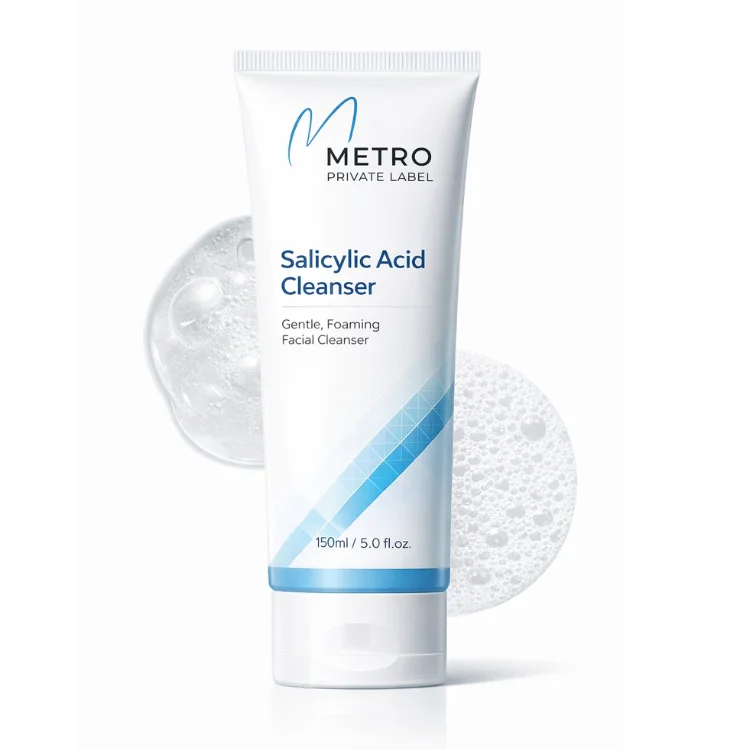
Salicylic Acid Cleanser
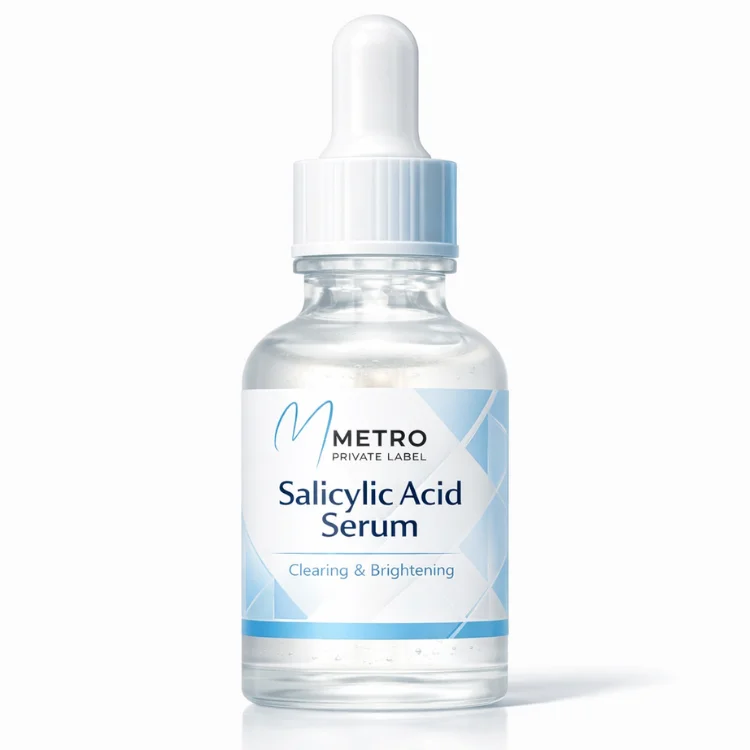
Salicylic Acid Serum
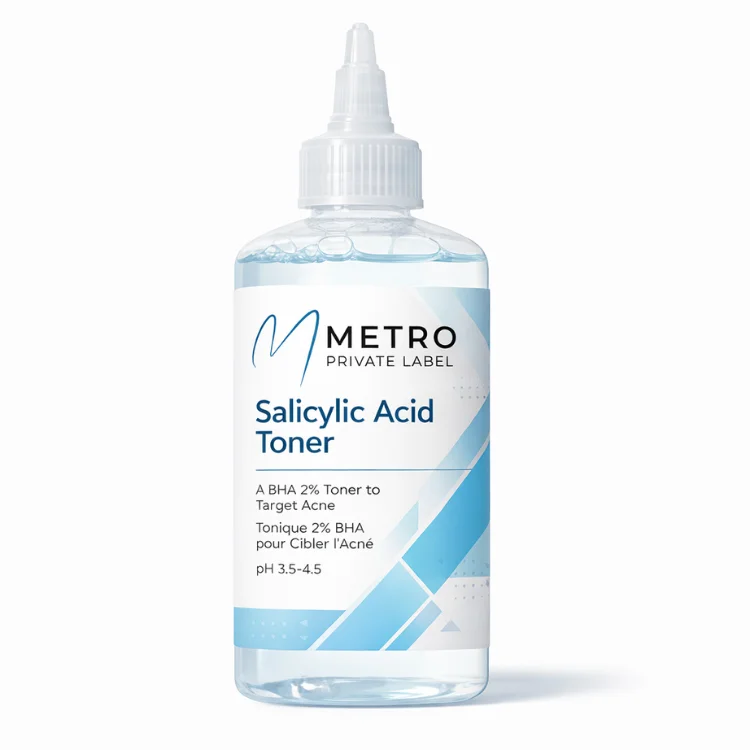
Salicylic Acid Toner / Liquid Exfoliant
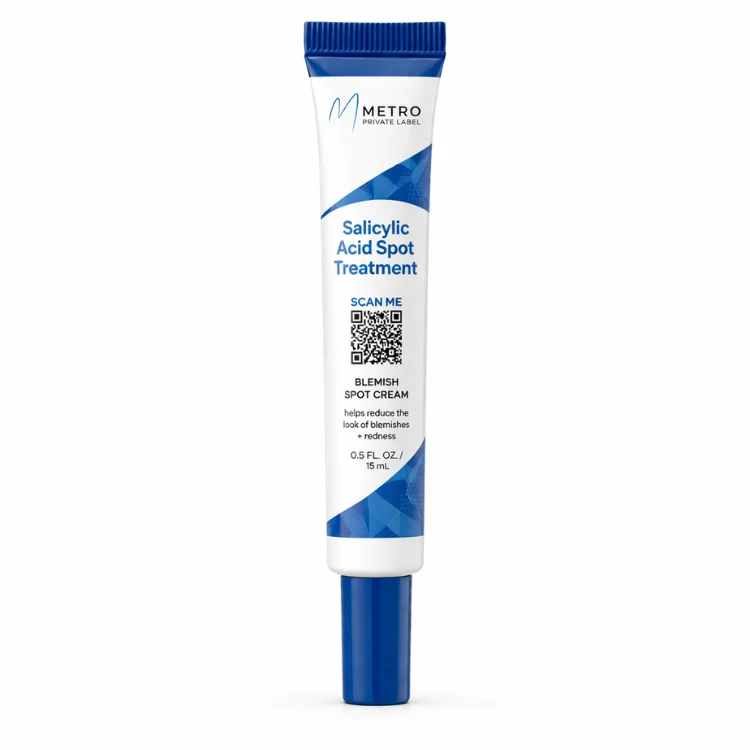
Salicylic Acid Spot Treatment
Build a Private Label Salicylic Acid Skincare Line That Actually Sells
At Metro Private Label, we understand that launching a salicylic acid skincare product isn’t just about adding BHA into a formula—it’s about creating something your customers trust, use consistently, and repurchase. In acne and oil-control skincare, performance and user experience go hand in hand. If a product feels too harsh, doesn’t show visible results, or doesn’t match your brand positioning, customers won’t come back—and without repeat purchase, your product won’t scale.
We’ve seen many salicylic acid products fail not because of the ingredient, but because of poor positioning, unbalanced formulations, or packaging that doesn’t match the target market. That’s why we help you define the right product direction from the beginning—whether it’s concentration strategy, texture, or packaging alignment—so what you launch is not only effective, but also commercially viable and compliant.
As your manufacturing partner, we focus on helping you build products that fit real sales environments. Whether you’re launching a fast-moving acne SKU for Amazon, developing a targeted solution for TikTok audiences, or creating a professional line for clinics, we help you structure the right product early on. From sampling and texture adjustment to packaging coordination and compliance support, we help you move faster, reduce risk, and scale with confidence.
💡 Our 4 Core Private Label Salicylic Acid Skincare Product Types
1️⃣ Salicylic Acid Cleanser
A daily-use product designed to remove excess oil and unclog pores without over-drying the skin. This is often the entry SKU for acne-focused lines and works especially well for e-commerce brands targeting oily and breakout-prone users. It’s easy to position, easy to scale, and drives consistent repeat purchase.
2️⃣ Salicylic Acid Serum
A high-performance treatment product, typically positioned around 0.5%–2% BHA. This is where brands create differentiation—combining salicylic acid with ingredients like niacinamide, zinc, or soothing agents to balance effectiveness and skin tolerance. Ideal as a hero SKU for Amazon and DTC brands.
3️⃣ Salicylic Acid Toner / Liquid Exfoliant
A pore-refining and blackhead-targeting product that fits naturally into modern skincare routines. Popularized by top-selling global brands, this format helps position your brand around “clarifying” and “smooth skin” benefits. It works well for both beginner users and routine-based skincare lines.
4️⃣ Salicylic Acid Spot Treatment
A targeted solution designed for fast-acting acne care. This type of product is highly marketable because it directly addresses visible skin concerns. It’s especially effective for impulse-driven channels like TikTok and retail, and often delivers strong conversion rates.
🎯 MOQ & Production Strategy (Built for Real Market Testing)
We understand that launching a new product always comes with one key question—how to test the market without taking unnecessary risk.
For serums, cleansers, and toners, our standard MOQ starts from 1,000 units per SKU. This allows us to maintain stable production quality, consistent filling, and reliable packaging—especially important for brands selling through Amazon, Shopify, or retail channels.
If you’re in an earlier stage or want to validate a new product idea, we also offer options using in-stock packaging, where MOQ can be reduced to around 500–800 units. This is ideal for testing new SKUs, launching quickly, or minimizing upfront investment.
Our goal isn’t just to meet a minimum order—it’s to help you enter the market with the right product, the right quantity, and a clear path to scale.

More Than Just a Private Label Salicylic Acid Skincare Manufacturer
At Metro Private Label, we don’t treat salicylic acid skincare as just another SKU you add to your catalog. For many brands, this category becomes a core driver of sales—especially in acne, oily skin, and pore-care segments. If the formula feels too harsh, the results are inconsistent, or the positioning doesn’t match the target audience, customers won’t repurchase—and without repeat purchase, the product won’t scale.
A successful salicylic acid product isn’t about making aggressive claims or pushing high percentages. It’s about creating a formula that works consistently, feels comfortable on the skin, and fits naturally into a daily routine. That’s what builds trust, drives reviews, and turns a simple product into a long-term revenue SKU.

✅ Formats That Already Work in the Market
We don’t build products based on assumptions—we focus on what is already proven to sell. By analyzing high-performing SKUs across Amazon, DTC brands, and clinical skincare channels, we concentrate on formats customers already understand and actively search for.
These typically include daily-use cleansers, targeted serums, clarifying toners, and fast-acting spot treatments. When a product format is familiar, it becomes easier to position, easier to market, and much faster to scale.
Our role is to help you start from that proven foundation—so you’re not guessing what might work, but building products that already match real demand.
✅ Production Models That Match How Brands Actually Launch
We understand that not every brand starts with large volumes—especially when testing a new acne or oil-control product line.
For most salicylic acid products like cleansers, serums, and toners, production typically starts from 1,000 units per SKU. This ensures stable filling, consistent quality, and proper packaging alignment—especially for e-commerce brands that rely on predictable supply.
If you’re testing a new product or launching quickly, we also offer in-stock packaging options, allowing smaller starting quantities around 500–800 units. This helps reduce upfront risk while keeping your product market-ready.
As your sales grow, we help you scale without needing to restart development—so your product stays consistent while your volume increases.
✅ Formulation Consistency That Supports Repeat Purchase
Salicylic acid skincare sits in a category where performance and tolerance both matter. If a product is too strong, customers stop using it. If it’s too weak, they don’t see results. Consistency is what keeps customers coming back.
We focus on balancing effectiveness with skin comfort, refining texture and absorption, and ensuring every batch performs the same. This includes stability testing, formula optimization, and compatibility between formula and packaging.
That consistency leads to better user experience, stronger reviews, and more reliable repeat sales.
✅ Execution & Compliance Support That Keeps You Moving
We don’t just develop and produce—we help you bring your product to market with fewer delays and fewer risks.
From INCI documentation and ingredient data to labeling guidance and packaging coordination, we streamline the process so you can focus on launching and selling. For brands targeting EU, UK, and international markets, we structure products to align with cosmetic compliance requirements while maintaining strong commercial positioning.
Our goal is simple: to help you launch a salicylic acid skincare line that is not only effective and market-ready, but also easy to produce, compliant to sell, and built to scale.
✨ Build a Private Label Salicylic Acid Skincare Line That Performs Beyond Expectations
When you work with Metro Private Label, you’re not just choosing a manufacturer—you’re working with a team that understands how salicylic acid skincare actually performs in the real market. In this category, success isn’t defined by how strong the formula sounds, but by how it feels on the skin, how consistent it is, and whether customers are willing to keep using it.
Salicylic acid products sit in a sensitive balance. If the formula is too aggressive, customers stop using it. If it’s too mild, they don’t see results. What really drives repeat purchase is a product that delivers visible improvement while still feeling comfortable for daily use. That’s exactly where we focus—helping you create products that people trust, use consistently, and come back to buy again.
Whether you’re launching a fast-moving acne serum, a daily cleanser, or building a full routine for oily and breakout-prone skin, we structure each project around how customers actually use these products. Details like texture, absorption, skin tolerance, and packaging experience directly affect how your product performs in the market. We help you get these right from the beginning—so your product is not just ready to launch, but ready to compete.
🧪 Formulation Built for Real Results
We don’t rely on generic BHA formulas. Every salicylic acid product we develop is built around balancing effectiveness and skin comfort. From concentration strategy to ingredient combinations like niacinamide, zinc, or soothing agents, we help you create formulas that deliver results without compromising user experience.
Our goal is simple: build products that don’t just sound effective—but actually perform in real-world use.
📦 Packaging & MOQ That Fit Real Launch Conditions
We understand that launching a new product comes with risk, especially for new SKUs.
For most salicylic acid products such as cleansers, serums, and toners, production typically starts from 1,000 units per SKU to ensure stable quality and consistent filling. If you’re testing a new product, we can also support in-stock packaging options, allowing smaller runs around 500–800 units.
From dropper bottles and airless pumps to retail-ready cartons, we help align packaging with your sales channel—whether it’s Amazon, Shopify, or retail—so your product arrives safely and looks consistent.
⚙️ A Clear and Efficient Production Process
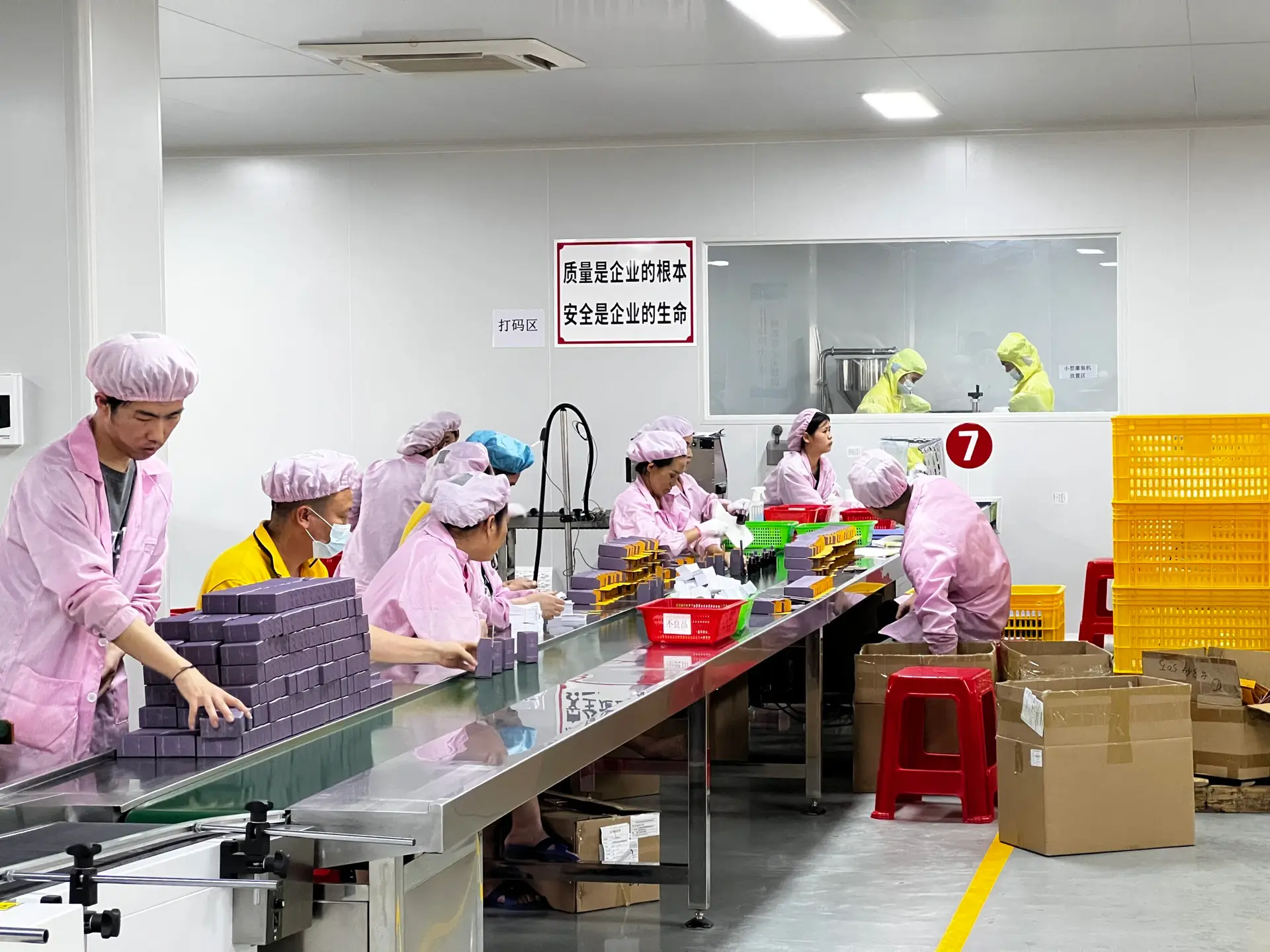
We keep the process straightforward and easy to follow. From concept and sampling to packaging confirmation and production scheduling, every step is clearly structured so you can plan your launch with confidence.
Whether you’re preparing for a product launch, restocking a best-seller, or expanding your product line, we help you move forward without unnecessary delays.
🌿 Built for Brands Ready to Launch and Scale
We don’t measure success by production alone—we measure it by how your product performs after launch. That’s why we focus on stable formulas, scalable production, and practical execution that supports long-term growth.
With Metro Private Label, your salicylic acid skincare line is designed to launch smoothly, deliver consistent results, and generate repeat purchase—so your business grows beyond the first order.

FAQs Salicylic Acid Skincare
For your convenience, we’ve gathered the most commonly asked questions about our Salicylic Acid Skincare . However, should you have any further queries, please don’t hesitate to reach out to us.
1. What types of salicylic acid skincare products can you manufacture?
We focus on product types that already perform well in the market, including cleansers, serums, toners (liquid exfoliants), and spot treatments. These are the most in-demand formats for acne, oily skin, and pore care. If you’re building a full product line, we can also help you structure a complete routine based on your target market.
2. Can you customize the formula for my brand positioning?
Yes, that’s a big part of what we do. We help you adjust salicylic acid concentration, texture, skin feel, and ingredient combinations based on your target audience. Whether you want a gentle daily-use formula or a stronger acne-focused treatment, we’ll guide you toward something that actually fits your market.
3. What’s your MOQ for salicylic acid skincare products?
Our standard MOQ starts from 1,000 units per SKU. If you’re in an early testing stage, we can also work with in-stock packaging to reduce the starting quantity to around 500–800 units. This gives you flexibility to validate your product before scaling.
4. How long does it take to go from sample to production?
Typically, sampling takes about 7–14 working days, including internal testing. Once everything is confirmed, production usually takes around 3–5 weeks. If you’re working with a tight timeline, we can help prioritize your project and move faster where possible.
5. Can you help ensure the product meets EU or US compliance requirements?
Yes. We support you with INCI lists, COA, MSDS, and labeling guidance based on your target market. While the final compliance responsibility stays with the brand, we help you prepare the right documentation and avoid common issues that could delay your launch.
6. How do you balance effectiveness and skin tolerance in salicylic acid formulas?
This is one of the most important parts of development. We don’t just focus on percentage—we focus on how the formula performs on the skin. By combining salicylic acid with soothing and balancing ingredients, we help you create products that are effective without being too harsh, which is key for repeat purchase.
7. Can you help with packaging and product positioning?
Yes, we support both. From bottle selection and label sizing to packaging compatibility, we help make sure your product fits your sales channel—whether it’s Amazon, Shopify, or retail. We also guide you on how packaging and formula should align with your brand positioning.
8. Do you offer both white label and custom formula options?
We offer both, depending on your needs. If you want to launch quickly, you can start with our ready formulas. If you’re building a more differentiated product, we can develop a custom formula with you. We’ll recommend the best approach based on your timeline and budget.
9. What kind of quality control and testing do you perform?
We carry out stability testing, compatibility testing, and batch consistency checks to make sure your product performs reliably. Our production follows standardized cosmetic manufacturing practices, so you can expect consistent quality from sampling to mass production.
10. Do you work with international clients and handle shipping?
Yes, most of our clients are overseas. We regularly work with brands in the US, EU, UK, Middle East, and other markets. We support documentation, coordinate shipping, and help you choose the most practical delivery method—so your products arrive safely and on time.
What I appreciated most was how clearly Metro Private Label guided us through the product setup. We came in with a general idea for an acne line, but they helped us refine the formula direction, packaging, and compliance requirements step by step. The process felt structured, and we were able to launch much faster than expected.
Emily Carter, Founderfrom United Kingdom
We’ve worked with other suppliers before, but Metro Private Label stands out in terms of speed and communication. They understood exactly what we needed for Amazon—from formulation to packaging and labeling. The samples were consistent, and production timelines were reliable, which is critical for our business.
Jason Miller, E-commerce Brand Operatorfrom United States
What impressed us most was their understanding of formulation logic. They didn’t just offer a standard product—they explained why certain ingredient combinations would work better for our target customers. This made the development process much more efficient and gave us confidence in the final product.
Sophie Laurent, Product Managerfrom France
We were looking for ready-to-sell products with stable supply, and Metro Private Label delivered exactly that. Pricing was clear, communication was smooth, and the quality has been consistent across batches. It made it much easier for us to test and scale new SKUs in our market.
Luca Bianchi, Distributorfrom Italy
As a clinic, we needed products that are both effective and safe for long-term use. Metro Private Label helped us build a simple but professional product range that fits our treatments. The formulas feel balanced, and our clients have responded well, especially in terms of repeat purchase.
Charlotte Evans, Clinic Ownerfrom Australia






Metro Private Label in Numbers
Happy Clients
0 +
Million-dollar Buyers
0 +
Formulation
0 +
Professional Staffs
0 +
Your Ultimate Guide to Salicylic Acid Skincare
If you’re planning to build a Salicylic Acid skincare line—whether it’s your first acne-focused SKU or an expansion into problem-solution skincare—you’re not just adding another ingredient to your catalog. You’re entering one of the most performance-driven and expectation-sensitive categories in the market. Salicylic Acid is widely recognized, highly searched, and directly associated with visible results. But that also means customers are less forgiving. If the product feels too harsh, too weak, or inconsistent in experience, they won’t continue using it. When developed correctly, however, Salicylic Acid products become part of a long-term routine, helping brands generate repeat purchases rather than one-time sales.
Over the past few years, we’ve seen Salicylic Acid skincare evolve from simple “acne treatment” positioning into a more refined category that combines effectiveness with daily usability. Today’s customers expect more than just results—they expect comfort, balance, and a product that fits seamlessly into their routine. At Metro Private Label, we’ve observed that the brands that succeed in this category are the ones that align formulation strength, skin feel, packaging logic, and pricing strategy from the very beginning. On the surface, Salicylic Acid products may look straightforward, but the difference between a product that scales and one that stalls often comes down to how well these details are executed behind the scenes.
This guide is built from our experience developing Salicylic Acid skincare products across different formats, markets, and sales channels. Instead of focusing only on ingredient theory, we want to share how these products actually perform in real commercial environments. Choosing the right format for your channel, balancing effectiveness with skin comfort, selecting packaging that can handle e-commerce logistics, planning production quantities that reduce risk, and preparing compliance early are all factors that influence long-term success. Our goal is to help you move beyond simply launching a product, and instead build a Salicylic Acid skincare line that is structured to perform, scale, and stay competitive over time.
Table of Contents
How to Choose the Right Salicylic Acid Product Type for Your Market
When I guide brands through building a salicylic acid skincare line, I don’t start by asking what ingredients they want to use—I start by asking how their customers actually buy, use, and evaluate products. Over time, I’ve realized that the biggest difference between a product that sells and one that struggles is not the formula itself, but whether the product type fits naturally into the customer’s decision-making process. Salicylic acid is already a well-known ingredient, which means customers come in with expectations. My role is to help you translate those expectations into the right format, so your product doesn’t just exist in the market, but fits into it in a way that feels intuitive and easy to adopt.
Start With the Format, Not the Formula
I’ve seen many brands make the same mistake at the beginning—they spend weeks discussing ingredient percentages and actives, but they haven’t decided whether they are launching a cleanser, a serum, or a targeted treatment. From my perspective, this approach often leads to confusion later in the process. The format is what defines how the product is used, how often it is applied, and what the customer expects to feel. A cleanser implies daily use and a lower barrier to entry, while a serum suggests targeted results and higher perceived value. When I help clients reframe their thinking around format first, the entire development process becomes more structured, because the formula, packaging, and claims all start aligning naturally with that decision.
Understanding the Role of Each Product Type
When I evaluate salicylic acid products that perform well in the market, I don’t just look at their ingredients—I look at how they function within a routine. A cleanser often acts as the introduction point, especially for customers who are just beginning to address acne or oily skin concerns. It feels approachable, low-risk, and easy to incorporate. A serum, on the other hand, carries a different psychological weight. Customers expect it to deliver visible improvement, which makes it a strong candidate for a hero product. Toners tend to support consistency and routine-building, while spot treatments are driven by urgency and quick results. I always explain to clients that these formats are not competing with each other—they are solving different moments in the customer journey. Choosing the wrong one at the start can create friction, even if the product itself is technically well-made.
Match the Product Type to Your Sales Channel
One of the most practical ways I approach this decision is by looking at where the product will actually be sold. When I work with e-commerce brands, especially those on Amazon or TikTok, I prioritize formats that are immediately understandable. Customers on these platforms make decisions quickly, so the product needs to communicate its purpose within seconds. A cleanser or serum tends to perform better because it is familiar and easy to position. When I work with DTC brands, I take a more layered approach, because these brands have the opportunity to educate and build a narrative. In that case, I often recommend thinking beyond a single product and considering how different formats can work together. For clinics, the decision becomes even more specific. The product must fit into a treatment or post-treatment routine, which means safety, consistency, and professional perception become more important than trend-driven appeal.
Choosing the Right Entry Product for Faster Traction
If a brand asks me where to start, I always bring the conversation back to traction. The first product you launch is not just a product—it is your entry point into the market. I’ve seen brands slow themselves down by choosing formats that are harder for customers to understand or adopt. On the other hand, when a brand starts with a format that aligns with existing demand, everything moves faster. A well-positioned cleanser can attract a broad audience, while a targeted serum can capture customers who are actively searching for a solution. The key is to reduce friction in the buying decision. Once that first product gains traction and starts generating feedback and repeat purchases, expanding into additional formats becomes a much more strategic and confident move.
Build Around Real Customer Behavior, Not Assumptions
At the core of everything I do in product planning is a focus on real behavior rather than assumptions. I don’t rely on what sounds innovative or different—I look at how customers are already searching, what they are comparing, and how they are using similar products. Salicylic acid skincare is not a new category, which means customers already have reference points in their mind. If your product type aligns with those expectations, you are working with the market instead of against it. When I see brands succeed, it’s usually because their product feels like a natural next step for the customer, not something that requires too much explanation. That alignment simplifies everything, from positioning to packaging to marketing. In the end, choosing the right product type is not just a technical decision—it’s a strategic one that directly influences how easily your product is accepted, how quickly it sells, and how well it scales over time.
Understanding Salicylic Acid Concentration (0.5% vs 2% and Beyond)
When I work with brands on salicylic acid skincare development, I always slow the conversation down at one critical point—concentration. It may seem like a simple technical choice, but in reality, it is one of the most strategic decisions you will make. The percentage you choose doesn’t just affect performance; it shapes your product positioning, your target customer, your risk level, and ultimately your repeat purchase rate. Over time, I’ve seen that brands who understand concentration from both a formulation and market perspective move much faster and make fewer costly mistakes.
Why “Higher Percentage = Stronger Product” Often Backfires
One of the most common assumptions I hear is that a higher percentage automatically creates a stronger and better product. From my experience, this mindset usually comes from looking at the product from a technical angle rather than a commercial one. While it’s true that higher concentrations can increase exfoliation strength, they also increase the likelihood of irritation, dryness, and sensitivity. What I’ve learned is that customers don’t evaluate products based on how strong they are on paper—they evaluate them based on how they feel over time. If a product causes discomfort, even if it is technically effective, customers will reduce usage or stop completely. This is where many brands lose repeat purchase without realizing it. I always guide clients to think beyond initial impact and focus on long-term usability, because that is what actually drives product success.
How 0.5% Supports Daily Use and Broader Market Acceptance
When I recommend a 0.5% concentration, I’m usually thinking about accessibility and consistency. This level works particularly well for products designed for daily use, such as cleansers or toners, where the goal is not to create an aggressive treatment but to maintain skin clarity over time. From a market perspective, this concentration allows you to reach a wider audience, including customers who are new to active ingredients or who have more sensitive skin. What I find especially valuable about this range is that it reduces the risk of negative experiences early on. Customers can incorporate the product into their routine without hesitation, which increases the likelihood of consistent use. And in skincare, consistency is what drives visible results. A product that is used every day at a moderate strength often outperforms a stronger product that is used inconsistently.
How 2% Creates a Clear “Treatment-Level” Positioning
When I move to a 2% concentration, the entire positioning of the product shifts. At this level, the product is no longer perceived as a gentle maintenance step—it becomes a targeted solution. This is where I see strong alignment with acne-focused serums, leave-on treatments, and spot solutions. Customers who choose these products are usually problem-aware and actively looking for results, which makes the conversion process more direct. However, this also raises expectations. At 2%, the formula must not only deliver results but also manage the side effects that come with increased activity. This is why I always emphasize the importance of formulation balance. Supporting ingredients like soothing agents and barrier-repair components are not optional at this level—they are essential. Without them, the product may achieve short-term results but fail to sustain long-term usage, which directly impacts reviews and brand trust.
Why Going Beyond 2% Is More About Positioning Than Performance
Occasionally, I encounter clients who want to push beyond 2% in order to create a sense of differentiation or advanced positioning. When this happens, I shift the conversation away from percentage and toward market reality. In many regions, regulatory frameworks already define safe and acceptable limits for salicylic acid, which means that going higher is not always practical. More importantly, from a consumer perspective, higher numbers do not necessarily translate into better perceived value. In fact, they can sometimes create hesitation, especially among customers who are concerned about irritation. What I’ve learned is that differentiation rarely comes from increasing concentration alone. It comes from how the product is experienced, how it is positioned, and how well it integrates into a routine. A well-designed 2% product with excellent texture, stability, and supporting ingredients will almost always outperform a higher-percentage product that lacks balance.
How I Balance Effectiveness, Tolerance, and Business Outcomes
When I help clients finalize a concentration, I don’t treat it as a standalone decision. I look at it in the context of the entire product strategy. I consider how often the product will be used, who the target customer is, what the expected price point is, and how the product will be positioned in the market. My goal is always to find the point where effectiveness and tolerance meet. This balance is what allows customers to see results while still feeling comfortable enough to continue using the product. From a business perspective, this is where repeat purchase happens. A product that delivers visible improvement and feels reliable becomes part of a customer’s routine, and that is what turns a single sale into long-term brand growth.
How to Build a Complete Acne-Focused Product Line (Not Just One SKU)
When I work with brands entering the acne skincare category, I rarely focus on a single product in isolation. Over time, I’ve realized that the brands that scale successfully are not the ones with the “best” individual SKU, but the ones that understand how to build a complete system around real skin concerns. Acne is not solved in one step, and customers don’t think in single products—they think in routines, progress, and consistency. This is why I always guide my clients to shift their mindset early. Instead of asking what one product to launch, I ask how the entire experience will look for the customer from the first use to long-term maintenance. That perspective changes everything, from formulation decisions to packaging strategy and even pricing structure.
Why a Single SKU Limits Growth from the Beginning
I’ve seen many brands start with a strong product idea, often a serum or targeted treatment, expecting it to carry the business. While this can generate initial traction, it usually reaches a ceiling very quickly. The reason is simple. When a customer only buys one product from you, their relationship with your brand remains shallow. They might see results, but they are still relying on other brands to complete their routine. From a business perspective, this means you are constantly acquiring new customers instead of deepening relationships with existing ones. I always explain that a single SKU can validate a concept, but it cannot build a stable brand. Without a broader structure, growth becomes unpredictable and heavily dependent on constant marketing effort.
Designing Around the Real Acne Journey, Not Just the Product
When I help clients build a product line, I start by mapping the customer journey rather than listing product types. Acne is not a one-moment problem—it evolves over time. There is the stage where the customer is trying to control breakouts, the stage where they are managing inflammation and sensitivity, and the stage where they are maintaining skin balance and preventing recurrence. If your product line only addresses one of these stages, you are only capturing part of the customer’s lifecycle. I focus on building a system that follows this progression, so your brand stays relevant at every step. This is what creates continuity, and continuity is what drives repeat purchase.
Building a System: Cleanser as Entry, Treatment as Core, Maintenance as Retention
In practice, I translate this journey into a clear structure that revolves around cleansing, treatment, and maintenance. The cleanser is where most customers begin because it feels simple and low-risk. It introduces the brand without overwhelming the user. The treatment product becomes the core of the system, where customers expect visible improvement and real results. This is often where your strongest differentiation sits. The maintenance product is what keeps the routine sustainable, helping the skin recover, rebalance, and stay stable over time. What I’ve learned is that these roles are not interchangeable. Each one serves a specific purpose, and when they are designed to work together, they create a system that feels complete rather than fragmented.
How Product Systems Naturally Increase Order Value and Customer Commitment
One of the most noticeable changes I see when brands adopt this system approach is how naturally their average order value increases. Instead of convincing customers to buy more, you are offering them a complete solution that makes sense. When a customer understands how each product contributes to their routine, purchasing multiple items feels logical rather than forced. More importantly, this approach increases commitment. A customer using a full routine is far more invested in the outcome than someone using a single product. That level of engagement changes how they evaluate the brand, how they perceive results, and how likely they are to return.
Creating Retention Through Routine and Habit Formation
From my perspective, retention in acne skincare is not built through claims—it is built through habit. If a product is used once or occasionally, it will never become part of the customer’s life. When I design a product system, I think about how each step fits into a daily or weekly routine. The goal is to make the process feel natural and sustainable, not complicated or overwhelming. When customers begin to rely on your products as part of their everyday skincare, the relationship shifts. They are no longer testing your brand; they are depending on it. This is where repeat purchase becomes consistent, and where long-term brand value is created.
Strengthening Brand Positioning Through a Cohesive Product Structure
Another effect I consistently observe is how a complete product line strengthens brand perception. A single product can feel experimental, but a structured system communicates intention and expertise. When customers see that your products are designed to work together, it signals that the brand understands the problem at a deeper level. This builds trust before the product is even used. I always pay attention to how the product line looks as a whole, because visual and structural consistency plays a role in how customers interpret quality and professionalism.
Scaling Strategically from One Product to a Full System
I don’t believe in launching everything at once, but I do believe in planning the system from the beginning. When I work with early-stage brands, I help them define a clear expansion path. The first product should not be seen as a standalone item, but as the foundation of a larger structure. Once it gains traction, the next products are introduced in a way that strengthens the system rather than complicates it. This approach allows the brand to grow step by step while maintaining clarity and consistency. It also reduces the risk of launching products that don’t align with the overall direction.
Building Around Real Customer Behavior Instead of Internal Assumptions
At the core of everything I do is a focus on real customer behavior. I don’t design product lines based on what sounds innovative or interesting internally. I look at how customers actually shop, how they build routines, and what keeps them coming back. Acne skincare is a category driven by ongoing need, which means the opportunity is not in one-time sales but in long-term engagement. When the product line reflects this reality, everything becomes more effective. The messaging becomes clearer, the purchasing decision becomes easier, and the brand becomes something customers return to naturally.
What Makes a Salicylic Acid Product Actually Sell on Amazon and TikTok
When I work closely with e-commerce brands, especially those operating on Amazon and TikTok, I’ve come to understand that product success is rarely determined by how “good” a formula is in isolation. What really matters is how well the product fits into the way customers think, search, and make decisions on these platforms. Salicylic acid is already a familiar ingredient to many consumers, which means the competition is not about introducing something new—it’s about presenting something clearer, more relevant, and easier to trust. I always guide my clients to look beyond formulation and focus on the full picture, because what drives sales is not just performance, but how that performance is communicated and experienced from the very first interaction.
Why Product Clarity Matters More Than Technical Complexity
One of the most important lessons I’ve learned is that clarity consistently outperforms complexity. When customers scroll through Amazon listings or watch short-form content on TikTok, they are not analyzing ingredient lists or formulation logic—they are trying to quickly understand whether a product is relevant to their problem. If that connection is not immediate, the product is skipped. I often see brands overcomplicate their positioning, trying to communicate multiple benefits or advanced ingredient combinations at once. In reality, this creates confusion. What I focus on instead is helping the product communicate one clear purpose. When the customer instantly understands what the product does and why it matters to them, the barrier to purchase drops significantly.
Defining a Clear Problem-Solution Relationship
Whenever I evaluate whether a product is likely to sell, I always ask one question: does this product solve a clearly defined problem that the customer already recognizes? The most successful salicylic acid products I’ve seen are not built around vague claims—they are built around specific, relatable concerns such as breakouts, clogged pores, or excess oil. I guide my clients to anchor their product around a single core problem and build everything else around that. This includes the product name, the positioning, and even the texture. When the problem-solution relationship is strong, the product becomes easier to explain, easier to market, and ultimately easier to convert.
How Platform Behavior Shapes Product Strategy
From my experience, one of the biggest differences between successful and unsuccessful brands is how well they adapt their product strategy to the platform they are selling on. Amazon is driven by intent-based search, which means customers arrive with a specific need and compare options quickly. In this environment, the product must align with existing expectations, both in format and in how it is described. TikTok, on the other hand, is driven by discovery and visual engagement. Customers are not searching in the same way—they are reacting to what they see and how quickly they can understand it. This is why I always emphasize that product strategy cannot be separated from platform behavior. A product that performs well on Amazon may not automatically translate to TikTok unless it is adapted to fit how users interact with content there.
Aligning Formula with User Experience Expectations
While I don’t start with the formula, I never ignore it. In fact, I see the formula as something that must support the expectations created by the positioning. If a product is marketed as a gentle daily solution, the texture and skin feel must reflect that. If it is positioned as a targeted treatment, the experience must feel effective without becoming uncomfortable. I always pay close attention to how the product feels during and after use, because this is what determines whether customers will continue using it. A mismatch between expectation and experience is one of the fastest ways to generate negative reviews. When I help clients refine their formulas, I focus on creating a balance where the product delivers results while still feeling consistent and reliable in everyday use.
Packaging as a Conversion Tool, Not Just a Visual Element
Packaging is often treated as a branding decision, but from my perspective, it is also a functional part of conversion. On Amazon, the packaging must communicate trust and clarity even in a small thumbnail image. It needs to signal what the product is, who it is for, and why it is relevant. At the same time, it must hold up during shipping, because damaged packaging directly impacts reviews and customer satisfaction. On TikTok, packaging plays a slightly different role. It needs to be visually appealing and easy to showcase, because the product is often introduced through demonstration. I always guide clients to think about packaging not just as something that looks good, but as something that supports how the product is presented, delivered, and perceived across different touchpoints.
Messaging That Reflects How Customers Actually Think
One of the most common mistakes I see is brands communicating from their own perspective instead of the customer’s. Internally, it’s easy to focus on ingredients, innovation, or formulation details. However, customers rarely think in those terms. They are thinking about their skin, their concerns, and their desired outcome. When I help shape messaging, I focus on translating the product into language that feels natural and intuitive. The goal is to reduce the effort required to understand the product. When the messaging aligns with how customers already think and search, the product becomes easier to trust and easier to choose.
Creating Consistency Across Every Customer Touchpoint
What I’ve consistently observed is that successful products feel cohesive from the first impression to the final use. The product description, the packaging, the texture, and the results all reinforce the same idea. When one element feels out of place, it creates hesitation. I always approach product development as a system where every part needs to align. This consistency builds confidence, and confidence is what drives conversion. Customers may not consciously analyze every detail, but they notice when something feels right or wrong.
Designing for Repeat Purchase and Long-Term Growth
In the end, I don’t measure success by how well a product sells once, but by how well it sells repeatedly. A product that converts but fails to retain customers will struggle to scale. This is why I always look beyond the initial purchase and consider the long-term experience. The product must be effective enough to deliver visible improvement, but also comfortable enough to be used consistently. When customers feel that balance, they are more likely to continue using the product and integrate it into their routine. That is when repeat purchase happens, and that is when a product truly becomes a foundation for brand growth.
Key Ingredient Combinations That Improve Performance and User Experience
When I develop salicylic acid skincare products, I never look at salicylic acid as the “main character” that can perform on its own. In reality, what determines whether a product succeeds is not just how effective the active ingredient is, but how intelligently the entire formula is built around it. Salicylic acid is powerful, but it is also unforgiving if not balanced properly. I’ve seen products deliver strong short-term results but fail to retain customers because the overall experience was too harsh or inconsistent. That’s why I always focus on building ingredient systems, not just adding actives. My goal is to create a formula that feels effective, comfortable, and reliable every time it’s used, because that is what drives repeat purchase and long-term brand trust.
Why Salicylic Acid Alone Is Not Enough for a Successful Product
From my experience, relying too heavily on salicylic acid as a single active is one of the most common formulation mistakes. While it is excellent at penetrating pores and breaking down congestion, it also has the potential to disrupt the skin barrier if not supported properly. When I evaluate underperforming products in the market, I often find that the issue is not the ingredient itself, but the lack of balance in the formula. A product that feels too drying, too sharp, or too aggressive creates hesitation in continued use. Customers may see initial improvement, but if the experience becomes uncomfortable, they will reduce usage or stop altogether. This is why I always treat salicylic acid as part of a broader system, where supporting ingredients play an equally important role in shaping the overall experience.
How I Use Niacinamide to Create Long-Term Skin Balance
When I build a salicylic acid formula intended for daily or repeated use, niacinamide is often one of the first ingredients I consider. What I value most about this combination is how it balances immediate and long-term performance. Salicylic acid works to clear pores and reduce buildup, while niacinamide helps regulate oil production and improve overall skin clarity. From a user experience perspective, this creates a smoother transition between treatment and maintenance. Instead of the product feeling like a harsh correction step, it becomes something that supports the skin over time. I’ve found that this combination is particularly effective for brands targeting a broad audience, because it reduces the risk of irritation while still delivering visible improvements. This makes the product easier to adopt and more likely to be used consistently.
How Zinc Strengthens Both Function and Market Positioning
When I want to enhance the acne-focused positioning of a product, I often integrate zinc into the formulation. Zinc works as a supportive component that helps manage oil levels and reduce the appearance of inflammation, but its value goes beyond just function. From a market perspective, zinc is an ingredient that customers already associate with acne care, which makes the product easier to understand and trust. I’ve seen that when zinc is included in the formula, it not only improves the skin response but also strengthens the product’s perceived credibility. This is especially important in e-commerce environments, where customers make decisions quickly and rely on familiar signals to guide their choices.
Why Soothing Ingredients Are Essential, Not Optional
One of the most important lessons I’ve learned is that soothing ingredients are not just a “nice addition”—they are essential for making salicylic acid products viable for long-term use. Without this layer of support, even a well-formulated product can feel too aggressive over time. When I design a formula, I pay close attention to how the skin feels after application, not just during the active phase. If the skin feels tight, dry, or reactive, it creates resistance to continued use. By incorporating soothing and calming components, I help create a more balanced experience where the product feels supportive rather than disruptive. This directly impacts how often the product is used, and frequency of use is one of the biggest factors in whether customers see results and stay loyal to the brand.
Balancing Oil Control, Exfoliation, and Skin Barrier Support
What I always aim to achieve in a salicylic acid formula is a balance between three key functions: clearing pores, controlling oil, and maintaining the skin barrier. If any one of these elements is overemphasized, the product becomes less effective in the long run. Too much focus on exfoliation can lead to irritation, while too much emphasis on gentleness can reduce visible results. I approach formulation as a balancing process, where each component supports the others. This is where ingredient combinations become critical. When the formula is balanced correctly, the product feels stable and predictable, which builds trust with the user. Customers begin to rely on it, not just for occasional use, but as part of their regular routine.
Designing for Real User Experience, Not Just Technical Performance
One of the biggest differences between a technically good formula and a commercially successful one is how it feels in real use. I always ask myself how the product will be perceived after a week, a month, or even longer. Will the customer feel comfortable continuing to use it, or will they start to hesitate? This is where ingredient synergy becomes more important than individual performance. A well-balanced combination creates a smoother, more refined experience that feels consistent over time. When the product aligns with user expectations, it becomes easier to integrate into daily routines, which is essential for building repeat purchase behavior.
Turning Ingredient Strategy into Long-Term Brand Value
At the end of the day, I don’t see ingredient combinations as just a formulation detail—I see them as part of a broader brand strategy. A product that feels well-balanced and thoughtfully designed communicates professionalism and reliability. Customers may not understand every ingredient, but they can feel when a product works in a way that makes sense. That feeling is what builds trust. When I help brands develop salicylic acid products, my focus is always on creating something that performs consistently, feels comfortable, and fits naturally into the customer’s life. This is what transforms a product from a one-time purchase into a long-term solution, and ultimately, that is what drives sustainable growth.
How to Balance Acne Effectiveness with Skin Comfort
When I develop acne-focused skincare, I don’t treat effectiveness and comfort as two separate goals—I treat them as a single system that must work together. Over time, I’ve seen that most products fail not because they lack active ingredients, but because they fail to balance performance with usability. Acne is a long-term condition, and the products designed to address it must be used consistently to deliver results. If the formula feels too aggressive, customers hesitate and eventually stop using it. If it feels too mild, they lose confidence because they don’t see visible improvement. My role is to guide that balance carefully, so the product becomes something customers can rely on daily without second-guessing the experience.
Why Over-Aggressive Formulas Create Short-Term Results but Long-Term Failure
When I analyze products that generate strong initial results but poor retention, I often find that they rely too heavily on aggressive performance. These formulas may clear pores quickly or reduce breakouts in the early stages, which creates a strong first impression. However, as customers continue using the product, they begin to experience dryness, tightness, or sensitivity. This creates a psychological barrier. Even if the product is technically working, the discomfort introduces doubt. I’ve seen many customers reduce frequency or abandon the product entirely, not because it failed to deliver results, but because it didn’t feel sustainable. This is why I never define success based on short-term improvement alone. I look at how the product performs after repeated use, because that is where real brand value is either built or lost.
Why Overly Gentle Products Struggle to Build Trust
On the opposite side, I’ve worked with brands that intentionally avoid any risk of irritation by making their formulas extremely mild. While this approach creates a comfortable user experience, it often leads to another issue—lack of visible results. Customers using acne products are usually problem-aware and results-driven. They expect to see some form of improvement, even if it is gradual. When a product feels pleasant but does not create noticeable change, it leads to uncertainty. Customers begin to question whether the product is effective, and this uncertainty weakens trust. In my experience, comfort alone cannot sustain a product in this category. There must be a clear sense that the product is actively working, even if the experience is gentle.
Understanding the Real Usage Behavior Behind Acne Skincare
One of the most important perspectives I bring into formulation is how customers actually use acne products in real life. They are not following perfect routines, and they are often combining multiple products. Some days they may apply more, other days less. This variability means that the product must be stable and forgiving. If a formula is too sensitive to frequency or layering, it increases the risk of irritation. I always design with this reality in mind. The product needs to perform well not only under ideal conditions, but also under inconsistent usage patterns. This is what makes it adaptable and reliable in everyday life.
Building Controlled Effectiveness Through Smart Formulation
When I focus on effectiveness, I don’t aim for maximum strength—I aim for controlled performance. Salicylic acid is inherently powerful, but its impact depends on how it is integrated into the formula. I pay close attention to how quickly it acts, how it interacts with other ingredients, and how it affects the skin over repeated use. Instead of pushing the formula to its limits, I refine it to deliver steady, predictable results. This creates a more stable experience where customers can see improvement without feeling overwhelmed. In my experience, this type of controlled effectiveness is far more valuable than aggressive performance that cannot be maintained.
Enhancing Comfort Without Diluting Performance
At the same time, I approach comfort as an active design element rather than a passive outcome. Comfort is not just about reducing irritation—it is about creating a sense of ease and reliability. I refine the texture, absorption, and after-feel so that the product integrates smoothly into the user’s routine. When a product feels balanced, customers don’t have to adjust their behavior to accommodate it. They can simply use it as part of their daily routine without hesitation. This is what allows the active ingredients to work consistently over time.
Finding the Middle Ground That Supports Consistency
The balance I aim for is not a compromise—it is a deliberate position where effectiveness and comfort reinforce each other. When a product is effective enough to show visible improvement and comfortable enough to be used regularly, it naturally encourages consistency. And consistency is what drives real results in acne care. I always remind clients that the best formula is not the one that delivers the fastest result, but the one that customers are willing to use every day without interruption.
Designing for Repeat Purchase and Long-Term Trust
Ultimately, everything I do in this process is tied to repeat purchase. A product that cannot be used consistently will never generate stable demand. When customers feel that a product works and feels right at the same time, they begin to trust it. That trust leads to continued use, positive feedback, and long-term loyalty. I don’t measure success by how impressive a formula looks on paper, but by how well it performs in the hands of real users over time. When the balance between effectiveness and comfort is achieved, the product becomes more than just a treatment—it becomes a dependable part of the customer’s routine, and that is what drives sustainable growth.
Packaging Choices That Fit Different Sales Channels
When I help brands develop salicylic acid skincare products, I treat packaging as a core part of the product strategy rather than a final visual layer. Over time, I’ve seen that packaging decisions directly influence logistics efficiency, user experience, brand perception, and even the type of reviews a product receives. A well-designed formula can still fail in the market if the packaging does not support how the product is sold and used in real conditions. That’s why I always approach packaging by starting from the sales channel first, then working backward into structure, material, and design. The goal is not just to make something look good, but to ensure it performs reliably from factory to customer and throughout daily use.
Why Packaging Is a Functional Decision Before It Is a Visual One
One of the most common misunderstandings I encounter is treating packaging primarily as a branding element. While visual identity matters, I always remind my clients that packaging is a functional system that interacts with the product at every stage. It affects how the formula is protected, how the product is dispensed, how stable it remains over time, and how it is perceived when first opened. I often evaluate packaging by asking how it will behave during transport, how it will feel in the customer’s hand, and whether it supports the product’s intended positioning. If any of these elements are misaligned, the packaging becomes a source of friction rather than a support.
Designing for E-commerce: Protecting the Product and the Review Score
When I work with e-commerce brands, my first priority is always reliability during shipping. These products are handled multiple times, exposed to pressure, and often travel long distances. I’ve seen cases where a single weak point in the packaging design leads to leakage or breakage, which immediately results in negative reviews. In e-commerce, a damaged product is not just a logistics issue—it is a direct hit to conversion rate and ranking. This is why I focus heavily on secure closures, appropriate material strength, and packaging structures that minimize risk. At the same time, I consider how the packaging appears in listing images, because the first impression still needs to communicate clarity and trust. The balance I aim for is a package that is both visually clean and physically dependable, so it performs consistently from warehouse to customer.
Adapting Packaging for Clinic and Professional Use Environments
When I shift to clinic and aesthetic business clients, the priorities change in a very noticeable way. In these environments, packaging is not competing for attention—it is reinforcing credibility. I always guide clients toward designs that feel controlled, minimal, and professional, because the product becomes part of a treatment experience rather than a retail display. The way the packaging opens, the precision of dispensing, and the overall tactile experience all contribute to how the product is perceived by both practitioners and patients. I often think about how the product will be presented during consultation or after a procedure, because that context shapes customer trust. In these cases, packaging is not about standing out, but about fitting seamlessly into a professional setting.
Building Packaging That Supports DTC Brand Identity Without Compromising Use
For direct-to-consumer brands, I find that packaging must carry a dual responsibility. It needs to express the brand’s identity clearly, but it must also function smoothly in everyday use. I’ve seen brands lean too heavily toward aesthetics, creating packaging that looks distinctive but introduces practical issues such as difficult dispensing or poor durability. From my perspective, this creates a disconnect between expectation and experience. When I guide DTC clients, I focus on creating packaging that feels cohesive with the brand while still being intuitive and reliable. The customer should not have to think about how to use the product. It should feel natural from the first interaction, reinforcing both the brand image and the product’s usability.
Matching Packaging Structure to Formula Behavior and Stability
Another layer I always consider is how the packaging interacts with the formula itself. Salicylic acid products can vary widely in viscosity, sensitivity to air exposure, and application method. If the packaging does not align with these characteristics, it creates inconsistencies in performance. I pay close attention to how the product is dispensed, whether the packaging protects the formula from degradation, and how easily the user can control application. These details may seem subtle, but they directly affect how the product is experienced over time. A well-matched packaging system ensures that the formula performs as intended from the first use to the last.
How Packaging Directly Influences Customer Feedback and Perceived Quality
In e-commerce and retail environments, customer feedback is heavily influenced by packaging performance. I’ve observed that issues like leakage, breakage, or even minor inconveniences in use often lead to negative reviews, even when the formula itself is effective. On the other hand, packaging that feels solid, well-designed, and easy to use enhances the perceived value of the product. Customers may not consciously analyze these details, but they respond to how the product feels in practice. I always treat packaging as part of the customer experience rather than a separate component, because it plays a direct role in shaping satisfaction and trust.
Planning Packaging with Scalability and Cost Structure in Mind
When I help brands select packaging, I also look beyond the initial launch and consider how it will scale. Some packaging options work well for small production runs but become inefficient or costly at higher volumes. I guide clients to choose solutions that can support both early-stage testing and long-term growth without requiring major adjustments. This includes considering supplier stability, production lead times, and compatibility with automated filling processes. By planning ahead, I help brands avoid disruptions as they expand, ensuring that their packaging remains consistent and reliable as volume increases.
Aligning Packaging Decisions with Real Sales Environments
At the center of my packaging strategy is a simple but critical principle. Packaging must reflect the reality of where and how the product is sold. An e-commerce product needs to survive logistics and convert visually in listings. A clinic product needs to reinforce professionalism and trust. A DTC product needs to balance identity with usability. When these factors are aligned, packaging becomes a strength that supports both sales and customer experience. When they are not, packaging becomes a hidden risk that undermines even the best product. This is why I always approach packaging as a strategic decision that connects directly to performance, perception, and long-term growth.
Compliance Basics for EU, US, and International Markets
When I work with brands preparing to launch salicylic acid skincare products, I always treat compliance as a core part of the product strategy rather than a separate technical step. Over time, I’ve seen that compliance is often underestimated at the beginning, simply because it is not directly visible to the customer. However, it becomes critically important the moment a product is ready to enter the market. I’ve worked on projects where everything was ready—formula, packaging, even marketing—yet the launch was delayed because of missing documentation or incorrect labeling. These situations are avoidable, but only if compliance is considered early and handled with structure. My goal is to make compliance predictable and manageable, so you can move forward with confidence instead of reacting to unexpected issues.
Why Compliance Often Becomes a Hidden Bottleneck
From my experience, compliance rarely feels urgent until it becomes a problem. Many brands prioritize speed in development and focus on getting samples and packaging finalized, assuming that regulatory details can be handled later. What I’ve learned is that this approach creates risk. Compliance is not something that can always be adjusted quickly, especially when it involves ingredient restrictions, labeling requirements, or documentation approvals. I’ve seen cases where a small oversight—such as an incorrect ingredient name or missing document—caused weeks of delay. This is why I always position compliance as part of the planning phase, not the finishing phase. When it is built into the process early, it becomes a smooth pathway rather than an obstacle.
How I Approach Ingredient Compliance and INCI Accuracy
One of the first areas I focus on is ingredient compliance, particularly how ingredients are named and presented. Salicylic acid itself is widely accepted, but the way it is used and combined with other ingredients must align with regulatory expectations. I pay close attention to INCI naming, ingredient order, and concentration limits, because these details are not flexible once the product reaches the market. From my perspective, correct labeling is not just about meeting regulations—it is also about building trust. When customers, platforms, or regulators review a product, the ingredient list is one of the first things they evaluate. A clear and accurate INCI list signals professionalism and reliability, while inconsistencies create doubt and potential rejection.
Building a Complete Documentation System Before You Need It
Another area where I see brands struggle is documentation. Many clients only start preparing documents when they are requested by a platform or distributor, which creates unnecessary pressure and delays. I always guide brands to build a complete documentation system early in the process. This typically includes technical documents such as safety data, quality verification, and product specifications. While these documents may not seem immediately relevant during development, they become essential the moment you want to sell internationally or scale your business. Having them ready in advance allows you to respond quickly to opportunities instead of slowing down your launch timeline.
Understanding the Key Differences Between EU and US Compliance Logic
When working across different markets, I find that one of the biggest challenges for brands is understanding how regulatory expectations differ. The EU market operates with a more structured and documentation-heavy system, where safety assessments and formal registration processes are essential. The US market, on the other hand, focuses more on labeling accuracy and product responsibility, with different expectations around compliance management. I don’t expect brands to navigate these differences on their own. Instead, I help them understand how their target market influences the product setup. This includes how ingredients are positioned, how labels are designed, and what level of documentation is required. By aligning these elements early, the product becomes easier to adapt across markets without needing major changes later.
Avoiding Common Mistakes That Delay Market Entry
Over time, I’ve identified patterns in the types of compliance issues that cause delays. These are often not complex technical problems, but simple inconsistencies that could have been avoided. Incorrect INCI naming, missing mandatory label information, or packaging that does not match regulatory requirements are among the most common issues I encounter. While each of these may seem minor individually, they can create significant disruptions when combined. I always approach compliance with attention to detail, because precision at this stage prevents much larger problems later. By addressing these elements early, I help brands maintain momentum and avoid unnecessary setbacks.
Integrating Compliance Into Product Development Instead of Adding It Later
The most effective approach I’ve found is to integrate compliance directly into product development. This means considering regulatory requirements when selecting ingredients, defining claims, and designing packaging. When compliance is treated as part of the development process, it becomes a natural extension of the workflow rather than an additional burden. This also allows for better decision-making, because every choice is made with both performance and regulatory alignment in mind. I’ve seen that brands who adopt this approach move faster and with greater confidence, because they are not constantly adjusting or correcting their products after the fact.
How Compliance Supports Long-Term Brand Growth and Stability
At a deeper level, I see compliance as a foundation for long-term growth rather than a limitation. A product that is properly aligned with regulatory expectations is easier to scale, easier to distribute, and easier to trust. When compliance is handled correctly, it reduces risk and creates a stable platform for expansion. From my perspective, this stability is what allows a brand to focus on growth instead of constantly managing problems. By guiding brands through ingredient labeling, documentation, and market-specific requirements, I help them build products that are not only ready to launch, but ready to perform consistently across different markets.
How to Launch Faster Without Compromising Product Quality
When I work with e-commerce brands, I quickly realize that speed is not just a competitive advantage—it is often the deciding factor between capturing demand and missing it entirely. In fast-moving channels like Amazon and TikTok, timing directly affects visibility, ranking, and revenue. At the same time, I’ve also seen how rushing the wrong way can damage a product before it even has a chance to succeed. A formula that is not stable, packaging that fails during shipping, or incomplete compliance can all lead to negative reviews and long-term setbacks. Because of this, I never approach speed as a matter of cutting steps. I approach it as a matter of structuring the process so that every step moves efficiently without creating risk. The goal is not just to launch quickly, but to launch with confidence and stability.
Why Most “Fast Launch” Strategies Actually Slow You Down
One of the biggest mistakes I see is brands trying to accelerate by skipping critical steps or making decisions without enough clarity. At first, this feels fast, but it almost always leads to rework. I’ve worked with projects where packaging was finalized before the formula behavior was fully understood, or where production was scheduled before compliance was confirmed. These decisions create friction later, forcing the team to go back and adjust things that should have been aligned from the beginning. What I’ve learned is that speed does not come from doing less—it comes from doing things in the right order with clear direction. When each step is connected and purposeful, the process becomes smoother and naturally faster because there are fewer interruptions.
Starting from Ready-to-Adapt Formulas Instead of Building from Zero
When time is a priority, I almost always recommend starting from a tested and ready-to-adapt formula rather than developing everything from scratch. Over time, I’ve built and worked with formulations that already meet stability, safety, and performance expectations. This allows me to focus on refining the product instead of solving fundamental formulation challenges. I don’t see this as limiting innovation. Instead, I see it as creating a reliable starting point that reduces uncertainty. By adjusting texture, active combinations, or positioning within an already stable framework, I can help brands reach a high-quality result much faster than starting from zero. This approach is especially effective for e-commerce brands that need to move quickly while still maintaining credibility.
Structuring Sampling to Eliminate Delays and Uncertainty
Sampling is one of the stages where I often see timelines expand unnecessarily. When feedback is vague or goals are unclear, sampling can become a cycle of endless adjustments. I always approach this stage with structure. Before creating samples, I define exactly what we are evaluating, whether it is texture, absorption, performance, or packaging compatibility. Each round of sampling is designed to answer specific questions, so decisions can be made quickly and confidently. This reduces back-and-forth and helps us move forward without hesitation. From my experience, a structured sampling process is one of the most effective ways to maintain speed without sacrificing quality.
Choosing Packaging That Supports Speed Without Limiting Growth
Packaging decisions have a significant impact on timeline, and I always evaluate them carefully in the context of the launch strategy. Custom packaging can add complexity through longer lead times, higher minimum quantities, and additional coordination. When speed is critical, I often guide clients toward in-stock or readily available packaging solutions that can be implemented quickly. However, I never treat this as a temporary compromise. I select options that still align with the brand’s positioning and can scale as the business grows. This allows the product to enter the market faster while maintaining a consistent and professional appearance.
Running Development, Packaging, and Compliance in Parallel
One of the key ways I accelerate projects is by overlapping processes instead of handling them one after another. While the formula is being refined, I begin aligning packaging options and reviewing compliance requirements. This parallel approach reduces idle time and keeps momentum throughout the project. However, this requires careful coordination, because each decision must support the others. I make sure that formulation choices align with packaging compatibility and regulatory expectations, so we avoid conflicts later. When done correctly, this approach allows the project to move forward continuously without unnecessary pauses.
Protecting Product Quality While Increasing Speed
Even when speed is a priority, I never compromise on the elements that define product quality. Stability, consistency, and user experience are non-negotiable, because they directly impact how the product performs after launch. I always think beyond the first impression and consider how the product will behave over time. Will the texture remain consistent? Will the packaging protect the formula? Will the user experience match the expectations created by the marketing? These are the questions I prioritize, because a fast launch only creates value if the product can sustain positive feedback and repeat use.
Designing a Process That Supports Repeatable Launch Success
What I aim to build is not just a fast launch, but a repeatable system. When the development process is structured and efficient, it becomes easier to launch additional products without starting from zero each time. This creates momentum for the brand, allowing it to expand its product line more confidently. By combining ready-to-adapt formulations, structured sampling, flexible packaging, and coordinated execution, I help create a workflow that supports both speed and consistency. Over time, this becomes a competitive advantage, because the brand is able to respond quickly to market opportunities without compromising the quality that drives long-term success.
From First Order to Scaling: What to Plan Early
When I work with brands at the very beginning of their journey, I always make one thing clear: the first order is not the real test—scaling is. Launching a product is exciting, but what truly defines whether a brand succeeds is how well that product performs after it hits the market and how smoothly the business can respond to demand. I’ve seen brands with strong first launches struggle simply because they didn’t prepare for what comes next. They didn’t think about reordering timelines, supply stability, or how their product line would evolve. From my perspective, the smartest approach is to treat the first order as the foundation of a long-term system, not a one-time project. Every decision made at this stage should support repeatability, scalability, and consistency.
Building a Product That Can Be Reproduced Without Variation
One of the most overlooked aspects of scaling is consistency. I always ask myself a simple question when developing a product: can this be reproduced exactly the same way six months from now, at a larger volume, under slightly different conditions? If the answer is unclear, that’s where problems begin. I’ve seen situations where a product performs well in the first batch but changes slightly in texture, viscosity, or absorption in later batches. Even small differences can lead to customer complaints, especially for skincare products where users are sensitive to changes. That’s why I focus heavily on building formulas that are stable, raw materials that are reliable, and production processes that are repeatable. When these elements are aligned early, scaling becomes a continuation of success rather than a risk of inconsistency.
Securing Ingredient and Supply Chain Stability from Day One
Another critical factor I always plan for is supply chain stability. It’s easy to select ingredients based purely on performance or marketing appeal, but if those ingredients are difficult to source or subject to price fluctuations, scaling becomes unpredictable. I’ve worked with brands that had to delay reorders or adjust formulations simply because key ingredients were unavailable or suddenly too expensive. To avoid this, I always evaluate ingredient choices not just from a formulation perspective, but from a long-term supply perspective. I prioritize ingredients that have stable sourcing, consistent quality, and scalable availability. This ensures that as your order volume grows, your supply chain can support it without disruption.
Designing Packaging That Won’t Limit Future Growth
Packaging is often treated as a visual decision, but in reality, it plays a major role in scalability. I’ve seen brands choose packaging that looks great for a first launch but becomes difficult to manage as order volumes increase. Issues like high minimum order quantities, long production lead times, or inconsistent component supply can slow down growth significantly. When I help clients select packaging, I always think ahead. I consider whether the same packaging can be sourced reliably at higher volumes, whether it supports efficient filling and logistics, and whether it aligns with future product line expansion. By making these decisions early, I help ensure that packaging becomes a strength rather than a bottleneck as the brand grows.
Planning Reorder Timing Based on Real Sales Cycles
One of the most common challenges I see after launch is stock planning. Brands often underestimate how quickly a product can sell once it gains traction, especially on platforms like Amazon or TikTok. Running out of stock not only stops sales but also affects rankings, visibility, and customer trust. That’s why I always encourage clients to think about reorder timing before the first batch is even shipped. I help them understand production timelines, shipping durations, and realistic sales velocity so they can plan their next order proactively. This approach reduces the risk of stockouts and allows the brand to maintain consistent market presence.
Structuring Your Product Line for Natural Expansion
From my experience, a single product rarely builds a strong brand. What creates long-term value is a product system that supports different stages of the customer journey. When I develop a first SKU, I’m already thinking about what comes next. How will this product connect with future SKUs? What role will it play within a broader routine? By designing the first product with a clear positioning and structure, it becomes much easier to expand into complementary products without starting over. This not only saves development time but also strengthens brand identity, because each new product feels like part of a cohesive system rather than an isolated addition.
Maintaining Quality Control as Production Scales
As production volume increases, maintaining quality becomes more complex. I always pay close attention to how the product behaves during scale-up, because larger batches can introduce variations that are not visible in smaller runs. I work closely with production teams to ensure that mixing processes, filling conditions, and quality checks are clearly defined and consistently applied. This level of control is essential for ensuring that every unit delivered to customers meets the same standard. In my experience, brands that maintain strict consistency during scaling are the ones that build strong reputations and long-term customer loyalty.
Creating a System That Supports Predictable Growth
Ultimately, the way I approach scaling is by building a system rather than focusing on individual steps. I align formulation, packaging, supply chain, production, and reorder planning into a structure that supports continuous growth. When this system is in place, scaling becomes more predictable and less stressful. Instead of reacting to problems, the brand is prepared for them in advance. This allows the business to grow with confidence, knowing that each stage has been designed to support the next. From my perspective, this is what separates brands that struggle after launch from those that continue to expand successfully—having a clear, well-structured foundation that turns the first order into the beginning of long-term growth.
Why Partner with Metro Private Label for Your Salicylic Acid Skincare Line?
At Metro Private Label, we don’t see ourselves as just a manufacturer—we see ourselves as the team behind how your product actually performs in the real market. When brands come to us to build a Salicylic Acid skincare line, what they really need is not just production capacity, but clarity. This category is highly competitive, highly sensitive, and highly visible to customers. If the texture feels wrong, if the product is too harsh or too weak, or if the experience doesn’t match the positioning, customers will notice immediately. That’s why we approach every project as a system, not a single product. We connect formulation, packaging, compliance, and market positioning into one clear direction—so your product doesn’t just launch, it performs and scales.
We Focus on Building Products That Actually Sell
We always start from the market, not just the formula. Over the years, we’ve seen many products that look strong on paper but fail in real sales environments because they don’t match how customers actually shop and use skincare. When we work with you, we look at your target channel—whether it’s Amazon, TikTok, DTC, or clinic distribution—and align the product accordingly. We consider how customers understand the product, what problem it solves, and how it fits into their routine. This allows us to create products that are easy to position, easy to communicate, and much easier to scale once they gain traction.
We Turn Your Brand Idea Into a Real, Performable Formula
Many of our clients come with a vision, but translating that vision into a formula that works technically and commercially is where things become complex. This is where we step in. We don’t just follow instructions—we help refine them. If your goal is a lightweight acne serum that absorbs quickly but still feels effective, or a balancing treatment that works daily without irritation, we guide the formulation to match that experience. In Salicylic Acid skincare, this balance is critical, because performance and comfort must coexist. Our role is to make sure the product feels right from the first use and continues to meet expectations over time.
We Structure Your Project for a Smooth and Scalable Launch
We understand that product development can quickly become overwhelming when multiple elements are moving at once. That’s why we focus on creating a clear and structured process from the beginning. From sampling and formula confirmation to packaging selection and production planning, we guide you step by step so there is no confusion or delay. At the same time, we think beyond the first order. We structure your project in a way that allows you to reorder smoothly, maintain consistency, and scale without needing to restart development. This makes your launch not just efficient, but sustainable.
We Align Formula, Packaging, and Positioning Into One System
One of the biggest reasons products fail is misalignment. A formula might be strong, but the packaging feels too basic. Or the packaging looks premium, but the product experience doesn’t support that positioning. We make sure these elements are aligned from the start. We help you choose packaging that supports your price point, adjust the formula to fit the packaging system, and ensure the final product feels consistent as a whole. This alignment is what creates trust—and trust is what drives repeat purchases.
We Build Compliance Into the Process From Day One
Compliance is not something we treat as an afterthought. For brands targeting markets like the US, EU, or Middle East, regulatory requirements can quickly become a barrier if not handled early. We integrate compliance considerations into every stage, from ingredient selection and documentation to labeling structure. This allows your product to move into the market without unnecessary delays or costly adjustments. More importantly, it gives you confidence that your product is ready to sell, not just ready to produce.
We Help You Start Lean While Preparing You to Scale
We know that many brands want to test the market before committing to large volumes. That’s why we help you start with a controlled and flexible approach. With options like in-stock packaging and structured MOQ planning, you can launch with lower risk while still maintaining a professional and competitive product. At the same time, we make sure that the decisions made at this stage will support your future growth. This means you can scale up without needing to redesign your product or reposition your brand.
We Work as a Long-Term Partner, Not Just a Supplier
Our goal is not just to deliver a single order—it’s to support your brand as it grows. As your business evolves, your product line, positioning, and market strategy will also change. We stay involved in that process, helping you develop new SKUs, refine existing products, and expand into new opportunities. From our experience, the strongest brands are built through consistent collaboration, where each product builds on the previous one rather than starting from scratch.
We Help You Build a Brand System, Not Just a Product
At the end of the day, what we are really helping you build is not just a Salicylic Acid skincare product, but a system that supports long-term growth. Every decision—from formulation and packaging to compliance and production—is designed to connect with your future expansion. We’ve seen how a well-structured approach can turn a single SKU into a complete product line that customers recognize, trust, and come back to. When you partner with Metro Private Label, you’re not just creating a product—you’re building a foundation for a brand that is designed to perform, scale, and succeed in real market conditions.
Ready to Launch Your Skincare Line?
*Metro Private Label takes your privacy very seriously. All information is only used for technical and commercial communication and will not be disclosed to third parties.