Your Trusted Caviar Skincare Manufacturer
We help skincare brands develop market-ready products with reliable formulations, professional packaging, and scalable manufacturing support—so you can launch confidently and grow your product line with a stable supply chain.
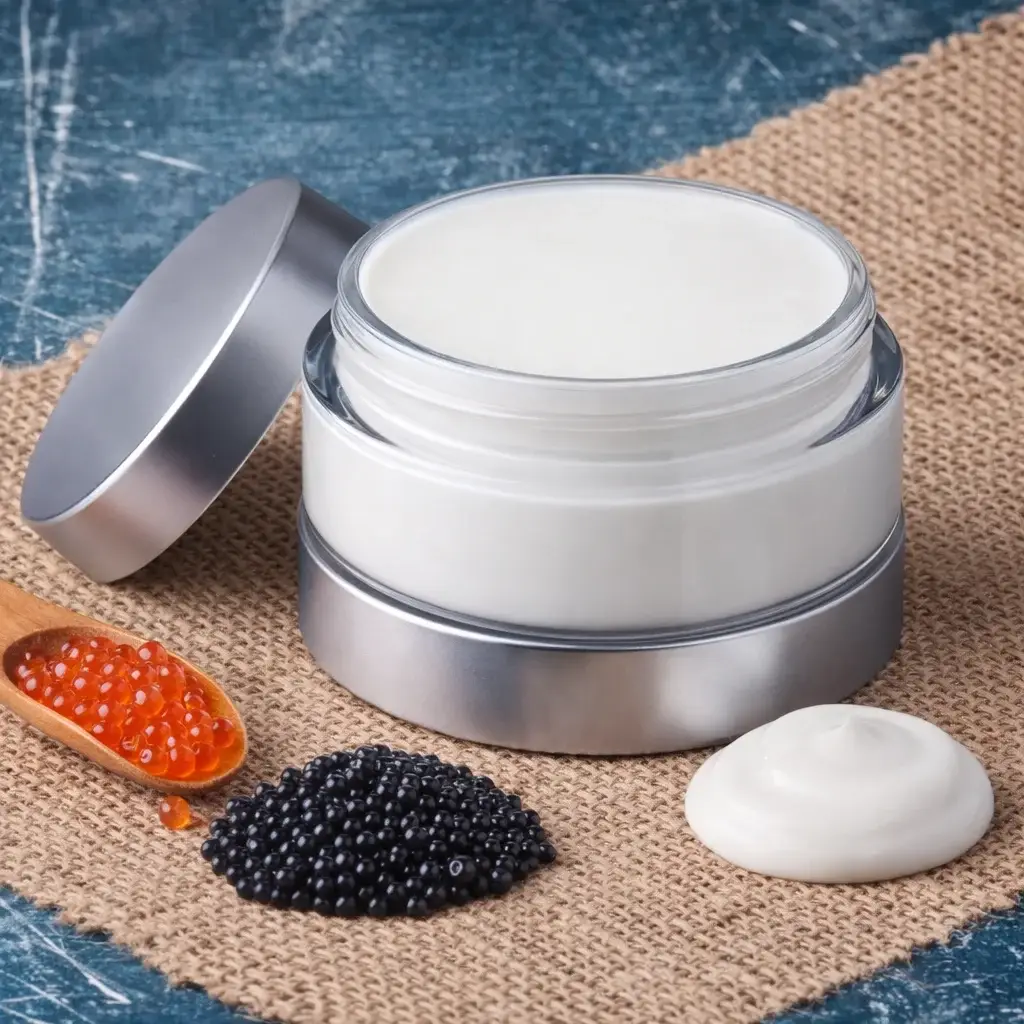

Private Label Caviar Skincare
At Metro Private Label, we understand that caviar skincare isn’t just about adding a luxury ingredient—it’s about helping your brand create a premium story that customers are willing to pay for. When positioned correctly, caviar-based products can elevate your entire line, increase perceived value, and help you move beyond price competition. That’s why we approach private label caviar skincare not as a trend, but as a strategic category for brands that want to build high-margin, high-trust products.
From lightweight caviar serums designed for fast absorption and daily use, to rich firming creams that support elasticity and long-term skin nourishment, and targeted eye treatments that focus on fine lines and fatigue, we develop product directions that align with what today’s premium skincare customers are actively buying. We continuously analyze top-performing SKUs, ingredient combinations, and market positioning across Amazon, Shopify, and professional skincare channels—so the products we help you create are not only luxurious, but commercially relevant.
As your manufacturing partner, we don’t just produce a formula—we help you shape a complete product concept. Whether you’re building a hero anti-aging serum, expanding into a full caviar skincare line, or refining your brand’s premium positioning, we work with you on texture, ingredient balance, packaging direction, and pricing logic. The goal is simple: to help you launch products that look premium, feel right, and actually sell in your target market.

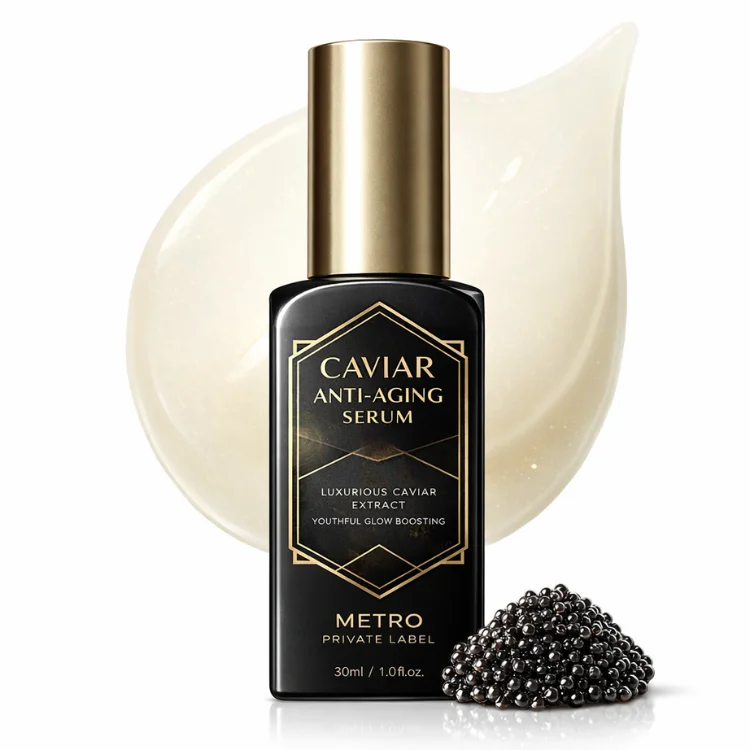
Caviar Anti-Aging Serum
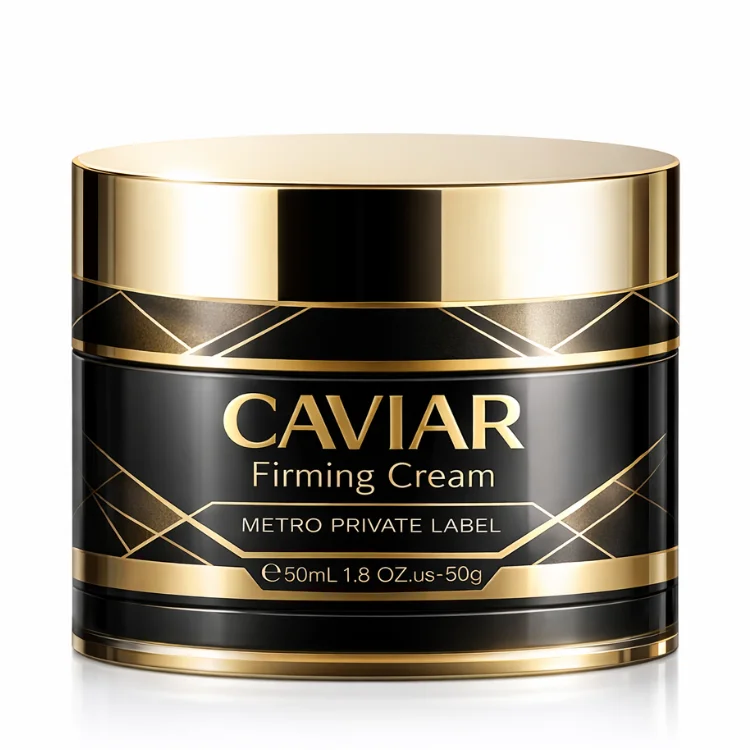
Caviar Firming Cream
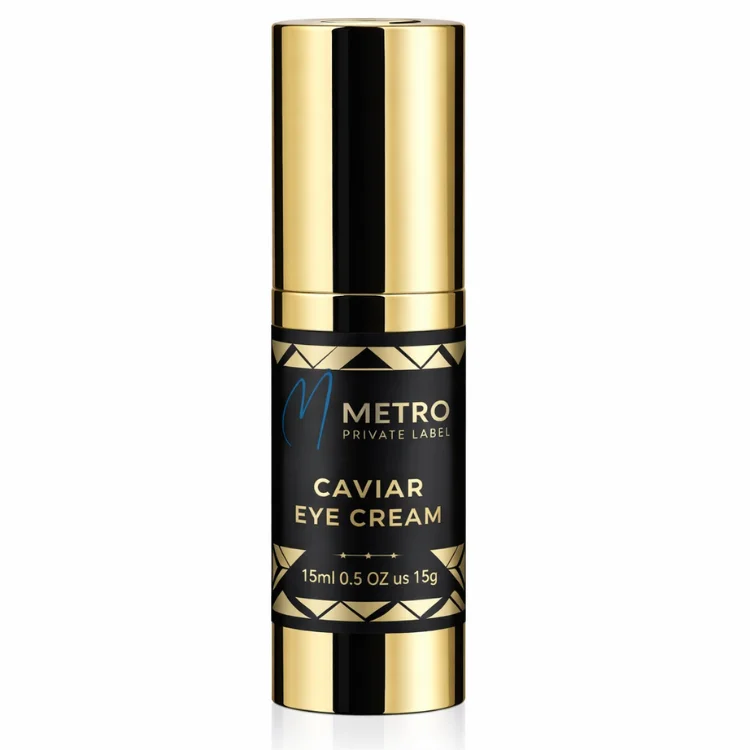
Caviar Eye Cream
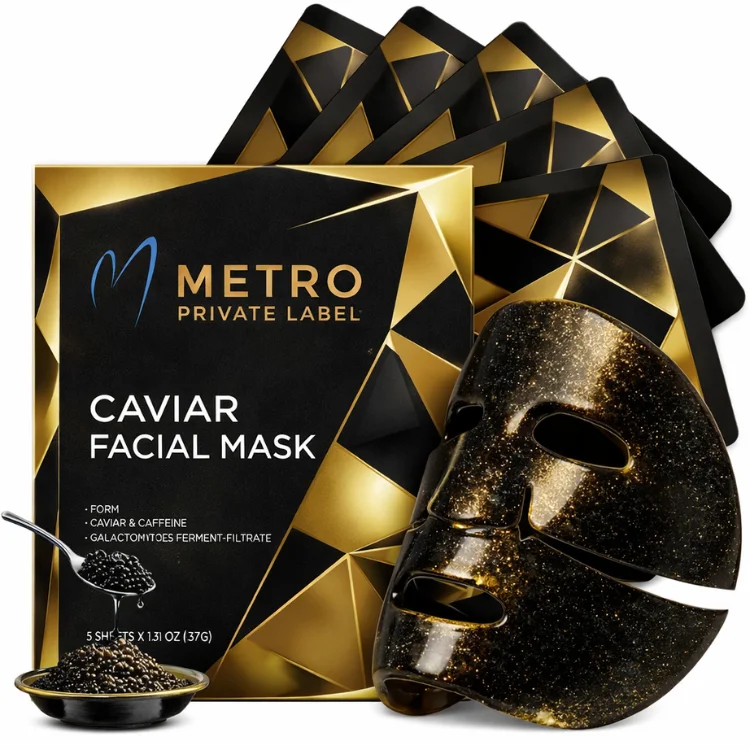
Caviar Facial Mask
Build a Private Label Caviar Skincare Line That Actually Sells
At Metro Private Label, we understand that launching a caviar skincare product isn’t just about adding a “luxury” SKU—it’s about creating something your customers actually believe in, use consistently, and come back to repurchase. In premium skincare, texture, absorption, and overall experience matter just as much as the ingredient story. If a product feels heavy, looks cheap, or doesn’t match the brand promise, customers won’t buy it twice—and without repeat purchase, there is no real brand growth.
Caviar skincare products often fail when the positioning is vague, the formula doesn’t deliver the expected sensory experience, or the “luxury” concept isn’t supported by packaging and pricing logic. We help you avoid these gaps from the beginning by guiding the right formulation direction, realistic claim strategy, and packaging alignment—so what you launch is not only premium in concept, but also consistent, compliant, and commercially viable.
As your manufacturing partner, we focus on helping you build caviar skincare SKUs that fit real sales environments. Whether you’re creating a hero anti-aging serum for Amazon, developing a high-end cream for a DTC brand, or building a full professional line for clinics, we work with you to define the right product structure early on. From sampling and texture refinement to packaging coordination and compliance support, we help you move faster, reduce risk, and scale with clarity.
💡 Our 4 Core Private Label Caviar Skincare Product Types
1️⃣ Caviar Anti-Aging Serum
A lightweight, fast-absorbing serum designed as a hero SKU for premium positioning. This format works especially well for e-commerce brands that need a strong first product to drive conversions. It focuses on skin revitalization, smoothing, and visible improvement—making it ideal for high-margin strategies and repeat purchase.
2️⃣ Caviar Firming Cream
A rich, nourishing cream built for daily use and long-term skin support. This is often the core product in a skincare line, helping brands establish consistent revenue through repeat customers. It balances texture, hydration, and elasticity-focused positioning, making it suitable for both online and offline channels.
3️⃣ Caviar Eye Cream
A targeted treatment designed for delicate areas such as fine lines, puffiness, and dullness. This category is commonly used as a premium add-on product that increases overall order value. It fits naturally into anti-aging routines and helps brands build a more complete product system.
4️⃣ Caviar Facial Mask
An experience-driven product that enhances brand perception and customer engagement. Whether used as a weekly treatment or part of a skincare ritual, this format allows brands to create a stronger “luxury” experience. It works well for content marketing, gift sets, and professional skincare positioning.
🎯 MOQ & Production Strategy (Designed for Real Market Testing)
At Metro Private Label, we understand that launching a new skincare product always comes with one key concern—how to test the market without overcommitting inventory.
That’s why we structure our MOQ in a way that balances production efficiency with real-world business flexibility.
For sheet masks, the standard production starts at 10,000 pieces, which typically translates to 1,000 retail boxes (10 pieces per box). This format works well for brands planning bundle sales, subscription models, or retail distribution.
For serums and creams, the standard MOQ is 1,000 units per SKU, which ensures stable production, consistent filling quality, and packaging alignment—especially for e-commerce and DTC brands that need reliable supply from the start.
If you’re looking to reduce initial risk, we also offer options using in-stock packaging, where production can start from around 500 to 800 units. This is ideal for early-stage testing, new product validation, or fast-moving brands that want to launch quickly without waiting for custom packaging.
Our goal is not just to meet a minimum order—it’s to help you enter the market with the right quantity, the right structure, and a clear path to scale.

More Than Just a Private Label Caviar Skincare Manufacturer
At Metro Private Label, we don’t treat caviar skincare as just another product you add to your catalog. For many brands, this category quickly becomes a premium anchor SKU—it shapes how customers perceive your brand, your pricing, and your overall positioning. If the texture feels off, the packaging looks inconsistent, or the “luxury” story doesn’t match the actual experience, customers notice immediately—and they won’t justify paying a premium.
A successful caviar skincare product isn’t about making exaggerated claims or adding unnecessary complexity. It’s about creating something that feels refined from the first use, delivers a consistent experience, and fits naturally into a customer’s daily routine. That’s what turns a high-end concept into a product people trust, repurchase, and associate with your brand long-term.

✅ Caviar Skincare Formats That Already Work in the Market
We don’t build products based on trends alone—we focus on what is already proven to sell. By analyzing high-performing SKUs across Amazon, DTC brands, and professional skincare channels, we concentrate on formats that customers already understand and are willing to invest in. These typically include lightweight anti-aging serums, rich firming creams, targeted eye treatments, and experience-driven masks.
When a product format is already familiar to your target audience, it becomes easier to position as “premium,” easier to communicate in marketing, and much easier to scale. Our role is to help you start from that proven foundation—so you’re not guessing what might work, but building on what already does.
✅ Production Models That Match How Premium Brands Launch
We understand that not every brand starts with large volumes—especially when testing a new premium category like caviar skincare. That’s why we structure production to balance quality, consistency, and flexibility.
For most serum and cream products, production typically starts at around 1,000 units per SKU to ensure stable filling and packaging alignment. For brands looking to test the market with lower risk, we can also work with in-stock packaging options, allowing smaller starting quantities while maintaining a premium look and feel.
For sheet masks, production is based on efficiency at scale, usually starting from 10,000 pieces (about 1,000 retail boxes). This format works especially well for bundled sales, clinic use, and promotional campaigns.
As your brand grows, we help you scale without needing to redesign packaging or restart development—so your product line stays consistent while your volume increases.
✅ Consistent Formulas That Support Premium Positioning
Caviar skincare sits in a category where customers expect more—not just in results, but in how the product feels, absorbs, and performs over time. Consistency is critical. If the texture changes, if the finish feels different, or if the product doesn’t match expectations, it directly impacts trust.
We focus on maintaining formula stability, refining sensory experience, and ensuring compatibility between formula and packaging. This helps every batch deliver the same performance—so your customers get what they expect every time they use your product.
That consistency is what supports better reviews, stronger brand perception, and long-term repeat purchase.
✅ Execution & Compliance Support That Keeps You Moving
We don’t just develop and produce—we help you move your product into real markets with fewer obstacles. From ingredient documentation and INCI support to labeling guidance and packaging coordination, we streamline the process so you can move forward without delays.
For brands targeting EU, UK, and international markets, we focus on building products that align with cosmetic compliance requirements while still maintaining strong positioning. And for brands entering more complex markets, we help define the right product direction early—so you avoid costly adjustments later.
Our goal is simple: to help you launch a caviar skincare line that is not only premium in concept, but also practical to produce, compliant to sell, and ready to scale.
- METRO
- Typical OEM factory
| METRO | Typical OEM factory | |
$ /year | /year | |
| Minimum order quantity | ✅ 500 units for startup brands — low-risk entry for first-time founders. | ❌ 3,000 units minimum, limiting flexibility. |
| Packaging recommendations | ✅ Compatibility + visual templates to ensure perfect fit and premium look. | ❌ Not provided. |
| Launch support | ✅ Label compliance & claim copywriting included for export markets. | ❌ Not available. |
| Sample delivery time | ✅ 7–14 days with labeled packaging. | ❌ Usually 30+ days. |
| Compliance & Documentation | ✅ INCI, COA, SDS, GMP-ready — export with confidence. | ❌ Basic INCI only. | Buy Now |
✨ Build a Private Label Caviar Skincare Line That Performs Beyond Expectations
When you work with Metro Private Label, you’re not just choosing a manufacturer—you’re working with a team that understands how caviar skincare actually performs in the real market. A successful product in this category isn’t defined by how luxurious it sounds on paper, but by how it feels on the skin, how consistent it is from batch to batch, and whether customers are willing to repurchase it at a premium price.
Caviar skincare sits in a unique position—it’s not an everyday “basic” product, but once customers trust it, it becomes part of their long-term routine. That means texture, absorption, and overall experience matter more than anything else. If the formula feels too heavy, too artificial, or doesn’t match the brand’s premium image, customers quickly lose confidence. Our role is to help you create products that feel refined from the first use, stay consistent over time, and support real repeat purchase behavior.
Whether you’re developing a hero anti-aging serum, a rich firming cream, a targeted eye treatment, or a premium mask for brand experience, we structure each project around how customers actually use and evaluate high-end skincare. In this category, small details—like absorption speed, finish, scent, and packaging feel—directly influence how customers perceive value. We help you get these details right early, so your product is not just launch-ready, but built to compete in premium markets.
🧪 Formulation Designed for Real Premium Experience
We don’t rely on generic “luxury-style” formulas. Every caviar skincare product we develop focuses on balancing skin feel, ingredient synergy, and positioning logic. Whether your brand is targeting anti-aging, skin revitalization, or barrier support, we help align the formula with your customer expectations and your price point.
Our goal is simple: create a product that doesn’t just sound premium—but actually feels premium every time it’s used.
📦 Packaging & MOQ Designed for Real Launch Conditions
Premium positioning requires packaging that supports it—but we also understand the need to control risk at the early stage. That’s why we structure production in a flexible way.
For serums and creams, production typically starts from around 1,000 units per SKU to ensure stable quality and filling consistency. If you’re testing the market, we can work with in-stock packaging options, allowing smaller starting quantities while maintaining a premium presentation.
For sheet masks, production usually begins at 10,000 pieces (around 1,000 retail boxes), which works well for bundled sales and promotional campaigns.
We support a range of packaging solutions—from glass bottles and airless pumps to premium jars and retail-ready cartons—designed for both e-commerce and retail environments. Our team ensures compatibility between formula, packaging, and shipping conditions, so your product performs consistently from first batch to scale.
⚙️ A Clear and Structured Production Process
We keep the entire process straightforward and transparent. From initial concept and sampling to packaging confirmation and production scheduling, each step is clearly communicated so you can plan your launch timeline with confidence.
Whether you’re preparing for an Amazon launch, building a DTC brand, or expanding into retail or clinic channels, we help you move forward efficiently—without unnecessary delays or confusion.
🌿 Built for Brands Ready to Launch and Scale
We don’t measure success by production alone—we measure it by how well your product performs after it reaches the market. That’s why we focus on stable formulations, scalable production systems, and practical execution that supports long-term growth.
With Metro Private Label, your caviar skincare line is designed to launch smoothly, deliver a consistent premium experience, and generate repeat purchases—so your brand grows beyond the first order.

FAQs Caviar Skincare
For your convenience, we’ve gathered the most commonly asked questions about our Caviar Skincare. However, should you have any further queries, please don’t hesitate to reach out to us.
1. What types of caviar skincare products can you manufacture?
We focus on the core formats that actually sell in premium skincare. This typically includes anti-aging serums, firming creams, eye treatments, and facial masks. You can start with one hero product or build a complete product line—we’ll guide you based on your target market and positioning.
2. Can you customize the formula to match our brand positioning?
Yes, and this is where we add the most value. We don’t just adjust ingredients—we help align texture, absorption, finish, and overall feel with your price point and brand story. Whether you want something lightweight and fast-absorbing or rich and nourishing, we’ll help you get it right.
3. What’s your MOQ for caviar skincare products?
For most serums and creams, our standard MOQ starts at around 1,000 units per SKU to ensure stable production and quality. If you’re testing the market, we can also work with in-stock packaging options, allowing smaller starting quantities (around 500–800 units). For sheet masks, production typically starts at 10,000 pieces (about 1,000 retail boxes).
4. How long does it take to go from sample to production?
Sampling usually takes about 3–4 weeks depending on the level of customization. Once everything is confirmed, production typically takes another 4–6 weeks. If you’re working with a tight launch timeline, let us know early—we’ll help you plan it properly.
5. Can you help us choose the right caviar skincare product to start with?
Absolutely. Many clients come to us knowing they want a “premium” product but aren’t sure where to begin. We’ll help you define the right starting SKU—usually based on your channel, price range, and target customer—so you don’t waste time developing something that’s hard to sell.
6. Do you offer both white label and custom formulation options?
Yes. If you want to move fast, we can start with proven base formulas and customize them for your brand. If you’re building a more differentiated line, we can develop a formula with you from scratch. We’ll recommend the best approach based on your timeline and budget.
7. Can you support packaging and design for a premium look?
Yes, we provide full packaging support. This includes bottle sourcing, pump and jar options, label coordination, and retail-ready cartons. Since caviar skincare is a premium category, we also help you choose packaging that actually supports your pricing and brand positioning.
8. What kind of testing and quality control do you perform?
We carry out stability testing, compatibility testing with packaging, and standard quality checks before production. Our goal is to ensure your product performs consistently—not just in testing, but in real use—so you avoid issues like separation, leakage, or texture changes.
9. Can you help with compliance and documentation for different markets?
Yes. We support documentation such as INCI lists, MSDS, COA, and labeling guidance. For EU, UK, and other international markets, we help you structure your product in a way that aligns with cosmetic regulations, so you can move forward without unnecessary delays.
10. Do you work with international clients and handle shipping?
Yes, most of our clients are based overseas. We support global shipping and help coordinate the process, including documentation and packaging requirements for transport. Whether you’re selling in Europe, the U.S., or other regions, we’ll help you move your products smoothly from production to delivery.
What stood out to us was how well Metro Private Label understood our brand positioning from the beginning. We weren’t just given a standard formula—they helped us refine texture, packaging, and product structure so everything felt cohesive and premium. The whole process was smooth, and we were able to launch with confidence.
Emma Clarke, Founderfrom United Kingdom
We needed to move fast for a new product launch, and Metro Private Label delivered exactly what we were looking for. Clear timelines, responsive communication, and a product that matched our expectations. The serum we developed has been performing well, and we’re already planning the next SKU.
Lucas Martin, E-commerce Brand Operatorfrom France
As a clinic, we’re very careful about what we offer our clients. Metro Private Label helped us create a product line that feels professional, gentle, and consistent. The textures and overall experience were exactly what we needed for post-treatment care, and our clients have responded very positively.
Sophia Nguyen, Clinic Ownerfrom Australia
What we appreciated most was their ability to explain the logic behind formulation and pricing. It wasn’t just about manufacturing—they helped us make better product decisions. The final cream product feels aligned with our market, and the process was efficient from sampling to production.
David Schneider, Brand Managerfrom Germany
We were looking for ready-to-launch products that still felt premium, and Metro Private Label provided a great balance. The packaging quality, product consistency, and overall coordination made it easy for us to introduce the line into our channel. It’s been a reliable partnership so far.
Isabella Rossi, Retail Buyerfrom Italy




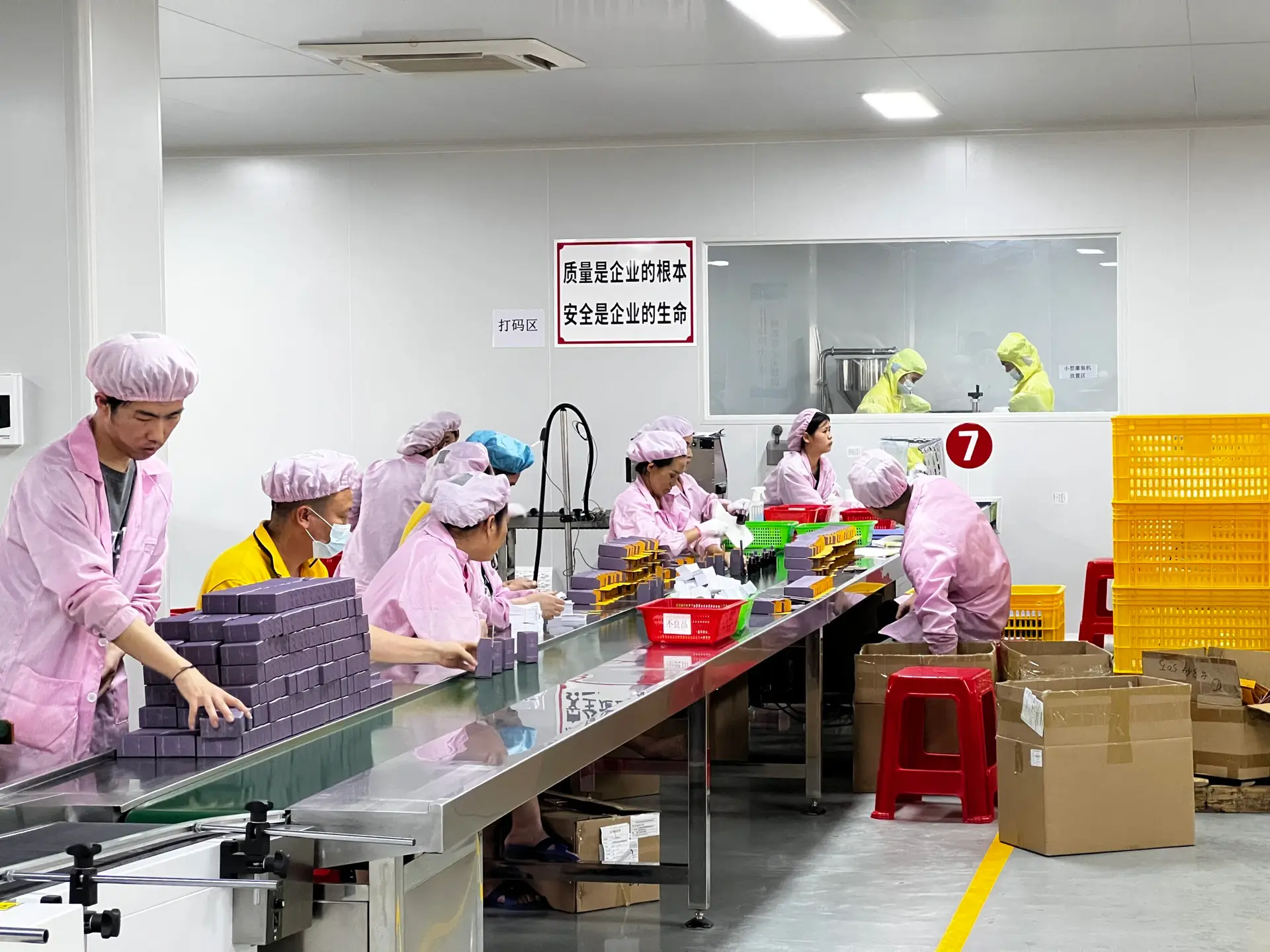


Metro Private Label in Numbers
Happy Clients
0 +
Million-dollar Buyers
0 +
Formulation
0 +
Professional Staffs
0 +
Your Ultimate Guide to Caviar Skincare
If you’re planning to add caviar skincare to your product line—whether it’s your first premium SKU or an upgrade to reposition your brand—you’re not just choosing a luxury ingredient. You’re stepping into a category that is built around perception, experience, and long-term brand value. Caviar skincare naturally supports higher pricing, stronger storytelling, and a more refined product image, which makes it especially attractive for brands that want to move beyond price competition. When positioned correctly, these products don’t just sit on a shelf—they become statement SKUs that elevate how customers see your entire brand.
Over the past few years, we’ve seen caviar skincare evolve from a niche “luxury concept” into a commercially viable category across e-commerce, clinic channels, and international distribution. What makes the difference is not simply adding caviar extract into a formula, but how the entire product is built around it. From our experience at Metro Private Label, brands succeed when formulation texture, packaging weight and finish, pricing logic, and compliance structure are aligned from the beginning. Caviar skincare may look premium on the surface, but whether it actually performs in the market depends on decisions made behind the scenes—how it feels on first use, how it photographs online, how it holds up in shipping, and how easily it passes regulatory requirements.
This guide is based on what we’ve learned working with brands across different stages, from first-time founders to experienced operators scaling new product lines. Instead of focusing only on ingredient theory, we want to share how caviar skincare actually works in real business environments. That includes choosing product formats that are easier to sell, designing textures that match customer expectations, selecting packaging that supports both premium positioning and e-commerce durability, planning MOQ and production in a way that reduces inventory pressure, and preparing compliance early so you don’t face delays later. In our experience, these are the factors that determine whether a product becomes a long-term, repeat-purchase SKU or just another short-lived launch.
Table of Contents
Why Caviar Skincare Is a Strategic Category for Premium Brands
When I speak with brands that are already selling and looking to scale, one of the most common challenges I see is not product development itself, but positioning. Many brands reach a point where their products are technically good, but they are stuck in crowded categories where price competition becomes intense and differentiation becomes harder to communicate. This is exactly where I see caviar skincare becoming a strategic move. It allows a brand to step into a space where perception, experience, and storytelling work together, making it easier to build a premium identity while also improving long-term profitability.
Moving Beyond Price Competition Into a Higher-Margin Category
From my experience, once a brand starts relying too heavily on price as a selling point, growth becomes unstable. Discounts increase, margins shrink, and customer loyalty becomes weaker. I’ve worked with brands that initially focused on popular categories like basic hydration or brightening, only to realize that they were constantly competing with dozens of similar products. When I introduce the idea of caviar skincare, the conversation shifts. Instead of asking how to lower costs, we start discussing how to increase perceived value. This change in perspective is critical because it allows the brand to operate in a space where customers are more willing to pay for a premium experience, rather than simply choosing the lowest price option.
A Category That Naturally Supports Premium Positioning
One thing I’ve learned over time is that not all product categories are equal when it comes to positioning. Some require heavy marketing effort to appear premium, while others already carry that perception naturally. Caviar skincare falls into the second category. When I guide brands through this direction, I don’t need to force the narrative or rely on exaggerated claims. The association with luxury is already embedded in the concept. This makes it much easier to align everything else, from the choice of ingredients to the type of packaging and even the tone of the brand communication. The result is a product that feels consistent and intentional, rather than something that is trying too hard to appear high-end.
Stronger Storytelling That Connects With Customers
In today’s market, especially in e-commerce, I’ve noticed that customers make decisions very quickly. They don’t always read every detail, but they respond immediately to how a product is presented and what it represents. This is where caviar skincare becomes particularly powerful. When I help brands develop products in this category, I focus not only on the formulation, but also on how the product will be understood within seconds. The idea of caviar brings a sense of refinement and care that is easy for customers to grasp. This allows the brand to communicate value more efficiently, which is especially important in competitive online environments where attention spans are short and first impressions matter.
Higher Perceived Value Leads to Better Pricing Flexibility
Pricing is one of the areas where I see the biggest difference when brands move into caviar skincare. In lower-tier categories, even a well-designed product can struggle to justify a higher price because the market expectation is already set at a certain level. With caviar skincare, the situation changes. The category itself creates a framework where higher pricing feels more natural. When I work with clients, I always emphasize that pricing should not be forced, but supported by the overall product experience. When the texture feels refined, the packaging looks appropriate, and the positioning is clear, customers are much more comfortable accepting a higher price point. This creates a healthier margin structure and reduces the need for constant promotions.
Making Product, Packaging, and Brand Alignment Easier
One of the most practical advantages I see with caviar skincare is how it simplifies decision-making during product development. In many projects, brands struggle with conflicting directions, such as wanting a premium price but choosing basic packaging, or aiming for a high-end audience while keeping the formulation too simple. These inconsistencies are often what weaken a product’s impact. When I work on caviar skincare projects, the direction becomes much clearer. The category itself sets a certain expectation, which helps guide decisions around texture, packaging materials, and visual presentation. This alignment creates a more cohesive product that feels complete from the customer’s perspective, which is something that directly influences purchase decisions and brand trust.
Building a Foundation for Long-Term Brand Growth
What I always tell clients is that choosing the right category is not just about launching one product, but about creating a foundation for future expansion. Caviar skincare works particularly well in this regard because it naturally supports a product system. When I help brands start with a single SKU, such as a serum or cream, I am already thinking about how this product can evolve into a broader line over time. This could include complementary products that build a full routine, allowing the brand to increase both customer lifetime value and overall brand depth. From what I’ve seen, brands that start with a clear and premium positioning tend to grow more steadily, because they are not constantly trying to reposition themselves later. Instead, they build on a strong foundation that supports both product development and brand identity in the long run.
What “Caviar Extract” Really Means in Skincare Formulation
When I start discussing caviar skincare with brands, one of the first questions that always comes up is whether caviar extract is truly a functional ingredient or simply a marketing concept designed to elevate perceived value. I completely understand this concern, especially in a market where many ingredients are overused or positioned in ways that don’t always reflect their real contribution to the formula. From my experience working on product development, the truth is more nuanced. Caviar extract does have genuine skin-conditioning properties, but its real impact depends heavily on how it is formulated, what it is combined with, and how the overall product experience is designed. This is where the difference between a credible premium product and a superficial concept becomes very clear.
Understanding the Functional Role of Caviar Extract in Real Formulas
When I evaluate caviar extract from a formulation perspective, I don’t treat it as a single “miracle active.” Instead, I see it as a supporting ingredient that contributes to the overall quality and feel of the product. It is often associated with components such as amino acids, peptides, and lipids, which can help improve skin conditioning, smoothness, and overall comfort. However, I always make it clear to clients that customers will not directly perceive “caviar extract” as an isolated function. What they will notice is whether the product feels nourishing, refined, and aligned with a premium experience. This is why I focus less on the ingredient in isolation and more on how it contributes to the full formulation system.
Why the Combination of Ingredients Defines the Final Performance
One of the biggest misconceptions I see is the idea that adding a premium ingredient automatically creates a premium product. In reality, I’ve worked on many cases where caviar extract was included, but the rest of the formula did not support the positioning, resulting in a product that felt underwhelming. On the other hand, when caviar extract is paired with well-structured supporting systems—such as hydration networks, barrier-support ingredients, and texture modifiers—the final result feels significantly more complete. In my development process, I spend a lot of time balancing these elements because customers evaluate the product holistically. They are not thinking about ingredient percentages; they are thinking about whether the product feels worth the price.
The Difference Between Ingredient Story and Product Experience
In premium skincare, I’ve learned that there is always a gap between what a product claims and what a customer actually experiences. Bridging that gap is one of the most important parts of my work. Caviar extract provides a strong storytelling foundation, but if the texture feels generic or the absorption is not well balanced, the story loses credibility immediately. I always approach formulation with the mindset that the story must be supported by the experience. This means ensuring that the product spreads smoothly, absorbs at the right speed, and leaves a finish that feels consistent with a high-end positioning. When these elements align, the ingredient story feels natural and believable rather than forced.
Avoiding Overstatement While Maintaining Credibility in the Market
Another area I pay close attention to is how caviar extract is positioned in terms of claims. I’ve seen brands make overly aggressive statements that can create unrealistic expectations or even lead to compliance issues, especially in regulated markets like the EU or UK. My approach is to focus on benefits that are both meaningful and defensible, such as nourishment, skin conditioning, and overall improvement in skin feel. This allows the product to remain within cosmetic guidelines while still delivering a strong premium message. In my experience, brands that build credibility through realistic positioning tend to perform better over time, because they earn customer trust rather than relying on short-term marketing impact.
Designing for Sensory Experience and Perceived Value
What I always remind clients is that customers don’t evaluate a formula based on its ingredient list—they evaluate it based on how it feels during use. The first application, the way the product spreads, the speed of absorption, and the finish on the skin all play a role in shaping perception. When I develop caviar skincare products, I pay close attention to these sensory details because they directly influence whether the product feels “premium” or not. A well-balanced texture that feels smooth and refined can elevate the entire product, while a poorly designed one can undermine even the strongest ingredient story. This is why I treat sensory experience as a core part of formulation, not just an afterthought.
Building a Formula That Feels Authentic, Not Overdesigned
In many premium projects, there is a temptation to make the formula overly complex in order to justify the positioning. I’ve found that this approach often backfires. A product does not need to be complicated to feel premium—it needs to be well thought out and consistent. When working with caviar extract, I focus on creating formulas that feel authentic and balanced, rather than overloaded with unnecessary components. This ensures that the product performs reliably, remains stable over time, and delivers a consistent experience across different batches. In the long run, this consistency is what supports repeat purchase and builds brand trust.
Aligning Ingredient Choice With Brand Strategy and Market Expectations
Ultimately, I don’t see caviar extract as just an ingredient choice—I see it as part of a broader brand strategy. When a brand decides to enter this category, it is making a statement about its positioning, its target customer, and its pricing structure. My role is to ensure that the formulation supports that strategy at every level. This means aligning ingredient selection, texture design, packaging compatibility, and even claim language with how the product will be sold and perceived in the market. When everything works together, the result is a product that not only sounds premium, but feels credible, performs consistently, and fits naturally into the customer’s expectations.
The 4 Core Caviar Skincare Products That Actually Sell
When I work with brands that are serious about entering the caviar skincare category, one of the first strategic decisions we make is not about ingredients or packaging, but about structure. I’ve seen many brands struggle because they try to launch too many products at once, thinking that more options will increase their chances of success. In reality, this often creates confusion, slows down decision-making, and increases both cost and risk. What I’ve learned through experience is that the most successful brands start with a focused and intentional product system. Instead of spreading resources too thin, they build around four core product types that cover daily use, targeted care, and premium experience. This structure allows the brand to launch more efficiently, position itself clearly, and expand with purpose rather than guesswork.
Starting With a Hero Serum That Defines First Impressions
When I guide brands through their first SKU, I almost always start with a serum because it plays a critical role in how customers first experience the brand. In both e-commerce and premium skincare environments, serums are often associated with visible results and higher concentration of actives, which makes them ideal as a hero product. What I focus on during development is not just the ingredient list, but how the serum feels from the moment it touches the skin. The spreadability, the absorption speed, and the finish all contribute to whether the product feels premium or not. I’ve seen how a well-executed serum can quickly become the product that drives traffic, reviews, and brand recognition. At the same time, I am careful to ensure that the formulation aligns with the brand’s positioning, because if the experience does not match the expectation, the product will struggle to build long-term trust.
Building a Core Cream That Supports Daily Routine and Revenue Stability
After establishing a strong entry point, I always turn my attention to the cream because this is the product that supports daily usage and repeat purchase. From my perspective, this is where a brand begins to build real business stability. Unlike serums, which are often used more selectively, creams are integrated into everyday routines, which means customers interact with them more frequently. When I develop a caviar cream, I spend a significant amount of time balancing richness and usability. It needs to feel nourishing enough to justify a premium position, but not so heavy that it becomes uncomfortable for daily use. I’ve seen brands fail in this category simply because the texture was not right for their target audience. When the cream is done correctly, it becomes the product that customers rely on, which directly supports retention and long-term growth.
Adding an Eye Treatment to Strengthen Brand Credibility and Product Depth
Once the serum and cream are established, I usually recommend adding an eye treatment to enhance the perceived expertise of the brand. In my experience, eye products carry a different kind of expectation. Customers view them as more targeted and specialized, which means they pay closer attention to both performance and feel. When I work on an eye cream or eye serum, I focus heavily on creating a texture that is smooth, lightweight, and comfortable for delicate areas, while still maintaining a sense of richness that aligns with a premium positioning. I’ve seen how adding an eye product can immediately elevate the overall perception of a brand, making it feel more complete and professionally structured. It also plays an important role in increasing average order value, especially when customers begin to see the product line as a system rather than individual items.
Using a Mask to Create a Premium Experience and Emotional Connection
The final component I often introduce is a mask, and I approach this category very differently from daily-use products. From my perspective, masks are not just about function, but about experience. They allow the brand to create a moment of indulgence that goes beyond routine skincare. When I develop a caviar mask, I think about how the product will feel during use, how it will be presented, and how it fits into a customer’s lifestyle. Whether it is a sheet mask designed for convenience or a cream mask intended for a more luxurious ritual, the goal is to create a product that enhances the overall brand story. I’ve seen how this type of product can strengthen emotional connection, making the brand feel more memorable and distinct in a crowded market.
Why This Four-Product Structure Works Across Different Sales Channels
What I’ve consistently observed is that this four-product structure works not just in theory, but across different real-world sales environments. For e-commerce brands, the serum drives initial conversions, the cream supports repeat purchase, the eye treatment increases perceived expertise, and the mask adds content value for marketing. For clinics and professional channels, the structure supports treatment routines and product recommendations. For distributors and retail buyers, it creates a clear and manageable product lineup that is easy to introduce into the market. This versatility is one of the reasons I continue to recommend this structure, because it allows the brand to operate effectively across multiple channels without needing to redesign the entire product system.
Creating a Scalable Product System Instead of a One-Time Launch
What I always emphasize to clients is that launching a product is not the end goal, building a system is. When a brand starts with these four core products, it creates a foundation that can be expanded in a controlled and strategic way. Instead of reacting to trends or launching random SKUs, the brand can build around an existing structure, adding variations or complementary products based on real customer feedback. From my experience, this approach leads to better inventory management, clearer brand identity, and more sustainable growth. It allows the brand to scale with confidence because each new product fits into a system that already makes sense to the customer.
How to Position Caviar Skincare for E-commerce vs. Professional Channels
When I work with brands developing caviar skincare products, one of the most important strategic decisions we make early on is not just what to formulate, but where the product will actually be sold and how it will be perceived in that environment. I’ve seen many cases where a product was technically well-developed, but struggled in the market simply because its positioning did not match the expectations of the channel. Caviar skincare is a flexible and powerful category, but it does not perform the same way across e-commerce platforms and professional settings. Understanding these differences allows me to guide brands in making more precise decisions around formulation, texture, packaging, and communication so the product feels natural and convincing in its intended space.
Understanding the Behavioral Difference Between Online and Professional Buyers
From my experience, one of the biggest gaps brands underestimate is how differently customers behave depending on where they encounter the product. In e-commerce environments, customers are often browsing quickly, comparing multiple options, and making decisions based on immediate impressions. They rely heavily on visuals, short descriptions, and perceived results. In contrast, in professional environments such as clinics or aesthetic centers, the decision-making process is slower and more trust-driven. Clients are guided by practitioners, and their expectations are shaped by safety, consistency, and long-term skin improvement rather than instant appeal. When I approach product development, I always align the product with these behaviors, because even small mismatches can reduce trust and impact conversion.
Positioning for E-commerce: Speed, Clarity, and Immediate Appeal
When I develop caviar skincare products for e-commerce brands, I focus on how the product communicates value within seconds. Customers cannot physically experience the product before buying, so everything needs to be translated into a clear and attractive presentation. I pay particular attention to creating textures that are lightweight, smooth, and fast-absorbing, because these qualities are easier to communicate visually and tend to generate positive feedback in reviews. I also think about how the product will be described in a simple and compelling way, ensuring that the benefits are easy to understand without requiring too much explanation. In this environment, clarity is critical. If the customer has to think too much to understand the product, they are likely to move on to the next option.
Designing Texture and Sensory Experience for Online Conversion
One detail I never overlook in e-commerce development is how texture translates into perceived performance. I’ve seen how small differences in viscosity, spreadability, or finish can significantly affect how customers describe the product in reviews. When I work on caviar serums or creams for online channels, I focus on creating a texture that feels refined but also universally acceptable across different skin types. The product should absorb at a comfortable speed, leave a pleasant finish, and avoid extremes such as being too heavy or too thin. These details may seem subtle, but they directly influence customer satisfaction, which in turn affects ratings, repeat purchase, and overall brand performance.
Building Visual and Packaging Impact for Premium Perception
In e-commerce, I always remind clients that the product is often judged before it is ever used. The packaging, color scheme, and overall presentation play a major role in shaping expectations. With caviar skincare, this becomes even more important because the category is closely tied to premium perception. I guide brands toward packaging solutions that reflect quality and consistency, ensuring that what the customer sees matches what they expect from a high-end product. This includes choosing the right materials, finishes, and structural design so that the product stands out visually while still feeling aligned with its price point.
Positioning for Professional Channels: Trust, Safety, and Long-Term Use
When I shift my focus to professional channels, my approach becomes more structured and conservative. In clinics or aesthetic environments, products are often used as part of a treatment process or recommended by a practitioner. This changes the way the product needs to be positioned. I prioritize formulations that are gentle, stable, and suitable for repeated use, especially for sensitive or post-treatment skin. The emphasis here is not on immediate visual impact, but on reliability and compatibility with professional routines. I also guide brands to adopt a more measured communication style, focusing on skin support, balance, and long-term maintenance rather than dramatic or short-term claims.
Creating Consistency That Supports Professional Credibility
One of the most important lessons I’ve learned from working with professional clients is that consistency builds trust. A product that performs the same way every time becomes a reliable part of the treatment process. When I develop caviar skincare for this channel, I ensure that the formula remains stable across different batches and that the sensory experience is predictable. This includes controlling factors such as viscosity, absorption rate, and interaction with other products used in treatments. This level of consistency reduces the risk of complaints and helps establish the product as a dependable choice for both practitioners and their clients.
Adjusting Claims and Language to Fit Regulatory and Market Expectations
Another key area I always address is how the product is communicated in different channels. In e-commerce, messaging can be more direct and benefit-driven, as long as it remains within cosmetic boundaries. In professional environments, the language needs to be more precise and controlled. I guide brands to avoid exaggerated claims and instead focus on credible, experience-based descriptions that align with regulatory expectations. This not only protects the brand from compliance issues but also strengthens its professional image, which is essential in building long-term trust.
Aligning Channel Strategy With Long-Term Brand Growth
What I always encourage brands to think about is how their current channel strategy fits into their long-term growth plan. Some brands begin with e-commerce to build visibility and later expand into professional channels, while others start in clinics and gradually move into retail or online sales. When I help brands develop caviar skincare products, I consider both their immediate needs and their future direction. This allows us to make decisions that support scalability without requiring major changes later. From my experience, brands that align their product positioning with their channel strategy from the beginning are able to grow more smoothly, maintain stronger brand consistency, and avoid unnecessary rework as they expand.
Choosing the Right Texture: What Customers Actually Feel First
When I work with brands developing caviar skincare, I always tell them that customers don’t experience your ingredient list first—they experience your texture. Before they understand your claims, before they believe your story, and even before they decide whether your product is worth the price, they feel how it spreads, how it absorbs, and how it sits on their skin. From my experience, this first sensory interaction often determines whether a customer continues using the product or quietly stops after a few tries. That’s why I treat texture not as a finishing detail, but as one of the most critical decisions in the entire product development process.
Why Texture Is the First Indicator of Premium Quality
Over time, I’ve noticed that customers subconsciously use texture as a shortcut to judge quality. They may not be able to explain it technically, but they immediately sense whether a product feels refined or not. If a serum feels sticky, if a cream feels overly heavy, or if the product leaves an uneven finish, it creates doubt about the entire formulation. I’ve seen products with strong ingredient stories fail simply because the texture did not match expectations. On the other hand, when a product feels smooth, balanced, and effortless to apply, customers are much more likely to trust it, even before they see long-term results. This is especially important in caviar skincare, where the expectation of luxury starts from the very first touch.
Understanding How Texture Shapes Customer Expectations Across Formats
Each product format carries its own set of expectations, and I always make sure the texture reflects that clearly. When I develop a serum, I focus on creating something lightweight and fast-absorbing, because customers associate serums with efficiency and visible results. If it feels too thick or slow to absorb, it breaks that expectation immediately. When I work on a cream, I shift the balance toward nourishment and comfort, but I’m careful to avoid making it feel overly greasy or suffocating. With eye treatments, the margin for error becomes even smaller, because customers expect a texture that is both gentle and precise. From my experience, getting these nuances right is what separates a product that feels “acceptable” from one that feels truly premium.
Matching Texture With Price Point and Brand Promise
One of the most important connections I always highlight to clients is the relationship between texture and pricing. If a product is positioned at a higher price point, the texture needs to justify that immediately. I’ve worked with brands that invested heavily in packaging and marketing, but overlooked how the product actually felt during use. The result was a disconnect that customers quickly noticed. When I refine the texture to align with the brand’s promise, the entire product starts to make more sense. The customer doesn’t need to question whether the price is reasonable, because the experience supports it naturally. From my perspective, this alignment is one of the key factors that determines whether a product can sustain its position in the market.
How Sensory Experience Influences Reviews and Repeat Purchase
What I’ve consistently observed is that texture plays a major role in how customers describe a product after they use it. When the sensory experience is well designed, customers tend to use words like “smooth,” “comfortable,” or “luxurious,” which reinforces the product’s positioning and encourages others to try it. These reviews then become part of the product’s ongoing marketing. On the other hand, if the texture creates even slight discomfort or inconsistency, customers often mention it immediately, and those comments can quickly affect how the product is perceived by others. This is why I always consider texture as directly connected to repeat purchase. A product that feels right is one that customers are willing to keep using, and that consistency is what builds long-term value.
Balancing Absorption Speed, Finish, and Layering Compatibility
When I develop caviar skincare formulations, I pay attention not just to the initial feel, but to how the product behaves over time. Absorption speed is one of the most critical factors. If it absorbs too quickly, it can feel thin or ineffective. If it absorbs too slowly, it can feel heavy and inconvenient, especially for daytime use. I also think about the finish, whether it leaves the skin with a soft matte effect, a subtle glow, or a more protective layer. Another detail I always consider is how the product interacts with other steps in a skincare routine. Customers rarely use a single product in isolation, so the texture needs to layer well with serums, creams, and sunscreens. From my experience, these small adjustments make a significant difference in how the product fits into daily use.
Designing Texture as a Core Part of Product Identity
Ultimately, I see texture as a key part of how a product communicates its identity. It is not just about how the product performs, but how it makes the customer feel every time they use it. When I work with brands on caviar skincare, I ensure that the texture supports the overall story, from the moment the product is dispensed to the final finish on the skin. This consistency creates a sense of trust and reliability that customers come to expect. In my experience, when texture, positioning, and packaging all align, the product feels complete. And when a product feels complete, it becomes much easier for customers to adopt it into their routine and continue using it over time.
Packaging Strategy: How to Make Caviar Skincare Look Truly Premium
When I work with brands developing caviar skincare, I always tell them that packaging is not just about how the product looks—it is about how the product is judged before it is even used. In premium skincare, especially in categories like caviar, customers form their expectations instantly. They don’t start by reading the ingredient list or understanding the formulation logic. They start by looking at the bottle, feeling the weight, noticing the finish, and deciding whether this product fits the price and positioning. From my experience, packaging is often the first point where a product either builds trust or loses it, which is why I treat it as a core part of the product strategy rather than a final design step.
Why Packaging Is the First Layer of Product Experience
What I’ve consistently observed is that customers don’t separate packaging from the product itself. To them, the packaging is part of the product experience. When they hold a bottle or see it on a screen, they are already forming an opinion about its quality. If the packaging feels too light, too generic, or visually inconsistent, it immediately creates doubt about what’s inside. I’ve seen brands invest heavily in formulation while underestimating this first impression, only to find that customers hesitate to purchase or fail to perceive the product as premium. On the other hand, when the packaging feels solid, balanced, and thoughtfully designed, it creates an immediate sense of confidence that carries into the actual usage experience.
Choosing Materials That Reinforce a Luxury Perception
When I guide brands through packaging decisions, I always start with materials because they define both the visual and tactile experience. Glass bottles, for example, naturally communicate a higher level of quality due to their weight, clarity, and overall presence. Airless pump systems not only look more refined, but also improve functionality by protecting the formula and ensuring consistent dispensing. Premium jars, when designed with the right proportions and finishes, can create a sense of substance that aligns with higher price points. What I focus on is not just how these materials appear, but how they feel in the user’s hand, because that physical interaction plays a major role in shaping perception. A product that feels stable and well-constructed immediately signals reliability and quality.
Aligning Packaging With Pricing and Brand Positioning
One of the most critical aspects I always address is the relationship between packaging and pricing. If a product is positioned as premium, every visual and physical element must support that positioning. I’ve worked with brands that tried to enter higher price segments while using packaging that felt too basic or inconsistent, and the result was always the same. Customers questioned the value, even if the formula itself was strong. When I align packaging with pricing strategy, I make sure that the design, material, and finish all reinforce the intended market position. This alignment removes friction in the customer’s decision-making process, because the product feels coherent from the outside to the inside.
Designing for Visual Impact in Digital and Retail Environments
In today’s market, I always consider how the product will be seen before it is touched. For e-commerce brands, packaging must perform well visually in images and videos, because that is often the only way customers experience it before purchasing. I pay attention to how the product reflects light, how colors appear on screen, and how the overall design stands out among competing products. For retail environments, I think about shelf presence and how the product interacts with surrounding items. In both cases, the goal is the same. The product should immediately communicate its value and positioning without requiring explanation. From my experience, strong visual impact significantly improves both conversion and brand recognition.
Ensuring Functional Performance in Real Usage Scenarios
While aesthetics are essential, I never overlook functionality. I’ve seen products that look beautiful but fail in practical use, leading to issues such as leakage, inconsistent dispensing, or difficulty in handling. These problems quickly turn into negative reviews and customer dissatisfaction. When I develop packaging strategies, I always consider how the product will be used daily. This includes how easily the product can be opened and closed, how the pump performs over time, and how well the packaging protects the formula. For e-commerce, I also think about shipping conditions, because packaging must withstand transportation without compromising the product. A premium product must not only look good, but also perform reliably in every situation.
Creating a Cohesive System Across Multiple SKUs
When a brand expands beyond a single product, packaging consistency becomes even more important. I always guide brands to think in terms of a system rather than individual items. The serum, cream, eye treatment, and mask should feel connected, even if their packaging structures differ. This consistency helps customers recognize the brand instantly and builds a stronger visual identity over time. I’ve seen how a cohesive product line creates a sense of professionalism and trust, making it easier for customers to explore and purchase multiple products within the same brand.
Balancing Customization With Speed and Cost Efficiency
Another important consideration I always discuss with clients is how to balance customization with practicality. Fully custom packaging can create a strong visual impact, but it often comes with higher costs, longer lead times, and increased complexity. I work with brands to find solutions that deliver a premium feel without unnecessary delays or risks. This might involve using existing packaging structures and enhancing them through finishes, color choices, or label design. This approach allows brands to launch faster, control investment, and still achieve a result that feels aligned with their positioning.
Treating Packaging as a Long-Term Brand Investment
Ultimately, I don’t see packaging as a short-term decision tied to a single product launch. I see it as an investment in how the brand will be perceived over time. The choices made at the beginning will influence how easily the brand can scale, expand its product range, and maintain consistency across different markets. When I help brands develop caviar skincare products, I always think about how the packaging will support future growth. From my experience, brands that approach packaging strategically are able to build stronger identities, maintain premium positioning, and create products that customers trust from the very first impression.
MOQ and Launch Strategy: How to Start Without Overcommitting
When I speak with brands preparing to enter the caviar skincare category, I often notice that the biggest hesitation is not about the product itself, but about the risk behind the first order. I completely understand this concern, because without real sales data, committing to inventory can feel like making a decision in the dark. That’s why I don’t approach MOQ as a fixed number you have to accept—I approach it as something we can structure intelligently around your business model. My goal is always to help you launch in a way that feels controlled, financially manageable, and aligned with how your brand is actually going to sell in the market.
Reframing MOQ From “Risk” to “Launch Structure”
One of the first things I do is help you shift how you think about MOQ. Many brands see MOQ as a pressure point, but from my perspective, it’s actually a framework we can design around. In caviar skincare, different product types naturally come with different minimums. Serums and creams typically start at around 1,000 units, while sheet masks are structured differently, often requiring around 10,000 pieces, which are then packed into retail boxes such as 10 pieces per box. What matters is not just the number itself, but how that number fits into your sales strategy. I always walk through what that inventory actually looks like in real terms, how quickly it can realistically move, and how it connects to your pricing and marketing plan. Once you see MOQ in the context of your business rather than as an isolated number, it becomes much easier to make confident decisions.
Designing Your First Launch Around Realistic Sell-Through
From my experience, the most successful brands are not the ones that launch with the most products, but the ones that launch with the most clarity. I always guide brands to start with a focused structure, usually centered around one hero SKU supported by one or two complementary products. For example, a caviar serum can act as the main driver of attention and conversion, while a cream or eye treatment supports the routine and increases average order value. This approach allows you to concentrate your marketing efforts, simplify your inventory management, and create a clearer story for your customers. I’ve seen that when brands try to launch too many SKUs at once, they often dilute their positioning and slow down their ability to generate traction.
Using Packaging Strategy to Control Upfront Investment
One of the most practical strategies I apply is using packaging to manage how much you commit at the beginning. In many cases, packaging components such as bottles or jars require higher minimum quantities than the formula itself. Instead of forcing you to produce everything at once, I structure the project so you can start with a smaller number of filled products while securing enough packaging for future production. For example, you might prepare packaging for 3,000 units but only produce 1,000 finished products in the first run. This allows you to test your market with a lower financial commitment while keeping your packaging consistent for future scaling. From my experience, this approach gives brands both flexibility and confidence, because they know they can scale quickly without redesigning or delaying their next production.
Aligning MOQ With Your Sales Channel Reality
I always emphasize that MOQ should never be decided in isolation from your sales channel. An Amazon FBA seller, for example, needs to think about ranking velocity, restocking timelines, and how quickly inventory can turn. A Shopify DTC brand may focus more on marketing campaigns and customer acquisition costs, which affects how inventory should be planned. Clinics and distributors operate differently again, often prioritizing steady, predictable consumption rather than rapid turnover. What I do is help you align your initial order size with how your business actually generates sales. This ensures that your inventory supports your operations instead of becoming a burden on your cash flow.
Planning for Scale Before You Even Launch
Even when we are working on your first order, I never treat it as a one-off project. I always design the system with scaling in mind from the very beginning. This means selecting packaging that can support larger volumes, ensuring the formula remains stable across different batch sizes, and structuring your product positioning so it can expand into a broader line. I’ve seen brands struggle when they treat their first launch as something temporary, only to realize later that scaling requires them to redesign everything. By planning for growth from day one, we make sure that your transition from initial testing to larger production runs is smooth and efficient.
Managing Cash Flow Without Slowing Down Your Launch
Another layer I always consider is how your inventory decision impacts your cash flow. I’ve worked with brands that committed too heavily upfront and then found themselves limited in their ability to invest in marketing or product development. What I aim to do is help you balance production investment with the resources you need to actually sell the product. Launching successfully is not just about having inventory—it’s about having the ability to promote, position, and distribute that inventory effectively. By keeping your initial commitment at a manageable level, you retain the flexibility to adapt and grow.
Building a Phased Launch That Reduces Uncertainty
What I’ve found works best is a phased approach to launching. The first phase is about entering the market with a clear, well-positioned product and a controlled level of inventory. The second phase is about observing how the product performs, gathering feedback, and refining your strategy. The third phase is where scaling happens, supported by real data rather than assumptions. I guide brands through each of these stages so that every decision builds on actual performance rather than guesswork. This reduces uncertainty and creates a more predictable path toward growth.
Turning Your First Order Into a Scalable System
In the end, I always remind brands that their first order is not just about launching a product—it’s about building the foundation of their supply chain. Every decision made at this stage, from MOQ to packaging to SKU structure, will influence how easily the business can grow. When I help you develop your caviar skincare line, I focus on creating a system that supports both your current needs and your future expansion. From my experience, brands that approach MOQ and launch strategy with this level of planning are able to move faster, scale more smoothly, and build stronger, more sustainable businesses over time.
Compliance and Documentation: What You Actually Need for Global Markets
When I work with brands planning to launch caviar skincare internationally, I always make one thing very clear from the beginning: compliance is not something you “handle later.” It is something that quietly determines whether your product can actually enter the market, stay on shelves, and scale without disruption. I’ve seen too many brands invest heavily in product development and branding, only to face delays, rejected listings, or even product removals because compliance was treated as an afterthought. From my perspective, compliance is not just a regulatory requirement—it is part of the infrastructure of a serious brand. When it is built correctly from the start, everything else becomes easier, faster, and more predictable.
Why Compliance Defines Whether You Can Actually Sell
In real business scenarios, compliance is not about passing a checklist—it is about whether your product is legally and practically allowed to exist in a given market. I’ve worked with e-commerce brands who were ready to launch on Amazon EU but got blocked due to missing documentation, and with clinic-focused brands who couldn’t retail their products because labeling didn’t meet local standards. What I always explain is that compliance directly affects your ability to sell, not just your ability to produce. If your product cannot be registered, cannot pass platform checks, or cannot meet import requirements, then everything else becomes irrelevant. That’s why I treat compliance as the foundation of your go-to-market strategy, not a supporting task.
Breaking Down What You Actually Need—Beyond the Basics
When brands first ask me about compliance, they often expect a simple answer like “we need a certificate.” In reality, it is a structured system of documentation and alignment. I guide clients through the full picture, which includes INCI ingredient listings, Safety Data Sheets, Certificates of Analysis, and the Product Information File that supports your product’s safety and traceability. But beyond documents, there is also structure—how your formula is positioned, how your claims are written, and how your label communicates essential information. What I’ve learned is that compliance is not just about having documents, but about making sure everything connects logically. If one part is inconsistent, it can create friction during registration or market entry.
How I Prepare Products Specifically for EU and UK Markets
The EU and UK are often the first target markets for many of the brands I work with, and they also happen to be among the most structured. I approach these markets with a very clear system. I ensure that the formula aligns with regulatory ingredient restrictions, that the label includes all required elements such as responsible party details and usage instructions, and that the product is ready for notification through systems like CPNP. I also pay close attention to how claims are phrased, because even small wording differences can affect compliance. From my experience, preparing properly for these markets not only ensures a smooth launch, but also sets a strong foundation for expanding into other regions later.
The Hidden Risks Brands Often Overlook
What I’ve noticed over time is that most compliance issues don’t come from major mistakes—they come from small details that are easy to overlook. A claim that sounds too strong, a missing line on the label, or a mismatch between documentation and packaging can all create delays. I’ve seen brands finalize their packaging design before reviewing compliance requirements, which then forces them to reprint everything. I’ve also seen products get flagged because the marketing language unintentionally crossed into medical territory. My role is to identify these risks early and guide you around them before they become problems. By addressing these details upfront, we avoid costly revisions and keep your timeline intact.
Finding the Right Balance Between Marketing and Regulation
Caviar skincare is a category where storytelling plays a big role, and I understand that brands want to communicate luxury, performance, and uniqueness. What I always focus on is helping you express that story in a way that remains credible and compliant. Instead of making exaggerated claims, I guide you toward positioning that highlights skin-conditioning benefits, texture experience, and overall product quality. From my experience, this approach not only keeps you within regulatory boundaries, but also builds stronger trust with customers. A product that feels honest and well-positioned will always perform better in the long run than one that overpromises.
Structuring Your Documentation for Multi-Market Expansion
If you’re planning to grow beyond a single market, I always recommend thinking about documentation as a system rather than a one-time requirement. I help you organize your product data in a way that can be adapted across different regions. This means your ingredient information, safety documentation, and labeling framework are all structured so they can be adjusted without starting from zero each time. I’ve seen how this approach saves significant time and reduces complexity when brands expand into new markets. Instead of rebuilding everything, you are simply adapting an existing system.
Integrating Compliance Into Every Step of Product Development
One of the biggest differences in how I approach projects is that I don’t treat compliance as the final step. I integrate it into every stage, from formulation planning to packaging design and labeling. When we decide on ingredients, I already consider regulatory compatibility. When we design packaging, I ensure there is space and structure for compliant labeling. When we define product positioning, I align it with what can realistically be claimed. This integrated approach means that by the time your product is ready, compliance is already built in. There are no last-minute surprises, no need for major adjustments, and no delays in moving forward.
Building a Brand That Can Move Confidently Across Borders
At the end of the day, I see compliance as something that gives your brand freedom rather than restriction. When your products are properly structured, documented, and positioned, you gain the ability to enter new markets with confidence. You reduce the risk of disruptions, you build credibility with partners and platforms, and you create a system that supports long-term growth. I’ve worked with brands that struggled because compliance was overlooked, and I’ve worked with brands that scaled smoothly because it was handled correctly from the beginning. The difference is always in how early and how seriously it is treated. When I help you build your caviar skincare line, my goal is to make compliance a strength of your business, not a challenge you have to overcome later.
Building a Caviar Skincare Line: From One SKU to a Full System
When I work with brands entering the caviar skincare category, I always emphasize that building a product line is not about how many SKUs you launch—it’s about how clearly each product fits into a system that customers can understand and follow. I’ve seen many brands rush into developing multiple products at once, thinking that a wider range will make them look more established. In reality, it often creates confusion, increases operational pressure, and makes it harder to build a strong identity in the market. What I consistently recommend is starting with one strong product and expanding step by step, using real feedback and sales data to guide each decision. This approach allows you to build not just a product, but a system that supports long-term growth.
Why I Always Start With One Hero SKU
From my experience, the most effective way to enter a new category is to focus on one product that truly represents your brand. I treat this first SKU as your foundation, because it defines how customers perceive everything that follows. In caviar skincare, this is often a serum, since it naturally carries a premium image and allows you to communicate both ingredient story and performance in a clear way. When I help brands develop this first product, I pay close attention to every detail, from texture and absorption to packaging weight and visual identity. This is not just about creating a good product, but about creating a product that can stand on its own in a competitive market. A strong first SKU builds trust, and that trust becomes the base for expanding your line.
Using the First Product as a Real Market Testing Tool
I always tell brands that their first product is not just something to sell—it’s something to learn from. Once the product enters the market, it starts generating real data that no amount of planning can replace. You begin to see how customers respond to the texture, how they react to the price, what kind of feedback they leave, and how quickly the product moves. I use this information to guide the next stage of development. For example, if customers respond strongly to hydration and skin feel, we might expand into a cream that enhances that experience. If the feedback highlights sensitivity or repair, we may adjust the direction toward barrier-focused products. This process allows your product line to evolve based on reality rather than assumptions.
Expanding Into a Structured and Logical Product System
Once the first SKU proves itself, I guide brands to expand in a way that feels natural and connected. I don’t believe in adding products randomly. Instead, I focus on building a system where each product has a clear role. Typically, I structure this as a progression from serum to cream, then to eye treatment, and eventually to masks or treatment products that enhance the overall experience. The serum acts as the core driver, delivering the main benefits and attracting attention. The cream supports and extends those benefits, making the routine more complete. The eye treatment addresses a specific concern, adding depth to the product line. The mask introduces a more experiential element, often associated with premium positioning. When these products are developed as part of a system, they reinforce each other and create a more cohesive brand experience.
Designing a Routine That Encourages Customer Loyalty
One of the key things I focus on is how the product line fits into a customer’s daily routine. When products are designed to work together, they naturally encourage repeat purchases. Instead of buying one product occasionally, customers begin to adopt a routine that includes multiple SKUs. I’ve seen how this shift transforms a brand’s performance, because it increases both retention and average order value. I always make sure that each product has a clear place in the routine, so customers understand when and how to use it. This clarity reduces hesitation and builds confidence, which ultimately leads to stronger long-term relationships with your customers.
Managing Cost and Risk Through Phased Expansion
Another reason I strongly advocate for this approach is cost control. Developing multiple products at once requires a significant upfront investment, not just in production but also in packaging, design, and inventory. By starting with one SKU and expanding gradually, you spread that investment over time and reduce financial pressure. I’ve worked with brands that used revenue from their first product to fund the development of the next, creating a more sustainable growth cycle. This phased approach allows you to grow without overcommitting resources, which is especially important in the early stages of building a brand.
Maintaining Consistency Across Every Product You Add
As your product line grows, consistency becomes one of the most important factors in maintaining a strong brand identity. I always ensure that new products align with the original SKU in terms of formulation logic, packaging style, and overall positioning. This creates a sense of cohesion that customers can recognize immediately. In caviar skincare, where premium perception plays a major role, this consistency reinforces the value of the entire line. I’ve seen how even small inconsistencies can weaken a brand’s image, while a well-aligned system can elevate every product within it.
Planning for Scalability From the Very Beginning
Even when we are working on the first product, I am already thinking about how the brand will expand in the future. This means selecting packaging that can be used across multiple SKUs, ensuring that the formula structure can support variations, and designing a visual identity that can grow with the brand. I’ve seen brands struggle when they treat each product as a separate project, only to realize later that scaling requires them to start over. By planning for scalability from the beginning, I make sure that every step you take supports the next stage of growth.
Turning a Single Product Into a Complete Brand System
In the end, what I aim to help you build is not just a collection of products, but a system that customers can trust and return to. Your first SKU is the entry point, but it is also the anchor that holds everything together. As you expand, each new product strengthens that system and adds depth to your brand. From my experience, brands that follow this structured approach are able to grow more steadily, build stronger customer relationships, and create a product line that feels intentional and complete. What starts as one product eventually becomes a fully developed skincare system that supports both your business and your brand identity over the long term.
How to Choose the Right Manufacturing Partner for Caviar Skincare
When I work with brands entering the caviar skincare category, I always emphasize that choosing a manufacturing partner is one of the most strategic decisions you will make. It is not just about who can produce your product, but about who can help you build a product that performs in the market, aligns with your positioning, and supports your long-term growth. I’ve seen brands focus too heavily on price or MOQ at the beginning, only to realize later that those factors are far less important than consistency, communication, and product understanding. In premium skincare, your manufacturer is not just a supplier—they are part of your product development system, and their capabilities directly influence your brand’s success.
Understanding Why the Wrong Manufacturer Creates Hidden Costs
From my experience, the biggest risks are not always visible at the quotation stage. A lower price may seem attractive, but it often comes with trade-offs that only appear later in the process. I’ve seen issues such as unstable formulas, inconsistent batches, packaging incompatibility, and unclear documentation, all of which lead to delays, rework, and additional costs. These are not just operational problems—they directly impact your time to market and your ability to build trust with customers. When I evaluate a manufacturing partner, I always look beyond the initial cost and consider the total cost of execution. A strong partner helps you avoid these hidden risks, which ultimately saves both time and money.
Evaluating Whether a Manufacturer Understands Premium Positioning
Caviar skincare is not a basic category, and I always look for manufacturers who understand what that means in practical terms. It is not enough to include caviar extract in a formula—the entire product must feel aligned with a premium positioning. This includes texture, absorption, finish, and even how the product interacts with packaging. I pay attention to whether the manufacturer can explain why a certain formulation approach is used and how it supports your target market. If a supplier cannot clearly articulate these decisions, it often indicates that they are working at a generic level rather than building products with intention. From my experience, this is one of the key differences between an average supplier and a true product development partner.
Assessing Real Formulation Depth, Not Just Product Lists
Many manufacturers can present a long list of existing formulas, but what matters to me is how deeply they understand formulation. I look for the ability to adjust textures, refine skin feel, and balance ingredient stories with real performance. In caviar skincare, where customers expect both luxury and results, this balance is critical. I’ve worked with partners who could take a concept and translate it into a formula that feels right for the intended price point and audience, and I’ve also seen suppliers who simply modify existing bases without considering the final experience. The difference becomes very clear once the product reaches the market.
Understanding How Packaging Is Integrated Into Development
Packaging is another area where I see a significant gap between different manufacturers. Some treat packaging as a separate step, while others integrate it into the entire development process. I always prefer partners who think about packaging from the beginning, because it affects everything from product stability to user experience. For example, the choice between a dropper and an airless pump is not just aesthetic—it influences how the product is dispensed, how it is preserved, and how customers perceive its quality. I evaluate whether the manufacturer can guide these decisions based on both technical and market considerations. This level of integration is essential for building a product that feels complete and well thought out.
Verifying Compliance Capability for Global Market Access
One of the most critical factors I consider is whether the manufacturer truly understands compliance for the markets you are targeting. This goes beyond providing documents—it involves knowing how to structure formulas, labels, and claims in a way that meets regulatory expectations. I’ve seen brands face serious delays because their supplier lacked this understanding, leading to rejected registrations or the need to redesign packaging. When I work with a manufacturing partner, I expect them to anticipate these requirements and guide the process accordingly. This ensures that your product can move smoothly from production to market without unnecessary obstacles.
Evaluating Communication Clarity and Operational Transparency
Communication is something I pay very close attention to, because it directly affects how efficiently a project moves forward. I look for manufacturers who can explain processes clearly, provide realistic timelines, and respond quickly to questions. In my experience, unclear communication often leads to misunderstandings, delays, and frustration. A strong partner keeps everything transparent, from sampling progress to production schedules, so you always know where your project stands. This level of clarity is especially important for e-commerce brands, where timing can have a direct impact on sales performance.
Measuring Speed and Flexibility in Real Execution
Speed is not just about how fast a manufacturer can produce—it is about how efficiently they can move through each stage of the process. I evaluate how quickly they can develop samples, how flexible they are in adjusting details, and how well they handle changes without disrupting the entire project. In fast-moving channels like Amazon or TikTok Shop, this responsiveness is critical. I’ve seen brands miss opportunities because their supplier could not keep up with their pace. A good manufacturing partner aligns with your business rhythm and supports your ability to act quickly.
Looking for Market Awareness, Not Just Technical Skills
Beyond technical capabilities, I always look for a manufacturer who understands how products perform in real market environments. This includes awareness of current trends, customer expectations, and how products are positioned across different channels. In caviar skincare, this might mean understanding how to balance luxury storytelling with everyday usability, or how to design a product that appeals to both e-commerce customers and professional channels. From my experience, this market awareness allows the manufacturer to provide more relevant guidance and helps you make better strategic decisions.
Building a Partnership That Supports Long-Term Growth
At the end of the day, I don’t choose a manufacturer based on a single project. I choose them based on whether they can support the long-term development of a brand. The partner you work with will likely be involved in your future product launches, your scaling process, and your expansion into new markets. That’s why I always look for alignment in both capability and mindset. A strong partner is not just focused on completing an order—they are focused on helping you build a system that works over time. From my experience, brands that invest in the right partnership early are able to grow more smoothly, avoid unnecessary setbacks, and create products that consistently perform in the market.
Why Partner with Metro Private Label for Your Caviar Skincare Line?
When I work with brands building a caviar skincare line, I always understand that what they are really looking for is not just a factory, but a partner who can help them turn an idea into a product that actually performs in the market. Caviar skincare sits in a premium category where expectations are higher, details matter more, and mistakes are more costly. From formulation and texture to packaging and compliance, every decision affects how the final product is perceived. That is why I don’t position Metro Private Label as just a manufacturer. I position us as a partner who helps you connect all these elements into a system that works in real business conditions.
I Focus on Helping You Build Products That Actually Sell
One of the first things I always consider is whether the product we are developing will perform in the market, not just in a lab. I’ve seen many products that look good on paper but fail once they reach customers because the texture feels off, the positioning is unclear, or the experience doesn’t match expectations. When I work with you, I focus on aligning formulation, sensory experience, and market demand from the beginning. Whether you are targeting Amazon, DTC, or professional channels, I help you define a product direction that fits how customers actually buy and use skincare. This approach reduces guesswork and increases your chances of launching a product that generates real traction.
I Help You Translate Brand Ideas Into Real Formulations
Many of the brands I work with come in with a clear vision but need help turning that vision into a formula that makes sense technically and commercially. I act as the bridge between your brand concept and the actual product. If you want a lightweight serum that absorbs quickly but still feels premium, or a rich cream that delivers comfort without heaviness, I guide the formulation process so it matches your positioning. In caviar skincare, this balance is especially important because the product needs to feel luxurious while still being practical for daily use. I don’t just follow instructions—I help refine them so the final result feels right in the customer’s hands.
I Structure Your Project for a Smooth and Scalable Launch
Launching a new product can feel overwhelming, especially when you are managing formulation, packaging, compliance, and production at the same time. What I focus on is creating a clear and structured process that allows you to move step by step without confusion. From initial sampling to packaging confirmation and production planning, I make sure each stage is transparent and aligned with your timeline. I also think ahead about scalability, so the decisions we make at the beginning will support your future growth. This way, your first launch is not just a one-time project, but the foundation of a system you can build on.
I Align Packaging, Formula, and Positioning Into One System
One of the most common issues I see in product development is a disconnect between formula, packaging, and positioning. A product may have a strong formula but packaging that feels too basic, or a premium design that does not match the actual user experience. When I work on your project, I make sure these elements are aligned from the start. I help you choose packaging that supports your price point, adjust formulation to fit the packaging system, and ensure the overall product feels consistent. This alignment is what creates a product that customers trust and are willing to repurchase.
I Build Compliance Into the Process, Not After It
For brands targeting EU, UK, or other international markets, compliance is not something that can be delayed. I integrate compliance considerations into every stage of development, from ingredient selection to label structure and documentation. This approach ensures that when your product is ready, it can move directly into the market without unexpected delays. I’ve seen how much time and cost can be saved when compliance is handled proactively rather than reactively. More importantly, it allows you to focus on growing your brand instead of solving avoidable problems.
I Help You Start Lean Without Limiting Your Growth
I understand that not every brand wants to commit to large volumes at the beginning. That’s why I help structure your project in a way that balances risk and scalability. You can start with a manageable quantity, test your market, and then scale without needing to redesign your packaging or reposition your product. This approach gives you flexibility while still preparing you for growth. From my experience, brands that start with a clear and controlled strategy are able to expand more confidently and sustainably.
I Work With You as a Long-Term Partner, Not a One-Time Supplier
What matters most to me is not just delivering a single order, but building a relationship that supports your brand over time. As your product line grows, your needs will evolve, and I aim to be part of that process. Whether it’s developing new SKUs, optimizing existing products, or expanding into new markets, I work with you to ensure each step is connected to your overall strategy. From my experience, the strongest brands are built through consistent collaboration, not isolated transactions.
I Help You Turn a Product Into a Brand System
In the end, my role is not just to help you create a caviar skincare product, but to help you build a system that can grow with your brand. Every decision we make, from formulation and packaging to compliance and production, is designed to support both your current launch and your future expansion. I’ve seen how a well-structured approach can turn a single product into a complete skincare line that customers recognize and trust. When you partner with Metro Private Label, you are not just developing a product—you are building the foundation of a brand that is designed to perform, scale, and succeed in real market conditions.
Ready to Launch Your Skincare Line?
*Metro Private Label takes your privacy very seriously. All information is only used for technical and commercial communication and will not be disclosed to third parties.