Your Trusted Toothpaste Manufacturer
We help skincare brands develop market-ready products with reliable formulations, professional packaging, and scalable manufacturing support—so you can launch confidently and grow your product line with a stable supply chain.

Private Label Toothpaste
At Metro Private Label, we know toothpaste isn’t just a daily-use product—it’s a high-frequency SKU that can drive repeat purchases, strengthen brand trust, and open the door for a full oral care line. That’s why we design our private label toothpaste solutions around what actually sells: clean positioning, clear ingredient stories, and formats that are easy to launch across EU, UK, Southeast Asia, and Middle East markets.
From fluoride-free daily toothpaste for clean beauty brands, to hydroxyapatite whitening formulas that support premium positioning, to herbal and natural variants that resonate with mass-market consumers, and gentle “sensitive care” options designed for comfort-focused users—our range reflects what today’s customers are actively searching for on Amazon, Shopify, and retail shelves. We continuously study trending ingredients, best-selling SKUs, and real customer feedback so the products we help you launch are not just compliant—but commercially relevant.
As your manufacturing partner, we don’t just produce toothpaste—we help you build a product that fits your business model. Whether you’re looking to move fast with a ready-to-launch formula or develop a more differentiated SKU with a unique ingredient story, we guide you through formulation, packaging, and positioning so your product is aligned with your market, your channel, and your growth plan.

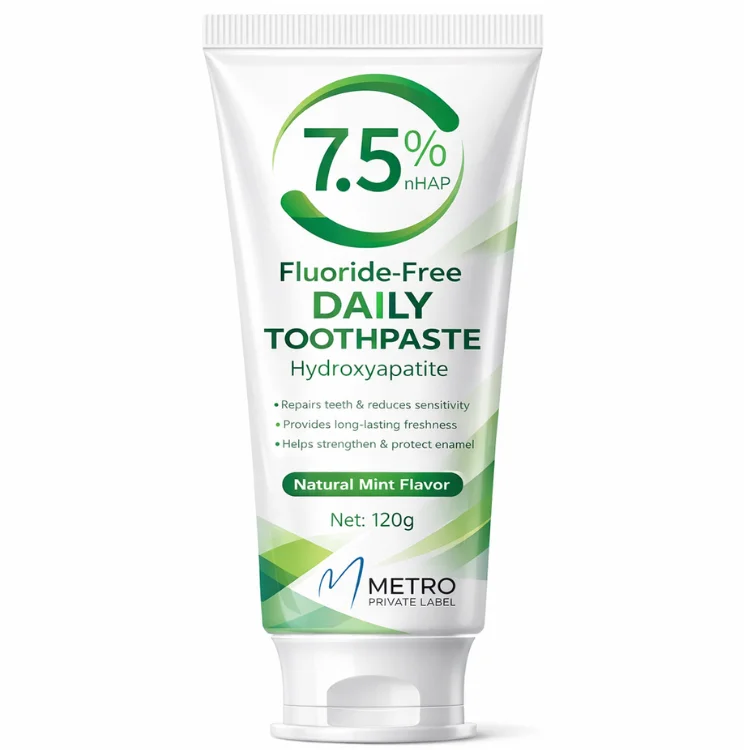
Fluoride-Free Daily Toothpaste
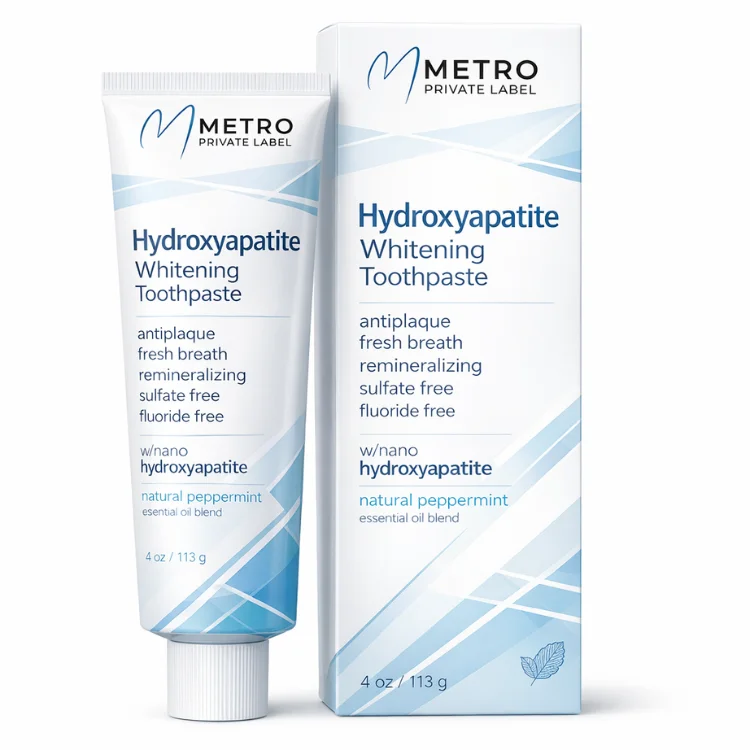
Hydroxyapatite Whitening Toothpaste
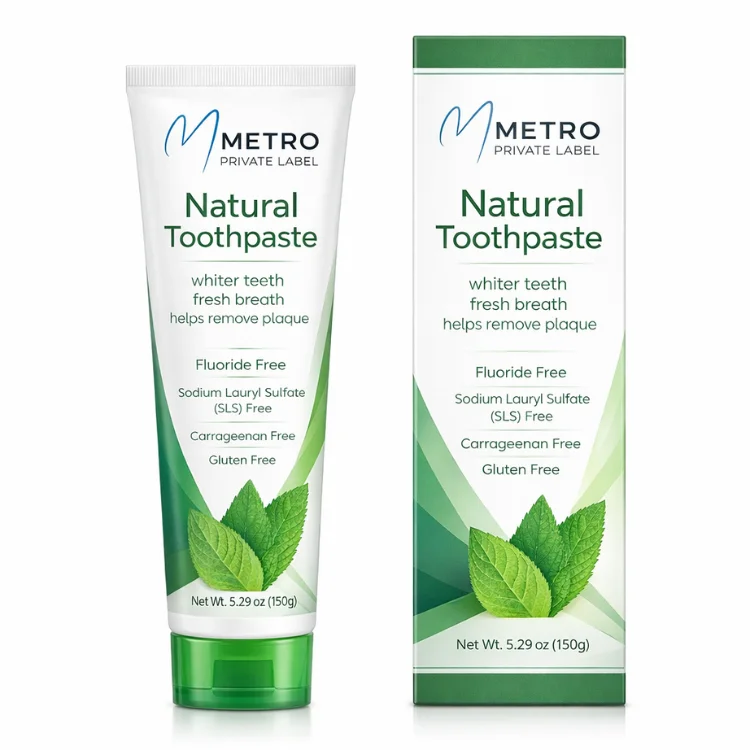
Herbal / Natural Toothpaste
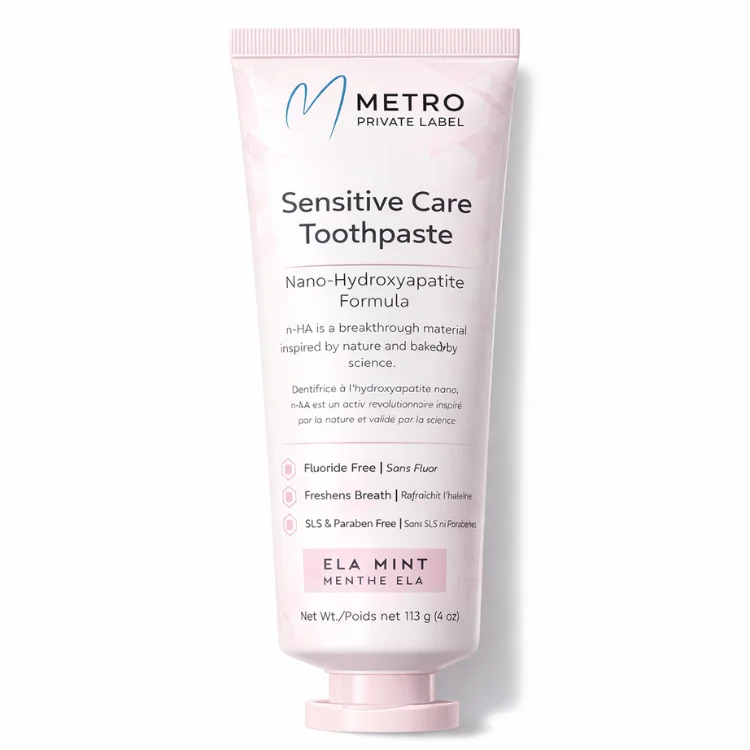
Sensitive Care Toothpaste
Build a Private Label Toothpaste Line That Actually Sells
At Metro Private Label, we understand that launching a toothpaste product is not just about adding another SKU—it’s about creating a product that people use every single day. That means texture, taste, and positioning all need to feel right from the first use. If a toothpaste tastes off, feels too abrasive, or doesn’t match the brand promise, customers won’t repurchase. And in oral care, no repeat purchase means no real business.
Toothpaste products fail when the positioning is unclear, the taste or texture doesn’t match user expectations, or the formula tries to overpromise results that fall into regulatory risk. Our role is to help you avoid those issues early by guiding the right formula direction, claim strategy, and packaging compatibility—so the product you launch is stable, compliant, and aligned with how customers actually buy.
As your manufacturing partner, we focus on helping you build toothpaste SKUs that fit real sales environments. Whether you are launching a fluoride-free daily toothpaste for Amazon, developing a hydroxyapatite whitening SKU for a premium DTC brand, or introducing a gentle care line for clinics or sensitive users, we help define the right product structure from the beginning. From sampling and flavor adjustment to packaging coordination and label compliance, our team supports each step so you can move efficiently toward production and scale with confidence.
💡 Our 4 Core Private Label Toothpaste Product Types
1️⃣ Fluoride-Free Daily Toothpaste
A clean, everyday toothpaste designed for brands that want a simple and widely accepted entry product. This format focuses on gentle cleansing, fresh breath, and daily usability. It is one of the easiest products to launch across EU, UK, and international markets, making it ideal for first-time SKUs and fast-moving e-commerce brands.
2️⃣ Hydroxyapatite Whitening Toothpaste
A premium positioning toothpaste built around modern ingredient trends. This type of product is often used as a hero SKU for brands looking to differentiate through science-backed or alternative whitening concepts—without entering OTC complexity. It works particularly well for DTC brands and high-margin product strategies.
3️⃣ Herbal / Natural Toothpaste
A market-friendly option focused on natural ingredients and mild formulations. This category performs well in both retail and distribution channels where customers are looking for simple, familiar, and easy-to-understand products. It is also highly scalable with multiple flavor and ingredient variations.
4️⃣ Gentle Care Toothpaste (Sensitive Positioning)
A comfort-focused toothpaste designed for users who prefer a milder brushing experience. Instead of making medical claims, this format emphasizes low irritation, smooth texture, and daily comfort. It is especially suitable for clinic-related brands and premium positioning where user experience matters more than aggressive functionality.
🎯 MOQ & Packaging Strategy (Built for Scalable Launches)
Toothpaste packaging—especially tubes—comes with higher customization requirements, which is why most projects are structured around a packaging MOQ of 10,000 units. To help brands manage risk, we offer a flexible approach: you can start with around 3,000 finished products while reserving the remaining packaging for future production. This allows you to test your market, validate demand, and scale without changing your packaging system.
We support a range of packaging options including plastic tubes, aluminum tubes, and retail-ready cartons designed for both e-commerce shipping and retail display. Our team coordinates formula stability, filling compatibility, and packaging performance to ensure your product delivers a consistent experience from the first batch to larger-scale production.

More Than Just a Private Label Toothpaste Manufacturer
At Metro Private Label, we don’t treat toothpaste as just another product you add to your catalog. For many brands, toothpaste quickly becomes a core SKU—it’s used daily, repurchased frequently, and often plays a key role in how customers judge your brand’s overall quality. If the taste feels off, the texture is too harsh, or the product becomes inconsistent across batches, customers notice immediately—and they don’t come back.
A successful toothpaste isn’t about adding more features or making complex claims. It’s about delivering a product that feels right every day, performs consistently, and fits naturally into your customer’s routine. That’s what turns a simple launch into a repeat-purchase product that supports long-term growth.

✅ Toothpaste Formats That Already Work in the Market
We don’t develop products based on theory—we focus on what is already selling. By studying top-performing oral care products across Amazon, fast-growing DTC brands, and retail channels, we concentrate on formats that customers already understand and trust. These include fluoride-free daily toothpaste, hydroxyapatite-based whitening options, herbal formulations, and gentle care positioning for comfort-focused users.
When a product format is already familiar to your target audience, it becomes easier to position, easier to market, and much easier to scale. Our role is to help you start from that proven foundation instead of guessing what might work.

✅ Production Models That Match How Brands Actually Grow
We understand that most brands don’t launch with large volumes immediately. Toothpaste packaging—especially tubes—requires higher minimums, but we structure production in a way that reduces your risk. You can begin with a smaller finished batch while securing packaging for future scaling, allowing you to test your market without committing to full-volume production upfront.
As your brand grows, we help you scale efficiently—without needing to change packaging systems or restart development. The goal is to support steady growth, not create unnecessary barriers at the beginning.
✅ Consistent Formulas That Support Repeat Purchases
Toothpaste is a daily-use product, which means consistency matters more than anything else. Customers expect the same taste, texture, and experience every time they use it. We focus on maintaining formula stability, balancing flavor and texture, and ensuring compatibility with packaging so that each production batch performs the same as the last.
This consistency helps reduce complaints, improve reviews, and build long-term trust—especially in a category where customers quickly notice even small differences.
✅ Execution & Compliance Support That Keeps You Moving
We don’t just manufacture toothpaste—we help you move your product into real markets. From ingredient documentation and labeling support to packaging coordination and production planning, we guide the process so you can move from idea to finished product efficiently.
For brands selling in EU, UK, Southeast Asia, and the Middle East, we focus on cosmetic positioning that allows for a smoother and more manageable compliance process. And for more complex markets, we help you define the right product direction early—so you avoid costly mistakes later.
- METRO
- Typical OEM factory
| METRO | Typical OEM factory | |
$ /year | /year | |
| Minimum order quantity | ✅ 500 units for startup brands — low-risk entry for first-time founders. | ❌ 3,000 units minimum, limiting flexibility. |
| Packaging recommendations | ✅ Compatibility + visual templates to ensure perfect fit and premium look. | ❌ Not provided. |
| Launch support | ✅ Label compliance & claim copywriting included for export markets. | ❌ Not available. |
| Sample delivery time | ✅ 7–14 days with labeled packaging. | ❌ Usually 30+ days. |
| Compliance & Documentation | ✅ INCI, COA, SDS, GMP-ready — export with confidence. | ❌ Basic INCI only. | Buy Now |
✨ Build a Private Label Toothpaste Line That Performs Beyond Expectations
When you partner with Metro Private Label, you’re not just working with a factory that can fill toothpaste—you’re working with a team that understands how toothpaste actually performs in the market. A successful toothpaste product isn’t defined by how many ingredients it contains or how complex the formula looks. What really matters is how it feels during daily use, how consistent it is across batches, and whether customers enjoy using it enough to repurchase it again and again.
Toothpaste is one of the few products your customers use every single day. That means taste, texture, and overall experience matter more than anything else. If the flavor feels off, the texture is too harsh, or the product doesn’t align with your brand positioning, customers will not come back. Our role is to help you launch toothpaste products that feel right from the first use, perform consistently over time, and support real repeat purchase behavior.
Whether you’re developing a clean fluoride-free daily toothpaste, a hydroxyapatite-based whitening SKU, a natural herbal product for mass appeal, or a gentle care formula for comfort-focused users, we structure each project around real consumer expectations. In the oral care category, small details—like foam level, flavor balance, and after-feel—have a direct impact on how customers judge the product. We help you get these details right early, so your product is not only launch-ready, but also positioned to succeed in real sales environments.
🧪 Formulation Designed for Real Daily Use
We don’t rely on generic toothpaste bases. Every formula we develop focuses on balancing cleaning performance, taste experience, and daily comfort. Whether your brand is targeting a clean beauty positioning, a premium whitening concept, or a gentle everyday product, we help align the formulation with your market, your customer expectations, and your pricing strategy. The goal is simple: create a product that performs consistently—not just in testing, but in everyday use.
📦 Packaging & MOQ Designed for Real Brand Launch Conditions
Toothpaste packaging comes with practical constraints, especially when working with tubes. Instead of forcing full-volume production from the beginning, we structure projects in a way that allows you to move forward with lower risk. You can start with a smaller finished batch while securing packaging for future production, giving you the flexibility to test your market and scale without changing your packaging system.
We support plastic tubes, aluminum tubes, and retail-ready packaging designed for both e-commerce and retail environments. Our team coordinates packaging compatibility, filling performance, and production planning to ensure your product remains stable from the first batch to scaled production.
⚙️ A Clear and Structured Production Process
We keep the entire process transparent and easy to follow. From initial sampling and formula direction to packaging confirmation and production scheduling, each step is clearly communicated so you can plan your launch timeline with confidence. Whether you’re preparing for an Amazon launch, building a DTC oral care brand, or supplying retail channels, we help you move forward without unnecessary delays or confusion.
🌿 Built for Brands Ready to Launch and Scale
We measure success not just by production—but by how well your product performs after it reaches the market. That’s why we focus on stable formulas, scalable production systems, and practical execution that supports long-term growth. With Metro Private Label, your toothpaste line is designed to launch smoothly, perform consistently, and generate repeat purchases—so your business grows beyond the first order.

FAQs Toothpaste
For your convenience, we’ve gathered the most commonly asked questions about our Toothpaste . However, should you have any further queries, please don’t hesitate to reach out to us.
1. What types of toothpaste can you manufacture?
We focus on cosmetic toothpaste formats that are easy to launch and scale in global markets. This includes fluoride-free daily toothpaste, hydroxyapatite-based whitening options, herbal or natural formulas, and gentle care positioning for comfort-focused users. Our goal is to help you choose a product direction that is both compliant and commercially viable.
2. Can you help us choose the right toothpaste direction for our brand?
Yes, and this is actually where we add the most value. Many clients come to us with a general idea, but not a clear product structure. We help you define the right formula direction based on your target market, price positioning, and sales channel—so you’re not just launching a product, but launching something that can actually sell.
3. What’s your MOQ for private label toothpaste?
Toothpaste packaging—especially tubes—requires higher minimums, so most projects are based on around 10,000 units of packaging. To reduce your risk, we offer a flexible approach where you can start with approximately 3,000 finished products while reserving the remaining packaging for future production. This allows you to test your market before scaling.
4. Do you offer ready formulas or fully custom development?
We support both. If you want to move fast, you can start with our existing, market-tested formulas. If you’re building a more differentiated brand, we can also work with you to adjust texture, flavor, ingredient positioning, and overall experience to match your concept.
5. How long does it take to go from sample to production?
In most cases, sampling takes about 2–4 weeks depending on adjustments, and production typically takes another 4–6 weeks. If your timeline is tight—such as preparing for a product launch—we can help prioritize your project and plan accordingly.
6. Can you support compliance for EU, UK, or other markets?
Yes. We focus on cosmetic toothpaste positioning for markets like the EU, UK, Southeast Asia, and the Middle East, where the compliance process is more straightforward and manageable. For more complex markets like the US, we can guide you on suitable product positioning to avoid regulatory issues.
7. Do you provide documentation like INCI, MSDS, and COA?
Absolutely. We provide the standard documentation required for cosmetic products, including ingredient lists (INCI), MSDS, COA, and basic compliance support. This helps ensure your product is properly prepared for listing, distribution, and regulatory review.
8. Can you help with packaging and labeling?
Yes, we offer full packaging support—from tube selection (plastic or aluminum) to outer cartons and labeling. We also help ensure that your label content aligns with your target market requirements, which is especially important for e-commerce platforms and international sales.
9. Can you support e-commerce brands like Amazon or Shopify sellers?
Yes, and many of our clients come from these channels. We understand the importance of packaging durability, labeling accuracy, and fast turnaround times. Our goal is to help you launch products that are ready for real sales environments—not just production.
10. Do you work with first-time founders or only experienced brands?
We work best with clients who already have a clear business direction—whether that’s an existing sales channel, industry experience, or a defined product concept. This allows us to move faster, communicate more efficiently, and help you bring your product to market with fewer delays.
What stood out to us was how well Metro Private Label understood our market from the beginning. We weren’t just given a formula—we were guided on product positioning, compliance, and how to structure our first toothpaste SKU. The process felt organized, and the final product matched exactly what we wanted to launch.
Emma Clarke, Founderfrom United Kingdom
We move fast on Amazon, so we needed a supplier who could keep up. Metro Private Label helped us go from concept to production without unnecessary delays. Their communication was clear, timelines were realistic, and the product quality has been consistent across batches.
Michael Turner, E-commerce Brand Operatorfrom United States
We’ve worked with several manufacturers before, but Metro Private Label was one of the few that could explain both formulation logic and compliance requirements clearly. It made decision-making much easier on our side, especially for EU market preparation.
Sophie Laurent, Product Managerfrom France
What we value most is stability. Metro Private Label delivered a product that performs consistently, which is critical for our retail channels. The packaging coordination and production planning were handled smoothly, and it made scaling much easier for us.
David Nguyen, Distributorfrom Australia
We wanted to introduce a toothpaste product that aligns with our clinic’s professional image. Metro Private Label helped us define the right direction and kept the formulation gentle and reliable. Our clients have responded very well, and reordering has been straightforward.
Isabella Rossi, Clinic Ownerfrom Italy
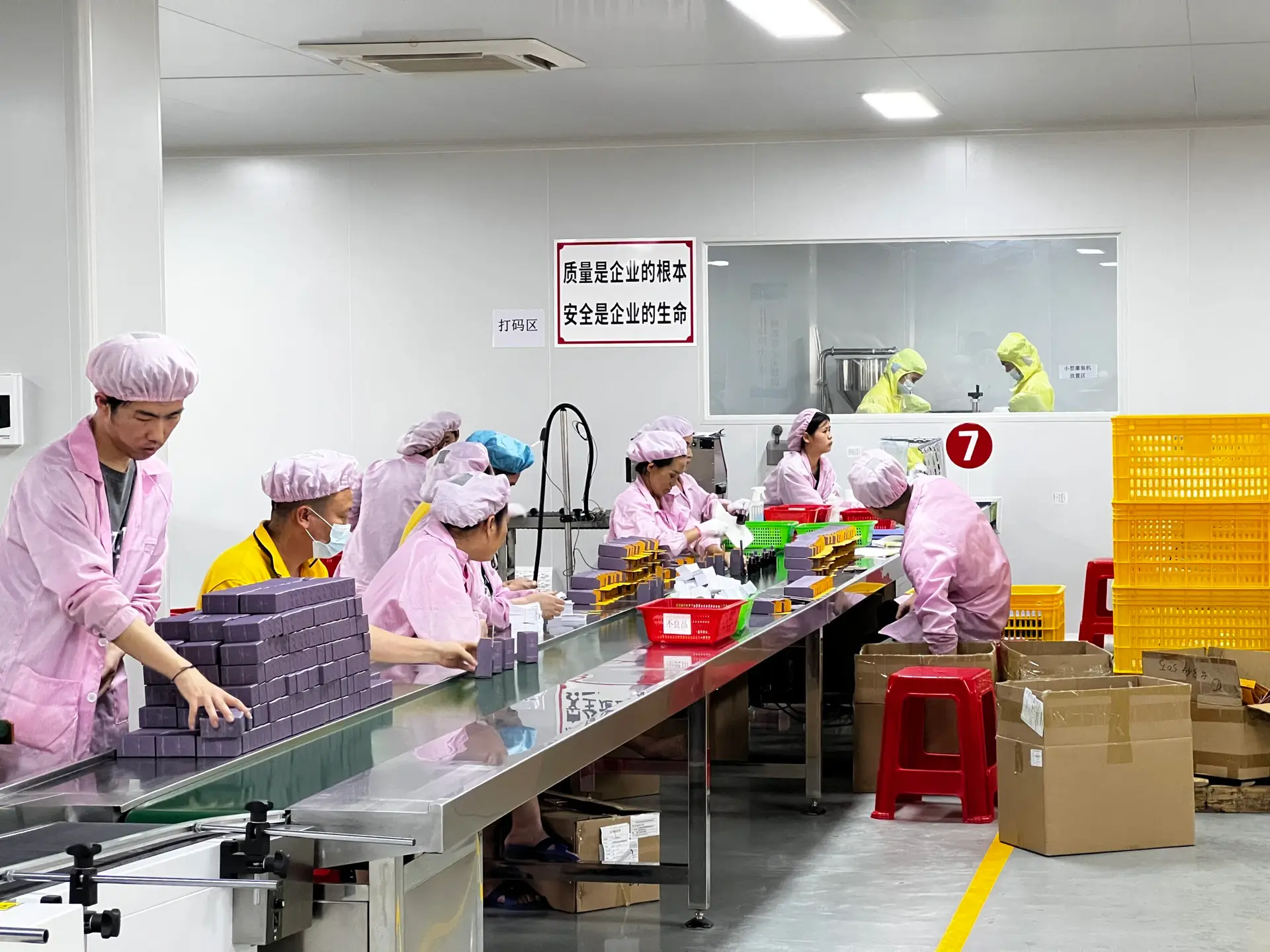




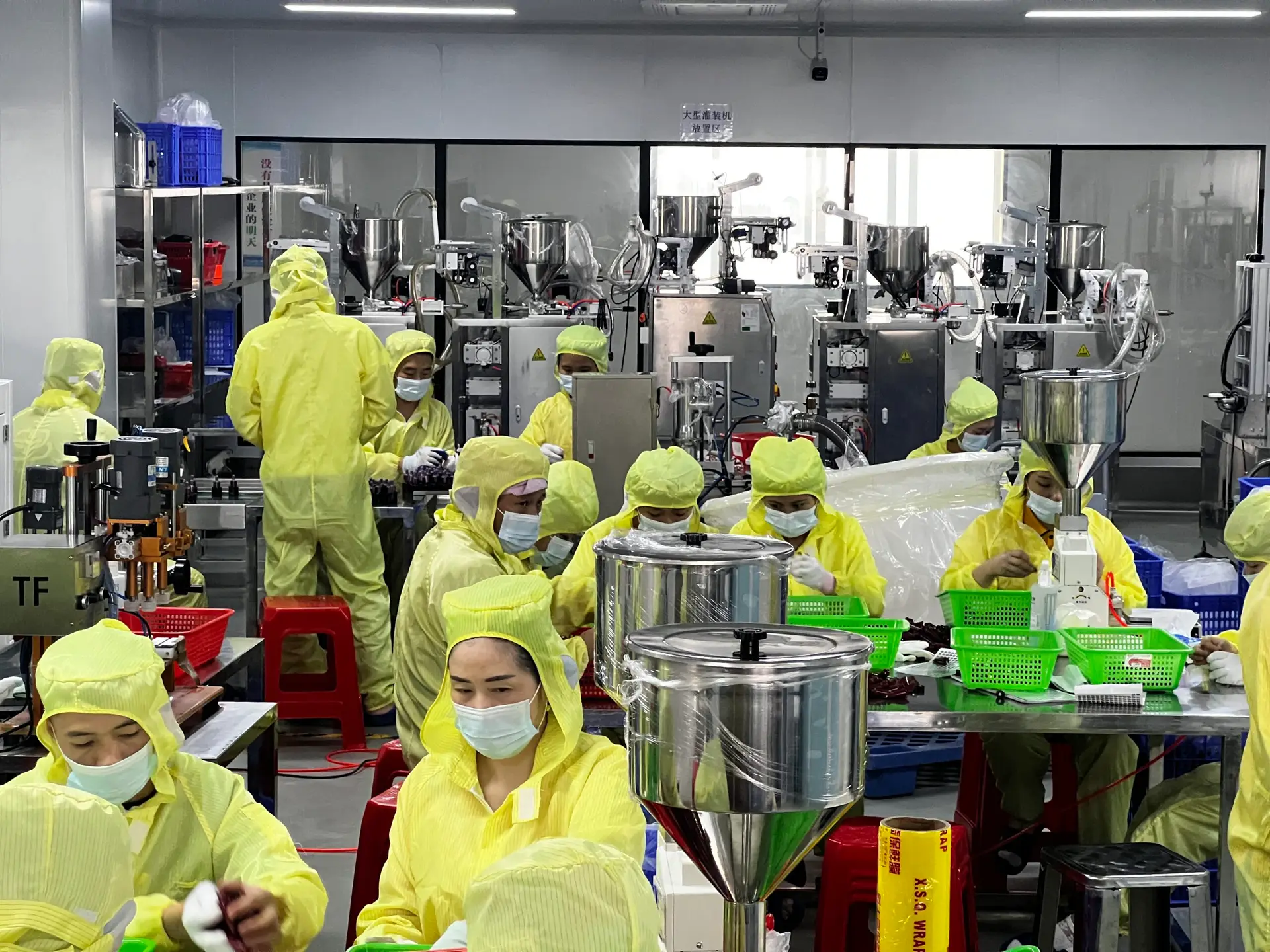

Metro Private Label in Numbers
Happy Clients
0 +
Million-dollar Buyers
0 +
Formulation
0 +
Professional Staffs
0 +
Your Ultimate Guide to Toothpaste
If you’re planning to launch a private label toothpaste—whether it’s your first oral care SKU or an expansion beyond skincare—you’re not just adding another product to your lineup. You’re stepping into a category that is used every single day, where customer loyalty is built through routine, not impulse. Toothpaste is one of the few products where repeat purchase behavior is almost guaranteed if the experience is right. But that also means expectations are higher. If the taste feels off, the texture feels uncomfortable, or the packaging leaks, customers won’t give it a second chance. When developed correctly, a toothpaste product becomes part of a daily habit, helping your brand generate consistent, long-term revenue instead of relying on one-time conversions.
Over the past few years, we’ve seen toothpaste evolve from a basic hygiene product into a positioning-driven category influenced by ingredients, lifestyle choices, and brand identity. From fluoride-free concepts and hydroxyapatite-based formulas to herbal positioning and clean-label storytelling, the way customers choose toothpaste today is much closer to how they choose skincare. At Metro Private Label, we’ve worked with e-commerce operators, beauty founders, and distributors who succeed not because they launch quickly, but because they align formula direction, packaging structure, compliance strategy, and pricing from the very beginning. Toothpaste may look simple, but the difference between a product that scales and one that stalls often comes down to decisions made behind the scenes.
This guide is built from what we’ve learned working on real toothpaste projects across different markets and sales channels. Instead of focusing only on formulation theory, we want to share how toothpaste products actually perform in commercial environments. Factors such as choosing a product type that fits your sales channel, designing a formula that customers enjoy using daily, selecting packaging that survives shipping and presents well in retail, structuring MOQ to reduce upfront risk, and aligning compliance early all play a critical role in success. Our goal is to help you avoid common mistakes, move more efficiently, and build a toothpaste product that is not only ready to launch, but ready to grow with your brand.
Table of Contents
How to Choose the Right Toothpaste Type for Your Market
Choosing the right toothpaste type is not just a formulation decision—it’s one of the most important strategic choices I help my clients make before anything else moves forward. From my experience, the difference between a product that simply launches and one that actually sells comes down to how well it fits the expectations of the market it enters. Toothpaste is a daily-use product, and that changes everything. Customers don’t experiment much in this category. They gravitate toward products that feel familiar, easy to trust, and clearly positioned. That’s why I always approach toothpaste development from a market-first perspective rather than a formula-first mindset.
Understanding How Different Markets Respond to Toothpaste Positioning
When I evaluate a new toothpaste project, I always begin by looking at where the product will be sold, because each market has its own set of preferences, habits, and expectations. In Europe and the UK, I’ve consistently seen strong demand for fluoride-free and clean-label positioning. Consumers in these regions tend to pay closer attention to ingredients and are more open to alternatives that feel safer or more natural. In contrast, in Southeast Asia and the Middle East, I’ve noticed that herbal and freshness-driven concepts tend to perform better because they align with long-standing cultural habits and consumer familiarity.
What I’ve learned over time is that customers rarely spend time trying to understand something completely new. They prefer products that fit into what they already recognize. If your toothpaste requires too much explanation, it creates friction at the point of purchase. This is why I always guide my clients to choose a product type that already has demand in their target region. It’s not about following trends blindly, but about entering a space where the customer already knows how to make a decision.
Matching Product Type with Real Sales Channels
After understanding the market, the next thing I focus on is how the product will actually be sold, because the sales channel has a direct influence on what kind of toothpaste will succeed. When I work with e-commerce brands, especially those selling on Amazon or Shopify, I emphasize clarity above everything else. Online customers make decisions quickly, often within seconds, and they rely heavily on simple, recognizable positioning. This is why I often recommend starting with fluoride-free daily toothpaste or hydroxyapatite-based whitening products. These formats are easy to explain, easy to compare, and easy to market through product listings and ads.
For distributors or retail buyers, my approach shifts slightly. In these cases, the product needs to move efficiently across multiple points of sale, which means familiarity and consistency become more important than differentiation. Herbal or natural toothpaste formats often work well in these environments because they appeal to a broad audience and require less customer education. I’ve found that when the product aligns with both the channel and the customer’s expectations, the sales process becomes much smoother and more predictable.
Why Positioning Early Makes the Entire Process Easier
One of the biggest mistakes I see is brands trying to figure out positioning after the product has already been developed. From my perspective, that approach creates unnecessary complexity. When the positioning is unclear at the beginning, it affects everything that comes after—packaging design, pricing strategy, marketing messaging, and even customer perception. I’ve worked on projects where the formula itself was well-developed, but because the positioning didn’t match the market, the product struggled to gain traction.
On the other hand, when the positioning is defined clearly from the start, everything becomes more efficient. The packaging naturally reflects the product type, the marketing message becomes more focused, and customers understand the product immediately. This alignment reduces friction not only during the launch phase but also as the brand begins to scale. In my experience, the brands that succeed are not the ones with the most complex products, but the ones with the clearest positioning.
How I Guide Clients Toward the Right Product Direction
When I work with clients, I don’t begin by suggesting ingredients or technical specifications. I start by asking questions about their target market, their sales channel, and their pricing strategy. I want to understand how they plan to sell the product and who they are selling it to. From there, I help them narrow down to a toothpaste type that makes sense for their specific situation.
Sometimes, the best approach is to start with a simple, widely accepted product that allows the brand to enter the market quickly and with lower risk. In other cases, especially when the client already has a strong brand identity or customer base, it makes sense to develop a more differentiated product that can serve as a flagship SKU. What matters most to me is that the direction we choose is realistic, scalable, and aligned with how customers actually behave.
Building a Foundation for Long-Term Growth
I always remind my clients that launching a toothpaste product is not just about the first order—it’s about building a foundation for long-term growth. Toothpaste is a repeat-purchase category, which means the real value comes from consistency and customer retention over time. If the first product fits the market well, it becomes much easier to expand into additional SKUs, refine the brand’s positioning, and build a loyal customer base.
From my experience, the brands that grow successfully are the ones that start with the right product type for their market. They don’t try to force a concept into a space where it doesn’t belong. Instead, they align their product with existing demand and then build from there. This approach not only reduces risk during the launch phase but also creates a much stronger pathway for scaling the business in a sustainable and predictable way.
Cosmetic vs. OTC Toothpaste: What You Need to Know Before You Launch
When I guide clients through launching a toothpaste product, one of the most important and often underestimated decisions is how the product will be classified from a regulatory perspective. This is not just a technical detail—it directly affects your timeline, your cost structure, and even whether your product can realistically reach the market you are targeting. From my experience, many brands make the mistake of choosing a direction that seems more “powerful” on paper, but ends up creating unnecessary complexity that slows everything down. Understanding the difference between cosmetic and OTC toothpaste, and more importantly, knowing how to position your product within that boundary, is one of the most valuable steps you can take before development even begins.
Why Toothpaste Sits in a Unique Regulatory Position
I always explain to clients that toothpaste is not as straightforward as most skincare products, because it sits right at the intersection between cosmetic and drug categories. The classification depends less on the base formula itself and more on how the product is positioned, what ingredients are used, and most importantly, what claims are made. In many regions, if your toothpaste is positioned for general cleaning, freshness, or daily care, it can fall under cosmetic regulations, which are relatively manageable and allow for a smoother path to market.
However, the moment you begin to position the product around specific therapeutic benefits, such as cavity prevention, anti-gingivitis effects, or medically recognized enamel repair claims, the classification can shift into OTC or drug territory, especially in markets like the United States. What I’ve seen repeatedly is that brands unintentionally cross this boundary not because they intend to, but because they are trying to make their product sound more competitive. In reality, that decision often introduces a completely different level of regulatory responsibility.
How Cosmetic Positioning Simplifies the Entire Launch Process
In most of the projects I work on, I recommend starting with a cosmetic positioning, especially for brands that want to move efficiently and validate their product in the market first. The reason is not just about avoiding regulation—it’s about creating a smoother and more predictable development process. When the product is clearly positioned as a cosmetic toothpaste, the compliance pathway becomes more transparent, documentation requirements are easier to manage, and the overall timeline is significantly shorter.
I’ve worked with brands targeting the EU, UK, Southeast Asia, and the Middle East, where cosmetic toothpaste can be registered and sold with relatively clear guidelines. In these cases, the focus shifts from regulatory barriers to product experience, branding, and market fit. This allows brands to concentrate on what actually drives sales, such as texture, flavor, packaging, and positioning, rather than being slowed down by complex approval processes.
The Real Cost of Choosing an OTC Direction Too Early
One of the biggest issues I’ve seen is that brands underestimate what it actually means to enter the OTC category. It’s not just about adding a specific ingredient or making a stronger claim. It changes the entire structure of the project. The development timeline becomes longer, the documentation requirements increase significantly, and the level of regulatory scrutiny is much higher. In some cases, this can require additional testing, certifications, and ongoing compliance obligations that many early-stage brands are not prepared for.
Beyond the technical requirements, there is also a strategic cost. While the product is going through extended regulatory processes, the brand is not in the market, not generating feedback, and not building momentum. I’ve seen situations where brands spend months preparing for a highly regulated product, only to realize that they could have launched a simpler, cosmetic-positioned product much earlier and started generating revenue and market data. From my perspective, this delay is often more costly than any perceived advantage gained from stronger claims.
How I Define the Right Boundary for Each Project
When I work with clients, I focus on helping them clearly understand where the boundary lies and how to stay within a positioning that supports both compliance and commercial success. This is not about limiting what the product can be—it’s about aligning the product with the realities of the market and the brand’s current stage of growth. I look at the target market first, because different regions interpret claims and classifications differently. Then I consider how the product will be sold, whether through e-commerce, retail, or professional channels, and how the messaging will be communicated to customers.
In many cases, I find that a well-positioned cosmetic toothpaste can achieve the same commercial impact without triggering unnecessary regulatory complexity. By focusing on daily usability, ingredient transparency, and a clear but compliant value proposition, brands can create products that are easy to understand, easy to market, and easy to scale. The key is not to remove value, but to express it in a way that fits within the regulatory framework of the target market.
Turning Regulatory Strategy into a Competitive Advantage
What I’ve learned over time is that understanding this boundary is not just about avoiding problems—it can actually become a competitive advantage. Brands that position their products correctly from the beginning are able to move faster, adapt more easily, and respond to market feedback without being restricted by complex regulatory requirements. They can test new ideas, iterate on packaging, and expand their product line more efficiently.
From my perspective, the goal is not to push into the most complex category as quickly as possible, but to build a strong foundation that allows for sustainable growth. Starting with a cosmetic toothpaste that aligns with your market gives you the flexibility to launch, learn, and scale. Once your brand is established and your supply chain is stable, you can always explore more advanced product directions if it makes sense for your long-term strategy.
Making a Decision That Supports Real Business Growth
In the end, the choice between cosmetic and OTC toothpaste is not just a regulatory decision—it’s a business decision that affects every part of your project. I always encourage clients to think about where they are in their growth journey and what will allow them to move forward most effectively. A clear and well-defined cosmetic positioning often provides the fastest and most practical path to market, especially for brands that want to launch efficiently and start building real customer traction.
When this decision is made thoughtfully at the beginning, everything else becomes more aligned. Development moves faster, communication becomes clearer, and the product is better positioned for success in the market. From my experience, this is one of the most important steps in building a toothpaste product that is not only compliant, but also commercially viable and ready to grow.
What Makes a Toothpaste “Sell” in E-commerce Channels
When I work with brands selling through Amazon, Shopify, or other direct-to-consumer platforms, I always emphasize that success in e-commerce is fundamentally different from traditional retail. In a physical store, a product can rely on shelf presence, recommendations, or even staff explanations. In e-commerce, none of that exists. A toothpaste product has only a few seconds to communicate what it is, who it’s for, and why it’s worth buying. From my experience, the products that succeed are not necessarily the most complex or technically advanced, but the ones that are positioned clearly, understood instantly, and designed to fit naturally into a customer’s daily routine.
Why Clear Positioning Is the Foundation of Conversion
The first thing I always focus on is positioning, because it directly determines whether a customer will even consider the product. When a customer scrolls through search results, they are not reading every detail—they are scanning for something familiar and easy to understand. If the product positioning is vague or overloaded with too many claims, it creates hesitation. In e-commerce, hesitation almost always leads to abandonment.
I’ve seen that the highest-performing toothpaste products tend to fall into clearly defined categories that customers already recognize. A fluoride-free daily toothpaste immediately communicates simplicity and safety. A hydroxyapatite whitening toothpaste signals a modern, premium alternative. These types of positioning reduce the cognitive effort required for the customer to make a decision. When I guide clients, I always push them toward clarity over creativity, because in e-commerce, clarity converts much better than complexity.
How Ingredient Story Shapes Perceived Value
Once the positioning is clear, the next layer I look at is the ingredient story, because this is where trust is built in an online environment. Customers cannot physically experience the product before purchasing, so they rely on cues that signal quality and credibility. Ingredients play a major role in that perception.
What I’ve learned is that customers are not necessarily looking for more ingredients, but for better explanations. A product that highlights a clear and relevant ingredient concept, such as fluoride-free positioning or hydroxyapatite-based whitening, creates a stronger connection than a long list of unfamiliar components. The key is alignment. The ingredient story must match the product’s positioning and the customer’s expectations. When this alignment is achieved, the product feels more trustworthy, and the decision to purchase becomes easier.
The Importance of User Experience in Driving Repeat Purchases
While positioning and ingredient story are critical for the first purchase, I always remind my clients that the real success of a toothpaste product lies in repeat purchases. Toothpaste is used every day, often multiple times a day, which means the user experience becomes extremely important over time. Small details such as taste, foam texture, smoothness during brushing, and the after-feel in the mouth all contribute to how the customer evaluates the product.
I’ve worked on projects where the initial sales were strong because the positioning was effective, but the product failed to sustain growth because the daily experience did not meet expectations. In e-commerce, this issue becomes visible very quickly through customer reviews. Negative feedback about taste or texture can significantly impact conversion rates and long-term performance. This is why I always place a strong emphasis on developing a formula that is not only stable, but also enjoyable and consistent in everyday use.
Why Simplicity Improves Marketing Efficiency
Another factor I consistently observe is that simpler products are much easier to market in e-commerce environments. Every element of your product, from the product title to the packaging design, needs to communicate value quickly and clearly. If the product requires too much explanation, it becomes harder to create effective listings, advertisements, and visual content.
When I help clients develop toothpaste products, I always think about how the product will appear on a product page or in an ad. Can the value be understood in a few seconds? Can the benefit be communicated in a short headline? Does the packaging visually reinforce the positioning? These considerations are just as important as the formula itself, because they directly influence how efficiently the product can attract and convert customers.
How Packaging and Format Influence Online Performance
Although many people think of packaging as a secondary consideration, I see it as a critical factor in e-commerce success. Packaging affects not only the visual appeal of the product, but also its functionality during shipping and daily use. For online sales, durability and consistency are essential. If a toothpaste tube leaks, deforms, or feels inconsistent, it can lead to negative reviews and returns.
At the same time, packaging also plays a role in how the product is perceived. A clean and well-designed tube, combined with clear labeling, reinforces the product’s positioning and makes it easier for customers to trust what they are buying. I always work with clients to ensure that packaging choices support both the functional and visual aspects of the product, because both are equally important in an e-commerce environment.
Building a Product That Fits Into Daily Habits
One of the most important questions I ask during product development is how the toothpaste will fit into a customer’s daily routine. E-commerce products that perform well are not necessarily those that introduce completely new behaviors, but those that improve existing habits. A toothpaste that feels comfortable, tastes pleasant, and delivers a consistent experience becomes part of the customer’s routine without requiring effort.
From my perspective, this is where long-term value is created. When a product integrates seamlessly into daily use, it encourages repeat purchases and builds customer loyalty. This is especially important in categories like oral care, where customers are less likely to switch products frequently once they find something they trust.
Turning E-commerce Performance Into Sustainable Growth
In the end, what makes a toothpaste product “sell” in e-commerce is not just its ability to generate initial sales, but its ability to sustain performance over time. A product that combines clear positioning, a strong and believable ingredient story, and a consistent user experience creates a foundation for long-term growth.
From my experience, the brands that succeed are the ones that understand this balance and execute it consistently. They focus on making the product easy to understand, enjoyable to use, and aligned with how customers make decisions online. When all of these elements come together, the product does more than just sell—it builds momentum, generates positive reviews, and becomes a reliable driver of revenue in a competitive digital marketplace.
How to Build a Toothpaste SKU That Can Scale
When I work with brands on developing a toothpaste product, I always emphasize that launching is only the first milestone, not the end goal. A product that simply reaches the market is not necessarily a successful product. The real objective is to build a SKU that can grow with your business, adapt to increasing demand, and remain stable as you scale from smaller test batches to larger production volumes. From my experience, the brands that succeed long term are the ones that think beyond the first order and structure their product in a way that supports both immediate launch and future expansion.
Why I Always Plan for Scale Before the First Batch
One of the most common mistakes I see is brands focusing entirely on getting their first batch out as quickly as possible, without thinking about what happens when the product starts to sell. At that stage, decisions are often made based on short-term convenience rather than long-term efficiency. However, once demand increases, those early decisions can become limitations. I’ve seen cases where packaging had to be changed, formulas had to be adjusted, or suppliers had to be replaced simply because scalability was not considered from the beginning.
This is why I always approach product development with scale in mind from day one. I don’t just ask whether the product can be produced—I ask whether it can be reproduced consistently at larger volumes, whether the supply chain can support growth, and whether the structure of the product allows for expansion without disruption. Planning for scale early doesn’t slow down the launch; it actually prevents delays later when the product begins to gain traction.
How I Choose Formula Directions That Can Grow With Demand
When I evaluate a toothpaste formula, I don’t only look at performance or positioning. I also consider how stable and manageable the formula will be as production increases. Some formulations may look appealing at a conceptual level, but they rely on ingredients or processes that are difficult to scale efficiently. This creates risk as the product grows, because maintaining consistency becomes more challenging.
I always guide clients toward formula directions that balance market demand with operational practicality. A well-positioned fluoride-free daily toothpaste or a hydroxyapatite-based whitening product is not only commercially relevant, but also structurally easier to scale. At the same time, I pay close attention to sensory consistency, because toothpaste is a product customers use every day. If the taste, texture, or foam changes between batches, customers will notice immediately, and that can impact long-term retention. A scalable formula is one that performs the same way every time, regardless of production volume.
Why Packaging Decisions Are Critical for Long-Term Efficiency
Packaging is one of the most important yet underestimated factors in building a scalable toothpaste SKU. Toothpaste tubes, whether plastic or aluminum, often come with higher minimum order requirements, and that can create challenges if not planned correctly. I’ve seen brands choose packaging based purely on initial cost or appearance, only to realize later that it limits their ability to scale or creates inefficiencies in production.
When I work with clients, I always frame packaging as a system rather than a one-time decision. I help them structure their project so they can start with a manageable quantity of finished products while securing a larger batch of packaging materials. This approach allows them to test the market without overcommitting, while also ensuring that they are ready to scale without needing to redesign or reorder new packaging formats. It creates continuity between the first production run and future expansion, which is essential for maintaining consistency in both branding and operations.
How I Align Pricing With Scalable Growth
Pricing is another element that I always consider early in the process, because it directly affects how well a product can grow. Many brands focus on achieving the lowest possible cost for their initial launch, but this approach can create challenges later when additional costs arise from logistics, marketing, or distribution. A price that works for a small batch may not support a larger-scale operation.
I always encourage clients to think about pricing as part of a long-term strategy rather than a short-term decision. The product needs to be positioned in a way that allows for sustainable margins, even as the business expands. This includes leaving room for promotional activities, platform fees, and potential adjustments in production costs. When pricing is aligned correctly from the beginning, it becomes much easier to scale without needing to reposition the product or compromise profitability.
Avoiding the Need to Redesign or Rebuild After Launch
One of the most costly and time-consuming scenarios I’ve encountered is when brands are forced to redesign their product after the first launch. This often happens when key elements such as formula, packaging, or positioning were not aligned with long-term goals. Changing these elements after entering the market creates delays, increases costs, and can disrupt brand consistency.
My goal is always to help clients avoid this situation by making informed decisions early. When the product is structured correctly from the beginning, scaling becomes a natural progression rather than a complicated adjustment. The same formula, the same packaging, and the same positioning can be carried forward as production increases, allowing the brand to focus on growth rather than correction.
Building a Foundation for Product Line Expansion
I also view a scalable toothpaste SKU as more than just a single product. It should serve as a foundation for future expansion. When the first SKU is designed with scalability in mind, it becomes easier to introduce variations, improve existing features, or expand into related categories without disrupting the overall system.
From my perspective, the most successful brands are the ones that treat their first product as the beginning of a structured product line. They choose a direction that can evolve, rather than one that is limited to a single concept. By doing so, they create a pathway for continuous growth, where each new product builds on the success of the previous one.
Turning a Single SKU Into a Scalable Business Asset
In the end, building a toothpaste SKU that can scale is about creating alignment across every part of the product. The formula needs to be stable and repeatable, the packaging needs to support both initial launch and future growth, and the pricing needs to sustain the business as it expands. When all of these elements are considered together, the product becomes more than just an item for sale—it becomes a reliable asset that supports long-term business development.
From my experience, the brands that succeed are the ones that take this broader view from the beginning. They don’t just aim to launch quickly; they aim to launch correctly. By doing so, they create products that not only enter the market smoothly, but also grow steadily, maintain consistency, and generate lasting value over time.
Key Ingredients Driving Modern Toothpaste Trends
When I analyze how the toothpaste market has evolved over the past few years, one pattern stands out very clearly: ingredients are no longer just part of the formula, they are the core of the product’s identity. Customers are not simply choosing toothpaste based on basic function anymore. They are choosing based on what the ingredients represent, how those ingredients fit into their lifestyle, and whether the product aligns with their personal values. From my experience working with e-commerce brands, beauty founders, and distributors, I’ve seen that ingredient-driven positioning often determines whether a product feels relevant, trustworthy, and worth purchasing in a competitive market.
Why Ingredient Positioning Has Become the First Point of Differentiation
In today’s market, I’ve noticed that customers rarely read a product description from start to finish. Instead, they scan for familiar signals, and ingredients have become one of the fastest ways to communicate value. When a customer sees a toothpaste labeled as fluoride-free, hydroxyapatite-based, or herbal, they immediately form an impression of what that product stands for. This happens before they even consider the full details of the formula.
Because of this, I always guide my clients to think of ingredients as a communication tool rather than just a formulation component. The right ingredient direction can simplify your entire marketing strategy. It can make your product easier to explain, easier to position, and easier to differentiate. On the other hand, a product without a clear ingredient story often struggles to gain attention, even if the formulation itself is technically sound.
How Fluoride-Free Positioning Creates a Low-Barrier Entry Into the Market
One of the most consistent trends I’ve worked with is the rise of fluoride-free toothpaste. From my perspective, this trend is not just about avoiding a specific ingredient, but about responding to a broader shift in consumer behavior. Many customers today are actively looking for products that feel simpler, cleaner, and more transparent. Fluoride-free positioning aligns well with this mindset and provides a clear entry point for brands entering the oral care space.
I often recommend this direction to clients who want to launch efficiently without adding unnecessary complexity to their project. In many markets, fluoride-free toothpaste can be positioned within a cosmetic framework, which makes the compliance process more manageable and predictable. At the same time, it offers a strong and easily understandable message for customers. What I always emphasize, however, is that the success of a fluoride-free product depends on how well the overall experience supports the positioning. The texture, taste, and packaging all need to reinforce the idea of simplicity and daily comfort.
Why Hydroxyapatite Has Become a Key Driver for Premium Toothpaste Products
Another ingredient I pay close attention to is hydroxyapatite, which I see as one of the most important developments in modern toothpaste positioning. What makes hydroxyapatite particularly interesting is that it allows brands to build a more advanced, science-driven narrative without necessarily entering complex regulatory territory. This makes it especially attractive for brands operating in competitive e-commerce environments where differentiation is critical.
When I work with clients targeting higher price points or more sophisticated audiences, hydroxyapatite often becomes a strong option because it bridges the gap between performance and positioning. It offers a story that feels both innovative and credible, which is exactly what many modern consumers are looking for. At the same time, I always ensure that the formulation remains practical and scalable, because a premium concept only works if it can be delivered consistently at different production volumes.
The Enduring Appeal of Herbal and Natural Ingredient Systems
While newer ingredient trends continue to emerge, I’ve consistently seen that herbal and natural toothpaste remains a strong and reliable category across many markets. This is particularly true in regions where traditional ingredients are already part of everyday habits. In these cases, herbal positioning does not require extensive explanation because it feels familiar and intuitive to the customer.
From my experience, herbal toothpaste works especially well for brands targeting broader audiences or distribution channels, where simplicity and trust are more important than innovation. However, I always remind clients that natural positioning needs to be authentic. It’s not enough to include a few botanical extracts. The entire product, from formulation to packaging to messaging, needs to reflect a coherent natural identity. When this alignment is achieved, the product becomes much easier to position and scale.
How Ingredient Selection Affects Regulatory Strategy and Speed to Market
One aspect that is often overlooked is how ingredient choice directly influences regulatory complexity. I always make it clear to clients that certain ingredient directions can either simplify or complicate the entire project. For example, staying within a cosmetic positioning with ingredients like hydroxyapatite or herbal extracts allows for a smoother and faster launch in many regions. On the other hand, choosing ingredients or claims that fall into more regulated categories can significantly increase timelines, costs, and operational requirements.
This is why I approach ingredient selection not only from a marketing perspective, but also from a regulatory and operational standpoint. The goal is to find a balance where the product remains attractive and differentiated, while still being practical to launch and scale. In my experience, this balance is what separates projects that move forward efficiently from those that become delayed or overly complicated.
Aligning Ingredient Strategy With Brand Identity and Customer Expectations
Every time I help a client define their ingredient direction, I start by looking at their brand identity and target customer. I ask questions about how they want to position themselves, what kind of audience they are targeting, and how their product will be sold. The answers to these questions guide the ingredient selection process much more than technical possibilities alone.
I’ve found that the most successful products are those where the ingredient story feels natural and consistent with the brand. When customers can immediately understand why a product exists and how it fits into their routine, they are much more likely to trust it and purchase it. This alignment also makes it easier to expand the product line in the future, because the brand has already established a clear and recognizable direction.
Turning Ingredient Trends Into a Scalable Product Strategy
In the end, I always encourage clients to think of ingredient trends not as short-term opportunities, but as part of a larger product strategy. A well-chosen ingredient direction can serve as the foundation for multiple SKUs, allowing the brand to expand while maintaining consistency. This is especially important in categories like oral care, where trust and familiarity play a significant role in repeat purchases.
From my perspective, the goal is not to chase every new trend, but to choose a direction that aligns with both current demand and long-term growth. By doing so, brands can create products that are not only relevant today, but also capable of evolving as the market changes. This is what ultimately transforms a toothpaste product from a single offering into a scalable and sustainable part of a growing brand.
Packaging Choices That Work for E-commerce and Retail
When I guide brands through toothpaste development, I always make it clear that packaging is not just a visual decision—it is a business decision that directly impacts customer experience, logistics performance, cost control, and long-term scalability. In many cases, the difference between a product that generates repeat purchases and one that creates complaints comes down to how well the packaging performs in real-world conditions. From my experience, the most successful brands are the ones that treat packaging as part of the product system, not just an outer layer. I always approach this process by aligning packaging with how the product will actually be sold, shipped, and used, because that alignment determines whether the product can truly succeed in the market.
Why E-commerce Packaging Must Be Designed Around Real Shipping Conditions
When I work with e-commerce brands, especially those operating on Amazon or fast-moving DTC channels, I always start by thinking about what happens after the product leaves the warehouse. Toothpaste may seem simple, but in reality, it is highly sensitive to pressure, temperature, and handling during transit. If the tube structure is not strong enough, or if the cap sealing is not properly engineered, leakage becomes one of the most common and damaging issues. I’ve seen brands lose rankings and accumulate negative reviews simply because their packaging could not withstand real shipping conditions.
This is why I never treat packaging selection as a purely aesthetic process. I evaluate how the tube reacts under compression, whether the sealing mechanism is reliable over time, and how the product behaves when exposed to different temperatures during international shipping. I also consider how units are packed into cartons, because even a well-designed tube can fail if outer packing is not optimized. For me, successful e-commerce packaging is not about looking premium in photos—it is about arriving intact, consistent, and frustration-free for the customer every single time.
How Leakage Prevention and Structural Stability Protect Your Brand Reputation
One of the most overlooked aspects of toothpaste packaging is how small technical details can have a massive impact on brand perception. From my experience, customers are extremely sensitive to leakage, deformation, or product inconsistency. Even a minor issue can quickly translate into negative reviews, refund requests, and long-term damage to brand credibility.
This is why I always pay close attention to sealing systems, tube wall thickness, and cap design. A well-engineered packaging system ensures that the product maintains its integrity from production to end use. I also look at how the formula interacts with the packaging material, because incompatibility can lead to long-term stability issues that only appear after the product has already reached the market. My goal is always to eliminate these risks early, so the brand can focus on growth instead of dealing with preventable operational problems.
Why Retail Packaging Needs to Sell Within Seconds on the Shelf
When I shift my focus to retail and distribution channels, I approach packaging from a completely different perspective. In this environment, packaging is not just functional—it is the primary driver of first impressions. Customers often make decisions within seconds, and the packaging must communicate the product’s value instantly without requiring explanation.
From my experience, effective retail packaging combines clarity, positioning, and visual hierarchy. The customer should immediately understand what the product is, who it is for, and why it is worth buying. Whether the positioning is natural, clinical, premium, or everyday care, every element of the packaging needs to reinforce that message. I always guide clients to think beyond decoration and focus on communication, because packaging that looks attractive but fails to convey a clear message often underperforms in real retail environments.
Choosing the Right Tube Format Based on Brand Positioning and Production Reality
One of the most critical decisions I help clients make is selecting the right tube format. This decision affects not only the product’s appearance but also its cost structure, production flexibility, and scalability. Different materials such as plastic tubes, laminated tubes, and aluminum tubes each come with their own advantages, and choosing the wrong one can create unnecessary limitations later.
I always approach this decision by balancing brand positioning with operational practicality. If a brand wants a clean and flexible entry into the market, I often guide them toward laminated or plastic tubes that offer a good balance between cost, performance, and customization. If the brand is targeting a more premium or clinical positioning, aluminum tubes may provide a stronger visual impact, but they also require higher commitment in terms of MOQ and supply chain planning. My role is to help clients understand these trade-offs clearly so they can make decisions that support both their current launch and future growth.
How Outer Packaging Connects Logistics Efficiency With Brand Experience
Outer packaging is another area where I see many brands underestimate its importance. In reality, it serves as the bridge between logistics and brand experience. For e-commerce, the outer box needs to protect the product during shipping while also delivering a clean and professional unboxing experience. For retail, it becomes part of the visual identity that influences purchase decisions.
When I design outer packaging strategies, I always consider how the product moves through the supply chain. I look at carton strength, space efficiency, and how packaging affects shipping costs. At the same time, I ensure that the design aligns with the brand’s positioning so that the packaging feels intentional and consistent. A well-designed outer box not only protects the product but also enhances how the customer perceives the brand from the moment they receive it.
Planning Packaging Systems That Can Scale Without Disruption
One of the most important lessons I’ve learned is that packaging decisions should never be made only for the first order. Many brands choose packaging that works for small batches but becomes a bottleneck when they try to scale. This often leads to costly redesigns, delays, and inconsistencies that could have been avoided with better planning.
I always encourage clients to think ahead and choose packaging systems that can grow with their business. This means selecting materials and suppliers that can support larger production volumes, ensuring consistency across batches, and avoiding overly complex customizations that are difficult to reproduce. When packaging is designed with scalability in mind, brands can move from 3,000 units to 10,000 or even larger volumes without needing to restart the entire development process. This continuity is critical for maintaining product stability and brand trust.
Aligning Packaging Decisions With Channel Strategy and Long-Term Growth
At the end of the day, I see packaging as a strategic tool that connects product development, marketing, and operations. A product designed for Amazon needs to prioritize durability and consistency, while a product designed for retail shelves needs to focus on visual impact and positioning. These differences are not small details—they fundamentally shape how the product performs in the market.
When I work with clients, I always aim to create a packaging strategy that supports their entire business model. It needs to protect the product, communicate the brand clearly, and scale efficiently as demand grows. When these elements are aligned, packaging becomes more than just a container. It becomes a key driver of customer satisfaction, operational efficiency, and long-term brand success.
Understanding MOQ and How to Reduce Your Launch Risk
When I discuss toothpaste projects with clients, I often notice that MOQ is one of the biggest psychological barriers before they even start. Many founders immediately assume that a high MOQ means high risk, large upfront investment, and limited flexibility. But from my experience, MOQ itself is not the real problem. The real issue is whether the production structure is designed in a way that gives you control over your cash flow, your inventory, and your ability to adapt after launch. Toothpaste is a category where packaging—especially tubes—plays a major role in MOQ, and once I help clients understand this clearly, we can usually restructure the entire project in a much smarter and lower-risk way.
Why Toothpaste MOQ Is Structurally Different From Skincare Products
When I compare toothpaste to other skincare products like serums or creams, the biggest difference always comes down to packaging. In many skincare categories, bottles or jars can be sourced in smaller quantities or even reused across multiple SKUs. Toothpaste, however, relies heavily on customized tubes, and these tubes are not just containers—they are printed, formed, and sealed as part of a specialized production process.
From my experience working with tube suppliers, I’ve seen that the MOQ is driven by printing setup costs, material production runs, and machine calibration. This is why the number often starts around 10,000 units or higher. What I always explain to clients is that this MOQ is not arbitrary—it reflects how the upstream supply chain operates. Once you understand this, it becomes much easier to accept that the packaging MOQ is fixed, but the product strategy built around it does not have to be rigid.
How I Restructure MOQ to Give Brands More Flexibility
Instead of forcing clients into full production from the beginning, I always restructure the project by separating packaging preparation from product filling. This is one of the most practical and effective ways to reduce risk without compromising long-term scalability. By producing the full batch of tubes upfront, we secure the packaging supply and lock in consistency. At the same time, we only fill a portion of those tubes with the product for the initial launch.
In practice, this means you might prepare 10,000 tubes but only produce 3,000 finished units in the first batch. From my perspective, this approach changes everything. It allows you to meet supplier requirements while keeping your initial investment focused and controlled. It also ensures that you are not sitting on a large amount of finished inventory before you have validated your product in the market.
Why Smaller First Batches Lead to Better Market Decisions
I always encourage clients to think of their first production not as a final step, but as a testing phase. No matter how much research you do beforehand, the real insights only come after the product reaches customers. By launching with a smaller batch, you create space to learn without taking unnecessary risks.
From my experience, this stage is where brands discover what actually matters. You begin to see how customers respond to your positioning, whether your pricing is aligned with expectations, and how the product performs in real usage scenarios. You may find that your packaging needs slight adjustments, your messaging needs refinement, or your distribution strategy needs to shift. When you start with a controlled quantity, you have the flexibility to make these improvements before scaling, which ultimately leads to a stronger and more stable product in the long run.
Managing Cash Flow and Inventory Pressure From Day One
One of the most practical aspects I focus on is helping clients manage their cash flow. Overproduction is one of the most common mistakes I see, especially with new brands. When too much capital is tied up in inventory, it limits your ability to invest in marketing, product optimization, or future development.
By structuring MOQ in a flexible way, I help clients maintain a healthier balance between production and cash flow. You invest in packaging as a long-term asset, but you only convert part of that into finished goods initially. This approach reduces storage pressure, lowers financial risk, and allows you to allocate resources more effectively. From my perspective, this is one of the key factors that separates brands that grow steadily from those that struggle after launch.
Aligning MOQ Strategy With Your Sales Channel Dynamics
Every time I design an MOQ strategy, I always align it with how the product will be sold. An Amazon seller launching a new SKU operates under completely different conditions compared to a distributor supplying multiple retail locations. For e-commerce brands, speed, inventory turnover, and review performance are critical. Holding too much stock too early can become a liability rather than an advantage.
I guide e-commerce clients to launch lean, validate quickly, and scale based on real demand. For distributors, I may take a slightly different approach by ensuring that supply consistency is prioritized, especially if they are managing multiple retail points. In both cases, the key is to ensure that MOQ supports the business model rather than creating unnecessary pressure or inefficiencies.
Preparing for Scale Without Restarting the Entire Project
While reducing initial risk is important, I always make sure that the strategy also supports future growth. One of the biggest inefficiencies I see is when brands need to redesign packaging or switch suppliers just as they start to gain traction. This often happens because the initial setup was not designed with scaling in mind.
By securing packaging upfront and maintaining consistency in materials and design, I help clients create a system that can expand smoothly. When demand increases, you can simply move forward with additional filling instead of restarting development. This continuity saves time, reduces costs, and ensures that your product remains consistent across different production batches. From my experience, this is critical for maintaining customer trust, especially in categories where repeat purchases are essential.
Turning MOQ Into a Strategic Tool for Growth
At the end of the day, I always encourage clients to shift their mindset when it comes to MOQ. It is not something to avoid—it is something to manage strategically. When you understand where MOQ comes from and how to structure your production around it, you gain much more control over your launch process.
From my perspective, the brands that succeed are the ones that treat MOQ as part of their overall strategy rather than a limitation. By separating packaging and production, controlling initial batch sizes, and planning for scale from the beginning, you create a system that supports both flexibility and growth. This is how I help brands move forward with confidence, knowing that their risk is controlled and their path to scaling is already built into the foundation of their project.
How Long It Really Takes to Launch a Toothpaste Product
When I work with brands on toothpaste projects, one of the first things I always need to reset is their expectation around timelines. Many founders, especially those coming from e-commerce, are used to moving very quickly—launching a new SKU in days or weeks. But toothpaste is not a simple plug-and-play product. It involves formulation, packaging engineering, supplier coordination, and compliance alignment, all of which need to come together in the right sequence. From my experience, the timeline itself is not the problem. What really determines how fast you can launch is how clearly each stage is defined and how efficiently decisions are made along the way.
Why the Sampling Stage Defines the Entire Project Direction
When I start a project, I always treat the sampling phase as the foundation of everything that follows. This is not just about creating a formula that “works.” It is about aligning on the exact experience the product will deliver. Toothpaste is a highly sensory product, and details like taste, texture, foaming level, and after-feel all influence how customers perceive quality.
From my experience, this stage often takes longer than clients expect because it involves refinement rather than simple approval. A slight adjustment in flavor balance or texture can completely change how the product feels in daily use. I’ve seen many projects slow down not because of technical challenges, but because the product direction was not clearly defined at the beginning. That’s why I always encourage clients to approach sampling with a clear positioning in mind. The more precise the direction, the fewer iterations are needed, and the faster the project can move forward.
Why Packaging Development Often Becomes the Longest Lead-Time Factor
If there is one area that consistently affects timelines, it is packaging. In toothpaste manufacturing, packaging is not just about choosing a tube—it involves customizing structure, confirming artwork, aligning printing specifications, and coordinating with suppliers who have their own production schedules. From my experience, this stage is where many hidden delays occur.
I’ve worked on projects where the formula was finalized quickly, but the packaging took significantly longer due to design revisions or late-stage changes. Tube printing requires precise artwork files, and even small adjustments can push production timelines back. This is why I always push clients to start packaging discussions as early as possible. Ideally, packaging development should run in parallel with sampling, not after it. When these two processes are aligned, the overall timeline becomes much more efficient and controlled.
How Design and Label Approval Quietly Extend Timelines
Another factor that many clients underestimate is the time required for design and label confirmation. From my experience, this stage often becomes a bottleneck because it involves multiple layers of decision-making. The brand needs to finalize its visual identity, ensure that claims are compliant, and confirm that all required information is correctly displayed.
What I’ve noticed is that delays here are rarely technical—they are usually caused by indecision or repeated revisions. A label might go through several versions before it is approved, and each revision adds time to the project. I always guide clients to treat label design as part of the product development process, not as a final step. When the design direction is clear early on, this stage can move much more smoothly.
The Role of Compliance in Preventing Future Delays
Compliance is another area that directly influences timelines, even when it seems straightforward at first. For cosmetic toothpaste, the regulatory pathway is generally manageable, but it still requires proper documentation, ingredient alignment, and labeling consistency. From my experience, problems arise when compliance is treated as an afterthought rather than an integrated part of the process.
I always make sure that the target market is clearly defined from the beginning, because different regions have different expectations for labeling and documentation. If this is not clarified early, adjustments may be needed later, which can delay production. By aligning compliance requirements alongside formulation and packaging, I help clients avoid last-minute changes that can disrupt the timeline.
Why Production Is the Most Predictable—but Only When Everything Else Is Ready
Interestingly, the actual production phase is usually the most stable part of the entire process. Once the formula is locked, the packaging is confirmed, and all documentation is in place, manufacturing follows a structured and predictable schedule. From my experience, production delays are rare compared to delays in earlier stages.
However, this only holds true when everything leading up to production is properly aligned. If there are unresolved issues in packaging or labeling, production cannot move forward as planned. That’s why I always focus on making sure that all decisions are finalized before entering this stage. When that happens, production becomes a smooth and reliable step rather than a source of uncertainty.
How Communication Speed Directly Impacts Your Launch Timeline
One of the most important lessons I’ve learned is that timeline is closely tied to communication. I’ve worked on projects that moved from concept to production very quickly, and others that stretched far longer than necessary. The difference is almost always how quickly and clearly decisions are made.
When clients respond promptly, provide clear feedback, and stay aligned on direction, the entire process accelerates naturally. On the other hand, delays in confirmation or unclear instructions create bottlenecks that slow everything down. From my perspective, speed is not about pushing the factory harder—it is about reducing friction in communication and decision-making.
What a Realistic and Efficient Timeline Actually Looks Like
Based on my experience, a well-managed toothpaste project typically moves through sampling, packaging development, design confirmation, and production over the course of several weeks. This timeline is not fixed, but it reflects a realistic balance between speed and accuracy. Each stage builds on the previous one, and when they are properly coordinated, the entire process flows smoothly.
I always remind clients that the goal is not to launch as fast as possible, but to launch with confidence. A product that is rushed without proper alignment often leads to issues after launch, which can be far more costly and time-consuming to fix. By investing the right amount of time in each stage, you create a product that is stable, consistent, and ready to perform in the market.
Building a Timeline That Supports Both Launch and Long-Term Growth
In the end, I see timeline planning as part of a larger strategy. It is not just about getting the product to market—it is about setting up a system that can support future growth. When the initial process is structured and well-managed, it becomes much easier to repeat and scale.
From my perspective, the most successful brands are those that understand how each stage connects and plan accordingly. By aligning sampling, packaging, compliance, and production from the beginning, you create a timeline that is not only efficient but also reliable. This is what allows you to launch smoothly, avoid unnecessary setbacks, and build a foundation for long-term success.
Common Mistakes Brands Make When Developing Toothpaste
When I look at toothpaste projects that fail to gain traction, I rarely see a problem with manufacturing capability. Most of the time, the real issue comes from decisions made at the very beginning of the project—decisions that seem logical in isolation but create friction when everything comes together. Toothpaste is a category that looks simple on the surface, but in reality, it requires a high level of alignment between product positioning, user experience, packaging, and compliance. From my experience, the brands that struggle are not lacking effort, they are lacking clarity. And once that clarity is missing, every step that follows becomes harder to execute effectively.
Why Trying to Do Too Much in One Product Always Backfires
One of the most common patterns I see is brands trying to build a “perfect” product by combining too many functions into a single toothpaste. They want whitening, sensitivity care, enamel support, fresh breath, herbal positioning, and premium ingredients all at once. On paper, this feels like adding value, but in reality, it creates a product that is difficult to define and even harder to sell.
From my experience, customers do not buy toothpaste based on how many features it has. They buy based on how clearly the product solves a specific need. When the positioning becomes overloaded, the product loses its identity. It becomes harder to communicate in marketing, harder to design packaging around, and harder for customers to trust. I always guide clients to simplify their thinking and focus on one strong direction, because clarity is what drives conversion. A product that is easy to understand will always outperform a product that tries to do everything.
How Weak Positioning Creates a Chain Reaction of Problems
When positioning is not clearly defined at the beginning, I often see it create a chain reaction that affects every part of the project. The formula may go in one direction, the packaging design may suggest another, and the marketing message may try to cover both. This lack of alignment leads to a product that feels inconsistent and confusing.
From my perspective, positioning is not just a marketing concept—it is the foundation that guides every decision. It influences ingredient selection, texture design, packaging style, and even pricing strategy. When I work with clients, I always push them to define their target customer and sales channel first, because once that is clear, everything else becomes easier to align. Without that clarity, the project often moves in multiple directions at once, which slows down development and weakens the final result.
Why Many Brands Underestimate the Importance of Daily Use Experience
Another critical mistake I see is brands focusing too much on concept and not enough on real user experience. Toothpaste is not a product that customers use occasionally—it is part of a daily routine. This means that small details have a much bigger impact than expected. Taste, texture, foaming behavior, and after-feel all influence whether a customer will continue using the product.
From my experience, I’ve seen products with strong branding fail simply because the taste felt unpleasant or the texture did not match expectations. These are not issues that can be fixed through marketing. Once the customer has a negative experience, it directly affects repeat purchase behavior. That’s why I always emphasize real-life testing and refinement during the sampling stage. The goal is not just to create a product that works, but one that customers enjoy using every day without hesitation.
How Packaging Decisions Can Quietly Destroy Product Performance
Packaging is another area where I frequently see costly mistakes. Many brands treat packaging as a visual decision, focusing mainly on how the product looks. But from my experience, packaging has a direct impact on both customer experience and operational performance. A tube that leaks, a cap that feels loose, or a structure that deforms during shipping can quickly lead to complaints and returns.
I always approach packaging from both a functional and strategic perspective. The packaging needs to match the brand positioning, but it also needs to perform reliably under real conditions. For e-commerce, this means surviving shipping without damage. For retail, it means creating a strong shelf presence. When these factors are not considered together, the packaging becomes a weak point that undermines the entire product, no matter how good the formula is.
Why Ignoring Compliance Early Leads to Expensive Corrections Later
Compliance is often underestimated because it is not immediately visible to the customer. However, from my experience, it is one of the most important factors in ensuring a smooth launch. Some brands delay thinking about regulatory requirements, assuming they can address them later. In reality, this approach often leads to revisions, delays, and additional costs.
I’ve seen cases where labels needed to be redesigned, claims had to be adjusted, or documentation had to be re-prepared because compliance was not considered early enough. This not only affects timelines but also disrupts the entire project flow. I always integrate compliance into the early stages of development, ensuring that ingredient choices, claims, and labeling are aligned from the beginning. This proactive approach prevents problems instead of reacting to them later.
How Misaligned Expectations Slow Down the Entire Project
Another issue I encounter frequently is a mismatch between expectations and reality. Some clients expect very fast timelines while also making frequent changes, or they underestimate the complexity of coordinating multiple elements such as formula, packaging, and design. This creates delays that could have been avoided with better planning.
From my perspective, efficiency comes from clarity and discipline in decision-making. When clients have a clear direction and commit to decisions at the right time, the project moves forward smoothly. When there is hesitation or constant revision, the timeline naturally extends. I always work to establish a structured process so that each stage can be completed without unnecessary back-and-forth.
Why These Mistakes Prevent Products From Scaling
In the end, what I’ve learned is that these mistakes do not just affect the launch—they affect the product’s ability to scale. A toothpaste that is unclear in positioning, inconsistent in experience, or unstable in packaging may still enter the market, but it will struggle to build momentum. It may generate initial sales, but it will not create the repeat purchase behavior that is essential for long-term growth.
From my experience, the brands that succeed are the ones that focus on building a strong foundation. They prioritize clarity over complexity, consistency over experimentation, and alignment over speed. By avoiding these common mistakes early, they create products that are not only easier to launch, but also capable of sustaining growth and building real customer trust over time.
How to Choose the Right Toothpaste Manufacturer for Long-Term Growth
When I work with brands evaluating toothpaste manufacturers, I always tell them that this decision is far more strategic than it appears on the surface. You are not just choosing a supplier to produce a product—you are choosing a long-term partner who will directly influence your product quality, your speed to market, your operational efficiency, and ultimately your ability to scale. From my experience, the brands that grow successfully are not the ones that simply find a factory, but the ones that build a working system with a manufacturer who understands how their business actually operates.
Why Focusing Only on Price and MOQ Leads to Short-Term Thinking
In the early stages, I often see brands comparing manufacturers almost entirely based on price and MOQ. While these are important factors, they only represent a small part of the overall picture. A lower price may look attractive at the beginning, but if it comes with inconsistent quality, delayed responses, or limited support, it quickly becomes a liability rather than an advantage.
From my experience, I’ve seen brands lose far more money dealing with product issues, rework, or switching suppliers than they ever saved on initial costs. What I always emphasize is that manufacturing should be evaluated based on total business impact. This includes product consistency, communication efficiency, problem-solving ability, and the supplier’s ability to support your growth. When I shift clients’ perspective from cost to value, they usually make much stronger long-term decisions.
How I Evaluate Whether a Manufacturer Truly Understands My Business Model
One of the first things I always look for is whether the manufacturer understands how the brand actually makes money. This may sound simple, but in reality, it is one of the biggest differentiators between average suppliers and strong partners. A manufacturer who understands e-commerce knows the importance of speed, packaging durability, and review performance. A manufacturer who understands distribution knows the importance of pricing structure, SKU consistency, and supply stability.
From my perspective, if a supplier cannot clearly understand your sales channel, they cannot guide you effectively. They will only execute instructions without helping you optimize your product or avoid risks. I always pay attention to the questions a manufacturer asks during early conversations. If they are asking about your target market, your pricing strategy, and your sales channel, it usually means they are thinking beyond production and trying to align with your business.
Why Communication Structure Is a Hidden Indicator of Future Problems
One of the most underestimated factors in choosing a manufacturer is communication. I’ve worked on projects where the technical capabilities were strong, but the communication process was disorganized. This created delays, misunderstandings, and unnecessary frustration that slowed down the entire project.
From my experience, communication is not just about responsiveness—it is about clarity, structure, and consistency. A good manufacturer should be able to explain processes clearly, provide timelines, and respond with actionable information rather than vague answers. I always observe how communication is handled during the early stages, because it reflects how the collaboration will function later. When communication is smooth and structured, everything else becomes easier to manage.
The Difference Between a Factory That Executes and One That Thinks With You
Another key factor I always evaluate is whether the manufacturer can think with me rather than simply execute instructions. Many factories are capable of producing what is requested, but very few actively contribute to improving the product or the strategy behind it.
From my experience, the best manufacturing partners are the ones who challenge assumptions, suggest better alternatives, and help refine decisions. They understand formulation, packaging, compliance, and market dynamics, and they use that knowledge to guide the project. This kind of collaboration adds significant value because it reduces mistakes and improves the final outcome. I always prefer working with a manufacturer who brings insight to the table, because it strengthens the entire development process.
Why Supply Chain Stability Becomes Critical as You Scale
In the early stages, it is relatively easy to produce a small batch. However, as the brand grows, the requirements become much more demanding. You need consistent quality across batches, reliable lead times, and the ability to handle larger production volumes without disruption. This is where many supplier relationships begin to break down.
From my experience, I always look at how stable the manufacturer’s supply chain is. This includes their raw material sourcing, packaging suppliers, and internal production systems. A stable supply chain ensures that the product remains consistent as you scale, which is essential for maintaining customer trust. Without this stability, growth can introduce variability that damages the brand’s reputation.
How I Assess Whether a Manufacturer Can Support Future Product Expansion
A toothpaste product is rarely a standalone SKU. Most brands eventually expand into multiple variants, flavors, or related oral care products. This means that the manufacturer needs to be capable of supporting ongoing development, not just a single project.
From my perspective, I always evaluate whether the manufacturer has the flexibility and expertise to grow with the brand. Can they handle new formulations? Can they maintain consistency across different SKUs? Can they adapt to new market requirements? These questions are critical because switching suppliers later can be costly and disruptive. A manufacturer who can support long-term development becomes a valuable partner rather than just a service provider.
Why Decision Support Is the Real Value of a Strong Manufacturing Partner
At the end of the day, what I value most in a manufacturer is their ability to support decision-making. The development process is full of choices—formula direction, packaging selection, compliance strategy, pricing structure. Each decision has consequences, and making the wrong choice can slow down or weaken the entire project.
From my experience, the right manufacturer does not just provide options—they help you understand the implications of each option. They guide you toward decisions that are practical, scalable, and aligned with your goals. This kind of support reduces uncertainty and allows you to move forward with confidence.
Building a Partnership That Enables Long-Term Growth
When I step back and look at successful brands, one thing is always consistent: they have built strong, stable relationships with their manufacturing partners. These relationships are based on mutual understanding, clear communication, and aligned goals. They are not transactional—they are collaborative.
From my perspective, choosing the right manufacturer is about building a system that supports your growth over time. It is about finding a partner who understands your business, communicates effectively, and contributes to your success. When this alignment is in place, manufacturing becomes more than just production. It becomes a key part of your competitive advantage, helping you launch better products, scale more efficiently, and build a brand that lasts.
Why Partner with Metro Private Label for Your Toothpaste Line?
When I work with brands looking to launch or scale a toothpaste product, I always remind them that choosing the right manufacturing partner is not just about getting the product made—it’s about building a system that supports real business growth. Toothpaste is a category that looks simple, but in reality, it requires precise coordination between formulation, packaging, compliance, and market positioning. From my experience, the brands that succeed are the ones that work with partners who understand this complexity and know how to simplify it into a clear, executable process. This is exactly how I approach every project at Metro Private Label.
I Focus on Helping You Build a Product That Actually Sells
When I develop toothpaste products with clients, I don’t start with the formula—I start with the market. I look at how your product will be sold, who your target customer is, and what kind of positioning will resonate in that environment. From there, I guide the formulation, texture, flavor profile, and ingredient direction so that everything aligns with real demand.
From my experience, the biggest difference between a product that sells once and one that generates repeat orders is clarity. If the product is easy to understand, enjoyable to use, and positioned correctly, everything else becomes easier. My role is to help you avoid unnecessary complexity and build a toothpaste SKU that fits naturally into your customer’s daily routine.
I Structure Your Project to Reduce Risk and Improve Flexibility
One of the most common concerns I hear is about MOQ and upfront investment, especially because toothpaste packaging often requires higher minimum quantities. Instead of forcing you into a full-scale production from the beginning, I design a structure that allows you to control your risk.
I help you separate packaging preparation from product filling, so you can test the market with a smaller batch while keeping your supply chain ready for scaling. From my perspective, this approach gives you the best of both worlds. You maintain flexibility in the early stage while building a foundation that allows you to move quickly once demand is proven.
I Align Packaging, Formula, and Sales Channel From Day One
One of the biggest mistakes I see in the market is misalignment between packaging, product positioning, and sales channel. A product designed for e-commerce needs to prioritize durability and consistency, while a product designed for retail needs to focus on shelf presence and visual communication.
When I work with you, I make sure these elements are aligned from the beginning. I guide packaging selection based on your channel, ensure compatibility between formula and materials, and help you avoid issues like leakage, damage, or inconsistent presentation. From my experience, this alignment is what prevents negative reviews, reduces returns, and supports long-term brand credibility.
I Help You Navigate Compliance Without Overcomplicating Your Project
Toothpaste can quickly become a complex category if regulatory requirements are not handled correctly. I’ve seen many brands delay their launch or increase their costs simply because they chose the wrong positioning or misunderstood compliance requirements.
My approach is always to simplify. I guide you toward cosmetic positioning where possible, align your formula and claims with your target market, and support you with the necessary documentation such as INCI, COA, and labeling structure. From my perspective, compliance should support your launch, not block it. By handling this early and correctly, I help you move forward with confidence.
I Bring Structured Execution That Keeps Your Timeline on Track
From sampling to packaging confirmation and final production, every stage of a toothpaste project requires coordination. What I’ve learned is that delays rarely come from manufacturing—they come from unclear decisions and lack of structure.
That’s why I manage projects with a clear and transparent process. I guide you through each stage, help you make decisions efficiently, and ensure that everything moves forward in a coordinated way. From my experience, this structure is what allows brands to launch faster without compromising quality or stability.
I Support You Beyond the First Product
I never see a toothpaste project as a one-time production. Most brands I work with are building a long-term product line, not just a single SKU. This means thinking ahead about how the product can scale, how additional variants can be developed, and how consistency can be maintained across batches.
From my perspective, the real value of a manufacturing partner is not just in delivering the first product, but in supporting what comes next. Whether you want to expand into new flavors, upgrade your formula, or build a full oral care line, I help you create a system that can grow with your brand without needing to restart the process.
I Act as a Partner Who Helps You Make Better Decisions
At the end of the day, what I believe matters most is not just execution, but decision-making. Every project involves choices—about formula, packaging, positioning, pricing, and compliance. Making the right choices early can save you time, reduce costs, and improve your chances of success.
My role is not just to produce what you ask for, but to help you think through those decisions with clarity. I share what I’ve seen work in the market, help you avoid common mistakes, and guide you toward solutions that are practical and scalable. From my experience, this is what turns a supplier into a true partner.
I Help You Build a Toothpaste Line That Can Grow With Your Brand
When I step back and look at the brands that succeed, they all have one thing in common—they build systems, not just products. They create SKUs that are easy to understand, consistent to produce, and scalable over time. That is exactly what I help you achieve.
By working with Metro Private Label, you are not just launching a toothpaste product. You are building a foundation for long-term growth. My goal is to help you move faster, reduce risk, and create products that not only enter the market, but stay relevant and continue to perform as your brand evolves.
Ready to Launch Your Skincare Line?
*Metro Private Label takes your privacy very seriously. All information is only used for technical and commercial communication and will not be disclosed to third parties.