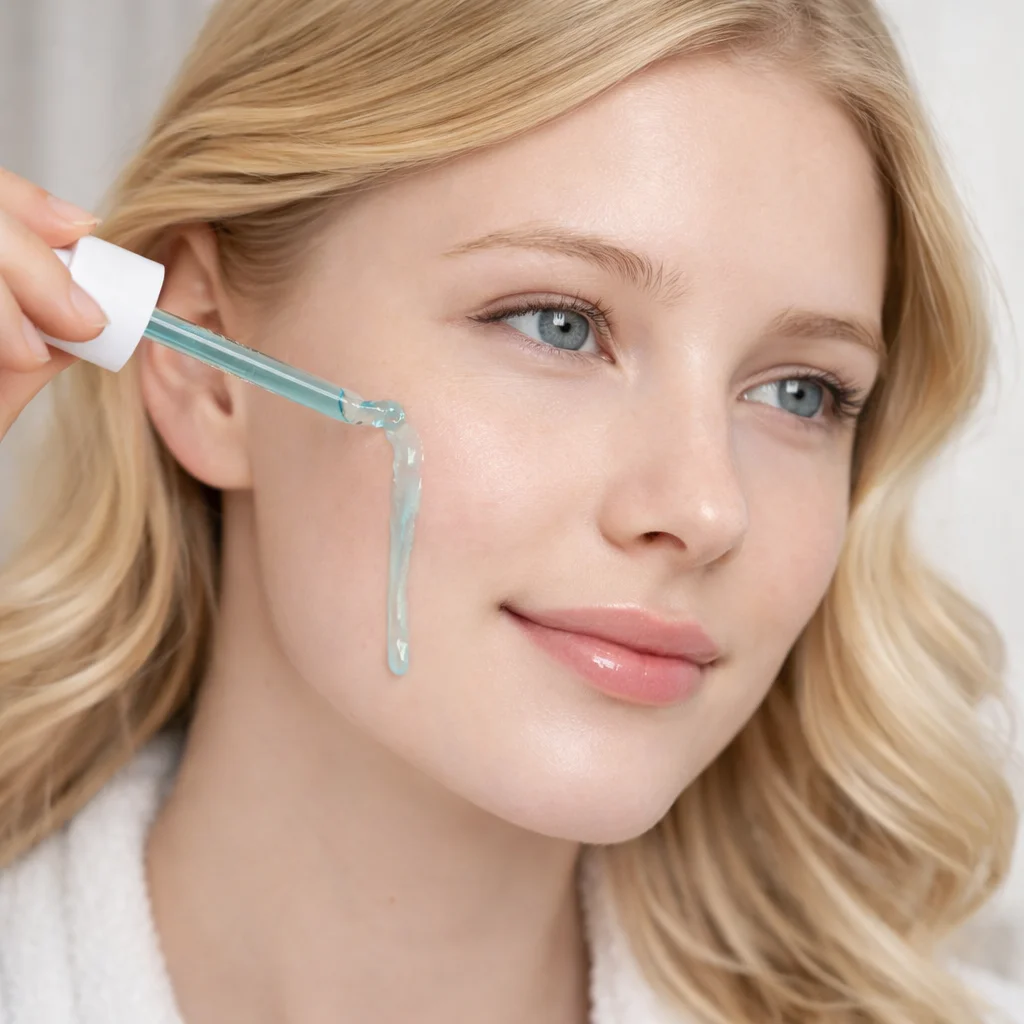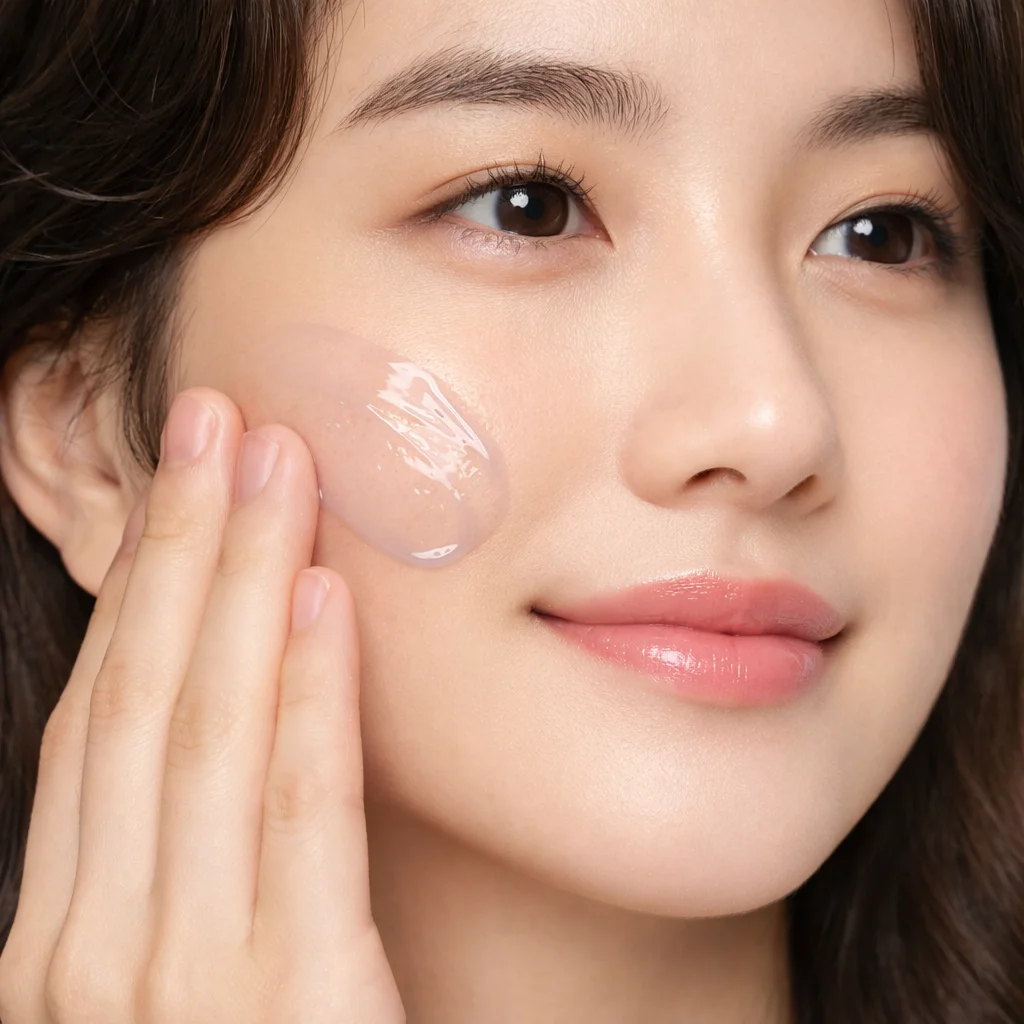
Your Trusted GHK-Cu Peptide Serum Manufacturer
We help you launch faster with low MOQs, market-ready kits, and high-performance formulas—designed to look premium, feel safe, and scale smoothly as your brand grows.

Private Label GHK-Cu Peptide Serum
At Metro Private Label, we know a successful GHK-Cu peptide serum is not just about adding copper peptides into a bottle. For most brands we work with, the real goal is to launch a product that customers understand, trust, and continue to repurchase. That’s why we build our private label GHK-Cu peptide serum solutions around real market demand—anti-aging performance, skin repair benefits, and the ingredient stories shoppers already recognize.
Across today’s skincare market, GHK-Cu appears in several high-performing product directions. Some brands focus on classic copper peptide anti-aging serums that target firmness and fine lines. Others launch barrier-repair or recovery serums designed for sensitive or post-treatment skin. We also see growing demand for multi-peptide lifting serums where GHK-Cu is combined with other peptides for a more advanced anti-wrinkle positioning. And in recent years, scalp and hair-support peptide serums have become another fast-rising category. We pay close attention to these trends by analyzing bestselling products, ingredient positioning, and consumer feedback so the formulas we help you launch stay relevant—and competitive.
When you work with us, our role goes beyond simple manufacturing. We help you shape a product that fits your business model and your customer expectations. Whether your brand needs a minimalist copper peptide serum for e-commerce, a premium multi-peptide formula for anti-aging positioning, or a professional repair serum suitable for clinic retail, we can tailor the formula, concentration, texture, and packaging to match your brand strategy.Our goal is simple: help you turn a trending ingredient like GHK-Cu into a product that actually sells. By combining proven formulation experience, flexible private label production, and packaging designed for modern skincare brands, we make it easier for you to bring a strong peptide serum to market—and build a hero SKU your customers keep coming back to.

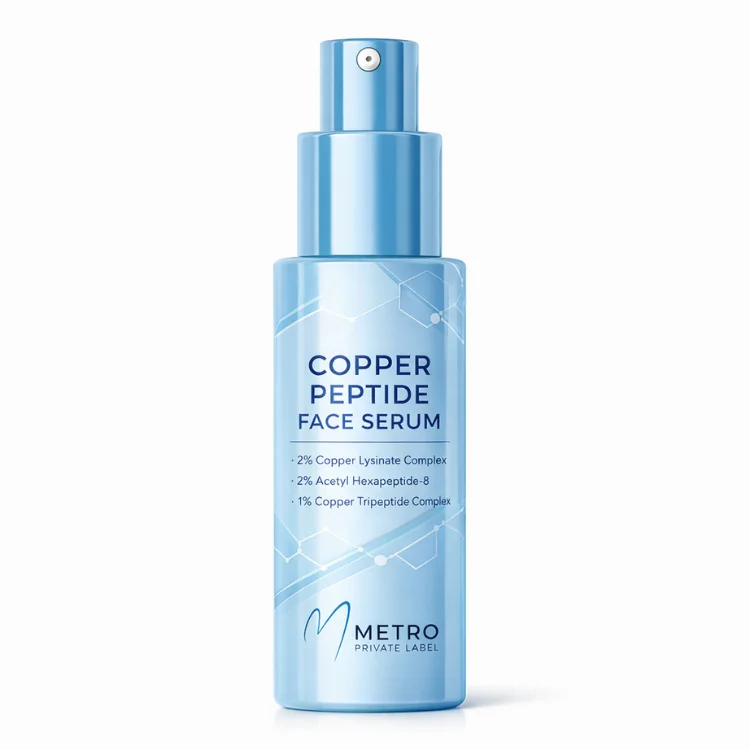
Copper Peptide Face Serum (Anti-Aging / Wrinkle / Firming)
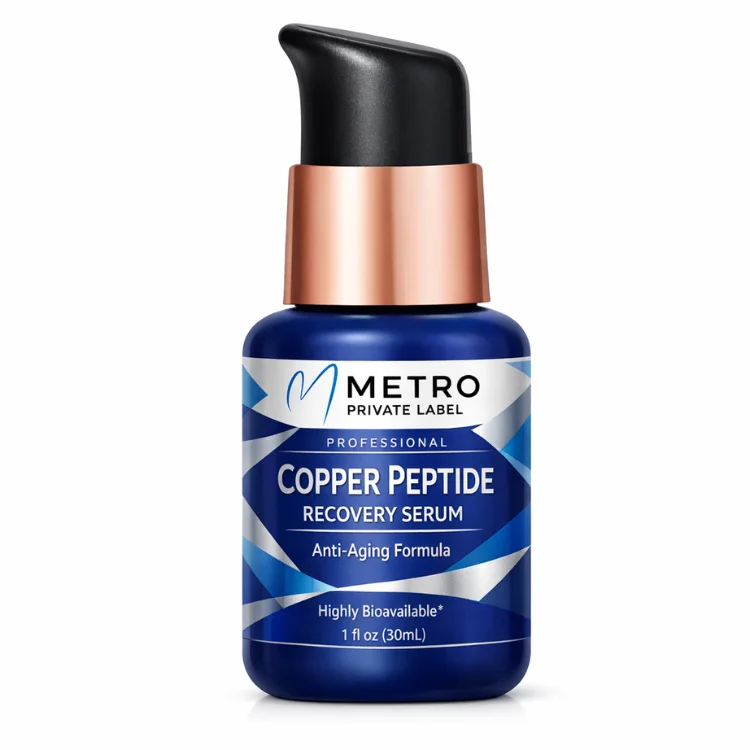
Advanced Repair / Recovery Serum (Barrier Repair / Sensitive / Post-Treatment)
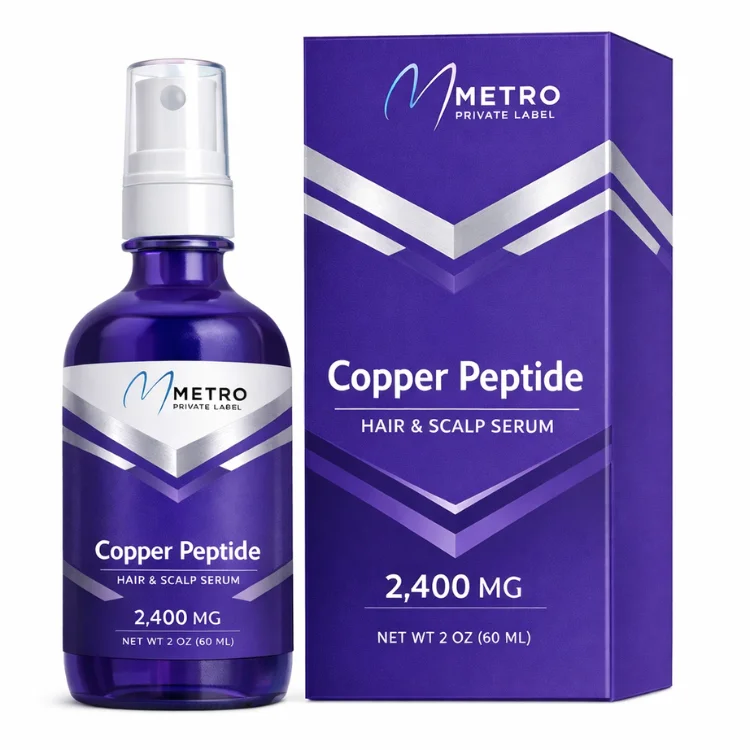
Copper Peptide Scalp Solution / Hair & Scalp Serum (Hair Density / Hair Loss Support)
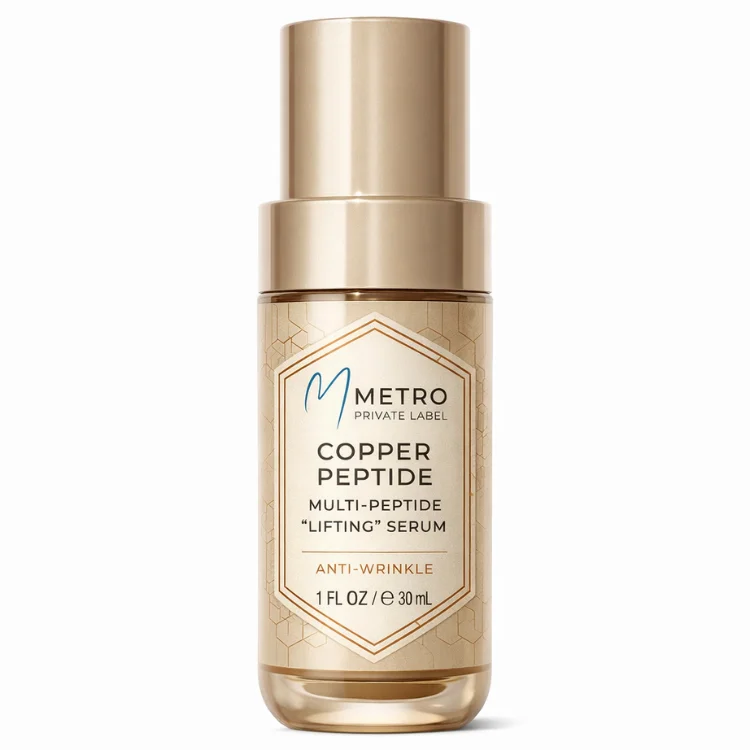
Multi-Peptide “Lifting” Serum (Peptide Complex / Growth-Factor Style Positioning)
Build a Private Label GHK-Cu Peptide Serum Line That Actually Stands Out
At Metro Private Label, we know a GHK-Cu peptide serum isn’t launched simply to add another product to your catalog. When customers buy a copper peptide serum, they’re looking for visible skin improvement—firmer texture, smoother appearance, and healthier-looking skin over time. If the formula feels sticky, oxidizes quickly, or doesn’t absorb well, the product loses credibility fast. For brand owners, the real challenge isn’t finding a factory that can add GHK-Cu to a base formula. The challenge is creating a serum that performs consistently, stays stable in packaging, and fits the expectations of today’s skincare buyers. That’s why we approach private label GHK-Cu peptide development from a performance-driven and commercially practical perspective, rather than treating it as a basic OEM project.
When we develop copper peptide products, we start by studying what is actually working in the market. We look at bestselling peptide serums on Amazon, fast-growing DTC brands, and clinic-recommended skincare systems to understand what customers respond to. Most successful GHK-Cu products share a few key traits: lightweight textures that absorb quickly, balanced peptide concentrations that maintain stability, and formulas paired with supportive ingredients such as hyaluronic acid or soothing extracts. Copper peptide serums fail when the formula is too heavy, the blue color stains packaging, the peptide stability isn’t controlled, or the product positioning feels unclear. Our role is to help you avoid those risks early by guiding ingredient balance, texture design, and packaging compatibility so the product you launch is reliable, scalable, and aligned with real consumer expectations.
As your manufacturing partner, we focus on helping you build GHK-Cu peptide SKUs that match real sales environments. Whether you’re launching a copper peptide serum for Amazon FBA, developing a premium anti-aging formula for Shopify DTC, or introducing a professional repair serum for clinics and distributors, we help define the right product concept and packaging strategy. From sampling and formulation adjustments to documentation and labeling support, we coordinate each step so you can move efficiently toward production. Just as importantly, we make sure the final product—from absorption speed and serum texture to bottle design and carton presentation—supports your brand positioning and price point. Our goal is simple: help you launch GHK-Cu peptide products that are stable, compliant, and capable of generating repeat purchases, not just temporary trend products.
💡 Our 4 Core Private Label GHK-Cu Peptide Serum Product Types
1️⃣ GHK-Cu Anti-Aging Face Serum The most recognized format in the copper peptide category. Designed to target visible signs of aging such as fine lines and loss of firmness, this serum format typically combines GHK-Cu with hydrating ingredients like hyaluronic acid. It’s a strong hero SKU for e-commerce brands and anti-aging skincare lines.
2️⃣ GHK-Cu Skin Repair & Barrier Serum A soothing, recovery-focused formula designed for sensitive or stressed skin. This product type is often positioned for barrier support or post-treatment recovery, making it particularly attractive for dermatology clinics, aesthetic centers, and professional skincare brands.
3️⃣ GHK-Cu Multi-Peptide Lifting Serum A premium positioning that blends copper peptides with other peptides or growth-factor-inspired ingredients. This format is commonly used by mid-to-high-end skincare brands looking to emphasize advanced anti-aging technology and stronger wrinkle-reduction messaging.
4️⃣ GHK-Cu Hair & Scalp Peptide Serum A growing niche category where copper peptides are used to support scalp health and hair density appearance. Usually delivered through dropper or applicator bottles, this format works well for brands expanding into scalp-care or hair-growth product systems.
🎯 MOQ & Packaging Options (Designed for Scalable Launches)
Most private label GHK-Cu peptide serum projects start at around 1,000 units per SKU, depending on the formula structure and packaging customization. We support dropper bottles, airless pumps, scalp applicator bottles, and retail-ready cartons suitable for both e-commerce and clinic retail environments. Our team coordinates formula stability, packaging compatibility, and production scheduling to ensure your peptide serum performs consistently from sampling to full-scale production.
If you already have a product concept, target audience, or sales channel in mind, we’re ready to help you move forward efficiently. Our focus is always on developing GHK-Cu peptide products that are stable, market-ready, and aligned with real consumer demand—products that strengthen your brand rather than simply expand your SKU list.

More Than Just a Private Label GHK-Cu Peptide Serum Manufacturer
At Metro Private Label, we don’t treat GHK-Cu peptide serums as just another trending ingredient launch. For most skincare brands, a copper peptide serum quickly becomes a hero product—the one customers rely on for visible improvement in firmness, texture, and skin health. When a peptide formula feels unstable, oxidizes too quickly, or leaves a heavy residue on the skin, customer trust drops fast. A successful GHK-Cu product isn’t simply about adding copper peptides into a serum base. It’s about designing a formula that remains stable, absorbs comfortably, and delivers consistent performance so customers feel confident repurchasing it. That’s how a single launch turns into a long-term revenue driver for your brand.

✅ GHK-Cu Serum Formats the Market Already Recognizes
We don’t develop copper peptide products based on theory—we focus on formats customers are already searching for and buying. By studying bestselling peptide serums on Amazon, fast-growing DTC skincare brands, and clinic-recommended repair treatments, we concentrate on product types that perform well in real markets. These typically include classic anti-aging copper peptide serums, skin-repair formulas designed for barrier recovery, premium multi-peptide lifting serums, and scalp-focused peptide treatments. When a product format is already familiar to customers, it becomes easier for your brand to position, easier to explain, and much easier to scale.
✅ Practical MOQs That Support Real Brand Growth
We structure our private label GHK-Cu programs around realistic production planning rather than large minimum orders that slow brand launches. Many brands begin with manageable quantities to validate demand, test packaging compatibility, and confirm market response. As your sales grow, we can help you scale efficiently—whether that means adjusting peptide concentration, refining texture, upgrading packaging, or expanding your product line into additional peptide-based SKUs. The goal is to grow with your brand without forcing you to restart development or switch suppliers.
✅ Stable Formulas That Encourage Repeat Purchases
Peptide serums succeed only when they perform consistently over time. Customers often use them daily and expect the texture, color, and absorption to remain stable from the first drop to the last. We pay close attention to peptide stability, formula balance, and packaging compatibility so each production batch behaves the same as the previous one. This consistency reduces customer complaints, improves product reviews, and helps your brand build credibility in a category where long-term trust matters more than short-term trends.
✅ Execution & Compliance Support That Keeps Your Launch Moving
We prepare your GHK-Cu peptide products for real markets—not just for internal testing. From INCI documentation and COA/MSDS preparation to packaging coordination and production scheduling, our team supports the practical steps required for e-commerce brands, clinics, and distributors. Our role is to help you move from concept to production with clarity and confidence, so your copper peptide serum line launches smoothly and remains compliant as your brand grows.
- METRO
- Typical OEM factory
| METRO | Typical OEM factory | |
$ /year | /year | |
| Minimum order quantity | ✅ 500 units for startup brands — low-risk entry for first-time founders. | ❌ 3,000 units minimum, limiting flexibility. |
| Packaging recommendations | ✅ Compatibility + visual templates to ensure perfect fit and premium look. | ❌ Not provided. |
| Launch support | ✅ Label compliance & claim copywriting included for export markets. | ❌ Not available. |
| Sample delivery time | ✅ 7–14 days with labeled packaging. | ❌ Usually 30+ days. |
| Compliance & Documentation | ✅ INCI, COA, SDS, GMP-ready — export with confidence. | ❌ Basic INCI only. | Buy Now |
✨ Build a Private Label GHK-Cu Peptide Serum Line That Performs Beyond Expectations
When you work with Metro Private Label, you’re not simply choosing a manufacturer that can add GHK-Cu into a formula—you’re partnering with a team that understands how peptide serums perform in real skincare markets. A successful copper peptide product isn’t defined by the ingredient name alone. What really matters is how the serum feels on the skin, how stable the peptide system remains over time, and whether customers trust the product enough to keep using—and repurchasing—it. That’s where real brand value comes from. Our role is to help you launch GHK-Cu peptide serums that look professional, perform consistently, and build long-term customer confidence.
Whether you’re developing a classic anti-aging copper peptide serum as your hero SKU, a barrier-repair peptide formula for sensitive skin, a multi-peptide lifting serum positioned for premium skincare, or a scalp-focused peptide treatment, we structure every project around real market expectations. We know that in the peptide category, factors like texture, absorption speed, ingredient compatibility, and cosmetic-compliant positioning all influence how customers perceive the product. Our focus isn’t simply helping you launch another serum—it’s helping you create one that customers immediately understand, enjoy using daily, and incorporate into their long-term skincare routine.
🧪 Formulation Designed for Real-World Peptide Performance
We don’t rely on generic, one-size-fits-all peptide formulas. Every GHK-Cu serum we develop is designed with balanced peptide concentration, stable delivery systems, and textures that absorb comfortably without residue. When there are different formulation directions—such as minimalist copper peptide serums, hydration-focused systems with hyaluronic acid, or advanced multi-peptide complexes—we explain those options clearly so your product aligns with your brand positioning, target audience, and pricing strategy. Our goal is to make sure your GHK-Cu product performs consistently—not just during testing, but during everyday use over weeks and months.
📦 Packaging & MOQ Designed for Real Brand Launch Conditions
Peptide serums require both formula stability and packaging compatibility. Most private label GHK-Cu projects begin with practical production quantities that allow brands to validate demand, test packaging performance, and confirm customer response before scaling. We support a range of packaging formats—including dropper bottles, airless pumps, applicator bottles, and retail-ready cartons—chosen to protect peptide stability while supporting e-commerce logistics or clinic retail environments. Our team ensures that packaging, formula, and production planning work together smoothly from the first batch through full-scale production.
⚙️ A Clear and Structured Production Process
We keep development transparent and organized from start to finish. From sampling and peptide concentration confirmation to packaging coordination and mass production scheduling, every stage is clearly communicated so you can plan your launch timeline with confidence. Whether you’re preparing for an Amazon product launch, a Shopify DTC release, or a clinic skincare program, we help you move efficiently from concept to finished goods without unnecessary delays.
🌿 Built for Brands Ready to Launch and Scale
We measure success by how your product performs after it reaches the market—not just how quickly it’s manufactured. That’s why we focus on scalable formulas, repeatable production systems, and compliance-ready documentation that supports long-term brand growth. With Metro Private Label, your GHK-Cu peptide serum line is built to launch confidently, maintain stability and compliance, earn customer trust, and scale smoothly as your brand expands.

FAQs GHK-Cu Peptide Serum
For your convenience, we’ve gathered the most commonly asked questions about our GHK-Cu Peptide Serum. However, should you have any further queries, please don’t hesitate to reach out to us.
1. What types of GHK-Cu peptide serum products can you manufacture?
We manufacture several market-proven GHK-Cu product formats, including classic anti-aging face serums, barrier-repair peptide serums, multi-peptide lifting formulas, and scalp-focused peptide treatments. These are the formats customers already recognize in the skincare market, which makes them easier for brands to position and sell. If you already have a product concept, we can help refine the formula and packaging to fit your target audience.
2. Can you customize a GHK-Cu peptide formula for our brand?
Yes, customization is one of our core strengths. We can adjust peptide concentration, texture, supporting ingredients, and skin feel to match your brand positioning. Some brands prefer a minimalist copper peptide serum, while others want a more advanced formula with hyaluronic acid, peptides, or soothing botanical extracts. We’ll help you design a formula that fits your product story and pricing strategy.
3. What is your minimum order quantity (MOQ)?
Our typical MOQ for private label GHK-Cu peptide serum starts around 1,000 units per SKU, depending on packaging selection and formulation complexity. This allows many brands to test the market first while keeping production practical. As your sales grow, we can scale production efficiently without changing suppliers or reformulating the product.
4. How long does development and production usually take?
Most projects begin with sampling and formula confirmation, which typically takes 3–4 weeks. Once the formula and packaging are approved, full production usually takes 4–6 weeks depending on order size and packaging availability. If you’re working with a launch deadline or restock schedule, we’ll help coordinate timelines to keep your launch on track.
5. Are your GHK-Cu peptide formulas compliant for international markets?
Yes. Our formulas are developed according to international cosmetic manufacturing standards, and we provide documentation such as INCI lists, COA, and MSDS to support your regulatory requirements. While each market has different labeling rules, we help guide brands so their products remain compliant when entering markets like the United States, Europe, or other global regions.
6. Can you help with packaging sourcing and design?
Absolutely. Packaging is a critical part of launching a peptide serum. We support bottle sourcing, label layout coordination, and carton packaging so the final product looks professional and functions well. Whether you want a classic dropper bottle, an airless pump for premium positioning, or packaging optimized for e-commerce shipping, we can help coordinate the process.
7. Do you offer both white label and fully custom formulations?
Yes, we support both approaches. Some brands start with our ready-developed peptide formulas, which allows for faster production and lower development cost. Others prefer to co-develop a custom formula tailored to their brand positioning. We’ll explain both options clearly so you can choose the most efficient path for your launch.
8. How do you ensure the stability of copper peptide formulas?
Peptide stability is one of the most important factors when developing GHK-Cu products. We focus on proper concentration balance, compatible ingredients, and packaging systems that protect the formula from degradation. Our production process includes stability evaluation and packaging compatibility checks to ensure the serum performs consistently during storage and use.
9. Can you help with product positioning or ingredient storytelling?
Yes, many brands ask us for guidance on how to present their peptide products clearly. We can help explain ingredient highlights, typical peptide benefits, and positioning ideas that fit your brand concept. Our goal is to help you launch a product that customers understand quickly and feel confident purchasing.
10. Do you work with international clients and ship globally?
Yes, we regularly work with skincare brands from different countries. Our team assists with production coordination, documentation preparation, and export logistics so international clients can move smoothly from sampling to final delivery. Whether your products will be sold through Amazon, Shopify, clinics, or distribution channels, we help ensure the manufacturing side runs efficiently.
Working with Metro Private Label made launching our peptide serum much easier than we expected. Their team helped us refine the GHK-Cu formula, explained packaging options clearly, and guided us through the sampling process step by step. What we appreciated most was how responsive and practical they were when we had questions about stability and labeling. The final product feels premium, and our customers have responded very positively.
Emily Carter, Founderfrom United Kingdom
As an Amazon seller, speed and reliability are everything for us. Metro Private Label understood that immediately. They helped us develop a copper peptide serum that fits our price point and packaging requirements while keeping the formula stable and lightweight. From sampling to production, communication was fast and organized. The process felt very professional and efficient.
Michael Thompson, E-commerce Brand Operatorfrom United States
What stood out when working with Metro Private Label was their understanding of product development, not just manufacturing. They helped us adjust the peptide concentration and texture so the serum matched the positioning of our brand. Their guidance on packaging and ingredient balance made a big difference. It felt like working with a partner rather than just a supplier.
Sophie Laurent, Skincare Brand Founderfrom France
We were searching for a reliable manufacturer that could supply a copper peptide serum with consistent quality. Metro Private Label provided clear information about the formula, packaging compatibility, and production schedule from the start. The process was transparent and well organized, which gave us confidence to move forward with the order.
Daniel Weber, Distribution Buyerfrom Germany
Our clinic wanted a professional peptide serum that we could retail to our patients. Metro Private Label helped us design a GHK-Cu product that feels gentle, absorbs well, and looks professional in packaging. They explained the formulation and production process clearly, which made the project smooth from sampling to final delivery. The experience was very positive.
Isabella Rossi, Aesthetic Clinic Ownerfrom Italy

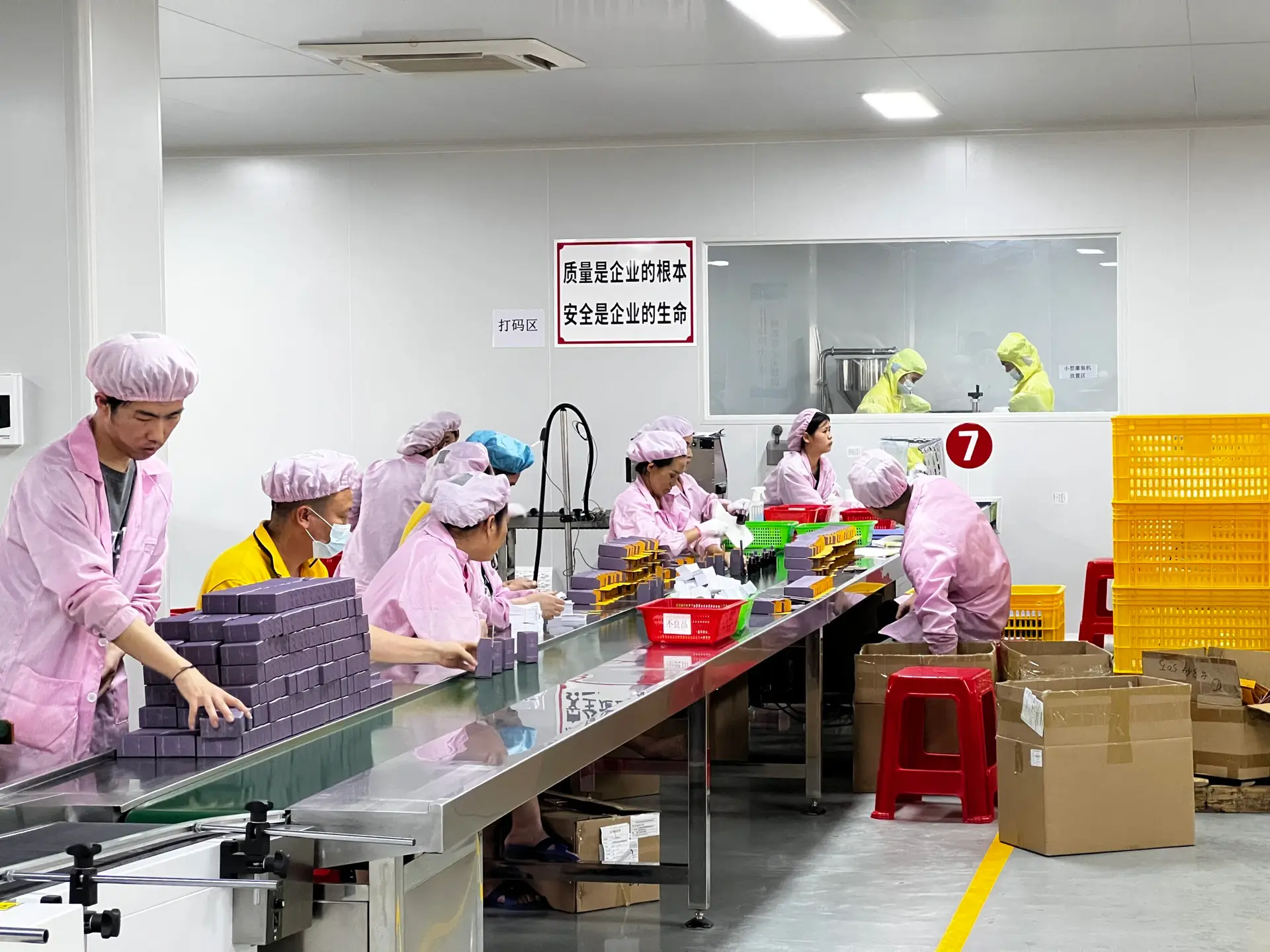



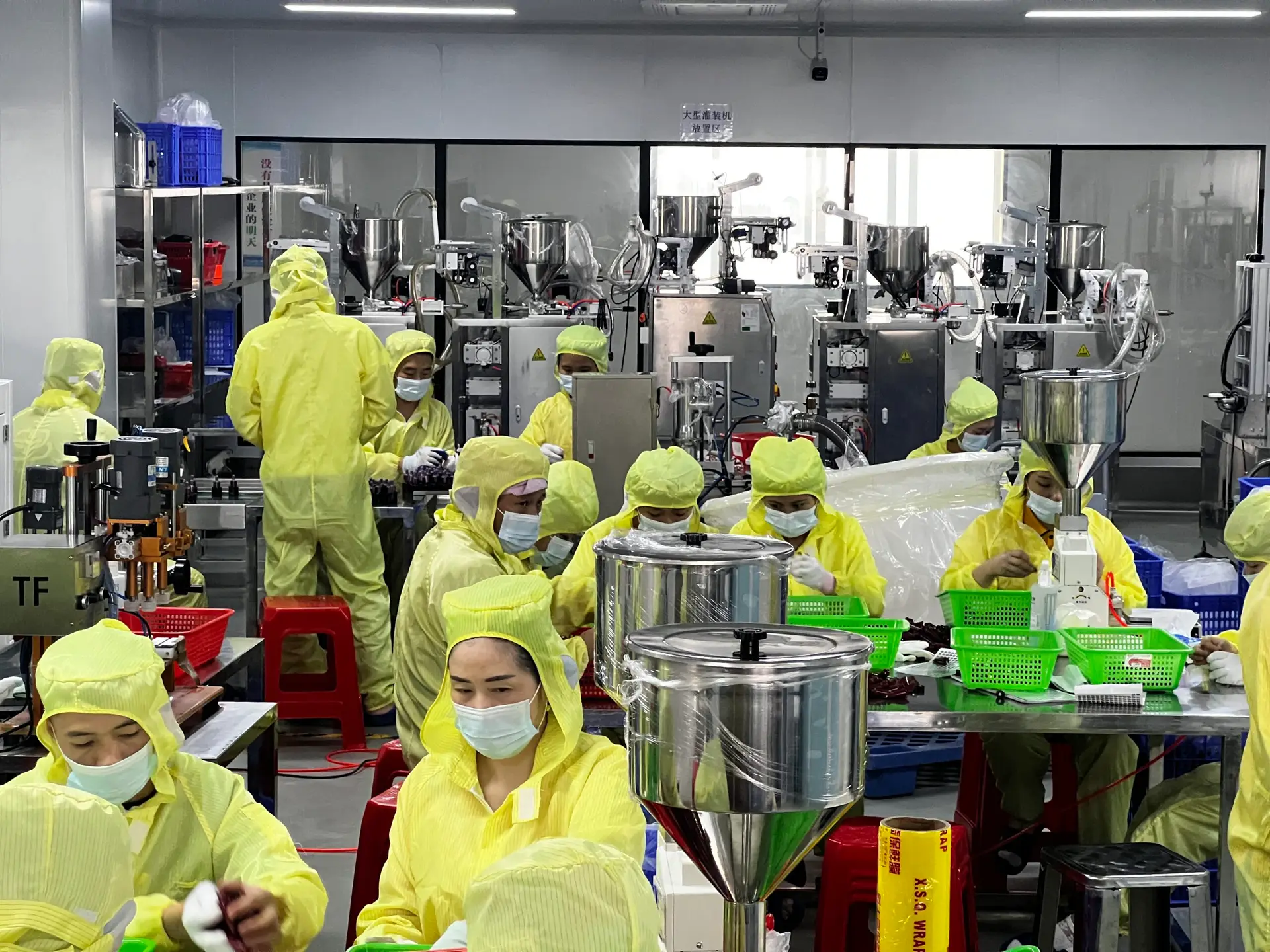

Metro Private Label in Numbers
Happy Clients
0 +
Million-dollar Buyers
0 +
Formulation
0 +
Professional Staffs
0 +
Your Ultimate Guide to GHK-Cu Peptide Serum
If you’re planning to add a Redensyl hair loss product to your lineup—whether it’s your first scalp-focused SKU or an expansion from general haircare into treatment-driven positioning—you’re not just selecting another trending ingredient. You’re stepping into one of the most commercially sensitive and high-retention categories in beauty. Hair growth is not impulse-driven like styling products. It’s routine-driven. Customers commit emotionally and financially, and that means your formula, positioning, and compliance strategy must be aligned from day one.
Redensyl has gained strong market traction because it allows brands to enter the “hair growth” conversation while staying within cosmetic classification. That flexibility matters. It enables faster market entry compared to drug pathways, reduces regulatory barriers, and supports ingredient-led marketing without triggering pharmaceutical-level compliance. For e-commerce brands, clinics, and distributors, that balance between performance positioning and regulatory practicality is commercially powerful. When structured correctly, a Redensyl product doesn’t just generate first-time purchases—it becomes part of a long-term routine that drives repeat sales and subscription behavior.
Over the past few years, we’ve watched how hair growth brands succeed or stall depending on decisions made behind the scenes. From Amazon FBA operators to clinic-based scalp treatment centers, the brands that scale are the ones that treat Redensyl as a system opportunity rather than a single serum launch. Formula texture, absorption speed, packaging compatibility, claim discipline, and production scalability all determine whether a product earns five-star reviews or quiet returns. On the surface, a scalp serum may look simple. In reality, performance balance, comfort tolerance, and channel-specific packaging design decide its commercial lifespan.
Table of Contents
What Is GHK-Cu Peptide Serum?
When I talk about a GHK-Cu peptide serum, I’m referring to a skincare formulation centered around an ingredient called copper tripeptide-1, commonly abbreviated as GHK-Cu. This molecule forms when a naturally occurring peptide, known as GHK, binds with a copper ion. Although the chemistry sounds complex at first, what makes this compound interesting from a skincare perspective is the way it has been studied for its relationship with skin renewal processes. In the cosmetic world, GHK-Cu peptide serum is typically positioned as a treatment serum designed to support the appearance of healthier, smoother, and more resilient skin. When I evaluate ingredient trends across the skincare industry, I often notice that peptides like GHK-Cu occupy a unique space between laboratory research and consumer-facing beauty products. Unlike many ingredients that appear briefly as marketing trends, copper peptides have maintained attention for decades, which gives them a level of credibility that many skincare enthusiasts and brand founders appreciate.
Understanding the Science Behind Copper Peptides
Whenever I explain GHK-Cu peptide serum to brand founders or skincare professionals, I usually begin with the science that originally made this ingredient interesting to researchers. The peptide known as GHK was first identified in human plasma and later found to be naturally present in various tissues. When this peptide binds with copper, it forms a complex that researchers have investigated in relation to biological repair processes and cellular signaling. From a cosmetic standpoint, these research observations helped inspire the idea that copper peptides could be useful ingredients in skincare formulations aimed at supporting the skin’s natural appearance and vitality. While cosmetic products must stay within regulatory boundaries and cannot claim medical outcomes, the presence of decades of research surrounding copper peptides has played a significant role in shaping how the ingredient is perceived within the skincare community. In my experience, when consumers see an ingredient connected to scientific literature rather than purely marketing language, they tend to view the product as more credible and technologically advanced.
Why GHK-Cu Peptide Serum Has Become a Recognizable Skincare Category
Over the past decade, I have watched the skincare industry gradually shift toward a much stronger emphasis on ingredient transparency and education. Consumers are no longer satisfied with vague promises about anti-aging or skin improvement. Instead, they increasingly want to know exactly which ingredients are present in a formula and why those ingredients matter. This shift has helped push ingredients like copper peptides into the spotlight. When I analyze online marketplaces, dermatology-inspired product launches, and skincare discussions across social media platforms, GHK-Cu peptide serum frequently appears in conversations related to skin regeneration, firmness, and maintaining youthful-looking skin. The ingredient has become recognizable enough that many skincare consumers now search specifically for “copper peptide serum” rather than simply browsing generic anti-aging products. From a brand perspective, this recognition is valuable because it means the ingredient itself carries part of the product’s marketing story.
The Role of GHK-Cu Peptide Serum in Modern Anti-Aging Skincare
In modern skincare routines, GHK-Cu peptide serum is most often positioned within the anti-aging category, although its appeal extends beyond just wrinkle-focused formulations. When I examine how brands incorporate copper peptides into their product lines, I frequently see them included in serums designed to support skin firmness, improve overall skin texture, and maintain a healthy-looking complexion. Because peptides are often associated with advanced skincare science, copper peptide serums tend to appear in product lines that emphasize innovation and ingredient research. This positioning allows the ingredient to fit naturally alongside other well-known actives such as hyaluronic acid, niacinamide, and botanical extracts that help support hydration and skin comfort. For many brands, a peptide serum becomes the product that communicates the most technological sophistication within their skincare range.
Why GHK-Cu Peptide Serum Is Popular in Premium and Professional Skincare
Another observation I often make when studying the skincare market is that GHK-Cu peptide serum appears frequently in premium skincare collections and professional skincare systems. Dermatology-inspired brands and clinic-retail product lines often include peptide serums as part of their advanced treatment offerings. The reason is partly psychological and partly practical. Peptides carry an image of scientific complexity, which naturally aligns with the positioning of professional or medical-inspired skincare products. When customers encounter a copper peptide serum in a professional environment, such as a dermatology clinic or aesthetic center, the ingredient can reinforce the perception that the product is based on research rather than purely cosmetic marketing. This perception strengthens the overall credibility of the skincare system in which the serum appears.
How Consumer Education Is Driving Interest in GHK-Cu Peptide Serum
One of the most significant changes I have noticed in the skincare industry is the growing role of consumer education. Skincare enthusiasts now spend considerable time reading ingredient lists, researching formulation technologies, and comparing active ingredients across different brands. In this environment, ingredients with recognizable scientific backgrounds tend to gain traction more easily. GHK-Cu peptide serum benefits from this shift because the ingredient itself is relatively easy to identify and discuss. When consumers see the name copper peptide or GHK-Cu on a product label, they can quickly search for information about it and learn about its connection to skin regeneration research. This ability to independently verify an ingredient’s background often increases consumer trust, which in turn contributes to the growing popularity of peptide-based skincare products.
Why GHK-Cu Peptide Serum Continues to Gain Momentum in the Skincare Industry
Looking at the broader skincare landscape, I believe the continued rise of GHK-Cu peptide serum is closely tied to the evolving relationship between science, marketing, and consumer expectations. Modern skincare buyers are increasingly drawn to products that combine credible ingredient stories with visible cosmetic benefits. Copper peptides fit neatly into this intersection because they represent both scientific curiosity and practical skincare application. As more brands incorporate peptides into their formulations and as consumers become more knowledgeable about ingredient functions, products built around well-studied molecules like GHK-Cu are likely to remain relevant within the anti-aging and skin-maintenance categories. From my perspective, the growth of GHK-Cu peptide serum is not simply a short-term trend but part of a broader movement toward science-informed skincare, where ingredient transparency and research credibility play a central role in how products are developed, marketed, and understood.
Improving the Appearance of Skin Firmness
When I analyze how GHK-Cu peptide serum is used in modern skincare formulations, one of the first benefits that consistently appears is its association with improving the visible firmness of the skin. Skin firmness is something many people begin to notice gradually over time as the skin’s natural resilience changes. In practical skincare routines, firmness refers to how well the skin appears to maintain its structure, elasticity, and smooth surface. When I look at how copper peptide serums are positioned by many skincare brands, they are often described as products that support the appearance of more resilient, balanced skin. This is one reason why GHK-Cu peptide serum is frequently included in anti-aging skincare lines or daily treatment serums that aim to help the skin maintain a healthy and youthful appearance. From my perspective, the popularity of copper peptide serums in this category comes from the idea that peptides are seen as ingredients that work gradually and gently, supporting the skin’s natural condition rather than forcing rapid or aggressive changes. For consumers who want to maintain skin firmness without relying on harsher exfoliating ingredients, peptide serums often become a comfortable long-term skincare solution.
Supporting the Visible Appearance of Collagen-Rich Skin
Another important benefit commonly associated with GHK-Cu peptide serum is its connection with the visible appearance of collagen support in the skin. Collagen is one of the most widely discussed concepts in the skincare world because it plays a fundamental role in maintaining the skin’s structural integrity and density. When I read scientific literature related to copper peptides, I frequently encounter discussions about how these molecules have been studied in relation to biological repair processes and skin tissue maintenance. Although cosmetic skincare products cannot claim to directly stimulate collagen production in a medical sense, many formulations position GHK-Cu peptide serum as part of a routine designed to support the appearance of skin that looks fuller, smoother, and more structurally balanced. In many skincare brands I observe, copper peptide serums are paired with hydrating ingredients like hyaluronic acid or soothing botanical extracts to create formulas that focus on maintaining skin vitality over time. This combination of hydration and peptide-based technology allows brands to present the serum as a sophisticated treatment product that supports a well-maintained skin appearance rather than promising unrealistic instant results.
Enhancing Overall Skin Texture and Smoothness
When I review customer feedback across skincare platforms and analyze how products are described by brands, another benefit frequently connected to GHK-Cu peptide serum is the improvement of overall skin texture. Skin texture refers to how smooth, even, and refined the skin appears on the surface. Many individuals begin exploring peptide-based skincare when they notice that their skin feels less even or when they want to maintain a polished and healthy complexion. In my observation, copper peptide serums are often incorporated into daily routines because they tend to be compatible with a wide range of skin types and other skincare ingredients. Instead of relying on aggressive resurfacing ingredients, peptide serums typically focus on gradually improving the overall look and feel of the skin through consistent use. This makes them particularly appealing for people who prefer skincare products that support long-term skin quality rather than delivering short-term dramatic effects. When a formula is well balanced, the serum can contribute to a complexion that looks smoother, more refined, and more comfortable over time.
Supporting Skin Recovery and Daily Skin Maintenance
Another area where GHK-Cu peptide serum is frequently positioned is within skincare routines focused on recovery and maintenance. In professional skincare environments and dermatologist-inspired skincare systems, peptides are often described as ingredients that complement the skin’s natural renewal processes. When I examine how clinics and professional skincare brands incorporate copper peptides into their product lines, I often see these serums used as part of routines designed to maintain calm, balanced skin between more intensive treatments. This type of positioning reflects the idea that skincare is not only about correcting visible concerns but also about maintaining the skin’s overall condition over time. A peptide serum can therefore function as a supportive daily treatment that helps keep the skin comfortable, hydrated, and balanced. In many skincare routines I review, GHK-Cu peptide serum becomes a consistent step used both morning and evening because its formulation is typically gentle enough to integrate with other products without overwhelming the skin.
Why Peptides Are Considered Advanced Skincare Ingredients
One reason GHK-Cu peptide serum attracts so much attention in the skincare industry is that peptides are widely perceived as advanced cosmetic ingredients. When I observe consumer discussions about skincare online, peptides are often associated with scientific research, laboratory innovation, and sophisticated formulation strategies. This perception has encouraged many premium skincare brands to incorporate peptide serums into their flagship anti-aging lines. Copper peptides, in particular, benefit from the fact that they have a documented research history and a clear molecular structure that can be explained to consumers who are interested in ingredient science. From a marketing perspective, this gives brands an opportunity to tell a more educational and science-driven story about their products. At the same time, from a consumer perspective, the presence of a peptide like GHK-Cu on a product label often signals that the formula belongs to a more advanced skincare category rather than being a simple moisturizing product.
Why GHK-Cu Peptide Serum Is Often Positioned as a Premium Skincare Product
When I evaluate the broader skincare market, I frequently notice that GHK-Cu peptide serum appears most often in premium skincare lines or dermatologist-inspired collections. This pattern is not accidental. Peptides tend to carry a reputation for technological sophistication, which naturally aligns with higher-end skincare positioning. Many brands choose to include copper peptide serums as hero products within their anti-aging ranges because the ingredient allows them to communicate both scientific credibility and skincare performance. For consumers, this positioning creates the impression that the product belongs to a professional or clinically informed skincare routine. In practical terms, this means GHK-Cu peptide serum often becomes one of the central treatment products within a skincare regimen, placed between cleansing and moisturizing steps where concentrated actives can deliver their intended cosmetic benefits.
Why Interest in GHK-Cu Peptide Serum Continues to Grow
From my perspective, the ongoing interest in GHK-Cu peptide serum reflects a larger shift happening across the skincare industry. Consumers are becoming more informed about ingredient science and increasingly prefer products that combine transparency, research credibility, and practical benefits. Copper peptide serums fit naturally within this trend because they represent a bridge between scientific research and everyday skincare use. As more consumers learn about peptides and become comfortable incorporating them into their routines, the category of peptide-based skincare continues to expand. This growing awareness not only supports the popularity of GHK-Cu peptide serum but also reinforces the broader movement toward ingredient-focused skincare, where understanding what is inside a formula becomes just as important as the brand name on the label.
Why GHK-Cu Peptide Serum Fits Naturally Into Multiple Skincare Categories
When I study how skincare brands design their product portfolios, I often notice that some ingredients naturally fit into several different skincare categories at the same time. GHK-Cu peptide serum is one of those rare ingredients that can comfortably exist across anti-aging skincare, skin repair routines, professional skincare systems, and ingredient-focused minimalist product lines. From a brand strategy perspective, this flexibility is extremely valuable. It allows a single product to connect with multiple customer motivations without confusing the product message. When I analyze how successful skincare brands structure their product launches, I frequently see that their most successful serums are built around ingredients that already carry a recognizable story in the skincare industry. Copper tripeptide-1 is one of those ingredients because it has been discussed in dermatology research, cosmetic formulation literature, and advanced skincare communities for years. This background gives brands a strong foundation for building an educational narrative around the product while still keeping the formula simple and understandable for consumers. In practical terms, this means a GHK-Cu peptide serum can sit comfortably in a skincare routine whether the brand is positioning itself as a science-driven anti-aging brand, a skin barrier–focused brand, or a premium dermatology-inspired skincare line.
Why Anti-Aging Brands Frequently Build Products Around GHK-Cu Peptide Serum
When I review the strategies used by anti-aging skincare brands, I often see peptides placed at the center of their product development philosophy. GHK-Cu peptide serum is especially attractive for anti-aging brands because peptides are widely associated with maintaining skin structure and helping the skin appear smoother and more resilient over time. Consumers who are searching for anti-aging skincare products often want ingredients that feel modern, scientifically credible, and gentle enough for long-term use. Copper peptides naturally fit into this expectation. In my experience analyzing skincare product positioning, brands frequently introduce GHK-Cu peptide serum as a treatment product that sits at the heart of their anti-aging routine. It becomes the step in the routine that represents the brand’s advanced technology or scientific credibility. Around that serum, brands often build supporting products such as peptide moisturizers, eye creams, and barrier-support creams. This approach allows the serum to function as a flagship product that anchors the entire skincare line. Because the serum category is already associated with higher concentrations of active ingredients, it is the ideal format for presenting peptide technology in a way that consumers understand and trust.
Why Skin Repair and Barrier-Focused Brands Use GHK-Cu Peptide Serum
Another reason I frequently see skincare brands launching GHK-Cu peptide serum products is the growing demand for skincare routines focused on skin recovery and barrier support. In recent years, the conversation in the skincare industry has shifted away from aggressive treatments toward maintaining long-term skin health. Many consumers now prioritize ingredients that help keep the skin balanced, calm, and resilient. Copper peptides are often discussed in relation to the skin’s natural renewal processes, which makes them compatible with skincare lines that emphasize recovery and maintenance. When I examine the positioning of these products in professional skincare environments, I often notice that GHK-Cu peptide serum is integrated into routines designed to support skin comfort after treatments or during long-term skin maintenance. Brands that focus on sensitive skin, dermatologist-recommended skincare, or minimalist skincare systems often include copper peptide serums as one of their core treatment products. In these formulas, the peptide is commonly combined with hydrating ingredients such as hyaluronic acid, soothing components like panthenol, or antioxidant ingredients that complement the overall skin maintenance philosophy.
Why Ingredient Storytelling Makes GHK-Cu Peptide Serum Attractive for Brands
One of the most powerful reasons skincare brands develop GHK-Cu peptide serum products is the clarity of the ingredient story. Over the past decade, I have seen consumers become increasingly interested in understanding what ingredients are inside their skincare products. Instead of focusing only on brand names or packaging, many people now search for products based on specific ingredients such as vitamin C, retinol, niacinamide, or peptides. This shift toward ingredient transparency has changed how brands design their products and communicate with their customers. Copper peptide serums fit perfectly into this trend because the ingredient has both a scientific name and a recognizable function within skincare discussions. When a brand builds a product around GHK-Cu peptide technology, it creates an opportunity to educate consumers about peptides and explain how the ingredient fits into a skincare routine. From a communication perspective, this makes marketing and product storytelling much clearer. Rather than presenting a complex formula with dozens of unfamiliar ingredients, the brand can focus its narrative around a single ingredient that consumers can easily research and understand.
Why GHK-Cu Peptide Serum Often Becomes a Hero Product
In many skincare brands I analyze, the most important product in the lineup is often referred to as the “hero product.” This is the product that defines the brand’s identity and communicates its core technology or philosophy. GHK-Cu peptide serum frequently fills this role because serums are already perceived as the most advanced step in a skincare routine. When consumers invest in a serum, they typically expect a concentrated formula that delivers meaningful skincare benefits. Because peptides carry a reputation for advanced skincare science, they are a natural fit for hero serums. When a brand launches a copper peptide serum as its central product, it can build an entire skincare system around it. Moisturizers can support hydration, cleansers can prepare the skin for treatment products, and eye creams can complement the peptide technology narrative. This ecosystem approach helps the brand create a cohesive product line while keeping the peptide serum as the focal point of the routine.
Why GHK-Cu Peptide Serum Aligns With the Premium Skincare Market
Another pattern I consistently observe when analyzing the skincare market is that GHK-Cu peptide serum products are frequently positioned within the premium skincare segment. This positioning is not accidental. Peptides are often perceived as high-technology ingredients that reflect advanced formulation research. For many consumers, seeing copper peptides listed on a product label signals that the formula belongs to a more sophisticated skincare category. From a brand strategy perspective, this perception allows companies to position peptide serums at higher price points while still maintaining credibility with ingredient-focused consumers. In many premium skincare collections, copper peptide serums are presented alongside other scientifically recognized ingredients such as retinoids, antioxidants, and growth factor–inspired peptides. This positioning reinforces the idea that the product belongs to a professional or dermatologist-inspired skincare routine.
Why GHK-Cu Peptide Serum Appeals to Multiple Consumer Audiences
One aspect of GHK-Cu peptide serum that I find particularly interesting is how effectively it appeals to different types of skincare consumers. Some people are drawn to the ingredient because of its association with anti-aging skincare and the desire to maintain firm, smooth skin. Others are interested in peptide serums because they want to support long-term skin health and maintain a balanced skin barrier. Meanwhile, skincare enthusiasts who follow ingredient trends often recognize copper peptides as part of advanced skincare science and are curious to try products that feature them. Because of this wide appeal, a single GHK-Cu peptide serum can resonate with several consumer segments simultaneously. This versatility is extremely valuable for brands because it allows them to reach broader audiences without needing to launch multiple different treatment products.
Why the Demand for GHK-Cu Peptide Serum Continues to Grow
When I look at the broader direction of the skincare industry, the continued interest in GHK-Cu peptide serum reflects a larger shift toward ingredient-driven skincare. Consumers today want more transparency about what they apply to their skin, and they are increasingly interested in products that combine scientific credibility with practical skincare benefits. Copper peptides sit at the intersection of these two trends. They offer a recognizable ingredient story supported by research discussions while still fitting comfortably into everyday skincare routines. As ingredient education continues to grow across social media, dermatology platforms, and skincare communities, the visibility of peptides is likely to expand even further. For many brands, launching a GHK-Cu peptide serum is not simply about following a trend. It is about participating in a larger movement within the skincare industry that values science-inspired ingredients, transparent product narratives, and skincare routines designed for long-term skin health.
Classic GHK-Cu Peptide Face Serum in Dropper Bottle Format
When I look at how GHK-Cu peptide serum appears across the global skincare market, the most recognizable format is the classic facial serum packaged in a glass dropper bottle. This format has become the standard presentation for many ingredient-focused skincare treatments because it immediately communicates precision, potency, and professional skincare positioning. In my experience analyzing product launches and ingredient-driven skincare brands, the dropper bottle format allows consumers to feel that they are applying a concentrated treatment rather than a basic cosmetic product. The ritual of dispensing a few drops into the palm and gently pressing the serum into the skin also reinforces the perception that the product belongs to a more advanced skincare routine.
From a formulation perspective, this type of GHK-Cu peptide serum is usually designed with a lightweight texture that spreads easily and absorbs quickly into the skin. I often see brands pairing copper tripeptide with hydration-supporting ingredients such as hyaluronic acid or glycerin to create a fluid serum that feels comfortable for daily use. The goal is not only to highlight the peptide ingredient but also to ensure the product integrates smoothly into a skincare routine that may already include cleansers, toners, moisturizers, and sunscreens. In many skincare routines I review, this type of serum is applied after cleansing and before moisturizer, where it functions as the treatment step responsible for delivering active ingredients to the skin. Because this format has been widely adopted across the skincare industry, consumers already understand how to use it, which makes the dropper bottle GHK-Cu peptide serum one of the easiest formats for brands to introduce into their product lines.
Skin Repair–Focused GHK-Cu Peptide Serum for Barrier Support
Another format that I frequently encounter in the market is the repair-focused GHK-Cu peptide serum, which is often positioned around maintaining skin comfort and supporting a balanced skin barrier. In recent years, I have noticed a clear shift in the skincare industry toward products that emphasize long-term skin health rather than aggressive short-term treatments. Consumers today are increasingly interested in routines that maintain calm, resilient skin rather than relying exclusively on strong exfoliating or resurfacing ingredients. Because of this change in consumer mindset, many brands have started positioning peptide serums as part of a broader skin recovery and maintenance strategy.
When I analyze these repair-oriented formulations, I often see GHK-Cu peptide serum combined with ingredients known for their soothing or hydrating properties. Panthenol, beta-glucan, ceramides, and botanical extracts frequently appear alongside copper peptides in these formulas. The intention is to create a serum that supports the overall comfort and balance of the skin while still highlighting peptide technology. From a consumer experience perspective, these serums are typically designed with a soft, hydrating texture that leaves the skin feeling smooth and calm rather than tight or heavy. Many dermatology-inspired brands describe these products as part of routines that maintain skin stability over time, which makes them appealing to individuals who prefer gentle yet effective skincare approaches. In my observation, this format has become particularly popular among brands that position themselves around sensitive-skin care, minimalist skincare routines, or professional skincare systems inspired by dermatology clinics.
Multi-Peptide Complex GHK-Cu Peptide Serum for Advanced Skincare
As the skincare industry continues to evolve toward more sophisticated formulations, I have increasingly seen the rise of multi-peptide complex GHK-Cu peptide serum products. Instead of focusing on a single peptide ingredient, these formulas combine copper tripeptide with additional peptides that contribute to the overall skincare narrative. From a formulation standpoint, this allows brands to build a more layered and technologically advanced product story. When I study how these products are marketed, they are often described as comprehensive peptide systems designed to support multiple aspects of skin appearance simultaneously.
In many premium skincare brands, the GHK-Cu peptide serum becomes the foundation of a broader peptide technology concept. The formula may include other signal peptides, carrier peptides, or supportive amino acid complexes that complement the copper peptide component. This approach allows brands to communicate a sense of innovation and research-driven formulation. From a consumer perspective, multi-peptide serums often feel like the most advanced treatment product in a skincare routine. The packaging typically reflects this positioning as well. I frequently see these products presented in frosted glass bottles, airless pump containers, or other packaging formats that reinforce the idea of precision skincare technology. Because peptides are associated with modern cosmetic science, the multi-peptide format allows brands to position their GHK-Cu peptide serum as a flagship product within a premium anti-aging or professional skincare collection.
Emerging GHK-Cu Peptide Serum Formats for Scalp and Hair Care
One of the most interesting developments I have observed in recent years is the expansion of GHK-Cu peptide serum beyond traditional facial skincare into scalp and hair care formulations. As the boundaries between skincare and haircare continue to blur, the scalp is increasingly being treated as an extension of the skin rather than a completely separate category. Consumers who already use active ingredients on their face are now becoming more interested in treating their scalp with similar attention and care. Because copper peptides have been discussed in relation to skin biology and tissue maintenance, it is not surprising that the ingredient has begun appearing in scalp-focused treatment products.
When I examine these emerging products, they are typically designed as lightweight serums or tonics that can be applied directly to the scalp. The texture is usually very fluid so that the formula can spread easily across the scalp without leaving the hair feeling heavy or greasy. Many brands combine GHK-Cu peptide serum technology with botanical extracts, hydrating ingredients, or scalp-balancing compounds to create a product that supports a healthy scalp environment. The packaging is often adapted to make scalp application easier. Instead of a standard facial dropper bottle, these serums may use narrow applicator tips, pump dispensers, or spray mechanisms that allow the liquid to reach the scalp more efficiently. Although this category is still developing compared to traditional facial serums, it reflects the growing recognition that skincare ingredients can also play a role in hair and scalp care routines.
Why These GHK-Cu Peptide Serum Formats Continue to Dominate the Market
When I step back and look at the broader skincare industry, it becomes clear why these specific GHK-Cu peptide serum formats continue to dominate the market. Each format corresponds to a different skincare philosophy that consumers already understand. The classic dropper bottle serum represents the traditional anti-aging treatment product that delivers concentrated active ingredients. The repair-focused serum reflects the growing interest in maintaining skin balance and barrier health. Multi-peptide complex formulas represent the more advanced end of skincare technology, appealing to consumers who are deeply interested in ingredient innovation. Meanwhile, the emerging scalp serum category demonstrates how peptide ingredients can evolve into entirely new product segments as consumer awareness expands.
What I find particularly fascinating about the GHK-Cu peptide serum category is how adaptable it has become. The ingredient is not confined to a single product concept or application method. Instead, it has become a flexible foundation that brands can build upon depending on their positioning, audience, and skincare philosophy. Whether it appears in a lightweight daily facial serum, a repair-focused treatment, a multi-peptide technology formula, or a scalp care product, copper peptide serum continues to demonstrate how ingredient-driven skincare can evolve into multiple successful product formats while maintaining a clear and recognizable scientific narrative.
Why GHK-Cu Peptide Serum Is Commonly Positioned as a High-Performance Anti-Aging Product Online
When I examine how GHK-Cu peptide serum is positioned across e-commerce skincare platforms such as Amazon, Shopify DTC stores, and specialty online beauty retailers, I consistently notice that brands rarely present it as a simple moisturizing serum. Instead, it is almost always framed as a high-performance treatment product that belongs in the “advanced skincare” category. This positioning is not accidental. In the online environment, where thousands of skincare products compete for attention, brands must communicate quickly and clearly why a product is worth purchasing. Copper peptides already carry a scientific reputation within the skincare community, which makes them ideal for this type of positioning.
From my perspective, many successful brands highlight GHK-Cu peptide serum as the centerpiece of an anti-aging routine because consumers browsing online stores are often searching for ingredients that sound credible, researched, and modern. Unlike general moisturizing ingredients that appear in almost every product, peptides feel more specialized and technologically sophisticated. When customers see the ingredient name copper tripeptide-1, they often associate it with dermatology research and professional skincare systems. That association allows brands to position the serum as a product that sits at the heart of a results-focused skincare routine rather than just another cosmetic product on the shelf. This type of positioning helps the serum stand out in crowded marketplaces where consumers are quickly scanning ingredient lists and product titles to decide what deserves their attention.
Why Lightweight and Fast-Absorbing Texture Is Critical for E-commerce Success
One of the first things I notice when reading customer reviews of GHK-Cu peptide serum products online is how frequently people talk about texture. Because shoppers cannot physically test a product before buying it, they rely heavily on written descriptions and other customers’ experiences to understand how the serum will feel on their skin. A serum that absorbs quickly and leaves a smooth, comfortable finish tends to receive far more positive feedback than one that feels sticky or heavy. This is why many brands place significant emphasis on describing the sensory experience of their peptide serums.
In my experience analyzing product listings, phrases such as “lightweight,” “silky,” “fast-absorbing,” and “non-greasy finish” appear repeatedly in successful product descriptions. These terms help customers imagine how the product will behave during everyday use. A well-designed GHK-Cu peptide serum typically spreads easily across the skin and disappears quickly without leaving residue. This allows it to function as a seamless step between cleansing and moisturizing. When a serum feels pleasant to use, customers are more likely to apply it consistently, and consistent use is often what leads to positive product reviews. In the online skincare ecosystem, those reviews become one of the most powerful drivers of future sales, which is why texture and absorption speed play such a critical role in product success.
Why Layering Compatibility Matters in Modern Skincare Routines
Another factor that strongly influences how GHK-Cu peptide serum is positioned online is its ability to integrate smoothly into multi-step skincare routines. Modern consumers rarely use just one skincare product. Instead, they typically follow routines that include several steps, such as cleansing, toning, applying treatment serums, moisturizing, and using sunscreen. Because of this layered approach to skincare, the compatibility of each product within the routine becomes extremely important.
When I review product descriptions for peptide serums sold online, I often see brands explaining that the formula is designed to layer well with other products. This means the serum should absorb quickly, not interfere with other ingredients, and avoid causing pilling when additional products are applied afterward. A GHK-Cu peptide serum that works smoothly within a routine allows consumers to continue using their existing favorite products without disruption. This compatibility is particularly important for customers who already use ingredients such as vitamin C, niacinamide, or hydrating moisturizers. When a serum integrates easily into these routines, it feels like a natural upgrade rather than a complicated change. From the perspective of online product positioning, this ease of use becomes a key selling point because convenience strongly influences purchasing decisions.
The Importance of Complementary Ingredients in E-commerce Product Listings
When I carefully study the ingredient lists of successful GHK-Cu peptide serum products online, I rarely see formulas built around copper peptides alone. Instead, brands usually combine the peptide with other well-recognized skincare ingredients to create a more complete formulation story. Hyaluronic acid is one of the most common companions because it contributes hydration and enhances the smooth texture of the serum. Botanical extracts, soothing ingredients, and antioxidants are also frequently included to reinforce the idea that the product supports overall skin health.
From my perspective, this combination of ingredients serves two important purposes. First, it improves the sensory and functional qualities of the formula, making the serum feel comfortable and hydrating on the skin. Second, it strengthens the marketing narrative of the product. When customers read an ingredient list that includes both copper peptides and other familiar skincare ingredients, the formula feels more thoughtfully designed and trustworthy. In e-commerce environments where shoppers often compare several products before making a decision, these ingredient combinations help brands communicate value quickly and effectively.
Why Customer Reviews Shape the Success of GHK-Cu Peptide Serum Online
One of the most fascinating aspects of selling GHK-Cu peptide serum in e-commerce channels is how strongly customer reviews influence purchasing behavior. In physical retail stores, customers can rely on packaging design, brand reputation, or in-store consultations to guide their decisions. Online, however, much of that trust is built through the experiences shared by other buyers. When I read reviews for peptide serums on platforms like Amazon, I often see customers discussing how the serum feels on their skin, how quickly it absorbs, and how well it fits into their daily routines.
Positive reviews create a powerful cycle of trust. As more customers share their experiences with a product, new shoppers feel more confident trying it themselves. Over time, the most successful GHK-Cu peptide serum products accumulate thousands of reviews that serve as a form of social proof. For brands, this means that delivering a reliable and pleasant user experience is just as important as the ingredient itself. A serum that performs consistently and feels enjoyable to use is far more likely to generate the type of feedback that drives long-term success in online markets.
Why Education and Ingredient Transparency Influence Online Purchasing Decisions
Another pattern I frequently notice when studying e-commerce skincare is the growing importance of education. Customers purchasing GHK-Cu peptide serum online often want to understand what copper peptides are and why they matter. Instead of relying solely on marketing claims, many consumers now search for ingredient explanations and scientific context before committing to a product. This shift toward ingredient education has changed how brands present their products online.
When I examine successful product pages, I often see detailed explanations about copper peptides, how peptide technology fits into skincare routines, and why the ingredient has attracted attention in the skincare community. Educational content helps customers feel that they are making informed decisions rather than simply following trends. It also builds credibility for the brand because transparency suggests confidence in the formula. In many cases, a well-explained GHK-Cu peptide serum product page can transform a curious visitor into a confident buyer simply by answering the questions that consumers naturally have about advanced skincare ingredients.
Why GHK-Cu Peptide Serum Fits Perfectly Into the E-commerce Skincare Ecosystem
When I look at the broader structure of the online skincare industry, it becomes clear why GHK-Cu peptide serum performs particularly well in digital marketplaces. The ingredient has a strong scientific narrative, which makes it easy to explain through educational content and ingredient-focused marketing. The serum format integrates smoothly into existing skincare routines, which reduces hesitation among potential buyers. At the same time, the product lends itself well to visually appealing packaging and clean ingredient storytelling, both of which are important for attracting attention in online listings.
In my view, the combination of scientific credibility, versatile formulation potential, and consumer curiosity makes copper peptide serums especially well suited for e-commerce skincare environments. As more consumers continue to research skincare ingredients before purchasing, products like GHK-Cu peptide serum are likely to remain highly visible across online beauty platforms. The ingredient offers a compelling blend of scientific intrigue and everyday usability, which allows it to resonate with both skincare enthusiasts and everyday consumers who simply want a reliable and thoughtfully designed serum in their routine.
Why GHK-Cu Peptide Serum Has Become a Core Ingredient in Professional Skincare Systems
When I carefully observe how professional skincare brands and aesthetic clinics design their treatment systems, I frequently notice that GHK-Cu peptide serum appears as a recurring element within those product ecosystems. Professional skincare environments operate very differently from general consumer markets. Clinics cannot rely only on marketing trends or temporary ingredient hype when recommending products to their clients. Instead, they often select ingredients that carry a certain level of scientific credibility, stability, and compatibility with ongoing skincare routines. Copper peptides have gradually earned this reputation over time, which explains why GHK-Cu peptide serum is often integrated into clinic-based skincare collections.
From my perspective, clinics do not treat skincare products as isolated items. Instead, they see them as part of a continuous system that connects in-clinic treatments with at-home skincare maintenance. When I analyze professional skincare protocols, I often see a structured flow where treatments performed in the clinic are supported by home-care products designed to maintain skin balance and appearance between appointments. In this context, a GHK-Cu peptide serum functions as a bridge between professional procedures and everyday skincare routines. It allows clinics to offer clients a product that continues the philosophy of professional skincare even when the client is no longer inside the treatment room.
The Perception of Peptide Technology in Professional Skincare
Another reason I often see GHK-Cu peptide serum included in professional skincare lines is the strong perception that peptides represent advanced skincare science. In the professional skincare world, credibility matters immensely. Clients who visit aesthetic clinics usually expect the products recommended by their practitioners to contain ingredients that feel more sophisticated and scientifically grounded than typical retail cosmetics.
When I look at how practitioners explain their skincare recommendations, peptides frequently appear in conversations about modern cosmetic science. Copper peptides in particular carry a reputation that bridges dermatology research and cosmetic formulation technology. Because of this association, a GHK-Cu peptide serum often becomes an ingredient story that practitioners can easily explain to clients. The ingredient name itself communicates a sense of precision and research, which helps reinforce the idea that the product belongs to a professional skincare routine. In many cases, this perception alone strengthens the trust between the practitioner and the client, because the product feels aligned with the clinic’s expertise.
Supporting Long-Term Skin Maintenance Between Treatments
One of the most interesting patterns I notice when studying clinic skincare systems is how strongly they focus on long-term skin maintenance. Professional treatments are typically performed periodically rather than daily. Clients may visit a clinic once a month or once every few months for specialized procedures. Between these visits, the skin still requires consistent care to maintain its condition and overall appearance.
This is where GHK-Cu peptide serum naturally fits into the professional skincare routine. When I analyze how clinics structure their recommended skincare programs, I often see peptide serums placed at the center of the daily maintenance routine. The serum is usually applied after cleansing and before moisturizing, functioning as the primary treatment step used at home. From the clinic’s perspective, recommending a peptide serum allows them to extend the influence of their professional care beyond the treatment session itself. The client continues using a product that reflects the clinic’s skincare philosophy every day, which helps maintain a consistent skincare strategy over time.
Why Gentle Yet Effective Formulation Is Essential in Clinic Products
Another characteristic that I consistently observe in clinic-oriented skincare products is the emphasis on gentle but reliable formulation. Many clients visiting aesthetic clinics have recently undergone treatments that may temporarily increase skin sensitivity. Because of this, the skincare products recommended afterward must be carefully formulated to avoid irritation while still supporting the overall skincare routine.
This is another reason why GHK-Cu peptide serum often appears in professional skincare collections. Peptides are frequently associated with formulations that are designed to be compatible with long-term use. When I review professional skincare formulas, I often notice that copper peptide serums are combined with ingredients that support hydration and skin comfort. These combinations help create a formula that feels smooth and balanced on the skin rather than overly aggressive. In professional environments, this type of formulation approach is extremely important. Clinics must recommend products that work consistently across different skin types while maintaining a safe and comfortable user experience.
The Importance of Ingredient Stability in Professional Skincare
Professional skincare providers also place significant importance on ingredient stability and formulation reliability. When a clinic recommends a product to a client, that product must perform consistently from the first application to the last. Clients expect the product to maintain its texture, appearance, and performance throughout its entire usage period.
In my experience analyzing professional skincare formulations, GHK-Cu peptide serum products are typically designed with careful attention to stability. Copper peptides must be incorporated into the formula in a way that ensures they remain properly balanced within the product. This involves selecting compatible supporting ingredients and maintaining appropriate formulation conditions. When these factors are handled correctly, the serum maintains a stable texture and appearance over time. This reliability is crucial for clinics because it ensures that the product experience remains consistent for every client who purchases it.
Professional Packaging and Presentation in Clinic Skincare Lines
Another aspect I frequently notice when studying GHK-Cu peptide serum products in clinic settings is the importance of professional presentation. Packaging in professional skincare is rarely designed only for aesthetic appeal. Instead, it reflects the brand’s overall philosophy and communicates the product’s position within the professional skincare ecosystem.
In many clinic skincare systems I review, peptide serums are packaged in glass dropper bottles or airless pump containers that reinforce the perception of precision and scientific formulation. These packaging choices help convey a sense of professionalism and reliability. When clients purchase a serum recommended by a clinic, the packaging often feels minimal, clean, and purposeful rather than decorative or trendy. This visual identity helps reinforce the connection between the product and the clinical environment where it was introduced.
How Clinic Skincare Systems Build Product Ecosystems Around Peptide Serums
Another interesting observation I have made when analyzing clinic skincare brands is that GHK-Cu peptide serum often becomes a central product within a larger skincare system. Professional brands rarely launch products as isolated items. Instead, they design complete routines that guide clients through each step of daily skincare.
In many of the clinic systems I study, the peptide serum sits at the heart of the routine. Cleansers prepare the skin, the peptide serum functions as the treatment step, and moisturizers or protective creams complete the regimen. This structure allows the clinic to recommend a full skincare program that clients can easily follow at home. Because peptides carry a strong ingredient narrative, they provide a logical focal point around which the rest of the skincare routine can be organized.
Why GHK-Cu Peptide Serum Continues to Grow in Professional Skincare
When I step back and examine the broader development of professional skincare, it becomes clear why GHK-Cu peptide serum continues to gain visibility within clinic-based skincare systems. The modern skincare industry increasingly values ingredients that combine scientific credibility with everyday usability. Copper peptides represent exactly that balance. They provide a research-associated ingredient story while still fitting naturally into daily skincare routines that clients can follow at home.
As aesthetic clinics continue expanding their retail skincare offerings, ingredients like copper peptides allow them to maintain a professional image while offering clients products that feel accessible and practical. A GHK-Cu peptide serum becomes more than just another skincare product within the clinic’s retail shelf. It becomes part of the clinic’s overall philosophy of skin maintenance, helping connect professional treatments with the daily habits that support long-term skin care and appearance.
Why GHK-Cu Peptide Serum Is Almost Always Part of a Multi-Ingredient Formula
When I examine how GHK-Cu peptide serum is formulated across modern skincare brands, one thing becomes immediately clear to me: copper peptide rarely appears alone in a formula. In most professional skincare products, the ingredient is supported by a carefully designed network of complementary components that enhance hydration, texture, stability, and overall skin comfort. From my perspective, this approach reflects how experienced formulators think about skincare performance. A serum must do more than simply contain a popular ingredient. It must feel pleasant on the skin, absorb smoothly, integrate into daily routines, and remain stable throughout its shelf life. Because of these requirements, formulators rarely rely on a single active component.
When I review ingredient lists of successful GHK-Cu peptide serum products across global markets, I often see several categories of supporting ingredients appearing together. Hydration-supporting humectants help maintain skin moisture, soothing botanical extracts improve comfort, and additional peptides may be added to strengthen the advanced skincare narrative. The goal is not to overwhelm the skin with too many aggressive actives but to create a balanced formula that feels sophisticated yet gentle enough for daily use. In my experience, the most effective peptide serums are those that combine scientific credibility with a carefully balanced formulation structure that supports both performance and user experience.
Hyaluronic Acid and the Importance of Deep Hydration Support
One ingredient that I almost always see combined with GHK-Cu peptide serum is hyaluronic acid. Over the past decade, hyaluronic acid has become one of the most widely recognized ingredients in skincare because of its association with hydration and moisture retention. When I evaluate peptide serum formulas, I often find that hyaluronic acid plays a crucial role in shaping the texture and usability of the product.
From a formulation standpoint, hyaluronic acid helps attract and retain moisture within the upper layers of the skin. This hydration support is especially valuable in peptide serums because the lightweight nature of these products means they are often used as the first treatment layer after cleansing. When the serum contains hydrating components, it helps prepare the skin for the rest of the skincare routine while also improving the immediate sensory experience of the product.
In many of the GHK-Cu peptide serum formulas I study, hyaluronic acid contributes to the smooth, fluid texture that consumers expect from a modern treatment serum. It allows the product to glide easily across the skin and absorb quickly without leaving residue. From the consumer’s perspective, this combination creates a product that feels refreshing and comfortable to apply. From a formulation perspective, it helps ensure that the serum maintains the lightweight and elegant texture that has become standard in advanced skincare products.
Centella Asiatica and Botanical Ingredients for Skin Comfort
Another category of ingredients that I frequently see paired with GHK-Cu peptide serum is soothing botanical extracts, particularly centella asiatica. Centella has a long history of use in skincare formulations designed to support skin comfort and balance. When I analyze ingredient lists across global skincare brands, I often find centella extract included in peptide serums that are positioned for sensitive skin routines or daily maintenance skincare.
From my perspective, the inclusion of botanical ingredients like centella serves several important purposes. First, these ingredients help reinforce the idea that the formula supports overall skin comfort. Many consumers today are highly aware of how their skin reacts to different products, and they often prefer formulations that feel gentle and calming rather than aggressive. By combining centella asiatica with GHK-Cu peptide serum, formulators can create a product that feels balanced and suitable for consistent use.
Second, botanical ingredients contribute to the broader skincare narrative that many brands want to communicate. Modern skincare consumers often appreciate formulas that combine scientific ingredients with naturally derived components. The presence of centella extract alongside copper peptides helps create a formula that feels both technologically advanced and naturally supportive. This balance between science and nature is something I frequently observe in successful skincare products.
Multi-Peptide Complexes and Advanced Skincare Formulation
In many premium skincare products, GHK-Cu peptide serum is not the only peptide present in the formula. Instead, brands often develop what are known as multi-peptide complexes. These formulas combine copper peptides with additional peptides that contribute to the overall product narrative and formulation structure. When I analyze premium skincare lines, I often notice that these multi-peptide systems are positioned as the most technologically sophisticated products within the brand’s lineup.
From a formulation perspective, combining multiple peptides allows the brand to create a more layered ingredient story. Each peptide may contribute different characteristics to the formula, which allows the product to be described as a comprehensive peptide system rather than a single-ingredient treatment. Consumers who follow ingredient-driven skincare trends often find these formulations particularly appealing because they appear more advanced and research-focused.
In many of the GHK-Cu peptide serum products I review, the multi-peptide concept becomes a central part of the brand’s messaging. Instead of presenting the serum as a simple cosmetic product, the brand frames it as a complex treatment formula built around peptide technology. This type of positioning can elevate the perceived value of the product and help differentiate it from more basic serums in the market.
Hydration and Skin Barrier Support Ingredients
Beyond hyaluronic acid and botanical extracts, I often see additional ingredients included in GHK-Cu peptide serum formulas to support hydration and overall skin comfort. Humectants such as glycerin are commonly used to attract moisture to the skin, while lightweight emollients may be included to create a smoother skin feel after application. These ingredients help ensure that the serum does not leave the skin feeling tight or dry after use.
In my experience reviewing skincare formulas, these supporting ingredients are essential for creating a pleasant and consistent user experience. A serum that contains powerful ingredients but lacks proper hydration support may feel uncomfortable on the skin, which can discourage regular use. By incorporating moisture-supporting components into the formula, the product becomes more suitable for daily skincare routines.
This type of balanced formulation approach allows GHK-Cu peptide serum to function as a treatment product while still maintaining a gentle and comfortable skin feel. The result is a serum that can be applied morning and evening without disrupting the skin’s natural balance.
The Importance of Texture and Skin Feel in Peptide Serums
Another detail that I always pay attention to when analyzing GHK-Cu peptide serum formulations is the texture of the product. Texture is one of the most important aspects of a serum because it directly influences how consumers perceive the product. A serum that feels sticky, heavy, or difficult to absorb will rarely receive positive feedback, even if the ingredient list appears impressive.
This is why formulators carefully design the ingredient structure of peptide serums to achieve a lightweight and elegant texture. Hydrating ingredients help create slip and smoothness, while carefully selected stabilizers ensure that the formula remains consistent over time. In many cases, the supporting ingredients surrounding the copper peptide are responsible for shaping the final sensory experience of the product.
From my perspective, this emphasis on texture highlights an important truth about skincare formulation. Consumers may initially be attracted to a product because of its ingredients, but they continue using it because of how it feels on their skin. The supporting ingredients in a GHK-Cu peptide serum help create that enjoyable experience.
Why Balanced Ingredient Systems Define Successful GHK-Cu Peptide Serums
When I step back and look at the broader skincare industry, I see that the most successful GHK-Cu peptide serum products share a common characteristic: they are built around balanced ingredient systems rather than single active ingredients. Copper peptides may be the headline ingredient, but the surrounding components play an equally important role in shaping the final product.
Hydrating ingredients help maintain moisture levels, botanical extracts contribute to skin comfort, and additional peptides strengthen the advanced skincare narrative. Together, these components create a formula that feels both technologically sophisticated and gentle enough for everyday use. In my experience studying skincare products, this balance between active ingredients and supportive components is what ultimately determines whether a serum becomes a trusted part of someone’s daily routine.
Why Packaging Design Is a Critical Part of GHK-Cu Peptide Serum Products
When I analyze how GHK-Cu peptide serum products are presented in the skincare market, I often realize that packaging is far more than a simple container. In modern skincare product development, packaging plays a crucial role in shaping how consumers perceive the product, how easily they can use it, and even how stable the formula remains throughout its lifecycle. Many consumers may initially focus on the ingredient list when choosing a peptide serum, but the packaging is what defines the daily interaction between the product and the user. Every time a person picks up the bottle, dispenses the serum, and applies it to their skin, the design of that packaging influences the experience.
From my perspective, this is particularly important for GHK-Cu peptide serum products because peptides are often positioned as advanced skincare ingredients. When consumers see a copper peptide serum, they expect a product that feels precise, sophisticated, and carefully formulated. The packaging must reinforce that expectation. A well-designed container communicates that the product belongs to the professional treatment category of skincare rather than the everyday moisturizer category. In many ways, packaging becomes the visual expression of the scientific credibility that copper peptides represent.
Dropper Bottles and the Classic Treatment Serum Ritual
When I browse skincare stores or analyze online product listings, the packaging format I see most frequently for GHK-Cu peptide serum is the classic dropper bottle. This format has become strongly associated with concentrated treatment serums, and it immediately signals to consumers that the product contains active ingredients designed for targeted skincare benefits. The dropper bottle creates a ritual-like experience that many skincare users appreciate. Instead of squeezing or pumping out a large amount of product, the user carefully dispenses a few drops into the palm or directly onto the fingertips.
This controlled dispensing method makes dropper bottles particularly suitable for serums because these products are typically used in small quantities. When I evaluate how consumers incorporate peptide serums into their routines, I often notice that they apply only two or three drops at a time, gently pressing the liquid into the skin before continuing with moisturizer or sunscreen. The dropper format naturally supports this type of application. It allows the user to measure the amount precisely and distribute the serum evenly across the face.
From a visual standpoint, dropper bottles also reinforce the premium image of GHK-Cu peptide serum products. Many brands choose glass bottles with frosted finishes, minimalist labels, or subtle metallic accents to create a sense of elegance and scientific precision. When consumers see this type of packaging, they often associate it with high-quality skincare formulations. This visual association is powerful because it shapes expectations before the product is even opened.
Airless Pump Bottles and Advanced Ingredient Protection
Another packaging format that I frequently see used for GHK-Cu peptide serum is the airless pump bottle. While dropper bottles emphasize precision and ritual, airless packaging focuses on protecting the formula and maintaining ingredient stability. In airless packaging systems, the container is designed so that very little air enters the bottle when the product is dispensed. This design helps reduce oxidation and protects sensitive ingredients that may degrade when exposed to air over time.
When I examine products positioned within the clinical or dermatologist-inspired skincare category, I often notice that airless pump systems are used more frequently. This is because these brands want to communicate that their formulas are carefully protected and engineered for stability. Copper peptides are typically formulated within carefully balanced cosmetic systems, and maintaining the integrity of those systems throughout the product’s usage period is extremely important.
From the consumer’s perspective, airless pumps also offer a very practical advantage. Each press of the pump releases a consistent amount of serum, making it easier to apply the same quantity every day. This consistency is particularly useful in skincare routines where people prefer efficiency and convenience. When I use or observe these types of products, I often notice that the pump format makes the routine feel faster and more streamlined compared to the slower, ritualistic dropper method.
How Product Texture Influences Packaging Selection
Another aspect that I always consider when evaluating GHK-Cu peptide serum packaging is the relationship between the formula’s texture and the container design. The viscosity of a serum strongly influences which packaging format will function best. Lightweight liquid serums typically work well with droppers because the liquid flows easily through the pipette and can be dispensed smoothly. However, if the formula has a slightly thicker gel-like texture, droppers may not perform as efficiently.
In those cases, pump-based packaging often becomes a better option. Pumps can push thicker serums through the dispensing mechanism more reliably than droppers. During product development, formulators and packaging engineers often test several container types to determine which option works best with the final formula. When I analyze successful peptide serums, I often notice that the packaging appears perfectly matched to the texture of the product. This alignment between formula and packaging helps ensure that consumers experience the product exactly as intended.
Texture compatibility is also important for maintaining a pleasant user experience. If a serum drips too quickly from a dropper or struggles to flow through a pump, the application process can feel frustrating. A well-matched packaging system ensures that the GHK-Cu peptide serum can be dispensed smoothly and consistently every time it is used.
Packaging as a Reflection of Brand Identity
When I observe how different brands present their GHK-Cu peptide serum products, I often realize that packaging serves as an extension of the brand’s identity. A luxury skincare brand might choose thick glass bottles with elegant dropper caps and subtle gold accents to emphasize sophistication. A clinical skincare brand may prefer minimal white airless pumps that communicate scientific credibility and precision. Meanwhile, modern direct-to-consumer brands sometimes experiment with bold colors or contemporary design elements to appeal to younger audiences.
These design choices are rarely accidental. Packaging is one of the most immediate signals that communicates a brand’s positioning. Before consumers read the ingredient list or product description, they form impressions based on visual design. A carefully designed container helps reinforce the story the brand wants to tell about its product. In the case of GHK-Cu peptide serum, that story usually revolves around advanced skincare science, precision treatment, and high-performance ingredients.
The Relationship Between Packaging and Daily Skincare Rituals
Another fascinating aspect I often notice when studying GHK-Cu peptide serum products is how packaging shapes the daily skincare ritual itself. Skincare routines are not just functional processes; they are also personal rituals that many people enjoy as part of their daily self-care. The packaging design influences how that ritual feels.
A dropper bottle encourages a slower, more deliberate application process where the user carefully measures each drop. This type of interaction often feels more luxurious and mindful. In contrast, pump packaging supports a faster routine where the serum can be dispensed quickly and applied immediately. Both experiences can be satisfying, but they appeal to slightly different user preferences.
From my perspective, this is why brands often spend significant time selecting the right packaging format during product development. The container does more than protect the formula. It defines how the product is experienced every day by the person using it.
Why Packaging Strategy Matters in the GHK-Cu Peptide Serum Market
When I step back and analyze the broader skincare industry, it becomes clear that packaging plays an essential role in the success of GHK-Cu peptide serum products. Copper peptides already carry a strong reputation as advanced skincare ingredients, and the packaging must reinforce that perception. If the container feels cheap or poorly designed, it can weaken the credibility of the formula itself.
Successful skincare brands therefore treat packaging as part of the overall product strategy. Dropper bottles emphasize precision and luxury, while airless pumps highlight stability and modern technology. The final choice usually reflects the brand’s identity, the texture of the formula, and the intended user experience. In this way, the packaging of a GHK-Cu peptide serum becomes an integral part of the product’s story, shaping both how consumers perceive the product and how they interact with it in their daily skincare routines.
Understanding the Strategic Importance of Launching a GHK-Cu Peptide Serum
When I look at how skincare brands decide to launch a GHK-Cu peptide serum, I rarely see the decision made purely because the ingredient is trending. In reality, launching a successful peptide serum usually requires a deeper level of strategic thinking. Copper peptides may have strong scientific recognition within the skincare industry, but the commercial success of the product depends on how well it fits within a brand’s overall positioning, target audience, and product ecosystem.
From my perspective, the brands that succeed with GHK-Cu peptide serum products are the ones that treat the product as part of a broader skincare strategy rather than as a standalone trend-driven item. Before a brand begins developing the formula, I often see teams carefully analyzing their customer profile, evaluating their pricing strategy, and deciding how the serum will be positioned within their product lineup. These early decisions shape everything that follows, from packaging design to ingredient storytelling and marketing communication.
Identifying the Right Target Audience for a GHK-Cu Peptide Serum
Whenever I evaluate a potential GHK-Cu peptide serum launch, one of the first things I consider is the target audience. Skincare consumers are incredibly diverse, and the same product may be perceived very differently depending on who it is designed for. Some brands focus on consumers who are just beginning to explore anti-aging skincare, while others target experienced skincare users who actively seek out advanced ingredients like peptides.
In many cases, copper peptide serums are positioned toward consumers who are already familiar with ingredient-driven skincare routines. These customers often read ingredient labels, follow dermatology-inspired routines, and actively search for products that offer scientifically supported benefits. Because of this, I often notice that brands launching GHK-Cu peptide serum products emphasize educational content and ingredient transparency in their product descriptions.
Understanding the audience also helps determine how the serum should feel on the skin. For example, younger consumers who prefer minimalist skincare routines may gravitate toward lightweight, fast-absorbing textures that layer easily with sunscreen and makeup. Meanwhile, customers who are deeply invested in anti-aging skincare may expect a more treatment-focused serum that feels concentrated and luxurious. These subtle differences in user preference can significantly influence the formulation and presentation of the final product.
Evaluating Price Positioning in the Peptide Skincare Category
Another factor I always analyze when studying GHK-Cu peptide serum products is the price positioning. Peptides are generally perceived as advanced cosmetic ingredients, which naturally places peptide serums within the premium skincare category. Because of this perception, the price of a copper peptide serum often reflects the scientific and performance-driven narrative that surrounds the ingredient.
When I examine successful peptide serum launches, I often see brands carefully balancing price with perceived value. A serum positioned as a high-performance treatment typically features carefully designed packaging, supporting ingredients that enhance the formula’s appeal, and a clear ingredient narrative that explains the role of copper peptides in skincare. These elements work together to justify the price point in the eyes of consumers.
At the same time, brands must remain aware of the expectations associated with premium pricing. If a GHK-Cu peptide serum is positioned as a premium product, consumers often expect elegant packaging, a refined texture, and a product experience that feels noticeably sophisticated. In this sense, price positioning becomes closely connected to both product design and brand storytelling.
Aligning Packaging Design With Brand Identity
When I analyze how peptide serums are presented in the market, I often notice that packaging design plays a central role in reinforcing the product’s positioning. Packaging is not just a container for the formula. It is one of the first visual signals that communicates the product’s identity to consumers. For GHK-Cu peptide serum, the packaging often reflects the scientific and treatment-oriented nature of the ingredient.
Many brands choose glass dropper bottles because they are strongly associated with concentrated treatment serums. The dropper format allows users to apply the product in controlled amounts, which fits naturally with the way serums are typically used in skincare routines. In other cases, brands opt for airless pump bottles that emphasize ingredient protection and formula stability. These packaging formats can subtly communicate that the product has been carefully engineered to preserve the integrity of its active ingredients.
From my perspective, the packaging choice also influences how consumers emotionally connect with the product. A sleek, minimalist bottle may convey a sense of modern skincare science, while a luxurious frosted glass container can create the impression of a high-end treatment product. These design elements contribute to the overall perception of the GHK-Cu peptide serum long before the user experiences the formula itself.
Developing a Strong Ingredient Narrative
Another aspect I often find essential when evaluating a peptide serum launch is the ingredient narrative surrounding the product. Today’s skincare consumers are increasingly interested in understanding the science behind the products they use. Simply including copper peptides in a formula is rarely enough to capture attention. Consumers want to understand how the ingredient works and how it fits into their skincare routine.
When I observe successful GHK-Cu peptide serum products, I frequently notice that brands take the time to explain the role of copper peptides in supporting the skin’s overall appearance. The narrative often revolves around concepts such as maintaining skin firmness, supporting the appearance of collagen-rich skin, and promoting a smooth and healthy-looking complexion. This type of storytelling helps consumers connect the ingredient with tangible skincare benefits.
Many brands also combine copper peptides with complementary ingredients that enhance the overall formula. Hydrating ingredients like hyaluronic acid, soothing botanical extracts, and additional peptides can create a more comprehensive skincare system. These supporting ingredients help reinforce the idea that the serum is designed as a balanced treatment rather than a single-ingredient product.
Considering Where the Product Will Be Sold
Another important factor I always consider before launching a GHK-Cu peptide serum is the intended sales channel. The environment in which a product will be sold can significantly influence how it should be formulated and presented. Products designed for online marketplaces such as Amazon or direct-to-consumer websites often emphasize lightweight textures, clear ingredient descriptions, and visually appealing packaging that stands out in product images.
In contrast, peptide serums sold through aesthetic clinics or professional skincare retailers often focus on clinical credibility and professional presentation. These products may emphasize gentle formulations that integrate easily into post-treatment skincare routines. The packaging in these environments often reflects a more medical or dermatology-inspired aesthetic.
Distributor networks introduce another layer of complexity. Products intended for distributor channels must often appeal to a wide range of markets, which means the branding and messaging must remain flexible enough to work across different regions and consumer preferences.
Understanding the intended sales channel allows brands to design a GHK-Cu peptide serum that feels natural within its environment. When the formula, packaging, and messaging all align with the distribution channel, the product tends to feel more authentic and easier for customers to understand.
Why Strategic Preparation Matters for a GHK-Cu Peptide Serum Launch
When I step back and look at the process of launching a GHK-Cu peptide serum, it becomes clear that success rarely comes from simply following ingredient trends. Instead, the most successful products are the result of careful planning and thoughtful alignment between the brand’s identity, its target audience, and its long-term product strategy.
A well-positioned peptide serum is usually the result of multiple decisions working together. The brand must understand who the product is for, how it will be priced, how it should look and feel, and where it will be sold. When these elements are aligned, the serum becomes more than just another product in the skincare market. It becomes a coherent part of the brand’s overall skincare philosophy.
In the increasingly competitive skincare industry, this kind of strategic preparation helps ensure that a GHK-Cu peptide serum is not just another ingredient-based product launch but a thoughtfully developed treatment that resonates with modern consumers and fits naturally within their daily skincare routines.
How the GHK-Cu Peptide Serum Market Is Evolving
The global skincare industry rarely stays static, and when I observe how ingredient-driven products evolve over time, GHK-Cu peptide serum stands out as one of the most interesting categories to watch. What began primarily as a niche ingredient used in advanced skincare formulations has gradually moved into mainstream consumer awareness. Today, I see copper peptide serums appearing in luxury skincare collections, dermatologist-oriented product systems, and fast-growing e-commerce brands alike. The market is evolving not only because the ingredient itself has gained recognition, but also because consumer behavior, product development strategies, and ingredient transparency trends are transforming how skincare products are designed and marketed.
The Rise of Ingredient Transparency and Science-Led Skincare
One of the most significant forces shaping the GHK-Cu peptide serum market is the growing demand for ingredient transparency. When I look at how consumers evaluate skincare products today, I notice that many people no longer rely solely on brand reputation or marketing promises. Instead, they want to understand the actual ingredients inside the product and the science behind them. This shift has changed the entire landscape of skincare marketing and product development.
As consumers become more informed, ingredients like copper peptides gain visibility because they already have a strong scientific narrative associated with them. In my observation, many skincare users actively search for products that contain recognizable active ingredients rather than generic anti-aging claims. A GHK-Cu peptide serum fits naturally into this trend because it represents a clear, ingredient-driven story that brands can communicate with credibility. When a product highlights a known active ingredient with research behind it, consumers often feel more confident that the formula has been designed with purpose rather than simply assembled for marketing appeal.
This growing focus on ingredient knowledge has pushed brands to become more transparent about formulation decisions. I frequently see product descriptions explaining the role of copper peptides in supporting the appearance of healthy skin, which helps educate consumers while strengthening the product’s perceived legitimacy.
The Evolution Toward Multi-Functional Peptide Serums
Another transformation I observe in the GHK-Cu peptide serum category is the shift from single-benefit serums to more complex, multi-functional formulations. In earlier generations of skincare development, a product might have been marketed around one specific benefit, such as wrinkle reduction. However, modern skincare consumers tend to prefer products that support multiple aspects of skin health at the same time.
Because of this shift, many brands now design peptide serums that combine several complementary benefits in a single formula. When I analyze product launches across different skincare brands, I often see copper peptides integrated into formulations that also emphasize hydration support, skin texture refinement, and overall skin vitality. This broader positioning allows brands to communicate a more holistic skincare story rather than focusing on one isolated benefit.
From my perspective, this evolution reflects how consumers actually use skincare products. Most people do not want a complicated routine filled with dozens of specialized products. Instead, they prefer formulas that deliver multiple supportive benefits while still feeling lightweight and easy to incorporate into daily routines. A well-designed GHK-Cu peptide serum often fits perfectly into this type of modern skincare philosophy.
The Growing Popularity of Multi-Peptide Complex Formulas
While copper peptides remain a central ingredient in this category, I increasingly notice that many brands are expanding beyond single-peptide formulations. Instead of focusing solely on GHK-Cu, brands frequently develop multi-peptide complexes that combine several peptide technologies within the same product. This approach allows them to build a more sophisticated formulation narrative and position the product as a technologically advanced treatment.
In these formulations, copper peptides often serve as the foundation of the product story, while additional peptides are included to complement the formula’s overall structure. When I examine how brands communicate these systems, I see that the multi-peptide concept helps convey the idea that the formula has been thoughtfully engineered rather than simply built around a single trendy ingredient.
This strategy also aligns with the expectations of modern skincare consumers, who often associate peptide technology with scientific innovation. A GHK-Cu peptide serum that forms part of a broader peptide complex can therefore strengthen the perception that the product belongs to the advanced skincare category rather than the everyday cosmetic category.
The Integration of Hydration Systems and Skin Comfort Technology
Another trend I consistently observe when analyzing GHK-Cu peptide serum formulations is the integration of hydration systems designed to support skin comfort. Modern skincare products rarely rely on active ingredients alone to define their performance. Instead, formulators often build a supportive environment around the primary ingredient to ensure that the product feels pleasant and balanced during daily use.
In many peptide serums, hydration ingredients are included to improve the overall sensory experience and help the skin maintain a smooth appearance. When I study product formulations in this category, I often notice that hydrating components work alongside copper peptides to create a formula that feels lightweight yet nourishing. This balance is important because treatment serums are typically layered with other products such as moisturizers or sunscreens.
By incorporating hydration systems into a GHK-Cu peptide serum, brands can create formulas that feel both advanced and comfortable. This combination of performance and usability is increasingly important in modern skincare, where consumers expect products to deliver results without disrupting the skin’s natural balance.
The Expansion of Peptide Technology Into Scalp and Haircare
While GHK-Cu peptide serum has traditionally been associated with facial skincare, I have recently observed an emerging trend in which peptide technology begins to appear in scalp and haircare formulations. As the beauty industry becomes more holistic in its understanding of skin biology, the scalp is increasingly viewed as an extension of the skin rather than an entirely separate category.
This perspective has encouraged some brands to explore the use of peptides within scalp-focused treatments. When I analyze this development, I see it as a natural progression of ingredient-focused skincare innovation. If consumers already associate copper peptides with advanced skin science, it becomes logical to extend those ingredients into adjacent categories such as scalp care.
Although this segment of the market is still developing, it illustrates how flexible peptide ingredients can be within modern cosmetic formulation. The expansion of GHK-Cu peptide serum technology into other skincare-related categories suggests that peptides may continue appearing in new product concepts as brands experiment with innovative applications.
The Influence of Digital Education and Online Skincare Communities
Another major factor influencing the evolution of the GHK-Cu peptide serum market is the rise of digital skincare education. In the past, consumers often learned about skincare products through advertisements or beauty magazines. Today, however, educational content about skincare ingredients is widely available across the internet.
When I spend time reading skincare discussions online, I frequently see ingredient-focused conversations where copper peptides are mentioned alongside other advanced skincare ingredients. Dermatologists, cosmetic chemists, and skincare educators regularly explain how peptides work, which has significantly increased public awareness of these ingredients.
This educational environment has created a new type of consumer who approaches skincare with curiosity and research-driven decision making. Because of this shift, products that clearly communicate their ingredient technology tend to attract more attention. A GHK-Cu peptide serum fits perfectly into this educational ecosystem because it offers a clear ingredient story that consumers can easily understand and research.
Why GHK-Cu Peptide Serum Will Likely Remain Relevant
When I step back and evaluate the broader skincare industry, it becomes clear that the GHK-Cu peptide serum category is likely to remain relevant for many years to come. The ingredient combines several qualities that modern consumers value: scientific recognition, formulation flexibility, and compatibility with a wide range of skincare concepts.
As skincare continues to evolve toward ingredient transparency and science-driven narratives, products built around recognizable actives will continue attracting interest. Copper peptides already occupy a strong position within this framework, which makes them particularly suitable for brands seeking to develop advanced skincare products.
In my view, the ongoing evolution of the GHK-Cu peptide serum market reflects a larger transformation within the beauty industry. Consumers are becoming more educated, brands are becoming more formulation-focused, and skincare products are increasingly designed around credible ingredient technologies. In this environment, peptide serums are likely to remain an essential part of modern skincare innovation.
Why Partner with Metro Private Label for Your GHK-Cu Peptide Serum Line?
If you’re planning to launch a private label GHK-Cu peptide serum in today’s skincare market, you’re entering a category that attracts highly ingredient-aware customers. Peptide skincare is not a novelty purchase driven by short-term hype. Most consumers who search for copper peptide products are already familiar with ingredient-driven skincare routines, and they evaluate products carefully before committing. They pay attention to texture, absorption speed, ingredient combinations, packaging quality, and whether the product integrates smoothly into their daily skincare system.
At Metro Private Label, we approach GHK-Cu peptide serum development from a practical market perspective. Our goal isn’t simply to manufacture a formula that contains copper peptides. Instead, we focus on helping brands create a serum that performs consistently, aligns with real customer expectations, and supports repeat purchases across e-commerce, clinic retail, and distributor channels. When a peptide serum feels comfortable on the skin, layers well with other products, and maintains consistent quality across batches, it becomes more than just another product launch. It becomes a long-term asset within your brand’s skincare lineup.
Built on Experience Across E-commerce, Clinics, and Distribution Channels
Over time, we’ve worked with skincare brands operating across multiple sales environments, including Amazon sellers, DTC skincare brands, aesthetic clinics, and international beauty distributors. Through these collaborations, we’ve observed something important about GHK-Cu peptide serum products: they rarely fail because the ingredient lacks interest. Copper peptides already carry strong recognition in ingredient-focused skincare communities. What determines success is whether the product execution aligns with how customers actually use peptide serums in their routines.
Customers who purchase a copper peptide serum expect a formula that absorbs quickly, feels lightweight on the skin, and integrates smoothly with moisturizers and sunscreen. If the serum feels sticky, leaves residue, or conflicts with other skincare steps, the product experience suffers quickly. Because we have seen how peptide serums perform across different channels, we help brands structure their formulas and packaging around real usage behavior rather than theoretical product concepts.
Developed Around Daily Skincare Routine Compatibility
Peptide serums belong to a category of skincare products that are used consistently over long periods of time. Unlike novelty products that are used occasionally, GHK-Cu peptide serum products become part of a daily skincare routine. This means that the success of the product is not judged after a single application. Instead, customers evaluate how the serum behaves after weeks of continuous use.
When we develop copper peptide formulas, we focus on how the product performs under real routine conditions. We consider how the serum feels when layered with hydrating toners, how quickly it absorbs before moisturizer, and whether it remains comfortable throughout the day. These details matter because long-term comfort strongly influences whether customers continue using the product consistently.
When a serum integrates naturally into daily skincare routines, it encourages repeat usage. Over time, that consistent usage becomes the foundation for repeat purchasing behavior. From a brand perspective, that repeat purchasing cycle is what ultimately transforms a single SKU into a reliable revenue driver.
Product Direction That Aligns With Your Business Model
Not every brand launching a GHK-Cu peptide serum has the same commercial strategy. The needs of an Amazon brand operator, for example, are very different from those of a clinic-based skincare line or an international distributor. Because of this, we work with brands to define a product structure that matches their intended sales environment.
For e-commerce brands, the focus often centers on a hero serum product with clear ingredient storytelling and strong visual presentation for online product listings. Clinic-oriented brands may prefer a formula positioned within a professional skincare system that supports treatment-focused routines. Distributor-focused brands often prioritize scalable packaging and adaptable product positioning that can work across multiple regional markets.
By aligning formulation structure, packaging design, and ingredient positioning with the brand’s business model, we help prevent a common problem in skincare launches: creating a technically good product that feels disconnected from its intended sales environment.
Packaging Designed for Both Perception and Performance
Packaging plays an especially important role in the GHK-Cu peptide serum category because consumers often associate certain packaging formats with treatment-focused skincare. A serum packaged in a well-designed dropper bottle immediately communicates precision and concentration, while airless pump systems often emphasize ingredient stability and clinical credibility.
However, packaging must perform beyond aesthetics. Products sold through e-commerce channels must survive fulfillment center handling and long-distance shipping without leakage or structural issues. Clinic retail packaging must convey professionalism and reliability. Distributor packaging must balance durability with cost efficiency for larger orders.
For this reason, we coordinate packaging systems based on both brand perception and real logistical requirements. Selecting the right dropper system, pump mechanism, or bottle structure helps ensure that the product not only looks appropriate for its category but also performs reliably throughout shipping and daily usage.
Production Stability That Supports Long-Term Growth
Launching a new skincare product is only the beginning of the process. Once a GHK-Cu peptide serum gains traction in the market, the real challenge becomes maintaining consistent quality as production volumes increase. Many brands encounter difficulties at this stage if the original formulation or packaging system was not designed with scaling in mind.
We structure our peptide serum production systems around stable raw material sourcing, repeatable batch processes, and packaging compatibility that can scale with demand. This approach helps ensure that the product a brand launches today remains consistent across future production runs. When quality remains stable from batch to batch, customer trust remains intact.
This consistency is especially important in ingredient-focused skincare categories where customers expect reliable performance from each bottle they purchase.
Practical MOQs That Allow Real Market Testing
We understand that many brands launching a GHK-Cu peptide serum want to validate market demand before committing to large production volumes. For this reason, our programs are structured with practical minimum order quantities that allow brands to test product performance in real sales environments while managing inventory risk.
Once the product demonstrates market traction, scaling production becomes significantly easier. Because the formulation, packaging compatibility, and production workflow are designed from the beginning with scalability in mind, brands can increase production without needing to restart development from scratch.
This structured approach allows brands to move from initial product launch to larger production cycles smoothly and efficiently.
Compliance Awareness for Global Cosmetic Markets
Another critical aspect of developing a GHK-Cu peptide serum is ensuring that the product remains aligned with cosmetic regulations across different markets. Ingredient documentation, INCI listings, and technical product files all play a role in supporting international product distribution.
We help brands prepare documentation that aligns with global cosmetic standards so their products can be sold through platforms such as Amazon, DTC websites, clinics, and international distributor networks. Maintaining clear claim boundaries and proper ingredient documentation helps protect the product’s long-term stability within regulatory frameworks.
By addressing these details early in the development process, brands can avoid complications that sometimes arise when expanding into new markets.
A Long-Term Manufacturing Partner
Working with Metro Private Label means working with a team that understands how skincare brands grow over time. Many brands begin with a single GHK-Cu peptide serum product before gradually expanding their lineup into complementary products such as peptide creams, advanced treatment serums, or broader anti-aging collections.
Our focus is not only on producing the first SKU but also on helping brands build a product structure that supports future expansion. When the initial serum is designed with scalability in mind, it becomes easier to develop additional products that fit naturally within the same skincare system.
Ultimately, our goal is straightforward. We help brands launch GHK-Cu peptide serum products that are well-positioned, consistently manufactured, and capable of supporting long-term brand growth rather than short-term product trends.
Ready to Launch Your Skincare Line?
*Metro Private Label takes your privacy very seriously. All information is only used for technical and commercial communication and will not be disclosed to third parties.