Your Trusted Body Butter Stick Manufacturer

We help you launch faster, start smaller, and stand out with custom formulas, pro-grade quality, and trend-driven skincare that sells — all built to grow with your brand.
Private Label Body Butter Stick
At Metro Private Label, we see a Body Butter Stick as more than a “solid lotion in a tube.” It’s one of the easiest ways for your brand to deliver mess-free moisture, a premium feel, and a product customers actually carry, reapply, and repurchase. That’s why we build our private label Body Butter Stick programs around real market demand, proven textures, and the formats that are already winning on Amazon and in everyday routines.
 
Right now, the stick category is dominated by four buyer-driven use cases—and we make sure you can compete in any of them: Healing Balm / Skin Protectant Sticks (targeted dry patches and barrier support), Cocoa & Shea Moisturizing Swivel Sticks (classic “hero ingredient” positioning), Sensitive Skin / Eczema-Comfort Lotion Sticks (often oat-based, fragrance-free, high tolerance), and Anti-Chafe / Friction Defense Sticks (sport, travel, and daily movement). We track what’s trending, what people complain about in reviews, and what they reorder—so your formula isn’t just “nice,” it’s built to sell.
 
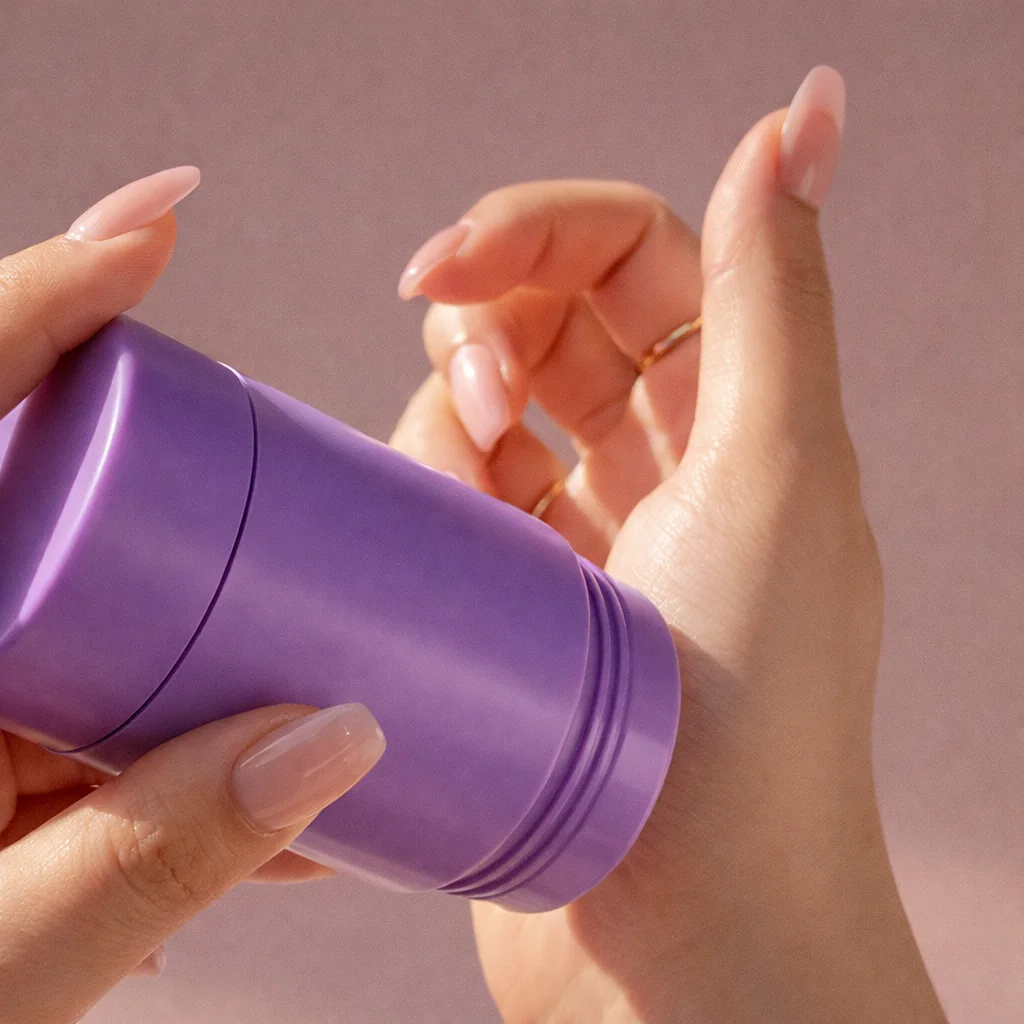
As your manufacturing partner, we don’t just pour a formula into packaging—we help you launch a stick that performs in real hands. Want a non-greasy glide that absorbs fast? A higher melt point so it holds up in warmer climates? A fragrance-free option for sensitive buyers, or a signature scent for gifting? We’ll tune the texture, finish, ingredient story, and claims direction, then recommend the right packaging style (swivel, push-up, or jumbo stick) so your product looks right, feels right, and scales smoothly when you’re ready to reorder.

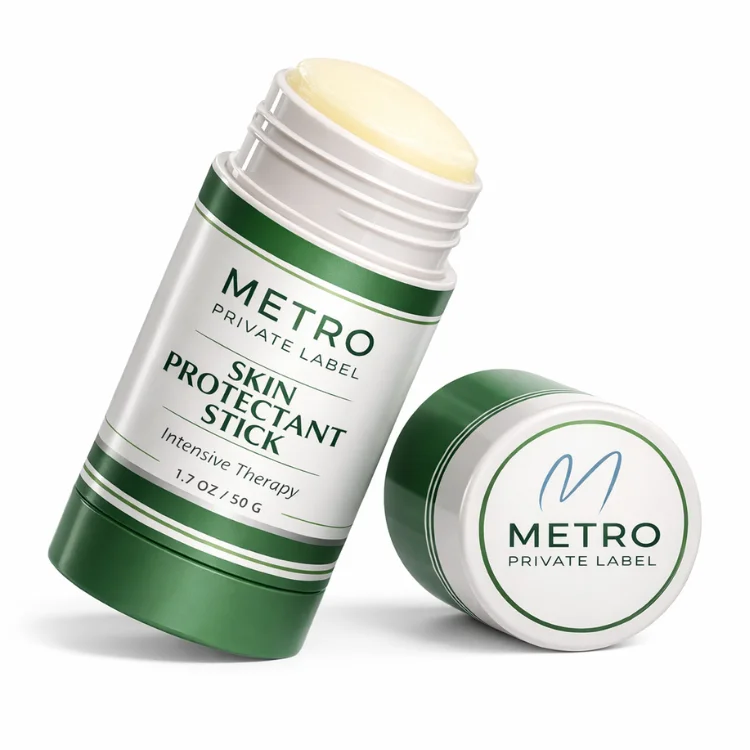
Healing Balm / Skin Protectant Stick

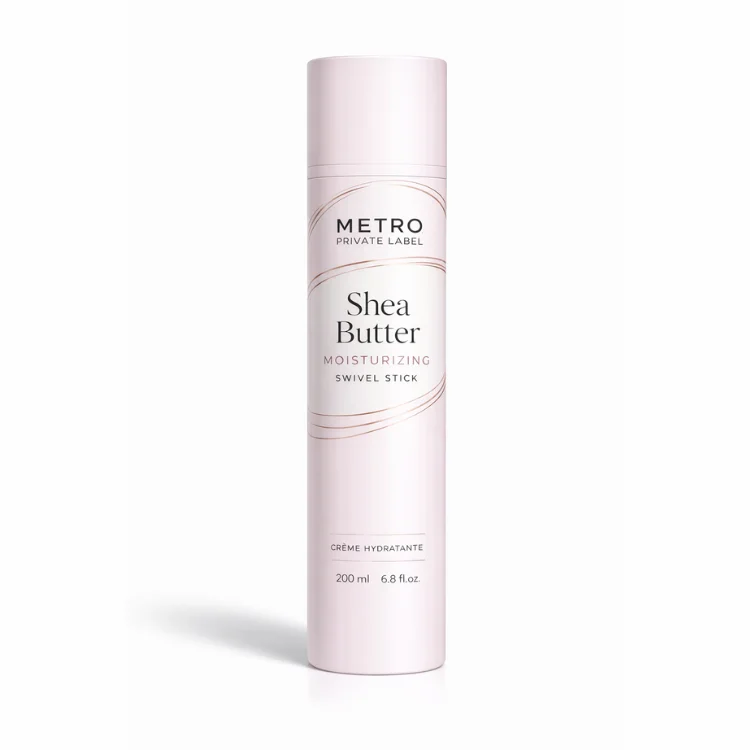
Cocoa Butter / Shea Butter Moisturizing Swivel Stick
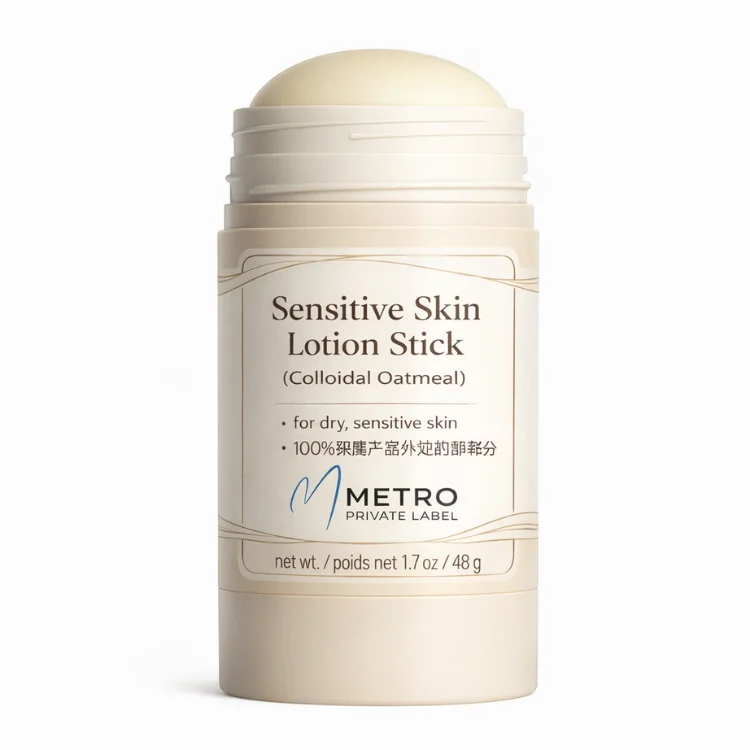
Eczema / Extremely Dry / Sensitive Skin Lotion Stick (Colloidal Oatmeal)
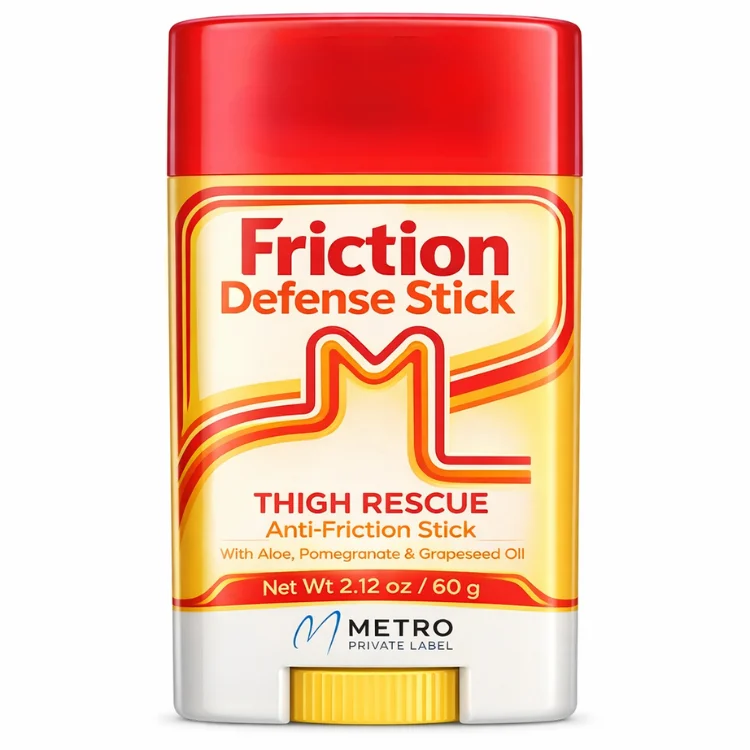
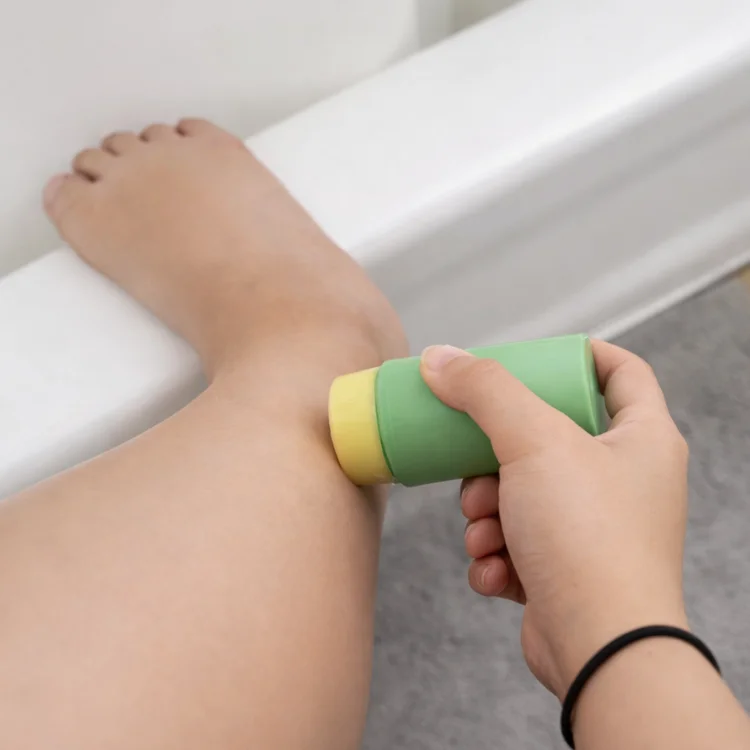
Anti-Chafe / Friction Defense Stick

Build a Body Butter Stick Line That Truly Sells

At Metro Private Label, we know a successful Body Butter Stick isn’t just about turning a lotion into a solid format. It’s about getting the glide right, avoiding greasy drag, ensuring temperature stability, and creating a product customers actually want to keep in their bag and repurchase. Today’s buyers are practical—they care about how it feels on skin, how clean it applies, and whether it solves a real problem without mess. That’s why every private label Body Butter Stick we manufacture is built around real usage scenarios, proven textures, and market-validated demand.
 
Whether you’re launching a healing balm stick for dry patches, a classic cocoa or shea butter swivel stick, a sensitive-skin or eczema-comfort lotion stick, or a performance-driven anti-chafe stick, we design each formula with a clear purpose from day one. Our development decisions are guided by what’s already working on Amazon, in pharmacies, and in everyday routines—so your Body Butter Stick doesn’t just look good in photos, it performs where customers feel it most.
As your manufacturing partner, we go beyond mixing oils and waxes. We focus on texture tuning, melt point control, absorption speed, and packaging compatibility, so your stick stays stable in shipping, smooth in application, and consistent at scale. From ingredient selection and claim direction to packaging style and reorder planning, we help you launch, test, and grow your Body Butter Stick line with confidence—knowing it’s built on solid formulation logic and real market demand.
💡 Our 4 Most In-Demand Private Label Body Butter Stick Types
1️⃣ Healing Balm / Skin Protectant Stick Targeted repair sticks for dry patches, barrier support, and daily skin protection—often inspired by pharmacy best sellers and family-safe positioning.
2️⃣ Cocoa Butter / Shea Butter Moisturizing Swivel Stick Classic, ingredient-led sticks built around recognizable butters, ideal for mass appeal, retail, and fast-moving Amazon SKUs.
3️⃣ Sensitive Skin / Eczema-Comfort Lotion Stick High-tolerance, fragrance-free or oat-based formulas designed for extremely dry or reactive skin, with a strong trust and problem-solution narrative.
4️⃣ Anti-Chafe / Friction Defense Stick Performance-focused sticks with long-lasting glide, commonly positioned for sports, travel, and everyday movement.
🎯 MOQ & Packaging Options (Built for Real Launches)
At Metro Private Label, we keep Body Butter Stick projects practical and launch-friendly—without overpromising.
In-Stock Stick (Label Only) MOQ Our ready-to-label body butter sticks start from 1,000 units. This option is ideal for fast testing, quicker launches, and lower-risk market validation.
Custom Stick (Formula / Tube / Printing) MOQ For fully customized projects—such as custom formula, custom tube, or printed packaging—the starting MOQ is typically 5,000 units.
Packaging Formats Available • Swivel-up sticks • Push-up tubes • Standard or travel sizes (depending on packaging availability)
Included Support Every project includes formula suitability guidance, packaging compatibility checks, labeling support, and shipment stability review—so your Body Butter Stick performs consistently from factory to customer.

More Than Just a Body Butter Stick Manufacturer

At Metro Private Label, we don’t just manufacture Body Butter Sticks — we help you build products your customers actually enjoy using and come back for. A good stick isn’t about fancy claims on paper. It’s about how it glides, how fast it absorbs, whether it feels greasy, and whether it holds up in real life — in bags, pockets, bathrooms, and warm climates. That’s how trust is built, and that’s how repeat sales happen.

✅ Launch Products the Market Is Already Asking For

We don’t develop stick products based on guesses — we follow demand. By studying top-selling Amazon SKUs, pharmacy best sellers, and real consumer reviews, we focus on the Body Butter Stick formats people already search for and buy: healing balm sticks, cocoa or shea butter swivel sticks, sensitive-skin and eczema-comfort sticks, and anti-chafe performance sticks. This helps you enter the market with clearer positioning, simpler messaging, and lower risk.

✅ Small MOQ That Makes Testing and Scaling Practical

We make it realistic to start — and easy to grow. You can launch with 1,000 units using in-stock stick packaging and labeling, ideal for testing pricing, demand, and feedback. When you’re ready to upgrade to a fully customized formula or printed tube, we scale cleanly to 5,000 units and beyond — without changing suppliers or rebuilding your product plan.

✅ Performance That Builds Long-Term Brand Trust

Customers don’t repurchase ideas — they repurchase how a product feels. Our Body Butter Stick formulas are built around controlled melt point, non-greasy glide, fast absorption, and stable texture. Whether it’s daily moisture, barrier repair, friction protection, or sensitive-skin comfort, we design each stick to perform consistently — not just on day one, but throughout its shelf life.

✅ Compliance That Supports Global Expansion

We prepare your Body Butter Stick for real markets, not just samples.
From INCI lists and ingredient documentation to labeling guidance and export readiness, we help make sure your product is compliant before it ships. Whether you’re selling on Amazon, through distributors, or in cross-border markets, we reduce delays, rework, and regulatory surprises — so you can focus on selling.
  • METRO
  • Typical OEM factory
METROTypical OEM factory
$
/year
/year
Minimum order quantity✅ 500 units for startup brands — low-risk entry for first-time founders.❌ 3,000 units minimum, limiting flexibility.
Packaging recommendations✅ Compatibility + visual templates to ensure perfect fit and premium look.❌ Not provided.
Launch support✅ Label compliance & claim copywriting included for export markets.❌ Not available.
Sample delivery time✅ 7–14 days with labeled packaging.❌ Usually 30+ days.
Compliance & Documentation✅ INCI, COA, SDS, GMP-ready — export with confidence.❌ Basic INCI only.
Buy Now

✨ Build a Body Butter Stick Line That Truly Delivers

When you work with Metro Private Label, you’re not just choosing a factory — you’re partnering with a GMPC-certified manufacturer that understands how Body Butter Sticks actually perform in real life. A great stick isn’t about sounding advanced on paper. It’s about smooth glide, non-greasy feel, temperature stability, and everyday usability. That’s what earns customer trust — and repeat purchases.
 
Whether you’re launching a healing balm stick, a classic cocoa or shea butter swivel stick, a sensitive-skin or eczema-comfort stick, or a performance-driven anti-chafe stick, we design each product to fit naturally into daily routines. Our goal isn’t a one-time launch — it’s a Body Butter Stick your customers keep using and coming back for.
🧪 Formulation Built on Real-World Performance
We don’t rely on generic bases or copy-paste formulas. Every Body Butter Stick we manufacture is developed with clear logic around melt point, absorption speed, glide, and skin feel. We work with proven butters, oils, wax systems, and functional ingredients to ensure the stick applies cleanly, absorbs comfortably, and stays stable during shipping and storage.
If there’s a trade-off between texture, stability, or ingredient story, we explain it clearly and help you choose what makes the most sense for your brand and market — not just what looks good in a spec sheet.
 
📦 Packaging That Supports How Your Product Is Used
Packaging matters, especially for stick products that live in bags, pockets, and bathrooms. You can start efficiently with 1,000 units using in-stock stick packaging and labeling, ideal for testing demand and launching quickly. When you’re ready to upgrade, we support 5,000-unit custom projects with tailored formulas, tube styles, and printed packaging that reflect your brand positioning.
Packaging Notes:
  • In-stock Body Butter Sticks (label only): from 1,000 units
  • Fully custom sticks (formula / tube / printing): from 5,000 units
  • Swivel-up and push-up formats available, depending on project needs

We coordinate labels, cartons, and finishing so everything arrives cohesive, compliant, and ready to sell.
 
⚙️ A Clear, Reliable Production Process
From formulation and sampling to filling, quality control, and export preparation, our process is straightforward and transparent. We communicate clearly, flag risks early, and set timelines that match real launch plans — not unrealistic promises.
Think of us as an extension of your operations team, focused on helping you bring a reliable, market-ready Body Butter Stick to market without unnecessary delays or surprises.
 
🌿 Built for Brands That Want to Grow
We measure success by how well your product scales. That’s why we focus on production-stable formulas, practical MOQs, and export-ready documentation for markets like the U.S., EU, UK, and cross-border e-commerce.
With Metro Private Label, your Body Butter Stick line is built to launch smoothly, perform consistently, and grow confidently — not just sell once.

Who We Work With (Designed Around Your Real Needs)

We build partnerships by thinking the way our clients do — understand first → provide solutions → deliver results. Every client type has different priorities, and our role is to translate those into clear, actionable outcomes.

Medical Aesthetic / SPA Professionals

You care about: post-treatment comfort, product safety, and documentation that meets regulatory and audit standards.
What we deliver:

  • Clinical-grade formulations: CICA, ceramides, and peptides; pH-balanced, fragrance-free options with full preservative logic provided.

  • Regulatory documentation: INCI, COA, SDS, stability and compatibility reports; CPSR/CPNP preparation handled with third-party testing support.

  • Professional aesthetic: minimalist, medical-style packaging suitable for back-bar or retail; traceable batches for consistent results.
    Immediate outcome: a post-treatment testing set, compliant label guide, and batch consistency plan ready for your internal validation.

Funded New Entrepreneurs

You care about: low-risk entry, a clear roadmap, and a premium finish that looks ready for market.
What we deliver:

  • Smart start: choose from proven skincare bases (serums, creams, masks); pilot runs from 500 units with optional custom cartons.

  • All-in-one process: formula → visual template → compliant label copy → production → export-ready documentation.

  • Transparent costing: clear breakdown of your key cost drivers — formula type, active concentration, and packaging complexity — so you can plan pricing and profit with confidence.
    Immediate outcome: 2–3 customized samples, a detailed quotation breakdown, and a timeline showing every stage from sample to shipment.

Boutique DTC Brand Owners

You care about: originality, visual consistency, and storytelling through ingredients.
What we deliver:

  • Ownable sensorials: bio-cellulose or vegan carrageenan textures paired with signature actives like peptides, niacinamide, or botanical blends.

  • Design alignment: typography, color, and label systems that match your brand aesthetic; compatibility checks before full production.

  • Global readiness: INCI, COA, SDS, and stability data included; EU/UK/US label claim review support for smooth registration.
    Immediate outcome: packaging mockups, ingredient story sheets, and a coordinated multi-SKU rollout plan that keeps your range cohesive.

Why this works:
We don’t sell production capacity — we deliver strategic understanding, technical precision, and verifiable results.
By connecting your goals with regulatory, design, and manufacturing expertise, we help your brand move faster, reduce uncertainty, and build trust that lasts.

FAQs Body Butter Stick

For your convenience, we’ve gathered the most commonly asked questions about our Body Butter Stick . However, should you have any further queries, please don’t hesitate to reach out to us.
1. What types of Body Butter Sticks can you manufacture?
We focus on Body Butter Stick formats that are already proven in the market. This includes healing balm sticks, cocoa or shea butter moisturizing swivel sticks, sensitive-skin and eczema-comfort sticks, and anti-chafe or friction defense sticks. You can start with our existing concepts or adjust them to fit your brand’s positioning.
Yes. We can customize the butter and oil system, absorption speed, glide, finish (rich vs. lightweight), fragrance or fragrance-free options, and ingredient story. If you have a target skin feel or competitor reference, we’ll formulate toward that—not just what’s easiest to produce.
For in-stock stick packaging with labeling, the MOQ starts at 1,000 units. For fully custom projects—including custom formula, custom tube, or printed packaging—the MOQ starts from 5,000 units. This setup allows you to test first, then scale without switching suppliers.
Sampling usually takes 2–4 weeks, depending on how many texture adjustments are needed. Mass production typically takes 4–6 weeks after sample approval. If you’re working toward a launch date, we’ll plan the timeline with you upfront so expectations stay realistic.
They can be. Many of our projects are fragrance-free, low-irritation, and built for dry or reactive skin. If your market focuses on eczema-prone or sensitive users, we’ll guide ingredient selection and claims carefully to match that audience.
Yes. We support stick tube sourcing, label sizing, print specs, and layout guidance. Whether you’re using stock tubes or moving into custom packaging, we help make sure the packaging works with the formula and stays compliant in your target market.
We offer both. You can launch faster using ready, market-tested formulas with labeling, or develop a custom Body Butter Stick from the ground up. We’ll recommend the right path based on your budget, timeline, and long-term plan.
Every Body Butter Stick goes through stability checks, texture and melt-point evaluation, and packaging compatibility testing. Production is carried out under GMPC standards, so quality stays consistent from sampling to mass production.
We can guide you on practical, compliant positioning, such as hydration, barrier support, non-greasy feel, or friction protection. While final marketing claims are always your decision, we help make sure they align with how the product actually performs.
Yes. We work with brands selling in the U.S., EU, UK, Middle East, and cross-border e-commerce markets. We assist with documentation, labeling considerations, and export coordination so your Body Butter Stick launches smoothly without avoidable delays.

Metro Private Label in Numbers

Happy Clients
0 +
Million-dollar Buyers
0 +
Formulation
0 +
Professional Staffs
0 +

Your Ultimate Guide to Body Butter Stick

If you’re planning to add a Body Butter Stick to your product lineup—whether it’s your first solid-format SKU or an expansion of an existing body care range—you’re not just choosing a new texture. You’re stepping into one of the most high-repeat, trust-driven categories in modern skincare. Body Butter Sticks are not impulse buys. Consumers expect them to solve real problems like dryness, friction, sensitivity, or daily comfort, and they expect them to work consistently. When they do, customers don’t just repurchase—they build habits around them.
 
We’ve watched this category evolve from simple cocoa butter sticks into performance-driven, lifestyle products. At Metro Private Label, we’ve worked with micro brand founders launching their first hero product, Amazon and Shopify sellers optimizing for reviews and reorders, salons and clinics creating professional-grade retail SKUs, and distributors looking for stable formulas that can move across regions without issues. And in every case, we’ve seen the same pattern: Body Butter Sticks look simple on the surface, but they require far more strategic thinking than most liquid body products.
 
This guide is built on what we’ve learned behind the scenes. Not theory, not trends pulled from headlines, but real development decisions that affect whether a Body Butter Stick succeeds or struggles. We’ll share how different stick types perform across channels, what consumer problems actually justify a stick format, which ingredients behave well—or poorly—in solid systems, and why packaging, durability, pricing logic, and early testing often matter more than adding another “hero” ingredient.

Table of Contents

What Consumer Problems Does a Body Butter Stick Actually Solve?

When I talk to brands that are considering a Body Butter Stick, many of them start with the format as a novelty. But from my experience, stick formats didn’t emerge because the market needed something “new” — they exist because traditional creams and lotions fail in everyday behavior. Consumers don’t abandon body care because they don’t care about hydration; they abandon it because the experience feels inconvenient, messy, or poorly matched to real-life routines. A Body Butter Stick is fundamentally a behavioral solution, not a cosmetic upgrade.
 
Mess-Free Application Reduces Psychological Resistance
One of the most underestimated consumer problems is mental resistance. Creams require hands, time, and cleanup. Even when a product works well, people subconsciously postpone using it because they don’t want greasy palms, residue on surfaces, or the hassle of washing hands afterward. I’ve seen this repeatedly in reviews and usage studies. A Body Butter Stick removes that friction. The user can apply product, put it away, and move on. That lack of interruption is often what turns an occasional product into a daily habit.
 
Targeted Use Solves the “I Don’t Need This Everywhere” Problem
Another reason stick formats perform well is that consumers rarely think in terms of full-body treatment. They think in specific discomforts. Dry heels that crack, elbows that feel rough, inner thighs that chafe, knees that look ashy, cuticles that split. When a product is designed for targeted application, it validates the consumer’s problem instead of forcing a generalized solution. In my experience, this sense of precision increases trust. The product feels intentional, not generic, and consumers are more likely to keep it nearby and use it frequently.
 
Portability Aligns with How People Actually Live
From a lifestyle perspective, portability is not just about travel size. It’s about accessibility at the moment of need. Most body care products live at home, which means they’re unavailable when skin discomfort happens during the day. A Body Butter Stick fits into bags, cars, lockers, and desk drawers without leaking or spilling. I’ve found that when a product is physically present at the right moment, usage naturally increases. That simple alignment between format and lifestyle is one of the strongest drivers of repeat use.
 
Hygiene Is an Emotional Trust Trigger, Even If Consumers Don’t Say It Out Loud
Hygiene concerns are rarely stated directly, but they strongly influence behavior. Many consumers feel uncomfortable dipping fingers into jars, especially in shared households, gyms, clinics, or professional environments. A stick format creates a sense of separation between the product and the user’s hands. From my perspective, this matters even more in sensitive-skin, post-procedure, or family-oriented products. When consumers feel the product is clean and protected, they trust it more — and trust leads to consistent use.
 
Reduced Friction Is What Drives Reapplication
In real-world usage, the biggest commercial advantage of a Body Butter Stick is not hydration strength, but ease of reapplication. Creams and lotions tend to be used once or twice a day at fixed times. Sticks invite touch-ups. When skin feels tight, irritated, or dry, the product can be applied immediately without preparation. I’ve seen how this behavior shortens the time between purchases. Products that integrate naturally into daily micro-moments are consumed faster and repurchased more reliably.
 
Why Stick Formats Often Outperform Creams in Certain Categories
A Body Butter Stick doesn’t replace creams and lotions across the board, but it outperforms them in scenarios where convenience, hygiene, and precision matter more than indulgence. When the consumer problem involves movement, shared spaces, quick relief, or repeated daily use, the stick format aligns better with behavior. From a brand perspective, recognizing this alignment early helps avoid format choices that look good conceptually but fail in real use.
 
Understanding the Consumer Problem Comes Before Choosing the Format
When I advise brands, I always come back to one question: where and how will the consumer actually use this product? If the answer involves interruptions, mobility, or targeted discomfort, a Body Butter Stick is often the most logical solution. When brands choose the stick format based on real consumer pain points rather than aesthetics, they build products that feel intuitive, dependable, and easy to adopt — and those are the products that last.
By understanding these consumer-driven reasons clearly, brands can justify the Body Butter Stick not as an alternative texture, but as a solution that fits modern behavior far better than traditional formats.

Body Butter Stick vs Creams & Lotions: When the Stick Format Makes Sense

When brands ask me whether they should develop a Body Butter Stick or stay with a cream or lotion, I always slow the conversation down. Format selection is not about following what looks modern or what’s trending on social media. It’s a commercial decision that affects cost structure, pricing logic, consumer behavior, and long-term reordering. From my experience, brands that rush into a stick format without understanding these trade-offs often struggle to explain why their product exists in the first place.
 
How Real-Life Usage Scenarios Separate Sticks from Creams
The clearest difference between sticks and creams appears when you observe how people actually apply body care. Creams and lotions belong to controlled environments: bathrooms, bedrooms, and moments with time and privacy. A Body Butter Stick belongs to movement. I’ve watched how consumers use sticks in cars, at desks, in gyms, and while traveling. The absence of preparation and cleanup changes the entire relationship with the product. When the use scenario involves interruptions or shared spaces, sticks align naturally with behavior in a way creams rarely do.
 
Why Reapplication Frequency Changes Product Value
One of the most overlooked factors in format selection is how often a product can realistically be reapplied. Creams are often used once or twice a day because they demand attention and time. A stick invites repetition. When skin feels tight, irritated, or uncomfortable, consumers reach for a stick instinctively because it doesn’t disrupt what they’re doing. I’ve seen this lead to a fundamental shift in product value. The product becomes a tool rather than a routine, and tools tend to be used and replaced more consistently.
 
The Psychological Reason Consumers Accept Higher Price-Per-Gram
From a pricing standpoint, Body Butter Sticks challenge traditional value comparisons. Consumers rarely compare them directly to creams by weight. Instead, they evaluate them based on purpose and convenience. In my experience, people are willing to pay more per gram for a product that feels precise and dependable. The stick format communicates specialization. It signals that the product is designed for a specific need rather than general coverage, which changes how price is perceived and justified.
 
Shelf Behavior and How Consumers Scan Products
Shelf positioning plays a surprisingly large role in how stick formats succeed. Creams tend to be compared horizontally, with size, price, and claims competing side by side. A Body Butter Stick is often evaluated vertically, based on the problem it claims to solve. I’ve observed that when the use case is clearly communicated, sticks avoid direct price competition and instead occupy a niche role. This difference in how consumers scan shelves affects everything from packaging design to product naming.
 
Channel Expectations Shape Format Performance
Another layer brands often underestimate is how sales channels influence format success. In online marketplaces and pharmacy-style retail, consumers search by problem and solution. In those environments, a stick format is easy to understand and easy to trust. In contrast, brands built around indulgent textures, scent experiences, or ritualized self-care may find creams more effective. I’ve learned that aligning format choice with channel expectations reduces friction and improves conversion rates.
 
Where Sticks Create More Commercial Leverage Than Creams
A Body Butter Stick creates the most leverage when the consumer problem involves repeat exposure, targeted discomfort, or environments where traditional application feels inconvenient. In these cases, the format itself becomes part of the value proposition. Brands that succeed with sticks design the entire product around this reality, rather than treating the stick as a novelty container for a standard formula.
 
Choosing Format Based on Behavior Leads to Sustainable Growth
In the long run, format decisions grounded in real behavior outperform trend-driven choices. When a Body Butter Stick fits how consumers live, move, and care for their skin, it becomes a natural extension of their routine. I always encourage brands to observe usage honestly and let those observations guide format selection. When the stick format truly makes sense, it doesn’t just coexist with creams and lotions — it earns its own place in the product line and sustains growth over time.
By approaching the stick-versus-cream decision with this level of depth, brands can avoid costly experiments and build products that make sense not only in theory, but in everyday consumer behavior.

Choosing the Right Body Butter Stick Type for Your Target Customer

When I work with brands exploring the Body Butter Stick category, I often remind them that these formats didn’t evolve randomly. Each stick type exists because a specific group of consumers experienced a recurring problem that traditional creams failed to solve. People don’t wake up wanting a “stick”; they want relief, comfort, protection, or performance. Understanding why these categories exist helps brands move beyond surface-level differentiation and build products that feel necessary rather than optional.
 
Healing Balm Sticks Speak to Consumers Who Value Reliability Over Indulgence
Healing balm sticks resonate most strongly with consumers who prioritize trust and predictability. These are people dealing with cracked skin, dryness from weather exposure, or minor irritation that needs immediate relief. In my experience, this group is not looking for luxury cues or novelty textures. They want something that works the same way every time they use it. The stick format reinforces this expectation by offering controlled application and a sense of protection. For these users, a healing balm stick feels like a dependable tool rather than a cosmetic product, and that perception drives repeat purchases.
 
Cocoa and Shea Butter Sticks Succeed Through Familiar Comfort
Classic cocoa and shea butter sticks appeal to a different mindset. These consumers are already comfortable with the ingredients and associate them with nourishment and softness. What the stick adds is convenience. I’ve noticed that for many users, this type of Body Butter Stick replaces a traditional moisturizer they already trust. The format makes daily use easier without changing the emotional relationship with the product. This category works best when the customer wants consistent comfort rather than a problem-solving intervention, and that distinction is important when shaping both formulation and messaging.
 
Sensitive Skin and Eczema-Comfort Sticks Reduce Decision Stress
Sensitive-skin and eczema-comfort sticks are chosen by consumers who often feel overwhelmed by skincare options. These users tend to be cautious and highly reactive to uncertainty. In my experience, they value calmness and consistency more than performance claims. The stick format helps reduce decision stress because it limits over-application and minimizes contact with the product itself. When these consumers find a product that feels gentle and predictable, they tend to remain loyal for long periods. For brands, this means that success in this category depends on restraint rather than innovation for innovation’s sake.
 
Anti-Chafe Performance Sticks Serve a Completely Different Motivation
Anti-chafe and friction defense sticks serve consumers whose primary concern is function under movement and pressure. These users often don’t consider themselves skincare buyers at all. They are runners, travelers, workers, or athletes who need something that performs reliably when skin is under stress. I’ve found that for this group, glide and durability matter far more than richness or scent. The stick format works because it allows quick application before activity and targeted reapplication when needed. These products succeed when they are framed as performance tools rather than beauty items.
 
Why Misalignment Between Stick Type and Customer Expectation Causes Failure
One of the most common reasons Body Butter Stick launches fail is misalignment. When a product’s formulation, texture, or messaging doesn’t match the consumer’s underlying motivation, confusion follows. I’ve seen healing balm sticks marketed with indulgent language that undermines trust, and performance sticks packaged like luxury self-care items that fail to connect with their audience. Choosing the right category is not just about formulation; it’s about respecting how the customer thinks and what they expect from the product.
 
Channel Behavior Influences Which Stick Type Performs Best
The sales channel plays a larger role in stick selection than many brands expect. In pharmacy-style retail and clinics, healing and sensitive-skin sticks perform well because trust and reassurance are critical. In e-commerce environments, especially Amazon and DTC platforms, cocoa and shea butter sticks benefit from instant ingredient recognition. Anti-chafe sticks align naturally with sports, travel, and outdoor-focused channels where functionality is the primary driver. In my experience, aligning stick type with channel behavior reduces friction and improves conversion without requiring aggressive marketing.
 
Choosing the Right Stick Type Simplifies Every Other Decision
When the correct Body Butter Stick category is chosen early, everything else becomes clearer. Formulation goals feel more focused, packaging decisions become more logical, and messaging requires less explanation. I’ve observed that brands that struggle with repeated revisions often haven’t fully committed to a specific consumer problem. Once that commitment is made, the product stops trying to be everything and starts excelling at one thing.
 
Empathy Is the Real Competitive Advantage
Ultimately, choosing the right Body Butter Stick type comes down to empathy. When I ask brands to describe their customer’s daily life, frustrations, and priorities, the right category usually becomes obvious. A stick that reflects real human behavior feels intuitive and trustworthy. When brands build around that understanding, the Body Butter Stick becomes more than a format — it becomes a solution that customers return to again and again.
By approaching stick selection with this depth of understanding, brands can avoid costly missteps and build Body Butter Stick lines that feel purposeful, coherent, and commercially sustainable.

What to Consider Before Developing a Body Butter Stick Formula

When I talk with founders or buyers who are new to stick formats, I often sense an assumption that a Body Butter Stick is simply a cream without water, poured into a tube. In reality, sticks are far less forgiving than emulsions. There is no water phase to mask imbalance, no easy way to hide instability, and no margin for vague decisions. Every choice you make early on — even ones that feel small — becomes physically visible and immediately noticeable to the consumer. That’s why I always say that stick formulation is not just about making something that works in a lab, but about designing something that survives real life.
 
Texture and Glide Define First Impression and Long-Term Satisfaction
Texture is the first thing a user judges, often subconsciously. When a Body Butter Stick touches skin, the glide either feels reassuring or uncomfortable within seconds. From my experience, brands often describe the texture they want in emotional terms like “luxurious” or “lightweight,” but those words mean very different things to different users. In stick form, texture is created by the balance between structure and slip. Too much structure creates drag and resistance, while too much slip can feel greasy or unstable. What matters most is aligning texture expectations with how and where the consumer will use the product. A stick designed for dry heels should not feel the same as one meant for inner thighs or arms, and confusing those use cases early often leads to reformulation later.
 
Melt Point Is a Commercial Constraint, Not Just a Technical Detail
Melt point is one of the areas where I see the biggest disconnect between concept and reality. Many brands evaluate samples in controlled environments and assume that performance will translate everywhere. But a Body Butter Stick doesn’t live in a laboratory. It lives in shipping containers, delivery vans, handbags, and bathrooms with fluctuating temperatures. A stick that softens too easily can deform, sweat, or break, even if the formula itself is technically stable. From my perspective, melt point determines where you can sell your product, when you can ship it, and how much risk you take on during logistics. Deciding this too late often forces brands into compromises that could have been avoided with earlier planning.
 
Climate Compatibility Shapes Market Reach From Day One
Closely tied to melt point is climate compatibility, which I always encourage brands to treat as a strategic decision rather than an adjustment. If your product is meant to be sold across regions with different temperatures and humidity levels, the formula must be designed with that in mind from the beginning. I’ve seen brands launch successfully in cooler markets only to face complaints, returns, or emergency reformulations once they expand into warmer regions. Those corrections are expensive and disruptive. Designing for climate early may slightly limit certain ingredient choices, but it protects the product’s integrity as the brand grows.
 
Ingredient Systems Behave Differently Without Water
One of the most challenging adjustments for first-time stick developers is accepting that many familiar ingredients behave differently in solid systems. Ingredients that feel elegant in lotions can become sticky, draggy, or uneven in sticks. Without water to disperse and balance them, everything must coexist within a solid matrix. From my experience, successful Body Butter Stick formulas depend on understanding not only what ingredients you want to include, but how they interact structurally. Ignoring these interactions often leads to graininess, sweating, or inconsistent payoff — issues that are difficult to correct without reworking the entire formula.
 
The Hidden Limits of Hero Ingredient Density
I often see brands push for high concentrations of multiple hero ingredients, assuming more equals better. In stick formats, this mindset can be risky. Every additional ingredient changes the balance of the system, sometimes in subtle ways that only become apparent over time. I’ve learned that strong stick formulas usually focus on doing one core job extremely well. When brands attempt to overload a stick with too many actives, the result is often a product that struggles with texture, stability, or user comfort. Recognizing the physical limits of the format early helps avoid unrealistic claims and costly reformulation cycles.
 
Fragrance Decisions Influence More Than Sensory Experience
The decision to include fragrance often feels straightforward, but in my experience it has wide-reaching implications. Fragrance affects who can use the product, where it can be sold, and how it is perceived emotionally. In stick formats, fragrance tends to linger closer to the skin and can feel more intense than in creams. This can be an advantage for brands aiming to create a memorable experience, but it can also alienate sensitive users. Choosing fragrance or fragrance-free is not just about preference; it’s about defining your audience and managing long-term risk.
 
How Fragrance Choices Affect Stability and Reformulation Risk
Beyond consumer perception, fragrance choices can also influence formula behavior over time. Certain fragrance components interact differently with solid systems, sometimes affecting hardness or surface appearance. I’ve seen brands forced to revisit entire formulas simply because a fragrance choice made late in development created unexpected changes. Making this decision early allows the formula to be built around it, rather than constantly adjusted to accommodate it.
 
Cost Implications Are Often Locked in Early
Another point I always emphasize is that early formulation decisions quietly determine cost structure. Choices around ingredient systems, structural components, and stability requirements all influence raw material cost, processing complexity, and waste rates. When brands make decisions based solely on sample-stage appeal, they sometimes discover later that scaling the formula is far more expensive than expected. From my perspective, thinking about cost alongside performance early on prevents unpleasant surprises once production volumes increase.
 
Designing for Real Life, Not the Sample Table
In the end, the most successful Body Butter Stick formulas are designed for the conditions consumers actually experience. When I evaluate a concept, I imagine how it will behave after weeks in transit, repeated use, and exposure to different environments. Brands that design with this reality in mind tend to avoid the painful cycle of revision and compromise. By investing time and thought into these early decisions, founders and buyers can build Body Butter Stick products that are stable, credible, and commercially viable — without needing to fix fundamental problems after launch.

Ingredient Compatibility: What Works Well (and Poorly) in Stick Form

When brands move into Body Butter Stick development, the biggest shock usually comes from ingredient behavior. In creams and lotions, water, emulsifiers, and fluid movement act like buffers. They soften transitions, disperse actives, and hide small incompatibilities. In a solid stick, nothing is hidden. Every ingredient has to physically coexist in a fixed structure. From my experience, this is where many “safe” or popular skincare ingredients start behaving in unexpected ways, not because they are bad ingredients, but because the format exposes their true nature.
 
Why “Sweating” Happens and Why It’s Often Misunderstood
Sweating is one of the first issues brands notice when a stick has been sitting for a while. Small oil droplets appear on the surface, and panic usually follows. I’ve seen this countless times. In reality, sweating is often a sign that certain oils or oil-soluble actives are slowly migrating out of the structure. In a cream, these ingredients are locked inside an emulsion. In a stick, they rely entirely on structural compatibility. Changes in temperature during shipping or storage accelerate this migration. What’s important to understand is that sweating is rarely solved by removing “cheap” ingredients; it’s solved by rebalancing how oils, waxes, and butters interact as a system.
 
Graininess Comes From Crystallization, Not Poor Mixing
Graininess is another issue that frustrates many brands, especially when it appears weeks after production. I always explain that graininess is not usually a manufacturing mistake. It’s a crystallization issue. Certain butters naturally form different crystal structures as they cool and age. In liquid systems, these changes are invisible. In sticks, they are felt immediately on skin. From my experience, graininess often appears when incompatible butters are combined or when cooling behavior is not considered during formulation. Once a consumer feels graininess, trust is lost very quickly, which is why this issue deserves serious attention early on.
 
Drag Is a Balance Problem, Not an Ingredient Weight Problem
Many brands assume that drag comes from heavy or waxy ingredients and that switching to lighter oils will automatically improve glide. In stick formats, this logic often fails. I’ve seen formulas full of lightweight oils still feel resistant on skin because the structural components dominate the experience. Glide is not determined by how “light” an ingredient sounds in marketing language. It’s determined by how lubricating elements interact with the structural backbone of the stick. In my experience, drag is a sign that the system is out of balance, not that one ingredient is inherently wrong.
 
Why Instability Often Appears Late, Not Early
One of the most dangerous assumptions brands make is believing that a stick is stable because it looks fine during early testing. Solid systems change slowly. Oil migration, texture shifts, surface blooming, or loss of glide may only appear after repeated temperature cycles or prolonged storage. I’ve learned to be cautious with ingredients that perform well in the short term but show subtle incompatibilities over time. A Body Butter Stick needs to be judged over months, not weeks, because consumers experience the product long after the initial sample phase.
 
Translating Liquid or Cream Formulas Into Sticks Requires Rethinking Delivery
Brands with existing liquid products often want to carry their hero ingredients straight into stick form. I understand the desire for consistency, but in practice this is where many projects struggle. Some actives rely on water to stay evenly distributed or stable. Others interact poorly with wax-based systems. From my experience, successful translation means rethinking how an ingredient is delivered rather than forcing the same formula into a new format. Sometimes this means using different ingredient forms, adjusting levels, or accepting that not every liquid active belongs in a solid stick.
 
Why Oil and Butter Quality Alone Is Not Enough
I often hear brands talk about sourcing “the best” oils and butters, assuming quality alone guarantees performance. In sticks, compatibility matters more than prestige. Two high-quality ingredients can clash if their melting behavior, polarity, or crystallization patterns don’t align. In emulsions, emulsifiers hide these conflicts. In sticks, the structure exposes them. I’ve learned that ingredient systems must be designed like architecture, not like shopping lists. Each component must support the others, or the entire structure suffers.
 
The Hidden Cost of Overloading Actives
Another recurring issue I see is overloading sticks with actives to strengthen marketing claims. In solid formats, every additional active introduces stress to the structure. Some absorb oils, others disrupt crystallization, and some interfere with glide or stability. From my experience, sticks perform best when they are restrained and focused. A formula that does one job exceptionally well will outperform a complex formula that constantly fights itself. Overloading almost always leads to compromise, whether in texture, stability, or shelf life.
 
Sensory Expectations Must Match the Format’s Strengths
One reason brands feel disappointed with stick performance is mismatched expectations. A Body Butter Stick excels at protection, lubrication, and targeted comfort. It does not behave like a fast-absorbing lotion, and it shouldn’t be forced to. I always encourage brands to design ingredient systems that play to the strengths of the format instead of trying to replicate liquid sensoriality. When expectations are aligned, the ingredient system feels intentional rather than flawed.
 
Designing Ingredient Systems for Long-Term Trust
In my experience, the best Body Butter Stick formulas are built with patience and realism. Ingredients are chosen not just for what they promise on a label, but for how they behave together over time. When compatibility is prioritized from the beginning, many common problems never appear at all. Consumers don’t analyze formulas the way we do, but they feel the difference immediately. Smooth application, stable texture, and consistent performance build trust in a way no claim ever can.
Understanding ingredient compatibility at this level allows brands to avoid costly reformulations and create Body Butter Sticks that feel deliberate, reliable, and mature rather than experimental.

Packaging Design Considerations That Impact Real-World Use

When I look back at Body Butter Stick launches that struggled, the formula is rarely the real issue. In most cases, the problem appears the moment the customer touches the packaging. Before the stick ever reaches skin, the tube, cap, and mechanism have already shaped the user’s opinion. From my experience, packaging is the first real-world test of whether a product was designed for actual human behavior or for a presentation slide. If the packaging fails, everything inside it becomes irrelevant in the consumer’s mind.
 
Swivel Mechanisms Create Expectations of Control and Precision
Swivel-up tubes feel familiar to most consumers because they mirror products people use daily. When I evaluate swivel packaging, I pay close attention to resistance, smoothness, and stopping control. Consumers expect the stick to rise evenly, stop where they want it, and stay in place during application. If the mechanism slips or feels loose, users instinctively twist harder, which often leads to breakage. In my experience, swivel mechanisms work best for products designed for frequent, one-handed use where precision and consistency matter.
 
Push-Up Tubes Demand User Effort and Tolerance
Push-up tubes introduce a different interaction entirely. Instead of mechanical control, they rely on finger pressure and judgment. I’ve noticed that some consumers enjoy this simplicity, while others find it frustrating. Push-up formats tend to work better when the stick is firm and used occasionally rather than daily. When the formula is soft or the tube is thin, users often push too far and struggle to push the product back down, creating waste and dissatisfaction. These reactions rarely show up in testing unless you watch how real people handle the product over time.
 
Packaging Durability Determines Whether the Product Survives Daily Life
Body Butter Sticks are rarely treated gently. They are dropped, squeezed, twisted, and carried in bags where pressure is unpredictable. I’ve seen packaging that looked perfectly fine on a shelf fail after a few weeks of real use. Thin walls crack, caps loosen, and internal components shift. From my experience, durability isn’t about over-engineering; it’s about respecting how products are actually handled. Packaging that survives daily abuse protects the formula from deformation and contamination, but it also protects the brand’s reputation.
 
Leakage Often Signals Structural Weakness, Not Formula Failure
When customers complain about leakage, brands often look at the formula first. In many cases, the real issue lies in how the packaging holds the product. Tolerances between the stick and tube, cap fit, and internal sealing all influence whether softened product stays contained. I’ve learned that even well-designed formulas will misbehave if packaging doesn’t support them under heat or pressure. Consumers don’t care where the fault lies; they only remember that the product made a mess.
 
Limited Label Space Forces Strategic Communication
Stick packaging offers very little room for text, which creates challenges brands often underestimate. I’ve worked with teams who tried to compress full ingredient stories, instructions, and claims into a few square centimeters. The result is usually cluttered and unreadable. On the other hand, labels that are too minimal can leave consumers confused about usage or benefits. In my experience, effective stick labels prioritize clarity over completeness. They guide the user quickly and intuitively without overwhelming them.
 
How People Actually Hold and Use Stick Products
One of the most valuable insights I’ve gained comes from simply observing how people use sticks. They twist them open without looking, apply them in motion, and close them with one hand. They don’t slow down or read instructions mid-use. This behavior demands packaging that works intuitively. Caps must come off smoothly but stay secure. The stick must not wobble or collapse under pressure. When these details are overlooked, frustration appears immediately and often shows up later in reviews.
 
Travel Use Amplifies Packaging Weaknesses
Products designed to be portable face higher expectations. When a Body Butter Stick is carried in a bag or pocket, consumers expect it to stay sealed, clean, and intact. From my experience, even small failures feel magnified in these contexts. A minor leak becomes a major inconvenience when it ruins other belongings. Packaging that can tolerate movement, pressure, and temperature changes protects not only the product, but the customer’s trust.
 
Packaging Performance Shapes Perceived Product Quality
Consumers rarely separate packaging from product quality. When a stick feels solid, advances smoothly, and closes securely, users subconsciously associate that experience with higher formulation quality. When packaging feels flimsy or unreliable, even a great formula struggles to earn trust. I’ve seen perception form within seconds of first use. Once packaging creates doubt, it’s very difficult for the product to recover in the user’s mind.
 
Why Packaging Issues Translate Directly Into Returns
In e-commerce especially, packaging issues often lead to immediate returns. A broken mechanism or exposed product is enough for many customers to stop using the product entirely. From what I’ve observed, these returns are often labeled as product dissatisfaction, even when the formula itself was never tested. This creates unnecessary cost and damages long-term brand equity. Thoughtful packaging design reduces these risks before the product ever reaches a customer.
 
Designing Packaging for Real Behavior, Not Ideal Conditions
In the end, the most successful Body Butter Stick packaging is designed around reality. When I evaluate a packaging option, I imagine it being used in a hurry, dropped on a hard floor, or stored in a warm bag. Brands that design with these scenarios in mind avoid painful surprises after launch. Packaging that works in real life disappears into the experience, allowing the formula to shine. That invisibility is the true mark of good packaging design.

Cost Structure & Pricing Logic for Body Butter Stick Products

Whenever I speak with founders or buyers about Body Butter Stick pricing, I notice a common pattern. Pricing is often treated as something to “figure out later,” after the formula is approved and packaging is selected. In my experience, this is where problems begin. Stick products lock in more cost variables earlier than creams or lotions, and once those decisions are made, pricing flexibility shrinks quickly. I’ve learned that the most successful launches treat pricing as a design constraint from the very beginning, not as an afterthought.
 
The True Cost of a Formula Is Hidden in Its Behavior
Most people think of formula cost purely in terms of ingredient price, but I’ve learned that behavior matters just as much. A Body Butter Stick that is technically inexpensive on paper can become costly if it requires slow filling, careful temperature control, or produces a higher rejection rate during production. I’ve seen formulas that look affordable turn into margin drains because they sweat, deform, or vary slightly between batches. From my perspective, the real cost of a formula is what it takes to reproduce it reliably, not just what the raw materials cost per kilo.
 
Stability and Consistency Are Cost Drivers, Not Nice-to-Haves
Stability isn’t just a quality issue; it’s a pricing issue. When a stick formula is unstable, it increases waste, slows production, and raises the likelihood of returns or complaints. I’ve worked with brands who underestimated how much instability would affect long-term costs. A formula that performs consistently across climates and storage conditions reduces hidden expenses later. From my experience, investing in stability upfront almost always lowers total cost over the product’s lifespan, even if the initial unit cost is slightly higher.
 
Packaging Economics Shape the Entire Pricing Model
Packaging is often the single largest surprise in Body Butter Stick pricing. Unlike jars or bottles, stick packaging must function mechanically. The tolerance between the screw, base, and cap affects both user experience and failure rates. I’ve seen packaging costs quietly surpass formula costs, especially at lower volumes. From my perspective, packaging should never be priced in isolation. Its durability, mechanism quality, and compatibility with the formula all affect returns, brand perception, and long-term margin health.
 
How MOQ Choices Quietly Influence Profitability
Minimum order quantities don’t just affect cash flow; they shape unit economics in ways many brands overlook. Lower MOQs often come with higher per-unit packaging and filling costs, which can distort pricing logic. I’ve seen brands launch at a price point that feels reasonable at low volume but becomes restrictive when scaling. From my experience, it’s important to model pricing based on future volume scenarios, not just the first production run. Pricing that works only at the start often fails when success arrives.
 
Freight and Climate Sensitivity Add Hidden Layers of Cost
Freight is one of the most underestimated components of stick pricing. Body Butter Sticks may be compact, but they are often sensitive to heat and pressure. Protective packing, climate considerations, and shipping method all affect landed cost. I’ve worked with brands who were surprised by how much logistics reduced their margins. From my perspective, pricing should always be built from landed cost, factoring in worst-case scenarios rather than best-case assumptions.
 
Retail, Platform Fees, and Promotions Redefine Margin Reality
Where a Body Butter Stick is sold matters as much as how it’s made. Retailers, distributors, and online platforms each impose different margin structures. I’ve seen brands focus on factory cost while ignoring platform fees, advertising spend, and promotional discounts. The result is a product that sells but never feels profitable. From my experience, pricing must be designed backward from the final consumer price, accounting for every layer that touches the product before it reaches the customer.
 
Advertising and Visibility Are Part of the Cost Structure
Another mistake I see frequently is separating pricing from marketing. In reality, advertising is not optional for most brands. Whether it’s Amazon ads, influencer seeding, or retail promotions, visibility requires budget. I’ve seen Body Butter Sticks that performed well organically but stalled because pricing left no room for paid growth. From my perspective, sustainable pricing includes space for marketing experimentation and customer acquisition, not just production and shipping.
 
Why Underpricing Creates Long-Term Damage
Underpricing often feels like a safe strategy, especially for new brands. In my experience, it’s one of the hardest mistakes to undo. Low pricing sets consumer expectations and limits future flexibility. Raising prices later often leads to pushback, even if the product improves. I’ve seen brands trapped in low-margin positions because they were afraid to price confidently at launch. From my perspective, Body Butter Sticks that deliver consistent performance deserve pricing that reflects their role in daily routines, not just their size.
 
Pricing Communicates Product Intent
Pricing doesn’t just determine profit; it tells consumers how to value the product. I’ve noticed that sticks priced too low are often perceived as disposable or basic, regardless of formulation quality. Conversely, pricing that aligns with durability, performance, and packaging quality reinforces trust. From my experience, pricing should support the story the product tells through its behavior. When pricing and performance align, consumers feel reassured rather than skeptical.
 
Building Pricing for the Product’s Entire Lifecycle
The strongest pricing strategies I’ve seen are built around the product’s full lifecycle. Instead of asking what price will drive the fastest launch, I encourage brands to consider what price supports consistency, improvement, and scale over time. Body Butter Sticks that generate repeat use and loyalty benefit from pricing that supports long-term stability. From my experience, thinking in terms of lifespan rather than launch creates calmer, more resilient businesses.
 
Pricing as a Tool for Stability and Growth
In the end, I view pricing as a stabilizing force. Realistic pricing absorbs cost fluctuations, supports growth investments, and reduces operational stress. Brands that price thoughtfully feel more confident as demand increases rather than more constrained. From my experience, a well-priced Body Butter Stick doesn’t just sell units; it gives the brand room to adapt, improve, and grow without constant margin anxiety.
By understanding the full cost structure and approaching pricing with long-term logic, brands can avoid underpricing traps and build Body Butter Stick products that are both commercially successful and operationally sustainable.
 

Testing & Validation: How Brands Reduce Risk Before Scaling

When founders or sellers tell me they want to scale fast, I usually pause the conversation. Over the years, I’ve learned that the most expensive mistakes in Body Butter Stick projects don’t come from poor formulas or weak demand — they come from scaling before understanding. I never treat the first launch as proof of success or failure. I treat it as a controlled experiment. The purpose of that stage is not revenue maximization, but risk reduction. Brands that understand this tend to survive long enough to scale properly.
 
Limited Runs Expose Reality Faster Than Any Spreadsheet
Forecasts, projections, and market research are helpful, but they don’t replace real-world behavior. In my experience, limited production runs reveal problems that planning simply cannot predict. Consumers might apply the product differently than expected, misunderstand its purpose, or react to texture and packaging in ways that never came up during internal discussions. A small run gives brands the freedom to observe these reactions without carrying excess inventory. It’s the fastest way I know to replace assumptions with evidence.
 
Why Label-Only Launches Are a Strategic Shortcut
One strategy I’ve seen work exceptionally well is launching with standard packaging and label-only customization. This approach allows brands to test naming, positioning, pricing, and category fit without committing to high tooling or packaging minimums. From my perspective, this is especially powerful for Amazon sellers and smaller distributors who need speed and flexibility. If a product struggles at this stage, the brand can adjust messaging or price without wasting months or capital on redesigns.
 
Early Customer Feedback Is More Valuable Than Early Sales
Many brands focus heavily on how fast units sell during the first weeks. I look elsewhere. I pay close attention to customer questions, reviews, and support messages. These signals reveal whether people understand the product, trust it, and feel comfortable using it repeatedly. In my experience, a slow but clear launch is healthier than a fast launch full of confusion. Feedback patterns tell you whether your product fits into a real routine or remains a novelty.
 
Reading Amazon Reviews as Operational Intelligence
For Amazon sellers, reviews are often treated emotionally, either celebrated or feared. I’ve learned to treat them as operational intelligence. When customers mention melting, breakage, difficulty applying, or confusion about use, they are pointing directly to risks that can be addressed before scaling. Even neutral reviews often contain clues about mismatched expectations. Brands that learn to read reviews analytically improve faster and avoid repeating the same mistakes across larger volumes.
 
Reorder Signals Matter More Than Launch-Day Performance
If I had to choose one metric to trust, it would be reorders. Initial purchases can be driven by curiosity, ads, or discounts. Reorders reflect habit and trust. When customers come back for the same Body Butter Stick, it tells me the product has earned a place in their routine. For distributors and online sellers, tracking how quickly and consistently reorders happen provides a clearer picture of product-market fit than launch spikes ever could.
 
Small Distributors Use Testing to Stay Financially Alive
For smaller distributors and wholesalers, testing is not a luxury — it’s protection. I’ve worked with buyers who committed too early based on optimism and ended up with slow-moving stock. Small test orders allow distributors to observe shelf performance, retailer feedback, and consumer education needs before committing larger budgets. From my experience, distributors who test carefully maintain healthier cash flow and negotiate future orders with far more confidence.
 
Iteration Is Cheaper Before Scale Locks You In
One lesson I’ve learned the hard way is that every decision becomes more expensive as volume increases. Adjusting a label, refining texture, or improving packaging is manageable during early runs. Once inventory is locked, those same changes turn into write-offs or long delays. Brands that allow themselves to iterate early often feel slower at the beginning, but they move faster and with far less stress later. Testing is not a delay; it’s a form of acceleration.
 
Knowing When Data Is “Good Enough” to Scale
Scaling should never be driven by excitement alone. I always encourage brands to define clear signals before increasing production. These include consistent reorder behavior, fewer customer questions, stable reviews, and reduced return rates. When these indicators align, scaling stops feeling risky and starts feeling logical. In my experience, brands that wait for these signals avoid panic decisions and scale with far greater control.
 
Testing Builds Confidence, Not Hesitation
At its core, testing and validation are not about being cautious — they’re about buying certainty. Every limited run, every label-only launch, and every feedback loop removes unknowns. I’ve seen brands fail not because their products were weak, but because they scaled before they understood them. When testing is done thoughtfully, scaling no longer feels like a gamble. It feels like the next natural step.

2026 Trends: How Consumer Expectations Are Shaping Body Butter Sticks

When I look ahead to 2026, what stands out to me is not a wave of dramatic innovation, but a noticeable tightening of consumer standards. After years of trend-chasing, shoppers are becoming far more selective about what earns a place in their daily routines. From my experience working with brands and watching how customers respond, Body Butter Sticks are no longer judged as “interesting formats.” They are judged as tools people expect to work consistently. In 2026, success is less about surprising the consumer and more about proving that a product deserves long-term trust.
 
Sensitive-Skin Expectations Are Becoming the Default
One of the most important shifts I’ve noticed is how sensitive-skin considerations are no longer reserved for niche audiences. Even consumers who don’t identify as having sensitive skin increasingly behave as if they do. They avoid harsh sensations, unexpected reactions, and anything that feels aggressive. In stick formats, where products are applied repeatedly to the same areas, tolerance matters more than ever. From my perspective, this means brands can no longer treat gentle formulations as optional extensions. In 2026, consumers expect Body Butter Sticks to feel safe and calming by default, not just effective.
 
Minimalist Formulas Reflect a Desire for Predictability
Minimalist formulations are often framed as a clean beauty trend, but I believe the deeper motivation is predictability. Consumers are tired of products that feel complicated or require explanation. In my conversations with buyers, I hear the same concern repeatedly: they want products that behave the same way every day. Body Butter Sticks with shorter, more focused ingredient systems feel easier to commit to emotionally. They reduce the mental burden of wondering how the product will react after weeks or months of use. In 2026, simplicity is increasingly associated with maturity rather than lack of innovation.
 
Fragrance-Free Is Being Reframed as Everyday Comfort
Fragrance-free products used to signal clinical or medical positioning. That perception is changing quickly. I’ve noticed that many consumers now see fragrance-free Body Butter Sticks as more respectful of their personal space and routines. In stick formats, scent tends to linger closer to the skin and clothing, which amplifies both enjoyment and irritation. From my experience, more consumers are choosing fragrance-free not because they dislike scent, but because they want control. In 2026, fragrance-free is becoming a comfort-first choice rather than a compromise.
 
Comfort-First Positioning Goes Beyond Skin Feel
Comfort in 2026 is not just about how a Body Butter Stick feels on skin. It’s about how it behaves across repeated use. Consumers are paying attention to whether the stick glides smoothly every time, whether it softens too much, or whether it becomes messy after being carried around. I’ve seen that products which feel predictable and easy to use reduce friction in daily routines. This kind of comfort is subtle, but powerful. When a product doesn’t demand attention or adjustment, consumers begin to rely on it without thinking.
 
Performance Claims Are Being Scrutinized More Closely
Another major shift I see is how consumers evaluate performance claims. In earlier years, novelty-driven claims could attract attention even if real-world results were inconsistent. In 2026, that tolerance is fading. Consumers are asking fewer questions, but they expect clearer answers. If a Body Butter Stick claims to prevent chafing, they expect it to last through movement and heat. If it claims deep moisture, they expect relief that doesn’t disappear quickly. From my experience, brands that simplify claims and deliver consistently outperform those that overpromise and underdeliver.
 
Real-World Testing Shapes Consumer Trust
What’s changed most is not what brands say, but how consumers test those claims themselves. People apply Body Butter Sticks during commutes, workouts, travel days, and long hours on their feet. They compare marketing language against lived experience. I’ve noticed that consumers are far quicker to lose trust when a product fails under normal stress. In 2026, credibility is built by surviving real-world use, not by sounding impressive on a product page.
 
Packaging Durability Is Now a Baseline Expectation
Packaging has moved from a secondary consideration to a core part of the product promise. I increasingly see reviews focused on broken mechanisms, loose caps, or deformation rather than formula complaints. This tells me consumers now assume the formula should work, and judge brands on whether the packaging protects that formula. In 2026, Body Butter Sticks are expected to withstand bags, pressure, and temperature changes without incident. Packaging durability is no longer a premium feature; it’s a minimum requirement.
 
Travel Friendliness Means Emotional Reliability
Travel-friendly once meant compact size. Today, and especially moving into 2026, it means emotional reliability. Consumers want to trust that a product won’t leak, melt, or make a mess when they’re away from home. I’ve seen that one bad travel experience can permanently remove a product from someone’s routine. Body Butter Sticks that behave consistently across environments earn a level of loyalty that marketing alone can’t create.
 
Consumers Are Choosing Fewer Products With Clear Purpose
Stepping back, I see a broader behavioral trend shaping Body Butter Sticks in 2026. Consumers are simplifying. They are choosing fewer products, but expecting each one to justify its place. Sticks that try to serve too many purposes often feel unfocused. From my perspective, the strongest products are those with a clear role, clear behavior, and clear benefits. When a Body Butter Stick does exactly what the user expects every time, it becomes difficult to replace.
 
Why 2026 Rewards Brands That Build Quiet Confidence
Ultimately, I believe 2026 will favor brands that project quiet confidence. Not constant reinvention, not loud trend adoption, but steady reliability. Body Butter Sticks that feel calm, durable, and thoughtfully designed align naturally with how consumers want to live. When a product blends into daily life without causing friction, it stops being evaluated and starts being trusted. That trust, more than any trend, is what will define success in the years ahead.

How to Evaluate a Body Butter Stick Manufacturer Objectively

When I’m asked how to choose a Body Butter Stick manufacturer, I always feel the need to reset expectations first. Many brands approach this as a sourcing task, comparing prices and turnaround times as if they were buying raw materials. In my experience, that mindset leads to problems later. A manufacturer doesn’t just make your product once. They influence how stable it is, how consistently it performs, how fast you can respond to demand, and how confidently you can scale. I’ve seen brands with strong market demand struggle simply because their supplier choice wasn’t aligned with long-term realities.
 
Production Standards Tell You How a Manufacturer Thinks Under Pressure
The first thing I look for is not a logo or a certificate, but how a manufacturer talks about production standards in practice. Body Butter Sticks are sensitive products. Small deviations in temperature control, filling speed, or cooling time can change texture, stability, and user experience. From my experience, manufacturers who truly understand this don’t just say “we follow standards.” They explain how those standards are applied daily. When a supplier can describe how they manage batch consistency, in-process checks, and hygiene discipline, it tells me they are prepared for repeat production, not just samples.
 
Formulation Transparency Reveals Whether You’ll Be in Control
One of the most common frustrations I see brands face is losing visibility into their own product. This usually starts with vague formulation discussions. I’m not looking for a manufacturer to hand over proprietary formulas, but I do expect clear explanations. Why does this ingredient work better in stick form? What trade-offs exist if we adjust hardness or glide? From my experience, manufacturers who explain formulation logic openly allow brands to make informed decisions. Those who hide behind generic answers often leave brands discovering limitations only after launch.
 
Communication Clarity Predicts Future Friction
I’ve learned to evaluate manufacturers based on how they communicate before anything goes wrong. Clear communication isn’t about speed alone; it’s about structure and honesty. When a manufacturer flags risks early, explains uncertainties, and documents decisions clearly, it builds trust. In contrast, overly optimistic answers and vague timelines often create false confidence. In my experience, most production conflicts are rooted in early communication gaps that were ignored because everything sounded “easy” at the start.
 
Documentation Discipline Reflects Operational Maturity
Beyond conversations, I pay close attention to how information is recorded. Specifications, revisions, timelines, and confirmations matter far more than many brands realize. When a manufacturer relies heavily on informal messages without structured documentation, the risk of misunderstanding increases as projects grow. From my perspective, strong documentation isn’t bureaucracy; it’s protection. It ensures that what was agreed upon remains clear even months later, when memory fades and scale introduces complexity.
 
Consistency Matters More Than an Impressive First Sample
I’ve seen many brands choose manufacturers based on how perfect the first sample feels. That moment can be misleading. A single well-made sample does not guarantee repeatability. Body Butter Sticks are especially sensitive to small changes in raw materials or processing conditions. I always ask how a manufacturer ensures consistency across batches. Can they reproduce the same texture and glide six months later? In my experience, manufacturers with systems outperform those who rely on individual craftsmanship when volume increases.
 
Scalability Should Be Discussed Before Success Forces the Issue
One of the hardest lessons I’ve seen brands learn is that success creates pressure. When demand increases suddenly, a manufacturer’s limitations become visible very quickly. Scalability is not just about capacity; it’s about planning, supplier relationships, and process stability. From my experience, reliable manufacturers are honest about what they can handle and where limits exist. Those conversations may feel uncomfortable early, but they prevent far more painful disruptions later.
 
Problem-Solving Approach Reveals the True Partnership
No production process is perfect. Issues will arise at some point. What I pay attention to is how a manufacturer talks about problems. Do they acknowledge past challenges and explain how processes improved? Or do they avoid responsibility entirely? In my experience, manufacturers who treat problems as learning opportunities become stronger partners over time. Those who deny issues tend to repeat them. How a supplier responds under pressure tells you more than any sales presentation ever could.
 
Pricing Transparency Protects You From Long-Term Surprises
While pricing is always part of the decision, I focus more on how pricing is explained than on the number itself. Clear cost structures, realistic discussions about how volume affects pricing, and upfront disclosure of variables signal professionalism. I’ve seen brands locked into relationships where costs suddenly increased during scale-up because assumptions were never clarified. Transparent pricing conversations early allow brands to plan realistically and avoid friction later.
 
Cultural and Workflow Fit Affect Daily Collaboration
Beyond technical capability, I consider whether a manufacturer’s working style matches the brand’s needs. Some brands require frequent updates and detailed explanations. Others prefer concise communication and milestone-based reporting. From my experience, even technically excellent manufacturers can become frustrating partners if workflows are misaligned. Evaluating this fit early prevents unnecessary tension during production.
 
Why Objective Evaluation Preserves Brand Integrity
Ultimately, the manufacturer you choose becomes part of your brand’s operational identity. They influence quality, timelines, and reliability whether customers see them or not. I’ve watched brands lose control over their own standards because they chose suppliers based on convenience rather than alignment. Objective evaluation protects brand integrity by ensuring that the manufacturer supports your vision instead of constraining it.
 
The Best Manufacturers Increase Your Understanding, Not Your Dependence
In the end, the strongest manufacturing partners I’ve worked with share one trait. They educate. They explain. They help brands understand their own products better over time. When I evaluate a Body Butter Stick manufacturer, I ask myself a simple question. Will working with this supplier make me more confident in my decisions or more dependent on theirs? The right partner empowers brands with clarity and consistency, and that foundation is what allows products to scale without losing control.

Why Partner with Metro Private Label for Your Body Butter Stick Line?

Entering a High-Repeat, Trust-Building Body Care Category If you’re planning to launch a Body Butter Stick line in 2026 or 2027, you’re stepping into one of the most dependable and margin-resilient segments in body care. Body Butter Sticks are no longer novelty products or seasonal add-ons. Today, brands use them to deliver targeted moisture, friction protection, barrier support, and daily comfort in a format consumers trust and repurchase. Customers don’t choose sticks for experimentation—they choose them because they want mess-free use, portability, and results they can feel every day.
 
Real-World Experience Across Brands, Channels, and Markets Over the years, we’ve worked with micro brand founders launching their first hero SKU, Amazon and DTC sellers building repeat-purchase products, salons and clinics developing professional retail items, and distributors sourcing stable, easy-to-handle body care formats. Across all of these projects, one thing remains consistent: Body Butter Sticks may look simple, but developing one that performs well across climates, channels, and daily routines requires far more planning than most brands expect.
 
Built from What We See Behind the Scenes Everything we do is shaped by what we see in real production and real markets. We focus on what actually determines success—how anhydrous systems behave over time, why glide and melt point matter as much as ingredient choice, how packaging tolerances affect user trust, and how early decisions around claims, pricing, and positioning quietly determine whether a product becomes a repeat seller or stalls after launch. Our role is to help brands avoid costly trial-and-error and start with clarity instead of assumptions.
 
Developing Body Butter Sticks Consumers Already Understand and Buy We don’t develop products in isolation. Our approach is guided by real consumer behavior—how people search for Body Butter Sticks, how they compare them to creams and balms, and why they repurchase certain formats over others. By studying usage scenarios, complaint patterns, and reorder behavior across e-commerce and professional channels, we focus on stick concepts that integrate naturally into daily routines rather than chasing short-lived trends.
 
Custom Formulation Aligned with Your Brand Positioning There is no single “best” Body Butter Stick. Every brand serves a different audience with different priorities. That’s why we align formulation logic with your positioning—whether you’re building a classic cocoa or shea-based moisture stick, a sensitive-skin comfort balm, an anti-chafe performance product, or a targeted repair stick. Ingredient systems, hardness, glide, melt point, and skin feel are developed together so the product performs consistently from sampling to scale.
 
Compliance and Stability That Protect Your Launch Body Butter Sticks may look straightforward, but they carry high expectations. We prepare every project to be market-ready from the start, with clear INCI alignment, stability considerations for different climates, packaging compatibility checks, and claim logic that stays within cosmetic boundaries. This preparation helps brands avoid reformulation, relabeling, or unnecessary delays when expanding into new channels or regions.
 
Packaging That Supports Real-World Use, Not Just Shelf Appeal Packaging plays a functional role in Body Butter Stick success. We help brands select and validate stick mechanisms, caps, materials, and secondary packaging that support durability, smooth dispensing, and consumer confidence. Whether the goal is travel-friendly consumer use, professional retail, or e-commerce shipping, packaging is chosen to reduce breakage, melting issues, and customer complaints—not just to look good online.
 
Flexible MOQs That Match How Brands Actually Grow Most successful brands don’t launch with a full line. They start with one well-positioned Body Butter Stick, validate demand, and expand from there. We support that reality with practical MOQs that allow testing without overcommitting inventory. As volumes grow, we maintain formula continuity and packaging consistency so scaling feels like a natural progression, not a reset.
 
A Long-Term Body Butter Stick Manufacturing Partner Partnering with Metro Private Label means working with a team that understands anhydrous formulation behavior, packaging mechanics, cost structure, and global compliance expectations. Many of our clients begin with a single Body Butter Stick and later expand into broader body care lines because this category performs best when it’s built with structure and foresight. At Metro Private Label, we don’t just manufacture Body Butter Sticks. We help brands build products that perform reliably in real routines, remain stable across markets, scale smoothly in production, and earn long-term consumer trust. Our goal is to make sure your Body Butter Stick line isn’t just launch-ready—but designed to grow.

Ready to Launch Your Skincare Line?

*Metro Private Label takes your privacy very seriously. All information is only used for technical and commercial communication and will not be disclosed to third parties.

Get Your Custom Skincare Solution Today!

Don’t wait—fill out the form and let our team create the perfect skincare solution for your brand. Expect a personalized quote within 24 hours and start building your brand’s success now!

Submit Your
Private Label Skin Care Request

Fill out this form with your detailed needs and our customer support team will contact you shortly. We will assign a professional agent to follow up on your project and provide personalized assistance.

To get the fastest response, submit your inquiries using the form. If you encounter any issues with submission, you can also email us directly at info@metroprivatelabel.com .

*Metro Private Label takes your privacy very seriously. All information is only used for technical and commercial communication and will not be disclosed to third parties.

Submit Your
Private Label Skin Care Request

Fill out this form with your detailed needs and our customer support team will contact you shortly. We will assign a professional agent to follow up on your project and provide personalized assistance.

To get the fastest response, submit your inquiries using the form. If you encounter any issues with submission, you can also email us directly at info@metroprivatelabel.com .

*Metro Private Label takes your privacy very seriously. All information is only used for technical and commercial communication and will not be disclosed to third parties.