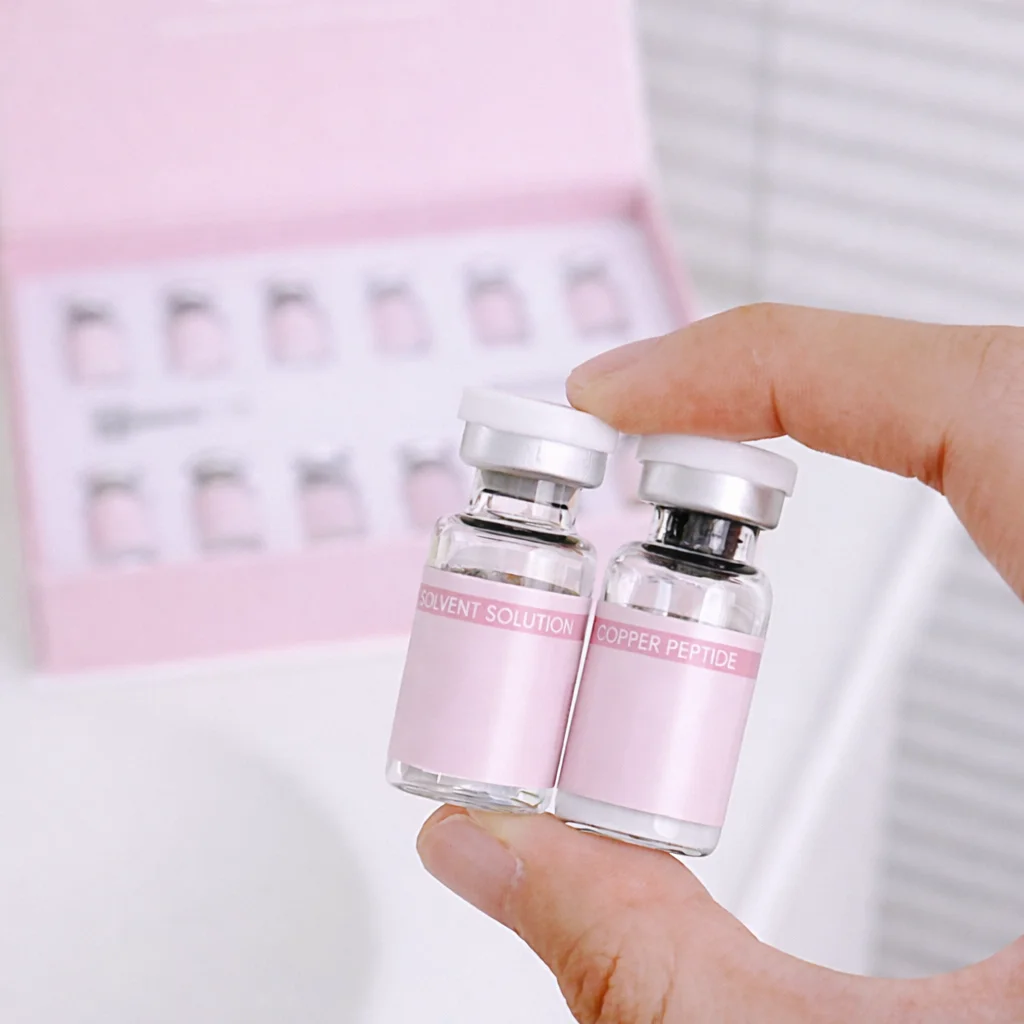
Your Trusted Lyophilized Powder Manufacturer

We help you launch faster, start smaller, and stand out with custom formulas, pro-grade quality, and trend-driven skincare that sells — all built to grow with your brand.
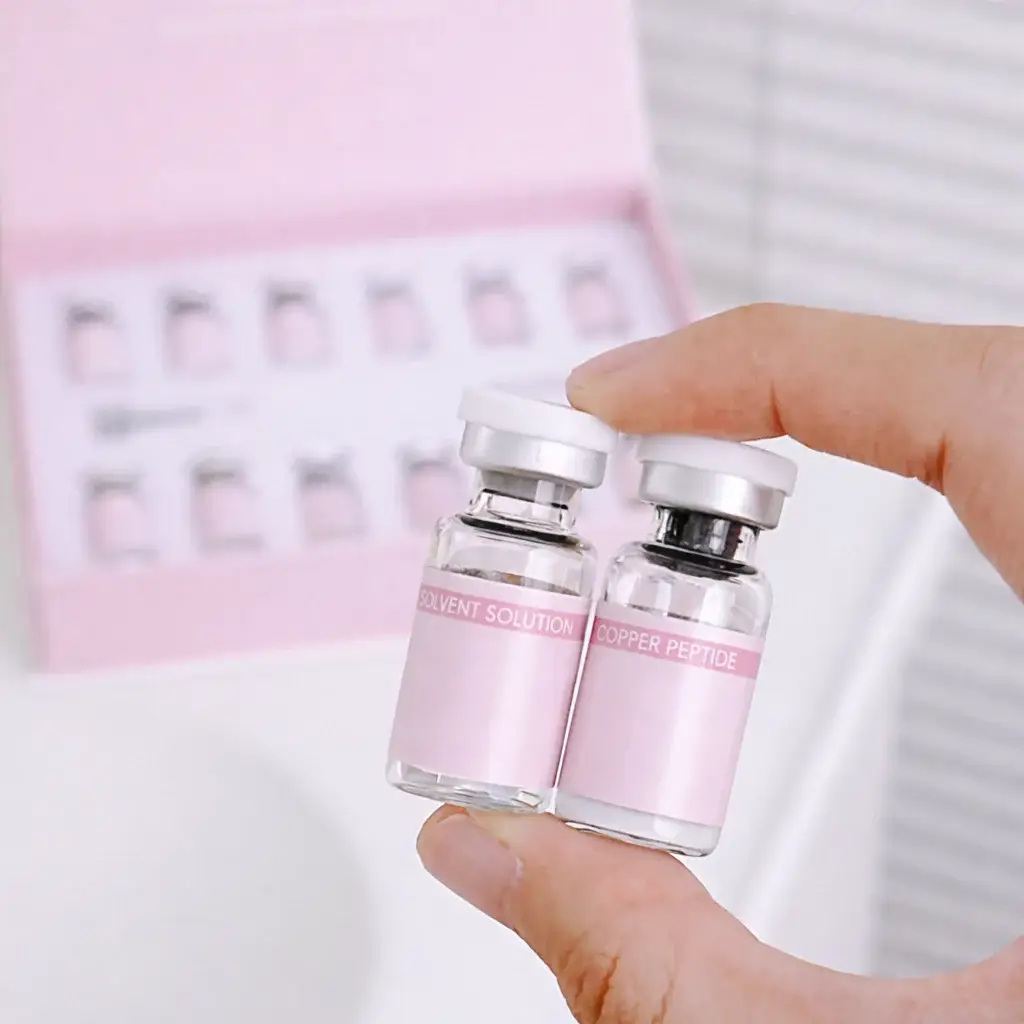
Private Label Lyophilized Powder

At Metro Private Label, we understand that Lyophilized Powder isn’t just a format choice — it’s a strategic decision. Brands choose freeze-dried solutions because they want higher stability, stronger actives, and a more professional, clinical positioning. That’s why we design our private label Lyophilized Powder solutions around real formulation challenges, proven actives, and products that actually perform after launch.
 
From single-active freeze-dried powders like Vitamin C, peptides, and PDRN, to multi-active complexes, post-procedure repair powders, and dual-chamber powder-plus-activator systems, our portfolio reflects what today’s premium skincare brands, aesthetic clinics, and Amazon sellers are actively searching for. We study market demand, ingredient performance, and regulatory requirements to ensure every formula we produce is not only stable — but commercially viable.
 
As your manufacturing partner, we don’t just freeze-dry an ingredient and ship it out. We help you build a product that makes sense for your brand and your customers. Whether you’re developing a clinic-grade repair powder, a high-potency hero SKU, or a premium two-step system with fresh activation, we customize the formulation logic, actives, dosage form, and packaging to match your positioning, budget, and growth plan.

Lyophilized Active Powder (Single-Ingredient / High-Purity)

Lyophilized Multi-Active Complex Powder (Formula-Based)

Lyophilized Clinical / Post-Procedure Repair Powder

Dual-Chamber / Two-Step Lyophilized Systems (Powder + Activator)

Build a Lyophilized Powder Line That Truly Performs

At Metro Private Label, we understand that a successful Lyophilized Powder isn’t just about using a freeze-drying process — it’s about helping your brand deliver higher active stability, stronger efficacy, and a more professional, clinical-grade positioning. Today’s skincare buyers are far more informed. They care about potency, ingredient integrity, shelf life, and whether a product actually performs after activation. That’s why every private label Lyophilized Powder we manufacture is built around real formulation logic, proven actives, and clear use scenarios.
 
Whether you’re developing a single-active freeze-dried powder, a multi-active complex, a post-procedure repair solution, or a dual-chamber powder-plus-activator system, we design each product to help your brand stand out from day one. Our development decisions are guided by what premium skincare brands, aesthetic clinics, and advanced DTC sellers are already validating in the market — so your Lyophilized Powder doesn’t just look advanced on paper, it performs where it matters.
As your manufacturing partner, we go beyond freeze-drying. We make sure every Lyophilized Powder formula is production-stable, export-ready, and commercially realistic. From ingredient selection and dosage logic to packaging compatibility and scale-up planning, we help you launch, test, and grow your Lyophilized Powder line with confidence — knowing it’s built on solid technical and market-proven foundations.
 
💡 Our 4 Most In-Demand Private Label Lyophilized Powder Types
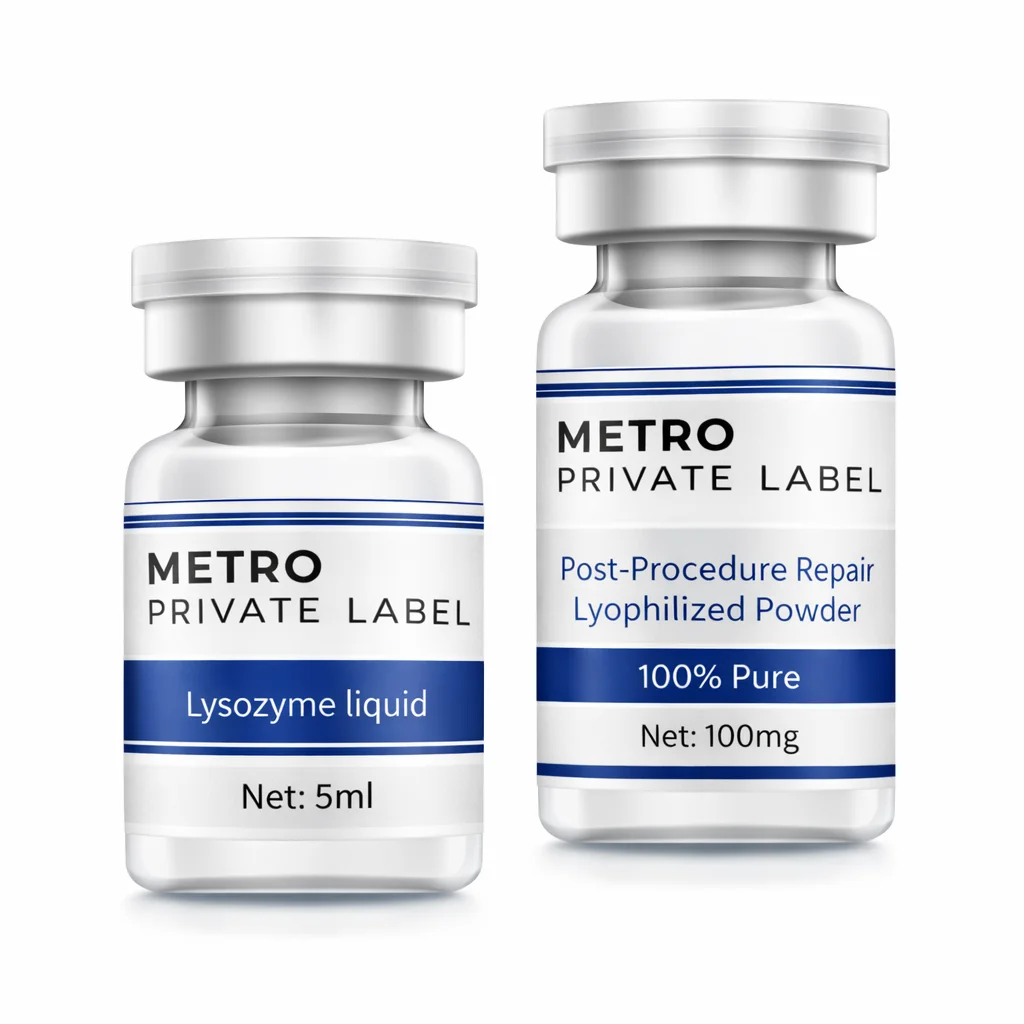
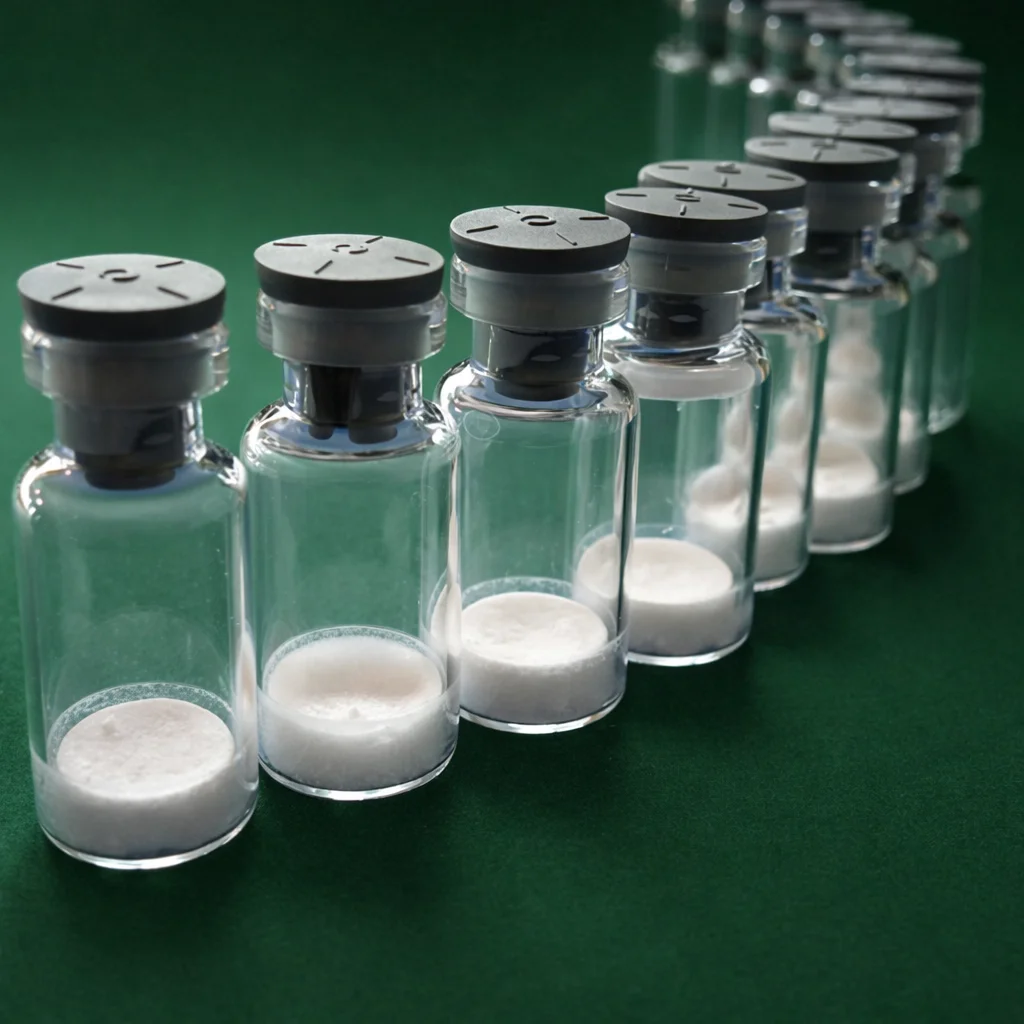
1️⃣ Single-Active Lyophilized Powder High-purity freeze-dried actives such as Vitamin C, peptides, PDRN, or glutathione, designed for maximum stability and ingredient transparency.
2️⃣ Multi-Active Complex Lyophilized Powder Custom formula systems combining multiple actives that are unstable in liquid form, ideal for anti-aging, brightening, or barrier-repair positioning.
3️⃣ Clinical / Post-Procedure Repair Lyophilized Powder Professional-grade powders developed for post-treatment recovery, commonly paired with an activating solution for fresh use.
4️⃣ Dual-Chamber Lyophilized Powder + Activator Systems Premium two-step systems that activate only at the moment of use, offering stronger efficacy storytelling and higher perceived value.
 
🎯 MOQ & Packaging Options (Built for Real Brands)
At Metro Private Label, we keep Lyophilized Powder projects practical, scalable, and launch-friendly:
  • Product MOQ Most Lyophilized Powder projects start from 300–800 units, depending on formula complexity and packaging system.
  • Custom Packaging MOQ Fully customized vials, dual-chamber systems, or printed components typically start from 3,000 pieces.
  • Packaging Formats Available We support multiple professional formats, including: • Glass or medical-grade plastic vials • Dual-chamber bottles and activator systems • Dropper, vial, or syringe-style applications
  • Included Support Every project includes formula stability evaluation, packaging compatibility checks, filling guidance, and transport suitability review — ensuring your Lyophilized Powder performs consistently from factory to end user.

More Than Just a Lyophilized Powder Manufacturer

At Metro Private Label, we don’t just manufacture Lyophilized Powder products — we help shape how your customers experience efficacy, freshness, and trust in your brand. Every freeze-dried active, repair powder, or dual-chamber system we produce is designed to protect potency, improve stability, and deliver results that make sense in real use, not just on a spec sheet. Today’s skincare buyers are educated and selective, and we build every Lyophilized Powder with that reality in mind.

✅ Launch Products the Market Is Already Asking For

We don’t develop Lyophilized Powders based on assumptions — we follow demand.
By tracking ingredient trends, clinical skincare formats, top-selling DTC and Amazon SKUs, and what aesthetic clinics actually use, we help you launch products that already fit the market. From single-active Vitamin C or peptide powders to multi-active complexes, post-procedure repair powders, and fresh-activation systems, our Lyophilized Powder portfolio reflects categories brands are actively scaling — so you enter with clearer positioning and lower risk.

✅ Small MOQ That Makes Testing and Scaling Practical

We make it realistic to start small and grow without friction. You can launch your Lyophilized Powder project with 300–800 units using proven packaging formats to test demand, pricing, and messaging. When traction builds, scaling to 3,000+ units with customized packaging or more advanced systems is seamless — no reformulation, no supplier switch, and no disruption to your product roadmap.

✅ Performance That Builds Long-Term Brand Trust

Customers don’t repurchase concepts — they repurchase results.
Our Lyophilized Powder formulas are built around real performance logic: high-stability actives, controlled dosing, clean ingredient systems, and compatibility with professional and consumer use. The result is stronger efficacy after activation, better shelf life, and products that feel premium and dependable — helping your SKU become a repeat purchase, not a one-time experiment.

✅ Compliance That Supports Global Expansion

We prepare your Lyophilized Powder for international markets from day one.
From INCI lists, COA, SDS, and stability data to packaging compatibility and export-ready documentation, we help ensure your products are compliant before they ship. Whether you’re selling in the US, Europe, the Middle East, or through cross-border e-commerce, we help you launch smoothly — without delays, rework, or regulatory surprises.
  • METRO
  • Typical OEM factory
METROTypical OEM factory
$
/year
/year
Minimum order quantity✅ 500 units for startup brands — low-risk entry for first-time founders.❌ 3,000 units minimum, limiting flexibility.
Packaging recommendations✅ Compatibility + visual templates to ensure perfect fit and premium look.❌ Not provided.
Launch support✅ Label compliance & claim copywriting included for export markets.❌ Not available.
Sample delivery time✅ 7–14 days with labeled packaging.❌ Usually 30+ days.
Compliance & Documentation✅ INCI, COA, SDS, GMP-ready — export with confidence.❌ Basic INCI only.
Buy Now

✨ Build a Lyophilized Powder Line That Goes Beyond Expectations

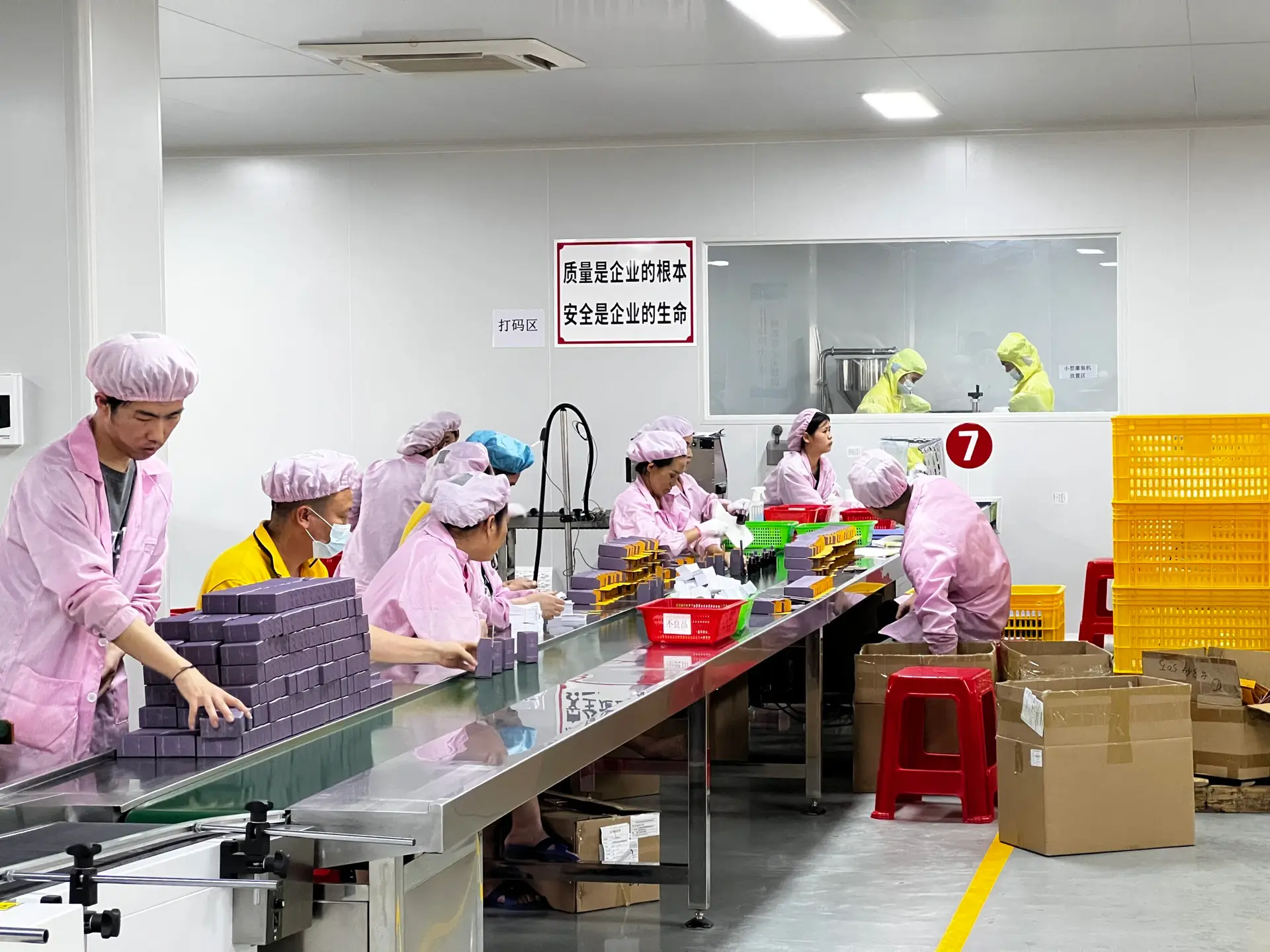
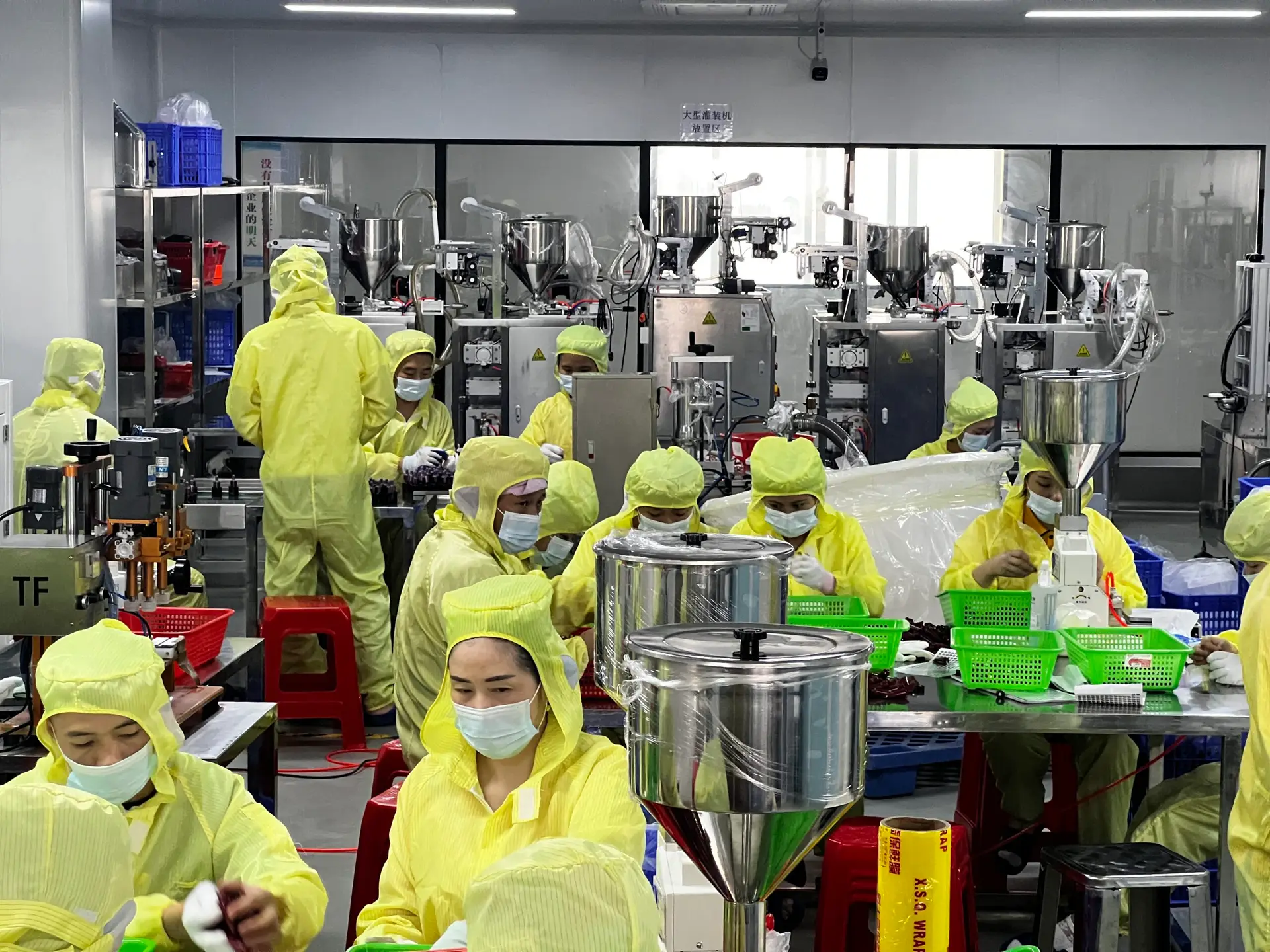
When you work with Metro Private Label, you’re not just choosing a factory — you’re partnering with a GMPC-certified manufacturer that helps turn Lyophilized Powder concepts into stable, effective, and market-ready skincare products. We focus on potency preservation, formulation stability, and real-world performance, so your freeze-dried products don’t just look advanced on paper — they earn trust with every use.
 
Whether you’re launching a single-active powder, a multi-active complex, a post-procedure repair solution, or a fresh-activation two-step system, we design each product to reconstitute smoothly, perform consistently, and fit naturally into professional or at-home skincare routines. The goal isn’t a one-time launch — it’s a Lyophilized Powder your customers rely on and repurchase.
 
🧪 Custom Formulation That Builds Real Brand Credibility
We don’t rely on generic bases or one-size-fits-all formulas.
Every Lyophilized Powder we produce is developed with clear formulation logic and real market insight.
Our lab works with high-stability actives such as peptides, Vitamin C, PDRN, brightening agents, and repair-focused ingredients — carefully balanced for dosage accuracy, activation performance, and shelf stability. Each prototype goes through stability evaluation, moisture sensitivity checks, reconstitution performance testing, and packaging compatibility reviews before moving forward.
If there’s a better way to improve potency retention, activation speed, skin feel, or product lifespan, we explain the trade-offs clearly and guide you through the decision. This collaborative process helps your Lyophilized Powder stand apart from generic, “me-too” offerings and build long-term trust through results.
 
📦 Packaging That Matches Your Brand Vision
We know packaging plays a critical role in how Lyophilized Powder products are perceived — especially in clinical, premium, and e-commerce channels.
You can start efficiently with 300–800 units using proven vial or activator-compatible packaging, ideal for testing, first launches, or clinic programs. When you’re ready to scale, we support 3,000+ units of fully customized packaging, including vial types, dual-chamber systems, labeling finishes, and premium printing that reflects your brand’s positioning.
Packaging Notes:
  • Lyophilized Powder (single or multi-active): 300–800 units with stock formats
  • Custom vials / dual-chamber systems: 3,000 units minimum
  • Professional or clinic-focused formats: available for B2B and treatment programs
We coordinate labels, cartons, printing, and finishing — so everything arrives cohesive, compliant, and ready for market.
 
 
⚙️ A Clear, Reliable Production Process
From formulation and sampling to filling, quality control, and export documentation, everything runs through a coordinated and transparent workflow. We keep communication direct, flag risks early, and set timelines that align with real launch schedules.
Think of us as an extension of your operations team — focused on helping you bring a high-performance, reliable Lyophilized Powder line to market without unnecessary delays or surprises.
 
🌿 Built for Growth, Not One-Time Orders
We measure success by how well your brand scales. That’s why we support flexible MOQs, production-stable formulas, scalable packaging systems, and complete documentation for the U.S., EU, UK, GCC, and other global markets.
With Metro Private Label, your Lyophilized Powder line is built to launch smoothly, perform consistently, and grow confidently across every channel you sell in.

Who We Work With (Designed Around Your Real Needs)

We build partnerships by thinking the way our clients do — understand first → provide solutions → deliver results. Every client type has different priorities, and our role is to translate those into clear, actionable outcomes.

Medical Aesthetic / SPA Professionals

You care about: post-treatment comfort, product safety, and documentation that meets regulatory and audit standards.
What we deliver:

  • Clinical-grade formulations: CICA, ceramides, and peptides; pH-balanced, fragrance-free options with full preservative logic provided.

  • Regulatory documentation: INCI, COA, SDS, stability and compatibility reports; CPSR/CPNP preparation handled with third-party testing support.

  • Professional aesthetic: minimalist, medical-style packaging suitable for back-bar or retail; traceable batches for consistent results.
    Immediate outcome: a post-treatment testing set, compliant label guide, and batch consistency plan ready for your internal validation.

Funded New Entrepreneurs

You care about: low-risk entry, a clear roadmap, and a premium finish that looks ready for market.
What we deliver:

  • Smart start: choose from proven skincare bases (serums, creams, masks); pilot runs from 500 units with optional custom cartons.

  • All-in-one process: formula → visual template → compliant label copy → production → export-ready documentation.

  • Transparent costing: clear breakdown of your key cost drivers — formula type, active concentration, and packaging complexity — so you can plan pricing and profit with confidence.
    Immediate outcome: 2–3 customized samples, a detailed quotation breakdown, and a timeline showing every stage from sample to shipment.

Boutique DTC Brand Owners

You care about: originality, visual consistency, and storytelling through ingredients.
What we deliver:

  • Ownable sensorials: bio-cellulose or vegan carrageenan textures paired with signature actives like peptides, niacinamide, or botanical blends.

  • Design alignment: typography, color, and label systems that match your brand aesthetic; compatibility checks before full production.

  • Global readiness: INCI, COA, SDS, and stability data included; EU/UK/US label claim review support for smooth registration.
    Immediate outcome: packaging mockups, ingredient story sheets, and a coordinated multi-SKU rollout plan that keeps your range cohesive.

Why this works:
We don’t sell production capacity — we deliver strategic understanding, technical precision, and verifiable results.
By connecting your goals with regulatory, design, and manufacturing expertise, we help your brand move faster, reduce uncertainty, and build trust that lasts.

FAQs Lyophilized Powder

For your convenience, we’ve gathered the most commonly asked questions about our Lyophilized Powder . However, should you have any further queries, please don’t hesitate to reach out to us.
1. What types of Lyophilized Powder products can you manufacture?
We specialize in skincare-focused Lyophilized Powder formats, including single-active freeze-dried powders, multi-active complexes, post-procedure repair powders, and dual-chamber powder-plus-activator systems. These are commonly used for Vitamin C, peptides, PDRN, brightening actives, and repair-focused products.
Yes — customization is a core part of how we work. We can adjust active types, concentration, combination logic, reconstitution performance, skin feel after activation, and usage positioning. You bring the concept; we help translate it into a stable, manufacturable, and market-ready formula.
Most Lyophilized Powder projects start from 300–800 units per SKU, depending on formula complexity and packaging format. Fully customized packaging systems typically start from 3,000 units. Our goal is to help you test realistically, then scale smoothly.
Sampling usually takes 3–5 weeks, depending on formulation complexity. Mass production typically takes 4–6 weeks after sample approval. If you have a fixed launch window, tell us early — we’ll plan the workflow accordingly.
Most of our formulas can be developed to meet vegan, cruelty-free, and clean beauty standards, depending on ingredient selection. If your market has specific restrictions or certification goals, we’ll align the formula from the start.
Yes. We support vials, dual-chamber systems, activator bottles, and professional formats commonly used in clinical and premium skincare. We also evaluate packaging compatibility to ensure smooth reconstitution and stable performance.
Both. You can start with proven stock lyophilized formulas for faster launch and lower development cost, or co-develop a custom formula from scratch. We’ll recommend the best path based on your timeline, budget, and brand positioning.
Every Lyophilized Powder goes through stability evaluation, moisture sensitivity review, reconstitution performance testing, and packaging compatibility checks. We manufacture under GMPC standards and follow international cosmetic safety requirements.
Yes. We support with INCI lists, COA, SDS, and help you shape clear, compliant product claims based on the formula logic. While we don’t replace your marketing team, we help ensure what you communicate is technically sound and defensible.
Absolutely. We work with brands selling in the U.S., EU, UK, Middle East, and other global markets. We help prepare export-ready documentation and coordinate logistics so your Lyophilized Powder arrives compliant and ready to sell.

Metro Private Label in Numbers

Happy Clients
0 +
Million-dollar Buyers
0 +
Formulation
0 +
Professional Staffs
0 +

Your Ultimate Guide to Lyophilized Powder

If you’re planning to add a Lyophilized Powder to your product lineup—whether it’s your first high-performance treatment SKU or an upgrade from a traditional liquid serum—you’re not just selecting a format. You’re stepping into one of the most strategic, high-value categories in modern skincare manufacturing. Lyophilized Powders sit at the intersection of performance, trust, and premium positioning. Buyers expect real potency, visible outcomes, and professional logic behind the product—and they’re willing to invest when those expectations are met.
 
Over the years, we’ve watched Lyophilized Powder evolve from a niche, clinic-only format into a core pillar for premium brands, medical aesthetics, and next-generation DTC sellers. At Metro Private Label, we’ve worked with startup founders building their first hero SKU, Amazon and DTC operators upgrading into “clinical skincare,” aesthetic clinics looking for post-procedure solutions, and international distributors who need stable, compliant products that perform consistently across markets. In every case, one thing is clear: Lyophilized Powder requires far more strategic thinking than most brands anticipate.
 
This guide is built on what we’ve learned behind the scenes as a manufacturer—not theory, not trends, but real production decisions and market outcomes. We break down what actually makes a Lyophilized Powder sell, how different formats perform across channels, which actives truly benefit from freeze-drying, and how packaging, claims, cost structure, and compliance can quietly determine whether a launch scales successfully or stalls early.

Table of Contents

What Is Lyophilized Powder in Commercial Skincare Manufacturing?

When I talk about Lyophilized Powder in a commercial skincare context, I don’t frame it as a laboratory technique. I treat it as a product format decision that directly affects how a skincare product performs, travels, ages, and positions itself in the market. For brands and clinics, choosing Lyophilized Powder is not about sounding more technical; it’s about solving real commercial problems that liquid formulations often struggle with once they leave the lab and enter the real world.
 
Lyophilized Powder Is a Format Choice, Not a Manufacturing Gimmick
In manufacturing discussions, I often see confusion between process and outcome. Freeze-drying is simply the process; Lyophilized Powder is the resulting format. What matters commercially is that this format allows sensitive actives to exist without water until the moment of use. That structural separation changes stability, preservation needs, and performance consistency in a way that no amount of formulation optimization can fully replicate in liquids.
 
How Lyophilized Powder Changes Shelf Life Expectations
Shelf life is one of the first reasons I recommend Lyophilized Powder to brands planning long distribution cycles. In liquid systems, especially those built around high-performance actives, shelf life is always a compromise between preservation strength and formula elegance. By removing water during storage, Lyophilized Powder dramatically slows degradation pathways, allowing brands to offer longer shelf life without relying on aggressive preservative systems that can dilute positioning or complicate compliance.
 
Why Potency Retention Matters More Than Initial Test Results
From my perspective, potency is not about how strong a formula looks on paper, but how reliably it performs months later in a customer’s hands. Liquid products can test beautifully at launch and still disappoint later due to gradual degradation. Lyophilized Powder preserves actives in a dormant state, which means the efficacy experienced after activation closely matches what was tested, marketed, and approved. That consistency is critical for brands that rely on trust, repeat purchase, and professional endorsement.
 
The Often-Ignored Logistics Advantage of Lyophilized Powder
Logistics is where many brands realize too late that format matters. Liquid products are heavier, more temperature-sensitive, and more vulnerable to leakage or compatibility issues during transport. Lyophilized Powder travels better, tolerates longer shipping routes, and reduces variability between batches delivered to different regions. For brands selling internationally or through clinics and distributors, this stability is not a bonus; it’s a risk-reduction tool.
 
How Lyophilized Powder Influences Product Positioning
Positioning is not just marketing language; it is reinforced by format choice. Lyophilized Powder naturally communicates precision, freshness, and technical intent, which aligns well with premium functional skincare and clinical narratives. When I work with brands, I often see that the format itself supports higher perceived value, making it easier to justify pricing and professional use cases without exaggerating claims.
 
When Liquid Formulas Are Still the Right Choice
I am careful not to treat Lyophilized Powder as a universal solution. If a formula is inherently stable in liquid form, targets mass-market distribution, or relies on actives that do not benefit meaningfully from freeze-drying, liquid can be the more efficient choice. The decision should always be driven by whether the format solves a real stability, performance, or positioning challenge rather than by novelty.
 
The Commercial Question Behind Every Format Decision
The most common B2B question I hear is whether Lyophilized Powder is truly necessary or simply optional. I always bring the discussion back to commercial reality. If the format reduces risk, protects performance, and supports long-term brand credibility, it earns its place. If it only adds complexity without solving a measurable problem, it usually isn’t worth the investment.
 
How I View the Role of Lyophilized Powder in Modern Skincare Manufacturing
In today’s skincare industry, Lyophilized Powder is no longer experimental or niche. I see it as a mature, scalable solution used by brands and clinics that prioritize consistency over shortcuts. From a manufacturing standpoint, it represents a shift away from simply producing formulas toward engineering outcomes that remain reliable across time, geography, and use scenarios.
 
Why This Format Fits Long-Term Brand Building
Ultimately, I see Lyophilized Powder as a tool for brands that think beyond launch. It supports stable supply chains, predictable performance, and credible positioning, all of which are essential for sustainable growth. At Metro Private Label, this is how I frame every Lyophilized Powder project: not as a technical showcase, but as a practical manufacturing choice that aligns formulation, logistics, and market expectations into a single, coherent product strategy.

The 4 Commercial Types of Private Label Lyophilized Powder

When brands and clinics approach me about Lyophilized Powder, I often find that they assume it is a single category with cosmetic variations. In reality, Lyophilized Powder has evolved into several distinct commercial structures, each shaped by how the product is sold, who uses it, and what risks the brand is trying to control. Over time, I’ve learned that the success or failure of a Lyophilized Powder product is rarely about the ingredient itself and almost always about whether the structural format matches the business model behind it.
 
Single-Active Lyophilized Powder as a Commercial Entry Strategy
Single-active Lyophilized Powder is where many successful brands begin, not because it is simple, but because it is focused. In this structure, I work with one core ingredient that genuinely benefits from freeze-drying, such as vitamin C or a sensitive peptide, and build the entire product logic around preserving and delivering that active effectively. This format is ideal for brands that want clean messaging, predictable manufacturing, and lower interaction risk between ingredients. It allows founders to validate market demand, pricing, and positioning without committing to overly complex development, which is why it works particularly well for advanced skincare startups and DTC sellers testing a high-performance SKU.
 
Multi-Active Lyophilized Complexes for Brands Seeking Differentiation
When a brand already understands its audience and wants to move beyond ingredient transparency into proprietary performance, multi-active Lyophilized Powder becomes the more appropriate structure. In this format, I focus on how multiple actives interact once reconstituted, not just how they behave individually. The commercial value here lies in differentiation, but it comes with responsibility. Each additional active increases development time, validation requirements, and the need for careful balance between efficacy and manufacturability. This structure fits brands that are prepared to invest in formulation strategy and want to build a product that competitors cannot easily replicate.
 
Clinical and Post-Procedure Lyophilized Powder for Professional Protocols
Clinical and post-procedure Lyophilized Powder follows a completely different logic from consumer skincare. When I design this type, my priority shifts away from sensory experience and toward control, predictability, and protocol compatibility. Clinics need products that activate fresh, behave consistently across patients, and integrate smoothly into treatment workflows. This structure is not about storytelling or shelf appeal; it is about minimizing variability and supporting recovery outcomes. That is why aesthetic clinics and medical beauty groups favor this format, especially for post-laser, microneedling, or invasive procedures where performance consistency matters more than convenience.
 
Dual-Chamber Fresh-Activation Systems as a Premium Business Tool
Dual-chamber Lyophilized Powder systems represent the highest level of structural investment, and I only recommend them when the commercial case is clear. This format physically separates the powder and activator until the moment of use, creating a strong perception of freshness, control, and technical sophistication. From a business perspective, this structure supports higher price points, distributor confidence, and professional positioning. However, it also introduces higher packaging costs, longer lead times, and stricter quality coordination. Brands that choose this route usually have a clear premium or clinical narrative and understand that the structure itself becomes part of the product’s value proposition.
 
How Each Structure Aligns with Different Sales Channels
One of the most important lessons I’ve learned is that Lyophilized Powder structure must align with how the product reaches the customer. Single-active powders work well in e-commerce environments where clarity and education drive conversion. Multi-active complexes perform best when supported by strong branding and controlled messaging. Clinical powders align with in-clinic use and professional distribution, while dual-chamber systems are often better suited for premium retail, distributors, or medical beauty networks. Mismatches between structure and channel often lead to unnecessary friction, confusion, or margin pressure.
The Cost and Scaling Implications Behind Each Type
Each Lyophilized Powder structure carries different cost and scaling dynamics, and this is where many early decisions create long-term consequences. Simpler structures allow easier scaling and lower minimums, while more complex systems demand higher packaging commitments and tighter production planning. When brands encounter scaling issues, the root cause is often that the initial structure was chosen for short-term appeal rather than long-term feasibility. This is why I treat structural selection as a foundational business decision, not a design preference.
 
Why Structure Determines Regulatory and Compliance Complexity
From a compliance standpoint, structure also matters more than most buyers expect. Single-active powders are generally easier to document and justify, while multi-active and clinical formats require clearer rationale for claims, usage, and safety. Dual-chamber systems introduce additional considerations around packaging compatibility and user instructions. Understanding these differences early prevents costly revisions later, especially for brands selling across multiple regions or platforms.
 
How I Help Brands Choose the Right Lyophilized Powder Structure
When clients ask me which type they should choose, I don’t start with formulation options. I start by understanding their audience, sales channel, budget tolerance, and growth plan. Once those factors are clear, the appropriate structure usually reveals itself. Lyophilized Powder delivers its real value only when format, market, and manufacturing strategy are aligned from the beginning.
 
The Role of Structural Clarity in Long-Term Product Success
In my experience, the brands that succeed with Lyophilized Powder are not the ones chasing novelty, but the ones making deliberate structural choices. These four commercial types exist because the market demands different solutions for different business realities. Recognizing that distinction allows brands and clinics to use Lyophilized Powder as a strategic advantage rather than a technical complication.

Market Demand: Why Lyophilized Powder Is Growing in Premium & Clinical Skincare

Whenever I’m asked whether Lyophilized Powder represents a real market opportunity or just another skincare buzzword, I look past product launches and marketing language and focus on who is actually buying, reordering, and scaling these products. Sustainable demand only exists when a format solves problems that alternative formats cannot. In premium and clinical skincare, Lyophilized Powder is expanding because it addresses long-standing challenges around stability, efficacy consistency, professional credibility, and global distribution that liquid products increasingly struggle with as brands scale.
 
How Premium Functional Skincare Brands Drive Structural Demand
In the premium functional skincare segment, I see Lyophilized Powder adopted by brands that have already outgrown superficial differentiation. These brands compete on performance integrity rather than texture novelty, and they often work with actives that degrade too quickly in water-based systems. Lyophilized Powder allows them to preserve potency while maintaining clean formulation narratives and controlled sensory profiles. From a commercial perspective, this format supports premium pricing not because it is exotic, but because it reduces performance variability over time. Brands in this category are not chasing trends; they are protecting long-term brand credibility.
 
Why Ingredient Sophistication Accelerates Market Adoption
As ingredient literacy increases among brand founders and buyers, the limitations of liquid formats become harder to ignore. I regularly see brands realize that oxidation, hydrolysis, and gradual degradation undermine even the best-looking serums once they sit in warehouses, shipping containers, or customer bathrooms. Lyophilized Powder benefits directly from this awareness because it offers a rational, explainable solution rather than a marketing workaround. Demand grows when buyers understand that freshness and efficacy are structural outcomes, not claims.
 
Medical Aesthetics as a Demand Anchor, Not a Trend Driver
In medical aesthetics, Lyophilized Powder is not adopted because it is fashionable, but because it aligns with how clinics manage risk. Clinics operate in environments where inconsistency has consequences, and post-procedure skin is far less forgiving than normal consumer use. I see clinics rely on Lyophilized Powder because it enables fresh activation, controlled dosing, and predictable performance immediately after treatment. This demand is anchored in professional protocol rather than consumer sentiment, which makes it remarkably stable even when broader skincare trends fluctuate.
 
The Expansion of Post-Procedure Care as a Commercial Category
Post-procedure care has evolved from a niche add-on into a standalone commercial category, and this evolution directly fuels demand for Lyophilized Powder. Recovery products must deliver fast, reliable results without introducing unnecessary irritation or variability. Liquid products often require compromises in preservation or texture that conflict with clinical expectations. Lyophilized Powder avoids these trade-offs by keeping actives dormant until use, which is why I see repeat ordering in this segment driven by performance consistency rather than marketing campaigns.
 
Amazon and DTC Brands Seeking Clinical Credibility
In e-commerce channels, especially Amazon and DTC platforms, I observe a different but equally important demand pattern. Brands that initially succeeded with conventional serums eventually face saturation and price competition. To escape that pressure, they look for formats that signal higher efficacy and professional influence. Lyophilized Powder serves this purpose well because it visually and structurally differentiates from standard liquid products. For these sellers, the format supports higher perceived value, more compelling product education, and stronger justification for premium pricing without abandoning scalability.
 
Why Consumers Are Willing to Accept Format Complexity
One concern brands often raise is whether consumers will accept the additional activation step required by Lyophilized Powder. From what I see, resistance decreases significantly when complexity is framed as control rather than inconvenience. Premium skincare users increasingly associate preparation with effectiveness, much like mixing treatments in clinics or using professional devices at home. This behavioral shift expands demand beyond professionals and into educated consumer segments that value participation in the efficacy process.
 
Global Distribution and the Role of Logistics in Demand Growth
Another overlooked driver of demand is global distribution. As brands expand internationally, the weaknesses of liquid formats become more visible. Temperature sensitivity, leakage risk, and shelf-life inconsistency create operational friction. Lyophilized Powder travels better, stores longer, and maintains batch integrity across regions. From a manufacturing and supply chain perspective, this reliability directly influences reorder decisions, making demand more structural than speculative.
 
Why This Market Growth Is Not Cyclical
What convinces me that Lyophilized Powder represents a genuine market shift is that its growth is concentrated in segments where performance and trust outweigh novelty. Premium functional brands, medical aesthetics, and clinically positioned DTC products all share the same underlying requirements for stability and predictability. These needs are not seasonal, and they do not disappear when trends change. As long as brands continue to prioritize outcome consistency and professional credibility, demand for this format remains fundamentally supported.
 
How I Evaluate Commercial Upside for Brands Entering This Space
When advising brands, I evaluate market demand by looking at reorder behavior, channel expansion, and long-term SKU relevance rather than launch hype. Lyophilized Powder delivers commercial upside when it reduces returns, stabilizes performance claims, and extends product lifespan. Brands that enter this category with a clear understanding of why the format exists tend to build durable portfolios rather than short-lived experiments.
 
My Perspective on Demand as a Manufacturer and Advisor
From my position working closely with brands and clinics, I see Lyophilized Powder demand as the result of maturation in the skincare industry. As the market becomes more educated and globalized, formats that offer structural advantages naturally gain traction. This growth is not driven by novelty, but by necessity. That is why I view Lyophilized Powder not as a trend, but as an increasingly essential format for premium and clinical skincare manufacturing.

Choosing the Right Actives for Lyophilized Powder (What Works at Scale)

When brands approach me about Lyophilized Powder, ingredient selection is almost always where expectations and reality begin to diverge. Many people assume freeze-drying automatically upgrades any formula, but in commercial manufacturing, that assumption quickly becomes expensive. I evaluate actives not by how popular they are, but by whether freeze-drying meaningfully changes their stability, performance consistency, and long-term commercial viability. Lyophilized Powder only creates value when the ingredient inside genuinely needs structural protection to perform as promised over time.
 
Why Freeze-Drying Only Makes Sense for Structurally Vulnerable Actives
The actives that truly benefit from lyophilization share one defining trait: they degrade too easily in the presence of water. Pure vitamin C, certain peptides, nucleic-acid–derived materials, and some high-reactivity brightening agents lose potency through oxidation, hydrolysis, or gradual molecular breakdown in liquid systems. When I place these actives into a lyophilized format, I am not trying to enhance their strength, but to preserve their original integrity. From a business perspective, this preservation is critical because it ensures that what is tested, documented, and marketed remains consistent throughout the product’s lifecycle.
 
Stability Is Not a Lab Concept, It Is a Commercial Risk Variable
In manufacturing discussions, stability is often treated as a technical checkbox, but I see it as a commercial risk variable. Every unstable active introduces uncertainty into shelf life, claims reliability, and customer experience. Lyophilized Powder dramatically reduces that uncertainty by keeping actives dormant until use. This matters most for brands selling across regions, climates, and long logistics chains, where even well-designed liquid formulas can drift from their original performance profile. Freeze-drying is valuable when it eliminates that drift.
 
Why Many Popular Ingredients Do Not Justify Lyophilization
One of the most common mistakes I see is brands trying to freeze-dry ingredients that are already stable in liquid form. Humectants, basic botanical extracts, and buffered vitamins often perform consistently without structural protection. Lyophilizing these ingredients adds cost, extends development timelines, and complicates packaging without delivering measurable improvement. From a scaling perspective, this creates pressure on margins and pricing while offering little defensible differentiation. In commercial manufacturing, unnecessary complexity almost always becomes a long-term burden.
 
Ingredient Choice Directly Shapes What You Can Claim
Claims are not created by marketing teams alone; they are constrained by ingredient behavior. When I select actives for Lyophilized Powder, I think carefully about what claims the format legitimately supports. Fresh activation, potency retention, and reduced degradation are defensible only when the ingredient actually benefits from freeze-drying. When brands attempt to use Lyophilized Powder to amplify claims for stable ingredients, those claims often become difficult to defend under regulatory or professional scrutiny. Sustainable brands align their messaging with structural reality, not ambition.
 
How Actives Influence Price Acceptance in the Market
Lyophilized Powder inevitably increases production and packaging cost, which means ingredient choice must support higher perceived value. I often remind brands that the format itself does not justify premium pricing; the performance outcome does. Actives that deliver visible or functionally measurable benefits after activation make it easier for customers to accept higher prices. When the active does not produce a noticeable difference, the market quickly resists paying more, regardless of how advanced the format appears.
 
Multi-Active Lyophilized Systems and the Hidden Cost of Complexity
Multi-active Lyophilized Powders can be powerful, but they are also where overengineering frequently occurs. Every additional active increases the burden on stability evaluation, reconstitution behavior, regulatory justification, and batch consistency. From my experience, multi-active systems work best when each ingredient has a clearly defined role and a genuine reason to be freeze-dried. When brands attempt to stack actives for perceived sophistication rather than functional necessity, scalability suffers and development cycles become fragile.
 
Manufacturing Scale Reveals Which Actives Truly Work
Some ingredients behave well in small laboratory batches but become problematic at scale. Lyophilized Powder magnifies this issue because moisture sensitivity, particle uniformity, and batch reproducibility become more critical as volumes increase. When I assess actives, I look beyond formulation compatibility and examine sourcing stability, batch-to-batch consistency, and long-term supply reliability. An ingredient that cannot be reproduced predictably at scale undermines the very stability benefits that freeze-drying is meant to deliver.
 
Regulatory and Documentation Complexity Begins with Ingredient Choice
Ingredient selection determines regulatory workload long before documentation is prepared. Certain actives require stricter justification of use levels, clearer safety rationale, or additional regional review. Lyophilized Powder does not reduce these requirements; in many cases, its clinical positioning increases scrutiny. I always consider compliance implications early, because replacing an active after stability testing and packaging validation is far more costly than choosing conservatively at the beginning.
 
Why Trend-Driven Actives Often Fail in Lyophilized Formats
Trend-driven ingredients move faster than manufacturing cycles. I regularly see brands propose actives based on short-term social media momentum without considering whether demand will persist through development, launch, and scaling. Lyophilized Powder is not designed for rapid churn; it is a format built for longevity. Actives that succeed here typically have sustained professional interest, stable supply chains, and clearly understood mechanisms rather than fleeting attention.
 
How I Define Actives That Truly “Work” in Lyophilized Powder
For me, an active truly works in a lyophilized format only when three conditions align. Freeze-drying must significantly improve its stability, the improvement must translate into clear and defensible claims, and the resulting product must support a price point the market can sustain. When any one of these elements is missing, the format becomes an expensive distraction rather than a strategic advantage.
 
Making Ingredient Decisions That Support Long-Term Brand Growth
Ultimately, choosing actives for Lyophilized Powder is a long-term brand decision, not a creative experiment. Brands that succeed in this category prioritize ingredients that reduce performance risk, simplify compliance, and remain relevant over time. When ingredient logic, format selection, and commercial strategy reinforce each other, Lyophilized Powder becomes a scalable foundation for growth rather than a costly showcase of technical capability.
 

Lyophilized Powder vs Liquid Serums: Efficacy, Claims & Shelf Stability

When brands ask me whether Lyophilized Powder is better than liquid serums, I always pause the conversation and reframe the question. This is not about preference, innovation, or trends. It is about understanding how each format behaves once a product leaves the lab and enters real commercial conditions. From my perspective as a manufacturer, the true comparison only becomes clear when we examine long-term efficacy, claim durability, logistics exposure, and regulatory risk together rather than evaluating each factor in isolation.
 
Stability Differences That Only Appear After Months in the Market
In early-stage development, liquid serums often perform just as well as Lyophilized Powder, which is why many brands underestimate stability risk. The real difference appears after months of storage, shipping, and consumer use. Liquid systems continuously expose actives to water, oxygen, light, and container materials, all of which slowly alter performance even when formulations pass initial stability tests. Lyophilized Powder avoids this ongoing exposure by keeping actives dormant until activation, which dramatically reduces cumulative degradation. From a commercial standpoint, this difference determines whether a product behaves consistently across its entire shelf life or gradually drifts away from its original performance.
 
Efficacy as a Timeline Rather Than a Test Result
I never evaluate efficacy as a single moment in time. What matters to brands is whether a product performs the same way at month one, month six, and month twelve. Liquid serums can deliver strong efficacy at launch and still disappoint later if degradation reduces active availability. Lyophilized Powder aligns efficacy closer to the moment of use, which means the performance customers experience is more likely to match what was tested, documented, and marketed. This alignment is especially critical for brands selling performance-driven or professional products, where inconsistency quietly erodes credibility.
 
How Format Choice Expands or Restricts Claim Flexibility
Claims are not created by copywriters alone; they are limited by structural reality. Liquid serums often require conservative claims because potency can decline over time, making aggressive messaging difficult to defend. Lyophilized Powder allows more confident discussion of freshness, activation, and potency retention, but only when the ingredient actually benefits from freeze-drying. In my experience, brands that choose the right format gain claim flexibility not because regulations are looser, but because the underlying structure genuinely supports what is being claimed.
 
Shelf Stability as a Hidden Brand Risk Factor
Shelf stability rarely appears in marketing conversations, yet it is one of the biggest sources of brand risk. Returns, negative reviews, and internal reformulation discussions often trace back to subtle stability issues rather than obvious failures. Liquid serums rely heavily on preservation systems, chelation, and packaging integrity, which introduces multiple points of vulnerability as distribution expands. Lyophilized Powder simplifies this equation by reducing the number of variables that can change during storage. Fewer variables usually mean fewer surprises, which is why stability becomes a strategic concern rather than a technical one at scale.
 
Transport and Storage Realities Across Global Supply Chains
Logistics is where the difference between formats becomes undeniably commercial. Liquid serums are heavier, more temperature-sensitive, and more prone to leakage or compatibility issues during long-distance transport. Lyophilized Powder tolerates shipping stress far better because the absence of water reduces sensitivity to temperature fluctuations and microbial growth. From my perspective, this reliability matters most for brands selling internationally or through distributors, where transport conditions are harder to control and small failures multiply quickly.
 
Inventory Planning and Shelf-Life Pressure
Inventory management looks very different depending on format. Liquid serums require careful rotation to avoid selling product near the end of shelf life, where performance may no longer match initial expectations. Lyophilized Powder allows more flexibility because stability is less time-dependent before activation. I see brands using this flexibility to reduce discounting pressure, plan launches more calmly, and avoid rushed sell-through strategies that can damage perceived value.
 
Regulatory Implications That Influence Format Choice
Regulatory burden shifts depending on format rather than disappearing. Liquid serums often face greater scrutiny around preservation systems, microbial control, and contamination risk. Lyophilized Powder shifts regulatory focus toward activation instructions, stability justification, and packaging compatibility. From my experience, neither format is inherently easier to register or list, but the type of documentation and justification required is different. Brands need to choose the format that aligns better with their internal compliance capabilities and target markets.
 
Marketplace and Listing Considerations for Each Format
On e-commerce platforms and professional procurement systems, format choice affects how products are presented and evaluated. Liquid serums benefit from simplicity and familiarity but struggle to differentiate in crowded categories. Lyophilized Powder requires clearer usage education, yet it often benefits from stronger perceived professionalism and technical credibility. I advise brands to consider whether they want to compete on simplicity or distinction, because each approach creates different operational and content demands.
 
Cost Structure Beyond Unit Price Comparison
Lyophilized Powder almost always carries a higher upfront production cost due to processing and packaging complexity. However, I caution brands against evaluating cost only at the unit level. Liquid serums may appear cheaper initially but can generate hidden costs through stability failures, higher return rates, or forced reformulation. Lyophilized Powder concentrates cost at production while reducing downstream risk. The right choice depends on whether a brand prioritizes low entry cost or long-term margin protection.
 
When Liquid Serums Remain the More Rational Choice
There are many scenarios where liquid serums remain the optimal solution. If an active is stable, the distribution cycle is short, and the brand targets mass-market positioning, liquid formats offer speed and efficiency. I only recommend switching to Lyophilized Powder when liquid systems create measurable limitations that cannot be resolved without compromising performance, claims, or scalability.
 
When Switching Formats Becomes a Strategic Necessity
Switching to Lyophilized Powder becomes strategic when brands encounter growth ceilings imposed by liquid instability. This often happens when expanding into professional channels, international markets, or higher price tiers. In these cases, the format itself becomes a tool for protecting efficacy, simplifying logistics, and reinforcing credibility. The decision is not about innovation, but about aligning the product structure with where the business is heading.
 
How I Help Brands Decide Between Formats
When I guide brands and clinics through this decision, I frame it around risk tolerance and growth trajectory. Liquid serums favor speed and familiarity, while Lyophilized Powder favors consistency and control. The wrong choice often looks acceptable at launch and only reveals its weaknesses after scaling begins. That is why I encourage brands to evaluate formats not by launch convenience, but by long-term commercial reality.
 
Why This Comparison Matters for Sustainable Brand Growth
Ultimately, the comparison between Lyophilized Powder and liquid serums is about sustainability rather than novelty. Formats that protect performance, reduce operational risk, and support credible claims tend to survive longer in the market. From my perspective, Lyophilized Powder is adopted not because it is new, but because it aligns better with the demands of premium and clinical skincare. That alignment is what transforms a format decision into a growth strategy.

Clinical & Post-Procedure Lyophilized Powder: What the Market Expects

When I work with aesthetic clinics and medical beauty groups, I quickly notice that their expectations for Lyophilized Powder are fundamentally different from consumer skincare brands. Clinics are not looking for novelty, convenience, or trend alignment. They are looking for reliability under pressure. Post-procedure skin is compromised, outcomes are scrutinized, and any inconsistency reflects directly on the practitioner. This is why the market expectation for clinic-grade Lyophilized Powder is built around control, predictability, and repeatable results rather than sensory appeal or marketing language.
 
Why Dosage Control Is the Foundation of Clinical Trust
In clinical settings, dosage control is not a preference, it is a requirement. When I design Lyophilized Powder for post-procedure use, I start by ensuring that each unit delivers a defined amount of active every single time. Liquid products can vary depending on storage age, handling, or evaporation, but Lyophilized Powder allows clinics to activate a precise dose immediately before application. This precision supports consistent treatment outcomes across different practitioners and patients, which is essential for maintaining protocol integrity and clinical credibility.
 
Fresh Activation as a Clinical Safeguard, Not a Feature
Fresh activation is often misunderstood outside professional environments. In clinics, it is not viewed as an extra step, but as a safeguard. When actives are activated immediately before use, the risk of degradation, contamination, or unintended interaction is minimized. I see clinics value this because it aligns with how they already approach injectables, devices, and professional treatments. Lyophilized Powder fits naturally into this mindset, reinforcing the perception that the product is designed for controlled, professional application rather than casual daily use.
 
Recovery-Focused Ingredient Logic Over Cosmetic Performance
Post-procedure Lyophilized Powders are built around recovery logic, not cosmetic performance. When I select ingredients for this category, I focus on how they behave on stressed, sensitized, or inflamed skin rather than how they feel during routine application. The goal is to support barrier restoration, calm inflammatory responses, and create a stable environment for healing. Lyophilized formats allow these systems to remain stable without heavy preservation, which is particularly important when working with compromised skin that cannot tolerate unnecessary additives.
 
Why Clinics Evaluate Structure Before Claims
In clinical purchasing decisions, structure matters more than claims. Clinics are cautious by nature because exaggerated promises expose them to reputational and legal risk. When I present a Lyophilized Powder to a clinic, the conversation revolves around how the product is structured, how it is activated, and how variability is controlled. This structural transparency builds trust more effectively than aggressive efficacy claims. Clinics adopt products they understand and can justify professionally, not products that rely on marketing narratives.
 
Integration Into Real Clinical Workflows
A product only becomes clinic-grade if it fits seamlessly into existing workflows. Clinics operate on schedules, not brand stories. When I develop Lyophilized Powder for post-procedure use, I consider preparation time, ease of activation, and consistency of application. If a product interrupts workflow or introduces uncertainty, it will be rejected regardless of its theoretical benefits. Lyophilized Powder succeeds in clinics because activation can be standardized and repeated without compromising performance or efficiency.
 
Reducing Practitioner-to-Practitioner Variability
One of the most overlooked advantages of Lyophilized Powder in clinics is its ability to reduce variability between practitioners. Liquid products can behave differently depending on how they are stored, shaken, or dispensed. Lyophilized Powder delivers actives in a uniform state until activation, which helps standardize results across different users. From my experience, this consistency supports internal training, quality control, and patient confidence, all of which matter deeply in medical beauty environments.
 
Shelf Stability as an Operational Advantage for Clinics
Clinics do not rotate inventory the same way consumer brands do. Products may be stored for extended periods and used intermittently depending on treatment volume. Lyophilized Powder maintains stability over time, allowing clinics to stock products without worrying about gradual performance loss. This stability reduces waste, simplifies purchasing decisions, and supports predictable treatment outcomes, which is why clinics consistently favor this format for post-procedure applications.
 
Why Two-Step Formats Feel Natural in Clinical Settings
Unlike consumers, clinics are comfortable with preparation steps. Activation, mixing, and reconstitution are already part of daily professional routines. When I evaluate acceptance, I find that clinics interpret these steps as indicators of seriousness rather than inconvenience. Lyophilized Powder aligns with this professional behavior, reinforcing the idea that the product is intended for trained use rather than casual application.
 
What Clinics Mean When They Say “Clinic-Grade”
When clinics describe a product as clinic-grade, they are rarely referring to packaging aesthetics or marketing language. From my perspective, clinic-grade means controlled dosage, fresh activation, recovery-first ingredient logic, workflow compatibility, and long-term stability. Lyophilized Powder meets these expectations because it removes variables that clinics cannot afford to manage. This is why the format continues to gain traction in medical aesthetics, not as a trend, but as a practical solution to everyday clinical challenges.
 
Why This Format Continues to Expand in Medical Beauty
The continued growth of Lyophilized Powder in clinical and post-procedure skincare is not driven by novelty. It is driven by alignment. As medical beauty becomes more standardized and outcome-driven, formats that support control and predictability naturally gain preference. From my role as a manufacturing partner, I see Lyophilized Powder succeed because it respects how clinics actually work. That alignment is what sustains real market demand and separates clinic-grade products from consumer adaptations.

Packaging Systems for Lyophilized Powder (And Their Commercial Impact)

When I work with brands on Lyophilized Powder projects, packaging is often the area where enthusiasm quietly turns into risk. Many teams approach packaging as a visual or branding decision, but in this category, packaging is inseparable from product performance and commercial viability. For Lyophilized Powder, packaging determines how the product is activated, how well it survives distribution, how expensive it becomes to scale, and how credible it feels to professional buyers. I treat packaging as part of the formulation system, not an accessory added at the end.
 
Why Packaging Defines the User’s Confidence at First Use
The moment a user interacts with a Lyophilized Powder product, packaging either builds confidence or introduces hesitation. I pay close attention to how intuitive activation feels, how securely components fit together, and whether the process communicates precision or fragility. In premium and clinical contexts, the user is not forgiving of uncertainty. Packaging that feels unstable, confusing, or overly delicate undermines trust immediately, even if the formula itself is excellent. This is why packaging must be designed around the user’s mental comfort as much as functional necessity.
 
Moisture Control as the Non-Negotiable Priority
From a manufacturing perspective, moisture control is the single most important packaging function for Lyophilized Powder. I have seen well-formulated powders fail simply because packaging allowed slow moisture ingress over time. This type of failure rarely shows up in early samples but becomes apparent months later in real storage and shipping conditions. Effective packaging must maintain a reliable barrier not only at sealing, but throughout transport, warehousing, and repeated handling. When moisture protection is compromised, everything else becomes irrelevant.
 
How Packaging Choices Quietly Set MOQ Thresholds
Many brands are surprised to learn that minimum order quantities are often driven more by packaging than by formulation. Custom vials, dual-chamber systems, and specialized closures come with tooling requirements and supplier minimums that immediately raise entry thresholds. When I advise brands, I always map packaging options against realistic launch volumes. Choosing an overly complex system too early can force higher MOQs than the market has validated, creating unnecessary financial pressure before demand is proven.
 
Cost Structure Is Shaped More by Packaging Than by Powder
In Lyophilized Powder projects, the powder itself is often not the dominant cost driver. Packaging components, assembly steps, quality checks, and yield loss typically account for a larger share of unit cost. I see brands focus heavily on ingredient cost while overlooking how packaging complexity multiplies production expenses. Understanding this relationship early allows brands to choose systems that support healthy margins instead of eroding them silently over time.
 
Scalability Reveals Which Packaging Decisions Were Strategic
Packaging decisions that feel manageable at small volumes often become painful during scale-up. I have seen brands forced to redesign packaging mid-growth because components became difficult to source, too expensive to scale, or incompatible with higher-throughput production lines. Scalable packaging is not necessarily the simplest option, but it must be reproducible, supply-stable, and adaptable as volumes increase. When packaging cannot grow with the business, it becomes a bottleneck rather than a differentiator.
 
Premium Positioning Lives or Dies Through Handling Experience
Premium positioning in Lyophilized Powder is reinforced through how the product is handled, not how it looks in photos. I find that professional buyers and premium consumers associate quality with control, precision, and robustness rather than decorative elements. Packaging that feels engineered rather than ornamental supports higher price points more effectively. Conversely, packaging that prioritizes aesthetics over functional integrity often conflicts with the expectations of premium and clinical buyers.
 
Channel-Specific Packaging Logic Is Often Overlooked
One of the most common mistakes I see is using the same packaging logic across different sales channels. Packaging that works well in a clinic, where trained professionals handle activation, may not translate to DTC or e-commerce environments. Conversely, consumer-friendly packaging can feel insufficiently serious in professional settings. I always evaluate packaging through the lens of where and by whom the product will be used, because misalignment here leads to friction, returns, or brand dilution.
 
Operational Complexity Hidden Inside Sophisticated Packaging
Beyond cost and MOQ, packaging introduces operational complexity that many brands underestimate. Assembly precision, filling tolerance, defect rates, and quality inspection requirements increase significantly with sophisticated systems. In Lyophilized Powder manufacturing, these factors compound quickly. I evaluate whether a packaging system simplifies production or adds layers of risk that only appear once production scales. Complexity that cannot be controlled consistently becomes a liability, regardless of how compelling the concept initially appears.
 
How Packaging Influences Pricing Power and Margin Protection
Packaging decisions directly influence how much pricing flexibility a brand retains. Advanced systems can justify higher prices, but only when perceived value rises faster than cost. I caution brands against assuming that complexity automatically creates pricing power. Successful projects align packaging investment with what the market is genuinely willing to pay, ensuring that margins remain protected as volumes grow rather than compressed under cost pressure.
 
Why Packaging Mistakes Are Often Discovered Too Late
The most expensive packaging mistakes are rarely obvious at launch. They emerge gradually as costs increase, defects appear, or scaling becomes constrained. I have seen brands forced into supplier changes, packaging redesigns, or MOQ renegotiations at exactly the moment when momentum should be accelerating. These disruptions often trace back to early packaging decisions made without considering long-term commercial impact.
 
How I Evaluate Packaging Systems for Lyophilized Powder Projects
When I evaluate packaging systems, I look at how they perform across protection, usability, scalability, and commercial alignment. A system that performs well in only one or two of these areas may still launch successfully but will struggle to sustain growth. Packaging that supports all four creates leverage rather than friction, allowing brands to focus on expansion instead of correction.
 
Why Packaging Is a Strategic Lever, Not a Design Detail
Ultimately, packaging for Lyophilized Powder is one of the most powerful strategic levers a brand can pull. It influences user trust, operational efficiency, cost structure, and long-term scalability all at once. From my experience, brands that treat packaging as a core part of the product system avoid painful course corrections later. Those that treat it as a cosmetic decision often pay for that oversight many times over as they try to grow.

MOQ, Cost Structure & Scaling Strategy for Lyophilized Powder

When brands first consider Lyophilized Powder, the conversation almost always centers on risk. The format feels complex, the process sounds expensive, and there is a fear of being locked into high minimums before the market has spoken. I approach this discussion from a practical manufacturing reality. Lyophilized Powder is not inherently high-risk, but it becomes risky when MOQ, cost structure, and scaling are treated as separate decisions. When these elements are designed together from the start, brands can test the market intelligently without over-investing.
 
What Testing-Stage MOQ Really Means in Practice
Testing-stage MOQ is often misunderstood as simply “the smallest number the factory allows.” In reality, I define testing-stage MOQ as the minimum volume required to produce a batch that behaves like real production. This includes consistent freeze-drying cycles, realistic filling conditions, and packaging that mirrors future use. If a test batch is too small or uses shortcuts, the data it generates becomes unreliable. A properly designed test-stage MOQ gives brands meaningful feedback on performance, cost, and user response, rather than false confidence.
 
Why Testing-Stage Production Must Resemble Scale Production
One of the most expensive mistakes I see is when brands treat early batches as disposable experiments. They test with one formula version, one packaging setup, and one process, then attempt to scale using a different structure entirely. This almost always leads to reformulation, revalidation, and delays. I insist that testing-stage Lyophilized Powder should be built on the same formulation logic and production parameters intended for scale. When early success is achieved, scaling should feel like repetition, not reinvention.
 
The Psychological Trap of Ultra-Low MOQs
Ultra-low MOQs often feel attractive, but they can create a false sense of security. When volumes are too small, costs are artificially high, yields are unstable, and performance variability increases. I have seen brands reject viable products because early unit costs looked uncompetitive, when in reality those costs would normalize at modest scale. A realistic testing MOQ balances financial exposure with meaningful data. It is designed to teach, not to impress.
 
Custom Packaging Thresholds and Why They Matter More Than Formula
In Lyophilized Powder projects, packaging thresholds often determine when scaling becomes painful. Custom vials, dual-chamber systems, and specialized closures come with supplier minimums that can exceed formulation MOQs by several multiples. I help brands decide when custom packaging actually supports the business rather than simply signaling seriousness. Delaying full customization until demand is validated often preserves capital and prevents inventory risk without limiting long-term brand positioning.
 
How Packaging Choices Lock in Cost Structures Early
Once packaging decisions are made, they are difficult to reverse without cost. Tooling, supplier relationships, and production workflows become anchored to those choices. I see brands underestimate how early packaging decisions lock in long-term cost structures. A slightly more flexible packaging choice at launch can preserve optionality for years. Conversely, an overly rigid system chosen too early can constrain margins and force compromises as volumes grow.
 
Understanding the True Cost Structure of Lyophilized Powder
Lyophilized Powder cost structure is rarely intuitive. Ingredient cost is only one component, and often not the dominant one. Freeze-drying time, batch yield, filling loss, moisture control, packaging assembly, and quality inspection all contribute meaningfully to unit cost. I spend a lot of time helping brands understand which costs scale down with volume and which remain fixed. Without this understanding, forecasts tend to be overly optimistic and lead to disappointment during scale-up.
 
Why Cost Reduction Does Not Always Follow Volume
Many brands assume that increasing volume automatically improves margins. In Lyophilized Powder manufacturing, this is only partially true. Some efficiencies appear with scale, but others plateau quickly or even increase if packaging complexity rises. I encourage brands to model cost behavior at multiple volume levels rather than assuming linear improvement. This approach leads to more realistic pricing strategies and fewer margin shocks later.
 
Scaling Without Reformulation as a Non-Negotiable Goal
From my perspective, reformulation during scaling is one of the most damaging events a brand can experience. It introduces regulatory risk, delays launches, and confuses customers. To avoid this, I design Lyophilized Powder projects so that ingredient selection, processing parameters, and packaging compatibility are stable from the first test batch onward. When scaling occurs, volumes increase but the product itself does not change. This continuity is essential for brand trust and operational efficiency.
 
How Early Decisions Affect Regulatory and Compliance Costs
Scaling is not just a manufacturing issue; it is also a compliance issue. Changing formulas or packaging midstream often triggers new documentation, testing, and approvals. I factor regulatory implications into early decisions because compliance costs grow exponentially when changes are made late. A conservative approach at the beginning reduces both financial and regulatory friction during expansion.
 
Inventory Risk and Cash Flow Pressure During Scale-Up
Inventory risk is where poor scaling strategy becomes visible. Brands that scale too aggressively often find themselves holding expensive stock before demand stabilizes. I advise brands to treat scale-up as a sequence of controlled increases rather than a single leap. This approach protects cash flow, reduces discounting pressure, and allows adjustments based on real sales data rather than projections.
 
Why Conservative Testing Enables Faster Growth Later
There is a paradox in scaling that I see repeatedly. Brands that plan conservatively at the testing stage are able to scale faster once demand is confirmed. By avoiding over-customization, understanding true cost drivers, and maintaining structural flexibility, they remove obstacles that slow others down. Conservative early planning creates freedom, not limitation.
 
Answering the Core B2B Question About Over-Investment
When a brand asks me whether they can test Lyophilized Powder without over-investing, my answer depends on whether they are willing to plan deliberately. The format itself is not the barrier. Poor alignment between MOQ, packaging, and scaling strategy is. When these elements are synchronized, Lyophilized Powder becomes a manageable, predictable, and scalable format rather than a financial gamble.
 
How I Help Brands Build a Scalable Lyophilized Powder Roadmap
My role is not simply to manufacture products, but to help brands avoid decisions that limit future growth. By aligning test-stage MOQs with scale intent, choosing packaging that preserves flexibility, and clarifying cost behavior early, I help brands move from cautious testing to confident expansion. This is how Lyophilized Powder projects succeed not only at launch, but across years of growth.
 

Manufacturing & Quality Standards for Lyophilized Powder Products

When buyers ask me how to judge whether a factory is truly capable of producing Lyophilized Powder at a commercial level, I usually tell them to stop looking at marketing language and start looking at behavior. Lyophilized Powder is one of the few formats in skincare manufacturing that immediately exposes weak systems. It does not tolerate shortcuts, improvisation, or vague process control. A factory that can truly support this category will demonstrate discipline in how it produces, tests, documents, and repeats results over time, not just how it presents itself during sampling.
 
What GMPC Means When the Product Is Freeze-Dried
In Lyophilized Powder manufacturing, GMPC is not a certificate on the wall; it is the logic that governs every movement inside the factory. I pay attention to how raw materials are staged, how environmental controls are maintained, and how deviations are handled in real time. Because freeze-dried products are extremely sensitive to moisture, temperature, and handling order, GMPC discipline must be actively enforced rather than passively referenced. A factory that truly operates under GMPC will be able to explain not only what it does, but why each step exists and how it is verified.
 
Why Lyophilized Powder Reveals Process Weakness Faster Than Any Other Format
I often describe Lyophilized Powder as a stress test for manufacturing systems. Liquid products can sometimes hide inconsistency through buffering systems, preservatives, or texture modifiers. Lyophilized Powder offers no such protection. If freeze-drying cycles fluctuate, if filling weights drift, or if environmental control slips, the product will show it immediately through inconsistent structure, dissolution behavior, or performance. When I evaluate a factory, I watch how it responds to these sensitivities. Strong manufacturers design systems that prevent variation rather than react to it afterward.
 
Stability Evaluation as a Continuous Manufacturing Responsibility
Stability testing for Lyophilized Powder cannot be treated as a one-time regulatory exercise. I view stability as an ongoing manufacturing responsibility that informs decisions long after the initial report is generated. Dry-state stability, moisture uptake behavior, and post-activation performance all need to be understood in parallel. A factory that only performs stability testing to satisfy documentation requirements is not equipped to support long-term market performance. Real capability shows up when stability data actively feeds back into process refinement and packaging decisions.
 
Moisture Control as an End-to-End System, Not a Packaging Feature
Many buyers focus on packaging when discussing moisture protection, but I always look upstream. Moisture control begins with how raw materials are stored, how long they are exposed during handling, and how controlled the environment is during filling and sealing. I have seen excellent packaging fail to protect products because environmental discipline inside the factory was inconsistent. A capable manufacturer treats moisture control as an end-to-end system rather than a feature added at the final step.
 
Batch Consistency as the True Measure of Capability
Anyone can produce a good first batch. What separates capable manufacturers from unreliable ones is their ability to reproduce the same result again and again. In Lyophilized Powder production, batch consistency affects more than appearance. It influences dissolution time, potency delivery, and user confidence. When I evaluate a factory, I want to see how closely later batches match earlier ones in structure and behavior, not just specification ranges on paper. Consistency over time is the real proof of control.
 
Process Validation as Evidence of Long-Term Thinking
Process validation tells me whether a factory expects to run a product once or for years. In Lyophilized Powder manufacturing, validated freeze-drying cycles, filling tolerances, and sealing parameters are essential for reliable scale-up. I am wary of factories that rely heavily on operator experience without locking down critical variables. Validation reduces dependency on individuals and ensures that performance does not change when staff, shifts, or volumes change.
 
Quality Control Built Into the Process, Not Inspected at the End
Final inspection alone cannot guarantee quality in Lyophilized Powder products. By the time a defect appears at the end, the damage is already done. I expect capable manufacturers to monitor quality throughout the process, including environmental conditions, in-process weights, and cycle parameters. Quality control should function as an early warning system, not a last line of defense. Factories that understand this rarely experience catastrophic failures because issues are addressed before they compound.
 
Documentation as a Window Into Manufacturing Maturity
Documentation quality often reveals more about a factory’s maturity than any tour or equipment list. In Lyophilized Powder projects, batch records, deviation reports, and traceability logs should read like a clear narrative of what happened, not a form filled in after the fact. I assess whether documentation is used to learn and improve or simply to satisfy audits. Mature manufacturers treat documentation as a tool for control, not an administrative burden.
 
Why Equipment Alone Does Not Define Capability
Freeze-dryers are impressive machines, but equipment alone does not guarantee capability. I have seen advanced systems produce inconsistent results because surrounding processes were poorly controlled. True capability comes from how equipment, people, and procedures interact under pressure. A factory that understands its equipment limitations and designs processes around them is often more reliable than one that relies on technology to compensate for weak systems.
 
Supplier Control as a Hidden Quality Variable
Raw material consistency is especially critical in Lyophilized Powder production. Variations that might be tolerated in liquid products become amplified when water is removed. I expect serious manufacturers to qualify suppliers carefully, test incoming materials consistently, and maintain traceability across batches. Without strong supplier control, batch consistency becomes a matter of luck rather than design.
 
How I Personally Judge Whether a Factory Is Truly Capable
When I judge a factory’s capability, I listen carefully to how they talk about risk. A capable manufacturer is not defensive or overly confident. They understand where failures can occur and can explain how those risks are mitigated. Transparency, clarity, and a willingness to discuss limitations often signal far more competence than bold assurances. Factories that have lived through problems tend to build better systems than those that claim perfection.
 
What Serious Buyers Should Expect as a Minimum Standard
From my perspective, serious buyers should expect more than certificates and sample approval. They should expect disciplined GMPC execution, validated processes, robust moisture control, and demonstrable batch consistency. Lyophilized Powder magnifies every weakness in a manufacturing system, which is why it also highlights excellence so clearly. Factories that meet these standards are not just suppliers; they are long-term partners.
 
Why Manufacturing Standards Ultimately Protect the Brand
In the end, manufacturing and quality standards exist to protect the brand, not the factory. Lyophilized Powder products carry an implicit promise of precision and performance. If that promise is broken, marketing cannot repair it. From my experience, brands that choose manufacturers based on real capability rather than surface credentials avoid crises that are impossible to reverse. That is why understanding manufacturing standards is not a technical exercise, but a strategic one.

Compliance & Export Readiness for Private Label Lyophilized Powder

When buyers ask me whether a Lyophilized Powder product can be sold legally and smoothly, I always tell them that compliance is not a final step. It is the result of many earlier decisions aligning correctly. Most export failures do not happen because a document is missing, but because the product, the claims, and the paperwork tell slightly different stories. Lyophilized Powder carries an implicit promise of precision and performance, which means regulators, platforms, and professional buyers look more closely. Export readiness is achieved when nothing about the product raises unnecessary questions.
 
Why Compliance Begins Long Before Documents Are Issued
I rarely start compliance discussions with INCI lists or certificates. I start with formulation intent. Lyophilized Powder must be clearly defined as a cosmetic product, both in its dry form and after activation. If a product’s use logic or ingredient role is ambiguous, documentation will never fully resolve that ambiguity. I have seen brands attempt to “fix” compliance with paperwork when the real issue was an unclear product definition. Real compliance begins when the formulation, usage instructions, and positioning are internally consistent.
 
INCI Lists as the Backbone of Market Acceptance
INCI accuracy is one of the most underestimated aspects of export readiness. I treat the INCI list as the backbone of how a product is understood by regulators, platforms, customs agents, and buyers. For Lyophilized Powder, this means representing the product as it is ultimately used, not just as it exists in a freeze-dried vial. Inconsistent or overly simplified INCI lists often lead to listing rejections, customs delays, or requests for clarification that slow launches. A clear, honest INCI list prevents friction across multiple checkpoints.
 
COA and SDS as Signals of Manufacturing Control
When I provide a COA or SDS, I do not think of them as attachments. I think of them as signals. Serious buyers and platforms read these documents to assess whether a manufacturer truly understands their own product. For Lyophilized Powder, batch-specific data, realistic storage conditions, and accurate hazard assessments matter. Generic documents raise suspicion because they suggest the product is not being evaluated at the level its positioning implies. Strong documentation builds confidence before questions are even asked.
 
Claim Alignment as the Most Fragile Compliance Area
In my experience, claims cause more compliance issues than formulations. Lyophilized Powder naturally invites strong language around potency, freshness, and clinical performance. I always evaluate whether a claim can be defended not only technically, but contextually. Claims must remain cosmetic in nature while still communicating value. When claims stretch too close to medical or therapeutic language, platforms like Amazon or EU reviewers respond quickly. Sustainable compliance means choosing claims that travel safely across markets without constant revision.
 
Amazon’s Perspective on Lyophilized Powder Products
Amazon evaluates Lyophilized Powder through the lens of risk prevention. I see Amazon focus on consistency between listing language, INCI disclosure, and product use. Products that appear to imply medical treatment, injection use, or post-procedure therapy often trigger review even if the formula itself is compliant. To list smoothly, Lyophilized Powder must be clearly positioned as cosmetic, with activation steps explained in neutral, factual language. Precision and restraint matter more than excitement on this platform.
 
EU Market Expectations and the Importance of Predictability
In the EU, compliance is less emotional and more procedural. I find that EU reviewers value predictability. Clear ingredient logic, conservative claims, and structured documentation allow products to move forward without friction. Lyophilized Powder does not receive special treatment, but its clinical aesthetic often invites closer reading. When documentation is coherent and claims are measured, EU entry becomes a predictable process rather than a stressful negotiation.
 
How Clinics Interpret Compliance Differently From Platforms
Clinics do not read compliance documents the way regulators do. They read them as indicators of professionalism and safety culture. When I work with clinic buyers, they want clarity on use, consistency, and risk control. They are less interested in regulatory theory and more interested in whether a product behaves reliably under professional conditions. For Lyophilized Powder, compliance in clinics is about trust built through transparency, not volume of documentation.
 
Export Readiness as a Logistics and Communication System
Export readiness is not just regulatory; it is operational. I evaluate whether documents are clear enough to move through customs, distributors, and internal teams without repeated explanation. Lyophilized Powder often crosses borders and climates, which makes correct classification, storage guidance, and handling instructions essential. When export readiness is planned early, shipments move quietly and predictably. When it is not, every shipment becomes a new negotiation.
 
Why Over-Documentation Often Creates More Problems Than It Solves
One of the most common mistakes I see is over-documentation. Brands sometimes request excessive reports or certifications hoping to appear more credible. In practice, unnecessary documents often introduce contradictions or raise questions that would not otherwise exist. I focus on essential documentation that directly supports the product’s market and channel. Clean, relevant documentation moves faster than thick files filled with unused attachments.
 
How I Evaluate Whether a Product Is Truly Export-Ready
When I judge export readiness, I look for alignment across five elements: formulation reality, INCI accuracy, claim language, documentation consistency, and channel positioning. If all five tell the same story, the product will move smoothly through reviews and listings. If they do not, problems appear repeatedly in different forms. Export readiness is not about perfection; it is about coherence.
 
Why Compliance Enables Growth Instead of Restricting It
Many brands see compliance as a constraint, but from my experience, it enables growth. Products that are built honestly and conservatively scale more easily across markets. Lyophilized Powder already carries a higher expectation of seriousness. When compliance supports that expectation rather than contradicting it, the format becomes an advantage. Growth accelerates when fewer resources are spent resolving avoidable issues.
 
The Real Meaning of “Can This Product Be Sold Smoothly?”
When someone asks me whether a Lyophilized Powder product can be sold legally and smoothly, I translate that question internally. What they are really asking is whether the product has been designed with discipline. Honest formulation logic, defensible claims, and essential documentation move through systems with minimal resistance. From my perspective, smooth export is not the result of aggressive compliance work at the end, but of thoughtful product design from the beginning.
 
Why Export Readiness Is a Strategic Decision, Not a Checklist
In the end, compliance and export readiness reflect how a brand thinks. Brands that treat compliance as a checklist often struggle repeatedly. Brands that treat it as part of product strategy move faster, with fewer surprises. Lyophilized Powder magnifies this difference because expectations are higher. From my experience, export readiness is not something you add to a product. It is something you build into it.

Why Partner with Metro Private Label for Your Lyophilized Powder Line?

Entering a High-Value, Performance-Driven Skincare Category If you’re planning to launch a Lyophilized Powder skincare line in 2026 or 2027, you’re entering one of the most trust-driven and margin-resilient segments in modern beauty. Lyophilized Powders are no longer niche, lab-only products. Today, brands use them to deliver higher active stability, fresher performance, and stronger clinical credibility—especially in premium, functional, and post-procedure skincare. Customers don’t buy these products for novelty; they buy them because they expect results that liquid formats often struggle to maintain over time.
 
Real-World Experience Across Brands, Channels, and Markets Over the years, we’ve worked with startup founders building their first hero treatment SKU, Amazon and DTC operators upgrading into “clinical skincare,” aesthetic clinics developing post-procedure solutions, and international distributors who need products that remain stable across climates and regulations. Across all these projects, one thing is consistent: Lyophilized Powder looks simple on the surface, but getting it right requires far more strategic planning than most brands anticipate.
 
Built from What We See Behind the Scenes Everything we do is shaped by what we see every day inside production and across global markets. We focus on what actually determines success—why some actives truly benefit from freeze-drying while others don’t, how activation logic affects user confidence, why packaging and moisture control matter as much as formulation, and how early decisions around claims, pricing, and compliance can quietly make or break a launch. Our role is to help brands avoid expensive trial-and-error and start with clarity instead of assumptions.
 
Developing Lyophilized Powders Customers Are Already Buying We don’t develop products in isolation. Our approach is guided by real market behavior—how consumers, clinics, and professional buyers search for, evaluate, and repurchase Lyophilized Powder products across Amazon, DTC channels, and professional settings. By studying performance expectations, usage scenarios, and repeat-purchase patterns, we focus on formats that scale consistently rather than chasing short-lived ingredient trends.
 
Custom Formulation Aligned with Your Brand Positioning There is no single “best” Lyophilized Powder. Every brand serves a different audience with different priorities. That’s why we tailor formulation logic to match your positioning—whether you’re building a high-potency vitamin C treatment, a peptide-driven anti-aging powder, a post-procedure recovery product, or a dual-chamber fresh-activation system. Ingredient selection, dosage logic, reconstitution behavior, and stability are all developed together so the product performs consistently from sampling to scale.
 
Compliance and Stability That Protect Your Launch Lyophilized Powder products often carry higher expectations, which also means higher scrutiny. We prepare every project to be export-ready, not just launch-ready. That includes accurate INCI alignment, stability and compatibility testing, moisture sensitivity control, claim logic that stays within cosmetic boundaries, and documentation suitable for Amazon, EU markets, and professional channels. Proper preparation is what allows brands to scale without relabeling, reformulation, or unexpected regulatory delays.
 
Packaging That Supports Performance, Not Just Aesthetics Packaging plays a functional role in Lyophilized Powder success. We help brands select and validate vials, activation systems, closures, and secondary packaging that protect powder integrity and create a confident user experience. Whether the goal is premium consumer use, clinical application, or e-commerce durability, packaging is chosen to support moisture control, ease of activation, and long-term stability—not just shelf appeal.
 
Flexible MOQs That Match Real Growth Paths Most successful brands don’t start with a full range. They launch one well-positioned Lyophilized Powder SKU, validate demand, and expand from there. We support that reality with flexible MOQs that allow market testing without overcommitting capital. As volumes grow, we maintain formula continuity, packaging consistency, and documentation alignment so scaling feels like progression, not reinvention.
 
A Long-Term Lyophilized Powder Manufacturing Partner Partnering with Metro Private Label means working with a team that understands formulation science, freeze-drying behavior, packaging systems, cost structure, and global compliance. Many of our clients begin with a single Lyophilized Powder and later expand into broader treatment lines because this category performs best when it’s built with structure and foresight. At Metro Private Label, we don’t just manufacture Lyophilized Powder products. We help brands build treatments that perform reliably in real routines, remain compliant across markets, scale smoothly in production, and earn long-term trust. Our goal is to make sure your Lyophilized Powder line isn’t just launch-ready—but designed for sustainable growth.

Ready to Launch Your Skincare Line?

*Metro Private Label takes your privacy very seriously. All information is only used for technical and commercial communication and will not be disclosed to third parties.
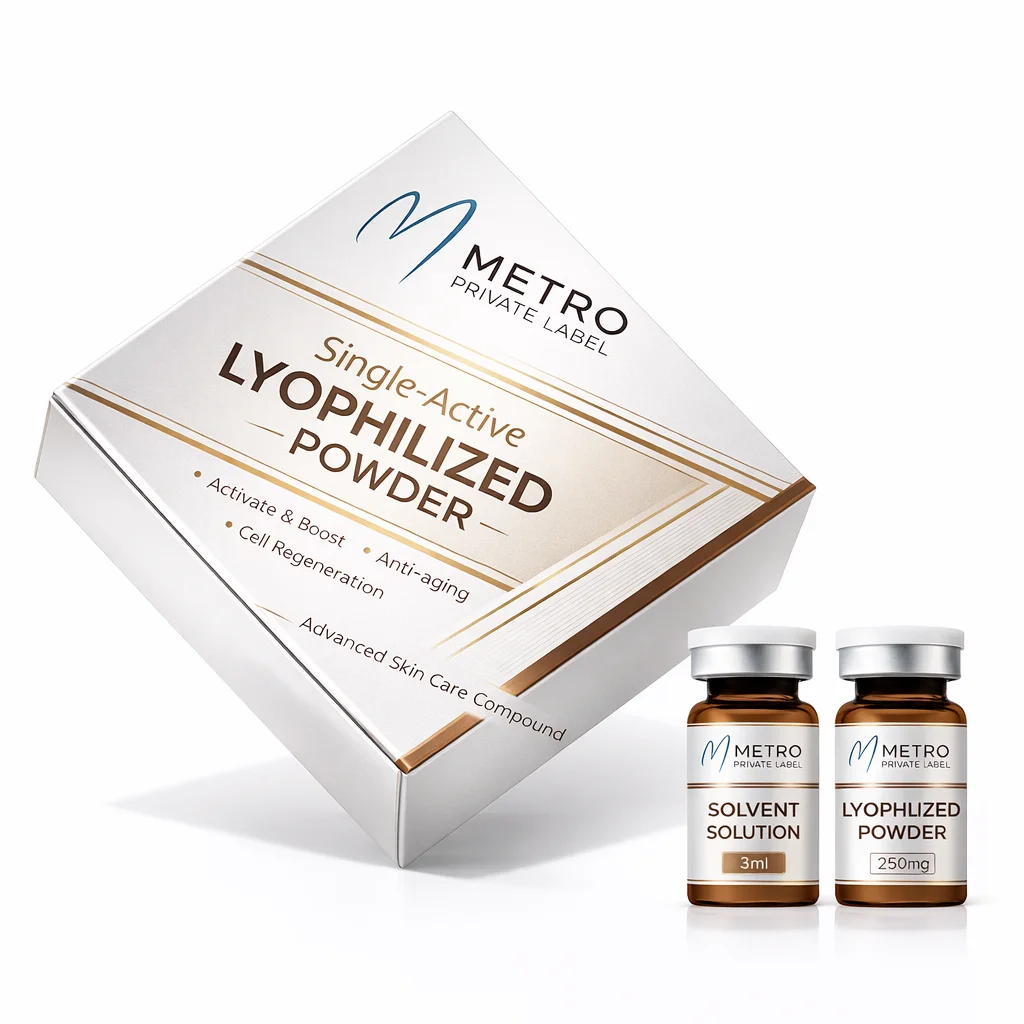
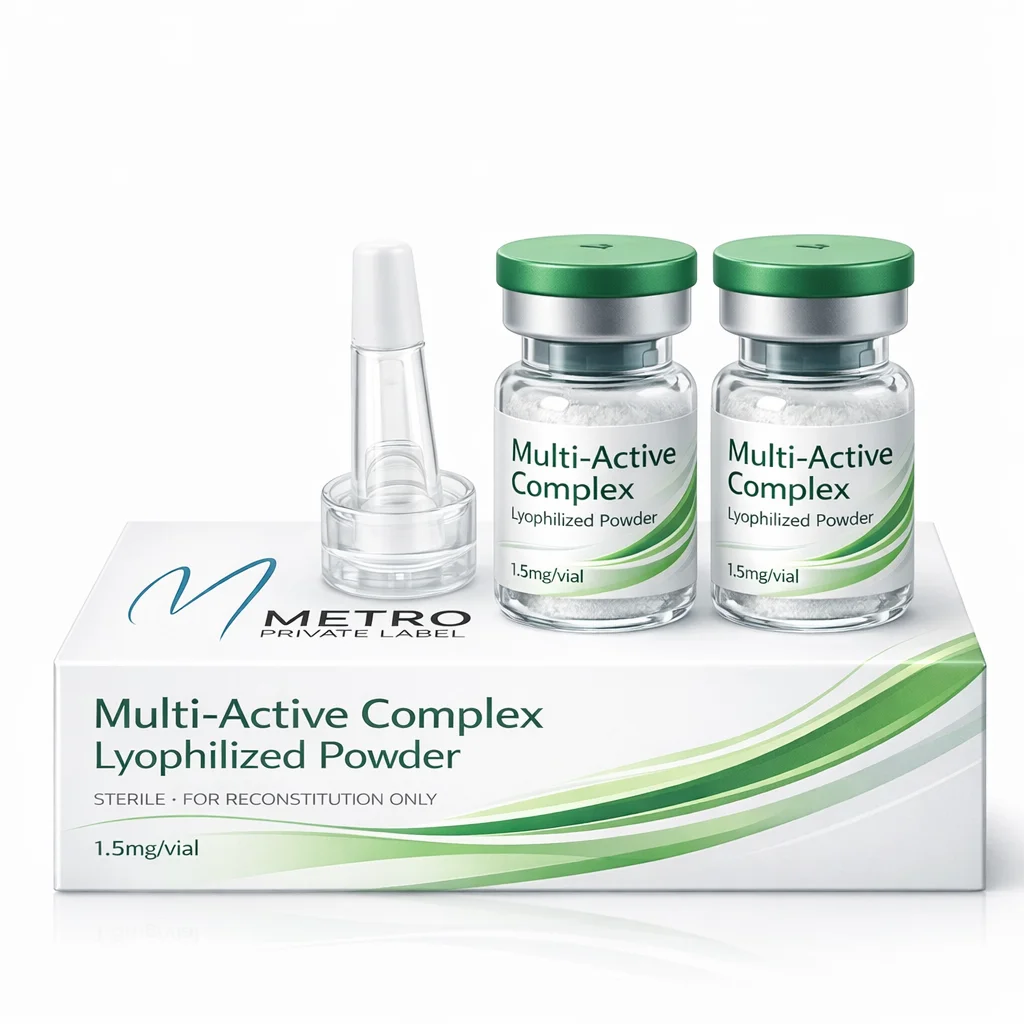
Get Your Custom Skincare Solution Today!

Don’t wait—fill out the form and let our team create the perfect skincare solution for your brand. Expect a personalized quote within 24 hours and start building your brand’s success now!

Submit Your
Private Label Skin Care Request

Fill out this form with your detailed needs and our customer support team will contact you shortly. We will assign a professional agent to follow up on your project and provide personalized assistance.

To get the fastest response, submit your inquiries using the form. If you encounter any issues with submission, you can also email us directly at info@metroprivatelabel.com .

*Metro Private Label takes your privacy very seriously. All information is only used for technical and commercial communication and will not be disclosed to third parties.
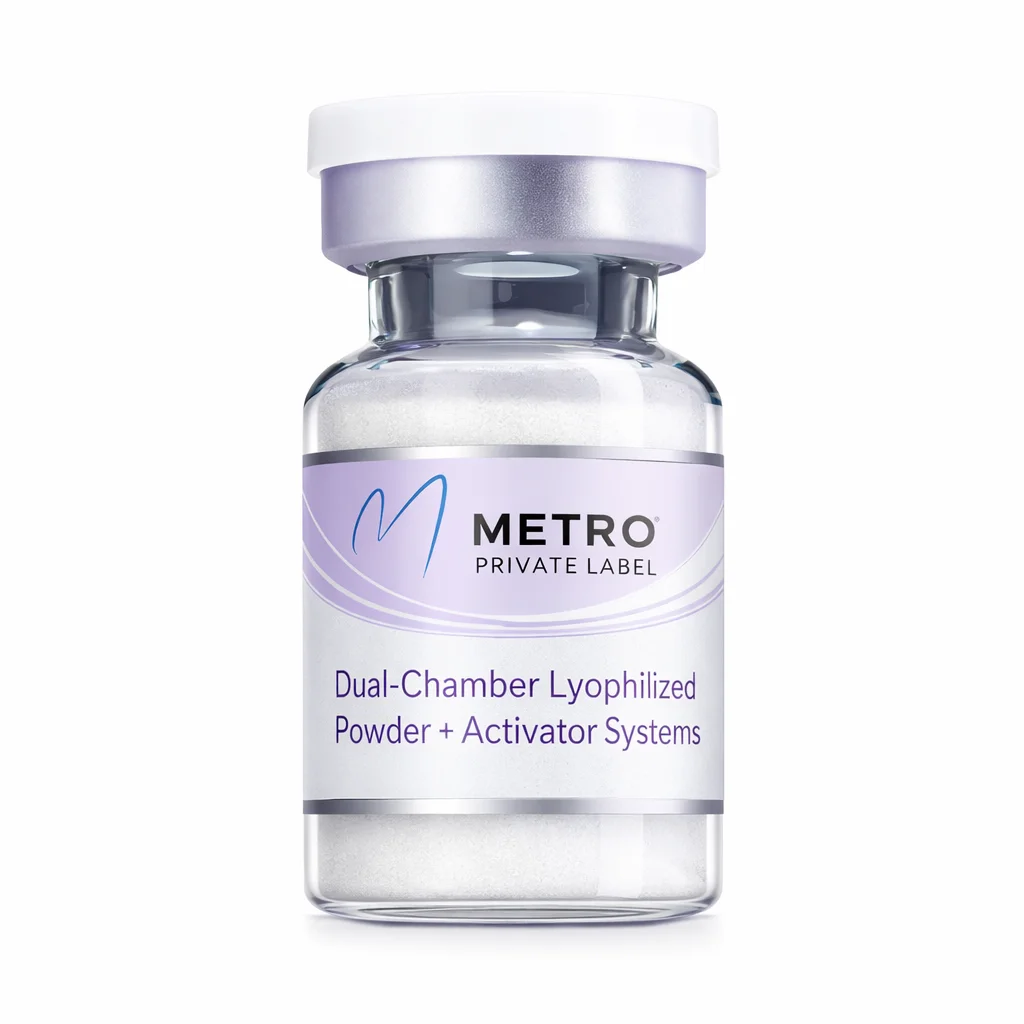
Submit Your
Private Label Skin Care Request

Fill out this form with your detailed needs and our customer support team will contact you shortly. We will assign a professional agent to follow up on your project and provide personalized assistance.

To get the fastest response, submit your inquiries using the form. If you encounter any issues with submission, you can also email us directly at info@metroprivatelabel.com .

*Metro Private Label takes your privacy very seriously. All information is only used for technical and commercial communication and will not be disclosed to third parties.