Your Trusted Body Wash & Shower Gels Manufacturer

We help you launch faster, start smaller, and stand out with custom formulas, pro-grade quality, and trend-driven skincare that sells — all built to grow with your brand.
Private Label Body Wash & Shower Gels

At Metro Private Label, we know a great body wash isn’t just “soap.” It’s a full sensory experience that helps your brand win reviews, boost repeat purchases, and stand out in a market where customers judge a formula from the very first shower. That’s why we build our private label Body Wash & Shower Gels solutions around real skin concerns, proven surfactant systems, and high-demand product trends.
 
From ultra-moisturizing shea butter and ceramide washes, to dermatologist-developed fragrance-free cleansers, tea tree antibacterial formulas, AHA/BHA exfoliating body washes for KP, brightening kojic + turmeric gels, men’s 3-in-1 cleansers, and gentle foaming washes for kids—we study what shoppers are actually searching for on Amazon, Google, TikTok, and dermatologist-recommended routines. We analyze bestseller patterns, ingredient trends, and consumer pain points to ensure the formulas we develop for you stay relevant, competitive, and commercially strong.
 
As your manufacturing partner, we don’t just fill a bottle—we help you build your next hero SKU. Whether your audience wants a silky, nourishing shower gel with premium fragrance notes, a dermatologist-approved sensitive-skin formula, a powerful exfoliating wash that targets body acne and ingrown hairs, or a clean, plant-based Castile-style body cleanser, we’ll customize the texture, actives, surfactants, claims, and packaging to match your brand positioning and your customer’s expectations.

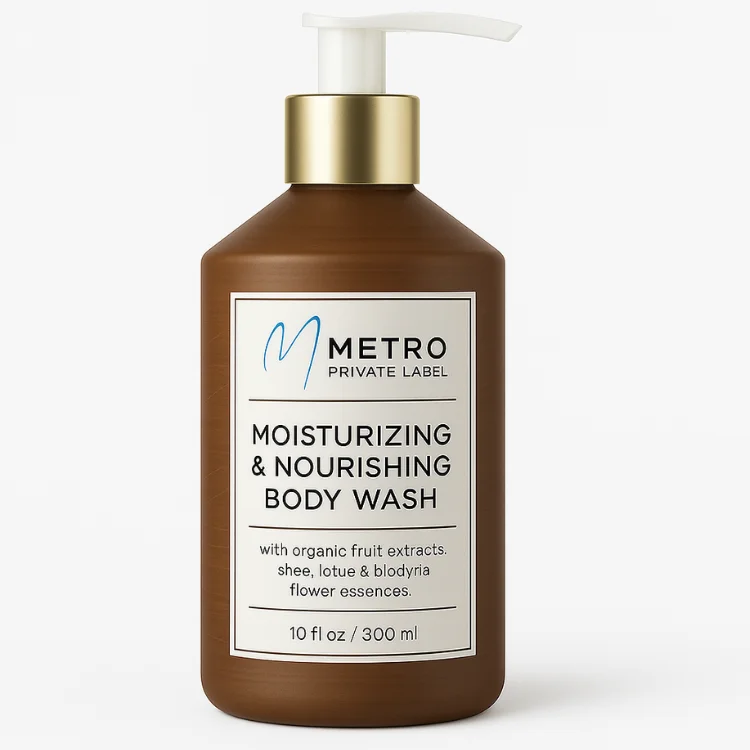
Moisturizing & Nourishing Body Wash

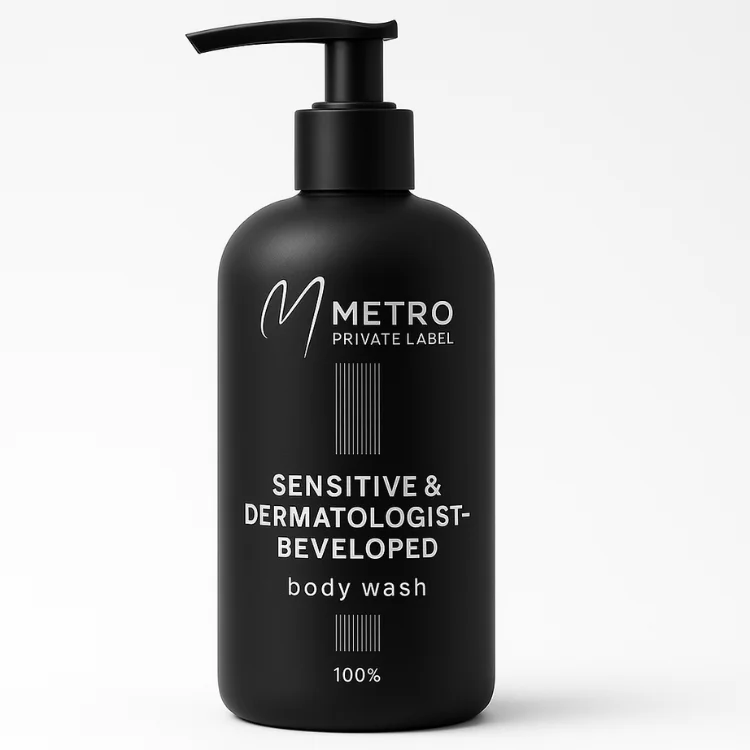
Sensitive & Dermatologist-Developed Body Wash

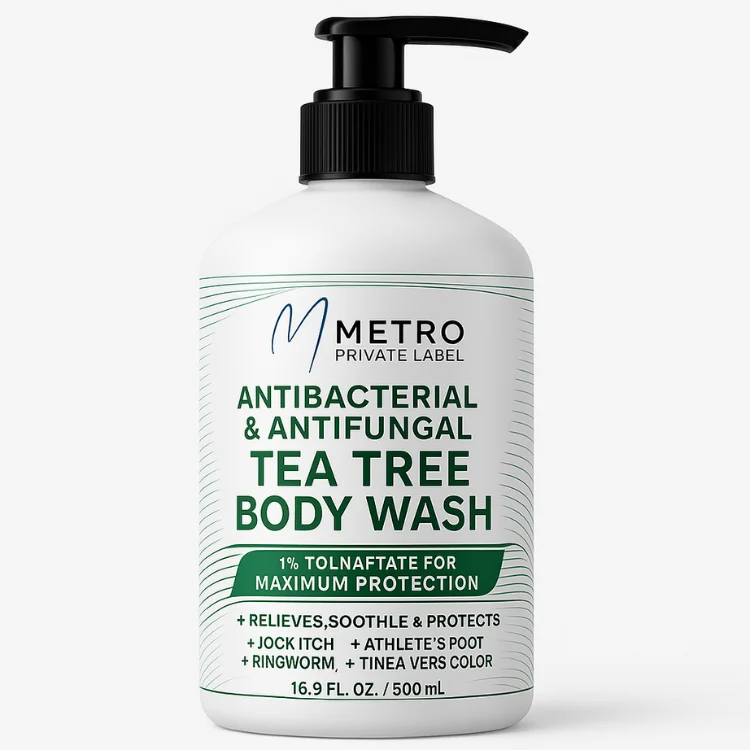
Antibacterial & Antifungal Tea Tree Body Wash

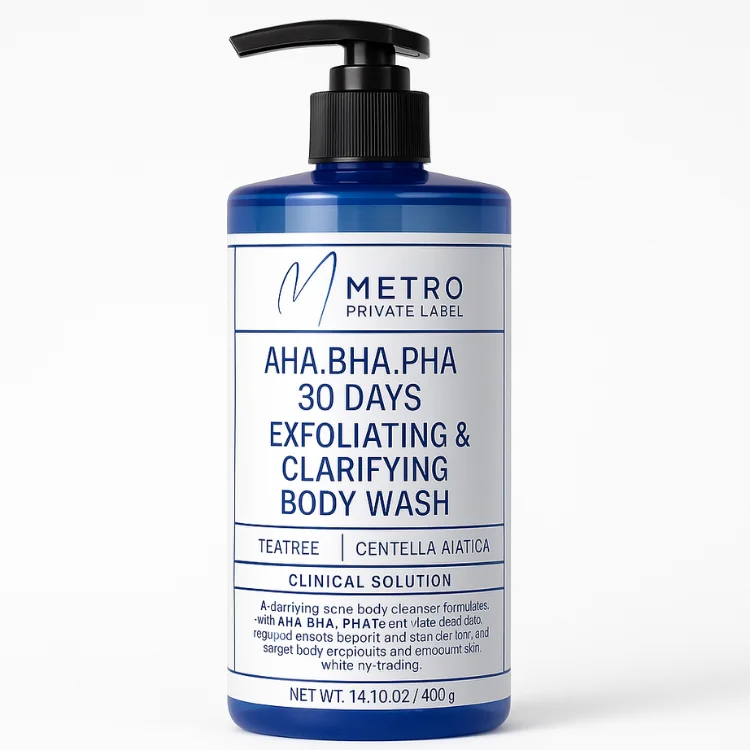
Exfoliating & Clarifying Body Wash

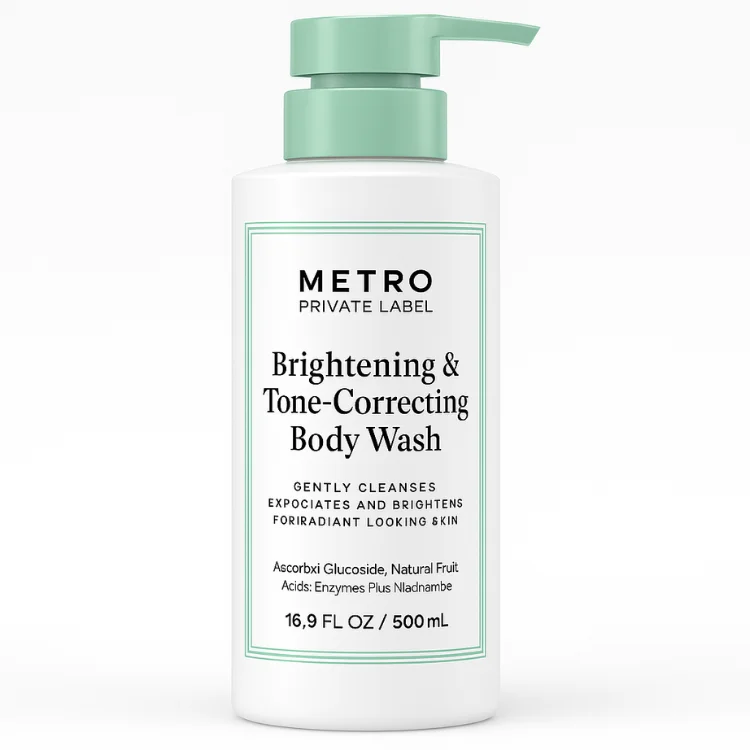
Brightening & Tone-Correcting Body Wash

Men’s 3-in-1 & Grooming Body Wash

Kids & Family Gentle Foaming Body Wash

Natural, Castile & “Clean” Body Wash

Build a Body Wash Line That Strengthens Your Brand

At Metro Private Label, we know a body wash isn’t just a cleanser—it’s the product your customers reach for every single day. It sets the tone for their routine, determines whether they feel clean, refreshed, hydrated, or soothed, and ultimately decides whether they repurchase your brand. That’s why we develop private label Body Wash & Shower Gels that are gentle, effective, sensory-pleasing, and aligned with real consumer demand.
 
Whether your audience wants a dermatologist-developed sensitive-skin wash, a luxurious spa-style aromatic cleanse, a problem-solving tea tree antibacterial formula, or an AHA/BHA exfoliating wash for body acne and KP, we help you create a line that feels premium, works beautifully, and builds brand loyalty.
 
We study what’s trending on Amazon, TikTok, and major global retailers—so the products you develop with us already match what real shoppers are searching for. From fragrance-free dermocosmetic formulas to brightening kojic/turmeric gels, clarifying exfoliating washes, and men’s 3-in-1 cleansers, we track bestselling textures, ingredient gaps, and consumer pain points (dryness, irritation, weak lather, harsh surfactants) to ensure every formula is relevant, safe, and ready for your market. All our products follow global compliance standards including CPSR, FDA, EU/UK documentation, and export requirements.
💡 We Don’t Just Manufacture — We Build Signature Body Wash Formulas
Here are four bestselling directions global brands develop with us:
 
1️⃣ Moisturizing & Nourishing Body Wash (Shea Butter / Ceramides / Hyaluronic Acid)
A silky, hydrating wash that leaves skin soft without residue or tightness.
👉 Powered by gentle surfactants + moisture-locking actives for daily comfort.
2️⃣ Dermatologist-Developed Sensitive Skin Wash (Fragrance-Free / pH-Balanced)
A minimalist, non-irritating formula designed for eczema-prone or easily reactive skin.
👉 Uses mild surfactant systems, no harsh fragrances, and clinical-grade soothing ingredients.
3️⃣ Tea Tree Antibacterial & Antifungal Body Wash
A targeted formula for body odor, sweat-prone areas, and active lifestyles.
👉 Infused with Tea Tree + Eucalyptus, optional Salicylic Acid or Mint cooling complexes.
4️⃣ AHA/BHA Exfoliating Body Wash for KP & Body Acne
A clarifying cleanser that smooths bumps, unclogs pores, and brightens tone.
👉 With Glycolic/Lactic Acid + Salicylic Acid + lightweight humectants for non-drying exfoliation.
 
🎯 Flexible MOQ & Packaging Options
We understand every brand is in a different stage of growth.
That’s why we offer flexible, scalable solutions:
  • 500–800 pcs with stock bottles — perfect for pilot launches, boutique brands, or DTC testing
  • 5,000 pcs+ for fully custom packaging, unique molds, or premium artwork
  • ✅ Custom fragrance, texture, surfactant system, viscosity, and label design based on your target audience
  • ✅ Formula compatibility, stability testing, and batch consistency checks included in every project
From luxurious pump bottles to PCR eco-friendly packaging, we help you choose the right look and feel for your market.
 
At Metro Private Label, we’re more than a body wash manufacturer
We’re your partner in building a bath & shower line that feels elevated, performs consistently, and keeps customers coming back.
Tell us your concept—and we’ll help bring your next hero body wash to life.

More Than Just a Body Wash & Shower Gels Manufacturer

At Metro Private Label, we don’t just make body wash—we create formulas that shape how customers experience your brand. Every cleanser is designed for rich lather, skin comfort, and a clean, satisfying finish that keeps customers coming back.

✅ We Build What the Market Already Loves

We study Amazon bestsellers, TikTok trends, and global bath brands to build formulas consumers already trust. Our top directions include moisturizing shea butter washes, dermatologist-developed sensitive cleansers, tea tree antibacterial formulas, exfoliating AHA/BHA washes, and brightening kojic + turmeric gels.

✅ Start Smart. Scale Confidently.

Begin with 500–800 pcs using stock bottles to test your market. When you’re ready, scale to 5,000+ pcs with full custom packaging, unique molds, and premium artwork. We customize fragrance, viscosity, foaming level, and hero ingredients to fit your brand vision.

✅ Formulas That Deliver Real Results

We balance effective cleansing with skin comfort. Our formulas use mild surfactants, hydrating bases, and skin-friendly actives to prevent dryness or irritation. Choose from luxurious fragrances, spa-inspired aromas, refreshing botanicals, or fragrance-free options for sensitive-skin markets.

✅ Compliance You Can Rely On

We provide complete documentation—INCI, COA, SDS, stability tests, and compatibility reports. All formulas follow U.S., EU, UK, and GCC requirements, ensuring your body wash line launches smoothly with reliable, export-ready compliance support.
  • METRO
  • Typical OEM factory
METROTypical OEM factory
$
/year
/year
Minimum order quantity✅ 500 units for startup brands — low-risk entry for first-time founders.❌ 3,000 units minimum, limiting flexibility.
Packaging recommendations✅ Compatibility + visual templates to ensure perfect fit and premium look.❌ Not provided.
Launch support✅ Label compliance & claim copywriting included for export markets.❌ Not available.
Sample delivery time✅ 7–14 days with labeled packaging.❌ Usually 30+ days.
Compliance & Documentation✅ INCI, COA, SDS, GMP-ready — export with confidence.❌ Basic INCI only.
Buy Now

✨ Build a Body Wash Line That Defines Your Brand

When you work with us, you’re partnering with a GMPC-certified team that transforms your body wash ideas into stable, effective, export-ready products. We focus on gentle surfactants, rich lather, skin comfort, and premium sensory experience — so your line earns trust from the very first shower.
 
Whether you want a moisturizing shea butter wash, a dermatologist-developed sensitive-skin cleanser, a tea tree antibacterial formula, or an exfoliating AHA/BHA wash for body acne and KP, we design every texture to feel smooth, rinse clean, and deliver the results your customers expect — and happily repurchase.
🧪 Custom Formulation That Builds Real Trust
We don’t rely on generic bases — we create original formulations guided by cosmetic science. Our lab works with mild surfactants, hydrating humectants, soothing extracts, and active systems like AHAs, BHAs, ceramides, or niacinamide. Every prototype is tested for pH, stability, viscosity, and performance to ensure consistency from sample to mass production.
If there’s a smarter way to strengthen your formula, improve skin feel, or increase market appeal, we’ll explain the science clearly and guide you through every choice. This collaborative process helps your body wash line stand out from “me-too” products and build long-term credibility through visible results.
 
📦 Packaging That Reflects Your Brand Identity
We believe packaging defines the entire shower experience. Start quickly with 500–800 pcs using stock bottles, perfect for DTC launches or testing new SKUs. When you’re ready to scale, move to 5,000+ pcs with custom molds, bottle colors, pump options, and artwork. We manage labels, cartons, printing, and sealing so your packaging feels cohesive and retail-ready.
 
⚙️ A Seamless, Transparent Production Process
Everything happens under one roof — formulation, sampling, compatibility tests, filling, quality checks, and export documentation. We keep communication clear and predictable, anticipate challenges before they happen, and ensure every milestone stays on schedule. Think of us as an extension of your operations team, focused on launching your product smoothly.
 
🌿 Your Growth Is Our Daily Benchmark
We measure success by long-term partnerships, not one-time orders. That’s why we support your brand with reliable formulas, strong packaging options, and complete documentation for U.S., EU, UK, and GCC markets. With Metro Private Label, your body wash line is built to perform, impress customers, and scale with confidence.

Who We Work With (Designed Around Your Real Needs)

We build partnerships by thinking the way our clients do — understand first → provide solutions → deliver results. Every client type has different priorities, and our role is to translate those into clear, actionable outcomes.

Medical Aesthetic / SPA Professionals

You care about: post-treatment comfort, product safety, and documentation that meets regulatory and audit standards.
What we deliver:

  • Clinical-grade formulations: CICA, ceramides, and peptides; pH-balanced, fragrance-free options with full preservative logic provided.

  • Regulatory documentation: INCI, COA, SDS, stability and compatibility reports; CPSR/CPNP preparation handled with third-party testing support.

  • Professional aesthetic: minimalist, medical-style packaging suitable for back-bar or retail; traceable batches for consistent results.
    Immediate outcome: a post-treatment testing set, compliant label guide, and batch consistency plan ready for your internal validation.

Funded New Entrepreneurs

You care about: low-risk entry, a clear roadmap, and a premium finish that looks ready for market.
What we deliver:

  • Smart start: choose from proven skincare bases (serums, creams, masks); pilot runs from 500 units with optional custom cartons.

  • All-in-one process: formula → visual template → compliant label copy → production → export-ready documentation.

  • Transparent costing: clear breakdown of your key cost drivers — formula type, active concentration, and packaging complexity — so you can plan pricing and profit with confidence.
    Immediate outcome: 2–3 customized samples, a detailed quotation breakdown, and a timeline showing every stage from sample to shipment.

Boutique DTC Brand Owners

You care about: originality, visual consistency, and storytelling through ingredients.
What we deliver:

  • Ownable sensorials: bio-cellulose or vegan carrageenan textures paired with signature actives like peptides, niacinamide, or botanical blends.

  • Design alignment: typography, color, and label systems that match your brand aesthetic; compatibility checks before full production.

  • Global readiness: INCI, COA, SDS, and stability data included; EU/UK/US label claim review support for smooth registration.
    Immediate outcome: packaging mockups, ingredient story sheets, and a coordinated multi-SKU rollout plan that keeps your range cohesive.

Why this works:
We don’t sell production capacity — we deliver strategic understanding, technical precision, and verifiable results.
By connecting your goals with regulatory, design, and manufacturing expertise, we help your brand move faster, reduce uncertainty, and build trust that lasts.

FAQs Body Wash & Shower Gels

For your convenience, we’ve gathered the most commonly asked questions about our Body Wash & Shower Gels. However, should you have any further queries, please don’t hesitate to reach out to us.
1. What types of Body Wash & Shower Gels can you manufacture?
We develop moisturizing washes, sensitive-skin cleansers, tea tree antibacterial formulas, exfoliating AHA/BHA washes, brightening kojic/turmeric gels, men’s 3-in-1 cleansers, Castile-style natural washes, and kid-friendly foaming washes. Choose from our ready formulas or co-develop something custom.
Absolutely. We adjust surfactants, fragrance, viscosity, foaming level, actives (AHA, BHA, niacinamide, ceramides), botanicals, and skin-feel preferences. Share your vision—we’ll create a formula that reflects your target audience and brand identity.
Our standard MOQ is 1,000 units per SKU. For early-stage brands, we offer flexible options using stock bottles starting from 500–800 units. Once you’re ready to scale, we support custom packaging at 5,000+ units.
Sampling typically takes 2–4 weeks, depending on how many adjustments you request. Full production generally requires 4–6 weeks after approval. If you’re working with a tight launch timeline, just let us know—we’ll help you plan effectively.
Yes. Most of our body wash formulas are vegan and cruelty-free. We can also develop SLS-free, silicone-free, essential-oil-free, fragrance-free, or “clean” formulas based on your market’s expectations or retailer standards.
Absolutely. We offer full packaging support: bottle sourcing, pump options, label printing, carton design, and artwork layout. Whether you need luxury matte pumps, PCR eco-friendly bottles, or kid-safe foaming designs—we’ve got options ready.
Yes—we support both. Our white-label formulas help you launch faster and reduce development costs. If you prefer something unique, we’ll co-develop a custom formula from scratch with tailored ingredients and textures.
Every formula goes through stability testing, compatibility checks, pH validation, viscosity measurement, and microbial testing. Our manufacturing follows global cosmetic regulations, including U.S., EU, UK, and GCC requirements.
Definitely. We’ll help you shape clear, safe claims such as “gentle, sulfate-free cleansing,” “brightening wash,” “AHA/BHA exfoliating,” or “dermatologist-inspired sensitive formula.” We can also provide ingredient stories for your website or packaging.
Yes, we ship globally. We support you with COA, SDS, export documentation, and customs requirements. Whether your brand sells in the U.S., EU, UK, Middle East, or Southeast Asia—we’ll guide you through each step for a smooth import process.

Metro Private Label in Numbers

Happy Clients
0 +
Million-dollar Buyers
0 +
Formulation
0 +
Professional Staffs
0 +

Your Ultimate Guide to Body Wash & Shower Gels

If you’re planning to launch a Body Wash or Shower Gel—whether it’s part of a new body care line or an upgrade to your existing product range—you’re entering one of the most competitive but high-opportunity categories in personal care. Body washes are not just cleansers anymore. Customers expect rich foam, skin-friendly ingredients, comforting fragrances, and a shower experience that feels both functional and emotional. And because these are daily-use products, they quickly become trust-building anchors for your brand.
 
Over the years, we’ve seen this category expand far beyond basic gels. Today’s best performers include sulfate-free washes for sensitive skin, AHA/BHA formulas for body acne, hydrating cream washes enriched with ceramides, fragrant spa-style gels for hotels, and minimalist dermatologist-inspired cleansers. At Metro Private Label, we’ve worked with startup founders launching their first hero SKU, DTC and Amazon brands building review-driven bestsellers, SPA operators who need mild but premium formulas, and global distributors who require stable, compliant products that can ship across multiple regions without issue. No matter the client, we’ve learned that a Body Wash & Shower Gel requires far more strategy than people initially expect.

Table of Contents

Understanding the Core Body Wash Formats

When I begin developing or analyzing a body wash, I always start by understanding its foundational format, because the texture, sensory feel, and cleansing system ultimately determine how the product will be positioned in the market. Over the years, I’ve learned that consumers may use the same term—“body wash”—but what they expect from the product varies widely depending on their skin needs, cultural background, climate, and price sensitivity. This is why choosing the right base format is one of the most defining early decisions a brand can make.
 
In my work with founders and product teams, gel cleansers often become the starting point. A gel format is familiar, versatile, and works well across mass-market and e-commerce channels. I appreciate how easily gels adapt to different surfactant systems, especially when a brand wants a sulfate-free claim or a bright, clear visual profile. They produce satisfying foam without overwhelming sensitive skin, and they are cost-efficient enough to support entry-level price points. Because they suit such a wide range of consumers, gel body washes tend to be the safest and most scalable format for new brands entering retail or Amazon.
 
Cream washes, on the other hand, carry a completely different personality. Whenever a brand aims for a hydrating, skincare-inspired, or premium positioning, I naturally look toward cream-based formulations. Their richer textures allow me to incorporate barrier-supporting ingredients like ceramides, oat extract, or niacinamide, which give the user a sense of nourishment even before they apply body lotion. I often describe cream washes as “body moisturizers in cleansing form,” because the rinse-off experience feels softer, smoother, and more comforting. These formulas also perform incredibly well in colder climates or markets that emphasize dryness relief.
 
Oil-to-foam cleansers represent one of the most sensorially engaging formats I work with. They begin as lightweight oils and then transform into a gentle foam when mixed with water. That moment of transformation is something many brands use in their marketing because it photographs beautifully and conveys a sense of luxury. I usually recommend this format to brands that want a differentiator within crowded categories or those targeting a skincare-educated audience. The oil phase also helps maintain skin lipids during cleansing, making the product feel indulgent without being heavy.
 
For brands focusing on clearer skin, texture improvement, or treatment-style products, exfoliating body washes have become extremely effective. I have found that chemical exfoliants such as salicylic acid, glycolic acid, or lactic acid provide the most consistent and predictable results, especially for concerns like body acne, rough bumps, or uneven texture. Physical exfoliants can also be used but must be chosen carefully to ensure they comply with region-specific regulations and deliver an even sensory experience. No matter which method is chosen, exfoliating body washes allow brands to speak directly to high-intent customers searching for problem-solving solutions.
 
Men’s body washes form their own unique category, and in my experience, their success depends heavily on foam density, fragrance strength, and freshness during rinse-off. Male consumers tend to prefer energizing, bold scents and fast-rinse textures that leave no residue. When I develop formulas for this market, I lean toward stronger surfactant blends and aromatic profiles like mint, cedar, or marine notes. Because men often repurchase based on habit, creating the right first impression through foam and fragrance is essential.
 
Sensitive-skin and dermatologist-style body washes require the most technical restraint. These formulas must balance gentleness with cleansing performance, avoiding fragrances, dyes, essential oils, and common irritants. I always pay attention to pH, surfactant mildness, and allergen profiles when designing products in this category. Markets like the EU, UK, Australia, and Canada often favor these minimalist formats due to their safety reputation and regulatory transparency. They also appeal to brands that want to appear clinical, pharmacy-grade, or scientifically grounded.
 
What I’ve learned through these projects is that the body wash format is not merely a matter of texture—it defines the entire product strategy. It influences cost, compliance, packaging, marketing claims, sensory storytelling, and long-term scalability. Understanding these core formats allows brands to make smarter choices from the very beginning, ensuring the final product aligns with consumer expectations, market positioning, and commercial goals. Every new formulation starts with this decision, and the right choice becomes the foundation on which everything else is built.

Choosing Surfactant Systems Based on Market Expectations

Whenever I start formulating a body wash, the most critical decision I make is selecting the surfactant system, because it quietly shapes almost every aspect of the final product—how it foams, how it spreads, how it rinses, how it smells, and even how customers emotionally interpret the “clean” experience. I often tell founders that surfactants are the backbone of the formula: they determine whether a body wash feels luxurious or basic, gentle or invigorating, clinical or spa-like. Over the years, I’ve learned that the right surfactant system is never chosen in isolation. I always consider the brand’s target audience, the retail environment, the cultural expectations around foaming, and the marketing claims the brand intends to make. All of these elements guide me toward the correct cleansing base long before we talk about fragrance, packaging, or storytelling.
 
For products that aim to achieve a strong, energetic foam—especially in mainstream retail or value-driven markets—I still find that SLES-based systems deliver the most reliable performance. Sodium Laureth Sulfate creates dense, quick-forming foam with excellent spreadability, which is why many men’s grooming lines and mass-market body washes continue to rely on it. When I use SLES, I never use it alone; I always pair it with secondary surfactants such as cocamidopropyl betaine or amphoacetates to round out the sensory profile, reduce irritation potential, and soften the foam structure. I consider SLES systems the “workhorse” of body washes—they are stable at different temperatures, compatible with a wide range of fragrances, and cost-efficient enough to support large-volume distribution. That said, I’m always aware of how consumers perceive sulfates. In some markets, SLES is still completely acceptable, but in others, it conflicts with the clean-beauty narrative, so the decision requires a balance of science and consumer psychology.
 
When I work with brands that want to position their body wash as gentle, modern, or naturally inspired, I shift my focus to sulfate-free systems. These blends usually involve cocamidopropyl betaine combined with plant-derived glucosides such as decyl, coco, or lauryl glucoside. I enjoy formulating with glucosides because they create a soft, cushiony lather that feels milder on the skin without compromising cleansing performance. They also have higher natural-origin indexes, which allows brands to make stronger claims around sustainability and plant-based formulation. However, glucosides introduce their own formulation challenges: they tend to thin out viscosity, they require different pH zones, and they can interact differently with fragrances. I’ve learned through countless prototypes that getting the viscosity right in a sulfate-free system is almost an art form, but when the formula comes together, the final result feels elevated—clean, smooth, and gentle in a way that resonates with today’s ingredient-savvy shoppers.
 
Amino-acid surfactants represent the most delicate and skin-friendly category I work with. Whenever I formulate for sensitive-skin consumers, babies, dermatology-aligned brands, or luxury markets that emphasize barrier protection, amino-acid systems become my first choice. Materials like sodium cocoyl glycinate and sodium cocoyl glutamate produce a silky, dense foam that is noticeably different from traditional cleansers. They leave the skin feeling conditioned rather than “stripped clean,” which is essential for regions with dry climates or consumers dealing with eczema, irritation, or chronic dehydration. Working with amino-acid surfactants requires patience—they are more expensive, they can be less forgiving in certain pH ranges, and they demand clearer formulation strategy to maintain transparency or achieve creaminess—but they create a sensory experience that consumers immediately recognize as premium. In fact, when a founder wants a “dermatologist-recommended” or “pharmacy-grade” identity, amino-acid systems often become the cornerstone of that positioning.
 
What influences my decision most is not just the chemistry but the market expectations. Different regions respond to surfactants in very predictable ways. In the Middle East, for example, consumers expect strong foam and a very thorough cleansing feel, which aligns more naturally with SLES-dominant systems. In contrast, the EU and UK markets often demand mildness, allergen awareness, and transparent ingredient lists, making sulfate-free or amino-acid systems more suitable. Meanwhile, for U.S. Amazon shoppers, the keyword ecosystem itself shapes surfactant choices: “sulfate-free,” “sensitive skin,” and “fragrance-free” are high-intent search terms, so I often build formulas around what customers are actively searching for rather than what the lab might traditionally prioritize.
 
Another factor I consider is how the surfactant system interacts with the product’s larger identity. If a brand wants a deeply hydrating body wash with ceramides, niacinamide, or oat extract, I need a mild base that won’t disrupt these ingredients or alter their benefits. If the product is meant to support strong fragrances—like gourmand blends, fruity florals, or men’s aromatic scents—the surfactant system needs to solubilize and stabilize those fragrance oils without causing irritation. Even considerations like bottle type, viscosity preference, or climate come into play, because surfactants behave differently under heat, cold, pressure, or long-distance shipping conditions.
 
Choosing the right surfactant system is not a simple “mild vs. strong” decision. It is a strategic process that reflects the brand’s philosophy, the consumer’s expectations, the regional regulations, and the sensory identity we want the user to remember. In my experience, when the surfactant system is chosen thoughtfully, everything else in the formula—from fragrance to texture—falls into place more naturally. It becomes the hidden architecture that supports the entire product experience, ensuring that the body wash doesn’t just clean—it communicates the brand’s values through every moment of use.

The Role of Actives & Additives in Body Wash Performance

When I develop a body wash, one of the first things I reflect on is how carefully chosen actives can transform a simple cleansing product into something far more meaningful for the user. A body wash may only stay on the skin for a short moment, but I’ve learned that the right combination of actives, humectants, and conditioning agents can influence everything—from how easily the product spreads, to how soft the skin feels hours after the shower. At the same time, I also see the opposite happen: overloaded formulas that chase every trending ingredient on social media but deliver no real benefit in a rinse-off application. Over the years, I’ve come to believe that the beauty of a high-performance body wash lies in restraint, not complication. The formula needs purpose. It needs internal logic. Every active should contribute something the customer can genuinely perceive, whether through sensory experience or gradual improvement.
 
Niacinamide is one of the most requested ingredients I work with, and I find myself using it strategically when the brand’s identity leans toward tone improvement, brightness, or antioxidant support. Even though body washes are rinse-off products, I’ve observed that niacinamide still contributes to a more conditioned, balanced skin feel when combined with mild surfactants and water-binding ingredients. Part of the appeal of niacinamide is psychological—consumers recognize it instantly from their facial serums and expect it to elevate their body-care routine as well. But the technical side matters too. Niacinamide tolerates a relatively wide pH range and stays stable in many cleansing systems, which gives me flexibility as I shape the rest of the formula. I always make sure the level of niacinamide matches the story the brand wants to tell; too low makes it feel decorative, and too high can introduce unintended pH or solubility issues.
 
When the goal is clearer skin or improved texture—especially for people dealing with body acne on the chest, back, or shoulders—salicylic acid becomes one of my most reliable tools. The challenge with salicylic acid is not its efficacy; it is managing the chemistry around it. SA needs the right solvent system, the right pH environment, and the right surfactant balance, otherwise it crystallizes or loses solubility. I have spent many hours adjusting pH curves, testing viscosity, and checking clarity because an SA body wash is only truly effective when it’s both chemically active and physically stable. Once everything aligns, though, the performance speaks for itself. Consumers feel the difference within a few weeks: fewer breakouts, smoother texture, cleaner pores. That’s why SA body washes remain one of the top-requested categories among Amazon sellers and dermatologist-focused brands.
 
Tea tree is a completely different story. When I work with tea tree extract or tea tree oil, I approach it more like a sharp seasoning than a core ingredient. Its purifying and antimicrobial nature make it ideal for fitness-focused audiences or those dealing with sweat-induced congestion, but its potency requires careful handling. Too much tea tree overwhelms the fragrance profile and can irritate sensitive skin; too little fails to deliver the refreshing clarity users expect. I always adjust tea tree based on the region: markets like Australia and Southeast Asia appreciate a stronger botanical presence, while European consumers tend to prefer a more controlled, subtle expression. Tea tree also interacts with certain surfactant systems differently, so I monitor stability closely to prevent cloudiness or scent distortion over time.
 
Ceramides are among the most technically interesting ingredients I incorporate into body washes because they are not traditionally associated with rinse-off products. But when a brand wants to build a body-care line with a skincare-first philosophy—especially one targeting dryness, irritation, or winter climates—I find ceramides extremely valuable. They require emulsification systems that protect their structure and prevent separation, and they perform best when combined with mild surfactants that don’t strip the barrier. What I find especially rewarding is that consumers may not immediately identify “ceramides” during use, but they absolutely notice the difference in how soft and balanced their skin feels after the shower. That’s the kind of subtle, lasting performance I enjoy creating.
 
AHAs introduce yet another layer of complexity. Glycolic, lactic, and mandelic acids each have their own character—glycolic is sharp and fast-acting, lactic is gentler and more hydrating, mandelic is ideal for sensitive skin. Body washes with AHAs appeal to customers looking to refine texture, reduce bumps, smooth KP, or brighten dull areas. But formulating with acids in a rinse-off environment is something I approach very carefully. The pH must be tuned precisely to ensure efficacy without causing irritation. The surfactant system needs to support the acid without collapsing viscosity. Even the packaging must be evaluated for acid compatibility. In markets like the U.S., these products often perform exceptionally well because consumers are accustomed to combining body wash with higher-level actives—mirroring the sophistication of facial skincare routines.
 
Through all of this, the lesson I’ve learned is simple: a body wash should not try to be a serum or a moisturizer. Instead, it should deliver benefits that make sense for its format—benefits that align with how the product is used and what the user will realistically experience. When I choose actives, I always ask myself what the customer will actually feel when they step out of the shower. Will their skin feel smoother? Fresher? More balanced? Less irritated? These are the outcomes that matter. A formula overloaded with trendy actives may look impressive on paper, but if the skin cannot perceive the difference, the product loses credibility over time.
 
In the end, the purpose of actives and additives in a body wash is to elevate the cleansing experience—not overshadow it. They should support the brand’s promise, connect with the customer’s needs, and integrate seamlessly into the chemistry of the formula. For me, this thoughtful balance between science, skin behavior, regional expectations, and sensory design is what transforms a simple body wash into a product that customers repurchase repeatedly—and trust fully.

Fragrance Strategy: Consumer Psychology & Regional Preferences

Whenever I begin developing a body wash, the very first moment I visualize is not the foam, the viscosity, or even the cleansing performance—it’s the scent that rises when the user opens the bottle. Over the years, I’ve come to appreciate that fragrance is often the true “deciding factor” behind whether consumers repurchase a body wash. People rarely articulate it this way, but I’ve seen it repeatedly: a fragrance can imprint an emotion onto the product, turning a simple shower into something comforting, energizing, nostalgic, or even luxurious. This is why, for me, fragrance work is not just perfumery; it is psychology, cultural anthropology, and sensory engineering blended into one process. A formula that is technically perfect can still fail entirely if the fragrance is misaligned with user expectations. And conversely, a good scent can create a loyal customer even if the product is otherwise simple. That is how powerful scent memory is.
 
When I evaluate fragrance directions, I always start by thinking about seasonality and the emotional energy that different scents communicate. In warmer months, I naturally gravitate toward citrus profiles—fresh bergamot, sharp lime, bright grapefruit, sweet mandarin—because they carry an immediate sense of clarity and “cool clean.” Citrus top notes evaporate quickly, which is why they give such a burst of energy in the shower before melting gracefully into softer mid-tones. These fragrances resonate especially well with people who want a refreshing start to the day or who associate cleanliness with a crisp, sparkling scent. I’ve worked with countless citrus-forward formulas for summer launches and gym-oriented products, and I’ve noticed how universal the appeal is. Even people who typically dislike strong fragrances often accept citrus because it feels honest, uncomplicated, and cleansing.
 
As autumn arrives and temperatures drop, everything shifts. I find myself drawn to warm gourmand fragrances—vanilla bean, honeyed tonka, toasted almond, brown sugar, coconut milk, warm amber. These scent families create a sense of cocooning, the same emotional warmth that comes from sitting under a blanket or drinking a hot drink in winter. When I design winter-oriented body washes, I pay attention to roundness and softness in the fragrance, choosing creamy bases that pair beautifully with lotion-like textures. The emotional comfort of these scents is incredibly powerful; they transform the shower from a routine into a small, sensory escape. In regions like North America and Western Europe, I’ve seen gourmand scents dominate holiday sets, gift collections, and moisturizing lines targeted at dry winter skin.
 
But not every consumer wants fragrance, and I deeply respect that. Some people react to allergens, others dislike lingering scent, and many feel safer with fragrance-free formulas—especially those following dermatologist-led skincare routines. When I create fragrance-free body washes, the absence of scent becomes its own design challenge. I have to make sure the surfactant system is mild enough that the skin still feels calm afterward, because fragrance often covers subtle chemical odors that appear in cleansing systems. Without that veil, I need to engineer a formula that smells “naturally clean” on its own—neutral but pleasant, clinical yet comforting. These products have a strong presence in markets with stricter allergen awareness, like the EU, Scandinavia, and Canada, and among customers dealing with eczema or sensitivity.
 
Regional preferences, to me, are one of the most fascinating dimensions of fragrance strategy because they reveal how deeply scent is woven into cultural identity. When I create products for the Middle Eastern market, I know instinctively that the fragrance needs to be bolder, more dramatic, more “present” than what would be appropriate for a European launch. Oud, amber resins, incense woods, musk, saffron, and jasmine absolute create the depth and longevity Middle Eastern users expect—especially because people there often layer body wash with perfumes, hair mists, and body oils. A fragrance that feels moderately strong elsewhere may feel weak or incomplete in these markets. For this region, I often work with a higher fragrance load and a longer dry-down curve, ensuring the scent lingers beautifully on the skin.
 
In contrast, European markets—especially France, Germany, the UK, and Nordic regions—value restraint and clarity. Their preferences lean toward soft florals, mild aquatic notes, clean botanicals, and fragrances that feel close to the skin. These markets prioritize allergen transparency and ingredient safety, which often leads brands to choose fragrances with reduced allergen content or minimalistic structures. When I develop for Europe, I think about subtlety, balance, and cleanliness—not intensity.
 
Southeast Asia, on the other hand, often gravitates toward youthful, fresh, and slightly sweet profiles. I’ve formulated body washes with lychee, jasmine tea, green mango, lotus flower, citrus florals, and airy fruit blends that resonate beautifully with consumers in Singapore, Thailand, the Philippines, and Malaysia. These scents are bright without being overwhelming, and they fit the warm, humid climates where light freshness is more appealing than the heaviness of woody perfumes.
 
North America remains complex and varied—split between invigorating citrus-mint blends and indulgent dessert-like scents. The market shifts rapidly with social trends, and I often find myself designing fragrances specifically to suit how they will perform on TikTok, Amazon reviews, or influencer product demos. In this region, fragrance often becomes a brand signature, so distinctiveness is key.
 
What I’ve learned through all these experiences is that fragrance does not just accompany a body wash—it defines it. The foam, the texture, the rinse, the skin feel… they all matter, but fragrance is what creates the emotional imprint. It’s what shapes memory. It’s what turns a one-time purchase into a ritual. When I craft a fragrance strategy, I think about what the user should feel from the moment they open the cap to the moment they step out of the shower. And once that emotional journey is clear, everything else—the actives, the surfactants, the packaging—falls naturally into place.
 

Packaging Types & Their Price Tier Implications

Whenever I start mapping out packaging for a body wash, I remind myself that packaging is not a neutral container—it is the physical expression of the brand’s values, pricing strategy, and user experience philosophy. Over the years, I’ve come to see packaging as a kind of “silent storyteller.” Long before a customer smells the fragrance or feels the texture, the bottle has already communicated something: whether the product is premium or practical, sustainable or indulgent, minimalist or expressive. Because of this, I treat packaging selection with the same seriousness as surfactant systems or active ingredients. Every choice—from bottle material to pump mechanism to label finish—shapes a consumer’s first impression long before the formula ever touches their skin.
 
HDPE bottles are often my starting point when I’m working with brands that prioritize durability, cost control, or clinical positioning. HDPE has a natural matte softness that feels honest and functional rather than decorative. When I hold an HDPE bottle, I get a sense of stability—almost a pharmacy credibility—which is exactly why dermatologist-style and sensitive-skin body washes often rely on it. HDPE also handles temperature changes and rough shipping environments incredibly well. I’ve shipped HDPE-packed formulas across humid Southeast Asian climates, dry Middle Eastern zones, and freezing Northern winters, and they survive without warping or cracking. Chemically, HDPE tolerates essential oils, acids, and high-fragrance loads better than PET, which gives me more flexibility when formulating active-heavy body washes. And in the current sustainability landscape, its recyclability gives it an ethical advantage without driving up costs. It’s rarely glamorous, but it is always dependable—and that dependability becomes part of the brand’s identity.
 
PET bottles, by contrast, speak a completely different language. When I choose PET, it’s because the brand wants visual clarity and a premium, glossy finish that mimics glass without the danger or weight. PET allows me to showcase the formula itself—the shimmering micelles, the botanical inclusions, the jewel-tone hues. I often recommend PET to brands targeting retail shelves where visual appeal drives impulse purchase. But PET comes with its own demands: it is less tolerant of aggressive essential oils or solvent-like fragrance blends, so I always run compatibility tests before approving anything. I think of PET as a way to elevate both the formula and the visual brand—perfect for lifestyle-oriented, K-beauty-inspired, and boutique brands that rely heavily on aesthetics. However, that elegance has logistical implications: PET can scratch more easily, and thick-wall designs increase cost and weight. But when the goal is to capture attention visually, few materials perform as beautifully as PET.
 
Foaming pumps introduce an emotional element to cleansing that traditional bottles simply don’t replicate. Whenever a founder tells me they want their body wash to feel unique or playful, I start imagining the airy foam that foaming dispensers create. They transform the formula instantly, turning a simple liquid into a soft cloud of lather. This is particularly appealing for spa-style concepts, gentle children’s lines, or skincare-infused formulas where touch and softness matter. But foaming systems require intention: the liquid inside must be thinner, the surfactant system must create a stable foam through mechanical aeration, and the pump quality must be high enough to avoid clogging. Foaming pumps also increase per-unit cost, and they require tighter shipping controls because the air chamber can react poorly to pressure changes. Still, when I want to create a sensorial experience that feels elevated and luxurious, foaming packaging is one of my favorite tools.
 
Tubes occupy a fascinating middle ground between practicality and premium perception. I often turn to tubes when the formula has a creamy viscosity, contains exfoliating particles, or needs to dispense cleanly without dripping. Tubes are ergonomic, travel-friendly, and perform well in humid climates where rigid bottles sometimes collect condensation. I appreciate how tubes allow creative design choices—soft-touch laminates, metallic foils, gradient artwork—that instantly raise the perceived value of the product. But tubes have their own technical realities: incorrect sealing can compromise shelf life, and high-viscosity formulas require precise calibration to avoid “tube burst” in hot environments. Despite these challenges, tubes allow a brand to appear elevated while staying within accessible price tiers.
 
Refill pouches reflect one of the biggest shifts I’ve seen in body-care packaging: a move toward sustainability and long-term brand ritual. When I work on refill systems, I’m always aware that the refill pouch isn’t just packaging—it’s a statement about how the brand sees its relationship with the customer. Refill formats reduce plastic usage dramatically, lower shipping emissions, and encourage customers to keep the bottle they love rather than constantly throwing it away. But the technical side must be managed carefully: pouches require multi-layer films that resist punctures, and the formula must remain stable inside flexible packaging. When executed well, refill systems build a long-term emotional bond with customers—because they don’t just use the product; they maintain a ritual with it.
 
Hotel amenity sizes form their own universe. Whenever I plan packaging for hospitality clients, I think about the user who has just stepped into a hotel bathroom after traveling: what will their first impression be? The bottle must be easy to grip with wet hands, dispense cleanly in one motion, survive constant housekeeping rotations, and communicate luxury or cleanliness in a format that’s often only 20–40 ml. These tiny bottles go through more rigorous handling than almost any consumer product I’ve worked with. They need to withstand high pressure, rapid temperature swings, and repeated refills of housekeeping carts. And despite their size, they must still express the hotel’s brand identity in a way that feels intentional.
 
Ultimately, what I’ve learned is that packaging is one of the most powerful translators of brand intention. It influences not just cost and logistics but the emotional and sensory experience of the product itself. A body wash in HDPE feels clinical; in PET, it feels luxurious; in a foaming pump, it feels indulgent; in a tube, it feels curated; in a refill pouch, it feels sustainable. Packaging shapes the relationship between the consumer and the formula before a single drop is dispensed. And when I see everything align—the formula, the fragrance, the packaging—I know the product will resonate, not just function.

Formulation Guidelines for Sensitive, Dermatologist-Oriented Markets

When I develop body wash formulas for sensitive skin or dermatologist-oriented categories, I always slow down and rethink the fundamentals. Sensitive-skin formulation isn’t simply a matter of removing fragrance or using a “gentle” surfactant—it requires a philosophy of restraint, precision, and respect for the skin barrier. Over the years, I’ve noticed that the most successful dermatologist-recommended products are often the quietest ones: minimalistic ingredient lists, calm textures, and formulas that feel almost invisible on the skin. Whenever I start a project like this, I remind myself that the people using these products are often dealing with eczema, rosacea, chronic dryness, or irritation from harsher cleansers they’ve tried. That reality shapes every decision I make, from surfactant choice to pH to viscosity.
 
One of the first things I address is fragrance—or rather, the absence of it. Fragrance is one of the biggest triggers for irritation and allergic reactions, and removing it creates a cleaner, safer base. But from a formulation standpoint, “fragrance-free” isn’t as simple as deleting an ingredient. Once the fragrance is gone, the actual smell of the raw materials becomes exposed. Sometimes betaines smell a bit metallic, glucosides can smell fatty, and preservatives have their own subtle scent. So I spend considerable time balancing the formula to achieve what I call a “neutral comfort scent”—a soft, clean, almost indistinguishable aroma that doesn’t feel medical or synthetic. I’ve learned that users with sensitive skin notice the smallest sensory details, and even the slightest “chemical” note can affect their confidence in the product.
 
Surfactants are the next major pillar I focus on. For dermatologist-oriented formulations, I avoid sulfates entirely—not because SLES is inherently dangerous, but because many consumers with compromised skin barriers experience dryness or tightness when using stronger anionic surfactants. Instead, I build the base using glucosides, betaines, or amino-acid surfactants such as sodium cocoyl glycinate or sodium cocoyl glutamate. These surfactants create softer, fluffier foam with a lower irritation profile, but they are technically harder to stabilize. They don’t always thicken easily, they can be pH-sensitive, and they sometimes require multi-step blending to achieve an elegant lather. Still, I’ve found that the reward is worth the extra effort: the skin feels calmer after rinsing, and users often describe the foam as “cloud-like” or “gentle but cleansing,” which is exactly what I’m aiming for.
 
Another area I treat with extreme care is allergen avoidance. Many brands assume that “natural” equals “safe,” but in sensitive-skin formulation, natural plant extracts, essential oils, and aromatic compounds actually introduce dozens of potential allergens. I often eliminate them entirely. Even popular soothing ingredients—like lavender, eucalyptus, or citrus oils—can cause reactions in sensitive populations. Instead, I rely on proven, low-allergen support ingredients: glycerin for hydration, panthenol for calming, allantoin for comfort, and ceramide-compatible systems that reinforce the barrier. I also avoid colorants, mica, strong exfoliants, and unnecessary polysorbates. Every ingredient must have a clear functional purpose. If it’s not contributing directly to mildness, stability, or skin comfort, I leave it out.
 
When I formulate for markets like the EU, UK, and Canada, the requirements become even stricter. These regions scrutinize ingredient safety, allergen labeling, and claim accuracy in a way that demands absolute discipline. If a brand wants to use phrases like “hypoallergenic,” “for eczema-prone skin,” or “dermatologist-tested,” the formula must make scientific sense from the inside out. That means avoiding known sensitizers, designing a stable preservative system that passes challenge testing, and choosing surfactants that align with regional regulatory expectations. I often review ingredient lists from a regulatory perspective before I even begin the formulation, because I know that compliance isn’t just a paperwork step—it’s a formulation philosophy.
 
Moisturization and after-feel also play a crucial role for sensitive users. Many people with reactive skin experience a tight, squeaky sensation after cleansing—something I call “silent irritation.” It doesn’t burn or sting, but it signals that the cleanser has disturbed the lipid balance. To prevent this, I adjust the formula’s humectant load using glycerin, sodium PCA, or low-weight hyaluronic acid. These ingredients help the skin retain moisture after rinsing. I sometimes add light emollients that rinse cleanly but leave a subtle protective film, ensuring that users step out of the shower feeling comfortable rather than stripped. When the skin feels calm immediately after cleansing, it sets the tone for everything else in the user’s routine.
 
One thing I’ve learned is that sensitive-skin consumers develop extremely deep loyalty once they find a product that truly works for them. They’re often people who have struggled with irritation for years and have tried dozens of disappointing options. When I read reviews from these users saying their redness has reduced, or that their skin doesn’t itch after showering anymore, I’m reminded of why this type of formulation matters. Sensitive-skin products aren’t about trend-chasing or fragrance storytelling—they’re about trust, comfort, and emotional relief. And for me, that makes the process incredibly meaningful.

Understanding Global Compliance Requirements

When I evaluate a new body wash or shower gel project, one of the first questions I ask myself is: “Where will this product eventually be sold?” Over time, I’ve learned that understanding this early is not a small detail—it is the foundation that determines what ingredients I can use, what paperwork must be prepared, how the label must be written, and even how the shipment will move through customs. Compliance is one of those things you only learn to respect after experiencing a delay, a rejection, or a reformulation triggered by a rule you didn’t know existed. I’ve lived through all of those moments, and that’s why I now treat compliance as part of the formulation itself—not something that gets added later.
 
When I prepare products for the U.S. market, I focus on clarity and accuracy rather than pre-approval, because the U.S. operates on a post-market regulatory system. There’s no CPSR or CPNP upload here, but that doesn’t make the process easier—it simply shifts responsibility onto the manufacturer and the brand. I always prepare a clean, precise INCI list, a full SDS, and a lot-specific COA because these are the documents retailers and Amazon demand when verifying a listing. What I’ve learned is that the real risk in the U.S. is claims language. A body wash that “removes acne,” “eliminates eczema,” or “kills fungus” crosses into drug claims instantly. I’ve seen sellers lose entire listings because the FDA categorized the wording as medicinal. So when I write U.S. labels, I balance marketing appeal with regulatory correctness—words like “supports,” “helps reduce,” or “purifies” tend to be safer than anything implying medical treatment.
 
Comparatively, the EU and UK feel much more structured, and I’ve grown to appreciate that structure. When I develop a formula for Europe, I think ahead to the CPSR. Every ingredient percentage must be justified with toxicology data; preservatives must fit within Annex standards; allergens must be disclosed accurately; and pH must be within safe ranges. I’ve had formulas rejected during CPSR when a botanical extract carried too many naturally occurring allergens or when the preservative system didn’t satisfy the assessor’s stability expectations. After the CPSR comes the PIF, which is essentially the product’s entire “identity card”: manufacturing records, stability tests, challenge tests, safety assessments, artwork, and claims substantiation all stored in one file. Only when everything checks out can I move on to the CPNP or SCPN upload. It’s a long process, but once complete, it creates incredible consumer trust—European customers know their products are backed by real science, not marketing hype.
 
The Middle East / GCC countries bring an entirely different layer of practical complexity. These markets often require product registration, ingredient certification, and custom-approved documentation—sometimes even notarized and embassy-stamped versions of SDS or COA. I’ve dealt with customs officers asking for ingredient percentages at the port or requesting confirmation that fragrances meet IFRA guidelines. One thing I learned early on: GCC markets strongly prefer clear documentation with precise details. If a label claims “24-hour hydration” or “antibacterial,” they will expect proof. And because climate conditions are harsher in regions like Saudi Arabia or UAE, stability testing becomes even more crucial. I always conduct high-temperature stability checks before preparing export files for these markets.
 
Retailers and marketplaces like Amazon, Sephora, Douglas, or large supermarket chains introduce another category of compliance that many new brands overlook: retailer-specific micro-requirements. Amazon, for example, may reject a listing due to incorrect SDS formatting, missing hazard statements, or a mismatch between uploaded artwork and the actual label. Some retailers require drop-test packaging durability, recyclable packaging content documentation, or explicit allergen disclosure even if the region doesn’t mandate it. When I prepare files for these channels, I create a checklist that includes both regulatory requirements and each platform’s internal rules. In my experience, retailer compliance fails not because brands don’t care, but because they don’t know retailers have their own mini rulebooks behind the scenes.
 
Over the years, one pattern has become clear to me: brands that understand compliance early have smoother launches and fewer surprises. Those who treat compliance as an afterthought often face reformulation requests, delayed shipments, halted Amazon listings, or worst of all—rejected batches at customs. I’ve seen beautiful packaging get reprinted because an allergen wasn’t listed, and entire pallet shipments get stuck because a COA was missing a manufacturing date. These setbacks are avoidable, but only when compliance is integrated into the planning process.
 
For me, global compliance is ultimately not about bureaucracy—it’s about building credibility. When customers in Germany, Canada, or the UAE pick up a body wash, they are trusting that every ingredient is safe, every claim is honest, and every regulation has been respected. And when I guide brands through all this—choosing the right surfactants, preparing accurate INCI lists, aligning preservatives with global rules—I feel I’m not just producing a skincare product; I’m helping build a brand that can stand confidently on shelves anywhere in the world.

How Retail & E-Commerce Trends Shape Body Wash Development

Every time I develop a new body wash, I find myself studying the retail landscape just as closely as the ingredient deck. Over the years, I’ve realised that consumers no longer judge a body wash only in the shower—they judge it through screenshots, search results, influencer reviews, and the way foam looks on camera. Retail and e-commerce trends have become such a dominant force that I often feel I’m decoding two worlds at the same time: the scientific reality of what a cleanser can do, and the emotional reality of what online consumers expect. And the interesting part is this—those two worlds don’t always align naturally. So my job becomes a balancing act between chemistry and psychology.
 
One of the strongest patterns I’ve noticed from Amazon and Sephora reviews is the obsession with foam quality. Even though I understand from a scientific perspective that foam volume has little to do with actual cleansing power, I’ve learned that consumers perceive abundant lather as a sign of luxury, cleanliness, and effectiveness. When a body wash builds dense, creamy foam quickly, reviewers describe it with words like “rich,” “indulgent,” or “spa-like.” When the foam is thin or collapses fast, they interpret it as “weak,” “watered-down,” or “cheap.” These emotional reactions have taught me to engineer foam not just for performance, but for satisfaction. I adjust surfactants, thickeners, and aeration properties to create the sensory profile that aligns with what e-commerce shoppers reward—because even the most gentle formula must still meet the emotional standards of the digital marketplace.
 
Fragrance is another dimension that online trends have reshaped dramatically. What fascinates me is that people on Amazon often describe scents using metaphors—“smells like a hotel,” “feels like a tropical vacation,” “clean laundry,” “luxury spa at home.” Over time, I’ve come to treat these metaphors as data points. They help me understand what feelings consumers want to buy, not just what notes they want to smell. For example, Middle Eastern shoppers lean toward bold oud, smoky woods, and long-lasting sweetness, while Northern European markets prefer soft florals, fresh cotton, and minimalist “clean” profiles. American shoppers are split—some want gourmand vanillas and coconuts that feel comforting, while others gravitate toward citrus freshness that reads as “energising.” When I design a fragrance, I also think about how easily it can be communicated through words and short videos, because most online buyers don’t get to smell the product until after they’ve paid for it. A great fragrance for e-commerce has to be emotionally intuitive.
 
Another trend I constantly follow is the rise of ingredient-driven shopping. On Amazon, certain actives behave almost like keywords—niacinamide, salicylic acid, hyaluronic acid, ceramides, tea tree, glycolic acid. When an active becomes a trending search term, I see its influence immediately. It shifts how consumers describe their concerns and reshapes buyer expectations. For instance, the boom in “body acne wash” searches pushed me to create body-appropriate AHA/BHA systems with different pH ranges compared to facial cleansers. The trend toward “brightening body wash” encouraged me to rethink how niacinamide interacts with surfactants to maintain stability. When “ceramide body wash” surged, I started exploring ways to incorporate barrier-supportive systems that could survive rinse-off conditions and still deliver a noticeable after-feel. For me, search trends aren’t just marketing topics—they’ve become formulation triggers.
 
One of the most interesting things I’ve learned from Shopify brands is the role of video-friendly textures. I’ve had founders send me clips showing how they want their gel to stretch, how glossy they want the surface to appear, or how the foam should build in the first two seconds. It’s a reminder that, in today’s content-driven market, a body wash isn’t just used—it is shown. A silky pour, a shining gel, or a dense foam swirl can become the “hook” that captures attention in TikTok or Instagram content. As a formulator, I sometimes modify viscosity, clarity, or bubble density purely because certain textures perform better on camera and help drive conversions. This is a relatively new phenomenon, but one that has changed how I think about product aesthetics.
 
Retail shelf behaviour has taught me different lessons altogether. When I walk through stores, I always study how products are grouped, which claims dominate end caps, which colours signal “dermatology-grade,” and which packaging formats suggest luxury or affordability. I’ve noticed that retailers reward clarity. A simple “Moisturizing Body Wash” with a clean layout can outperform a crowded label with too many promises. Meanwhile, natural stores highlight plant-derived surfactants and essential oil blends, while drugstores emphasise dermatology-style claims like “non-drying,” “pH-balanced,” or “for sensitive skin.” Observing these patterns helps me ensure that the formulas I create for brands don’t just work—they look at home in their intended environment.
 
What ties all these insights together is the reality that consumers today shop with a mix of logic and emotion. They want science-backed ingredients, but they also want the pleasure of rich foam. They want clean formulations, but they also crave memorable scents. They want transparency, but they also want textures that look beautiful on video. As a formulator, I’ve learned that ignoring retail and e-commerce behaviour leads to beautiful formulas that don’t convert; embracing these patterns leads to products that feel relevant, desirable, and aligned with how people actually buy body wash in 2025 and beyond.

Designing Body Wash Lines for Hotels, SPAs & Hospitality Programs

Whenever I design a body wash specifically for hotels, SPAs, or hospitality programs, I step into a completely different mindset—almost like switching disciplines. Consumer retail is about storytelling and targeting specific audiences, but hospitality is about creating a universally pleasant experience that works across hundreds of rooms, dozens of skin types, and a wide range of operational challenges behind the scenes. Over the years, I’ve learned that hospitality formulation isn’t just a question of chemistry; it’s a question of logistics, consistency, durability, sustainability, and guest psychology. I often say that if retail products are designed for individuals, hospitality products are designed for ecosystems.
 
The first thing I always evaluate is cost-to-experience balance. Hotels must manage costs carefully because every guest uses the product, sometimes multiple times a day, and the consumption rate adds up quickly across a property. But that doesn’t mean the formula can feel cheap—not when guests compare their shower experience to what they enjoy at home or in premium wellness spaces. My goal is to create a formula that feels more luxurious than its cost might suggest. This often leads me to surfactant systems that offer both mildness and strong foam performance—betaines, glucosides, or blended systems that achieve a creamy, satisfying lather without inflating the raw material budget. In the hospitality world, achieving that balance is an art: every penny matters, but the shower experience still has to feel elevated.
 
Another complexity is the need for universal skin compatibility. In hotels, I can’t assume anything about the guest—dry skin, oily skin, very sensitive skin, eczema-prone skin, sunburned skin, or post-spa exfoliation. The body wash has to be safe and comfortable for all of them. That’s why I avoid high concentrations of essential oils, strong acids, heavy fragrance allergens, or botanical extracts that might cause irritation. Even ingredients that retail brands love—like peppermint, eucalyptus, lavender, or citrus oils—can be too aggressive for the hospitality setting. I tend to design formulas around mild humectants like glycerin, panthenol, or sodium PCA, and supportive surfactants that maintain the skin barrier without leaving residue. The ideal hotel body wash gives a clean rinse, a soft after-feel, and zero stickiness—because guests move immediately to white towels, robes, sheets, and clothing.
 
Sustainability has changed hospitality formulation dramatically. More hotels are abandoning single-use bottles in favor of bulk refill systems. When I design for bulk formats like 1L, 3L, or 5L, the formulation challenges look very different. The product must maintain viscosity over time, resist separation in refill tanks, pump smoothly in wall-mounted dispensers, and withstand temperature fluctuations in housekeeping storage rooms. I’ve seen formulas thinning drastically in hot boiler rooms or becoming too viscous in colder climates, so I test across temperature ranges to ensure stability. I also check how well the product pours from large containers—refill operations are surprisingly fast-paced behind the scenes. If the viscosity strings or clumps, housekeeping teams quickly lose patience, and that feedback inevitably reaches me.
 
Fragrance design is one of the most fascinating parts of hospitality formulation. A hotel body wash doesn’t just cleanse—it reinforces the brand identity of the property itself. I often study the hotel’s interior design, lobby scent, spa ambiance, and amenities branding before choosing a fragrance direction. Minimalist Scandinavian hotels love “clean linen,” fresh cotton, soft botanicals, or light marine notes. Luxury tropical resorts lean into coconut, frangipani, citrus, and sun-warmed sweetness. High-end urban SPAs often prefer herbal blends like rosemary, sage, bergamot, or green tea. Meanwhile, Middle Eastern properties appreciate deeper oud, amber, and oriental accords. The challenge is making each profile universal enough that no guest feels overwhelmed. A hotel scent should be memorable but never polarizing—inviting but never intrusive. I also adjust fragrance load carefully; the same scent intensity that feels perfect in a SPA may feel too strong in a small hotel bathroom with less ventilation.
 
Dispensing quality is another area I never overlook. In retail, a pump malfunction is an annoyance. In hospitality, it becomes a problem that multiplies across hundreds of rooms. I test how well the formula dispenses from different pump mechanisms, because stringy or watery textures cause housekeeping delays and guest frustration. Some thickeners clog pumps; some low-viscosity formulas splash unpredictably. I’ve learned to refine viscosity not only for sensory feel but for mechanical compatibility. A good hospitality body wash should dispense with one smooth press, have clean cut-off with no dripping, and maintain that behavior from the first refill to the last.
 
Packaging selection carries its own set of challenges. While retail focuses on branding impact, hospitality prioritizes durability, safety, tamper-evidence, and ease of cleaning. Wall-mounted dispensers must lock securely to prevent tampering, withstand constant contact with water and cleaning chemicals, and stay visually appealing after months of use. I’ve seen hard water build-up degrade inferior plastics, or steam-filled bathrooms warp low-quality bottles. This is why I test packaging under accelerated aging conditions and simulate housekeeping routines. In hospitality, packaging is not just a vessel—it’s part of the usability ecosystem.
 
Consistency across batches becomes another critical priority. A hotel chain cannot have slightly different scents or viscosities between deliveries—guests notice. So I build formulas with high batch reproducibility, minimizing raw materials that fluctuate seasonally or botanicals with variable color or aroma profiles. The hospitality industry demands a product that behaves the same on day 1, day 30, or day 180—across every dispenser, every room, and every property.
 
One thing I’ve come to appreciate is how a good body wash can subtly elevate the entire guest experience. Guests don’t always articulate it directly, but a pleasant shower can become an emotional anchor—a moment of comfort during business travel, a sensory memory from a relaxing SPA day, or a detail that influences how they rate their stay online. Hospitality products don’t chase trends; they create impressions. And whenever I design a formula that balances universal comfort, operational practicality, aesthetic harmony, and brand identity, I feel I’m contributing to an experience that lasts long after the guest has checked out.

Scaling from Prototype to Market Launch

When I guide a body wash from its first bench sample to a full commercial launch, I often feel like I’m managing two different timelines at once: the creative timeline that excites founders and the technical timeline that protects the product from future problems. Over the years, I’ve learned that successful launches don’t happen because the formula is “good.” They happen because every detail—from ingredient selection to bottle compatibility to label punctuation—has been anticipated, tested, and refined. I always tell founders that scaling a body wash is like building a small ecosystem: if one component is rushed or overlooked, the entire system becomes unstable. That’s why I’ve developed a deep respect for the invisible work that happens between prototype and launch.
 
The process usually begins with defining the base format, and this is a step I never rush. A gel cleanser behaves very differently from a cream wash, and an oil-to-foam formula has its own structural needs. Even something as simple as “exfoliating body wash” introduces variables: scrub particle density, suspension stability, and how evenly those particles disperse during filling. I’ve learned that choosing the wrong base early on creates downstream issues—thin gel textures that feel cheap, cream formats that separate when temperature fluctuates, or oil-bases that cloud in cold shipping environments. So before I start mixing, I ask founders to tell me the sensory experience they want the customer to feel in the shower. Slick or cushiony? Light or creamy? Fast-rinsing or lingering hydration? These details shape everything that follows.
 
Once the format is defined, I move into surfactant engineering, which is where the science becomes truly delicate. Many new founders think of surfactants only in terms of “sulfate-free vs. not,” but in reality, surfactants dictate foam density, bubble size, slip, rinse-off speed, viscosity behavior, fragrance lift, and even the way colorants disperse. Amino-acid surfactants are luxurious but expensive; glucosides are mild but stubborn when it comes to thickening; betaines add slip but influence pH stability; SLES-based systems foam beautifully but may not support certain clean-beauty claims. I spend a lot of time explaining these trade-offs, because the surfactant system is often the single biggest factor determining whether the formula feels premium or generic.
 
Fragrance work is where the project transforms emotionally. I always test fragrances inside the actual base, because the same scent can perform entirely differently depending on surfactants, viscosity, and pH. Sometimes a bright citrus becomes dull in a cream base; sometimes a vanilla note intensifies unexpectedly when heated in the shower. I also consider fragrance volatility, color stability, allergen load, and how the scent disperses under running water. And because so many brands today rely on Amazon or TikTok, I evaluate how “communicable” the scent is—whether it can be described clearly through text or video. A great fragrance doesn’t just smell good; it has to be explainable, stable, and emotionally aligned with the brand story.
 
After fragrance, I shift toward stability testing, which is the part of development I’ve learned to treat with absolute seriousness. I’ve witnessed perfect-looking formulas turn yellow at 45°C, thin out at 4°C, or separate after freeze–thaw cycles. I’ve seen natural extracts cause unexpected microbial growth, and I’ve watched scrub beads sink to the bottom over time if suspension isn’t engineered properly. Stability testing tells me whether the formula can survive not just manufacturing, but months of warehouse storage, long sea shipments, Amazon fulfillment centers, or a customer’s hot summer bathroom. I test for pH drift, viscosity changes, scent stability, color retention, and microbial robustness. It is tedious work, but the brands that invest in this stage are the ones that avoid costly reworks and customer complaints later.
 
Compatibility testing with packaging is just as critical. A body wash might behave perfectly in a lab beaker but react badly to PET, HDPE, or certain pump components. I’ve seen surfactants extract scent compounds from plastic, turning the fragrance sour. I’ve seen preservatives migrate into bottle walls. I’ve seen formulas become too thin to pump or too thick to dispense consistently. And I’ve learned that packaging suppliers rarely account for how formulas behave under long-term strain, so I simulate real-world stress: pumps being pressed hundreds of times, travel leakage, drop tests, hot cars, cold storage, and repeated twisting of caps. A bottle that fails in a customer’s shower reflects poorly not just on the brand, but on the formulation itself.
 
While these technical steps unfold, I collaborate closely with the brand on label development and regulatory documentation. This is where creativity meets strict rules. I guide founders through INCI formatting, required warnings, allergen labeling, and claim clearance. For EU markets, I think ahead to CPSR and PIF requirements; for the U.S., I avoid drug-style language; for GCC markets, I prepare registration documents; for Amazon, I ensure SDS and COA meet platform rules. It’s a surprising amount of work, but customers notice when a label is clean, precise, and professionally structured. And regulators notice when it isn’t.
 
Only after all these foundations are solid do I shift toward production scaling. This is where dreams meet reality: MOQs, lead times, batching schedules, filling line constraints, pump calibration, carton selection, and final QC standards. Scaling isn’t just “making more.” It’s translating a formula from a 1 kg lab batch to a 1,000 kg production batch without losing foam quality, viscosity, or clarity. I often adjust homogenization speed, mixing sequence, or heating profiles because what works in a beaker doesn’t always work in a production tank.
 
When the first full batch finally rolls off the line, it feels like seeing the formula take its first breath. What began as a moodboard and a few descriptive words becomes a tangible product—something that people will bring into their daily routines, photograph for reviews, and rely on for comfort each morning. That transformation never gets old for me. And when a brand handles this development journey with intention, patience, and clarity, the launch feels not just successful, but deserved.

Why Partner with Metro Private Label for Your Body Wash & Shower Gels Line?

If you’re planning to launch a body wash line in 2025 or 2026, you’re entering one of the most high-volume, high-retention, and brand-defining categories in personal care. Unlike many skincare products, body washes must deliver daily comfort, reliable cleansing, a fragrance experience that fits your brand identity, and textures that feel luxurious at every price point. And from a brand owner’s perspective, this category demands thoughtful surfactant selection, packaging compatibility, long-term stability, and clear regulatory planning.
At Metro Private Label, we don’t simply fill bottles—we build complete body wash systems that match your positioning, meet your target market expectations, and scale smoothly across regions. Whether you’re a new founder creating your first hero SKU, a DTC operator expanding into body care, a SPA brand needing mild but premium formulas, or a distributor sourcing high-quality stable products, we align every texture, ingredient choice, and packaging detail to your audience.
 
🎯 We Develop Body Washes Consumers Already Search For & Repurchase
Our product development begins with real market data—not generic factory catalogs. We analyze Google search volumes, TikTok trends, Amazon bestseller patterns, and retail reviews to understand the textures, fragrances, and claims customers respond to.
Here are some of our top-performing development directions:
  • Moisturizing Cream Wash — rich, silky formulas with ceramides, glycerin, or HA for dry skin.
  • 🫧 High-Foam Gel Cleanser — bright, fresh, daily gels with satisfying lather and clean-rinse feel.
  • 🍃 Sulfate-Free Sensitive Skin Wash — dermatologist-style formulas with mild surfactants.
  • 🔥 AHA/BHA Body Acne Wash — salicylic acid, glycolic acid, or lactic acid blends for body breakouts.
  • 💧 Oil-to-Foam Spa Cleanser — luxurious textures suited for SPAs and boutique hotel amenities.
  • 🌿 Natural or Botanical Clean Beauty Wash — EWG-style surfactants and low-allergen fragrance options. We don’t guess which formats “might” sell—we develop body washes aligned with proven consumer demand so your brand competes directly with category leaders.
 
🧪 Custom Formulations Tailored to Your Brand’s DNA
No two brands need the same formula—and we take that seriously. Before we start development, we study your target audience, price strategy, brand aesthetics, and retailer requirements.
We customize every element:
  • Surfactant systems: SLES, sulfate-free, glucoside-based, or amino acid mild systems
  • Texture: gel, cream, oil-to-foam, exfoliating, clarifying, milky wash
  • Skin concerns: dry skin, body acne, hyperpigmentation, keratosis pilaris
  • Actives: niacinamide, tea tree, salicylic acid, ceramides, panthenol, AHA/PHA
  • Sensory experience: lather density, rinse speed, slip, cushion, after-feel
  • Fragrance strategy: citrus fresh, floral clean, spa botanical, gourmand, or fragrance-free
  • Claims: moisturizing, pH-balanced, non-drying, sulfate-free, sensitive-skin Whether built from scratch or adapted from our best-performing bases, each formula is engineered for stability, clarity, and consistent batch reproduction.
 
🔬 Global Compliance & Stability Testing That Protect Your Launch
Body Wash & Shower Gels must stay stable under heat, humidity, UV exposure, and long shipping routes. That’s why we test every formula extensively before filling begins, ensuring it performs consistently across markets.
Every project includes:
  • Full INCI, COA, SDS & ingredient documentation
  • Microbial challenge & preservation testing
  • pH stability, viscosity tracking & temperature cycling
  • Compatibility tests with PET, HDPE, tubes & pumps
  • CPSR-ready documentation for EU/UK
  • FDA-compliant labeling for U.S. retail & Amazon
  • Support for GCC / Dubai ESMA registration Our regulatory system is designed to make your launch smooth, export-ready, and friction-free—no surprises at customs or during retailer onboarding.
 
📦 Packaging That Elevates User Experience & Brand Perception
In body care, packaging is more than a container—it controls how customers experience the product in the shower. Our packaging division guides you through options that fit your formula, brand identity, and sales channel.
We specialize in:
  • PET & HDPE bottles compatible with surfactants
  • Matte or frosted finishes for premium positioning
  • Flip-top caps, pump heads & wall-mounted hotel dispensers
  • Squeezable tubes for AHA/BHA or exfoliating products
  • Refill pouches & 1–5L bulk jugs for SPAs & hotels
  • FBA-friendly packaging solutions to avoid leakage We test all packaging for pump compatibility, viscosity performance, fragrance stability, and overall durability to avoid issues like thinning, clogging, or leaking.
 
⚙️ Flexible MOQ Built for Real Brand Growth
We understand that every client stage is different—so our MOQs are designed to support early testing, early traction, and eventual scale-up.
  • 500–1,000 units — PERFECT for pilot launches, influencer seeding & DTC testing
  • 2,000–5,000 units — IDEAL for Amazon, boutique retail & SPAs
  • 10,000+ units — BEST for distributors & multi-country expansion We archive each formulation with complete technical data, ensuring your reorders remain 100% consistent—even years later.
 
🤝 More Than a Manufacturer — We’re Your Strategic Body Care Partner
Working with us means gaining a partner who understands formulation science, consumer psychology, fragrance strategy, global compliance, and e-commerce behavior.
We support:
  • 🚀 Startup founders building their first body care hero SKU
  • 💡 Amazon & Shopify operators optimizing conversion & review performance
  • 🧴 SPAs & clinics requiring mild, premium-feel formulas
  • 🌍 Distributors expanding into region-specific body care collections
Most partners who begin with one body wash eventually return to build full collections—because when formulas perform well, packaging feels cohesive, and compliance is handled smoothly, the path to scaling becomes natural.
At Metro Private Label, we don’t just manufacture body washes—we help brands build products customers trust, enjoy daily, and repurchase for years.

Ready to Launch Your Skincare Line?

*Metro Private Label takes your privacy very seriously. All information is only used for technical and commercial communication and will not be disclosed to third parties.
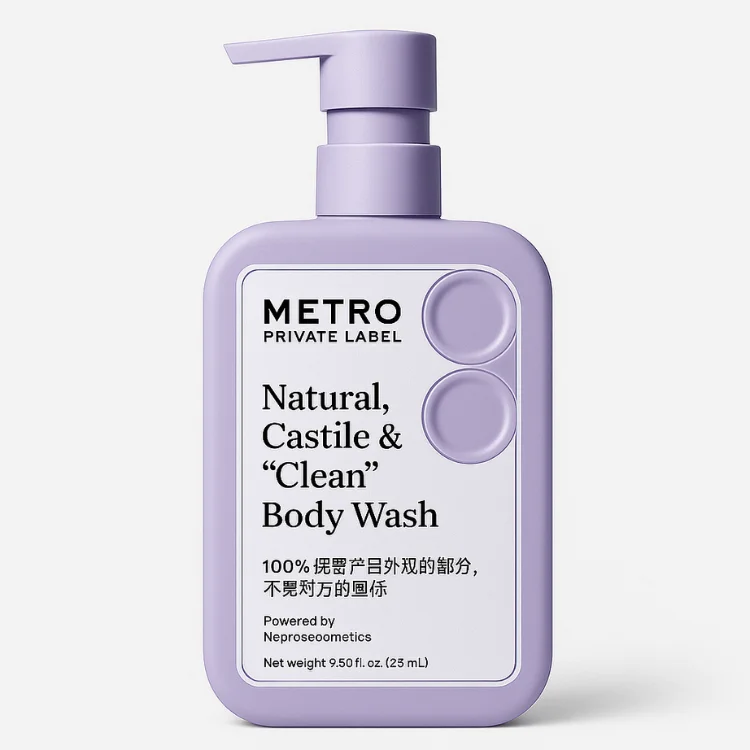
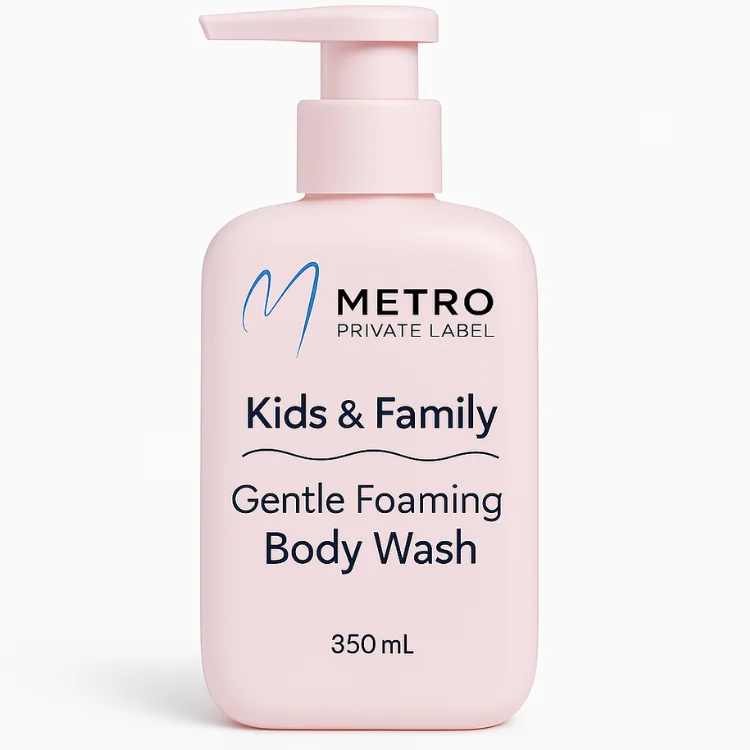
Get Your Custom Skincare Solution Today!

Don’t wait—fill out the form and let our team create the perfect skincare solution for your brand. Expect a personalized quote within 24 hours and start building your brand’s success now!

Submit Your
Private Label Skin Care Request

Fill out this form with your detailed needs and our customer support team will contact you shortly. We will assign a professional agent to follow up on your project and provide personalized assistance.

To get the fastest response, submit your inquiries using the form. If you encounter any issues with submission, you can also email us directly at info@metroprivatelabel.com .

*Metro Private Label takes your privacy very seriously. All information is only used for technical and commercial communication and will not be disclosed to third parties.
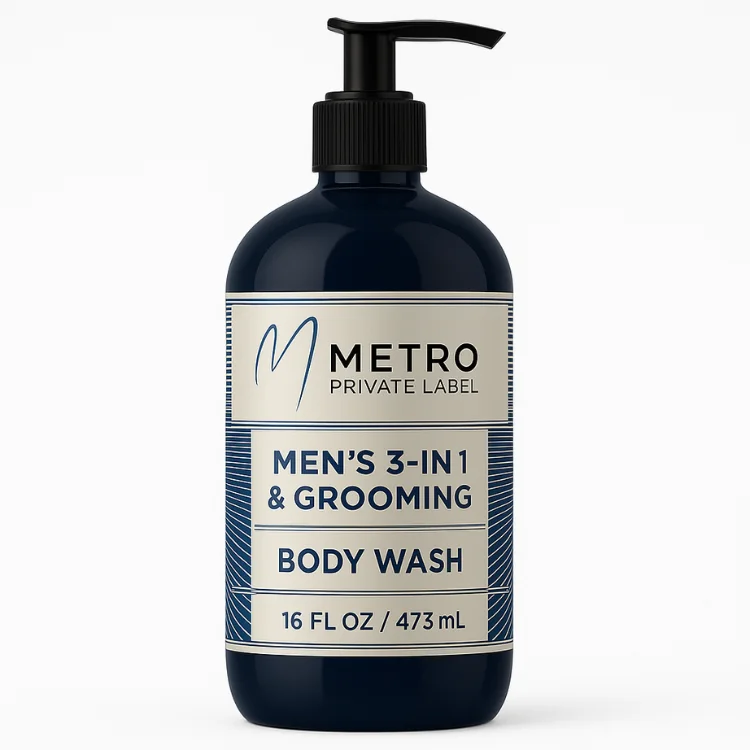
Submit Your
Private Label Skin Care Request

Fill out this form with your detailed needs and our customer support team will contact you shortly. We will assign a professional agent to follow up on your project and provide personalized assistance.

To get the fastest response, submit your inquiries using the form. If you encounter any issues with submission, you can also email us directly at info@metroprivatelabel.com .

*Metro Private Label takes your privacy very seriously. All information is only used for technical and commercial communication and will not be disclosed to third parties.