Your Trusted Sheet Mask Manufacturer
We help skincare brands develop market-ready products with reliable formulations, professional packaging, and scalable manufacturing support—so you can launch confidently and grow your product line with a stable supply chain.
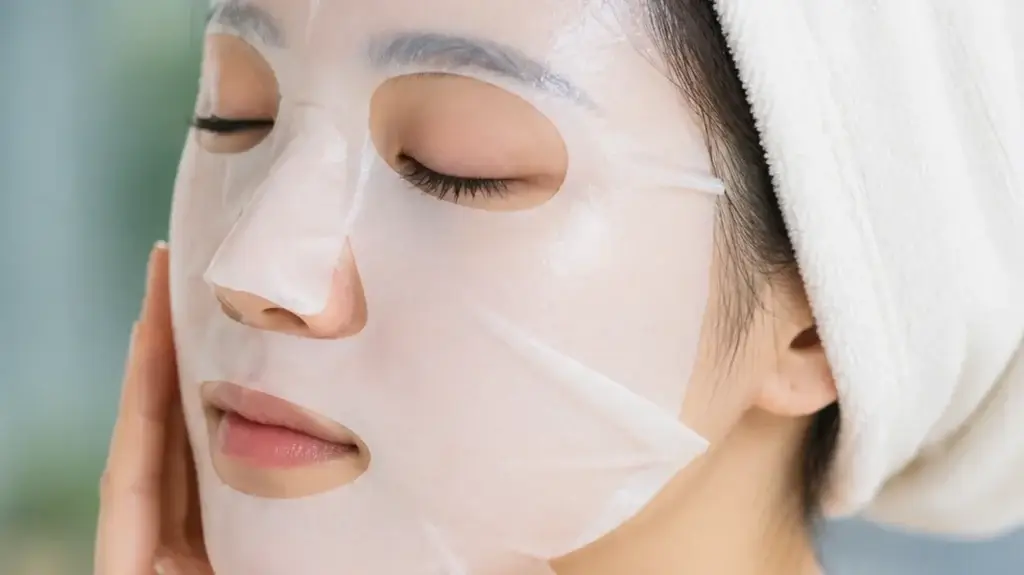

Private Label Sheet Mask
At Metro Private Label, we understand that a successful shampoo is never just about cleansing hair. For the brands we work with, it is about solving a clear hair or scalp concern, creating a formula that customers can feel working from the first wash, and building a product that has real repeat-purchase potential. That is why we develop our private label shampoo solutions around the types consumers are already actively buying, from anti-dandruff and scalp care to hydrating, repair, volumizing, sulfate-free, and hair growth-focused formulas.
We pay close attention to what is happening in the real market. We study top-selling shampoo directions on Amazon, Google Shopping, salon retail, and premium beauty channels to understand what customers are actually responding to. That helps us create shampoo concepts that are not only trend-aware, but commercially practical for brands that want to launch with more confidence. Whether your target customer is looking for moisture, scalp balance, bond repair, color protection, or a gentler sulfate-free washing experience, we help you shape the formula direction in a way that fits both your positioning and your sales channel.
As your manufacturing partner, we do more than produce shampoo in a bottle. We help you build a product that feels market-ready from the start. From formula texture, fragrance direction, and active ingredient positioning to bottle selection, label layout, carton matching, and compliance document support, we help bring the full product together in a way that is easier for your brand to launch, present, and scale. Whether you are building a hero shampoo SKU for Amazon, a clinic-oriented scalp care line, or a salon-style repair product with a more premium look, we work with you to turn that idea into a shampoo that is easier to sell and easier to grow.

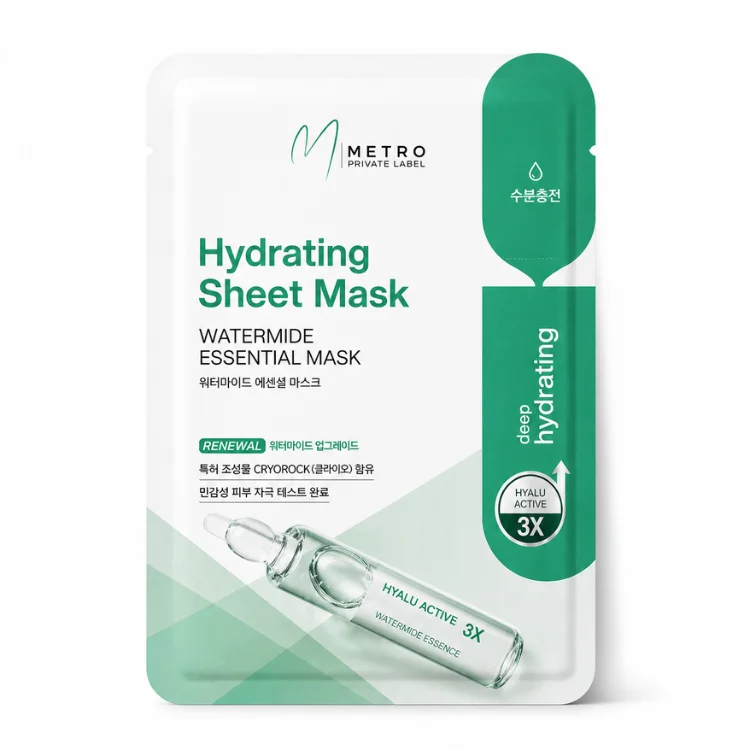
Hydrating Sheet Mask
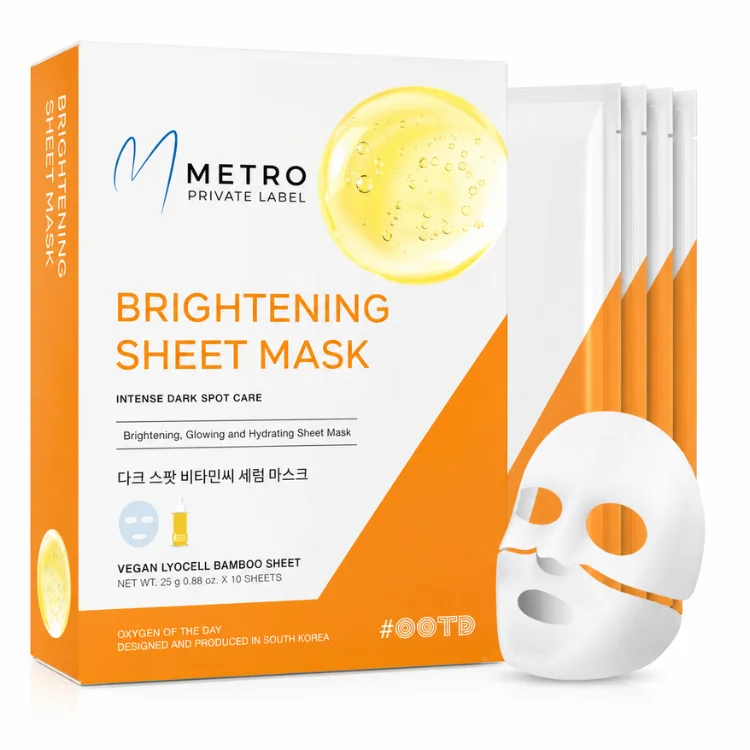
Brightening Sheet Mask
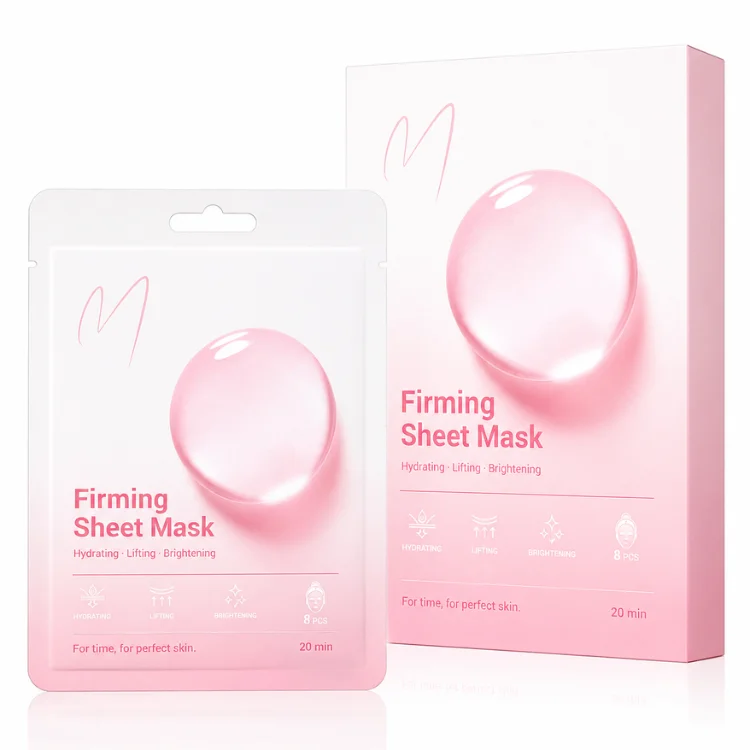
Collagen / Firming Sheet Mask
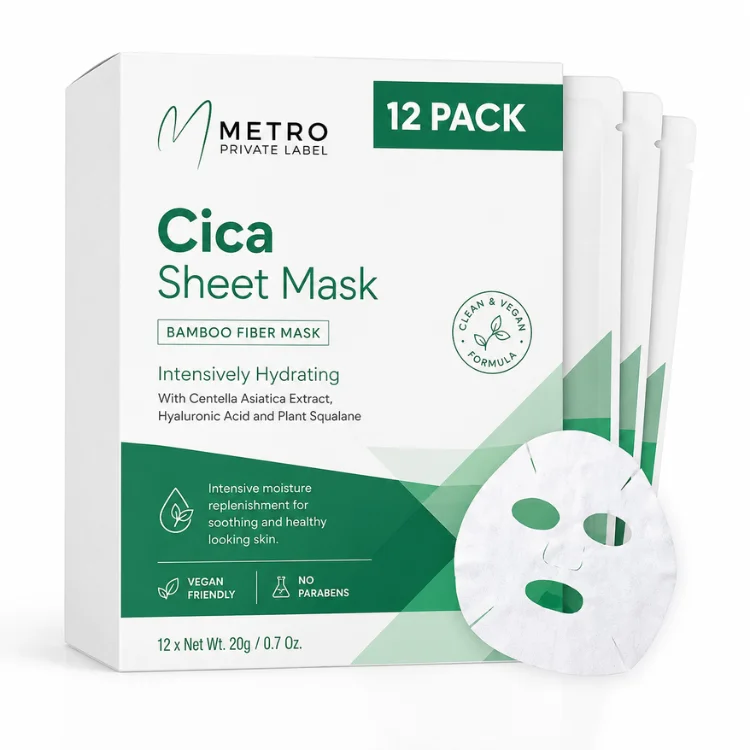
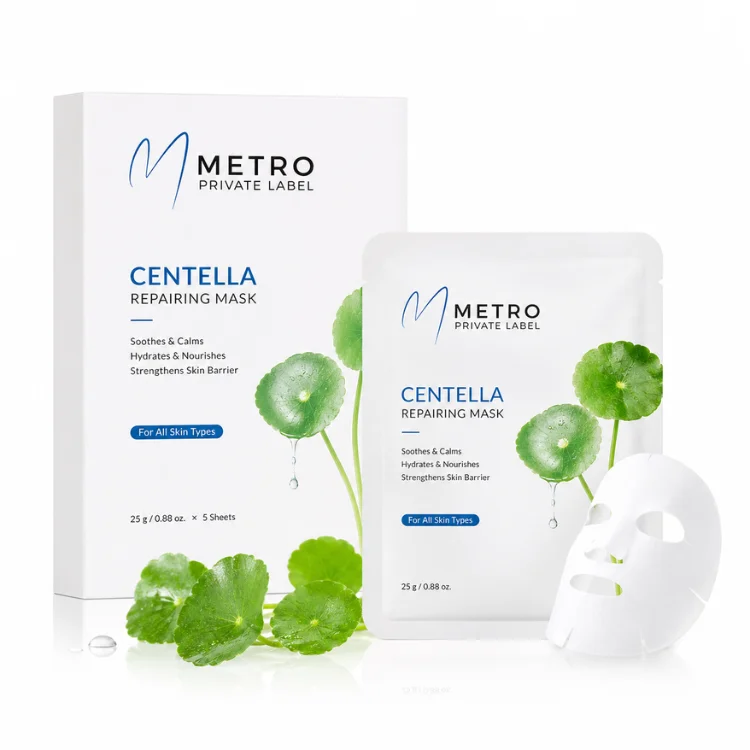
Soothing / Cica Sheet Mask
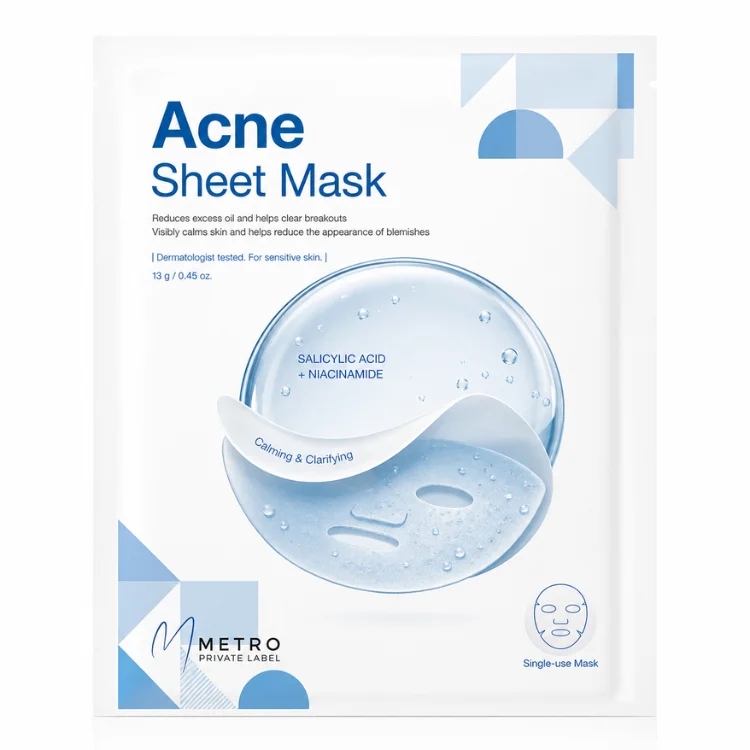
Acne / Tea Tree / Charcoal Sheet Mask
Nourishing / Food-Based Sheet Mask
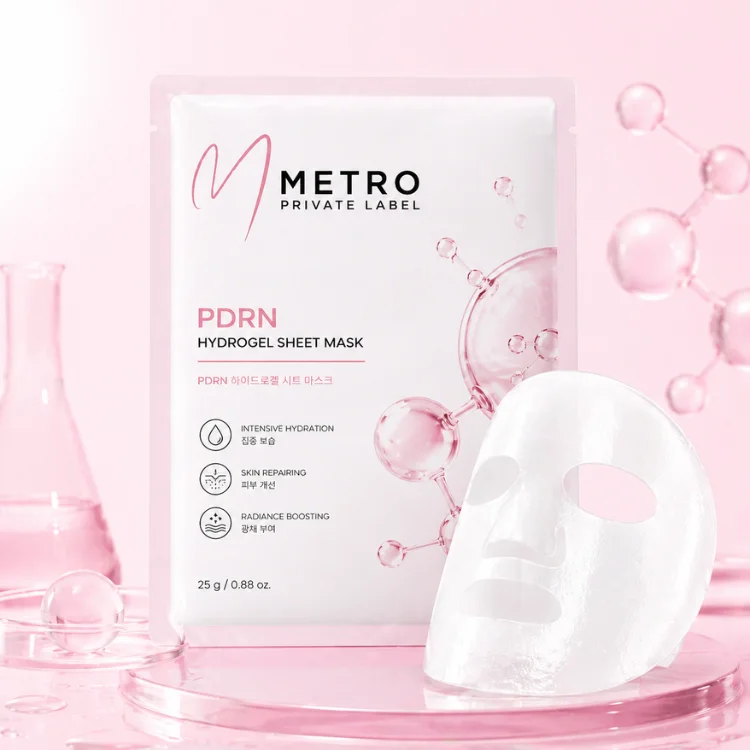
Hydrogel Sheet Mask

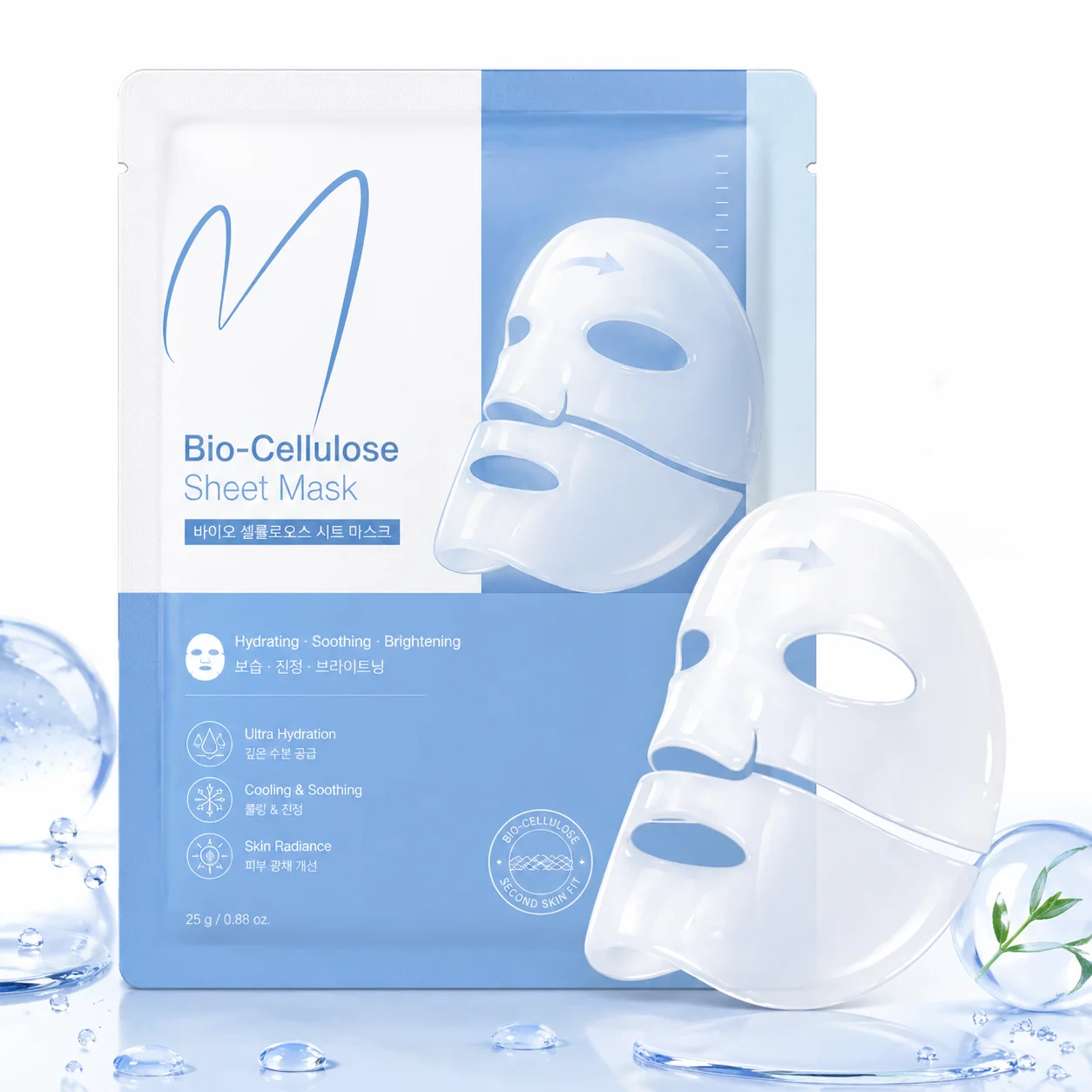
Bio-Cellulose / Professional Sheet Mask
Build a Private Label Sheet Mask Line That Actually Sells
At Metro Private Label, we don’t see sheet masks as just a “simple SKU.” We see them as one of the fastest-moving, most competitive categories in skincare—where the right concept can drive repeat purchases, and the wrong one gets ignored after one use. In this space, a sheet mask only works when the formula, material, and positioning match how your customers actually use it.
That’s why we don’t approach private label sheet masks as generic products. We help you define the right direction based on your sales channel and audience—whether that’s a hydration-focused mask for Amazon bundles, a brightening SKU for TikTok-driven brands, a soothing repair mask for clinics, or a premium hydrogel line for higher-end positioning. From serum texture and active ingredients to mask fabric and packaging format, every decision is made around how the product will sell—not just how it looks on paper.
We’ve seen many brands underestimate this category. A mask that feels too sticky, too dry, or doesn’t fit properly will not drive repeat orders. A formula that sounds good but doesn’t deliver a clear “after-feel” will struggle to stand out. That’s why we guide you early—so your product is not only manufacturable, but also more realistic to scale.
As your manufacturing partner, we focus on building sheet mask products for real commercial use. Whether you are launching a hero SKU for e-commerce, creating a treatment mask for clinic use, or expanding into a multi-SKU mask line, we support you across formula direction, sampling, packaging coordination, and production planning. Our goal is simple: help you launch a sheet mask line that is easier to position, easier to produce, and easier to grow.
Our 8 Core Private Label Sheet Mask Types
Hydrating Sheet Mask: This is the core, high-volume SKU built around daily hydration. It’s the easiest entry point for Amazon sellers and brands looking for strong repeat usage.
Brightening Sheet Mask: Focused on glow and tone improvement, usually built around Vitamin C or Niacinamide. Works well for e-commerce brands targeting visible results.
Collagen / Firming Sheet Mask: A more anti-aging direction designed for smoother, firmer-looking skin. Suitable for brands aiming at higher-value positioning.
Cica Soothing Sheet Mask: Built for sensitive skin and post-treatment calming. A strong choice for clinics and brands targeting repair-focused skincare.
Tea Tree / Charcoal Acne Sheet Mask: Designed for oil control and acne-prone skin. Popular with younger audiences and fast-moving online channels.
Natural / Food-Based Sheet Mask: Inspired by ingredients like rice, honey, aloe, or fruit extracts. Ideal for retail-friendly, affordable, and high-SKU-count product lines.
Hydrogel Sheet Mask: A premium upgrade with better adhesion and a more luxurious feel. Works well for DTC brands and higher-margin SKUs.
Bio-Cellulose Sheet Mask: A clinic-grade option with strong fit and performance. Suitable for professional use and premium skincare positioning.
MOQ & Production Strategy Built for Real Sheet Mask Launches
We also believe it’s important to be transparent about how sheet mask production actually works—because this category is closely tied to packaging format and batch efficiency.
Our standard minimum order starts at 1,000 boxes, with 5 sheets per box (total 5,000 masks). This structure is designed to balance production feasibility with a lower entry point for brands that want to test the market without overcommitting.
For most of our clients—whether you’re running an Amazon store, launching a DTC brand, supplying clinics, or distributing through retail—this quantity is enough to support a real product launch, not just sampling.
If you’re planning to scale, we can also help you structure your production in stages—from initial launch quantity to larger repeat orders—so your supply stays stable as your sales grow.
Our goal is not just to give you a number. We help you build a sheet mask plan that fits your budget, your sales channel, and your timeline—so you can launch with confidence and scale without disruption.

More Than Just a Private Label Sheet Mask Manufacturer
At Metro Private Label, we don’t just produce sheet masks—we help you build products that people actually want to use again. In this category, success is not about having “a mask.” It’s about how it feels on the skin, how well it fits, how much essence it holds, and whether customers notice a result after one use. If the mask slides, feels dry, or leaves no impression, customers won’t complain—they simply won’t repurchase. That’s why we focus on making your sheet mask easy to use, easy to position, and aligned with real customer expectations.

Built Around What Already Sells
We don’t ask you to guess what might work. We guide you toward sheet mask types that customers already recognize and buy—like hydrating masks, brightening Vitamin C masks, collagen firming masks, Cica soothing masks, and hydrogel or bio-cellulose upgrades. These are not short-term trends—they are proven categories across Amazon, Sephora-style retail, clinics, and DTC brands. When your product fits into a familiar category, your messaging becomes clearer, your conversion becomes easier, and your repeat purchase becomes more predictable.

Designed for Real Market Launch
Sheet mask production is not just about formula—it’s heavily shaped by packaging and scale. Our standard starting point is 1,000 boxes (5 sheets per box, total 5,000 masks), which allows you to launch with a structured product, not just a test sample. This quantity works well for e-commerce brands preparing bundles, clinics building treatment kits, and distributors testing new SKUs. It gives you enough volume to enter the market properly, while still keeping the initial investment controlled.
Consistency That Protects Your Reviews
In sheet masks, small details matter. If the essence level changes, if the mask fabric feels different, or if the fit is inconsistent, customers notice immediately. And when that happens, reviews drop and returns increase. We focus on keeping your product consistent across every batch—from serum texture to mask material—so your customers get the same experience every time. This is what helps you protect your ratings, reduce complaints, and build a product that can actually scale.
Support That Helps You Move Faster
We know your goal is not just to develop a product—it’s to launch and sell it. That’s why we support you in the areas that usually slow brands down, including formula direction, packaging coordination, labeling guidance, and basic compliance documents. Instead of spending time figuring out production details, you can stay focused on your channel—whether that’s Amazon, Shopify, clinics, or distribution—and move forward with more confidence and speed.
✨ Build a Private Label Sheet Mask Line That Performs in the Real Market
When you work with Metro Private Label, you’re not just choosing a sheet mask manufacturer—you’re working with a team that understands how this product actually performs once it reaches customers. In this category, success isn’t about having a complex formula. It’s about whether the mask feels right, fits well, and delivers a clear result after one use. If the experience is off, customers won’t complain—they simply won’t come back.
Sheet masks are highly experience-driven. Customers notice everything—how well the mask adheres, how much essence it holds, whether it drips, and how their skin feels after removal. If it’s too dry, too sticky, or too ordinary, it won’t drive repeat purchases. That’s why we focus on helping you create sheet masks that customers rely on, not just try once.
Whether you’re launching a high-volume hydrating SKU for e-commerce, a brightening mask for trend-driven channels, a soothing repair mask for clinics, or a premium hydrogel line for brand positioning, we build every project around how your product will actually be used and sold. Details like mask material, serum texture, absorption, and packaging format all directly affect performance—and we help you get these right from the start.
🧪 Formulation Built for Real Product Experience
We don’t rely on generic, one-size-fits-all formulas. Every sheet mask we develop is based on real usage—how it feels during application, how long it stays comfortable on the skin, and how it performs across different environments.
From adjusting serum viscosity to match mask material, to balancing hydration without leaving residue, to ensuring stability during storage and transport, we focus on what your customer actually experiences. We also consider consistency across batches, so your product performs the same way every time it’s used.
Our goal is simple—we help you create a sheet mask that doesn’t just sound good on paper, but feels right in real use.
📦 Packaging & MOQ That Match Real Launch Needs
Sheet mask production is closely tied to packaging and scale. Our standard starting point is 1,000 boxes (5 sheets per box, total 5,000 masks), which allows you to launch with a structured product instead of a small test batch.
This setup works well for Amazon bundles, DTC product launches, clinic treatment kits, and distributor testing. It gives you enough volume to enter the market properly, while still keeping your initial investment manageable.
From pouch materials to box structure and outer cartons, we help you align packaging with your sales channel—so your product arrives safely, presents well, and supports your pricing strategy.
⚙️ A Clear and Efficient Production Process
We keep the process simple and structured, so you always know what comes next. From initial direction and sampling to packaging confirmation and production scheduling, each step is designed to move your project forward without unnecessary delays.
This is especially important if you’re working with launch timelines, seasonal demand, or fast-moving channels like Amazon or TikTok. Whether you’re launching your first SKU or scaling an existing one, we help you stay on track and reduce uncertainty.
🌿 Built for Brands Ready to Launch and Scale
We don’t measure success by production—we measure it by how your product performs after launch. That’s why everything we do is built around repeat use, consistent quality, and scalability.
From the first sample to full production, we focus on helping you create a sheet mask that customers will keep using and keep buying. With Metro Private Label, your sheet mask line is not just manufactured—it’s built to perform, built to scale, and built to support your growth.
FAQs Sheet Mask
For your convenience, we’ve gathered the most commonly asked questions about our Sheet Mask. However, should you have any further queries, please don’t hesitate to reach out to us.
1. What types of Sheet Mask can you manufacture?
We focus on the formats that actually sell in today’s market—such as moisturizing Sheet Mask s, lip butter textures, tinted Sheet Mask s, peptide treatments, SPF Sheet Mask s, overnight lip masks, natural/organic options, and men’s Sheet Mask . Instead of offering endless variations, we guide you toward product types that already have proven demand and are easier to position and scale.
2. Can you customize the formula based on our brand positioning?
Yes, that’s a big part of what we do. We don’t just adjust ingredients—we help you align texture, finish, and performance with your target customer. Whether you want something lightweight for daily use, richer for repair, or more premium with actives like peptides, we’ll help you shape a product that fits your channel and pricing strategy.
3. What’s your MOQ for private label Sheet Mask ?
For standard 5g stick Sheet Mask , our MOQ typically starts at 10,000 units per SKU. This is mainly due to packaging and production batching requirements—it’s also the common industry standard. If you’re looking for a lower starting point, we can explore jar formats (like 15g), which usually start from around 3,000 units.
4. Why is the MOQ higher compared to other skincare products?
Sheet Mask is heavily driven by packaging. Stick components usually require large minimum orders, and production batches need to be stable for consistent filling and quality. Starting at the right scale helps ensure your product performs well, maintains consistency, and supports a workable cost structure from the beginning.
5. How long does it take to go from sampling to production?
In most cases, sampling takes around 10–14 working days, including stability observation. Once everything is confirmed, production usually takes about 4 weeks. We keep the process structured so you can plan your launch timeline with more confidence.
6. Can you help with packaging selection and coordination?
Yes. Sheet Mask is not just about formula—the packaging format (stick vs jar) directly affects your MOQ, cost, and user experience. We help you choose packaging that fits your product direction, sales channel, and price positioning, and we coordinate sourcing, labeling, and compatibility.
7. Do you offer stock formulas or fully custom development?
We support both. If you want to move fast, we can start from proven base formulas and adjust them to fit your brand. If you’re building something more specific, we can develop a custom formula from scratch. We’ll guide you based on your timeline, budget, and goals.
8. How do you ensure product consistency across batches?
Consistency is critical in Sheet Mask because customers notice even small differences in texture and performance. We control raw materials, formulation structure, and filling processes to make sure your product feels the same across every batch—so your reviews and customer trust stay stable.
9. Can you support compliance and documentation for our market?
Yes. We provide the necessary documentation such as INCI lists, MSDS, COA, and labeling guidance based on your target market. Whether you’re selling on Amazon, Shopify, or into EU/US markets, we help you avoid common compliance issues that can slow down your launch.
10. Do you work with international clients? How does the process work?
We work with brands globally. Once your formula and packaging are confirmed, we handle production, quality checks, and coordinate shipping through our logistics partners. We also support documentation for customs and import requirements, so you can focus on selling while we manage the supply side.
What stood out to us was how practical and market-focused Metro Private Label was from the beginning. They didn’t just offer formulas—they helped us choose the right sheet mask type based on our target audience and pricing strategy. The sampling process was clear, and the final product felt exactly like what we had in mind for our brand.
Emma Clarke, Founderfrom United Kingdom
We move fast in our business, so we needed a supplier who could keep up. Metro Private Label understood that immediately. They guided us toward a hydrating and brightening sheet mask combination that fits perfectly into our Amazon bundles. Communication was quick, and production timelines were realistic, which made scaling much easier.
Jason Miller, E-commerce Brand Operatorfrom United States
As a clinic, we needed sheet masks that are gentle, reliable, and suitable for post-treatment use. Metro Private Label helped us develop a soothing and repair-focused mask that fits well into our treatment programs. Our clients noticed the difference, and it has become a regular part of our aftercare routine.
Sophie Dubois, Clinic Ownerfrom France
We were looking for ready-to-sell sheet mask options that didn’t require a long development cycle. Metro Private Label gave us clear product suggestions and pricing from the start, which helped us make decisions quickly. The quality has been consistent, and it’s been easy to reorder based on our sales performance.
Luca Bianchi, Distributorfrom Italy
What we appreciated most was their ability to translate our ideas into something practical. We had a clear concept, but Metro Private Label helped refine the formula, packaging, and positioning so everything worked together. The final sheet mask line feels cohesive and ready for long-term growth, not just a one-off launch.
Hannah Schneider, Product Managerfrom Germany






Metro Private Label in Numbers
Happy Clients
0 +
Million-dollar Buyers
0 +
Formulation
0 +
Professional Staffs
0 +
Your Ultimate Guide to Sheet Mask
If you’re planning to launch a private label Sheet Mask —whether it’s your first entry product or an expansion into a high-frequency category—you’re not just choosing a simple skincare item. You’re stepping into one of the most competitive yet repeat-driven segments in the entire beauty market. Sheet Mask is a product customers use daily, often multiple times, which means success is not defined by how complex the formula is, but by how naturally it fits into everyday routines. When developed correctly, a Sheet Mask becomes a habit product rather than a trial product, helping brands build consistent repeat sales instead of relying on constant new launches.
Over the years, we’ve seen Sheet Mask evolve from a basic moisturizing item into a highly segmented category across e-commerce, DTC brands, retail shelves, and professional channels. At Metro Private Label, we’ve observed that the brands that scale successfully are not necessarily the ones with the most “innovative” ideas, but the ones that align product type, texture experience, packaging format, pricing logic, and production strategy from the very beginning. Sheet Mask may look simple, but in reality, it is extremely sensitive to execution. Small details—such as how smoothly it glides, how stable it feels across temperatures, or how well the packaging fits daily use—can determine whether customers repurchase or switch.
This guide is built from what we’ve learned working on Sheet Mask projects across different markets and customer types. Instead of focusing only on ingredients or trends, we want to show how Sheet Mask products actually perform in real commercial environments. Decisions like choosing the right format for your sales channel, balancing texture with long-term comfort, selecting packaging that survives shipping and daily use, planning MOQ based on realistic production constraints, and aligning positioning with pricing all directly impact whether your product can launch smoothly and scale over time. Our goal is to help you see Sheet Mask not as a simple SKU, but as a product that requires the right structure behind it to truly succeed.
Table of Contents
How to Choose the Right Sheet Mask Type for Your Market
When I approach a sheet mask project, I don’t see it as a simple product decision—I see it as a positioning decision that will affect everything from how the product is marketed to whether customers come back and buy it again. In my experience, the brands that get this step right are not necessarily the ones with the most complex formulas, but the ones that understand how their product fits into a real market context. Choosing the right sheet mask type early creates clarity, reduces trial and error, and makes every later decision more efficient and more aligned.
Start With How the Product Will Be Sold
The first thing I always look at is not the formula, but the sales environment. A sheet mask is not experienced the same way across different channels, and ignoring this difference is where many products lose direction. When a product is sold through Amazon or fast-paced e-commerce platforms, it needs to communicate its purpose immediately. The customer often decides within seconds whether the product is relevant, which means the type of mask—hydrating, brightening, or firming—must be instantly recognizable and easy to understand. In these environments, the product also needs to deliver a quick, noticeable effect, because the expectation is built around speed and convenience.
On the other hand, when I look at clinic or professional settings, the logic changes completely. Here, the sheet mask is not a standalone product but part of a broader treatment system. Customers are not just looking for a quick result; they are looking for safety, consistency, and compatibility with their skin condition. In this case, soothing or repair-focused masks make more sense because they support recovery and long-term care. By defining the sales channel first, I can avoid building a product that feels disconnected from the way it will actually be used.
Understand What Your Target Customer Already Expects
I’ve learned that customers rarely approach a sheet mask with an open mind—they come with expectations shaped by what they’ve already seen and used. This is why understanding those expectations is more valuable than trying to introduce something entirely new. In mass-market channels, customers tend to look for familiar benefits such as hydration and brightening, because these are easy to understand and easy to trust. A hydrating mask, for example, doesn’t require much explanation; the customer already knows when to use it and what kind of result to expect.
In more specialized environments, such as clinics or advanced skincare brands, the expectation shifts toward function and reliability. Here, customers are more aware of skin sensitivity, post-treatment needs, and barrier repair, so they naturally gravitate toward calming or restorative masks. When I define the product type, I try to align it with these existing mental models rather than forcing the customer to learn something new. This makes the product easier to accept and easier to integrate into their routine.
Match Product Type to Real Usage Behavior
One of the most important things I consider is how often and in what context the product will actually be used. A sheet mask may look appealing in concept, but if it doesn’t fit into a realistic usage pattern, it will struggle to build repeat demand. For example, hydration-focused masks tend to perform well because they can be used frequently without much consideration. They become part of a routine rather than a special treatment. In contrast, repair or soothing masks are often used at specific moments, such as after skin irritation or professional treatments, which gives them a different kind of value.
When I evaluate a product direction, I always ask myself whether the customer will instinctively know when to use it. If the answer is unclear, then the product may require too much explanation, which creates friction in both marketing and usage. A strong sheet mask concept is one that fits naturally into the customer’s behavior, making it easy to adopt and repeat over time.
Define the Direction Before Moving Into Development
I’ve seen many projects become unnecessarily complicated because the product direction was not clearly defined at the beginning. When too many decisions are made at once—formula, ingredients, packaging, positioning—it becomes difficult to create a product that feels cohesive. That’s why I always focus on locking in the product type first. Once the direction is clear, every other element becomes easier to align.
For example, if the goal is to create a hydrating mask, the formula can focus on lightweight, fast-absorbing hydration, the mask material can be selected for comfort and adherence, and the packaging can emphasize daily use and convenience. Each decision supports the same objective, which creates a more consistent product experience. Without this clarity, it’s easy to end up with a product that tries to do too many things at once and doesn’t fully satisfy any of them.
Build Around Market Reality, Not Assumptions
Over time, I’ve realized that the biggest gap between a concept and a successful product is often the difference between assumption and reality. It’s easy to design a sheet mask based on what seems appealing in theory, but real success depends on how well the product matches actual market behavior. Customers don’t evaluate a sheet mask in isolation—they compare it to what they’ve already used, what they see in stores, and what they expect from the category.
When the product type aligns with these real-world references, everything becomes more intuitive. The messaging feels natural, the product is easier to understand, and the customer is more likely to trust it. This alignment is what ultimately supports stronger positioning and repeat purchase. For me, choosing the right sheet mask type is not just a starting point—it’s the foundation that determines whether the product can move from an idea into something that performs consistently in the market.
What Actually Drives Repeat Purchase in Sheet Masks
When I analyze why some sheet masks become repeat purchases while others are used once and forgotten, I always come back to one core idea: customers don’t buy sheet masks for ingredients alone, they buy them for the experience. In this category, the decision to repurchase is often made subconsciously, based on how the product feels during use and how the skin looks and feels afterward. A sheet mask doesn’t need to be the most advanced formula on paper, but it does need to deliver a consistent, comfortable, and satisfying experience every single time it is used.
Fit and Adhesion Shape the Entire User Experience
The first moment a customer applies a sheet mask sets the tone for everything that follows. I’ve seen many products fail simply because the fit is off. If the mask doesn’t align well with the face, if it lifts around the nose or chin, or if it requires constant repositioning, the user immediately becomes aware of the inconvenience. That small friction breaks the sense of relaxation that sheet masks are supposed to create.
When the fit is right, the experience feels effortless. The mask stays in place, follows the contours of the face, and allows the user to move around without concern. This creates a sense of ease that customers often don’t consciously notice—but they remember it when deciding whether to use the product again. In my experience, a well-fitting mask is not just a technical detail; it is one of the strongest contributors to repeat purchase.
Essence Quantity and Distribution Influence Perceived Quality
I’ve learned that customers are extremely sensitive to how much essence is inside the mask, even if they don’t articulate it clearly. When the mask feels dry or unevenly soaked, the product immediately feels low value. On the other hand, when there is too much liquid and it starts dripping or pooling, the experience becomes messy and uncomfortable.
The ideal balance is when the mask feels fully saturated but controlled, allowing the essence to stay in contact with the skin throughout the application without causing inconvenience. Even distribution is just as important as total quantity. If some areas feel rich while others feel dry, the overall experience becomes inconsistent. When this balance is achieved, the product feels more refined and reliable, which naturally increases the likelihood of repeat use.
Comfort During Wear Determines Whether the Product Feels Enjoyable
One factor I always pay close attention to is how the mask feels during the 10 to 15 minutes it is worn. This is where many products quietly lose their chance at repeat purchase. If the serum feels sticky, heavy, or suffocating, the user may complete the session but will not look forward to doing it again. The same applies if the mask causes slight irritation or discomfort, even if it is not severe enough to be considered a problem.
When the texture is balanced—light enough to feel breathable, but still nourishing—the experience becomes something the customer associates with relaxation. This emotional response is subtle but powerful. A sheet mask that feels comfortable during use becomes part of a routine, while one that feels slightly unpleasant becomes something the customer avoids.
The After-Feel Is What Customers Remember Most
In many cases, the decision to repurchase is made immediately after the mask is removed. I’ve found that the after-feel is often more important than the formula itself, because it is the last impression the product leaves. If the skin feels hydrated, smooth, and refreshed without any heaviness or residue, the experience feels complete. The customer doesn’t need to think about whether the product worked—they can feel it.
However, if the skin feels sticky, overly coated, or requires additional steps to remove residue, that final impression becomes negative. Even if the ingredients are high quality, that discomfort can outweigh the perceived benefits. The after-feel needs to strike a balance between nourishment and cleanliness, leaving the skin feeling cared for but not burdened.
Small Friction Points Quietly Reduce Repeat Purchase
One of the most important insights I’ve gained is that repeat purchase is rarely lost because of a single major issue. Instead, it is reduced by small friction points that accumulate over time. A mask that slides slightly, a serum that feels just a bit too sticky, or a fit that is slightly inconvenient may not generate complaints, but these details affect how the product is remembered.
Customers often don’t analyze these factors—they simply choose a different product the next time. This is why attention to detail is so critical in this category. Eliminating small points of discomfort can have a much larger impact on repeat purchase than adding new features or ingredients.
Consistency Builds Long-Term Trust
Even when the first experience is positive, repeat purchase depends on consistency. I’ve seen products lose customer trust because the second or third use feels slightly different from the first. Variations in essence level, mask material, or texture can create uncertainty, and once that trust is lost, it is difficult to regain.
When the product performs the same way every time, it becomes reliable. Customers don’t need to think about it—they know what to expect. Over time, this consistency turns a product from something they try into something they depend on. In a category like sheet masks, where many options are available, reliability is often what separates a repeat purchase product from one that is easily replaced.
Repeat Purchase Comes From Alignment, Not Complexity
Ultimately, what drives repeat purchase is not how advanced or complex the product is, but how well all the elements work together. Fit, essence, comfort, after-feel, and consistency each play a role, but it is their alignment that creates a product customers want to return to. When everything feels right, the product becomes easy to use, easy to trust, and easy to remember. That is what transforms a single purchase into a habit.
Understanding Sheet Mask Materials
When I evaluate a sheet mask, I rarely separate the formula from the material, because in real use, the customer experiences both as one. The same serum can feel refreshing, heavy, effective, or disappointing depending entirely on the sheet it is paired with. Over time, I’ve learned that material is not just a technical choice—it directly shapes how the product performs, how it is perceived, and where it sits in the market. A well-matched material enhances the formula and strengthens positioning, while a mismatch can quietly undermine the entire product, even if the ingredients are strong.
Non-Woven Masks and the Reality of High-Volume Production
When I work with products designed for broad distribution, I often begin with non-woven materials because they represent the most practical balance between cost, scalability, and functionality. These masks are widely used in the market, not just because they are affordable, but because they are flexible in production and compatible with a wide range of formulations. From a manufacturing perspective, they are efficient to cut, fold, and saturate, which makes them suitable for large batch production and stable supply.
What I pay close attention to, however, is the variation within this category. Not all non-woven masks feel the same. Differences in fiber density, thickness, and softness can significantly affect how the mask sits on the skin. A thinner sheet may feel lighter but struggle to hold enough essence, while a thicker one may hold more liquid but feel heavier and less breathable. I also consider how evenly the fibers absorb and release the serum, because uneven distribution can create areas that feel dry or overly saturated. When these details are balanced correctly, a non-woven mask can deliver a reliable and comfortable experience, even at a more accessible price point.
Hydrogel Masks and the Shift Toward Controlled Performance
When I move into hydrogel materials, I start thinking less about cost efficiency and more about control and refinement. Hydrogel behaves very differently from traditional sheet materials. Instead of simply absorbing liquid, it integrates the serum within its structure, which changes how the product interacts with the skin. The contact tends to be more uniform, and the mask feels cooler and more stable during use.
From a user experience perspective, I find that hydrogel masks reduce many of the small inconveniences that customers notice with other materials. There is less slipping, less dripping, and a more consistent level of hydration across the face. At the same time, the structure of the material creates a sense of precision, which naturally shifts the product into a more premium space. However, this also means that expectations are higher. Customers who choose hydrogel are often more aware of texture, fit, and overall performance, so every element of the product needs to feel intentional. When the material, formula, and positioning align, hydrogel can create a noticeably more polished experience.
Bio-Cellulose Masks and the Role of Precision Fit and Moisture Retention
When I evaluate bio-cellulose masks, I see them as one of the most performance-oriented materials available in this category. The structure of bio-cellulose allows it to conform very closely to the skin, almost like a second layer, which creates a strong sense of contact and immersion. This close fit is not just about comfort—it also affects how the serum is delivered, allowing for more consistent and prolonged interaction with the skin.
What stands out most to me is how well bio-cellulose retains moisture. Instead of drying out quickly, the material holds the essence and releases it gradually, which creates a more sustained experience over time. This is why it is often associated with high-end or professional applications. At the same time, I recognize that this level of performance requires careful alignment with the rest of the product. If the serum is not well balanced, or if the packaging does not support the premium positioning, the material alone cannot carry the experience. When everything is aligned, however, bio-cellulose creates a sense of quality that is immediately noticeable.
How Material Influences Product Perception and Market Position
Over time, I’ve come to see material as one of the clearest signals of how a product will be perceived. Customers may not always know the technical name of the material, but they immediately feel the difference. A non-woven mask tends to be associated with everyday use and accessibility, hydrogel suggests a more refined and premium experience, and bio-cellulose signals a higher level of performance and care.
What I always keep in mind is that this perception needs to match the overall concept of the product. If the material feels too basic for a premium positioning, or too advanced for a simple, everyday SKU, the product can feel inconsistent. This kind of mismatch is often subtle, but it affects how customers interpret value. When the material aligns with the formula, packaging, and price point, the product feels more coherent, which makes it easier for customers to understand and trust.
Material Selection as a Foundation for Consistency and Repeat Use
Beyond initial perception, I also think about how the material performs over repeated use. Sheet masks are not just evaluated once—they are compared over time, often against other products in the same category. If the material behaves inconsistently, if it stretches, tears, or fails to hold essence properly across different batches, customers will notice. This affects not only their experience but also their willingness to repurchase.
When I select a material, I consider how stable it is during storage, how it reacts to different formulations, and how it performs across production cycles. Consistency is what turns a good first impression into long-term trust. A sheet mask that feels the same every time creates reliability, and reliability is what supports repeat purchase.
Seeing Material as Part of the Overall Experience
In the end, I don’t see sheet mask material as an isolated component. I see it as part of a larger system that includes the formula, the packaging, and the intended use. The material is what connects all of these elements and translates them into a real, physical experience for the customer.
When the material is chosen carefully, it enhances everything else. It helps the formula perform more effectively, supports the product’s positioning, and creates a smoother, more enjoyable experience. This is why I treat material selection as a foundational decision, not just a technical one. It’s one of the key factors that determines whether a sheet mask feels forgettable or becomes something customers return to again and again.
How Ingredient Selection Affects Market Perception
When I think about ingredient selection in sheet masks, I don’t start from the lab—I start from the customer’s mind. In reality, most customers are not comparing full INCI lists or evaluating formulation complexity. They are reacting to a few familiar signals that help them quickly decide whether a product is relevant to them. This is why I see ingredients not just as functional components, but as a language. The way I choose and present ingredients determines how quickly the product is understood, how much trust it builds, and how easily it fits into the customer’s decision-making process.
Familiar Ingredients Create Immediate Clarity and Trust
Over time, I’ve noticed that most consumers consistently recognize only a limited group of ingredients, and these ingredients carry very strong associations. Hyaluronic Acid is almost automatically linked to hydration, Vitamin C to brightening, Collagen to firmness, and Centella (Cica) to soothing and repair. When I build a product around these ingredients, I’m not just defining its function—I’m giving the customer a clear and immediate understanding of what to expect.
This clarity is extremely valuable because it reduces the effort required to make a purchase decision. The customer doesn’t need to interpret complex claims or unfamiliar terminology. Instead, they rely on what they already know, which creates a sense of confidence. In contrast, when a product is built around less familiar ingredients without clear context, it often requires more explanation. Even if the formulation is technically strong, the lack of recognition can slow down acceptance and make the product feel less accessible.
Ingredient Choice Defines the Product’s Identity in the Market
I’ve come to see ingredient selection as one of the most effective ways to define a product’s identity. A sheet mask built around Hyaluronic Acid positions itself naturally as a hydration-focused product, while one centered on Vitamin C immediately communicates brightness and glow. A formula featuring Centella signals calmness and skin sensitivity, and a collagen-based concept suggests anti-aging and structural support.
What I pay attention to is not just the ingredient itself, but how clearly it aligns with a single, focused message. When the ingredient story is coherent, the product becomes easier to position and easier for customers to remember. If the direction is unclear or tries to cover too many benefits at once, the product loses that clarity. In a competitive category like sheet masks, where customers are exposed to many options at once, a clear identity is often what determines whether a product stands out or blends in.
The Balance Between Recognizable Claims and Technical Depth
While recognizable ingredients are essential for communication, I’ve learned that they are only part of the equation. Behind every well-positioned product, there is usually a more complex formulation that supports stability, texture, and performance. The challenge is finding the right balance between what is visible to the customer and what works behind the scenes.
In my approach, the visible ingredient acts as the anchor of the product story, while the supporting ingredients ensure that the experience matches the expectation. For example, a hydrating mask may highlight Hyaluronic Acid, but its performance depends on how the entire formula is structured to deliver and retain moisture. Customers may not see this complexity, but they feel the result. When this balance is done well, the product feels both simple and effective, which is exactly what most markets respond to.
Ingredient Familiarity Reduces Decision Friction in Competitive Channels
In fast-moving sales environments, I’ve seen how important it is for a product to be understood quickly. Customers often compare multiple options within seconds, and anything that requires too much explanation can become a barrier. Familiar ingredients help reduce this friction because they allow the product to communicate its value immediately.
When a customer sees a Vitamin C mask, they already have a mental reference for what it does. This makes it easier for them to move from awareness to decision without hesitation. The same applies to hydration, soothing, or firming concepts. When the ingredient aligns with a known benefit, the product becomes easier to evaluate, which increases the likelihood of purchase. This is particularly important in e-commerce, where clarity often matters more than complexity.
Avoiding Overloaded Ingredient Stories That Confuse the Customer
One of the patterns I’ve observed is the tendency to overload products with multiple active ingredients in an attempt to make them appear more advanced. While this approach may seem appealing, it often creates confusion. When a product claims to hydrate, brighten, repair, firm, and protect all at once, the core message becomes diluted.
From my perspective, a stronger approach is to focus on a primary function and build a clear story around it. This doesn’t mean limiting the formulation, but rather structuring it in a way that emphasizes one main benefit while supporting it with complementary elements. When the message is focused, the product becomes easier to understand, easier to communicate, and more memorable in the customer’s mind.
Ingredient Selection as a Reflection of Market Positioning
I’ve also found that ingredient choices often reflect where a product sits in the market. More accessible products tend to rely on widely recognized ingredients that emphasize simplicity and familiarity, while higher-end products may incorporate more specialized or refined components to create a sense of differentiation.
However, even in premium positioning, clarity remains important. A product can feel sophisticated without being confusing, as long as the ingredient story is structured in a way that customers can still relate to. The key is ensuring that the ingredient selection aligns with both the price point and the expectations of the target audience. When these elements are aligned, the product feels more cohesive and credible.
Ingredient Selection as the Link Between Perception and Experience
Ultimately, I see ingredient selection as the link between what the customer expects and what they actually experience. The ingredients create the first impression, but the formula determines whether that impression is confirmed during use. When these two aspects are aligned, the product feels trustworthy.
If the ingredient suggests hydration but the skin feels dry afterward, or if the product promises soothing but feels uncomfortable, the disconnect becomes immediately noticeable. This is why I always approach ingredient selection with both perception and performance in mind. When the ingredients are familiar, the message is clear, and the experience matches the expectation, the product becomes easier to accept and more likely to succeed in the market.
The Role of Essence (Serum) in Sheet Mask Performance
When I evaluate a sheet mask in a real-world context, I always come back to one core conclusion: the sheet is the structure, but the essence is the experience. No matter how well the mask fits or how premium the material feels, it is ultimately the liquid formula that determines how the product performs on the skin. The serum defines how the mask feels during application, how it interacts with the skin over time, and how the customer remembers the product afterward. In my experience, many sheet masks fail not because of the material, but because the essence does not deliver the right balance between hydration, comfort, and usability.
Viscosity Controls How the Essence Behaves on the Mask and Skin
One of the first aspects I pay close attention to is viscosity, because it directly affects how the serum moves, holds, and spreads. When the viscosity is too low, the essence behaves almost like water—it moves quickly, tends to drip, and can create an uneven experience where some areas feel saturated while others feel dry. This not only reduces comfort but also gives the impression of poor product quality.
On the other hand, when the viscosity is too high, the serum becomes heavy and less dynamic. It may sit on top of the skin instead of interacting with it, creating a thick, coated feeling that can feel uncomfortable, especially during longer application times. In extreme cases, it can even prevent proper absorption, which affects how effective the product feels.
What I always aim for is a viscosity that allows the essence to stay evenly distributed within the mask while still feeling fluid and smooth on the skin. It should feel controlled but not static, rich but not heavy. This balance is subtle, but when it is achieved, the entire product feels more refined and intentional.
Absorption Speed Shapes the Perception of Effectiveness
Absorption is one of the most misunderstood aspects of sheet mask performance. From what I’ve observed, customers don’t measure effectiveness through technical metrics—they judge it through how the product behaves over time. If the essence absorbs too quickly, the mask may feel like it has “run out” of hydration before the recommended usage time is over. This creates the impression that the product is weak or insufficient.
If the absorption is too slow, the opposite problem occurs. The serum remains on the surface, creating a heavy or sticky layer that can feel uncomfortable and unnatural. Instead of feeling nourished, the skin feels coated, which often leads to dissatisfaction.
The ideal absorption profile, in my experience, is gradual and controlled. The skin should feel continuously hydrated throughout the application, with the essence slowly interacting with the skin rather than disappearing or accumulating. This creates a sense of ongoing performance, which is what customers interpret as effectiveness.
The After-Feel Defines the Memory of the Product
The moment the mask is removed is where the product is truly evaluated. I’ve found that customers rarely analyze what happened during the 10 to 15 minutes of use—they focus on how their skin feels immediately afterward. This after-feel becomes the lasting memory of the product and strongly influences whether they will use it again.
If the skin feels smooth, refreshed, and balanced, the experience feels complete. There is a sense that the product has done its job without creating additional work. However, if the skin feels sticky, greasy, or overly coated, the experience becomes inconvenient. Even if the product delivered hydration, that negative sensation can overshadow the benefits.
What I always aim for is an after-feel that feels clean but nourished. The skin should feel improved, but not burdened. This balance is difficult to achieve, but it is one of the most important factors in determining whether a sheet mask becomes part of a routine or is quickly forgotten.
Hydration Must Be Balanced With Comfort
Hydration is often the central promise of a sheet mask, but I’ve learned that more hydration does not automatically lead to a better experience. In fact, excessive hydration—especially when combined with heavy textures—can reduce comfort and make the product feel overwhelming. This is particularly noticeable in markets where customers prefer lightweight, breathable skincare.
When I design or evaluate a serum, I focus on how hydration is delivered rather than just how much is delivered. The goal is to create a sense of replenishment without creating heaviness. This often involves balancing humectants with other components that control texture and absorption, ensuring that the skin feels hydrated but still comfortable. When this balance is right, the product becomes easier to use regularly, which directly supports repeat purchase.
The Relationship Between Essence and Mask Material
I always consider how the serum interacts with the mask material, because this relationship defines how the product behaves during use. Different materials absorb, hold, and release liquid in different ways, and the same formula can feel completely different depending on the sheet it is paired with.
If the serum is too light for a dense material, it may not be released effectively, leading to a dry or uneven experience. If it is too heavy for a more open material, it may sit on the surface or drip excessively. This interaction is often overlooked, but it is critical to achieving a consistent and comfortable experience.
When the essence and material are properly aligned, the mask feels cohesive. The liquid is distributed evenly, stays in place during use, and interacts with the skin in a controlled way. This creates a sense of quality that customers can feel, even if they cannot explain it.
Stability and Consistency Across Use and Storage
Another aspect I always think about is how the serum behaves over time, not just during the first use. Sheet masks are often stored for extended periods, transported across different climates, and used in varying conditions. If the essence separates, thickens, or changes texture over time, the customer experience becomes inconsistent.
Consistency is especially important because customers expect the same performance every time they use the product. Even small variations can create doubt, and once that doubt appears, it affects trust. When the serum remains stable—maintaining its texture, absorption, and after-feel—it reinforces reliability. This reliability is what turns a product from a one-time purchase into something customers return to.
The Essence as the Core of Product Identity
Ultimately, I see the essence as the element that defines the identity of the sheet mask. It is what the customer feels, what they remember, and what determines whether the product fits into their routine. The sheet provides the structure, but the serum brings the product to life.
When the viscosity, absorption, hydration, and after-feel are all aligned, the product feels complete. It becomes easy to use, easy to trust, and easy to return to. In a category where customers have many options, this alignment is what separates products that are tried once from those that become part of everyday skincare.
Packaging Formats and Their Impact on Sales Channels
When I evaluate sheet mask packaging, I never treat it as a finishing touch. I see it as a structural decision that directly influences how the product is shipped, displayed, handled, and ultimately experienced by the customer. In many cases, packaging determines whether a product arrives intact, whether it feels premium or disposable, and whether it fits naturally into the customer’s routine. I’ve learned that even a strong product can lose its value if the packaging creates friction, while well-designed packaging can elevate a simple product into something that feels reliable and worth repurchasing.
Packaging Must Align With How the Product Is Sold
The first question I always ask myself is where and how the product will be sold, because this shapes every packaging decision that follows. A sheet mask designed for retail shelves needs to attract attention quickly and communicate its purpose within seconds, often through visual clarity and clean structure. In contrast, a product designed for e-commerce needs to prioritize protection and durability, because it will go through multiple handling stages before reaching the customer.
When I think about clinic or professional environments, the expectation changes again. In these settings, packaging is less about visual impact and more about practicality and consistency. The product needs to be easy to store, easy to access, and suitable for repeated use within a structured routine. If the packaging does not match the way the product is sold, it creates a disconnect that customers and buyers notice immediately, even if they cannot fully explain why.
Single-Use Sachets and Their Role in Everyday Usability
Single-use sachets have become the standard format for sheet masks, and I see this as a direct reflection of how customers prefer to interact with the product. The simplicity of opening a single unit, using it once, and discarding it fits naturally into modern skincare habits. From a hygiene perspective, it also reduces concerns about contamination, which is especially important in both personal and professional use.
However, what I pay close attention to is not just the format itself, but how well it is executed. The thickness of the pouch material, the strength of the seal, and the precision of the tear line all affect the experience. If the pouch is too thin, it may be damaged during shipping. If the seal is inconsistent, leakage can occur. If the opening is poorly designed, the user may struggle to remove the mask cleanly. These details may seem small, but they have a direct impact on how the product is perceived. When the sachet feels sturdy, easy to open, and well-sealed, it creates a sense of reliability that supports both first impressions and repeat use.
Multi-Pack Boxes and Their Influence on Perceived Value
When I move from single units to multi-pack boxes, I start thinking about how the product is positioned over time rather than in a single moment. Multi-pack formats naturally suggest continuity, encouraging customers to see the product as part of a routine rather than a one-time treatment. This is particularly relevant in e-commerce, where bundled products often perform better by increasing perceived value and simplifying the purchase decision.
From a structural perspective, I always consider how the box supports both protection and usability. The internal arrangement needs to keep individual sachets organized and protected, while the external structure needs to withstand handling and storage. If the box collapses easily or feels fragile, it can reduce the perceived quality of the entire product. On the other hand, a well-constructed box reinforces the idea that the product is consistent and dependable. In clinic environments, this format also supports program-based usage, where multiple masks are used over a defined period, making the packaging part of the overall treatment experience.
Durability as a Critical Factor in Logistics and Customer Satisfaction
One of the most overlooked aspects of packaging is how it performs during transport. Sheet masks are inherently sensitive because they contain liquid, and this makes them vulnerable to pressure, temperature changes, and movement during shipping. I’ve seen situations where the product itself was well-developed, but the packaging failed to protect it, leading to leakage, deformation, or damaged outer cartons.
In e-commerce, this becomes even more critical because the product often travels long distances and passes through multiple handling points. I always think about how the packaging will behave under these conditions. The strength of the sachet, the rigidity of the box, and the design of the outer carton all contribute to whether the product arrives in perfect condition. From the customer’s perspective, the condition of the packaging is directly linked to their perception of quality. A damaged package can immediately reduce trust, even if the product inside is still usable.
Packaging as Part of the User Interaction
Beyond protection and logistics, I also see packaging as part of the interaction between the product and the customer. The way a sachet opens, how easily the mask can be removed, and how clean the process feels all contribute to the overall experience. If the packaging requires effort, creates mess, or feels inconvenient, it interrupts the sense of ease that sheet masks are supposed to provide.
When the packaging is designed well, it becomes almost invisible. The customer opens it effortlessly, removes the mask without difficulty, and completes the process without thinking about it. This kind of seamless interaction enhances the perception of quality without drawing attention to itself. It is often these subtle details that make a product feel well-designed and considered.
The Relationship Between Packaging and Product Positioning
Over time, I’ve come to understand that packaging communicates value as clearly as the formula itself. A simple, minimal structure can support an accessible, everyday product, while more refined materials and finishes can signal a higher-end positioning. However, what matters most is consistency. If the packaging suggests a premium experience but the product does not deliver it, the mismatch becomes obvious.
When I evaluate packaging, I always consider whether it reflects the intended positioning of the product. The materials, structure, and presentation should all align with the expectations of the target market. When this alignment is achieved, the product feels coherent and easier to understand, which helps build trust from the first interaction.
Packaging as an Integrated Part of Product Strategy
In the end, I don’t see packaging as something that is added after development. I see it as an integrated part of the product strategy that influences every stage of the process. It affects how the product is manufactured, how it is transported, how it is displayed, and how it is used.
When packaging is considered early and designed thoughtfully, it supports the product at every step. It ensures that the product arrives in the right condition, feels appropriate for its positioning, and provides a smooth and intuitive user experience. This is what allows a sheet mask to move from a concept into something that works consistently in the real market, across different channels and use cases.
Typical MOQ and Production Considerations
When I discuss MOQ in the context of sheet masks, I always try to move the conversation away from the idea of “minimum quantity” as a restriction and toward understanding it as a reflection of how production actually works. In real manufacturing, MOQ is not decided in isolation—it is shaped by the interaction between formulation batching, packaging supply, filling efficiency, and quality control. Once I started looking at MOQ from this systems perspective, it became much clearer why certain numbers are standard across the industry and why trying to go below them often creates more problems than advantages.
Formula Batching Sets the Foundation for Production Scale
The first factor I always consider is how the essence itself is produced, because this is where the entire process begins. Sheet mask serum is typically manufactured in controlled batches that are designed to maintain consistency in texture, stability, and performance. These batches are not easily scalable down to very small volumes, because the mixing, emulsification, and stabilization processes rely on a certain mass to behave predictably.
From what I’ve observed, when production drops below this threshold, several issues can start to appear. The formula may not homogenize evenly, the viscosity may vary, or the stability over time may become less reliable. These are not always visible immediately, but they affect the long-term performance of the product. This is why I see batching as the technical foundation of MOQ. It ensures that every mask in the production run behaves the same way, which is essential for building trust with the end customer.
Packaging Supply Often Defines the Practical MOQ
Once the formula scale is understood, I always look at packaging, because this is often the factor that ultimately defines the practical MOQ. Sheet masks rely on individual pouches, and these pouches are produced through printing, cutting, and sealing processes that require setup time and material preparation. Packaging suppliers typically operate at fixed minimum quantities because producing very small runs is inefficient and increases the risk of defects.
In many cases, the packaging MOQ is higher than the minimum required for the formula, which means it becomes the limiting factor. I’ve seen situations where brands assume they can produce a smaller quantity based on formulation alone, only to realize that the packaging cannot be sourced at that level. This is why I always consider packaging early in the planning stage. It is not just a design decision—it is a structural constraint that directly affects production volume.
Production Efficiency and Line Stability Influence MOQ Decisions
Another aspect I always take into account is how the production line operates. Filling sheet masks is not a manual process; it is typically done through automated or semi-automated systems that are calibrated for consistency. These systems require a certain run length to stabilize, meaning that very short production runs can lead to inconsistencies in filling volume, sealing pressure, or overall quality.
From my perspective, MOQ helps ensure that the production line operates within its optimal range. When the run is long enough, the process becomes stable, and the variation between units is minimized. This consistency is critical, because even small differences in essence volume or sealing quality can affect how the product performs and how it is perceived by customers. In this sense, MOQ is not just about efficiency—it is about maintaining a standard of quality that can be repeated reliably.
Launch Quantity Must Reflect Real Market Entry Needs
When I think about MOQ from a business perspective, I always connect it to how the product will be introduced into the market. A sheet mask launch is not just about producing units—it is about having enough quantity to support initial sales, marketing efforts, and distribution without running into immediate shortages.
If the launch quantity is too small, it can create limitations. The product may sell out before it gains traction, or there may not be enough inventory to support promotional activities. This can interrupt momentum and make it difficult to evaluate real market demand. On the other hand, when the quantity aligns with MOQ and realistic sales expectations, it creates a more stable foundation. It allows the product to be tested properly, feedback to be gathered, and adjustments to be made without constant supply pressure.
The Relationship Between MOQ and SKU Strategy
I’ve also learned that MOQ becomes more complex when multiple SKUs are involved. Each variation—whether it is a different ingredient focus, scent, or positioning—requires its own production run and packaging setup. This can quickly multiply the total required quantity, especially if each SKU is produced at the minimum level.
Because of this, I always think about how product strategy interacts with MOQ. A focused approach, where one or two core SKUs are developed first, often leads to a more efficient use of production resources. It allows the brand to concentrate volume, maintain consistency, and build a stronger market presence before expanding. When too many SKUs are introduced at once, it can dilute both production efficiency and market impact.
MOQ as a Tool for Ensuring Consistency Over Time
Beyond the initial production, I see MOQ as playing a role in long-term consistency. Once a product is launched, customers expect the same experience every time they use it. This requires the production process to be repeatable, with minimal variation between batches.
When MOQ is aligned with the natural scale of production, it becomes easier to maintain this consistency. The same batching process, the same filling parameters, and the same packaging setup can be used across multiple runs. This continuity reduces the risk of variation and helps build trust over time. In contrast, trying to produce at irregular or inconsistent scales can introduce subtle differences that customers eventually notice.
Understanding MOQ as Part of an Integrated System
In the end, I don’t see MOQ as a standalone number that needs to be negotiated or minimized. I see it as part of an integrated system that includes formulation, packaging, production, and market strategy. Each of these elements influences the others, and MOQ is simply the point where they come into balance.
When I approach it from this perspective, MOQ becomes easier to work with. It provides a framework that supports stable production, consistent quality, and realistic market entry. Rather than limiting possibilities, it helps define a structure within which the product can be developed, produced, and scaled with confidence.
Common Mistakes When Launching a Sheet Mask Product
When I review sheet mask launches that didn’t perform as expected, I rarely find a single obvious problem. What I usually see is a gap between what the product was designed to be and how it is actually used by customers. Sheet masks are simple in appearance, but in practice they are highly sensitive to small details. The difference between a product that gets repurchased and one that is forgotten often comes down to how well those details are aligned. In my experience, the most common mistakes happen when decisions are made based on assumptions rather than real usage behavior.
Focusing Too Much on Concept Without Testing Real Usage
One of the most frequent issues I encounter is when a product is built around a strong concept but is not validated through real usage early enough. It is easy to create a compelling idea based on a trending ingredient or a unique positioning, but that idea only has value if it translates into a comfortable and satisfying experience. I’ve seen masks that look impressive in presentation but feel inconvenient once applied, whether because they slide on the face, dry out too quickly, or leave an uncomfortable residue.
When I think about this stage, I always ask whether the product has been experienced in a realistic context. A concept may seem complete during development, but until it is tested under normal usage conditions, important details remain unknown. The earlier this transition from concept to real use happens, the easier it becomes to identify and correct issues before they affect the final product.
Choosing Ingredients That Are Difficult to Communicate
Another pattern I often notice is the tendency to prioritize technical complexity over clarity. While advanced ingredients can add value, they can also create confusion if they are not easily understood. In a market where customers are exposed to many similar products, the ability to communicate quickly becomes critical. If the ingredient story is too complex or unfamiliar, the product may require more effort to explain, which can slow down decision-making.
From my perspective, ingredient selection should support both performance and communication. When customers recognize an ingredient and associate it with a clear benefit, they feel more confident in their choice. When they do not, they may hesitate or move on to something more familiar. This does not mean avoiding innovation, but it does mean presenting it in a way that feels accessible and relevant.
Underestimating the Importance of Fit and Comfort
Fit and comfort are often underestimated because they are not always discussed directly in product planning. However, they are among the first things a customer notices during use. If a mask does not align well with facial contours, or if it requires constant adjustment, it interrupts the experience and reduces enjoyment.
I’ve found that discomfort does not always lead to immediate complaints. Instead, it quietly reduces the likelihood of repeat use. A mask that feels slightly inconvenient may still be used once, but it is less likely to become part of a routine. This is why I consider fit and comfort as fundamental elements rather than secondary details. When they are right, the product feels effortless; when they are not, the product feels like work.
Ignoring the Relationship Between Material and Essence
Another common mistake is treating the sheet and the serum as independent components. In reality, they function as a system, and their interaction determines how the product performs. I’ve seen cases where a well-formulated essence does not perform as expected because the material does not hold or release it properly. Conversely, a good material can feel ineffective if the serum does not match its characteristics.
When I evaluate a sheet mask, I always consider how these elements work together. The goal is to create a consistent experience where the essence is evenly distributed, remains stable during use, and interacts with the skin in a controlled way. When this relationship is overlooked, the product may feel inconsistent or unbalanced, even if each component is strong on its own.
Overcomplicating the Product With Too Many Claims
It is common to see sheet masks that try to deliver multiple benefits at once, with the intention of making them more appealing. However, I’ve found that this approach often weakens the product’s identity. When too many claims are presented, it becomes difficult for customers to understand what the product is primarily designed to do.
In practice, a clear and focused message tends to perform better. When a product is built around a single, well-defined benefit, it becomes easier to position and easier for customers to remember. This clarity also helps align the formula, packaging, and marketing into a cohesive whole. Complexity can add value, but only when it is structured in a way that supports, rather than obscures, the core purpose.
Overlooking Small Details That Shape the Experience
Many of the issues that affect customer satisfaction are not major flaws, but small details that accumulate over time. The way a sachet opens, how easily the mask unfolds, whether the serum feels balanced after use—these are all subtle factors that influence the overall impression.
What I’ve observed is that customers rarely articulate these details directly. Instead, they form a general impression of whether the product feels smooth and well-designed or slightly inconvenient. Over time, this impression affects their willingness to use the product again. Paying attention to these small interactions can make a significant difference in how the product is perceived.
Misalignment Between Product Design and Market Expectations
Another challenge I often see is a mismatch between the product and the market it is intended for. A sheet mask designed with a premium concept may not resonate if it is introduced in a channel where customers expect simplicity and value. Similarly, a basic product may feel underwhelming in a market that expects a more refined experience.
When I think about this, I always consider how the product fits within its environment. The formulation, material, packaging, and messaging all need to align with what the customer expects in that context. When this alignment is missing, the product can feel out of place, even if it is technically well-developed.
Bridging the Gap Between Design and Real Use
Ultimately, the most important lesson I’ve learned is that the success of a sheet mask depends on how closely the product design matches real usage. Every decision—from ingredient selection to packaging—needs to be evaluated not just in theory, but in practice.
When the gap between design and real use is small, the product feels intuitive and easy to adopt. When that gap is large, the product may struggle to connect with customers, regardless of how strong the initial concept appears. By focusing on real behavior, clear communication, and consistent execution, it becomes possible to avoid these common mistakes and create a product that performs reliably in the market.
How to Build a Sheet Mask Line Instead of a Single SKU
When I think about launching a sheet mask, I rarely see it as a one-time decision. In reality, the brands that grow sustainably are not built around a single product, but around a system of products that work together. A single SKU can create initial traction, but it often has limited room to expand. What I’ve learned over time is that building a sheet mask line is less about adding more products and more about creating a structure that allows customers to return, explore, and stay within the brand. This shift from “one product” to “a connected line” is what turns short-term sales into long-term growth.
Starting With a Core Product That Can Carry the Brand
The first step I always focus on is defining a core product that is strong enough to represent the brand on its own. In most cases, this is a hydration-focused mask, not because it is simple, but because it is widely understood and easy to adopt. Hydration is a universal need, and customers rarely hesitate when they see a product that promises it.
What I pay attention to at this stage is not just the function, but how clearly the product communicates its purpose. The core SKU needs to be immediately understandable, easy to position across channels, and capable of delivering a consistent experience. This product becomes the entry point for customers, and it sets the standard for everything that follows. If this foundation is not strong, expanding into multiple SKUs only multiplies the problem rather than solving it.
Expanding Into Complementary Functions Based on Real Usage
Once the core product is established, I start thinking about how customers actually use it and what additional needs naturally appear. This is where expansion becomes meaningful. Instead of introducing random variations, I focus on complementary functions that fit into the same usage pattern.
For example, after a hydration mask gains acceptance, it often makes sense to introduce a brightening mask for customers looking for visible radiance, or a soothing mask for those dealing with sensitivity or irritation. These additions feel natural because they address different moments rather than competing with the original product. In my experience, expansion works best when each new SKU solves a distinct need that the customer already recognizes, rather than trying to create demand that doesn’t yet exist.
Building a Clear Logic That Customers Can Navigate
As the number of products increases, I always pay close attention to how the line is structured. A common mistake I’ve seen is when brands add multiple SKUs without a clear system, which makes it difficult for customers to understand the differences between them. When products overlap too much in function or messaging, they compete with each other instead of strengthening the overall line.
What I aim for is a clear internal logic where each product has a defined role. Hydration can serve as the base layer of the routine, brightening can address tone and radiance, soothing can focus on comfort and recovery, and repair can support more intensive care. When these roles are clearly separated, the product line becomes easier to navigate. Customers don’t need to compare products in detail—they can quickly identify what they need and how each product fits into their routine.
Designing for Repeat Purchase Rather Than One-Time Use
One of the main reasons I build a product line instead of focusing on a single SKU is to support repeat purchase. A single product may perform well initially, but its usage is often limited to a specific situation. When multiple products are available within the same brand, customers have more reasons to come back.
In practice, this often means creating variation within a consistent framework. A customer might use a hydrating mask regularly, add a brightening mask before events, and rely on a soothing mask when their skin feels stressed. These different use cases create multiple entry points for repeat purchase, all within the same brand. Over time, this builds a stronger relationship between the customer and the product line, rather than a one-time interaction with a single item.
Managing Production Complexity as the Line Expands
While expanding a product line offers clear benefits, I’ve learned that it also introduces operational complexity. Each new SKU requires its own formulation, packaging, and inventory management, which can quickly become difficult to control if not planned carefully.
This is why I always think about expansion in stages rather than launching everything at once. Starting with one or two core products allows for a more stable production process and clearer feedback from the market. As demand becomes more predictable, additional SKUs can be introduced with greater confidence. This approach not only reduces risk but also ensures that each new product is added with a clear purpose rather than as an experiment.
Creating a Cohesive Experience Across All Products
As the line grows, I also focus on maintaining a sense of cohesion across all products. Even though each SKU serves a different function, they should still feel connected. This connection can come from consistent packaging, aligned messaging, or a shared approach to formulation.
From what I’ve observed, customers respond more positively to a product line that feels unified. It becomes easier for them to trust the brand and to explore additional products without hesitation. When the experience is consistent, the transition from one SKU to another feels natural rather than uncertain. This cohesion is what transforms a collection of products into a recognizable and reliable system.
Thinking Beyond the First Launch Toward Long-Term Structure
Ultimately, building a sheet mask line requires thinking beyond the initial launch. The first product is important, but it is only the starting point. What matters more is how that product can evolve into a broader structure that supports ongoing growth.
When I approach product development with this perspective, every decision becomes more intentional. The core SKU is chosen not just for immediate performance, but for its ability to support future expansion. Each additional product is designed to strengthen the system rather than complicate it. Over time, this creates a product line that is easier to scale, easier to manage, and more aligned with how customers actually use sheet masks in their daily routines.
Regulatory and Documentation Basics
When I work on launching a sheet mask into any market, I’ve learned to treat compliance as part of the product itself rather than a separate step. It’s easy to focus on formula, packaging, and positioning, but in reality, none of that can move forward smoothly without the right documentation in place. What I’ve seen repeatedly is that brands don’t fail because their product isn’t good—they struggle because they underestimate how much structure and preparation is required to make that product legally and commercially viable. Once I started looking at regulatory work as a system instead of a checklist, everything became more predictable and easier to manage.
The Ingredient List as the Starting Point of Everything
The first thing I always anchor on is the ingredient list, because it is the backbone of all regulatory work. Every document, every label, and every compliance check traces back to how the ingredients are defined and presented. This is not just about listing components—it is about making sure the ingredients are correctly named, properly ordered, and aligned with international standards.
In my experience, small mistakes at this stage create disproportionate problems later. A misnamed ingredient or an incorrect format can delay approvals, require re-labeling, or even force a product to be reformulated. What I’ve learned is that getting the ingredient list right early saves time across every later step. It becomes the reference point that keeps everything consistent, whether the product is being evaluated for safety, printed on packaging, or reviewed by a distributor.
Documentation as Both a Requirement and a Trust Signal
Beyond the ingredient list, I always think about the broader set of documents that support the product. These include safety data sheets, quality reports, and other technical files that demonstrate how the product is made and how it performs. While these documents are often seen as regulatory requirements, I’ve found that they play a much larger role in real business situations.
When I work with distributors, platforms, or professional buyers, these documents often become the foundation of trust. They provide reassurance that the product has been developed properly and can be sold without unnecessary risk. Without them, even a well-formulated product can feel uncertain. With them, the product becomes easier to evaluate, easier to approve, and easier to move into new markets. This is why I see documentation not just as compliance, but as part of the product’s credibility.
Labeling as a Critical but Often Overlooked Detail
Labeling is one of the areas where I’ve seen the most unexpected delays. On the surface, it seems straightforward, but in reality, it is shaped by detailed regional requirements. Each market expects specific information to be presented in a certain way, including ingredient disclosure, usage instructions, warnings, and language.
What I’ve learned is that labeling cannot be treated as a final design step. It needs to be considered alongside packaging development. If the label does not meet local expectations, it may need to be redesigned, reprinted, or even fully replaced, which adds time and cost. By thinking about labeling early, I can ensure that the packaging is not only visually aligned with the brand, but also structurally ready for the market it is entering. This alignment avoids last-minute adjustments that can slow down the entire launch.
Regional Differences Require a Flexible Approach
When I plan for multiple markets, I always remind myself that there is no single global standard that applies everywhere. Each region has its own regulatory framework, and these frameworks influence how the same product needs to be documented and presented. What works in one region may not be sufficient in another, even if the formula itself does not change.
Instead of treating this as a complication, I see it as a need for flexibility. The core product can remain consistent, but the way it is documented and labeled must adapt to local requirements. This approach allows the product to move more smoothly between markets, because the adjustments are planned rather than reactive. Over time, this flexibility becomes an advantage, making it easier to expand without rebuilding the entire system each time.
Timing and Compliance Are Closely Connected
One of the most important lessons I’ve learned is that regulatory preparation directly affects launch timing. Many delays do not come from production issues, but from incomplete or incorrect documentation. These delays often happen at the final stage, when everything else is ready, which makes them particularly frustrating.
By integrating compliance into the early stages of development, I can align timelines more effectively. The formula, packaging, and documentation move forward together rather than sequentially. This reduces uncertainty and allows the launch process to follow a more predictable path. From a business perspective, this is critical, because timing often determines whether a product can capitalize on a specific opportunity or season.
Compliance as Part of the Product’s Identity
Over time, I’ve come to see compliance as something that shapes how the product is perceived, not just how it is approved. A product with clear, well-prepared documentation feels more professional and more reliable. It signals that attention has been paid to details that go beyond appearance and marketing.
In contrast, when documentation is incomplete or inconsistent, it creates hesitation. Even if the product itself performs well, that hesitation can slow down decisions and reduce confidence. This is why I treat regulatory work as part of the product’s identity. It is not something hidden in the background—it is part of what makes the product credible and ready for the market.
Seeing Documentation as a Structured System
In the end, I don’t see regulatory work as a series of isolated tasks. I see it as a structured system where each element supports the others. The ingredient list informs the documentation, the documentation supports the labeling, and the labeling connects the product to the market. When this system is built correctly, everything flows more smoothly.
What I’ve found is that once this structure is in place, the process becomes less stressful and more predictable. Instead of reacting to issues, I can anticipate them and plan accordingly. This not only reduces delays but also creates a stronger foundation for long-term growth, allowing the product to move confidently across different markets and sales channels.
Why Partner with Metro Private Label for Your Sheet Mask Line
When we work with brands entering the sheet mask category, we always start by resetting one key expectation. A sheet mask may look simple, but in reality, it is one of the most experience-sensitive products in skincare. Customers notice everything, from how well it fits on the face, to how the essence feels during use, to how their skin looks and feels after removal. That’s why we don’t approach this as standard OEM production. We approach it as building a product that needs to perform consistently in real-life use, across different environments, routines, and expectations. When formulation, material, packaging, and positioning are aligned from the beginning, the result is not just a product launch, but a SKU that customers actually come back to.
Why We Always Start From the Market, Not Just the Formula
One of the biggest differences in how we work is where we begin. We don’t start by asking what ingredients you want in your sheet mask. We start by understanding where you plan to sell it and who you’re selling to. Over time, we’ve seen many technically well-developed products fail simply because they didn’t match how customers actually evaluate sheet masks in their specific channel.
When we work with you, we look closely at your main sales environment. If your focus is Amazon or fast-moving e-commerce, we guide the product toward clear function, immediate understanding, and repeat-use practicality. If you are building a DTC brand, we think more about sensory experience, visual presentation, and how the product fits into a lifestyle-driven routine. If your focus is clinics or professional channels, we prioritize safety, stability, and consistency across repeated treatments. By starting from the market instead of the formula, we help you create a product that is easier to position, easier to communicate, and much easier to sell.
How We Turn a Simple Idea Into a Product Customers Actually Use
Many brands come to us with a strong concept, but sheet masks are one of those categories where execution matters far more than the idea itself. Customers don’t evaluate sheet masks by reading technical details. They evaluate them the moment the mask touches their skin.
What we focus on is the real experience. We refine how the mask fits the face, how evenly the essence is distributed, how comfortable it feels during the full wear time, and how the skin feels immediately after use. If the mask slides, feels too heavy, or leaves a sticky after-feel, customers notice immediately and often don’t return. We adjust the formulation and material combination so that the experience feels natural, consistent, and easy to trust. That’s what transforms a product from something customers try once into something they use regularly.
Why We Build Every Project for Speed, Clarity, and Repeat Production
From our experience, most delays in product development are not caused by technical challenges, but by unclear structure. When decisions are made without a defined sequence, projects slow down and become difficult to manage. That’s why we always build a clear and structured process from the beginning.
We define each stage step by step, from initial direction and sampling to material selection, packaging confirmation, and production planning. Every step connects logically to the next, so progress feels continuous rather than fragmented. At the same time, we are not only thinking about your first order. We structure the process so your product can be reproduced consistently and scaled without disruption. This means you are not just launching once—you are building something that can be reordered smoothly and grown over time.
How We Align Material, Essence, and Packaging Into One System
One of the most common issues we see in sheet masks is misalignment. A formula may feel good, but the material does not hold or release the essence properly. Or the product is positioned as premium, but the packaging feels too basic. Customers notice these inconsistencies immediately, even if they cannot explain them.
What we do differently is develop everything as one system. We look at how the sheet material interacts with the serum, how the essence behaves during use, and how the packaging supports both protection and usability. This is not just about making the product look good. It is about making the entire experience feel logical and consistent from the first use to the last. When everything is aligned, customers feel confident in the product, and that confidence directly translates into better reviews and stronger repeat purchase.
Why We Integrate Compliance Early Instead of Fixing It Later
In many projects, compliance is treated as something to handle at the end, but this often creates delays and unnecessary revisions. We approach it differently by integrating compliance into the process from the beginning.
We consider your target market early, whether it is the United States, the European Union, or other regions, and align ingredient selection, labeling, and documentation accordingly. This ensures that when your product is ready for production, it is also ready for sale. For you, this means fewer surprises, fewer last-minute changes, and a more predictable timeline. It also means your product can move into distribution channels with greater confidence.
How We Help You Start at the Right Scale for Sheet Masks
Sheet masks are influenced by both formula batching and packaging supply, which means extremely low starting quantities are often not practical. We are always transparent about this, because it affects both cost structure and production stability.
Instead of pushing unrealistic starting points, we help you choose the right format and scale based on your business model. For most projects, the standard starting point is around 1,000 boxes, which equals 5,000 individual masks. This level allows for stable production, consistent filling, and a cost structure that supports real market pricing. Our goal is not just to help you start, but to help you start in a way that is operationally and commercially sustainable.
Why We Focus on Long-Term Product Performance, Not Just One Order
For us, success is not defined by a single production run. It is defined by how your product performs after it reaches the market. Sheet masks are repeat-use products, which means consistency over time is more important than short-term results.
As your brand grows, you may want to refine your formula, expand your range, or enter new markets. We stay aligned with that process, helping you adjust and scale while maintaining consistency. This continuity allows you to build on what already works, rather than starting over with each new step.
How We Help You Build a Sheet Mask That Actually Scales
At the end of the day, what we help you create is not just a sheet mask. It is a product designed for real-world performance. Every decision we make, from how the mask fits to how the packaging protects it during shipping, is based on how your customer will actually use it.
We’ve seen how the right structure can turn a simple product into a strong, repeat-driven SKU. When everything works together, your product becomes easier to position, easier to sell, and easier to reorder. That is what we focus on when we partner with you—not just helping you launch, but helping you build something that can grow consistently over time.
Ready to Launch Your Skincare Line?
*Metro Private Label takes your privacy very seriously. All information is only used for technical and commercial communication and will not be disclosed to third parties.